




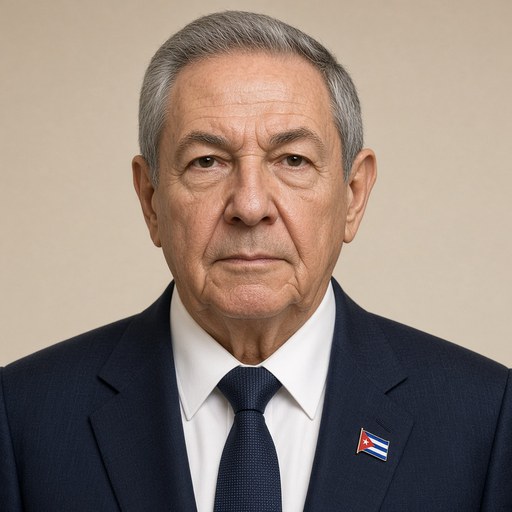
Speech delivered at the meeting of the CELAC Quartet and China. Brasília, July 17, 2014.
 Raúl Castro · President of Cuba
- Context
- Castro addressed the CELAC Quartet and China meeting in Brasília on July 17, 2014, advocating for stronger Latin American-Chinese cooperation and development.
- Main themes
- CELAC-China relations, Latin America and Caribbean development, multilateralism and international order, trade and investment cooperation, BRICS and Fortaleza Declaration, Caribbean nations' special needs, science and technology cooperation, sustainable development, poverty eradication, Cuba-China bilateral ties, natural resources and industrialization, inclusive international financial system
- Duration
- ~6 min
- Words
- 687
- Sentences
- 24
- Readability
- 22
- Grade
- 17.3
- Syntax
- 3.12
- Vocabulary
- 2.26
Translated from Spanish
The broad sphere of national life a sentence belongs to. Every sentence has an Arena, so it is the denominator the other indices are read against.
Other24 sentences in 16 paragraphs
Dear comrade Xi Jinping, President of the People's Republic of China;
Excellency Mr. Luis Guillermo Solís, pro tempore President of CELAC;
Esteemed Heads of State and Government:
I thank the authorities and the people of Brazil for their warm welcome and for the excellent facilities made available to us.
I also wish to thank President Xi Jinping for his presence to make this meeting possible, which is a clear demonstration of the political will of our countries in the effort to consolidate dialogue and cooperation between China and Latin America and the Caribbean. I consider the five proposals presented a few moments ago by the President of the People's Republic of China Xi Jinping to be of utmost importance.
The decision of the II CELAC Summit, held in Havana on January 28 and 29, 2014, to create the CELAC-China Forum gave practical meaning to the efforts aimed at having the countries of Latin America and the Caribbean and China work together to face the difficult conditions of today's world and promote our mutual development.
The expansion of our relations will allow us to establish a systematic bilateral dialogue on the main international issues, defend the interests of the South, and advance ambitious projects of cooperation, trade, investments, and financial relations, with a strong component of science, technology, and innovation, and an emphasis on human resource training.
The Fortaleza Declaration, adopted at the recent summit of the group composed of Brazil, Russia, India, China, and South Africa, is significant for all of us. We welcome its commitment to a fair and equitable international order, based on the Charter of the United Nations, as well as its decision to promote cooperation, solidarity, multilateralism, peace, security, economic and social progress, and sustainable development, focused on eradicating poverty.
The creation of the new Development Bank and a Common Fund for Foreign Currency Reserves constitutes a significant contribution to building a more inclusive international financial system.
The economic and social development of Latin America, the Caribbean, and China offers extraordinary potential for fostering mutually beneficial ties. In this endeavor, the sister Caribbean nations require special attention. The small scale of their economies, the particular vulnerabilities they face, the characteristics of their productive and export base, and the devastating effects of the traditional hurricanes that often strike several of them simultaneously, along with the growing threat of climate change, make it imperative that these countries, which are mostly unfairly treated as middle-income, receive, under preferential conditions, cooperation, trade, and investments from both Latin America and China.
In Haiti, the first successful slave revolution in the history of humanity took place, which later contributed to Latin American independence. Now we all feel the unavoidable duty to contribute to its development and to overcoming the historical consequences of exploitation and the natural disasters it has suffered.
The great Asian nation is today the second-largest economy in the world and the main exporter of goods. Its solid economic growth has favored increases in the prices of raw materials and exports from several economies in Latin America and the Caribbean. Today, China is the destination for 9% of the region's exports and the source of 14% of its imports.
The countries of Latin America and the Caribbean, which have a significant proportion of mineral reserves, the second-largest oil reserves, and one-third of the world's freshwater reserves, face the challenge of working towards the industrialization of our natural and agricultural resources, increasing and diversifying exports, particularly of higher value-added goods, and achieving a more balanced trade balance, in which ties with the People's Republic of China can play an important role.
In our case, more than half a century of exchanges with that country has allowed us to advance in the full development of an exemplary relationship that has stood the test of time. The close ties of friendship between both nations have been undeniably reflected in the multiple trade and cooperation projects developed, many of which have had a significant social impact.
Today, our invitation is to continue working together to promote relations between both parties, based on respect, equality, and mutual benefit.
Thank you very much.
The original Spanish. The tags above are read on the English translation's sentences.
Estimado compañero Xi Jinping, Presidente de la República Popular China;
Excelentísimo Señor Luis Guillermo Solís, Presidente pro témpore de la CELAC;
Estimados Jefes de Estado y Gobierno:
Agradezco a las autoridades y al pueblo de Brasil por su calurosa acogida y por las excelentes facilidades puestas a nuestra disposición.
Asimismo, deseo agradecer al Presidente Xi Jinping por su presencia para hacer posible este encuentro, que constituye una muestra fehaciente de la voluntad política de nuestros países en el empeño por consolidar el diálogo y la cooperación entre China y la América Latina y el Caribe. Considero de la mayor importancia las cinco propuestas que ha presentado hace unos minutos el Presidente de la República Popular China Xi Jinping.
La decisión de la II Cumbre de la CELAC, efectuada en La Habana los días 28 y 29 de enero de 2014, de crear el Foro CELAC-China dio sentido práctico a los esfuerzos dirigidos a que los países de la América Latina y el Caribe y China trabajemos para enfrentar las difíciles condiciones del mundo de hoy y promover nuestro desarrollo mutuo.
La ampliación de nuestras relaciones nos permitirá entablar un diálogo bilateral sistemático acerca de los principales problemas internacionales, defender los intereses del Sur y avanzar en ambiciosos proyectos de cooperación, comercio, inversiones y relaciones financieras, con un fuerte componente de ciencia, tecnología e innovación, y énfasis en la formación de recursos humanos.
La Declaración de Fortaleza, adoptada en la reciente cumbre del grupo integrado por Brasil, Rusia, India, China y Sudáfrica, resulta trascendente para todos nosotros. Saludamos su compromiso con un orden internacional justo y equitativo, basado en la Carta de las Naciones Unidas, así como su decisión de fomentar la cooperación, la solidaridad, el multilateralismo, la paz, la seguridad, el progreso económico y social y el desarrollo sostenible, centrado en la erradicación de la pobreza.
La creación del nuevo Banco de Desarrollo y de un Fondo Común de Reservas de Divisas constituye un significativo aporte a la construcción de un sistema financiero internacional más incluyente.
El desarrollo económico y social de América Latina, el Caribe y China, ofrece un extraordinario potencial para el impulso de vínculos mutuamente ventajosos. En ese empeño, las hermanas naciones caribeñas, requieren una especial atención. La pequeña escala de sus economías, las vulnerabilidades particulares que enfrentan, las características de su base productiva y exportadora, y los devastadores efectos de los tradicionales huracanes que suelen batir simultáneamente a varias de ellas, a los que hay que agregar la creciente amenaza del cambio climático, hacen imperativo que estos países, que en su mayoría son tratados injustamente como de renta media, reciban, en condiciones preferenciales, la cooperación, el comercio e inversiones tanto de la América Latina, como de China.
En Haití se produjo la primera Revolución triunfante de los esclavos en la historia de la humanidad que luego contribuyó a la independencia latinoamericana. Ahora todos sentimos el deber ineludible de contribuir a su desarrollo y a la superación de las secuelas históricas de la expoliación y de los desastres naturales de que ha sido víctima.
La gran nación asiática es hoy la segunda economía a nivel mundial, y el principal exportador de bienes. Su sólido crecimiento económico ha favorecido incrementos de precios de las materias primas y de las exportaciones de varias economías de la América Latina y el Caribe. Hoy China es el destino del 9% de las exportaciones de la región y el origen del 14% de sus importaciones.
Los países de la América Latina y el Caribe, que contamos con una proporción importante de las reservas minerales, la segunda reserva petrolera y un tercio de las reservas mundiales de agua dulce, tenemos el desafío de trabajar por la industrialización de nuestros recursos naturales y agrícolas, de incrementar y diversificar las exportaciones, en particular de bienes de mayor valor agregado y por alcanzar una balanza comercial más equilibrada, en lo que pueden desarrollar un papel de importancia los vínculos con la República Popular China.
En nuestro caso, más de medio siglo de intercambios con ese país nos han permitido avanzar en el desarrollo pleno de una relación ejemplar, que ha superado la prueba del tiempo. Los estrechos lazos de amistad existentes entre ambas naciones han tenido un reflejo indiscutible en los múltiples proyectos de comercio y cooperación desarrollados, muchos de ellos con un gran impacto social.
Hoy, nuestra invitación es a continuar trabajando juntos para promover las relaciones entre ambas partes, basadas en el respeto, la igualdad y el beneficio mutuo.
Muchas gracias (Aplausos).