




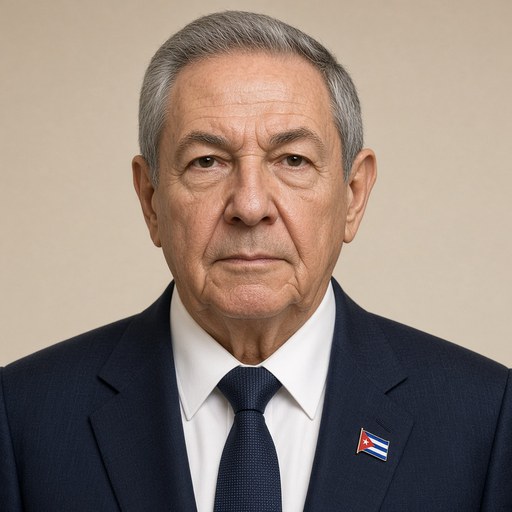
Speech delivered on the occasion of the Summit of the Group of 77 plus China. Santa Cruz de la Sierra.
 Raúl Castro · President of Cuba
- Context
- Castro addressed the G77 plus China Summit in Santa Cruz de la Sierra, Bolivia on June 15, 2014, urging developing nations to unite for a new international economic order.
- Main themes
- Global economic justice, North-South inequality, neoliberalism critique, Post-2015 Development Agenda, sustainable development goals, sovereignty of states, climate change and differentiated responsibilities, external debt, extreme poverty and hunger, G77 unity, US imperialism and interference, Venezuelan sovereignty
- Duration
- ~8 min
- Words
- 934
- Sentences
- 35
- Readability
- 30
- Grade
- 15.5
- Syntax
- 3.13
- Vocabulary
- 2.41
Translated from Spanish
The broad sphere of national life a sentence belongs to. Every sentence has an Arena, so it is the denominator the other indices are read against.
Other35 sentences in 27 paragraphs
Comrade Evo Morales Ayma, President of the Plurinational State of Bolivia and President of the Group of 77 plus China:
Excellencies:
I thank Comrade Evo Morales Ayma, President and prominent representative of the indigenous peoples of our region, for convening this important Summit.
At the end of the First United Nations Conference on Trade and Development, in June 1964, a group of developing countries, aware of the enormous challenges they would have to face, decided to march united to confront a global economic system that has since manifested itself as unequal and unjust.
This group is responsible for the preparation, negotiation, and approval, on May 1, 1974, 40 years ago, of one of the most important programmatic documents in the fight against underdevelopment and for achieving international economic justice: the Declaration and Programme of Action for the Establishment of a New International Order, (and I quote), "based on equity, sovereign equality, interdependence, common interest, and cooperation among all States, whatever their economic and social systems, that allows for correcting inequalities and repairing current injustices, eliminating the growing disparities between developed and developing countries and ensuring present and future generations an accelerating economic and social development, in peace and justice." (End of quote).
Shortly thereafter, it achieved the approval of the Charter of Economic Rights and Duties of States, which enshrines the exercise of the sovereignty of States over natural resources and economic activity in their territory.
These important documents remain fully relevant, but the great paradox is that today they are not wanted to be discussed. They are labeled as "outdated" and "overtaken by events."
However, the gap between the North and the South is now widening, and a profound global economic crisis, resulting from the irreversible failure of neoliberalism imposed from the main centers of power, with a devastating impact on our countries, has become the longest and most complex in the last eight decades.
As the cycle for the Development Goals, agreed upon at the Millennium Summit in the year 2000, is nearly concluded:
- One billion two hundred million people in the world live in extreme poverty. In Sub-Saharan Africa, the number of poor has continuously increased, rising from 290 million in 1990 to 414 million in 2010.
- One in eight people in the world suffers from chronic hunger.
- 45% of children who die before reaching five years of age die from malnutrition.
- External debt is at unprecedented levels, despite the enormous payments we have made for its service.
- Climate change is worsening, fundamentally generated by the irrational and wasteful patterns of production and consumption of industrialized countries, which, if maintained, would require natural resources equivalent to two planets by 2030.
In the face of these realities, the principle of common but differentiated responsibilities in addressing climate change and other environmental challenges remains fully relevant.
As Comrade Fidel Castro Ruz has said, "There are resources to finance development. What is lacking is the political will of the governments of developed countries."
It is necessary to demand a new international financial and monetary order and fair trade conditions for producers and importers from the guardians of capital, centered on the International Monetary Fund and the World Bank, to the defenders of neoliberalism, grouped in the World Trade Organization, who attempt to divide us.
Only unity will allow us to prevail as our broad majority.
We must do this if we want the Post-2015 Development Agenda, which must include the Sustainable Development Goals, to provide answers to the structural problems of our countries' economies, generate changes that allow for sustainable development; be universal and respond to different levels of development.
Comrade President:
Currently, the sovereignty of States is being transgressed, the principles of International Law and the tenets of the New International Economic Order are being blatantly violated, concepts are being imposed that attempt to legalize interference, force is being used and threats of its use are made with impunity, and means are being utilized to promote division. That threat against "60 or more dark corners of the world" from United States President George W. Bush still resonates in our ears, obviously, all member countries of the Group of 77.
We must express our solidarity with those who are threatened with aggression. Today, the clearest case is the Bolivarian Republic of Venezuela, against which the most sophisticated means of subversion and destabilization are being employed, including attempts at coups, according to the conceptions of unconventional warfare that the United States is currently applying to overthrow governments, subvert, and destabilize societies.
For more than 50 years, we have been victims of a genocidal American blockade; of terrorist actions that have cost the lives of thousands of our citizens and caused significant material damage. The absurd inclusion of Cuba on the list of "State Sponsors of International Terrorism" is an affront to our people.
As we have denounced, there is a growing promotion of illegal, covert, and subversive actions, as well as the use of cyberspace to attempt to destabilize us, not only Cuba but also countries whose governments do not accept interference or tutelage. In this way, any nation can be the target of cyberattacks aimed at fostering distrust, destabilization, and potential conflicts.
Throughout all these years, we have always been accompanied by the firm solidarity of the members of the Group of 77 plus China, for which I thank you on behalf of the Cuban people.
Let us take advantage of this 50th anniversary of the Group of 77 to renew our common commitment to concert efforts and tighten ranks to build a fairer world.
Thank you very much.
The original Spanish. The tags above are read on the English translation's sentences.
Compañero Evo Morales Ayma, Presidente del Estado Plurinacional de Bolivia y Presidente del Grupo de los 77 más China:
Excelencias :
Agradezco al compañero Evo Morales Ayma, Presidente y destacado representante de los pueblos originarios de nuestra región, la convocatoria de esta importante Cumbre.
Al término de la Primera Conferencia de Naciones Unidas sobre Comercio y Desarrollo, en junio de 1964, un grupo de países en desarrollo, conscientes de los enormes desafíos que tendrían que sortear, decidió marchar unido para hacer frente a un sistema económico mundial que desde entonces se manifestaba desigual e injusto.
A este grupo se debe la preparación, negociación y aprobación, el primero de mayo de 1974, hace ya 40 años, de uno de los documentos programáticos más importantes en la lucha contra el subdesarrollo y por el logro de la justicia económica internacional: la Declaración y el Programa de Acción para el Establecimiento de un Nuevo Orden Internacional, (y cito), basado en la equidad, la igualdad soberana, la interdependencia, el interés común y la cooperación de todos los Estados, cualesquiera sean sus sistemas económicos y sociales, que permita corregir las desigualdades y reparar las injusticias actuales, eliminar las disparidades crecientes entre los países desarrollados y los países en desarrollo y garantizar a las generaciones presentes y futuras un desarrollo económico y social que vaya acelerándose, en la paz y la justicia ( ). (Fin de la cita).
Poco después, logró la aprobación de la Carta de Derechos y Deberes Económicos de los Estados, que consagra el ejercicio de la soberanía de los Estados sobre los recursos naturales y la actividad económica en su territorio.
Esos importantes documentos mantienen plena vigencia, pero la gran paradoja es que hoy no se quiere hablar de ellos. Se les califica de atrasados y superados por los hechos.
Sin embargo, ahora se amplía la brecha entre el norte y el sur, y una profunda crisis económica global, resultante del irreversible fracaso del neoliberalismo impuesto desde los principales centros de poder, con un impacto devastador para nuestros países, se ha convertido en la más larga y compleja de las últimas ocho décadas.
Cuando casi concluye el ciclo previsto para los Objetivos de Desarrollo, acordados en la Cumbre del Milenio del año 2000:
- Mil doscientos millones de personas en el mundo viven en la pobreza extrema. En África subsahariana, el número de pobres ha aumentado ininterrumpidamente, pasando de 290 millones en 1990 a 414 millones en el 2010.
- Una de cada ocho personas en el mundo sufre de hambre crónica.
- El 45% de los niños fallecidos antes de cumplir los cinco años, muere por malnutrición.
- La deuda externa registra niveles sin precedentes, a pesar de los enormes pagos que hemos realizado por su servicio.
- Se agrava el cambio climático, generado -en lo fundamental-, por los patrones de producción y consumo irracionales y derrochadores de los países industrializados que, de mantenerse, para el 2030 harían falta recursos naturales equivalentes a dos planetas.
Ante estas realidades, conserva plena vigencia el principio de las responsabilidades comunes, pero diferenciadas en el enfrentamiento del cambio climático y otros desafíos ambientales.
Como ha dicho el compañero Fidel Castro Ruz, Existen los recursos para financiar el desarrollo. Lo que falta es la voluntad política de los gobiernos de los países desarrollados.
Es preciso exigir un nuevo orden financiero y monetario internacional y condiciones comerciales justas para productores e importadores a los guardianes del capital, centrados en el Fondo Monetario Internacional y el Banco Mundial, a los defensores del neoliberalismo, agrupados en la Organización Mundial de Comercio, que intentan dividirnos.
Solo la unidad nos permitirá hacer prevalecer nuestra amplia mayoría.
Así tendremos que hacerlo si queremos que la Agenda de Desarrollo después del 2015, que deberá incluir los Objetivos de Desarrollo Sostenible, ofrezca respuestas a los problemas estructurales de las economías de nuestros países, genere cambios que permitan proponerse un desarrollo sostenible; sea universal y responda a los diferentes niveles de desarrollo.
Compañero Presidente:
En la actualidad, se transgrede la soberanía de los Estados, se violan de forma descarnada los principios del Derecho Internacional y los postulados del Nuevo Orden Económico Internacional, se imponen conceptos que intentan legalizar la injerencia, se usa la fuerza y se amenaza con su uso de manera impune, se utilizan los medios para promover la división. Todavía resuena en nuestros oídos aquella amenaza contra 60 o más oscuros rincones del mundo del presidente de Estados Unidos George W. Bush, obviamente, todos países miembros del Grupo de los 77.
Debemos ejercer nuestra solidaridad con aquellos a quienes se amenaza con la agresión. Hoy, el caso más nítido es la República Bolivariana de Venezuela, contra la que se emplean los medios más sofisticados de subversión y desestabilización, incluidos los intentos de golpe de Estado, según las concepciones de la guerra no convencional que Estados Unidos hoy aplica para derrocar gobiernos, subvertir y desestabilizar sociedades.
Por más de 50 años, hemos sido víctimas de un genocida bloqueo norteamericano; de acciones terroristas que han costado la vida a miles de nuestros ciudadanos, y provocado cuantiosos daños materiales. La absurda inclusión de Cuba en la lista de Estados Patrocinadores del Terrorismo Internacional, es una afrenta a nuestro pueblo.
Como hemos denunciado, es creciente la promoción de acciones ilegales, encubiertas y subversivas, así como el uso del ciberespacio para intentar desestabilizarnos, no solo a Cuba, sino a países cuyos gobiernos no aceptan injerencia ni tutelaje. De esta forma, cualquier nación puede ser objeto de ataques informáticos dirigidos a fomentar la desconfianza, la desestabilización y conflictos potenciales.
Durante todos estos años, siempre nos ha acompañado la firme solidaridad de los miembros del Grupo de los 77 más China, lo que agradezco en nombre del pueblo cubano.
Aprovechemos este 50 aniversario del Grupo de los 77 para renovar nuestro compromiso común de concertar esfuerzos y estrechar filas para construir un mundo más justo.
Muchas Gracias (Aplausos).