




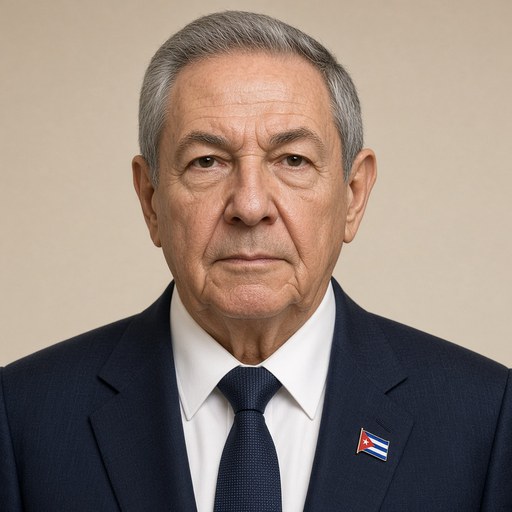
Speech delivered at the mass event on the occasion of the Summit of the Group of 77 plus China.
 Raúl Castro · President of Cuba
- Context
- Castro addressed the Group of 77 plus China Summit in Bolivia on June 15, 2014, praising Bolivia's progress and calling for Latin American unity against imperialism.
- Main themes
- Latin American unity and integration, solidarity with Bolivia, defense of Venezuela and Bolivarian Revolution, anti-imperialism, Bolivia's social and economic achievements, Group of 77 plus China summit, CELAC and regional integration, indigenous and peasant struggles, Cuban-Bolivian cooperation, Evo Morales leadership
- Duration
- ~6 min
- Words
- 709
- Sentences
- 40
- Readability
- 40
- Grade
- 12.1
- Syntax
- 3.02
- Vocabulary
- 2.40
Translated from Spanish
The broad sphere of national life a sentence belongs to. Every sentence has an Arena, so it is the denominator the other indices are read against.
Other40 sentences in 19 paragraphs
Dear Presidents:
Bolivian brothers and sisters:
I have the privilege of knowing the heart of South America, the nation founded by the Liberator Simón Bolívar, after whom it is named.
We owed this visit to Bolivia for a long time. Cubans admire the century-old history of struggles of the Bolivian people, to live well, in harmony with Mother Earth, Pachamama.
We know the rightful rebellion of the Bolivians, who never submitted to invaders, nor resigned themselves to having their mountains emptied of minerals, as was done with the famous Cerro de Potosí.
We have come to accompany you at this Summit of the Group of 77 plus China. We are more than 130 nations, who have common problems. Together, we constitute an important international actor. We can influence, if we set our minds to it, the decisions of the United Nations, in matters of peace and development, in the preservation of the environment. It was very important to be here, with you, supporting the leadership and example of our comrade Evo Morales and Bolivia.
We want to thank the Bolivians for their generosity and solidarity. Above all, for having welcomed, as family, hundreds of Cuban collaborators, and because by being protagonists of an unprecedented process of change in your country, you have made an invaluable contribution to the struggle processes of Our America, as José Martí called it, for the definitive independence and integration of all our peoples.
Evo has told me details of the peasant struggles in this country, of the indigenous peoples, of the coca growers, when he was a union leader back in Chapare. We have also talked about the miners, whose unions are among the most combative in the entire region. I told him, guided by our own experience in Cuba: those united working masses, with the political and class consciousness they have acquired, with the combativeness accumulated in their struggles, are truly invincible.
That is the experience of several of our brother countries. Notice that imperialism and the oligarchy first attack the unity of the people, divide the people, exacerbate differences, which always exist, pit friends and brothers against each other. That strategy of division can only be responded to with unity, unity, and more unity.
Today Venezuela deserves our most resolute support. The imperialists and the oligarchs, who could not defeat President Chávez in 18 elections, the coup d'état and the oil coup, think that the time has come to destroy the Bolivarian Revolution and overthrow the government of President Maduro, using unconventional warfare methods.
By defending Venezuela, we defend Bolivia and all of Our America. Venezuela is today the frontline of the defense of our independence, freedom, and dignity.
It would be a severe blow if the process of true integration underway, in which various organizations participate and whose culmination is CELAC, is halted.
Look at what Bolivia has done: It nationalized hydrocarbons and put them at the service of all Bolivians. It ended the exclusion and exploitation of the majority indigenous and peasant communities in the country. It redistributed national wealth for the benefit of all the people, especially the most vulnerable sectors. It reduced extreme poverty by 20 percent. It declared itself a territory free of illiteracy.
The bonuses for pregnant women and newborns, for families with children in primary school, the school breakfast program, and the pension for the elderly are important achievements. More than 6,500 poor Bolivians have studied university careers, mostly in medicine, or have qualified as social workers. Several dozen comprehensive clinics and ophthalmological centers have been built to serve the health of the humble people of Bolivia. In just ten years, millions of medical consultations have been provided in the "My Health" Program, and more than 600,000 Bolivians have regained their sight.
Factories are being built, culture, sports, and sciences are being developed, and trade exchange between our countries is increasing. The unemployment rate has been reduced, and the Bolivian economy is steadily growing above 6%.
Evo:
We wish you success in this immense task, as we wish for all of you, dear Bolivian brothers and sisters.
Let us build the Great Homeland together, let us defend our unity. Allow me, also, to say here, like Che Guevara, "Until victory, always!".
Thank you very much.
The original Spanish. The tags above are read on the English translation's sentences.
Estimados Presidentes:
Hermanos bolivianos:
Tengo el privilegio de conocer el corazón de Suramérica, la nación fundada por el Libertador Simón Bolívar, a quien debe su nombre.
Hace tiempo le debíamos esta visita a Bolivia. Los cubanos admiramos la centenaria historia de luchas del pueblo boliviano, por vivir bien, en armonía con la Madre Tierra, la Pachamama.
Nosotros conocemos la justa rebeldía de los bolivianos, que nunca se sometieron a los invasores, ni se resignaron a que vaciaran sus montañas de tanto extraerles los minerales, como hicieron con el famoso cerro del Potosí.
Hemos venido a acompañarlos en esta Cumbre del Grupo de los 77 más China. Somos más de 130 naciones, que tenemos problemas comunes. Juntos, constituimos un importante actor internacional. Podemos influir, si nos lo proponemos, en las decisiones de las Naciones Unidas, en los asuntos de la paz y del desarrollo, en la preservación del medio ambiente. Era muy importante estar aquí, con ustedes, apoyando el liderazgo y el ejemplo del compañero Evo Morales y de Bolivia.
Queremos agradecerles a los bolivianos su generosidad y solidaridad. Sobre todo, por haber acogido, como en familia, a cientos de colaboradores cubanos, y porque al ser ustedes protagonistas de un proceso de cambio inédito en su país, han realizado una contribución invaluable al proceso de luchas de Nuestra América, como la llamó José Martí, por la definitiva independencia e integración de todos nuestros pueblos.
Evo me ha contado detalles de las luchas campesinas en este país, de los pueblos originarios, de los cocaleros, cuando él era líder sindical allá en el Chapare. También hemos hablado de los mineros, cuyos sindicatos son de los más combativos en toda la región. Yo le decía, guiándome por nuestra propia experiencia en Cuba: esas masas trabajadoras unidas, con la conciencia política y de clase que han adquirido, con la combatividad acumulada en sus luchas, son realmente invencibles.
Esa es la experiencia de varios de nuestros países hermanos. Fíjense que el imperialismo y la oligarquía lo primero que hacen es atacar la unidad del pueblo, dividir al pueblo, exacerbar diferencias, que siempre las hay, enfrentar a amigos y hermanos. Esa estrategia de división solo puede responderse con unidad, unidad y más unidad.
Hoy Venezuela merece nuestro más resuelto apoyo. El imperialismo y los oligarcas, que no pudieron contra el presidente Chávez en 18 elecciones, el golpe de estado y el golpe petrolero, piensan que ha llegado el momento de destruir la Revolución bolivariana y derrocar al gobierno del Presidente Maduro, empleando métodos de guerra no convencional.
Defendiendo a Venezuela, defendemos a Bolivia y a toda Nuestra América. Venezuela es hoy el borde delantero de la defensa de nuestra independencia, libertad y dignidad.
Sería un duro golpe si se frena el proceso de verdadera integración en marcha, en el que participan diversas organizaciones y cuyo punto culminante es la CELAC.
Miren lo que ha hecho Bolivia: Nacionalizó los hidrocarburos y los puso al servicio de todas las bolivianas y bolivianos. Acabó con la exclusión y la explotación de las mayoritarias comunidades indígenas y campesinas del país. Redistribuyó la riqueza nacional en beneficio de todo el pueblo, en especial de los sectores más vulnerables. Redujo la extrema pobreza en un 20 por ciento. Se proclamó territorio libre de analfabetismo.
Los bonos para la mujer embarazada y el recién nacido, para las familias con hijos en la escuela primaria, el desayuno escolar y la renta para los ancianos son importantes conquistas. Más de 6 500 bolivianos pobres han estudiado carreras universitarias, mayormente medicina, o se calificaron como trabajadores sociales. Se han construido varias decenas de clínicas integrales y centros oftalmológicos al servicio de la salud del pueblo humilde de Bolivia. En apenas diez años, se han brindado millones de consultas médicas en el Programa “Mi Salud”, y más de 600 mil bolivianos recuperaron la vista.
Se construyen fábricas, se desarrolla la cultura, el deporte y las ciencias, se incrementa el intercambio comercial entre nuestros países.Se ha reducido el índice de desempleo y la economía boliviana crece sostenidamente por encima del 6%.
Evo:
Te deseamos éxitos en esta inmensa tarea, como se los deseamos a todos ustedes, queridos hermanos y hermanas bolivianas.
Construyamos juntos la Patria Grande, defendamos nuestra unidad. Permítanme, también, que diga aquí, como el Che Guevara, “¡Hasta la victoria siempre!”.
Muchas gracias.
COMPARTIR facebook twitter google +