




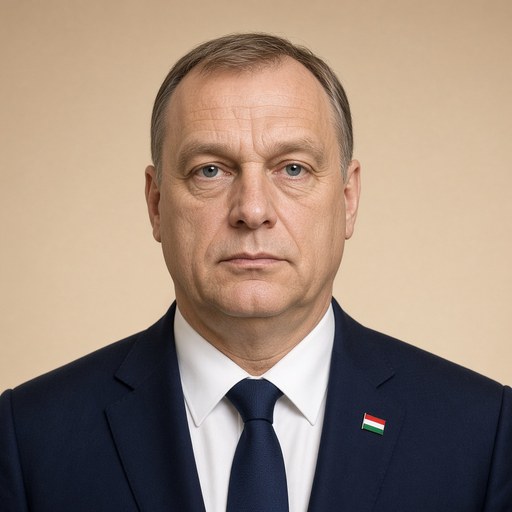

- Context
- Orbán responded to parliamentary faction questions and comments during a Hungarian National Assembly session on September 26, 2022, addressing sanctions, energy, and fiscal policy.
- Main themes
- EU sanctions policy, Hungary's position on Russia-Ukraine war, energy policy and utility costs, Hungarian opposition parties, oil and gas sanctions exemptions, renewable energy, VAT reduction debate, property tax, extra profit taxes, Roma integration programs, European unity
- Duration
- ~18 min
- Words
- 2,213
- Sentences
- 108
- Readability
- 49
- Grade
- 11.4
- Syntax
- 2.89
- Vocabulary
- 2.27
Translated from Hungarian
The broad sphere of national life a sentence belongs to. Every sentence has an Arena, so it is the denominator the other indices are read against.
Other108 sentences in 29 paragraphs
Honorable Mr. President!
Thank you very much for giving me the floor, allowing me to respond to the questions and comments made on behalf of the factions. I listened carefully to all of you, and I see that Momentum, Dialogue, the Hungarian Socialist Party, Jobbik, and the Democratic Coalition – perhaps it is correct to refer to this as the Hungarian left – based on the comments, are clearly on the side of war. Momentum, Dialogue, the Hungarian Socialist Party, Jobbik, and the Democratic Coalition, in other words, the Hungarian left, are not only on the side of war but also on the side of sanctions. This is a mistake because war and sanctions are bad; they harm the Hungarian people. I ask you to reconsider your position.
As for the opinion of the leader of the Our Homeland faction, I would like to inform him that the system of sanctions is such that sanctions are voted on every six months. So, sanctions are not permanent; every sixth month, a decision must be made on the extension of sanctions, which is why consultation – contrary to your assumption – is not untimely, as we are facing further extensions.
I would like to draw your attention to the following regarding the voting on sanctions. Hungary did not vote for the oil sanctions. More precisely, we fought for Hungary, Slovakia, and the Czech Republic – that is, those countries where oil only arrives via pipeline – to be exempted. At the request of our Polish friends, I did not choose to veto the sanctions but to achieve an exemption for the Czech, Hungarian, and Slovak cases, because the Poles asked that although the oil sanctions are contrary to Hungary's interests, we should not veto them but settle for the exemption that we are entitled to. This is 8 percent of the amount coming from Russia, and the Polish position was that a 92 percent sanction is still better than a 0 percent sanction due to a Hungarian veto. I think this is clear. Therefore, we did not vote for the oil sanctions. We will not allow sanctions on nuclear products to be put on the agenda. They are not on the agenda because we do not vote for them. Sanctions on gas are also not on the agenda to this day because Hungary has announced that it will not vote for them. This is our position.
Ladies and Gentlemen!
Voting on the other sanctions, regardless of whether I see it as reasonable or not, would mean that Hungary alone does not vote for sanctions that are not vital for us. In other words, we would disrupt European unity. Therefore, I believe that we must maintain a balance between European unity and the protection of the most important Hungarian interests. This is responsible politics. This is what we will continue.
The system usage fee has been raised by several. I would like to point out to you that a significant part of it exists because we need to integrate renewable energy sources into the system. If we were to build and support less renewable energy, the system usage fee would be lower. But I do not recommend this to you. I suggest that we continue to support green energy, support solar energy, and pay the associated system usage fee in the price.
Similarly, I must say that the VAT reduction is not a reasonable proposal either. Today, the revenue from high VAT is placed into the utility reduction fund. If we did not collect these VAT revenues, the utility reduction fund would be smaller, and we would not be able to provide every Hungarian household with support amounting to 181 thousand forints up to the average consumption. Moreover, our experience from the past thirty years of VAT reductions is that this does not actually reach people in the form of price reductions but rather reaches companies and traders in the form of cost reductions. You have been in government a few times; you have struggled with this problem.
Ladies and Gentlemen!
As for the property tax, I can tell you that we do not support it. I would like to remind you that the basis of any property tax is the establishment of a complete property registry, the state registration of all Hungarian properties. I suggest you reconsider this.
Regarding taxes imposed on Hungarians and non-Hungarians, I can say that we imposed the extra profit tax, which finances the utility reduction fund, on banks – where there are still foreigners – on telecommunications companies – where there are also foreigners – and on commercial networks, where there are also many foreigners.
I cannot support your proposal, Mr. Representative and faction leader, to stop programs supporting the Roma. I believe that programs supporting the integration of Roma are necessary, which is why we will continue the program that finances the support of the three hundred poorest villages, crisis or no crisis, and we will do everything we can to help the Hungarian Roma community continue on the path to middle-class status.
Mr. Péter Ungár confronted me with the question of what we have done in the past twelve years to reduce Russian energy influence. Youth, of course, provides an excuse for a certain degree of ignorance. Therefore, I would like to inform my colleague Mr. Ungár that after winning the election in 2010, our first act was to refuse to hand over the 25 percent of MOL shares sold to the Russians by the Gyurcsány government; instead, we regained them for Hungary. This is the first point. Please also consider in your next comment that in 2010, Hungary was connected to the world by two gas interconnectors, and today it is connected by six. And please also consider that after 2010, Hungary repurchased gas storage facilities to ensure that where we store gas today, it is in state hands and serves national economic interests. I hope you appreciate this.
As for wind energy, there are ongoing debates within the government about wind energy. For now, we are not convinced that it is necessary to restart wind energy production. We welcome it if the Hungarian Parliament discusses this issue and expresses its opinion to the Hungarian government. Unfortunately, there are serious arguments both for and against it. However, I would like to draw your attention to the fact that when assessing the government's performance regarding renewable energies, do not forget that unprecedented solar power plant developments are taking place in Hungary. More than 3,000 gigawatts are already in operation, and more than 5,000 megawatts of demand have been submitted, which we hope will be built by entrepreneurs.
I understand that when our colleague Ungár speaks to the right, he also includes the well-known publicists of the right. We are their admirers, but I think you overestimate their role in shaping the right's position. So if you want to debate the facts with us, we are at your disposal, but please consider primarily what you can hear from us here in the parliamentary benches.
Finally, regarding what needs to be done, I can tell you that we need to coordinate our position with the United States and work towards having Russian-American negotiations for an immediate ceasefire and peace as soon as possible. If someone thinks – and I see that several of you do, including the last speaker, the president of the DK, who is also indulging in this illusion – that this conflict will be resolved through negotiations between the Ukrainians and the Russians, then you do not understand international politics. This war can only be concluded through Russian-American negotiations, and in the preparation of this, Europe must strive to have a voice in the peace negotiations. Therefore, an immediate ceasefire and peace negotiations; this is the Hungarian proposal.
I do not recommend the approach that my colleague Ungár suggests here to the Honorable House, that if Hungary is left alone in an international dispute with its opinion, then it should be interpreted or we should interpret it as everyone else being foolish. I would like to inform my colleague Ungár that in international diplomatic and foreign policy debates, the question is not who is right – this is a childish approach – but the debate is about what each party's interests are and how they can be reconciled. Thank you to the representative for his honorable remarks.
I would like to thank the leader of the Jobbik faction for his remarks. I am not surprised that Mr. Gyöngyösi is not here with us today, as there is a referendum taking place in Donetsk, and when Russia holds a referendum on annexed territories, such as in Crimea, he is usually there to oversee the elections. This was also the case with Crimea. I am sure he is there now; we wish him much success! Since Prime Minister Gyurcsány mentioned who the ragged man is, perhaps he could also turn to the current president of Jobbik in this regard if we associate raggedness with the kind of Russian policy one pursues.
Honorable Representative Lukács!
I do not indulge in predictions, contrary to what you assume. I believe we should take the uncertainty of the situation seriously, maintain our calm, be moderate, and consistently represent Hungary's interests in the negotiations on sanctions.
We are dealing with the issue of Dunaújváros. We have consulted with the elected parliamentary representative of Dunaújváros, and I hope that in the coming days we can provide some assistance for recovery to him and, through him, to the steelworks.
Regarding the not-so-friendly remarks of Representative Timea Szabó, I must say that we have not increased the amount of the kata tax payment; rather, we have reduced it. There has been no tax increase for those under the kata system, honorable Representative, but a tax reduction; when a tax is less than it was before, it is called a tax reduction, not a tax increase, as you assume.
As for wages: I would like to remind you that during the time of your leader, Prime Minister Gyurcsány, the average wage was lower than the minimum wage during our government. I cannot accept the proposals that you and others have made regarding how and with how much money families should be supported because every proposal was less than the 181 thousand forints that we give to every Hungarian family today. Your proposal would actually take away from people, which is why we cannot accept these proposals, but we stand by our own proposal.
I also patiently listened to Representative Zita Gurmai. I believe that her words about a disintegrating society are exaggerated or may be based on the misconception that she confuses the country with the Hungarian Socialist Party. In Hungary, it is not the benefits and wages that have decreased to 1 percent. It is true that there is one thing we have reduced to 1 percent, and I take responsibility for that, which is the support for the MSZP, but we do not regret that.
My colleague Representative Gelencsér said that we have distributed money. What are we talking about? We are talking about the fact that as of January 1, Hungarian pensioners received the thirteenth month pension that was taken from them during the time of Prime Minister Ferenc Gyurcsány or perhaps after by the government following the MSZP. This is not distribution, honorable Representative! We returned something that your allies took from the pensioners. Therefore, starting in January, we are paying a thirteenth month pension to pensioners, and it is our firm intention that this will remain the case. When you say that we distributed money, we did not distribute; rather, we provided income tax exemption for those under 25 to help them start their lives and improve their earnings in the early years. I thought that Momentum was on the side of young people, but it seems that you qualify the support given to them as distribution. We did not distribute money; rather, we raised the minimum wage to 200 thousand forints as of January 1. Just in parentheses, I ask you, if we had not done all this, how would Hungarian families withstand this energy crisis? I suggest that you humbly, but sometimes express your recognition for the government's foresight.
Ladies and Gentlemen!
Finally, my colleague Gelencsér said that we should not negotiate with the Russians. I will pass this opinion on to President Macron and Chancellor Scholz, who regularly negotiate with the Russians.
Finally, ladies and gentlemen, I join what faction leader Máté Kocsis said. I also think it is unprecedented in the history of Hungarian democracy that the entire Hungarian left's campaign is financed from abroad, explicitly from the United States. No one denies this anymore. Accepting foreign support for the electoral campaign, dear Leftists, is illegal. You know this too. On the other hand, you are shrewd politicians; you also know that this always comes at a price; this is basic, and it is evident. I am convinced that you are pro-sanctions, you support immigration, and you support the war because this is what you are asked to do. Whoever pays the bill calls the tune. This is the tune we heard here today.
Thank you for your attention!
The original Hungarian. The tags above are read on the English translation's sentences.
Tisztelt Elnök Úr!
Köszönöm szépen, hogy szót kaptam, és válaszolhatok a frakciók nevében szólók kérdéseire és megjegyzéseire. Figyelmesen végighallgattam mindannyiukat, és azt látom, hogy a Momentum, a Párbeszéd, az MSZP, a Jobbik és a DK – talán helyes, ha ezt magyar baloldalnak nevezem – a hozzászólások alapján egyértelműen a háború oldalán áll. A Momentum, a Párbeszéd, az MSZP, a Jobbik és a DK, vagyis a magyar baloldal nemcsak a háború oldalán áll, hanem a szankciók oldalán is áll. Ez hiba, mert a háború és a szankciók rosszak, ártanak a magyaroknak. Kérem Önöket, hogy vizsgálják felül az álláspontjukat.
Ami a Mi Hazánk frakcióvezetőjének véleményét illeti, szeretném tájékoztatni őt, hogy a szankcióknak az a rendszere, hogy a szankciókat hathavonta szavazzák meg. Tehát nem egyszer s mindenkorra vannak szankciók, minden hatodik hónapban a szankciók meghosszabbításáról kell dönteni, ezért a konzultáció – szemben az Ön föltételezésével – nem időszerűtlen, hiszen újabb és újabb meghosszabbítások előtt állunk.
A szankciók megszavazása ügyében a következőkre hívom fel mindannyiuk figyelmét. Magyarország az olajszankciókat nem szavazta meg. Még pontosabban kiharcolta azt, hogy Magyarországra, Szlovákiára és Csehországra, vagyis azokra az országokra, ahova olaj csak vezetéken keresztül érkezik, ne vonatkozzon. A lengyel barátaink kérésére nem a szankció megvétózását választottam, hanem a cseh, magyar és szlovák kivétel elérését, mert a lengyelek azt kérték, hogy bár Magyarország érdekeivel ellentétes az olajszankció, mégse vétózzuk azt meg, érjük be az az alól bennünket megillető kivétellel. Ez 8 százaléka – a három ország – egyébként az Oroszországból érkező mennyiségnek, és a lengyel álláspont az volt, hogy még mindig jobb egy 92 százalékos szankció, mint egy magyar szankció miatti 0 szankció. Azt hiszem, hogy ez világos. Tehát ezért az olajszankciókat nem szavaztuk meg. A nukleáris termékekre vonatkozó szankciókat nem engedjük napirendre venni. Azért nem kerülnek napirendre, mert nem szavazzuk meg. A gázra vonatkozó szankciókat is azért nem tűzik napirendre mind a mai napig, mert Magyarország bejelentette, hogy nem szavazza meg. Így állunk.
Tisztelt Hölgyeim és Uraim!
A többi szankció megszavazása, függetlenül attól, hogy azt ésszerűnek látom-e, vagy sem, azt jelentené, hogy Magyarország egyedül nem szavaz meg olyan szankciókat, amelyek nem életbevágóak a mi számunkra. Vagyis megbontjuk az európai egységet. Ezért én azt gondolom, hogy egyensúlyt kell tartani az európai egység és a legfontosabb magyar érdekek megvédése között. Ez a felelős politika. Ezt folytatjuk.
A rendszerhasználati díjat többen is fölvetették. Szeretném jelezni Önöknek, hogy annak tekintélyes része azért létezik, mert a megújuló energiaforrásokat rá kell vezetnünk a rendszerre. Ha kevesebb megújuló energiát építenénk és támogatnánk, alacsonyabb lenne a rendszerhasználati díj. De ezt én nem javaslom Önöknek. Azt javaslom, hogy továbbra is támogassuk a zöldenergiát, támogassuk a napenergiát, és az ezzel járó rendszerhasználati díjat pedig az árban fizessük meg.
Hasonlóképpen azt kell mondanom, hogy az áfa-csökkentés sem ésszerű javaslat. Ma a magas áfából befolyó bevételeket a rezsicsökkentési alapba tesszük. Ha nem szednénk be ezeket az áfa-bevételeket, a rezsicsökkentési alap kisebb lenne, és nem tudnánk minden magyar háztartásnak az átlagfogyasztásig 181 ezer forintnyi támogatást fizetni. Ráadásul az a tapasztalatunk az elmúlt harminc év áfa-csökkentéseiből, hogy ez valójában nem árcsökkenés formájában az emberekhez, hanem költségcsökkenés formájában a cégekhez és a kereskedőkhöz jut el. Voltak már Önök néhányszor kormányon, küszködtek ezzel a problémával.
Tisztelt Hölgyeim és Uraim!
A vagyonadóról pedig azt tudom mondani Önnek, hogy azt nem támogatjuk. Szeretném az emlékezetébe idézni, hogy minden vagyonadó alapja egy teljes vagyonkataszter fölállítása, az összes magyar vagyonának állami nyilvántartásba vétele. Javaslom, hogy ezt gondolják át.
A magyarokat és a nem magyarokat terhelő adók ügyében azt tudom mondani, hogy az extraprofit adót, amivel a rezsicsökkentési alapot finanszírozzuk, a bankokra vetettük ki – ott azért vannak még külföldiek –, a telekommunikációs cégekre – ott azért vannak külföldiek – és a kereskedelmi hálózatokra, ahol szintén nagy számban vannak külföldiek.
Azt a javaslatát a képviselő úrnak és frakcióvezető úrnak, hogy a romákat támogató programokat állítsuk le, nem tudom támogatni. Szerintem a romák fölzárkózását támogató programokra szükség van, ezért a háromszáz legszegényebb falu támogatását finanszírozó programot, válság ide, válság oda, folytatni fogjuk, és mindent megteszünk, hogy a magyar cigány közösség a középosztályosodás útján tovább haladhasson.
Ungár Péter képviselő úr azt szegezte a mellkasomnak, hogy mondjam már meg, mit tettünk az elmúlt tizenkét évben az orosz energiabefolyás csökkentése érdekében. A fiatalság természetesen mentséget ad a tudatlanság egy bizonyos mértéke alól. Ezért Ungár képviselőtársamat tájékoztatom arról, hogy 2010-ben a választás megnyerése után az első dolgunk az volt, hogy a Gyurcsány-kormány által az oroszoknak eladott 25 százaléknyi Mol-részvényt nem voltunk hajlandók átadni, hanem visszaszereztük Magyarország számára. Ez az első. Kérem, a következő hozzászólásában azt is vegye figyelembe, hogy 2010-ben Magyarországot két gázinterkonnektor kötötte össze a világgal, ma pedig hat. S kérem, azt is vegye figyelembe, hogy 2010 után Magyarország a gáztározókat visszavásárolta annak érdekében, hogy ahol ma a gázt tárazzuk, állami kézben legyen, és nemzetgazdasági érdeket szolgálhasson. Remélem, ezt méltányolja.
Ami a szélenergiát illeti, viták zajlanak a kormányon belül is a szélenergiáról. Egyelőre nem vagyunk meggyőződve arról, hogy szükséges a szélenergia-termelés újraindítása. Szívesen vesszük, ha a magyar parlament is megvitatja ezt a kérdést, és elmondja véleményét a magyar kormánynak. Nemcsak mellette, sajnos ellene is komoly érvek szólnak. Viszont szeretném felhívni a figyelmét, hogy amikor a kormány teljesítményét a megújuló energiák tekintetében mérlegre teszi, akkor ne feledkezzen el arról, hogy soha nem látott naperőmű-fejlesztések zajlanak Magyarországon. Több mint 3 ezer gigawatt már működik, és több mint 5 ezer megawattnyi igény van beadva, amit reményeink szerint meg is fognak majd építeni a vállalkozók.
Én értem, hogy amikor a jobboldalhoz beszél Ungár képviselőtársunk, akkor idesorolja a jobboldal ismert publicistáit is. Mi a tisztelőik vagyunk, de azt hiszem, Ön túlértékeli a szerepüket a jobboldal álláspontjának a kialakításában. Tehát ha a tényekről szeretne velünk vitatkozni, állunk rendelkezésére, de leginkább azt vegye figyelembe, amit itt, a parlament padsoraiban tőlünk hallhat.
Végezetül pedig arra a kérdésre, hogy mit kell tenni, azt tudom mondani Önöknek, arra van szükségünk, hogy az Egyesült Államokkal egyeztessük az álláspontunkat, és azért dolgozzunk, hogy minél hamarabb legyen orosz–amerikai tárgyalás az azonnali tűzszünet és a béke érdekében. Ha valaki azt gondolja – s úgy látom, Önök közül többen is, az utoljára fölszólaló DK-elnök is ebben az illúzióban ringatja magát –, hogy majd ezt a konfliktust az ukránok és az oroszok közötti tárgyalások fogják lezárni, akkor Önök nem ismerik a nemzetközi politikát. Ezt a háborút csak egy orosz–amerikai tárgyalás tudja lezárni, aminek az előkészítése során Európának arra kell törekednie, hogy neki is legyen hangja a béketárgyalásokon. Tehát azonnali tűzszünet és béketárgyalások; ez a magyar javaslat.
Nem javaslom azt a megközelítést, amit Ungár képviselőtársam javasol itt a Tisztelt Háznak, hogyha Magyarország egyedül marad egy nemzetközi vitában a véleményével, akkor azt úgy interpretálja vagy interpretáljuk, hogy mindenki más hülye. Szeretném Ungár képviselőtársamat tájékoztatni arról, hogy a nemzetközi diplomáciai és külpolitikai vitákban nem az a kérdés, hogy kinek van igaza – ez egy gyermeteg megközelítés –, hanem a vita arról szól, hogy kinek mi az érdeke, és azokat hogyan lehet összeegyeztetni. Köszönöm a képviselő úrnak a megtisztelő megjegyzéseit.
A Jobbik frakcióvezetőjének köszönöm szépen a hozzászólását. Nem vagyok meglepődve azon, hogy Gyöngyösi elnök úr ma nincs itt közöttünk, hiszen Donyeckben népszavazást tartanak, és amikor Oroszországban népszavazást tartanak az elcsatolt területekről, mint a Krímben, akkor ő ott szokott lenni, hogy felügyelje a választásokat. Így volt az a Krím esetében is. Biztos most is ott van; sok sikert kívánunk neki! Ha már Gyurcsány miniszterelnök úr szóba hozta, hogy ki a rongy ember, akkor esetleg fordulhatna e tekintetben a Jobbik mostani elnökéhez is, ha a rongyemberséget azzal hozzuk összefüggésbe, hogy ki milyen oroszpolitikát folytat.
Tisztelt Lukács Képviselőtársam!
Nem bocsátkozom jóslatokba, szemben azzal, amit Ön föltételez. Azt gondolom, hogy vegyük komolyan a helyzet bizonytalanságát, őrizzük meg a nyugalmunkat, legyünk mértéktartók, és következetesen képviseljük Magyarország érdekeit a szankciókról szóló tárgyalásokon.
Dunaújváros kérdésével foglalkozunk. Dunaújváros megválasztott parlamenti képviselőjével egyeztettünk, és remélem, hogy a napokban valamilyen segítséget a kilábolás érdekében neki és rajta keresztül a vasműnek adhatunk is.
Szabó Timea képviselő asszony nem túl barátságos hangulatú hozzászólásáról csak azt kell mondanom, hogy a kata mint adó befizetését, mértékét nem növeltük, hanem csökkentettük. A katások számára nem adóemelés történt, tisztelt Képviselő asszony, hanem adócsökkentés; amikor egy adó kevesebb, mint korábban volt, azt adócsökkentésnek hívják, és nem adóemelésnek, mint ahogy Ön föltételezi.
Ami pedig a béreket illeti: szeretném emlékeztetni Önt, hogy az Önök vezetőjének, Gyurcsány miniszterelnök úrnak az idején, az ő kormányának az idején az átlagbér alacsonyabb volt, mint a mi kormányunk idején a minimálbér. Azokat a javaslatokat, amelyeket Ön és mások is tettek, hogy hogyan és mennyi pénzzel kellene támogatni a családokat, azért nem tudom elfogadni, mert minden javaslat kevesebb volt, mint az a 181 ezer forint, amelyet ma minden magyar családnak odaadunk. Az Önök javaslata valójában elvenne az emberektől, ezért ezeket a javaslatokat nem tudjuk elfogadni, hanem kitartunk a saját javaslatunk mellett.
Gurmai Zita képviselő asszonyt is türelmesen meghallgattam. Azt hiszem, hogy a széteső társadalomról mondott szavai túlzóak, vagy azon a tévedésen alapulhatnak, hogy összekeveri az országot a Magyar Szocialista Párttal. Magyarországon nem a juttatások meg a bérek csökkentek 1 százalékra. Igaz, van egy dolog, amit 1 százalékra csökkentettünk, és abban a saját felelősségem is megáll, ez pedig az MSZP támogatása, de ezt nem bánjuk.
Gelencsér képviselőtársam azt mondta, hogy elosztogattuk a pénzt. Miről is beszélünk? Arról beszélünk, hogy január 1-jével a magyar nyugdíjasok megkapták azt a tizenharmadik havi nyugdíjat, amit Gyurcsány Ferenc miniszterelnöksége idején vagy tán után az MSZP őt követő kormánya elvett a nyugdíjasoktól. Ez nem elosztogatás, tisztelt Képviselőtársam! Visszaadtunk valamit, amit az Önök szövetségesei elvettek a nyugdíjasoktól. Ezért januártól tizenharmadik havi nyugdíjat fizetünk a nyugdíjasoknak, és föltett szándékunk, hogy ez így is marad. Amikor Ön azt mondja, hogy elosztogattuk a pénzt, akkor mi nem elosztogattuk, hanem a 25 év alatti fiataloknak szja-mentességet biztosítottunk annak érdekében, hogy neki tudjanak indulni az életnek, és az első években jobb legyen a keresetük. Azt hittem, hogy a Momentum a fiatalok pártján áll, de úgy látom, hogy a nekik adott támogatást Önök elosztogatásnak minősítik. Nem elosztogattuk a pénzt, hanem megemeltük a minimálbért január 1-jével 200 ezer forintra. Csak zárójelben mondom Önnek, hogyha ezt mind nem tettük volna meg, akkor ezt az energiaválságot vajon hogyan bírnák ki a magyar családok? Azt javaslom, hogy szerényen, de néha az elismerésüket is kifejezhetik a kormány előrelátása miatt.
Tisztelt Hölgyeim és Uraim!
Végezetül, Gelencsér képviselőtársam azt mondta, hogy az oroszokkal nem szabad tárgyalni. Ezt a véleményét át fogom adni Macron elnök úrnak és Scholz kancellárnak, aki viszont rendszeresen tárgyal az oroszokkal.
Végezetül, tisztelt hölgyeim és uraim, csatlakozom ahhoz, amit Kocsis Máté frakcióvezető úr mondott. Szerintem is példátlan a magyar demokrácia történetében, hogy a teljes magyar baloldal kampányát külföldről, méghozzá bevallottan az Egyesült Államokból fizetik. Ezt senki sem tagadja ma már. Külföldi támogatást elfogadni a választási kampányhoz, tisztelt Baloldaliak, törvénytelen. Ezt Önök is tudják. Másrészt Önök dörzsölt politikusok, azt is tudják, hogy ennek mindig megkérik az árát; ez egyszeregy, és ez látszik is. Az a meggyőződésem, hogy Önök azért szankciópártiak, azért támogatják a bevándorlást, azért támogatják a háborút, mert ezt kérik Önöktől. Aki fizeti a számlát, az rendeli a nótát. Ezt a nótát hallgathattuk itt meg a mai napon.
Köszönöm a figyelmüket!
kapcsolódó tartalmak
Magyarország még mindig magyar ország
Orbán Viktor ünnepi beszéde a Himnusz születésének 200. évfordulóján tartott megemlékezésen
Orbán Viktor miniszterelnök Szatmárcsekén