




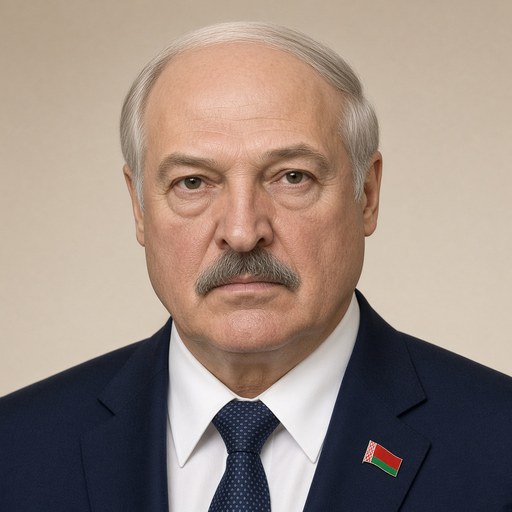
The President's speech at the off-site republican seminar in Drohichyn on the implementation of the State Program for the Revival and Development of the Village for 2005 - 2010.
 Alexander Lukashenko · President of Belarus
- Context
- Lukashenko addressed a republican seminar in Drohichyn in May 2005 on implementing the State Program for the Revival and Development of the Village for 2005–2010.
- Main themes
- Rural revival and village development program, agricultural reform history, post-Soviet agricultural collapse, collective and state farms, crop production and grain yields, agro-industrial complex improvement, budget funding for agriculture, livestock and mechanized brigades, sugar beet production and self-sufficiency, regional agricultural performance, salary and staffing in agriculture, land use optimization
- Duration
- ~106 min
- Words
- 12,706
- Sentences
- 872
- Readability
- 60
- Grade
- 8.5
- Syntax
- 2.67
- Vocabulary
- 2.10
Translated from Russian
The broad sphere of national life a sentence belongs to. Every sentence has an Arena, so it is the denominator the other indices are read against.
Other872 sentences in 154 paragraphs
Dear seminar participants!
In order to objectively assess the significance and timeliness of our rural revival program, I would like to remind you how we arrived at it. Where we started.
After the collapse of the USSR, the then leadership of Belarus, led by the so-called "democrats," began the reform of the agricultural sector with the destruction of collective and state farms, that is, large-scale production. Here is the result. In just two years, from 1992 to 1994, the fixed assets of agricultural enterprises decreased by almost half, and the working capital more than halved. The economy of farms sharply deteriorated. In short, everything began to be embezzled. This happened before our eyes. The situation with the management and specialist staff worsened. A high level of price disparity between agricultural and industrial goods was reached. There were payment arrears for milk, meat, and other products delivered to the state. There was no money to pay farmers' salaries, and the average salary in 1994 was 10 to 12 US dollars per month across the sector.
It was precisely from overcoming this collapse, this deep crisis, that we had to start.
Only through extraordinary measures, the strain of a not very rich budget in those years, restoring order on the ground, and strengthening technological discipline were we able to save agricultural production. A significant role was played by the republican fund for supporting agricultural producers, food, and agrarian science, established in 1995. As well as similar local stabilization budget funds. The funds were primarily used to create mechanized brigades and strengthen the material base of agricultural organizations. That is, at a time when resources were scarce, we thought about how to buy something and under what roof to combine it all to achieve maximum efficiency and return from this equipment. You remember, we began to create mechanized brigades based on agricultural machinery. They still exist today; we do not disregard this direction, and they provide a good positive effect, especially in farms that are very struggling today.
We not only managed to stop the decline but also to improve the situation in the sector. The price disparity decreased. We began to approach the projected indicators for the productivity of industrial livestock enterprises. Agriculture actively began to strengthen its technical potential, primarily using products from domestic agricultural engineering. The average monthly salary in agriculture is still low, but in 2000 it increased more than threefold compared to 1995.
The next stage in the development of the country's agriculture is the implementation of the Program for the Improvement of the Agro-Industrial Complex for 2001-2005. It defined not only the main directions for the intensification of the production sphere of the agro-industrial complex but also ways to solve housing and staffing problems.
The program received good financial support. Almost 5 trillion rubles of budget funds were allocated for its implementation from 2001 to 2004. You noticed, I am answering the question of how we came to this program. First, we were rising from the bottom, saving agricultural production, and then, when we felt that we could do something, we invested more than 5 trillion from 2001 to 2004. That was the program for the improvement of the agro-industrial complex that we implemented. And the approaches and paths developed then laid the foundation for the current rural revival program.
The development of the agricultural sector was given a nationwide priority and special attention from the country's leadership and local authorities. All this allowed us to achieve positive results in almost all areas of the development of the agrarian complex.
First, in crop production, thanks to the specialization of regions and optimization of land use, a significant increase in grain yields was achieved. For the first time in 15-20 years, an average yield of more than 30 quintals per hectare was obtained across the country. And this is not the yield that was in the Soviet Union, when, you remember, nitrogen and other fertilizers were applied in abundance. There were no problems with them then. Now we apply them much less, but look at the results! The yield in ten districts was 35-40 quintals per hectare, in six districts - 40-50, and in three districts - Grodno, Berestovitsa, and Nesvizh, I remind you, more than 50 quintals per hectare. In the districts! Moreover, the Grodno district received an average of almost 61 quintals of grain per hectare.
The gross harvest of sugar beets has reached three million tons, which allowed the country to achieve self-sufficiency in sugar. I have already mentioned this. This provided an additional approximately 50 million US dollars and, of course, enormous support to farmers. Because this is a liquid commodity - sugar. It is sold both abroad and within the republic. It does not sit in the warehouses of processing enterprises.
The domestic brewing industry is fully supplied with quality barley, which is on par with foreign products. The light industry is supplied with flax fiber, the yield of which exceeded the level of previous years and amounted to almost seven and a half quintals per hectare. The plan for the purchase of rapeseed oilseeds was fulfilled by 161 percent. This is in crop production.
Secondly, in livestock production, due to the modernization of farms and improvements in feed production, a high dynamics of product production has been achieved.
Milk yields have exceeded 3,100 kilograms on average across the country for the first time in 10 years. 267 farms in the republic have reached 4,000 kilograms of milk yield per cow. Some agricultural enterprises have achieved a good European level in milk production. For example, at the experimental base "Zhodino" in the Smolevichi district, milk yields from cows exceeded 8,200 kilograms.
The enterprises of industrial livestock production have further developed. The capacities of pig farming complexes have been almost fully mastered. Almost every fourth complex has been reconstructed under new resource-saving technologies, which, with full feeding, allows for daily weight gains of pigs in growing and fattening of 600 grams or more.
The situation with beef production is improving. Cattle fattening complexes were mastered at 90 percent for the first time in 2004. The best of them are approaching daily weight gains of kilograms. And in the agricultural production cooperative "Progress" in the Grodno district, as of April 1 of this year, this indicator was 1,019 grams.
52 poultry farms of the republican association "Belpytsaprom" are successfully operating. Reconstruction and technical re-equipment with the introduction of the latest technologies are nearing completion at half of them. On this basis, the productivity of poultry is significantly increasing. For example, at the Dzerzhinsk and Vitebsk broiler poultry farms, daily weight gains of broilers of up to 60 grams have been achieved, which corresponds to world standards. I would like to note that such gains were seen in the early 90s in some livestock complexes for beef production.
A large volume of work has been done on the technical re-equipment of processing enterprises in the agro-industrial complex. This has allowed for the production of new types of products and increased their competitiveness. And what is very important - the coefficient of raw material utilization has increased by 10 percent in the meat industry and by 12 percent in the dairy industry.
The structure of management in the agro-industrial complex and organizations servicing agriculture has been optimized. Along with increasing the efficiency of their work, this has resulted in savings of more than 30 billion rubles. In the farm we visited today - the manager told us about this - there are only 35 managers. 35! This is an example for everyone.
As a whole, as a result of implementing the programmatic positions, a stable growth rate of GDP has been ensured, which amounted to 112 percent in 2004, and 118 percent in the first quarter of this year. A positive trend in increasing the export of agro-industrial complex products has formed. Enterprises of the Ministry of Agriculture and Food and organizations of the "Belgospishcheprom" concern sold products abroad in 2004 for almost 820 million US dollars. Over four years, exports have doubled.
From 2001 to 2004, 36,600 rural families received new apartments. On average, a rural newcomer received 108 square meters of improved housing, which is 23 square meters more than the average urban resident.
The average monthly salary in rural areas in 2004 increased almost twofold compared to 2000 and amounted to about 95 dollars. For the first time in a decade, the agricultural sector of the country operated without losses.
The number of unprofitable agricultural organizations has decreased to one and a half hundred. And as of January 1, 2004, there were 1,200 of them.
At the same time, not all the most important problems of the countryside have been solved by now. The situation in the economy of the agricultural sector remains difficult. And the main issue is the social and living conditions of rural residents. When I mentioned these facts, positive facts, I referred to average indicators, and I cited the best enterprises as examples. And, of course, when it was difficult, we invested money and saved enterprises that were supposed to give us immediate results in a year or two. What enterprises are these? These are the ones that were beacons, flagships in Soviet times. We identified 60 of them. Furthermore, we saved complexes. Because they were capable of providing the country with the necessary products. Poultry complexes, pig complexes, beef production complexes. And this was justified. Then we moved on to medium-sized enterprises, collective farms, state farms, and so on. And we also achieved a certain effect. Now it is time to engage the others. To bring to the highest level those that are already at a high level. But there are still many, many problems.
First and foremost is the relatively low level of wages for agricultural workers. In essence, farmers have become the lowest-paid group of the population in our country. This contradicts the social policy of the state, the most important priority of which is care for people.
Undoubtedly, farmers have the right to have incomes no lower than those of urban residents. Their level of material well-being should not only correspond to the market conditions of peasant labor but also play a stimulating role. A villager should receive medical care no worse than urban residents. And most importantly - we can provide this. We can easily do this today. It is necessary to provide rural children with the opportunity to have a competitive general secondary education so that they can continue their studies in universities on par with urban children. And we can do this today. We can easily do it. We are doing it and supporting farmers.
Yesterday, I held a meeting on the new admissions campaign for universities. We support farmers in this area as much as we can. This is even more important than building a house in the countryside to keep our young people there. Education is paramount. The greatest value, as I often repeat, is education. Without education, we do not need houses or anything else. A country of fools does not entice us. We need educated people. Therefore, we are doing a lot in this regard and will continue to do so. A rural resident has the right to enjoy communal, trade, household, and transport services on par with the urban population. It is from these simple truths of life that we proceeded when we began to develop a large-scale and long-term program for the revival of the countryside.
The potential of the agricultural sector formed as a result of the implementation of the Program for the Improvement of the Agro-Industrial Complex, the socio-political and economic situation in the country currently allow us to successfully address these tasks. A stable foundation has been created for the further development of the entire national economy. The growth of gross domestic product in 2004 compared to 2003 was 11 percent. The industry, including that servicing agricultural production, is operating effectively. A stable financial system of the state has been created. There are significant achievements in agricultural science regarding both the problems of organizational improvement of the sector and its technical and technological re-equipment. When I mention GDP growth figures and other figures, I ask you to keep in mind that we have long reached the level of Soviet times. And adding 11 percent to a huge volume is not the same as adding 11 to zero. Some compare us with statistics from the CIS. Someone there has a growth of 12 percent, while in Belarus it is 11. They take first place, we take second. So be it! They are starting from zero, just as we once did. They are growing from zero. And here, one percent is much more significant than there.
This situation has allowed us to set more ambitious tasks for the development of the countryside. To change the focus in this area, giving priority to the person.
To the person of difficult fate, of hard peasant labor.
Essentially, the task is to revive the Belarusian countryside on a fundamentally new basis. At the core of all this lies a simple, as I often express it, life formula: work can be done in the most difficult conditions. Our mental labor is not much easier when compared to peasant labor. It is hellish, hard work: responsibility, constant puzzles, and so on. For farmers, there is colossal physical labor, in mud, in dust. In any conditions, one can work 8 hours, 10, 12, or even a day, but it is preferable to come home in winter to a warm apartment, in summer, as I entered some houses, to a cool one, and definitely take a shower, rest, turn on the TV, watch the news for 30-40 minutes, have something acceptable and normal to eat to restore strength in this cozy home, to see your children, to be with them. And then you are ready to live and work again the next day. That is what our people need. We realize that this is not an easy task. Everything that was done in the countryside before was simpler. It is easier to build a farm or buy a new tractor; it is much more difficult to create a new quality of life in the countryside. To create an environment attractive for both peasant labor and rural living.
The village is in urgent need of revival, of a comprehensive solution to its problems. About 30 percent of our population lives here. All current Belarusians, as I have already mentioned, have roots in the countryside. The village is the food production workshop of the state, the source of national traditions, folklore, and folk creativity. Preserving and developing this source is the most important state task.
And here is something else that is important. Today, I enter a house and ask: how many children do you have? Three. And in this family? - I ask the boy who led me in kindergarten. "I have," he says, "three girls, three sisters, and a brother." That is, five. So today, the main population growth comes from the village. Not the city, but the village! So let’s help here, support them with these houses, no matter how much they cost, it will pay off when there are 5 people in the family. Soon in the city, we will be registering those who have three children in museums. Therefore, the simple truth of life is: let’s support the peasants, and we will get a flow of the strongest, healthiest, most beautiful, and, most importantly, convinced Belarusians from this village.
These goals are precisely what the new program document aims to address, directed at solving the multifaceted problems of social arrangement in the village. A fundamental improvement in the spiritual and material well-being of the rural population. Raising the agricultural sector to a higher level of development, based on the latest technologies, achievements of agricultural science, and both foreign and domestic experiences of advanced farms.
The state program for the revival and development of the village for 2005-2010 was born slowly, as I have already said, and with difficulty. I emphasize that in developing it, we started from life. From the needs of the people and the capabilities of the state.
The best specialists from science and practice were involved in its development. This program was widely discussed. There were many proposals and comments, and we found that 88 percent of them were valid.
I believe that the version of the program we adopted almost fully corresponds to the set goals. If adjustments are needed, we will make them along the way; it is not a problem.
What are the fundamental differences of this document from those adopted earlier? First, and I have already noted this, is the unconditional orientation towards the person. That is why we started today not with farms, not with complexes, not with machine yards, but our theme is the agro-town. The village is the sphere of life of our peasant. What should this agro-town be like and how should it be created? A good example is Zakozely. Here, mainly, everything was done by the people with their own hands.
Second, the comprehensiveness of the program. This is not a departmental document, as it was before, not an industry document. This is not just a headache for the Minister of Agriculture or Ivan Mikhailovich Bambiza. This is a nationwide program. A document of the President of the country, and all those who stand beside him, and who are subordinate to him in service - that is, of the entire country. In it, we linked all social and production issues of the village.
Third, the financial provision of the program. Over 6 years, we plan to allocate almost 70 trillion rubles. I think we will cut it down. This was calculated at maximum. Governors and enterprise leaders calculated like this: the money is not ours, let’s write more. They will still give half as much. I know this. I gave an example that I recently signed a decree to assist agricultural enterprises due to the weather conditions. Can you imagine, they calculated about 20 billion - let’s take it from the budget. No, there will not be such money. Go to social insurance or state insurance and ask for that money there. But we will help with something.
We accepted 70 trillion. This money will not go anywhere. But we will give it for each brick, for each foundation block, for each meter of road, gas pipeline, water supply. That is, we will provide the corresponding funds for each object, and then check it ten more times and cut, and cut, and cut.
What is happening? Once collapsed agricultural construction organizations, especially rural ones, have not yet recovered. And they saw a good chunk and think: here we will "scoop" up money and rise because of this. I am not against it. Of course, they need to "rise," but that does not mean that their production profitability should be 40 percent, not 3 percent. It will not be possible to just take money like that. This must be understood. Therefore, we must prepare for the fact that we will invest not 32 billion dollars in this program, but, as I said, 25-26, well, a maximum of 27, or maybe even less. And this difference from 32 to 27 will not go anywhere; it will remain with you. But it will not be pocketed by the idle at the expense of unfulfilled volumes of poor-quality work. We would rather direct this money to the modernization and re-equipment of our agro-industrial complex and the processing industry.
This program is the most important long-term investment project of our state. The state! I emphasize: we are not burying money in the ground, as our oppositionists shout, but investing capital in the most important sphere of the national economy. Capital must work on our land, for the benefit of our people, and not "run away" abroad or into speculative spheres. And we must remember that one working peasant provides work for seven people in the city in processing.
The basis for improving the production sphere of the village is the orientation towards the development of large-scale collective farms, large-scale technical and technological re-equipment of the agro-industrial complex, primarily based on the products of domestic machine engineering and the implementation of scientific developments.
What will the village gain from the implementation of this program?
Sustainable development of agricultural production based on the revival of the social and production spheres of the village. The transition of agricultural enterprises to the principles of self-financing and self-sufficiency with a real level of state support. Improvement of the material well-being of rural workers. By 2010, the average monthly salary should exceed 300 dollars. The quality of rural life will increase based on the introduction of social standards for the rural population, close to urban ones. I say it should exceed 300, and this should be perceived calmly, because from 12, as I have already told you, in the mid-90s, we have now approached 100 dollars in average monthly salary. We need to increase the salary for peasants threefold by 2010. For working peasants.
Undoubtedly, we need to preserve all settlements and ensure a decent life for their residents. But this task must be solved step by step. During 2005-2010, it is planned to improve 1,500 settlements. What did we talk about? To give them the status of new-type settlements, urban-type - agro-towns.
These are self-sufficient, well-equipped settlements, in which all necessary conditions for comfortable living for their population and residents of adjacent territories will be created. Here, we need to solve the problems of water supply and gasification. Build a network of roads and streets with a solid surface, establish stable passenger transport communication with district and regional centers. Fully provide the population with telephone communication. Place a complex of social sphere enterprises.
Today we saw this agro-town. It will be improved. But God willing, may we have such places everywhere. Well, what did we see here that seems unreal to implement in every farm? There is nothing unrealistic here. Here is exactly everything that is needed, in a businesslike manner. A sensible leader. I would not want to overpraise. One whom people respect and value. He had a two-story building. He walked around it. Thought. On the first floor, he made a sauna, a bath-laundry complex. And it is not some extravagant thing. It has been working for several years. You can wash: both work clothes and any housewife can bring heavier items - sheets, duvet covers, and so on. For small things, she can wash at home in her washing machine.
And upstairs, on the second floor, there is an outpatient clinic. Neat, without any excesses. There are both cheap and expensive medications. And for the day hospital, there are three beds. Please, an old lady came, "we dripped" her, she rested for 2 hours, and went home. She does not lie there for days. That is, we already know what to do in healthcare and education. It is not expensive. It just needs to be done sensibly. There is no need to build new objects here. Where it is necessary, we will build them, although there are not many such places. There is no need to build schools here. We need to bring the existing ones into a normal state. All this is real. I do not know who among you, passing through this village, did not feel that he could live here peacefully. Beautiful, clean, neat, green everywhere.
But housing construction in the village should be raised to a higher level. A rural house should not yield in comfort to an urban one, but should also take into account the peculiarities of rural life and the peasant mentality. It is planned to switch to new economical housing projects in the village. At least half of it should consist of single-family houses with outbuildings, and the remaining part, approximately in equal shares, should be block single-family and multi-family sectional houses. The state should do what the future resident cannot do himself: the road, the street, the house. The rest let the new resident do himself. Moreover, I have come to a firm conviction, an absolute conviction - where, according to our requirements and standards, the head of the enterprise can build housing himself, do not bring in contracting organizations. Give him those 20 thousand dollars, and let him build the kind of house we point to with our finger. If he agrees, let him build. If he saves, let him keep the money for himself.
You saw that little house next to the outpatient clinic, I specifically inquired how much it costs - 12 thousand dollars. A wonderful little house, an excellent estate around. What more do you need? There are two apartments there. Everyone says: it cannot be. Well, they found a reason, it turns out, taxes were not taken into account, okay, let it be 15 thousand dollars. So our contractors today moan that they cannot build anything worse than this for 20 thousand. So why should I argue? If there are those willing in Ostromechevo, Zakozely to build such houses - give them that money. If they save, let it be theirs. We do not need such contractors who moan and constantly cry "give us money." And in general, regarding construction. I have already instructed both Petr Petrovich Prokopovich and the Government, and today I say unequivocally: decide. There is nothing extravagant in this house: foundation block, cement, silicate block or brick. Make a full calculation of time, salary, and draw a line.
We need to set prices so that producers of building materials do not profit at our expense. Then we will make it cheaper. Let it not be market-based. No one will blame us. Let’s solve our problems ourselves. Anatoly Afanasyevich Tozik was persuaded, and he writes to me: it is already impossible to build a house in the village for 25 thousand. But for this price, you will not be laying "coffins" in the field in the mud, because your houses look like coffins that were built in Soviet times. This will not happen. Count as you build for yourself, as for yourself, so you should approach this construction from these positions.
I have already said what is lacking in such houses, especially in a peasant house. It is essential to make a basement, well insulated. No one says it needs to be finished. Make it from foundation blocks, neatly build them, plaster them, let it be this space under the main house. Put a boiler there for heating and make a mansard roof. There is no need to do anything, just cover it, and that will be a reserve for the person. If he becomes wealthy, he will either build a sauna down there or put in cabinets. Upstairs, if the family is large, he will make one or two more rooms. These will be small expenses. But where we see that there is already a large family, it should be done this way. And basements should be made in all houses in the village. I emphasize again, this is not a lot of money; we do not require and will not do finishing. The peasant, the resident himself, should do at least something for himself.
Housing should be inexpensive but comfortable! At the same time, I emphasize, in the construction and renovation of buildings, it is necessary to involve local resources. The rural population must be given a real opportunity to solve housing problems on an individual basis.
The state will provide comprehensive support to personal subsidiary farms, which are the second most important source of income in the village. For these purposes, I would like to set a task for local authorities - to create communal and household structures in agro-towns to provide a range of services to the population. First of all, for the cultivation of agricultural crops, harvesting, fodder preparation, fuel supply, and marketing of produced products. But only where it is necessary. This does not mean that we will now start creating another collective farm in every collective farm, creating a machine yard at the village council or elsewhere. I have already told the leader of Zakozely, he immediately began, worrying, his speech, that after we stopped being called "red directors," we revived and started working. And you know, indeed, excuse my modesty, everything depended then in this chaos on my decision. If there is Bedulya, he remembers our conversations then with him. When he was just afraid that I, as a young President, would make the wrong decision and again go down the path of those Shushkevichs and so on. I then said: no. There will be large-scale agricultural entities in the village. Whether it is a collective farm or a state farm - it does not matter. Let it be. Well, some began to exercise - SPC, OPCA, POKA, and so on. Okay, that is your business. I did not interfere in this. But it still remained large-scale production. And then I said: let this "red" landlord, director, and so on be. Yes, they are not without flaws. I also worked in this skin. None of us are without flaws. But what am I getting at? By saying that there will be large productions and these directors, I understood that the foundation of our life in the village, and indeed of the whole country, rests on them.
This is not just an economic entity in the countryside. It is an administrative-territorial unit. A collective farm, a state farm - this is the foundation, this is the basic territorial cell in our state. And as soon as we would cut this cell, the whole country would crumble. And we were heading towards that. By preserving this cell, preserving the leaders of the enterprises, I thereby transferred to them significant powers. So today I must hold them accountable for the exercise of this power. For how they fulfill my assignments, as the person who preserved them, gave them the opportunity to live and work, and probably did the right thing, life confirms this, I must ask them how they serve my voters. And how will they plow the land, how will they thresh, and so on? Where it is necessary to create additional cooperatives, based on the KBO, there is experience, or based on the Belcoopsoyuz, by all means, or individual entrepreneurs. Competition will not hurt. But God forbid you declare that collective farms will not perform this function. That’s it, we will ruin services for the peasants. Therefore, no farm, no agricultural enterprise can deviate from meeting the ordinary needs of an ordinary person in the countryside. A person! We should not destroy what has saved us for a long time and what is functioning normally today. We should not rush to transfer social and household facilities to the district: kindergarten, school, and so on. When you are in the position of the owner, there will still be a greater effect. We transferred the military town of Uruche to the local district executive committee. Now it’s a complete mess. But it was a normal town. What have we achieved with this? Why did we take it from the military? They were cleaning, painting, and so on. It was a town! The commander of the unit was responsible for it. By transferring it, what have we achieved? When will Pavlov get around to this town?
So do not rush to break what is functioning normally. There is this sphere in state farms and collective farms, it is working, better help them - give them money, give them equipment. After all, he is the leader, he walks on this land, he will always put it in order faster than some chairman or head of a collective farm in the city of Drogichin. I understand that this is an extra burden for the leaders of collective farms and state farms. But, guys, the main thing is not this, what kind of burden someone has - that is important, but not the main thing. The main thing is how it will be better for the person. After all, in the end, if all this collapses, the restoration will fall on your shoulders.
The state will support all issues concerning the peasants. The leaders of the farms and rural councils must ensure the needs of citizens for haymaking, pastures for keeping personal livestock, and carry out veterinary services for animals in personal subsidiary farms. The program activities provide for a comprehensive solution to road problems in rural areas. The Ministry of Transport and Communications, together with the regional executive committees, should first ensure the repair and reconstruction of access roads to agrotowns and other settlements. But this must be done very responsibly and qualitatively. Control from the authorities will be exceptional. We will not allow this money to be squandered. Because I see, even where I control, they manage to do it poorly. I mean the ring road, exits from Minsk, and so on. They stood for two years, the asphalt begins to chip and crumble. What is this?
Therefore, repair, lay solid pavement on the streets where this has not yet been done, but do it very qualitatively. Build reliable access roads to production facilities, grain elevators, mechanized yards, farms, and complexes. The Ministry of Transport and regional executive committees should direct a large part of the road fund in 2005-2006 to the repair of existing roads, the arrangement of access roads to settlements and production buildings. That is, we need to save what can still be saved, taking into account new technologies, as you did here - gluing fine gravel onto the asphalt and achieving a normal surface.
It is necessary to optimize the bus route network, this is very important, in order to ensure regular communication between district centers and agrotowns and other settlements. So that a villager can easily solve his everyday and other problems, using not only the social complex of the nearest agrotown but also similar infrastructures of other levels - from district to republican.
It is not easy, but it is certainly necessary for the Ministry of Education, regional executive committees, and district executive committees to solve the problems of increasing the competitiveness of graduates from rural schools when entering universities and secondary specialized educational institutions. Here is a good experience. The chairman of the district executive committee said that they selected 70 of the most talented children and forced tutors in the city to work with them, paying them from the district budget. And he says: we will see what the result will be. I dare assure you, there is already a result. This will not go anywhere. These 70 kids from the Drogichin district are in our state’s piggy bank. And surely most of them will return to you. A wonderful initiative. This is really, well, only the Poleshuks could come up with this, who always know how to live together and fight for each other. Like a family, you understand? He cares for these children as if they were his own. This is the essence of it all.
The Ministry of Education and local authorities need to ensure the further development of the network of preschool educational institutions. Open new type educational institutions in rural settlements - gymnasiums and lyceums. Create flexible forms of labor and vocational education. But without exercises. We will definitely rename gymnasiums and lyceums, but everything will remain as in secondary school. If you are going for this, then you must clearly see what it will be like. This does not mean gathering elite children in one heap, but first of all, the children of peasants.
The program provides for significant reorganization of healthcare in the countryside. The most significant changes are the creation of general practice outpatient clinics serving the population within a radius of 10-15 kilometers. Today, the Minister of Health and the governor presented the healthcare service system in the Drogichin district. A normal system. You can write it one to one, taking into account the territory and specifics of the district. Normal. And coverage, and so on, there is transport. Where there is none, we will definitely purchase. And there is no need for a FAP in every settlement. It is necessary to raise this service to a higher level. And if it is a FAP, then the paramedic must definitely report to this girl, the doctor, who wants to work in this medical outpatient clinic. She must be clearly "tied" to the chairman of the district executive committee, the chief physician, and the chairman of the district executive committee.
The health of people is above all money. Especially for those who have gone through severe trials in life, felt what health is, they must understand. And for those who have not gone through, ask them. And everything must be done so that a person can receive minimal medical assistance. But our healthcare system and structure are not bad. We are improving and putting it in order. But we must strengthen the role of the district hospital: where births take place, where women undergo gynecological surgeries, where surgical operations are performed, where solid treatment is provided, and these district hospitals you must re-equip in the next two to three years. Right, Lyudmila Andreyevna (Postoyalko. - Ed.)?
Postoyalko L.A.: Yes. We have a program for five years.
Lukashenko A.G.: You have two to three years to re-equip the district hospitals. You will not re-equip them yourselves. Your money will go to the re-equipment of serious medical centers, your property, and they, the governors and chairmen, should think about the district hospitals. As we did in Soviet times. Each collective farm, state farm: here are two wards for you, here is one ward for you. And the "stuffing" should be done by the governors, and we will help somewhere. Surgical departments, operating rooms, intensive care units. This is the main thing, and we will help. And the rest. Let’s start digging the land around, planting trees where there are none, painting facades, putting everything in order inside. This is where you find the funds.
For elderly people, it is necessary to create medical-social hospitals, nursing care hospitals - at least one in each district. They have done this based on one of the remote district hospitals. 25 beds, as you said? I ask: is it enough? It is enough. If an old woman has no one to look after her, she goes there. She pays 80 percent of her pension. Here, please, pensioners pay 100 percent for their conditions. And they are satisfied, happy. They will be taken care of, fed, clothed, and provided with medical care on site. 25 beds are enough for the population. And we, as a state, look normal, that we have not abandoned our elderly.
And this experience should also be adopted in the city, even though the conditions there seem good, but there are "unmanageable" elderly people. Well, yes, nurses visit them. But maybe we should look, and this experience might be useful. But we must cherish the elderly like children, especially the lonely. It is not a fact that we will not find ourselves in such a situation someday. Therefore, nursing care hospitals are needed, but everything must be done wisely. Not for show. I do not demand it. Where it is not needed, do not do it, but where it is needed, you see, study the situation - do it, for 3, for 5, for 12, 40 beds. As many as needed. Maybe this same old woman will go there, in autumn, winter, spring she will stay there, and in summer - from May to September - you will return her to her homestead. She wants to walk on her own land.
It should be recognized that issues of household services for the rural population are among the least resolved at present in the social sphere, although they are very important. Women suffer the most from this.
Social standards in the field of household services in the countryside must be ensured through the improvement of the work of comprehensive reception points and the increase in the range of household services provided. I do not even want to say anything about this. It must be done as we thought, but did not do in Soviet times. A person must be able to repair both a refrigerator and a television and a watch. He should be able to call, order - some system should be in place - they come, take it, transport it, deliver it, repair it on site. I see in this point, a person is standing - doing everything reasonably: repairing a suit, sewing a skirt, and so on. He comes twice a week, and that’s enough for this. Well, what is so difficult about that? We have already gone through all this, we need to remember and do it today. What can we do, this has fallen to our lot, to our fate.
To solve the tasks, the state association "Belbyt" must take comprehensive measures to develop the material and technical base and technical re-equipment of household service organizations, ensure the training of qualified personnel.
At any level of accessibility to urban trade for the rural population, the role of consumer cooperation does not diminish. Trade points in the countryside must fully take into account the specifics of both peasant labor and the peculiarities of rural life. How to do this? Today, the chairman of the consumer cooperative clearly showed how it should be in the district, how it should be in this agrotown and in this farm as a whole. An ideal system, an ideal structure. So they know how to do it. Go ahead. But it is necessary not only to sell but also to buy surpluses from the population, and the chairman of Belcoopsoyuz swore that he would do all this from this year.
In the development of cooperative trade, a significant role belongs to local authorities. You must build this structure in the field, chairmen of district executive committees, and say: do it this way. And consumer cooperation must meet your requirements. Ministries and republican agencies are obliged to send the necessary number of specialists of higher and secondary qualifications to local authorities, and they must take comprehensive measures to secure them in the countryside. Provide them with comfortable housing and benefits for utility payments. Pay a one-time allowance to workers who arrive by direction to organizations located in rural areas. Without this, we will not solve the personnel problem in the countryside.
For financing activities aimed at developing the social sphere of the countryside until 2010, it is planned to allocate almost 17 trillion rubles, this figure I named without taking into account savings. Almost 57 percent of this amount is budgetary funds. All of them are allocated by ministries and agencies. I warn all budgetary fund managers - not a single ruble should be used for purposes other than intended! In case of detection of cases of using program funds for financing any other areas, the money will be returned, and the guilty will face the strictest punishment.
I also want to warn the leaders of all organizations responsible for implementing the social block of the program about the need to allocate the planned volumes of their own funds. Those who think that the large-scale tasks we set for the revival of the Belarusian countryside will be fully resolved at the expense of the republican budget are mistaken. It is necessary to mobilize local sources and other financial resources to the maximum.
Dear comrades!
The program we have adopted is a fundamentally new stage in the development of the production sphere of the countryside. We have always talked about social, social, and once again social to emphasize that the main thing is a person, I repeat. But without work in the countryside, on the farm, in the machine yard, at the grain elevator, we will not achieve anything.
I will say more, I flew here, flew over Minsk region - I had a terrible mood, - I was so upset, but fortunately, as I approached Konstantin Andreevich (Sumar. - Ed.), I looked at the Baranovichi district - it somehow eased. Horrible. They need to conduct a new sowing campaign in the Dzerzhinsk district, apparently, in part of Minsk, I have already marked it on my map. But these are the best districts, Nikolai Fedorovich (Domashkevich. - Ed.), of the Minsk region. And you fly and think: here we give them agrotowns, we give them this, we give them that, 70 trillion, but this is on the condition that you will work hard there and yield results on this land. For idlers, swindlers, and alcoholics who do not fulfill the elementary, there is no point in waiting for money.
I have already told the group that was with me at the seminar, today agriculture is not what it was 10 years ago. Back then, we were running around, and I included, not knowing where to get a bag of sugar. Those are not the times anymore. Today we have everything. And today the Minister of Agriculture said that 800 farms will provide us with 100 percent of the necessary products at current volumes. And we have 2,500 farms. So we will invest in these 800. As I was always pushed towards this: Alexander Grigoryevich, why are you running after them, just give us the money, we will give you the products you require today. Well, I couldn't do that back then because, through no fault of their own, the farmers got stuck in this swamp. But today, after 10 years of persuasion, support, uplift, and so on, what else is needed? When the fields are like fields, the farms are like farms, the machine yards and grain storage facilities are in order, well-kept, albeit modest, it does not depend on the farmers, but there will be order, there will be no drunkenness and theft - come, we will help.
If this does not happen, I will focus on a thousand farms and fully provide the Belarusian people with the necessary products. And I will go there to rest. I exaggerate. I will never allow that. And most likely, we will skin those who do not fulfill what I am talking about today. I apologize for the harsh words.
In this regard, in the agricultural sector, as well as in the entire national economy, two problems are becoming increasingly relevant: reducing production costs and improving product quality. Only in this case can we ensure its profitable realization. And all production programs must be oriented towards the requirements of product and service competitiveness. For example, the farm we visited today - are you planning to make a billion in profit this year?
Voice: A billion.
A.G. Lukashenko: A billion. Well, why does a similar farm of the same size, with the same support, today have a billion in losses? Why? It all comes down to the work of the manager, specialists, and the team. So tighten up.
Unfortunately, while constantly facing problems with the high cost of most types of agricultural products, our farm managers are still satisfied with the emerging positive dynamics of growth in their volumes. Economic analysis of the structure of production costs, if it is conducted at all, is done at the end of the year, when it is already impossible to correct what has happened. And necessary conclusions are not drawn for the future. As a result, production of products is being increased at any cost. And money is begged from the state to cover losses.
Do not forget, we did not accidentally call this year the year of savings and efficiency. This applies not only to industrial enterprises but to all sectors of the national economy. And the villages - first and foremost.
I warn everyone. From now on, we are adopting a different approach to subsidizing agriculture. We allocate money to solve fundamental large-scale tasks. For everything else, the village must earn on its own, and we must create conditions for that. And we will demand.
I do not intend to teach those present the technologies for making money in the process of farming on the land and on the farms. I will focus on fundamental issues.
In crop production, the main thing is to implement resource-saving technologies, which, in conjunction with measures to improve soil fertility, should ensure an average productivity of arable land in the republic of up to 50 quintals, and of meadow lands - up to 30 quintals of feed units per hectare, while reducing specific costs by at least 25 percent. Such a crop production program will allow us to meet the republic's need for cheap food and raw material resources and create a solid feed base.
We need to restore and bring into normative condition more than two million hectares of reclamation and water management systems. To achieve an optimal structure of crops on them. To increase the productivity of arable reclaimed land in the republic to an average of 55 quintals of feed units per hectare. And we have already started large-scale reclamation. This is one of the directions of the state program that we have approved. We will finance this. This is a state matter. We will revive those enterprises that dealt with and will deal with reclamation. But where we have carried it out, we will demand full accountability from the managers of enterprises for the operation of these channels, systems, and fields. At least, you already know me well, I will not allow what has been done under my watch to be overgrown with weeds and trees. By the way, you have that on the channels. We are uprooting everything now.
But I also ask you, when conducting reclamation, do not rush to get into the swamp where even a tractor cannot pass. Well, let’s restore what is needed today. Small money - and we will get an effect. Otherwise, near the Bialowieza Forest, some quarrel has started in the field. Well, if it can wait, then wait. If it cannot, I told them so, then do reclamation if it was there once. But the main thing is that, as the head of our farm said here, it should be a two-way process. If necessary - close the pipe, raise the water level. If it needs to be drained - drain it. I say this to emphasize that if we can wait somewhere, I repeat, wait. After all, today everything needs to be reclaimed. In a new way, one might say. Invest resources where we will get the greatest effect. And where shrubs are growing, at least try to cut it down and plow it during dry times so that the fields do not become overgrown. In the Gomel, Brest, and even Mogilev, Vitebsk, and Minsk regions, where reclamation is, this problem exists. But do not expect money for this.
When carrying out this work, it is necessary to take into account both the natural and economic characteristics of each region of the country. Therefore, priority should be given to the Belarusian Polesie in the reclamation system. It is necessary to produce in this region no less than 1.3 million tons of milk and no less than 250 thousand tons of meat. This land and these people are capable of such indicators.
In the republic, more than 60 percent of the revenue of agricultural organizations in recent years has been formed in the sphere of production and sale of livestock products. Consequently, this sector is the main source of financial well-being for agricultural enterprises.
At the same time, we have significant problems here. Overall, in the country in 2004, the profitability of livestock products was about one percent. One of the reasons is the excessively high specific feed consumption, one and a half times exceeding the normative level. And this is because the quality of the feed is poor. Today you were shown how it should be done. Our scientists know this perfectly well, so they need to be listened to. If I sometimes had a skeptical attitude towards them, and there was a reason for that, after they calculated in the Gomel region what new crops need to be grown there and received a financial effect from it, my attitude towards them changed. And they have started to move, and agricultural science as a whole. This is already good. However, where there is nothing to do and where the effect is less, there are plenty of idlers, as Mikhail Vladimirovich (Myasnikovich - Ed.) would say. I read today the list of participants and found out: it turns out you have an Institute of Agricultural Economics and an Institute of Economics. Well, you are something! There are a sea of economic institutes, but there is no economy. I do not know what Popkov is doing there, who oversees science, but it is time to cut off this extra fat, Alexander Andreyevich. Moreover, we will not lose anything. We will give everyone work. Those in this Institute of Agricultural Economics need to be moved to general economics.
Popkov A.A.: We are thinking, Alexander Grigoryevich.
Lukashenko A.G.: What is there to think about? They need to be moved, that’s all.
Voice: They participated in the development.
Lukashenko A.G.: Good for them for participating in the development. But I do not see any living thought in this program from the scientists. What we have trampled out over 10 years, as I have already said, we somehow formalized. And that was on the fifth attempt. Alexander Andreyevich knows. You were not yet a vice-premier, and I had already returned so many such scientific programs. It was embarrassing to read. But this is in particular. Agricultural science has become different. Here sits Kadyrov, looking at me. We always meet in the field; he is a completely different person now. He transfers theory to the ground in a completely different way. It is pleasant to listen to him. He knows where cucumbers will grow, where cabbage will grow, where onions and garlic will be, what effect will come from this. He knows where to sow grasses and where to stop. And he demands. And rightly so, this is already an approach. But where there is more theory: the history of science, economics, and so on, there, Mikhail Vladimirovich, we need to shake the guys up.
The Ministry of Agriculture and Food, together with local authorities, needs to fundamentally update the livestock sector. It is necessary to concentrate the main volumes of production, which we are doing, on large farms, complexes, and poultry farms. It is necessary to reconstruct and equip the dairy farms provided for in the program with modern technological equipment. To produce at them in 2010 no less than 90 percent of the gross volume of milk obtained in agricultural organizations of the republic. But again, dear friends, I want to warn you about something. You see what our production facilities are like - from the 50s and 60s, at best from the 70s. Do not even think about cramming imported equipment or even domestic equipment into these crumbling barns. It is not suitable. It is better to demolish it now. On this site, or nearby, or wherever you decide, you need to build a new building and equip it. Because the old one will stand for another two years, collapse, and your equipment will be buried there. Where it is already impossible to restore, do not put good equipment. Under no circumstances. Therefore, where there is no way out, demolish. But where they can still last 10 - 15 - 20 years, there you need to keep the livestock.
Through the reconstruction of livestock complexes and poultry farms, it is necessary to ensure by 2010 the production at industrial livestock enterprises of up to 90 percent of gross pork production, up to 30 percent of beef, and the entire volume of poultry meat.
Create a stable feed base for the planned volumes of livestock production with the formation of at least 50 percent of the insurance fund.
The task is to raise the annual productivity of cows in the republic to an average of 5,000 kilograms of milk, the average daily weight gain of cattle in fattening to 900 grams, pigs to 500, and poultry to 60 grams.
In the domestic market, and even more so in foreign markets, the potential of the agricultural sector is realized through the processing of agricultural raw materials. We have repeatedly addressed this issue, and a lot has been done here. But more needs to be done.
The Ministry of Agriculture and Food, "Belgospishcheprom," and regional executive committees should align the number of processing industry enterprises with the potential of raw material resources, reconstruct and technically re-equip them based on the latest technological equipment from domestic and foreign production. Master the production of new types of products that are in demand both in the country and in foreign markets.
Among the most important problems in this area, I would highlight the following:
1. Completion of the reconstruction of sugar industry enterprises and increasing processing capacities for beets to 28 thousand tons per day.
2. Technical modernization of the flax processing industry to ensure the output of long fiber of at least 50 percent with good quality.
3. Reconstruction and mastering of modern technologies in the meat and dairy industry to enter foreign markets not with raw materials but with products of deep processing. We mentioned Brest, Minsk, and so on as examples.
4. Technical and technological re-equipment of the vegetable drying and canning industry to master new types of products that are in high demand in global markets. At the same time, I want to emphasize once again what I recently told the governors. Last year, excuse me, we splashed into a puddle because we did not prepare the necessary amount of potatoes, cabbage, carrots, and beets. And we got crazy prices in the spring. We practiced - saying that the market will regulate everything. So this year keep in mind: you must lay three times more products for the winter as owners so that we have cheap beets, cabbage, carrots, apples - everything we produce. Everything needs to be restored. Dig pits, make cellars. Everything we produce needs to be preserved. Well, why are we bringing apples from Poland? We can produce our own normal ones. And thus, horticulture will develop. Moreover, I set you a task regarding horticulture, and it is not weak. So, Boris Vasilyevich (Baturo - Ed.)? You had this, I think. So what, he will produce apples tomorrow, and where will we put them? Therefore, in cities, wherever possible, I say, keep pits, cellars 100 percent. Learn from the Grodno and Brest regions; they have not yet ruined this production, as well as the preservation of products. How will you find it in winter? This is decent money.
Technical re-equipment of agricultural production is one of the most important priorities of the rural revival program.
Last year, a targeted republican meeting was dedicated to the development of domestic agricultural engineering.
The tasks were set specifically. Optimize the structure and update the machine and tractor fleet within 5 - 6 years. Ensure by 2010 the full needs of agricultural organizations in the main types of technical means of the new generation, giving priority to products from domestic enterprises. Develop a system of machines for zonal scientifically justified technologies for the production of agricultural crops, providing for a reduction in the variety of domestic agricultural machinery produced by 1.5 - 2 times. Create a system for servicing complex agricultural machinery.
The implementation of program requirements for the technical re-equipment of agricultural production should ensure an increase in labor productivity of at least one and a half times. Reduce the specific consumption of material and energy resources by 15 - 20 percent. Significantly improve the comfort of work for machine operators.
Is it realistic to accomplish these tasks?
The current situation in our agricultural machinery industry does not allow for a straightforward answer. It is possible to replenish the machine and tractor fleet and even replace all the broken equipment. But the main problem is the quality indicators of agricultural machines. And this affects the reduction of costs for agricultural products.
Of course, I acknowledge that in our agricultural enterprises, mechanizers are still not fully skilled in operating this equipment. And when the governor of Vitebsk region, Andreychenko, showed where things break down, we still need to figure out why. Because the contouring of fields in Vitebsk region is the highest, and there are stones everywhere. If it goes, not only will the furrower fly off this seeder, but the beam will break as well. And this is important. But this does not absolve us from questions of quality. They compare imported equipment with ours. Rural workers, governors. And they say that the imported equipment is better. Imported equipment should not be better than ours; it should not be. We can do this. And do not exercise and do not think that we are allocating huge amounts of money and you will raise "Lidaagromash," "Gomselmash," and other enterprises because of this. It will not work. You will only succeed with quality and good equipment.
The republican program for the creation of agricultural machinery and equipment for the production and processing of agricultural products for 2002-2005 envisages the mastering of 86 types of technical means for the countryside. Including 73 units in 2002-2004. As of the beginning of this year, 50 types of machines and equipment have been mastered (this is 70 percent of the target).
Why are the rates of mastering new equipment so low? Who is to blame for this - developers, industrialists, customers? Or all together?
I instruct the government and the State Control Committee to thoroughly investigate and take effective measures to rectify the situation. Failures here are unacceptable! We will derail the entire program.
A constant problem is the quality of domestically produced machines. This even applies to one of the best brands in our republic - the "Belarus" tractors.
The same situation exists with the products of "Gomselmash." Here, 100 percent of the machines of various types and brands that were under warranty service received complaints within a year.
And we need to seriously think about the cost of new domestic equipment. Since the state systematically supports you, you should also meet us halfway on prices. The government must keep this under control. It must monitor the situation in the domestic agricultural machinery industry. I very much hope, Vladimir Ilyich (Semashko), for your assertiveness and firmness in solving this problem.
We are setting a rather challenging task in the area of increasing the level of material incentives for workers in the agricultural sector. By 2010, we need to raise wages in the industry on average more than three times.
I believe everyone understands: we are not just talking about paying 300 or 350 dollars a month to each worker. This money needs to be earned. And the task of the state and the leadership of agricultural enterprises is to provide rural workers with a real mechanism for motivating high-performance labor and receiving decent rewards.
To achieve this, it is necessary to improve the internal organization of agricultural enterprises and the wage system. There should be no equalization.
We have good experience and concrete examples. It is precisely on the basis of improving the organization and payment of labor (strict economic accountability in all 15 structural divisions and clear motivation for each worker) combined with technical and technological re-equipment that the state farm-complex "Zarya" in the Mozyr district has achieved a high level of agricultural production and in recent years has ranked first in the republic in economic indicators.
The mechanism for paying the leaders and specialists of agriculture requires improvement, with a closer connection to the results of the work of the enterprises they head. A portion of the profits should be directed more towards leaders and specialists, then they will deliver results.
I instruct the Ministry of Agriculture and Food, together with the so-called economic agrarian science, and perhaps by that time with the National Academy of Sciences, to develop and submit specific proposals to the Government for the implementation of this programmatic position within this half-year. The Council of Ministers should, no later than the beginning of 2006, introduce the proposed mechanism for material incentives for the leaders and specialists of agricultural organizations into practice.
The implementation of this scheme in the very first year will inevitably lead to the streamlining of the management apparatus, which we have already discussed.
It is necessary to significantly improve the system of training personnel. This is the work of the Ministry of Education, the Ministry of Agriculture and Food, the Administration of the President, and specifically, Alexander Andreevich Popkov, yours. The mechanisms here in the republic have been worked out.
I will only note that the practical part of training must sharply increase. So that a specialist comes to production having physically handled the mechanisms.
For these purposes, it is necessary to create educational and production regional centers, regional high-tech polygons in agricultural production for training students, as well as for retraining leaders and specialists of agricultural enterprises.
More ambitious tasks than in previous years are set before domestic agricultural science. Having enormous scientific potential, we should not spend currency on supporting foreign firms developing new varieties and technologies. We need a full return on our investments in science. From scientists, we expect not only dissertations but also serious applied scientific developments.
We need to create varieties of grain crops with a yield potential of up to 100 quintals, potatoes and sugar beets - up to 600, flax fiber - up to 25 quintals per hectare. To breed a domestic breed of cows with a productivity of up to 10,000 kilograms of milk per year. Meat cattle with a potential growth rate of at least 1.5 kilograms per day, pigs - 900 grams per day.
To develop competitive complexes of technical and energy means for the implementation of intensive technologies for the production of crop products, increasing labor productivity by at least 1.5 times while reducing specific material and energy costs by 20-25 percent.
Undoubtedly, the most important role in the implementation of the production part of the program, as well as the social part, belongs to the completeness of its financial support. I warn once again that the state will only take on part of the costs, financing the most important areas of agricultural development. These are state programs, subsidizing loans for business plans, subsidizing prices for agricultural products in proportion to their growth in energy carriers, insurance for crops, livestock, and poultry, subsidies for prices on grain harvesters and forage harvesters, energy-intensive tractors supplied on lease, subsidies to 60 basic agricultural organizations.
These centralized resources will be allocated to regions and agricultural organizations taking into account the volumes of production and sales of products, as well as the natural conditions of farming.
State support will generally be provided to enterprises that ensure high returns on resources.
Directing state support funds to these goals will create favorable conditions for strengthening the agricultural economy.
It is necessary to concentrate all possible financial sources together to the maximum. Do not scatter them, but use them for the implementation of large projects.
And one more aspect. There should be no widespread reconstruction of buildings, erecting walls, but where necessary - break them down. The main thing now is the "filling," modern productive equipment, and its rational use.
This year, 10 trillion rubles have been allocated for the implementation of the program. Customers and contractors need to carefully figure out how and for what they will be used. At the same time, it is necessary to clearly determine today and for the future: everything that is allocated must be invested precisely in the object provided for by the program.
Dear comrades!
As I have already said, we are living in the conditions of implementing the program.
The experience shown by the breeding farm "Zakozelsky," the proposals expressed here should be the basis for the implementation of regional and district programs. In each region, there should be several such "Zakozelsky" farms so that we do not have to explain for a long time how to do it, but give an address and say: go, look, and do it as it is done there.
I hope that these programs are developed everywhere.
The implementation of the program is the biggest political, social, and economic task for authorities at all levels for the upcoming five-year period. I will say more. If our generation of leaders sitting in this hall, and there are very few of them, a handful, does nothing more, and we will certainly do it in other areas, and only solve this task, implement this program, we will be proud of it. All of us sitting in this hall will do a great deed, paying due respect to the peasant and thereby supporting the peasants and our parents. And the responsibility for the implementation will be personal - from the Government and the Administration of the President to the leaders of organizations at the local level.
But I emphasize, this is the main thing - the central link in the implementation of the program becomes the chairmen of the district executive committees. Without them, nothing can be built and nothing can be financed. Their signature on construction objects, acceptance, and financing is mandatory. Governors coordinate and are responsible for all activities, helping almost at the same level as the chairman of the district executive committee. The government at the national level ensures the fulfillment of its tasks. But the main link is the chairman of the district executive committee. I warn: no state control committees. They will figure out for themselves where to check.
The chairman of the district executive committee must inspect all the houses. Where he has a straight wall, where it is uneven, how the ceiling "lies." Signed - that's it. He is the owner. To allocate money - the chairman signed, then only to finance. But he will also bear full responsibility. You become the main people in the implementation of this program. This is why I invited you today for this main reason, to tell you that you are personally responsible for this first and foremost. Then - the governors and the Government. You are given full power in this regard. But you must stand on my side, not against it, and hold accountable those who will implement the program. Do not try to grab something extra; it will not work. More than what exists will not be divided anyway. But if you save, I guarantee you: it will remain with you. Be frugal, be the masters in this matter. The deployment of work on the implementation of the program is immediate, without delay. We will definitely summarize the results of the first year, determining the effectiveness of the work of everyone involved in the program. And if someone got away with the failure to implement the housing construction program, or rather - for the past year (even if it was half a house, a quarter), then by the results of this year, that will not happen again. To ensure coordinated actions of republican local executive authorities, a working group of representatives of interested parties and specialists has been created in the Government under the leadership of the Deputy Prime Minister, who oversees agricultural issues, Ivan Mikhailovich Bambiza.
Operational management of the implementation of the program, as I have already said, is entrusted to the Ministry of Agriculture and Food. This is the state customer - the coordinator of the program. The Ministry is fully responsible to the Government for coordinated actions in the implementation of the program. I instruct the Government to conduct quarterly, perhaps semi-annual, summaries, at which to hear reports from each governor, heads of ministries, departments, and chairmen of district executive committees, and to take corrective measures. If necessary, report to me on emerging problems that require the intervention of the Head of State. To control the implementation of the program, I instruct the Ministry of Agriculture and Food, with the participation of interested republican state administration bodies and regional executive committees, to submit a report on the progress of each item of the program to the Council of Ministers by February 1 of each year, which will then be presented to the President of the Republic of Belarus. We will find a way to recognize the best in the implementation of the program and take adequate measures where a failing situation is anticipated.
In concluding my speech, I note that the task we have set in the area of rural development is not an easy one. But it will be a matter of honor for all state authorities, leaders, and specialists of rural enterprises, and labor collectives to successfully solve it. Everyone should realize that we have embarked on the implementation of ambitious plans. And there is no turning back. The implementation of the program will allow us to revive the countryside on a new basis, improve the well-being of people, and enhance the prestige of rural life.
Dear friends!
Why did we decide to tackle this now? It is because we have risen from the ruins and ashes of our cities. We have revived them. We have determined the direction of industry. Industry should not be hindered; it will develop. We will also support small and medium enterprises that are currently unprofitable, and it will move forward. We have given industry a push, keeping in mind that it is, after all, the foundation of the economy, the locomotive of the entire economy and state. Therefore, we have paid more attention to it. It is developing. Today, knowing what to do in the cities, we are turning our attention to the countryside. Today, the countryside is half poverty, old-fashioned, and in some places, decline. We could not do this before: there was no money, no opportunity. We looked at the market, how it would still maneuver, but we dealt with specific areas that were included in the program. I have already mentioned this. There were no resources to carry out such deep and large-scale implementation of plans in agriculture. The time has come to address the countryside, production, and the establishment of normal social conditions. Over these years, I repeat, we have learned what we need to do, and we do not make mistakes and will not make them. Strengthening the food security of the country is our task. And this is the foundation of social and political stability and sustainable development of the state.
I do not set and have not set myself the task of deeply working through many accumulated issues here. My main task was to convey to you my reflections and thoughts on the implementation of the program. On behalf of the developers, and a large army of people, including scientists, was involved in the development of this program, I had to tell you this. And you needed to hear it from the mouth of the top leader. And secondly: I told you that this army, which is here: the chairmen of the district executive committees, primarily the heads of farms, you are responsible for the implementation of specific points of the program. I told you this. It is honest and manly. It remains only for someone to execute, for someone to control, and for all of us to work together on the implementation of this program. Believe me, this is a very good project of our state. If we implement it, we can say that we have solved many issues in our country, if not all. I wish you success, dear friends, in this noble endeavor. Thank you for today’s work. All the best to you. Goodbye.
The original Russian. The tags above are read on the English translation's sentences.
Уважаемые участники семинара!
Чтобы объективно оценить значимость и своевременность нашей программы возрождения села, хочу напомнить вам, как мы к ней шли. С чего начинали.
После развала СССР тогдашнее руководство Беларуси, ведомое так называемыми "демократами", начало реформу аграрной сферы с разрушения колхозно-совхозного, читай, крупнотоварного производства. Вот ее результат. Только за 2 года с 1992 по 1994 год почти в 2 раза сократились основные фонды сельхозпредприятий, более чем вдвое - оборотные. Резко ухудшилась экономика хозяйств. Короче, все стало разворовываться. Это было на наших глазах. Обострилось положение с кадрами руководителей и специалистов. Достиг высокого уровня диспаритет цен на сельскохозяйственные и промышленные товары. Возникли неплатежи за сданные государству молоко, мясо и другую продукцию. Нечем было платить крестьянам зарплату, да и уровень ее в 1994 году был 10 - 12 долларов США в месяц в среднем по отрасли.
Именно с преодоления этого обвала, глубокого кризиса и пришлось начинать.
Только принятыми неординарными мерами, напряжением не очень богатого в те годы бюджета страны, наведением порядка на земле и укреплением технологической дисциплины удалось спасти сельскохозяйственное производство. Большую роль сыграл созданный в 1995 году республиканский фонд поддержки производителей сельхозпродукции, продовольствия и аграрной науки. А также аналогичные местные стабилизационные бюджетные фонды. Средства этих фондов использовались преимущественно на создание механизированных отрядов и укрепление материальной базы сельскохозяйственных организаций. То есть в то время, когда были скудные ресурсы, мы думали, как же что-то купить и под какой крышей объединить это все, чтобы достичь наибольшей эффективности и отдачи от этой техники. Вы помните, мы стали создавать на базе сельхозтехник механизированные отряды. Они и сегодня есть, мы не сбрасываем со счетов это направление, они дают хороший положительный эффект, особенно в хозяйствах, которым сегодня очень тяжело.
Удалось не только остановить падение, но и улучшить положение в отрасли. Уменьшился диспаритет цен. Начали приближаться к проектным показателям по продуктивности предприятия промышленного животноводства. Сельское хозяйство активно приступило к укреплению своего технического потенциала, используя преимущественно продукцию отечественного сельхозмашиностроения. Средняя месячная заработная плата в сельском хозяйстве еще низкая, но в 2000 году возросла более чем втрое по сравнению с 1995 годом.
Следующий этап развития сельского хозяйства страны - реализация Программы совершенствования агрокомплекса на 2001 - 2005 годы. Она определила не только основные направления интенсификации производственной сферы АПК, но и пути решения жилищных и кадровых проблем.
Программа получила хорошее финансовое обеспечение. На ее реализацию за 2001 - 2004 годы было выделено почти 5 триллионов рублей бюджетных средств. Вы заметили, я отвечаю на вопрос, как мы шли к этой программе. Сначала со дна поднимались, спасая сельскохозяйственное производство, потом, когда почувствовали, что мы что-то можем, мы вложили более 5 триллионов за 2001 - 2004 годы. То была программа совершенствования агрокомплекса, которую мы реализовали. И вот наработанные тогда подходы, пути легли в основу нынешней программы возрождения села.
Развитию сельскохозяйственной отрасли был придан общегосударственный приоритет и особое внимание руководства страны и местных органов власти. Все это позволило добиться положительных результатов практически по всем направлениям развития аграрного комплекса.
Во-первых, в растениеводстве благодаря специализации районов и оптимизации землепользования достигнуто значительное повышение урожайности зерновых. Впервые за 15 - 20 лет получено более 30 центнеров с гектара в среднем по стране. И это не та урожайность, что была в Советском Союзе, когда, вы помните, немеренно вносили азотные и прочие удобрения. Без проблем тогда с ними было. Сейчас мы вносим их намного меньше, но результат получили какой! Урожайность в десяти районах составила 35 - 40 центнеров с гектара, в шести - 40 - 50, а в трех - Гродненском, Берестовицком и Несвижском, напомню, - более 50 центнеров с гектара. В районах! Причем Гродненский район получил в среднем почти 61 центнер зерна с гектара.
До трех миллионов тонн доведен валовой сбор сахарной свеклы, что позволило стране выйти на самообеспечение сахаром. Я уже об этом говорил. Это дало дополнительно около 50 миллионов долларов США и, конечно же, огромную поддержку крестьянам. Потому что это ликвидный товар - сахар. Он продается и за пределы страны, и внутри республики его закупаем. Он нигде не лежит на складах перерабатывающих предприятий.
Отечественная пивоваренная промышленность полностью обеспечена качественным ячменем, не уступающим зарубежному. Легкая промышленность обеспечена льноволокном, урожайность которого превысила уровень предыдущих лет и составила почти семь с половиной центнеров с гектара. На 161 процент выполнен план закупки маслосемян рапса. Это в растениеводстве.
Во-вторых, в животноводстве за счет модернизации ферм и улучшения дел в кормопроизводстве достигнута высокая динамика производства продукции.
Надои молока впервые за 10 лет превысили 3.100 килограммов в среднем по стране. 267 хозяйств республики вышли на 4.000 килограммов удоя от коровы. Отдельные сельхозпредприятия достигли в молочном производстве хорошего европейского уровня. Например, в экспериментальной базе "Жодино" Смолевичского района надои молока от коров превысили 8.200 килограммов.
Получили дальнейшее развитие предприятия промышленного животноводства. Практически полностью освоены мощности свиноводческих комплексов. Почти каждый четвертый комплекс реконструирован под новые ресурсосберегающие технологии, что при полноценном кормлении позволяет получать среднесуточные привесы свиней на выращивании и откорме 600 и более граммов.
Улучшается положение с производством говядины. Комплексы по откорму скота в 2004 году впервые освоены на 90 процентов. Лучшие из них приближаются к килограммовым среднесуточным привесам. А в СПК "Прогресс" Гродненского района на 1 апреля нынешнего года этот показатель составлял 1.019 граммов.
Успешно функционируют 52 птицефабрики республиканского объединения "Белптицепром". На половине из них завершаются реконструкция и техническое переоснащение с внедрением новейших технологий. На этой основе существенно возрастает продуктивность птицы. Например, на Дзержинской и Витебской бройлерных птицефабриках получены среднесуточные привесы бройлеров до 60 граммов, что соответствует мировым показателям. Отмечу, что такие привесы в начале 90-х годов республика имела на некоторых животноводческих комплексах по производству говядины.
Выполнен большой объем работ по техническому перевооружению перерабатывающих предприятий агропромышленного комплекса. Это позволило освоить производство новых видов продукции, повысить ее конкурентоспособность. И что очень важно - на 10 процентов в мясной и на 12 процентов в молочной отраслях увеличился коэффициент использования сырья.
Проведена оптимизация структуры управления агропромышленного комплекса и организаций, обслуживающих сельское хозяйство. Наряду с повышением эффективности их работы это дало экономию более 30 миллиардов рублей. В хозяйстве, в котором мы сегодня были - руководитель нам об этом говорил, - всего 35 управленцев. 35! Это пример для всех.
В целом в результате реализации программных позиций обеспечен стабильный темп роста ВВП, который в 2004 году составил 112 процентов, а за первый квартал нынешнего года - 118 процентов. Сформировалась положительная тенденция наращивания экспорта продукции агропромышленного комплекса. Предприятиями Минсельхозпрода и организациями концерна "Белгоспищепром" в 2004 году реализовано за пределы страны продукции почти на 820 миллионов долларов США. За 4 года экспорт увеличился в два раза.
В 2001 - 2004 годах 36,6 тысячи сельских семей получили новые квартиры. В среднем сельский новосел получил 108 квадратных метров благоустроенного жилья, на 23 квадратных метра больше, чем среднестатистический горожанин.
Среднемесячная зарплата на селе в 2004 году выросла по сравнению с 2000 годом почти вдвое и составила около 95 долларов. Впервые за десятилетие аграрный сектор страны сработал без убытков.
Количество убыточных сельхозорганизаций сократилось до полутора сотен. А на 1 января 2004 года их было 1.200.
Вместе с тем не все важнейшие проблемы села удалось решить к настоящему времени. Пока сложным остается положение в экономике аграрной отрасли. И главное - социально-бытовые проблемы сельского жителя. Когда я называл эти факты, факты положительные, то я называл средние показатели, а в пример приводил лучшие предприятия. И, естественно, когда было сложно, мы вкладывали деньги и спасали предприятия, которые нам должны были дать через год-два немедленный эффект. Какие это предприятия? Это те, которые в советские времена были маяками, флагманами. Таких мы определили 60. Дальше. Мы спасали комплексы. Потому что они способны были дать стране необходимую продукцию. Птицекомплексы, свинокомплексы, комплексы по производству говядины. И это было оправдано. Потом пошли к средним предприятиям, колхозам, совхозам и так далее. И тоже получили определенный эффект. Сейчас настало время и остальными заняться. Довести до высочайшего уровня и те, которые сегодня на высоком уровне. Но много, много еще проблем.
В первую очередь это сравнительно низкий уровень заработной платы работников сельского хозяйства. По сути, крестьяне оказались самой низкооплачиваемой группой населения нашей страны. Это противоречит социальной политике государства, важнейшим приоритетом которой является забота о человеке.
Безусловно, крестьяне вправе иметь доходы не ниже, чем у городских жителей. Уровень их материального благополучия должен не только соответствовать рыночной конъюнктуре крестьянского труда, но и выполнять стимулирующую роль. Сельчанин должен получить медицинское обслуживание не хуже городских жителей. И главное - мы можем это обеспечить. Запросто это можем сделать сегодня. Нужно предоставить сельским детям возможность иметь конкурентоспособное общее среднее образование, чтобы они наравне с городскими могли продолжать учебу в вузах. И это мы можем сегодня сделать. Запросто можем. Мы и делаем, поддерживаем крестьян.
Вчера у меня состоялось совещание по новой вступительной кампании в вузы. Мы в этой сфере как только можем поддерживаем крестьян. Это даже еще важнее, чем построить дом на селе, чтобы задержать там нашего молодого человека. Образованность - это главное. Самая большая ценность, как я часто повторяю, это образование. Не будет образования - ни дома, ничего другого нам не надо. Страна дураков нас не прельщает. Нам нужны образованные люди. Поэтому мы много в этом плане делаем и дальше будем делать. Житель села вправе наравне с городским населением пользоваться коммунальным, торговым, бытовым и транспортным обслуживанием. Именно из этих простых житейских истин мы исходили, приступая к разработке масштабной и долгосрочной программы возрождения села.
Сформированный в результате выполнения Программы совершенствования АПК потенциал аграрной отрасли, социально-политическое и экономическое положение страны в настоящее время позволяют успешно решать эти задачи. Создана устойчивая база для дальнейшего развития всего народнохозяйственного комплекса. Прирост валового внутреннего продукта в 2004-м по отношению к 2003 году составил 11 процентов. Эффективно работает промышленность, в том числе обслуживающая аграрное производство. Создана устойчивая финансовая система государства. Имеются существенные достижения в аграрной науке как по проблемам организационного совершенствования отрасли, так и технико-технологического ее переоснащения. Называя цифры роста ВВП и другие цифры, я прошу иметь в виду, что мы ведь уже давно достигли уровня советских времен. А к огромному объему прибавить 11 процентов - это не к нулю прибавить 11. Нас некоторые сравнивают со статистикой по СНГ. У кого-то там рост 12 процентов, а в Беларуси - 11. Они первое место занимают, мы - второе. Да будет вам! Там же с нуля люди начинают, как мы когда-то начинали. К нулю прирастают. А здесь один процент - это намного весомее, чем там.
Эта ситуация позволила ставить нам более масштабные задачи по развитию села. Изменить расстановку акцентов в этой сфере, отдав приоритет человеку.
Человеку нелегкой судьбы, тяжелого крестьянского труда.
В сущности, стоит задача возрождения белорусского села на принципиально новой основе. В основе всего этого лежит обычная, как я очень часто выражаюсь, жизненная формула: отработать можно в самых тяжелых условиях. Наш труд умственный не намного легче, если его сопоставить с крестьянским. Это адский, тяжелый труд: ответственность, это головоломки постоянные и так далее. У крестьян - физический труд колоссальный, в грязи, в пыли. В любых условиях можно 8 часов, 10, 12, сутки отработать, но желательно после этого прийти зимой в теплую квартиру, летом, как я вот заходил в домики, - в прохладную и обязательно принять душ, передохнуть, включить телевизор, 30 - 40 минут посмотреть новости, что-то перекусить приемлемое и нормальное, чтобы восстановить силы в этом уютном доме, чтобы возле тебя были дети, ты их видел. И тогда ты снова на следующие сутки готов жить и работать. Вот что нашему человеку надо. Мы отдаем себе отчет, что это непростое дело. Все, что делалось на селе ранее, было проще. Проще построить ферму или купить новый трактор, гораздо сложнее создать новое качество жизни на селе. Создать среду, привлекательную как для крестьянского труда, так и для сельского образа жизни.
Село остро нуждается в возрождении, в комплексном решении проблем. Здесь проживает около 30 процентов нашего населения. У всех нынешних белорусов, как я уже говорил, корни в деревне. Село - продовольственный цех государства, родник национальных традиций, фольклора, народного творчества. Сохранить и развить этот источник - важнейшая государственная задача.
И еще вот что важно. Я сегодня захожу в дом, спрашиваю: а сколько деток? Трое. А вот в этой семье? - спрашиваю у мальчика, который меня в детском саду вел. "У меня, - говорит, - три девочки, три сестрички и еще братик". То есть пятеро. Так сегодня же основной прирост населения дает деревня. Не город, а село! Так давайте поможем здесь, подкрепим их этими домами, сколько бы они ни стоили, это окупится, когда в семье 5 человек. В городе скоро в музеи будем записывать тех, у кого трое детей. Поэтому простая житейская истина: давайте поддержим крестьян, и мы получим приток населения отсюда самых сильных, крепких, красивых и, главное, убежденных белорусов - из этой деревни.
Именно эти цели предусматривает новый программный документ, направленный на решение многоплановых проблем социального обустройства села. Коренное улучшение духовного и материального благополучия сельского населения. Вывод аграрной отрасли на более высокий уровень развития, базируясь на новейших технологиях, достижениях аграрной науки, зарубежного и отечественного опыта передовых хозяйств.
Государственная программа возрождения и развития села на 2005 - 2010 годы рождалась долго, как я уже говорил, и нелегко. Подчеркиваю, разрабатывая ее, мы шли от жизни. От потребностей людей и возможностей государства.
Для ее разработки были привлечены лучшие специалисты от науки и практики. Широко обсуждалась эта программа. Было много предложений, замечаний, и мы посчитали, 88 процентов из них были.
Считаю, что принятый нами вариант программы почти в полной мере соответствует поставленным целям. Если нужна будет корректировка, мы ее откорректируем по ходу, это не проблема.
В чем принципиальные отличия этого документа от принимавшихся ранее? Первое, и я уже это отмечал, - безусловная ориентация на человека. Поэтому мы и начали сегодня не с фермы, не с комплексов, не с машинных дворов, а тема наша - агрогородок. Деревня, село - это сфера жизни нашего крестьянина. Каким этот агрогородок должен быть и как он должен создаваться? Хороший пример - Закозель. Здесь в основном все своими руками делали люди.
Второе - комплексность программы. Это не ведомственный, как это было раньше, не отраслевой документ. Это не просто головная боль министра сельского хозяйства или Ивана Михайловича Бамбизы. Это общегосударственная программа. Документ Президента страны, и всех тех, кто стоит с ним рядом, и кто по службе ему подчинен - то есть всей страны. В нем мы увязали всю социальную и производственную проблематику села.
Третье - финансовое обеспечение программы. На 6 лет мы планируем выделить почти 70 триллионов рублей. Думаю, что подсократим. Это по максимуму считали. Губернаторы, руководители предприятий считали так: деньги-то не наши, давайте напишем больше. Все равно дадут наполовину меньше. Я это знаю. Я вот приводил пример, что недавно подписал указ о помощи сельхозпредприятиям в связи вот с погодными условиями. Вы представляете, под 20 миллиардов насчитали, - давай из бюджета. Нет, не будет таких денег. Это в соцстрах или госстрах идите и там просите эти деньги. Но кое-чем поможем.
Мы приняли 70 триллионов. Эти деньги никуда не уйдут. Но давать их мы будем под каждый кирпич, под фундаментный блок, под метр дороги, газопровода, водопровода. То есть под каждый объект будем давать соответствующие средства, а потом еще десять раз перепроверять и обрезать, и обрезать, и обрезать.
Что происходит? Когда-то рухнувшие сельскохозяйственные строительные организации, особенно сельские, они же сегодня еще не поднялись. И увидели хороший ломоть, и думают: вот тут мы "гребанем" денег и поднимемся за счет этого. Я не против. Конечно, на этом надо "подняться", но это не значит, что рентабельность их производства должна быть 40 процентов, а не 3 процента. Вот просто так деньги взять будет нельзя. Это надо понимать. Поэтому надо готовиться к тому, что мы вложим не 32 миллиарда долларов в эту программу, а, как я уже сказал, 25 - 26, ну максимум - 27, а может, и того меньше. И эта разница от 32 до 27никуда не денется, она останется у вас. Но она не будет прикарманена бездельником за счет невыполненных объемов работ плохого качества. Эти деньги мы лучше направим на модернизацию и переоснащение нашего агропромышленного комплекса и отрасли переработки.
Эта программа является важнейшим долгосрочным инвестиционным проектом нашего государства. Государства! Подчеркиваю: мы не закапываем деньги в землю, как кричат наши оппозиционеры, а инвестируем капитал в важнейшую сферу народного хозяйства. Капитал должен работать на нашей земле, на благо нашего народа, а не "убегать" за рубеж или в спекулятивные сферы. И надо помнить, что один работающий крестьянин дает семи человекам в городе работу в переработке.
Основа совершенствования производственной сферы села - ориентация на развитие крупнотоварных коллективных хозяйств, масштабное техническое и технологическое переоснащение агропромышленного комплекса, преимущественно на основе продукции отечественного машиностроения и внедрения научных разработок.
Что получит село от реализации этой программы?
Устойчивое развитие сельскохозяйственного производства на основе возрождения социальной и производственной сфер села. Выход сельскохозяйственных предприятий на принципы самофинансирования и самодостаточности при реальном уровне государственной поддержки. Улучшение материального благосостояния тружеников села. В 2010 году среднемесячная заработная плата должна перевалить за 300 долларов. Качество сельской жизни возрастет на основе внедрения социальных стандартов для сельского населения, близких к городским. Я говорю, перевалить за 300, и надо это спокойно воспринимать, потому что с 12, я уже вам говорил, в середине 90-х мы сегодня подошли к 100 долларам среднемесячной заработной платы. Вот в три раза надо увеличить нам к 2010 году заработную плату для крестьян. Работающих крестьян.
Безусловно, нам нужно сохранить все населенные пункты и обеспечить их жителям достойную жизнь. Но решать эту задачу нужно поэтапно. В течение 2005 - 2010 годов намечается обустроить 1.500 населенных пунктов. О чем мы говорили? Придать им статус поселений нового типа, городского типа - агрогородков.
Это самодостаточные благоустроенные населенные пункты, в которых будут созданы все необходимые условия для комфортного проживания их населения и жителей прилегающих территорий. Здесь предстоит решить проблемы водоснабжения и газификации. Построить сеть дорог и улиц с твердым покрытием, наладить устойчивое пассажирское транспортное сообщение с районным и областным центрами. Полностью обеспечить население телефонной связью. Разместить комплекс предприятий социальной сферы.
Мы сегодня увидели этот агрогородок. Он будет совершенствоваться. Но дай Бог, чтобы у нас такие были везде. Ну и что мы увидели тут такого, что нереально, казалось бы, реализовать в каждом хозяйстве? Да ничего тут нереального нет. Здесь как раз все то, что надо, по-хозяйски. Толковый руководитель. Опять бы не перехвалить. Которого люди уважают и ценят. Было у него здание 2-этажное. Ходил, ходил вокруг. Думал. На первом этаже сделал сауну, банно-прачечный комбинат сделал. И притом ну не вычурный какой-то. Он уже сколько лет работает. Постирать можно: и спецодежду, и любая хозяйка может принести более тяжелые вещи - простыни, пододеяльники и так далее. По мелочевке дома постирает, в своей стиральной машине.
А наверху, на втором этаже, амбулатория. Аккуратненько, без всяких излишеств. Там есть и дешевые медикаменты, и дорогие. И для дневного стационара три койки. Пожалуйста, старушка пришла, "прокапали" ее, отдохнула 2 часа, пошла домой. Она сутками не лежит там. То есть мы и в здравоохранении, и в образовании уже знаем, что делать. Это недорого. Разумно только надо делать. Здесь не надо строить уже новые какие-то объекты. А где надо - мы их построим, хотя таких мест и немного. Здесь не надо строить школы. Надо привести существующие в нормальное состояние. Все это реально. Я не знаю, кто из вас, проезжая по этому селу, не ощутил, что и он бы мог здесь жить спокойно. Красиво, чисто, аккуратно, зелено везде.
Но жилищное строительство на селе следует перевести на более высокий уровень. Сельский дом не должен уступать по комфортности городскому, но и учитывать особенности деревенского уклада жизни, крестьянский менталитет. Намечается перейти на новые экономичные проекты жилья на селе. Не менее половины его должны представлять одноквартирные усадебные дома с хозяйственными постройками, а остальная часть, примерно в равной доле, - это блокированные одноквартирные и многоквартирные секционные дома. За счет государства нужно сделать то, что будущий житель не сможет сделать сам: дорогу, улицу, дом. Остальное пусть делает сам новосел. Причем я пришел к твердому убеждению, абсолютному убеждению - там, где по нашим требованиям и стандартам руководитель предприятия может сам построить жилье, не тащите туда подрядные организации. Отдайте ему эти 20 тысяч долларов, и пусть он строит такой дом, который мы ему укажем пальцем. Согласен - пусть строит. Сэкономит - пусть забирает деньги себе.
Вы видели этот домик рядом с амбулаторией, я специально поинтересовался, сколько он стоит, - 12 тысяч долларов. Прекрасный домик, отличная усадьба вокруг. Что больше надо? Там две квартирки. Все говорят: да не может быть. Ну нашли причину, оказывается, там налоги не учтены, ладно, пусть 15 тысяч долларов. Так наши же подрядчики сегодня стонут, что за 20 тысяч не могут построить худший, чем этот. Ну так чего мне спорить. Есть желающие в Остромечево, Закозели строить такие дома - отдайте им эти деньги. Сэкономят - пусть это будет им. Нам такие подрядчики, которые стонут, постоянно плачут "давай деньги" - не нужны. И вообще, что касается строительства. Я уже поручал и Петру Петровичу Прокоповичу, и Правительству сегодня однозначно говорю: определитесь. В этом доме ничего вычурного нет: фундаментный блок, цемент, силикатный блок или кирпич. Сделайте полную калькуляцию по времени, по зарплате и подведите черту.
Надо установить цены, чтобы производители стройматериалов не наживались за счет этого. Тогда мы подешевле сделаем. Пусть это будет не рыночно. Нас никто не упрекнет. Давайте мы сами решим свои проблемы. Анатолия Афанасьевича Тозика уговорили, и он пишет мне: за 25 тысяч уже дом построить на селе невозможно. Но за эту цену вы мне "гробы" на поле в грязь класть не будете, потому что ваши дома похожи на гробы, которые в советские времена еще строили. Этого не будет. Считайте, как себе вы строите, как себе, поэтому и подходить к этому строительству надо с этих позиций.
Я уже говорил, чего не хватает в таких домах, особенно в крестьянском доме. Обязательно надо делать подвальное помещение, хорошо изолировав его. Никто не говорит, что отделывать его надо. Сделайте из фундаментных блоков, аккуратненько их выстройте, подштукатурьте, пусть у него будет это помещение под основным домом. Там котел поставьте для отопления и сделайте мансардную крышу. Тоже не надо ничего делать, просто оббейте и все, это будет резерв у человека. Разбогатеет он - внизу или сауну построит, или шкафы поставит. Наверху, если семья будет большая, он сделает еще комнату или две. Это небольшие будут затраты. Но там, где мы видим, что уже большая семья, то так надо делать. А подвальные помещения надо делать в деревне во всех домах. Еще раз подчеркиваю, это деньги небольшие, мы не требуем и не будем делать отделку. Крестьянин, сам жилец, должен для себя хоть что-то сделать.
Жилье должно быть недорогим, но удобным! При этом, подчеркиваю, в строительстве и обновлении зданий необходимо задействовать местные ресурсы. Сельскому населению надо дать реальную возможность для решения жилищных проблем на индивидуальной основе.
Государство будет оказывать всемерную поддержку личным подсобным хозяйствам, являющимся вторым по значимости источником доходов на селе. В этих целях хотел бы поставить задачу перед местными органами власти - создать в агрогородках коммунально-бытовые структуры для оказания комплекса услуг населению. В первую очередь по возделыванию сельскохозяйственных культур, уборке урожая, заготовке кормов, обеспечению топливом, реализации выращенной продукции. Но только там, где надо. Это не значит, что мы начнем сейчас в каждом колхозе еще один колхоз создавать, машинный двор создавать при сельском Совете или где. Я уже говорил руководителю Закозели, он сразу начал, волнуясь, свое выступление, что после того как нас перестали называть "красными директорами", мы воспряли и начали работать. А вы знаете, ведь да, действительно, извините за нескромность, все зависело тогда в этой неразберихе от моего решения. Вот если есть Бедуля, он помнит наши беседы тогда с ним. Когда он как раз боялся, что я как молодой Президент тогда возьму да и приму неправильное решение и опять пойду по пути этих шушкевичей и так далее, и так далее. Я тогда сказал: нет. Быть крупнотоварным субъектам хозяйствования на селе. Будет это колхоз или совхоз - не важно. Пусть будет. Ну некоторые начали упражняться - СПК, ОПКА, ПОКА и прочее. Ладно, это ваше дело. Я в это не вмешивался. Но все равно это осталось крупнотоварное производство. И тогда я сказал: быть этому "красному" помещику, директору и так далее. Да, они не без недостатков. Я тоже работал в этой шкуре. Все мы не без недостатков. Но я клоню к чему? Сказав, быть тогда крупным производствам и этим директорам, я понимал, что основа нашей жизни на селе, да и всей страны, на них лежит.
Это не просто субъект хозяйствования на селе. Это административно-территори альная единица. Колхоз, совхоз - это основа, это основная территориальная ячейка в нашем государстве. И как только мы рубанули бы эту ячейку, посыпалась бы вся страна. И мы к этому шли. Так сохранив эту ячейку, сохранив руководителей предприятий, я тем самым передал им большие властные полномочия. Так я сегодня и спросить с них обязан за осуществление этой власти. За то, как они выполняют мои поручения, человека, который их сохранил, дал им возможность жить и работать, и, наверное, правильно поступили, жизнь это подтверждает, я с них должен спросить, а как же они моих избирателей обслуживают? И как они землю вспашут, как обмолотят, и так далее? Там, где надо создать дополнительно вот такие кооперативы, на базе КБО, там есть опыт, или же на базе Белкоопсоюза, ради Бога, или индивидуальные какие-то предприниматели. Конкуренция не повредит. Но, не дай Бог, вы объявите, что эту функцию колхозы не будут выполнять. Все, погубим услуги для крестьян. Поэтому ни одно хозяйство, сельскохозяйственное предприятие, не может отойти от удовлетворения обычных нужд обычного человека на селе. Человека! Не надо разрушать то, что долгое время нас спасало, и то, что сегодня нормально работает. Не надо спешить передавать социально-бытовые объекты району: детский сад, школу и так далее. Когда тут ты на месте хозяина, все равно будет больший эффект. Вот передали мы военный городок Уручье местному райисполкому. Теперь бардак несусветный. А был же нормальный городок. Чего мы этим добились? Зачем мы у военных забрали? Они там чистили, красили и так далее. Это был городок! За него отвечал командир части. Передав, чего мы этим добились? Когда у Павлова руки дойдут до этого городка?
Поэтому не торопитесь ломать то, что нормально работает. Есть эта сфера у совхозов, колхозов, работает она, помогите лучше им - дайте деньги, дайте технику. Он же руководитель, ходит по этой земле, он всегда ее приведет в порядок быстрее, чем какой-то председатель или руководитель комхоза в городе Дрогичине. Я понимаю, что это лишняя нагрузка для руководителей колхозов и совхозов. Но, мужики, главное же не это, у кого какая нагрузка - это важно, но не главное. Главное - как лучше будет для человека. Ведь, в конце концов, если все это повалится, это на ваши плечи потом ляжет восстановление.
Государство будет поддерживать по всем вопросам крестьян. Руководители хозяйств и сельские Советы должны обеспечить потребность граждан в сенокосах, пастбищах для содержания личного скота, проводить мероприятия по ветеринарному обслуживанию животных, находящихся в личных подсобных хозяйствах граждан. Программные мероприятия предусматривают комплексное решение дорожных проблем в сельской местности. Министерству транспорта и коммуникаций совместно с облисполкомами в первую очередь следует обеспечить ремонт, реконструкцию подъездов к агрогородкам и другим населенным пунктам. Но сделать это надо очень ответственно и качественно. Контроль со стороны власти будет исключительный. Мы не позволим эти деньги гробить. Потому что я вижу, там даже, где я контролирую, умудряются сделать кое-как. Я имею в виду кольцевую дорогу, выезды из Минска и так далее. Два года постояли, асфальт начинает выщербливаться, сыпаться. Что это такое?
Поэтому ремонтируйте, укладывайте твердое покрытие улиц, где еще это не сделано, но делайте это очень качественно. Постройте надежные подъезды к производственным объектам, зернотокам, механизированным дворам, фермам и комплексам. Минтрансу и облисполкомам в течение 2005 - 2006 годов большую часть дорожного фонда надо направить на ремонт уже существующих дорог, обустройство подъездов к населенным пунктам и производственным постройкам. То есть надо спасти то, что еще можно спасти с учетом новых технологий, как вы здесь делали - наклеивали на асфальт мелкую эту щебенку и получилось нормальное покрытие.
Предстоит оптимизировать автобусную маршрутную сеть, это очень важно, в целях регулярного сообщения районных центров с агрогородками и другими населенными пунктами. Чтобы сельчанин мог беспрепятственно решать свои бытовые и другие проблемы, пользуясь не только социальным комплексом ближайшего агрогородка, но и аналогичных инфраструктур других уровней - от районного до республиканского.
Непросто, но, безусловно, необходимо Министерству образования, облисполкомам, райисполкомам решить проблемы повышения конкурентоспособности выпускников сельских школ при поступлении в вузы и средние специальные учебные заведения. Вот здесь опыт хороший. Председатель райисполкома сказал о том, что они 70 наиболее талантливых детишек отобрали и заставили в городе репетиторов работать на них, из районного бюджета им доплачивая. И говорит: мы посмотрим, какой будет результат. Смею заверить, уже есть результат. Это никуда не уйдет. Эти 70 ребят из Дрогичинского района, это в нашу копилку государственную. И наверняка большинство из них вернется к вам. Прекрасное начинание. Это действительно, ну только полешуки могли это придумать, которые всегда умеют вместе жить и друг за друга бороться. Как семья, понимаете? Он переживает за этих детей, как за своих детей. В этом вся суть.
Министерству образования, местным органам власти нужно обеспечить дальнейшее развитие сети детских дошкольных учреждений. Открыть в сельских населенных пунктах образовательные учреждения нового типа - гимназии и лицеи. Создать гибкие формы трудового, профессионального образования. Только без упражнений. Вот гимназии, лицеи обязательно переименуем, а все останется, как в средней школе. Если уж идете на это, то вы должны четко видеть, что это будет такое. Это не значит элитарных детей собрать в одну кучу, а прежде всего детей крестьян.
Программой предусмотрена существенная реорганизация здравоохранения на селе. Наиболее значимые изменения - это создание амбулаторий общей врачебной практики с обслуживанием населения в радиусе 10 - 15 километров. Сегодня министр здравоохранения и губернатор представили систему обслуживания в здравоохранении в Дрогичинском районе. Нормальная система. Можно списывать один к одному, учитывая территорию и специфику района. Нормально. И охват, и прочее, транспорт есть. Там, где нет, - закупим обязательно. И не нужен ФАП в каждом населенном пункте. Надо на более высокий уровень поднимать это обслуживание. А если это ФАП, то обязательно фельдшер должен подчиняться вот этой девчушке, врачу, которая хочет работать в этой врачебной амбулатории. Она четко должна быть "завязана" на председателя райисполкома, главного врача и председателя райисполкома.
Здоровье людей - это выше всяких денег. Особенно тот, кто прошел через тяжелые испытания в жизни, почувствовал, что такое здоровье, тот должен понимать. А кто не прошел, спросите. И надо сделать все, чтобы человек мог получить минимальную медицинскую помощь. Но система и структура здравоохранения у нас неплохая. Мы ее совершенствуем и приводим в порядок. Но мы должны усилить роль районной больницы: там, где рожают, там, где женщине делают гинекологические операции, где делают хирургические операции, где солидно лечат, и эти районные больницы вы должны переоснастить в ближайшие два-три года. Так, Людмила Андреевна (Постоялко. - Прим. ред.)?
Постоялко Л.А.: Да. У нас программа на пять лет.
Лукашенко А.Г.: Два-три года вам времени на переоснащение районных больниц. Вы сами не будете их переоснащать. Ваши деньги пойдут на переоснащение серьезных медицинских центров, вашей собственности, а они, губернаторы и председатели, пусть думают о районных больницах. Как мы делали в советские времена. Каждому колхозу, совхозу: вот тебе две палаты, вот тебе одна палата. А уже "начинку" губернаторы путь делают, и мы где-то поможем. Хирургические отделения, операционные блоки, реанимации. Это главное, и мы поможем. А остальное. Давайте начинайте копать землю вокруг, сажать деревья там, где их нет, красить фасады, приводить внутри все в порядок. Это на месте изыскивайте средства.
Для пожилых людей надо создавать медико-социальные больницы, больницы сестринского ухода - не менее одной в каждом районе. Вот они сделали на базе одной из участковых больниц отдаленных. 25 коек, так вы говорили? Спрашиваю: хватает? Хватает. Если старушку некому досмотреть, ее туда. Она 80 процентов пенсии платит. Вот, пожалуйста, пенсионеры 100 процентов оплачивают свои условия. И довольны, рады. Их там обслужат, накормят, оденут, медицинское обслуживание на месте. 25 коек и достаточно для населения. И мы как государство нормально выглядим, что мы не бросили своих стариков.
Да и в городе этот опыт надо перенимать, хоть там вроде и условия хорошие, но есть же "неподъемные" старики. Ну да, к ним ходят сестрички. А может быть, посмотреть, и этот опыт пригодится. Но стариков мы должны как детей лелеять, особенно одиноких. Не факт, что мы в свое время в такую ситуацию не попадем. Поэтому больницы сестринского ухода нужны, но надо все делать разумно. Не для галочки. Я не требую. Там, где не надо, не делайте, но там, где нужно, вы видите, изучили ситуацию - сделайте, на 3, на 5, на 12, 40 коек. Сколько надо. Может, эта же старушка поедет, осень, зиму, весну там побудет, а на лето - с мая до сентября - вы ее вернете на свой хутор. Ей хочется по своей земле походить.
Следует признать, что вопросы бытового обслуживания сельского населения относятся к наименее решенным в настоящее время в социальной сфере, хотя они и очень важны. В большей мере от этого страдают женщины.
Социальные стандарты в области бытового обслуживания на селе предстоит обеспечить через совершенствование работы комплексных приемных пунктов и увеличение номенклатуры оказываемых бытовых услуг. Не хочу даже про это ничего говорить. Надо сделать, как мы думали, а не сделали в советские времена. Надо, чтобы человек мог отремонтировать и холодильник, и телевизор, и часы. Позвонил, заказал - должна действовать какая-то система - приехали, забрали, отвезли, подвезли, на месте отремонтировали. Вот смотрю в этом пункте, стоит человек - все разумно делает: костюмчик отремонтировал, юбку шьет и так далее. Он приехал 2 раза в неделю, и достаточно для этого. Ну что тут сложного? Все это уже мы проходили, надо вспомнить и сегодня сделать. Что поделаешь, на нашу долю, на нашу судьбу это досталось.
Для решения задач государственному объединению "Белбыт" необходимо принять исчерпывающие меры по развитию материально-технической базы и техническому переоснащению организаций бытового обслуживания, обеспечить подготовку квалифицированных кадров.
При любом уровне доступности сельскому населению городской торговли роль потребительской кооперации не снижается. Торговые точки на селе должны полностью учитывать специфику как крестьянского труда, так и особенностей сельского образа жизни. Как это делать? Сегодня председатель потребсоюза четко показал, как в районе должно быть, как в этом агрогородке и в этом хозяйстве в целом. Идеальная система, идеальная структура. Значит, знают, как делать. Вперед. Но надо не только продать, но и купить излишки у населения, и председатель Белкоопсоюза поклялся, что с этого года он это все сделает.
В развитии кооперативной торговли большая роль принадлежит местным органам власти. Это вы должны на местах, председатели райисполкомов, выстроить эту структуру и сказать: делайте вот так. А потребкооперация должна выполнить ваши требования. Министерства и республиканские ведомства обязаны направить необходимое количество специалистов высшей и средней квалификации в местные органы власти, а они должны принять исчерпывающие меры по закреплению их на селе. Предоставить им благоустроенное жилье и льготы на оплату коммунальных услуг. Выплатить единовременное пособие работникам, прибывшим по направлению в организации, расположенные в сельской местности. Без этого мы кадровую проблему на селе не решим.
На финансирование мероприятий по развитию социальной сферы села в период до 2010 года намечено выделить почти 17 трлн. рублей, эту цифру я назвал без учета экономии. Почти 57 процентов этой суммы - бюджетные средства. Все они расписаны по министерствам, ведомствам. Предупреждаю всех распорядителей бюджетных средств - ни один рубль не должен быть использован не по целевому назначению! При выявлении случаев использования программных средств на финансирование каких-либо других направлений деньги будут возвращены, а виновные понесут строжайшее наказание.
Хочу также предупредить руководителей всех организаций, ответственных за выполнение социального блока программы, о необходимости выделять намеченные объемы собственных средств. Ошибается тот, кто считает, что поставленные нами крупномасштабные задачи по возрождению белорусского села будут решены полностью за счет республиканского бюджета. Нужно максимально мобилизовать местные источники и другие финансовые ресурсы.
Уважаемые товарищи!
Принятая нами программа - принципиально новый этап в развитии производственной сферы села. Мы все время говорили о социальной, социальной, и еще раз о социальной для того, чтобы подчеркнуть, что главное - это человек, я повторяюсь. Но без работы на селе, на ферме, машинном дворе, зернотоку мы ничего не сделаем.
Скажу больше, я летел сюда, летел над Минщиной - жуткое настроение было, - я так расстроился, но благо, что к Константину Андреевичу (Сумару. - Ред.) подлетаю, Барановичский район посмотрел - как-то отлегло. Жуть. Там надо по новой проводить посевную кампанию в Дзержинском районе, видимо, в части Минского, я уже на карте у себя отметил. Но это же лучшие районы, Николай Федорович (Домашкевич. - Ред.), Минской области. И вот летишь и думаешь: вот мы им агрогородки, мы им то, мы им это, 70 триллионов, но это в том случае, если вы будете там горбатиться и на этой земле давать результат. Бездельникам, проходимцам, алкашам, которые не выполняют элементарное, денег нечего ждать.
Я уже говорил группе, которая вместе со мной на семинаре была, сегодня сельское хозяйство - это не 10 лет назад. Тогда мы бегали, и я в том числе, не знали, где мешок сахара взять. Это не те времена. Сегодня у нас все есть. И сегодня министр сельского хозяйства сказал, что 800 хозяйств дадут нам 100 процентов необходимой продукции, нынешних объемов. А у нас 2,5 тысячи хозяйств. Так мы вложим в эти 800. Как когда-то меня все время толкали к этому: Александр Григорьевич, да что Вы за ними бегаете, да бросьте Вы, деньги нам отдайте, мы Вам дадим ту продукцию, которую Вы требуете сегодня. Ну я тогда не мог это сделать, потому что не по своей вине крестьяне попали в это болото. Но сегодня прошло 10 лет уговоров, поддержки, подъема, подтаскивания и так далее. Что еще надо? Когда будут поля как поля, фермы как фермы, машинные дворы и зернотока в порядке, ухоженные, пусть бедненькие, это не от крестьян зависит, но там будет порядок, не будет пьянства и воровства - приходите, будем помогать.
Не будет этого, я сконцентрируюсь на тысяче хозяйств и обеспечу полностью белорусский народ необходимыми продуктами. И буду ездить туда отдыхать. Я утрирую. Этого я никогда не допущу. А скорее всего, спустим шкуру с тех, кто не выполнит то, о чем я сегодня говорю. Извините за резкие слова.
В этом плане в аграрной отрасли, впрочем, как и во всем народном хозяйстве, наибольшую актуальность приобретают две проблемы: снижение себестоимости и повышение качества продукции. Только в этом случае мы сможем обеспечить ее выгодную реализацию. И все производственные программы должны быть сориентированы на требования конкурентоспособности продукции и услуг. Вот, например, хозяйство, которое посещали сегодня, - миллиард вы планируете получить прибыли за этот год?
Голос: Миллиард.
А.Г.Лукашенко: Миллиард. Ну почему такое же хозяйство, таких же размеров, имея такую же поддержку, сегодня имеет миллиард убытков? Ну почему? Все заключается в работе руководителя, специалистов и коллектива. Поэтому напрягайтесь.
К сожалению, имея постоянно проблемы с высокой затратностью большинства видов сельскохозяйственной продукции, наши руководители хозяйств по-прежнему довольствуются наметившейся положительной динамикой роста ее объемов. Экономический анализ структуры производственных затрат если и проводится, то по итогам года, когда уже нельзя поправить происшедшее. Да и на перспективу не делается нужных выводов. В итоге продолжается наращивание производства продукции любой ценой. А деньги выпрашиваются у государства на покрытие убытков.
Не забывайте, этот год мы не случайно назвали годом экономии и эффективности. Это касается не только промышленных предприятий, но и всех отраслей народного хозяйства. А села - прежде всего.
Предупреждаю всех. Отныне мы избираем другой подход к субсидированию сельского хозяйства. Деньги выделяем на решение основополагающих крупномасштабных задач. На остальное село должно зарабатывать само, а мы для этого должны создать условия. И спросить.
Я не собираюсь учить присутствующих технологиям добычи денег в процессе хозяйствования на земле и на фермах. Остановлюсь на принципиальных вопросах.
В растениеводстве главное - внедрить ресурсоэкономные технологии, которые в совокупности с мероприятиями по повышению плодородия почв должны обеспечить среднюю по республике продуктивность пашни до 50 центнеров, луговых угодий - до 30 центнеров кормовых единиц с гектара при снижении удельных затрат не менее чем на 25 процентов. Такая растениеводческая программа позволит удовлетворить потребность республики в дешевых продовольственных и сырьевых ресурсах, создать прочную кормовую базу.
Нам нужно восстановить и привести в нормативное состояние больше двух миллионов гектаров мелиоративных и водохозяйственных систем. Выйти на оптимальную структуру посевов на них. Повысить продуктивность пахотных мелиорированных земель в среднем по республике до 55 центнеров кормовых единиц с гектара. И мы уже начали масштабную мелиорацию. Это одно из направлений государственной программы, которую мы утвердили. Мы будем это финансировать. Это государственное дело. Мы возродим те предприятия, которые занимались и будут заниматься мелиорацией. Но там, где мы ее провели, то уже за эксплуатацию этих каналов, систем и участков полей спросим сполна с руководителей предприятий. По крайней мере, вы меня хорошо уже знаете, я не позволю, чтобы то, что при мне сделано, заросло бурьяном и деревьями. Это, кстати, на каналах у вас есть. Сейчас все выкорчевываем.
Но еще попрошу, проводя мелиорацию, ну не спешите вы лезть в болото, где и трактор не проходит. Ну давайте восстановим вот то, что сегодня просится. Небольшие деньги - и получим эффект. А то возле Беловежской пущи какую-то склоку на поле затеяли. Ну если можно повременить, повремените. Если нельзя, я им так и ответил, тогда делайте мелиорацию, если она там была когда-то. А главное ведь состоит в том, чтобы, как руководитель нашего хозяйства здесь говорил, двусторонний процесс был. Надо - закрыли трубу, подняли уровень воды. Надо сбросить - сбросили. Я это к тому, что если где-то можем повременить, повторюсь, повремените. Ведь сегодня все надо мелиорировать. По-новому, можно сказать. Вкладывайте средства там, где наибольший эффект получим. А уже где кустарник растет, так вы хотя бы постарайтесь в сухое время его вырубить и перепахать, чтобы окончательно поля не заросли. В Гомельской, в Брестской областях, да и в Могилевской, Витебской, Минской, там, где мелиорация, эта проблема есть. Но на это денег не ждите.
Проводя эти работы, необходимо учитывать как природные, так и экономические особенности каждого региона страны. Поэтому первоочередное значение в системе мелиорации нужно придать Белорусскому Полесью. Необходимо производить в этом регионе не менее 1,3 миллиона тонн молока и не менее 250 тысяч тонн мяса. Эта земля и эти люди способны на такие показатели.
В республике более 60 процентов выручки сельскохозяйственных организаций в последние годы формируется в сфере производства и реализации животноводческой продукции. Следовательно, в этой отрасли находится главный источник финансового благополучия сельхозпредприятий.
Вместе с тем здесь мы имеем существенные проблемы. В целом по стране в 2004 году рентабельность животноводческой продукции составляла около одного процента. Одна из причин - чрезмерно высокий удельный расход кормов, в полтора раза превосходящий нормативный уровень. А это потому, что качество кормов плохое. Сегодня вам показали, как надо делать. Наши ученые это прекрасно знают, поэтому их надо слушать. Если я порой даже скептически к ним относился, и было за что, то после того как они в Гомельской области рассчитали, какие там нужно выращивать новые культуры, и получили от этого финансовый эффект, у меня отношение к ним изменилось. И они зашевелились, и аграрная наука в целом. Это уже хорошо. Правда, там, где нечего делать и где меньший эффект, - там у Михаила Владимировича (Мясниковича. - Ред.) бездельников хоть отбавляй. Читал сегодня состав участников и обнаружил: оказывается, есть у вас Институт аграрной экономики и есть Институт экономики. Ну вы даете, а! Институтов экономики море, а экономики нет. Не знаю, чем Попков там занимается, который курирует науку, но пора уже там лишний этот жир поснимать, Александр Андреевич. Тем более ничего не потеряем. Всем работу дадим. Кто в этом Институте аграрной экономики, надо их переместить в общую экономику.
Попков А.А.: Думаем, Александр Григорьевич.
Лукашенко А.Г.: Да чего думать, надо переместить и все.
Голос: Они участвовали в разработке.
Лукашенко А.Г.: Молодцы, что участвовали в разработке. Только я не вижу живой мысли в этой программе от ученых. То, что мы натопали за 10 лет, как я уже рассказывал, то как-то еще оформили. И то с пятого захода. Александр Андреевич знает. Ты еще не был вице-премьером, а я уже сколько вернул таких ученых программ. Стыдно было читать. Но это в частности. Аграрная наука стала другой. Вот сидит, на меня смотрит Кадыров. Мы с ним всегда на поле встречаемся, это уже совсем другой человек. Он уже совершенно по-иному теорию переносит на землю. Приятно послушать. Он знает, где огурец, где капуста будет расти, где лук, чеснок, какой эффект от этого будет. Знает, где травы надо сеять, а где надо прекратить. И требует. И правильно, это уже подход. А вот там, где теории побольше: история науки, экономики и прочее, - там, Михаил Владимирович, надо шевелить хлопцев.
Минсельхозпроду совместно с органами власти на местах необходимо принципиально обновить животноводческую отрасль. Надо сконцентрировать основные объемы производства продукции, что мы и делаем, на крупных фермах, комплексах и птицефабриках. Надо реконструировать и оснастить современным технологическим оборудованием предусмотренные программой молочнотоварные фермы. Произвести на них в 2010 году не менее 90 процентов валового объема молока, получаемого в сельхозорганизациях республики. Но опять же, уважаемые друзья, о чем я хочу вас предупредить. Вы видите, какие у нас производственные помещения - 50 - 60-х годов, в лучшем случае 70-х. Не додумайтесь в эти разрушающиеся сараи впихнуть импортное оборудование или даже отечественное. Не годится. Лучше сейчас снести. На этом месте, или рядом, или где вы решите надо построить новое здание и оснастить его. Ибо старое еще два года простоит, обвалится, и ваше оборудование там похоронят. Там, где уже нельзя восстанавливать, не надо ставить хорошее оборудование. Ни в коем случае. Поэтому там, где выхода нет, - сносите. Но там, где они могут еще просуществовать 10 - 15 - 20 лет, - там надо содержать скот.
За счет реконструкции животноводческих комплексов и птицефабрик надо обеспечить к 2010 году производство на предприятиях промышленного животноводства до 90 процентов валового производства свинины, до 30 процентов говядины и весь объем мяса птицы.
Создать стабильную кормовую базу под планируемые объемы производства животноводческой продукции с образованием не менее 50 процентов страхового фонда.
Задача состоит в том, чтобы поднять годовую продуктивность коров в среднем по республике до 5.000 килограммов молока, среднесуточный привес крупного рогатого скота на откорме - до 900 граммов, свиней - до 500 и птицы - до 60 граммов.
На внутреннем рынке, а еще в большей мере на зарубежных рынках потенциал аграрной отрасли реализуется через продукцию переработки сельскохозяйственного сырья. Мы неоднократно обращались к этой проблеме, и здесь немало сделано. Но предстоит сделать больше.
Минсельхозпроду, "Белгоспищепрому", облисполкомам следует привести количество предприятий перерабатывающей промышленности в соответствие с потенциалом сырьевых ресурсов, реконструировать и технически переоснастить их на основе новейшего технологического оборудования отечественного и зарубежного производства. Освоить производство новых видов продукции, востребованных как в стране, так и на внешних рынках.
Среди наиболее важных проблем в этой сфере выделю следующие:
1. Завершение реконструкции предприятий сахарной отрасли и увеличение производственных мощностей по переработке свеклы до 28 тысяч тонн в сутки.
2. Техническая модернизация льноперерабатывающей отрасли для обеспечения выхода длинного волокна не менее 50 процентов при хорошем качестве.
3. Реконструкция и освоение современных технологий в мясо-молочной промышленности, чтобы выйти на зарубежные рынки не с сырьем, а с продукцией его глубокой переработки. Мы в качестве примеров называли Брест, Минск и так далее.
4. Техническое и технологическое переоснащение овощесушильной и консервной промышленности с целью освоения новых видов продукции, широко востребованных на мировых рынках. При этом я еще раз хочу подчеркнуть то, что сказал недавно губернаторам. В прошлом году мы, извините меня, шлепнулись в лужу из-за того, что не заготовили нужное количество картофеля, капусты, моркови, свеклы. И получили бешеные цены весной. Поупражнялись - мол, рынок все отрегулирует. Так в этом году имейте в виду: в три раза больше вы должны как хозяева заложить на зиму продукции, чтобы были дешевые у нас свекла, капуста, морковь, яблоки - все, что мы производим. Все надо восстановить. Ямы вырыть, погреба сделать. Все надо сохранить, что произведем. Ну зачем из Польши везем яблоки? Свои же можем нормальные производить. И тем самым будет развиваться садоводство. Тем более задачу перед вами по садоводству поставил, и не слабую. Так, Борис Васильевич (Батура. - Ред.)? У вас, по-моему, это было. Так что же, он будет производить завтра яблоки, а куда их девать будем? Поэтому в городах, где только можно, я говорю, ямы, погреба на 100 процентов сохраните. Учитесь у Гродненской и Брестской областей, они еще не загубили это производство, а также сохранность продукции. Зимой ее как найдете. Это же деньги приличные.
Техническое переоснащение сельскохозяйственного производства - один из важнейших приоритетов программы возрождения села.
Вопросам развития отечественного сельскохозяйственного машиностроения в прошлом году было посвящено целевое республиканское совещание.
Задачи поставлены конкретно. Оптимизировать структуру и обновить в течение 5 - 6 лет машинно-тракторный парк. Обеспечить к 2010 году полную потребность сельскохозяйственных организаций в основных видах технических средств нового поколения, отдавая приоритет продукции отечественных предприятий. Разработать систему машин для зональных научно обоснованных технологий производства сельскохозяйственных культур, предусмотрев сокращение в 1,5 - 2 раза разномарочности выпускаемой отечественной сельскохозяйственной техники. Создать систему сервисного обслуживания сложной сельскохозяйственной техники.
Реализация программных требований по техническому переоснащению сельскохозяйственного производства должна обеспечить рост производительности труда не менее чем в полтора раза. Снизить удельный расход материальных и энергетических ресурсов на 15 - 20 процентов. Существенно повысить комфортность работы механизаторов.
Реально ли выполнение этих задач?
Сложившаяся сегодня в нашем сельхозмашиностроении ситуация не позволяет дать однозначный ответ. Пополнить машинно-тракторный парк и даже заменить всю вышедшую из строя технику можно. Но главная проблема - качественные показатели сельскохозяйственных машин. А ведь от этого зависит сокращение затратности сельскохозяйственной продукции.
Я, конечно, отдаю должное и тому, что у нас еще в сельскохозяйственных предприятиях механизаторы наполовину не умеют работать на этой технике. И когда губернатор Витебщины Андрейченко показывал, где там что ломается, так надо еще разобраться почему. Потому что у нас контурность полей в Витебской области - высочайшая, и еще к тому же камень на камне. Если он пойдет, с этой сеялки не только сошник отлетит, там брус сломается. И это важно. Но это не снимает вопросов качества. Они же сравнивают импортную технику с нашей. Сельские труженики, губернаторы. И говорят, что лучше. Не должна быть импортная техника лучше нашей, не должна. Мы это можем сделать. И не упражняйтесь, и не думайте, что мы выделяем огромные деньги и вы за счет этого поднимете "Лидаагромаш", "Гомсельмаш", другие предприятия. Не получится. Поднимете только за счет качественной и хорошей техники.
Республиканской программой создания сельскохозяйственной техники и оборудования для производства и переработки сельскохозяйственной продукции на 2002 - 2005 годы предусмотрено освоить в производстве 86 наименований технических средств для села. В том числе в 2002 - 2004 годах - 73 единицы. По состоянию на начало этого года освоено 50 наименований машин и оборудования (это 70 процентов от задания).
Почему такие низкие темпы освоения новой техники? Кто виноват в этом - разработчики, промышленники, заказчики? Или все вместе?
Правительству и Комитету государственного контроля поручаю детально разобраться и принять эффективные меры для исправления ситуации. Срывы здесь недопустимы! Сорвем всю программу.
Постоянная проблема - качество машин отечественного производства. Это относится даже к одному из лучших брэндов нашей республики - тракторам "Беларус".
Аналогичное положение с продукцией "Гомсельмаша". Здесь 100 процентов находившихся на гарантийном обслуживании машин различных наименований и марок получили рекламации в течение года.
И о стоимости новой отечественной техники надо серьезно подумать. Коль государство вас систематически поддерживает, то и вы должны пойти навстречу по ценам. Правительство должно держать это на контроле. Оно должно контролировать ситуацию, складывающуюся в отечественном сельскохозяйственном машиностроении. Я очень надеюсь, Владимир Ильич (Семашко. - Ред.), на вашу напористость, жесткость в решении этой проблемы.
Мы ставим достаточно напряженную задачу в области повышения уровня материального стимулирования работников аграрной сферы. К 2010 году нужно повысить заработную плату в среднем по отрасли больше чем в 3 раза.
Полагаю, все понимают: речь идет не просто о выплате 300 или 350 долларов в месяц каждому работающему. Эти деньги нужно заработать. А задача государства и руководства сельхозпредприятий - обеспечить сельскому работнику реальный механизм мотивации высокопроизводительного труда и получения достойного вознаграждения.
Для этого необходимо усовершенствовать внутрихозяйственную организацию сельскохозяйственных предприятий и систему оплаты труда. Никакой уравниловки быть не должно.
Хороший опыт и конкретные примеры у нас есть. Именно на основе совершенствования организации и оплаты труда (жесткий хозрасчет во всех 15 структурных подразделениях и четкая мотивация труда каждого работника) в сочетании с техническим и технологическим переоснащением совхоз-комбинат "Заря" Мозырского района достиг высокого уровня производства сельскохозяйственной продукции и в последние годы занимает первое место в республике по экономическим показателям.
Требует совершенствования механизм оплаты труда руководителей и специалистов сельского хозяйства, более тесной связи с результатами работы возглавляемых ими предприятий. Надо и часть прибыли направлять в большей степени руководителям и специалистам, тогда они будут давать результат.
Поручаю Минсельхозпроду совместно с аграрной, так называемой экономической и, может быть, уже к тому времени в целом, наукой, Национальной академии наук и другим уже в этом полугодии разработать и внести Правительству конкретные предложения по реализации этой программной позиции. Совету Министров - не позже начала 2006 года ввести в практику предлагаемый механизм материального поощрения руководителей и специалистов сельхозорганизаций.
Внедрение этой схемы в течение первого же года неизбежно приведет к упорядочению численности управленческого аппарата, о чем мы уже говорили.
Нужно значительно, существенно усовершенствовать систему подготовки кадров. Это работа Минобразования, Минсельхозпрода, Администрации Президента и конкретно, Александр Андреевич Попков, ваша. Механизмы здесь в республике отработаны.
Отмечу лишь, что должна резко возрасти практическая часть обучения. Чтобы на производство пришел специалист, своими руками потрогавший механизмы.
В этих целях нужно создать учебно-производственные региональные центры, региональные полигоны высоких технологий в аграрном производстве для обучения студентов, а также для переподготовки руководителей и специалистов сельхозпредприятий.
Более масштабные, чем в предыдущие годы, стоят задачи перед отечественной аграрной наукой. Имея огромный научный потенциал, мы не должны тратить валюту на поддержку зарубежных фирм, разрабатывающих новые сорта и технологии. Нужна полноценная отдача от наших капиталовложений в науку. От ученых мы ждем не только диссертаций, но и серьезных научно-прикладных разработок.
Предстоит создать сорта зерновых культур с потенциалом урожайности до 100 центнеров, картофеля и сахарной свеклы - до 600, льноволокна - до 25 центнеров с гектара. Вывести отечественную породу коров продуктивностью до 10 тысяч килограммов молока в год. Мясного скота с потенциальной энергией роста не менее 1,5 килограмма в сутки, свиней - 900 граммов в сутки.
Разработать конкурентоспособные комплексы технических и энергетических средств для реализации интенсивных технологий производства растениеводческой продукции, повышающих производительность труда не менее чем в 1,5 раза при уменьшении удельных материальных и энергетических затрат на 20 - 25 процентов.
Безусловно, важнейшая роль в реализации производственной части программы, как и социальной, принадлежит полноте ее финансового обеспечения. Еще раз предупреждаю, что государство возьмет на себя лишь часть затрат, профинансировав важнейшие направления развития агрокомплекса. Это государственные программы, льготирование кредитов под бизнес-планы, дотирование цен на сельхозпродукцию пропорционально их росту на энергоносители, страхование урожая сельхозкультур, животных и птицы, дотации к ценам на зерноуборочные и кормоуборочные комбайны, энергонасыщенные тракторы, поставляемые по лизингу, субсидии 60 базовым сельскохозяйственным организациям.
Эти централизованные ресурсы будут выделяться регионам и сельскохозяйственным организациям с учетом объемов производства и реализации продукции, естественных условий хозяйствования.
Государственная поддержка будет оказываться, как правило, предприятиям, обеспечивающим высокую окупаемость ресурсов.
Направление средств государственной поддержки на указанные цели позволит создать благоприятные условия для укрепления аграрной экономики.
Следует по максимуму сконцентрировать все возможные финансовые источники вместе. Не распылять их, а использовать для реализации крупных проектов.
И еще один аспект. Не следует заниматься повсеместно перестройкой зданий, возведением стен, но где надо - сломать. Главное сейчас - "начинка", современное производительное оборудование и его разумное использование.
В нынешнем году на реализацию программы выделено 10 триллионов рублей. Заказчикам и исполнителям нужно тщательно разобраться, как и на что они будут использованы. При этом нужно четко определиться сегодня и на перспективу: все, что выделено, должно быть вложено именно в тот объект, который предусмотрен программой.
Уважаемые товарищи!
Как я уже говорил, мы живем в условиях реализации программы.
Показанный опыт племзавода "Закозельский", высказанные здесь предложения должны быть положены в основу реализации региональных областных и районных программ. В каждой области надо иметь по несколько таких "Закозельских" для того, чтобы не рассказывать долго, как делать, а дать адрес и сказать: езжай, смотри и делай так, как там сделано.
Надеюсь, что они, эти программы, повсеместно разработаны.
Реализация программы - это самая большая политическая, социальная и экономическая задача для властей всех уровней на предстоящую пятилетку. Больше скажу. Если наше поколение руководителей, сидящих в этом зале, а их совсем немного, горстка, ничего больше не сделает, а мы, конечно же, сделаем и в других сферах, и решим только эту задачу, реализуем эту программу, мы будем этим гордиться. Все мы, сидящие в этом зале, сделаем великое дело, отдав должное крестьянину и поддержав этим самым крестьян и своих родителей. И ответственность за выполнение будет персональная - от Правительства и Администрации Президента до руководителей организаций на местах.
Но подчеркиваю, это главное - центральным звеном выполнения программы становятся председатели райисполкомов. Без них ничего не может быть построено и ничего не может быть профинансировано. Их подпись под объектами строительства, приемом, финансированием обязательна. Губернаторы координируют и отвечают за всю деятельность, помогают почти на том же уровне, что председатель райисполкома. Правительство в масштабе страны обеспечивает выполнение своих задач. Но главное звено - председатель райисполкома. Предупреждаю: никаких комитетов госконтроля. Это уже они сами разберутся, где кого проверять.
Председатель райисполкома должен посмотреть все домики. Где у него ровная стенка, где неровная, как "лежит" потолок. Подписал - все. Он хозяин. Деньги выделять - подписал председатель, тогда только финансировать. Но и ответственность с него будет на всю катушку. Вы становитесь главными людьми в реализации этой программы. Вот для чего я вас сегодня пригласил по главному поводу, чтобы вам сказать, что вы прежде всего персонально за это отвечаете. Потом - губернаторы и Правительство. Вам и дается полная власть в этом плане. Но вы должны стать на мою сторону, а не напротив и спрашивать с тех, кто будет реализовывать программу. Не старайтесь урвать что-то лишнее, не получится. Больше, чем есть, все равно не разделим. Но если сэкономите, я вам гарантирую: это останется у вас. Будьте бережливы, будьте хозяевами в этом деле. Развертывание работ по реализации программы немедленное, без раскачки. Итоги выполнения первого года обязательно подведем, определив результативность работы каждого причастного к программе. И если кому-то сошло с рук невыполнение программы строительства жилья, а точнее - за прошлый год (пусть на полдома, на четвертинку), то по итогам этого года такого уже не будет. Для обеспечения согласованных действий республиканских местных органов исполнительной власти в Правительстве под руководством вице-премьера, курирующего вопросы АПК, Ивана Михайловича Бамбизы, создана рабочая группа из представителей заинтересованных и специалистов.
Оперативное управление реализацией программы, я уже сказал, возлагается на Министерство сельского хозяйства и продовольствия. Это государственный заказчик - координатор программы. Министерство полностью отвечает перед Правительством за согласованные действия по реализации программы. Поручаю Правительству поквартально, может быть, за полгода проводить подведение итогов, на котором заслушивать отчет каждого губернатора, руководителей министерств, ведомств, председателей райисполкомов, принимать корректирующие меры. При необходимости докладывать мне о возникших проблемах, требующих вмешательства Главы государства. В целях контроля реализации программы поручаю Минсельхозпроду с участием заинтересованных республиканских органов госуправления, облисполкомов до 1 февраля каждого года вносить в Совет Министров отчет о ходе реализации каждого пункта программы, который затем представлять на доклад Президенту Республики Беларусь. Мы найдем возможность отметить лучших в выполнении программы и принять адекватные меры там, где намечается провальная ситуация.
Завершая свое выступление, отмечу, что задачу в области развития села мы поставили себе непростую и нелегкую. Но делом чести для всех органов государственной власти, руководителей и специалистов сельских предприятий, трудовых коллективов будет успешное ее решение. Всем следует осознать, что мы приступили к реализации амбициозных планов. И отступать нельзя. Осуществление программы позволит на новой основе возродить село, повысить благосостояние людей и престижность сельского уклада жизни.
Уважаемые друзья!
Почему мы этим решили заняться именно теперь? Это потому, что мы подняли из руин и пепелищ наши города. Мы их возродили. Мы определили направление промышленности. Промышленности только мешать не надо, она будет развиваться. Еще поддержим средние и малые предприятия, которые пока убыточны, и она пойдет вперед. Мы дали промышленности толчок, имея в виду, что это все-таки - основа экономики, локомотив всей экономики и государства. Поэтому мы ей уделяли больше внимания. Она развивается. Сегодня, зная, что делать в городах, мы обращаем свое внимание на село. Сегодня село - это убогость наполовину, старинушка, а где-то упадок. Раньше мы этого не могли делать: не было денег, не было возможности. Смотрели на рынок, как он еще вырулит, но занимались отдельными направлениями, которые вошли в программу. Я уже об этом говорил. Не было средств для того, чтобы вести такую глубокую и масштабную реализацию планов в сельском хозяйстве. Пришло время заняться селом, производством и налаживанием нормальных социальных условий. За эти годы, повторяю, мы узнали, что нам делать, и ошибок мы не допускаем и не допустим. Укрепить продовольственную безопасность страны - это наша задача. А это основа социально-политической стабильности и устойчивого развития государства.
Я не ставлю и не ставил перед собой задачи, чтобы здесь глубоко проработать многие накопленные вопросы. Моей главной задачей было донести до вас свои рассуждения и мысли по реализации программы. От имени разработчиков, а к разработке этой программы была привлечена большая армия людей, в том числе и ученых, я должен был вам это сказать. А вы должны были услышать это из уст первого лица. И второе: я вам сказал о том, что эта вот армия, которая здесь находится: председатели райисполкомов, прежде всего, руководители хозяйств, - вы головой отвечаете за реализацию конкретных пунктов программы. Я вам это сказал. Это честно и по-мужски. Осталось только кому-то выполнять, кому-то контролировать, а вместе всем нам работать над выполнением этой программы. Поверьте, это очень хороший проект нашего государства. Реализуем его - можем сказать, что мы решили многие вопросы в нашей стране, если не все. Успехов вам, дорогие друзья, в этом благородном деле. Спасибо вам за сегодняшнюю работу. Всего вам доброго. До свидания.