




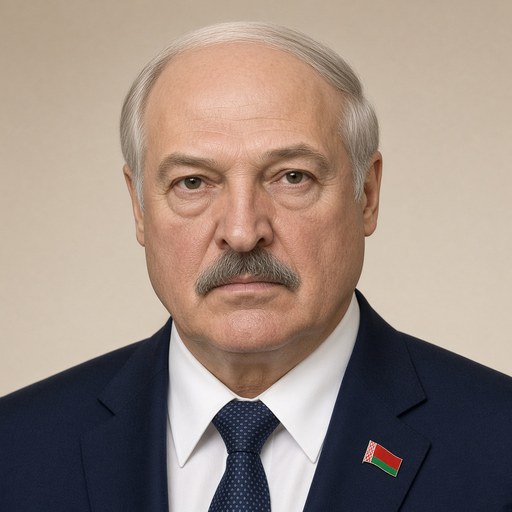
The speech of the President of Belarus at the meeting on social issues.
 Alexander Lukashenko · President of Belarus
- Context
- Lukashenko addressed a government meeting on October 16, 2004, reviewing Belarus's social policy progress and issuing directives on housing, utilities, and welfare spending.
- Main themes
- Social policy achievements, housing and communal services reform, education expenditure growth, pension and healthcare spending, tariff limitation, budget subsidies, local government accountability, economic development, population well-being, anti-corruption in public services
- Duration
- ~72 min
- Words
- 8,665
- Sentences
- 554
- Readability
- 59
- Grade
- 8.8
- Syntax
- 2.73
- Vocabulary
- 2.02
Translated from Russian
The broad sphere of national life a sentence belongs to. Every sentence has an Arena, so it is the denominator the other indices are read against.
Other554 sentences in 177 paragraphs
Dear comrades!
The power in Belarus is for the people. It will always be so. And not only in words, but also in deeds. To solve the pressing problems of people, to protect their lives, health, and legitimate interests. This is the main principle that we have been guided by in our work all these years.
And I want to say directly that our work is not in vain.
We are reaching milestones that many did not believe were achievable four years ago when we approved the Program for the socio-economic development of the country for the five-year period.
For reference:
A few comparisons with the mid-nineties. The share of education expenditures in GDP was just over 5 percent; this year we are approaching 7 percent. There were 173 thousand students; now there are 337 thousand. We currently have 343 students per 10 thousand population, compared to 184 before. The coverage of children in preschool institutions was 66 percent; now it is over 80 percent.
Pension expenditures in the gross domestic product were 5.8 percent; now they are 8 percent. The level of healthcare expenditures has reached almost 5 percent.
These figures eloquently indicate that the social policy we proclaimed ten years ago is being implemented.
Today, the development of our economy opens new prospects for addressing social issues, which allows us to significantly improve the well-being of the overwhelming majority of the population.
I emphasize - this is not a one-time event related to the referendum and elections. This is the logical result of many years of intense and targeted work. This is the social return from the rise of the Belarusian economy, which, if we believe our opposition and its foreign sponsors, "has been in stagnation for ten years."
The day before yesterday, the Government reported to me on the implementation of instructions for further increasing salaries and social protection, primarily for the most vulnerable segments of the population. This includes pensioners, disabled individuals, low-paid workers, students, schoolchildren, and large families.
Decisions have been made. Now it is a matter of precise and complete implementation of the decisions made.
The chairpersons of district and city executive committees, governors - these are the key figures on whom the state of affairs, the well-being of people, and the implementation of the decisions I have made depend.
I will start with a "boring," "mundane" question, but one that affects every resident of our country:
The work of the housing and communal services. Providing the population with heat, light, and water.
The task is to provide the population with a comprehensive range of housing and communal services of proper quality and at an acceptable price.
The state policy on this issue is well known. It is the limitation of tariff growth. I have repeatedly stated the need to limit the increase in payments for housing and communal services in 2005 and in subsequent years; this figure is already known to every citizen of our country - the growth of tariffs should not exceed 4 - 5 dollars a year - and to continue working on finding reserves to reduce the cost of these services.
We cannot, collecting funds for housing and communal services, throw them into a bottomless barrel for some repairs, roofs, and so on, while spending 2 - 3 times more than the actual price. It comes to criminality. And you, the leaders tasked with control, know this better than I do. I am particularly concerned about the sharpness of this issue in Minsk and regional centers. If in district centers everything is visible, there are no such volumes, the chairpersons of district and city executive committees can easily control the situation, then in large cities, especially in Minsk, no one counts the money. I will not name the facts; they are well known. I believe the State Control Committee, which is studying this problem at my request, can tell a lot.
Therefore, we need to repair houses, help people, put roofs in order, update facades, provide hot and cold water, heat, and carry out other work in the housing and communal services sector, but all this should be cheaper by at least 30 - 50 percent. Look for these reserves. We must find them. We cannot collect money from people and throw it away without knowing where it goes. But there is not only people's money; there are also subsidies from the budget. Therefore, all current, and perhaps even larger volumes, we will have to carry out, but for the same money.
At the same time, I want to draw attention to the fact that we need to maximize the quality of housing and communal services provided to the population. What can I say, something was repaired in the yard - it fell apart in a month. An apartment or roof was repaired, and the next day rain flooded all the floors from top to bottom. There must be strict accountability for this.
At the same time, I am far from the idea that the state should do everything for the population: repair roofs, paint facades, fix floors, and seal windows, and so on. Most of our apartments are privatized. This is the private property of each citizen, and they must be responsible for it. But how will people paint the facades of, say, a five- or ten-story building? Of course, they will not. Therefore, we must take on what people cannot do in the housing and communal services sector, plus tariffs. Tariffs are a complete monopoly of the state. There is no competition there - there are no other owners, no private individuals.
And tariffs are the most painful, the biggest problem for the population. Therefore, I limit the growth of tariff costs to 4 - 5 dollars a year. You know, let’s better not do something - not repair an extra roof, not paint a facade, but we will not take additional funds from people in the form of payments for these tariffs. Today, the Government informs that the population covers the tariffs for housing and communal services at about 55 percent. This is how the workers of the housing and communal services calculated it, put it on the table for the Prime Minister, and the Prime Minister reported it to the President. But when I instructed the State Control Committee to actually calculate the cost of these services and what percentage the population covers, we found that it was almost 80 percent. And I am confident that this is close to the truth. It is simply robbery in the housing and communal services! An example of this is the salary of the head of the communal service in the district, which has long been one and a half million. The President could not even dream of such a salary then. Why push? The communal service comes, collects money, the budget gives, divides it among the workers, and "let it burn," this roof and some apartments of the population. Why repair them and do something?..
Therefore, keep in mind that whatever political events occur, we will survive them. But we must aim not for an intermediate option, but for the fact that we still have a long time to live and work, and we need to establish order in this matter. Establish strict order in the housing and communal services. The same goes for trade, consumer services, and other areas that directly interact with our population.
People, in general, judge us, the authorities, by the level of work of the communal services.
Citizens complain about deficiencies in the operation of the housing stock, long timelines, and low-quality repairs of residential buildings. They report with indignation about the arrogance, bureaucracy, and rudeness of the workers of the housing and utility services, who live off the money of these people. Often, people are forced to correspond with housing maintenance services for years regarding roof leaks, normalizing heating, and tidying up yards.
If we track the dynamics of such letters sent to the Presidential Administration, their number does not decrease and reaches an average of 5 - 6 thousand a year, or, conditionally speaking, this is every fifth letter to the Administration. The number of complaints about the work of housing and communal services to local authorities is even higher - 30 percent, i.e., every third letter. In 2003, almost 70 thousand families were forced to appeal to higher authorities with complaints about the inaction of housing maintenance services.
The number of applications from citizens (predominantly collective) requesting major repairs of houses has significantly increased. For example, in Minsk, in the first half of 2004, the increase was 42 percent.
The Minsk City Executive Committee responded to the situation and allocated an additional 11 billion rubles for financing major repairs, in addition to the planned funds. However, such a situation is not everywhere. Serious problems exist in Vitebsk, Orsha, Pinsk, Baranovichi, Lida, Mozyr, and Bobruisk.
The Government has approved a program for 2004 - 2006 for the thermal modernization of large-panel residential buildings built according to the standard designs of the first mass series. A total of almost 720 thousand square meters of housing will be reconstructed.
The state allocates significant financial resources for its implementation. It is necessary to approach the issue of their rational use very seriously. Even today, there are numerous facts of thoughtless use of the funds allocated by the state and collected in the form of payments from the population.
Doubtful private organizations are involved as contractors for repair work, the quality of work is low, and warranty obligations are not fulfilled. For example, in Lida, due to the fault of a private organization hired to repair a house, a fire occurred, resulting in the destruction of an apartment along with all its belongings.
In Minsk, a certain commercial firm carried out the reconstruction of house No. 38 on Surhanova Street in such a way that the apartments were flooded by rain. It required the intervention of the Presidential Administration and the Minsk City Executive Committee to force these incompetent builders to compensate for the damage caused to people. There are many such examples in other districts and cities as well.
I have a question: did the mayor of Minsk or, more precisely, the head of the administration of a specific district not see these deficiencies? Did they not understand that it was necessary to hold accountable the relevant people who allowed the defects? And what if it happened to you? If your house was repaired like this, and the roofs leaked and flooded you, would you feel comfortable? Here is our true attitude towards people. Let these be isolated cases, it does not happen often, but it should not be.
The same applies to charging the population for housing and communal services. In the past heating season, the tariff policy in the housing and communal services was subjected to severe criticism from the population. The number of complaints from the population regarding disagreement with the constant increase in housing payments increased threefold just in the Presidential Administration.
Numerous facts of inflated service costs have been established, where unproductive costs of organizations engaged in heating supply and housing and communal services were covered at the expense of the population in Minsk, Grodno, Bobruisk, Khotimsk, Kruglyansky, and Nesvizh districts. In other words, when the population was simply deceived and overcharged.
Complaints about poor water supply in Lepel, Mozyr, Cherven, and Grodno districts have been confirmed. The responsible officials have been punished. However, people’s mood has been spoiled for a long time.
Regional, district, and city enterprises of housing and communal services need to learn to use every ruble rationally and economically.
The leaders of the "vertical" should take these issues under constant personal control. Our people are not that rich, and they pay significant amounts for housing. They have the right to demand an appropriate level of housing and communal services.
For two consecutive years, with the start of the heating season, the Administration has literally been overwhelmed with a flood of calls from residents of the villages of Vishnevka, Yubileiny, Sukhorukie, Privolny in the Minsk district complaining about the lack of heating in residential buildings and social and cultural facilities. Those responsible for the failure of the heating season have been held accountable.
The political outcome - the main complaints of people against the current authorities are due to the housing and communal services. We are solving major problems, but sometimes we cannot establish order here.
The issue of savings in the housing and communal sector is a very important state issue, the resolution of which depends on the well-being of our country. Therefore, this topic should be at the center of attention of local authorities.
The State Control Committee should pay special attention to the readiness for the heating season of all social facilities, housing stock, and production premises. Strengthen control over the condition of heating equipment and heating mains. Here are the main losses, and therefore the opportunities for maximum savings.
I have instructed the Government and the State Control Committee to check all major heating mains in the near future, with the start of the heating season, and to evaluate the activities of the relevant officials. What can I say - we have been heating the sky as we did before, and we are still doing it. And this costs us a pretty penny.
It is necessary to urgently complete the work on providing assistance to rural residents in preparing for winter. Not all rural residents have yet stocked up on sufficient fuel. Many people complain about the high prices of peat briquettes. The Government and the State Control Committee also need to calculate what the real price of peat briquettes is and at what price we supply this peat briquette to our "wealthy" rural residents.
Regarding the start of the heating season, we agreed that we will take into account the weather conditions, and as soon as the temperature reaches the appropriate level, we will immediately turn on the heating in kindergartens, schools, hospitals, and then connect the housing stock. At the same time, I earnestly ask you: turn on manual regulation and control the supply of heat, the temperature of the heat carriers. Because the weather fluctuations are very significant. Sometimes it is even above zero, and we heat as if it were minus 30 outside. All the windows, not just the windows, but also the doors (drive through a large city) are wide open, "we are heating the sky." Therefore, it is necessary to regulate the temperature of the heat carrier.
There are many problems. And I appeal to the governors and chairpersons of district executive committees: make sure that kindergartens, hospitals, and schools are not left without heat. They should be connected first.
Salaries
Starting from November 1 of this year, the tariff rate for the first category for the payment of labor for workers of organizations financed from the budget and receiving state subsidies will be increased. It will amount to 48 thousand. This will allow for an average increase in salaries and wages in the budget sector of 22.5 percent. The salaries of low-paid categories of workers will be increased by higher amounts, perhaps even more than the Government proposed - it proposes an increase of 36 percent.
We should not have poor people!
For example, the salary of a cleaner, elevator operator, and janitor will increase to 147,000, and that of a nurse will rise to 156,000. This will affect more than 186,000 people employed in such jobs.
However, it should be noted that the same cleaner or nurse has the opportunity to work not just part-time, as they are used to—sitting for three hours and then leaving, expecting "big money." We have significantly increased the salary for a full position. But please, take one and a half positions. That will be 260,000. Take two positions—that will be over 300,000; earn your money. We are now giving those working in low-paid public sector jobs a real opportunity to earn. And we need to orient people towards this. Not to prohibit, but to allow a person to work if they perform their job well.
I mention this because I increasingly encounter negative information from the field. For instance, in healthcare facilities, hospital staff complain that they earn very little. And how much do they work, I ask, do we offer them more work, do we suggest they work one and a half positions? We do. Do they want to? No. "I worked here for 3-5 hours and goodbye, you pay me." No, my dear ones. That’s not how money is earned. That’s not how money will be paid. Here’s a decent salary; if you want more, work more. If that suits you, well then, receive that salary.
So the essence of these changes is to give the opportunity to earn to those who want to earn today. If you want to earn, then with this increase, you can already have a decent salary. And considering that we have quite a few retirees working in these positions, it turns out that the salary is close to "ministerial."
In the Commonwealth of Independent States, we are achieving such results for the first time. The minimum wage in Belarus is twice as high as the minimum wage level in our Russia.
The minimum wage is being increased to the level of the subsistence budget. This is a position of fundamental importance. Many candidates for Parliament, I hear, today declare that they will raise the "minimum wage" to the level of the subsistence budget. Please tell them that everything has already been done, so they can strike that from their programs.
The increase in the tariff rate will stimulate wage growth across all sectors of the economy. This will allow us to reach the wage level we should achieve by the end of this year.
I would like to highlight another important aspect that I have already mentioned—the implementation of such a measure will require the leaders of commercial and private organizations to pay their employees no less than the subsistence budget. Moreover, this minimum wage level will acquire legislative force. And those private enterprises that cannot provide such wages will be liquidated.
We must not forget about the category of our citizens who work for hire in non-state-owned organizations. Over the past two years, the number of violations of social and labor rights and guarantees for hired workers in commercial and private organizations has increased.
People often have to turn to the President to find protection from such "owners." For example, in 2003, the state labor inspection authorities identified almost 6,000 cases of delayed salary payments, with commercial organizations of non-state ownership committing violations in every third case.
In accordance with the Presidential Decree of December 22, 2000, No. 699, the authorities responsible for state registration of business entities have been instructed to ensure that lawsuits for the liquidation of entities that repeatedly or grossly violate wage payment legislation are filed in economic courts. That is all about human rights.
This is the most important human right—to receive earned money. And anyone who deprives a person of this right must leave their job, and the firm must be closed.
However, the executive committees are extremely reluctant to exercise this right. They show excessive liberalism and a lack of demand from the leaders of commercial organizations, who are legally obliged to provide proper working conditions for citizens and bear the same responsibility as the leaders of state enterprises.
The salaries of public servants will also be increased. On average, we plan to raise them by more than 20 percent. A proposal is being made for an increase of about 29 percent. We need to take another look at this. For budget sector workers, salaries will increase by 37 percent over the year. We will be very careful to ensure that there are no huge gaps between us, the leaders, and the average salary in the country. We can only anger people here. Therefore, in this regard, I have postponed the draft decree, and we will review it again soon. Undoubtedly, everyone will receive a salary increase, but we must not, under any circumstances, become detached from other people.
For example, I do not agree with the proposed salary increase for myself as President. We should not create a large gap from the people. The same applies to the Prime Minister and senior officials. We are again trying to step on the same rake as in the last years of our party's existence when Gorbachev raised salaries for all the bosses. You know what that led to.
Since the salary structure for public servants is mainly unified with the structure of monetary allowances for military personnel, a similar increase in monetary allowances is planned, as well as improvements to the pay system for military personnel, both rank-and-file and commanding staff.
The planned level of salary increase should be felt by every worker, every family.
Unfortunately, there is a significant gap between salary levels in different sectors of the economy. While some earn over 300 dollars, others do not even reach 100. I have instructed to bring order to this situation. If a person is "working hard" at "MTZ," "BelAZ," "MAZ," or in agriculture, earning 1,000 dollars—good for them. But the highest salaries are held by those who do not particularly exert themselves. And this is not just the "unfortunate" bankers, although order needs to be established there too; these are people who are "sitting on the pipe" of oil and gas—"Beltransgaz," those involved in oil refining, and so on. Well, what can we say, the population will "cover" everything—let's raise the gas price by a dollar, and the enterprises will absorb all the costs! That should not be the case. Moreover, there are enterprises that currently benefit from state privileges and preferences. That is, we are effectively supporting them from the budget, yet their salaries are twice as high as that of the Prime Minister. Is that normal?
In short, if we apply the criterion of fairness to salaries, then in this matter, excuse me, there has been no progress. And we need to establish complete order by the end of the year, at the latest within the first quarter of next year. I have repeatedly instructed to resolve this issue, but it has not yet been resolved.
I emphasize again: I want our people to earn a lot, and public servants to earn a lot. I am not against it, but this money must be earned.
There are serious problems with salary levels at communal enterprises, in the public services sector, and in the light industry. Workers at the Uzda sewing factory, Lida shoe factory, Mogilev knitwear factory, Gomel radio plant, Gomel plywood and match factory, and the boiler house in the town of David-Gorodok in the Stolin district complain about low salaries.
Dear leaders of districts, regions, and sectors! Pay special attention to enterprises in small towns and worker settlements. There, people do not have the opportunity to find employment in other sectors. Therefore, everything must be done to uplift these enterprises, ensure their stable, profitable operation, and give people the opportunity to earn a decent living through honest work to support themselves and their families.
I am seriously concerned about certain facts related to the application of the contract hiring system. You and the enterprise leaders demanded that I introduce this contract system. It has been introduced. Today, many complaints are coming in that some leaders are using contracts to dismiss workers with whom they have not established good interpersonal relationships. People are simply fired at the end of the contract term. In fact, they are thrown out onto the street, those who can openly say something to their face. From the perspective of the Labor Code, everything seems to be legal, and courts in such cases do not find grounds for reinstating people in their previous jobs. Most often, women with young children and people of pre-retirement age find themselves in such situations.
I believe it is necessary to carefully study the practice of applying the contract form of employment and develop additional measures to protect the labor rights of citizens working under contracts. There should be no biased treatment of workers based on subjective attitudes of the manager rather than on an assessment of personal labor contributions!
I react very painfully to this; I perceive it as an insult to the President. You are my representatives in the field and must pay constant attention to how leaders conclude contracts and work under these contracts with their subordinates. If there are violations, they must be immediately stopped, primarily through the dismissal of the leader. A resentful leader should not be in power; they should not lead a team if they cannot understand a person.
At the same time, there are enough drunks to deal with, who after payday do not show up for work for 3-4 days, especially in rural areas. So direct your efforts towards these people, work together with the leaders. This is a very painful problem, and we will return to it at the end of this year or the beginning of the next.
Pensions
Our pension system is functioning stably, and payments are made on time. Their growth is ensured. Since the beginning of this year, pensions have been increased on average by 40 percent.
For reference:
In Belarus, the amount of pensions is higher than in other CIS countries.
As of August 1, 2004, the average old-age pension is 165,700 rubles, or the equivalent of 77 dollars. In Ukraine, it is about 35 dollars, in Kazakhstan, 58 dollars, and in Russia, about 76 dollars.
And yet, the pension amounts are still insufficient to meet all the needs of pensioners. Therefore, a decision has been made to increase them in line with the rising wage levels in the economy.
In November of this year, the amounts of minimum pensions, social pensions, as well as supplements and increases to pensions will be raised.
In addition, to improve the overall level of pension provision, it is proposed to recalculate all types of labor pensions in November 2004 by an average of 9-10 percent. As a result of this increase, the average old-age pension will amount to 180,000 rubles.
The growth rate of the real old-age pension for 2004 will be 16-17 percent.
The pension amount in November 2004 will be slightly over 80 US dollars in equivalent. This is the highest pension amount in the CIS countries.
In 2005, we will also increase pensions. It is planned that the minimum old-age pension will reach 100 percent of the subsistence budget for pensioners (which was 88 percent over the first eight months of this year). The growth of the real old-age pension by the end of 2005 will be approximately 18 percent.
Scholarships
We are constantly reviewing the amounts of all types of scholarships. Just in 2003 and the current period of 2004, scholarship amounts have been increased six times. This has allowed for an increase in payments of about 60 percent.
The current scholarship amount in the republic is the highest among CIS countries.
For reference:
In the Russian Federation, the scholarship amount for students in higher education institutions is 13 US dollars in equivalent (ours ranges from 19 to 30 dollars). For students in secondary specialized and vocational-technical educational institutions, it is 5 US dollars (in Belarus, in secondary specialized institutions, it ranges from 16 to 25.5 dollars, and in vocational schools from 10 to 16.4 US dollars).
And yet, as I promised at the meeting with students in Brest, all types of scholarships will be further increased by the end of the year. We talked about a 30 percent increase. We calculated, and there is a proposal to increase the average scholarship amount not by 30, but by 50 percent—one and a half times, which will significantly improve the social situation of students and pupils.
For these purposes, an additional allocation of about 4 billion rubles per month, 40 billion per year, and even more will be required from the budget.
After the increase, the scholarship amounts will be as follows:
in universities—approximately 98,000-100,000. This is the highest scholarship for those who excel;
for students in secondary specialized educational institutions—up to 83,000, the highest. Please, those who study well can receive such a scholarship;
for students in vocational schools—up to 53,000 rubles per month.
This is a very high increase, and we must go for it. We were students ourselves. You know that they mainly live on pennies. And those who study well, the honor students, should receive in universities, for example, effectively 47-50 dollars. Those who study "well" may receive 80-70 thousand. Those who simply manage to attend and receive "government grades" will have a scholarship of about 60 thousand, that is, 30 dollars. Compare this with the scholarship in our fraternal Russia of 13 dollars, and you will understand what this increase means.
School Meals
Currently, state support for subsidizing meals is provided to students in primary classes of urban and rural schools and to students of all grades in schools located in rural areas and worker settlements.
Support for subsidizing meals is provided to nearly half a million schoolchildren (which is over 30 percent of the total number), including about 200,000 in urban schools and about 220,000 in rural schools.
Starting from November 1, 2004, the amount of state support will increase to 960 rubles per day.
From January 1, 2005, state support for subsidizing meals will rise to 5 percent of the basic amount on a school day (which will amount to 1,200 rubles). For these purposes, we will have to spend almost 32 billion rubles from the budget each year.
The average full cost of meals in urban schools is 1,680 rubles, while in rural schools it is 1,400 rubles per day. And from the budget, we will be subsidizing 1,200 rubles. Thus, the cost of meals is 1,400 rubles per day, minus 1,200, so parents or the enterprise will only have to pay an additional 200 rubles.
But I have instructed the Government, the President's assistant, and the State Control Committee to check the prices at which products are purchased and how children are fed in schools. This is a very important issue. There are both private individuals and businessmen, and simply crooks involved. Well, what can we do? Budget money, subsidies - let's supply them there. But at what prices? And why are rural schools, as well as urban ones, suddenly buying what grows nearby? We have thousands of tons of vegetables going to waste - beets, carrots, potatoes, cabbage. Go ahead, stock up for the whole year and feed the children. It will be almost free. Reduce the cost of meals. If you are buying something somewhere, buy directly from the enterprises, not through intermediaries. And I am sure that as soon as we account for every gram, every kilogram, the price of breakfast and lunch in schools will be lower than what we are currently subsidizing from the budget. But keep in mind that the chairperson of the city and district executive committees, as well as the governors, will be held accountable for this. We will hold everyone accountable. This is your domain. You must not overlook this problem. Go to one school, then another, calculate, and establish the price of breakfast, lunch, and snack "in the name of the revolution," by the decision of the executive committee. And let them stick to this price!
I warn the heads of educational institutions, as well as the district and city executive committees, once again: order must be established in this area. Everything must be done to maximize the reduction of school and student meal costs by lowering procurement prices for products and other measures.
State support for orphaned children
In order to develop family forms of care for orphaned children, payments to families who take them in will be increased by 20 percent.
As a result, monthly payments for the maintenance of children in family-type children's homes, children's villages, guardianship, foster families, and families that have adopted children will be increased in the first year of raising a preschool child to 115,000 rubles. In the second and subsequent years of raising a preschool child, it will be increased to 110,000 rubles. School-age children will receive up to 125,000 rubles.
For minor children in need of social rehabilitation, for orphaned children in children's homes and boarding schools, during summer health improvement activities, on weekends, holidays, and during school breaks, the norms for food expenses will be increased by 10 percent.
The task for local authorities is to ensure that the money reaches every child. To prevent any theft from the budget of the boarding houses.
In our country, the institution of "foster families" is actively developing. This is related to the benefits that the state has established for this category of citizens. Only during the period of the benefits system (2001 - 2003), about 2,000 children were placed in foster families.
We will continue to provide state support to guardianship families. However, guardianship authorities need to be more demanding when selecting candidates and hold foster parents accountable for fulfilling their responsibilities in raising children. Unfortunately, there are not infrequent cases where this responsibility is entrusted to random people who are primarily seeking material benefits for themselves.
For example, the education department of the administration of the Soviet district of Gomel unjustifiably entrusted the upbringing of three minor orphaned children to the Tomashov family, granting them the status of a guardianship family with all the social support measures provided by the state. A year later, it was necessary to terminate the guardianship agreement with these people and remove the children.
In general, education authorities and local executive committee leaders need to work more carefully and attentively with children left without parental care, helping them to establish their lives and living conditions. Often, we stop caring about the fate of an orphaned child after they reach the age of 18 and graduate from a secondary vocational institution.
Due to poor living conditions, some of these children cannot find their place in life and repeat the unfortunate fate of their parents. For example, it required the intervention of the Presidential Administration to restore the legal rights of orphaned children to receive social housing, which were violated by the executive authorities of Minsk, Gomel, and Grodno.
I am also concerned that many of our children are being taken out of Belarus. Since 1991, 2,500 children have been placed for adoption with foreign citizens. And in just three years, after we provided benefits, we placed 2,000 children in families within our country. The question arises: what is the point of this? Today, with such benefits, families are happily taking in orphans. It is understandable if a child is sick, and foreign citizens offer to adopt this child, treat them - this is a normal process. But such cases are few. And still, we must keep track of every child who leaves our country. I ask the Minister of Education to study the problem and report on the whereabouts of the 2,585 children placed with foreigners since 1991, their condition, and what contact is maintained with them. We must know this. I have already said - abroad, it reaches the point where a child is given away, and suddenly they die, their internal organs are taken, and they are transplanted.
Unfortunately, we do not know everything about the fates of children adopted abroad. That is why I have given the instruction to study this problem and report back.
I am increasingly coming to the conclusion, especially after discussing this issue with the President, that we need to stop, as we say, the sale of children abroad. Stop! And do this only in exceptional cases with the signature of the Minister of Education.
Starting from November 1 of this year, no child can be sent abroad without the permission of the Minister of Education until we have created the appropriate regulatory framework. Alexander Mikhailovich Rad'kov, take everything into your own hands, let them prove it to you, provide documents, you look at these children. If it is a sick child or you see other circumstances that we cannot resolve, make a decision. And specifically keep this issue under control, so that we constantly highlight this child, so that they are in our sight, regardless of whether they are in America or Germany.
The "vertical" of power needs to delve more systematically into specific situations to prevent abuses in the export of children.
And one more problem.
Every year, 3,000 to 3,500 families lose parental rights. In recent years, about 50,000 children have become orphans with living parents. Alcoholics and rogues roam the world, calmly continue to drink, while 50,000 of their children are now the responsibility of the state. We cannot give these children back to them. Because they will raise them the same way. What example will they show their children? And we will spend more money fighting such citizens than on raising them now. Therefore, the system of depriving parental rights is normal. Children must be taken away from such parents. And parents must be made to work from morning till night so that they can feed these children and compensate the state for the expenses on the children. And this must be done starting January 1.
How to do this? I think the Minister of Internal Affairs and the Government will consider these issues and submit the strictest proposals. Enough of playing around and joking. Irresponsible parents will earn money for the state, and we will use that money to raise their children. And this should be a significant amount so that children feel sufficient in food and clothing. If parents do not want to voluntarily contribute this money, we must do it forcibly.
In these cases, the state takes care of the children.
The maintenance of children in 188 children's boarding schools costs the state almost 55 billion rubles a year.
We pay 55 billion for the maintenance of children's boarding schools. An additional 20 billion rubles is spent on the maintenance of orphaned children placed in families. In total, about 75 billion a year. This is a huge amount! At the same time, living parents bear almost no expenses for the maintenance of their own children. If it is necessary to increase the number of labor therapy facilities to make such negligent parents somehow work off the funds for the maintenance of their children by the state, we will go for it. This way, we may also save the parents themselves from the consequences of a dissolute life.
Housing for large families
Today we have an additional opportunity to improve such a social problem as providing housing for large families.
For all loan agreements concluded by large families after April 14, 2000, appropriate assistance will be provided in repaying debts on already issued and newly issued preferential loans.
We have few large families. They need to be registered by the authorities. Lists of such families should be in every district executive committee. They should be given priority rights to improve their housing conditions.
But at the same time, families should know - we will help them, but we will also monitor and ask questions. The state cares about whom we help and under what conditions our children are growing up. We need real citizens of the country. And we must not allow parents in these families to become dependents.
Support for families at the birth of a child
Starting from January 1, 2005, an increase in the amount of the one-time allowance for the birth of the third and subsequent children is planned. This payment will amount to almost 400,000 rubles. This is three budgets of the subsistence minimum.
This allowance needs to be paid to 10,500 children. The costs for these payments will amount to one and a half billion rubles.
Social protection of citizens affected by the Chernobyl nuclear power plant disaster
A system of social protection for all categories of citizens affected by the Chernobyl nuclear power plant disaster has been developed and is in operation. The greatest social benefits are received by individuals who became disabled as a result of this disaster. Their number currently stands at 10,000 people and increases by 1,000 each year.
But I fundamentally demand that the leaders of the city and district executive committees take into account the work of the so-called VTEKs, which today are handing out "white" tickets to "Chernobyl victims" left and right. Take this issue under strict control. At the republican level, the Ministry of Health will pay close attention to this issue. If someone is truly ill and has suffered as a result of the Chernobyl disaster, they should be helped. But we cannot register everyone as "Chernobyl victims," especially now.
Currently, there are such payments. After the increase, they will be as follows: group I disabled persons will receive approximately 950,000 rubles, group II - about 700,000 rubles, group III - about 600,000 rubles. The implementation of this decision will require about 475 million rubles annually.
Unemployment
The issue of employment is very important for people.
Not having a job is a tragedy for a family.
I have instructed the Government to reduce the unemployment rate this year to 2 percent (of the economically active population).
All local authorities must engage in this task in a very concrete manner. People must have a job and earn their wages. One and a half percent unemployment is normal. One percent is an achievement. This is what we should strive for.
No more than one percent unemployed in the country!
Implementation of state social standards for public services
By the end of 2003, the system of state social standards was introduced in eight districts of Belarus. As of October 1, 2004, they have been implemented in another 11 cities and districts of the republic.
Out of 44 approved state social standards, 28 are currently in effect, or 65 percent of the total number.
At the same time, the Minsk city executive committee has decided to approve standards that are generally above the national average. It should be noted that these are minimum standards - those who can do more should make such decisions without any approvals from the President and the Government.
The full implementation of the program for introducing minimum social standards across the country will be completed by the end of next year, and at the congress, at the beginning of 2006, we must report to the people that social standards have been implemented.
As a result of the proposed measures, the social situation will improve for more than 7 million Belarusian citizens, including:
in the real sector of the economy - 2.5 million;
in the budget sector - about 1 million;
pensioners - 2.5 million;
students and pupils - 610,000 people;
families - 224,000 people.
Further implementation of social standards must be given top priority by both local authorities and the media. People must know, both in the city and in the village, what volume, types, and quality of services they can expect - transportation, education, medical, household, and trade services.
Dear comrades!
You represent the district, regional, and republican authorities here. This means that you bear full responsibility for the state of affairs in the regions and in the sectors of the national economy.
I want to emphasize that under current conditions, the political assessment of all our work has sharply intensified. We must not forget - the slightest oversight at the local level becomes fertile ground for speculation by the opposition.
Local cases, which at another time would not have received special attention, are now inflated to almost cosmic proportions.
This is evidenced by the statements in the media of opposition candidates for Parliament. But on the other hand, we all saw what they can do. They shouted that they were "not being let in," they shouted "give us." They were given. And so what? There is nothing to listen to except for primitive attacks, some crude onslaughts, and so on. I have already given such an example in Deep. One of the candidates says: if I come to power, we will leave all collected taxes in the local areas. But what taxes will remain in Deep and in Postavy? The state has invested billions of dollars there just in gasification. How many hundreds of years will it take for local taxes to be able to do something? The person does not understand what they are saying. Because huge sums of money flow from the regional and republican budgets from top to bottom.
I want to touch on another problem. The coming years will be years of the harshest economy. The most important task next year is to save 30 percent across all items, directions, and sectors. Thanks to this savings, we can withstand the rise in energy prices, and they will rise. I have already given an example. Germany buys gas for 120 dollars, but sells it to enterprises and the population for 550. Who cares where the money goes? But they endure it because they save on everything. They even turn on hot water for 10 seconds. And we have it flowing like a river. Therefore, when we talk about savings, we have an uncharted territory of work ahead of us.
I have already addressed the energy sector twice. We have discussed twice how we will replace gas and oil? Especially in terms of electricity. Our parents had experience working at small power plants. Now all of that has been ruined. But everywhere we need to look for cheaper energy. This needs to start being done from tomorrow. Count the money and resource consumption!
I want to say once again about the inadmissibility of passive actions by the authorities now and in the future. There should be no passivity! You must be the masters in your region. Of course, within the framework of the law. The most terrible thing is when the authorities are passive and inactive. Even if you make a mistake somewhere, you must adhere to the national line and act! Then people will understand what you want.
In this regard, once again about the Directive on strengthening public safety and discipline. You know me, I will not give you a quiet life and will not allow it to happen that you show minor or even major "movements" to restore discipline and order, and then the campaign passes, and you all forget. It will not be like that! Therefore, raise the Directive and act. We must do everything to ensure the safety of our citizens and stability in the country. It requires meticulous, everyday work, not a campaign.
In 10 days, there will be an exam - elections to Parliament and a referendum. Naturally, the assessment will primarily be given to the President, and I will look at the results by regions and accordingly give you an assessment. There can be no other way, because we are taking the exam together, a political exam that will stem from the socio-economic policy we have pursued in recent years.
Yes, there are some good shifts!
Today, they can say that we are raising wages ahead of political events. Nothing of the sort! We have done this clearly two or three times a year. I even did not introduce the increase from October 1, as the Government proposed. We are introducing all these measures from November 1, so that they do not think that we are "buying the people." We do not need to do that!
And you know, to speak frankly, even if we had not raised wages, pensions, and scholarships from November 1, I do not think that today, in the current economic situation, the people would "throw us" in the referendum and elections. Not at all! Not that situation!
But we promised the people that this year we would return to the issue of wages, pensions, and scholarships if the budget was forming normally and the economy was working clearly. So, should we deceive the people that our economy is not working? It is working! Is there additional money in the budget? Yes. So let's give it to the people.
But we are not giving all the money for salaries and benefits: funds will go to roads, housing, gasification, to those social and other programs that we have outlined and will develop.
There is no need to justify ourselves to anyone. If we have something to say before the exam and at the exam - on October 17, then why not say it. Any student, any person prepares for an exam. And we are preparing too. What do we have to be afraid to say? Here we have it - we are giving it to you. And we are giving it "not for the referendum," but for the entire year of 2005, and we will allocate even more funds in the following years. We will not stop at an average salary of 250 dollars. Over the five-year period, we need to reach at least 500 dollars, and we even estimated 750. But at a minimum, we must bring the average salary to 500 dollars over the five-year period.
Therefore, we have something to say, and we must say it to our people. If someone does not like it, they can choose not to listen. Those who think they do not need this money can leave it in the budget.
The situation is not simple. You have probably heard that they are concerned about our situation even in America - they passed the "Democracy Act." They want democracy in Belarus. They forgot that they have enough problems of their own. They are concerned about our elections and referendum. And yet, the most archaic election system is in the United States of America: there are no direct elections for president - they elect electors, and the electors elect the president. As a result, the current president received fewer votes than the one who came in second. Is that normal? And they, you see, are concerned about the situation in Belarus. They have even reached the point of demanding the disclosure of the income of the President of Belarus. What do the elections to Parliament, the referendum, and the income of the President have to do with each other? I instructed to immediately calculate everything that the state paid me and send it to America. And then our Parliament in the new composition will gather and demand before the elections that Bush disclose his income. Let's compare. But will he send us such information?
You see, it comes to the point of absurdity. They simply do not know what they are doing. Well, if they had suggested that the elections be held transparently and so on. But what do the President's income have to do with it? They are clearly hundreds of thousands of times less than their president's, and indeed all presidents. And then, read in the media their demands. It is all copied from the "opus" of our opposition. They took these demands there, and then wrote them into the law or the "Democracy Act." And in general, this is just a factor of foolish pressure on our country. If they reproach me for "looking for internal and external enemies," then why do they give me a reason to find this "enemy" outside the country?
I will tell you frankly: there is no such state where the elite and leaders today are not rubbing their hands and waiting: "Well, what will these Belarusians get?" After all, we have taken a completely different path. And we must show that the path we are taking and which the people have supported is the right path!
The original Russian. The tags above are read on the English translation's sentences.
Уважаемые товарищи!
Власть в Беларуси - для народа. Так будет всегда. И не только в разговорах, но и на деле. Для решения насущных проблем людей, для защиты их жизни, здоровья, законных интересов. Это главный принцип, руководствуясь которым мы с вами работаем все эти годы.
И хочу прямо сказать, что работаем не зря.
Выходим на рубежи, в достижимость которых четыре года тому назад, когда утверждали Программу социально-экономического развития страны на пятилетие, многие не верили.
Справочно:
Несколько сравнений с серединой девяностых годов. Удельный вес расходов на образование в ВВП составлял чуть больше 5, в этом году мы подходим к 7 процентам. Студентов было 173 тысячи, сейчас - 337 тысяч. На 10 тысяч населения сейчас имеем 343 студента, а было - 184. Охват детей дошкольными учреждениями составлял 66 процентов, сейчас - больше 80 процентов.
Расходы на пенсионное обеспечение в валовом внутреннем продукте составляли 5,8 процента, сейчас - 8 процентов. Уровень расходов на здравоохранение достиг почти 5 процентов.
Эти цифры красноречиво говорят о том, что провозглашенная нами десять лет назад социальная политика реализуется.
Сегодня развитие нашей экономики открывает новые перспективы для решения социальных вопросов, что дает возможность существенно улучшить достаток подавляющего большинства населения.
Подчеркиваю - это не разовое мероприятие к референдуму и выборам. Это логический результат многолетней напряженной и целенаправленной работы. Это социальная отдача от подъема белорусской экономики, которая, если верить нашей оппозиции и ее зарубежным спонсорам, "уже десять лет находится в стагнации".
Позавчера Правительство доложило мне о выполнении поручений по дальнейшему повышению зарплаты, социальной защиты прежде всего наиболее уязвимых слоев населения. Имеются в виду пенсионеры, инвалиды, низкооплачиваемые работники, студенты, школьники, многодетные семьи.
Решения приняты. Сейчас дело за точным и полным выполнением принятых решений.
Председатели районных и городских исполкомов, губернаторы - это ключевые фигуры, от которых зависит состояние дел, благополучие людей и выполнение принятых мною решений.
Начну с вопроса "скучного", "заурядного", но затрагивающего каждого жителя нашей страны:
Работа жилищно-коммунального хозяйства. Обеспечение населения теплом, светом и водой
Задача состоит в том, чтобы предоставлять населению комплекс жилищно-коммунальных услуг надлежащего качества и по приемлемой цене.
Политика государства в этом вопросе всем известна. Это - ограничение роста тарифов. Я неоднократно заявлял о необходимости ограничить повышение платежей за жилищно-коммунальные услуги в 2005-м и в последующие годы, эта цифра уже известна каждому гражданину нашей страны - рост тарифов не должен превышать 4 - 5 долларов в год - и продолжить работу по изысканию резервов сокращения себестоимости этих услуг.
Мы не можем, собирая средства на ЖКХ, вбрасывать их как в бездонную бочку, на какие-то ремонты, крыши и так далее и тратить при этом в 2 - 3 раза больше, чем реальная цена. Дело доходит до криминала. И вы, руководители, призванные контролировать, знаете это лучше, чем я. Особенно меня волнует острота этого вопроса по Минску и областным центрам. Если в районных центрах все на виду, нет таких объемов, председателям райисполкомов и горрайисполкомов ситуацию легко проконтролировать, то в крупных городах, особенно в Минске, деньги никто не считает. Факты не буду называть, они известны. Думаю, и Комитет государственного контроля, который по моему поручению изучает данную проблему, может рассказать немало.
Поэтому надо ремонтировать дома, помогать людям, приводить в порядок крыши, обновлять фасады, подавать теплую и холодную воду, тепло, проводить другие работы по линии ЖКХ, но все это должно быть дешевле как минимум на 30 - 50 процентов. Ищите эти резервы. Мы обязаны их найти. Нельзя собирать с людей деньги и вбрасывать их неизвестно куда. Но там не только деньги людские, там и дотации из бюджета. Поэтому все нынешние, а может быть, и большие объемы нам придется осуществлять, но за те же деньги.
При этом хочу обратить внимание на то, что нам необходимо максимально повышать качество оказываемых населению жилищно-коммунальных услуг. Что там греха таить, во дворе что-то отремонтировали - через месяц развалилось. Квартиру или крышу отремонтировали, назавтра дождь залил все этажи сверху донизу. За это должен быть железный спрос.
При этом я далек от мысли, что государство должно делать для населения все и вся: и крыши ремонтировать, и фасады красить, и полы, и окна заклеивать, и так далее. У нас все квартиры в основном приватизированные. Это частная собственность каждого гражданина, и он должен за нее отвечать. Но как же люди будут красить фасады, допустим, пяти-или десятиэтажного дома? Конечно, не будут. Поэтому мы должны взять на себя то, что не смогут сделать люди в области ЖКХ, плюс тарифы. Тарифы - это полная монополия государства. Там у нас нет никакой конкуренции - нет других собственников, частников.
И тарифы - это самая больная, самая большая проблема для населения. Поэтому я ограничиваю рост стоимости тарифов 4 - 5 долларами в год. Знаете, давайте лучше чего-то не сделаем - лишнюю крышу не отремонтируем, фасад не покрасим, но не будем изымать у людей дополнительные средства в виде платежей по этим тарифам. Сегодня Правительство информирует, что население покрывает тарифы ЖКХ в размере примерно 55 процентов. Это так посчитали сами работники ЖКХ, положили на стол премьеру, а премьер доложил Президенту. А когда я поручил Комитету госконтроля реально посчитать стоимость этих услуг и какой процент население покрывает, мы получили почти 80 процентов. И я уверен, что это близко к истине. Просто разбой в ЖКХ! Примером тому является заработная плата руководителя коммунальной службы в районе, а она уже давно была полтора миллиона. Президенту тогда и не снилась такая заработная плата. Зачем упираться - пришел коммунхоз, деньги собрал, с бюджета дали, поделил между работниками, и "гори" она эта крыша и какие-то там квартиры населения. Зачем их ремонтировать и что-то делать?..
Поэтому имейте в виду, какие бы не были политические события, мы их переживем. Но мы должны нацеливать себя не на промежуточный вариант, а на то, что нам еще долго жить и работать, и нам надо наводить в этом деле порядок. Наводите в ЖКХ железный порядок. Точно так и в торговле, бытовом обслуживании, в других сферах, которые непосредственно сталкиваются с нашим населением.
Люди в целом судят о нас, о власти по уровню работы коммунальных служб.
Граждане жалуются на недостатки в эксплуатации жилищного фонда, длительные сроки и низкое качество ремонта жилых домов. С возмущением сообщают о чванстве, бюрократизме, грубости работников жилищно-эксплуатационных служб, которые живут за средства этих людей. Нередко люди вынуждены годами вести переписку с ЖЭСами по поводу протекания кровель, нормализации отопления, наведения порядка во дворах.
Если проследить динамику таких писем, поступающих в Администрацию Президента, то их количество не снижается и достигает в среднем 5 - 6 тысяч в год, или, условно говоря, это каждое пятое письмо в Администрацию. Количество жалоб на работу жилищно-коммунальных служб в местные органы власти еще выше - 30 процентов, т.е. каждое третье письмо. В 2003 году почти 70 тысяч семей были вынуждены обращаться в вышестоящие инстанции с жалобами на бездействие жилищно-эксплуатационных служб.
Значительно увеличилось количество заявлений граждан (в преобладающем большинстве коллективных) с просьбами о проведении капитального ремонта домов. Так, по Минску за первое полугодие 2004 года рост - 42 процента.
Минский горисполком отреагировал на ситуацию и дополнительно к запланированным средствам выделил 11 миллиардов рублей на финансирование капитального ремонта. Однако такая ситуация не везде. Серьезные проблемы имеются в Витебске, Орше, Пинске, Барановичах, Лиде, Мозыре и Бобруйске.
Правительством утверждена программа на 2004 - 2006 годы по тепловой модернизации крупнопанельных жилых домов, построенных по типовым проектам первых массовых серий. Всего будет реконструировано почти 720 тысяч квадратных метров жилья.
Государство выделяет значительные финансовые средства на ее выполнение. Необходимо самым серьезным образом подойти к вопросу их рационального использования. Уже сегодня имеются многочисленные факты бездумного использования выделенных государством и собранных в виде платежей с населения средств.
В качестве подрядчиков для выполнения ремонтных работ привлекаются сомнительные частные организации, качество работ низкое, гарантийные обязательства не выполняются. К примеру, в Лиде по вине частной организации, привлеченной для ремонта дома, возник пожар, в результате которого сгорела квартира со всем имуществом.
В Минске некая коммерческая фирма так осуществляла реконструкцию дома N 38 по улице Сурганова, что дождями затопило квартиры. Потребовалось вмешательство Администрации Президента, Минского горисполкома, чтобы заставить этих горе-строителей компенсировать ущерб, причиненный людям. Таких примеров немало и в других районах и городах.
У меня возникает вопрос: а что, мэр Минска или, точнее, глава администрации конкретного района не видели этих недостатков? Они не понимали, что надо привлечь к ответственности соответствующих людей, которые допустили брак? А если бы с вами так поступили? Если бы вам вот так отремонтировали дом, и крыши потекли, и залило вас, вы бы себя удобно чувствовали? Вот вам истинное наше отношение к людям. Пусть это единичные факты, нечасто это происходит, но этого быть не должно.
То же самое относится и к взиманию с населения оплаты за жилищно-коммунальные услуги. В прошедшем отопительном сезоне жесточайшей критике населения подвергалась тарифная политика в жилищно-коммунальном хозяйстве. Количество жалоб населения на несогласие с постоянным ростом платы за жилье только в Администрацию Президента увеличилось в три раза.
Установлены многочисленные факты завышения стоимости услуг, когда непроизводительные затраты организаций, занимающихся теплоснабжением и жилищно-коммунальных служб, покрывались за счет населения в Минске, Гродно, Бобруйске, Хотимском, Круглянском и Несвижском районах. Говоря иными словами, когда население просто обманывали и обсчитывали.
Подтвердились жалобы на плохое водоснабжение в Лепельском, Мозырском, Червенском и Гродненском районах. Виновные должностные лица наказаны. Однако людям надолго испортили настроение.
Областным, районным и городским предприятиям жилищно-коммунального хозяйства необходимо научиться рационально и экономно использовать каждый рубль.
Руководителям "вертикали" следует взять эти вопросы под постоянный личный контроль. Наши люди не так богаты и немалые средства платят за жилье. Они вправе требовать должного уровня жилищно-коммунального обслуживания.
Два года подряд, с началом отопительного сезона, Администрацию буквально захлестывает шквал звонков от жителей поселков Вишневка, Юбилейный, Сухорукие, Привольный Минского района с жалобами на отсутствие отопления жилого фонда и объектов социально-культурного назначения. Виновные в срыве отопительного сезона должностные лица привлекались к ответственности.
Политический итог - основные претензии людей к действующей власти из-за жилищно-коммунального хозяйства. Крупные проблемы вроде решаем, а здесь порядок навести иногда не можем.
Вопрос экономии в жилищно-коммунальной сфере - это очень важный государственный вопрос, от решения которого зависит благополучие нашей страны. Поэтому эта тема должна быть в центре внимания местных органов власти.
Комитету государственного контроля особое внимание надо уделить готовности к отопительному сезону всех социальных объектов, жилищного фонда, производственных помещений. Усилить контроль за состоянием отопительного оборудования и теплотрасс. Здесь основные потери, а значит, и возможности для максимальной экономии.
Я поручил Правительству и Комитету госконтроля в ближайшее время, с началом отопительного сезона, проверить все основные теплотрассы и дать оценку деятельности соответствующих должностных лиц. Что там греха таить - небо мы как грели, так и греем до сих пор. А это нам обходится в хорошую копеечку.
Необходимо в срочном порядке завершить работу по оказанию помощи сельским жителям в подготовке к зиме. Не все сельчане еще запаслись достаточным количеством топлива. Многие люди жалуются на высокие цены на торфобрикет. Правительству и Комитету госконтроля тоже надо посчитать, какая реальная цена торфобрикета и по какой цене мы этот торфобрикет поставляем нашим "богатым" сельчанам.
По поводу начала отопительного сезона мы договорились, что будем учитывать погодные условия, и как только температура достигнет соответствующего показателя, мы немедленно включаем отопление в детских садах, школах, больницах и затем подключаем жилой фонд. При этом я убедительно вас прошу: включайте ручное регулирование и контролируйте подачу тепла, температуру теплоносителей. Потому что перепады погоды очень значительные. Бывает, что и плюсовая температура, а мы греем, как будто на улице минус 30. Все форточки, не только форточки, но и окна (проедьте по крупному городу) настежь открыты, "греем небо". Поэтому надо регулировать температуру теплоносителя.
Проблем очень много. И я обращаюсь к губернаторам и председателям райисполкомов: посмотрите, чтобы детские сады, больницы, школы не остались без тепла. Они должны быть подключены в первую очередь.
Зарплата
С 1 ноября этого года повышается тарифная ставка первого разряда для оплаты труда работников организаций, финансируемых из бюджета и пользующихся государственными дотациями. Она составит 48 тысяч. Это позволит повысить ставки и оклады бюджетной сферы в среднем на 22,5 процента. Зарплата низкооплачиваемых категорий работников будет увеличена в более высоких размерах, может быть, даже выше, чем внесло предложение Правительство, - оно предлагает на 36 процентов.
Бедных у нас быть не должно!
Так, например, заработная плата уборщика, лифтера, дворника увеличивается до 147 тысяч, санитарки - до 156. Это коснется более 186 тысяч человек, занятых на таких работах.
Но при этом надо учитывать, что та же уборщица, санитарка имеет возможность работать не на ставку, как они привыкли - три часа "посидела" и пошла, и "ты давай мне большие деньги". Мы добавили за ставку значительно. Но, пожалуйста, возьми полторы ставки. Это будет уже 260 тысяч. Возьми две ставки - это будет 300 с лишним тысяч, заработай деньги. Мы работающим на государственных низкооплачиваемых должностях сейчас даем реальную возможность заработать. И на это надо ориентировать людей. Не запрещать, а позволять человеку работать, если он качественно выполняет работу.
Говорю об этом потому, что все чаще сталкиваюсь с негативной информацией с мест. Допустим, на объектах здравоохранения, в больницах средний персонал жалуется, что очень мало зарабатывает. А сколько работают, спрашиваю, предлагаем ли мы им больше работы, предлагаем ли поработать на полторы ставки? Предлагаем. Хотят? Нет. "Вот я поработала тут 3 - 5 часов и до свидания, вы мне платите". Нет, дорогие мои. Так никто деньги не зарабатывает. Так деньги никто платить не будет. Вот вам приличная ставка, хотите больше - работайте больше. Устраивает вас, ну что ж, получайте тогда эту заработную плату.
То есть суть этих изменений заключается в том, чтобы дать возможность заработать тем, кто сегодня хочет заработать. Если хочешь заработать, то при данном повышении ты можешь иметь уже приличную заработную плату. А учитывая, что у нас немало пенсионерок и пенсионеров работает на этих должностях, то вообще получается заработная плата, близкая к "министерской".
В странах Содружества Независимых Государств мы впервые выходим на такой результат. Размер минимальной зарплаты в Беларуси в 2 раза выше уровня минимального размера оплаты труда, чем в нашей России.
Размер минимальной заработной платы увеличивается до размера бюджета прожиточного минимума. Это принципиальной важности позиция. Многие кандидаты в депутаты Парламента, я слышу, сегодня заявляют, что они поднимут "минималку" до уровня бюджета прожиточного уровня. Вы им передайте, что все уже сделано, поэтому пусть вычеркнут это из своих программ.
Повышение тарифной ставки будет стимулировать рост заработной платы по всем отраслям народного хозяйства. Это позволит достичь того уровня заработной платы, на который мы должны выйти к концу этого года.
Отмечу еще один важный аспект, о котором уже говорил, - реализация такой меры обяжет руководителей коммерческих, частных организаций производить выплату заработной платы своим работникам не ниже бюджета прожиточного минимума. Более того, этот уровень минимальной зарплаты приобретает законодательную силу. И те частные хозяйствующие структуры, которые не могут обеспечить людям такую оплату труда, будут ликвидированы.
Нельзя забывать о такой категории наших сограждан, как лица, работающие по найму в организациях негосударственной формы собственности. За последние два года возросло количество нарушений социально-трудовых прав и гарантий наемных работников в коммерческих и частных организациях.
Нередко люди вынуждены обращаться к Президенту, чтобы найти защиту от таких "хозяев". Так, в 2003 году в целом по стране органами государственной инспекции труда выявлено почти 6 тысяч фактов задержки выплаты зарплаты, при этом в каждом третьем случае нарушения допускались коммерческими организациями негосударственной формы собственности.
В соответствии с Указом Президента от 22 декабря 2000 года N 699 органам, осуществляющим государственную регистрацию субъектов хозяйствования, поручено обеспечить предъявление в хозяйственные суды исков о ликвидации субъектов, которые неоднократно или грубо нарушают законодательство о выплате заработной платы. Вот и все права человека.
Это самое главное право человека - получить заработанные деньги. И тот, кто этого права человека лишает, должен уйти со своей работы, а фирма должна быть закрыта.
Однако предоставленным правом исполкомы пользуются крайне неохотно. Проявляют в этих вопросах излишний либерализм и отсутствие требовательности к руководителям коммерческих организаций, которые по закону обязаны обеспечивать надлежащие условия труда граждан и несут за это такую же ответственность, как и руководители государственных предприятий.
Заработная плата государственных служащих будет также повышена. В среднем мы планируем больше чем на 20 процентов. Предлагается где-то на 29 процентов. Надо еще раз посмотреть. Для работников бюджетной сферы зарплата в течение года повышается на 37 процентов. Мы очень тщательно посмотрим, чтобы у нас не было бешеных разрывов между нами, начальниками, и средней заработной платой по стране. Мы здесь можем только обозлить людей. Поэтому в этой части я отложил проект указа, и в ближайшее время мы его рассмотрим еще раз. Безусловно, всем будет повышена заработная плата, но ни в коем случае нельзя нам оторваться от других людей.
Я, например, не согласен с тем повышением заработной платы, которая предлагается, допустим, мне - Президенту. Не нужно делать так, чтобы был очень большой отрыв от людей. То же самое касается Премьер-министра, высших должностных лиц. Мы опять пытаемся наступить на те же грабли, что в последние годы существования нашей партии, когда Горбачев всем начальникам повысил заработную плату. К чему это привело, вы знаете.
Поскольку структура зарплаты госслужащих в основном унифицирована со структурой денежного довольствия военнослужащих, предусмотрено аналогичное повышение денежного довольствия, а также совершенствование системы оплаты труда военнослужащих, лиц рядового и начальствующего состава.
Запланированный уровень повышения зарплаты должен почувствовать каждый работник, каждая семья.
К сожалению, есть большой разрыв между уровнями зарплаты в разных отраслях народного хозяйства. Если у одних зарплата уже превышает 300 долларов, то у других недотягивает и до 100. И я поручал навести здесь порядок. Если человек "пашет" на "МТЗ", "БелАЗе", "МАЗе", в сельском хозяйстве, получает 1.000 долларов - на здоровье. Но у нас же самую высокую заработную плату имеют те, кто особенно не упирается. И это не только "злосчастные" банкиры, хотя и там надо порядок наводить, а это же люди, которые "сидят на трубе" нефтяной, газовой - "Белтрансгаз", которые занимаются нефтепереработками и так далее. Ну чего же, население все "покроет" &x2D ; повысим на доллар цену газа, предприятия возьмут на себя все затраты! Так быть не должно. Более того, есть предприятия, которые сегодня пользуются льготами, преференциями со стороны государства. То есть мы из бюджета их фактически поддерживаем, а у них заработная плата в 2 раза больше, чем у Премьер-министра. Это что, нормально?
Короче, если применить к заработной плате критерий справедливости, то в этом вопросе, извините, конь не валялся. И нам надо до конца года, максимум в течение первого квартала будущего навести полнейший порядок. Я не единожды поручал решить этот вопрос, но до сих пор он не решен.
Еще раз подчеркиваю: я за то, чтобы у нас люди получали очень много, и государственные служащие получали очень много. Я не против, но эти деньги надо заработать.
Серьезные проблемы с уровнем зарплаты есть на предприятиях коммунальной формы собственности, в сфере бытового обслуживания населения, в легкой промышленности. На низкую зарплату жалуются работники Узденской швейной фабрики, Лидской обувной, Могилевской трикотажной, Гомельского радиозавода, Гомельского фанерно-спичечного комбината, котельной города Давид-Городок Столинского района.
Уважаемые руководители районов, регионов и отраслей! Обратите особое внимание на предприятия в малых городах и рабочих поселках. Там у людей нет возможности трудоустраиваться в других сферах. Поэтому надо сделать все, чтобы поднять эти предприятия, обеспечить их стабильную, рентабельную работу и дать возможность людям зарабатывать честным трудом, достойно обеспечивать себя и свои семьи.
Серьезную обеспокоенность у меня вызывают отдельные факты, связанные с применением контрактной системы найма. Вы и руководители предприятий требовали от меня ввести эту контрактную систему. Ввели. Сегодня немало поступает жалоб о том, что отдельными руководителями контракты используются для увольнения тех работников, с которыми у них не сложились межличностные взаимоотношения. Людей попросту увольняют по истечении срока действия контракта. А фактически выкидывают на улицу людей, которые могут открыто сказать что-то в глаза. С точки зрения Трудового кодекса все получается вроде бы законно, и суды в таких случаях не находят оснований для восстановления людей на прежней работе. Наиболее часто в таких ситуациях оказываются женщины, имеющие малолетних детей, люди предпенсионного возраста.
Считаю, что необходимо тщательно изучить практику применения контрактной формы найма и выработать дополнительные меры защиты трудовых прав граждан, работающих на контрактах. Предвзятого отношения к работникам, основанного не на оценке личного трудового вклада, а на субъективном отношении руководителя, быть не должно!
Я на это реагирую очень болезненно, воспринимаю как оскорбление Президента. Вы - мои представители на местах - и должны постоянное внимание уделять тому, как руководители заключают контракты и работают по этим контрактам со своими подчиненными. И если нарушения есть, они должны немедленно пресекаться и в основном за счет увольнения руководителя. Не должен быть у власти злопамятный руководитель, он не должен руководить коллективом, раз не умеет понять человека.
Но в то же время хватает и пьяниц, с которыми надо бороться и которые после зарплаты по 3 - 4 дня, особенно на селе, не выходят на работу. Вот вы на этих людей нацеливайте свою активность, там действуйте вместе с руководителями. Это проблема очень больная, и мы к ней еще вернемся в конце этого года - начале будущего.
Пенсии
Наша пенсионная система функционирует стабильно, выплаты производятся своевременно. Обеспечивается их рост. Только с начала текущего года пенсии увеличены в среднем на 40 процентов.
Справочно:
В Беларуси размер пенсий выше, чем в других странах СНГ.
С 1 августа 2004 года средняя пенсия по возрасту составляет 165,7 тысячи рублей, или в эквиваленте - 77 долларов. В Украине - около 35 долларов, Казахстане - 58 долларов, в России - около 76 долларов.
И все же размеры пенсий пока недостаточны для обеспечения всех потребностей пенсионеров. Поэтому принято решение повысить их с учетом возрастания уровня зарплат в народном хозяйстве.
В этом году в ноябре будут увеличены размеры минимальных пенсий, социальных пенсий, а также надбавок и повышений к пенсиям.
Наряду с этим для повышения уровня пенсионного обеспечения в целом предлагается дополнительно в ноябре 2004 года провести перерасчет всех видов трудовых пенсий в среднем на 9 - 10 процентов. В результате увеличения размер средней пенсии по возрасту составит 180 тысяч рублей.
Темп роста реальной пенсии по возрасту за 2004 год составит 16 - 17 процентов.
Размер пенсии в ноябре 2004 года будет равен чуть больше 80 долларам США в эквиваленте. Это самый высокий размер пенсии в странах СНГ.
В 2005 году будем также повышать пенсии. Планируется, что минимальный размер пенсии по возрасту достигнет 100 процентов бюджета прожиточного минимума пенсионера (за восемь месяцев этого года было 88 процентов). Рост реальной пенсии по возрасту по итогам 2005 года составит примерно 18 процентов.
Стипендии
У нас постоянно пересматриваются размеры всех видов стипендий. Только за 2003 год и за истекший период 2004 года размеры стипендий повышались шесть раз. Это позволило увеличить выплаты примерно на 60 процентов.
Действующий в настоящее время в республике размер стипендий является самым высоким среди стран СНГ.
Справочно:
В Российской Федерации размер стипендии студентов высших учебных заведений составляет в долларовом эквиваленте 13 долларов США (у нас от 19 до 30 долларов). Учащихся средних специальных и профессионально-техническ их учебных заведений - 5 долларов США (в Республике Беларусь в ссузах от 16 до 25,5 доллара, а в ПТУ от 10 до 16,4 доллара США).
И тем не менее, как я обещал на встрече со студентами в Бресте, до конца года будут еще повышены все виды стипендий. Речь шла о 30 процентах. Мы посчитали, и есть предложение с ноября средний размер стипендий увеличить не на 30, а на 50 процентов - в полтора раза, что позволит существенно улучшить социальное положение студентов и учащихся.
На эти цели потребуется выделение из бюджета дополнительно около 4 миллиардов рублей в месяц, 40 миллиардов в год и даже больше.
После повышения размер стипендий будет следующий:
в вузах - примерно 98 - 100 тысяч. Это самая высокая стипендия для тех, кто отлично успевает;
учащихся средних специальных учебных заведений - до 83 тысяч, самая высокая. Пожалуйста, кто хорошо занимается, может получать такую стипендию;
учащихся профтехучилищ - до 53 тысяч рублей в месяц.
Это очень высокое повышение, и мы должны на это пойти. Сами были студентами. Знаете, что в основном они живут на копейки. И те, кто хорошо занимается, отличники, должны получать в вузах, например, фактически 47 - 50 долларов. У того, кто учится на "хорошо", может быть 80 - 70 тысяч. Тот, кто просто успевает, ходит и получает "государственные оценки", у того будет стипендия порядка 60 тысяч, то есть 30 долларов. Сравните со стипендией в нашей братской России в 13 долларов, и вы поймете, что это за повышение.
Питание школьников
В настоящее время государственная поддержка по удешевлению питания предоставляется учащимся начальных классов городских и сельских школ и учащимся всех классов школ, расположенных в сельских населенных пунктах и рабочих поселках.
Поддержка по удешевлению питания предоставляется почти полумиллиону школьников (это 30 с лишним процентов от общего числа), в том числе в городских школах - около 200 тысяч и в сельских школах - около 220 тысяч.
С 1 ноября 2004 года сумма государственной поддержки увеличится до 960 рублей за один день.
С 1 января 2005 года государственная поддержка по удешевлению питания возрастет до 5 процентов от базовой величины в учебный день (будет составлять 1.200 рублей). На эти цели нам придется израсходовать из бюджета почти 32 миллиарда рублей в год.
Средняя полная стоимость питания в городских школах составляет 1.680 рублей, в сельских - 1.400 рублей в день. А из бюджета будем доплачивать 1.200. Таким образом, 1.400 рублей в день стоит питание, минус 1.200, и придется доплачивать родителям или предприятию только 200 рублей.
Но я поручил Правительству, помощнику Президента и Комитету госконтроля проверить, по каким ценам закупают продукты и кормят детишек в школах. Это очень важный вопрос. Там и частники, и коммерсанты, и просто жулики. Ну чего же? Бюджетные деньги, дотации - давайте туда будем поставлять. А по каким ценам? И почему вдруг сельские школы, да и городские, сегодня закупают то, что растет рядом? Да у нас пропадают тысячи тонн овощей - свекла, морковь, картофель, капуста. Поезжайте, заготовьте на целый год и кормите детей. Это же почти бесплатно будет. Удешевляйте питание. Если где-то что-то покупаете, покупайте напрямую, с предприятий, а не через посредников. И я уверен, как только мы посчитаем каждый грамм, килограмм, то цена завтрака и обеда в школе будет ниже, чем мы сегодня доплачиваем из бюджета. Но имейте в виду, что отвечать за это будут и председатель горрайисполкома, и губернаторы. Спросим со всех. Это ваша вотчина. Вы мимо этой проблемы не должны проходить. Пошли в одну школу, во вторую, посчитали и установили "именем революции", решением исполкома цену завтрака, обеда и полдника. И пусть укладываются в эту цену!
Я еще раз предупреждаю руководителей учебных заведений, а также районных и городских исполкомов: надо навести в этом порядок. Надо сделать все, чтобы максимально удешевить школьное и студенческое питание за счет снижения закупочных цен на продукты и прочих мероприятий.
Государственная поддержка детей-сирот
В целях развития семейных форм устройства детей-сирот выплаты семьям, взявшим их на воспитание, будут увеличены на 20 процентов.
В результате ежемесячные выплаты на содержание детей в детских домах семейного типа, детских деревнях, опекунских, приемных семьях и семьях, усыновивших детей, будут увеличены в первый год воспитания ребенка дошкольного возраста до 115 тысяч рублей. Во второй и последующие годы воспитания ребенка дошкольного возраста - до 110 тысяч рублей. Детей школьного возраста - получат до 125 тысяч рублей.
Для несовершеннолетних детей, нуждающихся в социальной реабилитации, для детей-сирот, содержащихся в детских домах и школах-интернатах, при проведении летних оздоровительных мероприятий, в выходные, праздничные и каникулярные дни нормы расходов на питание будут увеличены на 10 процентов.
Задача для органов власти на местах - проконтролировать, чтобы деньги доходили до каждого ребенка. Чтобы пресечь всякое воровство из котла домов-интернатов.
В нашей стране активно развивается институт "приемной семьи". Это связано с теми льготами, которые установило государство для данной категории граждан. Только в период действия системы льгот (2001 - 2003 годы) передано около 2 тысяч детей на воспитание в приемные семьи.
Мы и в дальнейшем будем оказывать государственную поддержку опекунским семьям. Однако органам опеки необходимо усилить требовательность при отборе кандидатов и спрос с приемных родителей за выполнение ими обязанностей по воспитанию детей. К сожалению, не единичны случаи, когда это дело доверяют случайным людям, ищущим прежде всего материальные выгоды для себя.
Так, отдел образования администрации Советского района Гомеля необоснованно доверил воспитание трех несовершеннолетних детей-сирот семье Томашовых, придав ей статус опекунской семьи со всеми предусмотренными государством мерами социальной поддержки. Через год с этими людьми пришлось расторгать договор на опеку и изымать детей.
В целом органам образования, руководителям местных исполкомов необходимо более тщательно и внимательно работать с детьми, оставшимися без попечения родителей, помогать им в обустройстве жизни и быта. Нередко у нас перестают интересоваться судьбой ребенка-сироты после того, как он достиг 18-летнего возраста и окончил среднее специальное учебное заведение.
Из-за бытовой необустроенности некоторые из таких детей не могут найти своего места в жизни и повторяют неблаговидную судьбу своих родителей. Так, к примеру, потребовалось вмешательство Администрации Президента, чтобы восстановить законные права детей-сирот на получение социального жилья, нарушенные исполнительными органами Минска, Гомеля и Гродно.
Меня также беспокоит, что немало наших детей вывозятся за пределы Беларуси. За период с 1991 года на усыновление передано 2,5 тысячи детей иностранным гражданам. А мы только за 3 года, после того как предоставили льготы, у себя отдали в семьи 2 тысячи детей. Спрашивается: какой смысл в этом? У нас же сегодня при таких льготах с удовольствием семьи берут на воспитание сирот. Понятно, если заболел ребенок, и иностранные граждане предлагают усыновить этого ребенка, вылечивают его - это нормальный процесс. Но таких ведь случаев немного. И все равно мы должны держать на контроле каждого ребенка, который покидает нашу страну. Попрошу министра образования изучить проблему и доложить, где 2.585 детей, переданных иностранцам с 1991 года, каково их состояние, какой контакт с ними поддерживается? Мы это должны знать. Я уже говорил - за границей доходит до того, что ребенка отдали, он вдруг неожиданно погиб, внутренние органы забрали, пересадили.
К сожалению, не все нам известно о судьбах усыновленных за границей детей. Поэтому я и отдал поручение изучить эту проблему и доложить.
Я все больше и больше прихожу к выводу, особенно после обсуждения у Президента этого вопроса, - нам надо прекратить, как у нас говорят, продажу детей за границу. Прекратить! И делать это в единичных случаях только за подписью министра образования.
С 1 ноября этого года без разрешения министра образования ни один ребенок не может быть отправлен за границу, пока мы не создали соответствующую нормативную базу. Александр Михайлович Радьков, берите все в свои руки, пусть вам доказывают, предоставляют документы, вы смотрите на этих детей. Больной ребенок или видите еще какие-то обстоятельства, которые нам решить не под силу, принимайте решение. И конкретно на контроль этот вопрос, чтобы мы постоянно выдели этого ребенка, чтобы он у нас был в поле зрения, несмотря на то, что он в Америке или в Германии.
"Вертикали" власти надо более системно вникать в конкретные ситуации, чтобы не допускать злоупотреблений с вывозом детей.
И еще одна проблема.
У нас ежегодно 3 - 3,5 тысячи семей лишаются родительских прав. За последние годы около 50 тысяч детей оказались сиротами при живых родителях. Алкоголики, проходимцы ходят по миру, спокойно продолжают пить, а 50 тысяч их детей сегодня на плечах у государства. Мы не можем им отдать этих детей. Потому что они таких же нам вырастят. Какой они пример своим детям покажут? И мы затратим потом на борьбу с такими гражданами денег больше, чем на их воспитание теперь. Поэтому система лишения родительских прав нормальная. У таких родителей детей надо забирать. А родителей надо заставлять работать с утра до ночи, чтобы они кормили этих детей, компенсировали государству расходы на детей. И это надо сделать с 1 января.
Как это сделать? Думаю, министр внутренних дел, Правительство рассмотрят эти вопросы и внесут самые жесткие предложения. Хватит баловаться и шутить. Заработают нерадивые родители деньги - государству, а мы на эти деньги будем растить их детей. И это должны быть немалые деньги, чтобы дети чувствовали достаток и в питании, и в одежде. Если родители не захотят добровольно вносить эти деньги, мы должны это сделать принудительно.
Заботу о детях в этих случаях берет на себя государство.
Содержание детей в 188 детских интернатах государству в год обходится почти в 55 миллиардов рублей.
55 миллиардов мы платим на содержание в детских интернатах. Еще 20 миллиардов рублей стоило содержание детей-сирот, устроенных на воспитание в семьях. Итого около 75 миллиардов в год. Это же огромные деньги! В то же время живые родители практически не несут никаких расходов на содержание своих же детей. Если для этого надо увеличить количество лечебно-трудовых профилакториев, чтобы заставить таких горе-родителей хоть каким-то образом отрабатывать средства на содержание государством их детей, мы на это пойдем. Тем самым, может, и самих родителей спасем от финалов разгульной жизни.
Жилье для многодетных семей
Сегодня у нас появилась дополнительная возможность в улучшении такой социальной проблемы, как обеспечение жильем многодетных семей.
По всем кредитным договорам, заключенным многодетными семьями после 14 апреля 2000 года, будет оказываться соответствующая помощь в погашении задолженности по уже выданным и вновь выдаваемым льготным кредитам.
Многодетных семей у нас немного. Их необходимо взять органам власти на учет. Списки таких семей должны быть в каждом райисполкоме. Им надо предоставить первоочередное право на улучшение жилищных условий.
Но вместе с тем семьи должны знать - мы будем им помогать, но и будем контролировать и спрашивать. Государству небезразлично, кому мы помогаем и в каких условиях растут наши дети. Нам нужны настоящие граждане страны. И мы не должны допускать, чтобы родители в этих семьях превращались в иждивенцев.
Поддержка семей при рождении ребенка
С 1 января 2005 года предусмотрено увеличение размера выплаты единовременного пособия при рождении третьего и последующих детей. Такая выплата составит почти 400 тысяч рублей. Это три бюджета прожиточного минимума.
Данное пособие необходимо выплачивать 10,5 тысячи детей. Затраты на указанные выплаты составят полтора миллиарда рублей.
Социальная защита граждан, пострадавших от катастрофы на Чернобыльской АЭС
Отработана и действует система социальной защиты всех категорий граждан, пострадавших от катастрофы на Чернобыльской АЭС. В наибольшей мере социальными льготами пользуются лица, ставшие инвалидами вследствие этой катастрофы. Их численность в настоящее время составляет 10 тысяч человек и каждый год увеличивается на 1 тысячу.
Но я принципиально требую от руководителей горрайисполкомов взять на учет работу так называемых ВТЭКов, которые сегодня налево и направо всем раздают "белые" билеты "чернобыльцев". Возьмите этот вопрос под железный контроль. На республиканском уровне Министерство здравоохранения уделит этому вопросу пристальное внимание. Болен, действительно пострадал в результате катастрофы на ЧАЭС, должны помогать. Но всех записывать, всех подряд делать "чернобыльцами", особенно сейчас, нельзя.
В настоящее время существуют такие выплаты. После повышения они будут следующими: инвалиды I группы получат примерно 950 тысяч рублей, II группы - около 700 тысяч, III группы - около 600 тысяч рублей. На реализацию этого решения ежегодно потребуется около 475 миллионов рублей.
Безработица
Очень важной для людей является проблема занятости.
Не иметь работы - это трагедия для семьи.
Я давал поручение Правительству снизить уровень безработицы в этом году до 2 процентов (к численности экономически активного населения).
Выполнением этой задачи всем органам власти на местах надо заниматься самым предметным образом. Люди должны иметь рабочее место и зарабатывать свою заработную плату. Полтора процента безработицы - это нормально. Один процент - это достижение. К этому мы должны стремиться.
Не больше одного процента безработных по стране!
Внедрение государственных социальных стандартов по обслуживанию населения
К концу 2003 года в Беларуси система государственных социальных стандартов была введена в восьми районах. По состоянию на 1 октября 2004 года они внедрены еще в 11 городах и районах республики.
Из 44 утвержденных государственных социальных стандартов сегодня действуют 28, или 65 процентов от общего числа.
При этом Минским горисполкомом принято решение об утверждении нормативов стандартов в основном выше среднереспубликанских. Надо иметь в виду, что это минимальные стандарты - кто может больше, пусть принимает такое решение без каких-либо разрешений Президента и Правительства.
В полном объеме программа по введению в целом по стране минимальных социальных стандартов будет закончена к концу будущего года, и на съезде, в начале 2006 года, мы народу должны доложить, что социальные стандарты внедрили.
В результате предлагаемых мер социальное положение улучшится более чем у 7 миллионов белорусских граждан, в том числе:
в реальном секторе экономики - 2,5 миллиона;
в бюджетной сфере - около миллиона;
пенсионеров - 2,5 миллиона;
студентов и учащихся - 610 тысяч человек;
семей - 224 тысячи человек.
Дальнейшему внедрению социальных стандартов необходимо уделить первостепенное внимание как органам местной власти, так и средствам массовой информации. Люди должны знать и в городе, и в деревне, на какой объем, на какие виды и качество услуг они могут рассчитывать - транспортное сообщение, образование, медицинское, бытовое, торговое обслуживание.
Уважаемые товарищи!
Вы представляете здесь районные, областные и республиканские органы власти. Это значит, что вы несете полную ответственность за состояние дел в регионах и в отраслях народного хозяйства.
Хочу подчеркнуть то обстоятельство, что в нынешних условиях резко усилилась политическая оценка всей нашей работы. Нельзя забывать - малейшая недоработка на местах становится почвой для спекуляций со стороны оппозиции.
Локальные случаи, на которые в другое время особо не обратили бы внимания, сейчас раздуваются чуть ли не до вселенского масштаба.
Об этом свидетельствуют выступления в СМИ оппозиционных кандидатов в депутаты Парламента. Но с другой стороны, мы все увидели, что они могут. Кричали, что их "не пускают", кричали "дайте нам". Дали. Ну и что? Слушать нечего, кроме примитивных нападок, грубых накатов каких-то и так далее. Я уже приводил в Глубоком такой пример. Один из кандидатов говорит: мол, приду к власти, и все собираемые налоги на местах мы оставим на месте. А какие налоги тогда останутся в Глубоком и в Поставах? Государство там миллиарды долларов вложило только в газификацию. За сколько сотен лет за местные налоги там смогут что-то сделать? Человек не понимает, что он говорит. Потому что из областного, республиканского бюджетов, сверху вниз идут огромные суммы средств.
Хочу затронуть еще одну проблему. Будущие годы у нас будут годами жесточайшей экономии. Наиважнейшая задача в следующем году - на 30 процентов по всем статьям, направлениям и отраслям сэкономить. За счет этой экономии мы можем вынести повышение цен на энергоносители, а они будут расти. Я уже приводил пример. Германия покупает газ по 120 долларов, а отдает предприятиям и населению по 550. Кому разница поступает? Но они же выдерживают, потому что на всем экономят. Даже горячую воду открывают на 10 секунд. А у нас течет она рекой. Поэтому, когда мы говорим об экономии, у нас здесь непочатый край работы.
Я уже дважды обращался к энергетическому комплексу. Дважды обсуждали, как будем замещать газ и нефть? Особенно по электроэнергии. Наши родители имели опыт работы на малых электростанциях. Сейчас это все загубили. Но везде надо искать энергию подешевле. Это надо начинать делать с завтрашнего дня. Считайте деньги и расход ресурсов!
Еще раз хочу сказать о недопустимости сейчас, и впредь пассивных действий властей. Никакой пассивности быть не должно! Вы должны быть хозяева в своем регионе. Разумеется, в рамках законодательства. Самое страшное, когда власть пассивна и бездействует. Пусть вы даже где-то ошибетесь, но вы должны придерживаться общегосударственной линии и действовать! Тогда люди будут понимать, чего вы хотите.
В связи с этим еще раз о Директиве по укреплению общественной безопасности и дисциплины. Вы же меня знаете, я не дам вам спокойной жизни и не допущу, чтобы получилось так: показали мелкие или даже крупные "шевеления" по наведению дисциплины и порядка, а потом кампания прошла, и все вы забыли. Так не будет! Поэтому поднимите Директиву и действуете. Мы должны сделать все, чтобы сохранить в стране безопасность наших граждан и стабильность. Нужна кропотливая, повседневная работа, а не кампанейщина.
Через 10 дней экзамен - выборы в Парламент и референдум. Естественно, оценка будет даваться прежде всего Президенту, а я посмотрю по результатам, по регионам, соответственно дам оценку вам. Иначе быть не может, потому что мы с вами вместе сдаем экзамен, политический экзамен, который будет вытекать из социально-экономической политики, которую мы проводили в последние годы.
Да, есть неплохие подвижки!
Сегодня могут говорить о том, что мы повышаем заработную плату накануне политических событий. Ничего подобного! У нас это четко было два-три раза в год. Я даже не стал вводить повышение с 1 октября, как предлагало Правительство. Мы вводим все эти меры с 1 ноября, чтобы не думали, что "покупаем народ". Нам не надо этого делать!
И знаете, если откровенно говорить, даже если бы мы и не повысили с 1 ноября заработную плату, пенсии, стипендии, я не думаю, чтобы сегодня, в нынешней экономической ситуации, нас бы народ на референдуме и выборах "кинул". Ни в коем случае! Не та ситуация!
Но мы ведь обещали людям, что в этом году еще вернемся к вопросу заработной платы, пенсий и стипендий, если будет нормально складываться бюджет и четко работать экономика. Ну что, будем обманывать людей, что у нас экономика не работает? Она работает! Дополнительно деньги есть в бюджете? Есть. Так давайте отдадим их людям.
Но мы же не все деньги отдаем на зарплаты и пособия: средства пойдут на дороги, жилье, газификацию, на те социальные и иные программы, которые мы наметили, и будем развивать.
Оправдываться ни перед кем не надо. Если у нас есть что сказать и перед экзаменом, и на экзамене - 17 октября, так почему бы не сказать. К экзамену любой студент, любой человек готовится. И мы тоже готовимся. Чего нам бояться сказать? Вот у нас есть - мы вам отдаем. И даем "не под референдум", а на целый 2005 год, но еще больше будем выделять средств в последующие годы. Мы же не остановимся на средней зарплате в 250 долларов. За пятилетку надо достичь минимум 500 долларов, а мы даже прикидывали 750. Но как минимум до 500 долларов среднюю зарплату мы за пятилетку должны довести.
Поэтому нам есть что сказать, и мы должны это сказать своим людям. Кому не нравится, пусть не слушает. Кто считает, что ему не надо эти деньги, пусть оставит их в бюджете.
Ситуация непростая. Вы, наверное, слышали о том, что озаботились нашей ситуацией аж в Америке - приняли "акт о демократии". Им захотелось демократии в Беларуси. Забыли, что у них своих проблем хватает. Они озаботились нашими выборами и референдумом. А ведь самая архаичная система выборов в Соединенных Штатах Америки: там же нет прямых выборов президента - избирают выборщиков, а выборщики избирают президента. В результате ныне действующий президент получил меньше голосов, чем тот, кто занял второе место. Разве это нормально? И они, видите ли, озаботились положением в Беларуси. Дошли до того, что потребовали обнародовать доходы Президента Беларуси. При чем здесь выборы Парламента, референдум и доходы Президента? Я поручил немедленно все сосчитать, что мне платило государство, и направить в Америку. А потом наш Парламент в новом составе соберется и потребует до выборов, чтобы Буш обнародовал свои доходы. Сравним. Но пришлет ли он нам такую информацию?
Понимаете, до дикости доходит. Они просто не знают, что делают. Ну ладно бы, предложили, чтобы выборы прошли прозрачно и так далее. Но при чем здесь доходы Президента? Они явно в сотни тысяч раз меньше, чем у их президента, да и вообще у всех президентов. И потом, вы прочитайте в средствах массовой информации их требования. Это же переписано с "опусов" нашей оппозиции. Они же туда отвезли эти требования, а там в закон записали или в "акт о демократии". А вообще, это просто фактор глупого давления на нашу страну. Если они меня упрекают в том, что я "ищу врага внутреннего и внешнего", так зачем же они дают повод, чтобы я находил этого "врага" за пределами страны?
Скажу вам откровенно: нет такого государства, где элита и руководители сегодня не потирают руки и не ждут: "Ну что же они там, эти белорусы, получат?" Ведь мы совсем другим путем пошли. И мы должны показать, что путь, которым мы идем и который поддержал народ, - это правильный путь!