




Transcript of the speech at the solemn assembly dedicated to the 65th anniversary of the Great Victory.
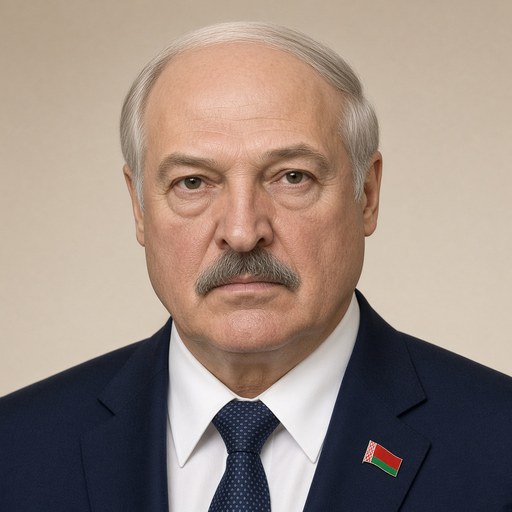
 Alexander Lukashenko · President of Belarus
- Context
- Lukashenko addressed a solemn assembly in Belarus on 7 May 2010 commemorating the 65th anniversary of the Soviet victory in World War II.
- Main themes
- 65th anniversary of Victory in the Great Patriotic War, Soviet and Belarusian role in defeating Nazi Germany, partisan resistance movement in Belarus, historical revisionism and Western narratives, unity of the anti-Hitler coalition, European peace as legacy of Soviet sacrifice, wartime heroism and sacrifice, rear workers' contributions, preservation of historical memory
- Duration
- ~25 min
- Words
- 2,995
- Sentences
- 169
- Readability
- 52
- Grade
- 10.4
- Syntax
- 2.82
- Vocabulary
- 2.21
Translated from Russian
The broad sphere of national life a sentence belongs to. Every sentence has an Arena, so it is the denominator the other indices are read against.
Other169 sentences in 87 paragraphs
Dear veterans! Dear compatriots! Esteemed foreign guests!
In world history, there are many memorable dates and events. Many of them, which seemed important to their participants and contemporaries, have faded and dulled like old coins. But there are those destined to become a watershed in the development of human civilization and transform the world.
In ancient history, such an event was the emergence of Christianity. In modern history, it was the Great Victory in the Great Patriotic War.
"The Great Victory" – that is how millions of residents of Europe named it six and a half decades ago, with tears in their eyes as they welcomed the liberators.
The Great Victory brought a long and lasting peace. Before our very eyes, what can be considered a miracle of history occurred. Europe, where for thousands of years hundreds of large and small wars had been waged, where blood flowed like a river, suddenly reconciled and calmed down. Historical enemies became, if not friends, then at least partners. Nations that had fought each other for centuries began to build a common European home.
And today, those who take pride in the unity of Europe must understand: the roots of that unity lie in the Great Victory of 1945.
Millions of Soviet soldiers, millions of our fellow countrymen Belarusians, who fought and fell in the Great Patriotic War, not only saved all of us, not only liberated the world from Nazi filth – it was they who allowed Europe to become what it is today – peaceful and prosperous.
For 65 years, the lands of Germany, France, Britain, Poland, and other European countries have not echoed with cannon fire, bombs have not exploded, and blood has not been shed. And this is the merit of our Soviet soldier, partisan, and underground fighter!
We did not just liberate Europe – we brought it peace for decades!
We, the descendants of Victory, the heirs of the courage of past generations, must take pride in this and, most importantly, preserve this precious legacy.
Recently, the topic of the Second World War has been at the center of attention for political leaders and the press. And everyone is trying to extract maximum benefit from history for themselves. They interpret events as if they, in the West and in the United States, won the war and have been the guarantors of global security for decades.
Even worse, attempts at supposedly rethinking history are being made in "independent" Belarusian newspapers and by "free cultural figures."
Let us not belittle the merits of any of the states of the anti-Hitler coalition. But we must not allow anyone to take the Victory away from us and our people!
We must not forget who was targeted and who repelled the main blow of fascist aggression.
Nazi Germany unleashed a gigantic force upon our country, the Soviet Union. The length of the Soviet-German front was four times greater than all the Western fronts combined. German soldiers knew: the Eastern Front was hell, from which there was no return and no salvation. It was there that 72 percent of the manpower losses of the Wehrmacht and SS occurred.
Only in the Brest Fortress did the Nazis lose as many troops as during the entire French campaign. The battle at Brest marked the beginning of the battle for Berlin.
In the ranks of the Red Army fought 1 million 300 thousand natives of Belarus. Almost five hundred became Heroes of the Soviet Union.
A unique phenomenon, unparalleled in history, was the resistance movement in Belarus. The so-called second front was opened not in 1944 in Normandy, but much earlier, in Belarusian cities, towns, forests, and swamps, where entire families went to fight for their homeland.
Throughout the vast territory of the Soviet Union, there were about 1 million partisans. In our republic alone, there were over 800 thousand people's avengers.
On April 27, 1943, Hitler declared war on the partisans and ordered that the fight against them be considered equivalent to combat operations on the fronts.
During the years of occupation, Belarusian partisans destroyed more than five hundred thousand enemy soldiers and officers – approximately the same number as the losses of the Nazis in battles after the opening of the second front in Europe.
The "rail war" that unfolded on our land almost halved the supplies to German troops and became the key to the success of major offensive operations of the Soviet Army in 1943-1944, which opened the way to the complete liberation of enslaved, humiliated, and by that time brought to its knees Europe.
Is this not an answer to those scribblers who try to tarnish the partisan pages of the history of the Great Patriotic War!
The workers of the rear also contributed to the common victory over the enemy. Just think: in the wartime year of 1942, the Gomselmash plant produced six times more than before the war. And in 1943, it surpassed that level by fourteen times.
Such unity, sacred brotherhood, and faith had never been known in history. Heroes were not only individual people but entire localities. The nationwide feat determined the outcome of the entire Second World War.
But the mournful list of our compatriots who suffered stands out on the continent, because no other European state suffered such monstrous damage.
We remember all: those who fought in the trenches, those who were partisans, those who fought underground, in the forests, those who selflessly worked on the labor front, those who experienced the horrors of concentration camps.
The memory of that war is stronger than time.
Perhaps because the long-suffering Belarus lost every third of its inhabitants, and also due to the heightened sense of justice and honesty that is inherent in our nation, just a decade and a half ago, during the years of political turmoil and the overthrow of ideals, you remember, Belarus was the first in the entire post-Soviet space to raise the issue of the inviolability and sanctity of the memory of the people's feat.
The Great Victory is an enduring source of national pride, a foundation of ideology and statehood, the significant historical event that unites generations.
And the fact that this current holy holiday is taking place against the backdrop of ongoing attempts to revise the outcomes of the Second World War and the Great Patriotic War can only be called criminal. Some are itching to rewrite history, belittle and even trample the nationwide feat and the memory of it.
Recently, it has even come to wild speculations that Belarus allegedly fought not against fascism, but for its independence from other fraternal Soviet republics. And that during the years of occupation, we were almost engaged in a civil war with each other, and half of Belarus went into the police or served the Germans.
Such blasphemy and vile treachery do not fit in the head of any normal person. Especially Belarusians – a nation that, together with other peoples of the Soviet Union, laid millions of lives on the altar of Victory.
It is frightening that this disgusting lie comes from where it was least expected by us, Belarusians.
I would advise these writers and liars to first look at what is happening with history in their own country. How the truth is distorted, how true patriots are humiliated, and from whom heroes are made.
Our principled position remains unchanged: the Great Victory is the most sacred thing for every Belarusian.
And if there is a handful of such moral monsters (there is no other way to call them) who are close to the idea of "independent Belarus in the new Europe of Adolf Hitler," we know them. We know whom their idols served during the Great Patriotic War, and it is completely clear whose lackeys they are today.
It is from them that the most furious cries were heard when we restored historical justice with our state symbols. They are disturbed that Belarus was the first in the post-Soviet space to introduce the teaching of the history of the Great Patriotic War and cleaned the textbooks of blatant lies.
It is their like-minded people who have made it so that in some former Soviet republics, the Victory Day has been banned, and wearing military awards has become almost punishable, monuments to fallen soldiers are being demolished, and executioners are being made national heroes.
This will not happen in Belarus! And as President, I promise you this!
The memory, reverence for the feat, and readiness to defend the sanctity of those days must be passed on to our children and grandchildren. Because the special role in the struggle for historical truth belongs to the youth.
Next year marks 70 years since the beginning of the most terrible and bloody war. This is a very long period, during which more than one new generation has come into being.
And today, addressing the young citizens of Belarus, I want to say: you, thank God, do not know what war is. So feel this and imbue yourselves with even greater respect and love for those who, at the cost of their youth, health, and very lives, saved all of us, you, the youth, from its horrors, who after the war toiled for free, in hunger, and restored our country.
Value and continue their patriotic combat traditions. Be able to resist any attempts to tarnish and discredit the people's feat and our Victory.
Dear comrades!
The historical lessons of the Great Victory still determine the strategic principles of our domestic and foreign policy today.
Its precious asset – freedom and independence – must not only be honored but also defended against any threats.
We have realized that we are not hostages of fate, pawns on the chessboard of big politics, but can change the course of history by upholding the ideals of truth and justice.
The bitter experience of the past war has given us immunity to the virus of revolutions, instability, and any aggression, but at the same time made us sensitive to attempts to infringe on national interests.
To be honest, as a historian, I always analyze a particular situation in relation to historical experience. Characteristic parallels are often observed. In 1942, Hitler began to define a new aggressive strategy. According to his plan, it was necessary to occupy the territory up to the Urals. And in the Asian part, to create conditions such that revolutions would continuously occur there, leading to the self-destruction of peoples. As a result, the state as a whole would fall at the feet of the invaders.
It did not work then, and it will not work now!
Belarus has enough political will to decisively put an end to any attempts to interfere in its internal affairs, to openly confront such plans for the redistribution of the world on the international stage.
We are ready to be friends with both the East and the West, but on equal terms. We are open to contacts and cooperation, but not for mergers and acquisitions.
We understand that any confrontation, any conflict poses a threat to life, as it can always spiral out of control.
Therefore, for a sovereign European Belarus, the most important principles are peacefulness and good neighborliness.
Our multi-vector and independent foreign policy is not a challenge to the course of history, but, on the contrary, a deep understanding of its lessons.
It is precisely such a grand moral-political task that the leaders and peoples of the victorious countries set before their descendants 65 years ago – to draw the right conclusions from history and forever exclude the repetition of tragedies of global scale!
Our response to the threats of modernity must be the rapprochement of peoples based on humanity and universal spiritual values, comprehensive cooperation, and counteraction to common problems and challenges, of which there are plenty.
It is time to archive the stereotypes of the "cold war" that divide countries into "bad" and "good." To stop creating artificial dividing lines between states that have sacrificed the most precious thing on the altar of Victory – millions of lives of their citizens!
I am convinced that this will be the most worthy respect for the memory of the generation that defeated Nazism.
Our country consistently fulfills its international obligations, serves as a shield for Europe against drug trafficking, human trafficking, and illegal migration, and makes a significant contribution to the fight against international terrorism and extremism.
Throughout the years of sovereign Belarus's existence, not a single one of our soldiers has participated in military operations on the territory of other states.
The military doctrine of the Republic of Belarus is purely defensive in nature. But this is a sign of our strength, not weakness. The Armed Forces of the Republic of Belarus are ready to carry out any combat task to preserve the peace and independence of the state.
Fathers and grandfathers fought for a strong, free, rich, and happy Belarus. Our duty is to make it such that the liberator heroes take pride in our successes as a worthy continuation of their labors.
We look confidently to tomorrow. We are consistently implementing what has been planned, despite any crises – in the economy, social sphere, medicine, education, and culture.
Modern Belarus seems to have absorbed the spirit of those heroic times. For the last one and a half to two decades, we have constantly had to fight: with internal problems and external pressure.
The lessons of history help us endure. For it is not the crisis situation itself that is frightening, but the accompanying spiritual stagnation, when millions of people lose the will to win, and society begins to fall into disarray.
And it is no coincidence that this anniversary year has become a Year of Quality in our country. By increasing the economic power of the state, we are moving towards the main goal – to improve the overall quality of life, so that the prosperity and well-being of every family constantly grow. To improve the spiritual and moral climate in society. To ensure the rights and freedoms of citizens, legality, and order in the country.
Dear friends! Not everything we have achieved here is liked even by our close friends and neighbors. Envy is a terrible force; it eats away at everything. It is a morally terrible category that, God forbid, any person or nation should experience. This is one of the reasons for the pressure on Belarus that is being exerted today.
When the global crisis began, I was the first, and probably still the only head of state, to openly say: the crisis is a result of global corruption. Who today would argue with that? I will say more: I have no facts to say that the cause of this crisis is to redraw the world, but what is happening today, in these crisis years, months, or perhaps already post-crisis, testifies precisely to this. It was necessary to take control of the developing countries that began to gain strength. This does not please you know who – those whose hands are itching, whose vital interests span the entire planet. They have vital interests in Belarus. They have them in Uzbekistan, Turkmenistan, Tajikistan, Afghanistan, Pakistan, the Middle East, Africa, and Latin America. I have always asked and continue to ask: where are our vital interests and those of the peoples who live there?
This is the main reason for what is happening today. And this redrawing does not necessarily have to happen by force. There are different methods. The world has advanced so much today that it can be redrawn without war. Where it cannot be done without war – there we will start to fight... How many "hot spots" are there in the world today? And how many are ready to arise, and in what places these "hot spots" are, you also know.
But probably even those who today are rolling up their sleeves to redraw the world understand that places like Belarus, and there are many, can respond. Unacceptably respond. And we will respond. If necessary. We must protect our piece of land for our small population. And not only for our children and grandchildren, but for us as well.
The Great Patriotic War is not just a chronicle of events and a record of battles. It is made up of the fates of specific people. From your lives, dear veterans.
Each of you has gone through your own military path. Each has achieved victory. And today, the army of more than forty thousand veterans of the Great Patriotic War is the backbone of society, one of the foundations of the political system of the Belarusian state.
Social support for war veterans in our country is comprehensive and includes not only social benefits.
Our veterans, surrounded by the care of the state and the grateful attention of all generations of Belarusians, can openly be proud of their past and rejoice in a calm, peaceful life. And this attitude towards you will always be!
Dear veterans!
You should know: we are in the same ranks with you. We are proud of the greatness of your fates. We are glad that today you are with us, that we are together celebrating this great date of the Great Victory – the 65th anniversary.
May fate grant you many more such happy and sunny years as this peaceful spring.
A low bow to you for the Great Victory!
We express our words of gratitude to the liberators of Belarus, who today live in different corners of the world. You are our dear people. The Belarusian land remembers you and honors your feat.
Eternal gratitude to all of you, heroes-liberators!
Dear friends!
I sincerely congratulate you on the upcoming great holiday of Victory.
I wish our esteemed veterans longevity, inexhaustible energy, a strong spirit, and optimism.
And to all of us – good health, well-being, and a happy life under the peaceful sky of free Belarus.
Happy Victory Day, dear compatriots!
The original Russian. The tags above are read on the English translation's sentences.
Уважаемые ветераны! Дорогие соотечественники! Уважаемые зарубежные гости!
В мировой истории немало памятных дат и событий. Многие из них, казавшиеся важными их участникам и современникам, истерлись и потускнели как старые монеты. Но есть те, которым суждено было стать водоразделом в развитии человеческой цивилизации и преобразить мир.
В древней истории таким событием стало возникновение христианства. В новейшей – Великая Победа в Великой Отечественной войне.
«Великая Победа» – именно так назвали ее шесть с половиной десятилетий назад миллионы жителей Европы, со слезами на глазах встречавшие освободителей.
Великая Победа принесла долгий и прочный мир. Буквально на глазах произошло то, что можно считать чудом истории. Европа, на территории которой тысячи лет беспрерывно велись сотни больших и малых войн, рекой текла кровь, неожиданно примирилась и успокоилась. Исторические враги стали если не друзьями, то, по крайней мере, партнерами. Нации, сотни лет сражавшиеся друг с другом, начали строить общий европейский дом.
И сегодня те, кто гордится единством Европы, должны понимать: истоки единства – в той Великой Победе 45 года.
Миллионы советских солдат, миллионы наших земляков-белорусов, сражавшихся и павших в Великой Отечественной, не просто спасли всех нас, не просто освободили мир от нацистской мерзости – именно они позволили Европе стать такой, какая она есть сегодня, – спокойной и благополучной.
65 лет на землях Германии, Франции, Британии, Польши и других европейских стран не гремит канонада, не рвутся бомбы и не льется кровь. И это – заслуга нашего советского солдата, партизана и подпольщика!
Мы не просто освободили Европу – мы принесли ей мир на десятилетия!
Нам, потомкам Победы, преемникам мужества прошлых поколений, надо гордиться этим и, самое главное, сберечь драгоценное наследие.
В последнее время тема Второй мировой войны находится в центре внимания политических лидеров и прессы. И каждый пытается из истории извлечь максимальную выгоду для себя. Трактуют события так, будто они там, на Западе и в США, выиграли войну и являются гарантами глобальной безопасности на протяжении десятилетий.
Еще хуже, что попытки якобы переосмысления истории предпринимаются в «незалежных» белорусских газетенках и «свабоднымi дзеячамi культуры».
Не будем преуменьшать заслуг ни одного из государств антигитлеровской коалиции. Но и отнять Победу у себя и своего народа мы не должны позволить!
Нельзя забывать, на кого был направлен и кто отразил основной удар фашистской агрессии.
Гитлеровская Германия обрушила на нашу страну, Советский Союз, гигантскую мощь. Протяженность советско-германского фронта в четыре раза превосходила все западные фронты вместе взятые. Немецкие солдаты знали: Восточный фронт – это ад, из которого нет возврата и от которого нет спасения. Именно на него пришлось 72 процента людских потерь вермахта и СС.
Только в Брестской крепости гитлеровцы потеряли столько же живой силы, сколько во время всей французской кампании. Бой у Бреста стал началом битвы за Берлин.
В рядах Красной Армии сражались 1 миллион 300 тысяч уроженцев Беларуси. Почти полтысячи стали Героями Советского Союза.
Уникальным явлением, не имеющим аналогов в истории, явилось движение сопротивления в Беларуси. Так называемый второй фронт был открыт не в 44-м году в Нормандии, а гораздо раньше, в белорусских городах, поселках, лесах и болотах, куда сражаться за Родину уходили целыми семьями.
На всей территории огромного Советского Союза было около 1 миллиона партизан. При этом только в нашей республике – свыше 800 тысяч народных мстителей.
27 апреля 1943 года Гитлер объявил партизанам войну и приказал считать борьбу с ними равнозначной боевым действиям на фронтах.
За годы оккупации белорусскими партизанами было уничтожено более пятисот тысяч солдат и офицеров противника – примерно столько же составили потери гитлеровцев в сражениях после открытия второго фронта в Европе.
Развернувшаяся на нашей земле «рельсовая война» почти вдвое сократила поставки германских войск и стала залогом успеха крупных наступательных операций Советской Армии 1943 – 1944 годов, открывших путь к полному освобождению порабощенной, униженной и поставленной к этому времени на колени Европы.
Это ли не ответ тем бумагомарателям, которые пытаются очернить партизанские страницы истории Великой Отечественной войны!
Приближали общую победу над врагом и труженики тыла. Вы только вдумайтесь: в военном 42-м завод «Гомсельмаш» выпускал продукции в 6 раз больше, чем накануне войны. А в 43-м превзошел этот уровень уже в 14 раз.
Такого единства, святого братства и веры еще не знала история. Героями становились не только отдельные люди, но и целые населенные пункты. Общенародный подвиг решил исход всей Второй мировой войны.
Но скорбный список пострадавших наших земляков особняком выделяется на континенте, потому что такого чудовищного урона не потерпело ни одно европейское государство.
Мы помним обо всех: о тех, кто сражался в окопах, партизанил, боролся в подполье, в лесах, кто самоотверженно работал на трудовом фронте, кто испытал ужасы концлагерей.
Память о той войне сильнее времени.
Может быть, потому, что многострадальная Беларусь потеряла каждого третьего своего жителя, а также в силу обостренного чувства справедливости и честности, которые присущи нашей нации, еще полтора десятилетия назад, в годы политических смут и ниспровержения идеалов, вы это помните, Беларусь первой на всем постсоветском пространстве подняла тему незыблемости и святости памяти о народном подвиге.
Великая Победа является непреходящим источником национальной гордости, опорой идеологии и государственности, тем знаковым историческим событием, которое объединяет поколения.
И то, что нынешний святой праздник проходит на фоне непрекращающихся попыток ревизии итогов Второй мировой войны и Великой Отечественной, иначе как преступным не назовешь. Кое у кого так и чешутся руки переписать историю, принизить и даже растоптать всенародный подвиг и память о нем.
В последнее время даже дошло до диких рассуждений о том, что Беларусь якобы боролась не с фашизмом, а за свою независимость от других братских советских республик. И что в годы оккупации у нас чуть ли не велась гражданская война друг с другом, а пол-Беларуси ушло в полицию или служило у немцев.
Такое кощунство и гнусная подлость не укладываются в голове любого нормального человека. Тем более белорусов – нации, которая вместе с другими народами Советского Союза положила миллионы жизней на алтарь Победы.
Страшно, что эта отвратительная ложь исходит оттуда, откуда ее меньше всего можно было ожидать нам, белорусам.
Посоветовал бы этим писакам и лжевещателям вначале посмотреть, что творят с историей в их собственной стране. Как извращают правду, унижают истинных патриотов и из кого лепят героев.
Наша принципиальная позиция остается неизменной: Великая Победа – это самое святое для каждого белоруса.
А если и есть кучка таких нравственных уродов (иначе их нельзя назвать), которым близка идея «незалежнай Беларусi ў новай Эўропе Адольфа Гітлера», они нам известны. Мы знаем, кому служили их кумиры в годы Великой Отечественной, и совершенно понятно, чьими лакеями они являются сегодня.
Именно от них раздавались самые яростные вопли, когда мы восстановили историческую справедливость с нашими государственными символами. Им не дает покоя, что Беларусь первая на постсоветском пространстве ввела преподавание курса истории Великой Отечественной войны и вычистила от наглой лжи учебники по истории.
Это их единомышленники сделали так, что в некоторых бывших советских республиках праздник Победы оказался под запретом, а ношение боевых наград стало чуть ли не наказуемо, сносятся памятники павшим воинам, а из карателей делают национальных героев.
Такого в Беларуси не будет! И как Президент я вам это обещаю!
(Аплодисменты)
Память, преклонение перед подвигом и готовность защищать святость тех дней мы обязательно должны передать детям и внукам. Потому что особая роль в борьбе за историческую правду принадлежит молодежи.
В следующем году исполнится 70 лет со дня начала самой страшной и кровавой войны. Это очень длительный период, за который успело появиться на свет не одно новое поколение.
И сегодня, обращаясь к молодым гражданам Беларуси, я хочу сказать: вы, слава богу, не знаете, что такое война. Так прочувствуйте это и проникнитесь еще большим уважением и любовью к тем, кто ценой своей молодости, здоровья и самой жизни спас всех нас, вас, молодежь, от ее ужасов, кто после войны горбатился за бесплатно, впроголодь и восстанавливал нашу страну.
Цените и продолжайте их патриотические боевые традиции. Умейте дать отпор любым попыткам очернить и опорочить народный подвиг и нашу с вами Победу.
Уважаемые товарищи!
Исторические уроки Великой Победы и сегодня определяют стратегические принципы нашей внутренней и внешней политики.
Ее драгоценное достояние – свободу и независимость – нужно не только чтить, но и защищать от любых угроз.
Мы осознали, что не являемся заложниками судьбы, пешками на поле большой политики, а можем изменять ход истории, отстаивая идеалы правды и справедливости.
Горький опыт минувшей войны привил нам иммунитет к вирусу революций, нестабильности и вообще любой агрессии, но вместе с тем сделал чувствительными к попыткам ущемления национальных интересов.
Признаться, как историк я всегда анализирую ту или иную ситуацию в преломлении к историческому опыту. Часто наблюдаются характерные параллели. В 1942 году Гитлер начал определять новую захватническую стратегию. По его замыслу необходимо было оккупировать территорию до Урала. А на азиатской части создать такие условия, чтобы там непрерывно происходили революции, приводящие к самоистреблению народов. В результате государство в целом упало бы к ногам захватчиков.
Не получилось тогда, не будет этого и сейчас!
У Беларуси хватит политической воли, чтобы решительно пресечь любые попытки вмешательства в ее внутренние дела, открыто противостоять на международной арене подобным планам передела мира.
Мы готовы дружить и с Востоком, и с Западом, но на равных. Открыты для контактов и сотрудничества, но не для слияний и поглощений.
Мы понимаем, что угрозу жизни несет любая конфронтация, всякий конфликт, поскольку он всегда может выйти из-под контроля.
Поэтому для суверенной европейской Беларуси важнейшими принципами являются миролюбие и добрососедство.
Наша многовекторная и независимая внешняя политика – это не вызов ходу истории, а, наоборот, глубокое усвоение ее уроков.
Именно такую грандиозную нравственно-политическую задачу поставили перед потомками 65 лет назад лидеры и народы стран-победителей – сделать из истории верные выводы, навсегда исключить повторение трагедий глобального масштаба!
Нашим ответом на угрозы современности должны стать сближение народов на основе гуманности и универсальных духовных ценностей, всестороннее сотрудничество и противодействие общим проблемам и вызовам, которых хватает.
Пора сдать в архив стереотипы «холодной войны», которые делят страны на «плохие» и «хорошие». Прекратить создание искусственных разделительных линий между государствами, которые положили на алтарь Победы самое дорогое – миллионы жизней своих граждан!
Убежден, это будет наиболее достойным уважением памяти поколения победителей нацизма.
Наша страна последовательно выполняет свои международные обязательства, служит щитом Европы на пути наркотрафика, торговли людьми и нелегальной миграции, вносит существенный вклад в борьбу с международным терроризмом и экстремизмом.
За все годы существования суверенной Беларуси ни один наш солдат не принимал участия в военных операциях на территории других государств.
Военная доктрина Республики Беларусь носит сугубо оборонительный характер. Но это – признак нашей силы, а не слабости. Вооружённые Силы Республики Беларусь готовы выполнить любую боевую задачу ради сохранения мира и независимости государства.
Отцы и деды боролись за сильную, свободную, богатую и счастливую Беларусь. Наш долг – сделать ее такой, чтобы герои-освободители гордились нашими успехами как достойным продолжением своих трудов.
Мы с уверенностью смотрим в завтрашний день. Мы последовательно, несмотря ни на какие кризисы, осуществляем то, что намечено, – в экономике, социальной сфере, медицине, образовании и культуре.
Современная Беларусь как будто впитала дух тех героических времен. Последние полтора-два десятка лет нам все время приходится бороться: то с внутренними проблемами, то с внешним давлением.
Уроки истории помогают нам выстоять. Ведь страшна не сама по себе кризисная ситуация, а сопровождающая ее духовная стагнация, когда у миллионов людей пропадает воля к победе, а в обществе начинаются разброд и шатание.
И неслучайно этот юбилейный год стал в нашей стране Годом качества. Наращивая экономическую мощь государства, мы идем к главной цели – повышать общее качество жизни, чтобы постоянно росли достаток и благосостояние каждой семьи. Улучшался духовный и нравственный климат в обществе. Обеспечивались права и свободы граждан, законность и порядок в стране.
Уважаемые друзья! Далеко не всё, что мы здесь достигли, нравится даже нашим близким друзьям и соседям. Зависть – это страшная сила, она разъедает больше всего. Это нравственная страшная категория, которую, не дай бог, испытать любому человеку и любой нации. Это одна из причин того давления на Беларусь, которое осуществляется сегодня.
Когда начался мировой кризис, я первый, и до сих пор, наверное, единственный глава государства, кто открыто сказал: кризис – это результат мировой коррупции. Кто сегодня станет с этим спорить? Скажу и другое: у меня нет фактов, чтобы сказать, что причина этого кризиса – переделить мир, но то, что происходит сегодня, в эти кризисные годы, месяцы, а может быть, уже посткризисные, свидетельствует именно об этом. Надо было прибрать к рукам развивающиеся страны, которые начали набирать силу. Это не нравится вы знаете, кому – у кого чешутся руки, у кого интересы жизненные по всей планете. У них и в Беларуси жизненно важные интересы. У них в Узбекистане, Туркменистане, Таджикистане, Афганистане, Пакистане, на Ближнем Востоке, Африке, Латинской Америке жизненные интересы. Я всегда задавал и задаю вопрос: а где же наши жизненные интересы и тех народов, которые там живут?
Это главная причина того, что происходит сегодня. И этот передел не обязательно должен был произойти силой. Методы разные. Мир настолько сегодня продвинулся, что переделить его можно без войны. Там, где не получается без войны – там начнем воевать… Сколько сегодня в мире «горячих точек»? И сколько готовы возникнуть, и в каких местах эти «горячие точки», вы тоже знаете.
Но, наверное, и те, кто сегодня засучив рукава взялись за передел мира, понимают, что такие, как Беларусь, а их много, могут ответить. Неприемлемо ответить. И мы ответим. Если нужно будет. Мы должны для своей небольшой численности защитить свой кусок земли. И не только для наших детей и внуков, но и для нас тоже.
Великая Отечественная война не просто хроника событий и летопись сражений. Она сложена из судеб конкретных людей. Из ваших жизней, дорогие ветераны.
Каждый из вас прошел собственный военный путь. Каждый вершил победу. И сегодня более чем сорокатысячная армия ветеранов Великой Отечественной является опорой общества, одной из основ политической системы белорусского государства.
Социальная поддержка ветеранов войны в нашей стране носит комплексный характер и включает не только социальные льготы.
Наши ветераны, окруженные заботой государства и благодарным вниманием всех поколений белорусов, могут открыто гордиться своим прошлым и радоваться спокойной, мирной жизни. И такое отношение к вам будет всегда!
(Аплодисменты)
Дорогие ветераны!
Вы должны знать: мы с вами в одном строю. Гордимся величием ваших судеб. Рады, что сегодня вы рядом с нами, что мы вместе встречаем эту великую дату Великой Победы – 65-ю годовщину.
Пусть судьба подарит вам еще много таких же счастливых и солнечных лет, как эта мирная весна.
Низкий поклон вам за Великую Победу!
Слова нашей признательности мы адресуем освободителям Беларуси, которые сегодня живут в разных уголках мира. Вы наши родные люди. Белорусская земля помнит вас и чтит ваш подвиг.
Вечная благодарность всем вам, герои-освободители!
Уважаемые друзья!
Сердечно поздравляю вас с наступающим великим праздником Победы.
Желаю нашим уважаемым ветеранам долголетия, неиссякаемой энергии, бодрости духа и оптимизма.
А всем нам – крепкого здоровья, благополучия и счастливой жизни под мирным небом свободной Беларуси.
С Днем Победы, дорогие земляки!