




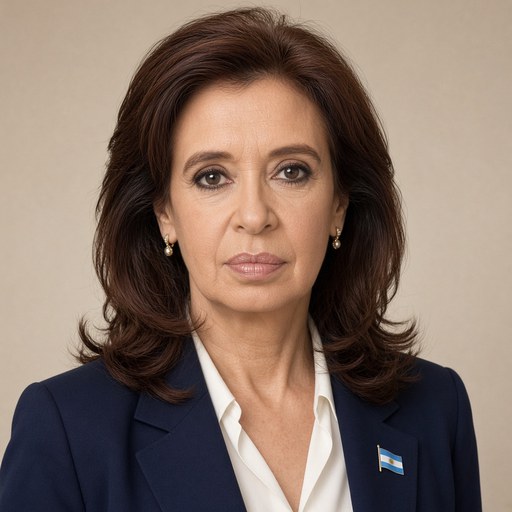
Cristina at the 20th Annual Conference of the UIA
 Cristina Fernández de Kirchner · President of Argentina
- Context
- Fernández de Kirchner addressed the 20th Annual UIA Conference at the Sheraton Hotel in Pilar on December 3, 2014, inaugurating energy projects and discussing industrial policy.
- Main themes
- Reindustrialization of Argentina, energy sector investment, competitiveness and economic development, public-private sector articulation, import substitution, power plant inaugurations, industrial growth vs. development, lithium production, bioethanol, tax relief for workers, Peronist economic legacy, infrastructure expansion
- Duration
- ~74 min
- Words
- 8,831
- Sentences
- 326
- Readability
- 54
- Grade
- 11.9
- Syntax
- 3.26
- Vocabulary
- 2.10
Translated from Spanish
The broad sphere of national life a sentence belongs to. Every sentence has an Arena, so it is the denominator the other indices are read against.
Other326 sentences in 98 paragraphs
The president spoke at the 20th Annual Conference of the UIA at the Sheraton Hotel in Pilar. She inaugurated the new turbines at the Vuelta de Obligado Power Plant, the ACA BIO bioethanol plant in Villa María, Córdoba, and the Sales de Jujuy mining project that will produce lithium batteries. Additionally, she announced that workers whose salaries do not exceed $35,000 will not pay taxes on their Christmas bonus.
Good afternoon everyone; Mr. President of the Argentine Industrial Union; Mr. Secretary General of the General Confederation of Labor; businesswomen and businessmen: to begin with, the truth is that Méndez, more than just surviving with the Kirchners, has revived the industry, so I think it is good to clarify that. Well, I say this because I believe that one of the merits of our project is having had as one of its fundamental objectives the reindustrialization of the country and the reindustrialization of rural areas.
That is why I want to thank you all for the invitation to this meeting, to the closing of this meeting, of this twentieth UIA Conference. And I was listening attentively to the topic of competitiveness, which is the big issue: competitiveness, growth, and development, and also making the distinction between growth and development.
You can have growth and not have development; in fact, during the nineties, for a good part of the decade, there was growth in terms of GDP, in economic terms, but there was no development.
We reached inconceivable levels of poverty, an unemployment rate of a quarter of the population, a country almost condemned to be a nation of services. Ultimately, not even an exporter of raw materials because we lacked competitiveness due to the exchange rate for exports, well, despite the fact that everyone was very happy, some primary producers with the government, but well, these are things that have to do more with culture than with the economy, which prevails, or still prevails in some sectors of Argentina.
But speaking of competitiveness, for example, one of the keys to the reindustrialization of Argentina has been the energy sector, not only because of the growth we have had. The inauguration today in Timbués, of Vuelta de Obligado, which is the sixth plant of more than one hundred megawatts that we inaugurated in the province of Santa Fe and is the number 26 of the plants of more than 100 megawatts that have been inaugurated, since 1958 was the last one.
In 1958 I was five years old and I was in preschool; you, De Vido, must have been in your second grade, I don’t know where. You, kid, were not even born, and I am referring to the Minister of Economy, nor was my sister, who was born in 1959.
The Sorrento plant, which is also in Santa Fe, was the last plant of more than 100 megawatts inaugurated in 1958, curiously when the decline of the industrial model in Argentina began, which had been strongly established during the first and second Peronist governments, which had great development. It had already begun to be implemented, starting in 1930 and the crisis of 1930, which forced us to begin a process of import substitution and deepened fundamentally during the 40s and 50s and which then – it is worth saying – began to languish.
This project that we are doing today, and we talked about the articulation between the public and private sectors and the issue of growth and competitiveness, has to do with the articulation between the private and the public. Here we have, first, in this inauguration today, an import substitution of more than 100 million dollars, because 50 percent of the work has been produced by the national industry, represented by Lascurain, a cluster of more than 60 companies: 45 from Santa Fe and 15 from the rest of the country, and also two impressive ones, such as General Electric and also the other company, which I never remember, the Spanish one, which I will read, Duro Felguera.
Here we have a generation – in this case – of 810 megawatts; in 2010 we inaugurated almost right next to it the San Martín plant, of 840 megawatts, and it is the number 26 from 2003 to date. Look, until 2003, no plant with more than 100 megawatts had been inaugurated. After 2003, we inaugurated 26 plants of more than 100 megawatts. This last one we are inaugurating today is also being done with a very important contribution from the State to these three companies, which will allow – for Enarsa – to participate in 70 percent of this new plant.
But where is competitiveness also? There were also a series of very important works that constitute the ring, which allows this generation from Timbués to be distributed to the Rosario agro-industrial complex, all of southern Rosario, which were important investments that were made, 65 kilometers of 500 line, in Río Coronda, in western Rosario, which allows all the energy from Vuelta de Obligado to be evacuated to Rosario and also includes the expansion of transformer stations in western Rosario and Río Coronda with an investment of 86 million dollars. This is infrastructure made by the State; obviously, the private sector does not build high-voltage lines, nor medium-voltage lines, nor transformers.
#NationalEnergyPlan The control room screen of CT Vuelta de Obligado shows generation at maximum load.
You know, Moretti, because you are from Santa Fe, right? Good, also the underground line 132 Rosario Sur-San Martín and the transformer station 132 San Martín, which benefit more than 150,000 households in Rosario, with an investment of 24 million dollars. Additionally, transformers of 500 and 132 that supply the entire area in Río Coronda and the industrial area of San Lorenzo, which will supply the entire industrial area of Greater Rosario, which will have more energy and we will have a whole series of further incorporations.
Ultimately, we can talk about that in Santa Fe, from 2003 to 2014, we have had an increase in household demand for energy of 195 percent. Why? Because industrial development is accompanied by job creation. And the better-paid jobs, which are not in the primary sector, but in the industrial sector and the higher technology sector, obviously have greater purchasing power.
Our workers – we all know – have the highest purchasing power of all workers in Latin America. So that demand from all households only in Santa Fe grew by 195 percent; lighting by 177 percent; commerce by 191 percent; and industry by 83 percent, that is, in electricity, the province of Santa Fe demanded 125 percent more; in terms of gas, 88 percent more. And this allows us to analyze the evolution of the Argentine energy system because one of the sectors of competitiveness – I repeat – is energy, and one of the things that measures the industrial growth and development of a country is the greater consumption of energy.
Those who talk to me about self-sufficiency, in the 90s, that self-sufficiency is not useful to me because it is a self-sufficiency or export of energy because the country produced nothing, imported everything, and ended up, of course, destroying millions of jobs and there were millions of people who had no work.
That is why it is also very important to see the evolution of the electrical system since the decade of democracy, we could say, since 1983. The second slide, please. There we see in the second slide how the peaks of demand change. In 1983, we had a peak demand, this is when the network of consumption generates the highest demand, of 5,301 megawatts. And we talk about 1983 to go to 1993 to 9,325 megawatts. In 2003, we had a peak of 14,359 megawatts and we went, in 2014, to a peak of 24,034 megawatts, that is, in ten years we grew more than in the previous 20 years of democracy. I believe this is one of the basic issues of how we can measure the issue of demand.
The same goes for the industry; that is the general, let’s go to the industry that interests you. Look, in ten years, industrial demand grew 50 percent more than in the previous 20 years.
Let’s continue with the next slide, please. In households, it grew 98 percent, of course, because all the people, first, have houses and have more things to plug in; before they didn’t plug in anything, now they plug in air conditioning, new washing machines, dryers, dishwashers, irons, and how lucky that people can plug in things at home because it means that their quality of life has improved. We have grown, then, in the 20 years, 98 percent more in this decade than in the previous 20 years.
The next one is very interesting and speaks to the competitiveness of the cost of electricity. The cost of energy – you know – is one of the basic elements in costs, among others, among the costs of the productive sector and also, obviously, indirectly, it is also something very important for workers because if workers had to pay the rates at real prices, at international prices, the demands they would make to their employers would be different, demands that their employers might not be able to meet due to the cost of the energy they would have to produce.
Look at the cost of electricity today: it is only below us, the United States, at megawatt-hour, with 68 dollars; Argentina (76 dollars); Mexico (122), Chile (127); Brazil (133); Europe (158) and Asia (174 dollars). This – my dear Héctor Méndez – is also competitiveness, in which the State has a lot to do because, obviously, it speaks of subsidies to the cost of electricity.
The next slide, please. There is also the cost of natural gas, another very important component. Well, in fact, we are inaugurating today in Timbués the first two cycles of a plant, which is gas-fired. Also here, only below the United States, with the million BTU, at 4.5 dollars; Argentina at 6.7 dollars; Mexico at 9.1; Europe at 15 dollars; Brazil at 19 dollars; Asia at 23 and Chile at 24. This also speaks to competitiveness.
We are not going to keep going through these numbers because, in reality. Please put up the power plants, which is the next one, because it is important what Julio De Vido pointed out, maybe you don’t have it, but how investment has been made, because before the largest investors in power plants were foreign, 66 percent were private foreign investors, today they are only 26 and private nationals went from 8 percent to 28 percent. Look at the growth of the national industry. The provinces are the same, and the National State went from 21 to 41 percent, which makes the National State a very important actor in maintaining the competitiveness of the industry, in maintaining the competitiveness of economic activity, through one of its fundamental vectors, such as energy.
Another of the issues that also has to do with what we were seeing in Villa María is the intervention of state credit and also the Biofuels Promotion Law, because as Julio De Vido said, in 2003 there was zero production of biofuels in Argentina; today we are one of the largest producers worldwide.
The main exporter, I am told here by the Minister of Industries and the Minister of Economy, the main exporter of biofuels. Year 2003: zero, like that; now we are the main exporter, due to important active public policies, promotional, such as the Biofuels Law, which I believe was Néstor, the president, when that law was passed, also due to another initiative of the State to increase the composition of fuels for cars and public transport and bring them to a portion of 10 percent.
And also with things as constant and resounding as a loan from Banco Nación, our development bank, to the important federation of ACA to finance 40 percent of the most important Bioethanol Plant in the Republic of Argentina, favoring, in addition, cooperative sectors – such as ACA – and more than 20,000 medium producers of corn, from the province of Entre Ríos, Córdoba, Santa Fe, and as the Mayor of Villa María said, not only producing bioethanol for blending but also beginning to produce distillers' grains, which is a food primarily for livestock, which has much more nutritional value than raw corn.
Notice that before we exported corn alone; now – on the one hand – we add value with job creation, with engineers graduated from the Technological University of Villa María, who today provide services, along with other workers, and more than 290 jobs, both direct and indirect from the plant, and also producing food for a central activity of that sector of Villa María, which is an important dairy basin, because through the distillers' grains, it has much more nutritional value than raw corn or corn without added value. So, notice how important the issue of research, development, and investment is for competitiveness, because there was evidently a significant investment by the State and there was a significant investment, of 60 percent, in this case from ACA, from the private sector.
The other thing, what we were inaugurating in the province of Jujuy. I remember the meeting that took place in my office, in the Casa Rosada, when the investors came, along with the Governor of the province of Jujuy, together with the indigenous communities of that place, where we have one of the largest lithium deposits and today we are producing, in that modern plant, which has already been inaugurated, lithium. We also want to produce lithium batteries. That is why the two investors, who have already partnered with the province, are precisely Toyota and a very important Australian company, whose name I cannot remember and I have noted it somewhere.
I believe that this, along with the accumulation of issues that happen every day, and some little things we are going to see now, today I brought graphs unlike… from here I see Weiss around, the other I said I wouldn’t bore them with numbers, but it is important that we know the numbers to debunk myths and things we are hearing daily, regarding that this activity, that the other activity, that everything is falling apart.
No, nothing is falling apart, we were fundamentally at very important peaks during the year 2013, because we are not falling into the abyss, we are having a lower activity, perhaps, from the maximum peak we had reached with a record production of automobiles and registrations in the year 2013, but evidently the external front, everyone knows the problems that this has and well there are some issues that have to do with the external front and also with what the economy means, the generation of bad expectations or false expectations.
Why? Because it was heard that by the end of the year such a thing was going to happen, that the dollar was going to be at such and such a rate, that I don’t know what was going to happen. Well, none of the prophecies that were told to many of you, or that perhaps some of you repeated, because Argentines tend to repeat what we are told many times without analyzing it, unfortunately generate a whole climate that is really not the one that the concrete numbers of our main companies – fortunately, and I say this with great joy – exhibit.
Look, and this is information that is at hand for everyone, public, as you will see belongs to the National Securities Commission, which any citizen can access (www.cnv.gov.ar) and which is the economic and stock performance of companies with public offerings. For people to understand, those main companies in the country, that are listed on the Stock Exchange, that are therefore obliged to present their balances on the Stock Exchange, their balances are public, controllable, because their shares are being offered to citizens. Let’s see the economic and stock performance of the companies, in terms of sales and net results, year-on-year comparison 2014-2013, accumulated to the third quarter: sales have grown, in the year 2014, by 9.5 percent against 8.1 of the same period of 2013, that is we have 1.4 percentage points of greater sales growth. And also, as indicated by the light blue shading, a greater, a better net result.
Let’s go to the next one, please. Here is the net result analyzed by sectors. We disaggregate YPF because the volume of the company would distort the charts, if we include it, for example, as an industrial company.
And let’s see, the industry had a net result of 82 percent more, the rest of the companies 66 percent more, and YPF was the one that had the most profits, during the whole year, 138 million dollars.
Let’s move to the next chart, please, and this is the Merval – from here I see Adelmo Gabbi, who can well attest to the growth that these companies have had – which are the ones that obviously make up the Argentine stock market and there are the numbers. In reality, it has grown more by sales and by net result, and now we will see the issue of billing, but these are some companies. The only one that shows negative is Solvay Indupa, all of you know it, the businessmen, there was a takeover bid, a hostile offer, that put Solvay Indupa in a special situation.
But, please, let’s go to the next chart. These are the companies considered to be able to tell all Argentines, to be calm, that our companies have increased sales, and have increased net results, according to their balances, presented to the National Securities Commission. And from here I see some of their heads or members of the main companies: YPF, Tenaris, Telecom, Molino Río de La Plata, Grupo Galicia, Arcor, Siderar, Petrobras Argentina, Santander, Grupo Clarín, Banco Macro and they complain, they complain all the time… Grupo Clarín that throws bad news for all of you, don’t believe them. Look at the numbers yourselves, even, it is foolish to believe the lies. Well, Banco Macro, Banco Patagonia, Banco Francés, Pampa Energía, Banco Hipotecario, Solvay Indupa, Ledesma, Aeropuertos 2000, from here I see Eduardo Eurnekian, Aluard, Compañía Industria Cervecera, this is Quilmes, for those who don’t know, it’s wrong for me to say it, but this is Quilmes; Petrolera del Cono Sur, Irsa, San Miguel, Grimoldi, Endesa Costanera, Alto Palermo, Comercial del Plata, Bodegas Esmeralda, Hidroeléctrica Piedra del Aguila, Caputo… Is Caputo the construction company, right? Yes, I think it is the cousin of Ferrum, among others. So – as you will see Argentines – rest assured that our companies are selling well and are having good net results.
And look, I would now like us to please put up the AFIP graph, don’t be afraid because when one mentions AFIP everyone gets nervous, but well no, don’t be afraid, it’s just to compare billing.
Well there is the billing comparison graph, very well, there we go, let’s see the first one, which is 2003 versus 2013, please the first graph. I will appreciate it, don’t fail me now guys, it was all going well. There we are, there we come, well look, this is registered billing, obviously the declared one.
I cannot venture that there is more billing than what is, that is the billing that they declare to AFIP and I take it as valid. It would be the only one, it would be absolutely inappropriate to think that there could be another billing. Well, and it would also be inappropriate for you, fundamentally.
Well look, in the year 2003, the total billing of the economy was 536.288 million pesos; look at the year 2013, 4.9 trillion, for the first time in the Argentine Republic we went from m to b, almost as if it were a football table. We have moved to the b of trillions, with an increase of 911 percent, nine times. Measure the indices you want, but we grew 911 percent in billing, in ten years. How is this composed: manufacturing industry, went from 190 billion, in 2003 to 1.5 trillion, a 780 percent increase, 7.8 times; wholesale and retail trade, here comes one of the samples of how many times prices, look at this item that sells what the manufacturing industry gives it has a sale of 1.4 trillion, in mere commercial intermediation, wholesale and retail, that is this trade grew 930 percent (9.3 times). Look at our old friends: financial intermediation, from 20.503 million they went to 0.3 trillion, they were obviously the ones that grew the most, at 1316 percent, thirteen times.
If one adds financial costs, plus those of commercial intermediation, we can explain many things that happen with some of the prices. And where we have to situate exactly the gaze of all to improve competitiveness. Better this – Héctor, you will agree with me – is to improve competitiveness. And the rest of the activities, in which primary activities are found, obviously, we have gone from billing 172.441 million to 1.7 trillion, ten times more. Notice that after the financial sector, the rest of the activities, fundamentally dominated by primary agriculture and mining, are the ones that lead the growth in billing.
Now, let’s compare what happened to us in the year 2014 that we were all in a bad mood and complaining. Well this is real until September and estimated for the last quarter. Notice we went to 6.4 trillion, for 2014, that is the total billing that had grown, until last year, by 911 percent we will finish, in 2014, with 1,184 percent, twelve times. Put the growth indices you want and see how we are.
In the manufacturing industry, here we went to 992 percent growth from the year 2003 to date, but also a significant growth because by 2013 the industry had grown by 780 percent in billing. We believe it will end with 992 and the estimates are practically correct because we are already finishing November, so this is very accurate.
Wholesale and retail trade, look, it grew from 930 to 1,196 percent; 1.8 trillion from the 1.4 trillion that had billed in 2013. And let’s see how our friends in financial intermediation are doing, well 20 times, 20 times. The 1,316 percent, that had grown as of December 31, 2013, will end with 1,946 percent in billing, 20 times and the primary sector 1,294 percent; 13 times and they are normally the ones who complain the most.
Let’s move to the next one, please, to the economically active population, with all this talk of employment, unemployment, let’s go to the economically active population (PEA), these are hard data from AFIP, they are not permanent household surveys, on a PEA of 18,594,769 Argentines, or citizens, to put it more properly, we have an employed population of 17,218,000 and an unemployed population of 1,375,821. We have to lower that number of unemployed, but we really have a very, very good level of employment, as we have never had in decades.
There we have how it is broken down salaried from SIPA are 7,500,000; salaried not SIPA (which includes Armed Forces, Security Forces, Gendarmerie, Professional Funds, etc.) we have 2,305,000; self-employed, 871,956; monotributistas, 1,601,000; domestic workers, 452,180 and social monotributo, 443,878 people, with which we have an important… it is what Héctor said a while ago, when he spoke of the industry being a multiplier and generator of jobs. These hard data are the best result and the best evidence of what the process of industrialization, reindustrialization and import substitution has meant for our country.
And there is much to add, we need to add more research, more technology and more development, because of all the manufactures that were exported, those that grew the most exponentially were those of high technological value: 282 percent, if I remember correctly, those of high technological value, against the other manufactures of industrial origin, but that do not have as much incorporation of technology or research and development.
And also, from here I look and see my friend, since we are talking to employers, employees and work, my friend the Secretary General of the CGT, I want to tell you that we have also made the decision that all workers whose income does not exceed 35,000 pesos will not pay Income Tax on the half bonus, for the month of December.
The decision that all workers whose income does not exceed 35,000 pesos will not pay Income Tax on the half bonus for the month of December.
A clarification on this. Why? Because, well, we believe that this will incentivize consumption, we believe that also up to 35,000 pesos objectively, over 1 million… Because you remember the number of employed people we saw, right. But in reality, 1,053,667 workers pay Income Tax. We are at the levels we have been throughout the decade, between 10 and 11 percent of workers who pay taxes, obviously, because there has been a substantial improvement, more than substantial in incomes. The minimum wage, vital and mobile, collective labor agreements. I want you to show me a single country where we have the parity of purchasing power, I am not talking about nominal wages, that our workers have.
That is why we have made this decision that of 1,053,000 workers who pay Income Tax, it covers almost 800,000. To be more exact, they will not pay on the bonus for the month of December 784,479 workers. With which, I believe it is more than important.
What I would like to go to is to demystify this issue of the Income Tax where they ring all day from some media, as if wanting to confront us with the workers. To us, to this Government with the workers. But where were those who today talk about workers in the 90s? Where were those union leaders in the 90s when people were thrown out like dogs into the street, when there was no work, when there was no collective labor agreement, when there was no minimum wage, vital and mobile, when it had been decreed that the salary was unilaterally set, where were they all? Are they coming to tell us that we are a government that does not care about workers?
Well, look, I don’t think there is anyone sincerely and honestly, as we said with Héctor, that beyond the assessment they have of this Government, of the opinion they have of this President or that they had of President Kirchner, can deny that this model has emphasized job creation. Because we do not want industries solely for growth; we want to have industries to have technological development and to have good work, good quality work and people dignifiedly employed.
And let's talk about the Income Tax to demystify this a bit, which is an increasingly progressive tax. From the 1990s to 2002, because everyone talks about progression, about a progressive system, well, in the 1990s, the Income Tax only accounted for 14.3 percent of the revenue. Today it accounts for 20.8. It should account for more, but, well, many times profits are not declared as much or well, let's not start discussing things that might make us all nervous about over-invoicing, under-invoicing...
Speaking of a bit of everything, an important multinational that we recently reported for over-invoicing of imports has just integrated almost half of what we were requesting without judicial complaint, and now we will have administrative discussion for the rest, 51 million dollars were brought in.
But, well, let's go to the next slide, please. Because when we talk about the Income Tax, it seems like I take the Income Tax home with me or the Government keeps it in the Casa Rosada. There we have how the Income Tax is distributed: 20 percent for ANSES, that is, for retirees, to support the Mobility Law for Retirees because part of it is also based on the coefficient, the polynomial that determines the mobility of retirees is based on the revenue, which is logical, one pays according to what one collects, one cannot pay more than what one collects. The other 34 percent goes to the National Treasury, but 46 percent goes to the provinces in the form of shared distribution of profits.
That is why those who talk about reducing the Income Tax, ANSES, National Treasury but, fundamentally, provinces where almost 50 percent goes to provincial jurisdictions, to provincial treasuries.
Next, please. And here we will see what share of the Income Tax salaried workers have in total revenue in other countries: Argentina, 1.5; Brazil, 2.4; Chile, 8.6; Peru, 10.2; Uruguay, 13.5. In summary, clearly, we are the country where high-income workers pay the least Income Tax… I tell you these countries that are in the region and therefore are comparable to us. Don’t even want to know what happens in Sweden, in Norway, in the Scandinavian countries because you would faint, Calo, if I tell you that and a few more.
But well, let’s go to the next one, please, where here we have the revenue from the tax destined for ANSES in the 2015 Income Budget, 66.7 billion. For what? For ANSES programs. How much for the Universal Child Allowance (AUH)? 24.818 billion. How much for family allowances for dependent workers? 27 billion. How much for CONNECTAR-IGUALDAD? 2.865 billion. So that you don’t think, as they say out there, “Oh!, they don’t give it in computers and they take it out in family allowances.”
Look, it’s 10 percent of CONNECTAR-IGUALDAD which also trains our kids in schools so that the digital divide does not grow among those with greater purchasing power. That is why it is given in public schools. And also PROGRESAR which fundamentally aims at training our youth, 4.176 billion.
And this can also be reaffirmed based on the revenue. I want to take it as an example. The last tax revenue, that of November, in the first sheet that marks the tax revenue of November, which was 38.4 percent, 101.837 billion and the second slide, please, there we are, VAT and Check Tax, debits and credits, which are what mark the rhythm of economic activity, if economic activity falls we cannot have a record of net VAT, even that VAT is after having returned 2.200 billion to exporters. So, this month, those 29 billion must be added or subtracted, depending on how you want, more than 2 billion that we have returned this month from the AFIP that corresponded to be returned, a record.
And notice another thing: VAT, which is what measures the percentage on prices, and look at what we have collected in social security, which is the percentage of salaries with employer contributions and personal contributions, 36.9 percent. The comparison is very simple, 28 percent against 36.9 percent of the percentage of salaries. Clearly, salaries continue to fortunately outpace prices in the Argentine Republic regardless of any assertion made, because these are numbers and you are businessmen and when you sit in your companies, you discuss with your accountants, with your lawyers, with your financial managers, production, sales, etc., about hard data, not about what such a newspaper says, about what such a broadcaster repeats.
I wanted to come with these numbers so that we could really see how this panorama that they want to present to us of black expectations is false expectations. And is it serious to create false expectations? Yes, in economics it is serious. In economics it is serious because, you know what? The economy is not an exact science. Moreover, yesterday I had a discussion with my Minister of Economy because we are both reading the same book by Thomas Piketty, “Capital in the Twenty-First Century” and his first criticism, as a good head of state, is taking notes to answer me later… no, he won’t be able to do it, he will answer me later but it doesn’t matter, now I win because I am the President, but the issue of Thomas Piketty who fundamentally states, the criticism, Axel said, has no theory. He says data but has no theory.
I really don’t believe that there can be applicable economic theory. Because theory always implies an attitude of numbers. Theory, and I who am not a great expert in mathematics, always implies a thesis, the development of the problem and the solution of it. The economy is never theory because it can never be precise. No one can be precise about the future. The Pythagorean theorem is the Pythagorean theorem, from Pythagoras until now. But economic theories have changed 20,000 times, from David Ricardo, very pessimistic with his scarcity, from Malthus, from Marx, from Keynes, from the economists of the 1950s. What does this mean? That there is no theory that can explain how economic activity will be or how economic activity will be. Why? Because economics is a strictly social science. It is based on the expectations of society, of those who produce, of those who invest, of the media.
I know there was a heated discussion yesterday, perhaps about market and state, whether the market, that the market would win over the state, that the other said no. Well, look: to start discussing that is like discussing the sex of angels, it’s a waste of time. For a very simple reason: because there are no perfect markets and in that the Minister of Industry is right when she said that perfect markets exist in books. Today, they don’t even exist in books. The leading economists today in the world advocate that the market is very imperfect and that it necessarily needs state intervention for its regulation and control.
And this law that you call supply and that is older than the injustice of 1973, and that I read that you were waiting for a matter of deference to make the judicial presentation on Friday, the truth is that it will be a business for lawyers. But I want to tell you something as a lawyer: the demand for unconstitutionality must be based on concrete cases. First, this is a law that is not even regulated, it is a law that dates back to 1973 and, fundamentally, to declare the unconstitutionality of something, a concrete fact must occur, unconstitutionality is never declared in the abstract. Unless the doctrine has changed, that the law has changed, so many things have changed lately.
So, I recommend that you wait for the law to be regulated, that we apply it to a concrete case and then go claim unconstitutionality because no one is going to give you unconstitutionality over something abstract. No lawyer… Well, although lately with judges in Argentina, a ruling can go against the law, against the Constitution, against logic, against… against the world, it doesn’t matter.
But, in my time, when we studied law, and when judges ruled according to the law and not according to other things, I can assure you that only demands for unconstitutionality go over concrete issues.
But returning a bit to that heated debate from yesterday, about state, market and that there are no perfect markets even in the free ones. Because reality is modified by politics day by day. And if not, look at what is happening with oil.
I know Galuccio, the head of YPF was here speaking. Well, until a month ago, the barrel of oil was at 90-something dollars; today, the barrel of oil, by decision, not of the market, but of politics, of the geopolitics of the main oil producer, which is Saudi Arabia, who could not even be convinced by its OPEC partners to raise the conventional barrel, some will say it is to compete with American shale businessmen. I don’t think so, it’s a geopolitical decision, guys, it’s a geopolitical decision that the United States remains in the Gulf, that some gentleman who has a lot of oil and gas does not do so well because he has some run or his surplus decreases.
Because, you know what? I know that a phrase was immortalized for a long time, during the 90s, that said “it’s the economy, stupid.” Do you want me to tell you something? I tell you “it’s politics, fools.” This is the issue, it’s international politics that also defines the market.
So, suddenly, Miguel said “we will have to adjust the exploitation costs of shale if it continues to fall and also adjust the type of fuel if the price continues to fall.” Some predict that it could reach 60 dollars a barrel. I wouldn’t be surprised. I have been in politics and management for a long time. In 1998, when Kirchner was governor, the barrel of oil in the world was worth 9.90 dollars, year 1998. Kirchner as governor had to bring part of the resources he had deposited abroad to be able to pay salaries in the province of Santa Cruz because, obviously, one of our main sources of income for the hydrocarbon-producing provinces is precisely oil royalties. Therefore, we must be very attentive and understand that decisions are of a political nature. And the truth is that when this discussion arose with some market defender and Débora, of the state, I am also a defender of the state, mind you, I will never leave you alone Débora.
I remember a conversation we had with him and with his CEO, Paolo Rocca in Mexico many years ago. I don’t know if you remember Luis, in my hotel in Mexico? They came to visit me, they still visited me and saw me, well, and I remember that Paolo, who came to tell me about some projects he had in Mexico and also in Argentina, I don’t remember exactly what the reason for the meeting was, but I do remember something that he told me, a family and economic anecdote that he shared.
He told me that his grandfather, the founder… do you remember Luis?, the founder of the Rocca dynasty, the founder of the Techint dynasty, his grandfather had told them almost on his deathbed not to engage in three businesses: neither in the arms business, nor to have a bank nor to have a media outlet. I would have surely added if I had been in that time of drug trafficking, I would have added the issue of drugs for sure.
But look how curious, he recommended to one of our main industrialists not to engage in finance or the arms industry, which has great, great influence in all movements of economic policy and geopolitics at the international level...
Once, being with Bush, I think it was the second time I was with Bush, he was very angry because he said that it was not the new deal that had made the United States but the war. And Axel Kicillof, who could be said to be at the ideological antipodes of Bush, also agrees. And if one looks, if one reads Piketty’s book, one will see that the best stage of income distribution, income distribution worldwide, was precisely between the post-war period and the fall of the Berlin Wall.
Some will give it an economic intention, I give it a political intention. It was during the Cold War, it was necessary to convince the Western world that the system or the communist utopia or the socialist utopia was not useful and therefore, the welfare state had a reason to be, not economic, but political. It was necessary to defeat the monster on the other side and it was defeated through the welfare state. And finally, after the fall of the Berlin Wall, a regression in income distribution similar to that of 1910, prior to the First World War, begins to occur in that historical series that Piketty shows. Because he says that the two wars were great destabilizers in income distribution.
That is why I say that there is no economic theory, I don’t know how you are going to explain to the students after what the President said, but that is your problem. I don’t know what you will work on. Well, you will work on what we all have to work on, being intelligent above all, before being an economist, before being a businessman, before being a lawyer, before being president, do you know what you have to be? To have neurons and to use them. And to use them with your own criteria and according to what you see and your experience, which is what I ask of each and every one of the industrialists, of the Argentine businessmen.
When Axel said today that it is true that we are not going to produce or patent as many cars as last year, which was a record. But in reality, it is one of the three best years that the automotive industry has had in the Republic of Argentina. If we barely sold 90,000 cars and people could quickly go from here to Pilar, of course, if there was no one with a car and from here to Pilar it was pure countryside. Now from here to Pilar you have 28 million gated communities, 82 million people, 20 million cars and they complain and say “do you realize the problems this woman brings, look at the number of cars there are, look at the things there are.”
Well, if the problems that are going to arise are those, I hope the next president does not solve them. Because if they are solved, we are going to be in trouble. I believe that we will have to improve and we will have to place a lot of emphasis on competitiveness, on something that Héctor pointed out and that I totally agree with, there is a multiplicity of local, municipal, provincial taxes that overlap. Well, there is a fuel tax in some municipalities here in the province of Buenos Aires, in the north of the province of Buenos Aires, in the province of Córdoba where there are clearly demands of unconstitutionality because it overlaps with the ITC, with the fuel tax, there cannot be two taxes that, in addition, are shared with the provinces and the provinces with their municipalities. So, each province and each municipality is receiving a share of the fuel at the national level, charges another at the provincial level and charges another at the local level. A true absurdity. A total nonsense that I hope some court will accept and can resolve this problem definitively. Because this is the issue.
The issue of logistics is also another problem. When they talk to us about the cost of transporting something from Jujuy to the port of Buenos Aires and that this is more expensive than transporting it from there to Holland or to any port in Europe.
Well, what happens is that road freight transport, after 250 kilometers or 300 kilometers, is inefficient. But for that, we also need to set up a railway network that was dismantled in the 90s. I was not the one who said “branch that stops, branch that closes.” It was someone else who was very applauded in many business circles, in many rural societies and in many places.
On the contrary, we, and I see the Minister of Transport here, are rebuilding the railway transport in Argentina. Through Belgrano Cargas, which we already have a principle of execution in an agreement with the People's Republic of China and also passenger transport. Passenger transport that is also subsidized and that is also convenient for you businessmen. Because if transport on the San Martín, on the Sarmiento instead of costing two or three pesos cost the real price of the ticket or cost 4.50 for example as the subway costs, not to mention, double or... and a little more, surely your workers would ask you for more money because they would have an extra cost in transport. So, the subsidy for transport is not only for the passenger, it is also to transport the workforce cheaply, which directly impacts competitiveness and economic activity.
To all this is added what I consider the most important and what will define competitiveness in the 21st century and that I have said on several occasions and to conclude. And that is technology, research, development, training, the generation of knowledge and skills of our workers. And everything that the businessman can invest in research and development. All of that will mean improving competitiveness in production processes, also in the discovery of new things. Everything that has been the transformation of biogenetics that has made us the most competitive country in agro-industry. I believe it is also related to very important research and development that has been done. And in this, the State has invested and will continue to invest a lot in education as well, in reopening technical schools.
One of the main problems that our companies had was that they could not find mold makers, turners, carpenters, skilled people, people who had lost their knowledge. Why? Because there were decades when they did not see their parents work or they did not even go to school themselves. In this country, industrial schools were closed, industrial schools were closed. This may seem like a joke, but no, this happened. And it did not happen 20 years ago or 30 years ago, it happened in the 90s.
In Santa Cruz, we did not close industrial schools. On the contrary, Néstor built a modern industrial school in what was a rundown building when they transferred the national schools to the provinces.
All the industrial training, everything that businessmen can research and develop, I can assure you will yield much more than having it in some account abroad that, besides, believe me, a discussion is coming in the world that is already taking place in the G-20 and that the title is “Erosion of the tax base,” which is what all political leaders are already seeing, including those from the large developed countries. They have generated such a level of disarticulation, for lack of a better term, or tax evasion in tax havens and so on, that it really prevents those who are elected by popular vote to be president from carrying out the action programs they have to carry out based on industry, based on the people.
Look at what has happened... and when we talk about the market, and I want to say this to you, when you talk about the market, who do you think manages the market today, that abstraction. Do you think it is managed by you who are producers or is it managed by financial capital? Because the most important characteristic of this stage of the 21st century is that the return on financial capital, as we saw here in small scale, in Argentina, in billing is always much higher than the yield of production and the yield of income, that is, of labor. So, when we talk about the market, if we leave the market to the financial sector, which is the one that manages it; if we leave the market to the sectors that, as 11 banks in London come together and set the Libor rate, if we leave the market to them, how do you think it will go for all of you in the companies? And if we do not have a law on relations between producers and consumers, to you Héctor, who is a man of plastic, not of plastic, of plastic, producing plastic, if your input, which is almost monopolized by a company whose name I will not mention but that we all know and that is multinational in origin, we do not have control or regulation to avoid dumping, prices of dominant position, if in addition... because everyone is bothered by the State when it analyzes them, but then they ask for protection from the State, then they ask me “don’t let in seamless tubes from such a place, don’t let in...”. That is, “let me in my inputs, but don’t let in the products that I produce.” So, it cannot be, brother, that the State is there when it suits you, and the State is not there when it does not suit you. The State has to be there always, because it has always suited to have the State. And if one looks at the historical series of Argentina, when there was greater articulation between the State and the market, there was greater growth... But there had to be a strong State.
How have we also built a strong State? Based on a reindustrialization model that generated millions of jobs but also from a process of chronic de-indebtedness that Argentina had, I believe since Baring Brothers from Bernardino Rivadavia onwards with an unsustainable level of indebtedness. And today we have a level of indebtedness that constitutes one of the most solid bases for the process of growth and development of this country.
Only 8 percent of Argentine external debt securities or Argentine debt securities are... in foreign currency, are in private hands, whether in national private hands or in foreign private hands. The rest, 40 percent of GDP, is fundamentally intra-public sector debtor. Never in history has there been a debt ratio as low as the one we have, which constitutes one of the most solid foundations we have for the growth of Argentina.
Our children will no longer have to hear, my grandson will not have to hear about the problem of external debt. There was no demonstration that I could not participate in since 1983, with the opening of democracy, in which external debt, the International Monetary Fund, and other issues were not denounced.
Well, today Argentines have other problems, but they are no longer those of external debt because we have had an unprecedented de-indebtedness and a renegotiation of external debt like never before seen in Argentina. A renegotiation of external debt that I remember very well, was led by President Kirchner against some who said “I am not going to ask abroad to ask for that... to present that because they are going to throw things at me and kick me out.” And I remember very well that Sunday in Olivos when they came to present the plan that Néstor said “I am not going to pay that, they are going for less,” and that this person told him that they were going to kick him out, he said “look, I prefer that they kick you out and that they kick us Argentines out from here from our country.”
And this is the option, this is the great option that we made in 2003. It is not an ideological option, it is not a dogmatic option, it is a national option, it is an option to want to be a country, to want to be a nation, with a reasonable degree of autonomy in a very interdependent world, but where Argentines decide what our policies are and do not come to tell us from abroad what policies we have to carry out.
That is why I wanted to be present at this twentieth conference of the UIA, considering, I believe, the heated controversy over the market and the State to be overcome, because gentlemen, if you have the proof. And also because, when the State is not there, it is also a political decision of the State. When the State does not intervene and lets things happen, laissez faire, how is it? Never, that came out, never came out, no, in French I am not good, it never came out. That does not exist, it is a Chinese tale, sorry, they are our strategic allies today, it is a tale... I don’t know, tale, put another tale, a tale of what Moretti, a tale of Griesa, Moretti tells me, I love it.
But the truth is that I ask you to act with intelligence, beyond our particular elections, beyond our personal sympathies, which we all have because we are all human beings. And this is the most valuable: fortunately, we are not machines, we are not computers, we are human beings and as human beings, we can evaluate based on values, based on interests and make decisions.
The only thing I ask is that when you make decisions, do not base them on what you were told and what you read, but on what you are experiencing as businessmen.
So, nothing, I congratulate you on the excellent growth you have had in your companies, in the stock market, in sales, in net results, I congratulate you on the growth of the industry and congratulate all the men and women who generate industry, who generate work, who generate added value, who generate... ultimately, well-being for all Argentines.
Thank you very much and good afternoon to all.
The original Spanish. The tags above are read on the English translation's sentences.
La presidenta disertó en la 20ª Conferencia Anual de la UIA en el Hotel Sheraton de Pilar. Inauguró las nuevas turbinas de la Central Eléctrica Vuelta de Obligado, la planta de bioetanol ACA BIO en Villa María Córdoba y el proyecto minero Sales de Jujuy que producirá baterías de litio. Además, anunció que los trabajadores cuyos salarios no excedan los $35 mil no pagarán ganancias sobre el medio aguinaldo.
Muy buenas tardes a todos y a todas; señor presidente de la Unión Industrial Argentina; señor secretario general de la Confederación General del Trabajo; señores empresarias, señoras empresarias: en principio, la verdad que Méndez más que sobrevivir con los Kirchner la industria revivió, así que me parece que eso es bueno aclararlo. Bueno, lo digo porque creo que uno de los méritos que tiene precisamente nuestro proyecto es haber tenido como uno de sus objetivos fundamentales la reindustrialización del país y la reindustrialización de la ruralidad.
Por eso quiero agradecerles a todos la invitación a este encuentro, a la clausura de este encuentro, de esta vigésima Conferencia de la UIA. Y yo escuchaba atentamente el tema de la competitividad, que es el gran tema: la competitividad, el crecimiento y el desarrollo y hacer la diferencia, también, entre crecimiento y desarrollo.
Se puede tener crecimiento y no se puede tener desarrollo, de hecho durante los años noventa, durante buena parte de la década se creció en términos de PBI, en términos económicos, pero no hubo desarrollo.
Se llegó a niveles inconcebibles de pobreza, a una desocupación de un cuarto de la población, a un país casi condenado a ser una nación de servicios. En definitiva, ni siquiera exportador de materias primas porque no teníamos competitividad por el tipo de cambio para exportar, bueno pese a que todos estaban muy contentos, algunos productores primarios con el gobierno, pero bueno son esas cosas que tienen que ver más que con la economía con la cultura que impera, o que todavía impera en algunos sectores de la Argentina.
Pero hablando de competitividad, por ejemplo una de las claves de la reindustrialización de la Argentina ha sido el sector energético no solamente por el crecimiento que hemos tenido. La inauguración hoy en Timbués, de Vuelta de Obligado que es la sexta central, de más de cien megavatios, que inauguramos en la provincia de Santa Fe y es la número 26 de las usina, de más de 100 megavatios que se inaugura, desde 1958 había sido la última.
En 1958 yo tenía cinco añitos e iba al pre-escolar, vos De Vido debías estar por tu segundo grado nivel superior, no sé por dónde. Vos nené no habías nacido y me refiero al ministro de Economía, ni mi hermana ni siquiera que nació en 1959.
La usina Sorrento que también está en Santa Fe fue la última usina, de más de 100 megavatios que se inauguró en 1958, curiosamente cuando comienza la decadencia del modelo industrial, en la Argentina, que se había instalado fuertemente, durante el primer y segundo gobierno peronista, que tuvo el gran desarrollo. Ya había comenzado a implementarse, a partir de 1930 y la crisis del 30, que nos obligó a comenzar un proceso de sustitución de importaciones y se profundizó fundamentalmente durante la década de los 40 y de los 50 y que luego – vale la pena decirlo – comenzó a languidecer.
Este proyecto que hoy hacemos, y hablábamos de la articulación entre lo público y lo privado y del tema del crecimiento y la competitividad, tiene que ver con la articulación entre lo privado y lo público. Aquí tenemos, primero, en esta inauguración de hoy, de una sustitución de importaciones de más de 100 millones de dólares, porque el 50 por ciento de la obra ha sido elaborado por la industria nacional, representada por Lascurain, un cluster de más 60 empresas: 45 santafecinas y 15 del resto del país, y también dos impresionantes, como son General Electric y también la otra empresa, que no me acuerdo nunca, la española, que ya la voy a leer, que Duro Felguera.
Acá tenemos una generación – en este caso – de 810 megavatios; en el 2010 habíamos inaugurado casi pegadita allí también la San Martín, de 840 megavatios y es la número 26 del año 2003 a la fecha. Fíjense ustedes, hasta el año 2003, no se había inaugurado ninguna usina con más de 100 megavatios. Luego del año 2003 inauguramos 26 usinas de más de 100 megavatios. Esta última que estamos inaugurando, hoy, además se hace con aporte del Estado, muy importante a estas tres empresas, que nos va a permitir – a Enarsa – participar en el 70 por ciento de esta nueva central.
¿Pero dónde está también la competitividad? Hubo también una serie de obras muy importantes que constituyen el anillado, que permite que esta generación de Timbués pueda ser distribuida al complejo agroindustrial rosarino, todo el sur de Rosario, que fueron importantes inversiones que se realizaron, 65 kilómetros de línea de 500, en Río Coronda, en Rosario oeste, que permite evacuar toda la energía de Vuelta de Obligado hacía Rosario e incluye, además, la ampliación de estaciones transformadores de Rosario oeste y Río Coronda con una inversión de 86 millones de dólares. Esto es infraestructura hecha por el Estado, obviamente los privados no hacen líneas de alta tensión, ni de media tensión y tampoco transformadores.
#PlanEnergéticoNacional La pantalla de la sala de control de CT Vuelta de Obligado muestra generación a carga máxima.
Vos sabés Moretti porque sos de Santa Fe, ¿no? Bien, también la línea subterránea 132 Rosario Sur-San Martín y la estación transformadora 132 San Martín, que permiten beneficiar a más de 150 mil hogares, en Rosario, con una inversión de 24 millones de dólares. Además, transformadores de 500 y 132 que permiten abastecer a toda la zona en Río Coronda y zona industrial de San Lorenzo, que van a abastecer a toda la zona industrial del Gran Rosario, la cual tendrá más energía y tendremos toda una serie de incorporaciones más.
En definitiva, podemos hablar de que en Santa Fe, el período 2003 al 2014 , hemos tenido un aumento de la demanda en los hogares, en materia de energía, de 195 por ciento. ¿Por qué? Porque el desarrollo industrial va acompañado por generación de puestos de trabajo. Y los trabajos mejor remunerados, que no son los del sector primario, sino los del sector industrial y del sector de mayor tecnología, obviamente tienen mayor poder adquisitivo.
Nuestros trabajadores – todos lo sabemos – tienen el mayor poder adquisitivo de todos los trabajadores de Latinoamérica. Entonces esas demanda de todos los hogares solamente en Santa Fe creció el 195 por ciento; el alumbrado el 177 por ciento; los comercios el 191 por ciento y la industria un 83 por ciento, o sea en electricidad la provincia de Santa Fe demandó un 125 por ciento más; en materia de gas un 88 más por ciento. Y esto nos permite hacer un análisis de la evolución del sistema energético argentino, porque uno de los sectores de la competitividad – vuelvo a repetirlo – es la energía y una de las cosas que mide el crecimiento y desarrollo industrial de un país es el mayor consumo de energía.
Los que me hablan de autoabastecimiento, en los años 90, ese autoabastecimiento a mí no me sirve porque es un autoabastecimiento o exportación de energía porque el país no producía nada, importaba todo y terminó, por supuesto, destruyendo millones de puestos de trabajo y habían millones de personas que no tenían trabajo.
Por eso es muy importante también ver la evolución del sistema eléctrico desde la década de la democracia, podríamos decirlo, desde 1983. La segunda filmina , por favor. Ahí vemos en la segunda filmina cómo cambian los picos de demanda. En 1983, teníamos un pico de demanda, esto es cuando mayor demanda genera la red de consumo, de 5.301 megavatios. Y hablamos de 1983 para pasar en 1993 a 9.325 megavatios. En el 2003, teníamos un pico de 14.359 megavatios y pasamos, en el año 2014, a un pico de 24.034 megavatios, o sea en diez años crecimos más que en los 20 años previos de la democracia. Creo que esto es uno de los temas básicos de cómo podemos medir el tema de la demanda.
Lo mismo el tema de la industria, ese es el general, vamos a la industria que es la que le interesa a ustedes. Fíjense creció, en diez años, 50 por ciento más la demanda industrial, que en los 20 años previos.
Seguimos con la siguiente filmina, por favor. En los hogares creció el 98 por ciento, claro porque toda la gente, primero, tienen casa y tienen más cosas que enchufar, antes no enchufaban nada, ahora enchufan aire acondicionado, lavarropa nuevo, seca ropa, lava-vajilla, plancha y qué suerte que la gente pueda enchufar cosas en la casa, porque significa que ha mejorado su calidad de vida. Hemos crecido, entonces, en los 20 años, un 98 por ciento más en esta década que en los 20 años previos.
La que sigue, es que muy interesante y que habla de la competitividad del costo de la electricidad. El costo de la energía – ustedes saben – es uno de los elementos básicos en los costes, entre otros, entre los costes del sector productivo y también, obviamente, de forma indirecta también es algo muy importante para los trabajadores porque si los obreros tuvieran que pagar las tarifas de los valores realmente, a precios internacionales, otras serían las demandas que le harían a sus empleadores, demandas que sus empleadores, tal vez, no podrían satisfacer por el costo de esa energía que tendrían que producir.
Fíjense el costo de la electricidad, hoy: solamente está por debajo de nosotros los Estados Unidos, en megavatio-hora, con 68 dólares; la Argentina (76 dólares); México (122), Chile (127); Brasil (133); Europa (158) y el Asia (174 dólares). Esto – mi querido Héctor Méndez – es también competitividad, en la cual tiene el Estado mucho que ver porque, obviamente, habla de subsidios al costo de la electricidad.
La filmina que viene, por favor. Ahí también está el costo del gas natural, otro importantísimo componente. Bueno, de hecho estamos inaugurando, hoy, en Timbués los dos primeros ciclos de una usina, que es a gas. También aquí únicamente por debajo de Estados Unidos, con el millón de BTU, en 4 dólares y medio; Argentina con 6,7 dólares y medio; México con 9,1; Europa 15 dólares; Brasil, 19 dólares; Asia, 23 y Chile, 24. Esto también habla de competitividad.
No vamos a seguir pasando estos números, porque en realidad. Poné, por favor, las centrales eléctricas, que es el que sigue, porque es importante lo que señalaba Julio De Vido, tal vez no lo tienen, pero cómo se ha invertido, porque antes los mayores inversores de las usinas eléctricas eran extranjeras, el 66 por ciento eran privados extranjeros, hoy son solamente el 26 y los privados nacionales pasaron del 8 por ciento al 28 por ciento. Fíjense el crecimiento de la industria nacional. Las provincias están igual y el Estado Nacional pasó de un 21 a un 41 por ciento, con lo cual pasa a ser un importantísimo actor, el Estado Nacional en mantener la competitividad de la industria, en mantener la competitividad de la actividad económica, a través de uno de sus vectores fundamentales, como es la energía.
Otro de los temas, que también tiene que ver y que estábamos viendo en Villa María es la intervención del crédito estatal y también la Ley de Promoción de Biocombustibles, porque como decía Julio De Vido, en el 2003 cero producción de biocombustibles, en Argentina; hoy somos uno de los mayores productores a nivel mundial.
El principal exportador, me señalan acá la ministra de Industrias y el ministro de Economía, el principal exportador de biocombustibles. Año 2003: cero, así; ahora estamos siendo el principal exportador, debido a importantes políticas públicas activas, promocionales, como fue la Ley de Biocombustibles, que creo que era Néstor, el presidente, cuando se sancionó esa ley, debido también a otra iniciativa del Estado para aumentar la composición de los combustibles para los automóviles y para el transporte público y llevarlos a una porción del 10 por ciento.
Y además con cosas tan constantes y sonantes como es un crédito del Banco Nación, nuestro banco de fomento, a la importante federación de ACA de financiar el 40 por ciento de la Planta de Bioetanol más importante de la República Argentina, favoreciendo, además, a sectores cooperativos – como es ACA – y a más de 20.000 medianos productores de maíz, de la provincia de Entre Ríos, de Córdoba, de Santa Fe y como decía su Intendente, el de Villa María, no solamente produciendo bioetanol para combinar, sino también comenzando a producir burlanda, que es un alimento fundamentalmente para el ganado, que tiene mucho más valor nutritivo que el maíz directo.
Fíjense que antes exportábamos el maíz solito , ahora – por un lado – le agregamos valor con generación de empleos, con ingenieras recibidas en la Universidad Tecnológica de Villa María, que hoy prestan servicios, junto a otros obreros, y más de 290 empleos, entre directos e indirectos de la planta, y también produciendo alimentos para una actividad central de ese sector de Villa María, que es una importante cuenca lechera, porque a través de la burlanda, tiene mucho más valor nutritivo que el maíz crudo, o el maíz sin valor agregado. Fíjense, entonces lo importante que significa para la competitividad el tema de la investigación, el desarrollo, la inversión, porque evidentemente hubo una importante inversión, por parte del Estado y hubo una importante inversión, del 60 por ciento, en este caso de ACA, por parte del sector privado.
Lo otro, lo que estábamos inaugurando en la provincia de Jujuy . Yo recuerdo la reunión que tuvo lugar en mi despacho, en la Casa Rosada, cuando vinieron los inversores, junto al Gobernador de la provincia de Jujuy, conjuntamente con las comunidades originarias de ese lugar, donde tenemos uno de los mayores yacimientos de litio y hoy estamos produciendo, en esa moderna planta, que ya se ha inaugurado litio. Queremos, además, producir baterías de litio. Por eso los dos inversores, que ya se han asociado con la provincia, son precisamente Toyota y una importantísima empresa australiana, de la que no me acuerdo el nombre y lo tengo anotado por ahí.
Yo creo que esto, más el cúmulo de cuestiones que suceden todos los días, y de unas cositas que vamos a ver ahora, hoy me traje gráficos a diferencia… de acá lo veo a Weiss por ahí andaba, el otro dije que no los iba a aburrir con números, pero es importante que conozcamos los números para derribar mitos y cosas que estamos escuchando a diario, en cuanto a que la actividad esto, que la actividad lo otro, que se cae todo.
No, no se cae nada, estuvimos fundamentalmente en picos muy importantes, durante el año 2013, porque no nos estamos cayendo al abismo, estamos teniendo una menor actividad, tal vez, del pico máximo que habíamos alcanzado con una producción record de automóviles y de patentamiento del año 2013, pero evidentemente el frente externo, todos saben los problemas que esto tiene y bueno hay algunas cuestiones que han tenido que ver con el frente externo y también con lo que significa la economía la generación de malas expectativas o de falsas expectativas.
¿Por qué? Porque se escuchaba decir que a fin de año iba a pasar tal cosa, que el dólar iba a estar a tal otro, que no sé qué iba a pasar. Bueno, nada de las profecías que le dijeron a muchos de ustedes, o que tal vez algunos de ustedes repitieron, porque los argentinos acostumbramos a repetir lo que nos dicen muchas veces sin analizarlo desgraciadamente van generando todo un clima que realmente no es el que los números concretos de nuestras principales empresas – afortunadamente, y lo digo con mucha alegría – exhiben.
Fíjense y esto es una información que está a mano de todo, pública, como ustedes verán pertenecen a la Comisión Nacional de Valores, a la cual cualquier ciudadano puede entrar ( www.cnv.gov.ar ) y que es la performance económica y bursátil de las empresas con oferta pública. Para que la gente entienda, aquellas principales empresas del país, que cotizan en la Bolsa, que están enlistadas en Bolsa y que por lo tanto tienen la obligación de presentar sus balances en la Bolsa, sus balances son públicos, controlables, porque sus acciones están ofreciéndose a los ciudadanos. Veamos la performance económica y bursátil de las empresas, en cuanto a ventas y resultados netos, comparación interanual 2014-2013, acumulado al tercer trimestre: las ventas han crecido, en el año 2014, un 9,5 por ciento contra el 8,1 del mismo período del 2013, o sea tenemos 1,4 por centuales de mayor crecimiento de las ventas. Y también, como lo indica el grisado celeste un mayor, un mejor resultado neto.
Vamos a la próxima, por favor. Acá está el resultado neto analizado por sectores. Desagregamos YPF porque el volumen de la empresa nos distorsionaría los cuadros, si le incluimos, por ejemplo, como empresa industrial.
Y veamos, la industria tuvo un resultado neto del 82 por ciento más, el resto de las empresas un 66 por ciento más, e YPF fue la que más ganancias tuvo, durante todo el año, 138 millones de dólares.
Pasemos al otro cuadro, por favor, y este es el Merval – de acá veo a Adelmo Gabbi, que bien puede dar fe del crecimiento que han tenido estás empresas – que son las que obviamente conforman el mercado de valores argentinos y ahí están los números. En realidad, se ha crecido más por ventas y por resultado neto, y ahora vamos a ver el tema de facturación, pero estas son algunas empresas. La única que da negativa es Solvay Indupa, todos ustedes lo saben los empresarios, hubo una OPA, una oferta hostil, que puso a Solvay Indupa en una situación especial.
Pero, por favor, vayamos al próximo cuadro. Estas son las empresas consideradas para poder decirles a todos los argentinos, que estemos tranquilos, que nuestras empresas han aumentado las ventas, y han aumentados los resultados netos, de acuerdo a sus balances, presentados en la Comisión Nacional de Valores. Y de acá diviso a algunos de sus titulares o miembros de las principales empresas: YPF, Tenaris, Telecom, Molino Río de La Plata, Grupo Galicia, Arcor, Siderar, Petrobras Argentina, Santander, Grupo Clarín, Banco Macro y se quejan, se quejan durante todo el tiempo… Grupo Clarín que larga pálidas para todos ustedes, no le crean. Miren los números ustedes mismos, inclusive, es una tontería eso de creerse las mentiras. Bueno, Banco Macro, Banco Patagonia, Banco Francés, Pampa Energía, Banco Hipotecario, Solvay Indupa, Ledesma, Aeropuertos 2000, de acá lo diviso a Eduardo Eurnekian, Aluard, Compañía Industria Cervecera, esto es Quilmes, para los que no saben, está mal que lo diga, pero esto es Quilmes; Petrolera del Cono Sur, Irsa, San Miguel, Grimoldi, Endesa Costanera, Alto Palermo, Comercial del Plata, Bodegas Esmeralda, Hidroeléctrica Piedra del Aguila, Caputo… ¿Caputo es la constructora, no? Sí, del primo creo que es, de Ferrum, entre otras. O sea – como verán argentinos- quédense tranquilos que nuestras empresas están vendiendo bien y están teniendo buenos resultados netos.
Y fíjense ustedes, me gustaría ahora que por favor, pusiéramos el gráfico de la AFIP, no tengan miedos porque uno cuando nombra la AFIP todo el mundo se pone nervioso, pero bueno no, no tengan miedo, que es para comparar facturación nada más.
Bueno ahí el gráfico de comparación de facturación, muy bien, ahí vamos, a ver con la primera, que es 2003 versus 2013, por favor el primer gráfico. Se lo voy a agradecer, no me fallen ahora muchachos que venía todo lindo. Ahí estamos, ahí venimos, bueno fíjense, esto es facturación registrada, obviamente la declarada.
Yo no puedo aventurar que haya más facturación que está, esa es la facturación que le declaran a la AFIP y la doy como válida. Sería la única, sería absolutamente impropio pensar que pudiera haber otra facturación. Bien, y sería impropio también de ustedes, fundamentalmente.
Bueno fíjense, año 2003, el total de la facturación de la economía era de 536.288 millones de pesos; fíjense en el año 2013, 4,9 billones, por primera vez en la República Argentina pasamos de la m a la b, casi como si fuera una tabla futbolera. Hemos pasado a la b de billones, con un incremento del 911 por ciento, nueve veces. Midan los índices que quieran, pero crecimos 911 por ciento en facturación, en diez años. Cómo se compone esto: industria manufacturera, pasó de 190 mil millones, en 2003 a 1 billón y medio, un 780 por ciento, 7,8 veces; comercio por mayor y por menor, acá viene una de las muestras de cómo muchas veces los precios, fíjense que este rubro que vende lo que la industria manufacturera le da tiene una venta de 1,4 billones, en la mera intermediación comercial, mayorista y minorista, o sea este comercio creció 930 por ciento (9,3 veces). Fíjense nuestros amigos de siempre: la intermediación financiera, de 20.503 millones pasaron a 0.3 billones, fueron obviamente los que más crecieron, en 1316 por ciento, trece veces.
Si uno suma los costos financieros, más los de la intermediación comercial, podemos explicar muchas cosas que pasan con algunos de los precios. Y donde tenemos que situar exactamente la mirada de todos para mejorar la competitividad. Mejor esto – Héctor, vos vas a coincidir conmigo – es mejorar las competitividad. Y el resto de las actividades, en las cuales se encuentran las actividades primarias, obviamente, tenemos que pasaron de facturar 172.441 millones a 1,7 billones, diez veces más. Fíjense que después del sector financiero, el resto de las actividades, fundamentalmente dominado por las primarias agro y minería, son las que lideran el crecimiento en la facturación.
Vamos, ahora, a comparar qué nos pasó en el año 2014 que todos estábamos de mal humor y nos quejábamos. Bueno esto es real hasta septiembre y estimado el último trimestre. Fíjense pasamos a 6,4 billones, para el 2014, o sea que el total de la facturación que había crecido, hasta el año pasado, a 911 por ciento lo vamos a terminar, en el 2014, con 1.184 por ciento, doce veces. Pónganle los índices de crecimiento que quieran y miren cómo estamos.
En la industria manufacturera, acá pasamos a 992 por ciento de crecimiento desde el año 2003 a la fecha, pero también un importante crecimiento porque al 2013 la industria había crecido un 780 por ciento en facturación. Creemos que va a terminar con 992 y las estimaciones prácticamente son correctas porque ya estamos terminando noviembre, con lo cual esto es muy justo.
Comercio por mayor y por menor, fíjense, crecía 930, a 1.196 por ciento; 1,8 billones del 1,4 billones, que había facturado al año 2013. Y veamos cómo están haciendo nuestros amigos de la intermediación financiera, bueno 20 veces, 20 veces. Los 1.316 por ciento, que habían crecido al 31 de diciembre de 2013, van a terminar con un 1.946 por ciento de facturación, 20 veces y el sector primario 1,294 por ciento; 13 veces y son normalmente los que más se quejan.
Pasamos al siguiente, por favor, a población económicamente activa, con toda esta cosas de empleo, desempleo, vamos a la población económicamente activa (PEA), estos son datos duros de la AFIP, no son encuestas permanente de hogares, sobre una PEA de 18.594.769 argentinos y argentinas, o ciudadanos y ciudadanas, para decirlo con mejor propiedad, tenemos una población ocupada de 17.218.000 y una desocupada de 1.375.821. Tenemos que bajar ese número de desocupados, pero realmente tenemos un nivel de empleo muy, pero muy bueno, como nunca habíamos tenido en décadas.
Ahí tenemos cómo está desagregado asalariado del SIPA son 7.500.000; asalariados no SIPA (que incluye Fuerzas Armadas, Fuerzas de Seguridad, Gendarmería, Cajas de Profesionales, etc.) tenemos 2.305.000; autónomos, 871.956; monotributistas, 1.601.000; trabajadores de casas particulares, 452.180 y monotributo social, 443.878 personas, con lo cual tenemos una importante… es lo que decía Héctor hace un rato, cuando hablaba de que la industria era multiplicadora y generadora de puestos de trabajo. Estos datos duros son el mejor resultado y la mejor muestra de lo que ha significado el proceso de industrialización, de reindustrialización y de sustitución de importaciones de nuestro país.
Y faltan mucho, tenemos que agregar mayor investigación, mayor tecnología y mayor desarrollo, porque de todas las manufacturas que se exportaron las que más crecieron exponencialmente fueron las de alto valor tecnológico: 282 por ciento, si mal no recuerdo, las de alto valor tecnológico, contra las otras manufacturas de origen industrial, pero que no tienen tanta incorporación de tecnología o de investigación y desarrollo.
Y también, de acá lo miro y lo diviso a mi amigo, ya que estamos hablando a empleadores, de empleados y de trabajo, a mi amigo el secretario general de la CGT, quiero decirles también que hemos tomado la decisión de que todos los trabajadores, cuyos ingresos no superen los 35.000 pesos, no van a pagar Ganancias, sobre el medio aguinaldo, del mes de diciembre.
La decisión de que todos los trabajadores cuyos ingresos no superen los 35.000 pesos, no van a pagar Ganancias sobre el medio aguinaldo del mes de diciembre.
Una aclaración sobre esto. ¿Por qué? Porque, bueno, creemos que esto va a incentivar el consumo, creemos que además hasta 35.000 pesos objetivamente, sobre 1 millón…Porque ustedes se acuerdan la cantidad de gente ocupada que vimos, no. Pero en realidad, pagan Impuesto a las Ganancias 1.053.667 trabajadores. Estamos en los niveles que hemos estado durante toda la década, entre el 10 y el 11 por ciento de trabajadores que tributan, obviamente, porque ha habido una mejora sustancial, más que sustancial en los ingresos. El salario mínimo, vital y móvil, los convenios colectivos de trabajo. Yo quiero que me muestren un solo país en donde tengamos la paridad de poder adquisitivo, no estoy hablando de sueldos nominales, que tienen nuestros trabajadores.
Por eso hemos tomado esta decisión que de 1.053.000 trabajadores que pagan Ganancias, abarca a casi 800.000. Para ser más exactos, no van a pagar sobre el aguinaldo del mes de diciembre 784.479 trabajadores. Con lo cual, creo que es más que importante.
Lo que sí me gustaría ir es a desmitificar este tema del Impuesto a las Ganancias donde repican todo el día desde algún medio, como queriéndonos enfrentar con los trabajadores. A nosotros, a este Gobierno con los trabajadores. ¿Pero dónde estaban esos que hoy hablan de los trabajadores en la década de los 90? ¿Dónde estaban esos dirigentes sindicales en la época de los 90 cuando la gente la echaban como perro a la calle, donde no había trabajo, donde no había convención colectiva de trabajo, donde no había salario mínimo, vital y móvil, donde se había decretado que se fijaba unilateralmente el salario, dónde estaban todos ellos? ¿A nosotros nos vienen a decir que somos un gobierno no le importa los trabajadores?
Bueno, miren, no creo que haya nadie sinceramente y honestamente, como decíamos con Héctor, que más allá de la valoración que tenga de este Gobierno, de la opinión que tenga de esta Presidenta o que haya tenido del presidente Kirchner, pueda negar que esta modelo ha hecho hincapié en la generación de trabajo. Porque no queremos industrias únicamente para tener crecimiento; queremos tener industrias para tener desarrollo tecnológico y para tener buen trabajo, buena calidad de trabajo y gente dignamente ocupada.
Y vamos al impuesto de las Ganancias para desmitificar un poco esto , que es un impuesto cada vez más progresivo. De los años 90 al 2002, porque todo el mundo habla de progresión, de un sistema progresivo, bueno, en los años 90, el Impuesto a las Ganancias solo constituía solo el 14,3 por ciento de la recaudación. Hoy constituye el 20.8. Debería constituir más, pero, bueno, muchas veces no se declaran tanto las ganancias o bueno, no empecemos a discutir cosas que por ahí nos ponemos nerviosos todos de sobre facturación, de sub facturación…
Hablando de todo un poco, una importante multinacional que hace poco denunciamos por sobre facturación de importaciones, acaba de integrar ayer casi la mitad de lo que le estábamos solicitando sin reclamo judicial y ahora vamos a tener discusión administrativa por el resto, 51 millones de dólares hicieron ingresar.
Pero, bueno, vamos a la siguiente filmina, por favor. Porque cuando se habla del Impuesto a las Ganancias parece que me llevara yo a mi casa el Impuesto a las Ganancias o el Gobierno se lo guardara en la Casa Rosada. Ahí tenemos como está distribuido el Impuesto a las Ganancias: 20 por ciento para la ANSES, o sea, para los jubilados, para sostener la Ley de Movilidad Jubilatoria porque una parte se hace también sobre el coeficiente, la polinómica que determina la movilidad jubilatoria se hace sobre la recaudación, lo que es lógico, uno paga de acuerdo con lo que recauda, no puede pagar más de aquello de lo que recauda. El otro 34 por ciento, va al Tesoro Nacional, pero el 46 por ciento, va a las provincias bajo la forma de coparticipación de distribución de ganancias.
Por eso, aquellos que hablan de reducir Impuesto a las Ganancias, ANSES, Tesoro Nacional pero, fundamentalmente, provincias donde casi el 50 por ciento va a las jurisdicciones provinciales, a los erarios provinciales.
El siguiente, por favor. Y acá vamos a ver qué participación del Impuesto a las Ganancias tienen los trabajadores asalariados de la recaudación total en otros países: Argentina, 1.5; Brasil, 2.4; Chile, 8.6; Perú, 10.2; Uruguay, 13.5. En síntesis, claramente, somos el país donde los trabajadores de mayores ingresos, son los que menos pagan de Impuesto a las Ganancias…les digo estos países que son los de la región y que por lo tanto, son comparables con nosotros. No quieran saber lo que pasa en Suecia, en Noruega, en los Países Escandinavos porque te desmayás Calo, si te digo eso y unos cuantos más.
Pero bueno, vayamos al siguiente, por favor, donde acá estamos la recaudación del impuesto con destino a ANSES va en el Presupuesto 2015 de Ganancias, 66.700 millones. ¿Para qué? Para los programas del ANSES. ¿Cuánto de la AUH? 24.818 millones. ¿Cuánto de asignaciones familiares para los trabajadores en relación de dependencia? 27.000 millones. ¿Cuánto CONECTAR-IGUALDAD? 2.865 millones. Para que no crean, como dicen por ahí, “¡ay!, no se lo dan en computadoras y lo sacan en asignaciones familiares”.
Fíjense, es el 10 por ciento del CONECTAR-IGUALDAD que además es capacitar a nuestros chicos en las escuelas para que no crezca la brecha digital en los que tienen mayor poder adquisitivo. Por eso se da en las escuelas públicas. Y también el PROGRESAR que, fundamentalmente, apunta a la capacitación de nuestros jóvenes, 4.176 millones.
Y esto se puede reafirmar también a partir de la recaudación. Yo quiero tomarla como ejemplo. La última recaudación tributaria, la de noviembre, en la primera hoja que marca la recaudación tributaria de noviembre, que fue un 38,4 por ciento, 101.837 millones y la segunda filmina, por favor, ahí estamos, IVA e Impuesto al Cheque, débitos y créditos, que son los que marcan el ritmo de la actividad económica, si se cae la actividad económica no podemos tener récord de IVA neto, inclusive ese IVA es después de haber devuelto 2.200 millones a los exportadores. Así que, este mes, esos 29.000 millones hay que sumarles o restarles, según como quieran, más de 2.000 millones que hemos devuelto este mes desde la AFIP que correspondía devolver, récord.
Y fíjense otra cosa: el IVA, que es lo que mide porcentual sobre los precios, y fíjense lo que hemos recaudado en seguridad social, que es el porcentaje de los salarios con las contribuciones patronales y los aportes personales, 36,9 por ciento. Es muy simple la comparación, del 28 por ciento contra el 36,9 por ciento del porcentaje de salarios. Claramente los salarios siguen afortunadamente ganándoles a los precios en la República Argentina más allá de cualquier afirmación que se haga, porque estos son números y ustedes son empresarios y ustedes cuando se sientan en sus empresas, discuten con sus contadores, con sus abogados, con sus gerentes financieros, de producción, de ventas, etcétera sobre datos duros, no sobre lo que dice tal diario, sobre que repite tal locutor.
Yo quería venir con estos números para que realmente pudiéramos ver cómo este panorama que por allí nos quieren plantear de las expectativas negras, son falsas expectativas. ¿Y es grave esto de crear falsas expectativas? Sí, en economía es grave. En economía es grave porque, ¿saben qué? La economía no es una ciencia exacta . Es más, ayer tuve una discusión con mi ministro de Economía porque ambos estamos leyendo el mismo libro de Thomas Piketty, “El capital en el siglo XXI” y su primera crítica, como buen titular y está anotando para después contestarme…no, no lo va a poder hacer, me lo va a contestar después pero no importa, ahora le gano porque soy Presidenta, pero el tema de Thomas Piketty que afirma, fundamentalmente, la crítica, decía Axel, no tiene teoría. Dice dato pero no tiene teoría.
Es que yo realmente no creo que pueda haber teoría económica aplicable. Porque la teoría siempre implica una actitud de números. La teoría, y yo que no soy una gran experta en matemáticas, siempre implica una tesis, el desarrollo del problema y la solución del mismo. La economía nunca es teoría porque nunca puede ser precisión. Nadie puede precisar con futuro. El teorema de Pitágoras, es el teorema de Pitágoras, desde Pitágoras hasta acá. Pero las teorías económicas han cambiado 20.000 veces, desde David Ricardo, muy pesimista con su escases, de la de Malthus, desde la de Marx, desde la de Keynes, desde la de los economistas de los años 50. ¿Qué quiere decir esto? Que no hay una teoría que pueda explicar cómo va a ser la actividad económica o cómo va a ser la actividad económica. ¿Por qué? Porque la economía es una ciencia estrictamente social. Se basa en las expectativas de la sociedad, de los que producen, de los que inviertes, de los medios de comunicación.
Yo sé que hubo una discusión ayer acalorada, tal vez acerca de mercado y Estado, que si el mercado, que el mercado le iba a ganar al Estado, que el otro decía que no. Bueno, miren: ponerse a discutir sobre eso, es como ponerse discutir sobre el sexo de los ángeles, es perder el tiempo. Por una razón muy sencilla: porque no hay y en eso tiene razón la ministra de Industria, cuando dijo que los mercados perfectos existen en los libros. Hoy, ni siquiera existen en los libros. Los principales economistas hoy del mundo, abogan porque el mercado es muy imperfecto y que necesita necesariamente de la intervención estatal para su regulación y para su control.
Y esta ley que vos llamás de abastecimiento y que es más vieja que la injusticia del 73, y que leí que estaban esperando por una cuestión de deferencia hacer la presentación judicial el día viernes, la verdad que va a ser un negocio para los abogados. Pero yo les quiero decir algo como abogada: la demanda de inconstitucionalidad, tiene que ser sobre casos concretos. Primero, esta es una ley que ni siquiera está reglamentada, es una ley que además data ya de 1973 y, fundamentalmente, para declarar la inconstitucionalidad de lago, tiene que darse un hecho concreto, nunca se declara la inconstitucionalidad en abstracto. A no ser que haya cambiado la doctrina, que haya cambiado el derecho, cambian tantas cosas últimamente.
Así que, yo les recomiendo que esperen que la ley se reglamente, que la apliquemos a un caso concreto y ahí vayan a reclamar la inconstitucionalidad porque nadie les va a dar la inconstitucionalidad sobre algo abstracto. Ningún abogado…Bueno, aunque últimamente con los jueces en la Argentina, una sentencia puede ir contra derecho, contra la Constitución, contra la lógica, contra…contra el mundo, no importa.
Pero, en mi época, cuando estudiábamos Derecho, y cuando los jueces fallaban de acuerdo a Derecho y no de acuerdo a otras cosas, les puedo asegurar que solamente las demandas de inconstitucionalidad van sobre cuestiones concretas.
Pero retomando un poco esa acalorada polémica de ayer, de Estado, mercado y que no mercado y que el Estado, ni siquiera en los libres existen los mercados perfectos. Porque la realidad se modifica por la política día a día. Y, sino, miren lo que está pasando con el petróleo.
Sé que estuvo Galuccio, el titular de YPF disertando aquí. Bien, hasta hace un mes atrás, el barril de petróleo estaba a 90 y pico de dólares; hoy, el barril de petróleo, por decisión, no del mercado, sino de la política, de la geopolítica del principal productor de petróleo, que es Arabia Saudita, que no pudieron convencerlo siquiera ni sus socios de la OPEP de subir el barril convencional, algunos dirán que es para competir con los empresario norteamericanos del shale. No creo, es una decisión geopolítica, muchachos, es una decisión geopolítica de que Estados Unidos permanezca en el Golfo, de que algún señor que tiene mucho petróleo y mucho gas no le vaya tan bien porque tenga alguna corrida o se le reduzca el superávit.
Porque, ¿saben qué? Sé que se inmortalizó durante mucho tiempo, durante los 90, una frase que decía “es la economía, estúpido”. ¿Quieren que les diga algo? Yo les digo “es la política, pavotes”. Este es el tema, es la política internacional también la que define el mercado.
Entonces, de repente, Miguel dijo “vamos a tener que ajustar los costos de explotación del shale si es que sigue bajando y también ajustar el tipo tal vez de combustible si es que sigue bajando el precio”. Algunos auguran que puede llegar a 60 dólares el barril. No me sorprendería. Yo hace mucho tiempo que estoy en la política y en la gestión. En 1998, cuando Kirchner era gobernador, el barril de petróleo en el mundo valía 9,90 dólares, año 1998. Kirchner gobernador, tuvo que traer parte de los recursos que tenía depositados en el exterior para poder pagar los salarios en la provincia de Santa Cruz porque, obviamente, uno de nuestros principales ingresos de las provincias productoras de hidrocarburos, son precisamente la regalías petroleras. Con lo cual, hay que estar muy atentos y entender que las decisiones son de carácter político. Y la verdad que yo, cuando se armó esta discusión con algún protagonista defensor del mercado y Débora, del Estado, yo también soy una defensora del Estado, ojo, no te voy a dejar sola Débora jamás.
Me acuerdo de una conversación que mantuvimos con él y con su CEO, con Paolo Rocca en México hace muchos años. ¿No sé si te acordás Luis, en mi hotel en México? Me fueron a visitar, todavía me visitaban y me veían, bueno, y me acuerdo que Paolo, que me fue a comentar algunos proyectos que tenía en México y también en la Argentina, no recuerdo exactamente cuál fue el motivo de la reunión, pero sí me quedó fijo algo que me dijo, una anécdota familiar y económica que me contó.
Me contó que su abuelo, el fundador…¿te acordás Luis?, el fundador de la dinastía Rocca, el fundador de la dinastía Techint, su abuelo les había dicho casi en su lecho de muerte a sus hijos que nunca se dedicaran a tres negocios: ni al negocio de las armas, a la industria de las armas, ni tampoco tuvieran un banco ni tampoco tuvieran un medio de información. Yo le hubiera agregado seguramente si hubiera estado en esa época del narcotráfico, le hubiera agregado el tema de las drogas seguramente.
Pero fíjense qué curioso, le recomendaba a uno de nuestros principales industriales, no dedicarse ni a los financiero ni a la industria de las armas, que tiene gran, gran influencia en todos los movimientos de la política económica y de la geopolítica a nivel internacional…
Una vez, estando con Bush, creo que fue la segunda oportunidad que estuve con Bush, estaba muy enojado porque decía que no era el new deal lo que había hecho a Estados Unidos sino la guerra. Y Axel Kicillof, que podría decirse en las antípodas ideológicas de Bush, también coincide. Y si uno mira, si uno lee el libro de Piketty, va a ver que la mejor etapa de distribución del ingreso, distribución del ingreso a nivel mundial, estuvo precisamente entre la pos guerra y entre la caída del Muro de Berlín.
Algunos van a darle una intención económica, yo le doy una intención política. Se estaba en plena Guerra Fría, era necesario convencer al mundo occidental que el sistema o la utopía comunista o la utopía socialista no servía y por lo tanto, el estado de bienestar tenía una razón de ser, no económica, sino política. Había que vencer al monstruo del otro lado y se lo vencía a partir del estado de bienestar. Y finalmente después de la caída del Muro de Berlín, comienza en esa seria histórica que muestra Piketty a producirse nuevamente una regresión en la distribución del ingreso similar a la que estaba en 1910, previo a la primera guerra. Porque dice que las dos guerras fueron grandes desestabilizadoras en la distribución del ingreso.
Por eso digo que no hay teoría económica, no sé cómo se los vas a explicar a los alumnos después vos de lo que dijo la Presidenta pero es un problema tuyo. No sé de qué trabajarás. Y bueno, trabajarás de lo que tenemos que trabajar todos, de inteligentes antes que nada, ante que ser economista, antes que ser empresario, antes que ser abogada, antes que ser presidente, ¿sabés que tenés que ser? Tener neuronas y utilizarlas. Y utilizarlas con criterio propio y de acuerdo con lo que vos ves y a tu experiencia, que es lo que yo les pido a todos y cada uno de los industriales, de los empresarios argentinos.
Cuando hoy Axel decía que es cierto que no vamos a producir o a patentar tantos autos como el año pasado que fue récord. Pero en realidad es uno de los tres mejores años que tuvo la industria automotriz en la República Argentina. Si apenas vendíamos 90.000 autos y de gente podía irse rápido de acá a Pilar, claro si no había nadie con auto y de acá a Pilar era puro campo. Ahora de acá a Pilar tenés 28 millones de countries, 82 millones de tipos, 20 millones de autos y se quejan y dicen “te das cuenta los problemas que trae esta mina, mirá la cantidad de autos que hay, mirá las cosas que hay”.
Bueno, si los problemas que va a haber son esos, espero que el próximo presidente no se los solucione. Porque si se lo soluciona vamos a estar en problemas. Yo creo que vamos a tener que mejorar y vamos a tener que hace mucho hincapié en la competitividad, en algo que sí señalaba Héctor y que estoy totalmente de acuerdo, hay una multiplicidad de impuestos locales, municipales, provinciales que se superponen. Bueno, hay tasa de combustible en algunos municipios de acá de la provincia de Buenos Aires, del norte de la provincia de Buenos Aries, en la provincia de Córdoba donde hay demandas de inconstitucionalidad claramente porque se superpone con el ITC, con el impuesto a los combustibles, no puede haber dos impuestos que además, se coparticipa a las provincias y las provincias a sus municipios. Con lo cual, cada provincia y cada municipio está recibiendo una coparticipación del combustible a nivel nacional, cobra otra a nivel provincial y cobra otra a nivel local. Un verdadero despropósito. Disparate total que espero que algún tribunal acoja y pueda resolver este problema definitivamente. Porque esto es el tema.
El tema de la logística también es otro problema. Cuando nos hablan de transferencia de lo que cuesta transportar algo desde Jujuy hasta el puerto de Buenos Aires y que sale más caro esto que transportarlo de allí hasta Holanda o hasta cualquier puerto de Europa.
Bueno, tenemos lo que pasa es que el transporte automotor de carga, luego de los 250 kilómetros o 300 kilómetros, es ineficiente. Pero para eso necesitamos también montar una red ferroviaria que fue desmontada en los 90. No fui yo la que dije “ramal que para, ramal que cierra”. Fue otro que fue muy aplaudido en muchos círculos empresarios, en muchas sociedades rurales y en muchos lados.
Al contrario, nosotros y de acá lo diviso al ministro de Transporte, estamos reconstruyendo el transporte ferroviario en la Argentina. A través del Belgrano Cargas, que ya tenemos principio de ejecución en un acuerdo con la República Popular China y también el transporte de pasajeros. Transporte de pasajeros que transporte también subsidiado y que también les conviene a ustedes los empresarios. Porque si el transporte por el San Martín, por el Sarmiento en lugar de dos o tres pesos valiera el precio real del boleto o valiera 4,50 por ejemplo como vale el subte, sin ir más lejos, el doble o…y un poquito más, seguramente sus trabajadores les pedirían más dinero porque tendrían un costo extra en el transporte. O sea, que el subsidio al transporte, no solamente es al pasajero, es también transportar en forma barata la fuerza de trabajo que impacta directamente en la competitividad y en la actividad económica.
A todo esto se le suma lo que yo considero lo más importante y lo que va a definir la competitividad en el siglo XXI y que lo he dicho en reiteradas oportunidades y para finalizar. Y que es la tecnología, la investigación, el desarrollo, la capacitación, la generación de saberes y habilidades de nuestros trabajadores. Y todo lo que el empresario pueda invertir en materia de investigación y desarrollo. Todo eso va a significar mejorar la competitividad en los procesos productivos, en también en el descubrimiento de nuevas cosas. Todo lo que ha sido la transformación de la biogenética que nos ha tornado en el país más competitivo en materia de agroindustrial. Creo que tiene que ver también con una investigación, un desarrollo muy importante que se ha hecho. Y en esto, el Estado ha invertido y va a seguir invirtiendo muchísimo en educación también, en abrir nuevamente las escuelas técnicas.
Uno de los principales problemas que tenían nuestras empresas, era que no se encontraban matriceros, torneros, carpinteros, gente capacitada, gente que había perdido los saberes. ¿Por qué? Porque hubo décadas que no vieron trabajar a sus padres o que ni siquiera ellos iban al colegio. En este país se cerraron las escuelas industriales, se cerraron las escuelas industriales. Esto parece chiste, pero no, esto pasó. Y no pasó hace 20 años o hace 30 años, pasó en la década del 90.
En Santa Cruz nosotros no cerramos las escuelas industriales. Al contrario, Néstor construyó una moderna escuela industrial en lo que era una tapera cuando nos hicieron la transferencia de las escuelas nacionales a las provincias.
Toda la capacitación industrial, todo lo que los empresarios pueden investigar y desarrollar, les puedo asegurar que les va a rendir mucho más que tenerlo en alguna cuenta en el exterior que, además, créanme, se viene una discusión en el mundo que ya se está dando en el G-20 y que el título es “Erosión de la base fiscal”, que es lo que están viendo ya todos los dirigentes políticos, inclusive de los grandes países desarrollados. Han generado tal nivel de desarticulación, por llamar de alguna manera, o de evasión tributaria en paraísos fiscales y demás, que realmente les impide a quienes resultan electos por el voto popular para ser presidente, llevar a cabo los programas de acción que tienen que llevar en función de la industria, en función del pueblo.
Fíjense lo que ha pasado…y cuando se habla de mercado, y eso se lo quiero decir a ustedes, ustedes cuando se hablan de mercado de quién creen que maneja hoy el mercado, esa abstracción. ¿Que la manejan ustedes que son productores o que la maneja el capital financiero? Porque la característica más importante de esta etapa del siglo XXI, es que la retribución del capital financiero, como lo vimos acá en chiquito, en la Argentina, en la facturación siempre es muchísimo más alta que el rendimiento de la producción y que el rendimiento del ingreso, o sea, del trabajo. Entonces, cuando hablamos de mercado, si le dejamos el mercado al sector financiero, que es el que lo maneja; si le dejamos el mercado a los sectores que como se juntan 11 bancos en Londres y te fijan la tasa Libor, si se les deja el mercado a ellos, ¿cómo creen que le van a ir a todos ustedes en las empresas? Y si no tenemos una ley de relaciones entre los productores y los consumidores, a vos Héctor, que sos un hombre del plástico, no de plástico, del plástico, producir plástico, si el insumo tuyo que lo tiene casi monopólicamente una empresa que no voy a decir el nombre pero que todos conocemos y que es de origen multinacional, no tenemos nosotros control o regulación para evitar preciso de dumping, precios de posición dominante, si además…porque además a todos les molesta el Estado cuando los analiza a ellos, pero después piden protección del Estado, después me piden “no dejen entrar los tubos sin costura de tal parte, no dejen entrar…”. O sea, “déjenme entrar los insumos míos, pero no dejen entrar los productos que yo produzco”. Entonces, no puede ser, hermano, que el Estado cuando te conviene, y el Estado cuando no te conviene. El Estado tiene que estar siempre, porque siempre convino que estuviera el Estado. Y si uno ve la serie histórica de la Argentina, cuando mayor articulación hubo entre Estado y mercado, mayor crecimiento…Pero tuvo que haber un Estado fuerte.
¿Cómo hemos construido además nosotros, un Estado fuerte? A partir de un modelo de reindustrialización que nos generó millones de puestos de trabajo pero también de un proceso de desendeudamiento crónico que tenía la Argentina, yo creo que desde la Baring Brothers desde Bernardino Rivadavia para acá con un nivel de endeudamiento insostenible. Y hoy tenemos un nivel de endeudamiento que constituye una de las bases más sólidas para el proceso de crecimiento y de desarrollo de este país.
Solamente un 8 por ciento de los títulos externos de deuda argentina o de títulos de deuda argentina, están…en moneda extranjera, están en manos privadas, sea en manos privadas nacionales o sea en manos privadas extranjeras. El resto, 40 por ciento del PBI, es fundamentalmente deudor intrasector pública. Nunca en la historia una ratio de deuda tan baja como la que tenemos y que constituye uno de los más sólidos fundamentos que tenemos para el crecimiento de la Argentina.
Ya no vamos a tener que escuchar nuestros hijos, mi nieto no va a tener que escuchar el problema de la deuda externa. No había manifestación que no pudiera participar desde el año 1983, con la apertura de la democracia, en que no se denostara la deuda externa, el Fondo Monetario Internacional más otras yerbas.
Bueno, hoy los argentinos tenemos otros problemas, pero ya no son los de la deuda externa porque hemos tenido un desendeudamiento nunca visto y una renegociación de deuda externa como nunca se había visto en la Argentina. Renegociación de la deuda externa que recuerdo muy bien, encabezó el presidente Kirchner contra algunos que decían “yo no voy a pedir al exterior a pedir eso…a presentar eso porque me van a tirar con las cosas por la cabeza y me van a sacar a patadas”. Y me acuerdo muy bien ese domingo en Olivos cuando vinieron a presentarnos el plan que Néstor dijo “yo eso no lo pago, van por menos”, y que esta persona le decía que lo iban a echar a patadas, dijo “mira, prefiero que te echen a patadas a vos afuera y que nos echen a patadas a nosotros los argentinos desde acá desde nuestro país”.
Y esta es la opción, esta la gran opción que nosotros hicimos en el 2003. No es una opción ideológica, no es una opción dogmática, es una opción nacional, es una opción de querer ser un país, de querer ser una nación, con una grado de autonomía razonable en un mundo muy interdependiente, pero donde los argentinos decidamos cuáles son nuestras políticas y no nos vengan a indicar desde afuera qué políticas tenemos que llevar adelante.
Por eso, quería estar presente en esta vigésima conferencia de la UIA, dando por superado, creo, la polémica acalorada sobre mercado y Estado, porque señores, si la prueba la tienen ustedes. Y además porque, cuando el Estado no está, también es una decisión política del Estado. Cuando el Estado no interviene y deja hacer, laissez faire, ¿cómo es? Nunca, me salió eso, nunca me salió, no, en francés no ando bien, no me salió nunca. Eso no existe, es un cuento chino, perdón, son nuestros aliados estratégicos hoy, es un cuento…no sé, cuento, pónganle otro cuento, un cuento qué Moretti, un cuento de Griesa, me dice Moretti, me encanta.
Pero la verdad yo les pido que con inteligencia, que actuemos con inteligencia, más allá de nuestra elecciones particulares, más allá de nuestras simpatías personales, que todos las tenemos porque todos somos seres humanos. Y esto es lo más valioso: afortunadamente no somos máquinas, no somos computadoras, somos seres humanos y como somos seres humanos, podemos evaluar en base a valores, en base a intereses y tomar decisiones.
Lo único que les pido es que cuando tomen decisiones, no tomen en base a lo que les contaron y a lo que leyeron, sino a lo que ustedes están viviendo como empresarios.
Así que, nada, felicitarlos por el excelente crecimiento que han tenido en vuestras empresas, en la Bolsa, en ventas, en resultados netos, felicitarlos en el crecimiento de la industria y felicitar a todos los hombres y mujeres que generan industria, que generan trabajo, que generan valor agregado, que generan…en definitiva, bienestar para todos los argentinos.
Muchísimas gracias y muy buenas tardes a todos y a todas.