




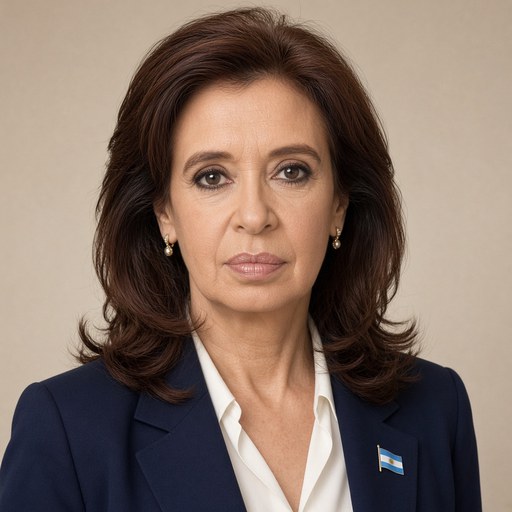
Intervention in the session on the Productive Financing Law
 Cristina Fernández de Kirchner · President of Argentina
- Context
- Fernández de Kirchner intervened in a Senate session in March 2018 to critique the government's Productive Financing Law, arguing it prioritized financial deregulation over SME support.
- Main themes
- Capital Markets Law reform, financial deregulation, SME financing, productive financing law critique, speculation and financial derivatives, economic model under Macri government, 2012 Capital Markets Law, Lehman Brothers and 2008 financial crisis, regulatory oversight, negotiable obligations and investment funds
- Duration
- ~42 min
- Words
- 5,015
- Sentences
- 193
- Readability
- 45
- Grade
- 13.4
- Syntax
- 3.31
- Vocabulary
- 2.12
Translated from Spanish
The broad sphere of national life a sentence belongs to. Every sentence has an Arena, so it is the denominator the other indices are read against.
Other193 sentences in 50 paragraphs
We are discussing an initiative titled "productive financing." And just as we have come to expect from the government when it presents projects, the titles are always plausible and present principles or campaign slogans worthy of approval, but upon reading the project, one observes that it has little to do with the title.
To begin with, when one speaks of a law on productive financing, one should find the message signed – of course, as is appropriate – by the president and the chief of staff, and in this case, given that this is a country with a Ministry of Production, it should be the Minister of Production, who is Cabrera, accompanying and presenting the productive financing project.
However, the productive financing project, which is presented as productive financing for SMEs, is only signed by the president, the chief of staff, and the ineffable Minister of Finance, Luis Caputo.
This is a bill that has exactly 219 articles, but dedicates the first 26 articles to SMEs, meaning the remaining 193 articles relate to the modification of the Capital Markets Law enacted by this body in 2012 and also to the modification of other important laws, such as those on negotiable obligations – also enacted during the previous government – or investment funds.
Thus, one realizes that we are not facing a law for financing or assistance for SMEs. SMEs that, by the way, certainly need help. In the very report and in the records of the Ministry of Production, it is stated that between the last quarter of 2015 and the third quarter of 2017, 4,900 micro and small enterprises disappeared.
One expected to find not only the electronic invoice, which is the first title – and which we will surely support in the particular vote because it is the only instrument for SMEs included in the project that has been sent – but in the remaining 193 articles, even the one presented as the panacea for mortgages, it is clear that this is a law intended to further accentuate the financial and speculative nature of the current economic model. The modifications introduced and the new legal, financial, and derivative figures are a true festival for speculation.
I will start with a brief overview of what the current situation is regarding capital market regulation in the Republic of Argentina.
In 2012, in this very chamber, the Capital Markets Law was enacted. It had not been a unilateral, unthought-out project of the previous government. It responded to recommendations from the World Bank and also to requirements from an international institution that groups all the securities commissions in the world.
Look, I always love to refer to debates to understand what we are modifying, what we approved six years ago, and what we are modifying now.
In this case, we are in a closing speech, and I will also refer to a closing speech that took place in 2012, in this very chamber, by, of course, the president of the block or whoever the president of the block decides. And notice that the reasons for enacting the law that is now being turned upside down were, for example, the need to regulate financial markets… I will read verbatim, because I do not want to add or take away a single word: “In the need to regulate financial markets, there has been a position taken on this issue. It should be remembered that the concept of financial deregulation [this is what this law is about, financial deregulation], it should be remembered that the concept of financial deregulation [we said or they said at that time] led to the bankruptcy of the main financial entity of the main power in the world, as Senator Giustiniani [another senator from socialism who is no longer here in the body] mentioned very well, like the financial giant Lehman Brothers.”
And the speaker used a very good phrase, a very good metaphor. He said it was the fall of the Berlin Wall in financial terms. I found it to be a correct metaphor. Yes. Lehman Brothers, the 2008 crisis, was a true fall of the Berlin Wall, of a Berlin Wall that had begun to be built with some bricks like, for example, the resolution, during President Clinton's administration and Larry Summers' management at the Treasury of the United States, to transform commercial banks into investment banks, generating derivatives, selling product over product, the subprime crisis, and all that was the history of financial derivatives. It is nothing more or less than when banking stops focusing on financing production and wants to produce money without the money going through the usual circuits of production, of the consumer market, and of what has been the basis of capitalism, because, ultimately, unless Adam Smith or David Ricardo are wrong and we have exegetes who have improved their theory, they remain – you will agree with me, Mr. President – the great theorists of capitalism.
In short, the speaker continued and provided an example. There were also other interesting facts to highlight, such as the case of Madoff – I believe there is now a movie about Bernie Madoff – that mythical head of the electronic markets, of Nasdaq, who ultimately ended up in a monumental scam, which condemned him, I don’t know, to one hundred fifty, two hundred years in prison in the United States.
The speaker said: “The world has decided to move towards a scheme of very strong regulation and controls of the financial system, of the stock exchanges, of operations, and of securities. All this issue is in regulated control schemes.”
And he highlighted a very important point, which is Article 20 that this project today repeals. There was a great discussion regarding that Article 20, which was actually modified in the Chamber of Deputies. And the wording that is still in force is not the one originally sent by the Executive Power in the project, but was modified in the Chamber of Deputies, in a discussion, in a debate in the Chamber of Deputies, so broad, but so broad and so participatory that deputies like Alfonso Prat Gay – who had been president of the Central Bank during the administration of President Duhalde and during the administration of President Kirchner and later was Minister of Economy of this government – voted for this law as did a deputy, whose term has ended, like Deputy Claudio Lozano. Notice what a broad ideological and conceptual spectrum approved the law that we are now modifying, but not under the name of modification of the Capital Markets Law, but of financing for SMEs or productive financing.
And notice that the speaker at that time said that the last point relates to Article 20. What does the expansion of Article 20, heavily questioned in this debate, mean? The possibility for the National Securities Commission, as a control body, to place observers in a company and to take measures that are in line with those to which the Central Bank is subject, according to the Financial Entities Law, in Article 34.
The same concept is incorporated in the National Securities Commission. That’s right. Exactly. Moreover, the speaker wondered why the importance of this article had not been insisted upon in the debate in the Chamber of Deputies. He did so by insisting on the importance of this article, which the opposition, or those who opposed the norm at that time, said would be an instrument of the government to intervene in companies, to wipe out boards of directors, and so on. Well, look, from 2012 until the end of the term, no board of directors was intervened, no oversight was placed, and all companies in the Republic of Argentina were able to have their corporate bodies without this Article 20 ever being used, which claimed, as did Article 19, the powers of the National Securities Commission, as very important elements in the matter of regulation. And what this modification today is doing, beyond creating or incorporating the electronic invoice into current legislation, is modifying the Capital Markets Law, modifying the Common Investment Funds Law, modifying the Negotiable Obligations Law… And I could continue with two or three very important laws.
Why, Madam President? Why is it not true about SMEs? First, because to introduce these norms, no law was needed. It’s like with the historical reparations, you see, which had almost nothing to do with reparations and even less with being historical. But of course, the laundering was necessary, which later allowed many relatives of government officials, starting with the president of the Republic himself, to launder money. Thus, the law of historical reparations was introduced as a sort of Trojan horse. Litigation continues to rise, which will now be joined by the modification made in Parliament of the retirement formula, which was also enabled by the law of historical reparations. I have a letter from CAME here… That law was approved by 43 to 19 votes here.
Today it was also said that business chambers were asking for this. In reality, what CAME, for example, has asked all provincial governments is to see how they can lower electricity rates for SMEs. Because do you know what happens, Madam President? If there is no consumption in the Republic of Argentina, if the rate hikes continue, if the indiscriminate opening of imports continues, and if putting money into financial gambling – into LEBACs, into carry trade – yields me an interest of 26 or 27 percent, why would I want to set up an SME?
If I put money in and do nothing – without fighting with employees, without fighting with unions, without having to pay rate hikes, without having to be attentive to whether I sell or not, without having to be attentive to whether imported goods came in or not – and I get paid 27 percent for my money, why would I want to open an SME?
In other words, we can pass thousands of laws, and SMEs will not open because, you know what? The economy is not managed by laws. Look how easy it would be to manage the economy by laws; there would be no government that would not succeed in managing the economy. I believe that the economy is something more than a law on electronic invoices. In fact, we introduced many instruments: deferred payment checks, negotiable obligations – the law is ours – the common investment fund law as well, the trust law too. We introduced a lot of regulations, but fundamentally we secured the internal market and ensured aggregate demand, which is the great engine of the economy, Madam President. There is no entrepreneur who will invest if one of the two fundamental premises for sinking investment, for sinking capital, is not met: either the country has a strong internal market that is advantageous for me because I will sell and therefore invest, which was what happened in large part during our twelve and a half years of management, or the territory is an attractive enough platform in terms of costs for exporting. If neither of these two conditions is met, that is, if a country does not serve as a platform for export nor as a platform for consumption, I ask why I would invest money if, moreover, in that country, they are paying me rates of 27 percent. I believe that we can ask entrepreneurs for everything; they can be labeled as whiners, but what cannot be done is to ask them to do things that you or none of us here would do. There is a maxim in politics, always: we must ask others for what we are willing or capable of doing ourselves. If we are not doing it, what enables us to ask the rest of society to do things that we would not do?
In this sense, Madam President, the reform being made to the Capital Markets Law I believe will cause more problems than solutions. Moreover, there is much to say about this because, in reality, all the battery of powers and empowerment that was given to the National Securities Commission is being reduced. Powers that were also of the Central Bank of the Republic of Argentina are being eliminated under the pretext that there is an overlap between the National Securities Commission and the BCRA. No, Madam President, there is no overlap of functions. There are absolutely complementary functions between those who have monetary regulation and those who have regulation of securities on the other hand. They are not overlapping; they are absolutely complementary.
Adding a little more to what is the development, because this is presented for development, I regret to say that I have bad news to give you: this will not contribute to any productive development.
I listened to Senator Closs from Misiones talk about why credit lines that had been created with the modification of the Organic Charter of the Central Bank of the Argentine Republic were no longer being affected, which required banks to have a portion of their deposits in productive loans. Well, because this is not an industrial model, because this is not a model of value-added production. It is a model of financial value-added and speculation. Because when we modified the Organic Charter of the Central Bank of the Argentine Republic and required banks to lend, they also made good business. It is not that banks were losing money. One can look at the balances of the Central Bank of the Argentine Republic and of financial entities and see that they were making money too. It was not that we were forcing them to lose money. No one can force the financial system to lose money because if you force the financial system to lose money, the system collapses, as it has collapsed at other times.
So, here powers are eliminated like those in articles 19 and 20, which must have been one of the most "lobbied" modifications, the subject of the most lobbying, by the large law firms and the large consulting and financial advisory companies in the city to repeal this article 20. Moreover, article 20 was the subject of precautionary measures by the current president of the Republic when he was the head of Government of the City of Buenos Aires. At the behest of some group that said that this article could be used against him, a precautionary measure was presented in court to ensure it was not applicable to any company based here in the Autonomous City of Buenos Aires. I am talking about this article 20, which we never actually applied. And its precautionary measure was presented before a judge in the first instance in administrative contentious matters who declared it valid. Finally, as it should be, a chamber, two years later, almost when we were finishing the government and were leaving, decreed the precautionary measure of article 20. And on the other hand, today the jurisdiction is also changed, moving from administrative contentious to commercial what was previously in administrative contentious. It is not that one jurisdiction is better than the other or that they are interchangeable. It is simply that when it is decided to move from commercial jurisdiction to administrative contentious, it aims to make a distinction between what are competencies in commercial and civil matters and what is administrative contentious matter. Why? Because when the State exercises the superpowers it must have to ensure that the macroeconomy, the currency, and an economy do not overflow and affect society as a whole, it does not do so as a private agent, as it can be a subject of commercial or civil law, it does so precisely with its state power to safeguard the common good.
This was also modified, and in general, the norm reverts to the situation prior to the enactment of the Capital Market Law of 2012, which was the old Capital Market Law from the Onganía era – dating back to the time of Onganía – and had as its main objective total deregulation, that is, self-regulation of the markets, this theory that markets self-regulate, which fell spectacularly like the Berlin Wall, as a speaker pointed out in that year 2012.
The second title, which is "Mortgage Bonds," to which they dedicate only five articles, relates to what is happening and will happen in the Argentine Republic with the famous mortgage loans adjusted by UVA. This aims to "securitize" the mortgage market. And some believe that with these loans, which are for the acquisition of already constructed goods, they are activating the market. No, look, the best productive mortgage credit program to activate the entire market was Pro.Cre.Ar. That was the real mortgage credit. Do you know why, Madam President? Because it was for things that were being built. When you give loans for goods that are already built, you also run the risk of a bubble and price inflation because, naturally, when financing is accessed for already constructed units, prices go up. And is it speculation? Yes, it is speculation, but it is also the law of supply and demand. Prices rise because there is a greater amount of credit, there is greater demand, the supply is not sufficiently large, and then they begin... In fact, one can see the chronicles in the newspapers, where the increase in property prices, in dollars, is recorded as a result of an increase in mortgage credit. When in reality, the best, the most virtuous mortgage credit is the one that provides loans to build houses because that is where we are truly stimulating the economy.
But I will also address, Madam President, some of the figures that are being created and with which we really need to be very careful. Investment management agents are being created. What does this mean? They are defined as investment management agents who provide regular advisory and management services, that is, in addition to banks. What does this mean? That what has been one of the most opaque systems in the world is being created, which has caused the greatest number of crises: shadow banking. That is, banking in the shadows. Investment managers appear who are regulated by the CNV, but who are not banks, therefore, they are not subject to the regulations of the Central Bank of the Argentine Republic. This is called shadow banking in the world, shadow banks. They have banking functions, produce derivatives, generate circulation, but they are not banks, that is, they are not regulated by the Central Bank of the Argentine Republic. This is very dangerous, Madam President, because it was precisely the modification, as I pointed out at the beginning of my intervention, that involved transforming commercial banks into investment banks, which originated the crisis – among other issues, obviously. The "securitization" of mortgages was also another cause, which is also here with the "securitization" of mortgages.
Look, we already have two "foundational" elements of the serious crisis of 2008 that, do you know why it did not impact our country, Madam President, and devastated other economies and governments? For a very simple reason: first, because since we did not have foreign financing, we financed ourselves with our own money. We did not have access to the capital market, as a result of the default that had occurred, even though we had already paid the IMF, and therefore, Argentina financed itself, it did not resort to the capital market for financing.
The other issue that prevented the contagion of the crisis with us was that our financial system was not connected by financing channels with what was happening in the United States and with what was happening in Europe with the subprime crisis. The world has still not recovered from the 2008 crisis. Some were crying on the stock market. I remember that when I went, they told me: "We are peripheral markets, we are not even emerging, it would be good if we were emerging, so we could connect with the whole world...". Well, look, I tell you that when a country and its financial system is connected today in the world without controls and safeguards and, moreover, with the vulnerability of an economy that requires external financing – as the economy of the Cambiemos model currently does – for its financing, well, we are in trouble. Here, contagion channels are being created in what we are sanctioning today with this modification of the Capital Market Law.
I will mention three or four things just so you can see the importance of what we are modifying, because I think there may not be a full understanding of all the derivative mechanisms that are being created through this capital market.
Look: in the case of mutual funds, the joint and unlimited liability between the managing company, the depositary company, and the quota holders, those who make up the mutual fund, is eliminated. This is serious because we are separating responsibilities, as if preparing the ground for, in the face of potential international financial stress, not to have responsibilities.
A new type of fund is incorporated with the capacity to replicate the behavior of a financial or stock index, or a basket of assets. A form of funds is created that is for very qualified investors. Also concerning.
In the case of derivatives, it is allowed that instead of being contracted in a clearinghouse – which is more transparent because it is more concentrated and there are more operations – the bilateral nature of financial derivatives is enabled, which also increases the risk of these toxic products, because ultimately these financial derivatives, after a while – which is not measured by electoral deadlines, but by economic deadlines – end up producing stress, end up producing problems throughout the system.
They also modify article 9 regarding the requirement for a person who has performed tasks in companies, in investment funds, in short, who has dedicated themselves to finance, in banks or whatever... The law required that at the time of being a member of the oversight body, the regulatory body – in this case, the National Securities Commission – there should be a gap of no less than two years between being a public official and performing those functions, so that there would not be what is now called a conflict of interest, but which in my neighborhood is called something else. In short, now they reduce it to just six months.
Thus, we could continue.
Well, article 20 is modified.
The prescription is also interrupted. That is, the current law establishes that when a company or a firm is sanctioned for having committed irregularities, the time of prescription for the sanction of the irregularities is interrupted when the company commits another type of irregularity. Well, we could continue mentioning many cases, but the truth is that – and this is what I am getting at – we are not dealing with a law for productive financing for SMEs. We cannot continue legislating titles. We do not legislate titles. We legislate content, norms, and therefore I want to warn that we are legislating in a direction that is absolutely contrary to what international standards indicate, which were the ones we received in the law that was enacted in this Chamber in 2012 and which was then subject to review for a year and a half by the International Organization of Securities Commissions and which even the SEC – that is, the regulatory commission of the United States – and also the regulatory body of England requested that we increase the penalties in the Penal Code regarding harmful conduct that violated the regulations.
In 2014, international organizations continued to warn that this law was about regulation and transparency. Because, moreover, after the enactment of the law, Argentina was removed from the gray list of the GAFFI. I say this for those who do not remember. After the enactment of the law and with various presentations made, finally, Argentina ends up removed from the gray list of the GAFFI. Now we are going backward, like a crab. We are returning to pre-regulation, we are returning to the self-regulation of the markets.
I want to tell you that, regardless of the fact that the government has changed, what cannot change is the responsibility of those of us who legislate to control when, in reality, we are doing exactly the opposite of what we upheld just two or three years ago.
Do you know why? Because this law, which will surely be enacted, will have effects. There is a creation of derivatives. Evidently, Caputo's hand is there. It is very well written. I must say that in terms of generating derivatives and introducing new figures, it is very good and reaffirms the character and the speculative model of the current economic model. Do not have any doubts about that. So, it is very well written for those interests, but not for the interests of Argentines and much less for SMEs. I reiterate, Madam President: SMEs require that today the tariff hike be interrupted, that consumption be increased, that imports cease, and that money stop earning, simply for being deposited in a LEBAC, 27 percent interest.
I believe that for the responsibility that being in opposition demands, but more than that, I firmly believe and maintain that this is not a problem of opposition or government, it is a problem of whether we enact norms that we know will have a bad result. In reality, it has already had a bad result. We know that figures and derivatives are being created and that they are being absolutely permissive in terms of regulation and conduct of new agents and new forms of intervention in the financial market.
It is, then, simply an exercise of responsibility because, ultimately, to the vulnerability that the Argentine model currently has, which is being carried out, which is the permanent financing in hard currency, vulnerability is added to the national financial system. I remind you that the Argentine financial system was absolutely healthy and passed unscathed through the 2008 crisis. This financial system passed unscathed through the 2008 crisis, which caused the collapse of banks worldwide. Banks that were centennial closed, but here not a single bank fell. And it did not fall because there was a healthy financial system, because there was an economy based on production, on demand, on value-added, on consumption, and on wages.
Today, by sanctioning this law, what is being done is adding to the vulnerability of indebtedness the vulnerability of the Argentine financial system. I must say this because I believe that at some point, things finally happen, especially because – to conclude, Madam President – I have had the opportunity – I have said it on other occasions – to be a national legislator since 1995, in this chamber and also in the Chamber of Deputies.
I remember that in the Chamber of Deputies, in the months leading up to the collapse of 2001, laws were passed that ensured convertibility, that ensured that one peso was equal to one dollar. I believe that the last one passed back in October or November of 2001 was that law that stated that one peso was equal to one dollar and where it was said that everything was very well and that the financial system was very healthy.
I believe that with this regulation, far from creating a capital market aimed at production, we are generating an absolute festival of speculation that will not be free. Do you know what happens, Madam President? When these decisions and measures are taken, especially regarding banks and financial matters, there is nothing neutral, nor are there possibilities afterwards to patch them up through a law.
We are, I reiterate, adding a lot of vulnerability to the financial system. Notice that yesterday I read that in the Chamber of Deputies the possibility of "securitization" that the government now wants to do with the loans was frustrated. Do you remember when on December 27, in this same chamber, we talked about the almost 50 billion pesos that had been given through the Argenta card in loans months before the elections? Well, in the famous megadecree, they also wanted to pass the "securitization," in addition to the seizure of salary accounts, of those loans. Now, this is not for greater mortgage loans; this is for greater "securitization" of those being given with the UVA system.
In short, Madam President, I want to tell you that we, as we also did in the Chamber of Deputies, will vote negatively on the regulation, but when it is discussed in particular, we will support Title I, that is, the first 26 articles of the 219 that the law has, the 11 percent of the productive financing regulation, which is the only thing in the entire law that can be talked about as financing in this case for SMEs, reiterating that with these tariffs, without consumption, with this degree of importation and with the payment of LEBAC at 27, I don’t know why anyone would want to set up an SME in the Argentine Republic.
To conclude, when the incident occurred between you and Senator Fuentes following the motion made by Senator Petcoff Naidenoff, I know that you were upset and thought that they did not want to respect your call for a vote. Look, I believe that both Senator Petcoff Naidenoff and Senator Fuentes did a favor because, you know what happens? If we had approved a motion where we violated the regulations, anyone could have come forward to declare the nullity of this session, because we would not have convened according to the regulations. So it is not that someone wanted to bother you and not respect your authority to submit a matter to a vote. Simply, the regulations cannot be modified in that way.
With this clarification, which I wanted to tell you, so that you would not feel upset or mortified, I conclude my intervention.
Did you see? I respected the time: 40 minutes, 28 seconds.
The original Spanish. The tags above are read on the English translation's sentences.
Estamos tratando una iniciativa con un título que es “financiamiento productivo”. Y tal como nos tiene acostumbrados el gobierno cuando presenta proyectos, los títulos siempre son plausibles y presentan principios o eslóganes de campaña dignos de ser aprobados, pero, a poco que uno lee el proyecto, observa que poco tiene que ver con el título.
Por empezar, cuando uno habla de una ley de financiamiento productivo, debe encontrar el mensaje firmado –por supuesto que siempre, como corresponde– por el presidente y el jefe de Gabinete y en este caso, tratándose de un país que cuenta con un Ministerio de la Producción, que quien acompaña y presenta el proyecto de financiamiento productivo sea el ministro de Producción, esto es Cabrera.
Sin embargo, el proyecto de financiamiento productivo, que se presenta como financiamiento productivo para las pymes, está solamente firmado por el presidente, por el jefe de Gabinete y por el inefable ministro de Finanzas Caputo, Luis Caputo.
Se trata de un proyecto de ley que tiene 219 artículos exactamente, pero que dedica a las pymes los primeros 26 artículos, o sea, los 193 artículos restantes tienen que ver con la modificación de la Ley de Mercado de Capitales sancionada por este cuerpo en 2012 y, también, con la modificación de otras importantes leyes, como son las de obligaciones negociables −también sancionada durante el gobierno anterior− o la de fondos de inversión.
Entonces, uno advierte que no estamos ante una ley de financiamiento o de ayuda para las pymes. Pymes que, por otra parte, por cierto, necesitan ayuda. En el propio informe y en los propios registros del Ministerio de la Producción se dice que entre el último cuatrimestre de 2015 y el tercer cuatrimestre de 2017 desaparecieron 4.900 minipymes y pymes.
Uno esperaba encontrarse no solamente con la factura electrónica, que es el primer título −y que, seguramente, vamos a acompañar en la votación en particular porque es el único instrumento para las pymes que está en el proyecto que se ha enviado−, pero en los 193 artículos restantes, incluso el que se presenta como la panacea de las hipotecas, se observa que es claramente una ley destinada a acentuar aún más el carácter financiero y de especulación que tiene el actual modelo económico. Son un verdadero festival para la especulación las modificaciones que se introducen y las nuevas figuras legales, financieras y derivadas que se introducen.
Voy a empezar por una breve reseña que significa cuál era la situación actual en materia de regulación de mercado de capitales en la República Argentina.
En 2012, en este mismo recinto se sancionó la Ley de Mercado de Capitales. No había sido un proyecto unilateral, impensado, del gobierno anterior. Obedecía a recomendaciones del Banco Mundial y obedecía también a requerimientos de una institución internacional que agrupa a todas las comisiones de valores del mundo.
Miren, yo voy a leerme encanta siempre recurrir a los debates para entender qué es lo que estamos modificando, qué es lo que habíamos aprobado hace seis años y qué es lo que estamos modificando ahora.
En este caso, estamos en un discurso de cierre y voy a recurrir también a un discurso de cierre que se produjo en 2012, en este mismo recinto, a cargo, por supuesto, como corresponde, del presidente de bloque o de quien decide el presidente de bloque. Y fíjese que los motivos para sancionar la ley que hoy está dándose vuelta como una media eran, por ejemplo, la necesidad de regular los mercados financieros… Leo textualmente, porque no quiero agregar ni sacar una sola palabra: “En la necesidad de regular los mercados financieros ha habido una toma de posición frente a este tema. Cabe recordar que el concepto de la desregulación financiera [de esto se trata esta ley, desregulación financiera], cabe recordar que el concepto de la desregulación financiera [decíamos o decían en aquel momento] llevó a la quiebra de la principal entidad financiera de la principal potencia del mundo, lo mencionó muy bien el senador Giustiniani [otro senador por el socialismo que hoy ya no está aquí en el cuerpo], como el gigante financiero Lehman Brothers”.
Y el orador utilizó una muy buena frase, una muy buena metáfora. Dijo que fue la caída del muro de Berlín en términos financieros. Me pareció una metáfora correcta. Sí. Lehman Brothers, la crisis de 2008, fue una verdadera caída del muro de Berlín, de un muro de Berlín que se había comenzado a construir con algunos ladrillitos como, por ejemplo, la resolución, durante el gobierno del presidente Clinton y la gestión de Larry Summers en el Tesoro de los Estados Unidos, de transformar a los bancos comerciales en bancos de inversión, generando derivados, venta de producto sobre venta de producto, la crisis de las subprime y todo lo que fue la historia de los derivados financieros. No es ni más ni menos que cuando la banca deja de dedicarse a financiar la producción y pasa a querer producir dinero sin que el dinero pase por los circuitos habituales de la producción, del mercado de consumo y de lo que ha sido la base del capitalismo, porque, en definitiva, salvo que Adam Smith o David Ricardo estén equivocados y tengamos exégetas que hayan mejorado su teoría, siguen siendo –usted convendrá conmigo, señor presidente– los grandes teóricos del capitalismo.
En fin, el orador seguía y ponía un ejemplo. Hubo también otros hechos interesantes que remarcar, como el caso de Madoff –creo que ahora hay una película sobre Bernie Madoff–, aquel mítico titular de los mercados electrónicos, del Nasdaq, que finalmente terminó en una estafa monumental, que lo condenó, no sé, a ciento cincuenta, doscientos años de prisión en los Estados Unidos.
Decía el orador: “El mundo ha decidido ir hacia un esquema de regulación de controles muy fuerte del sistema financiero, de las bolsas, de la operatoria y de los valores. Todo este tema está en esquemas regulados de control”.
Y resaltaba un punto muy importante, que es el artículo 20 que hoy este proyecto deroga. Hubo una gran discusión respecto de aquel artículo 20 que, en realidad, fue modificado en la Cámara de Diputados. Y la redacción que aún está vigente no es la que originalmente remitió el Poder Ejecutivo en el proyecto, sino que fue modificada en la Cámara de Diputados, en una discusión, en un debate en la Cámara de Diputados, tan amplio, pero tan amplio y tan participativo que diputados como Alfonso Prat Gay –que había sido presidente del Banco Central durante la gestión del presidente Duhalde y durante la gestión del presidente Kirchner y más tarde fue ministro de Economía de este gobierno– votó esta ley como también lo hizo un diputado, mandato cumplido, como el diputado Claudio Lozano. Fíjese qué arco ideológico y de conceptos tan amplio aprobó la ley que hoy estamos modificando, pero no bajo el nombre de modificación de la Ley de Mercado de Capitales, sino de financiamiento de las pymes o financiamiento productivo.
Y fíjese que el orador en ese momento decía que el último punto tiene que ver con el artículo 20. ¿Qué significa la ampliación del artículo 20, fuertemente cuestionado en este debate? La posibilidad de que la Comisión Nacional de Valores, como órgano de control, pueda poner veedores de una empresa y pueda tomar medidas que estén en la misma línea que aquellas a las que está sujeto el Banco Central, de acuerdo con la Ley de Entidades Financieras, en el artículo 34.
El mismo concepto está incorporado en la Comisión Nacional de Valores. Así es. Tal cual. Es más, se preguntaba el orador que no encuentra razón el hecho de que no se haya insistido en la importancia de este artículo en el debate en Diputados. Lo hizo él al insistir en la importancia de este artículo, que la oposición, o los que se oponían en ese momento a la norma decían que iba a ser un instrumento del gobierno para intervenir empresas, para arrasar con directorios y demás. Bueno, mire, desde 2012 hasta la finalización del mandato no se intervino ningún directorio, no se puso ninguna veeduría y todas las empresas en la República Argentina pudieron tener sus órganos societarios sin que nunca se haya hecho uso de este artículo 20, que reivindicó, como también el 19, las facultades de la Comisión Nacional de Valores, como elementos muy importantes en la materia de regulación. Y lo que está haciendo esta modificación de hoy, más allá de crear o receptar la factura electrónica en la legislación vigente, es modificar la Ley de Mercado de Capitales, modificar la Ley de Fondos Comunes de Inversión, modificar la Ley de Obligaciones Negociables… Y podría seguir con dos o tres leyes muy importantes.
¿Por qué, señora presidente? ¿Por qué no es cierto lo de las pymes? Primero, porque para introducir estas normas no hacía falta ninguna ley. Es como con la reparación histórica, ¿vio?, que de reparación no tuvo casi nada y de histórica menos todavía. Pero claro, era necesario el blanqueo que más tarde permitió que muchísimos familiares de funcionarios del gobierno, empezando por el propio presidente de la República, pudieran blanquear dinero. Entonces, se introdujo como una suerte de caballo de Troya la ley de reparación histórica. La litigiosidad sigue en aumento, a la que se va a sumar ahora la modificación que se hizo en el Parlamento de la fórmula de las jubilaciones, que también fue habilitado ese camino por la ley de reparación histórica. Yo acá tengo una carta de CAME… Esa ley fue aprobada por 43 a 19 votos aquí adentro.
Hoy se dijo también que las cámaras empresariales pedían esto. En realidad, lo que CAME, por ejemplo, ha pedido a todos los gobiernos de las provincias es que se vea cómo pueden rebajar las tarifas eléctricas para las pymes. Porque ¿sabe qué pasa, señora presidenta? Si no hay consumo en la República Argentina, si además siguen los tarifazos, si además siguen con la apertura indiscriminada de importaciones y si además poner dinero en la timba financiera –en las LEBAC, en el carry trade– me reporta un interés de 26 o 27 por ciento, ¿para qué quiero poner una pyme?
Si yo pongo plata y sin hacer nada –sin pelearme con los empleados, sin pelearme con los sindicatos, sin tener que pagar tarifazos, sin tener que estar atenta a si vendo o si no vendo, si no tengo que estar atenta a si entraron cosas importadas o no entraron cosas importadas–me pagan el 27 por ciento por mi plata, ¿para qué quiero abrir una pyme?
O sea, podemos sacar miles de leyes y las pymes no se van a abrir porque, ¿sabe qué pasa?, la economía no se maneja por leyes. Mire que fácil sería manejar la economía por leyes, no habría gobierno que no tuviera éxito en el manejo de la economía. Me parece que la economía es algo más que una ley de factura electrónica. De hecho, nosotros introdujimos muchos instrumentos: el cheque de pago diferido, las obligaciones negociables –la ley es nuestra–, la de fondo común de inversiones también, la de fideicomisos también. Introdujimos un montón de normas, pero fundamentalmente aseguramos el mercado interno y aseguramos la demanda agregada que es el gran motor de la economía, señora presidenta. No hay empresario que invierta si no se da una de las dos premisas fundamentales para hundir inversión, para hundir capital: o el país tiene un fuerte mercado interno que me conviene porque voy a vender y, por lo tanto, invierto, que fue lo que pasó en gran parte de los doce años y medio de gestión nuestra, o el territorio es una plataforma lo suficientemente atractiva en materia de costos para exportar. Si no se da ninguna de estas dos condiciones, o sea, si un país no sirve como plataforma de exportación ni sirve como plataforma de consumo, yo pregunto para qué voy a invertir dinero si además en ese país me están pagando tasas del 27 por ciento. Creo que a los empresarios se les puede pedir todo, se les puede calificar de llorones, pero lo que no se puede hacer es pedirles que hagan cosas que usted ni ninguno de los que estamos acá haríamos. Hay una máxima en política, siempre: hay que pedirle a los demás lo que estamos dispuestos o somos capaces de hacer nosotros. Si nosotros no lo estamos haciendo, ¿qué es lo que nos habilita para pedirle al resto de la sociedad que haga cosas que nosotros no haríamos?
En este sentido, señora presidenta, la reforma que se está haciendo de la Ley de Mercado de Capitales creo que va a provocar más problemas que soluciones. Es más, hay mucho para decir en esto, porque, en realidad, se está bajando toda la batería de facultades y de empoderamiento que se hizo a la Comisión Nacional de Valores. Se eliminan facultades que también eran del Banco Central de la República Argentina bajo la excusa de que hay superposición entre la Comisión Nacional de Valores y el BCRA. No, señora presidenta, no hay superposición de funciones. Hay funciones absolutamente complementarias entre quien tiene regulación monetaria y quien tiene regulación de los valores por otra parte. No son superpuestas, son absolutamente complementarias.
Abonando un poco más de lo que es el desarrollo, porque se presenta esto para el desarrollo, lamento decir que tengo una mala noticia para darles: esto no va a contribuir a ningún desarrollo productivo.
Escuchaba al senador Closs, de Misiones, hablar de por qué se dejaron de afectar líneas de crédito que habían sido creadas con la modificación de la Carta Orgánica del Banco Central de la República Argentina, que obligaba a los bancos a tener una parte de sus depósitos en préstamos de carácter productivo. Bueno, porque este no es un modelo industrial, porque este no es un modelo de valor agregado de producción. Es un modelo de valor agregado financiero y de especulación. Porque cuando nosotros modificamos la Carta Orgánica del Banco Central de la República Argentina y obligamos a los bancos a prestar, ellos también hicieron buenos negocios. No es que los bancos perdían. Uno puede mirar los balances del Banco Central de la República Argentina y de las entidades financieras y verá que ganaban dinero también. No era que los obligábamos a perder plata. Nadie puede obligar a perder plata al sistema financiero porque si usted obliga a perder plata al sistema financiero, el sistema colapsa, como colapsó en otras oportunidades.
Entonces, aquí se eliminan facultades como la de los artículos 19 y 20, que debe haber sido una de las modificaciones más “lobbiadas”, objeto de más lobby , de los grandes estudios jurídicos y de las grandes consultoras y empresas de asesoramiento financiero de la city de derogar este artículo 20. Es más, el artículo 20 fue objeto de medidas cautelares por el actual presidente de la República cuando era jefe de Gobierno de la Ciudad de Buenos Aires. A instancias de algún grupo que decía que ese artículo podía ser utilizado en su contra, se presentó en la Justicia pidiendo una medida cautelar para que no fuera aplicable a ninguna empresa radicada aquí en la Ciudad Autónoma de Buenos Aires. Estoy hablando de este artículo 20, que no aplicamos nunca en realidad. Y fue presentada su medida cautelar ante una jueza en primera instancia en lo contencioso administrativo que lo declaró válido. Finalmente, como corresponde, una cámara, dos años después, casi cuando estábamos finalizando el gobierno y nos estábamos yendo, decretó la medida cautelar del artículo 20. Y por otra parte hoy se cambia también de fuero, se pasa al comercial lo que antes estaba en el contencioso administrativo. No es que un fuero sea mejor que el otro o sean elegibles. Es simplemente que, cuando se decide pasar del fuero comercial al contencioso administrativo, eso tiene por objeto hacer una diferencia entre lo que son competencias en materia comercial y civil y lo que es materia contenciosa administrativa. ¿Por qué? Porque cuando el Estado ejerce los superpoderes que debe tener para que la macroeconomía, para que la moneda, para que una economía no se desborde y afecte al conjunto de la sociedad, no lo hace como un agente privado más, como puede ser sujeto del derecho comercial o del derecho civil, lo hace precisamente con su potestad de Estado para cuidar el bien común.
Esto también se modificó y en general la norma retrotrae a la situación previa a la sanción de la Ley de Mercado de Capitales de 2012, que era la vieja Ley de Mercado de Capitales de Onganía –databa de la época de Onganía–y tenía como objeto principal la total desregulación, o sea, la autorregulación de los mercados, esta teoría de que los mercados se autorregulan, la cual cayó estrepitosamente como el muro de Berlín, como bien lo señaló un orador en aquel año 2012.
El segundo título, que es “Cédulas hipotecarias”, al que le dedican únicamente cinco artículos, tiene que ver con lo que está pasando y va a pasar en la República Argentina con los famosos créditos hipotecarios ajustados por UVA. Esto apunta a “securitizar” el mercado hipotecario. Y algunos creen que con estos créditos, que son para adquisición de bienes ya construidos, están activando el mercado. No, mire, el mejor programa de crédito hipotecario productivo para activar todo el mercado fue el Pro.Cre.Ar. Ese fue el verdadero crédito hipotecario. ¿Sabe por qué, señora presidenta? Porque era para cosas que se construían. Cuando usted da créditos para bienes que ya están construidos, además corre el riesgo de la burbuja y del precio porque, naturalmente, cuando se accede a financiamiento para unidades ya construidas los precios suben. ¿Y es especulación? Y, sí, es especulación, pero también es ley de oferta y demanda. Suben porque hay una mayor cantidad de créditos, hay una mayor demanda, la oferta no es lo suficientemente grande y entonces comienzan… De hecho, uno puede ver las crónicas de los diarios, donde se registra el aumento que han tenido los inmuebles, en dólares, producto de que hay un incremento del crédito hipotecario. Cuando en realidad el crédito hipotecario, el mejor, el más virtuoso, es el que da créditos para que se construyan casas porque ahí sí estamos dinamizando la economía.
Pero voy también, señora presidenta, a algunas de las figuras que se están creando y con las que realmente debemos tener mucho cuidado. Se crean los agentes administradores de inversión. ¿Qué significa esto? Se definen como agentes administradores de inversión a aquellos que prestan servicios habituales de asesoramiento y administración, o sea, además de los bancos. ¿Esto qué significa? Que se está creando lo que ha sido uno de los sistemas más opacos en el mundo y que ha provocado mayor cantidad de crisis: los shadow banking , o sea, la banca en las sombras. Aparecen administradores de inversiones que están controlados por la CNV, pero que no son bancos, por lo tanto, no los alcanza la normativa del Banco Central de la República Argentina. Eso se llama en el mundo shadow banking , bancos en las sombras. Tienen funciones de banco, producen derivados, generan circulación, pero no son bancos, o sea, no están controlados por el Banco Central de la República Argentina. Esto es muy peligroso, señora presidenta, porque fue precisamente la modificación, como señalaba al principio de mi intervención, que implicó transformar bancos comerciales en bancos de inversión, la que originó la crisis –entre otras cuestiones, obviamente–. La “securitización” de las hipotecas también fue otra de las causas, que también está acá la “securitización” de las hipotecas.
Fíjense, ya tenemos dos elementos “fundantes” de la crisis gravísima de 2008 que, ¿sabe por qué no tuvo impacto en nuestro país, señora presidenta, y arrasó a otras economías y a otros gobiernos?, por una razón muy sencilla: primero, porque como no teníamos financiamiento extranjero, nos financiábamos con dinero propio. No teníamos acceso al mercado de capitales, producto del default que se había producido, pese a que ya le habíamos pagado al Fondo Monetario, y, por lo tanto, entonces, la Argentina se financiaba a sí misma, no recurría al mercado de capitales para financiarse.
La otra cuestión que impidió el contagio de la crisis con nosotros fue que nuestro sistema financiero no estaba conectado por canales de financiamiento, con lo que se producía en Estados Unidos y con lo que se producía en Europa con la crisis de la subprime. El mundo todavía no se ha repuesto de la crisis de 2008. Algunos lloraban en la bolsa. Yo me acuerdo que cuando iba me decían: “Somos mercados periféricos, ni siquiera somos emergentes, sería bueno que fuéramos emergentes, así nos podemos conectar con todo el mundo…”. Bueno, miren, yo les digo que cuando un país y su sistema financiero está conectado hoy en el mundo sin controles y sin salvaguarda y, además, con la vulnerabilidad de una economía que requiere de financiamiento externo
–como actualmente es la economía del modelo de Cambiemos– para su financiamiento, bueno, estamos en problemas. Acá se están creando canales de contagio en lo que estamos hoy sancionando con esta modificación de la Ley de Mercado de Capitales.
Voy a mencionar tres o cuatro cosas nada más para que vean la importancia de lo que estamos modificando, porque me parece que tal vez no haya una cabal comprensión de todos los mecanismos derivados que se están creando a través de este mercado de capitales.
Miren: en el tema de los fondos comunes de inversión se elimina la responsabilidad solidaria e ilimitada entre la sociedad gerenciadora, entre la sociedad depositaria y los cuotapartes, los que integran como cuotapartes el fondo común de inversión. Esto es grave, porque estamos separando las responsabilidades, como si se preparara el terreno para, frente a un eventual estrés internacional financiero, no tener responsabilidades.
Se incorpora un nuevo tipo de fondo con la capacidad de reproducir el comportamiento de un índice financiero o bursátil, o de una canasta de activos. Se crea una forma de fondos que son para inversores muy calificados. También preocupante.
En el caso de los derivados, se permite que en lugar de contratarse en una cámara compensadora –que es más transparente porque es más concentrada y hay más operaciones– se habilita la bilateralidad de los derivados financieros, con lo cual, también se aumenta el riesgo de este tipo de productos tóxicos, porque en definitiva estos derivados financieros finalmente, al cabo de un tiempo –que no se mide por plazos electorales, sino que se mide por plazos económicos–, terminan produciendo estrés, terminan produciendo problemas en todo el sistema.
También modifican el artículo 9º en cuanto a la exigencia a una persona que ha desempeñado tareas en sociedades, en fondos de inversión, en fin, que se ha dedicado a las finanzas, en los bancos o en lo que fuere… La ley exigía que al momento de ser miembro del órgano de contralor, del órgano regulador –en este caso, la Comisión Nacional de Valores– mediara entre que fuera funcionario y el desempeño de esas funciones un lapso nunca menor de dos años, de modo tal de que no haya lo que ahora se denomina conflicto de intereses, pero que en mi barrio le dicen de otra manera. En fin, ahora lo reducen apenas a seis meses.
Así podríamos seguir.
Bueno, se modifica el artículo 20.
Se interrumpe también la prescripción. O sea, la ley actual establece que, cuando una sociedad o una empresa es sancionada porque ha cometido irregularidades, el tiempo de prescripción para la sanción de las irregularidades se interrumpe cuando la empresa vuelve a cometer otro tipo de irregularidad. Bueno, podríamos seguir mencionando muchísimos casos, pero lo cierto es que –y a esto voy– no estamos tratando una ley de financiamiento productivo para las pymes. No podemos seguir legislando títulos. Nosotros no legislamos títulos. Nosotros legislamos contenido, normas, y entonces yo quiero advertir que estamos legislando en dirección absolutamente contraria a lo que marcan los estándares internacionales, que fueron los que receptamos nosotros en la ley que se sancionó en esta Cámara en 2012 y que luego fue objeto de revisión durante un año y medio por la Organización Internacional de Comisiones de Valores y que incluso la SEC –esto es la comisión de control de Estados Unidos– y también el organismo regulador de Inglaterra solicitaban que aumentáramos la sanción en el Código Penal respecto de las conductas disvaliosas que violaban la normativa.
En 2014 los organismos internacionales seguían advirtiendo que esta ley era de regulación y de transparencia. Porque, además, luego de la sanción de la ley, la Argentina fue borrada de la lista gris del GAFFI. Lo digo para quienes no se acuerdan. Luego de la sanción de la ley y con diversas presentaciones hechas, finalmente, la Argentina termina eliminada de la lista gris del GAFFI. Ahora vamos para atrás, como el cangrejo. Volvemos a la prerregulación, volvemos a la autorregulación de los mercados.
Les quiero decir que, más allá de que el gobierno ha cambiado, lo que no puede cambiar es la responsabilidad de quienes legislamos de controlar cuando, en realidad, se está haciendo exactamente lo contrario a lo que sostuvimos apenas dos o tres años atrás.
¿Saben por qué? Porque esta ley, que seguramente será sancionada, va a producir efectos. Hay una creación de derivados. Evidentemente, está la mano de Caputo. Está muy bien redactada. Debo decir que en términos de generación de derivados e introducción de nuevas figuras es muy buena y ratifica el carácter y el modelo de especulación del actual modelo económico. De eso no tengan dudas. Entonces, está muy bien redactada para esos intereses, pero no para los intereses de los argentinos y mucho menos de las pymes. Reitero, señora presidente: las pymes requieren que hoy se interrumpa el tarifazo, que se aumente el consumo, que cesen las importaciones y que la plata deje de dar, por el solo hecho de ser depositada en una LEBAC, el 27 por ciento de interés.
Creo que por la responsabilidad que exige ser oposición, pero más que eso creo y sostengo firmemente que este no es un problema de oposición u oficialismo, es un problema de si sancionamos normas que sabemos que van a tener un mal resultado. En realidad, ya ha tenido un mal resultado. Sabemos que se crean figuras y derivados y que están siendo absolutamente permisivos en materia de regulación y de conductas de nuevos agentes y nuevas formas de intervención en el mercado financiero.
Se trata, entonces, simplemente, de un ejercicio de responsabilidad porque, en definitiva, a la vulnerabilidad que hoy tiene el modelo argentino que está llevándose a cabo, que es el del financiamiento permanente en moneda dura, se le agrega vulnerabilidad al sistema financiero nacional. Les recuerdo que el sistema financiero argentino estuvo absolutamente sano y pasó indemne la crisis del 2008. Este sistema financiero pasó indemne la crisis del 2008, que provocó la caída de bancos en todo el mundo. Cerraron bancos que eran centenarios, pero acá no cayó un solo banco. Y no cayó porque había un sistema financiero sano, porque había una economía que se basaba en la producción, en la demanda, en el valor agregado, en el consumo y en los salarios.
Hoy, al sancionar esta ley, lo que se hace es agregar a la vulnerabilidad del endeudamiento la vulnerabilidad del sistema financiero argentino. Debo decirlo porque creo que en algún momento, finalmente, las cosas suceden, sobre todo porque –para finalizar, señora presidenta– me ha tocado –lo he dicho en otras oportunidades– ser legisladora nacional desde 1995, en este recinto y también en la Cámara de Diputados.
Me acuerdo de que en la Cámara de Diputados, en los meses previos a la caída de 2001, se sancionaron leyes que aseguraban la convertibilidad, que aseguraban que un peso era igual a un dólar. Creo que la última que se sancionó allá por octubre o noviembre de 2001 era esa ley que decía que un peso era igual a un dólar y donde se decía que todo estaba muy bien y que el sistema financiero estaba muy sano.
Yo creo que con esta norma, lejos de crear un mercado de capitales destinado a la producción, estamos generando un festival de especulación absoluto que no va a ser gratis. ¿Sabe lo que pasa, señora presidenta? Cuando se toman estas decisiones y estas medidas, sobre todo en materia de bancos y en materia financiera, no hay nada neutro ni hay posibilidades después de remendarlas a través de una ley.
Estamos, reitero, agregando muchísima vulnerabilidad al sistema financiero. Fíjense que ayer leía que en la Cámara de Diputados se había frustrado la posibilidad de “securitización” que el gobierno quiere hacer ahora de los préstamos. ¿Se acuerdan de cuando el 27 de diciembre, en este mismo recinto, hablábamos de los casi 50.000 millones de pesos que se habían dado a través de la tarjeta Argenta en créditos meses antes de las elecciones? Bueno, en el megadecreto famoso se quería hacer pasar también la “securitización”, además del embargo de las cuentas sueldos, de esos préstamos. Ahora tampoco esto es para mayores créditos hipotecarios, esto es para mayor “securitización” de los que se están dando con el sistema UVA.
En definitiva, señora presidenta, quiero decirle que nosotros, como lo hicimos también en la Cámara de Diputados, vamos a votar negativamente la norma, pero cuando se trate en particular vamos a apoyar el título I, o sea, los primeros 26 artículos de los 219 que tiene la ley, el 11 por ciento de la norma de financiamiento productivo, que es lo único que en toda la ley puede hablarse como financiamiento en este caso para las pymes, reiterando que con estas tarifas, sin consumo, con este grado de importación y con el pago de LEBAC al 27, no sé para qué alguien va a poner una pyme en la República Argentina.
Para finalizar, cuando sucedió el incidente entre usted y el senador Fuentes a partir de la moción que hizo el senador Petcoff Naidenoff, yo sé que usted se molestó y pensó que no querían respetar su llamado a votación. Mire, yo creo que tanto el senador Petcoff Naidenoff como el senador Fuentes hicieron un favorporque, ¿sabe qué pasa?, si nosotros aprobábamos una moción donde violábamos el reglamento, cualquiera iba a poder presentarse para decretar la nulidad de esta sesión, porque no habríamos sesionado conforme al reglamento. Así que no es que alguien quiso molestarla y no respetar su autoridad para someter una cuestión a votación. Simplemente, el reglamento no puede ser modificado de esa manera.
Con esta salvedad, que quería decírsela, para que no se sintiera molesta ni mortificada, termino mi intervención.
¿Vio? Respeté el tiempo: 40 minutos, 28 segundos.