




Speech delivered at the inauguration of the modern Polyclinic of the Valley of Peru, in the Municipality of Jaruco, on the
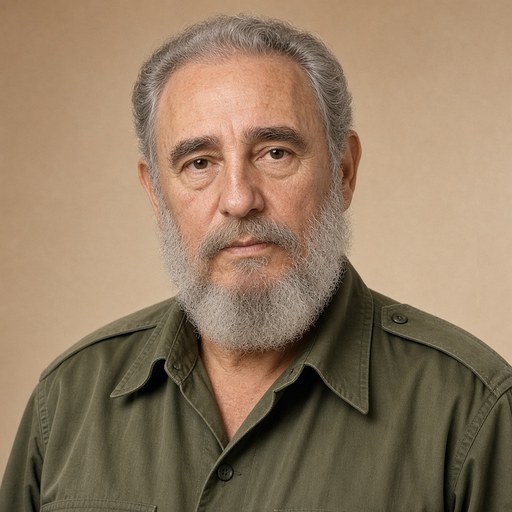
 Fidel Castro · President of Cuba
- Context
- Castro spoke at the inauguration of the Polyclinic of the Valley of Peru in Jaruco municipality on January 8, 1969, marking the 10th anniversary of the Revolution.
- Main themes
- Public health in developing countries, healthcare infrastructure, child mortality, colonialism and underdevelopment, medical brain drain, Cuban Revolution achievements, education and literacy, economic development, imperialism and inequality, African and Latin American health crises
- Duration
- ~60 min
- Words
- 7,165
- Sentences
- 419
- Readability
- 50
- Grade
- 10.4
- Syntax
- 2.84
- Vocabulary
- 2.26
Translated from Spanish
The broad sphere of national life a sentence belongs to. Every sentence has an Arena, so it is the denominator the other indices are read against.
Other419 sentences in 178 paragraphs
Workers and peasants of the Valley of Peru:
A few days ago, the school was completed, and even less time ago, the polyclinic was finished. The start of this plan was not complete until the polyclinic was ready. Also, a few days ago, the school and the polyclinic of El Cangre were inaugurated.
This polyclinic was built in 30 days; a brigade of workers who worked tirelessly, of vanguard workers and militant workers of the Party who worked truly revolutionarily, and built that hospital which will mean so many benefits for the population of this region.
The Revolution has built dozens and dozens of hospitals. However, as we have just celebrated the 10th anniversary, and a few days ago in the Plaza de la Revolución we discussed the problems related to the advancement of agriculture and the economic development of the country, and at the event in El Cangre we talked about the educational advances of the Revolution, which are also extraordinary, as evidenced by the data and above all the fact that more than 300,000 adults have passed the sixth grade, this after the Literacy Campaign.
The issue of health, like that of education, are two very important issues for all the people. As likewise, that development of education and culture in general, and of health, must be based on economic development, which is what carries the main weight of the effort in these years.
And the health situation in the underdeveloped world is very serious. There are, for example, here some data: let’s say, for example, a continent that lived subjected to colonialism for hundreds of years, for example, the African continent. Here is a magazine from the World Health Organization, which states:
“One third of African children die before reaching five years of age.” One third: of every three, one.
“This great tragedy, pain, and sorrow of so many mothers deprives African countries of many of the arms they need to lift a solid economy.” Well: it deprives them of the arms to lift the solid economy, but above all it deprives them of life, of the opportunity to live and create, which is the most painful.
In another magazine: “Facts that reveal health progress,” from the Pan American Health Organization, which states the following: “Deaths of children under five years of age account for 44% of all deaths in Latin America, compared to, for example, 8% in the United States.” While in the United States, the deaths of children under five years is 8%, in the continent exploited by imperialism, 44% of deaths are children under five years: that is, of every 100 people who die annually, 44 are children. This means that in Latin America approximately 999,000 children under five years die each year, almost a million.
In the same magazine it says: “In Latin America, diarrheal diseases, measles, and whooping cough cause an estimated total of 226,000 deaths of children under five years. In the United States, 5,000 children of the same age die from these diseases.” There you can start making comparisons.
Here, for example, in this same health magazine, it says: “Alert: 26 countries in Central Africa had 4,700 doctors in 1962 and only 4,400 in 1965” —the number of doctors was decreasing. “Doctor-population ratio: 1 per 18,000 in 1962, one per eighteen thousand!; 1 per 20,500 in 1965. The United Nations goals for 1970 were 1 per 10,000.” This writing, this statement, demonstrates that we are regressing instead of advancing.
Then it says here: “Paradox of the 20th century. One thousand two hundred doctors, half of them from developing countries, emigrate each year to the United States. This phenomenon has been called inverted technical assistance” —it’s the other way around. “No state knows exactly the number of its nationals who, after studying abroad, do not return to the country, but there is no doubt that this number is considerable.
“A prominent African medical figure recently stated in this regard: 'This hemorrhage that deprives African countries of the contribution of a high-level personnel that is indispensable, at the very moment that this personnel has just been trained, constitutes one of the great paradoxes of the 20th century. No foreign aid can ever compensate for the debilitating effects of such a drain. As long as high-level medical and health personnel continue to prefer the path of ease and leave for abroad, fleeing from the miserable life in their own country, it will be of no use to keep talking about progress and peace for the world of tomorrow.’
“From foreign aid, whatever its origin and importance, no miracles can be expected. What is the current situation? There are 11 medical schools in eight Central African countries: the schools in Congo, Ghana, Madagascar, Nigeria, and Uganda predate the independence of these countries; the schools in Ivory Coast, Rwanda, and Tanzania are of later date, and the creation of new schools in Cameroon and Kenya is now planned.
“Neither in Asia nor in Latin America is there a country with more than 3 million inhabitants that does not have a medical school or faculty. But in the African region, there are nine countries that still lack a medical school, and in seven of them, no creation has been planned to date.
“Of the 11 schools currently open, it is expected that by 1970, about 400 doctors will graduate annually. And from Latin America, of the approximately 80 medical schools that exist, the equivalent of the doctors who leave for the United States is the graduates of 20 schools.” So, a little more than 20% of the doctors who graduate in Latin America go to the United States. And where they are needed, where 44 children die, of every 100 people who die, 44 are children under five years, and with all the problems, then from the poor and underdeveloped countries, doctors and technicians leave for the country where eight die, not only those who graduate there, but those who are bought, in two words. They import doctors!
Here too, “Health in the world of tomorrow,” an article by Dr. Abraham Horwitz, director of the Pan American Health Organization, on the occasion of World Health Day, April 7, 1968, said:
“The urgencies of today move us to consider health in the Americas of tomorrow only until the end of this century, and to anticipate that it will not be what modern science and technology lead us to dream, if we do not modify the factors that condition the pressing situations of the present. And among these —and it is perhaps one of the most serious— is the imbalance between what is known, and for which there is solid experience, and what is applied with the available resources. The effect is deaths and diseases that could be avoided and whose number is excessively higher than that observed in technologically advanced countries.
“The Americas are a continent in transition regarding the nature and dynamics of health problems. Their distribution in societies is a reflection of the degree of their development. And among the most tragic expressions is the infant mortality of children under five years, whose proportions do not correspond to the cultural tradition and spiritual wealth of the countries.
“Over 800,000 children under five die annually in Latin America and the Caribbean” —it says over 800,000; it is approximately close to a million — “...who would live if the rates that are currently recorded in North America prevailed.”
Ah, it is the calculation of those who could survive, that is, about 800,000 per year if adequate medical techniques existed.
“Even more serious: it is known how to prevent the disease and above all the death of most of these children.
“Among the survivors” —among those who survive!— “there are many who have grown up painfully with advanced malnutrition, with the consequences that this has for their intellectual development.”
That is the general panorama of the world and it was quite similar to that of Cuba.
Now, the situation in Cuba. For example, a series of diseases how they have been fought.
For example, in 1965, poliomyelitis: in Brazil, 541 cases; in Mexico, 477; in Peru, 444; in Colombia, 330; in Honduras, 265; in Ecuador, 217; in Chile, 206; in the United States, 72; in Venezuela, 118; Cuba, zero.
Malaria: in Nicaragua, 8,307 cases; in Paraguay, 6,728; in El Salvador, 34,217; in Brazil, 110,306; in Costa Rica, 2,563; in the United States, 147 cases; in Venezuela, 4,794; in Mexico, 10,114; in Cuba, in 1965, 1.7 per 100,000 inhabitants. In Cuba, in 1968: zero!
Typhoid fever, there are also the cases, per 100,000 inhabitants: in Peru in 1965 there were —per 100,000 inhabitants— 97 cases; Chile, 65.3; Colombia, 56.3; Ecuador, 42.7; Mexico, 11.4; Dominican Republic, 12; Venezuela, 9.3; Uruguay, 9.1; Cuba, 3.1, in 1965. This year it increased to nine hundred thirty-something cases due to an epidemic that occurred in the Bayamo area and was controlled, which raised it to 11.4 cases per 100,000. That is to say, there was a setback in the percentages with that epidemic, but it was quickly controlled.
Deaths from gastroenteritis in Cuba: in 1958, 2,784; in 1968, 1,346. That is, there has been a reduction from 2,784 to 1,346 from 1958 to 1968.
Gastroenteritis, for example. Deaths. Per 100,000 inhabitants, in Colombia 105.4 died; in Costa Rica, 136.8; in Chile, 68.4; in Ecuador, 120.4; in El Salvador, 60.3; in Guatemala, 229; in Venezuela, 47.8; in the Dominican Republic, 98.5; in Peru, 81.3; in Nicaragua, 87.7; in Mexico, 111.2; Cuba, 28.1, that is, the lowest figure of all the mentioned countries.
Here is something very important and very new in Cuba, which are cytological tests for the early diagnosis of cervical cancer. This is new. In 1966, 9 positives were discovered; in 1967, 106 positives; in 1968, 303 positives. In total in these three years: 418 cases that were cured.
And suspicious cases: in 1966, 58 cases; in 1967, 742; and in 1968, 1,614. Two thousand four hundred fourteen cases that were cured!
There are now nearly 3,000 people who were cured due to the early diagnosis of cancer.
These tests have been taken in 255 polyclinics; they have been carried out in 11 laboratories that have 50 cytology technicians.
The testing goals are: for 1969, 350,000 people; and for 1970, half a million people. To conduct examinations for the early discovery of a disease that is a scourge and that can be cured if discovered early.
Births in hospitals. In 1963, several years after the Revolution, which had already significantly increased the number of births in hospitals, from 256,900, 164,396; that is, 64% already in 1963 were born in hospitals. In 1964, 67%; in 1965, 73.6%; in 1966, 80%; in 1967, 86.4%; and already in 1968, 90% of births took place in hospitals.
In no country in Latin America is there anything like a similar percentage.
What characterized medicine before the Revolution?
1. Absence of a national public health plan;
2. Low quality of state services and better in para-state and private services;
3. Orientation towards the curative aspect of medicine;
4. State services in large cities; abandonment of rural areas and some urban areas; individual medicine, mercantilism, competition among private services;
5. Administrative centralization;
6. The people were unaware of actions that could benefit them.
After the Revolution:
First: planning. All health tasks are carried out in a planned manner.
Second: all health activities must respond to advances in medical science.
Third: health tasks are carried out with a preventive-curative orientation.
Fourth: the health of the people is the responsibility of the State. Health activities must be free and accessible to the entire population.
Fifth: normative centralization and executive decentralization.
Sixth: participation of the masses in health tasks.
The national budget for public health in 1959, at the triumph of the Revolution, was 25 million pesos; in 1968 it was 220 million pesos. Nine times what was spent before!
In Cuba... (MEMBERS OF THE RED CROSS TRANSPORT A PERSON). A stretcher over there. Speaking of medical assistance... A stretcher was needed!
There are no cases of deaths at mass events, fortunately.
In Cuba, at the triumph of the Revolution, there were 6,300 doctors. It is known that, like in other countries, some left for the United States and others also left because of the Revolution. They were allergic, they suffered from a disease called “revolutionary allergy” and they left.
Of course, imperialism made a special policy. Apart from the doctors that it spontaneously steals from everywhere, it made a special policy to leave the country without doctors.
Despite that, given the educational and training programs for doctors of the Revolution, now we have in 1969 already, now, 7,500 doctors. That is to say, we have more doctors with the advantage that they are distributed throughout the country. And in 1970 we will have 8,000 doctors. So in 1969 we already have one doctor for every 1,100 inhabitants, one doctor for every one thousand one hundred! —you remember the figures I read—, but real doctors distributed in all corners of the country. And there are 6,000 medical students at this moment.
By 1971, we must have one doctor for every 1,000 inhabitants; and by 1975, one for every 800, and by 1980 we should be at about one for every 650 at a minimum. That is to say, that is already the level of doctors, but real doctors per inhabitant, that is, doctors at the service of the entire population. Those are our figures now: currently one doctor for every 1,100 and in 1975 one for every 800; and it should drop in 1980 to one for every 650 inhabitants.
Now: How many doctors were working in hospitals serving the people, that is, the hospitals that provided service to the population?
In 1959, there were 1,003 doctors in the entire country. And you know that to enter a hospital, well, that is a well-known story: recommendations and things like that, votes, electoral cards, etc. In 1968, there were already 6,500 positions for doctors, six thousand five hundred! From one thousand three to six thousand five hundred the positions for doctors in hospitals serving the population!
There were 250 dentists and now there are 1,081. Pharmacists were 46 and now there are 380. In addition to this, there are currently 1,531 doctors specializing. So in the next two to three years, we will have 1,531 new specialists. That is to say, it is no longer the growth in the number of doctors but in the quality and preparation.
The number of medical consultations, which was 13,874,666 in 1963, was already 23,452,059 in 1967; dental consultations in 1963 were 700,812; in 1967 they were already 2,548,797. In total, in four years it grew from 14,575,478 to 26,856,000. For 1968, a total of 30 to 32 million has been estimated. In 1959, consultations in state institutions were estimated at about 5 million. That was what existed.
In terms of technicians and assistants — that is, nurses, laboratory technicians — in 1959 there were 1,669; now there are 20,800 assistants in medical care. Nursing schools. There were six in 1959; now there are 13. And in addition, 58 courses in hospitals, apart from the 13 schools. The number of hospitals in 1959 was 54; in 1968 there are 180, not counting this one and the other. The total number of beds in 1959 was 25,745; that is to say, sometimes two people had to share a bed. Now there are 47,660.
Deaths from certain diseases such as acute diarrheal diseases in 1958 were 7,000 cases; in 1968, 1,300. Polio has disappeared. There were 300 or 400 cases annually. From diphtheria in 1962, 1,469; 1967, 435. Deaths from tuberculosis in 1962, 1,402; in 1967, 940. Malaria: since June 1967, no cases have arisen in Cuba. Blood banks: there was one in 1958; now there are 15.
Nutrition. 10,000 people die of hunger daily in the world due to nutrition problems. And there is a calculation that in India, in the next 10 years, 50 million children will die of hunger.
Now consumption. For example, in the United States, they consume five times more eggs than in Latin America; three times more milk. And so on, compared to the exploited countries.
The rural medical service was created, and medicine was brought to all corners of the country, places like in the East, where there were areas of hundreds of thousands of people without a single doctor.
Now, the successes of the Revolution in medicine are almost universally recognized. Here the magazine of the World Health Organization from December — according to a cable dated December 27, 1968, from Geneva — states: “What is aspired to be achieved in 1988 in Latin American countries is already a reality in Cuba,” it is emphasized in the magazine of the World Health Organization, commenting on an optimistic article about the future of health in Latin America.
“In an interview for the December issue of the magazine, Dr. A. Horwitz, director of the Pan American Health Office, the regional UN office for the Americas, predicts that in most Latin American and Caribbean countries, mortality will be reduced by half by 1988. And that the children born then will live an average of 10 years longer than current generations.”
Despite this optimism, Dr. Horwitz acknowledges the current situation of those countries and says “that health services are still insufficient in quantity and quality, especially in rural areas and in the recently emerged poor neighborhoods around most large cities.
“Existing data” — he adds — “show that in Latin America there is a large volume of infectious diseases, malnutrition, poor sanitary facilities, unhealthy housing and working conditions, illiteracy, lack of adequate clothing, and low per capita income.”
In contrast to that existing situation in Latin America, the magazine publishes in that same issue an article titled “Cuban Service for All.”
After stating that Cuban health is an example for the entire continent, the article continues: “In the remote rural regions of the country, hospitals have been built, doctors must work in the provinces, and the entire active population has been registered for the purpose of combating diseases.
“The magazine highlights the efforts of the Cuban government to overcome, through a broad training program, the shortage of doctors and health personnel, and states that these efforts are crowned with success.”
It then shows the specific case of the province of Oriente. And it writes: “Before the Revolution, this region was the most backward in Cuba. There was no medicine, public assistance, or social programs. Now, in less than 10 years, 30 hospitals have been built in this province.”
The article finally refers to the enthusiastic participation of the people in the efforts to combat diseases, and notes that the results are visible in completely eliminating polio, radically cutting the transmission of malaria, and reducing cases of gastroenteritis by more than half.
That is to say, it is already acknowledged how what has been achieved in Cuba, by this date, is what Latin American countries aspire to achieve — if they achieve it — by 1988.
Now with this polyclinic next to the school, just like the one in El Cangre, a new development begins where the school, the polyclinic, and the road are in front.
The important thing about this polyclinic is that it is an advanced polyclinic, it is already the medicine of the year 1980, since what do we seek for 1980, before they achieve what we have now, 10 years earlier? Because this is already the school of communism and the medicine of communism.
And what is the program of this polyclinic? I will read the program to you. Programs can sometimes be a bit tedious, but I believe that in this topic we need to be well informed to have an idea of the type of struggle we need to develop against diseases.
“Childcare consultation. This consultation is to care for healthy children, carrying out actions aimed at preserving and promoting health.
“All children under 15 years of age will be attended to in this consultation as follows:
“For infants under one year: one week after discharge from maternity, at one month old every month, until six months, and bi-monthly until the year. That is, nine consultations in the first year.
“As we have a population of 56 children under one year, 494 consultations will be provided per year to care for 100% of the infants in this sector.
“In this consultation, the pediatrician will require the pediatric card, will perform a complete physical examination, will monitor growth and development, weight, height, head circumference, dentition, psychomotor development; will guide nutrition, will insist on breastfeeding, good dietary habits; will indicate vaccinations and reactivations following the MINSAP schedule; will carry out, together with the auxiliary staff, individual and collective hygiene discussions, as well as heightened care for infants exposed to risks: general dystrophics, premature infants, delayed development, congenital anomalies, etc., and will reflect all these issues in the clinical history.
“For preschoolers from one to four years: three consultations will be provided per year. With a population of 218 children, 654 consultations will need to be ensured per year.
“The pediatrician will monitor vaccination, psychomotor development, bone deformities; will guide the mother on how to prevent accidents, will perform a complete physical examination, will carry out laboratory tests: hemoglobin, feces, mantoux, etc.
“For schoolchildren from 5 to 14 years: two preventive-educational consultations will be provided. With a population of 569 children, 1,138 consultations will need to be ensured per year. In this way, childcare consultation will be provided to 100% of the children in the area, with two consultations per week.
“In schoolchildren, the pediatrician will perform a physical examination of the patient, vaccination; will address, as far as possible, the psychological problems that children of that age may face; will indicate laboratory tests.
“The childcare consultation will be reinforced by the guidance provided by the field staff when visiting the homes in the sector.
“Medical-dental care for all children in the sector who request it.
“Gynecology and obstetrics program. Curative, preventive, and educational actions will be carried out.
“Obstetrics. It will care for the 28 pregnant women currently in this sector, preparing their clinical history; will perform cardiovascular examination of the respiratory system, will send the patient to the dentist, will conduct a complete gynecological-obstetric examination, vaccination with tetanus toxoid if she does not have it yet, will indicate hemoglobin, urine, feces, serology, blood group, and RH factor analysis; chest X-ray after the sixth month” — we take all the necessary safety measures — “cytological test, etc.
“These measures will be applied equally to all pregnant women.
“Prenatal. A total of 12 consultations will be offered per pregnant woman: one monthly until the seventh month, one bi-weekly in the eighth month, and one weekly in the ninth month.
“As in this sector an average of 60 pregnant women is estimated per year, a total of 720 consultations will be provided, which represents an average of 60 monthly consultations. This care will be closely related to the work of the field nurse.
“Postnatal. At least one consultation will be offered to the postpartum woman six weeks after delivery, to monitor weight, temperature, blood pressure, urine examination, cardiovascular examination, external and internal genital examination.
“Gynecology. A minimum of two gynecological consultations per year will be offered to women of childbearing age, which amounts to 1,008 consultations for the 504 women aged 15 to 49 years, which represents offering 84 monthly consultations to them.
“Adult care program. Medical-dental care will be provided to the entire population over 15 years of age, guaranteeing no less than 1,421 consultations per year.
“Control program for transmissible diseases. Immunizations: maintain the immunity level at 100% with triple vaccine for the 330 children under 6 years; maintain the immunity level at 100% with triple vaccine for the 218 preschoolers; maintain the immunity level at 100% with double vaccine for the 215 school-aged children; maintain the immunity level at 100% with tetanus toxoid for the 190 children aged 10 to 14 years; maintain the immunity level at 90% with tetanus toxoid for the 1,421 individuals over 15 years; maintain the immunity level at 100% with smallpox vaccine for the 274 children from 6 months to 2 years and for those entering this age group.
“Keep 100% of children under 15 years protected against tuberculosis by vaccinating 684 children with BCG.
“Control of infection sources. Complete and timely notification of all cases of transmissible diseases; registration and statistics of reported and confirmed cases in the official disease reporting register. They will carry statistical tables, graphs, and epidemiological maps.
“Isolation in hospitals will be ordered for the following cases: diphtheria, tetanus, typhoid fever and paratyphoid fever, meningitis and encephalitis, pulmonary tuberculosis.
“Isolation will be ordered, through hospital admission, for cases of acute diarrheal diseases, acute respiratory diseases, infectious hepatitis, acute eruptive diseases.
“These cases will be monitored by the polyclinic as long as they do not require more specialized care or present complications, in which cases they will be referred to the corresponding hospital.
“Home isolation will be ordered, after establishing preventive measures and periodic monitoring of compliance, in the following cases: tuberculosis, groups two and three; recent syphilis, leprosy.
“Epidemiological investigations. In all cases of transmissible diseases, the epidemiological history will be carried out by the sector doctor, with participation in its preparation from the health team: nursing assistant, health worker assistant, and epidemiological worker from the area or region.
“Diagnoses and treatments. It will correspond to the polyclinic, depending on whether the cases are referred or not.
"Control of cohabitants or contacts. The prophylactic measures corresponding to each disease will be implemented by field nursing and auxiliary health workers, guided by the physician of the polyclinic or the epidemiologist of the area or region. Concurrent or terminal disinfection measures—depending on the case—will be carried out by field personnel. Relevant investigations—stool cultures, nasopharyngeal swabs—will be conducted among the following workers: from childcare institutions, teachers and education workers, food handlers, and healthcare workers. Stool cultures and nasopharyngeal swabs will be performed on all cohabitants and contacts of detected cases of typhoid fever or diphtheria.
"All tasks carried out for the control of these diseases will be led by educational activities related to them. A monthly number of 30 slides will be taken in current febrile cases or those from the last 30 days.
"Epidemiological studies of all neurological syndromes, meningitis, and encephalitis.
"Maintain 100% rabies immunization of the canine population; sanitize non-useful dogs. Coordinate with the Institute of Veterinary Science to know the results of brucellosis and tuberculin tests on livestock in the sector.
"Proper notification of all cases of acute diarrheal diseases. Epidemiological study of morbidity and mortality from these diseases.
"Control based on the qualitative development of childcare, emphasizing children under one year old.
"Tuberculosis control. Maintain and qualitatively develop the current program to combat this disease.
"Acute respiratory diseases: maintain a thorough record of mortality from this pathology.
"Hygiene of the primary semi-internship. Maintain a program of activities aimed at ensuring sanitary communism in this institution.
"Urban and rural hygiene program. Water control: study the bacteriological quality of various water supply sources, with the aim of relating it to the morbidity of waterborne diseases.
"Permanent surveillance of the operation and maintenance of the waste disposal system. Health education aimed at informing about the risks associated with open defecation.
"Coordinate with the relevant agencies to achieve proper collection and adequate final disposal of garbage.
"Conduct fly indices, with analysis of the results weekly at a minimum, in the kitchen and dining room of the semi-internship, aimed at ensuring control—and with appropriate periodicity in the rest of the institutions or services created in the population.
"Maintain a rodent control program, coordinating with rural bases for the placement of warfarin or zinc phosphide bait stations"—I don't know if some chickens might die from that.
"Maintain verification and treatment cycles when necessary in the program to combat the Aedes Aegypti mosquito.
"Carry out the necessary sanitation work according to existing problems.
"Control and health education in new housing that is built. In existing housing, primarily health education.
"Maintain permanent surveillance and health activities in the semi-internship. Maintain permanent surveillance and health activities in the polyclinic. Maintain biweekly surveillance and health activities in agricultural shelters. Maintain surveillance and activities appropriate to any new meeting place that is built.
"The sector physician must ensure compliance with the programs of the various work disciplines, for which they will establish internal and external coordination. Internal coordination will be established through the management and technical-administrative councils of the sector polyclinic. They must, in turn, respond to the management council of the health area to which they belong. External coordination will be carried out through contact with representatives of various agencies, which will constitute the health commission of the sector. In it, the analysis of all the health problems of the sector will be carried out.
"It will be the responsibility of the sector physician to develop the Sectoral Brigade of the Red Cross.
"The occupational medicine program. This program will be primarily aimed at controlling the impact of the use of fertilizers and insecticides on humans.
"Food hygiene program. Maintain permanent surveillance over the storage, preparation, distribution, and consumption of food in the semi-internship. Biweekly surveillance of the workers' dining rooms in the sector. Establish adequate surveillance in all production, preparation, distribution, and consumption centers that are built in the sector.
Preparation and joint study with the agency, to ensure its improvement, of health records for all dairy farms that exist or are created in the sector. Surveillance of health standards for cows in milking, milking parlors, curtains and cold rooms, containers and places for milk storage, etc. Laboratory control of collected milk and the water used in the dairy farm."
This is governed by the principle of the Ministry of Public Health, which is "not to cure the sick, but to care for the health of people". We should not wait for the disease to come; we must take the initiative, we must be proactive, we must prevent it.
All of this is a new concept, of a polyclinic that becomes a fortress of health for this community. It is not about providing service to those who fall ill, but fundamentally about preventing them from getting sick; considering health as the normal state of a person and defending that state of health, and only exceptionally combating the disease when it can break through all the barriers placed in front of it.
And this is a program that is—one could say—the most that can be asked for in terms of medicine.
The other day, when we finished touring the semi-internship of El Cangre—just like this one, only for a larger number of students due to the population of the region—we said that if we aimed to create a school superior to that, we really wouldn’t know what to do to achieve it; because all the latest advanced techniques are already established. The same goes for this polyclinic.
It is very important to see how this entire program develops, how the schools function, what impact they have. Then we can also conduct some nutrition tests, raising the consumption indices of milk and food in general; especially raising their quality.
So we have to prepare ourselves, because with the increases in milk production and the overall development of agriculture, by 1975 our country will possibly have the highest level of nutrition. It will no longer be a matter of calculating how much the United States has over Latin America, but we could compare, in 1975, our nutrition levels with those of the United States. And we can be sure that we will surpass them in quality, absolutely!
Because here in capitalism, like so many things... In capitalism, for example, medicine is a commodity and a business. Disease is a commodity of capitalism. In capitalism, businesses and institutions need disease as another commodity to make a profit, to make money, to sell medicines. That is to say, under capitalist conditions, a health program of this nature cannot be carried out, because it could ruin many medical businesses, since as diseases decrease, all those who left their countries to profit from medicine and make money...
In our country, all the doctors who graduate go to work for the people; they no longer practice medicine as a private business. All those who graduate!
This has not been established as a general measure, because there are doctors who were used to consultations, who cooperated with the Revolution, have worked as teachers, professors, have helped, and logically that is a transitional process. And what matters is that all the thousands of new doctors who graduate go to work in the country's institutions. The commodity nature of disease in capitalism disappears; thus, our health program can now, without that obstacle, advance to the maximum that humanity can achieve in that field.
And the same goes for food. In capitalism, if there is an increase in a product, it can lead to a reduction in prices. Many times they destroy the product, throw it away, limit production. And in our situation, that phenomenon will never occur. When there is one liter of milk per capita and more is produced, the milk will not be thrown away: it will increase to one and a half; when there are two, to two. There are many ways and many forms to make children consume milk.
And in the future, what will be consumed the least will be milk. They will have ice cream, yogurt, flavored milk, acidified milk with flavors, cheeses of all types. And there will be an enormous variety of types that the dairy industry is already developing, and we will be able to raise milk consumption as much as we want.
That is to say, in the increase of the livestock mass, our problem—we said days ago—was how we are going to milk all those cows. Naturally, it has to be with mechanical milkers because there would be no way, with the old method, to milk all those cows. It is like with sugarcane.
But we will increase until we reach optimal levels. And how will we distribute it? Because it is not about those per capita food figures that are per capita in which some have three times as much and others have a quarter, those per capita figures that are given in capitalist countries. And here it will not be so, because there will be all those schools, and there will be breakfast, lunch, and dinner; and then there are all the scholarship students, and then there are all the workers' dining rooms; and in addition, direct distribution to the population. So we will be able to achieve a real per capita of nutrition taking advantage of the benefits of our soil, of our climate, as a result of the work of an entire community, where parasitism has been disappearing and where everyone is contributing. We will have such a quantity of resources—all a people working aided by technology, aided by machines, with the enormous increases in irrigation that we are going to have—a secure production.
And in 1975, in six years' time, we will possibly be in first place in the quality of nutrition. Quality also means quantity. That is to say, there will no longer be limits in quantity, and in quality, it will be the best. It will be the result of the current development that our country is undergoing.
All of this we can do through all these institutions that are being created: from the childcare center, the school, the scholarship students... The adult population, of course, will eat what they prefer, but educational programs must be made.
Of course, to create educational programs about nutrition, the nutritional base must first be established. We do nothing by making a program without that base. And the moment is approaching when we will have to educate about the content of carbohydrates, that is, calories, proteins, the importance of each protein, the need for each type of protein and what foods contain them, the foods that in excess can cause harm. That is to say, in the future, it will be a problem—regarding health—that the population is fully informed about what they should consume.
Some campaigns will have to be made. The same problem of cigarettes and tobacco consumption is significant; it has grown in an incredible way. Campaigns will have to be made explaining... Recently, some conferences have been given explaining the incidence of cigarettes in lung cancer in general. That was explained. Not to stop smoking but so that everyone who smokes knows that they should not exceed themselves, that they should self-limit. The country will continue to produce tobacco and will increase its tobacco crops. But the population must also be educated about the consequences of each of the things they do and what they consume.
Because there is also no mercantilist, capitalist interest in selling more cigarettes, in making the business of a cigarette factory. We used to hear all the time: smoke this, smoke that, this and that. In capitalist countries, they have had problems due to campaigns about the effect of cigarettes on lung cancer, because it clashed with the interests of large tobacco companies. It clashed with large businesses that resisted. Medical criteria, scientific criteria prevailed in some countries and managed to at least put a label, to at least tell the consumer what the consequences were. But there was strong resistance from tobacco merchants.
That is not a problem of a socialist country or a communist country, because it is not the problem of selling a product, even if it poisons people, in order to make more profit. In the same way, quality will have to be an essential aspect of everything that is produced. There will be things that cost more to produce, but they are essential, and we will do what needs to be done to produce them. There will be things that are less healthy; there are things that have, for example, a lot of fat. We have Coppelia ice cream, which was a technical success: over thirty flavors. It is a marvel, but it has a lot of fat: it has 14% fat. So, some more factories will be built in the provinces — so that everyone knows — but another type of ice cream will have to be made with less fat content, and we will have to ensure quality, flavor, and everything, without that high percentage of fat.
Because the population will also have to be educated about all these issues: that many of the milks that will be distributed will be partly acidified milk with flavor, which has an extraordinary taste, but with a minimum of fat. Very healthy cheeses with minimum fat will also be provided in schools. Dozens of types of cheese will be produced for the population, but the fat content of each one will also be indicated. So that those who do not want to gain too much weight or have arterial problems, high blood pressure, or heart issues, especially those, will know... Everyone must have the information to decide what they should consume.
Of course, we are not going to take a type of cheese that is very high in fat to school and create a habit of consuming a food that may not be as healthy as low-fat cheeses. What matters is the protein from the milk. And the dairy products that will be distributed in schools will be, above all, with all the protein from the milk and the minimum of milk fat.
(AN ELDERLY MAN IN THE AUDIENCE SAYS TO COMMANDER FIDEL CASTRO: I drink four liters of milk every day and I am 80 years old, I am already eighty years old!)
You drink four liters? That is a high per capita amount!
He says he is 80 years old. But that is the milk! That is the milk!
And do you milk the cow?
(THE ELDERLY MAN RESPONDS: “My name is José Avila Ramos, from Güeycanama...”)
From Güeycanama. And do you milk the cow yourself there? (THE ELDERLY MAN RESPONDS: “I do it myself!”) You do it yourself. Every day.
(THE ELDERLY MAN CONTINUES: “I do it myself! And I ride a horse!”)
And you ride a horse and milk the cow! That’s great! And you are eighty years old!...
(THE ELDERLY MAN CONTINUES: “And I plan to live 80 more”)
And you plan to live eighty more! Well: you are going to have to skim the milk a bit, because you drink... Let me ask you. What breed is the cow you have: Holstein, mixed, Brahman with Holstein?... What type of cow do you have? What breed is your cow?
(THE ELDERLY MAN RESPONDS: “Jersey”)
Is it Jersey? Goodness! Then it has about 5% fat. You are consuming two hundred grams of fat per day! Two hundred grams of fat is considerably above what should be consumed. The thing is, you must have some mechanism to eliminate that fat. Do you walk a lot every day?
(THE ELDERLY MAN RESPONDS: “I am even a veterinarian! A veterinarian! You know that in Güeycanama, wherever I am, I am José Avila Ramos”)
Güeycanama... Where is that? Ah, near Boca de Jaruco. Yes, I know.
Well, tell me: I will visit you there and I will try that milk from your little cow. Save me a liter from the four! What is your name?
(THE ELDERLY MAN RESPONDS: “José Avila Ramos”)
Well: I will visit you soon.
For sure! I will definitely go there! Don’t worry about that: I will be there soon. Save me the liter of milk! I will let you know, I will let you know so you don’t leave the milk waiting there.
Well: then this is what this polyclinic means, and now it will start operating. We all have a great interest in ensuring that both the school and the polyclinic run well. And now that we have finished the polyclinic, we have to name the school. We wanted to wait for the completion of the hospital to name the school.
(FROM THE AUDIENCE THEY SAY: “Tamara Bunke!”)
“Tamara Bunke!” “Tania”. That is the name of the school.
Thus, these two educational institutions that are... (SOME CHILDREN SHOUT: “Fidel, we are waiting for you at the 'Victoria de Girón' boarding school!”)
There are like three!... Ah, that’s already the second time. Alright. You don’t miss an opportunity to remind me.
Well: then I wanted to tell you that these two institutions that are at the forefront, the forefront of our Revolution, bear the glorious names of two fighters who gave their lives for the liberation of the oppressed peoples of Latin America: Tamara Bunke and Camilo Torres.
Homeland or Death!
We will overcome!
The original Spanish. The tags above are read on the English translation's sentences.
Trabajadores y campesinos del Valle del Perú:
Hace unos días se terminó la escuela, y hace todavía menos tiempo se terminó el policlínico. No estaba completo el inicio de este plan hasta que el policlínico no estuviera listo. También, días atrás se inauguraron ya la escuela y el policlínico de El Cangre.
Este policlínico se construyó en 30 días; una brigada de trabajadores que sin descanso laboró, de trabajadores de vanguardia y de trabajadores militantes del Partido que trabajaron de verdad revolucionariamente (APLAUSOS), y construyeron ese hospital que tantos beneficios significará para la población de esta región.
La Revolución ha construido decenas y decenas de hospitales. Sin embargo, como acaba de cumplirse el X aniversario, y en días atrás en la Plaza de la Revolución exponíamos los problemas relacionados con el avance de la agricultura y el desarrollo económico del país, y en el acto de El Cangre hablamos de los avances educacionales de la Revolución, que son también extraordinarios, como lo prueban los datos y sobre todo el hecho de que más de 300 000 personas adultas hayan aprobado el sexto grado, esto después de la Campaña de Alfabetización.
La cuestión de la salud, como la de la educación, son dos cuestiones importantísimas para todo el pueblo. Como igualmente ese desarrollo de la educación y de la cultura en general, y de la salud, tienen que basarse en un desarrollo económico, que es lo que lleva el peso principal del esfuerzo en estos años.
Y la situación de la salud en el mundo subdesarrollado es muy seria. Hay, por ejemplo, aquí algunos datos : digamos por ejemplo un continente que vivió sometido al colonialismo durante cientos de años, por ejemplo el continente africano. Aquí hay una revista de la Salud Mundial, donde se dice:
“Una tercera parte de los niños africanos mueren antes de haber cumplido cinco años de edad.” Una tercera parte : de cada tres, uno.
“Esta gran tragedia, dolor y desconsuelo de tantas madres, priva a los países africanos de muchos de los brazos que necesitan para levantar una economía sólida.” Bueno : los priva de los brazos para levantar la economía sólida, pero sobre todo los priva de la vida, de la oportunidad de vivir y de crear, que es lo más doloroso.
En otra revista: “Hechos que revelan progresos de la salud”, de la Oficina Sanitaria Panamericana, que dice lo siguiente: “Las defunciones de niños menores de cinco años de edad constituyen el 44% de todas las muertes en América Latina, en comparación, por ejemplo, al 8% en Estados Unidos.” Mientras en Estados Unidos es el 8% las defunciones de niños de menos de cinco años, en el continente explotado por el imperialismo el 44% de las muertes son niños de menos de cinco años : es decir, de cada 100 personas que mueren anualmente, 44 son niños. Esto significa que en América Latina mueren aproximadamente 999 000 niños menores de cinco años por año, casi un millón.
En la misma revista se dice : “ En Latinoamérica las enfermedades diarreicas, el sarampión, la tos ferina, son causantes de un total estimado de 226 000 defunciones de niños menores de cinco años. En Estados Unidos mueren por estas enfermedades 5 000 niños de la misma edad.” Ahí se pueden ir haciendo las comparaciones.
Aquí, por ejemplo, en esta misma revista de la salud, se dice : “ Alerta: 26 países de Africa Central disponían de 4 700 médicos en 1962 y de 4 400 solamente en 1965” —iba reduciéndose el número de médicos. “Proporción médico-habitantes : 1 por 18 000 en 1962, ¡uno por dieciocho mil!; 1 por 20 500 en 1965. Los objetivos de las Naciones Unidas para 1970 eran 1 por 10 000.” Este escrito, esta afirmación, demuestra que se va retrocediendo en vez de avanzar.
Entonces aquí dice : “ Paradoja del siglo xx . Mil doscientos médicos, la mitad de ellos procedentes de países en desarrollo, emigran cada año a Estados Unidos. A este fenómeno se le ha dado el nombre de asistencia técnica invertida” —es al revés. “Ningún Estado conoce con exactitud el número de sus nacionales que después de haber estudiado en el extranjero no regresan al país, pero no hay duda de que ese número es considerable.
“Una personalidad médica africana ha declarado recientemente a este respecto: 'Esta hemorragia que priva a los países africanos del concurso de un alto personal que le es indispensable, en el momento mismo que ese personal acaba de formarse, constituye una de las grandes paradojas del siglo xx . Ninguna ayuda extranjera podrá jamás compensar los efectos debilitantes de semejante sangría. Mientras el alto personal médico-sanitario siga prefiriendo el camino de la facilidad y se marche al extranjero, huyendo de la vida mísera en el propio país, de nada servirá seguir hablando de progreso y de paz para el mundo de mañana’.
“De la ayuda exterior, cualesquiera sean su origen y su importancia, no cabe esperar milagros. ¿Cuál es la situación actual? Hay 11 escuelas de medicina en ocho países de Africa Central : las escuelas del Congo, Ghana, Madagascar, Nigeria y Uganda, son anteriores a la independencia de estos países; las escuelas de Costa de Marfil, Rwanda y Tanzania son de fecha posterior y está prevista ahora la creación de nuevas escuelas en Camerún y Kenya.
“Ni en Asia ni en América Latina hay país de más de 3 millones de habitantes que no cuente con una escuela o facultad de medicina. Pero en la región africana son nueve los países que todavía carecen de escuela de medicina, y en siete de ellos no se ha previsto hasta la fecha la creación de ninguna.
“De las 11 escuelas actualmente abiertas se prevé que salgan, hasta 1970, unos 400 médicos anualmente. Y de América Latina, de unas 80 escuelas de medicina que hay, el equivalente de los médicos que se marchan para Estados Unidos son los graduados de 20 escuelas.” Así que se marcha algo más del 20% de los médicos que se gradúan en América Latina para Estados Unidos. Y donde hacen falta, donde se mueren 44 niños, de cada 100 personas que mueren, 44 son niños de menos de cinco años, y con todos los problemas, entonces de los países pobres y subdesarrollados salen los médicos, los técnicos para el país donde se mueren ocho, no solo los que gradúan ellos, sino los que compran, en dos palabras. ¡ lmportan médicos!
Aquí también, “La salud en el mundo de mañana”, un artículo del doctor Abraham Horwitz , director de la Oficina Sanitaria p anamericana, con motivo del Día Mundial de la Salud, el 7 de abril de 1968, dijo:
“Las urgencias de hoy nos mueven a considerar la salud en las Américas de mañana solo hasta fines de este siglo, y anticipar que no será lo que la ciencia y la técnica modernas nos inducen a soñar, si no modificamos los factores que condicionan las apremiantes situaciones del presente. Y entre estos —y es tal vez uno de los más graves— está el desequilibrio entre lo que se conoce, y para lo cual hay sólida experiencia, y lo que se aplica con los recursos disponibles. El efecto es muertes y enfermedades que podrían evitarse y cuyo número es en exceso superior al que se observa en los países tecnológicamente avanzados.
“Son las Américas un continente en transición en lo que respecta a la naturaleza y a la dinámica de los problemas de salud. Su distribución en las sociedades es un reflejo del grado de su desarrollo. Y entre las expresiones más trágicas está la mortalidad infantil de los menores de cinco años, cuyas proporciones no corresponden a la tradición cultural y la riqueza espiritual de los países.
“Sobre 800 000 menores de cinco años fallecen anualmente en América Latina y región del Caribe” —dice sobre 800 000; es aproximadamente cerca de un millón — ” ...que vivirían si prevalecieran las tasas que hoy se registran en la América del Norte.”
¡Ah!, es el cálculo de los que podrían sobrevivir, es decir, unos 800 000 por año si existieran las técnicas médicas adecuadas.
“Más grave aún : se sabe cómo evitar la enfermedad y por sobre todo la muerte de la mayor parte de estos niños.
“Entre los sobrevivientes” —¡ entre los que sobreviven!— “los hay muchos que han crecido penosamente con avanzada malnutrición, con las consecuencias que esta tiene para su formación intelectual.”
Ese es el panorama general del mundo y ese era bastante parecido al de Cuba.
Ahora, la situación en Cuba. Por ejemplo, una serie de enfermedades cómo se han ido combatiendo.
Ya, por ejemplo, en 1965, la poliomielitis : en Brasil, 541 casos; en México, 477; en Perú, 444; en Colombia, 330; en Honduras, 265; en Ecuador, 217; en Chile, 206; en Estados Unidos, 72; en Venezuela, 118; Cuba, cero (APLAUSOS).
Paludismo : en Nicaragua, 8 307 casos; en Paraguay, 6 728; en El Salvador, 34 217; en Brasil, 110 306; en Costa Rica, 2 563; en Estados Unidos, 147 casos; en Venezuela, 4 794; en México, 10 114; en Cuba, en 1965, 1,7 por cada 100 000 habitantes. En Cuba, en 1968 : ¡ cero! (APLAUSOS.)
Fiebre tifoidea, también están los casos, por cada 100 000 habitantes: en Perú en 1965 eran —cada 100 habitantes— 97 casos; Chile, 65,3; Colombia, 56,3; Ecuador, 42,7; México, 11,4; República Dominicana, 12; Venezuela, 9,3; Uruguay, 9,1; Cuba, 3,1, en 1965. Este año aumentó a novecientos treinta y tantos casos debido a una epidemia que hubo en la zona de Bayamo y que fue controlada, y que elevó a 11,4 casos por cada 100 000. Es decir, hubo con esa epidemia un retroceso en los porcentajes, pero fue rápidamente controlada.
Defunciones por gastroenteritis en Cuba : en 1958, 2 784; en 1968, 1 346. Es decir, ha habido una reducción de 2 784 a 1 346 de 1958 a 1968.
La gastroenteritis, por ejemplo. Defunciones. Por cada 100 000 habitantes murieron en Colombia 105,4; en Costa Rica, 136,8; en Chile, 68,4; en Ecuador, 120,4; en El Salvador, 60,3; en Guatemala, 229; en Venezuela, 47,8; en la República Dominicana, 98,5; en Perú, 81,3; en Nicaragua, 87,7; en México, 111,2; Cuba, 28,1, es decir, la cifra más baja de todos los países mencionados.
Aquí hay una cosa muy importante y muy nueva en Cuba, que son las pruebas citológicas para el diagnóstico precoz del cáncer del útero. Esto es nuevo. Ya en el año 1966 se descubrieron 9 positivos; en 1967, 106 positivos; en 1968, 303 positivos. En total en estos tres años : 418 casos que se curaron (APLAUSOS).
Y sospechosos : en el año 1966, 58 casos; en el año 1967, 742; y en 1968, 1 614. ¡Dos mil cuatrocientos catorce casos que se curaron! (APLAUSOS.)
Ya son cerca de 3 000 personas que por el diagnóstico precoz del cáncer fueron curadas.
Estas pruebas se han tomado en 255 policlínicos; se han realizado en 11 laboratorios que cuentan con 50 técnicos de citología.
Las metas de pruebas son : para 1969, 350 000 personas; y para 1970, medio millón de personas. Hacer los exámenes para el descubrimiento precoz de una enfermedad que es un azote y que descubriéndola precozmente puede ser curada .
Los nacimientos en los hospitales. En 1963, varios años después de la Revolución, que ya había aumentado considerablemente el número de nacimientos en los hospitales, de 256 900, 164 396; es decir, el 64% ya en 1963 nacieron en los hospitales. En el año 1964, el 67%; en 1965, el 73,6%; en 1966, el 80%; en 1967, el 86,4%; y ya en 1968, el 90% de los nacimientos se efectuaron en los hospitales.
En ningún país de América Latina existe nada parecido a un porcentaje semejante.
¿Qué caracterizaba a la medicina antes de la Revolución?
1. Ausencia de un plan nacional de salud pública;
2. Baja calidad de los servicios estatales y mejor en los paraestatales y privados;
3. Orientación hacia el aspecto curativo de la medicina;
4. Servicios estatales en grandes ciudades; abandono de las zonas rurales y de algunas urbanas; medicina individual, mercantilismo, competencia entre los servicios privados;
5. Centralización administrativa;
6. El pueblo era desconocedor de las acciones que lo pudieran beneficiar.
Después de la Revolución:
Primero : planificación . Todas las tareas de salud se hacen en forma planificada.
Segundo : todas las actividades de salud deben responder a los adelantos de la ciencia médica.
Tercero : las tareas de salud se realizan orientadas con carácter preventivo-curativo.
Cuarto : la salud del pueblo es responsabilidad del Estado. Las actividades de salud deben ser gratuitas y estar al alcance de toda la población.
Quinto : centralización normativa y descentralización ejecutiva.
Sexto : participación de las masas en las tareas de salud.
El presupuesto de la nación para la salud pública en 1959, al triunfo de la Revolución, eran 25 millones de pesos; en 1968 fueron 220 millones de pesos. ¡Nueve veces lo que se gastaba antes! (APLAUSOS.)
En Cuba... (MIEMBROS DE LA CRUZ ROJA TRASLADAN A UNA PERSONA). Una camilla por ahí. Hablando de asistencia médica... ¡Hizo falta la camilla!
No hay casos de defunciones en actos de masa, afortunadamente (RISAS).
En Cuba al triunfar la Revolución había 6 300 médicos. Es sabido que, igual que en otros países, algunos se marcharon hacia Estados Unidos y otros se fueron también por la Revolución. Eran alérgicos, padecían de una enfermedad que se llamaba “alergia revolucionaria” y se marcharon.
Claro que el imperialismo hizo una política especial. Aparte de los médicos que espontáneamente se roba de todo el mundo, hizo una especial política para dejar al país sin médicos.
A pesar de eso, dado los programas educacionales y de formación de médicos de la Revolución, ahora tenemos en 1969 ya, ahora, 7 500 médicos (APLAUSOS). Es decir que tenemos más médicos con la ventaja de que están repartidos por todo el país. Y en 1970 tendremos ya 8 000 médicos. De manera que en 1969 ya tenemos un médico por cada 1 100 habitantes, ¡un médico por cada mil cien! — ustedes recuerdan las cifras que leí—, pero médicos de verdad distribuidos en todos los rincones del país. Y hay 6 000 estudiantes de medicina en este momento.
Para 1971 debemos tener ya un médico cada 1 000 habitantes; y para 1975 uno cada 800 y para 1980 debemos estar más o menos en uno cada 650 como mínimo. Es decir, ya ese es el nivel de médicos, pero médicos de verdad por habitante, es decir, médicos al servicio de toda la población. Esas son nuestras cifras ya : ahora un médico por cada 1 100 y en 1975 uno por cada 800; y debe bajar en 1980 a 1 por cada 650 habitantes.
Ahora : ¿ Cuántos médicos trabajaban en los hospitales al servicio del pueblo, es decir, los hospitales que brindaban servicio a la población?
En el año 1959 había 1 003 médicos en todo el país. Y ustedes saben que para ingresar en un hospital, bueno, esa es una historia conocida : recomendaciones y cosas por el estilo, votos, carné electoral, etcétera. En el año 1968 hay ya 6 500 plazas de médicos, ¡seis mil quinientas! ¡De mil tres a seis mil quinientas las plazas de médicos en los hospitales al servicio de la población!
Había 250 estomatólogos y ahora hay 1 081. Farmacéuticos 46 y ahora 380. Además de esto, haciéndose especialistas hay en este momento 1 531 médicos. De manera que en los próximos dos a tres años tendremos 1 531 nuevos especialistas. Es decir, ya no es el crecimiento en cantidad de médicos sino en la calidad y en la preparación.
El número de consultas médicas, que fue en 1963 de 13 874 666, fue ya en 1967 de 23 452 059; consultas estomatológicas en 1963, 700 812; en 1967 ya fueron 2 548 797. En total en cuatro años creció de 14 575 478 a 26 856 000. Para 1968 se ha estimado un total de 30 a 32 millones. En 1959 se han estimado las consultas en instituciones estatales en unos 5 millones. Era lo que había.
De técnicos y auxiliares —es decir, enfermeras, laboratoristas— en 1959 había 1 669; ahora hay 20 800 auxiliares en la asistencia médica. Escuelas de enfermeras. Había en 1959, seis; ahora hay 13. Y además, 58 cursos en los hospitales, aparte de las 13 escuelas. El número de hospitales en 1959 era 54; en 1968 son 180, sin contar este y el otro (APLAUSOS). El número de camas totales en 1959, 25 745; es decir que a veces había que poner dos personas en una cama. Ahora hay 47 660.
Las defunciones por algunas enfermedades como, por ejemplo, las enfermedades diarreicas agudas en 1958 fueron 7 000 casos; en 1968, 1 300. La poliomielitis desapareció. Había 300 ó 400 casos anuales. De difteria en 1962, 1 469; 1967, 435. Defunciones por tuberculosis en 1962, 1 402; en 1967, 940. Paludismo : desde junio de 1967 no han surgido casos en Cuba. Bancos de sangre : había uno en 1958; ahora hay 15.
Nutrición. Mueren 10 000 personas de hambre diariamente en el mundo por problemas de nutrición. Y hay un cálculo de que en la India en los próximos 10 años morirán 50 millones de niños por hambre.
Ahora el consumo. Por ejemplo, en Estados Unidos consumen cinco veces más huevos que en América Latina; tres veces más leche. Y así por el estilo, comparado con los países explotados.
Se creó, como ustedes saben, el servicio médico rural y se llevó la medicina a todos los rincones del país, lugares como en Oriente, donde había zonas de cientos de miles de personas sin un solo médico.
Ahora, ya los éxitos de la Revolución en la medicina son reconocidos casi generalmente. Aquí la revista de la Organización Mundial de la Salud del mes de diciembre —según un cable de diciembre 27 de 1968, procedente de Ginebra—, dice : “ Lo que se aspira a conseguir en 1988 en los países latinoamericanos, en Cuba es ya una realidad, se subraya en la revista de la Organización Mundial de la Salud, al comentar un artículo optimista sobre el futuro de la sanidad en América Latina.
“En una entrevista para el número de diciembre de la revista, el doctor A. Horwitz , director de la Oficina Panamericana de Sanidad, oficina regional de la ONU para las Américas, predica que en la mayoría de los países latinoamericanos y del Caribe la mortalidad quedará reducida a la mitad en 1988. Y que los niños que entonces nazcan, vivirán un promedio de 10 años más que las generaciones actuales.”
A pesar de ese optimismo el doctor Horwitz reconoce la situación actual de esos países y dice “que los servicios de sanidad son todavía insuficientes en cantidad y calidad, especialmente en las regiones rurales y en los barrios pobres surgidos recientemente alrededor de la mayoría de las grandes ciudades.
“Datos existentes” —agrega— “muestran que en América Latina hay en gran volumen enfermedades infecciosas, desnutrición, malas instalaciones sanitarias, casas y condiciones de trabajo malsanas, analfabetismo, falta de ropa adecuada y bajos ingresos per cápita”.
Como contraste con esa situación existente en América Latina, la revista publica en ese mismo número un artículo titulado “Servicio Cubano para Todos.”
Tras de afirmar que la sanidad cubana es ejemplo para todo el continente, el artículo continúa : “ En las lejanas regiones rurales del país se construyeron hospitales, los médicos han de trabajar en las provincias y toda la población activa ha sido registrada con fines de combatir las enfermedades.
“La revista destaca los esfuerzos del gobierno cubano por superar, mediante un amplio programa de formación, la carencia de médicos y personal sanitario, y afirma que estos esfuerzos son coronados por el éxito.”
Muestra a continuación el caso concreto de la provincia de Oriente. Y escribe : “ Antes de la Revolución esta región fue la más atrasada de Cuba. En ella no había medicina, asistencia pública ni programas sociales. Ahora, en menos de 10 años, se construyeron en esta provincia 30 hospitales.”
El artículo se refiere por último a la participación entusiasta del pueblo en los esfuerzos por combatir las enfermedades, y señala que los resultados son visibles al lograr eliminar por completo la poliomielitis, cortar radicalmente la transmisión de la malaria y reducir a menos de la mitad los casos de gastroenteritis.
Es decir, ya se admite cómo se ha logrado en Cuba, para esta fecha, lo que aspiran a lograr —si lo logran—, para 1988, los países latinoamericanos.
Ahora con este policlínico junto a la escuela, igual que el de El Cangre, pues se inicia un nuevo desarrollo en que va la escuela, el policlínico y la carretera por delante.
Lo importante que tiene este policlínico es que es un policlínico de avanzada, ya es la medicina del año 1980, ya que, ¿qué buscamos nosotros para 1980, antes de que logren lo que nosotros tenemos ahora, 10 años antes? Porque ya esta es la escuela del comunismo y la medicina del comunismo.
¿Y cuál es el programa de este policlínico? Les voy a leer el programa. Los programas a veces resultan un poquito cansones , pero yo creo que en este tema tenemos que informarnos bien para tener una idea del tipo de lucha que tenemos que desarrollar contra las enfermedades.
“Consulta de puericultura. Esta consulta es para atender niños sanos, ejerciéndose en la misma acciones tendientes a preservar y promover la salud.
“Se atenderá en esta consulta a toda la población infantil —menos de 15 años— en la forma siguiente:
“A los lactantes menores de un año : a la semana del alta de la maternidad, al mes de nacido todos los meses, hasta los seis meses y bimestral hasta el año. O sea nueve consultas en el primer año.
“Como tenemos una población menor de un año de 56 niños, se les brindarán 494 consultas al año para atender al ciento por ciento de los lactantes de este sector.
“En esta consulta el pediatra exigirá el carné pediátrico, hará examen físico completo, vigilará el crecimiento y desarrollo, peso, talla, circunferencia craneana, dentición, desarrollo psicomotor; orientará alimentación, insistirá sobre lactancia materna, buenos hábitos dietéticos; indicará las vacunaciones y reactivaciones siguiendo el esquema del MINSAP; realizará junto con el personal auxiliar, en forma individual y colectiva, discusiones de higiene, así como cuidados acentuados en lactantes expuestos a riesgos: distróficos generales, prematuros, retrasados, anomalías congénitas, etcétera, y reflejará todas estas cuestiones en la historia clínica.
“A los preescolares de uno a cuatro años : se les dará tres consultas al año. Siendo la población de 218 niños, habrá que asegurar 654 consultas al año.
“El pediatra vigilará la vacunación, desarrollo psicomotor, deformaciones óseas; orientará a la madre de cómo evitar los accidentes, hará el examen físico completo, realizará investigaciones de laboratorio : hemoglobina , heces fecales, mantux , etcétera.
“A los escolares de 5 a 14 años : se les darán dos consultas preventivo-educativas. Con una población de 569 niños, habrá que asegurar 1 138 consultas al año. De esta forma se brindará consulta de puericultura al ciento por ciento de los niños de la zona, con dos consultas por semana.
“En los escolares el pediatra realizará examen físico del paciente, vacunación; atenderá hasta donde sea posible los problemas psicológicos que puedan confrontar los niños de esa edad; indicará investigaciones de laboratorio.
“La consulta de puericultura se verá reforzada por las orientaciones que impartirá el personal de terreno al visitar las viviendas del sector.
“Atención médico-estomatológica a toda la población infantil del sector que la demande.
“Programa de ginecología y obstetricia. Se realizarán acciones curativas, preventivas y educativas.
“Obstetricia. Atenderá a las 28 embarazadas que actualmente existen en este sector, confeccionando su historia clínica; efectuará exploración cardiovascular del aparato respiratorio, envío de la paciente al estomatólogo, examen gineco -obstétrico completo, vacunación con toxoide tetánico si aun no la tiene, se indicarán análisis de hemoglobina, orina, heces fecales, serología, grupo sanguíneo y factor RH; radiografía de pulmones después del sexto mes” —tomamos todas las medidas de seguridad indispensables—, “prueba citológica, etcétera.
“Estas medidas se aplicarán por igual a todas las embarazadas.
“Prenatal. Se ofrecerá un total de 12 consultas por embarazada : una mensual hasta el séptimo mes, una quincenal en el octavo mes y una semanal en el noveno mes.
“Como en este sector se calcula un promedio de 60 embarazadas al año, se brindará un total de 720 consultas, que representa un promedio de 60 consultas mensuales. Esta atención estará íntimamente relacionada con la labor de la enfermera de terreno.
“Posnatal. Se ofrecerá por lo menos una consulta a la puérpera seis semanas después del parto, para controlar peso, temperatura, tensión arterial, examen de orina, examen cardiovascular, genitales externos e internos.
“Ginecología. Se ofrecerán dos consultas al año, como mínimo, de ginecología a las mujeres en edad fértil, lo que equivale a 1 008 consultas a las 504 mujeres comprendidas entre las edades de 15 a 49 años, lo que representa ofrecer 84 consultas mensuales a las mismas.
“Programa de atención al adulto. Se brindará atención médico-estomatológica a toda la población mayor de 15 años, garantizando no menos de 1 421 consultas al año.
“Programa de control de enfermedades trasmisibles. Inmunizaciones: mantener el nivel inmunitario al ciento por ciento con vacuna triple a los 330 menores de 6 años; mantener el nivel inmunitario al ciento por ciento con vacuna triple a los 218 preescolares; mantener el nivel inmunitario al ciento por ciento con vacuna duple a los 215 niños en edad escolar; mantener el nivel inmunitario al ciento por ciento con toxoide tetánico a los 190 niños de 10 a 14 años; mantener el nivel inmunitario al 90% con toxoide tetánico a los 1 421 mayores de 15 años; mantener el nivel inmunitario al ciento por ciento con vacuna antivariólica de los 274 niños de 6 meses a 2 años y de los que ingresen en este grupo etario .
“Mantener protegidos contra la tuberculosis al ciento por ciento de los menores de 15 años, vacunando con BCG a los 684 niños.
“Control de los focos de infección. Notificación completa y oportuna de todos los casos de enfermedades trasmisibles; registro y estadística de los casos notificados y confirmados en el libro oficial de registro de enfermedades de declaración obligatoria. Llevarán tablas estadísticas, gráficas y mapas epidemiológicos.
“Se ordenará el aislamiento en hospitales de los siguientes casos : difteria , tétanos, fiebre tifoidea y paratifoidea, meningitis y encefalitis, tuberculosis pulmonar.
“Se ordenará el aislamiento, mediante un ingreso en el hospital, de los casos de enfermedades diarreicas agudas, enfermedades respiratorias agudas, hepatitis infecciosa, enfermedades eruptivas agudas.
“Estos casos se evolucionarían por el policlínico siempre que no requieran una atención más especializada o presenten complicaciones, en cuyos casos serán remitidos al hospital correspondiente.
“Se ordenará el aislamiento en el hogar, previo establecimiento de medidas preventivas y vigilancia periódica de su cumplimiento, en los siguientes casos : tuberculosis , grupos dos y tres; sífilis reciente, lepra.
“Investigaciones epidemiológicas. En todos los casos de enfermedades trasmisibles se realizará la historia epidemiológica por el médico del sector, participando en su confección el equipo de salud : auxiliar de enfermería, auxiliar de trabajador sanitario y epidemiológico del área o de la región.
“Diagnósticos y tratamientos. Corresponderá al policlínico, según los casos sean remitidos o no.
“Control de convivientes o contactos. Las medidas profilácticas correspondientes a cada enfermedad se pondrán en ejecución por enfermería de terreno y auxiliares de trabajadores sanitarios, orientados por el médico del policlínico o epidemiólogo del área o región. Se realizarán las medidas de desinfección concurrente o terminal —según el caso— por el personal de terreno. Se realizarán las investigaciones pertinentes — coprocultivo , exudado nasofaríngeo— entre los siguientes trabajadores : de instituciones infantiles, maestros y trabajadores de la enseñanza, manipuladores de alimentos, trabajadores de la medicina. Se realizarán coprocultivos y exudados nasofaríngeos a todos los convivientes y contactos de casos detectados de fiebre tifoidea o difteria.
“Todas las tareas realizadas para el control de esas enfermedades serán presididas por actividades educativas en relación con las mismas. Se tomará mensualmente un número de 30 láminas en casos febriles actuales o de los últimos 30 días.
“Estudios epidemiológicos de todo síndrome neurológico, meningitis y encefalitis.
“Mantener inmunizada contra la rabia al ciento por ciento de la población canina; sanear a los perros no útiles. Conocer mediante coordinación con el Instituto de Ciencia Veterinaria el resultado de las pruebas de brucelosis y tuberculina al ganado del sector.
“Adecuada notificación de todos los casos de enfermedades diarreicas agudas. Estudio epidemiológico de la morbilidad y mortalidad por estas enfermedades.
“Control en base al desarrollo cualitativo de la puericultura, haciendo hincapié en los menores de un año.
“Control de tuberculosis. Mantener y desarrollar cualitativamente el programa actual de lucha contra esta enfermedad.
“Enfermedades respiratorias agudas : mantener un registro exhaustivo de la mortalidad de esta patología.
“Higiene del seminternado de primaria. Mantener un programa de actividades tendiente a garantizar el comunismo sanitario en esta institución.
“Programa de higiene urbana y rural. Control de agua : estudio de la calidad bacteriológica de las diversas fuentes de abastecimiento de agua, con el objetivo de relacionarlo con la morbilidad de enfermedades de transmisión hídrica.
“Vigilancia permanente del funcionamiento y mantenimiento del sistema de disposiciones de residuales. Educación sanitaria tendiente a orientar sobre los riesgos que conlleva el fecalismo al aire libre.
“Coordinar con los organismos correspondientes para lograr una correcta recogida y una adecuada disposición final de la basura.
“Realizar índices de moscas, con análisis de los resultados semanalmente como mínimo, en la cocina y comedor del seminternado, tendiente a garantizar el control —y con periodicidad adecuada en el resto de las instituciones o servicios que se creen en la población.
“Mantener un programa de control de roedores, coordinando con las bases campesinas la colocación de postas de warfarina o fosfuro de zinc” —no sé si algunas gallinas se podrán morir con eso.
“Mantener los ciclos de verificación y tratamiento cuando fuere necesario en el programa de lucha contra el mosquito Aedes Aegypti .
“Realizar las labores de saneamiento que sean necesarias de acuerdo con los problemas existentes.
“Control y educación sanitaria en las nuevas viviendas que se construyan. En las existentes, básicamente educación sanitaria.
“Mantener vigilancia y actividades sanitarias permanentes en el seminternado. Mantener vigilancia y actividades sanitarias permanentes en el policlínico. Mantener vigilancia y actividades sanitarias quincenalmente sobre los albergues agrícolas. Mantener vigilancia y actividades adecuadas a cualquier nuevo local de reunión que se construya.
“El médico del sector debe garantizar el cumplimiento de los programas de las diversas disciplinas de trabajo, para lo cual establecerá coordinaciones internas y externas. Las coordinaciones internas las establecerá mediante los consejos de dirección y técnico-administrativo del policlínico del sector. Deberá, a su vez, responder al consejo de dirección del área de salud a la cual pertenece. Las coordinaciones externas las efectuará mediante el contacto con los representantes de diversos organismos, lo que constituirá la comisión de salud del sector. En ella se procederá al análisis de toda la problemática sanitaria del mismo.
“Será responsabilidad del médico del sector el desarrollo de la Brigada Sectorial de Cruz Roja.
“El programa de medicina del trabajo. Este programa estará orientado fundamentalmente al control de la repercusión del uso de fertilizantes e insecticidas en el ser humano.
“Programa de higiene de los alimentos. Mantener vigilancia permanente sobre el almacenamiento, elaboración, distribución y consumo de los alimentos del seminternado. Vigilancia quincenal a los comedores obreros del sector. Establecer vigilancia adecuada en todo centro de producción, de elaboración, distribución y consumo de alimentos que se construya en el sector.
Confección y estudio conjunto con el organismo, para garantizar su mejora, de las fichas sanitarias a todas las vaquerías que existen o se creen en el sector. Vigilancia de las normas sanitarias para las vacas en el ordeño, de las salas de ordeño, de las cortinas y cuartos de frío, de los recipientes y lugares de acopio de leche, etcétera. Control de laboratorio de la leche acopiada y del agua empleada en la vaquería.”
Esto se rige por el principio del Ministerio de Salud Pública, que es “no curar enfermos, sino cuidar la salud de los hombres” (APLAUSOS). No hay que esperar que la enfermedad venga, hay que salirle al paso, hay que tomar la ofensiva, hay que prevenirla.
Ya todo esto es un concepto nuevo, de un policlínico que se convierte en una fortaleza de la salud de esta comunidad. No se trata de darles servicio a los que se enfermen, sino fundamentalmente evitar que se enfermen; considerar la salud el estado normal de la persona y defender ese estado de salud, y solo excepcionalmente combatir la enfermedad cuando la enfermedad pueda romper todas las barreras que se le pongan delante.
Y este es un programa que es —puede decirse— lo más, lo más que puede pedirse en materia de medicina.
El otro día, cuando nosotros terminábamos de recorrer el seminternado de El Cangre —igual que este, solo que para un número mayor de alumnos por la población de la región—, decíamos que si nos propusiéramos hacer una escuela superior a esa, realmente no sabríamos qué hacer para lograrlo; porque es que ya todas las últimas técnicas de adelanto están establecidas. Y lo mismo pasa con este policlínico.
Es muy importante ver cómo se desarrolla todo este programa, cómo funcionan las escuelas, qué repercusión tienen. Después se pueden ir haciendo algunas pruebas de nutrición también, elevando los índices de consumo de leche y de los alimentos en general; sobre todo elevando su calidad.
De manera que tenemos que irnos preparando, porque ya, con los incrementos de la producción de leche y en general del desarrollo de la agricultura, en 1975 nuestro país posiblemente tendrá ya el nivel más alto de alimentación. Ya no será cuestión de calcular aquí cuánto tiene Estados Unidos más que América Latina, sino que podríamos ya comparar, en 1975, los niveles de alimentación nuestros con los de Estados Unidos. Y con toda seguridad que los superaremos en calidad, ¡con toda seguridad! (APLAUSOS.)
Porque aquí en el capitalismo, como tantas cosas... En el capitalismo, por ejemplo, la medicina es una mercancía y un negocio. La enfermedad es una mercancía del capitalismo. En el capitalismo los negocios y las instituciones del capitalismo necesitan de la enfermedad como una mercancía más para hacer negocio, para hacer dinero, para vender medicinas. Es decir, bajo las condiciones del capitalismo no se puede llevar a cabo un programa de salud de esta naturaleza, porque puede ser la ruina de muchos negocios de medicina, puesto que al disminuir las enfermedades, todos esos que se fueron de sus países allá a hacer negocio con la medicina y a ganar dinero...
En nuestro país ya todos los médicos que se gradúan van a trabajar para el pueblo, ya no ejercen la medicina como un timbiriche, una cosa privada. ¡Todos los que se gradúan!
No se ha establecido eso como una medida general, porque hay médicos que estaban habituados a las consultas, que cooperaron con la Revolución, han ejercido como maestros, profesores, han ayudado, y lógicamente eso es un proceso de tránsito. Y lo que interesa es que todos los miles de nuevos médicos que se gradúen ya vayan a trabajar en las instituciones del país. Desaparece el carácter de mercancía que tiene la enfermedad en el capitalismo; de manera que nuestro programa de salud ya puede, sin esa traba, avanzar hasta el máximo que el hombre sea capaz de lograr en ese terreno.
Y en la alimentación lo mismo. En el capitalismo, si hay aumento de un producto, puede traer como consecuencia una reducción de los precios. Muchas veces destruyen el producto, lo botan, limitan la producción. Y en la situación nuestra nunca se producirá ese fenómeno. Cuando haya un litro de leche per cápita y se produzca más, no se va a botar la leche : se aumenta a uno y medio; cuando haya dos, a dos. Hay muchas maneras y muchas formas de hacer consumir leche a los niños.
Y en el futuro lo que menos se consumirá será leche. Tendrán helado, yogur, leche con sabores, leche acidificada con sabores, quesos de todos tipos. Y habrá una enorme variedad de tipos que está desarrollando ya la industria láctea, y que podremos elevar todo lo que queramos el consumo de leche.
Es decir que, en el incremento de la masa ganadera, nuestro problema —decíamos días atrás— era cómo vamos a ordeñar todas esas vacas. Naturalmente que tiene que ser con ordeñadoras mecánicas porque no habría manera, con el viejo método, de ordeñar todas esas vacas. Pasa como con la caña.
Pero incrementaremos hasta llegar a los niveles óptimos. ¿Y cómo lo distribuiremos? Porque no es de esos per cápita de alimentación que es per cápita en que unos tienen el triple y otros tienen una cuarta parte, esos per cápita que dan en los países capitalistas. Y aquí no, porque estarán todas esas escuelas, y ahí estará el desayuno, el almuerzo, la comida; y luego están todos los becados, y luego están todos los comedores obreros; y además, la distribución directa a la población. De forma tal que podremos lograr un real per cápita de alimentación aprovechando las ventajas de nuestro suelo, de nuestro clima, como consecuencia del trabajo de toda una colectividad, donde el parasitismo ha ido desapareciendo y donde todo el mundo está dando su aporte. Tendremos una cantidad tal de recursos —todo un pueblo trabajando ayudado por la técnica, ayudado por las máquinas, con los enormes incrementos de regadío que vamos a tener—, una producción segura.
Y en 1975, a la vuelta de seis años, iremos a situarnos posiblemente en el primer lugar en la calidad de la alimentación. Calidad quiere decir cantidad también. Es decir, ya no habrá límites en cantidad, y en calidad será la mejor. Será el resultado del desarrollo actual que lleva nuestro país.
Todo esto lo podemos hacer por todas estas instituciones que se van creando : desde el círculo infantil, la escuela, los becados... La población adulta, naturalmente, comerá lo que prefiera, pero deberán hacerse programas educativos.
Claro está que para hacer los programas educativos sobre la alimentación hay primero que crear la base alimenticia. No hacemos nada con hacer un programa sin esa base. Y ya se va aproximando el momento en que tendremos que educar sobre el contenido de carbohidratos, es decir, de calorías, de proteínas, la importancia que tiene cada proteína, la necesidad de cada uno de los tipos de proteína y qué alimentos las contienen, los alimentos que en exceso pueden producir daños. Es decir, ya en el futuro será un problema —en atención a la salud— de que la población esté totalmente informada de lo que debe consumir.
Habrá que hacer algunas campañas. El mismo problema del cigarro y del consumo de tabaco es grande, ha crecido de una manera increíble. Habrá que hacer campañas explicando... Recientemente se han dado algunas conferencias explicando la incidencia que tiene el cigarro en general en el cáncer pulmonar. Eso fue explicado. No para que no fumen sino para que todo el que fume sepa que no debe excederse, que debe autolimitarse . El país seguirá produciendo tabaco e incrementará sus cultivos de tabaco. Pero la población a su vez debe ser educada en las consecuencias de cada una de las cosas que haga y de lo que consume.
Porque tampoco hay un interés de tipo mercantilista, capitalista, en vender más cigarros, en hacer el negocio de una fábrica de cigarros. A cada rato oíamos : fume esto, fume lo otro, lo de más acá y lo de más allá. En los países capitalistas han tenido problemas por las campañas acerca del efecto del cigarro en el cáncer pulmonar, porque chocó con los intereses de las grandes empresas cigarreras y tabacaleras. Chocó con grandes negocios que hicieron resistencia. Los criterios médicos, los criterios científicos, prevalecieron en algunos países y lograron que por lo menos se pusiera una etiqueta, que por lo menos se dijera al consumidor cuáles eran las consecuencias. Pero hubo fuerte resistencia por parte de los negociantes del tabaco.
Ese no es un problema de un país socialista o de un país comunista, porque no es el problema de vender un producto, aunque envenene a la gente, por ganar más. De la misma manera la calidad tendrá que ser una cosa esencial de todo lo que se produzca. Habrá cosas que cueste más producirlas, pero son esenciales y se hace lo que haya que hacer por producirlas. Habrá cosas que son menos saludables; hay cosas que tienen, por ejemplo, mucha grasa. Tenemos el helado Coppelia, que fue un éxito técnico : treinta y tantos sabores. Es una maravilla, pero tiene grasa como loco : tiene el 14% de grasa. De manera que se harán algunas fábricas más en las provincias —para que todo el mundo lo sepa— pero habrá que hacer otro tipo de helado con menos contenido de grasa, y lograr garantizar calidad, sabor y todo, sin ese porcentaje tan alto de grasa.
Porque la población también tendrá que ser instruida sobre todos estos problemas : que muchas de las leches que se van a repartir serán en parte leches acidificadas con sabor, que tienen un sabor extraordinario, pero con un mínimo de grasa. Quesos también muy saludables con mínimo de grasa, en la escuela. Para la población se producirán decenas de tipos de queso, pero se le dirá la grasa que tiene cada uno también. De manera que el que no quiera ponerse demasiado grueso o tener problemas arteriales, de presión arterial o del corazón, sobre todo eso, sabrá... Cada cual debe tener la información para decidir qué debe consumir.
Claro que a la escuela no vamos a llevar un tipo de queso que sea muy rico en grasa y crear un hábito de un alimento que puede no ser tan saludable como los quesos desgrasados. Lo que interesa es la proteína de la leche. Y los productos lácteos que se distribuirán en la escuela serán, sobre todo, con toda la proteína de la leche y el mínimo de la grasa de la leche.
(UN ANCIANO DEL PUBLICO LE DICE AL COMANDANTE FIDEL CASTRO : Yo me bebo cuatro litros de leche todos los días y tengo 80 años, ¡tengo ochenta años ya!”)
¿Se toma cuatro litros? ¡Es un per cápita alto!
Dice que tiene 80 años... ¡Pero esa es la leche! ¡Esa es la leche! (RISAS.)
¿Y usted ordeña la vaquita?
(EL ANCIANO RESPONDE : “ Yo me llamo José Avila Ramos, de Güeycanama ...”)
De Güeycanama . ¿Y ordeña la vaca usted mismo allá? (EL ANCIANO RESPONDE : “ ¡Yo mismo!”) Usted mismo. Todos los días.
(EL ANCIANO CONTINUA : “ Yo mismo! ¡Y monto a caballo!”)
¡Y monta a caballo y ordeña la vaca! ¡Está bien eso! ¡Y tiene ochenta años!...
(EL ANCIANO CONTINUA : “ Y pienso vivir 80 más”)
¡Y piensa vivir ochenta más! Bueno : pues va a tener que desgrasar un poco la leche, porque usted se toma... Le voy a decir. ¿De qué raza es la vaca que usted tiene : Holstein , mestiza, Cebú con Holstein?... ¿Qué tipo de vaca es la que usted tiene? Su vaca, ¿de qué raza es?
(EL ANCIANO RESPONDE : “ Jersey”)
¿Es Jersey? ¡Ave María! Entonces tiene como el 5% de grasa. ¡Usted se toma doscientos gramos de grasa por día! Doscientos gramos de grasa es algo considerablemente por encima de lo que se debe consumir de grasa. Lo que pasa es que usted debe tener algún mecanismo para eliminar esa grasa. ¿Camina mucho todos los días?
(EL ANCIANO RESPONDE : “ ¡Hasta veterinario soy yo! ¡Veterinario! Usted sabe que en Güeycanama , donde yo esté, yo soy José Avila Ramos”)
Güeycanama ... ¿Dónde está? ¡Ah!, cerca de Boca de Jaruco. Sí, ya sé.
Bueno, dígame : yo le hago una visita por allá y voy a probar la leche esa de la vaquita suya. ¡Me guarda un litro de los cuatro! ¿Cómo usted se llama?
(EL ANCIANO RESPONDE : “ José Avila Ramos”)
Bueno : pues le voy a hacer la visita pronto por allá.
¡Seguro! ¡Voy a ir por allá seguro! No se ocupe usted de eso : pronto estoy por allá. ¡Guárdeme el litro de leche! (RISAS.) Yo le aviso, yo le aviso para que no vaya a dejar la leche esperando ahí...
Bueno : entonces esto es lo que significa este policlínico, y ahora comenzará a andar. Todos tenemos mucho interés en que marchen bien tanto la escuela como el policlínico. Y ahora que ya hemos terminado el policlínico, tenemos que bautizar la escuela. Queríamos esperar esta terminación del hospital para ponerle el nombre a la escuela.
(DEL PUBLICO LE DICEN : “ ¡Tamara Bunke !”)
“¡Tamara Bunke !”, “Tania”. Ese es el nombre de la escuela (APLAUSOS PROLONGADOS).
Así, estas dos instituciones educacionales que son... (ALGUNOS NIÑOS LE GRITAN : “ ¡Fidel, lo esperamos en el internado 'Victoria de Girón' !”)
¡Hay como tres!... ¡Ah!, ya van dos veces. Está bien. Ustedes no pierden oportunidad de recordármelo.
Bien : entonces quería decirles que estas dos instituciones que son vanguardia, vanguardia de nuestra Revolución, llevan los nombres gloriosos de dos combatientes que dieron su vida por la liberación de los pueblos oprimidos de América Latina: Tamara Bunke y Camilo Torres.
¡Patria o Muerte!
¡Venceremos!
(OVACION)