




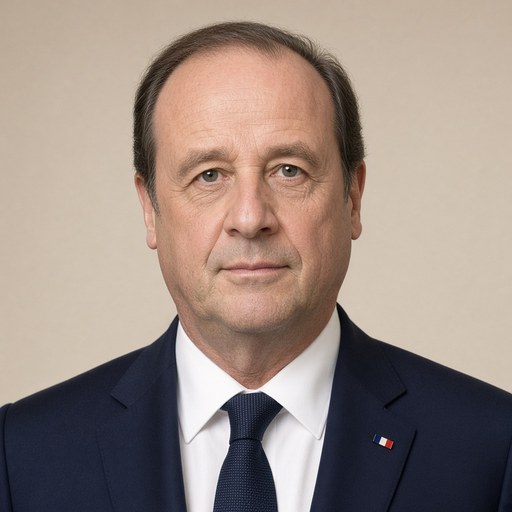
Press conference by Mr. François Hollande, President of the Republic, on the European Union investment plan and the situation in Ukraine, in Brussels on December 18, 2014.
 François Hollande · President of France
- Context
- Hollande addressed a Brussels press conference on December 18, 2014, following an exceptional European Council focused on the Juncker investment plan and EU taxation reforms.
- Main themes
- Juncker investment plan, European Council meeting, EU economic growth, private and public financing, stability pact flexibility, energy transition and digital infrastructure, EU taxation reform, tax ruling and optimization, automatic exchange of tax information, Franco-German cooperation, European Investment Bank, Ukraine situation
- Duration
- ~54 min
- Words
- 6,531
- Sentences
- 353
- Readability
- 60
- Grade
- 9.4
- Syntax
- 2.94
- Vocabulary
- 2.02
Translated from French
This is an interview, press conference or exchange with other speakers. It is split into sentences and counted in the corpus, but its sentences are not tagged on the twelve indices.
353 sentences in 100 paragraphs
Ladies and gentlemen,
This was an exceptional European Council, first of all exceptionally short, and secondly because it was the first time it was chaired by Donald TUSK with Jean-Claude JUNCKER as President of the Commission.
It was also exceptional because it was the adoption of a plan that France had long wished for and initiated. Because during the first European Council in June 2012, there had already been a first plan for growth, but this time, with the JUNCKER plan, we are on a different scale and with a different mechanism.
The scale is 315 billion euros over three years and with a mechanism that calls for not only public financing, as provided, but also private financing, since there will be funding coming from both lending institutions and the companies themselves.
Regarding the mechanism, it will allow the contributions from States that will be added to the fund to capitalize it further to be considered by the European Commission as not falling within the definition of the stability pact obligations. This will not prevent investments from being made by States or regions. For example, for France, there can be not only capital intervention for this European fund coming, for example, from the Caisse des dépôts, but also from the Public Investment Bank.
And then at the national level, there will be investments that can be perfectly defined and decided by the State but also by the regions within the framework, for example, of the State-region planning contracts that are currently being signed.
So we can see that there is a European plan that will be all the more important as it can be accompanied. In this sense, I have said, I emphasize the fact that there are contributions to the capital of this fund that can be evaluated by the European Commission outside the notions of the Stability Pact.
On the nature of the investments, we, France, had wished that they be future investments, those that we support at the national level: energy transition, digital technology, infrastructure, connectivity, training.
We will therefore be able to participate even more in this investment plan as we have already identified the projects that we will present in France. The European Commission has entrusted the European Investment Bank with the task of selecting the projects, and surely projects that have a European character and concern several countries will be looked at with interest and goodwill. And I met with the President of the Spanish Council of Ministers as well as the Prime Minister of Portugal, and there will surely be projects that we will present together, particularly those concerning electrical infrastructure. Similarly, with the Chancellor, we have already identified the projects that France and Germany can present together.
Finally, the European Council also had this same approach, so that the JUNCKER plan can be engaged quickly. There are legal procedures that are necessary since the European Parliament will have to give its opinion. And it will therefore be in the first half, at the end of the first half of next year that the JUNCKER plan will truly have the legal form allowing it to be fully mobilized. But I consider that June 2015 is still late. And so a pre-financing has been made available for the projects that will be presented, so that very early in January, in February, the European Investment Bank can ensure the advance of a number of selected projects. There is therefore no time lost.
I also want to mention a second topic that was addressed in this Council, which is that of taxation.
You know that there have already been significant advances made in recent months at the initiative of France, Germany, the United Kingdom, ultimately of practically all countries, even convincing those who were the most reluctant perhaps also because they had the most interests.
So, the first step was the automatic exchange of information. You have already seen the consequences that this has had in terms of tax revenue for France through compatriots who came to settle a number of oversights, or funds placed abroad that have been repatriated. So, this is the automatic exchange of information, and also the lifting of banking secrecy, which is a powerful stimulus to clarify a number of operations and to put a number of situations in order. There is also the fight against tax havens that has been initiated.
And today, it was what is called tax optimization. There are practices that lead States and companies to propose advantageous tax formulas. This is the tax ruling, to stay within the vocabulary used for these procedures. In French, we call this the rescrit fiscal, not sure that it is much clearer for those who hear us, but at least it is in French. This means that all operations that were decided in advance to set a particularly favorable rate can no longer be implemented by the States that practiced this kind of facilitation. This is another important step in the fight against tax evasion that has just been decided.
This is what has been the meaning of what we have decided today. We did not take much time to decide because there was already a broad consensus that presided over the preparation of the JUNCKER plan, and thus its adoption. And what I want to highlight this evening is that this JUNCKER plan can have a much greater effect than one might imagine. For two reasons. The first is the confidence it can inspire. Europe is aware that it is necessary to support demand, to support investments, to provoke a movement so that future investments can be decided in a timely manner. And then there is a second effect, which is that 315 billion is a base that can itself lead to other co-financing being added. That is why we cannot truly know what the actual scale of this JUNCKER plan will be. Some have doubted that with 20-25 billion euros of public financing, it would be possible to reach 315 billion in investments. We can clearly see that the game of guarantees, the game of co-financing, the way to associate other funding, all of this can have a snowball effect.
The second major topic is Ukraine. We discussed it during the dinner that followed the European Council.
There was a broad convergence to first help Ukraine given the humanitarian situation that has once again been described as particularly dramatic throughout Ukraine. And that there is a need to provide as quickly as possible all means of support to the population, and to facilitate the delivery of this EU aid to Ukraine. This has not been possible in recent weeks.
There is also the political question, that is to say the implementation of the Minsk agreement. All Europeans feel committed to the Minsk agreement, more precisely to the respect of the Minsk agreement, since they are not signatories.
It is the Ukrainians who wanted this agreement and who must implement it, particularly on the side of the separatists. And so on the Russian side, this obligation is placed on them to move towards not only a ceasefire but the withdrawal of weapons, the withdrawal of troops, the release of prisoners, the respect of the demarcation line and also of the borders.
And so there was no decision to raise the level of sanctions since there is currently a process that is once again underway. The ceasefire is being respected or more precisely, there have been no deaths since it was proclaimed again. But we are still far from it; there needs to be new progress, particularly for the release of prisoners, for the respect of the demarcation line, and the withdrawal of weapons.
A few days ago, I had a discussion with Ms. MERKEL in what is called the Normandy format, with President POROSHENKO and President PUTIN. We will have to verify that what we established during this discussion can be applied as of Sunday or Monday, with the possibility of the contact group.
Throughout the coming days, we will have to look very closely at whether the Minsk agreement is being applied in all its dimensions. In March next year, there will be a European Council that will evaluate the situation. And it is possible that before this date, there will be progress; we demand it.
So there have been no new sanctions since we are in this process, and if there is to be a relaxation of sanctions, it will be based on the progress that has been observed.
I want to conclude on the economic question, which is serious. What is happening throughout the region. First in Ukraine, where it is very difficult for the Ukrainian government, for President POROSHENKO to revive the Ukrainian economy. Hence the challenge of the support that Europe must provide through the association agreement, but also through a number of decisions regarding the supply to Ukraine.
There is also the question of the Russian economy, which is surely experiencing a difficult and delicate situation due to sanctions, as well as the drop in oil prices. Russia must understand well that we all have an interest, Russians, Ukrainians, Europeans, and more broadly the global economy, in having an exit from the crisis. This is what we are working towards, and you know that I have been involved in this with Ms. MERKEL for several months and even in recent hours, I will surely have the opportunity to do so again in the coming days. The end of the year is an important moment since we must try to achieve as much progress as possible before it ends.
Questions/answers:
- Yes, Mr. President, good evening. Pascal VERDEAU, France3. On Russia, I have the impression that this is the first time we hear you use the expression "exit from the crisis." Earlier, Ms. MOGHERINI was calling for a radical change in behavior on the part of President PUTIN. Following the bilateral meeting you had, do you consider that President Putin is ready to change his behavior? In other words, is he ready to ease off in this strategy of tension in Ukraine, or does he want to maintain the conflict at a low simmer?
We will see the outcome in a few days. What we have already been able to observe, including with the visit I made to Moscow and the Normandy format meeting we had with Ms. MERKEL, President POROSHENKO, and President PUTIN, we have already had a number of beginnings: the ceasefire, which is being respected. The willingness to move towards a withdrawal of arms. A pressure that President PUTIN says he is exerting for the separatists to release prisoners. Finally, the implementation of the Minsk agreement in all its dimensions. So we will have the opportunity to verify this. And I prefer to place myself, given these first steps which are still insufficient but exist, I prefer to place myself in the hypothesis of an exit from the crisis.
If there were an exit from the crisis, we would have to observe it—but we must go to the end of the Minsk Protocol. The Minsk Protocol states that there must be local elections that allow for decentralization within the framework of the integrity of Ukraine.
So there are still several steps before we can definitively set our point of view, but I have noted the beginning of the emergence of a process, and that France's role is to promote it.
What we have decided as Europeans, all in solidarity, is to be firm on this process so that it succeeds, and at the same time open so that there can be a possible exit from the crisis. And on this, there is total unity among Europeans.
I also note that the United States at this moment have not taken any positions other than these. No other sanctions. And let’s see if this process that is beginning to emerge can lead to results, with the possibility of a gradual lifting of sanctions, if of course progress is observed.
- To stay on Russia, I want to ask you how concerned you are about the economic situation. Do you think this could be dangerous, for example, for Europe? And my second question, still on the economic situation in Russia: have we ultimately gone too far with Western sanctions, because we can see, of course, there is also the price of oil—that ultimately the effects may be stronger than what was expected?
When the decision was made to impose sanctions, it was indeed so that they would have consequences. Because otherwise, they should not have been taken. You remember what the form of Russian intervention was. That is to say, notably Crimea, and then the presence of armaments, to say the least, including in the eastern regions. So these sanctions were necessary. They have produced their effects. And I had also specified that when sanctions are decided, they have consequences for the countries that are targeted, in this case Russia, but also for the countries that decide on these sanctions, which has indeed happened.
Afterwards, there is the drop in oil prices which obeys multiple logics, which cannot be reduced to the Ukrainian or Russian question. But today there is an imbalance between supply and demand, and surely an update of an oil reserve that justifies the drop in oil prices. This has consequences for the economies of producing countries. Russia is one of them. It also has consequences for the United States, in a different way, particularly for the investments that could be made in what is called shale gas.
For Europe, I must say - at least for France - this is not a bad situation. If I look at it from the strict perspective of France, the drop in oil prices has a favorable economic effect, both for supply and for demand. Both for competitiveness and for purchasing power. So I will not lament the drop in oil prices. And the French are the first to be able to benefit from it, to some extent, since the price of oil only accounts for 30% of the price of fuels.
This has consequences for the Russian economy, especially the drop in the ruble, we must be careful, and ensure that the Russians, within the framework of a political process in Ukraine, do not expose themselves further. And that is why I say that an exit from the crisis in Ukraine would be good news for the entire economy of the region and for the European economy.
- Mr. President, two questions to stay on Russia and Ukraine. Does the fact that the Russian sailors who were training on the Mistral-type BPC ship have left Saint-Nazaire mean that this contract is definitively abandoned? And secondly, regarding the JUNCKER plan, you talk about the 315 billion euros and you have indeed mentioned the questions that can be raised from the 8 and 21 billion euros, which should, through leverage, lead to these 315 billion. Do you think there can be any doubt about this figure of 315 billion that some even wish to exceed, or do you feel today that these 315 billion, whatever happens, will be reached?
First question: the Russian sailors left Saint-Nazaire without the Mistral. They were not going to stay and wait for the coming days, since we are in a hypothesis that I have recalled several times: for now, there is not enough progress for there to be, from France's perspective, the delivery of these Mistrals. There you go, there is nothing more to say. I hope that the process can, as I said, find its conclusion. That the Minsk protocol can be applied. At that moment, there will be the resolution of the contract. If that were not the case, we would have to draw a number of consequences from it.
On the second question you asked me, is there not ultimately a form of inflation - forgive me the expression - through the JUNCKER plan? We put billions like that thinking it will make an impression.
What the specialists, and notably the EIB, argue is that it is rather a relatively reasonable leverage effect that has been used. It could, given the guarantees, given the capitalization of this Fund, be a leverage effect of 1 to 20. They limited it to 1 to 15. But it is up to us to ensure that the leverage effect is even greater. I said it: the contributions from states, or state-linked institutions that will be brought to the capital of the European Fund, can further amplify the investment. What each of the concerned states can also contribute can also amplify the plan. So I think it is a reasonable estimate.
Can we do more? Yes, we need to do more. But here too, let’s avoid proclaiming figures. Let’s ensure that we can have more support points, thus more capital in the Fund, to have more financing in the end.
What matters most, beyond the figure, which can be more or less contested, even if I believe it will be exceeded, what matters most is the speed with which the funds that have been released can be used.
If we wait 1 year, 1 year and a half, we may be in a different situation. It is now that this must be put in shape, therefore in the coming days, to be made available in the coming months. That is to say, we must not lose time.
This is perhaps the most important decision that has been made, even if it will not necessarily be highlighted, it is the aspect of pre-financing. That we can immediately present projects, have them accepted, have them financed and already engage them. These are often quite heavy investments, when we look at an infrastructure plan - I mentioned what we are going to do with the Spaniards, the Portuguese for electrical infrastructures. If we do not immediately engage the sums, they will not be spent before 18 months. It is therefore very important that we can, given the nature of the works, be quick.
There are, however, expenses that can be made immediately. I want to give a few examples. Energy savings in buildings can be spent very quickly. High-speed digital can also be done within the year. Or training, since training will be eligible in a number of specialties or qualifications.
So it is necessary not only that the sums are there, but that they are spent quickly, so that the effect on demand is as decisive as possible.
- Hervé ASQUIN from AFP, we are currently observing a sort of alignment of economic planets: the drop in rates, which are at rock bottom, the euro also declining, oil prices, and this evening INSEE reports a slight economic recovery, even if unemployment will continue to rise in the first half of 2015. Is this the long-awaited tremor? The one you have been waiting for, I believe, since May 2012?
In May 2012, it was very difficult to imagine that there could be a recovery in growth while there was a crisis in the eurozone that was not resolved with uncertainties even about the future of the eurozone. Remember what the summer of 2012 was like. It took the words and even the actions of the president of the ECB to avoid the worst. What we thought was that in 2014 there could be a stronger recovery, already anticipated in 2013. That did not happen. There was growth that was too weak, 0.4% in 2014.
Now, we do indeed have better situations. Why? First, because on the monetary front, the eurozone is solid. Interest rates, even for the peripheral countries, which were therefore the most threatened, have fallen considerably. The ECB has also provided liquidity to banks. Banks have seen their situation restored. The banking union has been established. Prudential rules, and even verification of the situation of banks have been put in place. This is therefore the first positive situation.
The second positive situation is that today there is a very low oil price, an exchange rate of the euro that has lost 10% against the dollar in the last 6 months. There are also interest rates for France that are now below 0.90. Which in a period where we need to borrow, borrow a lot, because we have to manage the debt from 2010, is what is at stake right now - we can borrow at particularly low rates, which also has interesting effects on the budgetary front.
The third positive situation is the JUNCKER plan, the investments that will be implemented, and in a global context that is still rather favorable to growth, particularly in the United States. Emerging countries are experiencing, of course, a slowdown, but in China, around 8% growth.
So what uncertainties remain? It is the political situation, which we have talked about, which is a real uncertainty, what you said about Russia. What is happening in the Middle East is an uncertainty, which can also have consequences on the price of oil.
In the face of these uncertainties, what do we need to do? Well manage the political problems. But as we also have competitiveness issues in France, we have taken measures. As we also have a number of growth levers to use, we have presented to Parliament the text "growth and activity". It is not because there are better indicators, that there are more positive signals, that we should renounce taking decisions in France.
What does INSEE tell us in its latest economic note? It tells us that there would surely be a growth carryover in the first half of next year. In simple terms, this would mean that we would have practically done two-thirds of the way to achieve 1% growth by the end of 2015. Well, that is quite close. A 6-month forecast can be seen as rather secure. This means that the 1% growth projected in our 2015 budget will likely be achieved. I won’t say more.
Is 1% growth enough to reduce unemployment? No, because in France the active population is increasing, unlike what is happening in Germany or in many countries where demographics are very weak, or very little dynamic.
In France, we have a demographic situation that means we have about 150,000 newcomers to the labor market. We would need to achieve more than 1% growth. This is indeed what we have in perspective for 2016. But since we have a risk on growth regarding the objective of reducing unemployment, we must continue the policy of subsidized jobs, future jobs. We must continue to be even more competitive, hence the challenge of the responsibility pact, the competitiveness tax credit. We are obliged to do more in France because we need to have more growth.
But I do not complain about having this obligation. Because it is better to have a country that is experiencing an increase in its active population than the opposite. So even if this creates tension at the moment, and I measure it, with unemployment that for now is not decreasing, but increasing. We must ultimately achieve more growth than others. This is the objective that France must set for itself: to achieve more growth. Even more than others in the medium and long term. If we know how to use the JUNCKER plan well, to make the right investments, we will raise the level of our growth. If we know how to train our employees well, we will raise the level of growth. Hence the importance of the reforms we are undertaking.
There are currently negotiations between social partners on social dialogue, on employee representation. I spoke about the "activity and growth" law that will be debated. We need to put our country in motion even more to achieve even more growth.
I do not complain about these first signs that you have recalled, and about this growth forecast that leads us to think that at least we will be in line with what we said in the PLF and which had been somewhat doubted. There are always grumblers who say we will not reach 1% growth. I do not want to say more to avoid giving the impression of being overly optimistic. I want the French themselves to regain confidence. It is true that we are on track regarding our growth forecast for the year 2015.
Which, nonetheless, will also help us regarding budgetary issues. Because if we achieve 1% growth, it will be as much as we can realize to reduce the deficit.
- Regarding the JUNCKER plan, ultimately, perhaps the most important decision of the Council is that investment will not impact the Stability Pact? Did you have, particularly with Mrs. MERKEL, the discussion to further fund this plan? To say "we are really the Franco-German engine." Since there is no impact on the Stability Pact, why not say "let's put in 30 billion" since you talk about confidence? Investors are fleeing Europe because they do not have confidence. If you both had said "we are putting in 30 billion" it would have carried a bit more weight. Would a Franco-German gesture not have been interesting?
Investors are not leaving Europe. On the contrary, investors are present in Europe. But they are lending money for the coverage of sovereign bonds. That is not what we are looking for. We believe it is necessary for investors to come and invest for the creation of activities and jobs.
Second remark, could we have done more in terms of guarantees and equity for the Fund? I think we could certainly have done more. But this was not a question that concerned Germany and France. It concerned all European countries. However, we had already recapitalized the EIB. That was the first decision we made in June 2012. It is the EIB that allows us to have the equity that also enables us to invest. Everything that is in the form of guarantees is not new resources as such, but it allows the banking system or the financial system to contribute its own share, without risk since it is guaranteed. It is also the leverage effect.
What have we decided, and this is very important. I would like to be precise here as well to avoid fostering any illusions. What will be excluded from the Stability Pact is the decision of the European Commission, it is the contribution that a given State will make to the European Fund, known as the JUNCKER plan. The contribution from the State, either in the form of capital provided by the State itself, or capital provided by a public institution such as the Caisse des dépôts in France.
On the other hand, the investment, which can complement that of the European Fund—for example: we are building an infrastructure that costs 100. 60 are provided by the fund, 40 provided by the State or the region. That investment counts within the Stability Pact. It is therefore essential to clearly distinguish the contribution to the Fund from the investment that is added.
This is what we will do nonetheless. France, for example, will be able to contribute to the JUNCKER Fund either through the State itself or through the Caisse des dépôts. This will be deducted from the Stability Pact and will have a significant leverage effect for our own investments. We will still add the investments that will be in our public spending, thus within the Pact, but we will still make these investments. They are useful. These can be investments financed directly by the State, or by a local authority, or by the future investment plan, which also allows us to complement.
As for the leverage effect, you will see that it can be even more significant as private financing is added. The challenge is to be able to combine public financing and private financing. The 315 billion, if it is over 5 years, will have very little effect. If it is over 3 years, and committed right away, it can have an effect on growth as early as 2015 or 2016.
- We have heard you speak of this reorientation of Europe, which you wished for and promised during your presidential campaign. Are you not going a bit too fast? 315 billion is substantial, but in relation to the European economy, it is not that significant. On the other hand, budgetary discipline is maintained everywhere in Europe. Are you not announcing the reorientation a bit too quickly in a Europe that remains dominated by conservative governments?
I make the same observation. I cannot change them. French voters cannot decide for all European voters. But still: that governments—who, it is true, have different political sensitivities, but many of whom are liberal or conservative—have been able to decide on a plan, a demand stimulus plan!
That is what it is about, even if it involves investments—which themselves have a structural character, to promote sustainable growth—that there has been, on the part of the European Commission, even in recent weeks, but which has been true for a year now, the postponement of a number of disciplines, since we ourselves did not meet the 3% target by the scheduled date, I am not telling you anything new, and that other countries have had the same leniencies. There has also been an adaptation regarding what could be a policy of budgetary austerity.
And, thirdly, there has been an independent central bank. The ECB has made decisions that allow us to have particularly low interest rates. This is also an important point.
The reorientation of Europe, if I look at what the situation was in June 2012: it was austerity everywhere. These were particularly harsh plans, with particularly high interest rates and a willingness from Europe to not put anything more in place to support growth.
For the past two and a half years, there has been an investment plan, interest rates have fallen everywhere. The level of the euro has adjusted to a level more in line with the economic reality of Europe.
I could say an even more significant investment plan, but I could not say that I can hope for lower interest rates. We will quickly find a point of equilibrium.
So yes, Europe has been reoriented. It has been reoriented under our pressure, if we want to put things on our side, but that would be presumptuous. It has also been reoriented in light of the circumstances. Why? Because as soon as it ensured its financial stability, as soon as it realized that growth was not picking up as quickly as possible, or as hoped, and that there was even a risk that deficits would widen due to lack of growth, then Europe had to change.
- Philippe MORAND, TF1, you mentioned the "growth and activity" law presented by the Minister of Economy Emmanuel MACRON, and a debate has arisen on the left, particularly within the PS, regarding Sunday work.
Do you think there will be a strong majority to adopt this text in Parliament, and what impact do you expect this law to have on the French economy?
This bill has multiple aspects and is not limited to Sunday work.
If it were only about Sunday work, frankly, it would not be likely to stimulate employment and growth at the level we hope for. It is because this text includes many provisions on regulated professions, to allow for more openness. I believe the word that fits this law is openness. Openness of professions, openness of markets, for example, bus transport, openness of shops in certain circumstances, particularly in tourist areas. Openness so that employees can be more shareholders of their company. Openness to allow for more flexibility on a number of provisions concerning work or the company. That decisions made by the Labor Courts be quicker, which is good for employee protection and good for business visibility. That there be more rights for employees, for example, salary compensation where there is activity precisely at night or on Sundays. There are many provisions that will lead to growth and employment. And there have always been debates about Sunday work; I have always known them, and now I find that there is even a certain vision regarding tourist areas that is no longer debated.
What interests me is to know the position of the opposition. I do not hear them on this: on regulated professions, on employee savings, on competition for transport, on Sunday work. It is up to everyone to contribute to the debate. I think it is very important that we can show that this future law will be a law that will allow the country to move forward, while also providing additional rights.
You know, there is a principle that I have established, but it applies to other subjects: what are the best possible laws of freedoms? It is when additional rights are granted without taking away from others, as in this "activity and growth" law.
If we work a little more on Sundays for some, those who want to, in tourist areas for example, who does that take rights away from? No one! Since it will even allow for better compensation for the salaries of those who work at those hours. It takes nothing away from anyone. I find that it is a good example of what should be done.
- Good evening Mr. President, Hélène FOUQUET from Bloomberg news, two questions: you spoke about the role that France wants to play in this beginning of a way out of the crisis with Russia. Could you tell us concretely how you see this role? Who are your supporters among your European partners in this facilitator role with Russia? Separately, regarding Greece, can you talk about the concerns you have, that Germany has, and possibly those raised by Mr. SAMARAS regarding the likely early elections?
On Europe, it is unanimous in its position. The one expressed this evening: humanitarian and economic aid to Ukraine, and support for the process that allows for the implementation of the Protocol or the Minsk Agreement.
The High Representative, Ms. MOGHERINI, was in Kiev a few days ago and is playing her role. She is ensuring that there can be, on the part of the Ukrainians, since she was in Kiev, participation in this process, and as much as possible, to meet the conditions for aid to be provided to Ukraine.
There is the role that France, along with Germany, intends to play since that Normandy meeting. Thanks to Germany and France, and this has been perfectly understood by our partners, there have been advances. The best proof is that in Normandy, POROSHENKO and PUTIN spoke to each other for the first time, POROSHENKO having become President of Ukraine. This process was able to lead, by the way, to the Minsk Protocol.
Then it deteriorated since all the conditions that had been set by Minsk were not respected. It was at that moment that the sanctions were confirmed again.
In recent weeks, we have resumed the initiative. Why? Because, first, the two parties have talked a lot, POROSHENKO, PUTIN, and have resumed the Minsk process.
What do we expect from France and Germany? From France: I went to Moscow to verify that this process could indeed be engaged and that the ceasefire could be respected, it is there that President PUTIN was able to say that he recognized and respected the territorial integrity of Ukraine, which is a very important point for us.
In the coming days, I can confirm to you, we will continue to talk, with President PUTIN, President POROSHENKO, Angela MERKEL and myself, considering what will happen on Sunday or Monday, the meeting of the contact group.
We want to work and we want to move forward, and move quickly so that there can be further progress by the end of the year and more at the beginning of next year, to ensure that all the provisions of Minsk can be implemented.
That is the role of France. I think that in doing this, France and Germany, it was good that we were together, Angela Merkel and I. We have always worked together on this position regarding Ukraine and regarding Russia. In doing this, we first address the problem of Ukrainians who are suffering. Whether they are in the East or throughout Ukraine, they are suffering, and especially at this moment, hence the importance of humanitarian aid.
In doing this, we also help to resolve a serious political problem, which is the isolation of Russia and the situation it is going through. We also allow for more economic visibility, and from this point of view, I think it is work that is useful for peace and for Europe.
We sometimes wonder what the Franco-German couple is. Look at what it can also provide from this perspective. We have been able to advance even though we have different sensitivities; that has not changed, Ms. MERKEL and I have been able to advance for two and a half years on banking union and on the stability of the eurozone, and even still today on the JUNCKER Plan. We can also work together on issues concerning the security of Europe. We do this in good intelligence with all European countries, and that was the case this evening.
So, it was an exceptional European Council.
Regarding Greece, we come back to the beginning ultimately: is there not a risk, with Greece? That things become complicated again? There is a political problem in Greece; they must elect a President of the Republic, and they must do so with a qualified majority. If they do not succeed by the end of the year, there will be early legislative elections, and the Greek people will be called to express their opinion.
It is not for me to decide in place of the Greeks, nor in place of the parliamentarians. It is the Greek people, if consulted, during these elections, who will have to say with which government and with which minister they want to work.
On the aid plan for Greece, you have seen that it has been extended. I am working with Ms. MERKEL to ensure that the IMF and the ECB do not complicate matters too much in Greece, and ensure that they respond to the conditions that have been set, and to ensure that the Greeks can also have hope. If we want to avoid a number of votes, it is not by stigmatizing, it is by giving hope, while making the necessary reforms.
That is what I can say about Greece. But even if there could be uncertainty, there is nothing comparable to what it was two and a half years ago. First, because Greece has undergone a policy—but it has also had results—the situation in Greece is not at all the same today as it was two and a half years ago. And I think that two and a half years ago, there were those who were questioning whether Greece should be removed from the eurozone. Today, no one is talking about removing Greece from the eurozone.
The original French. The tags above are read on the English translation's sentences.
Mesdames, messieurs,
C'était un Conseil européen exceptionnel, d'abord exceptionnellement court, ensuite parce que c'était la première fois qu'il était présidé par Donald TUSK avec Jean-Claude JUNCKER comme Président de la Commission.
Exceptionnel aussi parce que c'était l'adoption d'un plan que la France avait souhaité, depuis longtemps, que la France avait initié. Parce que lors du premier Conseil européen de juin 2012, il y avait déjà eu un premier plan pour la croissance, mais cette fois-ci, avec le plan JUNCKER, on est sur une autre ampleur et avec un autre mécanisme.
L'ampleur, c'est 315 milliards d'euros sur trois ans et avec un mécanisme qui appelle non seulement un financement public, tel qu'il est prévu, mais aussi un financement privé, puisqu'il y aura des financements qui viendront aussi bien d'institutions de prêts que d'entreprises elles-mêmes.
Sur le mécanisme, il permettra que les contributions des Etats qui viendront s'ajouter au fonds pour le capitaliser davantage puissent être regardées par la Commission européenne comme ne rentrant pas dans la définition des obligations du pacte de stabilité. Ce qui n'empêchera pas non plus qu'il y ait des investissements qui soient apportés par les Etats ou les régions. Par exemple, pour la France, il peut y avoir non seulement intervention en capital pour ce fonds européen venant par exemple de la Caisse des dépôts, pour ce qui nous concerne aussi de la Banque Publique d'Investissement.
Et puis il y aura au niveau national, des investissements qui peuvent être parfaitement définis et décidés par l'Etat mais aussi par les régions dans le cadre par exemple des contrats de plan Etat-régions qui sont en ce moment signés.
Donc on voit bien qu'il y a un plan européen qui sera d'autant plus important qu'il pourra être accompagné. En ce sens, je l'ai dit, je souligne le fait qu'il y ait des contributions au capital de ce fonds qui pourront être évaluées par la Commission européenne hors des notions de Pacte de stabilité.
Sur la nature des investissements, nous avions, nous-mêmes, la France, souhaité que ce soit les investissements d'avenir, ceux-là même que nous soutenons au niveau national : la transition énergétique, le numérique, les infrastructures, la connectique, la formation.
Nous pourrons donc d'autant plus participer à ce plan d'investissement que nous avons déjà, nous, en France, identifié les projets que nous allons présenter. La Commission européenne a confié à la Banque européenne d'Investissement le soin de sélectionner les projets et sûrement que des projets qui ont un caractère européen et qui concernent plusieurs pays seront regardés avec intérêt et bienveillance. Et j'ai rencontré le Président du Conseil des ministres espagnol ainsi que le Premier ministre portugais, et il y aura sûrement des projets que nous allons présenter ensemble et notamment qui intéressent les infrastructures électriques. De la même manière, avec la Chancelière, nous avons déjà identifié les projets que la France et l'Allemagne pourront présenter ensemble.
Enfin, le Conseil européen a également eu cette même approche, pour que le plan JUNCKER, puisse être engagé rapidement. Il y a des procédures juridiques qui sont nécessaires puisque le Parlement européen aura à se prononcer. Et ce sera donc au premier semestre, à la fin du premier semestre de l'année prochaine que véritablement le plan JUNCKER aura la forme juridique permettant d'être pleinement mobilisé. Mais je considère que juin 2015, c'est encore tard. Et donc un préfinancement a été mis à la disposition des projets qui seront présentés, de manière à ce que très tôt en janvier, en février, la Banque européenne d'investissement puisse assurer l'avance d'un certain nombre de projets qui ont été retenus. Il n'y a donc aucune perte de temps.
Je veux également évoquer un deuxième sujet qui a été traité dans ce Conseil, c'est celui de la fiscalité.
Vous savez qu'il y a déjà eu de grands progrès qui ont été faits ces derniers mois à l'initiative de la France, de l'Allemagne, du Royaume-Uni, finalement de pratiquement de tous les pays, jusqu'à convaincre ceux qui étaient les plus réticents peut-être aussi parce qu'ils y avaient le plus d'intérêts.
Donc, la première étape était l'échange automatique d'informations. Vous avez vu déjà les conséquences que cela a pu avoir en termes de rentrée fiscale pour la France à travers des compatriotes qui sont venus régler un certain nombre d'oublis, ou de mises de fonds à l'étranger qui ont été rapatriées. Donc, ça c'est l'échange automatique d'informations, et aussi la levée du secret bancaire qui est un puissant stimulant pour aller vers la clarification d'un certain nombre d'opérations et la remise en ordre d'un certain nombre de situations. Il y a aussi la lutte contre les paradis fiscaux qui a été engagée.
Et aujourd'hui, c'était ce que l'on appelle l'optimisation fiscale. Il y a des pratiques qui conduisent les Etats avec les entreprises à proposer des formules fiscales avantageuses. C'est le tax ruling, pour rester dans le vocabulaire utilisé pour ces procédures. En français, on appelle cela le rescrit fiscal, pas sûr que cela soit beaucoup plus clair pour ceux qui nous entendent, mais au moins c'est du français. Cela veut dire que toutes les opérations qui étaient décidées à l'avance pour fixer un taux particulièrement favorable ne pourront plus être mises en uvre par les Etats qui pratiquaient ce genre de facilités. C'est une étape encore importante pour la lutte contre l'évasion fiscale qui vient d'être décidée.
Voilà ce qui a été le sens de ce que nous avons aujourd'hui décidé. Nous n'avons pas mis beaucoup de temps pour le décider parce qu'il y avait déjà un large consensus qui avait présidé la préparation du plan JUNCKER, et donc son adoption. Et ce que je veux mettre en avant ce soir, c'est que ce plan JUNCKER peut avoir un effet beaucoup plus grand que l'on imagine. Pour deux raisons. La première, c'est la confiance qu'il peut susciter. L'Europe a conscience qu'il convient de soutenir la demande, de soutenir les investissements, de provoquer une mise en mouvement pour que les investissements d'avenir puissent être décidés dans un délai rapide. Et puis il y a un deuxième effet, c'est que 315 milliards, c'est une base qui elle-même peut aboutir à ce que d'autres cofinancements soient ajoutés. C'est pour cela qu'on ne peut pas connaître véritablement ce que sera l'ampleur même de ce plan JUNCKER. Certains ont mis en doute le fait qu'avec 20-25 milliards d'euros de financements publics, il soit possible d'arriver à 315 milliards d'investissements. On voit bien que le jeu des garanties, le jeu des cofinancements, la manière d'associer d'autres financements, tout cela peut avoir un effet boule de neige.
Le second grand sujet, c'est l'Ukraine. Nous en avons parlé au cours du dîner qui a suivi le Conseil européen.
Il y a eu une large convergence pour d'abord aider l'Ukraine compte tenu de la situation humanitaire qui a été une fois encore décrite comme particulièrement dramatique dans toute l'Ukraine. Et qu'il y a notamment nécessité à apporter le plus vite possible tous les moyens de soutien à la population, et de favoriser l'acheminement de cette aide de l'UE vers l'Ukraine. Ce qui n'a pas été possible ces dernières semaines.
Il y a également la question politique, c'est-à-dire l'application de l'accord de Minsk. Tous les Européens se sentent engagés par l'accord de Minsk, plus exactement par le respect de l'accord de Minsk, puisqu'ils ne sont pas signataires.
Ce sont les Ukrainiens qui ont voulu cet accord et qui doivent le mettre en uvre et notamment du côté des séparatistes. Et donc du côté des Russes, cette obligation qui leur est faite d'aller vers non seulement le cessez-le-feu, mais le retrait des armes, le retrait des troupes, la libération de prisonniers, le respect de la ligne de démarcation et également des frontières.
Et donc il n'y a pas eu de décision d'élever le niveau de sanctions puisqu'il y a en ce moment même un processus qui est de nouveau engagé. Le cessez-le-feu est respecté ou plus exactement, il n'y a pas eu de décès depuis qu'il a été de nouveau proclamé. Mais nous sommes encore loin, il faut qu'il y ait de nouveaux progrès, notamment pour la libération de prisonniers, pour le respect de la ligne de démarcation, et le retrait des armes.
J'ai eu il y a quelques jours avec Mme MERKEL une discussion dans ce qu'on appelle le format Normandie, avec le Président POROCHENKO et le Président POUTINE. Nous aurons à vérifier que ce que nous avons établi lors de cette discussion puisse être appliqué dès dimanche, ou lundi, avec la possibilité du groupe de contact.
Tout au long des prochains jours, nous aurons à regarder très précisément si l'accord de Minsk s'applique dans toutes ses dimensions. Au mois de mars prochain, il y aura un Conseil européen qui fera l'évaluation de la situation. Et il est possible qu'avant cette date, il y ait des progrès, nous les exigeons.
Donc il n'y a pas eu de sanction nouvelle puisque nous sommes dans ce processus, et s'il doit y avoir un allègement des sanctions, ce sera en fonction des progrès qui auront été constatés.
Je veux terminer sur la question économique, qui est sérieuse. Ce qui se produit dans toute la région. D'abord en Ukraine, où il est très difficile pour le Gouvernement ukrainien, pour le président POROCHENKO de redresser l'économie ukrainienne. D'où l'enjeu du soutien que l'Europe doit apporter à travers l'accord d'association, mais aussi à travers un certain nombre de décisions concernant l'approvisionnement de l'Ukraine.
Il y a aussi la question de l'économie russe qui connait sûrement à cause des sanctions, à cause aussi de la chute du prix du pétrole, une situation difficile, délicate. La Russie doit bien comprendre que nous avons tous intérêt, Russes, Ukrainiens, Européens et plus largement l'économie mondiale, d'avoir une sortie de crise. C'est ce à quoi nous travaillons, et vous savez que je m'y implique avec Mme MERKEL depuis plusieurs mois et encore ces dernières heures, j'aurais surement l'occasion de le faire encore dans les prochains jours. La fin de l'année étant un moment important puisqu'il faut essayer d'avoir le plus grand progrès possible avant qu'elle ne se termine.
Questions/réponses :
- Oui, Monsieur le Président, bonsoir. Pascal VERDEAU, France3. Sur la Russie, j'ai l'impression que c'est la première fois qu'on vous entend employer l'expression « sortie de crise ». Tout à l'heure Mme MOGHERINI demandait un changement radical de comportement de la part du Président POUTINE. Est-ce que suite à l'entretien bilatéral que vous avez pu avoir, vous considérez que le Président Poutine est prêt à changer de comportement. En d'autres termes, est ce qu'il est prêt à lever le pied dans cette stratégie de la tension en Ukraine, ou est ce qu'il veut maintenir le conflit à petit feu ?
Nous aurons le constat dans quelques jours. Ce que nous avons pu déjà y compris avec la visite que j'ai faite à Moscou et l'entretien format Normandie que nous avons eu avec Mme MERKEL et le Président POROCHENKO, et le Président POUTINE- nous avons eu déjà un certain nombre d'amorces : le cessez le feu, qui est respecté. La volonté d'aller vers un retrait des armements. Une pression que le Président POUTINE dit exercer pour que les séparatistes libèrent les prisonniers. Enfin l'application de l'accord de Minsk dans toutes ses dimensions. Donc nous aurons l'occasion de le vérifier. Et je préfère me placer, compte tenu de ces premiers pas qui sont encore insuffisants mais qui existent, je préfère me placer dans l'hypothèse d'une sortie de crise.
S'il y avait sortie de crise nous aurons à la constater- mais il faut aller jusqu'au bout du Protocole de Minsk. Le Protocole de Minsk dit qu'il faut qu'il y ait des élections locales, qui puissent permettre une décentralisation dans le cadre de l'intégrité de l'Ukraine.
Donc il reste encore plusieurs étapes avant de fixer définitivement notre point de vue, mais j'ai noté le début de l'amorce d'un processus, et que le rôle de la France, c'est de le favoriser.
Ce que nous avons décidé en tant qu'Européens, tous solidaires, c'est d'être fermes sur ce processus pour qu'il aboutisse, et en même temps ouverts pour qu'il puisse y avoir une éventuelle sortie de crise. Et là-dessus il y a une unité totale des Européens.
Je remarque d'ailleurs que les Etats-Unis en ce moment n'ont pas pris d'autres positions que celles-là. Pas d'autres sanctions. Et regardez si ce processus qui commence à s'amorcer peut aboutir, avec à ce moment-là la levée progressive des sanctions, si bien sûr il y a des progrès qui sont constatés.
- Pour rester sur la Russie, j'ai envie de vous demander jusqu'à quel point la situation économique vous inquiète. Est-ce que vous pensez que cela peut être dangereux par exemple pour l'Europe ? Et ma deuxième question, toujours sur la situation économique en Russie : est-ce que finalement avec les sanctions occidentales nous n'avons pas été trop loin, parce qu'on voit bien sûr il y a aussi le prix du pétrole- que finalement les effets sont peut-être plus forts que ce qui était escompté ?
Quand il y a eu cette décision de prendre des sanctions, c'est bien pour que ça ait des conséquences. Parce que sinon il ne fallait pas en prendre. Vous vous souvenez de ce qu'avait été la forme d'intervention russe. C'est à dire notamment la Crimée, puis ensuite la présence d'armements, pour ne pas dire davantage, y compris dans les régions de l'Est. Donc ces sanctions étaient nécessaires. Elles ont produit leurs effets. Et j'avais d'ailleurs précisé que lorsque des sanctions sont décidées, ça a des conséquences sur les pays qui sont visés, en l'occurrence la Russie, mais aussi sur les pays qui décident de ces sanctions ce qui s'est produit.
Après, il y a la baisse du prix du pétrole qui obéit à des logiques multiples, qui ne se réduisent pas à la question ukrainienne, ou russe. Mais il y a aujourd'hui un déséquilibre entre l'offre et la demande, et sûrement une mise à jour d'une réserve pétrolière qui justifie qu'il y ait eu une baisse du prix du pétrole. Cela a des conséquences sur l'économie des pays producteurs. La Russie en est un. Cela a des conséquences aussi sur les Etats-Unis, d'une autre façon, notamment pour les investissements qui pouvaient se faire dans ce qu'on appelle les gaz de schiste.
Pour l'Europe, je dois dire -en tout cas pour la France-, ce n'est pas une mauvaise situation. Si je regarde le point de vue strict de la France, la baisse du prix du pétrole a un effet économique favorable, aussi bien pour l'offre que pour la demande. Aussi bien pour la compétitivité que pour le pouvoir d'achat. Donc là-dessus je ne vais pas me désoler de la baisse du prix du pétrole. Et les Français sont les premiers à pouvoir, pour une part, en bénéficier, puisque le prix du pétrole ne compte que pour 30% dans le prix des carburants.
Cela a des conséquences sur l'économie russe, la baisse surtout du rouble, il faut faire attention, et faire en sorte que les Russes puissent dans le cadre d'un processus politique en Ukraine, ne pas s'exposer davantage. Et c'est pourquoi je dis que la sortie de crise en Ukraine serait une bonne nouvelle pour l'ensemble de l'économie de la région et pour l'économie européenne.
- M. le Président, deux questions pour rester sur la Russie et l'Ukraine. Est-ce que le fait que les marins russes qui s'entrainaient sur le navire BPC de type Mistral aient quitté Saint-Nazaire veut dire que ce contrat est définitivement abandonné ? Et deuxièmement, concernant le plan JUNCKER, vous parlez des 315 milliards d'euros et vous avez évoqué effectivement les questions qu'on peut se poser à partir des 8 et des 21 milliards d'euros, qui doivent, par effet de levier, aboutir à ces 315 milliards. Est-ce que selon vous il peut y avoir un doute sur ce chiffre de 315 milliards que certains souhaitent même dépasser, ou est-ce que vous avez le sentiment aujourd'hui que ces 315 milliards, quoi qu'il arrive, seront atteints ?
Première question : les marins russes ont quitté Saint-Nazaire sans le Mistral. Ils n'allaient pas rester encore à attendre pour les prochains jours, puisque nous sommes dans une hypothèse que j'ai plusieurs fois rappelée : pour l'instant il n'y a pas de progrès suffisant pour qu'il puisse y avoir, du point de vue de la France, la livraison de ces Mistrals. Voilà, il n'y a rien à dire de plus. Je souhaite que le processus puisse comme je l'ai dit trouver son aboutissement. Que le protocole de Minsk puisse être appliqué. A ce moment-là il y aura le dénouement du contrat. Si tel n'était pas le cas, nous aurions à en tirer un certain nombre de conséquences.
Sur la seconde question que vous me posez, est qu'il n'y a pas finalement une forme de gonflette pardonnez-moi l'expression- à travers le plan JUNCKER ? On met comme ça des milliards en pensant que cela va faire impression.
Ce que les spécialistes, et notamment la BEI, font valoir, c'est que c'est plutôt un effet de levier relativement raisonnable qui a été utilisé. Cela pouvait, compte tenu des garanties, compte tenu de la capitalisation de ce Fonds, être un effet de levier de 1 à 20. Ils l'ont limité de 1 à 15. Mais il ne tient qu'à nous que l'effet de levier soit encore plus important. Je l'ai dit : les contributions des Etats, ou des institutions liées à l'Etat qui vont être apportées au capital du Fonds européen, cela peut encore davantage amplifier l'investissement. Ce que pourront apporter également chacun des Etats concernés pourra également amplifier le plan. Je pense donc que c'est une estimation raisonnable.
Est-ce que nous pourrons faire plus ? Oui, il nous faut faire plus. Mais là aussi évitons de proclamer des chiffres. Faisons en sorte que nous puissions avoir plus de points d'appui, donc plus de capitaux dans le Fonds, pour avoir plus de financements à la fin.
Ce qui compte le plus, au-delà du chiffre, qui peut être plus ou moins contesté, même si je crois qu'il sera dépassé, ce qui compte le plus, c'est la rapidité avec laquelle les fonds qui ont été dégagés pourront être utilisés.
Si on attend 1 an, 1 an et demi, on sera peut-être dans une autre conjoncture. C'est maintenant que cela doit être mis en forme, donc dans les prochains jours, pour être mis à disposition dans les prochains mois. C'est à dire qu'il ne faut pas perdre de temps.
C'est peut-être la décision la plus importante qui a été prise, même si cela ne sera pas forcément souligné, c'est l'aspect du pré-financement. Qu'on puisse tout de suite présenter des projets, les faire accepter, les faire financer et déjà les engager. Ce sont souvent des investissements assez lourds, quand on regarde un plan d'infrastructure -j'évoquais ce qu'on va faire avec les Espagnols, les Portugais pour des infrastructures électriques. Si on n'engage pas tout de suite les sommes, elles ne sont pas dépensées avant 18 mois. C'est donc très important que l'on puisse, compte tenu de la nature des travaux, être rapide.
Il y a en revanche des dépenses qui peuvent être effectuées tout de suite. Je veux donner quelques exemples. Les économies d'énergie dans les immeubles, cela peut être dépensé très rapidement. Le numérique très haut débit, cela peut être fait également dans l'année. Ou encore la formation, puisque la formation pourra être éligible dans un certain nombre de spécialités ou de qualifications.
Il faut donc non seulement que les sommes soient là, mais qu'elles soient dépensées rapidement, pour que l'effet sur la demande soit le plus déterminant possible.
- Hervé ASQUIN de l'AFP, on observe en ce moment une sorte d'alignement des planètes économiques : la baisse des taux, qui sont au plancher, l'euro également en baisse, les prix du pétrole, et ce soir-même l'INSEE signale une légère reprise économique, même si le chômage va continuer de croître au premier semestre 2015. Est-ce que c'est le frémissement tant attendu ? Celui que vous attendez même je crois, depuis mai 2012 ?
En mai 2012, c'était très difficile d'imaginer qu'il puisse y avoir une reprise de la croissance alors qu'il y avait une crise de la zone euro qui n'était pas réglée avec des incertitudes même sur l'avenir de la zone euro. Rappelez-vous ce qu'était l'été 2012. Il a fallu les paroles et même les actes du président de la BCE pour que l'on puisse éviter le pire. Ce qu'on avait pensé, c'est qu'en 2014 il puisse y avoir une reprise plus forte, et déjà anticipée en 2013. Cela ne s'est pas produit. Il y a eu une croissance qui a été trop faible, 0,4% en 2014.
Là, nous avons effectivement des situations meilleures. Pourquoi ? D'abord, parce que sur le plan monétaire, la zone euro est solide. Les taux d'intérêt, même pour les pays qui étaient périphériques, qui étaient donc les plus menacés, ont considérablement baissé. La BCE a apporté aussi des liquidités aux banques. Les banques ont vu leur situation rétablie. L'union bancaire a été instaurée. Des règles de prudence, et même de vérification de la situation des banques ont été mises en place. C'est donc la première situation positive.
Deuxième situation positive, il y a aujourd'hui un prix du pétrole très bas, un cours de l'euro qui a perdu 10% par rapport au dollar ces 6 derniers mois. Il y a aussi des taux d'intérêt pour la France qui maintenant sont au-dessous de 0,90. Ce qui dans une période où il nous faut emprunter, emprunter beaucoup, parce que nous avons à faire la gestion de la dette de 2010 c'est ce qui est en cause en ce moment- nous pouvons emprunter à des taux particulièrement bas, ce qui a aussi des effets intéressants sur le plan budgétaire.
Troisième situation positive, le plan JUNCKER, les investissements qui vont se mettre en uvre, et dans un contexte mondial qui est quand même plutôt à la croissance, notamment aux Etats-Unis. Les pays émergents connaissent, certes, un ralentissement, mais en Chine, autour de 8% de croissance.
Alors que reste-t-il comme incertitudes ? C'est la situation politique, dont nous avons parlé, qui est une vraie incertitude, ce que vous avez dit sur la Russie. Ce qui se passe au Moyen Orient est une incertitude, qui peut d'ailleurs avoir des conséquences sur le prix du pétrole.
Face à ces incertitudes, qu'est-ce qu'il nous faut faire ? Bien régler les problèmes politiques. Mais comme nous avons aussi en France des problèmes de compétitivité, nous avons pris des mesures. Comme nous avons aussi un certain nombre de leviers de croissance à utiliser, nous avons présenté au Parlement le texte « croissance et activité ». Ce n'est pas parce qu'il y a des indicateurs qui sont meilleurs, qu'il y a des signaux plus positifs, que nous devrions renoncer nous-mêmes à prendre des décisions en France.
Que nous dit l'INSEE dans sa dernière note de conjoncture ? Elle nous dit qu'il y aurait sûrement un acquis de croissance au 1er semestre de l'année prochaine. En langage simple, cela voudrait dire que l'on aurait fait pratiquement les deux tiers du chemin pour avoir 1% de croissance à la fin 2015. Bon, c'est assez proche. Une prévision à 6 mois, on peut la regarder comme plutôt sûre. Cela veut dire que le 1% de croissance prévu dans notre budget de 2015 sera sans doute atteint. Je n'en dis pas plus.
Est-ce que 1% de croissance suffit à réduire le chômage ? Non, parce qu'en France la population active augmente, à la différence de ce qui se passe en Allemagne ou dans beaucoup de pays ou la démographie est très affaiblie, ou très peu dynamique.
En France, nous avons une démographie qui fait que nous avons à peu près 150 000 nouveaux arrivants sur le marché du travail. Il faudrait faire plus que 1% de croissance. C'est d'ailleurs ce que nous avons en perspective pour 2016. Mais puisque nous avons un risque sur la croissance par rapport à l'objectif de diminution du chômage, il faut continuer la politique des emplois aidés, des emplois d'avenir. Il faut continuer à être encore plus compétitifs, d'où l'enjeu du pacte de responsabilité, du crédit-impôt compétitivité. Nous sommes obligés d'en faire davantage en France parce que nous devons avoir davantage de croissance.
Mais, je ne me plains pas qu'on ait cette obligation. Parce que mieux vaut un pays qui connaît une progression de sa population active que l'inverse. Alors même si cela fait une tension en ce moment, et je la mesure, avec un chômage qui pour l'instant ne baisse pas, mais augmente. Nous devons faire finalement plus de croissance que les autres. C'est l'objectif que la France doit s'assigner : faire plus de croissance. Encore plus que les autres à moyen et long terme. Si nous savons bien utiliser le plan JUNCKER, pour faire les bons investissements, nous allons élever le niveau de notre croissance. Si nous savons bien former nos salariés, nous allons élever le niveau de la croissance. D'où l'importance des réformes que nous engageons.
Il y a des négociations en ce moment entre partenaires sociaux sur le dialogue social, sur la représentation des salariés. J'ai parlé de la loi « activité et croissance qui sera débattue ». Il nous faut mettre davantage encore mettre notre pays en mouvement pour avoir encore davantage de croissance.
Je ne me plains pas déjà de ces premiers signes que vous avez rappelés, et de cette prévision de croissance qui nous laisse penser qu'au moins on sera conforme à ce que nous avons dit dans le PLF et qui avait été un peu mis en doute. Il y a toujours des grincheux qui disent que nous n'arriverons pas à 1% de croissance. Je ne veux pas en dire plus pour ne pas donner l'impression d'être optimiste. Je veux que ce soient les Français, eux-mêmes, qui reprennent confiance. C'est vrai que nous sommes en ligne par rapport à notre prévision de croissance pour l'année 2015.
Ce qui, quand même, nous arrangera aussi par rapport aux questions budgétaires. Parce que si nous faisons 1% de croissance, ce sera autant que nous pourrons réaliser pour faire moins de déficit.
- Concernant le plan JUNCKER, finalement, peut-être que la décision la plus importante du Conseil, c'est que l'investissement n'impactera pas le Pacte de stabilité ? Est-ce que vous avez eu, notamment avec Mme MERKEL, la discussion d'abonder davantage ce plan ? Dire « nous sommes vraiment le moteur franco-allemand ». Puisque qu'il n'y pas d'impact sur le Pacte de stabilité, pourquoi ne pas dire « mettons 30 milliards » puisque vous parlez de confiance ? Les investisseurs fuient l'Europe parce qu'ils n'ont pas confiance. Si vous aviez dit tous les deux « nous mettons 30 milliards » cela pesait un peu plus lourd. Est-ce qu'un geste franco-allemand n'aurait pas été intéressant ?
Les investisseurs ne quittent pas l'Europe. Au contraire, les investisseurs sont présents en Europe. Mais ils prêtent de l'argent pour la couverture des obligations souveraines. Ce n'est pas ce que nous cherchons. Nous pensons qu'il est nécessaire que les investisseurs viennent investir pour la création d'activités et d'emplois.
Deuxième remarque, est ce que l'on aurait pu faire davantage en termes de garanties et de capitaux propres pour le Fonds ? Je pense que nous aurions, bien sûr, pu faire davantage. Mais ce n'était pas une question qui concernait l'Allemagne et la France. Elle concernait tous les pays européens. Or nous avions déjà fait la recapitalisation de la BEI. C'est la première décision que nous avions prise en juin 2012. C'est la BEI qui nous permet d'avoir les fonds propres qui nous permettent aussi d'investir. Tout ce qui est sous forme de garanties, ce ne sont pas des ressources nouvelles en tant que telles, mais cela permet que le système bancaire ou le système financier vienne apporter sa propre part, sans risque puisque c'est garanti. C'est aussi l'effet de levier.
Qu'est-ce que nous avons décidé, et c'est très important. Je voudrais être précis là-aussi pour ne pas entretenir d'illusions. Ce qui va être mis hors du champ du Pacte de stabilité, c'est la décision de la Commission européenne, c'est la contribution qu'apportera tel ou tel Etat au Fonds européen, dit plan JUNCKER. La contribution de l'Etat, soit sous une forme de capitaux apportés par l'Etat, soit de capitaux apportés par une institution publique comme la Caisse des dépôts en France.
En revanche, l'investissement, qui peut compléter celui du Fonds européen £ exemple : on fait une infrastructure qui coûte 100. 60 sont apportés par le fonds, 40 apportés par l'Etat ou la région. Cet investissement-là, lui compte dans le Pacte de stabilité. Il faut donc bien distinguer la contribution au Fonds, de l'investissement qui est ajouté.
C'est ce que nous allons faire néanmoins. La France, par exemple, pourra apporter une contribution au Fonds JUNCKER soit par l'Etat lui-même soit par la Caisse des dépôts. Ce sera déduit du Pacte de stabilité, et aura un effet de levier important pour nos propres investissements. Nous ajouterons quand même les investissements qui seront dans nos dépenses publiques, donc dans le Pacte, mais nous les ferons quand même ces investissements. Ils sont utiles. Ce peut être des investissements financés directement par l'Etat, ou par une collectivité locale, ou par le plan d'investissement d'avenir, ce qui nous permet là-aussi de pouvoir compléter.
Quant à l'effet de levier, vous allez voir qu'il peut être d'autant plus important que des financements privés s'ajoutent. L'enjeu, c'est de pouvoir additionner du financement public et du financement privé. Les 315 milliards, si c'est sur 5 ans, auront très peu d'effet. Si c'est sur 3 ans, et engagés tout de suite, cela peut avoir un effet sur la croissance dès 2015 ou 2016.
- On vous a entendu parler de cette réorientation de l'Europe, que vous aviez souhaitée, promise, lors de votre campagne présidentielle. Est-ce que vous n'allez pas un peu vite en besogne ? 315 milliards, c'est conséquent, mais par rapport à l'économie de l'Europe ce n'est pas si important. De l'autre côté, la discipline budgétaire est maintenue partout en Europe. Est-ce que vous n'annoncez pas la réorientation un peu vite dans une Europe qui reste dominée par des gouvernements conservateurs ?
Je fais le même constat. Je ne peux pas les changer. Les électeurs français ne peuvent pas décider pour l'ensemble des électeurs européens. Mais quand même : que des gouvernements -qui c'est vrai ont des sensibilités politiques différentes, mais qui pour beaucoup sont libéraux ou conservateurs- aient pu décider d'un plan, un plan de relance de la demande !
Il s'agit de cela, même s'il s'agit d'investissements -qui eux-mêmes ont un caractère structurel, pour favoriser une croissance durable- qu'il y ait eu de la part de la Commission européenne, encore ces dernières semaines, mais c'était vrai déjà depuis un an, le report d'un certain nombre de disciplines, puisque nous-mêmes nous n'avons pas fait les 3% à la date qui était prévue, je ne vous apprends rien et que d'autres pays ont eu les mêmes facilités. Il y a eu donc aussi l'adaptation par rapport à ce que pouvait être une politique budgétaire d'austérité.
Et, troisième point, il y a eu une banque centrale, indépendante. La BCE a pris des décisions, qui nous permettent d'avoir des taux d'intérêt particulièrement faibles. C'est aussi un point important.
La réorientation de l'Europe, si je regarde quelle était la situation en juin 2012 : c'est l'austérité partout. Ce sont des plans particulièrement durs, avec des taux d'intérêt particulièrement élevés et une volonté de l'Europe de ne rien mettre de plus pour soutenir la croissance.
Depuis 2 ans et demi, il y a un plan d'investissement, il y a des taux d'intérêt qui ont baissé, partout. Un niveau de l'euro qui s'est mis à un niveau plus conforme à ce qu'est la réalité économique de l'Europe.
Je pourrais dire un plan d'investissement encore plus important, mais je ne pourrais pas dire que je peux espérer des taux d'intérêt plus bas. On va trouver rapidement un point d'équilibre.
Donc l'Europe, oui, s'est réorientée. Elle s'est réorientée sous notre pression, si nous voulons mettre les choses de notre côté, mais ce serait prétentieux. Elle s'est réorientée aussi compte tenu des circonstances. Pourquoi ? Parce que dès lors qu'elle avait assuré sa stabilité financière, dès lors qu'elle avait constaté que la croissance ne redémarrait pas aussi rapidement que possible, ou qu'espéré, et qu'il y avait même un risque que les déficits se creusent faute de croissance, alors l'Europe a été obligé de changer.
- Philippe MORAND, TF1, vous avez évoqué la loi « croissance et activité » présentée par le ministre de l'Economie Emmanuel MACRON, et un débat s'est installé à gauche et notamment au PS sur le travail le dimanche.
Pensez-vous qu'il y aura une majorité forte pour adopter ce texte au Parlement, et quel impact attendez-vous de cette loi sur l'économie française ?
Ce projet de loi a de multiples aspects et ne se réduit pas au travail le dimanche.
S'il n'y avait que le travail le dimanche, franchement, cela ne serait pas de nature à stimuler l'emploi et la croissance au niveau que nous espérons. C'est parce que ce texte comporte beaucoup de dispositions sur les professions réglementées, pour qu'il y ait davantage d'ouverture. Je crois que le mot qui convient pour cette loi, c'est l'ouverture. Ouverture des professions, ouverture des marchés, par exemple le transport par cars, ouverture des commerces dans certaines circonstances, notamment les zones touristiques. Ouverture pour que les salariés puissent être davantage actionnaires de leur entreprise. Ouverture pour qu'il y ait plus de souplesse sur un certain nombre de dispositions concernant le travail, ou l'entreprise. Qu'il y ait des décisions qui soient prises par les Conseils des Prud'hommes plus rapides, ce qui est bon pour la protection des salariés et bon pour la visibilité des entreprises. Qu'il y ait plus de droits pour les salariés, par exemple la compensation salariale, là où il y a une activité justement la nuit ou le dimanche. Il y a beaucoup de dispositions qui vont aller vers la croissance et vers l'emploi. Et qu'il y ait des débats sur le travail le dimancheJ'en ai toujours connu, et maintenant je trouve qu'il y a même une certaine vision sur les zones touristiques qui ne fait plus débat.
Ce qui m'intéressait, c'est de savoir la position de l'opposition. Je ne l'entends pas là-dessus : sur les professions réglementées, sur l'épargne salariale, sur la concurrence pour les transports, sur le travail le dimanche. A chacun de nourrir le débat. Je pense qu'il est très important que nous puissions montrer que cette loi future va être une loi qui permettra de faire avancer le pays, tout en donnant des droits supplémentaires.
Vous savez, il y a un principe que j'ai posé, mais cela vaut pour d'autres sujets : quelles sont les meilleurs lois possibles de libertés ? C'est lorsque l'on accorde des droits supplémentaires sans en enlever à d'autres, comme par exemple dans cette loi « activité et croissance ».
Si on travaille un peu plus le dimanche pour certains, ceux qui le veulent, dans les zones touristiques par exemple, à qui cela prend-t-il des droits ? A personne ! Puisque cela va permettre même de mieux compenser les salaires de ceux qui travaillent à ces heures-là. Cela n'enlève rien à personne. Je trouve que c'est un bon exemple de ce qu'il convient de faire.
- Bonsoir Monsieur le Président, Hélène FOUQUET de Bloomberg news, deux questions : vous parliez du rôle que la France veut jouer dans cette amorce de sortie de crise avec la Russie. Est-ce que vous pourriez nous dire concrètement comment vous voyez ce rôle ? Qui sont vos soutiens parmi vos partenaires européens dans ce rôle de facilitateur avec la Russie ? Séparément, sur la Grèce, est ce que vous pouvez nous parler des inquiétudes que vous avez, que l'Allemagne a, et éventuellement celles évoquées par Monsieur SAMARAS quant aux élections anticipées probables ?
Sur l'Europe, elle est unanime dans sa position. Celle qui est exprimée ce soir : aide humanitaire et économique à l'Ukraine, et soutien au processus qui permet d'entrer dans l'application du Protocole ou de l'Accord de Minsk.
La Haute représentante, Mme MOGHERINI, était à Kiev, il y a quelques jours, et joue son rôle. Elle fait en sorte qu'il puisse y avoir, justement, du côté des Ukrainiens, puisqu'elle est était à Kiev, la participation à ce processus, et autant qu'il est possible, de remplir les conditions pour que l'aide puissent être versée l'Ukraine.
Il y a le rôle que la France, avec l'Allemagne, depuis cette rencontre de Normandie, entend jouer. Il y a eu, grâce à l'Allemagne et à la France, et cela a été parfaitement compris par nos partenaires, des avancées. La meilleure preuve est qu'en Normandie, POROCHENKO et POUTINE se sont parlés, pour la première fois, POROCHENKO étant devenu Président de l'Ukraine. Ce processus a pu aboutir, d'ailleurs, au Protocole de Minsk.
Puis cela s'est dégradé puisque toutes les conditions qui avaient été posées par Minsk n'ont pas été respectées. C'est à ce moment-là que les sanctions ont été de nouveau confirmées.
Depuis quelques semaines, nous avons repris l'initiative. Pourquoi ? Parce que, d'abord, les deux partis se sont beaucoup parlés, POROCHENKO, POUTINE, et ont repris le processus de Minsk.
Qu'est-ce qu'on attend de la France et de l'Allemagne ? De la France : je suis allé à Moscou pour vérifier que ce processus pouvait bien être engagé et que le cessez-le-feu pouvait être respecté, c'est là que le Président POUTINE a pu dire qu'il reconnaissait et qu'il respectait l'intégrité territoriale de l'Ukraine, c'est un point très important pour nous.
Dans les prochains jours, je peux vous le confirmer, nous allons continuer à parler, avec le Président POUTINE, le Président POROCHENKO, Angela MERKEL et moi-même, compte tenu de ce qui va se faire dimanche ou lundi, la réunion du groupe de contact.
Nous voulons travailler et nous voulons avancer, et avancer vite pour qu'il y ait encore de nouveaux progrès d'ici la fin de l'année et davantage au début de l'année prochaine, pour arriver à ce que toutes les dispositions de Minsk puissent être appliquées.
Voilà le rôle de la France. Je pense qu'en faisant cela, la France et l'Allemagne, c'était bien que l'on soit ensemble et Angela Merkel et moi-même. Nous avons toujours travaillé ensemble sur cette position par rapport à l'Ukraine et par rapport à la Russie. En faisant cela, on règle d'abord le problème des Ukrainiens qui souffrent. Qu'ils soient à l'Est ou dans toute l'Ukraine, ils souffrent et notamment en ce moment, d'où l'importance de l'aide humanitaire.
En faisant cela, on permet aussi de régler un problème politique grave qui est celui de l'isolement de la Russie et de la situation qu'elle traverse. On permet aussi qu'économiquement on puisse avoir davantage de visibilité, et de ce point de vue je pense que c'est un travail qui est utile à la paix et à l'Europe.
On s'interroge parfois sur ce qu'est le couple franco-allemand. Regardez ce qu'il peut aussi donner de ce point de vue-là. On a pu avancer alors qu'on a des sensibilités différentes, ça n'a pas changé, Mme MERKEL et moi-même, on a pu avancer depuis deux ans demi et sur l'union bancaire et sur la stabilité de la zone euro, et même encore aujourd'hui sur le Plan JUNCKER. Nous pouvons également travailler ensemble sur les questions qui concernent la sécurité de l'Europe. Nous le faisons en bonne intelligence avec l'ensemble des pays européens et c'était le cas ce soir.
Voilà, donc c'était un Conseil européen exceptionnel.
Concernant la Grèce, on revient au début finalement : est-ce qu'il n'y a pas un risque, avec la Grèce ? Que les choses se compliquent de nouveau ? Il y a un problème politique en Grèce, ils doivent élire un Président de la République, et ils doivent le faire avec une majorité qualifiée. S'ils n'y parviennent pas, à la fin de l'année, il y aura des élections législatives anticipées, et le peuple grec sera amené à se prononcer.
Il ne m'appartient pas de décider à la place des Grecs, ni à la place des parlementaires. C'est le peuple grec, s'il est consulté, lors de ces élections, qui aura à dire avec quel gouvernement et avec quel ministre il veut travailler.
Sur le plan d'aide à la Grèce, vous avez vu qu'il avait été prolongé. Je fais en sorte avec Mme MERKEL, que le FMI et la BCE ne compliquent pas trop le jeu en Grèce, et fassent en sorte de répondre bien sûr aux conditions qui ont été posées, et de faire en sorte que les Grecs puissent aussi avoir de l'espoir. Si on veut éviter un certain nombre de votes, ce n'est pas en stigmatisant, c'est en donnant de l'espoir, tout en faisant les réformes qui sont nécessaires.
Voilà ce que je peux dire sur la Grèce. Mais même s'il pouvait y avoir une incertitude, il n'y a rien de comparable par rapport à ce que c'était il y a deux ans et demi. D'abord parce que la Grèce a subi une politique -mais elle en a eu aussi des résultats-, la situation de la Grèce n'est pas du tout la même aujourd'hui qu'il y a deux ans et demi. Et je pense qu'il y a encore deux ans et demi il y en avait qui se posaient la question de savoir s'il ne fallait pas sortir la Grèce de la zone euro. Aujourd'hui personne n'entend sortir la Grèce de la zone euro.