




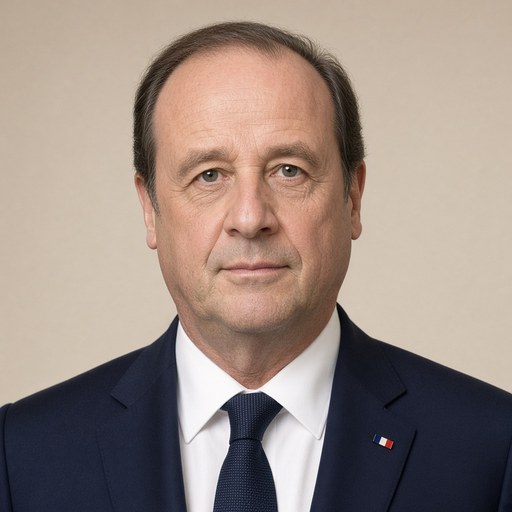
Press conference by Mr. François Hollande, President of the Republic, on the measures taken to resolve the Eurozone crisis and on budgetary policy in France, in Brussels on June 29, 2012.
 François Hollande · President of France
- Context
- Hollande addressed a press conference in Brussels on June 29, 2012, following the European Summit to outline measures agreed upon to resolve the Eurozone crisis.
- Main themes
- Eurozone crisis resolution, growth pact, banking union and supervision, financial transaction tax, stability mechanisms, EFSF and ESM instruments, European Investment Bank recapitalization, structural funds, economic and monetary union, project bonds, Spain and Italy debt concerns, European Council outcomes
- Duration
- ~51 min
- Words
- 6,060
- Sentences
- 271
- Readability
- 57
- Grade
- 10.6
- Syntax
- 2.98
- Vocabulary
- 2.09
Translated from French
This is an interview, press conference or exchange with other speakers. It is split into sentences and counted in the corpus, but its sentences are not tagged on the twelve indices.
271 sentences in 67 paragraphs
Good evening,
I had three objectives in coming to this European Summit, which was announced, as often, as a summit of all dangers or all hopes.
The first objective was to prioritize growth. The second objective was to have the eurozone adopt measures capable of having rapid effects on the markets regarding states that were seen as threatened. And the third objective was to establish a medium-term framework for deepening the economic and monetary union.
I believe that this summit, which was lengthy, was able to result in a comprehensive and coherent agreement.
First, there is the growth pact, which in my eyes was meant to complement the budgetary pact. This is a decision made by the heads of state and government. It is a decision that will have consequences in a short timeframe since the European Parliament, the European Commission, and the European Council, in an institutional compromise, have decided to implement it quickly. This represents 1% of GDP, 120 to 130 billion euros, but above all, this pact introduces new instruments. The first is what we call "project bonds," which will be intended to be generalized across the entire European Union. The second instrument was already known, which is the recapitalization of the European Investment Bank, which will have a strong leverage effect. And finally, there is the mobilization of structural funds that had not been engaged or consumed. This is the first achievement of this European Council.
There is a second achievement that fits into the logic of growth, which is that for at least 30 years, there has been an inability for the European Union to decide where the seat of the competent jurisdiction in this area would be regarding patents. And we have found a solution; the seat of this jurisdiction will be in Paris. The first president will be French, even though there was, as in any compromise, the acceptance that Germany would keep one chapter out of eight for one of its local jurisdictions and England two out of eight. So that was what I wanted to put at the heart of the discussion, and it found itself at the heart of the decision, the growth pact.
Another very important achievement of this Council, even if it was not the longest to elaborate, is the decision made in enhanced cooperation to create a tax on financial transactions, and a date has even been set, meaning that by the end of the year, this tax will be defined and implemented.
The third objective was to introduce stability mechanisms. And there was first progress in what we call the banking union, but at this stage, let us call the step that has been taken, banking supervision. A timeline has been set, and by the end of 2012, this supervision will be a reality. It will allow for the direct recapitalization of banks as soon as the European Central Bank has carried out this supervision. This new step will allow for better control of the European financial system, but we have gone further or more precisely faster, particularly regarding Spain, where direct recapitalization is planned without increasing the debt of the Spanish state. For states that, like Italy, but Italy is not the only country concerned, have made efforts to restore their public accounts, who have met a number of commitments and who could call upon mechanisms like the EFSF or the ESM, there too, a decision has been made that will allow for the full use of these instruments without imposing additional adjustments on these states, provided they have respected what is called the country recommendation. And that is what I wanted, for the instruments to be fully, quickly, and effectively used to respond to market movements. And I note that the European Central Bank has agreed to intervene as an agent of the EFSF and the ESM in the markets, which will also be a powerful means of controlling a number of movements.
The objective was also to have a roadmap for the economic and monetary union; it is displayed. Around, moreover, a formula that I myself stated here, in any case, which only commits France, it is solidarity-based integration. We can progress; at each step, there must be additional solidarity.
That is the assessment I draw from this European Council. An important step has been taken, significant progress has been made. Priority has been given to growth. New instruments have been developed: "project bonds." And for the states that decide, the tax on financial transactions. New measures have been decided: the recapitalization of the European Investment Bank, the mobilization of structural funds. And effective interventions in the markets allowing for stability have also been found. For all these reasons, I believe we have a coherent framework: growth pact, banking union, budgetary union, support mechanisms, and the willingness to deepen the economic and monetary union.
I can now answer your questions.
Q - Mr. President, I would like you to explain to us a little bit about what happened during the night, if you will, because we had the impression at the end of the night, as external observers, that there was indeed an agreement that had been reached, particularly regarding Spain and Italy, Mr. Monti echoed this. And then since this morning, particularly Ms. Merkel seems to have a slightly different view of things. Can you tell us what your own view is on this agreement? Thank you.
R - During the night - and it was long - decisions were made and a communiqué was drafted and approved. This communiqué was not called into question in the early morning, nor even at lunchtime. It was simply recalled that this was done within the framework of the orientations and mechanisms that are now known, EFSF, ESM, and with the procedures that Europe already has in the eurozone. I believe that when we achieve this compromise, everyone must support it. Both those who can benefit from it and those who may have to answer for it before their Parliament, this is the case for Ms. Merkel, she went before the Bundestag to have the ESM adopted. And so we must show cohesion, and that was the case, including at the end of the morning when we recalled what I just said, the instruments, all the instruments, the procedures, all the procedures, and the willingness to implement them flexibly and effectively. And I think, I give you a personal position, no one should say "I won or I lost." What was at stake was Europe; it is Europe that has won. And it is the eurozone, in particular, that has been strengthened and reinforced, and that was the only objective.
Q - During your presidential campaign, you emphasized your objective, your ambition, to renegotiate this treaty; today, what assessment do you draw regarding this objective from this summit? And then a second question, how to interpret the coincidence between the announcements of significant spending cuts in France at the ministerial level, 7% for next year, and this summit; is it a pure coincidence in light of the debates obviously on budgetary rigor?
R - First, I announced during the presidential campaign that I wanted to renegotiate what had been decided in order to include what was not there, growth and stability measures as well as a medium-term vision. I believe that this summit has allowed for this renegotiation to be achieved. That is why it was long. That is why the eurozone worked all night and on a timeline that was not planned. And that is why this summit was very important. Certainly, regarding growth, we had already done the work for several days, but on stability measures, on banking supervision, we have made very significant progress. Not everything is complete yet. The steps of the monetary and economic union are not yet implemented, but I believe that Europe has been reoriented as it should have been.
You then ask me if there is a link between the framework letters that have been sent for the preparation of the 2013 budget and what we decided here. I must recall that during the presidential campaign, I always said that we had a trajectory for the recovery of public finances: 3% by the end of 2013 and balance by the end of 2017. We actually had a debate between my opponent and myself about whether it was 2017, which I stated, or 2016, which he claimed. I said 2017. I also knew that growth would be affected by austerity policies. That is the case. The growth figures that have been made public do not stem from my own actions. I remind you that I was only invested on May 15. The growth figures that have been revealed pertain to the first quarter. The Court of Auditors, which will issue its report, will do so regarding the execution of the budget on May 1 or June 1. Therefore, the preparation of the 2013 budget must necessarily take into account the commitments I made in this context of slowed growth, which I hope will not be a sustainable environment. That is why there are growth measures that are decided at the European level.
But I will also stay on this subject regarding the reductions. The 7% is not a 7% budget cut; it is the operating credits that have been planned at that level. I believe there are indeed savings to be found without it being through mechanical rules. I am against the rule of one out of two for the non-replacement of civil servants retiring or measures that would appear simply as the result of mechanics or automatism. Regarding the staffing of the public service, there is no change from what I said during the campaign since I spoke of the creation of positions in a number of ministries, particularly National Education, Justice, and security with the police and the national gendarmerie. I remind you that one in two civil servants works in education. With the objective of stabilizing the staffing of the public service, what we will create in a number of ministries, we will not be able to create in other ministries. There will necessarily be efforts to be made in other ministries, but the objective is the stability of public service staffing, whereas until now it was the rule of not replacing one civil servant out of two, thus reducing staffing. For those who do not see the change, I am ready to give particular lessons.
Q - Mr. President, do you confirm that you will indeed have the budgetary pact ratified at the French level soon, the first question of course? You also talk about the tax on financial transactions by the end of the year; with whom? How many countries? And who will not be involved? And with what disadvantages?
R - To make enhanced cooperation, we need to be nine. I must say that Ms. Merkel is committed to this enhanced cooperation. She affirmed it in her own country, confirmed it in Rome, and maintained it strongly in the discussion during this summit. We will do it with the countries that are willing. We are in the process of finding them, and we will move quickly since the European Council has authorized us to make this enhanced cooperation. The more of us there are, the better it will be; we will also have to define the base of this tax and its rate. We do not have time to lose, and it will be submitted to the French Parliament at the same time as all the other texts.
What I will propose is that all decisions concerning Europe be submitted to Parliament: the growth pact, banking supervision if necessary, the tax on financial transactions, and the budgetary pact. The whole will be submitted to Parliament because there is coherence, because there is a global agreement, because we have everything that can allow Parliament to make its choice without being asked to take one direction over another. And there will be a medium-term vision of what we want to do in Europe.
Q - You just said that you would submit this package of decisions to Parliament; it is practically complete. Can you tell us when you will submit it to Parliament?
R - When the texts are ready, they are not all ready yet. I will present them when all the texts are technically ready within a timeframe that will not be long, but that requires having them all. That is why it is also important that the European Parliament - I have discussed this with its president - can also, for its part, vote quickly on the European legislative texts concerning the growth pact. As for the growth pact, it is a decision of the heads of state and government that has legal force.
Q - To return to the question of future budget management, you will soon have the report from the Court of Auditors, and we learned this morning from INSEE that French debt had reached a peak of 89% of GDP; what is the extent of the efforts you will ask of the French?
R - Yes, you are right to remind us that we have revealed a figure that, once again, is that of the end of my predecessor's term, which means that our public debt is approaching 90% of national wealth, that is to say the figure I indicated during the campaign, showing that I have forecasts that are almost better than the official information I had as a candidate. This does not change the objectives I have set; it makes them even more necessary, that is to say, to position ourselves on the trajectory of reducing deficits by 2017, allowing for balance by that date.
I am not engaging in a reduction of the debt for European reasons; it is not based on a budgetary pact since it has not been voted on. It is based on the objective of reducing France's debt, so that we are not exposed to reluctant markets for our sovereign debt financing, and so that the state budget is not affected by a rise in interest charges. In this regard, I do not know what the medium-term effect of our European Council will be, but it is not without consequence on the debt burden. You see, this figure that has been made public does not change our perspective but ultimately makes it even more necessary.
Q - Mr. President, this morning we perceive from some commentators in Germany quite negative reactions or at least hesitations on the theme: "after all, the Chancellor has somewhat let things happen," do you not fear that there will be a kind of backlash against France, which would have participated in this strategy to bend Germany, and that German public opinion ultimately accepts poorly what is sometimes presented as a defeat?
R - I am really concerned that there are not those who shout "victory" and those who would have to justify some kind of defeat. What happened is a compromise, it is a dynamic, and Mrs. Merkel, like others, actively participated in this search and this desire to strengthen and consolidate the eurozone, and it is because France and Germany - including during the night - were together that we succeeded. It was not a pressure from one side to the other; it was a common conviction that we could, without calling into question the treaties, without having to invent other instruments, implement them effectively. That is why Mrs. Merkel can go before her Parliament and say: "I did not change the texts, I did not go beyond my mandate." We will commit to mobilizing the instruments in the service of stability, and I can go before Parliament and before the French people to say: here, I made commitments, I have kept them. I think that is what allows Europe to move forward, and I have ensured that we can all hold the same discourse, that is to say, that of strengthening the eurozone.
If Spain and Italy - we talked about it last night, since we spent part of our time together - exerted pressure during part of the night, they did not do it simply to obtain words in a communiqué; it was for the entire eurozone to emerge strengthened because it is not simply in relation to Spain or Italy that we must work, it is in relation to the credibility of the eurozone, and if we had only found solutions, I would say expedients, in response to emergencies, we would not have, in my opinion, achieved our objective.
Q - You spoke upon arrival of immediate measures so that this acts immediately. However, most measures will actually take effect rather towards the end of the year. Do you not fear that, ultimately, for the markets, there will be an effect that we see today and that will fade quite quickly? Regarding the measure that was adopted during the night, it specifically addresses Spain. When should we expect it to expand to other countries, and in such cases, will the 500 billion fund for the ESM be sufficient because if it were to concern all the banks in Europe - and we see the size of the banks in Italy - that seems quite little in the end? One last question briefly: Mrs. Merkel reiterated in her press conference her absolute opposition to eurobonds; are you disappointed by that?
R - What will be the effects of this summit on the real economy first? It will take time for growth measures to be implemented and create additional activity. We have therefore ensured that the European Parliament and the European Commission accelerate the pace of execution.
On financial measures, stability measures, there are instruments that can be activated very quickly. The recapitalization of Spanish banks is underway or will take place. The mechanisms have now been clarified so that this does not weigh on Spanish sovereign debt, at least in a medium-term perspective, and so that it is under conditions that can avoid a privilege through the ESM since it will be the conditions of the EFSF that will be extended. This will have a rapid effect.
Then, if states - we mentioned Italy but it could be others - that have met all their commitments and also comply with the Commission's recommendations, what we call the "country recommendation," want to move towards instruments, they will be implemented immediately.
Everything is being done to ensure that there is speed in execution for both growth and stability. However, for banking supervision, to your second question, we will have to wait until the end of the year, even if there will be an interim report, I believe in October, for the European Central Bank on the eurozone - I emphasize on the eurozone - to ensure this banking supervision and allow, at that moment, to possibly recapitalize other banks than the Spanish banks.
Finally, on eurobonds, this will integrate into future solidarities, that is to say, as we move closer on the budgetary level, there will be a need for a European treasury and therefore, at that moment, eurobonds. This is a perspective; it could not be decided today, but it is included in the report of the four presidents.
Q - On banking union, there is no doubt that the future supervisory authority will be the European Central Bank. If that is the case, what will be the authority responsible for restructurings? It cannot be the European Central Bank since it is a political question. Are you going to create a second authority? And what about countries that are not in the eurozone, since they will not be subject to the ECB? On banking union, did you discuss the issue of a European deposit guarantee or has that been postponed?
R - On banking supervision, it must first be within the eurozone, and it is the European Central Bank that will lead it because it is equipped for that, because it can rely on each of the national banks, the Bank of France in our country, and everyone has a bank that reports to the European Central Bank; that is the European system.
It is the European Central Bank that is best equipped, best armed to carry out this banking supervision. Will this apply to all banks? My answer is yes. I am in favor, and we will still have to discuss it, but that is rather the general trend; it must be supervision over all banks. Why all banks? Because if some escape it, then we will find ourselves in the Spanish case where bad banks chase good ones, to borrow a famous law of monetary economics, Gresham's law, where bad money drives out good. We must take all the banks in the eurozone with supervision from the Central Bank.
Do the other 27 countries want banking supervision? It is not certain, and it may not be the European Central Bank since they are in the single market. Moreover, David Cameron reminded us that the 27 - at least for those who were not in the eurozone - wanted to be within the rules of the single market. We will see at 27 the regulatory authority for banks.
Then, you ask whether it is up to the Central Bank to carry out restructurings? No, it will indeed be up to another authority; we will see, but this time it will be more political.
Then, the question of deposit guarantees can only be resolved once there is banking supervision, so for 17, within the framework of the eurozone, and once we have made progress in the Union because deposit guarantees imply that each country guarantees not only the deposits in its own territory but everywhere in Europe. You see, we were talking about Mrs. Merkel; she would have conditions for ratification, if we took this provision, which would probably be difficult to meet. We will have to make progress on this; it is the necessary step, hence my idea of solidary integration. If we want integration, we need solidarity. Integration is banking union; solidarity is deposit guarantees. Who pays for the deposit guarantees? That too will need to be determined. Are they the states or are they the banks? That will be the subject of future discussions; I apologize for being so technical.
Q - Mr. President, still regarding Mrs. Merkel, she emphasized a few minutes ago that your cooperation during this summit had been good, particularly on the European patent and on the growth pact. In the context of this good cooperation, are you ready to lift your reservations on Mr. Schäuble's candidacy for the head of the Eurogroup, or do you consider that ultimately the nationality of this minister is a handicap in Europe for the eurozone?
R - Our cooperation has been useful since we found ourselves on many points, after a lot of work, after a lot of efforts, discussions. It was also necessary to lift a number of uncertainties or ambiguities. We found ourselves on growth - that was not so obvious. We found ourselves on the financial transaction tax - even if the pressure was not only external, there is also internal pressure related to the political situation in Germany. We also found ourselves on the discussion about measures to strengthen the eurozone with, as we know, starting points that were not necessarily identical. That was also the explanation for the result of the summit, but perhaps differently from the past. It is not France and Germany that arrived with a solution; it is France and Germany that, along with others, contributed to solutions. France and Germany playing their role, but the other countries, the European institutions as well, and that is probably why we were also long and far.
Then, on the Eurogroup, it was supposed to be normally on the agenda, and it has been postponed to the next Eurogroup meeting; therefore, I cannot commit on that. There is currently no discussion that has been initiated between France and Germany or between France and other countries; we will therefore have to decide on that. One idea among others - but one that had rather been favored before this summit, but I do not want to commit to it because I know there are also situations of domestic politics - would have been to extend Mr. Juncker for a few months, but for now, nothing has been decided. So it was a hypothesis that existed before the summit, but it assumes that Mr. Juncker himself wishes it. For now, we have not gone further.
Q - I would like to understand where France stands regarding the budgetary pact. Earlier, you said it had not been voted on, but if I understood correctly, the growth pact adds to the budgetary pact, so concretely what does that mean? What will France do about it?
R - I explained it. The government will present to Parliament the entire European package with the budgetary pact, the growth pact, the financial transaction tax, and the banking supervision measures. There is a global package; there is a coherent framework. Then, it will be up to the parliamentarians to decide.
Q - Mr. Mario Monti stated - last night - that it was not his intention at this stage to call on the mechanism that had been agreed upon during the night? Do you find that to be a fair assessment, or would you be inclined to urge Mr. Monti to request the activation of the mechanism? Can this mechanism - since you have pointed out that it could serve other countries - serve, for example, Ireland and Portugal, countries that will soon exit assistance and have made a lot of efforts? Is this also an exit door for these countries?
R - Yes, it is a provision, a mechanism that is primarily respectful of the treaties we know and that applies to any country that is not in a situation of imbalance and therefore requires a program of specific adjustments, a stability program, and you mentioned two that would exit this program and would need to resort to this instrument. They could do so without needing to undergo another program as long as they have respected what we call the country recommendation.
As for Mr. Monti's decision to resort to it or not, that is his freedom. He can do it or he can choose not to, he may not feel the need, it all depends on what the interest rates will be. Often, when an instrument is defined, it can have a consequence, which is not to be used. If the announcement of this instrument causes interest rates to fall, then why resort to it? But it still needs to exist for interest rates to decrease, and that is perhaps the bet of what we decided in this European Council, to set in motion mechanisms so that they may not be used but are powerful enough that, if a state uses them, they can be effective. That is the whole balance, I would say all the intelligence; one must never presume, but in any case, the whole issue of these mechanisms: rapid, effective, flexible, and deterrent.
Q - We know France's reluctance regarding the continuation of integration, but you committed today to more integration. When will you explain to the French the need to submit the French budget to Brussels' control, for example? How will you explain this new federal leap to the French people?
R - The French budget has always been subject to binding rules, the stability pact. What was often the practice is that France escaped these constraints and there was not the necessary discipline. We must respect more the rules that we accept from Europe.
As for the federal leap, we are not there yet. We have to implement what exists today, and when I see the reluctance of many countries to go further, I tell myself that France is often ahead. We have to make budgetary choices that are those that France decides sovereignly. Let me explain: if we want to reduce our deficits, it is not because we want to submit to Europe, which moreover gives a vision of Europe that is extremely depressing and negative. We want to reduce our deficits because, as was recalled earlier, the level of public debt in relation to national wealth has reached a dangerous point, dangerous in terms of the burden it can represent, also dangerous because it can create vulnerability for us.
Q - Mr. President, precisely to continue on this question, in the package that you will submit to the French Parliament, the ratification of the budget treaty, in the budget treaty, there is a very specific article that involves the introduction into the internal law of each country of a golden rule of constitutional value. Will this be part of the package you submit to Parliament? Will you request a meeting of Congress to amend the Constitution and bring it into compliance with this article of the treaty?
R - Here too, I committed during the campaign not to put in the French Constitution a rule that would set the pace for reducing deficits. That is not how I conceived the deficit reduction project. On the other hand, we will have a budget programming law voted on, perhaps of an organic nature, but we will have a budget programming law voted on to restore the balance of our public finances.
Regarding the amendment of the Constitution, we will ask the Constitutional Council what needs to be done, but our idea is not to integrate the programming law into the Constitution; the programming law by definition is a law.
Q - A week ago, you reacted to press reports announcing a 2.5% reduction in civil servants, and you called them implausible. Was that meant to be taken ironically, which was not necessarily understood, and if not, has what was implausible become reality with the framework letters sent to the various ministers?
R - Precisely, that is not the reality since there will be stability...
Q - That is a figure that your Prime Minister included in his calendar.
R - I will be as precise as he was. The number of civil servants will not decrease overall. Am I clear? The number of civil servants will not decrease, but as we will create jobs in a number of ministries: education, justice, police, gendarmerie, well, in other ministries we will not replace all the civil servants who retire since we must maintain this stability of numbers. That, in some ministries, overall, it may decrease by 2.5%, in other ministries, it will progress as well since, in 2013, there will be stability in the number of civil servants. I cannot be clearer; if you still have implausibilities to clarify, I am ready to respond. So, where a norm has been set, it is for the other ministries that are not prioritized. However, those that are prioritized represent in the civil service more than the majority since it is education, police, gendarmerie, where there are, if I may say, the large battalions. So your question was very useful and pertinent. I thank you for asking it.
Q - Beyond the technical aspect of the interventions that were decided today, I noticed in your press conference last night, strong understandings regarding the problems of Spain and Italy, and ultimately the final agreement seems to take these problems and positions into account. Do you believe that from a political point of view, this summit is characterized by a new balance at the European level? Will this summit be perceived in the coming months as a summit that produced a new political and European balance, particularly in the relations between France and Germany and in the relations between France and southern Europe?
R - France is a bridge. It allows for gathering through its geographical position, its economic position as well, its political position, and the weight of history. And so it should not contribute to confrontation; it should promote rapprochement, particularly between northern Europe and southern Europe. It happens that France is both in the north and in the south, which helps. Then, I think that Ms. Merkel and I have made sure to prepare this summit not just between the two of us - I received her, it was Wednesday evening - but also among four, even more. I must commend the role of the President of the European Council, Mr. Van Rompuy, the President of the Commission, Mr. Barroso, and the President of the European Parliament, Mr. Martin Schulz, who was very helpful in showing that the Parliament was entirely at the service of Europe for the implementation of growth measures. It is this method that allowed us to find not a new balance but a new result. Furthermore, there are good personal relations with Mr. Monti and even with Mr. Rajoy, who is not of the same political sensitivity, but we also had a shared awareness.
I insisted, as did Ms. Merkel, on the stakes of the European Council. The stake of the European Council at the outset was growth, and I could have stopped there saying, "Listen, I wanted growth to be set as the first priority of the European Council, there are 130 billion euros, mission accomplished, we can end the European Council." Here, it must be said that Spain and Italy reminded us of the reality; the stake of this European Council was to strengthen the eurozone, not simply to come to the aid of Spain and possibly Italy, it was to show that the eurozone was coherent enough, organized, and capable of implementing instruments to be in a new relationship with the markets. This awareness took place all night; it was long because we had to find the right effectiveness in the use of these instruments. And the President of the European Central Bank, in his place and in complete independence, also stated his responsibility and availability.
Q - A question precisely about the instruments, about the flexibility granted to the use of the EFSF. How far does it go in the sense that until now unanimity applied, so is this principle of unanimity lifted?
R - So the EFSF is still unanimity. The EFSF had an advantage and a disadvantage. The advantage was that there was no seniority rule, that is to say, no privilege. A disadvantage is that it is by unanimity. The ESM has an advantage that it is not by unanimity and a disadvantage, there was seniority, hence the lifting of seniority for countries, in this case Spain, which will go through the EFSF, and which having gone through the EFSF, will be able, when they enter the ESM - we do not know when because it is not ratified yet - to have the lifting of seniority. That is what was decided; I think that is what is effective. Then, in the future, there will only be the ESM, so there will no longer be unanimity. But there may be the precedent that has been created. The problem is that the ESM is not yet in place. You know that in Germany, there is also a challenge before the Constitutional Court in Karlsruhe, so it may take a few more weeks.
In the meantime, what do we do? That was the question that was posed. In the eurozone, what do we do between the moment when a country, Spain, to name it, wishes to have support while the ESM is not in place? What was resolved last night within the eurozone is this transition. And that is what allows Spain to be stabilized.
Q - You are part of the generation that does not have an emotional relationship with Algeria; will you adopt a more pragmatic relationship with this country?
R - I have relationships with Algeria because I spent part of my administrative life there, eight months. I have returned often. There will be relationships that cannot be only pragmatic with Algeria, which are always relationships where the past, history, culture, and even personal lives are intertwined. We will have strong relations with Algeria.
Thank you very much.
The original French. The tags above are read on the English translation's sentences.
Bonsoir,
Javais trois objectifs en venant à ce Sommet européen qui était annoncé, comme souvent, comme un sommet de tous les dangers ou de tous les espoirs.
Le premier objectif, cétait de mettre la croissance comme priorité. Le second objectif, de pouvoir faire adopter par la zone euro des mesures capables davoir des effets rapides sur les marchés par rapport à des États qui étaient regardés comme menacés. Et le troisième objectif, avoir un cadre à moyen terme dapprofondissement de lunion économique et monétaire.
Je considère que ce sommet, qui a été long, a pu déboucher sur un accord global et cohérent.
Dabord, il y a le pacte de croissance, celui qui à mes yeux devait compléter le pacte budgétaire. Cest une décision des chefs dÉtat et de gouvernement qui a été prise. Cest une décision qui aura des conséquences dans un délai rapide puisque le Parlement européen, la Commission européenne et le Conseil européen, dans un compromis institutionnel, ont décidé de le mettre en uvre rapidement. Cela représente 1 % du PIB, 120 à 130 milliards deuros mais surtout, dans ce pacte, il y a de nouveaux instruments qui sont introduits. Le premier, cest ce quon appelle les «project bonds» qui auront vocation à se généraliser sur lensemble de lUnion européenne. Le second instrument était déjà connu, cest la recapitalisation de la Banque européenne dinvestissements qui aura un fort effet de levier. Et, enfin, il y a la mobilisation des fonds structurels qui navait pas été engagée, ni consommée. Cela sest le premier acquis de ce Conseil européen.
Il y en a un second qui sinscrit dans la logique de croissance, cest que depuis 30 ans au moins, il y avait sur les brevets une incapacité pour lUnion européenne de décider où serait le siège de la juridiction compétente dans ce domaine. Et nous avons trouvé une solution, le siège de cette juridiction sera à Paris. Le premier président sera français, même sil y a eu, comme dans tout compromis, lacceptation que lAllemagne garderait un chapitre sur les huit pour une de ces juridictions locales et lAngleterre deux sur les huit. Donc ça cétait ce que je voulais mettre au cur de la discussion et qui sest retrouvé au cur de la décision, le pacte de croissance.
Autre acquis très important de ce Conseil, même si cela na pas été le plus long à élaborer, cest la décision prise en coopération renforcée de créer une taxe sur les transactions financières et une date a même été posée, cest-à-dire quà la fin de lannée, cette taxe sera définie et mise en place.
Le troisième objectif consistait à introduire des mécanismes de stabilité. Et il y a eu dabord un progrès dans ce que lon appelle lunion bancaire mais à ce stade appelons létape qui a été franchie, la supervision bancaire. Un calendrier a été fixé et dici, là aussi, la fin de lannée 2012, cette supervision sera la réalité. Elle permettra de recapitaliser directement les banques dès lors que la Banque centrale européenne aura réalisé cette supervision. Cette étape nouvelle permettra de mieux contrôler le système financier européen mais nous sommes allés plus loin ou plus exactement plus vite et notamment par rapport à lEspagne, une recapitalisation directe est prévue sans accroître la dette de lÉtat espagnol. Pour les États qui, comme lItalie, mais lItalie nest pas le seul pays concerné, qui ont des efforts de redressement de leur compte public, qui ont satisfait à un certain nombre dengagements et qui pourraient faire appel à des mécanismes comme le FESF ou le MES, là aussi, il y a eu une décision qui permettra dutiliser pleinement ces instruments sans imposer dajustements supplémentaires à ces États-là, à la condition quils aient respecté, ce quon appelle la recommandation pays. Et cest ce que je souhaitais, que les instruments soient pleinement, rapidement, efficacement utilisés pour répondre à des mouvements de marchés. Et je relève que la Banque centrale européenne a accepté dintervenir comme agent du FESF et du MES sur les marchés, ce qui sera aussi un puissant moyen de maîtrise dun certain nombre de mouvements.
Lobjectif était également davoir une feuille de route pour lunion économique et monétaire, elle est affichée. Autour dailleurs dune formule que jai moi-même ici énoncée, en tout cas qui nengage que la France, cest lintégration solidaire. Nous pouvons progresser, à chaque étape, il doit y avoir une solidarité supplémentaire.
Voilà le bilan que je tire de ce Conseil européen. Une étape importante a été franchie, des progrès significatifs ont été faits. Priorité a été donnée à la croissance. Des instruments nouveaux ont été élaborés : «project bonds». Et pour les États qui en décideront, la taxe sur les transactions financières. Des mesures nouvelles ont été décidées : la recapitalisation de la Banque européenne dinvestissements, la mobilisation des fonds structurels. Et des interventions efficaces sur les marchés permettant la stabilité, ont été également trouvées. Pour toutes ces raisons, je crois que nous avons là un cadre cohérent : pacte de croissance, union bancaire, union budgétaire, mécanismes de soutien, volonté dapprofondir lunion économique et monétaire.
Je peux répondre donc à vos questions.
Q - Monsieur le Président, je voudrais que vous nous expliquiez un petit peu ce qui sest passé, si vous le voulez bien, dans le courant de la nuit, parce que lon a eu limpression en fin de nuit, en tant quobservateurs extérieurs, quil y avait effectivement un accord qui avait été conclu, en particulier sur lEspagne et lItalie, M. Monti sen est fait lécho. Et puis depuis ce matin, en particulier Mme Merkel semble avoir une vision un tout petit peu différente des choses. Est-ce que vous pouvez nous dire quelle est votre propre vision sur cet accord ? Merci.
R - Dans la nuit - et elle a été longue - des décisions ont été prises et un communiqué a été rédigé et approuvé. Ce communiqué na pas été remis en cause au petit matin, ni même à lheure du déjeuner. Il a été simplement rappelé que ça se faisait dans le cadre des orientations et des mécanismes qui sont aujourdhui connus, FESF, MES et avec les procédures que lEurope a déjà en zone euro. Moi, je pense que quand on réussit ce compromis, chacun doit le porter. À la fois ceux qui peuvent en être bénéficiaires, ceux qui peuvent avoir à en répondre devant leur Parlement, cest le cas de Mme Merkel, elle est partie devant le Bundestag pour faire adopter le MES. Et donc nous devons faire preuve de cohésion et cela a été le cas, y compris en fin de matinée où nous avons rappelé ce que je viens de dire, les instruments, tous les instruments, les procédures, toutes les procédures et la volonté de les mettre en uvre de manière flexible et efficace. Et je pense, je vous donne une position personnelle, personne ne doit dire «jai gagné ou jai perdu». Ce qui était en cause, cétait lEurope, cest elle qui a gagné. Et cest la zone euro notamment qui a été confortée et renforcée, et cétait le seul objectif.
Q - Vous aviez pendant votre campagne présidentielle martelé votre objectif, votre ambition, de renégocier ce traité, aujourdhui quel bilan tirez-vous par rapport à cet objectif de ce sommet ? Et puis deuxième question, comment interpréter la concomitance entre les annonces de réductions importantes de dépenses en France au niveau des ministères, 7 % pour lannée prochaine, et ce sommet, est-ce que cest une pure coïncidence au regard des débats évidemment sur la rigueur budgétaire ?
R - Dabord, javais, dans la campagne présidentielle, annoncé que je voulais renégocier ce qui avait été décidé afin dy mettre ce qui ne sy trouvait pas, la croissance et des mesures de stabilité ainsi quune vision à moyen terme. Je considère que ce sommet a permis daboutir à cette renégociation. Cest pour cela quil a été long. Cest pourquoi la zone euro a travaillé toute une nuit et dans un calendrier qui nétait pas prévu. Et cest pourquoi ce sommet a été très important. Certes, en ce qui concerne la croissance, nous avions déjà fait le travail depuis plusieurs jours mais sur les mesures de stabilité, sur la supervision bancaire, nous avons là connu des progrès très significatifs. Tout nest pas encore complet. Il manque les étapes de lunion monétaire et économique, tout nest pas encore mis en uvre mais je considère que lEurope a été réorientée comme il convenait.
Vous me demandez ensuite sil y a un lien entre des lettres de cadrage qui ont été envoyées pour la préparation du budget 2013 et ce que nous avons décidé ici. Je dois rappeler que, dans la campagne présidentielle, jai toujours dit que nous avions une trajectoire pour le redressement des finances publiques : 3 % fin 2013 et léquilibre fin 2017. Nous avions dailleurs un débat entre mon concurrent et moi-même pour savoir si cétait 2017, ce que jaffichais, ou 2016, ce quil affirmait. Je disais 2017. Je savais aussi que la croissance serait affectée par des politiques daustérité. Cest le cas. Les chiffres de croissance qui ont été rendus publics ne tiennent pas à ma propre action. Je rappelle que je nai été investi que le 15 mai. Les chiffres de croissance qui ont été révélés portent sur le premier trimestre. La Cour des comptes, qui va rendre son rapport, va le faire au sujet de lexécution du budget au 1er mai ou au 1er juin. Donc la préparation du budget 2013 doit forcément tenir compte des engagements que javais pris, dans ce contexte de croissance ralentie que jespère ne pas être un environnement durable. Cest pour cela quil y a des mesures de croissance qui sont décidées au plan européen.
Mais je vais rester aussi sur ce sujet par rapport aux diminutions. Les 7 %, ce nest pas une diminution de budgets de 7 %, ce sont les crédits de fonctionnement qui ont été prévus à cette hauteur-là. Je pense quil y a effectivement des économies à trouver sans que ce soit par des règles mécaniques. Je suis contre la règle du 1 sur 2 pour le non-remplacement des fonctionnaires partant à la retraite ou des mesures qui apparaitraient comme simplement le fruit de la mécanique ou de lautomatisme. Sur les effectifs de la fonction publique, il ny a aucun changement par rapport à ce que javais dit dans la campagne puisque javais parlé de créations de postes dans un certain nombre de ministères, notamment lÉducation nationale, la Justice et la sécurité avec la police et la gendarmerie nationale. Je rappelle quil y a un fonctionnaire sur deux qui travaille dans léducation nationale. Avec lobjectif de stabiliser les effectifs de la fonction publique, ce que nous allons créer dans un certain nombre de ministères, nous ne pourrons pas le créer dans les autres ministères. Il y a forcément des efforts à faire dans les autres ministères mais lobjectif, cest la stabilité des effectifs de la fonction publique alors que jusque-là cétait la règle du non-remplacement dun fonctionnaire sur deux, donc la diminution des effectifs. Pour ceux qui ne voient pas le changement, je suis prêt à donner des leçons particulières.
Q - Monsieur le Président, vous confirmez que vous allez bien faire ratifier au niveau français le pacte budgétaire prochainement, première question bien sûr ? Vous parlez aussi de la taxe sur les transactions financières dici la fin de lannée, alors avec qui ? Combien de pays ? Et qui nen sera pas ? Et avec quels inconvénients ?
R - Pour faire une coopération renforcée, nous devons être neuf. Je dois dire que Mme Merkel est engagée dans cette coopération renforcée. Elle lavait affirmé dans son propre pays, confirmé à Rome et elle la maintenue fortement dans la discussion durant ce sommet. Nous le ferons avec les pays qui sont volontaires. Nous sommes en train de les trouver et nous irons vite puisque le Conseil européen nous a autorisés à faire cette coopération renforcée. Plus nous serons, mieux ce sera, nous aurons aussi à définir lassiette de cette taxe et son taux. Nous navons pas de temps à perdre et ce sera soumis au Parlement français en même temps que tous les autres textes.
Ce que je proposerai, cest que soient soumises au Parlement toutes les décisions concernant lEurope : le pacte de croissance, la supervision bancaire si cest nécessaire, la taxe sur les transactions financières et le pacte budgétaire. Lensemble sera soumis au Parlement parce quil y a une cohérence, parce quil y a un accord global, parce que nous avons là tout ce qui peut permettre au Parlement de faire son choix sans quon lui demande de prendre une orientation plutôt quune autre. Et il y aura une vision à moyen terme de ce que nous voulons faire en Europe.
Q - Vous venez de dire que vous soumettrez ce paquet de décisions au Parlement, il est pratiquement complet. Est-ce que vous pouvez nous dire quand vous le soumettrez au Parlement ?
R - Quand les textes seront prêts, ils ne le sont pas encore tous. Je les présenterai quand tous les textes seront techniquement prêts dans un délai qui ne sera pas long mais cela suppose de les avoir tous. Cest pour cela quil est important aussi que le Parlement européen - je men suis entretenu avec son président - puisse aussi, pour ce qui le concerne, faire voter rapidement les textes législatifs européens concernant le pacte de croissance. Quant au pacte de croissance, cest une décision des chefs dÉtat et de gouvernement qui a une force juridique.
Q - Pour revenir sur la question de la gestion budgétaire à venir, vous aurez bientôt le rapport de la Cour des Comptes et on a appris ce matin par lINSEE que la dette française avait atteint un sommet à 89 % du PIB, quelle est lampleur des efforts que vous allez demander aux Français ?
R - Oui, vous faites bien de rappeler que nous avons eu la révélation dun chiffre qui, là encore, est celui de la fin de mandat de mon prédécesseur qui fait que notre dette publique atteint presque 90 % de la richesse nationale, cest-à-dire le chiffre que javais indiqué dans la campagne, comme quoi jai des anticipations qui sont presque meilleures que les informations officielles enfin, que javais comme candidat. Cela ne change pas les objectifs que jai fixés, cela les rend encore plus nécessaires, cest-à-dire de nous situer sur la trajectoire de la réduction des déficits à lhorizon 2017 permettant léquilibre à cette date.
Je ne mengage pas dans une réduction de la dette pour des raisons européennes, ce nest pas en fonction dun pacte budgétaire puisquil nest pas voté. Cest en fonction de lobjectif de réduire la dette de la France, pour que nous ne soyons pas exposés à des marchés rétifs pour notre financement de dette souveraine, et pour que le budget de lÉtat ne soit pas affecté par une montée des charges dintérêt. À cet égard, je ne sais pas quel sera leffet à moyen terme de notre Conseil européen mais ce nest pas sans conséquence sur la charge de la dette. Voyez, ce chiffre qui a été rendu public ne change en rien la perspective qui est la nôtre mais la rend finalement encore plus nécessaire.
Q - Monsieur le Président on perçoit ce matin de la part de certains commentateurs en Allemagne des réactions assez négatives ou en tout cas des réticences sur le thème : «au fond la chancelière sest un peu laissée faire», ne craignez-vous pas quil y ait une sorte de choc en retour contre la France qui aurait participé à cette stratégie pour faire plier lAllemagne et que lopinion allemande finalement accepte mal ce qui est présenté parfois comme une défaite ?
R - Jai vraiment à lesprit le souci quil ny ait pas ceux qui crient «victoire» et ceux qui seraient obligés de justifier je ne sais quelle défaite. Ce qui sest passé, cest un compromis, cest une dynamique et Mme Merkel, comme dautres, a activement participé à cette recherche et à cette volonté de conforter, de consolider la zone euro et cest parce que la France et lAllemagne - y compris dans la nuit - ont été ensemble que nous y sommes parvenus. Cela na pas été une pression des uns sur les autres, cela a été une conviction commune que nous pouvions, sans mettre en cause les traités, sans avoir à inventer dautres instruments, les mettre en uvre de manière efficace. Cest pourquoi, Mme Merkel peut aller devant son Parlement en disant : «je nai pas modifié les textes, je nai pas été au-delà de mon mandat». Nous allons nous engager pour mobiliser les instruments au service de la stabilité et moi-même, je peux aller devant le Parlement et devant les Français pour dire : voilà, javais pris des engagements, je les ai respectés. Je pense que cest cela qui permet à lEurope davancer et jai veillé à ce que nous puissions tenir tous le même discours, cest-à-dire celui du renforcement de la zone euro.
Si lEspagne et lItalie - on en a parlé cette nuit, puisquon a passé une partie de notre temps ensemble - ont fait pendant une partie de la nuit pression, ils ne lont pas fait simplement pour obtenir des mots dans un communiqué, cétait pour que la zone euro tout entière sorte renforcée parce que ce nest pas simplement par rapport à lEspagne ou par rapport à lItalie que nous devons travailler, cest par rapport à la crédibilité de la zone euro et si nous navions trouvé que des solutions, jallais dire des expédients, par rapport à des urgences, nous naurions pas à mon avis atteint notre objectif.
Q - Vous parliez en arrivant de mesures immédiates pour que cela agisse immédiatement. Seulement, la plupart des mesures vont en fait agir plutôt vers la fin de lannée. Ne craignez-vous pas que, finalement, pour les marchés, il y ait un effet que lon voit aujourdhui et qui va sestomper assez vite ? Concernant la mesure qui a été adoptée dans la nuit, elle sadresse spécifiquement à lEspagne. Quand devra-t-on sattendre à ce quelle sélargisse vers les autres pays et est-ce que, dans ces cas-là, le fonds de 500 milliards pour le MES sera suffisant parce que si cela devait concerner toutes les banques en Europe - et lon voit la taille des banques en Italie -, cela paraît assez peu finalement ? Une dernière question brièvement : Mme Merkel a réitéré dans sa conférence de presse son opposition absolue aux eurobonds, est-ce que cela vous déçoit ?
R - Quels seront les effets de ce sommet sur léconomie réelle dabord ? Il faudra le temps que les mesures de croissance puissent être mises en place et créer une activité supplémentaire. Nous avons donc fait en sorte que le Parlement européen et la Commission européenne accélèrent le rythme dexécution.
Sur les mesures financières, les mesures de stabilité, il y a des instruments qui peuvent être activés très vite. La recapitalisation des banques espagnoles est en cours ou va se faire. Les mécanismes ont été maintenant clarifiés pour que cela ne pèse pas sur la dette souveraine espagnole, au moins dans une perspective de moyen terme, et pour que ce soit dans des conditions qui puissent éviter un privilège à travers le MES puisque ce sera les conditions du FESF qui seront prolongées. Cela aura un effet rapide.
Après, si des États - on a cité lItalie mais cela peut être dautres - qui ont répondu à tous leurs engagements et qui également se soumettent à des recommandations de la Commission, ce que lon appelle la «recommandation pays», veulent aller vers des instruments, ils seront immédiatement mis en uvre.
Tout est fait pour quil y ait une rapidité dans lexécution aussi bien pour la croissance que pour la stabilité. Reste que, pour la supervision bancaire, cest votre deuxième question, il faudra que nous attendions la fin de lannée, même sil y aura un rapport intermédiaire, je crois en octobre, pour que la Banque centrale européenne sur la zone euro - je dis bien sur la zone euro - assure cette supervision bancaire et permette, à ce moment-là, de recapitaliser éventuellement dautres banques que les banques espagnoles.
Enfin, sur les eurobonds, cela sintégrera dans les solidarités à venir, cest-à-dire quà mesure où nous nous rapprocherons sur le plan budgétaire, il y aura une nécessité davoir un trésor européen et donc, à ce moment-là, des eurobonds. Cest une perspective, cela ne pouvait pas être décidé aujourdhui, mais cela figure dans le rapport des quatre présidents.
Q - Sur lunion bancaire, il ne fait aucun doute que la future autorité de supervision sera la Banque centrale européenne. Si cest le cas, quelle sera lautorité chargée des restructurations ? Cela ne peut être la Banque centrale européenne puisquil sagit dune question politique. Est-ce que vous allez créer une deuxième autorité ? Et quid aussi des pays qui ne sont pas dans la zone euro, puisquils ne pourront pas être soumis à la BCE ? Sur lunion bancaire, avez-vous évoqué la question dune garantie européenne des dépôts ou cela a-t-il été renvoyé à plus tard ?
R - Sur la supervision bancaire, cela doit être dabord dans la zone euro et cest la Banque centrale européenne qui la mènera, parce quelle est outillée pour cela, parce quelle peut sappuyer sur chacune des banques nationales, Banque de France dans notre pays et chacun a une banque qui en réfère à la Banque centrale européenne, cest le système européen.
Cest la Banque centrale européenne qui est la mieux outillée, la mieux armée pour mener cette supervision bancaire. Est-ce que cela vaudra pour toutes les banques ? Ma réponse est oui. Je suis pour et nous aurons encore à en discuter mais cest plutôt la tendance générale, cela doit être une supervision sur toutes les banques. Pourquoi toutes les banques ? Parce que si certaines y échappent, alors nous nous retrouverons dans le cas espagnol où les mauvaises banques chassent les bonnes pour reprendre une loi célèbre de léconomie monétaire, la loi de Gresham où la mauvaise monnaie chasse la bonne. Il faut prendre lensemble des banques de la zone euro avec une supervision de la Banque centrale.
Est-ce que les autres pays à 27 veulent une supervision bancaire ? Ce nest pas sûr et cela peut ne pas être la Banque centrale européenne puisque, eux, ils sont dans le marché unique. Dailleurs, David Cameron a rappelé que les 27 - enfin pour ceux qui nétaient pas dans la zone euro - souhaitaient être dans les règles du marché unique. Nous verrons bien à 27 lautorité de régulation des banques.
Ensuite, vous posez la question de savoir si cest à la Banque centrale de faire les restructurations ? Non, ce sera effectivement à une autre autorité, nous verrons bien, mais plus politique cette fois-ci.
Ensuite, la question de la garantie des dépôts, elle ne peut aboutir quune fois quil y a la supervision bancaire, donc à 17, dans le cadre de la zone euro et une fois que nous avons progressé dans lUnion parce que la garantie des dépôts suppose que chaque pays garantisse non seulement les dépôts dans son propre territoire mais partout en Europe. Tenez, on parlait de Mme Merkel, elle aurait des conditions de ratification, si on prenait cette disposition, qui seraient sans doute difficiles à remplir. Il va falloir que lon progresse là-dessus, cest le passage obligé, doù mon idée dintégration solidaire. Si lon veut de lintégration, il faut de la solidarité. Lintégration, cest lunion bancaire £ la solidarité, cest la garantie des dépôts. Qui paie la garantie des dépôts ? Ça aussi, il faudra le déterminer. Est-ce que ce sont les États ou est-ce que ce sont les banques ? Ce sera lobjet de discussions ultérieures £ pardon dêtre aussi technique.
Q - Monsieur le Président, toujours à propos de Mme Merkel, elle a souligné il y a quelques minutes que votre coopération lors de ce sommet avait été bonne, notamment sur le brevet européen et sur le pacte de croissance, est-ce que dans le cadre de cette bonne coopération, vous êtes prêt à lever vos réserves sur la candidature de M. Schauble à la tête de lEurogroupe où est-ce que vous considérez que finalement la nationalité de ce ministre est un handicap en Europe pour la zone euro ?
R - Notre coopération a été utile puisque nous nous sommes retrouvés sur beaucoup de points, après beaucoup de travail, après beaucoup defforts, de discussions. Il fallait aussi que lon lève un certain nombre dincertitudes ou dambiguïtés. Nous nous sommes retrouvés sur la croissance - ce nétait pas si évident. Nous nous sommes retrouvés sur la taxe sur les transactions financières £ même si la pression na pas été quexterne, il y a aussi une pression interne liée à la situation politique en Allemagne. Nous nous sommes retrouvés aussi sur la discussion sur les mesures pour renforcer la zone euro avec, on le sait, des points de départ qui nétaient pas forcément identiques. Ça, ça a été aussi lexplication du résultat du sommet mais peut-être différemment du passé. Ce nest pas la France et lAllemagne qui sont arrivés avec une solution, cest la France et lAllemagne qui, avec dautres, ont contribué à des solutions. La France et lAllemagne jouant leur rôle, mais les autres pays, les institutions européennes également et cest sans doute la raison pour laquelle nous avons été aussi longs et aussi loin.
Ensuite, sur lEurogroupe, cela devait être normalement prévu à lordre du jour et cela a été renvoyé à la prochaine réunion de lEurogroupe £ donc, je ne peux pas mengager là-dessus. Il ny a pas pour linstant de discussion qui se soit engagée entre la France et lAllemagne ou entre la France et dautres pays £ nous aurons donc à en décider. Une idée parmi dautres - mais enfin celle qui avait plutôt la faveur avant ce sommet, mais je ne veux surtout pas lengager parce que je sais quil a aussi des situations de politique intérieure - aurait été de prolonger M. Juncker pour quelques mois mais, pour linstant, rien na été décidé. Cétait donc une hypothèse qui existait avant le sommet mais cela suppose que M. Juncker lui-même le souhaite. Pour linstant, nous navons pas été plus loin.
Q - Jaimerais comprendre où en est la France par rapport au pacte budgétaire. Tout à lheure, vous avez dit quil nétait pas voté mais si jai bien compris le pacte de croissance sajoute au pacte budgétaire donc concrètement quest-ce que cela veut dire ? Que va faire la France par rapport à cela ?
R - Je lai expliqué. Le gouvernement va présenter au Parlement lensemble du paquet européen avec le pacte budgétaire, le pacte de croissance, la taxe sur les transactions financières et les mesures de supervisions bancaires. Il y a un paquet global, il y a un cadre cohérent. Ensuite, ce seront les parlementaires qui auront à en décider.
Q - M. Mario Monti a affirmé - cette nuit - que ce nétait pas son intention à ce stade de faire appel au mécanisme qui avait été agréé dans la nuit ? Est-ce que vous trouvez que cest une évaluation qui est juste ou est-ce que vous seriez incité à pousser M. Monti à solliciter lactivation du mécanisme ? Est-ce que ce mécanisme - puisque vous avez bien signalé que cela pouvait servir à dautres pays - peut servir par exemple à lIrlande et au Portugal, des pays qui vont bientôt sortir de lassistance, qui ont fait beaucoup defforts ? Est-ce que cest une porte de sortie aussi pour ces pays ?
R - Oui, cest une disposition, un mécanisme qui est dabord respectueux des traités que nous connaissons et qui vaut pour tout pays nétant pas dans une situation de déséquilibre et appelant donc un programme dajustements spécifiques, programme de stabilité et vous en avez cité deux qui sortiraient de ce programme et qui auraient besoin de recourir à cet instrument. Ils pourraient le faire sans avoir besoin justement de subir un autre programme dès lors quils auraient respecté ce que lon appelle la recommandation pays.
Quant à la décision de M. Monti de recourir ou non, ça, cest sa liberté. Il peut le faire ou il peut ne pas le faire, il peut ne pas en avoir le besoin, tout dépend de ce que vont être les taux dintérêts. Souvent, quand on définit un instrument, il peut avoir une conséquence, cest de ne pas être utilisé. Si lannonce de cet instrument fait tomber les taux dintérêts alors pourquoi y recourir ? Mais faut-il encore quil existe pour que les taux dintérêts baissent et cest cela le pari peut-être de ce que nous avons décidé dans ce Conseil européen, mettre en mouvement des mécanismes pour quils puissent ne pas servir mais quils soient suffisamment puissants pour que, si un État lutilise, ils puissent être efficaces. Cest tout léquilibre, jallais dire toute lintelligence, il ne faut jamais présumer mais en tout cas, tout lenjeu de ces mécanismes : rapides, efficaces, flexibles et dissuasifs.
Q - On connaît les réticences de la France à légard de la poursuite de lintégration mais vous vous êtes engagé aujourdhui à plus dintégration. Quand allez-vous expliquer aux Français le besoin de soumettre le budget français au contrôle de Bruxelles par exemple ? Comment allez-vous expliquer ce nouveau saut fédéral au peuple français ?
R - Le budget français a toujours été soumis à des règles contraignantes, le pacte de stabilité. Ce qui était souvent la pratique, cest que la France échappait à ces contraintes-là et quil ny avait pas la discipline nécessaire. Nous avons à davantage respecter les règles que nous acceptons de lEurope.
Quant au saut fédéral, nous nen sommes pas là. Nous avons à mettre en uvre ce qui existe aujourdhui et quand je vois les réticences de beaucoup de pays à aller plus loin, je me dis que la France est souvent en avance. Nous, nous avons à faire des choix budgétaires qui sont ceux que la France décide souverainement. Je mexplique : si nous voulons réduire nos déficits, ce nest pas parce que nous voulons nous soumettre à lEurope, ce qui dailleurs donne une vision de lEurope qui est une vision extrêmement déprimante et négative. Nous voulons réduire nos déficits parce que, cela a été rappelé tout à lheure, le niveau de la dette publique par rapport à la richesse nationale est arrivé à un point dangereux, dangereux par rapport à la charge que cela peut représenter, dangereux aussi parce que cela peut nous créer une vulnérabilité.
Q - Monsieur le Président, justement pour continuer sur cette question-là, dans le paquet que vous allez soumettre au Parlement français, la ratification du traité budgétaire, dans le traité budgétaire, il y a un article très précis qui implique lintroduction dans le droit interne de chaque pays, dune règle dor de valeur constitutionnelle. Est-ce que cela fera partie du paquet que vous soumettrez au Parlement ? Est-ce que vous demanderez la réunion du Congrès pour modifier la Constitution et la mettre en conformité avec cet article du traité ?
R - Là aussi, je me suis engagé pendant la campagne à ne pas mettre dans la Constitution française une règle qui fixerait le rythme de réduction des déficits. Ce nest pas comme cela que javais conçu le projet de réduction des déficits. En revanche, nous ferons voter une loi de programmation budgétaire, peut-être de nature organique, mais nous ferons voter une loi de programmation budgétaire pour rétablir léquilibre de nos finances publiques.
Sur la modification de la Constitution, nous demanderons au Conseil constitutionnel ce quil y a lieu de faire mais notre idée nest pas dintégrer dans la Constitution la loi de programmation, la loi de programmation par définition, cest une loi.
Q - Il y a une semaine, on vous a fait réagir à des informations de presse qui annonçaient la baisse de 2,5 % de fonctionnaires et vous les avez qualifié dinvraisemblables. Est-ce que cétait à un second degré que lon na pas forcément compris et sinon est-ce que ce qui était invraisemblable est devenu réalité avec les lettres de cadrage adressées aux différents ministres ?
R - Justement, ce nest pas la réalité puisquil y aura stabilité...
Q - Cest un chiffre que votre Premier ministre a mis dans son calendrier.
R - Je vais être aussi précis quil la été. Les effectifs de la fonction publique ne baisseront pas globalement. Est-ce que je suis clair ? Les effectifs de la fonction publique ne vont pas baisser mais comme nous allons créer des emplois dans un certain nombre de ministères : éducation, justice, police, gendarmerie, eh bien dans dautres ministères nous nallons pas remplacer tous les fonctionnaires qui partent à la retraite puisque nous devons avoir cette stabilité des effectifs. Que, dans certains ministères, globalement cela puisse baisser de 2,5 %, dans dautres ministères, cela va progresser dautant puisque, en 2013, il y aura une stabilité des effectifs de la fonction publique. Je ne peux pas être plus clair, si vous avez encore des invraisemblances à lever, je suis prêt à y répondre. Donc, là où une norme a été fixée, cest pour les autres ministères que ceux qui sont prioritaires. Or ceux qui sont prioritaires représentent en effectif de la fonction publique plus de la majorité puisque cest léducation, la police, la gendarmerie, là où il y a, si je puis dire, les gros bataillons. Donc votre question était tout à fait utile et pertinente. Je vous remercie de lavoir posée.
Q - Au-delà de laspect technique des interventions qui ont été décidées aujourdhui, jai remarqué dans votre conférence de presse de cette nuit, des compréhensions appuyées sur le problème de lEspagne et de lItalie et finalement laccord final semble prendre en compte ces problèmes, ces positions, est-ce que vous estimez que dun point de vue politique ce sommet est caractérisé par un nouvel équilibre au niveau européen ? Est-ce que ce sommet sera perçu dans les prochains mois comme un sommet qui a produit un nouvel équilibre au niveau politique et européen notamment dans les rapports de la France avec lAllemagne et dans les rapports de la France avec le sud de lEurope ?
R - La France est un trait dunion. Elle permet de rassembler par sa position géographique, par sa position économique aussi, par sa position politique, par le poids de lhistoire. Et donc elle ne doit pas contribuer à laffrontement, elle doit favoriser le rapprochement, notamment entre lEurope du nord et lEurope du sud. Il se trouve que la France est à la fois au nord et au sud, cela aide. Ensuite, je pense que Mme Merkel et moi-même avons fait en sorte de préparer ce sommet pas simplement à deux - je lai reçue, cétait mercredi soir mais aussi à quatre, même davantage. Je dois saluer le rôle du président du Conseil européen, M. Van Rompuy, du président de la Commission, M. Barroso et du président du Parlement européen, M. Martin Schulz, qui a été très utile pour montrer que le Parlement était tout à fait à la disposition de lEurope pour la mise en uvre des mesures de croissance. Cest cette méthode-là qui a permis de trouver non pas un nouvel équilibre mais un nouveau résultat. Par ailleurs, il y a de bons rapports personnels avec M. Monti et même avec M. Rajoy, qui nest pas de la même sensibilité politique mais nous avons eu aussi une prise de conscience.
Jai insisté, Mme Merkel également, sur lenjeu du Conseil européen. Lenjeu du Conseil européen au départ cétait la croissance et moi-même jaurais pu en rester là en disant «écoutez, moi jai voulu que la croissance soit inscrite comme première priorité du Conseil européen, il y a 130 milliards deuros, voilà mission accomplie, on peut terminer le Conseil européen». Là, il faut dire que lEspagne et lItalie ont rappelé la réalité, lenjeu de ce Conseil européen cétait de renforcer la zone euro, pas simplement de venir en soutien à lEspagne et éventuellement à lItalie, cétait de montrer que la zone euro était suffisamment cohérente, organisée et capable de mettre en uvre des instruments pour pouvoir se trouver dans un nouveau rapport avec les marchés. Cette prise de conscience a eu lieu toute la nuit, cela a été long parce quil fallait trouver dans lutilisation de ces instruments la bonne efficacité. Et le président de la Banque centrale européenne à sa place et en toute indépendance, a aussi dit sa responsabilité et sa disponibilité.
Q - Une question justement sur les instruments, sur la souplesse qui est accordée à lutilisation du FESF. Jusquoù va-t-elle dans le sens où jusqualors cétait lunanimité qui sappliquait, donc ce principe dunanimité est-il levé ?
R - Alors le FESF, cest toujours lunanimité. Le FESF avait un avantage et un inconvénient. Lavantage cétait quil ny avait pas de règle de séniorité cest-à-dire pas de privilège. Un inconvénient, cest que cest à lunanimité. Le MES a un avantage cest pas dunanimité et un inconvénient, il y avait la séniorité, doù la levée de la séniorité pour les pays, en loccurrence lEspagne, qui vont passer par le FESF, et qui étant passés par le FESF, vont pouvoir, quand ils vont rentrer dans le MES - on ne sait pas quand parce que ce nest pas ratifié encore - avoir la levée de la séniorité. Cest cela qui a été décidé, je pense que cest cela qui est efficace. Ensuite, à lavenir il ny aura que le MES, il ny aura donc plus lunanimité. Mais il y aura peut-être le précédent qui aura été créé. Le problème cest que le MES nest pas encore en place. Vous savez quen Allemagne, il y a en plus un recours devant le Tribunal constitutionnel de Karlsruhe donc cela peut prendre encore quelques semaines.
En attendant, quest-ce que lon fait ? Cétait cela la question qui était posée. Dans la zone euro, quest-ce que lon fait entre le moment où un pays, lEspagne, pour ne pas le nommer, souhaite avoir un soutien alors que le MES nest pas en place. Ce qui a été réglé cette nuit au sein de la zone euro, cest cette transition. Et cest ce qui permet à lEspagne de pouvoir être stabilisée.
Q - Vous faites partie de la génération qui na pas de relation émotionnelle avec lAlgérie, est-ce que vous allez adopter une relation plus pragmatique avec ce pays ?
R - Jai des relations avec lAlgérie parce que jy ai passé une partie de ma vie administrative, huit mois. Jy suis retourné souvent. Il y aura des relations qui ne peuvent pas être que pragmatiques avec lAlgérie, qui sont toujours des relations où le passé, lhistoire, la culture et même les vies personnelles sont mêlées. Nous aurons des relations fortes avec lAlgérie.
Voilà merci beaucoup.