




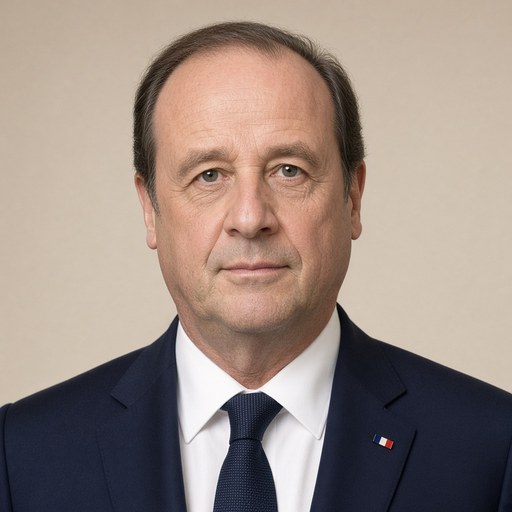
Statement by Mr. François Hollande, President of the Republic, on health policy, in Poitiers on January 26, 2017.
 François Hollande · President of France
- Context
- Hollande addressed health professionals and officials in Poitiers on January 26, 2017, outlining five years of health policy achievements and future priorities.
- Main themes
- Healthcare system reform, access to care, third-party payment, medical deserts, Social Security deficit reduction, health insurance coverage, equal access to care, hospital and health infrastructure, health policy priorities, patient reimbursement
- Duration
- ~28 min
- Words
- 3,335
- Sentences
- 170
- Readability
- 52
- Grade
- 10.8
- Syntax
- 3.01
- Vocabulary
- 2.03
Translated from French
The broad sphere of national life a sentence belongs to. Every sentence has an Arena, so it is the denominator the other indices are read against.
Other170 sentences in 42 paragraphs
Madam Minister,
Mr. Secretary of State,
Mr. Deputy Mayor, dear Alain CLAEYS,
I would like to greet the President of the Departmental Council, the parliamentarians, and even the President of the Centre Region who would have liked to be associated with Poitou-Charentes, as part of a large grouping, but who ultimately remained alone and does not complain about it.
I wanted to thank all of you for your warm welcome. Because I wanted, in responding to the invitation of the Deputy Mayor, to come here to Poitiers, to see the different facets of what our healthcare system is, both a health center, a prestigious hospital, here the CHU, and also to visit centers that provide support. In short, everything that makes up the organization of our healthcare system, but also everything that reflects our desire to humanize and ensure equal access to care.
It is true that the French are very attached to their healthcare system and to Social Security which finances it. They believe that there is excellence and quality. They express great trust in all professionals, doctors, staff, whether in hospitals, in healthcare facilities, or in city medicine.
But at the same time, the French are worried; this is part of their nature. Sometimes for good reasons, sometimes because there is always a fear that what exists could disappear, and also because of the evolution of life, which calls for adaptations and modifications. Will there always be the same level of reimbursement? Given the cost of a number of treatments, of medications that have very high prices. Will everyone be able to access what technology, innovation, and research can provide? Will there always be enough emergency services present in the territory with the necessary means to accommodate, for example, during epidemics? We have experienced one, with the flu.
Then, there is this concern, which at first was probably quite muted, diffuse, and which has now become more intense, the medical deserts, in rural areas, but also in the neighborhoods of our cities.
So, since there is both a great deal of trust in the healthcare system, recognized excellence, generally accepted quality, and at the same time this questioning about the future, we must make and continue to make health a priority for France and for the French.
For nearly five years, we have acted in four main directions. First, to allow access to care for all, while controlling the accounts. This is, as we know, a dilemma. We have to improve the coverage of health expenses for our fellow citizens while also reducing the deficit of health insurance, because we cannot imagine financing current expenses through credit or loans. We do not have the right to do so, even if that is what has been done in the past.
The results are there; it has been possible to reduce the deficit of what is called Social Security: today, it is balanced. Even though there is still a deficit for health insurance of nearly 2 billion, this deficit was nearly 9 billion in 2012. It has also been possible to improve coverage and access to care. For example, excess fees have been stabilized, whereas for twenty years, they had been continuously increasing. There is also continuity of rights through what is called universal health coverage. Finally, there has been a strengthening of complementary health insurance and the development of third-party payment.
Third-party payment is a fairly common practice in many of our neighboring countries. There are always those who take it as an example on many subjects. We had, perhaps, a higher level of reimbursement than elsewhere, but a system that resulted in the patient, the insured, having to advance the costs. Third-party payment, which already exists for pharmacies, is being implemented for the most modest patients, for pregnant women, for chronic patients, totaling 14 million insured individuals. On November 30, third-party payment will be the rule for everyone. Even though it is already accessible to all. I thank Marisol TOURAINE for her persistence in achieving this result.
Persistence does not always mean popularity, but popularity comes afterward, once the measure is applied. We know each other well, we French; we have both an irrepressible desire for reform and at the same time, as soon as it arrives, a certain reluctance to what could be a change in our habits. Then once the reform has passed, we wonder: but what existed before? We are even very attached to what has been introduced; there is no doubt that this will also be the case for third-party payment. I say this for all those who might at some point consider reversing this measure.
In the same way, mandatory health insurance reimburses more and more care: today, it covers nearly 80%. Some tell us: "But why isn't it 100%? We should eliminate complementary health insurance and put everything into Social Security." It is an idea, but it would mean that at that point, contributions would be higher, that structures would disappear, and a form of freedom would also be reduced. Therefore, it is very important that Social Security ensures reimbursement for the greatest number of care.
There has also been, and there is still, the need to improve access to certain care: I am thinking of dental care. A plan has been decided that will cap the price of prosthetics and allow for better reimbursement of these interventions, particularly by health insurance. There is a negotiation currently underway between health insurance and professionals, and I hope it can be carried through to completion. If there is no agreement, the provisions planned will be implemented by decree. But it is always preferable that it be through a contract that partners can find solutions.
So here is what I have been hearing for nearly five years: it is to allow access to care, better reimbursements, while controlling social accounts, and I believe we have achieved this result.
The second priority is research and innovation. France has considerable assets with university hospital centers and with hospital-university institutes that are funded by the future investment program. I have noted this here: the CHU of Poitiers is one of the most modern in France, and unique interventions are performed here in France. I do not say this so that all patients come to the hospital here in Poitiers, but what I have seen is admirable. In the cardiovascular and neurovascular center, several disciplines coexist and work together; there are interventional procedures aided by embedded imaging. In short, everything revolves around the patient, and we are truly in excellence.
This is an important investment that has been made here: 86 million euros, which is considerable. It is financed by Social Security; it is she who allows the hospital to have the means. And it is also thanks to management efforts, and I want to commend the management of the establishment once again.
We must invest; we must have excellence everywhere, and there has been an investment plan of 2 billion euros that was launched last May, which complements what has been done so far: 10 billion in additional resources for public hospitals during the five-year term because we need to have the best equipment, the best research, and the most recent innovations. We must ensure that innovations can be rapidly disseminated in care practices through simplification of procedures. I am also thinking of the revolution called personalized medicine. Again, we will create 12 high-throughput genome sequencing platforms, and two of these platforms will be installed as early as 2017.
Speed, efficiency, personalization, that is what medicine of tomorrow is, and it is a change that will affect all establishments, all practices, since we must move forward with increasingly efficient innovations, with interdisciplinarity and with personalization. I know what this can change in practices, and therefore we must also change a number of habits. The same goes for telemedicine; here too, Poitiers is an example that facilitates consultations, expertise, and remote monitoring. It is another revolution that is coming. But it must never be forgotten that only human intervention can heal, cure, and soothe.
I have mentioned, and it has also been a requirement for me since 2012, the fight against medical deserts. We have created territorial hospital groups. It is not easy because we are all very attached to our municipalities, our departments, our regions, and the same goes for our hospital establishments. Nothing is worse for a territory than to know that its establishment may lose its autonomy. However, it is necessary, essential that there be this cooperation, this coordination. You have succeeded here, first by merging establishments and then by creating this territorial hospital group. Again, I have seen the results: the pooling of technical platforms, the valorization of care teams, the coherence in the organization of hospital care. I understood that this was the case in Châtellerault and Loudun, where, thanks to this organization, it was possible to have medical presence. I think this is yet another great example of what a hospital opening up to others, working as a team can do for the balance of a territory.
Next, there are the Health Houses. I visited the one in Les Couronneries, and this is yet another objective that we set and achieved. We have quadrupled the number of Health Houses in less than five years. There are now nearly 1,200, and I also want to commend the commitment of healthcare professionals and the importance of these centers in local care. The minister told me that today, young doctors primarily choose to settle in Health Houses because they can work together, because they are in teams, and because they also see an important problem in Health Houses that requires particular support to alleviate costs for these structures, so that administrative burdens can be fairly distributed.
We also wanted, always to enable the fight against medical deserts, to have recruitments in hospitals: (31,000 since 2012) that we will favor liberal doctors where they are most needed. In this case, there could have been a method that was obligation. I know that a number of elected officials were in favor of this solution. I have never believed that it was possible to force a doctor to go where he did not want to go. Moreover, what is true for doctors is also true for all other citizens. So it is not about being in coercion; it is about being in encouragement, and that is what has been done: 1,700 public service commitment contracts, 1,000 general medicine practitioner contracts, more training for doctors as SAMU correspondents, and then, because we also need the entire territory to be accessible, strengthening the airlift capabilities of SMUR.
I understood that here, the helicopter was a question that was raised, and the director of the ARS, accompanying me on this visit, had no other choice, was necessarily questioned, and he perfectly answered by saying that the savings that had been made could be used for this equipment. I want to thank him here, even if he had not given his official answer at this stage.
I now want to address the challenges we collectively have to face. First, there is the challenge of prevention and education. It is a common place to say: it is better to prevent than to cure, it is better to provide information, it is better to enable support before there may be the onset of a disease or a tragedy. But we must nevertheless organize this prevention because it is both essential for controlling health expenses and for combating inequalities, because it is often the most vulnerable, the most modest who are not informed and educated about health. It starts in the family, at school, but also throughout life, in workplaces. We have therefore made sure to launch a major movement for prevention that touches all schools, even higher education, and, obviously, the world of work. Even in occupational medicine, a law that has sparked much debate, the Labor Law, has reorganized occupational medicine so that it can be present where the risks are the highest in order to prevent them.
I wanted to launch a mobilization on the well-being of young people with the Regional Health Agencies and the education authorities, in connection with the Houses of Adolescents, to pool all resources to help young people who isolate themselves, who sometimes put themselves in danger, and who express a sense of malaise. This is for prevention, education, and it particularly concerns young people.
The second challenge we face is the challenge of old age. We are aware of the ongoing demographic changes; we know that life expectancy is increasing, and we must take care of more and more aging or dependent individuals. This is the subject of a law, the law of December 28, 2015, relating to the adaptation of society to aging, which allows for better support for loss of autonomy at home and coordination of preventive actions in each department. Much will also depend on what we do with each departmental council. There is also a reduction in the out-of-pocket expenses for families who have to take responsibility for a dependent person.
There was this very heavy, very delicate question regarding the dignity of the person at the end of life. This has been the subject of much reflection that I initiated as early as 2012, many reports, and also the referral to the National Consultative Ethics Committee. We needed to seek, beyond divisions, beyond the multiple philosophies we know, to find consensus. It is not easy to find consensus, even on subjects of such importance.
I therefore asked two parliamentarians, Alain CLAEYS and Jean LEONETTI, to prepare a law that could affirm the right of every person to a dignified and peaceful end of life. This law was able to be voted on in consensus at the beginning of February last year. It organizes the right for people at the end of life to deep and continuous sedation until death. It also introduces what are called "advance directives," meaning the right for any person to express at any time in their life what they wish, particularly the refusal of aggressive medical treatment. These directives can, of course, be amended at any time.
This is a major right of freedom for the citizen, for the patient. It is also a responsibility entrusted to medical teams, but we wanted to allow for an end of life that everyone can manage and for the process to be soothing, through the possibility of deep and continuous sedation.
A law is essential. It provides the framework. Then, it is a matter of application, and I also want to acknowledge all the staff who dedicate themselves to finding the balance point, to providing solutions in connection with the patient and their family.
We have also improved the development of palliative care. Here in Poitiers, you have, once again, found excellence. I want to express my admiration for the staff in these services who accompany, sometimes for a long time, patients at the end of life and who provide them with the relief, care, and humanity that are essential in a civilized, advanced society. There is also the need to support in nursing homes, at home, and we will have to respond to increasing needs and make palliative care a fully-fledged academic discipline.
I wanted, coming to Poitiers, to salute Alain CLAEYS for this remarkable work that has been a great progress for our society. If, at some point, we must always reflect on the legacy we leave, this law will be among the great laws of the Republic.
There are those who would like to go further, and that is quite legitimate! The evolution of a society is necessary! There are all the questions of accompanying the end of life, when one has decided! This is another question, which was not the one that was posed, and which may eventually deserve debates and decisions. But today, this progress has been made.
The last challenge I wanted to mention before you is the organization of care through the relationships between professionals, hospitals - city medicine. We need this coherence, we need this mutual trust, we need an even stronger articulation between hospital establishments, city medicine, and primary care. We will do everything to ensure that there can be, once again, a better understanding for the support of the patient.
A final word on innovative products that can be very expensive but that heal. This is a major issue! Up to what price level can we accept, in a society, to offer patients the solution to their illness for free? There are countries where it depends on life expectancy, "I provide you with the product because you are young. If you are too old, you cannot access it." There are countries where it depends on wealth, "You can pay for the medication, you are entitled to it. You cannot? Well, you will have to live with your illness."
This is a problem that does not arise at the level of a country; it arises at the level of the world! Because in very poor countries, we know that there are innovative products that can heal, we also know that access is impossible. I make this cause of access to medicines for all a French cause. That is to say, here, being capable of living up to what is the moral and ethical responsibility, and also at the global level. France carries this message. I have done so, by the way, with what is called the G7, that is to say, the richest countries in the world, saying that if we do not make the most innovative medicines available to everyone, part of the world will revolt. How can a mother understand that her child will disappear because she cannot access care? How can there not be revolts that occur for life, against inequalities?
Here in France, I had a recent testimony. An elderly person told me, "Here, my partner has a disease, hepatitis C, and I know that the price of the medication is very high. And she is elderly! She was provided with the hepatitis C treatment. She was saved." And he tells me, "I am proud to live in France because in France, I can have access to treatment and save my partner, in this case, my wife, because we have Social Security."
It was expensive, the treatment for hepatitis C, several hundred million euros, for ultimately a limited number of patients, even if there are many! The same could be said for HIV treatment, for cancers. This raises the major question: what kind of society do we want to live in? What are we willing to share together? Are we still determined to contribute, to contribute to solidarity?
This is a subject that can be viewed politically: what falls under private responsibility, what falls under national solidarity? This is a subject that must also be viewed in light of a conception of the Republic: access for all to care, efficiency in the organization of our health system, research and innovation as a condition for raising quality and excellence.
We must respond for the coming years, knowing that, with all the necessary rigor for controlling public accounts, with all the demands we must place on reducing a number of levies, particularly on households, as well as on businesses, if we want to be competitive, we will always need to allocate national spending in favor of health. There is not an obligation based on what an old social model is, Social Security. No! It is an investment in the future because prioritizing health is ensuring national cohesion, opening the promise of equality for all, and making sure we are in a society of kindness and well-being.
That is why I wanted, here in Poitiers, to pay tribute to all health professionals, but also to our health system, to Social Security, to Health Insurance, to what makes us all together in the French Republic. Thank you.
The original French. The tags above are read on the English translation's sentences.
Madame la ministre,
Monsieur le Secrétaire d'Etat,
Monsieur le Député Maire, cher Alain CLAEYS,
Je salue ici le Président du Conseil départemental, les parlementaires et même le Président de la Région Centre qui aurait bien voulu être associé à Poitou-Charentes, dans le cadre d'un grand regroupement, mais qui finalement est resté seul et ne s'en plaint pas.
Je voulais ici tous et toutes vous remercier pour votre accueil. Car je souhaitais en répondant à l'invitation du Député Maire, venir ici à Poitiers, pour voir les différentes facettes de ce qu'est notre système de soins, à la fois une maison de santé, un lieu hospitalier prestigieux, ici le CHU, aller aussi dans des centres qui permettent l'accompagnement. Bref, tout ce qui fait l'organisation de notre système de soins, mais aussi tout ce qui témoigne de la volonté qui est la nôtre d'humaniser et d'assurer l'égalité de l'accès aux soins.
Il est vrai que les Français sont très attachés à leur système de santé et à la Sécurité sociale qui permet son financement. Ils estiment qu'il y a de l'excellence et de la qualité. Ils expriment une grande confiance à l'égard de tous les professionnels, les médecins, les personnels, que ce soit à l'hôpital, dans les lieux d'établissement sanitaire ou que ce soit dans la médecine de ville.
Mais en même temps, les Français sont inquiets, cela fait partie de leur nature. Parfois pour de justes raisons, parfois parce qu'il y a toujours une crainte que ce qui existe pourrait disparaître et puis, parce qu'il y a l'évolution de la vie, qui appelle des adaptations, des modifications. Est-ce qu'il y aura toujours le même niveau de remboursement ? Compte tenu du coût d'un certain nombre de traitements, de médicaments qui ont des prix très élevés. Est-ce que chacune, chacun pourra accéder à ce que la technologie, l'innovation et la recherche peuvent permettre ? Est-ce qu'il y aura toujours des urgences qui seront suffisamment présentes sur le territoire avec les moyens nécessaires pour accueillir, lorsqu'il y a, par exemple, des épidémies ? Nous en avons vécu une, avec la grippe.
Puis, il y a cette inquiétude, qui au début, était sans doute assez sourde, diffuse et qui est devenue maintenant plus intense, les déserts médicaux, dans l'espace rural, mais également dans les quartiers de nos villes.
Alors, puisqu'il y a à la fois une très grande confiance dans le système de santé, une excellence reconnue, une qualité généralement bien admise et qu'il y a en même temps cette interrogation sur l'avenir, nous devons faire et continuer à faire de la santé une priorité pour la France et pour les Français.
Depuis près de cinq ans, nous avons agi dans quatre directions principales. D'abord, permettre l'accès de tous aux soins, tout en maîtrisant les comptes. C'est, on le sait, un dilemme. Nous avons à améliorer la couverture des dépenses de santé pour nos concitoyens et en même temps faire diminuer le déficit de l'assurance maladie, car on ne peut pas imaginer financer à crédit, par emprunt, ce qui représente des dépenses courantes. Nous n'en avons pas le droit, même si c'est ce qui a été fait dans le passé.
Les résultats sont là, il a été possible de diminuer le déficit de ce qu'on appelle la Sécurité sociale : aujourd'hui, elle est à l'équilibre. Même s'il reste encore un déficit pour l'Assurance maladie de près de 2 milliards, mais ce déficit était à près de 9 milliards en 2012. Il a été également possible d'améliorer la couverture et l'accès aux soins. Par exemple, les dépassements d'honoraires ont été stabilisés, alors que depuis vingt ans, ils étaient en hausse continue. Il y a une continuité également des droits à travers ce qu'on appelle la protection universelle maladie. Il y a eu enfin un renforcement des complémentaires santé et le développement du tiers payant.
Le tiers payant, est une pratique assez courante dans beaucoup de nos pays voisins. Il y en a toujours qui le prennent en exemple sur bien des sujets. Nous avions, nous, sans doute un niveau de remboursement plus élevé qu'ailleurs, mais un système qui aboutissait à ce que le patient, l'assuré social fasse l'avance des frais. Le tiers payant, qui existe d'ailleurs pour la pharmacie, est mis en place pour les patients les plus modestes, pour les femmes enceintes, pour les malades chroniques, soit 14 millions d'assurés sociaux. Le 30 novembre prochain, le tiers payant sera la règle pour tous. Même s'il est d'ores et déjà accessible à tous. Je remercie Marisol TOURAINE d'avoir mis de l'obstination pour aboutir à ce résultat.
L'obstination ne veut pas dire toujours popularité, mais la popularité vient après, une fois que la mesure est appliquée. Nous nous connaissons bien, nous les Français, nous avons à la fois une volonté de réforme irrépressible et en même temps, dès qu'elle arrive, une certaine fuite devant ce qui pourrait être un changement de nos habitudes. Puis une fois que la réforme est passée, on se demande : mais qu'est-ce qui existait avant ? On est même très attachés à ce qui a été introduit, nul doute que ce sera également le cas pour le tiers payant. Je dis cela pour tous ceux qui pourraient à un moment imaginer de revenir sur cette mesure.
De la même manière, l'Assurance Maladie obligatoire rembourse de plus en plus les soins : aujourd'hui, ce sont près de 80 %. Certains nous disent : « Mais pourquoi ce n'est pas 100 % ? Il faudrait que l'on supprime les complémentaires santé et les assurances et qu'on mette tout dans la Sécurité sociale. » C'est une idée, mais cela voudrait dire qu'il y aurait à ce moment-là des cotisations qui seraient plus élevées, qu'il y aurait des structures qui disparaîtraient et une forme de liberté qui également, se réduirait. Donc il est très important que la Sécurité sociale assure le remboursement du plus grand nombre de soins.
Il y a eu aussi et il y a encore la nécessité d'améliorer l'accès à certains soins : je pense aux soins dentaires. Il a été décidé un plan, qui fera en sorte qu'on plafonne le prix des prothèses et que l'on puisse mieux rembourser ces interventions, notamment par l'Assurance Maladie. Il y a une négociation qui est en cours entre l'Assurance Maladie et les professionnels et je souhaite qu'elle puisse être menée jusqu'à son terme. S'il ne devait pas y avoir d'accord, les dispositions prévues seront mises en uvre par décret. Mais il est toujours souhaitable que ce soit par contrat que les partenaires puissent trouver des solutions.
Donc voilà ce que j'ai entendu faire depuis près de cinq ans : c'est permettre, l'accès aux soins, des meilleurs remboursements, tout en maîtrisant les comptes sociaux et je crois que nous sommes arrivés à ce résultat.
La deuxième priorité, ce sont la recherche et l'innovation. La France dispose d'atouts considérables avec les centres hospitalo-universitaires et avec les instituts hospitalo-universitaires qui sont financés par le programme des investissements d'avenir. J'en ai fait le constat ici : le CHU de Poitiers est l'un des plus modernes de France et il se pratique ici des interventions uniques en France. Je ne dis pas cela pour que tous les patients viennent à l'hôpital ici, à Poitiers, mais ce que j'ai vu est admirable. Dans le centre cardio-vasculaire et neuro-vasculaire coexistent plusieurs disciplines qui travaillent ensemble, il y a des actes interventionnels aidés par l'imagerie embarquée. Bref, tout tourne autour du patient et nous sommes véritablement dans l'excellence.
C'est un investissement important qui a été consenti ici : 86 millions d'euros, c'est considérable. C'est financé par la Sécurité sociale £ c'est elle qui permet que l'hôpital puisse disposer des moyens. Et c'est grâce aussi aux efforts de gestion et je veux saluer là encore la direction de l'établissement.
Nous devons investir, nous devons avoir de l'excellence partout et il y a eu un plan d'investissement de 2 milliards d'euros qui a été lancé en mai dernier et qui complète ce qui avait été fait jusqu'à présent 10 milliards de moyens supplémentaires pour l'hôpital public durant le quinquennat parce que nous avons besoin d'avoir les meilleurs matériels, la meilleure recherche et les innovations les plus récentes. Nous devons faire en sorte que les innovations puissent être diffusées rapidement dans les pratiques de soins par une simplification des procédures. Je pense aussi à la révolution qui s'appelle la médecine personnalisée. Là encore, nous allons créer 12 plateformes à haut débit de séquençage du génome et deux de ces plateformes seront installées dès 2017.
Rapidité, efficacité, personnalisation, voilà ce qu'est la médecine de demain et c'est un changement qui va affecter tous les établissements, toutes les pratiques, puisque nous devons aller avec des innovations sans cesse plus performantes, avec une interdisciplinarité et avec la personnalisation. Je sais ce que cela peut modifier dans les pratiques et donc nous devons là aussi changer un certain nombre d'habitudes. Il en est de même pour la télémédecine ici aussi, Poitiers est un exemple qui facilite les consultations, les expertises et la surveillance à distance. C'est une autre révolution qui arrive. Mais elle ne doit jamais faire oublier que seule l'intervention humaine peut soigner, guérir, apaiser.
J'ai évoqué et c'était pour moi aussi une exigence depuis 2012 la lutte contre les déserts médicaux. Nous avons créé les groupements hospitaliers des territoires. Ce n'est pas facile, parce que nous sommes tous très attachés à nos communes, nos départements, nos régions et il en est de même pour nos établissements hospitaliers. Rien n'est pire pour un territoire que de savoir que son établissement peut perdre son autonomie. Pourtant, il est nécessaire, indispensable qu'il y ait cette coopération, cette coordination. Vous l'avez réussie ici, d'abord, en fusionnant des établissements et ensuite en créant ce groupement hospitalier territorial. Là encore, j'ai vu les résultats : la mise en commun de plateaux techniques, la valorisation des équipes soignantes, la cohérence dans l'organisation des soins hospitaliers. J'ai compris que c'était le cas à Châtellerault et à Loudun où, grâce à cette organisation, il était possible de disposer d'une présence médicale. Je pense que c'est là encore un très bel exemple de ce qu'un hôpital s'ouvrant à d'autres, travaillant en équipe peut faire pour l'équilibre d'un territoire.
Ensuite, il y a les Maisons de Santé. J'ai visité celle des Couronneries et c'est encore un objectif que nous avions fixé et qui a été atteint. Nous avons multiplié par quatre les Maisons de Santé en moins de cinq ans. Il y en a aujourd'hui près de 1 200 et je veux là aussi saluer l'engagement des professionnels de santé et l'importance de ces centres dans les soins de proximité. La ministre me disait qu'aujourd'hui, les jeunes médecins choisissent pour l'essentiel l'installation des Maisons de Santé, parce qu'ils peuvent travailler ensemble, parce qu'ils sont en équipe et parce qu'ils voient aussi problème important dans les Maisons de Santé qui suppose d'ailleurs qu'il puisse y avoir un soutien particulier pour alléger les coûts pour ces structures , que les charges administratives peuvent être justement réparties.
Nous avons aussi voulu, toujours pour permettre, la lutte contre les déserts médicaux, qu'il y ait dans les hôpitaux des recrutements : (31 000 depuis 2012) que l'on favorisera des médecins libéraux là où ils sont le plus attendus. Dans ce cas, il pouvait y avoir une méthode qui était l'obligation. Je sais qu'un certain nombre d'élus étaient favorables à cette solution. Je n'ai jamais cru qu'il était possible de contraindre un médecin à aller là où il ne voulait pas aller. D'ailleurs, ce qui est vrai pour les médecins, est vrai aussi pour tous les autres concitoyens. Donc il ne s'agit pas d'être dans la coercition, il s'agit d'être dans l'incitation et c'est ce qui a été fait : 1 700 contrats d'engagement de service public, 1 000 contrats de praticiens de médecine générale, davantage de formations de médecins comme correspondants de SAMU et puis, parce que nous avons besoin également que tout le territoire puisse être accessible, renforcement des moyens héliportés des SMUR.
J'ai cru comprendre qu'ici, l'hélicoptère, c'était une question qui était posée et le directeur de l'ARS, m'accompagnant dans cette visite il n'avait pas d'autre choix , a été forcément interpellé et il a parfaitement répondu en disant que les économies qui avaient pu être faites pouvaient être utilisées pour cet équipement. Je veux ici l'en remercier, même s'il n'avait pas donné sa réponse officielle à ce stade.
Je veux maintenant en arriver aux défis que nous avons collectivement à relever. D'abord, il y a le défi de la prévention et de l'éducation. C'est un lieu commun que de dire : mieux vaut prévenir que guérir, mieux vaut donner de l'information, mieux vaut permettre l'accompagnement avant qu'il puisse y avoir éventuellement le déclenchement d'une maladie ou d'un drame. Mais faut-il néanmoins organiser cette prévention parce qu'elle est à la fois essentielle pour la maîtrise des dépenses de santé et pour la lutte contre les inégalités, parce que ce sont souvent les plus fragiles, les plus modestes qui ne sont pas informés et éduqués par rapport à la santé. Cela commence dans la famille, à l'école, mais aussi tout au long de la vie, dans les lieux de travail. Nous avons donc fait en sorte de lancer un grand mouvement pour la prévention qui touche tous les établissements scolaires, même l'enseignement supérieur et, à l'évidence, le monde du travail. Même sur la médecine du travail, une loi qui a fait beaucoup de débats, la loi Travail, a réorganisé la médecine du travail pour qu'elle puisse être là où il y avait les risques qui étaient les plus importants afin de les prévenir.
J'ai voulu lancer, une mobilisation sur le bien-être des jeunes avec les Agences régionales de Santé et les rectorats, en liaison avec les Maisons des Adolescents, pour mettre en commun tous les moyens pour aider les jeunes qui s'isolent, qui parfois se mettent en situation de danger et qui expriment un mal-être. Cela, c'est pour la prévention, l'éducation et cela vaut notamment pour les jeunes.
Le deuxième défi que nous avons à relever, c'est le défi du grand âge. On connaît les évolutions démographiques en cours, nous savons qu'il y a un allongement de la durée de la vie et il nous faut prendre en charge de plus en plus des personnes vieillissantes ou dépendantes. Ça fait l'objet d'une loi, la loi du 28 décembre 2015 relative à l'adaptation de la société au vieillissement qui permet un meilleur accompagnement de la perte d'autonomie à domicile et une coordination des actes de prévention dans chaque département. Beaucoup dépendra aussi de ce que nous ferons avec chaque Conseil départemental. Il y a également une diminution du reste à charge pour les familles qui ont à assurer la prise en responsabilité d'une personne dépendante.
Il y avait cette question très lourde, très délicate qui était à la dignité de la personne en fin de vie. Cela a été l'objet de beaucoup de réflexions que j'ai engagées dès 2012, de beaucoup de rapports, de la saisine également du Comité Consultatif National d'Ethique. Il fallait chercher, au-delà des clivages, au-delà des philosophies que nous savons multiples, il fallait chercher le consensus. Ce n'est pas facile de trouver le consensus, y compris sur des sujets de cette importance.
J'ai donc demandé à deux parlementaires, Alain CLAEYS et Jean LEONETTI, de préparer une loi qui pourrait affirmer le droit de toute personne à une fin de vie digne et apaisée. Cette loi a pu être votée dans le consensus au début du mois de février de l'année dernière. Elle organise le droit pour les personnes en fin de vie à une sédation profonde et continue jusqu'au décès. Elle introduit aussi ce qu'on appelle les « directives anticipées », c'est-à-dire le droit pour toute personne d'exprimer à tout moment de la vie ce qu'il souhaite, notamment le refus d'un acharnement thérapeutique. Ces directives peuvent, bien sûr, être corrigées à tout moment.
C'est un droit majeur des libertés pour le citoyen, pour le patient. C'est également une responsabilité qui est confiée aux équipes médicales, mais nous avons voulu permettre qu'il y ait une fin de vie dont chacun puisse disposer et que la démarche soit apaisante, à travers la possibilité d'une sédation profonde et continue.
Une loi, c'est indispensable. Cela fournit le cadre. Ensuite, c'est affaire d'application, et je veux là aussi saluer tous les personnels qui se dévouent pour trouver le point d'équilibre, pour apporter la solution en liaison avec le patient et sa famille.
Nous avons aussi amélioré le développement des soins palliatifs. Ici à Poitiers, vous avez, là encore, trouvé l'excellence. Je veux dire mon admiration pour les personnels qui sont dans ces services et qui accompagnent, parfois longtemps, des patients en fin de vie et qui leur apportent le soulagement, le soin et l'humanité indispensables dans une société civilisée, dans une société évoluée. Il y a aussi la nécessité d'accompagner dans les EHPAD, au domicile, et nous aurons à répondre à de plus en plus de besoins et à faire, de ces soins palliatifs, une discipline universitaire à part entière.
Je voulais, venant à Poitiers, saluer Alain CLAEYS pour ce travail remarquable qui a été un grand progrès de notre société. Si, à un moment, il faut toujours réfléchir à la trace que l'on laisse, cette loi figurera parmi les grandes lois de la République.
Il y en a qui voudraient aller plus loin, et c'est bien légitime ! L'évolution d'une société est nécessaire ! Il y a toutes les questions de l'accompagnement de la fin de vie, quand on en a décidé ! C'est une autre question, qui n'était pas celle qui avait été posée, et qui méritera éventuellement des débats et des décisions. Mais aujourd'hui, ce progrès a été réalisé.
Le dernier défi que je voulais évoquer devant vous, est l'organisation des soins à travers les relations entre les professionnels, hôpital - médecine de ville. Nous avons besoin de cette cohérence, nous avons besoin de cette confiance mutuelle, nous avons besoin d'une articulation plus forte encore entre les établissements hospitaliers, la médecine de ville et les soins primaires. Nous ferons tout pour qu'il puisse y avoir, là encore, une meilleure compréhension pour l'accompagnement du patient.
Un dernier mot sur les produits innovants qui sont des produits qui peuvent être très chers, mais qui guérissent. C'est un grand sujet ! Jusqu'à quel niveau de prix peut-on accepter, dans une société, d'offrir gratuitement à des patients, la solution à leur maladie ? Il y a des pays où c'est en fonction de l'espérance de vie, « je vous fournis le produit parce que vous êtes jeune. Si vous êtes trop âgé, vous ne pouvez pas y avoir recours ». Il y a des pays où c'est en fonction de la fortune, « vous pouvez payer le médicament, vous y avait droit. Vous ne pouvez pas ? Eh bien vous devrez vivre avec votre maladie ».
C'est un problème qui ne se pose pas à l'échelle d'un pays, cela se pose à l'échelle du monde ! Parce que dans des pays très pauvres, on sait qu'il existe des produits innovants qui peuvent guérir, on sait aussi que l'accès y est impossible. Je fais, de cette cause de l'accès de tous aux médicaments, une cause française. C'est-à-dire ici, être capable d'être à la hauteur de ce qu'est la responsabilité morale, éthique et aussi au niveau du monde. La France porte ce message. Je l'ai fait, d'ailleurs, auprès de ce qu'on appelle le G7 c'est-à-dire les pays les plus riches du monde en disant que si on ne mettait pas les médicaments les plus innovants à la disposition de tous, une partie du monde se révoltera. Comment une mère peut-elle comprendre que son enfant va disparaître parce qu'elle ne peut pas accéder aux soins ? Comment n'y aura-t-il pas des révoltes qui se produiront pour la vie, contre les inégalités ?
Ici, en France, j'ai eu un témoignage récent. Une personne assez âgée, m'a dit « Voilà, ma conjointe est atteinte d'une maladie, de l'hépatite C, et je sais que le prix du médicament est très élevé. Et elle est âgée ! On lui a fourni le traitement de l'hépatite C. Elle a été sauvée ». Et il me dit « Je suis fier de vivre en France, parce qu'en France, on peut me permettre d'avoir ainsi l'accès à un traitement et sauver mon conjoint, en l'occurrence ma conjointe, parce que nous avons la Sécurité sociale ».
Cela a coûté cher, le traitement de l'hépatite C, plusieurs centaines de millions d'euros, pour finalement un nombre limité de patients, même s'il y en a beaucoup ! On pourrait dire la même chose pour le traitement du VIH, pour les cancers. Cela renvoie à la question majeure : dans quelle société voulons-nous vivre ? Qu'est-ce que nous sommes prêts à partager ensemble ? Est-ce que nous sommes toujours déterminés à cotiser, à contribuer pour la solidarité ?
C'est un sujet qui peut être regardé sur le plan politique : qu'est-ce qui relève de la responsabilité privée, qu'est-ce qui relève de la solidarité nationale ? C'est un sujet qui doit être regardé aussi en fonction d'une conception de la République : l'accès de tous aux soins, l'efficacité dans l'organisation de notre système de santé, la Recherche et l'innovation comme condition d'élever la qualité et l'excellence.
Nous devons répondre pour les prochaines années, en sachant que, avec toute la rigueur nécessaire pour la maîtrise des comptes publics, avec toute l'exigence aussi que nous devons mettre pour baisser un certain nombre de prélèvements, notamment sur les ménages, comme sur les entreprises, si nous voulons être compétitifs, il nous faudra toujours consacrer une dépense nationale en faveur de la santé. Il y a là, non pas une obligation qui serait fondée sur ce qu'est un modèle social ancien, la Sécurité sociale. Non ! C'est un investissement d'avenir, parce que donner priorité à la santé, c'est assurer la cohésion nationale, c'est ouvrir la promesse de l'égalité pour tous et c'est faire que nous soyons dans une société de bienveillance, de bien-être.
Voilà pourquoi je tenais, ici à Poitiers, à rendre hommage à tous les professionnels de santé, mais également à notre système de santé, à la Sécurité sociale, à l'Assurance-maladie, à ce qui fait que nous sommes tous ensemble dans la République française. Merci.