




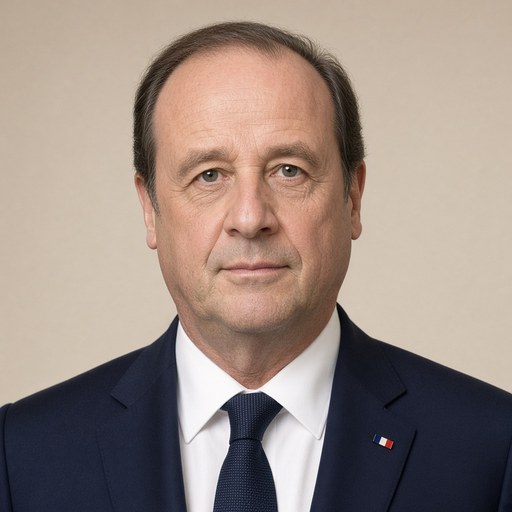
Statement by Mr. François Hollande, President of the Republic, on the fight against cancer, in Paris on December 4, 2012.
 François Hollande · President of France
- Context
- Hollande addressed health professionals and researchers in Paris on December 4, 2012, to announce France's third national cancer plan for 2014–2018.
- Main themes
- Cancer prevention and screening, national cancer plan 2014-2018, public health policy, cancer research and treatment progress, INCa, inequalities in healthcare, fight against smoking and alcoholism, cancer mortality and statistics, patient and family support, epidemiology, cancer care coordination
- Duration
- ~20 min
- Words
- 2,422
- Sentences
- 140
- Readability
- 50
- Grade
- 10.5
- Syntax
- 2.71
- Vocabulary
- 2.14
Translated from French
The broad sphere of national life a sentence belongs to. Every sentence has an Arena, so it is the denominator the other indices are read against.
Other140 sentences in 47 paragraphs
Ladies and gentlemen ministers,
Madam President of INCa,
Ladies and gentlemen directors,
Ladies and gentlemen,
I would like to first thank the rector of Paris for welcoming us to one of his many establishments and for giving an academic character to our meeting.
I am addressing you to talk about a subject where political speech is always imbued with gravity and humility when it touches on the most intimate, the most painful aspects of each of our lives. Cancer is one of those subjects.
The diagnosis, at the very moment it is formulated and revealed, disrupts the existence of the person to whom it is communicated, and the lives of their loved ones. It creates a before and an after the onset of the disease.
Five million families in France are confronted with this situation and know all of this. They know that cancer brings worry, uncertainty, and loneliness. But it also brings hope.
For this ordeal has now become one of duration. It can extend over years, during which remissions and anxieties follow one another.
A human, physical, psychological, and familial ordeal, cancer is also one of the greatest public health challenges for our country. It has become the leading cause of mortality in France.
Every year, more than 350,000 French people learn that they have cancer, and this number is steadily increasing. Every day, 1,000 new cases are detected. Every day, 500 people die from this disease in France.
Yet, for years, the efforts that have been made by many of those present in this room have borne fruit: in France, nearly 45% of cancers are cured. This is an encouragement for all those facing the disease, but also for all those who have combined their will and energy to reduce suffering and conquer the illness.
I want to acknowledge the mobilization of everyone: doctors, professionals, associations, and particularly the National League Against Cancer and the ARC Foundation for Research. These results are also due to the decisions made by the State over the past decades. I think of the National Cancer General States launched by Lionel Jospin, which prepared for the creation of the National Cancer Institute desired by Jacques Chirac in 2004.
INCa is now a unique structure that brings together and animates research, care, human sciences, and social sciences. It is considered - be proud of this, Madam President - as a model for Europe and a reference for other major pathologies affecting our fellow citizens. I want to commend the work of everyone, including you, Madam President, engaged in these efforts that you continue to lead, and today’s conference is proof of that.
Since 2003, two plans have succeeded each other - the second decided in 2008 by Nicolas Sarkozy - is soon coming to an end. I want to evaluate it.
First, to highlight the undeniable progress that has been made: the pooling of data and personnel, the creation of treatment guidelines, the rapprochement between research teams and care facilities, the establishment of regional molecular biology platforms and early-phase clinical trial centers. This is what has been achieved in our country over the years thanks to the actions of all within the framework of these two cancer plans.
But beyond these advances, the time for new decisions has come. Certainly, to consolidate achievements, but also to prepare us for the new challenges related to medical progress.
It is these advances that justify the existence of a third cancer plan 2014 - 2018, which I am announcing today. I have asked Mr. Jean-Paul VERNANT, Professor of Hematology at Pierre and Marie Curie University, to coordinate its preparation. It will be led by the two relevant ministries, the Ministry of Social Affairs and Health and the Ministry of Research. Its implementation will be ensured by INCa.
This plan will be organized around five major priorities that I have come here to present to you.
1. The first is prevention.
There is primary prevention, which relies on two major instruments: information and epidemiology. Information must be targeted to be effective. It will be. It will address the youngest populations, starting from school. I am particularly thinking of the fight against smoking and alcoholism, which are wounds all the more gaping as these habits begin early in life. Epidemiology contributes to detecting environmental or personal factors involved in the development of the disease. This instrument will be strengthened.
Then, there is what is called secondary prevention, in other words, screening. It remains very insufficient despite, once again, many efforts that have been made and initiated in recent years: only one in three people undergo screening for colon cancer, and only two out of three women for breast cancer. These campaigns will therefore be strengthened, and they will be all the more successful as the quality of diagnostics improves and they reach all social categories and all territories. Because, as you have demonstrated, inequalities are cumulative.
It is the most modest populations in the territories most affected by the crisis who are not only hit but also distanced from preventive measures, care centers, and sometimes even centers of excellence. To such an extent that the risk of dying from cancer between the ages of 30 and 65 is twice as high among workers as among professionals. This phenomenon has multiple causes, which we know: differences in access to information, risky practices, and finally exposure to toxic substances, which is the cause of many cancers. The plan will therefore include provisions to prevent occupational risks, through regional health at work schemes. It will also aim to reduce inequalities in information, screening, education, access to care, and treatments. The cancer plan will be a plan to combat inequalities.
2. The second priority is research.
Everyone understands that it is essential. Saying this is a given. But it must be comprehensive, starting from the identification of causes and continuing to the bedside of the patient and even beyond, once treatments are completed. To support it, the public authorities will pursue - within the framework of the third cancer plan - two objectives:
- The first objective is the development of personalized medicine, that is to say, medicine that refers to biology and selects the treatment best suited to the sick person. This choice is demanding. It requires the State to establish often very heavy technological infrastructures. In particular, high-throughput sequencing. This medicine also requires data storage facilities and the presence of highly qualified personnel. I am particularly thinking of bioinformaticians who must analyze and interpret the data.
- Research will also be directed towards another objective: that of closely linked research and care structures - I did not say grouped - and coordinated. Because if cancer research is done for the patient, it is also done with the patient. Patients are the actors of their own treatment. They must have access to innovative care. They must also, if they wish, participate in clinical trials. And here lies a considerable break from the past and from a number of our prejudices. I am pleased that over the past four years, the number of patients participating in these trials has increased by more than 60%. This is a testament to the advances in research; it is also proof that care and research can merge. It is also a demonstration that patients want to be involved in research that may concern them but can also bring benefits to others.
3. The third priority is care.
It is today disrupted by two major phenomena.
First, the aging of the population. With age, the frequency of cancer increases, but people live longer with cancer. Oncology will therefore increasingly address fragile subjects. And with the time gained thanks to treatments for the first cancer, a recurrence or a second cancer may sometimes occur many years later. There must therefore be prolonged follow-up for many years.
The second phenomenon is the mutation of therapies. The 20th century was that of surgery. The 21st century will be that of medicine and so-called "non-invasive" techniques, that is to say imaging, ultrasounds, but also innovative drugs, with chemotherapies administered orally. Access for all to quality care is therefore a priority. It is the quality of the initial care that will determine whether the future of each patient can be changed.
Cancer will thus become a chronic disease with care increasingly provided at home. Therefore, we must rethink the reception places for patients so that they are first multidisciplinary and articulated with city medicine; to involve the attending physician more in care outside the hospital. In a way, a revolution is taking place given the chronic nature of the disease and the fact that it can be treated outside hospital structures. We will therefore need to design a precise financing mechanism that can take into account, at their fair cost, outpatient activities in oncology and particularly innovative care. The third cancer plan will therefore integrate this dimension.
4. The fourth priority is training.
There have been advances in recent years, as I have pointed out, in all areas, particularly to increase the number of doctors specialized in oncology. And yet there are still too many shortcomings. It is therefore necessary to facilitate pathways between medical specialties. The Minister of Higher Education and Research will make proposals on this dual subject within the framework of the third cancer plan.
Training also applies to general practitioners, who will play an increasingly significant role in the follow-up and treatment of the disease. Support, follow-up, and essential dialogue with the surrounding community are all part of the vocation of the family doctor and the attending physician. As outpatient oncology medicine will have a greater place, the attending physician will also have an increasing role. It is therefore necessary, within the framework of medical training, to integrate this awareness of the situation of patients with cancer more than today. I commend the initiative taken by some universities to already develop teaching in the presence of patients and their families. For doctors, these examples can serve as a reference. They will not only be supported but also generalized. The future cancer plan will also be a training plan. Finally, oncology needs clinical nurses, whether they are care coordinators or home caregivers participating in the medical and psychological care of patients and their families. This is a new profession whose creation must be included in this new cancer plan.
5. Finally, the last priority is life during and after cancer.
Our objective - always in the spirit of fighting against inequalities - is to ensure, as the President of the League Against Cancer so aptly puts it, the continuity of life, particularly professional life.
An information campaign will therefore be launched by the Ministry of Labor on the resumption of activity for employees, whether they are sick or cured. This was measure 29 of the second cancer plan. It is high time to implement it.
Talking about the human and social consequences of a chronic disease like cancer means addressing not only accessibility to training and work but also the possibility of taking out loans or being covered by insurance. Because the most unbearable inequality is that which excludes sick or cured cancer patients from the places of life where they should be welcomed as a priority.
The last convention known as AERAS was signed on February 1, 2011. For several months, monitoring indicators for its provisions have been introduced, which is good. But this coverage must be further improved, based on an updated scientific assessment of risks. The results of the work will be known, I believe, during the year 2013. I will personally ensure, along with the government, that these conclusions can be translated into concrete life.
It is essential to respect the dignity of patients - we all say this - and therefore not to consider them as patients when they are no longer ill. Not as convalescents on hold, but as patients who must first be seen as valid and active citizens.
I know that, unfortunately, too many patients are children, victims of cancer as well. Here again, we must welcome more, improve support and follow-up, allow children affected by the disease to enter the hospital or their homes, while continuing their education at their school or, at the very least, benefiting from educational support. I would like to commend all those who dedicate themselves to this cause and who—often as volunteers—contribute day after day to the success of these children in their exams. Last year, nearly 1,500 children benefited from an individualized support project and just under 1,200 received home educational assistance. This is too little. Therefore, the third cancer plan—still in the spirit of fighting against inequalities at the youngest ages of life—will focus on facilitating the return to school for those who had to be absent to undergo treatment.
At all ages of a person's life—as well as at all moments in the life of a Nation—fighting against suffering, battling against evil and disease, ensuring that the person prevails over the patient, are causes that elevate us, that make us greater than we are, and that lead us to believe in human hope.
I know that here you dedicate your time, your work, and your talent to this great cause of fighting against cancer. With this third plan prepared throughout 2013 and implemented starting in 2014, the State will be by your side to provide the means for medicine to advance, for research to progress, for human dignity to prevail, so as not to add to the inevitable misfortunes of physical pain the avoidable tragedies of discrimination and injustice.
Together—I am convinced of this—the State, doctors, professionals, staff who dedicate themselves to health wherever they work, researchers, and the associations whose major role I do not forget—yes, together we can give patients, their families, and all the French who also worry for themselves by asking the question: “Can I too, in my turn, be affected by this evil?”—we can, through this mobilization, through this plan that is taking shape, through this gathering of all these energies, give reasons to fight and above all to hope.
Ladies and gentlemen, the strength of humanity is its ability to overcome evil by its own means, wherever it may be, wherever it is located, and whatever its causes may be. As long as we have this confidence in the resilience of humanity and are also aware of France's role, then fighting against cancer is not only our honor—yours—but above all our duty—the duty of the State.
Thank you.
The original French. The tags above are read on the English translation's sentences.
Mesdames les ministres,
Madame la Présidente de l'INCa,
Mesdames et Messieurs les Directeurs,
Mesdames et Messieurs,
Je remercie d'abord le recteur de Paris de nous accueillir dans l'une de ses nombreuses dépendances et de donner un caractère universitaire à notre rencontre.
Je m'adresse à vous pour parler d'un sujet où la parole politique est toujours emprunte de gravité et d'humilité lorsqu'elle aborde les aspects les plus intimes, les plus douloureux de la vie de chacun d'entre nous. Le cancer fait partie de ces sujets-là.
Le diagnostic, au moment même où il est formulé et révélé, bouleverse l'existence de celui ou de celle à qui l'apprend, et la vie de ses proches. Il crée un avant et un après l'irruption de la maladie.
Cinq millions de familles en France sont confrontées à cette situation et savent tout cela. Elles savent que le cancer, c'est l'inquiétude, c'est l'incertitude, c'est la solitude. Mais c'est aussi l'espoir.
Car cette épreuve, aujourd'hui, est devenue celle de la durée. Elle peut s'étendre sur des années, au cours desquelles les rémissions et les angoisses se succèdent.
Epreuve humaine, physique, psychologique, familiale, le cancer est aussi l'un des plus grands enjeux de santé publique pour notre pays. Il est devenu la première cause de mortalité en France.
Chaque année, plus de 350 000 Français apprennent qu'ils sont atteints d'un cancer, et ce nombre augmente régulièrement. Chaque jour, 1 000 nouveaux cas sont décelés. Chaque jour 500 personnes meurent de cette maladie en France.
Pourtant, depuis des années, les efforts qui ont été engagés, par beaucoup de ceux qui sont ici présents dans cette salle, ont trouvé leur récompense : en France, on guérit près de 45 % des cancers. C'est un encouragement pour tous ceux qui sont confrontés à la maladie, mais également pour tous ceux qui ont conjugué leur volonté et leur énergie, pour que la souffrance soit réduite et que la maladie soit vaincue.
Je veux saluer la mobilisation de tous : médecins, professionnels, associations et en particulier la Ligue nationale contre le cancer et la Fondation ARC pour la recherche. Ces résultats doivent également aux décisions qui ont été prises par l'Etat durant les dernières décennies. Je pense aux Etats généraux du Cancer lancés par Lionel Jospin qui ont préparé la création de l'Institut national du Cancer voulue par Jacques Chirac en 2004.
L'INCA est désormais une structure, originale sûrement, qui regroupe et anime recherche, soins, sciences humaines et sciences sociales. Elle est considérée - soyez en fière, Madame la Présidente - comme un modèle pour l'Europe et comme une référence pour d'autres grandes pathologies qui touchent nos compatriotes. Je veux saluer le travail de tous, de vous Madame la Présidente, engages dans ces travaux que vous continuez à mener et le colloque d'aujourd'hui en est la preuve.
Depuis 2003, deux plans se sont succédés - le deuxième décidé en 2008 par Nicolas Sarkozy - arrive bientôt à son terme. Je veux en faire l'évaluation.
D'abord pour souligner les progrès incontestables qui ont été réalisés : la mise en commun des données et des personnels, la création de référentiels de traitements, le rapprochement entre les équipes de recherche et les lieux de soins, la mise en place de plateformes régionales de biologie moléculaire et de centres d'essais cliniques de phase précoce. Voilà ce qui pendant des années a pu être obtenu dans notre pays grâce à l'action de tous dans le cadre de ces deux plans cancer.
Mais, par-delà ces avancées, le temps de nouvelles décisions est venu. Certes, pour conforter des acquis, mais aussi pour nous préparer aux nouveaux enjeux liés aux progrès médicaux.
Ce sont les avancées qui justifient qu'il y ait un troisième plan cancer 2014 - 2018 dont j'annonce aujourd'hui le lancement. J'ai demandé à M. Jean-Paul VERNANT, Professeur d'hématologie à l'Université Pierre-et-Marie-Curie d'en coordonner la préparation. Il sera piloté par les deux ministères concernés, le ministère des Affaires sociales et de la Sante et le ministère de la Recherche. Sa mise en uvre sera assurée par l'INCA.
Ce plan s'ordonnera autour de cinq grandes priorités que je suis venu ici vous présenter.
1. La première, c'est la prévention.
Il y a la prévention primaire qui s'appuie sur deux instruments majeurs : l'information et l'épidémiologie. L'information doit être ciblée pour être efficace. Elle le sera. Elle s'adressera aux populations les plus jeunes, dès l'école. Je pense notamment à la lutte contre le tabagisme et l'alcoolisme qui sont des plaies d'autant plus béantes que ces consommations arrivent tôt dans la vie. L'épidémiologie contribue, elle, à détecter les facteurs environnementaux ou personnels impliqués dans le développement de la maladie. Cet instrument sera renforcé.
Ensuite, il y a la prévention que l'on dit secondaire, en d'autres termes le dépistage. Elle reste encore très insuffisante malgré, là encore, beaucoup d'efforts qui ont été menés et engagés ces dernières années : une personne sur trois, seulement, se soumet au dépistage du cancer du côlon, deux femmes sur trois seulement à celui du cancer du sein. Ces campagnes seront donc renforcées et elles auront d'autant plus de succès que s'affinera la qualité des diagnostics et qu'elles concerneront toutes les catégories sociales et tous les territoires. Car, vous l'avez démontré, les inégalités sont cumulatives.
Ce sont les populations les plus modestes dans les territoires les plus éprouvés par la crise qui sont non seulement frappés, mais qui sont éloignés des mesures de prévention, des centres de soins et parfois même des centres d'excellence. A tel point que le risque de mourir d'un cancer entre 30 et 65 ans est deux fois plus élevé chez les ouvriers que chez les professions libérales. Ce phénomène a de multiples causes, nous les connaissons : les différences d'accès à l'information, les pratiques à risque, enfin l'exposition à des substances toxiques qui est la cause de nombreux cancers. Le plan comportera donc des dispositions pour prévenir les risques professionnels, à travers des schémas régionaux pour la santé au travail. Il veillera aussi à réduire les inégalités dans l'information, le dépistage, l'éducation, l'accès aux soins, les traitements. Le plan cancer sera un plan de lutte contre les inégalités.
2. La seconde priorité, c'est la recherche.
Chacun conçoit qu'elle est essentielle. Dire cela est une évidence. Mais elle doit être globale £ partir de l'identification des causes et se poursuivre jusqu'au chevet du patient et même au-delà, une fois les traitements terminés. Pour l'appuyer, la puissance publique poursuivra - dans le cadre du 3ème plan cancer - deux objectifs :
- Premier objectif, le développement de la médecine personnalisée, c'est-à-dire de la médecine qui se réfère à la biologie et qui sélectionne le traitement le mieux adapté à la personne malade. Ce choix est exigeant. Il suppose que l'Etat mette en place des infrastructures technologiques souvent très lourdes. Notamment le séquençage à haut débit. Cette médecine aussi nécessite des lieux de stockage des données et la présence d'un personnel hautement qualifié. Je pense notamment aux bio-informaticiens qui doivent analyser et interpréter les données.
- La recherche sera également tournée vers un autre objectif celui des structures de recherche et de soins rapprochées - je n'ai pas dit regroupées - et coordonnées. Car si la recherche en cancérologie se fait pour le malade, elle se fait aussi avec le malade. Les patients sont les acteurs de leur propre traitement. Ils doivent avoir accès aux soins innovants. Ils doivent aussi, s'ils le souhaitent, participer aux essais cliniques. Et là se situe une rupture considérable par rapport au passé et par rapport à un certain nombre de nos préjugés. Je me réjouis qu'au cours de ces 4 dernières années, le nombre de patients participant à ces essais ait augmenté de plus de 60%. C'est le témoignage des avancées de la recherche £ c'est aussi la preuve que soin et recherche peuvent se confondre. C'est également la démonstration que les patients veulent être partie prenante de la recherche qui peut les concerner mais qui peut également apporter des bienfaits à d'autres.
3. Troisième priorité, la prise en charge.
Elle est aujourd'hui bouleversée par deux phénomènes majeurs.
D'abord, le vieillissement de la population. Avec l'âge, la fréquence du cancer augmente mais l'on vit plus longtemps avec le cancer. La cancérologie s'adressera donc de plus en plus à des sujets fragiles. Et avec le temps gagné grâce aux traitements du premier cancer, il peut survenir parfois bien des années plus tard une récidive ou un deuxième cancer. Il doit donc y avoir un suivi prolongé des années durant .
Le deuxième phénomène, c'est la mutation des thérapeutiques. Le XXème siècle avait été celui de la chirurgie. Le XXIème siècle sera celui de la médecine et des techniques dites « non invasives », c'est-à-dire l'imagerie, des ultra-sons, mais aussi des médicaments innovants, aux chimiotherapies administrées par voie orale. L'accès pour tous à des soins de qualité est donc une priorité. C'est la qualité de la prise en charge initiale qui fera que l'avenir de chaque patient pourra être modifié.
Le cancer va devenir ainsi une maladie chronique avec une prise en charge, de plus en plus, à domicile. Dès lors, nous devons repenser les lieux d'accueil des patients afin qu'ils soient d'abord multidisciplinaires et articulés avec la médecine de ville £ associer davantage le médecin traitant dans la prise en charge hors de l'hôpital. D'une certaine façon, c'est une révolution qui est en train de se produire compte-tenu du caractère chronique de la maladie et compte-tenu du fait qu'elle peut être soignée hors des structures de l'hôpital. Nous devrons donc concevoir un dispositif précis de financement qui puisse prendre en compte, à leur juste coût, les activités ambulatoires en cancérologie et en particulier les soins innovants. Le troisième plan cancer intègrera donc cette dimension.
4. La quatrième priorité, c'est la formation.
Il y a eu des progrès ces dernières années, je l'ai souligné, dans tous les domaines et notamment pour augmenter le nombre de médecins spécialisés en oncologie. Et pourtant il y a encore trop d'insuffisances. Il convient donc de faciliter les passerelles entre les spécialités médicales. La ministre de l'Enseignement supérieur et de la Recherche formulera sur ce double sujet des propositions dans le cadre du troisième plan cancer.
La formation, c'est aussi celle du médecin généraliste dont on voit qu'il va jouer un rôle de plus en plus grand dans le suivi et le traitement de la maladie. Le soutien, le suivi, le dialogue indispensable avec l'entourage, tout cela fait partie de la vocation du médecin de famille et du médecin traitant. Dès lors que la médecine ambulatoire en cancérologie va avoir une place plus grande, le médecin traitant aura lui aussi un rôle croissant. Il convient donc dans le cadre de la formation des médecins d'intégrer cette sensibilisation à la situation du patient atteint d'un cancer davantage qu'aujourd'hui. Je salue l'initiative prise par certaines Universités de développer, d'ores-et-déjà un enseignement en présence de patients, de leurs familles. Pour les médecins, ces exemples-là peuvent servir de référence. Ils seront non seulement soutenus mais généralisés. Le futur plan cancer sera aussi un plan de formation. Enfin,la cancérologie a besoin d'infirmiers cliniciens,qu'ils soient coordonnateurs de soins ou intervenant a domicile et participant a la prise en charge médicale et psychologique des patients et de leurs familles. C'est un nouveau métier dont la création devra s'inscrire dans ce nouveau plan cancer.
5. Enfin, la dernière priorité, c'est la vie pendant et après le cancer.
Notre objectif - toujours dans l'esprit de lutter aussi contre les inégalités - c'est d'assurer, comme le dit si bien la Présidente de la Ligue contre le cancer, la continuité de la vie et notamment de la vie professionnelle.
Une campagne d'information sera donc lancée par le ministère du Travail sur la reprise d'une activité pour les salariés, qu'ils soient malades ou guéris. C'était la mesure 29 du deuxième plan cancer. Il est plus que temps de l'appliquer.
Parler des conséquences humaines et sociales d'une maladie chronique comme le cancer, c'est traiter, non seulement de l'accessibilité aux formations et au travail, mais également de la possibilité de souscrire des prêts ou d'être couverts par des assurances. Car l'inégalité la plus insupportable est celle qui écarte des malades ou des personnes guéries du cancer, des lieux de vie où ils devraient être accueillis en priorité.
La dernière convention dite AERAS a été signée le 1er février 2011. Depuis quelques mois des indicateurs de suivi de ses dispositions ont été introduits, c'est bien. Mais cette couverture doit être améliorée encore, sur la base d'une évaluation scientifique actualisée des risques. Les résultats des travaux seront connus, je crois, dans le courant de l'année 2013. Je veillerai personnellement, avec le gouvernement, à que ces conclusions puissent être traduites dans la vie concrète.
Il convient de respecter la dignité des malades - nous le disons tous - et donc de ne pas les considérer comme des malades quand ils ne le sont plus. Pas davantage comme des convalescents en sursis, mais comme des patients qui doivent d'abord être regardés comme des citoyens valides et actifs.
Je sais qu'hélas trop de malades sont des enfants, victimes eux aussi du cancer. Là encore, nous devons accueillir davantage, améliorer l'encadrement et le suivi, permettre aux enfants touchés par la maladie d'entrer à l'hôpital ou au domicile, tout en suivant l'enseignement de leur établissement ou, en tout cas, en bénéficiant d'un accompagnement scolaire. Je salue d'ailleurs tous ceux qui s'y dévouent et qui - souvent bénévoles - contribuent jour après jour au succès de ces enfants aux examens. L'année dernière près de 1 500 enfants ont bénéficié d'un projet d'accueil individualisé et un peu moins de 1 200 d'une aide pédagogique à domicile. C'est trop peu. Dès lors le troisième plan cancer - toujours dans l'esprit de lutter contre les inégalités aux plus jeunes âges de la vie - s'attachera à favoriser le retour sur les bancs de l'école de ceux qui ont dû s'en absenter pour suivre un traitement.
A tous les âges de la vie d'une personne - comme d'ailleurs à tous les moments de la vie d'une Nation - se battre contre la souffrance, lutter contre le mal et la maladie, faire que la personne l'emporte sur le patient, sont des causes qui nous élèvent, qui nous rendent plus grands que nous ne sommes et qui font que nous croyons à l'espérance humaine.
Je sais qu'ici vous consacrez votre temps, votre travail et votre talent à cette grande cause qui est de lutter contre le cancer. Avec ce troisième plan préparé tout au long de l'année 2013 et mis en uvre à partir de 2014, l'Etat sera à vos côtés pour donner les moyens à la médecine d'avancer, à la recherche de progresser, à la dignité humaine de prévaloir, pour ne pas ajouter aux inévitables malheurs de la douleur physique, les drames évitables de la discrimination et de l'injustice.
Ensemble - j'en suis convaincu - l'Etat, les médecins, les professionnels, les personnels qui se dévouent pour la santé où qu'ils travaillent, les chercheurs, et les associations dont je n'oublie pas le rôle majeur £ oui, ensemble nous pouvons donner aux malades, à leurs familles, à tous les Français qui s'inquiètent aussi pour eux-mêmes en se posant cette question : « est-ce que moi aussi, à mon tour, je peux être touché par le mal ? » £ nous pouvons à travers cette mobilisation, à travers ce plan qui s'esquisse, à travers ce rassemblement de toutes ces énergies, nous pouvons donner des raisons de lutter et surtout d'espérer.
Mesdames, Messieurs, la force de l'humanité c'est d'être capable de vaincre par ses moyens propres le mal où qu'il soit, où qu'il se situe et quelles qu'en soient les causes. Dès lors que nous avons cette confiance dans le ressort de l'humanité et que nous sommes également conscients du rôle de la France, alors lutter contre le cancer est non seulement notre honneur - le vôtre - mais surtout notre devoir - celui de l'Etat.
Merci ».