




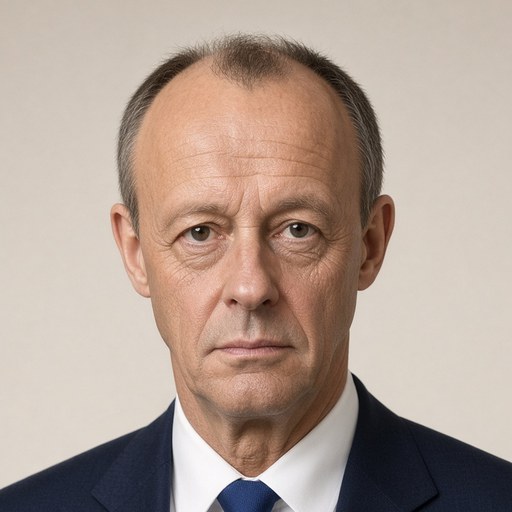
Speech by Chancellor Merz on the occasion of the annual conference of the Initiative "Chef:innensache" "Equal Opportunities is Work on Freedom"
 Friedrich Merz · Chancellor of Germany
- Context
- Merz addressed the tenth annual conference of the Chef:innensache initiative in Berlin on July 2, 2025, speaking on equal opportunities and women in leadership.
- Main themes
- Gender equality in leadership, equal opportunity, women in top positions, freedom and individual development, economic case for diversity, mixed teams and innovation, corporate responsibility, self-correction in free societies, legal equality vs. actual equality
- Duration
- ~20 min
- Words
- 2,362
- Sentences
- 118
- Readability
- 52
- Grade
- 10.9
- Syntax
- 3.00
- Vocabulary
- 2.01
Translated from German
The broad sphere of national life a sentence belongs to. Every sentence has an Arena, so it is the denominator the other indices are read against.
Other118 sentences in 35 paragraphs
Dear Ms. Fabry,
dear Ms. Dietsche,
my esteemed ladies and gentlemen,
thank you very much for the warm welcome! Thank you, Ms. Dietsche, for the hospitality here in your cool house, at the Allianz Forum. It’s wonderful to see you all here!
I am very pleased to welcome you today on the occasion of this annual conference in Berlin and that you have invited me. I gladly accepted the patronage on the occasion of your tenth anniversary because I believe this is a cause worth supporting in every respect that you represent. In this regard, I am happy to be with you this afternoon.
“There are already so many incompetent men in leadership positions,”
– Slowly, slowly, slowly! The quote is not finished yet.
“a few women in top positions cannot be that bad.”
This is not from me. It comes from Isabel Schnabel, Director of the European Central Bank, and I believe she has expressed something true, something you want to express and something she expresses with a sharp sense of humor. But, ladies and gentlemen, this is a common experience that you all and we all often encounter in companies and also in politics. It is not always just about filling top positions based on actual performance and actual qualifications. Other factors play a role, and these factors often favor men and disadvantage women.
To get serious right away: This is no trivial matter. This is above all not a “women’s problem.” This is a question of equal opportunity, and, ladies and gentlemen, equal opportunity is the most important part of our free society.
Now, the concept of freedom is currently claimed by many and also instrumentalized by some. Therefore, it is good to remind ourselves again and again what we mean by freedom in the Federal Republic and in what I would add is the normative West – this is not a geographical description, but a mental attitude; it says something about the inner state of our society: We mean the freedom of the individual to be able to develop freely, according to talents and abilities and not according to gender.
Now, it has been the case – as you all know – that for many centuries, only individuals of the male gender could claim this right to freedom. We owe it to generations of brave women that not only in the Federal Republic of Germany but in many parts of the world, legal systems now exist that provide for the equality of men and women. But as a society, we have also experienced that equality in constitutions or laws alone does not create equal opportunity, especially in the relationship between the genders. It is primarily about filling leadership positions, about the top positions, the positions from which decisions are made. Whether in business, in politics, or in almost all areas of society, the situation looks similar: Up to middle management, women are usually no longer a rarity. But one level above, as a woman, you suddenly find yourself largely alone with a group of men.
Fortunately, free societies have the ability for self-correction, not in some miraculous way, but because there are people within them who use their freedom to take responsibility, identify problems, seek solutions, and move forward with those solutions. Your initiative, Chef:innensache, stands precisely for that. You came together ten years ago, you, the HR managers of large companies and organizations from various fields, to do better and to make our country more equitable, to sustainably change something in the world of work, and above all, to ensure that it is indeed the best – and not the next best – who sit in the executive chairs of your companies and organizations.
You know: It harms your companies and organizations if half of our society is hardly considered in the pool of potential leaders. What a gigantic waste of talent! We all know – I know it from my political as well as my professional experience – that mixed teams work better. They are more innovative, they are more resilient in crises, and they make more balanced decisions. This is now, ladies and gentlemen, more than just well-researched and proven. After all, financial investors are also paying attention to gender balance in executive suites because they also know what it means for company results – and thus also for their own returns.
In other words: Equal opportunity enhances our economic performance! So this is not just about morality or a good feeling – both of which, in themselves, are important enough for the functioning of an open society – it is equally about our interests as an economic nation, as an industrial location. We also need female leaders to become and remain innovative, creative, resilient, and crisis-proof as a business location.
Ladies and gentlemen, for this reason, today and for this federal government, it is an important political priority. If we, as the Federal Republic of Germany, want to remain shapers in a world full of uncertainties, in a world that is changing ever faster, if we want to preserve our freedom, our prosperity, our security, and peace – also for future generations – then we need an innovative, growing, and crisis-proof economy, and for that, we need you, the women – everywhere, but also and especially in leadership positions.
Now we know that quotas alone will not really help us in this matter. When top women hit the proverbial glass ceiling, it is often due to a mix of many things: a lack of role models, male-dominated networks and cliques, inflexible working time models, and clichés that still operate in our minds. Leadership qualities such as assertiveness, competence, and decisiveness are still often considered male virtues, despite all counter-evidence.
You have recognized this in your ranks. You have recognized that we need a comprehensive cultural change in our working world. You have rolled up your sleeves, and you are leading the way: with mentoring and coaching programs, with training
, with awareness-raising work. I would like to express my heartfelt thanks to you, ladies and gentlemen, and especially to you, dear ladies, for doing this!
The work you do, so to speak, accompanies the political instrument of rules and quotas; yes, it makes them meaningful. By the way, the first law on leadership positions came into effect in the same year that this initiative was founded, namely in 2015. We in Germany had to learn that voluntary measures alone do not always lead to the goal. This applies to business just as much as to politics and political parties. A quota may temporarily limit entrepreneurial freedom. However, in the medium and long term, it is in the interest of personal freedom; because the freedom of the individual, the freedom to self-realization, is, in our understanding, enlarged by equal opportunity, not diminished.
Now, in the approximately 100 companies that fall under the fixed quota of the legal regulation, the proportion of women on supervisory boards has almost doubled since 2015 to around 38 percent today. In the management boards of the same companies, the proportion of women has even more than quadrupled, but it still stands at just under a quarter. This is a remarkable development within a relatively short time. But if less than a quarter of the executive positions are held by women, then there is still quite a lot to do!
The need for action becomes even more drastic when we look at the companies for which there is no legal regulation, but which must set their own target figures for supervisory boards and management boards. Recently, there were still many hundreds of companies that explicitly stated a target figure of “zero women.” I say it again: This is unacceptable! There is still much to be done.
I direct this appeal explicitly to us in politics and in the federal government. I do not need to beat around the bush: There are also areas in my party where the number of men is significantly higher than the number of women. This is mainly due to the structure of our membership. Only about a quarter of our members are women. This has an impact, also on leadership positions, on political mandates, and also on the filling of tasks in the federal government. I would like to take this opportunity, ladies and gentlemen, and I speak here deliberately in the plural: Your engagement in political parties can also change things for the better! It is mainly due to the composition of the political parties, most of them, that we are still not where we actually wanted to be.
However, this does not mean that we should not also take a look at the overall situation and recognize positive developments. This applies, for example, to the federal government I lead. With a proportion of women of 47 percent, the share among federal ministers is significantly higher than that of previous federal governments, and it is also significantly higher than the proportion of women in the German Bundestag. This has also been an important first step for me.
We are on a pretty good path when we look at the big picture, namely the entire federal service with its more than 600,000 employees. For them, the Federal Equal Opportunities Act states the following requirement:
“The goal is to achieve equal participation of women and men in leadership positions […] by December 31, 2025.”
Today is July 2, so we have just under half a year left. However, I can still say: These numbers give reason for optimism. The last survey was from mid-last year, 2024, and at that time, the proportion of women in leadership positions in the federal service was 47 percent. In the previous years, the proportion increased by an average of two percentage points per year. In the nearly 400 significant committees and supervisory bodies that the federal government has to fill, we were already at 49 percent in the last survey. So we have quite good chances, to put it somewhat casually, if we want to hit the target by the end of 2025. I not only promise you that I will closely monitor whether we actually achieve this, I also promise you: We will stay on it! By the way, I do this in the mentioned outstanding common interest. This is not a paternalistic attitude, but something that lies in our societal interest, that we succeed in this as we have intended.
You may also know that the inventor of the term “glass ceiling,” the Briton
Marilyn Loden,
passed away three years ago at the age of 76. She said in an interview in 2018 that she had long assumed that the problem of the “glass ceiling” would be resolved in her lifetime, so that the term “glass ceiling” would lose its meaning. We know that this unfortunately did not happen in her lifetime. Now, the term “glass ceiling” may evoke unpleasant experiences for you – at least for some of you – and these experiences were not only made thirty, twenty, or ten years ago; they are still being made by women of all ages and all career levels in almost all industries and areas of society.
I want Germany to become a country where this glass ceiling truly belongs to the past. Working on this, and you are doing this work here as well, is work for the future of our country. That is why I am pleased and have gladly taken on the patronage for your initiative! So let us work together to ensure that this country moves forward again: politics and business, women and men, men and women, young and old. Equal opportunity between the genders is a central key to this, and I say it again: The work for equal opportunity is work for our society of freedom!
You all know, we all feel that this freedom is once again particularly threatened today – from the outside as well as from within. If we want to defend this free society, we can only do so by looking forward. We must get out of the defensive. We must prove the successes, the future strength of this form of society ourselves, rather than just claiming it. Your work, ladies and gentlemen, and especially you, dear ladies, as the initiative Chef:innensache, is precisely this work, and that is why I thank you all for being on board and for doing this, for getting involved! I thank you and also the many other committed individuals in this matter for your great and tireless efforts! You are making the world of work better overall – not just for women, but for women and men alike.
Now I find myself in a certain embarrassment; for at a jubilee such as the one you are celebrating today, one usually wishes to look forward, towards the future: To many more successful years! – In the case of the initiative "Chef:innensache," however, it is such that in the best case, we will jointly eliminate the reasons that make your initiative so necessary. I therefore fear that we may still be celebrating twenty years of "Chef:innensache." But I would wish that by, let’s say, the thirtieth anniversary and perhaps even by the twenty-fifth anniversary – probably under a different patronage than mine – you will have already been able to rename it, because the glass ceiling will indeed have disappeared by then. I wish it for you, I wish it for all of us! So let us work together to ensure that this is indeed the case in the future!
Thank you very much! Congratulations on the anniversary! All the best for your work!
Under the patronage of Angela Merkel, the initiative "Chef:innensache" (formerly known as "Initiative Chefsache") was founded on July 13, 2015. In order to increase the female share in leadership positions, both genders are to engage equally. The initiative "Chef:innensache" is a network to promote a balanced ratio of women and men in leadership positions. The driving forces behind the initiative are executive members and boards of companies from various industries and sizes, as well as leaders of scientific, social, and public institutions.
The original German. The tags above are read on the English translation's sentences.
Sehr geehrte Frau Fabry,
liebe Frau Dietsche,
meine sehr verehrten Damen, sehr geehrte Herren,
herzlichen Dank für die freundliche Begrüßung! Herzlichen Dank, Frau Dietsche, für die Gastfreundschaft hier in ihrem gekühlten Haus, im Allianz Forum. Schön, dass Sie alle da sind!
Ich freue mich sehr, dass ich Sie heute anlässlich dieser Jahreskonferenz in Berlin begrüßen darf und dass Sie mich eingeladen haben. Ich habe anlässlich Ihres zehnjährigen Gründungsjubiläums die Schirmherrschaft gerne übernommen, weil ich finde, das ist ein in jeder Hinsicht unterstützenswertes Anliegen, das Sie vertreten. Insofern freue ich mich, dass ich heute Nachmittag bei Ihnen sein darf.
„Es gibt schon so viele unfähige Männer in Führungspositionen,“
(Beifall)
– Langsam, langsam, langsam! Das Zitat ist noch nicht zu Ende.
„da können ein paar Frauen in Toppositionen nicht so schlimm sein.“
Das stammt nicht von mir. Es stammt von Isabel Schnabel, Direktorin der Europäischen Zentralbank, und sie hat, glaube ich, etwas Richtiges zum Ausdruck gebracht, Das Sie zum Ausdruck bringen wollen und Das sie mit einem überspitzten Humor zum Ausdruck bringt. Aber, meine Damen und Herren, das ist eine Alltagserfahrung, die Sie alle und die wir alle häufig in den Unternehmen und auch in der Politik machen. Es geht nicht immer nur um die Besetzung der Topstellen nach tatsächlicher Leistung und tatsächlicher Befähigung. Andere Faktoren spielen eine Rolle, und nicht selten begünstigen diese Faktoren die Männer und benachteiligen die Frauen.
Um gleich sehr ernst zu werden: Das ist keine Lappalie. Das ist vor allem kein „Frauenproblem“. Das ist eine Frage der
Chancen
gerechtigkeit, und, meine Damen und Herren, Chancengerechtigkeit ist der wichtigste Teil unserer freiheitlichen Gesellschaft.
Nun wird der Begriff der Freiheit im Augenblick von vielen in Anspruch genommen und von manchen auch instrumentalisiert. Darum tut es ganz gut, dass wir uns immer wieder daran erinnern, was wir in der Bundesrepublik und im, wie ich einmal hinzufüge, normativen Westen ‑ das ist ja nicht etwa eine geografische Beschreibung, sondern es ist eine geistige Haltung; es sagt etwas über den inneren Zustand unserer Gesellschaft aus ‑ mit Freiheit meinen: Wir meinen damit die Freiheit der Person, sich frei entfalten zu können, nach Begabungen und nach Fähigkeiten und nicht nach Geschlecht.
Nun war es so – das wissen Sie alle –, dass sich geradezu über viele Jahrhunderte hinweg nur Personen männlichen Geschlechts dieses Recht auf Freiheit nehmen konnten. Wir verdanken es Generationen mutiger Frauen, dass nicht nur in der Bundesrepublik Deutschland, sondern in vielen Teilen der Welt mittlerweile Rechtsordnungen gelten, die die Gleichberechtigung von Mann und Frau vorsehen. Aber wir haben als Gesellschaft auch die Erfahrung gemacht, dass Gleichberechtigung in Verfassungen oder in Gesetzen allein noch keine Chancengerechtigkeit schafft, vor allem eben im Verhältnis der Geschlechter zueinander. Es geht vor allem um die Besetzung von Führungspositionen, es geht um die Topstellen, die Positionen, aus denen heraus Entscheidungen getroffen werden. Ob in der Wirtschaft, in der Politik oder in fast allen Bereichen der Gesellschaft, es sieht ähnlich aus: Bis zum mittleren Management sind Frauen meist keine Seltenheit mehr. Aber eine Führungsebene darüber sind Sie als Frau dann plötzlich mit einer Gruppe von Männern weitgehend allein.
Nun haben freiheitliche Gesellschaften glücklicherweise die Fähigkeit zur Selbstkorrektur, nicht auf irgendeine wundersame Weise, sondern weil es darin Menschen gibt, die ihre Freiheit dafür nutzen, Verantwortung zu übernehmen, Probleme zu identifizieren, Lösungen zu suchen und mit diesen Lösungen voranzugehen. Ihre Initiative Chef:innensache steht eben genau dafür. Sie haben sich vor zehn Jahren zusammengetan, Sie, die Personalverantwortlichen großer Unternehmen und großer Organisationen aus den ganz unterschiedlichsten Bereichen, um es eben besser zu machen und um unser Land chancengerechter zu machen, um nachhaltig etwas in der Arbeitswelt zu verändern, vor allem aber, um sicherzustellen, dass es tatsächlich die Besten sind – und nicht der Nächstbeste –, die in Ihren Unternehmen und Organisationen in den Chefsesseln sitzen.
Sie wissen: Es schadet Ihren Unternehmen und Organisationen, wenn im Pool der potenziellen Führungskräfte eine Hälfte unserer Gesellschaft kaum Beachtung findet. Was für eine gigantische Verschwendung von Talenten! Wir wissen alle – ich weiß es aus meiner politischen wie aus meiner beruflichen Erfahrung –, dass gemischte Teams besser arbeiten. Sie sind innovativer, sie sind in Krisen resilienter, und sie treffen ausgewogenere Entscheidungen. Das ist inzwischen, meine Damen und Herren, mehr als nur gut erforscht und erwiesen. Schließlich achten auch Finanzinvestoren mittlerweile auf die Geschlechter
balance
in den Chefetagen, weil sie ebenfalls wissen, was das für die Unternehmensergebnisse bedeutet – und damit auch für den eigenen Ertrag.
Anders gesagt: Chancengerechtigkeit steigert unsere wirtschaftliche Leistungsfähigkeit! Es geht hier also nicht nur um Moral oder das gute Gefühl ‑ beides, für sich genommen, ist wichtig genug für das das Funktionieren einer offenen Gesellschaft –, es geht genauso um unsere Interessen als Wirtschaftsnation, als Industriestandort. Wir brauchen eben auch die Chefinnen, um als Wirtschaftsstandort innovativ, kreativ, resilient und krisenfest zu werden und zu bleiben.
Meine Damen und Herren, genau aus diesem Grund ist das heute und für diese Bundesregierung eine wichtige politische Priorität. Wenn wir als Bundesrepublik Deutschland Gestalter bleiben wollen in einer Welt voller Unsicherheiten, in einer Welt, die sich immer schneller wandelt, wenn wir unsere Freiheit, unseren Wohlstand, unsere Sicherheit und den Frieden bewahren wollen – auch für die kommenden Generationen –, dann brauchen wir eine innovative, wachsende und krisenfeste Volkswirtschaft, und dafür brauchen wir Sie, die Frauen – überall, aber auch und gerade in den Führungspositionen.
Nun wissen wir, dass Quoten allein uns in dieser Frage nicht wirklich weiterbringen. Wenn Spitzenfrauen an die sprichwörtliche gläserne Decke stoßen, dann liegt das oft an einer Mischung aus vielen Dingen: an mangelnden Vorbildern, an männerdominierten Netzwerken und Seilschaften, an unflexiblen Arbeitszeitmodellen, an Klischees, die immer noch in unseren Köpfen wirken. Führungsqualitäten wie Durchsetzungsstärke, Kompetenz, Entscheidungsfreude werden immer noch und häufig für männliche Tugenden gehalten, trotz aller Gegenbeweise.
Sie haben das in Ihren Reihen erkannt. Sie haben erkannt, dass wir einen umfassenden Kulturwandel in unserer Arbeitswelt brauchen. Sie haben die Ärmel aufgekrempelt, und Sie gehen voran: mit Mentoring- und
Coaching
programmen, mit
Trainings
, mit Aufklärungsarbeit. Ich möchte Ihnen, meine Damen und Herren und vor allen Dingen sehr geehrte Damen, dafür ausdrücklich und sehr herzlich danken, dass Sie das tun!
Diese Arbeit, die Sie leisten, begleitet sozusagen das politische Instrument der Regeln und der Quoten, ja, es macht sie überhaupt erst sinnvoll. Das erste Führungspositionengesetz ist übrigens just in dem Jahr in Kraft getreten, in dem diese Initiative gegründet wurde, nämlich im Jahr 2015. Wir haben in Deutschland erst lernen müssen, auch wir in der CDU: Freiwilligkeit allein führt nicht immer zum Ziel. Das gilt für die Wirtschaft genauso wie für die Politik und für die politischen Parteien. Eine Quote mag unternehmerische Freiheit zunächst einmal kurzzeitig begrenzen. Mittel- und langfristig ist sie aber im Sinne der persönlichen Freiheit; denn die Freiheit der Person, die Freiheit zur Selbstentfaltung, wird nach unserem Verständnis durch Chancengerechtigkeit größer, nicht kleiner.
Nun hat sich in den etwa 100 Unternehmen, die unter die feste Quote des gesetzlichen Regelung fallen, der Frauenanteil in den Aufsichtsräten seit 2015 auf heute rund 38 Prozent fast verdoppelt. In den Vorständen der gleichen Unternehmen hat sich der Frauenanteil sogar mehr als vervierfacht, aber er liegt immer noch nur bei knapp einem Viertel. Das ist eine beachtliche Entwicklung innerhalb relativ kurzer Zeit. Aber wenn weniger als ein Viertel der Chefposten mit Frauen besetzt ist, dann gibt es eben immer noch ziemlich viel zu tun!
Noch drastischer fällt der Handlungsbedarf ins Auge, wenn wir uns die Unternehmen anschauen, für die keine gesetzliche Regelung gilt, die sich aber selbst eine Zielgröße für Aufsichtsrat und Vorstand setzen müssen. Zuletzt waren es immer noch viele Hundert Unternehmen, die explizit eine Zielgröße von „null Frauen“ angegeben haben. Ich sage es noch einmal: Das ist nicht akzeptabel! Es gibt noch viel zu tun.
Ich richte diesen Appell ausdrücklich auch an uns in der Politik und in der Bundesregierung. Ich muss hier gar nicht um den heißen Brei herumreden: Es gibt auch in meiner Partei Bereiche, in denen die Zahl der Männer deutlich über der Zahl der Frauen liegt. Das liegt vor allem an der Struktur unserer Mitgliederschaft. Nur rund ein Viertel unserer Mitglieder sind Frauen. Das hat Auswirkungen, auch auf Führungspositionen, auf politische Mandate und auch auf die Besetzung von Aufgaben in der Bundesregierung. Ich darf die Gelegenheit nutzen, meine Damen und Herren, und ich spreche hier bewusst im Plural: Auch Ihr Engagement in den politischen Parteien kann etwas zum Besseren wenden! Es liegt vor allem an der Zusammensetzung der politischen Parteien, der meisten jedenfalls, dass wir hier noch nicht da sind, wo wir eigentlich sein wollten.
Das heißt aber nicht, dass wir nicht auch einen Blick auf die Gesamtsituation haben und durchaus positive Entwicklungen erkennen. Das gilt zum Beispiel für die von mir geführte Bundesregierung. Mit einem Frauenanteil von 47 Prozent liegt der Anteil unter den Bundesministerinnen und Bundesministern deutlich über dem der früheren Bundesregierungen, und er liegt vor allem deutlich über dem Frauenanteil im Deutschen Bundestag. Das ist auch für mich ein erster wichtiger Schritt gewesen.
Wir sind auf einem ganz guten Weg, wenn wir das große Ganze sehen, nämlich den gesamten Bundesdienst mit seinen mehr als 600
000 Beschäftigten. Für diese steht im Bundesgleichstellungsgesetz folgende Vorgabe:
„Ziel ist es, die gleichberechtigte Teilhabe von Frauen und Männern an Führungspositionen […] bis zum 31. Dezember 2025 zu erreichen.“
Wir haben heute den 2. Juli, also gerade noch einmal knapp ein halbes Jahr Zeit. Ich kann aber trotzdem sagen: Diese Zahlen geben Grund zur Zuversicht. Die letzte Erhebung stammt von Mitte des letzten Jahres, 2024, und da lag der Frauenanteil an Führungspositionen im Bundesdienst bei 47 Prozent. In den Jahren zuvor stieg der Anteil im Schnitt um jeweils zwei Prozentpunkte pro Jahr. Bei den fast 400 wesentlichen Gremien und Aufsichtsgremien, die der Bund zu besetzen hat, lagen wir bei der letzten Erhebung sogar schon bei 49 Prozent. Wir haben also ganz gute Karten, um es etwas salopp zu sagen, wenn wir zum Ende des Jahres 2025 eine Punktlandung hinlegen wollen. Ich verspreche Ihnen nicht nur, dass ich sehr genau beobachten werde, ob wir das wirklich schaffen, ich verspreche Ihnen auch: Wir bleiben am Ball! Ich tue das übrigens in dem genannten überragenden gemeinsamen Interesse. Das ist hier nicht eine paternalistische Grundhaltung, sondern es ist etwas, das in unserem gesellschaftlichen Interesse liegt, dass uns dies so gelingt, wie wir es uns vorgenommen haben.
Sie wissen übrigens vielleicht, dass die Erfinderin der Bezeichnung der gläsernen Decke, die Britin
Marilyn Loden
, vor drei Jahren mit 76 Jahren gestorben ist. Sie sagte 2018 in einem Interview, sie sei lange davon ausgegangen, das Problem der „gläsernen Decke“ würde sich in ihrer Lebenszeit erledigen, sodass der Begriff der gläsernen Decke seine Bedeutung verlieren würde. Wir wissen, dass es in ihrer Lebenszeit leider nicht so gekommen ist. Nun mag bei Ihnen – jedenfalls bei dem einen oder anderen – der Begriff der gläsernen Decke eigene unschöne Erfahrungen wachrufen, und diese Erfahrungen wurden eben nicht nur vor dreißig, zwanzig, zehn Jahren gemacht, sie werden immer noch von Frauen jeden Alters und aller Karrierestufen in fast allen Branchen und Bereichen der Gesellschaft gemacht.
Ich will, dass Deutschland zu einem Land wird, in dem diese gläserne Decke tatsächlich der Vergangenheit angehört. Arbeit daran, und diese Arbeit machen Sie auch hier, ist Arbeit an der Zukunft unseres Landes. Darum freue ich mich und habe es gerne getan, die Schirmherrschaft für Ihre Initiative nun übernehmen zu dürfen! Lassen Sie uns also gemeinsam daran arbeiten, dass es mit diesem Land insgesamt wieder vorangeht: Politik und Wirtschaft, Frauen und Männer, Männer und Frauen, Jung und Alt. Die Chancengerechtigkeit zwischen den Geschlechtern ist ein zentraler Schlüssel dafür, und ich sage es noch einmal: Die Arbeit für
Chancen
gerechtigkeit ist Arbeit für unsere Gesellschaft der Freiheit!
Sie alle wissen, wir alle spüren, dass diese Freiheit heute wieder in besonderer Weise bedroht ist – von außen wie von innen. Wenn wir diese freiheitliche Gesellschaft verteidigen wollen, dann geht das nur nach vorne gerichtet. Wir müssen raus aus der Defensive. Wir müssen die Erfolge, die Zukunftskraft dieser Gesellschaftsform selbst wieder beweisen, statt sie nur zu behaupten. Ihre Arbeit, meine Damen und Herren und vor allem meine sehr geehrten Damen, als Initiative Chef:innensache ist genau diese Arbeit daran, und darum danke ich Ihnen allen, dass Sie an Bord sind und dass Sie das machen, dass Sie sich einbringen! Ich danke Ihnen und auch den vielen anderen Engagierten in dieser Sache für Ihren großartigen und unermüdlichen Einsatz! Sie machen die Arbeitswelt insgesamt besser – nicht nur für Frauen, sondern für Frauen und Männer insgesamt.
Nun bin ich in einer gewissen Verlegenheit; denn zu einem Jubiläum, wie Sie es heute feiern, wünscht man gewöhnlich ebenfalls nach vorne, in die Zukunft gerichtet: Auf viele weitere erfolgreiche Jahre! – Im Fall der Initiative Chef:innensache verhält es sich ja aber so: Im besten Fall beseitigen wir gemeinsam die Gründe, die Ihre Initiative so notwendig machen. Ich befürchte also, dass wir zwanzig Jahre Chef:innensache vielleicht noch feiern werden. Ich würde mir aber wünschen, dass Sie sich zum, sagen wir einmal, dreißigjährigen und vielleicht schon zum fünfundzwanzigjährigen Jubiläum – dann vermutlich unter einer anderen Schirmherrschaft als unter meiner – schon haben umbenennen können, weil die gläserne Decke bis dahin eben tatsächlich verschwunden ist. Ich wünsche es Ihnen, ich wünsche es uns allen! Sorgen wir also gemeinsam dafür, dass es in der Zukunft genau so kommt!
Herzlichen Dank! Herzlichen Glückwunsch zum Jubiläum! Alles Gute für Ihre Arbeit!
Unter Schirmherrschaft von Angela Merkel wurde die Initiative Chef:innensache (noch als „Initiative Chefsache“) am 13. Juli 2015 gegründet. Damit der weibliche Anteil in Führungspositionen erhöht werden kann, sollen sich beide Geschlechter gleichermaßen engagieren. Die
Initiative „Chef:innensache“
ist ein Netzwerk zur Förderung eines ausgewogenen Verhältnisses von Frauen und Männern in Führungspositionen. Treibende Kräfte der Initiative sind Geschäftsführungsmitglieder und Vorstände von Unternehmen unterschiedlicher Branchen und Größe sowie Leiterinnen und Leiter wissenschaftlicher, sozialwirtschaftlicher und öffentlicher Institutionen.