




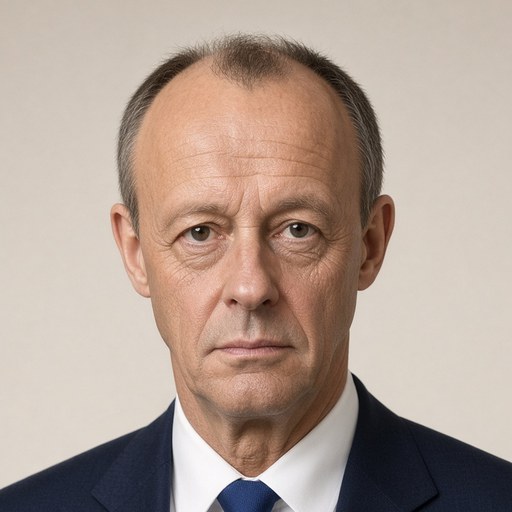
Chancellor's speech at the EURO FINANCE WEEK "Investments attract investments"
 Friedrich Merz · Chancellor of Germany
- Context
- Merz addressed the 28th EURO FINANCE WEEK in Frankfurt in November 2025, making the first-ever appearance by a German Chancellor at the annual finance industry event.
- Main themes
- Investment in Germany, financial center Frankfurt, capital markets and financial industry, Germany's equity story, European economic sovereignty, tectonic shifts in global economy, political stability as competitive advantage, energy transformation financing, growth and competitiveness, cooperation between politics and capital markets
- Duration
- ~40 min
- Words
- 4,823
- Sentences
- 227
- Readability
- 43
- Grade
- 12.4
- Syntax
- 3.02
- Vocabulary
- 2.04
Translated from German
The broad sphere of national life a sentence belongs to. Every sentence has an Arena, so it is the denominator the other indices are read against.
Other227 sentences in 57 paragraphs
Dear Mr. Scholz,
dear Ms. Buchholz,
ladies and gentlemen,
first of all, I would like to express my heartfelt thanks for the warm welcome here in Frankfurt at the 28th EURO FINANCE WEEK. I have been here a few times in my previous professional roles, but today is my first time in my new position. When I hear that this is the first time a Chancellor of the Federal Republic of Germany is attending the EURO FINANCE WEEK, I would say: It’s about time!
I tell you this, ladies and gentlemen, because I have always felt that the distance between Frankfurt and Bonn is not only geographically too great. This distance has not become smaller between Frankfurt and Berlin. I believe that we should communicate more between the political decision-makers and the capital market participants in Germany – some are over there, and others are here – and that we should also achieve more together. I know the spirit of this city. I will soon have another opportunity to connect it with the name Friedrich von Metzler. I have always enjoyed being in this city. I have never lived here – I would have liked to if there had been a professional opportunity – but I have worked a lot in this city. I have been here often, and I know the spirit, and I understand the thinking in this city. That is why I am happy to be here today to share a few thoughts about what we want to do and what we can do together.
Ladies and gentlemen, a financial industry is, first and foremost, the nervous system of an economy. This is the case, even if the German mentality may be somewhat different. But without a functioning capital market, without functioning banks, without a financial industry, there is no modern economy today. You, the financial industry, connect ideas with capital, innovation with implementation, industry and small and medium-sized enterprises with the markets. This is a trivial realization. But without it, without the financial industry, there would be no investments in the technologies of tomorrow, no financing for the transformation of our energy supply, no returns for savers, and no growth impulses for our regions. The companies in the financial industry, the banks, the insurance companies, the asset managers, the funds, the fintechs, are not just companions of an economic development that is happening anyway; they shape it very concretely and practically, and they make the future of our country possible.
Right now, as the world economy is being restructured, the financial center of Germany, and especially the financial center of Frankfurt, is a decisive factor. Ladies and gentlemen, I say this deliberately: “as the world economy is being restructured.” We will probably only grasp the full dimension of the changes we are currently witnessing when we look back on this time from a distance of a few years. My firm belief is that we are experiencing tectonic shifts in the political and economic power centers of the world.
My response to this is that not only we Germans, but especially we Europeans – and which place in Germany is more European than Frankfurt? – must answer the question of whether we want to be the object of this process of change or the subject of this process of change. My clear answer is: We must become the acting subject of these changes. I am personally determined to do so. We must play our role, and “our” does not only mean “our German,” but “our role” means above all: We must play our European role in these fundamental changes.
Dear Mr. Scholz, you just mentioned the term. You said that Germany needs a new “equity story.” All of you here in the room know what this term entails. It is the narrative of a company that is meant to convey that investing in this company is worthwhile. Germany is, of course, not a company, but I take the analogy seriously. Germany, as a country, needs a positive narrative, a narrative that clearly demonstrates that investing in our country, that investing in the companies of our country is worthwhile. Investments are important, even more so, they are the central driving forces of our economy. They are important for growth and employment. They are important for competitiveness and innovation. They are particularly important for Germany as a still significant export nation. For me, as Chancellor of the Federal Republic of Germany, it is clear: We want Germany to be a country where one can not only invest but where one wants to invest for many good reasons.
Germany has much to offer in a world characterized by uncertainty, geopolitically, economically, and financially. In this world, Germany is a safe harbor. In this world, our country is one with political stability, a reliable legal system, and a society that, despite all challenges, still holds together quite well. Germany has even more to offer to investors. Germany combines stability with economic strength. Germany is the third-largest economy in the world, and we are the largest economy in Europe.
Ladies and gentlemen, we have been able to become all of this because we have many things: excellent minds, an outstanding research and science landscape, a strong industrial base, a significant and diverse financial sector, and the ability to perceive change as an opportunity and not just as a threat. This is the foundation of our investment narrative.
Now, I do not want to sugarcoat the current economic situation in Germany, ladies and gentlemen. Germany is currently at a decisive point in these weeks and months. Our economic strength is under pressure. We are in the third year without significant growth. The reasons for recession and stagnation are manifold. Yes, these are exceptionally challenging times, not only in national politics but also in European and international politics. I have already briefly mentioned this. We are witnessing changes in the world that we probably would not have believed possible together a year or two ago. We are experiencing ongoing geopolitical crises, a war in Europe, a new protectionism that is directed against free trade and open markets. Yes, we have postponed structural reforms in our own country for far too long.
For Germany to remain as successful as we have been for many decades, and perhaps even to become better, the Federal Government under my leadership has been addressing this since day one in office. We are tackling it consistently. We are making the crucial decisions with great urgency. We know that we need structural reforms for better economic framework conditions. The decisions we make today will ensure that we remain competitive, innovative, and future-ready tomorrow. Everything we do must contribute to this.
That is why we have created incentives for investments in the location, in jobs, and in research with the immediate investment program. With the long-overdue reduction of the corporate tax burden and with the depreciation options of three times 30 percent declining, we have achieved the largest tax reform in Germany in over 15 years.
That is why we are consistently reducing bureaucracy, as we did nearly two weeks ago in a so-called relief cabinet, where we held a meeting of the Federal Cabinet for the first time to discuss not only the reduction of regulation but to make decisions and agree on a whole range of further initiatives that we will implement in the coming weeks and months.
Let me address a special topic for the location of Frankfurt at this point. This city is, like probably no other in Germany, an international city. This city needs, like probably no other city in Germany, internationally experienced workers. We will fundamentally rebuild the immigration system for the labor market and separate it from the previous asylum procedure, which we have occasionally associated with the hope that perhaps one or another might stay in Germany, work here, and integrate. No, we will separate these procedures from the outset and build a purely digital platform with a newly established Work-and-Stay Agency, behind which all processes for immigration into the labor market, for the recognition of professional qualifications, for the issuance of residence permits, and for the issuance of work permits will lie. Ladies and gentlemen, this is probably the largest digital project we have set for this legislative period. It is so complex because it not only involves federal politics but also the competencies of the states and municipalities. I have therefore asked two federal states to be available for pilot projects, one state and one city-state. We are examining model regions and pilot projects to implement this now. It will take some time because it represents a tremendous effort to create a unified digital process on a platform from the analog processes distributed across all levels of government. Anyone who has ever implemented IT in your companies or introduced new IT knows a little about what it means when we launch such a project in a state with three different political levels. But we have decided, and we want to implement it during this legislative period so that we have a complete digital system for attracting skilled workers from abroad, who can quickly be recruited for the location of Frankfurt, within three years at the latest. Be it as IT experts or as skilled workers in many other areas. We want to remain an open, free, liberal, and foreigner-friendly country, and we want to show that we want these workers in Germany and will do everything to attract them in international competition.
We have set ourselves the goal of reducing bureaucratic burdens by a total of about 25 billion euros during this legislative period. I can tell you that the first decisions we have made already encompass more than a third of this planned savings. We are promoting innovations in key industries with the established high-tech agenda and other initiatives. I will announce specific projects tomorrow together with French President Emmanuel Macron at a summit of the German and French governments on European digital sovereignty in Berlin.
Yes, we are now also using the term sovereignty in Germany, which has so far been popular only in France. To be honest, I have found it somewhat difficult to use this term, not least in light of my firm transatlantic relationship and anchoring. But, ladies and gentlemen, times are changing here too. We no longer know how long we can truly feel secure in this partnership. We will now have to undertake much more to become more independent and indeed sovereign, not only in defense but also in the digital world, in Germany and in Europe.
We will lower energy costs. If you have been following the media closely, you will have heard today: The major energy suppliers will reduce electricity costs by an average of nine percent starting January 1, 2026, for both private households and industrial companies. Last week, we also agreed on an industrial electricity price that is approvable by the European Commission, down to about five cents for energy-intensive industries. We have also agreed on a power plant strategy that allows for the construction of new gas power plants even if they are not hydrogen-ready from day one.
Ladies and gentlemen, in this sense, we are addressing the necessary structural reforms. We are also addressing the necessary social reforms. We are working hard on viable compromises for comprehensive reforms in pension insurance, health insurance, and long-term care insurance. Beyond all the discussions we have experienced, especially over the weekend, decisions have already been made. We will make savings in long-term care insurance and statutory health insurance that will allow us to keep contributions stable as of January 1, 2026. Originally, it was planned that contributions would increase by 0.3 percentage points. 0.3 percentage points sounds so harmless. But, ladies and gentlemen, 0.1 percentage points for social insurance corresponds to two billion euros in higher costs for companies and employees. 0.3 percentage points would have corresponded to six billion euros in higher contributions for companies and employees. The decisions we have made at least avoid these increases in contribution rates.
We will introduce a new basic security and replace the citizen's income with it. The draft bill from the responsible Ministry of Labor and Social Affairs, led by Bärbel Bas, is ready. We will present it to the Federal Cabinet later this year.
We will carry out the legal transition for refugees from Ukraine, moving them out of the previous so-called citizen's income and into the benefits under the Asylum Seekers Benefits Act, which are significantly lower than the citizen's income. The decision has been made. This will significantly increase the incentives for refugees from Ukraine to enter the labor market in Germany wherever possible.
We will implement the so-called active pension starting January 1, 2026. The active pension is nothing more and nothing less than an incentive for employees subject to social security contributions in the Federal Republic of Germany to work beyond the regular working hours, if they can and if they want to, and to receive an additional tax allowance of up to 24,000 euros per year for doing so.
I would like to take this opportunity to say, ladies and gentlemen, that this active pension is an offer to our entire population of employees subject to social security contributions to do what we all must do, namely to recalibrate the relationship between working time and retirement. We will have to work longer. We will now try to do this, starting January 1, 2026, on a voluntary basis. I am personally quite sure that especially in the service professions, many employees will take advantage of this offer. We will then show that a lot can be achieved in the labor market on the basis of voluntariness.
We will implement the early retirement pension that we agreed upon in the coalition agreement. It is nothing other than the former savings book that older people among you may remember from school and some of you may have seen with your children, now in the form of a digital depot. It involves the capital-funded establishment of a retirement provision for every child between the ages of six and eighteen who attends school in Germany: for twelve years, every month ten euros from the federal budget, not to build up retirement provision, but to show that a capital market account yields high returns. It can be supplemented by parents and grandparents and later by the holders themselves. In this way, we want to enhance and trigger the sense of asset accumulation, especially among the younger generation.
Ladies and gentlemen, all these measures are now about creating the right framework conditions for our economy so that it remains strong and competitive and becomes so again where it is no longer. We are continuing with ambitious reforms; this is also part of our "Equity Story."
Ladies and gentlemen, I have not yet addressed two important points for the positive narrative: First, our state investments, namely the so-called special fund for infrastructure amounting to 500 billion euros. With this, we are providing investment funds for our location on an unprecedented scale.
Yes, these are high debts that we are incurring. But if there is a country in Europe that has the capacity to bear such debt, it is the Federal Republic of Germany. If there is a country that needs to catch up quickly, it is us, the Federal Republic of Germany. This is due to the fact that we have largely handled our budgets carefully in recent years and decades – only in this way can we justify these debts now – and that what we are doing today will significantly strengthen our long-term potential growth.
With this infrastructure investment program, we are addressing the investment backlog in our country. We are investing in the strength and future of our country. This money will make a difference. Leading international bankers even say that the success of this investment program – sometimes those who observe us from the outside are able to take a more nuanced view than those who criticize from the inside – could fundamentally redefine Europe's, not just Germany's, competitiveness and attractiveness for global investors.
Ladies and gentlemen, because investments attract investments. You know that. Here I come to the second important point, namely private investments. The lighthouse is the truly rapidly growing investment offensive "Made for Germany," which you all know here in Frankfurt and in which many of you are participating. We are now at over 700 billion euros from more than 100 national and international companies, medium-sized businesses, start-ups, including banks and financial investors, who have committed to invest this amount in Germany within the next three years.
We will offer new programs for public-private partnerships, especially in infrastructure expansion, where we can now leverage the money we provide from tax revenues and debt with private capital. Because mobilizing private capital is of central importance for our economy. Without private capital, the highest state-funded investments are of no use.
As you know, I have appointed Martin Blessing, whom you all know well in Frankfurt, as my personal representative for investments. He is now the central contact person for domestic and especially foreign investors, and he is to represent the investment location Germany internationally. I believe it is a long-overdue decision for our country, for which we have received significant international support. I want to say here in this city, where he has worked successfully for so many years: I am very grateful that someone from your circle, from your profession, is willing to take on this task for a symbolic euro a year. I have the heartfelt request that you support him to the best of your ability.
At the same time, we will reorganize Germany Trade & Invest – some of you may be hearing for the first time that such an entity exists; a GmbH under the responsibility of the Federal Minister of Economics with almost 400 employees – GTAI; it will be the central agency of the federal government for foreign trade and location marketing. We will structurally reorganize it, staff it anew, to make it even more targeted and effective for the investment location Germany.
The Germany Fund, which we also decided on last week in the coalition committee, is to be launched soon and will close financing gaps in the area of growth and innovation capital, especially for medium-sized businesses and growth companies. For this purpose, the federal government will provide 10 billion euros, which will be leveraged through guarantees and private capital to at least 100 billion euros. Ladies and gentlemen, I firmly believe that these public and private investments will significantly enhance the appeal of the investment location Germany.
A central factor for investments is the conditions at the financial location Germany, at the financial location Frankfurt, and of course at the financial location Europe. As you know, I have been dealing with this topic for many years, and I am convinced: In Germany, sufficient investment will occur when our financial location is strong. In my view, the following areas are particularly central: financial market regulation, banking regulation, and the capital market union.
Let me briefly conclude with a few remarks on all three topics.
For a strong financial location, we are doing nationally what we can. We have passed the Location Promotion Act in the Cabinet. This makes it easier for small, young, and innovative companies and start-ups to access the capital market, and we promote the German fund market. This allows these companies to grow faster and provide our economy with the necessary fresh impetus. We are improving the tax framework and thereby creating incentives for investments by funds in infrastructure and renewable energy. We are eliminating unnecessary bureaucracy – I have already mentioned this briefly – including by abolishing and streamlining numerous audit, reporting, and notification obligations in the financial sector.
The regulation of banks is also important. Ladies and gentlemen, it is too strict in Germany and in Europe – I want to say this very clearly. After the financial crisis of 2008 and 2009, we made many decisions that were right and remain right. The risk buffers have increased, and the reserves have become stronger. That is all correct. But what we currently see in America and in other parts of the world, including other parts of Europe, creates many more opportunities for corporate financing than, for example, in Germany.
Therefore, we will now relieve our banking landscape at the national level. One example of this is the national implementation of Basel III, the international regulatory framework for banks that you all know. We have now proposed a targeted, proportionate, and above all, bureaucratically light implementation. However – as you all know – a large part of financial market regulation does not occur at the national level, but at the European level. We are now implementing what comes from Europe into national law without "gold plating." We will therefore implement one-to-one without additional tightening in Germany. What is sufficient for all of Europe must also be sufficient for Germany, ladies and gentlemen.
In addition, we will advocate at the European level for simplifying existing financial market regulations and being cautious with new initiatives – of course always with the condition that the stability of our financial system is guaranteed. If necessary, we will also push for initiatives to be completely withdrawn if they increase bureaucratic burdens instead of securing competitiveness.
Now let me add in this context:
Three weeks ago, I wrote to the European Commission and the President of the European Council, urging both to really focus on the issue of reducing European bureaucracy with full force. Twenty heads of state and government in the European Union have joined this letter without any substantive changes. The result is that on February 12, when Weiberfastnacht is celebrated in Germany, we will spend a whole day in Belgium, near Brussels, with the heads of state and government of the European Union and the President of the Commission in a retreat to discuss and answer exactly this question. What can and must we do to restore competitiveness in Europe?
We have two reports on this, commissioned by the EU Commission – one by Enrico Letta, the former Prime Minister of Italy, on completing the European internal market, and the other by Mario Draghi, whom you all know well, the former President of the ECB, on strengthening the competitiveness of the European Union.
Ladies and gentlemen, these two reports are the same blueprint for what we now need to do in Europe as the report by Jacques Delors in 1985 for the establishment of the European internal market. Because I was there at that time, because I experienced this decisive moment of implementing Jacques Delors' report as a young member of the European Parliament, I can say today in retrospect that we wanted to create a space of freedom and law, with the four fundamental freedoms of the free movement of persons, capital market freedom, free movement of goods, and freedom to provide services. We wanted to create an open space with as little regulation and as few borders as possible.
Ladies and gentlemen, what we envisioned back then has been implemented and came into force on January 1, 1993. However, what has become of it in the meantime is not what Jacques Delors proposed to us and what we wanted. It has become a hopelessly overregulated European internal market that has even diminished in its advantages compared to what it was over 30 years ago.
We want to return to this fundamental idea of the openness of the European internal market precisely for these four fundamental freedoms, and we want to not only read Mario Draghi's proposals, not only take them seriously, but wherever possible also implement them, to truly be competitive again in this critical phase in the European Union in which we find ourselves.
With that, I come to my last point, ladies and gentlemen – and here it becomes clear that the German investment narrative does not end at the border; it must encompass Europe. For me, it is clear: We need progress in Europe on what is now called the Stability and Investment Union; I still prefer the term Capital Markets Union. It has high political priority for me, it has high political priority for the Federal Government. Because all of Europe needs solid finances in order to invest, and investments to remain strong. For these solid finances, Europe must return to the path of growth and competitiveness. This can only happen if the economic policy program of the European Union changes radically, in line with the report of the two presidents I just quoted. Therefore, ladies and gentlemen, I am confident that we will achieve a lot now.
However, I want to make a final remark about the Capital Markets Union here in Frankfurt:
The fragmentation of the European capital market hinders the necessary investment dynamics. That is why we are working to create a broad and deep common capital market. Investments need an environment where capital works quickly and where young, innovative companies receive the financing they need. Our European pioneers should no longer be dependent on the American capital markets, but should be able to grow here with us in Europe and also go public.
To put it precisely, because it is one of the cases I like to cite: When we have such a great company as BioNTech in Germany, which was able to provide the country with essential vaccines during the Corona period – I recently awarded the two founders with the German National Prize at the German National Foundation; they run a successful company that is now making billions in investments in research and development, especially for cancer medication – then we must be able to retain such a company in Germany and finance it in the European capital market, ladies and gentlemen. I do not want to accept that such companies, which we have also supported and given the opportunities to emerge and grow, have to resort to the American capital market when they need the necessary capital for their growth story – yes, for their "Equity Story" – ladies and gentlemen.
Exactly for this goal, we need large and liquid capital pools. For this, we need a powerful and efficient European financial market infrastructure. So we need to make rapid progress in this area everywhere now. I will continue to advocate for this together with the French President Macron.
Germany and France recently launched the FIVE initiative, "Financing Innovative Ventures in Europe," to develop concrete proposals. By the way, we had German-French government consultations in Toulon, southern France, for the first time in years. All involved ministries have worked for weeks to develop common positions, which were adopted in this joint meeting of both cabinets in almost all essential areas of our cooperation; we can now build on these together. I sincerely hope that we can achieve political majority support for this in France and walk this path together, especially between Germany and France.
We have jointly established an EU investment label "Finance Europe" to provide savers with clear guidance in choosing their long-term financial investments in Europe, so that European savings increasingly remain in Europe.
Ladies and gentlemen, this is at least part of the German "Equity Story." It is not a balance sheet from yesterday, but a very concrete picture of what is and, above all, of what we envision for the future. I would like to warmly invite all of you to participate in this "Equity Story" of our country, to develop this new narrative of Germany, a country that has the strength to reform itself, especially because we have such stable foundations in Germany.
I hear from your ranks that the view of Germany and Europe – as you just said – is currently changing, and indeed for the better. International investors are beginning to recognize again that reliability, reform capacity, and innovation strength have become a rather rare combination and that this combination is at home here with us in Germany. In a world that is reorganizing as rapidly as we are currently experiencing, trust and reliability in the location may be the most essential and important capital.
So let us, ladies and gentlemen, seize this momentum – now! Let us strengthen this momentum – now! Let us do everything we can! The Federal Government is doing its part. I want to call out to everyone here in this room, but also to all those in responsible positions in Germany: Let us tackle this together now – for investments in Germany, for a competitive economy, and not least for the prosperity and cohesion in our country. It has rarely been as necessary as today, and it has rarely been as possible as today.
Thank you.
The original German. The tags above are read on the English translation's sentences.
Sehr geehrter Herr Scholz,
liebe Frau Buchholz,
meine sehr geehrten Damen und Herren,
zunächst sehr herzlichen Dank für die freundliche Begrüßung hier in Frankfurt auf der 28.
EURO FINANCE WEEK
. Ich bin hier das eine oder andere Mal in meinen früheren beruflichen Funktionen gewesen, aber ich bin heute das erste Mal in meiner neuen Funktion hier. Wenn ich höre, dass es das erste Mal ist, dass ein Bundeskanzler der Bundesrepublik Deutschland auf der
EURO FINANCE WEEK
ist, dann würde ich sagen: Jetzt wird es auch Zeit!
Ich sage Ihnen das auch deshalb, meine Damen und Herren, weil ich immer schon – ich sehe viele bekannte Gesichter hier im Raum, und viele von Ihnen wissen es – den Abstand zwischen Frankfurt und Bonn als nicht nur geografisch zu groß empfunden habe. Dieser Abstand ist zwischen Frankfurt und Berlin nicht kleiner geworden. Ich finde, dass wir zwischen den politischen Entscheidungsträgern und den Kapitalmarktteilnehmern in Deutschland – die einen sind dort, und die anderen sind hier – mehr miteinander sprechen sollten und dass wir auch mehr miteinander auf den Weg bringen sollten. Ich kenne den Geist dieser Stadt. Ich werde gleich noch eine weitere Gelegenheit haben, ihn mit dem Namen Friedrich von Metzler zu verbinden. Ich bin in dieser Stadt immer gern gewesen. Ich habe hier nie gelebt – ich hätte es gern getan, wenn es eine berufliche Gelegenheit gegeben hätte –, aber ich habe in dieser Stadt viel gearbeitet. Ich bin viel hier gewesen, und ich kenne den Geist, und ich kenne das Denken in dieser Stadt. Deswegen bin ich heute gern hier, um Ihnen ein paar Dinge darüber zu sagen, was wir tun wollen und was wir gemeinsam tun können.
Meine Damen und Herren, eine Finanzindustrie ist zunächst einmal das Nervensystem einer Volkswirtschaft. Das ist so, auch wenn die deutsche Mentalität vielleicht eine etwas andere sein mag. Aber ohne funktionierenden Kapitalmarkt, ohne funktionierende Banken, ohne Finanzindustrie besteht heute keine moderne Volkswirtschaft. Sie, die Finanzindustrie, verbindet Ideen mit Kapital, Innovation mit Umsetzung, Industrie und Mittelstand mit den Märkten. Das ist eine triviale Erkenntnis. Aber ohne sie, ohne die Finanzindustrie, gäbe es keine Investitionen in die Technologien von morgen, keine Finanzierung für den Umbau unserer Energieversorgung, keine Rendite für Sparerinnen und Sparer und keine Wachstumsimpulse für unsere Regionen. Die Unternehmen der Finanzindustrie, die Banken, die Versicherungen, die
Asset Manager
, die
Fonds
, die
Fintechs
, sind nicht bloß Begleiter einer wirtschaftlichen Entwicklung, die ohnehin geschieht; sie gestalten sehr konkret und sehr praktisch, und sie machen die Zukunft unseres Landes überhaupt erst möglich.
Gerade jetzt, da sich die Weltwirtschaft neu sortiert, ist der Finanzplatz Deutschland und ganz besonders der Finanzplatz Frankfurt ein entscheidender Faktor. Meine Damen und Herren, ich sage es mit Bedacht: „da sich die Weltwirtschaft neu sortiert“. Wir werden wahrscheinlich erst aus dem Abstand einiger Jahre, wenn wir auf die Zeit zurückblicken, in der wir jetzt leben, die ganze Dimension der Veränderungen erfassen, deren Zeitzeugen wir heute schon sind. Meine feste Annahme ist, dass wir geradezu tektonische Verschiebungen der politischen und ökonomischen Machtzentren der Welt erleben.
Meine Antwort darauf ist, dass nicht nur wir Deutsche, sondern dass vor allem wir Europäer – und welcher Platz ist in Deutschland europäischer als Frankfurt? – eine Antwort auf die Frage geben müssen, ob wir Objekt dieses Veränderungsprozesses oder ob wir Subjekt dieses Veränderungsprozesses werden wollen. Meine klare Antwort ist: Wir müssen handelndes Subjekt dieser Veränderungen werden. Ich persönlich bin dazu fest entschlossen. Wir müssen unsere Rolle spielen, und „unsere“ heißt nicht allein „unsere deutsche“, sondern „unsere Rolle“ heißt vor allem: Wir müssen unsere europäische Rolle in diesen fundamentalen Veränderungen spielen.
Sehr geehrter Herr Scholz, Sie haben in Ihrer Einführung eben das Wort ausgesprochen. Sie haben gesagt, Deutschland brauche eine neue „
Equity-Story
“. Sie alle hier im Raum wissen, was sich mit diesem Begriff verbindet. Es ist die Erzählung eines Unternehmens, die vermitteln soll, dass sich Investitionen in dieses Unternehmen lohnen. Deutschland ist natürlich kein Unternehmen, aber die Analogie nehme ich durchaus ernst. Deutschland braucht als Land eine positive Erzählung, eine Erzählung, die anschaulich darlegt, dass sich Investitionen in unser Land, dass sich Investitionen in die Unternehmen unseres Landes lohnen. Investitionen sind wichtig, mehr noch, sie sind die zentralen Triebkräfte unserer Volkswirtschaft. Sie sind wichtig für Wachstum und Beschäftigung. Sie sind wichtig für Wettbewerbsfähigkeit und Innovation. Sie sind gerade für Deutschland als eine unverändert große Exportnation wichtig. Für mich als Bundeskanzler der Bundesrepublik Deutschland ist dabei klar: Wir wollen, dass Deutschland ein Land ist, in das man nicht nur investieren kann, sondern in das man aus vielen guten Gründen investieren will.
Dabei hat Deutschland viel zu bieten in einer Welt, die von Unsicherheit geprägt ist, geopolitisch, wirtschaftlich, finanziell. In dieser Welt ist Deutschland ein sicherer Hafen. In dieser Welt ist unser Land ein Land mit politischer Stabilität, einer verlässliche Rechtsordnung und einer Gesellschaft, die trotz aller Herausforderungen immer noch ziemlich gut zusammenhält. Deutschland hat Investorinnen und Investoren noch mehr zu bieten. Deutschland verbindet Stabilität mit wirtschaftlicher Stärke. Deutschland ist die drittgrößte Volkswirtschaft der Welt, und wir sind die größte Volkswirtschaft in Europa.
Meine Damen und Herren, das alles konnten wir werden, weil wir vieles haben: exzellente Köpfe, eine ausgezeichnete Forschungs- und Wissenschaftslandschaft, eine starke industrielle Basis, einen bedeutenden und vielfältigen Finanzsektor und die Fähigkeit, Wandel als Chance und nicht nur als Bedrohung zu empfinden. Das ist das Fundament unserer Investitionserzählung.
Nun will ich die aktuelle wirtschaftliche Lage in Deutschland, meine Damen und Herren, nicht schönreden. Deutschland steht gerade in diesen Wochen und Monaten an einem entscheidenden Punkt. Unsere Wirtschaftskraft steht unter Druck. Wir befinden uns im dritten Jahr ohne nennenswertes Wachstum. Die Gründe für Rezession und Stagnation sind vielfältig. Ja, es sind außergewöhnlich herausfordernde Zeiten, nicht nur in der nationalen Politik, sondern auch in der europäischen und internationalen Politik. Ich habe bereits kurz darüber gesprochen. Wir erleben auf der Welt Veränderungen, die wir vor Jahr und Tag wahrscheinlich alle zusammen nicht für möglich gehalten hätten. Wir erleben anhaltende geopolitische Krisenlagen, einen Krieg in Europa, einen neuen Protektionismus, der sich gegen Freihandel und offene Märkte richtet. Ja, wir haben viel zu lange auch im eigenen Land Strukturreformen aufgeschoben.
Dass Deutschland so erfolgreich bleiben kann, wie wir es über viele Jahrzehnte waren, und dass wir vielleicht sogar noch besser werden, geht die Bundesregierung unter meiner Führung seit dem ersten Tag im Amt an. Wir gehen es konsequent an. Wir stellen die entscheidenden Weichen mit Hochdruck. Wir wissen, dass wir Strukturreformen für bessere wirtschaftliche Rahmenbedingungen brauchen. Wir treffen heute die Entscheidungen, die uns auch morgen wettbewerbsfähig, innovativ und zukunftsfähig machen. Alles, was wir tun, muss jetzt genau dazu beitragen.
Deshalb haben wir mit dem steuerlichen Investitionssofortprogramm Anreize für Investitionen in den Standort, in Arbeitsplätze und in Forschung geschaffen. Mit der überfälligen Rückführung der Körperschaftsteuerlast und mit den Abschreibungsmöglichkeiten von dreimal 30 Prozent degressiv ist uns die größte Steuerreform in Deutschland seit gut 15 Jahren gelungen.
Deswegen bauen wir Bürokratie konsequent zurück wie vor knapp zwei Wochen in einem sogenannten Entlastungskabinett, bei dem wir zum ersten Mal eine Sitzung des Bundeskabinetts gehabt haben, in der wir nur über Rückbau von Regulierung nicht nur gesprochen, sondern entschieden und eine ganze Reihe von weiteren Vorhaben verabredet haben, die wir in den nächsten Wochen und Monaten auf den Weg bringen.
Lassen Sie mich an dieser Stelle ein besonderes Thema für den Standort Frankfurt ansprechen. Diese Stadt ist wie vermutlich keine zweite in Deutschland eine internationale Stadt. Diese Stadt braucht wie wahrscheinlich keine zweite Stadt in Deutschland international erfahrene Arbeitskräfte. Wir werden das System der Einwanderung in den Arbeitsmarkt grundlegend neu aufbauen und vom bisherigen Asylverfahren trennen, mit dem wir immer einmal wieder die Hoffnung verbanden, dass vielleicht der eine oder andere doch in Deutschland bleiben möge, hier arbeiten kann und sich integriert. Nein, wir trennen diese Verfahren von Anfang an und bauen mit einer bereits beschlossenen
Work-and-Stay
-Agentur eine rein digitale Plattform, hinter der die gesamten Prozesse zur Einwanderung in den Arbeitsmarkt, zur Anerkennung der Berufsqualifikation, zur Erteilung der Aufenthaltserlaubnis und zur Erteilung der Arbeitserlaubnis liegen. Meine Damen und Herren, dies ist wahrscheinlich das größte Digitalprojekt, das wir uns für diese Wahlperiode vorgenommen haben. Es ist deswegen so komplex, weil es nicht nur die Bundespolitik umfasst, sondern auch die Kompetenzen der Länder und der Gemeinden. Ich habe deswegen zwei Bundesländer gebeten, für Pilotprojekte zur Verfügung zu stehen, einen Flächenstaat und einen Stadtstaat. Wir prüfen Modellregionen, und wir prüfen Pilotprojekte, um genau das jetzt umzusetzen. Es wird eine gewisse Zeit dauern, weil es eine gewaltige Kraftanstrengung darstellt, aus den analogen Prozessen, verteilt auf alle staatlichen Ebenen, einen einheitlichen, digitalen Prozess auf einer Plattform zu machen. Wer in Ihren Unternehmen schon einmal
IT
umgestellt oder neue
IT
eingeführt hat, meine Damen und Herren, der hat ein ganz kleines Gefühl dafür, was es bedeutet, wenn wir in einem Staat mit drei unterschiedlichen politischen Ebenen ein solches Projekt auf den Weg bringen. Aber wir haben es beschlossen, und wir wollen es im Laufe dieser Wahlperiode so umsetzen, dass wir spätestens in drei Jahren ein komplettes digitales System zur Gewinnung von Fachkräften aus dem Ausland haben, die schnell auch für den Standort Frankfurt gewonnen werden können. Sei es als
IT
-Experten, sei es als Fachkräfte in vielen anderen Bereichen. Wir wollen ein offenes, freiheitliches, liberales, ausländerfreundliches Land bleiben, und wir wollen zeigen, dass wir diese Arbeitskräfte in Deutschland wollen und alles dafür tun, sie im internationalen Wettbewerb zu bekommen.
Wir haben uns für diese Wahlperiode vorgenommen, Bürokratielasten um insgesamt ungefähr 25 Milliarden Euro zu reduzieren. Ich kann Ihnen sagen, dass die ersten Beschlüsse, die wir dazu gefasst haben, schon mehr als ein Drittel dieser vorgesehenen Ausgabenersparnis umfassen. Wir fördern Innovationen in Schlüsselindustrien mit der beschlossenen
Hightech
-Agenda und anderen Initiativen. Konkrete Projekte dazu werde ich morgen gemeinsam mit dem französischen Staatspräsidenten
Emmanuel Macron
in Berlin auf einem Gipfeltreffen der deutschen und der französischen Regierung zur europäischen digitalen Souveränität verabschieden.
Ja, wir verwenden jetzt auch in Deutschland das bisher eigentlich nur in Frankreich populäre Wort der Souveränität. Ich habe mich, offen gestanden, etwas schwer damit getan, dieses Wort zu verwenden, nicht zuletzt auch im Hinblick auf meine feste transatlantische Beziehung und Verankerung. Aber, meine Damen und Herren, auch hier ändern sich die Zeiten. Auch wir wissen heute nicht mehr, wie lange wir uns in dieser Partnerschaft wirklich noch sicher aufgehoben fühlen können. Wir werden jetzt sehr viel mehr unternehmen müssen, um nicht nur in der Verteidigung, sondern auch in der digitalen Welt eigenständiger und eben souveräner zu werden, in Deutschland und in Europa.
Wir werden die Energiekosten senken. Wenn Sie die Medien aufmerksam verfolgt haben, dann werden Sie es gerade heute gehört haben: Die großen Energieversorger senken die Stromkosten zum 1. Januar 2026 um durchschnittlich neun Prozent, für die privaten Haushalte, aber auch für die Industrieunternehmen. Wir haben in der vergangenen Woche zusätzlich einen Industriestrompreis verabredet, der genehmigungsfähig durch die Europäische Kommission ist, herunter auf etwa fünf Cent für die stromintensive Industrie. Wir haben auch eine Kraftwerkstrategie verabredet, die den Bau neuer Gaskraftwerke auch dann erlaubt, wenn sie nicht vom ersten Tag an wasserstofffähig sind.
Meine Damen und Herren, in diesem Sinne gehen wir die notwendigen Strukturreformen an. Wir gehen auch die notwendigen Sozialreformen an. Wir arbeiten mit Hochdruck an tragfähigen Kompromissen für umfassende Reformen in der Rentenversicherung, in der Krankenversicherung und in der Pflegeversicherung. Jenseits aller Diskussionen, die wir insbesondere am Wochenende erlebt haben, sind bereits Entscheidungen getroffen. Wir werden in der Pflegeversicherung und in der gesetzlichen Krankenversicherung Einsparungen vornehmen, die es erlauben, die Beiträge zum 1. Januar 2026 immerhin stabil zu halten. Ursprünglich war vorgesehen, dass die Beiträge um 0,3 Prozentpunkte steigen. 0,3 Prozentpunkte, das klingt so harmlos. Aber, meine Damen und Herren, 0,1 Prozentpunkt für die Sozialversicherung entspricht zwei Milliarden Euro höhere Kosten für Betriebe und Arbeitnehmer. 0,3 Prozentpunkte hätten sechs Milliarden Euro höhere Beiträge für Betriebe und Arbeitnehmer entsprochen. Die Entscheidungen, die wir getroffen haben, vermeiden wenigstens diese Beitragssatzsteigerungen.
Wir werden eine neue Grundsicherung einführen und das Bürgergeld damit ersetzen. Der Referentenentwurf des zuständigen Ministeriums für Arbeit und Soziales von Bärbel Bas ist fertig. Wir werden damit noch in diesem Jahr in das Bundeskabinett gehen.
Wir werden für Flüchtlinge aus der Ukraine den Rechtskreiswechsel vollziehen, heraus aus dem bisherigen sogenannten Bürgergeld und hinein in die Leistungen nach dem Asylbewerberleistungsgesetz, die deutlich niedriger sind als das Bürgergeld. Die Entscheidung ist getroffen. Damit werden wir die Anreize deutlich erhöhen, auch als Flüchtling aus der Ukraine in Deutschland, wo immer möglich, in den Arbeitsmarkt einzutreten.
Wir werden zum 1. Januar 2026 die sogenannte Aktivrente in Kraft setzen. Die Aktivrente ist nicht mehr und nicht weniger als ein Anreiz für sozialversicherungspflichtige Beschäftigte in der Bundesrepublik Deutschland, über die Regelarbeitszeit hinaus weiterzuarbeiten, wenn sie denn können und wenn sie wollen, und dafür einen zusätzlichen Steuerfreibetrag in Höhe von bis zu 24.000 Euro im Jahr zu erhalten.
Ich will an dieser Stelle übrigens einmal sagen, meine Damen und Herren, dass diese Aktivrente das Angebot an unsere gesamte Bevölkerung der sozialversicherungspflichtig beschäftigten Arbeitnehmerinnen und Arbeitnehmer ist, das zu tun, was wir alle tun werden müssen, nämlich das Verhältnis zwischen Arbeitszeit und Ruhestand neu auszutarieren. Wir werden länger arbeiten müssen. Wir werden es jetzt, beginnend mit dem 1. Januar 2026, auf Basis der Freiwilligkeit versuchen. Ich bin mir persönlich ziemlich sicher, dass insbesondere in den Dienstleistungsberufen viele Arbeitnehmerinnen und Arbeitnehmer von diesem Angebot Gebrauch machen werden. Wir werden dann zeigen, dass sich auch auf der Basis von Freiwilligkeit für den Arbeitsmarkt viel erreichen lässt.
Wir werden die Frühstartrente umsetzen, die wir im Koalitionsvertrag beschlossen haben. Sie ist nichts anderes als das frühere Sparbuch, das die Älteren von Ihnen noch aus der Schulzeit kennen und einige von Ihnen noch bei den Kindern gesehen haben, jetzt in Form eines digitalen Depots. Es handelt sich um den kapitalgedeckten Aufbau einer Altersversorgung für jedes Kind zwischen dem sechsten und dem 18. Lebensjahr, das in Deutschland zur Schule geht: zwölf Jahre lang jeden Monat zehn Euro aus dem Bundeshaushalt, nicht um damit nicht die Altersversorgung aufzubauen, sondern um zu zeigen, dass ein Kapitalmarktkonto hohe Erträge erbringt. Es ist zuzahlungsfähig durch Eltern und Großeltern und später durch die Inhaber selbst. Auf diese Art und Weise wollen wir das Gefühl für einen Vermögensaufbau gerade bei der jungen Generation steigern und auslösen.
Meine Damen und Herren, bei all diesen Maßnahmen geht es jetzt um die richtigen Rahmenbedingungen für unsere Wirtschaft, damit sie stark und wettbewerbsfähig bleibt und dort wieder wird, wo sie es nicht mehr ist. Mit ambitionierten Reformen machen wir jetzt eben weiter; auch das ist Teil unserer „
Equity-Story
“.
Meine Damen und Herren, zwei wichtige Punkte für die positive Erzählung habe ich noch nicht angesprochen: Erstens, unsere staatlichen Investitionen, nämlich das 500 Milliarden Euro umfassende sogenannte Sondervermögen für die Infrastruktur. Wir stellen damit Investitionsmittel für unseren Standort in bisher nicht bekanntem Ausmaß zur Verfügung.
Ja, das sind hohe Schulden, die wir damit machen. Aber wenn es ein Land in Europa gibt, das die Schuldentragfähigkeit in einem solchen Umfang hat, dann ist es die Bundesrepublik Deutschland. Wenn es ein Land gibt, das diesen Rückstand aufholen muss, und zwar schnell, dann sind es wir, die Bundesrepublik Deutschland. Das ist dem Umstand geschuldet, dass wir in den vergangenen Jahren und Jahrzehnten weitgehend sorgfältig mit unseren Haushalten umgegangen sind – nur so können wir diese Schulden jetzt auch vertreten – und dass wir mit dem, was wir heute tun, unser langfristiges Potenzialwachstum deutlich stärken.
Mit diesem Infrastrukturinvestitionsprogramm gehen wir den Investitionsstau in unserem Land an. Wir investieren in die Stärke und in die Zukunft unseres Landes. Dieses Geld wird einen Unterschied machen. Führende internationale Banker sagen sogar, das Gelingen dieses Investitionsprogramms – manchmal sind ja diejenigen, die uns von außen beobachten, zu einem differenzierteren Blick in der Lage als diejenigen, die von innen kritisieren – könnte Europas, nicht nur Deutschlands, Wettbewerbsfähigkeit und Attraktivität für globale Investoren grundlegend neu definieren.
Meine Damen und Herren, denn Investitionen ziehen Investitionen an. Das wissen Sie. Hier bin ich beim zweiten wichtigen Punkt, nämlich den privaten Investitionen. Der Leuchtturm ist die wirklich rasant wachsende Investitionsoffensive „
Made for Germany
“, die Sie hier in Frankfurt alle kennen und an der viele von Ihnen teilnehmen. Wir sind jetzt bei über 700 Milliarden Euro von über 100 nationalen und internationalen Unternehmen, Mittelständlern,
Start-ups
, darunter auch Banken und Finanzinvestoren, die zugesagt haben, innerhalb der nächsten drei Jahre diese Summe in Deutschland zu investieren.
Wir werden neue Programme der privaten öffentlichen Partnerschaft, insbesondere im Infrastrukturausbau, anbieten, wo wir das Geld, das wir aus Steuermitteln und Schulden zur Verfügung stellen, jetzt auch mit privatem Kapital hebeln können. Denn die Mobilisierung von privatem Kapital ist von zentraler Bedeutung für unsere Volkswirtschaft. Ohne privates Kapital bringen die höchsten staatlich finanzierten Investitionen gar nichts.
Wie Sie wissen, habe ich Martin Blessing, den Sie in Frankfurt alle gut kennen, zu meinem persönlichen Beauftragten für Investitionen ernannt. Er ist nun der zentrale Ansprechpartner für inländische und vor allem ausländische Investoren, und er soll den Investitionsstandort Deutschland auch international vertreten. Ich finde, es ist eine längst überfällige Entscheidung für unser Land, für die wir international sehr großen Zuspruch erhalten haben. Ich will es hier in dieser Stadt sagen, in der er so viele Jahre erfolgreich gearbeitet hat: Ich bin sehr dankbar, dass jemand aus Ihrem Kreis, aus Ihrem Berufsstand, bereit ist, sich für einen symbolischen Euro im Jahr dieser Aufgabe zur Verfügung zu stellen. Ich habe die herzliche Bitte, dass Sie ihn dabei nach Kräften unterstützen.
Wir werden zeitgleich die
Germany Trade & Invest
– möglicherweise wird der eine oder andere von Ihnen wie ich das erste Mal davon gehört haben, dass es so etwas gibt; eine
GmbH
im Zuständigkeitsbereich der Bundeswirtschaftsministerin mit immerhin fast 400 Beschäftigten –, die
GTAI
, neu aufstellen; sie wird die zentrale Gesellschaft der Bundesregierung für Außenwirtschafts- und Standortmarketing sein. Wir werden sie strukturell neu aufstellen, personell neu besetzen, um sie noch zielgerichteter und schlagkräftiger für den Investitionsstandort Deutschland zu machen.
Auch der Deutschlandfonds, den wir ebenfalls in der letzten Woche im Koalitionsausschuss beschlossen haben, soll zeitnah aufgelegt werden und Finanzierungslücken im Bereich des Wachstums- und Innovationskapitals schließen, insbesondere für Mittelstand und Wachstumsunternehmen. Dazu stellt der Bund 10 Milliarden Euro bereit, die durch Garantien und privates Kapital auf mindestens 100 Milliarden Euro gehebelt werden sollen. Meine Damen und Herren, diese öffentlichen und privaten Investitionen werden die Strahlkraft des Investitionsstandorts Deutschland nach meiner festen Überzeugung deutlich verstärken.
Ein zentraler Faktor für Investitionen sind die Bedingungen am Finanzstandort Deutschland, am Finanzstandort Frankfurt und natürlich am Finanzstandort Europa. Ich beschäftige mich, wie Sie wissen, seit vielen Jahren mit diesem Thema, und ich bin davon überzeugt: In Deutschland wird dann ausreichend investiert, wenn unser Finanzstandort stark ist. Hierfür sind insbesondere folgende Bereiche aus meiner Sicht zentral: die Finanzmarktregulierung, die Bankenregulierung und die Kapitalmarktunion.
Lassen Sie mich zu allen drei Themen kurz abschließend etwas sagen.
Für einen starken Finanzstandort tun wir national das, was wir tun können. Wir haben im Kabinett das Standortfördergesetz beschlossen. Damit erleichtern wir den Kapitalmarktzugang für kleine, junge und innovative Unternehmen und Start-ups, und wir fördern den deutschen Fondsmarkt. Damit können diese Unternehmen schneller wachsen, und unserer Wirtschaft die notwendige Frischzellenkur verabreichen. Wir verbessern die steuerlichen Rahmenbedingungen und schaffen dadurch Anreize für Investitionen von Fonds in Infrastruktur und erneuerbare Energie. Wir beseitigen überflüssige Bürokratie – ich habe es eben schon kurz angesprochen –, unter anderem durch die Streichung und Verschlankung zahlreicher Prüf-, Melde- und Anzeigepflichten im Finanzsektor.
Wichtig ist auch die Regulierung der Banken. Meine Damen und Herren, sie ist in Deutschland und in Europa – ich will es hier sehr klar und deutlich sagen – zu rigoros. Wir haben nach der Finanzkrise 2008, 2009 viele Entscheidungen getroffen, die richtig waren und auch richtig bleiben. Die Risikopuffer sind größer geworden, die Rücklagen sind stärker geworden. Das ist alles richtig. Aber das, was wir zurzeit in Amerika sehen und das, was wir in anderen Teilen der Welt sehen, auch in anderen Teilen Europas, schafft viel mehr Möglichkeiten für Unternehmensfinanzierungen als etwa in Deutschland.
Daher werden wir jetzt auf nationaler Ebene unsere Bankenlandschaft entlasten. Ein Beispiel hierfür ist die nationale Umsetzung von Basel III, dem internationalen Regulierungsrahmen für Banken, den Sie alle kennen. Wir haben jetzt eine zielgerichtete, verhältnismäßige und vor allem bürokratiearme Umsetzung vorgeschlagen. Allerdings – das wissen Sie alle hier – entsteht ein Großteil der Finanzmarktregulierung nicht auf nationaler Ebene, sondern auf europäischer Ebene. Wir setzen jetzt ohne „
Gold-Plating
“ in nationales Recht um, was aus Europa kommt. Wir werden also eins zu eins umsetzen, ohne zusätzliche Verschärfung in Deutschland. Was für ganz Europa genug ist, das kann und muss auch für Deutschland ausreichend sein, meine Damen und Herren.
Darüber hinaus werden wir uns auf der europäischen Ebene dafür einsetzen, bestehende Finanzmarktregulierungen zu vereinfachen und bei neuen Initiativen zurückhaltend zu sein – natürlich immer unter der Maßgabe, dass die Stabilität unseres Finanzsystems gewährleistet ist. Wenn es notwendig ist, werden wir auch darauf drängen, Initiativen vollständig zurückzuziehen, wenn sie die Bürokratielasten erhöhen, anstatt die Wettbewerbsfähigkeit zu sichern.
Nun lassen Sie mich in diesem Zusammenhang ergänzen:
Ich habe vor drei Wochen der Europäischen Kommission und dem Präsidenten des Europäischen Rates einen Brief geschrieben und beide aufgefordert, jetzt wirklich mit ganzer Kraft das Thema Rückbau der europäischen Bürokratie in den Blick zu nehmen. Diesem Brief haben sich 20 Staats- und Regierungschefs in der Europäischen Union ohne jede inhaltliche Änderung angeschlossen. Das Ergebnis ist, dass wir am 12. Februar, wenn in Deutschland Weiberfastnacht gefeiert wird, in Belgien, in der Nähe von Brüssel, einen ganzen Tag mit den Staats- und Regierungschefs der Europäischen Union und der Kommissionspräsidentin in Klausur gehen werden, um genau diese Frage miteinander zu diskutieren und zu beantworten. Was können und was müssen wir tun, um in Europa Wettbewerbsfähigkeit wiederherzustellen?
Wir haben dazu zwei Berichte vorliegen, die im Auftrag der
EU
-Kommission erstellt worden sind – den einen von
Enrico Letta
, dem früheren Ministerpräsidenten Italiens, zur Vollendung des europäischen Binnenmarktes, den anderen von
Mario Draghi
, den Sie alle gut kennen, dem früheren
EZB
-Präsidenten, zur Stärkung der Wettbewerbsfähigkeit der Europäischen Union.
Meine Damen und Herren, diese beiden Berichte sind die gleiche Blaupause für das, was wir jetzt in Europa tun müssen, wie es der Bericht von
Jacques Delors
im Jahr 1985 zur Einrichtung des europäischen Binnenmarktes war. Weil ich in dieser Zeit dabei gewesen bin, weil ich als junger Abgeordneter im Europäischen Parlament diesen entscheidenden Augenblick der Umsetzung des Berichtes von
Jacques Delors
erlebt habe, kann ich es heute aus der Rückschau genauso sagen. Wir wollten einen Raum der Freiheit und des Rechts schaffen, mit den vier Grundfreiheiten der Personenfreizügigkeit, der Kapitalmarktfreiheit, der Warenfreiheit und der Dienstleistungsfreiheit. Wir wollten einen offenen Raum mit möglichst wenig Regulierung und möglichst wenig Grenzen schaffen.
Meine Damen und Herren, das, was wir uns damals vorgestellt haben, ist umgesetzt worden und am 1. Januar 1993 in Kraft getreten. Was aber daraus in der Zwischenzeit geworden ist, ist nicht das, was
Jacques Delors
uns vorgeschlagen hat und was wir wollten. Es ist ein hoffnungslos überregulierter europäischer Binnenmarkt geworden, der sogar in seinen Vorzügen kleiner geworden ist gegenüber dem, was er vor über 30 Jahren einmal war.
Wir wollen zurückkehren zu diesem Grundgedanken der Offenheit des europäischen Binnenmarktes genau für diese vier Grundfreiheiten, und wir wollen die Vorschläge von
Mario Draghi
nicht nur lesen, nicht nur ernst nehmen, sondern wo immer möglich auch umsetzen, um jetzt in dieser kritischen Phase in der Europäischen Union, in der wir uns befinden, wirklich wieder wettbewerbsfähig zu sein.
Damit komme ich zu meinem letzten Punkt, meine Damen und Herren – und hier zeigt sich, dass die deutsche Investitionserzählung eben nicht an der Grenze endet; sie muss Europa mit umfassen. Für mich ist klar: Wir brauchen in Europa Fortschritte bei der jetzt sogenannten Spar- und Investitionsunion; ich bleibe immer noch gerne bei dem Begriff Kapitalmarktunion. Sie hat für mich, sie hat für die Bundesregierung hohe politische Priorität. Denn ganz Europa braucht solide Finanzen, um investieren zu können, und Investitionen, um stark zu bleiben. Für diese soliden Finanzen muss Europa auf den Pfad von Wachstum und Wettbewerbsfähigkeit zurückkehren. Das geht nur, wenn sich das wirtschaftspolitische Programm der Europäischen Union radikal ändert, ganz im Sinne des Berichtes der beiden eben zitierten Präsidenten. Deswegen, meine Damen und Herren, bin ich zuversichtlich, dass uns jetzt einiges gelingt.
Ich will aber eine abschließende Bemerkung zur Kapitalmarktunion hier am Standort Frankfurt machen:
Die Fragmentierung des europäischen Kapitalmarktes behindert die notwendigen Investitionsdynamiken. Deshalb arbeiten wir daran, einen breiten und tiefen gemeinsamen Kapitalmarkt zu schaffen. Investitionen brauchen ein Umfeld, in dem Kapital schnell wirkt und in dem junge, innovative Unternehmen die Finanzierung bekommen, die sie benötigen. Unsere europäischen Pioniere dürfen nicht länger auf die amerikanischen Kapitalmärkte angewiesen sein, sondern sie sollen hier bei uns in Europa wachsen und auch an die Börse gehen können.
Um es vielleicht präzise zu sagen, weil es einer der Fälle ist, die ich gerne zitiere: Wenn wir so ein großartiges Unternehmen wie
BioNTech
in Deutschland haben, das gerade in der Coronazeit in der Lage war, das Land mit wichtigsten Impfstoffen zu versehen – die beiden Gründer habe ich neulich in der Deutschen Nationalstiftung mit dem Deutschen Nationalpreis ausgezeichnet; sie führen ein erfolgreiches Unternehmen, das jetzt Milliardeninvestitionen in Forschung und Entwicklung, vor allen Dingen für die Krebsmedikamentation, gibt –, dann müssen wir in der Lage sein, ein solches Unternehmen in Deutschland zu halten und im europäischen Kapitalmarkt zu finanzieren, meine Damen und Herren. Ich will nicht akzeptieren, dass solche Unternehmen, die wir ja auch gefördert haben, denen wir auch die Möglichkeiten eingeräumt haben, zu entstehen und zu wachsen, auf den amerikanischen Kapitalmarkt ausweichen, wenn sie das notwendige Kapital für ihre Wachstumsgeschichte – ja, für ihre „
Equity-Story
“ – brauchen, meine Damen und Herren.
Genau für dieses Ziel brauchen wir große und liquide Kapitalsammelstellen. Dafür brauchen wir eine leistungsfähige und effiziente europäische Finanzmarktinfrastruktur. Wir brauchen also auf diesem Gebiet jetzt überall schnelle Fortschritte. Ich werde mich gemeinsam mit dem französischen Staatspräsidenten
Macron
auch dafür weiter entschieden einsetzen.
Deutschland und Frankreich haben kürzlich die FIVE-Initiative, „
Financing Innovative Ventures in Europe
“, gestartet, um konkrete Vorschläge zu erarbeiten. Wir hatten übrigens seit Jahren erstmalig wieder deutsch-französische Regierungskonsultationen in
Toulon
, Südfrankreich, gehabt. Alle beteiligten Ressorts haben in wochenlanger Vorarbeit gemeinsame Positionen erarbeitet, die in dieser gemeinsamen Sitzung beider Kabinette in fast allen wesentlichen Bereichen unserer Zusammenarbeit verabschiedet worden sind; auf die können wir jetzt gemeinsam aufbauen. Ich hoffe sehr, dass es uns in Frankreich gelingt, dies auch politisch mehrheitsfähig zu erhalten und diesen Weg gemeinsam zu gehen, gerade zwischen Deutschland und Frankreich.
Wir haben gemeinsam ein
EU
-Investment-Label „
Finance Europe
“ ins Leben gerufen, um auch Sparerinnen und Sparern eine klare Orientierung bei der Wahl ihrer langfristigen Finanzanlagen in Europa zu bieten, damit die europäischen Ersparnisse auch vermehrt in Europa bleiben.
Meine Damen und Herren, das ist also ein Teil jedenfalls der deutschen „
Equity-Story
“. Es ist keine Bilanz von gestern, sondern ein sehr konkretes Bild von dem, was ist und vor allem von dem, was wir uns in Zukunft vorstellen. Ich möchte Sie alle sehr herzlich einladen, an dieser „
Equity-Story
“ unseres Landes teilzunehmen, diese neue Erzählung Deutschlands zu entwickeln, ein Land zu werden, das die Kraft hat, sich zu reformieren, gerade weil wir so stabile Fundamente in Deutschland haben.
Ich höre aus Ihren Reihen, dass der Blick auf Deutschland und Europa – Sie haben es gerade gesagt – sich im Augenblick verändert, und zwar wieder zum Guten. Internationale Investorinnen und Investoren beginnen wieder zu erkennen, dass Verlässlichkeit, Reformkraft und Innovationsstärke eine ziemlich seltene Kombination geworden ist und dass diese Kombination hier bei uns in Deutschland zu Hause ist. In einer Welt, die sich so rasant neu ordnet, wie wir es gerade erleben, sind Vertrauen und Verlässlichkeit in den Standort vielleicht das wesentlichste und wichtigste Kapital.
Nutzen wir also, meine Damen und Herren, dieses Momentum – jetzt! Verstärken wir dieses Momentum – jetzt! Tun wir alles, was wir tun können! Die Bundesregierung leistet ihren Beitrag. Alle, die hier in diesem Raum sind, aber auch alle diejenigen, die in Deutschland an verantwortlicher Stelle stehen, möchte ich zurufen: Packen wir es jetzt gemeinsam an – für Investitionen in Deutschland, für eine wettbewerbsfähige Wirtschaft und nicht zuletzt auch für den Wohlstand und den Zusammenhalt in unserem Land. Es ist seltener so notwendig gewesen wie heute, und es ist seltener so viel möglich gewesen wie heute.
Ich danke Ihnen.