




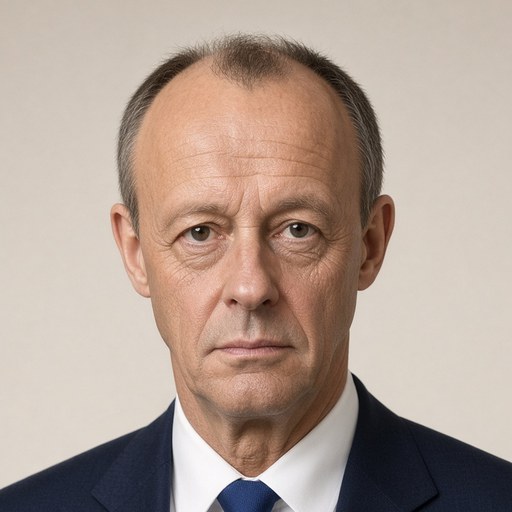
Chancellor's speech at the summit on Europe's digital sovereignty "Europe must forge its own digital path"
 Friedrich Merz · Chancellor of Germany
- Context
- Merz addressed a joint Franco-German Digital Summit in Berlin on November 18, 2025, calling for Europe to forge its own digital path toward sovereignty.
- Main themes
- European digital sovereignty, Franco-German cooperation, digital infrastructure independence, artificial intelligence and key technologies, EuroStack strategy, cybersecurity and defense, cloud computing and microelectronics, quantum technology, reduction of bureaucracy, innovation leadership, US-China technological rivalry, democratic resilience
- Duration
- ~19 min
- Words
- 2,272
- Sentences
- 148
- Readability
- 44
- Grade
- 10.9
- Syntax
- 2.65
- Vocabulary
- 2.21
Translated from German
The broad sphere of national life a sentence belongs to. Every sentence has an Arena, so it is the denominator the other indices are read against.
Other148 sentences in 35 paragraphs
Mr. President of the French Republic, dear Emmanuel,
Frau Virkkunen,
dear Ms. Olsen,
dear Karsten Wildberger,
colleagues from the German Bundestag and from the ministries of the ten participating EU member states,
Excellencies,
ladies and gentlemen,
welcome to our European summit on European digital sovereignty! I am very pleased that so many of you have responded to our joint invitation. With the aim of advancing our country technologically and digitally, the Federal Government invites you today to the Digital Summit. We are inviting you together with our French friends. Therefore, once again, a very warm welcome, dear Emmanuel Macron!
Ladies and gentlemen, the idea for today's meeting arose in the summer when we met with the two governments in Toulon for the Franco-German Ministerial Council. We want to move forward today in the best Franco-German tradition where Europe must now make rapid progress, namely in digital sovereignty. The tectonic shifts in political and economic power centers that we are currently witnessing in the world require swift action in the digital realm. Because the questions of the future will predominantly also be decided in the digital space. We see the systemic rivalry between the USA and China, two great powers, also two digital superpowers, vying for technological leadership. Europe must not cede this field to them.
We have seen disruptions at two of the three major cloud providers and supply bottlenecks for essential chips in recent weeks. These disruptions show that we are dependent on digital technologies from both China and the United States of America. We are experiencing firsthand how these dependencies are being used politically. That is why I believe, and that is our shared conviction, that Europe must pursue its own digital path with united efforts, and that this path must lead to digital sovereignty—at least wherever it is necessary and achievable.
On this path, we want to share three central thoughts with you.
First: We in Europe rely on openness, trust, and our values in the digital space. We do not want to build virtual walls. We do not want to split the information space. Cooperation and networking remain guiding principles for us, not isolation or protectionism. For this, we seek like-minded partners around the world. It is clear: We will not be able to politically regulate or subsidize digital sovereignty into existence. We must shape it together with the economy, science, and civil society. We want to shape it with you, ladies and gentlemen, who have followed our invitation today.
Second: For greater independence, we must develop digital skills in Europe. To compete in the digital technology race, we need the ability to innovate. I go a step further: We need leadership in innovation. This particularly concerns the crucial key technologies from artificial intelligence to quantum technology and cloud computing to microelectronics. Only in this way can we create alternatives and also choices. We exclude no one who adheres to the rules, and we want competition on equal terms. With the "EuroStack," a comprehensive strategy for Europe to strengthen competitiveness, secure important resources, and build a resilient and future-oriented digital ecosystem is on the table.
Finally, third: Digital sovereignty is closely linked to our security and defense. We must be able to defend ourselves against cyberattacks on our systems and against disinformation aimed at our democracies, ladies and gentlemen. That is why it is also about ensuring that the Bundeswehr and other European armies have the digital technologies they need for our defense, and that we can actually master and deploy these technologies when we need them. It is about being resilient. This means that when one technology fails, alternatives are available.
Ladies and gentlemen, to jointly and successfully embark on the European digital path, our two countries, Germany and France, bear a special responsibility. This is already the case due to our size and economic strength. When we pool our efforts, it has an impact on the entire European Union. That is what we are aiming for, not a bilateral approach, but a pan-European approach to provide impulses for all of Europe. That is why it is important that today’s summit includes the Executive Vice President of the European Commission, Henna Virkkunen, and the Danish Presidency of the Council, represented by Digital Minister Caroline Stage Olsen. I extend a very warm welcome to you. I am pleased that you are here. Because, ladies and gentlemen, this is our endeavor. We speak with a European voice, and we work together towards a goal: European digital sovereignty.
Today, we want to discuss and advance some areas of action together—you have already done so. These are the reduction of bureaucracy, procurement, and investments.
Let me start with the reduction of bureaucracy. The path to digital sovereignty leads through better conditions for digital innovations. This means we need a radical simplification in our regulatory practices and practical exceptions. I say this, ladies and gentlemen, because I want to connect it with a thank you to 20 heads of state and government of the European Union who, together with me, signed a letter to the Council President and the Commission President four weeks ago, demanding exactly this: that we really take the reduction of European bureaucracy seriously and open these markets, as we actually agreed upon when creating the European internal market over 30 years ago.
We start with ourselves. Federal Minister Karsten Wildberger has today made clear the comprehensive efforts of the Federal Government to reduce bureaucracy. The modernization agenda adopted by the Federal Government aims to achieve this, and the federal measures we are negotiating together with the states serve this very goal.
We expect the same ambition and concrete implementation steps now at the European level. That is why we have submitted comprehensive proposals to the Commission for simplifications and the reduction of bureaucracy, also in the area of digital policy. The EU Commission will publish a digital omnibus package on this tomorrow—you all know that. The omnibus packages are the litmus test of whether the reduction of bureaucracy in Brussels—I add: also in Strasbourg—can really succeed. Unnecessary regulation in digital legislation in the EU must not hinder European innovative strength. This does not mean that we want to lower the level of protection. But we want to open up more spaces for freedom. We want to create more opportunities for technological development and design.
At the heart of digital sovereignty is the handling of data. Here we see the following priorities:
On the one hand, we must continue to strengthen competition in the central cloud market. I expressly welcome that the Digital Markets Act is also to be applicable to large cloud providers as soon as they are classified as so-called gatekeepers. Then the same fair rules apply to everyone. At the same time, European cloud providers can more easily enter the market and benefit from fair competition on equal terms.
On the other hand, we must protect critical data of EU member states through sovereign infrastructure from third-party access. To be clear: It is not about excluding anyone. It is more about resilience and data security in Europe. At the same time, this is an offer to European cloud providers: Invest, we need you!
We are also considering further incentives. President Macron and I agree. We want to grant those who use sovereign clouds for storing their data in Europe more flexibility in using that data.
Now to procurement:
Starting with ourselves also means that our federal administration will procure its digital products and services much more European. We are making the state the anchor customer for sovereign working tools in public administration. As provided in the modernization agenda, we will provide sovereign digital workplaces in the federal administration over the next three years. Because the state must be able to perform its work stably even in times of crisis. Initial authorities, such as the Robert Koch Institute, have already made the switch. Components from "openDesk" are already in use in the Federal Ministry for Digital and State Modernization and finally also in my Chancellery. These applications are an example of our approach. They were largely developed by the Center for Digital Sovereignty in close cooperation with France. That is why they are interoperable. With the new European consortium for strategic digital common goods, which is being presented today, we can now also offer, exchange, and scale such solutions at the European level.
We want to further develop public IT procurement in Europe. For this purpose, the German-French "High Level Forum on Public Procurement" has met for the first time today. We want to define common criteria for the procurement of sovereign digital services. We are also discussing the possibility of jointly tendering and procuring. With this, we are sending a clear signal to European IT service providers. The demand from the administration is there. Your digital technologies are needed; they are needed here with us.
Finally, regarding investments: Starting with ourselves also means that the Federal Government invests in innovations. With the new High-Tech Agenda Germany, we are aligning research and innovation policy not only towards technological sovereignty and competitiveness. We are also providing 18 billion euros for this until the end of the legislative period. We have set ourselves a leadership claim in innovative AI technologies. That is why we want to advance the development of sovereign European AI models together with France and the EU Commission. In doing so, we want to involve other countries, private investors, and many others. The next generation of AI should also be shaped in Europe.
It is clear: The state can only set individual impulses in the market for digital services, and we are doing that. The decisive impulses for digital sovereignty must come from the economy itself. We provide the framework, and they must fill it. The companies are indeed the largest users of cloud services, software solutions, and AI applications. They are the largest data producers and also the largest data users. They are productivity and innovation drivers. The entrepreneurs thus bear responsibility. Every purchase of digital products and services, every investment in infrastructure from Europe is ultimately also a decision for or against digital sovereignty. The question of where the data is stored, who has access to it, which AI language models are trained for what purpose, who essentially holds the master key for the purchased digital solution, ladies and gentlemen, these are not trivial questions. They determine the future viability of companies and entire business models.
Yes, ladies and gentlemen, digital sovereignty has costs. But digital dependence has even higher costs. That is why you invest, and that is why we invest in digital sovereignty. Here and today in Berlin, companies from Germany, France, and other European countries are pledging investments of over twelve billion euros in and for the digital location Europe. Ladies and gentlemen, I would like to sincerely thank you on behalf of the Federal Government for this commitment and for these investment pledges.
You see that we are not just starting on the path to European digital sovereignty today. We are already on our way. This Franco-German summit shows how powerful and innovative we can be when we start the strong Franco-German engine in the center of Europe. When this summit is over, ladies and gentlemen, the work will continue even more intensively. Together with France, we will implement the points from the joint economic agenda that we have set for ourselves. In the digital area, we are focusing clearly on sovereign AI and cloud.
This morning, I visited the Max Planck Institute for Microstructure Physics in Halle, Saxony-Anhalt. From this, I take away one thing: Germany can become a leader in technologies for our digital sovereignty in close cooperation with other European partners. We have already achieved a lot in Germany. We have the locations. We have the employees. We have the researchers. Let us make something out of this together!
One of the world's leading AI technologies for image generation comes from Germany. The US tech companies are customers, not suppliers. Large corporations and start-ups are joining forces for digital innovations, and this is also happening across borders. Increasingly, the venture capital for all of this is coming from Europe, for Europe. This means that Europe can become digitally sovereign.
Ladies and gentlemen, let me conclude with a word about the capital market. If we want to be successful, we must not only want it technologically, but we must also be able to do it through the capital market. That is why I said yesterday at the EURO FINANCE WEEK in Frankfurt what I want to repeat here today. We must also pool and strengthen our efforts to find a European capital market for financing the companies that may still be start-ups or are just at the beginning of their development.
Emmanuel Macron and I are determined to continue down this path together in the coming weeks and months, so that we are able to finance these innovations and investments through a common integrated European capital market. If we walk this path together, preparing the innovation in the digital industries and simultaneously the capital market that finances all of this, then we have – of this I am sure – a great opportunity to turn the momentum we are in into something and to use the crisis we are in as an opportunity, as an opportunity not only for Germany, not only for German-French cooperation, but as an opportunity for the entire European Union.
Thank you very much for being here! Thank you very much for accompanying us on this journey as you have done all day today!
The original German. The tags above are read on the English translation's sentences.
Monsieur le Président de la République Française, cher Emmanue
l,
Frau Virkkunen,
sehr geehrte Frau Olsen,
lieber Karsten Wildberger,
Kolleginnen und Kollegen aus dem Deutschen Bundestag und aus den Ministerien der zehn teilnehmenden
EU
-Mitgliedsstaaten,
Exzellenzen,
meine Damen und Herren,
herzlich willkommen zu unserem europäischen Gipfel zur europäischen digitalen Souveränität! Ich freue mich sehr, dass Sie in so großer Zahl unserer gemeinsamen Einladung gefolgt sind. Unser Land technologisch und digitalpolitisch nach vorn zu bringen, mit diesem Ziel lädt Sie die Bundesregierung heute zum Digitalgipfel ein. Wir laden zusammen mit unseren französischen Freunden ein. Deshalb noch einmal ein sehr herzliches Willkommen, lieber
EmmanuelMacron
!
Meine Damen und Herren, die Idee zu dem Treffen heute entstand im Sommer, als wir uns zusammen mit den beiden Regierungen in
Toulon
zum deutsch-französischen Ministerrat getroffen haben. Wir wollen heute in bester deutsch-französischer Tradition dort vorangehen, wo Europa jetzt schnell vorankommen muss, nämlich bei der digitalen Souveränität. Die tektonischen Verschiebungen in den politischen und in den ökonomischen Machtzentren, die wir zurzeit auf der Welt erleben, erfordern schnelles Handeln im digitalen Raum. Denn die Fragen der Zukunft werden überwiegend auch im digitalen Raum entschieden. Wir sehen die systemische Rivalität der
USA
und Chinas, zweier Großmächte, auch zweier Digitalgroßmächte, die um die Technologieführerschaft ringen. Europa darf ihnen dieses Feld nicht überlassen.
Wir haben die Störungen bei zwei der drei großen
Cloud
-Anbietern und die Lieferengpässe bei wesentlichen
Chips
in den letzten Wochen gesehen. Diese Störungen zeigen, dass wir von digitalen Technologien sowohl aus China als auch aus den Vereinigten Staaten von Amerika abhängig sind. Wir erleben ganz unmittelbar und direkt, wie diese Abhängigkeiten machtpolitisch eingesetzt werden. Deshalb meine ich, und deshalb ist es unsere gemeinsame Überzeugung, dass Europa in vereinter Kraftanstrengung einen eigenen digitalen Weg gehen und dass dieser Weg in die digitale Souveränität führen muss – jedenfalls überall dort, wo es notwendig und wo es erreichbar ist.
Auf diesem Weg wollen wir drei zentrale Gedanken mit Ihnen teilen.
Erstens: Wir in Europa setzen im digitalen Raum auf Offenheit, Vertrauen und auf unsere Werte. Wir wollen keine virtuellen Mauern bauen. Wir wollen den Informationsraum nicht spalten. Zusammenarbeit und Vernetzung bleiben für uns Leitprinzipien, nicht Abschottung oder Protektionismus. Dafür suchen wir gleichgesinnte Partner auf der ganzen Welt. Klar ist: Wir werden digitale Souveränität nicht politisch herbeiregulieren oder herbeisubventionieren können. Wir müssen sie gemeinsam mit der Wirtschaft, der Wissenschaft und der Zivilgesellschaft gestalten. Wir wollen sie mit Ihnen gestalten, meine Damen und Herren, die heute unserer Einladung gefolgt sind.
Zweitens: Für mehr Unabhängigkeit müssen wir in Europa digitale Fähigkeiten entwickeln. Um im Wettbewerb um digitale Technologien zu bestehen, brauchen wir Innovationsfähigkeit. Ich gehe noch einen Schritt weiter: Wir brauchen Innovationsführerschaft. – Das betrifft insbesondere die entscheidenden Schlüsseltechnologien von künstlicher Intelligenz über Quantentechnologie und
Cloud
-Computing hin zur Mikroelektronik. Nur so schaffen wir Alternativen und eben auch Wahlmöglichkeiten. Wir schließen niemanden aus, der sich an die Regeln hält, und wir wollen Wettbewerb auf Augenhöhe. Mit dem „
EuroStack
“ liegt eine umfassende Strategie für Europa zur Stärkung der Wettbewerbsfähigkeit, zur Sicherung wichtiger Ressourcen und zum Aufbau eines widerstandsfähigen und zukunftsorientierten digitalen Ökosystems vor.
Schließlich drittens: Digitale Souveränität ist eng mit unserer Sicherheit und Verteidigung verknüpft. Wir müssen uns aus eigener Kraft gegen
Cyber
angriffe auf unsere Systeme und gegen Desinformation, die auf unsere Demokratien zielt, verteidigen können, meine Damen und Herren. Deshalb geht es auch darum, dass die Bundeswehr und andere europäische Armeen die digitalen Technologien haben, die sie zu unserer Verteidigung brauchen, und dass wir diese Technologien tatsächlich beherrschen und dann einsetzen können, wenn wir sie brauchen. Es geht darum, dass wir resilient sind. Das heißt, dass bei Ausfall einer Technologie Alternativen zur Verfügung stehen.
Meine Damen und Herren, um den europäischen digitalen Weg gemeinsam und erfolgreich zu beschreiten, tragen unsere beiden Länder, tragen Deutschland und Frankreich eine besondere Verantwortung. Dies ist allein schon aufgrund unserer Größe und unserer Wirtschaftskraft so. Wenn wir unsere Kraftanstrengungen bündeln, dann hat das Auswirkungen auf die gesamte Europäische Union. Darum geht es uns, nicht um einen bilateralen, sondern um einen gesamteuropäischen Ansatz, um Impulse für ganz Europa zu geben. Deshalb ist es wichtig, dass beim heutigen Gipfel die Exekutivvizepräsidentin der Europäischen Kommission,
Henna Virkkunen
, und die dänische Ratspräsidentschaft, vertreten durch die Digitalministerin Caroline Stage Olsen, dabei sind. Ich heiße Sie ganz besonders herzlich willkommen. Ich freue mich, dass Sie dabei sind. Denn meine Damen und Herren, das ist unser Bemühen. Wir sprechen mit einer europäischen Stimme, und wir arbeiten zusammen an einem Ziel, der europäischen digitalen Souveränität.
Heute wollen wir im Folgenden einige Handlungsfelder miteinander besprechen – Sie haben das bereits getan – und voranbringen. Diese sind der Rückbau der Bürokratie, die Beschaffung und Investitionen.
Lassen Sie mich mit dem Rückbau der Bürokratie beginnen. Der Weg zu digitaler Souveränität führt über bessere Bedingungen für digitale Innovationen. Das heißt, wir brauchen eine radikale Vereinfachung in unserer Regulierungspraxis und praxisnahe Ausnahmeregeln. Ich sage das deshalb, meine Damen und Herren, weil ich dies mit einem Dank an 20 Staats- und Regierungschefs der Europäischen Union verbinden will, die zusammen mit mir vor vier Wochen einen Brief an den Ratspräsidenten und an die Kommissionspräsidentin unterschrieben haben, der genau dies fordert, dass wir nämlich wirklich ernst machen mit dem Rückbau der europäischen Bürokratie und der Öffnung dieser Märkte, wie wir es eigentlich einmal bei der Schaffung des europäischen Binnenmarktes vor über 30 Jahren miteinander verabredet haben.
Wir fangen bei uns selbst an. Bundesminister Karsten Wildberger hat heute die umfassenden Bemühungen der Bundesregierung um den Bürokratierückbau deutlich gemacht. Die beschlossene Modernisierungsagenda des Bundes zielt darauf ab, und die föderalen Maßnahmen, über die wir zusammen mit den Ländern verhandeln, dienen genau diesem Ziel.
Gleiche Ambition und konkrete Umsetzungsschritte erwarten wir jetzt auch auf der europäischen Ebene. Wir haben der Kommission deswegen umfassende Vorschläge für Vereinfachungen und Bürokratierückbau eben auch im digitalpolitischen Bereich unterbreitet. Die
EU
-Kommission wird morgen – Sie alle wissen es – ein Digitalomnibuspaket dazu veröffentlichen. Die Omnibuspakete sind der Lackmustest, ob Bürokratierückbau in Brüssel – ich füge hinzu: auch in Straßburg – wirklich gelingt. Unnötige Regulierung in der Digitalgesetzgebung in der
EU
darf europäische Innovationskraft nicht hemmen. Das bedeutet nicht, dass wir das Schutzniveau absenken wollen. Aber wir wollen mehr Freiheitsräume öffnen. Wir wollen mehr Möglichkeiten zur technologischen Entwicklung und Gestaltung schaffen.
Im Zentrum der digitalen Souveränität steht der Umgang mit Daten. Hier sehen wir folgende Prioritäten:
Zum einen müssen wir weiterhin den Wettbewerb im zentralen
Cloud
-Markt stärken. Ich begrüße ausdrücklich, dass der
„Digital Markets Act
“ auch auf große
Cloud
-Anbieter anwendbar sein soll, sobald sie als sogenannte
Gatekeeper
eingestuft sind. Dann gelten für alle die gleichen, fairen Regeln. Zugleich können europäische
Cloud
-Anbieter leichter in den Markt eintreten und vom fairen Wettbewerb auf Augenhöhe profitieren.
Zum anderen müssen wir kritische Daten der
EU
-Mitgliedstaaten durch souveräne Infrastruktur vor dem Zugriff Dritter schützen. Um es deutlich zu sagen: Es geht nicht darum, irgendjemanden auszugrenzen. Es geht vielmehr um Resilienz und Datensicherheit in Europa. Gleichzeitig ist dies ein Angebot an die europäischen
Cloud
-Anbieter: Investieren Sie, wir brauchen Sie!
Wir denken auch über weitere Anreize nach. Präsident
Macron
und ich, wir sind uns einig. Wir wollen denjenigen, die souveräne Clouds für die Speicherung ihrer Daten in Europa nutzen, mehr Flexibilität bei der Nutzung dieser Daten einräumen.
Nun zur Beschaffung:
Bei sich anfangen, das heißt auch, dass unsere Bundesverwaltung ihre digitalen Produkte und Dienstleistungen noch viel stärker europäisch beschaffen wird. Wir machen den Staat zum Ankerkunden für souveräne Arbeitsmittel in der öffentlichen Verwaltung. Wie in der Modernisierungsagenda vorgesehen, werden wir in der Bundesverwaltung in den nächsten drei Jahren souveräne digitale Arbeitsplätze zur Verfügung stellen. Denn der Staat muss seine Arbeit auch in Krisenzeiten stabil ausführen können. Erste Behörden wie zum Beispiel das Robert-Koch-Institut sind bereits umgestiegen. Auch im Bundesministerium für Digitales und Staatsmodernisierung und schließlich auch bei mir im Bundeskanzleramt sind Komponenten aus „
openDesk
“ bereits im Einsatz. Diese Anwendungen sind ein Beispiel für unser Vorgehen. Sie wurden größtenteils vom Zentrum für digitale Souveränität in engster Kooperation mit Frankreich erarbeitet. Deswegen sind sie interoperabel. Mit dem neuen europäischen Konsortium für strategische digitale Gemeinschaftsgüter, das heute vorgestellt wurde, können wir solche Lösungen jetzt auch europäisch anbieten, austauschen und skalieren.
Wir wollen die öffentliche
IT
-Beschaffung in Europa weiterentwickeln. Hierzu ist heute erstmalig das deutsch-französische „
High Level Forum on Public Procurement
“ zusammengekommen. Wir wollen gemeinsame Kriterien für die Beschaffung souveräner digitaler Dienste definieren. Wir sprechen auch über die Möglichkeit, gemeinsam auszuschreiben und zu beschaffen. Wir senden damit ein deutliches Signal an die europäischen
IT
-Dienstleister. Die Nachfrage der Verwaltung ist da. Ihre digitalen Technologien werden gebraucht; sie werden hier bei uns gebraucht.
Schließlich zu den Investitionen: Bei uns selbst anfangen, das heißt auch, dass die Bundesregierung in Innovationen investiert. Mit der neuen Hightech Agenda Deutschland richten wir die Forschungs- und Innovationspolitik nicht nur auf technologische Souveränität und Wettbewerbsfähigkeit aus. Wir stellen dafür auch 18 Milliarden Euro bis zum Ende der Wahlperiode zur Verfügung. Wir haben an uns selbst einen Führungsanspruch bei innovativen
KI
-Technologien gestellt. Deshalb wollen wir gemeinsam mit Frankreich und der
EU
-Kommission die Entwicklung souveräner europäischer
KI
-Modelle voranbringen. Dabei wollen wir weitere Länder, private Investoren und viele andere gewinnen. Die nächste Generation von
KI
soll auch in Europa gestaltet werden.
Klar ist: Der Staat kann auf dem Markt für digitale Dienste nur einzelne Impulse setzen, und das tun wir. Die entscheidenden Impulse für die digitale Souveränität müssen von der Wirtschaft selbst ausgehen. Wir geben ihnen den Rahmen, und sie müssen ihn ausfüllen. Die Unternehmen sind nämlich die größten Nutzer von
Cloud
-Diensten,
Software
lösungen und
KI
-Anwendungen. Sie sind die größten Datenproduzenten und auch die größten Datennutzer. Sie sind Produktivitäts- und Innovationstreiber. Die Unternehmerinnen und Unternehmer tragen damit Verantwortung. Jeder Einkauf von digitalen Produkten und Dienstleistungen, jede Investition in Infrastruktur aus Europa ist letztendlich auch eine Entscheidung für oder gegen digitale Souveränität. Die Frage, wo die Daten gelagert werden, wer Zugriff auf sie hat, welche
KI
-Sprachmodelle mit welchem Zweck damit trainiert werden, wer sozusagen den Generalschlüssel für die eingekaufte digitale Lösung hat, meine Damen und Herren, das sind keine trivialen Fragen. Sie entscheiden mit über die Zukunftsfähigkeit von Unternehmen und ganzen Unternehmensmodellen mit.
Ja, meine Damen und Herren, digitale Souveränität hat Kosten. Aber die digitale Abhängigkeit hat noch höhere Kosten. Deshalb investieren Sie, und deshalb investieren wir in digitale Souveränität. Hier und heute in Berlin sagen Unternehmen aus Deutschland, Frankreich und weiteren europäischen Ländern Investitionen in Höhe von über zwölf Milliarden Euro am und für den digitalen Standort Europa zu. Meine Damen und Herren, ich möchte Ihnen im Namen der Bundesregierung für dieses Engagement und für diese Investitionszusagen von ganzem Herzen danken.
Sie sehen, dass wir uns nicht erst heute auf den Weg zu europäischer digitaler Souveränität machen. Wir sind bereits unterwegs. Dieser deutsch-französische Gipfel zeigt, wie kraftvoll und innovativ wir sein können, wenn wir im Zentrum Europas den starken deutsch-französischen Motor anwerfen. Wenn dieser Gipfel vorbei ist, meine Damen und Herren, dann wird die Arbeit noch intensiver weitergehen. Zusammen mit Frankreich werden wir die Punkte aus der gemeinsamen Wirtschaftsagenda umsetzen, die wir uns vorgenommen haben. Im digitalen Bereich legen wir einen klaren Fokus auf souveräne
KI
und
Cloud
.
Heute Vormittag habe ich in Halle in Sachsen-Anhalt das Max-Planck-Institut für Mikrostrukturphysik besucht. Davon nehme ich vor allem eines mit: Deutschland kann im Schulterschluss mit anderen europäischen Partnern bei Technologien für unsere digitale Souveränität führend werden. Wir haben in Deutschland schon viel erreicht. Wir haben die Standorte. Wir haben die Mitarbeiterinnen und Mitarbeiter. Wir haben die Forscherinnen und Forscher. Lassen Sie uns daraus gemeinsam etwas machen!
Eine der weltweit führenden
KI
für Bildgenerierung kommt schon aus Deutschland. Die
US
-Techfirmen sind Kunden, nicht Lieferanten. Große Konzerne und Start-ups tun sich für digitale Innovationen zusammen, und dies auch grenzüberschreitend. Immer öfter kommt das Wagniskapital für all dies auch aus Europa, für Europa. Das heißt, Europa kann digital souverän werden.
Meine Damen und Herren, lassen Sie mich abschließend ein Wort zum Kapitalmarkt sagen. Wenn wir erfolgreich sein wollen, dann müssen wir es nicht nur technologisch wollen, dann müssen wir es auch über den Kapitalmarkt können. Deswegen habe ich gestern auf der
EURO FINANCE WEEK
in Frankfurt das gesagt, was ich heute hier wiederholen will. Wir müssen auch unsere Anstrengungen zusammenlegen und verstärken, um einen europäischen Kapitalmarkt für die Finanzierung der Unternehmen zu finden, die jetzt vielleicht noch
Start-ups
sind oder jetzt am Anfang ihrer Entwicklung stehen.
EmmanuelMacron
und ich sind entschlossen, auch diesen Weg in den nächsten Wochen und Monaten gemeinsam weiterzugehen, sodass wir in der Lage sind, diese Innovationen und diese Investitionen auch über einen gemeinsamen integrierten europäischen Kapitalmarkt zu finanzieren. Wenn wir diesen Weg gemeinsam gehen, die Innovation im Bereich der digitalen Industrien und gleichzeitig den Kapitalmarkt, der dies alles finanziert, dafür bereitzuhalten, dann haben wir – dessen bin ich mir sicher – eine große Chance, aus dem Momentum, in dem wir sind, etwas zu machen und die Krise, in der wir uns befinden, als Chance zu nutzen, als Chance nicht nur für Deutschland, nicht nur für die deutsch-französische Zusammenarbeit, sondern als Chance für die gesamte Europäische Union.
Herzlichen Dank, dass Sie hier sind! Herzlichen Dank, dass Sie uns auf diesem Weg so begleiten, wie Sie es heute schon den ganzen Tag getan haben!