




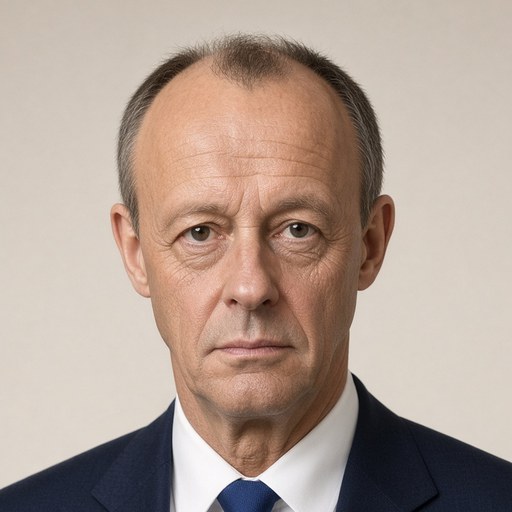
Speech by Chancellor Merz at the Arnsberg Chamber of Industry and Commerce Germany must remain an industrial nation
 Friedrich Merz · Chancellor of Germany
- Context
- Merz addressed the Arnsberg Chamber of Industry and Commerce in 2025, outlining his government's economic and migration policies since taking office in May.
- Main themes
- German industrial competitiveness, energy-intensive industry, economic structural crisis, trade disputes with the United States, refugee and asylum policy, border controls, corporate tax reform, war in Ukraine, European asylum policy, populism, coalition government responsibility, investment incentives
- Duration
- ~50 min
- Words
- 5,987
- Sentences
- 292
- Readability
- 50
- Grade
- 11.3
- Syntax
- 2.99
- Vocabulary
- 2.00
Translated from German
The broad sphere of national life a sentence belongs to. Every sentence has an Arena, so it is the denominator the other indices are read against.
Other292 sentences in 63 paragraphs
Dear Mr. President, dear Mr. Knappstein,
esteemed honorary presidents,
dear Mr. Nolte,
Mr. District Administrator,
Mr. Mayor,
dear colleagues from the parliaments,
ladies and gentlemen,
thank you very much for the warm welcome. Thank you for being willing to adjust the time and place a little to accommodate my ability to be here today. It is an opportunity that I have taken advantage of very regularly over the past 35 years. It is, so to speak, one of the constants in my political life that I participate in the annual receptions of my chamber whenever possible.
Ladies and gentlemen, I am here today for the first time in this new role. But I am also here for the first time at a time that differs quite profoundly from previous years and encounters. We are not only dealing with the fourth year of the war in Ukraine. We have a massive trade dispute with the United States of America, which is only inadequately resolved. And at the same time, we are facing significant pressure on our society from left-wing, but above all right-wing populism. And in this tension of war, trade disputes, and populism, politics is moving today. I am free from any lamentation, but there have certainly been simpler times.
Nevertheless, after the elections on February 23, we have embarked on the path with this federal government to take responsibility for Germany. We have named the coalition agreement: Responsibility for Germany. That is how we feel, and that is how it is: This government bears the responsibility for our country.
You have just described the issues, Mr. Knappstein. Allow me to try to respond from my perspective on how we are facing this responsibility and how we have been handling it since May 6.
We have divided the year 2025 into two parts. The first part was the ten weeks of the first half of the year. In these ten weeks, we faced two major challenges that we wanted to resolve quickly. One was the ongoing refugee crisis in our country. The second was the ongoing economic crisis, which I will address at various points throughout the evening.
We implemented a promise of the new government right on the first day, namely that despite some discussions, both domestically and internationally, we have begun to better protect our national borders. We have reintroduced border controls, and they have been carried out by the Federal Police. The result is that we have seen a significant decline in the number of asylum applications for several weeks now. In the month-to-month comparison from September to September, the number of asylum applications in Germany has decreased by over 60 percent.
This is a first success of this policy. Further measures must follow, and above all, it will not be possible to do this alone nationally. We need a common European asylum policy here. We are on that path. The decisions in Brussels are being prepared and will be made soon. Parts of it have already been implemented into national law.
The second challenge was the persistently poor state of our economy. And, ladies and gentlemen, this is not a cyclical phenomenon of the moment, but a structural growth crisis of our economy that has been ongoing for years. This structural growth crisis has one main cause: We have lost price competitiveness in large parts of our industry.
You might compare it to a development we experienced several decades ago. Back then, we lost large parts of the labor-intensive industry, such as shoe production and large parts of textile production, all of which were relocated abroad due to high labor costs and relatively low value creation. Now we are facing fierce global competition in the energy-intensive industry. And this energy-intensive industry, unlike the industry we lost several decades ago, is a highly value-creating industry. It is an industry with highly qualified jobs. And it is the industry that fundamentally defines the industrial location of the Federal Republic of Germany. I will mention just a few examples – this is not an exhaustive list – the steel industry. I mention the chemical industry. I mention mechanical engineering in its entirety. But I also mention, and above all, the automotive industry and the automotive supply industry. This industry is facing the greatest upheaval it has experienced in its entire history since the invention of the automobile.
In the first weeks, we also made an initial decision here that is having an effect, namely with a law to reduce corporate tax and to introduce a high depreciation option – three times 30 percent within three years – to enable and also tax-advantage investments in Germany's industry. Now I know that you first have to earn depreciation. You all know that here in the room; not everyone in Berlin does, ladies and gentlemen. Therefore, with what we have already decided here and what was also passed in the Bundesrat on July 11, we are only at the beginning of a comprehensive agenda to restore our price competitiveness.
In the second half of this year, we have made significant progress and made decisions regarding energy prices. Because energy prices, alongside high labor costs, which I will also address, have become, especially after the start of the war in Ukraine, the major challenge for the price competitiveness of our industry. Here let me make a remark, so to speak, before the bracket: I want, we want Germany to remain an industrial location. Not all industries will survive. But we want, I want us to be at the forefront of technological progress in the most modern products, in new inventions, in Industry 4.0, so to speak. Germany must, ladies and gentlemen, remain an industrial country. If we do not remain one, we have no chance of maintaining the prosperity of our country in the long term.
That is why we turned our attention to energy prices immediately after the summer holidays. We abolished the gas levy. We lowered the network fees. And we also initially reduced the electricity tax for the commercial economy, resulting in an average of minus 9 percent for electricity customers, for private households, as well as for large parts of the industry by the beginning of 2029.
We know that this is not enough. And that is why we have also been intensively working in Brussels to obtain approval for a) a power plant strategy and b) for an industrial electricity price. And we have precisely that, which we decided in the coalition committee, after we were promised approval for both in Brussels. We will build gas power plants in Germany, with tenders that will begin next year, including those gas power plants that will only become hydrogen-capable at a later date. We will not wait for these power plants to have hydrogen from day one. We do not have that much. These power plants do not even exist yet. Therefore, during a transition period, we will not only build gas power plants in Germany but also operate them. And we want to enable an industrial electricity price from the Climate and Transformation Fund for three years – and that is how long the approval will last – particularly for the energy-intensive industry, of which we have some here in the region, when I think of the paper industry, but also other industries that will benefit from it.
We also know that this can only be a further step. But these steps have been decided, and we will implement them shortly as soon as the final approval from Brussels is in place. And both the power plant strategy and the industrial electricity price will come into effect retroactively from January 1, 2026. This means that we have made significant progress on the essential cost factors we encountered – and they have been dependent on external circumstances as well as on political decisions of the previous government – knowing that all of this is only parts of a larger picture that we have not yet finished drawing.
We know that we need to do something about labor costs. However, ladies and gentlemen, this is perhaps the greatest challenge for a coalition of CDU, CSU, and SPD that we want to shoulder together. But I want to say this: If we are to succeed in such an endeavor, it will only be possible with the Social Democrats. It will only succeed with the workers in Germany. And it will not succeed in a major societal conflict, but only if a large part of the population supports this path and we decide it here in the political center together, so that a large part of the population understands, accepts, and follows this path.
That is why we are discussing these issues, and we are starting very concretely with reforms of transfer systems that are in urgent need of reform, such as the citizen's income. The draft bill from the Ministry of Labor and Social Affairs is ready. It has been coordinated within the coalition, and it will be discussed in the German Bundestag in the first reading later this year. We will not continue the citizen's income in its current form. We will incorporate a new basic security into the Social Code II, primarily significantly increasing the incentives to take up employment and, in the case of insufficient cooperation, significantly tightening the sanctioning options. The path to this was not easy. For the Social Democrats, this is a similarly difficult issue as the discussion on old-age provision is for us in domestic political discussions; I will also address that shortly.
Secondly, in this context, we decided in the cabinet last week – the bill has been passed – that we will make the so-called legal status change for refugees from Ukraine. We have about 1.2 million refugees in Germany who are currently subject to the so-called citizen's income, meaning they are allowed to receive the citizen's income. We will change that, as it was initially the case. When the refugees came to Germany in 2022, they were initially subject to the Asylum Seekers Benefits Act. These are benefits that are, on average, 10 to 15 percent lower than the benefits under the Social Code II. This decision has also been made in the cabinet. The law is ready and has been sent to the Bundestag. I signed the transmittal letter this week.
This means we are now consistently pursuing this path, both with the citizen's income in general and with the Asylum Seekers Benefits Act for refugees from Ukraine, to also create better incentives to enter or return to the labor market. And this is particularly about the refugees from Ukraine. You know that I have asked the Ukrainian president to amend the law that allows 18 to 24-year-old Ukrainian men, which was previously not possible, to leave the country. These men are needed in Ukraine and should serve there – not just their military service; they are needed there. I want us to send corresponding signals that we will, of course, continue to help – the war in Ukraine is not over – but that we will also do everything we can to achieve a higher employment rate for those who have come to Germany. We are still among the last places in Europe in this regard. There are countries with employment rates between 60 and 80 percent. We are still at about 30 percent. That is unacceptable. We want to systematically increase the employment rate of those who are here and also provide the necessary incentives for that. Once again: The laws have been passed and are on the parliamentary path and will soon be decided.
Now we have further topics, and one of them is the very controversial issue of pension insurance. However, ladies and gentlemen, we have also made decisions in the coalition on this, already in the coalition agreement and now also in the legislative processes. Part of it is controversial, namely the part that concerns the statutory pension insurance with the so-called stabilization line until 2031.
We are currently not discussing the topic until 2031. We are discussing the topic: What comes after 2031? We agree that we cannot continue these benefits as they are and that we need a new overall provision level regarding the old-age provision of our population, which no longer relies solely on statutory pension insurance, on the first pillar, but is much more shaped by the second and third pillars, namely private and occupational pension provision. We have already decided that. The Company Pension Act has already been amended once. The private pension provision is in the concept, and both will become a capital-funded system.
Ladies and gentlemen, this has been taken for granted. But the colleagues here in the hall, who are with me in the German Bundestag, will confirm: it was by no means undisputed and was long rejected by the Social Democrats that we strengthen large parts of pension provision in Germany, the entire second and third pillars, and move towards capital funding. We agreed on this in the coalition agreement, and this will also come in the interest of a new overall level of provision, which we will then also assign a new indicator, so no longer just with a holding line of 48 percent from the statutory pension insurance.
I need to explain this a bit more thoroughly here so that you, so that we all understand what the current discussion is about. The younger colleagues share the assessment just as I and others do. We need to change this system in light of demographic change. And we want to change it. It is agreed in the coalition agreement, and we will change it quickly; because the conditions for this have also been created. The Pension Commission will be set up later this year. It will submit its report before the parliamentary summer break of 2026, and we will begin concrete legislation at the latest then, which, if it were up to me, would also be completed next year, so that we can start very early to build a much more capital market-oriented pension provision in the second and third pillars. This is a difficult undertaking. It requires intensive discussions. But I also want to advocate once again that we not only conduct these discussions together but also endure them.
Ladies and gentlemen, where else, if not in a democracy, when else, if not on such an important topic for large parts of the population? By the way, the younger generation is just as interested as the older and middle generations in having such an intensive discussion in light of this demographic situation. We need to conduct the discussion, but we also need to conclude it. And above all, we need to make decisions, and I hope that we will make these decisions still this year.
Ladies and gentlemen, there are two more elements from this package that are to be initiated this year. One of them is to be legally decided so that it can come into effect on January 1, 2026. This is the so-called active pension. You all or most of you probably know what we mean by that. We want to give older employees in companies, those who are subject to social insurance, an incentive to continue working in the companies beyond the regular retirement age. This is a clear signal that we as a coalition are sending together that we want to extend working hours, that we want to make a good offer initially on a voluntary basis. And this offer is 2,000 euros additional tax-free income per month for those who remain in the companies beyond the regular retirement age. My personal assessment is – you may agree or not; let’s talk about it this time next year – that relatively many employees will take advantage of this attractive offer.
We are deliberately doing this only for those subject to social insurance. It does not apply to members of parliament, it does not apply to managing directors, it does not apply to the Federal Chancellor, but it only applies to those subject to social insurance, because a signal is to be associated with it: We want and we must achieve that people in Germany work longer.
We will connect this with a concept of the so-called early start pension – a concept that is also intended to build a capital-funded pension very early, namely for students aged 6 to 18. All those who are enrolled in Germany from the age of six and go to school will receive a digital savings book, to which the state will pay 10 euros every month for twelve years, to show them what a capital market-oriented savings form can enable, to accustom the people in Germany, the children, the students, the young people, early on to the fact that they must save, that they can save.
Ladies and gentlemen, this has a second side, and let me say this at this point: The financing of our economy, the prosperity of our economy, the asset formation in our economy cannot only occur through the traditional savings book. We need a better capital market in Germany. And this capital market has two sides: those who save into this capital market and benefit from it, and those who are financed from this capital market. And that includes many of you in the companies in Germany, especially the medium and larger ones, but also many smaller ones, who should have access to the capital market so that we can simply achieve a better capital endowment of companies in Germany. We want to enable this with these contributions and pursue this path.
Now I know that this is still not enough, and you, Mr. Knappstein, have rightly pointed this out: Our economy suffers not only from high costs. Our economy also suffers from excessive bureaucracy. And that is exactly where we are addressing decisions that the Cabinet has already made, with a decision that I made very early on, that we are establishing for the first time in the history of the Federal Republic of Germany a ministry responsible for the digitization and modernization of our state. But it is not just a ministry with a minister, but with responsibilities that have previously been distributed across six different departments, which are now bundled in one ministry, led by someone from the private sector. And I can tell you: What Karsten Wildberger is achieving in this position, you will only really see over the next months and perhaps years.
We have embarked on a comprehensive digitization and deregulation agenda, and I want to give you an example of what will possibly be the most challenging digitization task in Germany for the coming years: to establish an agency that exclusively enables the integration of foreign skilled workers into the labor market on a digital basis.
Ladies and gentlemen, we are now separating administratively and legally from the outset the immigration into the labor market from the immigration into the social security systems through asylum legislation. We are creating a digital platform behind which all the processes required for a residence permit, a work permit, and the recognition of professional qualifications will run. By the way, you come into play here. We need the support of the chambers of industry and commerce in Germany, also of the German Chamber of Industry and Commerce, because you are the ones who can carry out the recognition and assessment of the recognition of professional qualifications from many other countries. This task is particularly demanding because it involves the federal government, states, municipalities, and institutions such as the chambers, and all of this must be integrated into this digital platform. This is an extraordinarily demanding task, but we have decided on it in the Cabinet. A project working group is now working on it, which is cross-departmental with the states and municipalities and the individual authorities that can issue professional recognition, implementing exactly this project.
Ladies and gentlemen, this is also something new, that a federal government is now working in project groups across departments, no longer according to individual departmental responsibilities, but cross-departmentally in such a project group to ensure that this project gets underway. We call it the Work-and-Stay Agency, so “work and stay,” so that we can achieve better recruitment and integration of such skilled workers – you mentioned it, Mr. Knappstein – who immigrate to the Federal Republic of Germany, stay here, and work here. This will, as I said, possibly be the largest digitization project of the current legislative period.
Ladies and gentlemen, however, the topic of “digitization” is not yet fully described. We have not only adopted a digital strategy in the federal government, but we have also closely coordinated it with our French neighbors, with the French government. We have conducted the first German-French government meeting in southern France in years. All participating departments had tasks that they were assigned beforehand. All departmental ministers made at least one visit each to Germany and France in preparation. We received corresponding decision papers from all departments, and one of the decision papers was launched this week at the major digital summit with Germany and France together and Emmanuel Macron in Berlin. It is a digitization strategy that we are now preparing as two countries between Germany and France, which is deliberately aimed at being jointly implemented in the European Union.
This brings me to a very concrete issue that affects us throughout the European Union. We want to have data centers, we want to enable digitization, we want to enable cloud solutions for Germany, we want to get out of dependence on large American and Chinese tech companies. This will be difficult; it is a long way. But, ladies and gentlemen, my firm conviction, after many discussions, many expert courses, many appointments we have had, is that this is still possible, but not alone nationally, but together with our European partners, that we can become strong enough in digitization here and above all reduce our dependencies. I want to do everything today, regardless of the area – whether it is defense, digitization, or many other areas – to reduce the dependencies of the Federal Republic of Germany and the European Union from other continents, from other suppliers, from other industries as much as possible. We need European sovereignty now, and this is a huge opportunity that we want to seize and truly implement.
There are also initial successes to report on this. In recent weeks, we have seen a whole series of investments in large data centers that have been explicitly promised and implemented here because they see exactly this digitization strategy in the background of the federal government and the European Union. I will only mention the supercomputer JUPITER in Jülich as an example. I will only mention the investment of 5 billion euros from Microsoft, largely in Cologne. I will only mention what the Schwarz Group is implementing in the AI strategy, both in Heilbronn and in Lübbenau near the chemical triangle.
Ladies and gentlemen, something is really happening. And the most important thing is that now we as state institutions and you in the private sector actually take advantage of these new opportunities. These data centers, these large facilities – and some of them are very large facilities – will only have a chance if we really go for these large data centers and utilize them with our resources. In any case, we have also decided in the federal government that we will access these new opportunities with our data centers and become anchor customers of these data centers so that we can make a big leap forward in the digitization of our economy and in the reduction of bureaucracy in our country, especially through digitization.
Let me say a word about Europe. You all know that I received my political education in the five years I was a member of the European Parliament. I had the great fortune to be a member of this European Parliament in the five years during which not only German reunification became possible, but also the entire European internal market program was implemented based on the Delors report.
Jacques Delors, the early Commission President, presented us with a report with 300 different proposals on how we can enable the European internal market with the free movement of people, goods, services, and capital. We accomplished all of this in that one legislative period, and on January 1, 1993, this European internal market came into force. That was one of the greatest, if not the greatest, achievements of European politics after the Second World War, after the founding of the European Communities.
But, ladies and gentlemen, it has not remained as we once envisioned. This European internal market of free movement has become a European internal market of overregulation. And that is why I am firmly determined to return to where we once were, namely to an open, as free as possible, and liberal European internal market. We also have reports on this. The former Italian Prime Minister Enrico Letta has written about the European internal market and its completion. He has pointed out, by the way, that we have less internal market today than we did in the 1990s. And the former ECB President Mario Draghi has written us a report on how we can restore the competitiveness of European industry.
These two reports – I do not want to offend anyone – were in danger of disappearing into the filing cabinets of the European Commission, gilded. I have requested that we address these two reports at the European Council of heads of state and government. Just before the last Council meeting, I wrote a letter to the President of the Commission and the President of the Council, asking that we really focus on reducing bureaucracy and restoring the competitiveness of European industry. This letter of mine, in which I outlined my vision, has now been co-signed without any changes by 21 out of the other 26 heads of state and government of the European Union. The result is that we will hold a special council of European heads of state and government near Brussels on February 12 – it is Women's Carnival in Germany, but perhaps a good day to do something like this – where we will spend an entire day solely on this question: What more do we need to do to have a truly competitive industry in the European Union again?
I find it extraordinarily encouraging that we have succeeded in this. And that, ladies and gentlemen, is not the beginning of the process, but the acceleration of a process that is already ongoing. You may have noticed that various directives have been controversially discussed in the European Parliament, including the European Supply Chain Directive. We have already abolished the German Supply Chain Act in ten out of twelve parts. What remains will hardly affect most of you.
The European Supply Chain Directive was passed last week in the European Parliament in a highly contentious vote with a very clear majority and will now be further debated in the so-called trilogue between the Commission, Council, and Parliament before being voted on again. I want to reiterate here, as I said in Berlin: I very much hope that the Social Democratic Group in the European Parliament will support this compromise that has been reached between the member states, the Commission, and the Parliament in the final vote. Because then we will have also reduced the bureaucratic impacts of European supply chain law to such an extent that, in my estimation, no one in this room will be affected by this regulation anymore.
We are working on these issues. You can see it from these examples, and for the interested farmers and foresters here in the room, it should be noted that 24 out of 27 member states of the European Union have followed the proposal of the Federal Republic of Germany regarding the deforestation regulation, to reduce the deforestation regulation to the extent that it will first come into effect a year later and second will hardly affect anyone in agriculture and forestry. The problem is thus resolved. We have received a lot of support from the forest and forestry associations. Thank you very much for that. I just wanted to mention these two examples. We are in the midst of this work of reducing European bureaucracy. It is not easy, but we are doing it.
Ladies and gentlemen, you can see from these many examples, even if they may seem small to you: There is no one big bang, no one great breakthrough, especially not in a democracy. We must struggle for the results. We must debate the path. But at the end of the day, we must also make decisions, and that is exactly what we are doing.
In conclusion, I want to mention the special fund that you brought up. Yes, that can be criticized, and I take this criticism seriously. But we will only be able to truly resolve this criticism if we also make the investments that are now possible. And I say this here for the Hochsauerlandkreis: Shovel-ready projects are being built and can all be built in Germany. Where there is readiness to build, construction can take place. There is no longer a lack of the necessary financial resources.
But all of this, of course, only works if the planning procedures and the determination procedures that we have in Germany are also changed. And it is precisely at this point that we are in the coalition. We have agreed on this in the coalition agreement. Currently, the objection of the Minister of the Environment is still on the table, but we will also overcome this objection. And we will come to a reasonable solution here. Because we have role models in Germany. We are not reinventing the wheel. In 1990, in the course of German reunification, we had the Traffic Route Planning Acceleration Act. That is precisely why the traffic routes in the East were built so quickly and so well, in some cases better and faster than in the West.
Ladies and gentlemen, we have seen LNG terminals under the previous government that were planned, designed, and built within nine months. That is possible. And we are firmly determined to make that possible again. If necessary, we will revert to the rules of the Traffic Route Planning Acceleration Act of 1990. We should not have abolished it in the East back then, but should have introduced it throughout the entire Federal Republic of Germany.
I wanted to give you a little insight into – how should I put it? – the workshop of the Federal Republic of Germany, this government, so that you get a sense of what we are doing. And we have only been in office for a little over six months.
By the way, Mr. Knappschein, the history of chancellors and their legacies is usually written only after leaving office. That is still quite a while for me.
Back to seriousness. This history has always been written in light of current events, whether they are domestic political events, foreign political events, or economic challenges. I hope I have shown you the challenges we are currently facing. But, ladies and gentlemen, the greatest challenge for our country is shaping a society that lives in peace, in freedom, in democracy, and in a market economy. We have all become quite accustomed to that. I quoted it at the Young Union last weekend and repeat it here. Read what Robert Menasse wrote about it last weekend: Every generation has experienced its epochal break.
We, ladies and gentlemen, who have the great fortune – undeserved, pure coincidence – to have been born here, to have grown up here in the West, to be successful, to lead companies, to continue companies, have not experienced such an epochal break for almost 80 years, precisely 80 years. That distinguishes us from previous generations. But this epochal break is now here. We are witnesses to this epochal break, and none of us knows what our country, what this society, our industry, the country, the continent may look like in five or ten years. But one thing is my firm conviction – and if you will, this may be part of the legacy –: We will not succeed alone. We will only succeed if we, with as many partners as possible in this European Union, on this European continent, and beyond – I say this very deliberately with a view to Great Britain – successfully carry this model of a free, open society, a democratic order, a market economy into the future.
Others will no longer help us with this. We no longer have Russian gas, and it is completely uncertain whether we will ever get it back. Perhaps. But it is not certain. We no longer have a Chinese market for cheap intermediate products. On the contrary: This market has become our most serious competitor in the whole world. And we no longer have the United States that can guarantee us security in the long term and without compensation. We are now on our own.
Ladies and gentlemen, if that is the case, then the economic policy issues, the social policy issues are rather the smaller ones. The bigger issue is: How do we manage to find enough allies in this world, enough countries, enough political leadership that is willing to take the path that we all consider the only right one, namely to enable a future in freedom, in peace, in democracy, and in a market economy, through our own efforts?
That is why we must become economically strong again. But that is also why we must now invest so much money to strengthen our defense. That is also why we must make such leaps in digitalization that we have all missed so far. And that is also why we need a change in thinking in our society.
And with that, I come to my concluding remark: This is not just craftsmanship. It is also a question of our mental state. Are we as a country and society actually ready to face profound changes once again? Are we ready to do what our parents, perhaps grandparents, were willing to do 80 years ago after the devastation of two world wars? Are we ready to not only show political leadership but also to accept it, which enables this country to take a path that gives our children and grandchildren the same opportunities that we have been able to enjoy until today?
Ladies and gentlemen, that is the question that occupies me more than all other questions of current day-to-day politics that we must discuss, that we must struggle over, that we must debate. But in the end, we must stand as a society, as a country that is ready to recognize the new reality, to be mentally open, to make an effort, to truly emphasize performance again, to show that we can do such things, and perhaps only to meet the expectations that others still have of us, who still believe that we could be one of the leading countries in this world, at least one of the leading countries in Europe, and who associate this with a much better assessment of our country than we sometimes have of ourselves. So let us approach this work with a bit of courage and confidence. I, for my part, am determined to do my part. And if you follow us in your companies, also in your political functions, in your voluntary functions, as important parts of our society on this path, then I am sure that we will succeed despite all adversities.
Thank you very much.
The original German. The tags above are read on the English translation's sentences.
Sehr geehrter Herr Präsident, lieber Herr Knappstein,
sehr geehrte Herren Ehrenpräsidenten,
lieber Herr Nolte,
Herr Landrat,
Herr Bürgermeister,
liebe Kolleginnen und Kollegen aus den Parlamenten,
meine sehr geehrten Damen und Herren,
herzlichen Dank für die freundliche Begrüßung. Vielen Dank, dass Sie bereit waren, Ort und Zeit ein wenig an meine Möglichkeit anzupassen, heute hier zu sein. Es ist eine Möglichkeit, von der ich in den letzten 35 Jahren sehr regelmäßig Gebrauch gemacht habe. Es gehört sozusagen zu den Konstanten in meinem politischen Leben, dass ich an den Jahresempfängen meiner Kammer teilnehme, wann immer das möglich ist.
Meine Damen und Herren, ich bin heute das erste Mal in dieser neuen Funktion bei Ihnen. Aber ich bin auch das erste Mal zu einem Zeitpunkt bei Ihnen, der sich von früheren Jahren und Begegnungen ziemlich tiefgreifend unterscheidet. Wir haben es nicht nur mit dem vierten Jahr des Krieges in der Ukraine zu tun. Wir haben einen massiven Zollstreit mit den Vereinigten Staaten von Amerika, der nur höchst unzureichend beigelegt ist. Und wir haben es gleichzeitig mit einer erheblichen Bedrängnis unserer Gesellschaft durch linken, aber vor allem rechten Populismus zu tun. Und in diesem Spannungsfeld des Krieges, des Zollstreites, des Populismus bewegt sich Politik heute. Ich bin da frei von jeder Larmoyanz, aber es hat auch schon einfachere Zeiten gegeben.
Gleichwohl haben wir uns mit dieser Bundesregierung nach den Wahlen am 23. Februar auf den Weg gemacht, die Verantwortung für Deutschland zu übernehmen. So haben wir den Koalitionsvertrag genannt: Verantwortung für Deutschland. So empfinden wir es, und so ist es auch: Diese Regierung trägt die Verantwortung für unser Land.
Sie haben eben die Themen beschrieben, Herr Knappstein. Lassen Sie mich aus meiner Sicht versuchen, eine Antwort zu geben, wie wir uns dieser Verantwortung stellen und wie wir seit dem 6. Mai mit dieser Verantwortung umgehen.
Wir haben uns das Jahr 2025 in zwei Teile aufgeteilt. Der erste Teil waren die zehn Wochen des ersten Halbjahres. In diesen zehn Wochen haben wir vor zwei großen Herausforderungen gestanden, die wir schnell lösen wollten. Die eine war die anhaltende Flüchtlingskrise in unserem Land. Die zweite war die anhaltende Wirtschaftskrise, auf die ich im Laufe des Abends an verschiedener Stelle noch zu sprechen kommen möchte.
Wir haben ein Versprechen der neuen Regierung gleich am ersten Tag umgesetzt, nämlich dass wir trotz mancher Diskussionen innenpolitisch wie außenpolitisch begonnen haben, unsere Landesgrenzen besser zu schützen. Wir haben Grenzkontrollen wieder angeordnet, und sie sind von der Bundespolizei auch durchgeführt worden. Das Ergebnis ist, dass wir schon seit mehreren Wochen eine stark rückläufige Zahl von Asylbewerbungen sehen. Im Monatsvergleich September/September ist die Zahl der Asylanträge in Deutschland um über 60 Prozent zurückgegangen.
Das ist ein erster Erfolg dieser Politik. Weitere Maßnahmen müssen folgen, und vor allem wird es nicht allein national gehen. Wir brauchen hier eine gemeinsame europäische Asylpolitik. Auf dem Weg sind wir. Die Entscheidungen in Brüssel sind vorbereitet und werden bald getroffen. Teile davon sind bereits in nationales Recht umgesetzt worden.
Die zweite Herausforderung war die anhaltend schlechte Lage unserer Volkswirtschaft. Und, meine Damen und Herren, dies ist keine konjunkturelle Erscheinung des Augenblicks, sondern es ist eine seit Jahren anhaltende strukturelle Wachstumskrise unserer Wirtschaft. Diese strukturelle Wachstumskrise hat vor allem eine Ursache: Wir haben die preisliche Wettbewerbsfähigkeit in großen Teilen unserer Industrie verloren.
Sie können es vielleicht mit einer Entwicklung vergleichen, die wir vor einigen Jahrzehnten schon einmal erlebt haben. Damals sind uns große Teile der arbeitsintensiven Industrie verloren gegangen, etwa die Schuhproduktion, große Teile der Textilproduktion, die allesamt aus Gründen der hohen Arbeitskosten und der relativ geringen Wertschöpfung in das Ausland verlegt worden sind. Jetzt stehen wir in einem harten globalen Wettbewerb in der energieintensiven Industrie. Und diese energieintensive Industrie ist im Gegensatz zu der Industrie, die wir vor einigen Jahrzehnten verloren haben, eine in höchstem Maße wertschöpfende Industrie. Sie ist eine Industrie mit hochqualifizierten Arbeitsplätzen. Und sie ist die Industrie, die im Kern den Industriestandort Bundesrepublik Deutschland ausmacht. Ich nenne hier nur beispielhaft – das ist eine unvollständige Aufzählung – die Stahlindustrie. Ich nenne die chemische Industrie. Ich nenne den Maschinenbau in seiner ganzen Breite. Ich nenne aber auch und vor allem die Automobilindustrie und die Automobilzulieferindustrie. Diese Industrie steht vor dem größten Umbruch, den sie in ihrer gesamten Geschichte seit der Erfindung des Automobils erlebt hat.
Wir haben in den ersten Wochen auch hier eine erste Entscheidung getroffen, die ihre Wirkung erzielt, nämlich mit einem Gesetz zur Absenkung der Körperschaftsteuer und zur Einführung einer hohen Abschreibungsmöglichkeit – innerhalb von drei Jahren dreimal 30 Prozent – Investitionen in Deutschland in der Industrie zu ermöglichen und auch entsprechend steuerlich zu fördern. Nun weiß ich, Abschreibungen muss man erst mal verdienen. Das wissen Sie hier im Raum alle, in Berlin nicht alle, meine Damen und Herren. Insofern sind wir mit dem, was wir hier gerade schon beschlossen haben und was am 11. Juli im Bundesrat auch verabschiedet wurde, erst am Anfang einer umfassenden Agenda zur Wiederherstellung unserer preislichen Wettbewerbsfähigkeit.
Wir sind in der zweiten Hälfte dieses Jahres wirklich in großen Schritten weiter vorangekommen und haben Entscheidungen im Hinblick auf die Energiepreise getroffen. Denn die Energiepreise sind neben den hohen Arbeitskosten, auf die ich auch noch zu sprechen kommen werde, nicht zuletzt nach dem Beginn des Krieges in der Ukraine die große Herausforderung für die preisliche Wettbewerbsfähigkeit vor allem unserer Industrie. Hier lassen Sie mich eine Bemerkung sozusagen vor der Klammer machen: Ich möchte, wir möchten, dass Deutschland ein Industriestandort bleibt. Es werden nicht alle Industrien überleben. Aber wir möchten, ich möchte, dass wir in Deutschland an der Spitze des technologischen Fortschritts bei modernsten Produkten, bei neuen Erfindungen, bei Industrie 4.0 sozusagen stehen. Deutschland muss, meine Damen und Herren, ein Industrieland bleiben. Wenn wir es nicht bleiben, haben wir keine Chance, den Wohlstand unseres Landes auf Dauer zu erhalten.
Deshalb haben wir uns unmittelbar nach den Sommerferien zunächst den Energiepreisen zugewandt. Wir haben die Gasumlage abgeschafft. Wir haben die Netzentgelte gesenkt. Und wir haben auch die Stromsteuer zunächst für die gewerbliche Wirtschaft gesenkt, mit dem Ergebnis, dass wir zu Beginn des Jahres 2029 im Durchschnitt bei minus 9 Prozent für die Stromkunden, für die privaten Haushalte liegen, wie für große, nicht alle Teile der Industrie.
Wir wissen, dass das nicht reicht. Und deswegen haben wir uns auch in Brüssel intensiv um die Genehmigung a) für eine Kraftwerkstrategie und b) für einen Industriestrompreis bemüht. Und genau den haben wir im Koalitionsausschuss beschlossen, nachdem uns die Genehmigung für beides in Brüssel in Aussicht gestellt worden ist. Wir werden in Deutschland Gaskraftwerke bauen, mit Ausschreibungen, die bereits im nächsten Jahr beginnen, und zwar auch solche Gaskraftwerke, die erst zu einem späteren Zeitpunkt wasserstofffähig werden. Wir werden also nicht darauf warten, dass diese Kraftwerke vom ersten Tag an sofort Wasserstoff haben. So viel haben wir gar nicht. Diese Kraftwerke gibt es auch noch nicht. Wir werden also in einer Übergangszeit auch Gaskraftwerke in Deutschland nicht nur bauen, sondern auch betreiben. Und wir wollen aus dem Klima- und Transformationsfonds in der Tat für drei Jahre – und so lange wird die Genehmigung reichen – einen Industriestrompreis ermöglichen – einen Industriestrompreis insbesondere für die energieintensive Industrie, von der wir ja auch einige hier in der Region haben, wenn ich etwa an die Papierindustrie, aber auch an andere Industrien denke, die davon profitieren werden.
Auch da wissen wir, dass das nur ein weiterer Schritt sein kann. Aber diese Schritte sind beschlossen, und wir werden sie in Kürze umsetzen, sobald die finale Genehmigung aus Brüssel vorliegt. Und es wird beides, die Kraftwerkstrategie und der Industriestrompreis, rückwirkend zum 1. Januar 2026 in Kraft treten. Das heißt, wir sind bei den wesentlichen Kostenfaktoren, die wir vorgefunden haben – und sie sind von äußeren Umständen genauso abhängig gewesen wie von politischen Entscheidungen der Vorgängerregierung –, einen gehörigen Schritt weitergekommen, wissend, dass das alles nur Teile eines größeren Bildes sind, das wir noch nicht zu Ende gezeichnet haben.
Wir wissen, dass wir bei den Arbeitskosten etwas tun müssen. Nur, meine Damen und Herren, dies ist möglicherweise für eine Koalition aus
CDU
,
CSU
und
SPD
die größte Herausforderung, die wir gemeinsam schultern wollen. Aber ich will es auch sagen: Wenn uns so etwas gelingen soll, dann wird das nur mit den Sozialdemokraten gelingen. Dann wird es nur mit den Arbeitnehmerinnen und Arbeitnehmern in Deutschland gelingen. Und dann wird es nicht im gesellschaftlichen Großkonflikt gelingen, sondern nur dann, wenn ein großer Teil der Bevölkerung diesen Weg mitgeht und wir ihn hier in der politischen Mitte gemeinsam beschließen, sodass ein großer Teil der Bevölkerung diesen Weg versteht, akzeptiert und mitgeht.
Deswegen diskutieren wir über diese Themen, und wir fangen sehr konkret mit Reformen von Transfersystemen an, die dringend reformbedürftig sind, so also zum Beispiel mit dem Bürgergeld. Der Referentenentwurf aus dem Arbeits- und Sozialministerium ist fertig. Er ist in der Koalition abgestimmt, und er wird noch in diesem Jahr im Deutschen Bundestag in erster Lesung beraten. Wir werden das Bürgergeld in der bisherigen Form nicht fortsetzen. Wir werden eine neue Grundsicherung in das Sozialgesetzbuch II aufnehmen, vor allen Dingen die Anreize, eine Beschäftigung aufzunehmen, deutlich erhöhen und im Falle nicht ausreichender Mitwirkung die Sanktionsmöglichkeiten deutlich verschärfen. Der Weg dorthin war nicht einfach. Für die Sozialdemokraten ist das ein ähnlich schwieriges Thema wie für uns in der innenpolitischen Diskussion die Altersversorgung; auch darauf komme ich gleich noch zu sprechen.
Wir haben zweitens in diesem Zusammenhang in der letzten Woche im Kabinett entschieden – der Gesetzentwurf ist verabschiedet –, dass wir für die Flüchtlinge aus der Ukraine den sogenannten Rechtskreiswechsel vornehmen. Wir haben in Deutschland etwa 1,2 Millionen Flüchtlinge, die bis jetzt dem sogenannten Bürgergeld unterliegen, also das Bürgergeld beziehen dürfen. Wir werden das ändern, so wie es eigentlich am Anfang schon einmal war. Als die Flüchtlinge 2022 nach Deutschland kamen, unterlagen sie zunächst dem Asylbewerberleistungsgesetz. Das sind Leistungen, die im Durchschnitt 10 bis 15 Prozent niedriger sind als die Leistungen nach dem
SGB
II. Auch diese Entscheidung ist im Kabinett getroffen. Das Gesetz ist fertig, und es ist dem Bundestag zugeleitet. Ich habe das Zuleitungsschreiben in dieser Woche unterzeichnet.
Das heißt, wir gehen jetzt ganz konsequent diesen Weg, sowohl beim Bürgergeld allgemein als auch beim Asylbewerberleistungsrecht für die Flüchtlinge aus der Ukraine, um auch hier zu besseren Anreizen zu kommen, in den Arbeitsmarkt einzutreten oder zurückzukehren. Und es geht hier auch insbesondere um die Flüchtlinge aus der Ukraine. Sie wissen, dass ich den ukrainischen Präsidenten gebeten habe, das Gesetz wieder zu ändern, das es ermöglicht, dass 18- bis 24-jährige ukrainische Männer, was bisher nicht möglich war, das Land zu verlassen. Diese Männer werden in der Ukraine gebraucht und sollen in der Ukraine ihren Dienst leisten – gar nicht mal nur ihren Wehrdienst, sie werden dort gebraucht. Ich möchte, dass es entsprechende Signale von uns gibt, dass wir hier natürlich weiter helfen – der Ukraine-Krieg ist nicht zu Ende –, aber dass wir auch bitte alles dafür tun, um eine höhere Erwerbsquote derer zu erreichen, die nach Deutschland gekommen sind. Wir liegen hier im europäischen Vergleich nach wie vor auf einem der letzten Plätze. Es gibt Länder, die Erwerbsquoten zwischen 60 und 80 Prozent haben. Wir liegen immer noch bei ungefähr 30 Prozent. Das ist nicht akzeptabel. Wir wollen die Erwerbsquote derer, die hier sind, systematisch erhöhen und auch die notwendigen Anreize dafür geben. Noch einmal: Die Gesetze sind beschlossen und auf dem parlamentarischen Weg und werden in Kürze dann auch entschieden werden.
Nun haben wir weitere Themen, und eines davon ist das sehr umstrittene Thema der Rentenversicherung. Nur, meine Damen und Herren, auch da haben wir in der Koalition Beschlüsse gefasst, schon im Koalitionsvertrag und jetzt auch in den Gesetzgebungsverfahren. Ein Teil davon ist umstritten, nämlich der Teil, der die gesetzliche Rentenversicherung mit der sogenannten Haltelinie bis 2031 betrifft.
Wir diskutieren im Augenblick nicht über das Thema bis 2031. Wir diskutieren über das Thema: Was kommt nach 2031? Wir sind uns einig, dass wir diese Leistungen so nicht weiter fortsetzen können und dass wir ein neues Gesamtversorgungsniveau brauchen, was die Altersversorgung unserer Bevölkerung betrifft, das nicht mehr allein auf der gesetzlichen Rentenversicherung beruht, auf der ersten Säule, sondern dass sehr viel stärker von der zweiten und dritten Säule mitgeprägt wird, nämlich der privaten und der betrieblichen Altersversorgung. Auch das haben wir bereits beschlossen. Das Betriebsrentengesetz ist bereits einmal geändert worden. Die private Altersversorgung liegt im Konzept vor, und beides wird ein kapitalgedecktes System werden.
Meine Damen und Herren, das ist so selbstverständlich hingenommen worden. Aber die Kolleginnen und Kollegen hier im Saal, die mit mir zusammen im Deutschen Bundestag sind, werden es bestätigen: Es war keineswegs unumstritten und von den Sozialdemokraten lange abgelehnt, dass wir große Teile der Altersversorgung in Deutschland, die gesamte zweite und dritte Säule, stärken und auf die Kapitaldeckung gehen. Das haben wir im Koalitionsvertrag vereinbart, und das wird auch im Sinne eines neuen Gesamtversorgungsniveaus kommen, das wir dann auch mit einer neuen Kennziffer versehen, also nicht mehr nur mit einer Haltelinie von 48 Prozent aus der gesetzlichen Rentenversicherung.
Ich muss das hier etwas ausführlicher erläutern, damit Sie, damit wir alle verstehen, worum die Diskussion im Augenblick geht. Die jüngeren Kolleginnen und Kollegen teilen die Einschätzung genau so, wie ich sie und andere teilen. Wir müssen dieses System angesichts des demografischen Wandels ändern. Und wir wollen es ändern. Es ist im Koalitionsvertrag so vereinbart, und wir werden es auch schnell ändern; denn auch dafür sind die Voraussetzungen geschaffen. Die Rentenkommission wird noch in diesem Jahr eingesetzt. Sie wird vor der parlamentarischen Sommerpause des Jahres 2026 ihren Bericht abgeben, und wir werden spätestens dann mit konkreter Gesetzgebung beginnen, die, wenn es nach mir geht, auch im nächsten Jahr abgeschlossen wird, sodass wir sehr frühzeitig damit beginnen können, eine sehr viel stärker kapitalmarktorientierte Altersversorgung in der zweiten und dritten Säule aufzubauen. Das ist ein schwieriges Unterfangen. Das erfordert intensive Diskussionen. Aber ich will auch noch einmal dafür werben, dass wir diese Diskussionen miteinander nicht nur führen, sondern auch aushalten.
Meine Damen und Herren, wo denn, wenn nicht in einer Demokratie, wann denn, wenn es nicht um ein so wichtiges Thema für große Teile der Bevölkerung geht? Übrigens ist die junge Generation genauso daran interessiert wie die ältere und die mittlere Generation, angesichts dieser demografischen Lage nun eine so intensive Diskussion zu führen. Wir müssen die Diskussion führen, wir müssen sie dann aber auch abschließen. Und wir müssen vor allen Dingen Entscheidungen treffen, und diese Entscheidungen werden wir – so hoffe ich jedenfalls – noch in diesem Jahr treffen.
Meine Damen und Herren, aus diesem Paket gibt es zwei weitere Elemente, die in diesem Jahr auf den Weg gebracht werden sollen. Eins davon soll rechtskräftig entschieden werden, sodass es am 1. Januar 2026 in Kraft treten kann. Das ist die sogenannte Aktivrente. Sie alle oder die meisten von Ihnen wissen vermutlich, was wir darunter verstehen. Wir wollen den älteren Mitarbeiterinnen und Mitarbeitern in den Unternehmen, den sozialversicherungspflichtig Beschäftigten, einen Anreiz geben, jenseits der Regelaltersgrenze weiter in den Betrieben zu arbeiten. Das ist ein klares Signal, das wir als Koalition gemeinsam geben, dass wir die Arbeitszeit verlängern wollen, dass wir zunächst auf der Basis von Freiwilligkeit ein gutes Angebot machen wollen. Und dieses Angebot lautet 2.000 Euro zusätzlich steuerfrei im Monat an Einkommen für diejenigen, die jenseits der Regelaltersgrenze in den Betrieben bleiben. Meine persönliche Einschätzung ist – die mögen Sie teilen oder nicht; lassen Sie uns uns nächstes Jahr um diese Zeit darüber unterhalten, wie es war –, dass relativ viele Arbeitnehmerinnen und Arbeitnehmer von diesem attraktiven Angebot Gebrauch machen werden.
Wir machen es ganz bewusst nur für die sozialversicherungspflichtig Beschäftigten. Es gilt nicht für Abgeordnete, es gilt nicht für Geschäftsführer, es gilt nicht für Bundeskanzler, sondern es gilt nur für sozialversicherungspflichtig Beschäftigten, weil damit ein Signal verbunden sein soll: Wir wollen und wir müssen es erreichen, dass die Menschen in Deutschland länger arbeiten.
Wir werden damit ein Konzept der sogenannten Frühstart-Rente verbinden – ein Konzept, das ebenfalls eine kapitalgedeckte Altersversorgung sehr früh aufbauen soll, nämlich für die 6- bis 18-jährigen Schülerinnen und Schüler. Alle, die ab dem sechsten Lebensjahr in Deutschland eingeschult werden und in die Schule gehen, bekommen ein digitales Sparbuch, auf das der Staat für zwölf Jahre jeden Monat 10 Euro einzahlen wird, um ihnen zu zeigen, was eine kapitalmarktorientierte Sparform ermöglichen kann, um sozusagen die Menschen in Deutschland, die Kinder, die Schüler, die Heranwachsenden, frühzeitig daran zu gewöhnen, dass sie sparen müssen, dass sie sparen können.
Meine Damen und Herren, das hat eine zweite Seite, und das lassen Sie mich an dieser Stelle sagen: Auch die Finanzierung unserer Volkswirtschaft, der Wohlstand unserer Volkswirtschaft, die Vermögensbildung in unserer Volkswirtschaft können nicht nur über das herkömmliche Sparbuch erfolgen. Wir brauchen in Deutschland einen besseren Kapitalmarkt. Und dieser Kapitalmarkt hat zwei Seiten: diejenigen, die in diesen Kapitalmarkt hineinsparen und davon profitieren, und diejenigen, die aus diesem Kapitalmarkt heraus finanziert werden. Und das sind viele von Ihnen in den Unternehmen in Deutschland, die mittleren und die größeren vor allem, aber auch viele kleinere, die Zugang zum Kapitalmarkt haben sollen, damit wir in Deutschland einfach eine bessere Kapitalausstattung auch der Unternehmen bekommen. Wir wollen das mit diesen Beiträgen ermöglichen und diesen Weg gehen.
Nun weiß ich, dass das alles immer noch nicht genug ist, und Sie, Herr Knappstein, haben das zu Recht angesprochen: Unsere Volkswirtschaft leidet nicht nur unter hohen Kosten. Unsere Volkswirtschaft leidet auch unter einer überbordenden Bürokratie. Und genau da setzen wir mit Entscheidungen an, die das Kabinett bereits getroffen hat, mit einer Entscheidung, die ich sehr früh getroffen habe, dass wir nämlich erstmalig in der Geschichte der Bundesrepublik Deutschland ein Ministerium einrichten, das für die Digitalisierung und Staatsmodernisierung unseres Landes zuständig ist. Es ist aber nicht nur ein Ministerium mit einem Minister, sondern mit Zuständigkeiten aus bisher auf sechs verschiedene Ressorts verteilten Kompetenzen, die gebündelt sind in einem Ministerium, das geführt wird von jemandem, der aus der Privatwirtschaft kommt. Und ich kann Ihnen sagen: Das, was Karsten Wildberger in diesem Amt leistet, werden Sie erst im Laufe der nächsten Monate und vielleicht Jahre wirklich sehen.
Wir haben uns mit einer umfassenden Digitalisierungs- und Entbürokratisierungsagenda auf den Weg gemacht, und ich will Ihnen ein Beispiel sagen, was möglicherweise die herausforderndste Digitalisierungsaufgabe in Deutschland für die nächsten Jahre sein wird: eine Agentur einzurichten, die auf digitaler Basis ausschließlich die Integration in den Arbeitsmarkt ausländischer Fachkräfte ermöglicht.
Meine Damen und Herren, wir trennen jetzt von Anfang an administrativ und gesetzlich die Zuwanderung in den Arbeitsmarkt von der Zuwanderung in die sozialen Sicherungssysteme über die Asylgesetzgebung. Wir schaffen eine digitale Plattform, hinter der sozusagen die gesamten Prozesse ablaufen, die man für eine Aufenthaltsgenehmigung, eine Arbeitsgenehmigung und für die Anerkennung von Berufsabschlüssen braucht. Da kommen übrigens Sie mit ins Spiel. Wir brauchen die Unterstützung der Industrie- und Handelskammern in Deutschland, auch des Deutschen Industrie- und Handelskammertages, weil Sie diejenigen sind, die die Anerkennung und die Beurteilung der Anerkennung von Berufsabschlüssen aus vielen anderen Ländern vornehmen können. Diese Aufgabe ist deswegen so anspruchsvoll, weil sie Bund, Länder, Gemeinden und solche Institutionen wie die Kammern mit umfasst, und dies alles muss in dieser digitalen Plattform integriert sein. Das ist eine außergewöhnlich anspruchsvolle Aufgabe, aber wir haben es im Kabinett beschlossen. Es wird jetzt mit einer Projektarbeitsgruppe gearbeitet, die ressortübergreifend mit den Ländern und den Kommunen und den einzelnen Stellen, die Berufsanerkennung aussprechen können, genau dieses Projekt umsetzt.
Meine Damen und Herren, auch das ist etwas Neues, dass eine Bundesregierung jetzt in Projektgruppen ressortübergreifend arbeitet, nicht mehr nach einzelnen Ressortzuständigkeiten, sondern übergreifend in einer solchen Projektgruppe schaut, dass dieses Projekt auf den Weg kommt. Wir nennen es
Work-and-Stay
-Agentur, also „arbeiten und bleiben“, damit wir eine bessere Anwerbung und Integration solcher Fachkräfte bekommen – Sie haben es angesprochen, Herr Knappstein –, die in die Bundesrepublik Deutschland einwandern, hier bleiben und hier arbeiten. Dies wird, wie gesagt, möglicherweise das größte Digitalisierungsprojekt der laufenden Wahlperiode.
Meine Damen und Herren, damit ist aber das Thema „Digitalisierung“ noch nicht abschließend beschrieben. Wir haben eine Digitalstrategie nicht nur in der Bundesregierung beschlossen, sondern wir haben sie auch ganz eng mit unseren französischen Nachbarn, mit der französischen Regierung abgestimmt. Wir haben seit Jahren wieder das erste deutsch-französische Regierungstreffen in Südfrankreich miteinander durchgeführt. Sämtliche beteiligten Ressorts hatten Aufgaben, die sie vorher gestellt bekommen haben. Alle Ressortminister haben mindestens einen Besuch jeweils in Deutschland und in Frankreich zur Vorbereitung unternommen. Wir haben aus allen Ressorts entsprechende Beschlusspapiere bekommen, und eines der Beschlusspapiere haben wir in dieser Woche bei dem großen Digitalgipfel mit Deutschland und Frankreich zusammen und Emmanuel Macron in Berlin auf den Weg gebracht. Es ist eine Digitalisierungsstrategie, die wir jetzt als zwei Länder zwischen Deutschland und Frankreich vorbereiten, die aber ganz bewusst darauf ausgerichtet ist, dass wir sie gemeinsam in der Europäischen Union auf den Weg bringen.
Damit bin ich bei einem sehr konkreten Thema, das uns in der gesamten Europäischen Union betrifft. Wir wollen Rechenzentren haben, wir wollen Digitalisierung ermöglichen, wir wollen
Cloud
-Lösungen für Deutschland ermöglichen, wir wollen raus aus der Abhängigkeit großer amerikanischer und chinesischer
Tech
-Unternehmen. Das wird schwierig, das ist ein langer Weg. Aber, meine Damen und Herren, meine feste Überzeugung ist nach vielen Gesprächen, vielen Fachkursen, vielen Terminen, die wir gehabt haben, dies ist nach wie vor möglich, allerdings nicht national allein, wohl aber zusammen mit unseren europäischen Partnern, dass wir hier stark genug werden in der Digitalisierung und vor allem unsere Abhängigkeiten reduzieren. Ich möchte heute alles tun, ganz gleich, in welchem Bereich – sei es die Verteidigung, sei es die Digitalisierung, seien es viele andere Bereiche –, um die Abhängigkeiten der Bundesrepublik Deutschland und der Europäischen Union von anderen Kontinenten, von anderen Zulieferern, von anderen Industrien so weit wie möglich zu reduzieren. Wir brauchen jetzt europäische Souveränität, und das ist eine Riesenchance, die wir nutzen und auch wirklich umzusetzen wollen.
Auch dazu gibt es erste Erfolge zu vermelden. Wir haben in den letzten Wochen eine ganze Reihe von Investitionen in große Rechenzentren gesehen, die ganz ausdrücklich deshalb hier zugesagt und umgesetzt werden, weil sie genau diese Digitalisierungsstrategie im Hintergrund der Bundesregierung und der Europäischen Union sehen. Ich nenne nur als Beispiel den Großrechner JUPITER in Jülich. Ich nenne nur als Beispiel die Investition von 5 Milliarden Euro von
Microsoft
, zum großen Teil in Köln. Ich nenne nur als Beispiel das, was die Schwarz-Gruppe in der
KI
-Strategie umsetzt, zum einen in Heilbronn, zum anderen in Lübbenau in der Nähe des Chemiedreiecks.
Meine Damen und Herren, da passiert richtig was. Und das Wichtigste ist, dass jetzt auch wir als die staatlichen Institutionen und Sie im privaten Sektor diese neuen Möglichkeiten tatsächlich nutzen. Diese Rechenzentren, diese großen Einrichtungen – und es sind zum Teil sehr große Einrichtungen – werden nur dann eine Chance haben, wenn wir wirklich auf diese großen Rechenzentren gehen und sie mit unseren Ressourcen nutzen. Wir haben jedenfalls auch das in der Bundesregierung beschlossen, dass wir mit unseren Rechenzentren auf diese neuen Möglichkeiten zugreifen und wir sozusagen auch Ankerkunde dieser Rechenzentren werden, damit wir mit Rechenzentren, mit
Gigafactories
– wir haben uns in Brüssel mit drei verschiedenen Konsortien und Kombinationen um mindestens eine der großen
Gigafactories
in Deutschland beworben – einen großen Sprung nach vorne in der Digitalisierung unserer Volkswirtschaft und im Rückbau der Bürokratie unseres Landes, gerade durch die Digitalisierung, machen.
Lassen Sie mich noch ein Wort zu Europa sagen. Sie alle wissen, dass ich meine politische Prägung in den fünf Jahren erhalten habe, in denen ich dem Europäischen Parlament angehört habe. Ich hatte das große Glück, diesem Europäischen Parlament in den fünf Jahren anzugehören, in denen nicht nur die deutsche Einheit möglich wurde, sondern in denen auch das gesamte europäische Binnenmarktprogramm auf der Grundlage des
Delors
-Berichtes umgesetzt wurde.
Jacques Delors
, der frühe Kommissionspräsident, hatte uns einen Bericht mit 300 verschiedenen Vorschlägen vorgelegt, wie wir den europäischen Binnenmarkt mit der Freizügigkeit für den Personenverkehr, den Warenverkehr, den Dienstleistungsverkehr und den Kapitalverkehr ermöglichen können. Wir haben das alles in dieser einen Wahlperiode erledigt, und am 01.01.1993 ist dieser europäische Binnenmarkt in Kraft getreten. Das war eine der größten, wenn nicht die größte, Errungenschaft der europäischen Politik nach dem Zweiten Weltkrieg, nach der Gründung der europäischen Gemeinschaften.
Aber, meine Damen und Herren, so, wie wir uns das damals gedacht haben, ist es bis heute nicht geblieben. Aus diesem europäischen Binnenmarkt der Freizügigkeit ist ein europäischer Binnenmarkt der Überregulierung geworden. Und deswegen habe ich mich fest entschlossen, jetzt dorthin zurückzukehren, wo wir einmal waren, nämlich zu einem offenen, möglichst freizügigen und freiheitlichen europäischen Binnenmarkt. Und auch dazu liegen uns Berichte vor. Der frühere italienische Ministerpräsident Enrico Letta hat etwas über den europäischen Binnenmarkt und seine Vollendung geschrieben. Er hat übrigens aufgezeigt, dass wir heute weniger Binnenmarkt haben als in den 90er-Jahren. Und der frühere
EZB
-Präsident Mario Draghi hat uns einen Bericht geschrieben, wie wir die Wettbewerbsfähigkeit der europäischen Industrie wieder herstellen.
Diese beiden Berichte – ich will niemandem zu nahe treten – drohten in den Aktenschränken der Europäischen Kommission goldgerändert zu verschwinden. Ich habe darum gebeten, dass wir uns mit diesen beiden Berichten im Europäischen Rat der Staats- und Regierungschefs beschäftigen. Ich habe kurz vor der letzten Ratssitzung einen Brief an die Kommissionspräsidentin und an den Ratspräsidenten geschrieben und darum gebeten, dass wir uns jetzt wirklich auf den Rückbau von Bürokratie und auf die Wiederherstellung der Wettbewerbsfähigkeit der europäischen Industrie konzentrieren. Diesen Brief von mir, in dem ich geschrieben habe, wie ich es mir vorstelle, haben mittlerweile 21 von weiteren 26 Staats- und Regierungschefs der Europäischen Union ohne jede Änderung mit unterschrieben. Das Ergebnis ist, dass wir jetzt am 12. Februar – es ist Weiberfastnacht in Deutschland, aber vielleicht ein ganz guter Tag, um so was zu tun – einen Sonderrat der europäischen Staats- und Regierungschefs in der Nähe von Brüssel abhalten werden, wo wir uns einen ganzen Tag nur mit dieser Frage beschäftigen: Was müssen wir mehr tun, um in der Europäischen Union wieder eine wirklich wettbewerbsfähige Industrie zu haben?
Ich empfinde das als außerordentlich ermutigend, dass uns das gelungen ist. Und das, meine Damen und Herren, ist nicht der Anfang des Prozesses, sondern das ist die Beschleunigung eines Prozesses, der bereits andauert. Sie mögen das mitbekommen haben, dass im Europäischen Parlament über verschiedene Richtlinien etwas kontrovers diskutiert worden ist, unter anderem über die Europäische Lieferkettenrichtlinie. Wir haben das deutsche Lieferkettengesetz in zehn von zwölf Teilen bereits abgeschafft. Das, was übrig geblieben ist, wird die meisten von Ihnen überhaupt nicht mehr betreffen.
Die Europäische Lieferkettenrichtlinie ist in der letzten Woche im Europäischen Parlament in einer hochstreitigen Abstimmung mit einer sehr, sehr klaren Mehrheit verabschiedet worden und wird jetzt im sogenannten Trilog zwischen Kommission, Rat und Parlament noch einmal schlussberaten und dann erneut abgestimmt. Ich will das auch hier noch mal sagen, so wie ich es in Berlin gesagt habe: Ich hoffe sehr, dass die sozialdemokratische Fraktion des Europäischen Parlaments diesen Kompromiss, der dann zwischen den Mitgliedstaaten, der Kommission und dem Parlament möglich geworden ist, in der abschließenden Abstimmung auch unterstützt. Denn dann haben wir auch das europäische Lieferkettenrecht in seinen bürokratischen Auswirkungen so weit rückgebaut, dass nach meiner Vermutung hier im Raum niemand von Ihnen von dieser Regulierung mehr betroffen ist.
Wir arbeiten an diesen Themen. Sie sehen es an diesen Beispielen, und für die interessierten Land- und Forstwirte hier im Raum sei nur noch gesagt, dass 24 von 27 Mitgliedstaaten der Europäischen Union dem Vorschlag der Bundesrepublik Deutschland bei der Entwaldungsverordnung gefolgt sind, die Entwaldungsverordnung so weit zurückzubauen, dass sie erstens ein Jahr später in Kraft tritt und zweitens praktisch niemanden mehr in der Land- und Forstwirtschaft betrifft. Das Problem ist damit erledigt. Wir haben sehr viel Zustimmung aus den Wald- und Forstverbänden bekommen. Herzlichen Dank dafür. Ich will Ihnen diese beiden Beispiele nur sagen. Wir sind mittendrin in dieser Arbeit des Rückbaus der europäischen Bürokratie. Es ist nicht leicht, aber wir machen es.
Meine Damen und Herren, Sie sehen an diesen vielen Beispielen, auch wenn sie Ihnen zum Teil klein vorkommen mögen: Diesen einen großen Wumms, diesen einen großen Befreiungsschlag gibt es nicht, auch und besonders nicht in einer Demokratie. Wir müssen um die Ergebnisse ringen. Wir müssen über den Weg streiten. Wir müssen am Ende des Tages aber auch Entscheidungen treffen, und genau das tun wir.
Ich will abschließend zu diesem Themenbereich noch einmal das Sondervermögen nennen, das Sie angesprochen haben. Ja, das kann man kritisieren, und ich nehme diese Kritik ernst. Aber wir werden diese Kritik nur dann wirklich auflösen können, wenn wir die Investitionen, die jetzt möglich sind, auch tätigen. Und ich sage das auch mal hier für den Hochsauerlandkreis: Baureife Projekte werden gebaut und können allesamt in Deutschland gebaut werden. Dort, wo Baureife besteht, kann gebaut werden. Es fehlt nicht mehr an den notwendigen finanziellen Ressourcen.
Aber dies alles geht natürlich nur dann, wenn die Planungsverfahren und die Feststellungsverfahren, die wir in Deutschland haben, ebenfalls verändert werden. Und genau an dieser Stelle sind wir in der Koalition. Wir haben es im Koalitionsvertrag miteinander vereinbart. Zurzeit liegt noch der Widerspruch des Umweltministers auf dem Tisch, aber wir werden auch diesen Widerspruch überwinden. Und wir werden hier zu einer vernünftigen Lösung kommen. Denn wir haben Vorbilder in Deutschland. Wir erfinden das Rad nicht neu. Wir haben 1990 im Zuge der Deutschen Einheit das Verkehrswegeplanungsbeschleunigungsgesetz gehabt. Gerade deshalb sind im Osten die Verkehrswege so schnell und so gut gebaut worden, zum Teil besser und schneller als im Westen.
Meine Damen und Herren, wir haben
LNG
-Terminals unter der früheren Regierung gesehen, die innerhalb von neun Monaten geplant, konzipiert und gebaut worden sind. Das geht. Und wir sind fest entschlossen, das erneut möglich zu machen. Zur Not greifen wir auf die Regeln des Verkehrswegeplanungsbeschleunigungsgesetzes von 1990 zurück. Wir hätten es damals nicht im Osten abschaffen, sondern in der ganzen Bundesrepublik Deutschland einführen sollen.
Ich wollte Ihnen heute Abend einfach mal ein bisschen diesen Blick in – wie soll ich sagen? – den Handwerksbetrieb der Bundesrepublik Deutschland, dieser Regierung ermöglichen, damit Sie ein Gefühl dafür bekommen, was wir tun. Und wir sind erst gut sechs Monate im Amt.
Übrigens, Herr Knappschein, die Geschichte der Bundeskanzler und ihrer
Legacy
wurde meistens erst nach dem Ausscheiden aus dem Amt geschrieben. Das ist bei mir noch ziemlich lange hin.
Zurück zum Ernst. Diese Geschichte wurde immer auch im Lichte der aktuellen Ereignisse geschrieben, seien es die innenpolitischen Ereignisse, die außenpolitischen Ereignisse, die wirtschaftspolitischen Herausforderungen. Die Herausforderungen, in denen wir im Augenblick leben, habe ich Ihnen hoffentlich aufgezeigt. Aber, meine Damen und Herren, die größte Herausforderung für unser Land ist die Gestaltung einer Gesellschaft, die in Frieden, in Freiheit, in Demokratie und Marktwirtschaft lebt. Daran haben wir uns alle gut gewöhnt. Ich habe es bei der Jungen Union am letzten Wochenende zitiert und wiederhole es hier. Lesen Sie, was Robert Menasse am letzten Wochenende dazu geschrieben hat: Jede Generation hat ihren Epochenbruch erlebt.
Wir, meine Damen und Herren, die wir das große Glück haben – unverdient, reiner Zufall –, hier an dieser Stelle, hier im Westen geboren zu sein, groß geworden zu sein, erfolgreich zu sein, Unternehmen zu führen, Unternehmen fortzuführen, haben fast 80 Jahre, ziemlich genau 80 Jahre, einen solchen Epochenbruch nicht erlebt. Das unterscheidet uns von früheren Generationen. Aber dieser Epochenbruch ist jetzt da. Wir sind Zeitzeugen dieses Epochenbruchs, und keiner von uns weiß, wie unser Land, wie diese Gesellschaft, unsere Industrie, das Land, der Kontinent in fünf oder zehn Jahren aussehen mag. Aber eines ist meine ganz feste Überzeugung – und wenn Sie so wollen, ist das vielleicht ein Teil der
Legacy
–: Wir werden es nicht allein schaffen. Wir werden es nur schaffen, wenn wir mit möglichst vielen Partnern in dieser Europäischen Union, auf diesem europäischen Kontinent und darüber hinaus – ich sage das ganz bewusst auch mit Blick auf Großbritannien – dieses Gesellschaftsmodell einer freiheitlichen, offenen Gesellschaft, einer demokratischen Ordnung, einer marktwirtschaftlichen Ordnung erfolgreich in die Zukunft führen.
Andere werden uns dabei jetzt nicht mehr helfen. Wir haben kein russisches Gas mehr, und es ist völlig offen, ob wir es jemals wieder bekommen. Vielleicht. Aber sicher ist es nicht. Wir haben keinen chinesischen Markt mehr für billige Vorprodukte. Im Gegenteil: Dieser Markt ist für uns der ernsthafteste Konkurrent auf der ganzen Welt geworden. Und wir haben keine Vereinigten Staaten mehr, die uns auf Dauer und ohne Gegenleistung die Sicherheit garantieren. Wir sind jetzt auf uns allein gestellt.
Meine Damen und Herren, wenn das so ist, dann sind die wirtschaftspolitischen Themen, die sozialpolitischen Themen eher die kleineren. Das größere Thema ist: Wie schaffen wir es, auf dieser Welt, hier in Europa genügend Mitstreiter zu finden, genügend Länder zu finden, genügend politische Führung zu finden, die bereit ist, den Weg, den wir alle zusammen für den einzig richtigen halten, nämlich eine Zukunft in Freiheit, in Frieden, in Demokratie und Marktwirtschaft zu ermöglichen, aus eigener Kraft zu gehen?
Auch deshalb müssen wir wieder wirtschaftlich stark werden. Aber auch deshalb müssen wir jetzt so viel Geld in die Hand nehmen, um unsere Verteidigung zu stärken. Auch deshalb müssen wir solche Sprünge in der Digitalisierung machen, die wir bis jetzt alle versäumt haben. Und auch deshalb brauchen wir ein Umdenken in unserer Gesellschaft.
Und damit bin ich bei meiner Schlussbemerkung: Das Ganze ist nicht nur Handwerk. Das Ganze ist auch eine Frage unserer mentalen Verfassung. Sind wir als Land und Gesellschaft eigentlich bereit, uns noch einmal tiefgreifenden Veränderungen zu stellen? Sind wir bereit, das zu tun, was unsere Eltern, vielleicht Großeltern, vor 80 Jahren nach diesen Verheerungen zweier Weltkriege zu tun bereit gewesen sind? Sind wir bereit, die politische Führung nicht nur zu zeigen, sondern auch zu akzeptieren, die es ermöglicht, dass dieses Land einen Weg nimmt, der unseren Kindern und Enkelkindern die gleichen Chancen gibt, wie wir sie bis heute in Anspruch nehmen konnten?
Meine Damen und Herren, das ist die Frage, die mich mehr umtreibt als alle anderen Fragen der aktuellen Tagespolitik, über die wir diskutieren müssen, um die wir ringen müssen, über die wir streiten müssen. Aber am Ende muss stehen, dass wir eine Gesellschaft sind, dass wir ein Land sind, das bereit ist, die neue Wirklichkeit zu erkennen, mental offen zu sein, sich anzustrengen, Leistung wirklich wieder zu betonen, zu zeigen, dass wir so etwas können, und vielleicht nur den Ansprüchen zu genügen, die andere an uns immer noch stellen, die nämlich immer noch glauben, dass wir eines der führenden Länder dieser Welt sein könnten, zumindest eines der führenden Länder in Europa, und die dies auch mit einer häufig viel besseren Einschätzung unseres Landes verbinden, als wir sie manchmal selber von uns haben. Lassen Sie uns also mit etwas Mut und Zuversicht an diese Arbeit herangehen. Ich jedenfalls bin entschlossen, meinen Teil dazu zu leisten. Und wenn Sie uns in Ihren Unternehmen, auch in Ihren politischen Funktionen, in Ihren ehrenamtlichen Funktionen, als wichtige Teile unserer Gesellschaft auf diesem Weg folgen, dann bin ich mir sicher, dass es uns trotz aller Widrigkeiten gelingt.
Herzlichen Dank.