




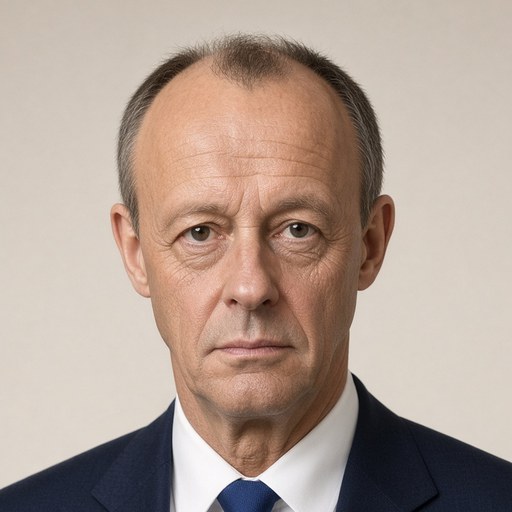
Chancellor's Speech at the Presentation of the Talisman Award Germany thrives on performance, cohesion, and opportunities.
 Friedrich Merz · Chancellor of Germany
- Context
- Merz addressed a ceremony for the Talisman Award, speaking as patron of the Germany Foundation for Integration and reflecting on social cohesion and integration in November 2025.
- Main themes
- Social cohesion, integration, migration and belonging, equal opportunity, democratic values, rule of law, economic strength, solidarity, role models with migration background, Germany Foundation for Integration, Talisman Award
- Duration
- ~21 min
- Words
- 2,550
- Sentences
- 137
- Readability
- 57
- Grade
- 9.9
- Syntax
- 2.80
- Vocabulary
- 1.99
Translated from German
The broad sphere of national life a sentence belongs to. Every sentence has an Arena, so it is the denominator the other indices are read against.
Other137 sentences in 33 paragraphs
Dear Mr. Federal President, dear Christian Wulff,
dear Thomas Gauly,
my esteemed ladies and gentlemen,
above all, dear scholarship holders,
I am pleased to be here this evening. I thank you very much for entrusting me with the task of taking on the patronage of this foundation.
Dear Ms. Sattarian, thank you for your impressive speech, for your words that have not only moved me but many here in the room. I want to thank you for the image with the ball that you used. This image will stay with me. I think many here can relate to that as well. Your words have personally moved me a great deal. I would like to thank you once again very sincerely for that. Thank you!
Ladies and gentlemen, as the new patron of this foundation and, since the actual laudation for the three outstanding award winners from the sports field will be given by Federal President Christian Wulff shortly, I would like to first share some general thoughts with you and especially try to answer the fundamental question that the name of the foundation also refers to: What is and how does social cohesion succeed? What is and how does integration succeed?
First: Every free society, every open society needs cohesion. We are an open society, and we want to remain so. Such an open society needs integration. We want this cohesion. We want integration. Everyone who lives and works in this country should be able to experience that they are personally valued, that they can participate in shaping their environment, that they have opportunities to achieve something for themselves and their families.
I want to address another point. We must be able to talk to each other about where cohesion is currently in question, where alienation is growing, and where we need to improve together in order to preserve this social cohesion. To improve together means that each of us, including myself, can repeatedly check whether we are doing it right, the way we are doing it. All of you here in the room, who are connected to this foundation, already belong to this "we" that I am talking about. Your stories and also the stories of the scholarship holders of the Germany Foundation for Integration – there are now over 2,500 – are impressive stories. Your stories tell how it succeeds. They also show that there are great success stories, wonderful stories of mutual support and goodwill to shape our country and our future in Germany together, which simply exists in a shared manner.
One thing we should, I believe, acknowledge. I return to your descriptions, Ms. Sattarian. Most of you have to put in more effort, more commitment, more work for the place where you stand today than others, perhaps because the knowledge of the mechanisms of our German society was not yet present in your families, because you did not inherit networks, because your parents sometimes could not help you much with your homework and on your further path through school, vocational training, and studies due to language barriers, and also because some may have shown reservations towards you – as Ms. Zervakis mentioned – because of your name or your appearance, not treating you solely according to your character, as a person, and according to your abilities. These are things that you have compensated for with your commitment and your abilities. You have forged your own path. That impresses all of us here, and – I want to say this very clearly – it impresses me personally a great deal. You are role models for so many young people, as we say, with a migration background. When young people and young adults doubt due to the hurdles just described, you give hope for a future and indeed for success of various kinds in Germany. You show that this effort is worthwhile. It is not an exaggeration when I say from a personal perspective that we can also learn a lot from you together.
Ladies and gentlemen, I asked us in my speech on the Day of German Unity in Saarbrücken on October 3: What kind of country do we want to be in which we live together? If we could agree on some answers to this question, then, in my firm conviction, the most important thing for cohesion and integration would already be achieved. I am sure that we can agree on an answer. On October 3, I mentioned four aspects in particular.
First: We want to be a democratic country in which we determine the way forward together in a respectful conversation, where we give ourselves the rules and laws through democratic means that are fundamental rules for our community.
We want to be a rule-of-law country in which the state is also bound by law, in which the administration is bound by the laws. If there are violations, independent courts intervene and protect the rights of citizens, regardless of their origin and skin color.
We want to be an economically strong country in which the ideas of everyone can be realized, in which everyone can pursue their goals. From this, prosperity for all of us can also arise.
Finally, fourthly, we want to be a solidary country in which we help each other, in which we, when it gets difficult, can also seek and receive help.
I want to add today: We want to be a country that understands the diverse biographies, talents, and abilities of its citizens as an enrichment for all. That is what we want to be, and, ladies and gentlemen, that is what we want to be together. I think we can then also jointly formulate that we are not yet doing well enough in all of this for the cohesion in Germany that we all want together.
We often do not succeed in our debates well enough either. We often assume too much of each other. We need to get better at naming and discussing problems and possibly also solutions together. Once again: We need to get better at doing this. I do not exclude myself from this either. The political center of our country is certainly harming itself in a very fatal way if it does not succeed in this. Because the enemy of our freedom does not stand in the conservative spectrum, in the conservative center. It does not stand in the left center either. The enemies of freedom stand at the radical edges of both sides. They are still edges. I am firmly convinced of that. If we pull ourselves together and do not attack and weaken each other, then the center is quite broad, which does not mean that this center is always united or even must be. But then one can carry differences in this center and tolerate different opinions. Because that is what makes a truly vibrant democracy in all its diversity, but also in exactly this broad political center, ladies and gentlemen.
In order for cohesion in the country to grow again, we must also solve very concrete tasks better and, for example, answer the question of who comes to us and who should also stay permanently. Germany is – I want to emphasize this again – an open country to the world. It has been for decades. I have said this repeatedly in many places very early in my party. Germany is an immigration country.
Germany is an immigration country, ladies and gentlemen, whose history would have been written differently in large parts without immigration, and not better, but worse. Most of you know that.
I come from North Rhine-Westphalia. The history of the Ruhr area is as closely linked to immigration as in probably no other part of the Federal Republic of Germany. The success story of the Ruhr area would certainly not have become a success story without immigration.
However, the claim of every immigration country must also be to shape and manage immigration so that it benefits the entire society. That is why we are currently working at the European level to enable better management and order of migration. Of course, humanity, asylum, and protection remain in Europe and, of course, in this context also in Germany. Under this guiding principle, we are currently changing migration policy in Germany and in Europe. At the same time, we also need immigration in Europe for very pragmatic reasons, especially in our labor market. To make this work better, we want to become more flexible and attractive. That is what we are working on.
I would like to give you an example of how we are doing this and how we think about it. We are currently launching a digital platform called the Work-and-Stay Agency. We are therefore separating asylum procedures from migration procedures in the labor market very early on. We want to enable all decisions regarding work permits, residence permits, and also the recognition of professional qualifications quickly on a digital platform. Ladies and gentlemen, everything takes far too long in Germany. That is why we want to change that. Above all, we want to change it with an integration of very different areas of responsibility on a digital platform. We are talking about overarching responsibilities of the federal government, the states, and the municipalities. This is not only one of the largest, if not the largest digital project of the current legislative period. If it succeeds, it will also be the best project of the coming years for immigration and integration into our society and into the labor market.
Ladies and gentlemen, if we succeed in this, we can also use the resources we have better. It is not just about funds or money and courses, but about the people who need to learn together anew in a society, who need to learn from all sides so that they all have the opportunity to participate equally in the social life of our country and to become, in the best sense of the word, citizens of our country.
This also includes – I think I can say this here – the individual, personal will to integrate into the receiving society, the will to become a part of this society and to live according to its laws, norms, and values while simultaneously developing them further.
This expectation is rightly held by the state towards immigrants, but immigrants also have this expectation of our state. We need this truly mutual spirit, this will in the cities and municipalities to shape our common life in such a way that the specific problems we have – and we do have them – and some obstacles on the ground can be cleared away. This also concerns the resources of our country, namely the social resources of our country.
We experience this in the best sense of the word every day. There is so much goodwill locally in this country, so much voluntary commitment to truly make coexistence succeed. So much coexistence is indeed successful. Let us not always talk only about what does not succeed! Let us also talk about what really succeeds! You all are an example of how well it can succeed. It succeeds with the coexistence in schools and daycare centers. It succeeds in businesses and associations, where people get to know each other, where they work together, where they learn together, and where they especially play sports together. If we as a country ensure that the tasks for the state and society in the area of immigration are manageable and remain so, then I am confident that we will continue to succeed well in all of this in the coming years.
Ladies and gentlemen, among the rules that we give ourselves in a democratic state is also the distinction of who comes to us for what reasons, who should stay in Germany for what reasons, and who may not be able to stay. I know there are hardship cases that always touch and concern us all, even in our constituencies. But the state must ensure that democratically enacted law applies and is enforced, just as it does in other areas of our society. This again goes in both directions. Immigration is a constant discourse of both-and. There are numerous ways, appropriate and generous ways, as I believe, to create and maintain a long-term residence right in this country through one's own integration efforts. It is right to pursue this path.
Ladies and gentlemen, a question of law and its enforcement is also the clear message from the state that we want to live here in mutual respect, that this is a country in which we want to respect each other and treat each other kindly and politely, a country in which we do not tolerate exclusion, discrimination, insults against groups or individuals, or attacks on groups or individuals.
We, as a society, must provide a common, convincing answer to the question of where immigrants should actually integrate. Integration comes from the Latin word integratio. It means renewal or restoration of a whole. That is the translation from Latin. I find that to be a very beautiful and also an enlightening image. Of course, German society has changed over the decades in which we have been an immigration country, and naturally, it changes a little with every new member that becomes part of this whole. Society is not an unchanging block that absorbs immigrants without changing itself in the process.
For this vision of successful integration, there are indeed various concepts. They are well known. There is not enough time to discuss them all here. You will certainly have intense discussions about them in your scholarship circles. However, what is important to me is the following general common understanding as a basis for the discussion we are having as a society: Integration is a continuous renewal process, a constant negotiation process. This sometimes makes it difficult, and it also makes it exhausting and demanding. But that is the real effort that we, as the Federal Republic of Germany, must undertake, ladies and gentlemen.
Finally, I also tried to express this on October 3: I believe that in this not entirely easy time in which we live, there is a great opportunity for a new unity and for a new cohesion. If we are united in what kind of country we want to be – I have tried to outline it – and if we are united in the belief that this unity is possible, if we agree on what we do not want in this country and what we want to improve in our country – I believe that this unity is also possible – then we will seek and find political solutions together. Because that truly fosters cohesion. I believe that this is possible. If you wish, I would like to contribute my part as the patron of this foundation in the federal government to ensure that we succeed.
In any case, I am glad that you exist, that this foundation exists, that there are scholarship holders, and that there are new award winners today, ladies and gentlemen. I am pleased that you are making your significant contribution to the foundation and as participants in this award ceremony this evening, as citizens of our common country.
Thank you very much.
The original German. The tags above are read on the English translation's sentences.
Sehr geehrter Herr Bundespräsident, lieber Christian Wulff,
lieber Thomas Gauly,
meine sehr geehrten Damen und Herren,
vor allem liebe Stipendiatinnen und Stipendiaten,
ich freue mich, heute Abend hier zu sein. Ich danke Ihnen sehr, dass Sie mir die Aufgabe anvertrauen, die Schirmherrschaft dieser Stiftung zu übernehmen.
Liebe Frau Sattarian, vielen Dank für Ihren eindrucksvollen Vortrag, für Ihre Worte, die nicht nur mich bewegt haben, sondern viele hier im Raum. Ich will Ihnen für das Bild mit dem Ball danken, das Sie verwendet haben. Dieses Bild wird mir in Erinnerung bleiben. Ich denke, es wird vielen hier so gehen, dass sie das auch nachempfinden können. Mich jedenfalls haben Ihre Worte persönlich sehr bewegt. Ich möchte Ihnen auch dazu noch einmal ganz herzlich danken. Danke schön!
Meine Damen und Herren, als neuer Schirmherr dieser Stiftung und, weil die eigentliche Laudatio auf die drei großartigen Preisträgerinnen und den Preisträger aus dem Sport gleich Bundespräsident Christian Wulff halten wird, will ich zunächst doch einige allgemeine Gedanken mit Ihnen teilen und vor allem versuchen, die Grundfrage zu beantworten, auf die auch der Name der Stiftung verweist: Was ist und wie gelingt gesellschaftlicher Zusammenhalt? Was ist und wie gelingt Integration?
Zunächst: Jede freie Gesellschaft, jede offene Gesellschaft braucht Zusammenhalt. Wir sind eine offene Gesellschaft, und wir wollen es bleiben. Eine solche offene Gesellschaft braucht Integration. Wir wollen diesen Zusammenhalt. Wir wollen Integration. Alle, die in diesem Land leben und arbeiten, sollen erfahren können, dass sie persönlich wertgeschätzt sind, dass sie mitgestalten können, dass sie Chancen haben, etwas für sich und für ihre Familien zu erreichen.
Ich will einen weiteren Punkt ansprechen. Wir müssen miteinander darüber reden können, wo Zusammenhalt heute infrage steht, wo Entfremdung wächst und wo wir gemeinsam besser werden müssen, um eben diesen gesellschaftlichen Zusammenhalt auch zu bewahren. Gemeinsam besser werden zu müssen heißt, dass sich jeder von uns, auch ich mich, immer wieder überprüfen kann, ob er es richtig macht, so wie er es macht. Sie alle hier im Raum, die dieser Stiftung verbunden sind, gehören längst zu diesem Wir, über das ich hier spreche. Ihre Geschichten und auch die Geschichten der Stipendiatinnen und Stipendiaten der Deutschlandstiftung Integration – es sind mittlerweile über 2.500 – sind beeindruckende Geschichten. Ihre Geschichten erzählen, wie es eben gelingt. Sie zeigen auch, dass es großartige Erfolgsgeschichten gibt, großartige Geschichten auch gegenseitiger Unterstützung und eines gegenseitigen guten Willens, unser Land und unsere Zukunft in Deutschland gemeinsam zu gestalten, der miteinander einfach da ist.
Eines sollten wir, finde ich, anerkennen. Damit komme ich erneut auf Ihre Schilderungen zurück, Frau Sattarian. Die meisten von Ihnen haben für den Platz, an dem Sie heute stehen, mehr Anstrengungen, mehr Einsatz, mehr Arbeit aufwenden müssen als andere, vielleicht weil in ihren Familien noch nicht das Wissen um die Mechanismen unserer deutschen Gesellschaft vorhanden war, weil Sie keine Netzwerke geerbt haben, weil Ihnen Ihre Eltern manchmal vielleicht auch wegen der Sprachbarrieren eben nicht so sehr bei den Hausaufgaben und auf Ihrem weiteren Weg durch Schule und Berufsausbildung und Studium helfen konnten und auch weil manche Ihnen vielleicht – Frau Zervakis hat es angesprochen – aufgrund Ihres Namens oder Ihrer Äußerlichkeiten Vorbehalte entgegenbringen, Ihnen eben nicht nur nach Ihrem Charakter, Ihnen als Mensch und nach Ihren Fähigkeiten begegnen. Das sind Dinge, die Sie mit Ihrem Einsatz und Ihren Fähigkeiten wettgemacht haben. Sie sind Ihren Weg gegangen. Das beeindruckt uns alle hier, und ‑ ich will es sehr deutlich sagen – das beeindruckt auch mich persönlich sehr. Sie sind Vorbilder für so viele junge Menschen, wie wir sagen, mit Migrationshintergrund. Wenn Jugendliche und junge Erwachsene aufgrund der soeben beschriebenen Hürden zweifeln, dann machen Sie Hoffnung auf eine Zukunft und eben auf Erfolg ganz unterschiedlicher Art in Deutschland. Sie zeigen, dass sich diese Anstrengung lohnt. Es ist nicht übertrieben, wenn ich Ihnen auch aus persönlicher Sicht sagen möchte, dass wir dabei auch von Ihnen gemeinsam viel lernen können.
Meine Damen und Herren, ich habe uns in meiner Rede zum Tag der Deutschen Einheit in Saarbrücken am 3. Oktober gefragt: Was wollen wir für ein Land sein, in dem wir gemeinsam leben? Wenn wir uns auf einige Antworten auf diese Frage einigen könnten, dann wäre nach meiner festen Überzeugung schon das Wichtigste für Zusammenhalt und Integration getan. Ich bin mir sicher, dass wir uns auf eine Antwort einigen können. Ich habe am 3. Oktober vor allem vier Aspekte genannt.
Zunächst: Wir wollen ein demokratisches Land sein, in dem wir in einem wertschätzenden Gespräch miteinander den Weg voran selbst bestimmen, uns auf demokratischem Wege die Regeln und Gesetze geben, die grundlegende Regeln für unsere Gemeinschaft sind.
Wir wollen ein rechtsstaatliches Land sein, in dem auch der Staat an das Recht gebunden ist, in dem die Verwaltung an die Gesetze gebunden ist. Wenn dagegen verstoßen wird, dann schreiten unabhängige Gerichte ein und schützen die Rechte der Bürgerinnen und Bürger ganz unabhängig von Herkunft und Hautfarbe.
Wir wollen ein wirtschaftlich starkes Land sein, in dem die Ideen eines jeden verwirklicht werden können, in dem jeder seine Ziele verfolgen kann. Daraus kann auch Wohlstand für uns alle entstehen.
Schließlich, viertens, wollen wir ein solidarisches Land sein, in dem wir einander helfen, in dem wir, wenn es schwierig wird, auch Hilfe in Anspruch nehmen und bekommen.
Ich will heute hinzufügen: Wir wollen ein Land sein, das die unterschiedlichsten Biografien Begabungen und Talente seiner Bürgerinnen und Bürger als Bereicherung für alle versteht. Das alles wollen wir sein, und, meine Damen und Herren, das alles wollen wir gemeinsam sein. Ich denke, wir können dann auch gemeinsam formulieren, dass uns das alles für den Zusammenhalt in Deutschland, den wir alle gemeinsam wollen, noch nicht gut genug gelingt.
Es gelingen uns oft auch die Debatten nicht gut genug. Wir unterstellen einander oft zu viel. Wir müssen besser werden, Probleme und möglicherweise auch Lösungen miteinander zu benennen und zu diskutieren. Noch einmal: Wir müssen besser darin werden, dies zu tun. Ich schließe mich auch erneut selbst gar nicht aus. Die politische Mitte unseres Landes schadet sich jedenfalls in ganz fataler Weise selbst, wenn ihr das nicht gelingt. Denn der Feind unserer Freiheit steht nicht im konservativen Spektrum, in der konservativen Mitte. Er steht auch nicht in der linken Mitte. Die Feinde der Freiheit stehen an den radikalen Rändern beider Seiten. Es sind noch immer Ränder. Davon bin ich jedenfalls fest überzeugt. Wenn wir uns zusammenreißen und uns nicht gegenseitig angreifen und so schwächen, dann ist die Mitte ziemlich breit, was nicht heißt, dass sich diese Mitte immer einig ist oder gar sein muss. Aber dann kann man in dieser Mitte Unterschiede austragen und unterschiedliche Meinungen aushalten. Denn das ist es dann, was eine wirklich lebendige Demokratie in aller ihrer Unterschiedlichkeit, aber auch in genau dieser breiten politischen Mitte dann auch ausmacht, meine Damen und Herren.
Damit der Zusammenhalt im Land wieder wächst, müssen wir auch ganz konkrete Aufgaben besser lösen und zum Beispiel die Frage beantworten, wer zu uns kommt und wer auch auf Dauer bleiben soll. Deutschland ist – ich will es noch einmal betonen – ein weltoffenes Land. Das ist es seit Jahrzehnten. Das habe ich an vielen Stellen sehr früh in meiner Partei auch immer wieder gesagt. Deutschland ist ein Einwanderungsland.
Deutschland ist ein Einwanderungsland, meine Damen und Herren, dessen Geschichte in großen Teilen ohne Einwanderung anders geschrieben worden wäre, und zwar nicht besser, sondern schlechter geschrieben worden wäre. Die meisten von Ihnen wissen das.
Ich komme aus Nordrhein-Westfalen. Die Geschichte des Ruhrgebiets ist mit Einwanderung so eng verbunden wie in wahrscheinlich keinem anderen Teil der Bundesrepublik Deutschland. Die Erfolgsgeschichte des Ruhrgebietes wäre ohne Einwanderung sicher keine Erfolgsgeschichte geworden.
Der Anspruch an jedes Einwanderungsland selbst muss aber auch sein, Zuwanderung zu gestalten und zu steuern, sodass sie zum Nutzen der ganzen Gesellschaft ausfällt. Deshalb arbeiten wir auch gerade auf europäischer Ebene daran, eine bessere Steuerung und Ordnung der Migration zu ermöglichen. Selbstverständlich bleibt es bei Humanität, Asyl und Schutz in Europa und in diesem Rahmen natürlich auch in Deutschland. Unter dieser Leitlinie ändern wir gerade die Migrationspolitik in Deutschland und in Europa. Zugleich brauchen wir eben auch in Europa aus ganz pragmatischen Gründen Zuwanderung, vor allem in unseren Arbeitsmarkt. Damit das besser gelingt, wollen wir flexibler und attraktiver werden. Genau daran arbeiten wir.
Ich würde Ihnen gern ein Beispiel nennen, wie wir das tun und wie wir darüber denken. Wir bringen gerade eine digitale Plattform auf den Weg, die sich
Work-and-Stay
-Agentur nennt. Wir trennen also die Asylverfahren von den Migrationsverfahren in den Arbeitsmarkt schon sehr früh. Wir wollen auf einer digitalen Plattform schnell alle Entscheidungen ermöglichen, die im Hinblick auf Arbeitserlaubnis, Aufenthaltserlaubnis und auch Anerkennung der Berufsabschlüsse hinwirken. Meine Damen und Herren, das dauert in Deutschland alles viel zu lange. Deswegen wollen wir das ändern. Vor allem wollen wir es mit einer Integration sehr unterschiedlicher Zuständigkeitsbereiche auf einer digitalen Plattform ändern. Wir sprechen von übergreifenden Zuständigkeiten des Bundes, der Länder und der Gemeinden. Das ist nicht nur eines der größten, wenn nicht das größte Digitalprojekt der laufenden Wahlperiode. Wenn es gelingt, ist es auch das beste Projekt der nächsten Jahre für Zuwanderung und Integration in unsere Gesellschaft und in den Arbeitsmarkt.
Meine Damen und Herren, wenn uns das gelingt, dann können wir auch die Ressourcen, die wir haben, besser einsetzen. Dabei geht es nicht allein um Mittel oder um Geld und Kurse, sondern es geht um die Menschen, die in einer Gesellschaft neu zusammen lernen müssen, von allen Seiten lernen müssen, damit sie eben alle die Möglichkeit haben, gleichberechtigt am gesellschaftlichen Leben unseres Landes teilzuhaben und im besten Sinne des Wortes Bürgerinnen und Bürger unseres Landes zu werden.
Dazu gehört aber auch – ich denke, ich darf das hier sagen – der individuelle, persönliche Wille, sich in die aufnehmende Gesellschaft zu integrieren, der Wille, ein Teil dieser Gesellschaft zu werden und nach ihrem Recht, ihren Normen und ihren Werten zu leben und sie gleichzeitig weiterzuentwickeln.
Diese Erwartung hat zu Recht der Staat an die Einwanderer, aber haben auch die Einwanderer an unseren Staat. Wir brauchen gerade auch in den Städten und Gemeinden diesen wirklich beiderseitigen gemeinsamen Geist, diesen Willen, das gemeinsame Leben selbst so zu gestalten, dass die speziellen Probleme, die wir haben – und wir haben sie –, und manches Hindernis vor Ort ausgeräumt werden können. Auch dabei geht es um Ressourcen unseres Landes, und zwar um gesellschaftliche Ressourcen unseres Landes.
Das erleben wir im besten Sinne des Wortes eigentlich jeden Tag. Es gibt so viel guten Willen vor Ort in diesem Land, so viel ehrenamtlichen Einsatz, um das Miteinander wirklich gelingen zu lassen. So viel Miteinander gelingt ja auch. Sprechen wir doch nicht immer nur über das, was nicht gelingt! Sprechen wir doch auch einmal darüber, was wirklich gut gelingt! Sie alle sind doch ein Beispiel dafür, wie gut es gelingen kann. Es gelingt mit dem Miteinander in Schulen und Kitas. Es gelingt in Betrieben und Vereinen, dort, wo sich Menschen kennenlernen, wo sie zusammen arbeiten, wo sie zusammen lernen und wo sie vor allem zusammen Sport treiben. Wenn wir als Land also dafür sorgen, dass im Bereich der Zuwanderung die Aufgaben für Staat und Gesellschaft leistbar sind und bleiben, dann bin ich zuversichtlich, dass uns dies alles in den nächsten Jahren weiterhin gut gelingt.
Meine Damen und Herren, zu den Regeln, die wir uns in einem demokratischen Staat geben, gehört auch die Unterscheidung, wer aus welchen Gründen zu uns kommt, wer aus welchen Gründen in Deutschland bleiben soll und wer möglicherweise nicht bleiben kann. Ich weiß, es gibt Härtefälle, die uns alle auch immer wieder berühren und beschäftigen, auch in unseren Wahlkreisen. Aber der Staat muss dafür sorgen, dass demokratisch gesetztes Recht gilt und durchgesetzt wird, so wie auch in anderen Bereichen unserer Gesellschaft. Das geht erneut in beide Richtungen. Zuwanderung ist ein ständiger Diskurs des Sowohl-als-auch. Es gibt zahlreiche Wege, angemessene und großzügige Wege, wie ich finde, um durch eigene Integrationsleistungen ein langfristiges Aufenthaltsrecht in diesem Land zu schaffen und zu erhalten. Es ist richtig, diesen Weg zu gehen.
Meine Damen und Herren, eine Frage von Recht und seiner Einhaltung ist auch die klare Ansage des Staates, dass wir hier in gegenseitigem Respekt miteinander leben wollen, dass dies ein Land ist, in dem wir einander achten und freundlich und höflich begegnen wollen, ein Land, in dem wir keine Ausgrenzung dulden, keine Diskriminierung, keine Beleidigungen von Gruppen oder Einzelnen, keine Angriffe auf Gruppen oder Einzelne.
Wir müssen als Gesellschaft eine gemeinsame, überzeugende Antwort auf die Frage geben, wohin sich Zuwanderer eigentlich integrieren sollen. Integration kommt vom lateinischen Wort integratio. Das heißt so viel wie Erneuerung oder Wiederherstellung eines Ganzen. Das ist die Übersetzung aus dem Latein. Ich finde, das ist ein sehr schönes und auch ein aufschlussreiches Bild. Selbstverständlich hat sich die deutsche Gesellschaft in den Jahrzehnten, in denen wir bereits Einwanderungsland sind, verändert, und natürlich verändert sie sich ein kleines Stück mit jedem neuen Mitglied, das Teil dieses Ganzen wird. Die Gesellschaft ist kein unveränderlicher Block, der Einwanderer gleichsam absorbiert, ohne sich selbst mit diesen zu verändern.
Für dieses Zielbild einer gelingenden Integration gibt es durchaus verschiedene Konzepte. Sie sind bekannt. Die Zeit reicht nicht, um sie alle hier auszudiskutieren. Sie werden in Ihren Stipendiatenkreisen sicherlich intensive Diskussionen darüber führen. Wichtig ist mir jedoch folgende allgemeine gemeinsame Erkenntnis als Grundlage der Diskussion, die wir als Gesellschaft führen: Integration ist ein kontinuierlicher Erneuerungsprozess, ein ständiger Aushandlungsprozess. Das macht es manchmal schwierig, und das macht es auch anstrengend und fordernd. Das ist aber der eigentliche Kraftakt, den wir als Bundesrepublik Deutschland leisten müssen, meine Damen und Herren.
Schließlich, auch das habe ich am 3. Oktober auszudrücken versucht: Ich glaube, dass in dieser nicht ganz einfachen Zeit, in der wir leben, eine große Chance für eine neue Einheit und für einen neuen Zusammenhalt liegt. Wenn wir einig darin sind, was für ein Land wir sein wollen – ich habe versucht, es zu skizzieren –, und wenn wir einig darin sind, dass diese Einigkeit möglich ist, wenn wir darin einig sind, was wir in diesem Land nicht wollen und was wir in unserem Land besser machen wollen – ich glaube, auch diese Einigkeit ist möglich –, dann werden wir gemeinsam politische Lösungen suchen und finden. Denn das stiftet wirklich Zusammenhalt. Ich glaube, dass das möglich ist. Wenn Sie wollen, möchte ich als Schirmherr dieser Stiftung gern meinen Teil auch in der Bundesregierung dazu beitragen, dass uns das gelingt.
Ich bin jedenfalls froh, dass es Sie gibt, dass es diese Stiftung gibt, dass es die Stipendiatinnen und Stipendiaten gibt und dass es heute neue Preisträger gibt, meine Damen und Herren. Ich bin froh darüber, dass Sie Ihren großen Beitrag in der Stiftung und als Teilnehmer dieser Preisverleihung heute Abend leisten, als Bürgerinnen und Bürger unseres gemeinsamen Landes.
Herzlichen Dank.