




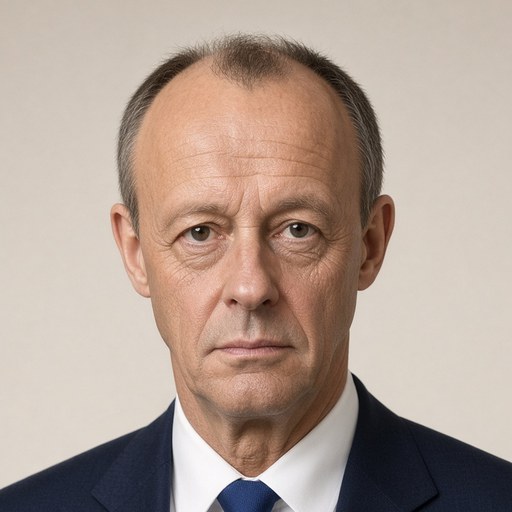
Chancellor's speech on the occasion of the "Youth Research" reception: "You and your ideas are the greatest force for the future that we have."
 Friedrich Merz · Chancellor of Germany
- Context
- Merz addressed winners of the 'Jugend forscht' youth science competition at the Federal Chancellery in Berlin on 30 September 2025.
- Main themes
- Youth science competition, research and innovation, Germany's competitiveness, artificial intelligence and fourth industrial revolution, future of young people, open society and scientific freedom, high-tech agenda, geopolitical and economic shifts, support for STEM talent
- Duration
- ~8 min
- Words
- 931
- Sentences
- 48
- Readability
- 53
- Grade
- 10.5
- Syntax
- 2.94
- Vocabulary
- 2.09
Translated from German
The broad sphere of national life a sentence belongs to. Every sentence has an Arena, so it is the denominator the other indices are read against.
Other48 sentences in 11 paragraphs
Ladies and gentlemen,
dear award winners,
dear colleagues Prien and Bär – good morning to both of you,
Ms. Bönsch!
I warmly welcome you to the Chancellery! This is a long-standing tradition. For 45 years now, it has been customary, not only in Berlin but also in Bonn, for the award winners of "Jugend forscht" to come to the Federal Chancellery and for the Chancellor to invite the award winners. I am very pleased to see you here this morning. Everyone who participated and is here today deserves a heartfelt thank you! This applies not only to the award winners but especially to the 10,000 researchers from all over Germany who took part in this competition.
You have experimented, measured, calculated, discarded, and started anew, and that is something we want to support, something we want to think through with you. You have asked uncomfortable and difficult questions, and you have found some solutions. In doing so, you have contributed to what we call research and technology, science, and the freedom of science in our country. This science thrives on the fact that people, especially young people, are simply curious, that they experiment, and that they openly share their results with others. That is what makes our society. We call it an open society. Yes, this is precisely expressed in what you do, that we are all capable of learning, that we are courageous, that we are open to the future, and that we contribute to strengthening the competitiveness of our economy.
It is a good day for you to be here today because immediately after this award ceremony, I will be going with my colleagues to a cabinet retreat, and we will be dealing with the question of competitiveness and state modernization not far from here, about half an hour away, for a day and a half. So there could be no better day than today to meet and talk with you this morning.
On this occasion, and this will be done by the Federal Minister of Research Dorothee Bär, we will discuss a high-tech agenda for our country. We will ensure that our country once again has the very best framework conditions for research and development, for researchers, for development and innovation. That is our goal. Because we are in the midst of what we call the fourth industrial revolution, and we want Germany to be at the forefront of this progress story – if possible, leading, not lagging behind, but at the front. For example, we want Germany to become an AI nation. I do not know if you have a sense of what that means – I do not really have one yet – as we embark on the path of artificial intelligence. This will change our working world to an extent that we probably do not yet fully understand. But we suspect that it will open up great opportunities, that it will simply make people's lives better. That is certainly the goal of our work.
Dear award winners, in this sense, your success in this year's competition is not only a personal recognition but an encouraging sign for all of us. You and your ideas are the greatest force for the future that we have. Germany needs you. I say this as I mean it and as it is also the opinion of the Federal Government. Without clever minds, without courageous young people, we lose our ability to shape our future in Germany and in Europe, and also our influence. Because that is also part of the truth and must be said on a day like today: When we one day look back on this time in which we live today, on this year in which we meet here today, we will probably only truly understand in hindsight what is currently happening out there in the world. The Chancellor who held this office before me spoke of a "turning point in history." The Federal President spoke of a "break in epochs." I say: It is a fundamental shift in the political and economic centers of power in the world, and we will only fully understand the entire dimension of what we are currently experiencing in a few years when we look back. But at the moment, so much is changing in the world that we – I do not just say "we Germans," but "we Europeans" – must do everything to keep pace with this development. We have few raw materials in Europe. The best thing we have is the intelligence, the skills, the wisdom, and the spirit of research, especially from young people. If we do not strengthen this, if we do not promote it, we will lose the foundation for our future life in this dramatically changing world.
Let me take this opportunity to express a heartfelt word of thanks. I would like to thank those who actively support "Jugend forscht." These are many volunteers, the competition leaders, the jury members, the project supervisors at the schools. Also to both of you, Ms. Bönsch and Ms. Plath, who actively support and lead this, thank you very much for your work; because the "Jugend forscht" foundation has been organizing this competition for decades with great passion and high professionalism.
Now I am looking forward to the work of this year's award winner of the special prize for the most original work. This year, the prize goes to Louis Schwarzlose from the Heilwig Gymnasium in Hamburg in the field of technology for the project "Bojenergy – Development of a mobile, self-sufficient, and autonomous research buoy." Congratulations!
The original German. The tags above are read on the English translation's sentences.
Meine Damen und Herren,
liebe Preisträgerinnen und Preisträger,
liebe Kolleginnen Prien und Bär – guten Morgen, ihr beiden,
Frau Bönsch!
Ich heiße Sie herzlich willkommen im Kanzleramt! Das ist eine lange Tradition. Seit 45 Jahren wird es schon so gemacht, also nicht nur in Berlin, sondern auch schon in Bonn, dass die Preisträgerinnen und Preisträger von „Jugend forscht“ ins Bundeskanzleramt kommen und dass der Bundeskanzler die Preisträger einlädt. Mich freut es sehr, dass ich Sie heute Morgen hier sehen kann. Jeder und jede, die und der mitgemacht hat und heute hier ist, verdient einen herzlichen Dank! Das gilt nicht nur für den Preisträger, sondern das gilt vor allen Dingen für die 10.000 Forscherinnen und Forscher aus ganz Deutschland, die sich an diesen Wettbewerb beteiligt haben.
Sie haben experimentiert, gemessen, gerechnet, verworfen und wieder neu angefangen, und das ist etwas, das wir unterstützen wollen, das wir mit Ihnen auch mitdenken wollen. Sie haben nämlich unbequeme und schwierige Fragen gestellt, und sie haben einige Lösungen gefunden. Sie haben damit einen Beitrag zu dem geleistet, was wir Forschung und Technologie, Wissenschaft und Freiheit der Wissenschaft in unserem Lande nennen. Diese Wissenschaft lebt davon, dass Menschen, vor allem junge Menschen, einfach neugierig sind, dass sie experimentieren und dass sie ihre Ergebnisse anschließend offen mit anderen teilen. Das ist das, was unsere Gesellschaft ausmacht. Wir nennen es eine offene Gesellschaft. Ja, das kommt hier genau in dem, was Sie tun, zum Ausdruck, dass wir nämlich alle lernfähig sind, dass wir mutig sind, dass wir zukunftsoffen sind und dass wir damit einen Beitrag leisten, die Wettbewerbsfähigkeit unserer Volkswirtschaft zu stärken.
Es ist ein guter Tag, an dem Sie gerade heute hier sind, denn ich werde unmittelbar nach dieser Preisverleihung dann mit den Kolleginnen und Kollegen zusammen zu einer Kabinettsklausur fahren, und wir werden uns nicht weit von hier, etwa eine halbe Stunde entfernt, eineinhalb Tage mit der Frage der Wettbewerbsfähigkeit und der Staatsmodernisierung beschäftigen. Es könnte also keinen besseren Tag als heute geben, um sich heute Morgen mit Ihnen hier zu treffen und zu sprechen.
Wir werden bei der Gelegenheit, und das wird die Bundesforschungsministerin Dorothee Bär machen, eine
Hightech
Agenda für unser Land diskutieren. Wir werden dafür sorgen, dass es in unserem Land wieder die allerbesten Rahmenbedingungen für Forschung und Entwicklung, für Forscherinnen und Forscher, für Entwicklung und Innovation gibt. Das ist unser Ziel. Denn wir leben mitten in der, so nennen wir es, vierten industriellen Revolution, und wir wollen, dass Deutschland bei dieser Fortschrittsgeschichte mitgeht – wenn es geht, ganz vorn, nicht hinterher, sondern vorne. Wir wollen zum Beispiel, dass Deutschland
KI
-Nation wird. Ich weiß nicht, ob ihr, ob Sie ein Gefühl dafür haben – ich habe es noch nicht wirklich –, was das bedeutet, wenn wir uns jetzt mit künstlicher Intelligenz auf den Weg machen. Das wird unsere Berufswelt in einem Umfang verändern, wie wir es wahrscheinlich alle noch gar nicht genau wissen. Aber wir ahnen, dass sich vor allem dadurch große Chancen eröffnen, dass damit auch das Leben der Menschen einfach besser wird. Das ist jedenfalls das Ziel unserer Arbeit.
Liebe Preisträgerinnen und Preisträger, in diesem Sinne ist Ihr Erfolg beim diesjährigen Wettbewerb nicht nur eine persönliche Auszeichnung, sondern ein ermutigendes Zeichen für uns alle. Sie und Ihre Ideen sind die größte Zukunftskraft, die wir haben. Deutschland braucht Sie. Ich sage das so, wie ich es meine und wie das auch die Meinung der Bundesregierung ist. Ohne kluge Köpfe, ohne mutige junge Menschen verlieren wir in Deutschland und in Europa an Gestaltungskraft und auch an Einfluss. Denn auch das gehört zur Wahrheit dazu und muss an einem solchen Tag wie heute gesagt werden: Wenn wir eines Tages an diese Zeit zurückdenken, in der wir heute leben, an dieses Jahr, in dem wir uns hier heute treffen, werden wir wahrscheinlich erst in der Rückschau wirklich verstehen, was da draußen gegenwärtig auf der Welt passiert. Der Bundeskanzler, der vor mir in diesem Amt war, hat von „Zeitenwende“ gesprochen. Der Bundespräsident vom „Epochenbruch“. Ich sage: Es ist eine fundamentale Verschiebung der politischen und ökonomischen Machtzentren auf der Welt, und wir werden die ganze Dimension dessen, was wir im Augenblick erleben, erst in einigen Jahren aus der Rückschau wirklich verstehen. Aber zurzeit ändert sich auf der Welt so viel, dass wir – ich sage nicht nur „wir Deutschen“, sondern „wir Europäer“ – alles tun müssen, um mit dieser Entwicklung Schritt zu halten. Wir haben in Europa wenig Rohstoffe. Das Beste, was wir haben, ist die Intelligenz, die Fähigkeiten, die Klugheit, der Forschergeist gerade von jungen Menschen. Wenn wir das nicht stärken, wenn wir das nicht fördern, dann verlieren wir die Grundlage für unser späteres Leben in dieser sich so dramatisch verändernden Welt.
Lassen Sie mich bei der Gelegenheit ein herzliches Wort des Dankes sagen. Ich möchte denjenigen danken, die „Jugend forscht” tatkräftig unterstützen. Das sind sehr viele Ehrenamtliche, das sind die Wettbewerbsleiterinnen und -leiter, das sind die Jurymitglieder, das sind die Projektbetreuerinnen und Projektbetreuer an den Schulen. Auch Ihnen beiden, Frau Bönsch und Frau Plath, die dies hier aktiv unterstützen und leiten, herzlichen Dank für Ihre Arbeit; denn die Stiftung „Jugend forscht“ organisiert diesen Wettbewerb seit Jahrzehnten mit sehr viel Leidenschaft und hochprofessionell.
Nun bin ich gespannt auf die Arbeit des diesjährigen Preisträgers des Sonderpreises für die originellste Arbeit. Den Preis erhält in diesem Jahr Louis Schwarzlose vom Heilwig Gymnasium in Hamburg im Fachgebiet Technik für das Projekt „
Bojenergy
– Entwicklung einer mobilen, autarken und autonomen Forschungsboje“. Herzlichen Glückwunsch!