




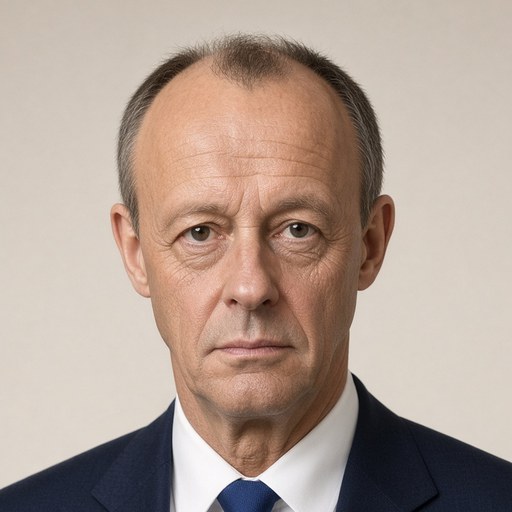
Speech by Chancellor Merz at the Ceremony for German Unity "The State, that is all of us"
 Friedrich Merz · Chancellor of Germany
- Context
- Merz addressed the 35th anniversary ceremony for German Unity Day on October 3, 2025, in Saarland, attended by German and French heads of state.
- Main themes
- German reunification anniversary, liberal democracy, national cohesion, rule of law, economic strength and social responsibility, Germany's role in Europe, East-West integration, civic engagement, courage and future-oriented thinking, peaceful revolution of 1989
- Duration
- ~28 min
- Words
- 3,389
- Sentences
- 183
- Readability
- 52
- Grade
- 10.5
- Syntax
- 2.95
- Vocabulary
- 2.04
Translated from German
The broad sphere of national life a sentence belongs to. Every sentence has an Arena, so it is the denominator the other indices are read against.
Other183 sentences in 70 paragraphs
With a grateful look at what has been achieved and a determined call for a confident outlook towards the future, Chancellor Merz linked his speech to the 35th anniversary of the Day of German Unity – which was also attended by Federal President Frank-Walter Steinmeier, French President Emmanuel Macron, and the Minister-President of Saarland, Anke Rehlinger.
Among the goals for Germany's future is to strengthen liberal democracy, defend the rule of law, regain economic strength and connect it with social responsibility, as well as to firmly anchor Germany in Europe.
Here are the key points of the speech in brief:
German unity remains a task – even 35 years after reunification:
The Chancellor made it clear that while looking back at the past remains important, the focus must be more on the present and the future. German unity is not a completed process, but an ongoing mandate that requires new forms of cohesion today.
Democracy and cohesion need societal engagement:
Not only politics and institutions can ensure societal stability. The Chancellor called for taking responsibility rather than postponing it, by engaging in open dialogue, respecting differing opinions, and actively participating in social interactions.
"When we hear that there is discussion and debate, we hear democracy!" said the Chancellor.
Shaping the future with confidence and understanding change as an opportunity:
In light of crises and global challenges, the Chancellor advocated for more courage and a willingness to shape the future. Instead of being paralyzed by uncertainty, Germany should utilize its own strengths. This includes economic performance, social solidarity, and anchoring in Europe.
So let us dare such changes. Let us not be paralyzed by fear. Let us embark on a new beginning.
See the entire speech here:
Read the entire speech here:
Esteemed Mr. Federal President,
Monsieur le Président de la République Française, dear Emmanuel,
Madame Macron,
esteemed Madam President of the German Bundestag,
esteemed Madam President of the Bundesrat,
esteemed Mr. President of the Federal Constitutional Court,
esteemed representatives of the constitutional bodies of the federal and state governments, esteemed representatives of the federal government, the states, and the municipal family, esteemed representatives of the churches and religious communities and civil society,
Excellencies,
dear citizens here in the hall and across the country!
"Whoever finds us, finds us good." This is the unofficial motto of Saarland.
Allow me, ladies and gentlemen – I believe I may do this on behalf of you all – to extend heartfelt thanks to the people of Saarland, to the entire Saarland, and especially to you, esteemed Madam Minister-President, dear Anke Rehlinger, for the wonderful hospitality we are enjoying here today in Saarland: Thank you very much! Thank you for your speech and for your compelling yet humorous words!
Today, on October 3rd, we Germans are united in unity and peace for 35 years. For decades we were separated; but soon we will be connected in one country for just as long as we were separated. This October 3rd, the day we celebrate together today, is and remains a festive day.
Now, I would like to briefly look back on this day and at this moment.
In the past 35 years, we have often talked about – not only, but especially on this October 3rd – how it all came about since the summer and autumn of 1989, how much courage, how much love of freedom became visible and effective, and that this so-called peaceful revolution in the GDR could have failed. Our unity was certainly not a given.
We have often discussed how great the mutual misunderstandings were – and perhaps still are today – and how stubbornly some generalizations, sometimes even derogatory attributions, still persist.
We have often debated how strongly the experience of individual setbacks, the devaluation of life stories in East Germany, continues to resonate – feelings that are understandable, experiences that we must respect. At the same time, we see how many new beginnings and personal reinventions have succeeded, no matter how difficult they sometimes were.
At the same time, we are repeatedly astonished at how many of us have lost the joyful feelings of the years 1989 and 1990. We have asked ourselves whether avoidable mistakes were made, or whether, for example in the economic sphere, it was not rather about inevitabilities in a historically unique transition from planned to market economy structures.
We still ask why in many leadership areas a target of 20 percent, corresponding to the population share of East Germans, has still not been reached, even though there has been progress. Some, including myself, have nevertheless always maintained the view that we can speak of a successful German unity, as other nations also recognize our country from the outside. All of this has often been discussed over the past 35 years, and all of this has often been contested.
Today I think: After 35 years of German unity and in a difficult time for our country, we should regroup and look forward with confidence and vigor. Let us make a joint effort for a new unity in our country!
This is what I would like to talk about today and also pose some questions. Above all: What kind of country do we want to be? How can we maintain, perhaps rediscover, our inner balance, and how can we strengthen the inner unity of our country?
We are experiencing the autumn of 2025 as a decisive moment for our country. Our nation is in the midst of an important, perhaps decisive phase of its recent history. The influence of what we call the free West is noticeably declining. It is no longer taken for granted that the world looks to us for guidance, that our values of liberal democracy are emulated, that we have the opportunity, as part of this free West, to change the world a little for the better. New alliances of autocracies are forming against us and attacking liberal democracy as a way of life. Our way of life is under attack, not only from the outside but also from within.
At the same time, we are experiencing a revolution in the economy and technology that can only be compared to the upheavals at the beginning of the industrial age. The digital revolution is changing the way we work, what we know, and how we communicate with each other.
At the same time, the rules of how we interact in the economy are changing: The world economic order is being rewritten, trade barriers are being re-erected, and egoisms are becoming more visible again. Perhaps this is also why we have become economically weaker – and also why the social promises we have made to each other are much harder to fulfill today than they were in the past.
In addition, years of irregular, uncontrolled migration to Germany have polarized our country and opened new divides in society. Therefore, we must understand today: Much must change if much is to remain as good or even better than it has been in our country so far.
We should not perceive this challenging moment for our country as a threat – let us see it as an opportunity that we can boldly seize together! It is necessary that we focus on what is truly important at this point and then, with confidence, move forward.
Now some may ask at this point: Who is "we," and who is "us"?
Well, ladies and gentlemen: "We" is not just "the politics." That would be far too little in light of the upheaval we are experiencing. There is not one law or regulation that can provide the decisive impetus for improvement, for change. Of course, politics, the institutions of our state, and the federal government take on their responsibilities. This responsibility is great – we are well aware of the dimensions of the task. But this dimension of the task must also be understood and accepted by all, by all citizens of our country: from Saarbrücken to Cottbus, from Greifswald to Constance, from Chemnitz to the East Frisian Islands.
"We" are all Germans. We are equal as citizens: equal before the law; equal in the claim that the state does not put obstacles in the way of anyone who wants to develop and prove themselves; equal in the responsibility for this country, each in their own place.
So I ask again: What kind of country do we want to be?
First: We want to be a free democratic country. This is no longer a given. And, ladies and gentlemen, we want to be a country that decides for itself in the future, where not one or a few dictate the direction, but where we come together to clarify where we want to go. Because the state is all of us.
We want to be a country in which we find our way through ongoing dialogue with each other – in a conversation in public, in the media, also in social media, in parliaments and institutions, in schools, in science, at universities, in culture, in clubs, at the workplace, in families, and among friends. It is from this dialogue of society with itself, in which everything is addressed and everything is heard, that our common future emerges. This is the reality of a vibrant democracy!
This democratic discourse is not orderly, not always polite, not always at the same level, and not always characterized solely by objectivity and fairness. But still, especially in its diversity of voices and also in its passion, this dialogue is the prerequisite for every progress, for change for the better – by the way, also for freedom. Because as much as there are attempts to silence one another, there is also every time and rightly so the contradiction and protest against it – and that is what matters. Democracy, ladies and gentlemen, is public discourse. When we hear that there is discussion and debate, we hear democracy!
Second: We want to be a rule-of-law country. Independent courts set limits on the exercise of state power and guarantee the rights of citizens. In our country, laws must be in accordance with the constitution and administrative decisions must comply with the laws: Otherwise, they will be rejected by the courts. In our country, the administration must adhere to the laws: Otherwise, its decisions and notices will be overturned. In our country – and this must be said today, as it is no longer a given – judges are not beholden to any political agenda, but solely to law and justice. In our country, the law serves freedom. And once again: In our country, all people are equal before the law. In our country, the powers check and balance each other – so that we as citizens can develop freely and determine our own paths.
This is our democratic rule of law – even if there is always justified criticism and a need for improvement. The fundamental orientation of our country is exactly that, and it must remain so: the separation of powers, the control of power, the freedom of choice, the freedom of speech, the press, the arts, science, the practice of religion, or the choice of profession.
Third: We want to be an economically strong and a social, a solidarity-based country. We are a country that has always been strong in invention. We can do technology. We can do quality. We can do innovation. We can do craftsmanship. We can do social partnership in companies, almost uniquely in the world: the interaction of employers and employees and their representatives in companies and beyond. That is who we are, and that is who we want to remain, ladies and gentlemen.
There, everyone should be able to develop and show their creativity. Only from this does economic strength and prosperity grow, and only in this way do we also gain the means to be in solidarity with the weaker members of our society. For we want to help those among us who cannot make it on their own, we want to catch each other in case of unemployment and bring each other back to work, we want to support each other in illness and old age, and we want to enable those among us education and advancement, for whom both were not given at birth.
And finally, fourth: We want to be an open, European country. Because all of this – democratic, rule-of-law, economically innovative and solidarity-based – makes up Europe as a whole. This is Europe. This is the European way of life, as it has developed over centuries. We are only strong together in Europe, or we are weak as individual states. We in Germany know: If Europe is doing well, Germany is doing well too, and if Europe is not doing well, then Germany is doing disproportionately poorly.
Allow me a personal remark. I had the great fortune to be a member of the European Parliament during the time of reunification – from 1989 through the fateful year of 1990 to 1994. I was one of the two youngest German Members of the European Parliament in Strasbourg and Brussels in 1989. I was able to develop a sense of how our European neighbors view us, how they perceive Germany, what fears they associate with a reunified Germany, and what they hope for from us at the same time.
This experience and this political feeling have shaped me back then and continue to shape me today. I can therefore say for myself, but also for the federal government I lead: We want to be the positive force for Europe that we have always been since Konrad Adenauer. Germany thinks and acts in a European way.
The presence of the French President today honors us and is a testament to the deep integration of Germany in Europe and the special significance of Franco-German friendship. Thank you very much for that!
Ladies and gentlemen, this is the country we want to be – and that we can become again if we turn together towards the goal of a new unity. We can build on decades in which much has been achieved. We can build on decades in which we have taken on the responsibility that arises from the suffering we inflicted on Europe and the world, and also on our own country, during the Nazi era. We can build on that – but we must also do it now: Build, dare new things, leave the outdated behind us. Then we will experience that this common departure creates a new unity and that we can also overcome divisions.
The French philosopher and historian Ernest Renan called the modern nation a "daily plebiscite" 150 years ago. It is neither coercion nor a blood community; it grows from the consenting expression of will of all those, he says, who intend to "continue the common life."
Yes, ladies and gentlemen, the nation also grows from the common handling of challenges – at least it grows forward, into the future, through joint action. Certainly, it grows more easily in this way than through a common image of the past, which is anyway difficult to portray.
Let us therefore draw new strength from this basic consensus! For we need this strength in light of the tasks we face. The tasks – I want to summarize them briefly again – are as follows:
We must learn again to defend ourselves. The centers of power in the world are shifting in a way we have not seen since the end of the Cold War. An axis of autocratic states that challenges the liberal international order is directly confronting the Western democracies. Therefore, we must become capable again of defending our freedom.
However, this responsibility for our freedom does not lie solely with the political institutions – it lies with all of us. Let us therefore take on this responsibility. An expression of this responsibility would be to reintroduce military service. We will make this service more attractive in order to recruit enough soldiers for it. And may I also say this at this point: We owe our soldiers great thanks today for being willing to serve in our country. We are united by the statement: We want to be able to defend our freedom so that we do not have to defend it.
We must undoubtedly also find our way back to a path of economic strength and sustainable prosperity. Our economic strength, ladies and gentlemen, begins today with European policy and foreign policy. We must confront a new protectionism in the world with new trade rules and the development of our own new markets.
The European Union must therefore set its priorities anew. Europe must refocus on its economic competitiveness. And Europe must connect climate protection with the ambition to develop the most modern technologies in the world for it. Because only in this way can we inspire people, and only in this way do they not doubt whether both can be reconciled, prosperity and climate protection.
Finally, we need a new ambition in our country to be technologically leading in the world. And we must all work together – there will be no way around this – to withstand the increasingly sharp international competition.
There is no doubt in my mind: We have every opportunity. New economic spaces are now emerging in which we Europeans are welcome partners. Europe itself has the potential, with a growing and deepening internal market and with 450 million inhabitants, to be one of the large and dynamic economic areas of the world.
However, I am also firmly convinced that not everything will go the old way. We must, for example, move out of the mode of distrust and into a new mode of trust between the state and the citizen. In Europe and in Germany, there must therefore be less regulation and less control – and more trust between the state and the citizen, between the state and businesses in our country.
We must allow more freedom again; for only from economic strength can we ultimately set up the welfare state in such a way that we can continue to fulfill the social promises we have made to ourselves. This question is about a new consensus of justice. Social policy must again begin with a clear view of reality, especially regarding the demographic situation of our country. It is about distributing the burdens – also between generations – in such a way that our welfare state continues to function in the future. The goal of the indispensable reforms is indeed the preservation of the welfare state, the core of the welfare state for those who truly need it.
If we want to be this Germany together and if we tackle these tasks, then we will keep our country in good balance in Europe and then we will find a new unity. For we defend our way of life in this rougher world not as West Germans or as East Germans – we defend it as Germans.
I said it last week in the German Bundestag and I would like to repeat it here: We should indeed trust ourselves more – as a country, as a society, and in politics. For it has become somewhat fashionable to attribute extensive powerlessness to politics in an increasingly complex world. I do not subscribe to this finding.
So let us dare such changes. Let us not be paralyzed by fear. Let us dare a new departure. Let us also remember the confidence with which our East German compatriots dared their departure 35 years ago. Let us remember how much strength a positive spirit can unleash and how much energy is wasted and squandered through pessimism and lamentation. We have no time for that, ladies and gentlemen.
For it is our country. We brought it out of the darkest time in our history into freedom in the West – only with the help – only with the help – of the Americans, the British, and the French. The people in East Germany freed themselves and with their own courage for freedom broke the chains of the second German dictatorship. Let us not allow what we have achieved to be destroyed. Let us seize the opportunity to shape a new unity. Let us stand together for justice and for freedom!
Thank you very much.
The original German. The tags above are read on the English translation's sentences.
Mit einem dankbaren Blick auf das Erreichte und einen entschlossenen Aufruf für einen zuversichtlichen Blick in die Zukunft verknüpfte Bundeskanzler Merz seine Rede zum 35. Jubiläum des Tages der Deutschen Einheit – bei dem auch Bundespräsident Frank-Walter Steinmeier, Frankreichs Präsident
Emmanuel Macron
und die Saarländische Ministerpräsidentin Anke Rehlinger zu Gast waren.
Zu den Zielen für Deutschlands Zukunft gehöre die freiheitliche Demokratie zu stärken, den Rechtsstaat zu verteidigen, zu wirtschaftlicher Stärke zurückzufinden und diese mit sozialer Verantwortung zu verbinden sowie Deutschland fest in Europa zu verankern.
Lesen Sie hier das Wichtigste der Rede in Kürze:
Deutsche Einheit bleibt eine Aufgabe – auch 35 Jahre nach der Wiedervereinigung:
Der Kanzler machte deutlich, dass der Blick auf die Vergangenheit zwar wichtig bleibe, der Fokus aber stärker auf die Gegenwart und Zukunft gerichtet werden müsse. Die deutsche Einheit sei kein abgeschlossener Prozess, sondern ein fortlaufender Auftrag, der heute neue Formen des Zusammenhalts erfordere.
Demokratie und Zusammenhalt brauchen gesamtgesellschaftliches Engagement:
Nicht allein Politik und Institutionen könnten gesellschaftliche Stabilität gewährleisten. Der Kanzler rief dazu auf, Verantwortung nicht weiterzuschieben, sondern sie im Alltag zu übernehmen – durch offenen Dialog, Respekt gegenüber anderen Meinungen und aktive Beteiligung am gesellschaftlichen Miteinander.
Wenn wir hören, dass diskutiert und gestritten wird, dann hören wir die Demokratie!
, sagte der Kanzler.
Zukunft mit Zuversicht gestalten und Veränderungen als Chance verstehen:
Angesichts von Krisen und globalen Herausforderungen plädierte der Kanzler für mehr Mut und Gestaltungswillen. Statt sich von Unsicherheit lähmen zu lassen, solle Deutschland die eigene Stärke nutzen. Dazu zähle die wirtschaftliche Leistungsfähigkeit, gesellschaftliche Solidarität und die Verankerung in Europa.
Trauen wir uns also solche Veränderungen zu. Lassen wir uns nicht von Angst lähmen. Wagen wir einen neuen Aufbruch.
Sehen Sie hier die gesamte Rede:
Lesen Sie hier die gesamte Rede:
Sehr geehrter Herr Bundespräsident,
Monsieur le Président de la République Française, cher Emmanuel,
Madame Macron
,
sehr geehrte Frau Präsidentin des Deutschen Bundestages,
sehr geehrte Frau Präsidentin des Bundesrates,
sehr geehrter Herr Präsident des Bundesverfassungsgerichtes,
sehr geehrte Repräsentanten der Verfassungsorgane des Bundes und der Länder,
sehr geehrte Vertreterinnen und Vertreter des Bundes, der Länder und der kommunalen Familie,
sehr geehrte Repräsentanten der Kirchen und der Religionsgemeinschaften und der Zivilgesellschaft,
Exzellenzen,
sehr geehrte Bürgerinnen und Bürger hier im Saal und im ganzen Land!
„Wer uns findet, findet uns gut.“ Das ist das inoffizielle Motto des Saarlandes.
Erlauben Sie mir, meine Damen und Herren – ich denke, ich darf das stellvertretend für Sie alle tun , den Saarländerinnen und Saarländern, dem ganzen Saarland, und vor allem Ihnen, sehr geehrte Frau Ministerpräsidentin, liebe Anke Rehlinger, ganz herzlich für die großartige Gastfreundschaft zu danken, die wir an diesem Tag heute hier im Saarland genießen dürfen: Herzlichen Dank! Herzlichen Dank für Ihre Rede und für Ihre eindringlichen und gleichzeitig so humorvollen Worte!
Heute, am 3. Oktober, sind wir Deutschen 35 Jahre in Einheit und Frieden vereint. Jahrzehnte waren wir getrennt; aber schon bald werden wir genau so lange in einem Land verbunden sein, wie wir getrennt waren. Dieser 3. Oktober, der Tag, den wir heute miteinander feiern, ist und bleibt ein Festtag.
Nun möchte ich an diesem Tag und an dieser Stelle gleichwohl nur kurz zurückblicken.
Wir haben in den vergangenen 35 Jahren oft darüber gesprochen – nicht nur, aber vor allem an diesem 3. Oktober –, wie alles kam seit dem Sommer und Herbst 1989, wie viel Mut, wie viel Freiheitsliebe sichtbar und wirksam wurden, und dass diese sogenannte friedliche Revolution in der
DDR
auch hätte misslingen können. Selbstverständlich war unsere Einheit jedenfalls nicht.
Wir haben oft darüber gesprochen, wie groß die wechselseitigen Missverständnisse waren – und vielleicht bis heute sind – und wie zäh sich manchmal pauschale, hin und wieder sogar abwertende Zuschreibungen noch immer halten.
Wir haben oft darüber diskutiert, wie stark die Erfahrung individueller Zurücksetzung, der Entwertung von Lebensläufen in Ostdeutschland, nachwirkt – Empfindungen, die verständlich sind, Erfahrungen, die wir zu achten haben. Gleichzeitig sehen wir, wie viele Neuanfänge und persönliche Neuerfindungen gelungen sind, so schwierig sie auch manchmal waren.
Zugleich sind wir immer wieder erstaunt, wie vielen von uns die freudigen Gefühle der Jahre 1989 und 1990 abhandengekommen sind. Wir haben uns gefragt, ob vermeidbare Fehler gemacht wurden, oder ob es sich, etwa im Bereich der Wirtschaft, nicht doch um Unvermeidlichkeiten in einem historisch einmaligen Übergang von planwirtschaftlichen zu marktwirtschaftlichen Strukturen gehandelt hat.
Wir fragen immer noch, warum in vielen Führungsbereichen eine Zielmarke von 20 Prozent, entsprechend dem Bevölkerungsanteil der Ostdeutschen, immer noch nicht erreicht ist auch wenn es Fortschritte gibt. Manche, auch ich, haben dennoch stets den Standpunkt vertreten, dass man von einem Gelingen der Deutschen Einheit sprechen kann, wie es gerade auch andere Nationen mit Blick auf unser Land von außen anerkennend tun. Über all dies ist in den vergangenen 35 Jahren oft gesprochen, um all dies ist oft gestritten worden.
Ich denke heute: Nach 35 Jahren Deutscher Einheit und in einer schwierigen Zeit für unser Land sollten wir uns neu sammeln und mit Zuversicht und Tatkraft nach vorn blicken. Lassen Sie uns eine gemeinsame Kraftanstrengung unternehmen für eine neue Einheit in unserem Land!
Darüber möchte ich heute mit Ihnen sprechen und uns dazu auch einige Fragen stellen. Vor allem: Was wollen wir für ein Land sein? Wie können wir unsere innere Balance erhalten, vielleicht wiederfinden, wie können wir die innere Einheit unseres Landes stärken?
Wir erleben den Herbst des Jahres 2025 als entscheidenden Moment für unser Land. Unsere Nation steht mitten in einer wichtigen, vielleicht entscheidenden Phase ihrer neueren Geschichte. Die Ausstrahlungskraft dessen, was wir den freien Westen nennen, nimmt jedenfalls erkennbar ab. Es versteht sich nicht mehr von selbst, dass die Welt sich an uns orientiert, dass man es unseren Werten der freiheitlichen Demokratie nachtut, dass wir die Möglichkeit haben, als Teil dieses freien Westens die Welt ein bisschen zum Besseren zu verändern. Neue Allianzen von Autokratien bilden sich gegen uns und greifen die liberale Demokratie als Lebensform an. Unsere freiheitliche Lebensweise wird attackiert, nicht nur von außen, auch von innen.
Wir erleben zugleich eine Revolution in Wirtschaft und Technik, die nur mit den Umwälzungen zu Beginn des Industriezeitalters zu vergleichen ist. Die digitale Revolution jedenfalls verändert die Art und Weise, wie wir arbeiten, was wir wissen und wie wir miteinander sprechen.
Zugleich ändern sich die Regeln, wie wir in der Wirtschaft miteinander umgehen: Die Weltwirtschaftsordnung wird gerade umgeschrieben, Zollschranken werden neu errichtet, Egoismen werden wieder stärker sichtbar. Vielleicht sind wir auch deshalb wirtschaftlich schwächer geworden – und auch deshalb sind soziale Versprechen, die wir uns untereinander gegeben haben, heute so viel schwerer zu erfüllen als sie es früher waren.
Dazu kommt: Jahrelange irreguläre, ungesteuerte Migration nach Deutschland hat unser Land polarisiert und neue Gräben in der Gesellschaft aufgerissen. Wir müssen deshalb heute begreifen: Vieles muss sich ändern, wenn vieles so gut bleiben oder gar besser werden soll, wie es in unserem Land bisher ist.
Diesen nicht leichten Moment für unser Land sollten wir nicht als Bedrohung erleben – lassen Sie uns darin eine Chance sehen, die wir beherzt gemeinsam ergreifen! Es ist notwendig, dass wir uns an diesem Punkt auf das wirklich Wichtige besinnen und dann, eben mit Zuversicht, nach vorn gehen.
Nun werden manche spätestens an dieser Stelle fragen: Wer ist „wir“, und wer ist „uns“?
Nun, meine Damen und Herren: „Wir“, das ist nicht nur „die Politik“. Das wäre angesichts dieses Umbruchs, den wir erleben, viel zu wenig. Es gibt nicht das eine Gesetz oder die eine Verordnung, die den entscheidenden Anstoß zum Besseren, zur Veränderung, geben. Selbstverständlich übernimmt die Politik, übernehmen die Institutionen unseres Staates, übernimmt die Bundesregierung ihre Verantwortung. Diese Verantwortung ist groß – wir sind uns der Dimension der Aufgabe sehr wohl bewusst. Aber diese Dimension der Aufgabe muss auch von allen verstanden und angenommen werden, von der Gesamtheit der Bürgerinnen und Bürger unseres Landes: von Saarbrücken bis Cottbus, von Greifswald bis Konstanz, von Chemnitz bis zu den Ostfriesischen Inseln.
„Wir“, das sind alle Deutschen. Wir sind als Bürgerinnen und Bürger gleich: gleich vor dem Gesetz; gleich im Anspruch darauf, dass der Staat niemandem Steine in den Weg legt, der sich entfalten und bewähren will; gleich in der Verantwortung für dieses Land, jeder an seiner Stelle.
Nun frage ich also noch einmal: Was wollen wir für ein Land sein?
Erstens: Wir wollen ein freiheitliches demokratisches Land sein. Das ist nicht mehr selbstverständlich. Und, meine Damen und Herren, wir wollen ein Land sein, das auch in Zukunft über sich selbst entscheidet, in dem nicht einer oder wenige sagen, wo es lang geht, sondern in dem wir uns gemeinsam klar darüber werden, wo wir hinwollen. Denn der Staat, das sind wir alle.
Wir wollen ein Land sein, in dem wir in einem dauernden Gespräch miteinander unseren Weg finden – in einem Gespräch in der Öffentlichkeit, in den Medien, auch in den sozialen Medien, in den Parlamenten und Institutionen, in den Schulen, in der Wissenschaft, an den Universitäten, in der Kultur, in den Vereinen, am Arbeitsplatz, in der Familie und unter Freunden. Erst aus diesem Gespräch der Gesellschaft mit sich selbst, in dem alles zur Sprache kommt und alles gehört wird, erwächst unsere gemeinsame Zukunft. Das ist die Wirklichkeit einer lebendigen Demokratie!
Diese demokratische Auseinandersetzung ist nicht wohlgeordnet, nicht immer gesittet, nicht immer auf gleichem Niveau und auch nicht immer nur geprägt von Sachlichkeit und Fairness. Aber trotzdem, gerade in seiner Vielstimmigkeit und gerade auch in seiner Leidenschaft, ist dieses Gespräch die Voraussetzung für jeden Fortschritt, für Veränderung zum Besseren – übrigens auch für Freiheit. Denn so sehr es die Versuche gibt, einander den Mund zu verbieten, so sehr gibt es auch jedes Mal und zu Recht den Widerspruch und den Protest dagegen – und genau darauf kommt es an. Demokratie, meine Damen und Herren, ist öffentliche Auseinandersetzung. Wenn wir hören, dass diskutiert und gestritten wird, dann hören wir die Demokratie!
Zweitens: Wir wollen ein rechtsstaatliches Land sein. Unabhängige Gerichte setzen bei der Ausübung staatlicher Macht Grenzen und garantieren die Rechte der Bürgerinnen und Bürger. Bei uns müssen Gesetze mit der Verfassung und Verwaltungsentscheidungen mit den Gesetzen vereinbar sein: Sonst werden sie von den Gerichten verworfen. Bei uns muss sich die Verwaltung an die Gesetze halten: Sonst werden ihre Entscheidungen und Bescheide aufgehoben. Bei uns sind – auch das muss man heute sagen, weil es nicht mehr selbstverständlich ist – Richterinnen und Richter keiner politischen Agenda verpflichtet, sondern ausschließlich Recht und Gesetz. Bei uns dient das Recht der Freiheit. Und noch einmal: Bei uns sind vor dem Gesetz alle Menschen gleich. Bei uns begrenzen und kontrollieren sich die Gewalten gegenseitig – damit wir uns als Bürger frei entfalten und selbst bestimmen können.
Das ist unser demokratischer Rechtsstaat – auch wenn es immer wieder berechtigte Kritik und Nachbesserungsbedarf gibt. Die Grundausrichtung unseres Landes ist genau das, und muss es auch bleiben: die Gewaltenteilung, die Kontrolle der Macht, die Freiheit der Wahl, die Freiheit der Rede, der Presse, der Kunst, der Wissenschaft, der Religionsausübung oder der Berufswahl.
Drittens: Wir wollen ein wirtschaftlich starkes und wir wollen ein soziales, ein solidarisches Land sein. Wir sind ein Land, das immer stark war im Erfinden. Wir können Technologie. Wir können Qualität. Wir können Innovation. Wir können Handwerk. Wir können soziale Partnerschaft in den Betrieben fast einzig auf der Welt: der Umgang von Arbeitgebern und Arbeitnehmern und ihren Repräsentanten in den Unternehmen und darüber hinaus. Das sind wir, und das wollen wir bleiben, meine Damen und Herren.
Dort sollen sich alle entfalten können und ihre Kreativität zeigen können. Nur daraus wächst wirtschaftliche Stärke und Wohlstand, und nur so gewinnen wir auch die Mittel, um mit den Schwächeren in unserem Land solidarisch zu sein. Denn wir wollen denen unter uns helfen, die es nicht aus eigener Kraft schaffen, wir wollen einander im Falle der Arbeitslosigkeit auffangen und zurück in Arbeit bringen, wir wollen einander in Krankheit und im Alter stützen, und wir wollen denen unter uns Bildung und Aufstieg ermöglichen, denen beides zu erreichen nicht in die Wiege gelegt war.
Und schließlich viertens: Wir wollen ein weltoffenes, europäisches Land sein. Denn all dies – demokratisch, rechtsstaatlich, wirtschaftlich innovativ und solidarisch – macht Europa im Ganzen aus. Das ist Europa. Das ist der europäische Lebensweg, wie er über Jahrhunderte gewachsen ist. Wir sind in Europa nur miteinander stark, oder wir sind als einzelne Staaten schwach. Wir in Deutschland wissen: Wenn es Europa gut geht, geht es auch Deutschland gut, und wenn es Europa nicht gut geht, dann geht es Deutschland überdurchschnittlich schlecht.
Erlauben Sie mir eine persönliche Bemerkung. Ich hatte das große Glück, die Zeit der Wiedervereinigung – von 1989 über das Schicksalsjahr 1990 bis zum Jahr 1994 – dem Europäischen Parlament anzugehören. Ich bin 1989 einer der beiden jüngsten deutschen Europaabgeordneten in Straßburg und in Brüssel gewesen. Ich konnte ein Gefühl dafür entwickeln, wie unsere europäischen Nachbarn auf uns, auf Deutschland schauen, welche Befürchtungen sie auch mit einem wiedervereinigten Deutschland verbinden und was sie sich zugleich von uns erhoffen.
Diese Erfahrung und dieses politische Empfinden haben mich damals geprägt und prägen mich bis heute. Ich kann daher für mich, aber auch für die von mir geführte Bundesregierung sagen: Wir wollen für Europa die gute Kraft sein, die wir seit Konrad Adenauer immer wieder gewesen sind. Deutschland denkt und handelt europäisch.
Die heutige Anwesenheit des französischen Staatspräsidenten ehrt uns und ist Ausdruck der tiefen Integration Deutschlands in Europa und des besonderen Stellenwerts der deutsch-französischen Freundschaft. Herzlichen Dank dafür!
Meine Damen und Herren, das ist das Land, das wir sein wollen – und das wir wieder werden können, wenn wir uns dem Ziel einer neuen Einheit gemeinsam zuwenden. Wir können heute aufbauen auf Jahrzehnten, in denen vieles gelungen ist. Wir können aufbauen auf Jahrzehnten, in denen wir die Verantwortung angenommen haben, die aus dem Leid folgt, das wir in der nationalsozialistischen Zeit über Europa und die Welt und auch über unser eigenes Land gebracht haben. Wir können darauf aufbauen – aber das müssen wir jetzt auch tun: Aufbauen, Neues wagen, Überkommenes hinter uns lassen. Dann werden wir erleben, dass dieser gemeinsame Aufbruch eine neue Einheit stiftet und wir auch Spaltungen überwinden können.
Der französische Philosoph und Historiker
Ernest Renan
hat vor 150 Jahren die moderne Nation ein „tägliches Plebiszit“ genannt. Sie ist weder Zwang noch Blutsgemeinschaft; sie wächst aus der zustimmenden Willensbekundung aller, so sagt er, die beabsichtigen, „das gemeinsame Leben fortzusetzen“.
Ja, meine Damen und Herren, die Nation wächst auch aus der gemeinsamen Bewältigung von Herausforderungen – jedenfalls wächst sie dann nach vorn, in die Zukunft, durch gemeinsames Tun. Gewiss wächst sie so auch leichter als über ein gemeinsames Bild von der Vergangenheit, das ohnehin schwer zu zeichnen ist.
Ziehen wir deshalb aus diesem Grundkonsens neue Stärke! Denn diese Stärke brauchen wir angesichts der Aufgaben, vor denen wir stehen. Die Aufgaben – ich will sie noch einmal kurz bündeln – sind folgende:
Wir müssen wieder lernen, uns zu verteidigen. Die Machtzentren der Welt verschieben sich in einem Maße, wie wir es seit dem Ende des Kalten Krieges nicht mehr gesehen haben. Eine Achse von autokratischen Staaten, die die liberale internationale Ordnung infrage stellt, fordert die westlichen Demokratien geradezu heraus. Deshalb müssen wir wieder fähig werden, unsere Freiheit zu verteidigen.
Diese Verantwortung für unsere Freiheit liegt aber nicht allein bei den politischen Institutionen – sie liegt bei uns allen. Nehmen wir also diese Verantwortung an. Ein Ausdruck dieser Verantwortung wäre, wieder Wehrdienst zu leisten. Wir machen diesen Dienst attraktiver, um genug Soldatinnen und Soldaten dafür zu gewinnen. Und darf ich auch das an dieser Stelle sagen: Wir schulden unseren Soldatinnen und Soldaten schon heute großen Dank dafür, dass sie bereit sind, diesen Dienst in unserem Land zu leisten. Uns eint der Satz: Wir wollen unsere Freiheit verteidigen können, damit wir sie nicht verteidigen müssen.
Wir müssen zweifellos auch wieder auf einen Pfad wirtschaftlicher Stärke und nachhaltigen Wohlstands zurückfinden. Auch unsere wirtschaftliche Stärke, meine Damen und Herren, beginnt heute mit der Europapolitik und der Außenpolitik. Wir müssen uns einem neuen Protektionismus in der Welt mit neuen Handelsregeln und der Erschließung eigener neuer Märkte entgegenstellen.
Die Europäische Union muss dabei ihre Prioritäten neu setzen. Europa muss sich wieder auf seine wirtschaftliche Wettbewerbsfähigkeit konzentrieren. Und Europa muss den Klimaschutz verbinden mit dem Anspruch, dafür die modernsten Technologien auf der Welt zu entwickeln. Denn nur so lassen sich Menschen begeistern, und nur so zweifeln sie nicht daran, ob denn beides miteinander vereinbar ist, Wohlstand und Klimaschutz.
Schließlich brauchen wir selbst in unserem Land einen neuen Ehrgeiz, technologisch führend zu sein in der Welt. Und wir müssen uns alle gemeinsam – daran wird kein Weg vorbeiführen mehr anstrengen, um den international schärfer werdenden Wettbewerb auch zu bestehen.
Es gibt für mich keinen Zweifel: Wir haben alle Chancen. Es entstehen jetzt neue Wirtschaftsräume, in denen wir Europäer gern gesehene Partner sind. Europa selbst hat das Potential, mit einem weiter wachsenden und vertieften Binnenmarkt und mit 450 Millionen Einwohnerinnen und Einwohnern einer der großen und dynamischen Wirtschaftsräume der Welt zu sein.
Es wird aber – auch davon bin ich fest überzeugt – nicht alles auf die alte Weise gehen. Wir müssen etwa aus dem Misstrauensmodus heraus und hinein in einen neuen Vertrauensmodus zwischen Staat und Bürger. In Europa und in Deutschland muss es deshalb weniger Regulierung und weniger Kontrolle geben – und mehr Vertrauen zwischen Staat und Bürger, zwischen Staat und Unternehmen in unserem Land.
Wir müssen wieder mehr Freiheit einräumen; denn nur aus wirtschaftlicher Stärke heraus können wir schließlich noch einmal den Sozialstaat so aufstellen, dass wir die sozialen Versprechen, die wir uns ja gegeben haben, auch künftig erfüllen können. Es geht in dieser Frage um einen neuen Konsens der Gerechtigkeit. Sozialpolitik muss wieder mit einem klaren Blick auf die Wirklichkeit beginnen, zumal auf die demographische Lage unseres Landes. Es geht darum, dass wir die Lasten – auch zwischen den Generationen – so verteilen, dass unser Sozialstaat auch zukünftig funktioniert. Das Ziel der unabdingbaren Reformen ist eben der Erhalt des Sozialstaats, des Kerns des Sozialstaats für diejenigen, die ihn wirklich brauchen.
Wenn wir gemeinsam dieses Deutschland sein wollen und wenn wir diese Aufgaben angehen, dann werden wir unser Land in Europa in guter Balance halten und dann werden wir zu einer neuen Einheit finden. Denn wir verteidigen unsere Lebensweise in dieser rauer gewordenen Welt nicht als Westdeutsche oder als Ostdeutsche – wir verteidigen sie als Deutsche.
Ich habe es in der vergangenen Woche im Deutschen Bundestag gesagt und will es hier gerne wiederholen: Wir dürfen uns dabei durchaus mehr zutrauen – als Land, als Gesellschaft und in der Politik. Denn es ist ja ein bisschen Mode geworden, der Politik weitgehende Machtlosigkeit zu unterstellen in einer zunehmend komplexen Welt. Ich mache mir diesen Befund ausdrücklich nicht zu eigen.
Trauen wir uns also solche Veränderungen zu. Lassen wir uns nicht von Angst lähmen. Wagen wir einen neuen Aufbruch. Erinnern wir uns auch an die Zuversicht, mit der unsere ostdeutschen Landsleute vor 35 Jahren ihren Aufbruch wagten. Erinnern wir uns, wie viel Kraft ein positiver Geist freisetzen kann und wie viel Energie verschwendet und vergeudet wird durch Pessimismus und Larmoyanz. Dafür haben wir keine Zeit, meine Damen und Herren.
Denn es ist unser Land. Wir haben es im Westen mit der Hilfe – nur mit der Hilfe – der Amerikaner, der Briten und der Franzosen aus der dunkelsten Zeit unserer Geschichte heraus in die Freiheit hineingeschafft. Die Menschen in Ostdeutschland haben sich selbst und mit dem eigenen Mut zur Freiheit aus den Fesseln der zweiten deutschen Diktatur gelöst. Lassen wir nicht zu, dass zerstört wird, was wir so errungen haben. Lassen Sie uns die Chance ergreifen, eine neue Einheit zu gestalten. Stehen wir in Einigkeit für das Recht und für die Freiheit!
Herzlichen Dank.