




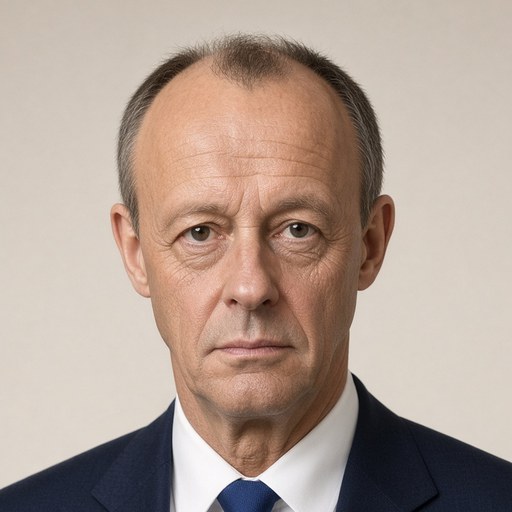
Speech by Federal Chancellor Friedrich Merz at the Day of Brand Economy on October 9, 2025, in Berlin:
 Friedrich Merz · Chancellor of Germany
- Context
- Merz addressed the Day of Brand Economy on October 9, 2025, in Berlin, outlining recent government reforms on immigration, welfare, pensions, and industrial policy.
- Main themes
- Brand economy, immigration reform, labor market policy, basic security reform, active pension, productivity growth, industrial policy, economic stagnation, workforce retention, digitalization, German coalition legislation
- Duration
- ~31 min
- Words
- 3,738
- Sentences
- 189
- Readability
- 56
- Grade
- 10.3
- Syntax
- 3.00
- Vocabulary
- 1.95
Translated from German
The broad sphere of national life a sentence belongs to. Every sentence has an Arena, so it is the denominator the other indices are read against.
Other189 sentences in 35 paragraphs
Mr. Kallerhoff,
ladies and gentlemen,
thank you very much for being here, for being in Berlin. I am pleased to see you – even if only briefly, as the days are currently packed.
However, you are coming at a very good time, because we have just made some important decisions in these days. In the German Bundestag, six second and third readings of bills that we have passed in the Cabinet are currently underway, which have been approved by the coalition factions and are now being adopted.
This includes, among other things, another amendment to the Immigration Act or the Residence Act. We have already made some important decisions in the area of immigration and migration. I am not even referring solely to the restrictive decisions regarding our desire for less irregular migration. The migration numbers are impressively declining – comparing August 2024/2025, we see a decrease of 60 percent. So we have achieved quite a bit. But we also want to facilitate immigration into the labor market in Germany. That is why the so-called Work-and-Stay Agency is on a good path. We will also soon adopt this in the Cabinet, so that in the future you can recruit foreign workers through a completely different process, fully digital. This will encompass the immigration permit, the work permit, and the recognition of professional qualifications all in one place. We are really moving forward very quickly now.
I hope you slept better and more last night than I did, but I can report to you from that night: We have now made very good agreements with the SPD regarding the new basic security. The term Bürgergeld is now a thing of the past; it will no longer exist soon. Rather, we will now set new requirements with the new basic security, also regarding the participation of those who need the social state of the Federal Republic of Germany in the event of unemployment. It must also remain clear: Those who truly need us as a solidarity community will continue to receive our support in the future. However, we will formulate the participation rights much more clearly. And we will, above all, write the sanctions, up to a complete cut in benefits, into the Social Code II. This has been agreed upon amicably with the Social Democrats. It took some time. Ms. Bas and I said: We will take this on together and also write texts on how we would like to see it. We agreed on these texts last night.
By the way, we have also initiated the so-called active pension. This means that from January 1, 2026, you can keep employees in your companies longer beyond the regular retirement age, if they or you – "they" in lowercase, "you" in uppercase – wish to do so. For this, they will receive an additional tax allowance of 2,000 euros per month, which will increase the basic allowance, allowing them to earn up to 36,000 euros annually as singles or 48,000 euros as married couples tax-free in the company.
This means we want to systematically work towards achieving higher productivity in Germany. We have already abolished the so-called pre-employment ban; that has already been decided. What does that mean? It means – some of you may know this; it is a completely absurd rule that we have had in Germany for years – that someone who is in a company and wants to continue working there after retiring is not allowed to continue working in the same company but must register with some minor employment relationship in a neighboring company because they are not allowed to work in their old company. This was called the pre-employment ban in Germany. We have already abolished that; it no longer applies. And now the active pension is being added.
I want to simply say: We are serious about reforms and changes in this country. Not everything happens overnight, but it is now progressing swiftly. We will also bring this forward this year and decide to the extent that we reach the last Bundesrat session of the year 2025 on December 19, just a few days before Christmas, so that we can practically implement it on January 1, 2026.
Why are we doing this? This brings me to a very fundamental topic. We are in our third year of stagnation in this country. If you look closely, you will see that we are even in recession in some sectors. We have not seen any increase in productivity in our country for about ten years. We are essentially living off our substance, and have been for quite some time. This coalition did not come to continue that and to say, so to speak, in a sideways movement: We will continue everything as it is and spread a little good cheer, but the rest will remain as it was. No, we came to truly prepare this country for the future.
This includes that we in this coalition have made a fundamental decision, which is: This country, the Federal Republic of Germany, must remain an industrial location. We must remain a country with a manufacturing industry. Manufacturing industry does not mean that everything remains the same. The industry is undergoing profound change. Digitalization and artificial intelligence will continue to change this country and the world at a rapid pace. However, we have the ambition for our country, but also for ourselves, to ensure that we can keep pace and that we can also give the younger generation a perspective to live, work, and live in freedom and security in this country.
That is the range in which we are moving. And I say "in freedom and in security" not because it is part of political rhetoric, but because we live in a time when our freedom and our security are indeed seriously threatened. This is not only the war in Ukraine, which is being continued with unrelenting severity – even more severely than in the last three years. It is also the hybrid threats we see. These are the daily attacks on our data networks. These are the espionage activities of Russia, China, Iran, North Korea, and many other countries. These are the drone flights we are experiencing in our country.
I therefore repeat my statement, which is: We are not at war, but we are no longer living in peace. It is a different time. And we must face this time. And we must accept the challenges that are presented to us. Accepting means: We do everything to ensure that this remains a country that can live in freedom, in peace, in prosperity, and with high social security.
This is the task that is primarily set for this federal government. None of this is possible if we think we can do it alone. It is only possible if we, as the largest European country – located in the geostrategic center of our continent; we did not choose this role, we have it and we cannot evade it – take seriously the mandate to ensure that this also goes well with our European neighbors. That is why I have been so committed to deepening European integration and cooperation from the very first day of my term. This is not just part of my personal political shaping. It is rather my deep conviction that we in Germany only have a good chance if we work closely with our European neighbors.
When Europe is doing well, Germany is doing well. But when Europe is not doing well, we are doing disproportionately poorly. That is why I have said from day one: My commitment to Europe, my commitment to foreign policy, my commitment to our neighbors throughout the European Union – up to the United Kingdom, which unfortunately is no longer part of the European Union – serves solely the purpose of preserving our freedom, maintaining peace, and ensuring that we can guarantee a high level of prosperity, productivity, and thus also social security in our country in the long term.
I said the following last year when I was with you, and I want to repeat it simply because it will remain true for a long time: We will probably only be able to accurately assess the full dimensions of what is currently changing in the world in a few years when we look back on our present time. My personal assessment is: We are not only living in a turning point, but in a deep rupture of an era or an epoch. We are currently experiencing almost tectonic shifts in the political and economic centers of power in the world. So much is changing that has not changed since World War II. Even the time of reunification did not trigger such profound changes as what we are currently experiencing. That we are now seeing the attractiveness of authoritarian political systems even in the part of the world we once called the free West – even in the heart of Europe – is something I would not have believed could happen again.
Therefore, in addition to freedom, peace, prosperity, and social justice, there is also the openness of our liberal and free society. This requires that we not only advocate this claim externally but also uphold it internally and enforce it in our country. That is precisely why – this is not only politically motivated – I fight, I personally fight against the spread of the spirit of a so-called Alternative for Germany in our country, in Germany. This is not just any alternative in the broad democratic spectrum of our country, but it is a party that wants a completely different republic, a completely different internal climate in our country. I will do everything to prevent such a party from ever having political majorities in Germany.
And now to you: The Markenverband is a cross-sector association across all industries in our country. There is no association – and I say this not because I am here with you today, but because it is objectively true – that stands for "Made in Germany" as much as you and your member companies do. What you have in terms of brand, what you have in terms of "brand," is what Germany shows to the world. What you achieve with the brands – with the traditional brands, but also with new brands – is what the world sees from Germany. That is why we also have an interest, in your interest, to ensure that we move forward again and that we make sure that this country, with its brands, with what has made us strong, becomes visible and successful in the world.
Perhaps I may also report this: I just came from an almost two-and-a-half-hour dialogue with the German automotive industry. Among them are well-known brands with which we discussed the question: How does this important industry of our country move forward? This is an industry on which as many jobs depend as on no other industry in Germany. This is the industry that shapes our country internally and especially externally like no other industry.
I am therefore very grateful that we already agreed yesterday evening in the coalition and just now again with the manufacturers, suppliers, the large, but also the many small and medium-sized enterprises that are united in the automotive industry association, as well as the trade unions – the chairwoman of IG Metall was present – that we now want to do everything to give this industry – and it stands for so many others – a future also in regulatory terms in Germany, in Europe, and in the global markets.
I cannot address this topic without also mentioning the European Union. Once again: I am a truly deeply convinced European. But what the European Union has triggered in terms of regulatory density in recent years is simply too much now. And this must be corrected.
I would like to illustrate this to you exemplarily with the discussion we are having about the year 2035 and the so-called ban on combustion engines. It is a serious political mistake from the outset if politics commits itself in advance to certain technologies for years, if not decades. That is not our task. I want to go one step further: Even if it were our task, we could not do it simply because we do not know. One of the great fathers of the market economy, Friedrich August von Hayek, once spoke of "pretended knowledge." It is an arrogance of politics to believe it knows which technologies in 2035, 2045, or 2055 will be the technologies that achieve common goals such as mobility and climate neutrality. It is pure arrogance.
That is why we discussed and agreed on this well today. I have told the German automotive industry and also the workforce, and I want to repeat it here: We must remain open to technology while jointly achieving the goals we have set regarding CO2 neutrality and climate neutrality as quickly as possible. We can only achieve this if we tell the companies today: Research, develop, do what you can, and ensure that we achieve the goals – which we set politically – together as quickly as possible. This also means in plain language: Drive technologies must and can be further developed.
I adopt a statement made by the Prime Minister of Lower Saxony today in this round. He also said it publicly, so I can quote him: "There must be no cliff edge in 2035." There will be no cliff edge. And I will do everything to ensure that exactly that does not happen. Our goal is to make this industry that we have in Germany future-proof with the most modern technologies beyond the year 2035, so that we can compete again in global markets. This is a Herculean task! We must create the framework conditions for this. You must open up the possibilities for this in the companies. You must carry out the research and development.
In my view, the framework conditions we need to create consist essentially of two points, beyond this European regulation. First, we must ensure that we come to reasonable solutions in energy policy. Energy, especially electricity, is still too expensive in Germany. That is why we are developing a power plant strategy in the cabinet, and we are developing an industrial electricity price, both of which we must have approved in Brussels. The Federal Minister of Economics is on her way and has a power plant strategy. She is already in Brussels with it. And she has an idea of how we can develop an electricity price for energy-intensive companies in Germany for the years 2026, 2027, and 2028, so that we can say at the beginning of next year: There are new power plants in Germany, namely gas power plants, which are hydrogen-capable if possible. But if the hydrogen technology does not exist yet, then we will build them – even if they are not immediately hydrogen-capable. Then there will be an industrial electricity price in Germany, if the EU Commission approves it, which particularly relieves energy-intensive companies, so that energy and especially electricity become cheaper again in Germany.
I want to address a second topic with you today, beyond the tax policy and social policy issues that we all have in mind and that we must solve step by step. This cannot be done overnight, but we are on a very decent path. By the way, because it has almost been forgotten due to a stupid, failed judicial election: We passed the largest tax reform in the Bundesrat on July 11, which has taken place in Germany in 15 years. The corporate tax rate will be gradually reduced, each year by one percentage point to then ten percentage points. That will then be the lowest corporate tax rate we have ever had. And before that, there will be three consecutive years of depreciation in your companies of 30 percent each, degressive, for three consecutive years, 2025, 2026, 2027. The investments you make today in your capital goods in the company can be depreciated three times in a row at 30 percent degressively. If you calculate that, at the end of the depreciation period, that is two-thirds of the costs that you can then claim for tax purposes.
This presupposes that you earn the money. You can only depreciate what you have earned beforehand. Not everyone here in Berlin knows that, but assume that I do. In order for you to earn that, you also need reasonable financing in your companies. And I would also like to mention a topic that I consider extremely important. We are too heavily bank-financed in Germany. And the banks are too heavily regulated for you to still receive the financing you really need today in your companies to grow and explore new markets.
From this, I draw two conclusions.
First, we need to talk about the regulation of our banks. It is too rigorous. After the financial crisis of 2008/2009, we made many decisions that are correct. The risk buffers have increased, the reserves have become stronger; that is all correct. But what we see in America, and what we see in other parts of the world – also in other parts of Europe – creates many, many more opportunities for good financing through banks than in Germany. That is the first point.
The second point: We need to get out of this very strong dependence on banks. And that, in turn, is only possible if we have a capital market in Germany where smaller and medium-sized enterprises can access the capital market and are not dependent on banks. This is much better in other countries than it is with us. Many companies in Germany are undercapitalized for this reason as well. That is why I want us to talk about the capital market in Germany. It has two sides. It is not only about financing companies. It is also about capital formation and wealth creation in private hands and in private households. Everywhere there is a better capital market, there is a much stronger wealth creation of private households – not in Germany. If we rightly complain that we have an unequal distribution of wealth in Germany, then that is also related to these opportunities for capital formation, wealth creation in the hands of workers, up to wealth creation for old age.
For this very reason, we will introduce a so-called early starter pension next year – it is a bit more complicated, which is why we did not manage to complete it this year, but we will do it next year, retroactively to January 1, 2026. What is that? It is nothing other than the old savings book from earlier in digital form, today on the capital market. Every child in Germany will receive ten euros deposited by the state into a capital account every month from the age of six until the end of their schooling, for twelve consecutive years – ten euros every month – and will have about 2,000 euros in a capital account at the end of this term; not to give them a fortune, but to show the children what opportunities there are to enable reasonable wealth accumulation on the capital market up to a better pension provision than we have today.
I mention this here so that you get a sense of what we are discussing in this coalition. Of course, not everything goes equally well every day. But we have a precise idea of where we want to take this country, so that we can be competitive in the world, so that our younger generation has a future in Germany, so that they do not have to go to England, Denmark, Great Britain, or the USA and look around, but that they have a chance here in Germany, not least also the chance to continue the companies that you are running today.
With that, I come to the last point. I would like us all to jointly advocate a little more strongly that an open, free society, and above all a market economy, cannot thrive solely on civil servants, but that such a society – this is not a single word of criticism. I find excellent civil servants here in Berlin, all the way to the Federal Chancellery. We have an excellent state apparatus. It has become too large. That is why we are also making it a little smaller. But we need a reliable state administration. And we have that in Germany, largely free of corruption, integrated into the separation of powers. Many, many other countries in the world envy us for having such a good, functioning, sometimes too well-functioning administration in Germany. That is not the point. My point is that the value creation of a country does not come from public administration. It must enable it. But the value creation itself comes from you.
That is why I have the heartfelt request: Advocate also with your children, in the following generations, go into the schools and advocate that our market economy is the basic prerequisite for ensuring prosperity and social justice in this country in the long term. Without you, it will not work – and I do not say this because I am now with you. I would say this at the IG Metall Congress just as I say it here with you today. We must advocate that young people in this country have the courage to become self-employed again, have the courage to take over your companies in the next generation, lead brands, and perhaps even be a little proud that they have them.
Because, and this is my concluding remark: We actually live in a fantastic country! We have big problems, yes, but I would not be standing here, I would not be holding this office if I were not firmly convinced that we have every chance to solve these problems, and that one day, looking back on this time, we will be able to say: Okay, there were big problems and great challenges. But there were a few who were in politics – I am not alone – recognized the problem, solved it, and ensured that people can continue to live in this country in freedom, in peace, in prosperity, and with social justice. That is our task. Thank you very much!
The original German. The tags above are read on the English translation's sentences.
Herr Kallerhoff,
meine Damen und Herren,
herzlichen Dank, dass Sie da sind, dass Sie in Berlin sind. Ich freue mich, dass wir uns sehen – wenn auch nur kurz, weil die Tage im Augenblick dicht gefüllt sind.
Sie kommen aber im Grunde genommen zu einem sehr guten Zeitpunkt, denn wir haben gerade in diesen Tagen einige wichtige Entscheidungen getroffen. Im Deutschen Bundestag laufen gerade sechs zweite und dritte Lesungen von Gesetzentwürfen, die wir im Kabinett verabschiedet haben, die durch die Koalitionsfraktionen durch sind und die jetzt gerade auch verabschiedet werden.
Dazu gehört unter anderem eine erneute Änderung des Zuwanderungsgesetzes beziehungsweise des Aufenthaltsgesetzes. Wir haben ohnehin im Bereich der Einwanderung und der Migration einige wichtige Entscheidungen getroffen. Damit meine ich gar nicht mal nur die restriktiven Entscheidungen im Hinblick darauf, dass wir weniger irreguläre Migration wollen. Die Migrationszahlen gehen eindrucksvoll zurück – vergleicht man den August 2024/2025, um minus 60 Prozent. Da haben wir also einiges erreicht. Wir wollen aber auch die Einwanderung in den Arbeitsmarkt in Deutschland erleichtern. Deswegen ist die sogenannte Work-and-Stay-Agentur auf einem guten Weg. Und auch das werden wir bald im Kabinett verabschieden, sodass Sie in Zukunft mit einem völlig anderen Verfahren rein digital auch ausländische Arbeitskräfte anwerben können. Das umfasst dann aus einer Hand die Einwanderungsgenehmigung, die Arbeitsgenehmigung und die Anerkennung der Berufsabschlüsse. Wir gehen jetzt also wirklich sehr schnell voran.
Ich hoffe, Sie haben in der letzten Nacht mehr und besser geschlafen als ich, aber ich kann Ihnen aus dieser Nacht berichten: Wir haben mit der SPD jetzt wirklich sehr gute Verabredungen im Hinblick auf die neue Grundsicherung getroffen. Das Wort Bürgergeld gehört ab heute der Vergangenheit an; das gibt es demnächst nicht mehr. Vielmehr werden wir jetzt mit der neuen Grundsicherung neue Anforderungen stellen, auch hinsichtlich der Mitwirkung derjenigen, die den Sozialstaat Bundesrepublik Deutschland im Falle der Arbeitslosigkeit brauchen. Das muss auch klar bleiben: Diejenigen, die uns als Solidargemeinschaft wirklich brauchen, werden uns auch in Zukunft bekommen. Wir werden die Mitwirkungsrechte aber deutlich klarer abfassen. Und wir werden vor allem die Sanktionen bis hin zu einer wirklich vollständigen Kürzung der Leistungen in das Sozialgesetzbuch II hineinschreiben. Das Ganze ist mit den Sozialdemokraten einvernehmlich verabredet. Das hat etwas gedauert. Frau Bas und ich haben gesagt: Wir übernehmen das einmal zusammen und schreiben auch einmal Texte auf, wie wir das gerne sehen würden. Diese Texte haben wir in der letzten Nacht verabredet.
Wir haben im Übrigen auch die sogenannte Aktivrente auf den Weg gebracht. Das heißt, ab dem 1. Januar 2026 können Sie Beschäftigte über die Regelaltersgrenze hinaus länger in Ihren Unternehmen halten, wenn sie beziehungsweise Sie – „sie“ kleingeschrieben, „Sie“ großgeschrieben – denn wollen. Dafür bekommen sie dann einen zusätzlichen Steuerfreibetrag von 2.000 Euro pro Monat, um den der Grundfreibetrag aufgestockt wird, mit der Folge, dass sie dann bis zu 36.000 Euro jährlich als Alleinstehende beziehungsweise 48.000 Euro als Verheiratete steuerfrei im Unternehmen hinzuverdienen können.
Das heißt, wir wollen jetzt ganz systematisch auch in die Arbeit gehen, in Deutschland eine höhere Produktivität zu erzielen. Das sogenannte Vorbeschäftigungsverbot haben wir schon abgeschafft, das ist schon entschieden. Was heißt das? Das heißt – der eine oder andere von Ihnen wird es wissen; das ist eine völlig absurde Regel, die wir in Deutschland aber über Jahre hatten –, dass jemand, der im Betrieb ist und dort länger arbeiten möchte, nachdem er in Rente gegangen ist, im selben Betrieb nicht weiterarbeiten darf, sondern sich mit irgendeinem geringfügigen Beschäftigungsverhältnis im Nachbarbetrieb anmelden muss, weil er im alten Betrieb nicht arbeiten darf. Das nannte man in Deutschland Vorbeschäftigungsverbot. Das haben wir schon abgeschafft, das gilt schon nicht mehr. Und jetzt kommt die Aktivrente hinzu.
Ich will Ihnen einfach einmal sagen: Wir meinen das mit Reformen und Veränderungen in diesem Land ernst. Es geht nicht alles über Nacht, aber es geht jetzt zügig voran. Wir werden das auch in diesem Jahr noch auf den Weg bringen und so weit entscheiden, dass wir am 19. Dezember, wenige Tage vor Weihnachten, noch die letzte Bundesratssitzung des Jahres 2025 erreichen, damit wir das dann am 1. Januar 2026 auch praktisch in die Anwendung geben können.
Warum machen wir das? Damit bin ich vielleicht bei einem etwas sehr grundsätzlichen Thema. Wir befinden uns in diesem Land im dritten Jahr in der Stagnation. Wenn Sie genauer hinschauen, sehen Sie, dass wir uns in einigen Branchen sogar in der Rezession befinden. Wir haben seit ungefähr zehn Jahren keinen Zuwachs an Produktivität mehr in unserem Land. Wir leben im Grunde genommen von der Substanz, und das schon ziemlich lange. Diese Koalition ist nicht angetreten, um das fortzusetzen und sozusagen in der Seitwärtsbewegung zu sagen: Wir machen jetzt alles so weiter und verbreiten ein bisschen gute Stimmung, aber der Rest bleibt, wie er war. Nein, wir sind angetreten, um dieses Land wirklich fit zu machen für die Zukunft.
Dazu gehört, dass wir in dieser Koalition eine Grundentscheidung getroffen haben, die da lautet: Dieses Land, die Bundesrepublik Deutschland, muss ein Industriestandort bleiben. Wir müssen ein Land mit produzierender Industrie bleiben. Produzierende Industrie heißt nicht, dass auch da alles beim Alten bleibt. Die Industrie ist in einem tief greifenden Wandel. Die Digitalisierung und die künstliche Intelligenz werden dieses Land und werden die Welt weiter in rasendem Tempo verändern. Wir haben aber den Anspruch an unser Land, aber auch an uns selbst, dafür zu sorgen, dass wir Schritt halten können und dass wir auch der jungen Generation eine Perspektive geben, in diesem Land zu leben, in diesem Land zu arbeiten und in diesem Land auch in Freiheit und in Sicherheit zu leben.
Das ist sozusagen die Bandbreite, in der wir uns bewegen. Und ich sage „in Freiheit und in Sicherheit“ nicht, weil es zur politischen Rhetorik dazugehört, sondern weil wir in einer Zeit leben, in der unsere Freiheit und unsere Sicherheit nun wirklich ernsthaft gefährdet sind. Das ist nicht nur der Krieg in der Ukraine, der mit unverminderter Härte – sogar härter als in den letzten drei Jahren – fortgesetzt wird. Das ist auch die hybride Bedrohung, die wir sehen. Das sind die täglichen Angriffe auf unsere Datennetze. Das sind die Spionageaktivitäten von Russland, China, Iran, Nordkorea und vielen anderen Ländern. Das sind die Drohnenüberflüge, die wir in unserem Land erleben.
Ich wiederhole deshalb meinen Satz, der da lautet: Wir sind nicht im Krieg, aber wir leben auch nicht mehr im Frieden. Es ist eine andere Zeit. Und wir müssen uns dieser Zeit stellen. Und wir müssen die Herausforderungen, die uns da gestellt sind, annehmen. Annehmen heißt: Wir tun alles, damit dies ein Land bleibt, das in Freiheit, in Frieden, in Wohlstand und mit hohen sozialen Sicherheiten leben kann.
Das ist die Aufgabe, die dieser Bundesregierung zuallererst gestellt ist. Das alles geht nicht, wenn wir meinen, das alleine machen zu können. Das geht nur, wenn wir als größtes europäisches Land – in der geostrategischen Mitte unseres Kontinents gelegen; diese Rolle haben wir uns nicht ausgesucht, die haben wir und der können wir auch nicht ausweichen –, den Auftrag ernst nehmen, in der Mitte Europas dafür zu sorgen, dass das auch mit unseren europäischen Nachbarn auf einen guten Weg geht. Deswegen habe ich mich vom ersten Tag meiner Amtszeit an auch so sehr für eine vertiefte europäische Integration und für eine vertiefte europäische Zusammenarbeit engagiert. Das ist nicht nur ein Teil meiner persönlichen politischen Prägung. Es ist vielmehr meine tiefe Überzeugung, dass wir in Deutschland nur dann eine gute Chance haben, wenn wir mit unseren europäischen Nachbarn eng zusammenarbeiten.
Wenn es Europa gut geht, dann geht es Deutschland gut. Aber wenn es Europa nicht gut geht, dann geht es uns überdurchschnittlich schlecht. Deswegen habe ich vom ersten Tag an gesagt: Mein Engagement in Europa, mein Engagement in der Außenpolitik, mein Engagement mit unseren Nachbarn in der gesamten Europäischen Union – bis hin zu Großbritannien, das leider nicht mehr zur Europäischen Union dazugehört –, dient einzig und allein dem Zweck, unsere Freiheit zu erhalten, den Frieden zu erhalten und dafür zu sorgen, dass wir ein hohes Maß an Wohlstand, an Produktivität und damit auch an sozialer Sicherheit in unserem Lande auf Dauer garantieren können.
Ich habe das Folgende im letzten Jahr schon gesagt, als ich bei Ihnen war, und ich will es wiederholen, einfach weil es für lange Zeit richtig bleibt: Wir werden die ganzen Dimensionen dessen, was sich zurzeit auf der Welt verändert, wahrscheinlich erst in einigen Jahren im Rückblick auf unsere heutige Zeit wirklich zutreffend beurteilen können. Meine persönliche Einschätzung ist: Wir leben nicht nur in einer Zeitenwende, sondern in einem tiefen Zeitenbruch oder einem Epochenbruch. Wir erleben zurzeit geradezu tektonische Verschiebungen der politischen und ökonomischen Machtzentren auf der Welt. Da verändert sich so viel wie im Grunde seit dem Zweiten Weltkrieg nicht mehr. Selbst die Zeit der Wiedervereinigung war eine Zeit, die nicht so tief greifende Veränderungen ausgelöst hat wie das, was wir gegenwärtig erleben. Dass wir auch in dem Teil der Welt, den wir einmal den freien Westen genannt haben, mittlerweile die Attraktivität von autoritären politischen Systemen sehen – bis hin in die Mitte Europas –, ist etwas, von dem ich vor Jahr und Tag nicht geglaubt hätte, dass es noch einmal möglich sein sollte.
Deswegen kommt zu Freiheit, Frieden, Wohlstand und sozialer Gerechtigkeit auch noch die Offenheit unserer liberalen und freiheitlichen Gesellschaft hinzu. Das setzt voraus, dass wir nicht nur nach außen diesen Anspruch vertreten, sondern dass wir ihn auch nach innen vertreten und auch in unserem Lande durchsetzen. Gerade deshalb – das ist nicht nur parteipolitisch begründet – kämpfen wir, kämpfe ich persönlich so dagegen, dass sich dieser Ungeist einer sogenannten Alternative für Deutschland in unserem Land, in Deutschland, weiterverbreitet. Das ist nicht eine beliebige Alternative im breiten demokratischen Spektrum unseres Landes, sondern das ist eine Partei, die eine völlig andere Republik, ein völlig anderes Binnenklima in unserem Lande will. Ich werde alles tun, um zu verhindern, dass eine solche Partei jemals politische Mehrheiten in Deutschland hat.
Und nun zu Ihnen: Der Markenverband ist ein Querschnittsverband durch alle Branchen und Industrien unseres Landes hindurch. Es gibt keinen Verband – und das ich sage nicht, weil ich heute bei Ihnen bin, sondern weil es objektiv so ist –, der so sehr für das „Made in Germany“ steht wie Sie und Ihre Mitgliedsunternehmen. Das, was Sie an Marke haben, was Sie an „brand“ haben, ist das, was Deutschland auf der ganzen Welt zeigt. Das, was Sie mit den Marken – mit den traditionsreichen Marken, aber auch mit neuen Marken – leisten, ist das, was die Welt von Deutschland sieht. Deswegen haben wir auch in Ihrem Interesse ein Interesse daran, dass wir jetzt wieder nach vorn kommen und dass wir dafür sorgen, dass dieses Land auch mit seinen Marken, mit dem, was uns starkgemacht hat, auf der Welt sichtbar und erfolgreich werden.
Vielleicht darf ich auch das berichten: Ich komme gerade aus einem fast zweieinhalbstündigen Dialog mit der deutschen Automobilindustrie. Auch darunter sind bekannte Marken, mit denen wir über die Frage gesprochen haben: Wie geht es mit dieser wichtigen Industrie unseres Landes weiter? Das ist eine Industrie, von der so viele Arbeitsplätze abhängen wie von keiner anderen Industrie in Deutschland. Das ist die Indus-trie, die unser Land nach innen und vor allem nach außen prägt wie keine andere Industrie.
Ich bin deshalb sehr dankbar dafür, dass wir uns schon gestern Abend in der Koalition und gerade eben noch einmal mit den Herstellern, den Zulieferern, den großen, aber auch den vielen kleinen und mittelständischen Unternehmen, die im Verband der Automobilindustrie zusammengeschlossen sind, sowie den Gewerkschaften – die Vorsitzende der IG Metall ist dabei gewesen – und den Betriebsräten darauf verständigt haben, dass wir jetzt alles tun wollen, um dieser Industrie – und sie steht stellvertretend für so viele andere – auch regulatorisch in Deutschland, in Europa und auf den globalen Märkten eine Zukunft zu geben.
Ich kann dieses Thema nicht ansprechen, ohne auch auf die Europäische Union zu sprechen zu kommen. Noch einmal: Ich bin ein wirklich zutiefst überzeugter Europäer. Aber das, was die Europäische Union in den letzten Jahren an Regulierungsdichte ausgelöst hat, ist jetzt einfach zu viel. Und das muss korrigiert werden.
Ich möchte Ihnen das sozusagen exemplarisch an der Diskussion erläutern, die wir über das Jahr 2035 und das sogenannte Verbrenner-Aus führen. Es ist von vornherein ein schwerer politischer Fehler, wenn die Politik sich im Vorgriff auf Jahre, wenn nicht sogar Jahrzehnte, auf bestimmte Technologien festlegt. Das ist nicht unsere Aufgabe. Ich will noch einen Schritt weitergehen: Selbst wenn es unsere Aufgabe wäre, könnten wir das nicht, einfach weil wir es nicht wissen. Einer der großen Väter der marktwirtschaftlichen Ordnung, August von Hayek, hat einmal von „angemaßtem Wissen“ gesprochen. Es ist eine Anmaßung der Politik, glauben zu wissen, welche Technologien im Jahr 2035, 2045 oder 2055 die Technologien sind, die gemeinsame Ziele wie Mobilität und Klimaneutralität erreichen. Es ist eine pure Anmaßung.
Deswegen haben wir das heute gut besprochen und gut verabredet. Ich habe es der deutschen Automobilindustrie und auch den Belegschaften gesagt, und ich will es hier wiederholen: Wir müssen technologieoffen bleiben und gleichzeitig die Ziele, die wir uns im Hinblick auf CO2-Neutralität und Klimaneutralität gesetzt haben, gemeinsam so schnell wie möglich erreichen. Das erreichen wir nur, wenn wir den Unternehmen heute sagen: Forscht, entwickelt, macht das, was ihr könnt, und sorgt dafür, dass wir die Ziele – die geben wir politisch vor – gemeinsam so schnell wie möglich erreichen. Das heißt aber im Klartext auch: Antriebstechnologien müssen und können weiterentwickelt werden.
Ich mache mir einen Satz zu eigen, den der Ministerpräsident des Landes Niedersachsen heute in dieser Runde gesagt hat. Er hat ihn auch öffentlich gesagt, deswegen kann ich ihn zitieren: „Es darf im Jahr 2035 keine Abbruchkante geben.“ Es wird keine Abbruchkante geben. Und ich werde alles tun, um dafür zu sorgen, dass genau das nicht geschieht. Unser Ziel ist, diese Industrie, die wir in Deutschland haben, über das Jahr 2035 hinaus mit modernsten Technologien so zukunftsfähig zu machen, dass wir auf den globalen Märkten wieder mitspielen. Das ist eine Herkulesaufgabe! Wir müssen die Rahmenbedingungen dafür schaffen. Sie müssen in den Unternehmen dafür die Möglichkeiten eröffnen. Sie müssen die Forschung, die Entwicklung leisten.
Die Rahmenbedingungen, die wir zu schaffen haben, bestehen aus meiner Sicht im Wesentlichen aus zwei Punkten, jenseits dieser europäischen Regulierung. Wir müssen erstens dafür sorgen, dass wir in der Energiepolitik zu vernünftigen Lösungen kommen. Energie, insbesondere Strom, ist in Deutschland nach wie vor zu teuer. Deswegen entwickeln wir im Kabinett eine Kraftwerkstrategie, und wir entwickeln einen Industriestrompreis, die wir aber beide in Brüssel genehmigen lassen müssen. Die Bundeswirtschaftsministerin ist unterwegs und hat eine Kraftwerkstrategie. Mit der ist sie schon in Brüssel. Und sie hat eine Vorstellung davon, wie wir für die Jahre 2026, 2027, 2028 in Deutschland einen Strompreis für energieintensive Unternehmen entwickeln können, sodass wir damit irgendwann zu Beginn des nächsten Jahres sagen können: Es gibt neue Kraftwerke in Deutschland, und zwar Gaskraftwerke, wenn möglich natürlich wasserstofffähig. Aber wenn es die Wasserstofftechnologie noch nicht gibt, dann bauen wir sie – auch ohne, dass sie sofort wasserstofffähig sind. Dann gibt es einen Industriestrompreis in Deutschland, wenn die EU-Kommission uns das genehmigt, der insbesondere die energieintensiven Unternehmen entlastet, damit Energie und damit insbesondere Strom in Deutschland wieder preisgünstiger wird.
Ich will bei Ihnen heute ein zweites Thema ansprechen, jenseits der steuerpolitischen, der sozialpolitischen Fragen, die wir alle im Blick haben und die wir Schritt für Schritt lösen müssen. Das geht nicht über Nacht, aber wir sind auf einem ganz ordentlichen Weg. Übrigens, weil es über eine blöde, misslungene Richterwahl fast in Vergessenheit geraten ist: Wir haben am 11. Juli im Bundesrat die größte Steuerreform durchgebracht, die es in Deutschland seit 15 Jahren gegeben hat. Der Körperschaftsteuersatz wird sukzessive abgesenkt, jedes Jahr um einen Prozentpunkt auf dann zehn Prozentpunkte. Das ist dann der niedrigste Körperschaftsteuersatz, den wir jemals hatten. Und vorher gibt es drei Jahre hintereinander Abschreibungen in Ihren Unternehmen von jeweils 30 Prozent, degressiv, drei Jahre hintereinander, 2025, 2026, 2027. Die Investitionen, die Sie heute in Ihre Investitionsgüter im Unternehmen machen, können Sie dreimal hintereinander mit 30 Prozent degressiv abschreiben. Wenn Sie das durchrechnen, sind das am Ende des Abschreibungszeitraums zwei Drittel der Kosten, die Sie dann steuerlich haben geltend machen können.
Das setzt voraus, dass Sie das Geld verdienen. Sie können nur abschreiben, was Sie vorher verdient haben. Das weiß hier in Berlin nicht jeder, aber gehen Sie einmal davon aus, dass ich das weiß. Damit Sie das verdienen können, brauchen Sie auch eine vernünftige Finanzierung in Ihren Unternehmen. Und auch dazu möchte ich Ihnen gerne noch ein Thema nennen, das ich für außerordentlich wichtig halte. Wir sind in Deutschland zu stark bankenfinanziert. Und die Banken sind zu stark reguliert, als dass Sie heute in Ihren Unternehmen noch die Finanzierung erhielten, die Sie wirklich brauchen, um zu wachsen und neue Märkte zu erschließen.
Aus dem ziehe ich
zwei
Schlussfolgerungen.
Erstens
, wir müssen über die Regulierung unserer Banken reden. Die ist zu rigoros. Wir haben nach der Finanzkrise 2008/2009 viele Entscheidungen getroffen, die richtig sind. Die Risikopuffer sind größer geworden, die Rücklagen sind stärker geworden; das ist alles richtig. Aber das, was wir in Amerika sehen, und das, was wir in anderen Teilen der Welt sehen – auch in anderen Teilen Europas –, schafft viel, viel mehr Möglichkeiten einer guten Finanzierung auch über die Banken als in Deutschland. Das ist der erste Punkt.
Der
zweite
Punkt: Wir müssen raus aus dieser sehr starken Abhängigkeit von den Banken. Und das wiederum geht nur, wenn wir in Deutschland einen Kapitalmarkt haben, auf dem auch kleinere und mittlere Unternehmen den Kapitalmarkt in Anspruch nehmen können und nicht auf die Banken angewiesen sind. Das ist in anderen Ländern auch sehr viel besser als bei uns. Viele Unternehmen in Deutschland sind auch aus diesem Grund unterkapitalisiert. Deswegen möchte ich, dass wir über den Kapitalmarkt in Deutschland sprechen. Das hat zwei Seiten. Das ist nicht nur die Finanzierung der Unternehmen. Das ist auch die Kapitalbildung und die Vermögensbildung in privater Hand und in privaten Haushalten. Überall dort, wo es einen besseren Kapitalmarkt gibt, gibt es eine sehr viel stärkere Vermögensbildung der privaten Haushalte – in Deutschland nicht. Wenn wir uns zu Recht darüber beklagen, dass wir eine ungleiche Vermögensverteilung in Deutschland haben, dann hängt das auch mit diesen Möglichkeiten der Kapitalbildung, der Vermögensbildung in Arbeitnehmerhand bis hin zur Vermögensbildung für das Alter zusammen.
Genau aus diesem Grunde werden wir im nächsten Jahr – das ist ein bisschen komplizierter, deswegen haben wir es in diesem Jahr nicht mehr fertig bekommen, aber wir werden es im nächsten Jahr machen, rückwirkend zum 1. Januar 2026 – eine sogenannte Frühstartrente einführen. Was ist das? Das ist nichts anderes als das alte Sparbuch von früher in digitaler Form, heute am Kapitalmarkt. Jedes Kind in Deutschland erhält ab dem sechsten Lebensjahr bis zum Ende der Schulzeit, zwölf Jahre hintereinander, vom Staat jeden Monat zehn Euro auf ein Kapitalkonto eingezahlt – jeden Monat zehn Euro – und hat am Ende dieser Laufzeit gut 2.000 Euro auf einem Kapitalkonto; nicht, um denen ein Vermögen mitzugeben, sondern um den Kindern zu zeigen, welche Möglichkeiten es gibt, am Kapitalmarkt einen vernünftigen Vermögensaufbau zu ermöglichen bis hin zu einer besseren Altersversorgung, als wir sie heute haben.
Ich spreche das hier an, damit Sie ein Gefühl dafür bekommen, worüber wir in dieser Koalition sprechen. Natürlich gelingt da nicht alles jeden Tag gleich gut. Aber wir haben eine präzise Vorstellung davon, wo wir mit diesem Land hinwollen, damit wir wettbewerbsfähig auf der Welt werden, damit unsere junge Generation eine Zukunft in Deutschland hat, sodass die nicht nach England, Dänemark, Großbritannien oder in die USA gehen und schauen müssen, sondern dass sie hier in Deutschland eine Chance haben, nicht zuletzt auch die, die Unternehmen fortzuführen, die Sie heute führen.
Damit bin ich bei dem letzten Punkt. Ich möchte, dass wir alle gemeinsam ein bisschen stärker dafür werben, dass eine offene, freiheitliche Gesellschaft und vor allem eine marktwirtschaftliche Ordnung nicht von Staatsbediensteten allein gut leben kann, sondern dass eine solche Gesellschaft – damit ist nicht ein einziges Wort der Kritik gesagt. Ich finde hier in Berlin bis hin in das Bundeskanzleramt exzellent gute Beamte vor. Wir haben einen hervorragenden Staatsapparat. Der ist zu groß geworden. Deswegen machen wir ihn auch etwas kleiner. Aber wir brauchen eine verlässliche staatliche Verwaltung. Und die haben wir in Deutschland, weitestgehend korruptionsfrei, in die Gewaltenteilung eingebunden. Darum beneiden uns viele, viele andere Länder auf der Welt, dass wir eine so gute, funktionierende, manchmal zu gut funktionierende Verwaltung in Deutschland haben. Das ist nicht der Punkt. Mein Punkt ist, dass die Wertschöpfung eines Landes nicht aus der öffentlichen Verwaltung kommt. Die muss sie ermöglichen. Aber die Wertschöpfung selbst kommt von Ihnen.
Deswegen habe ich die herzliche Bitte: Werben Sie auch bei Ihren Kindern, in den nachfolgenden Generationen, gehen Sie in die Schulen und werben Sie dafür, dass unsere marktwirtschaftliche Ordnung die Grundvoraussetzung dafür ist, dass wir in diesem Land auf Dauer Wohlstand und soziale Gerechtigkeit gewährleisten können. Ohne Sie geht es nicht – und das sage ich nicht, weil ich jetzt bei Ihnen bin. Das würde ich auf dem IG-Metall-Kongress genauso sagen, wie ich das heute hier bei Ihnen sage. Wir müssen dafür werben, dass junge Menschen in diesem Land wieder den Mut haben, sich selbstständig zu machen, den Mut haben, Ihre Unternehmen in der nachfolgenden Generation zu übernehmen, Marken zu führen und vielleicht sogar ein bisschen stolz darauf zu sein, dass sie sie haben.
Denn, und das ist meine Schlussbemerkung: Wir leben doch eigentlich in einem fantastischen Land! Wir haben große Probleme, ja, aber ich stände nicht hier, ich würde dieses Amt nicht ausüben, wenn ich nicht der festen Überzeugung wäre, dass wir alle Chancen haben, diese Probleme zu lösen, und dass man eines Tages in der Rückschau auf diese Zeit zurückblicken und sagen wird: Okay, da hat es große Probleme und große Herausforderungen gegeben. Aber da gab es ein paar, die waren in der Politik unterwegs – ich bin es nicht allein –, haben das Problem erkannt, haben es gelöst und dafür gesorgt, dass man in diesem Land weiter in Freiheit, in Frieden, in Wohlstand und mit sozialer Gerechtigkeit leben kann. Das ist unsere Aufgabe. Herzlichen Dank!