




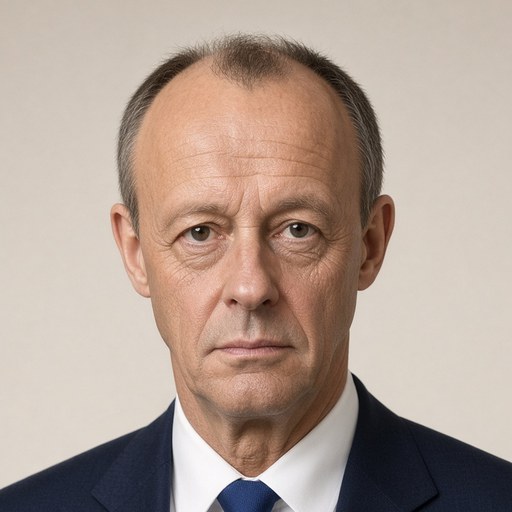
Speech by Chancellor Merz at the Chemistry and Pharma Summit Germany must remain a secure location for the chemical and pharmaceutical industry.
 Friedrich Merz · Chancellor of Germany
- Context
- Merz addressed the annual Chemistry and Pharma Summit in Berlin in September 2025, urging continued support for Germany's chemical and pharmaceutical industries amid global competition.
- Main themes
- Chemical and pharmaceutical industry competitiveness, Germany as industrial location, innovation and research, economic sovereignty, geopolitical transformation, protectionism and global competition, tax policy reform, regulatory reform, energy costs, medium-sized enterprises, European industrial policy, fourth industrial revolution
- Duration
- ~22 min
- Words
- 2,647
- Sentences
- 146
- Readability
- 43
- Grade
- 12.0
- Syntax
- 2.92
- Vocabulary
- 2.17
Translated from German
The broad sphere of national life a sentence belongs to. Every sentence has an Arena, so it is the denominator the other indices are read against.
Other146 sentences in 57 paragraphs
Dear Mr. President, dear Mr. Steilemann,
Mr. Große Entrup,
Ms. Kadri,
Dr. Scharpwinkel,
Ms. Biermann,
distinguished ladies and gentlemen,
thank you very much for the warm welcome! A heartfelt welcome to Berlin for your annual meeting of the
VCI
and the
CEFIC
!
I am very pleased to see so many familiar faces, some from my long-ago time at the
VCI
. I have been connected to this industry not only rationally but also somewhat emotionally; most of you know that. I know what we have in the German chemical industry. I know what we have in the international chemical industry in Europe. I know what we have in the pharmaceutical industry in our country and in the European Union. The great story of human progress has certainly been written in significant parts by the pharmaceutical and chemical industries. Therefore: It is wonderful that you are here, that I see you, including Mr. Vassiliadis from the
IGBCE
!
It is a truism, but I want to remind you of what you do, what happens in your companies, and what is also fundamentally shaped in our country by your industry. In your laboratories, companies, and production sites, it is decided whether Germany can remain an industrially leading, sovereign, and innovative industrial nation with this basic materials industry for the coming decades.
I want to say right at the beginning that we want to ensure that this industry and these industries in Germany have a secure location in the coming years and decades. This is absolute consensus in the federal government.
We want to remain innovative, especially in research as well as in the development and production of products that make life better for people around the world and that represent real progress. You quickly know what I am referring to with the next words: vaccines, medicines and therapies, technologies for sustainable economies, yes, molecular tools for the digital revolution. This is closely interconnected. We are experiencing the fourth industrial revolution, and we cannot yet fully see what potentials it holds for us.
We have all the prerequisites in Germany and Europe for this to succeed, and we want to set new standards for it. Germany is an innovation location for the chemical and pharmaceutical industries. Germany is, if I see it correctly, the only country in the world where several globally leading companies in the chemical industry have their headquarters. We are the largest chemical producer in Europe. We have a number of highly specialized medium-sized companies. One must not forget that it is not only the large companies but many medium-sized enterprises in the chemical and pharmaceutical industries that dominate several markets worldwide with their innovations.
At the same time, it applies to your industry, ladies and gentlemen, and to the entire economy that we are experiencing a phase of new protectionism in the world economy. We are facing a reform backlog in Germany and Europe that we have internally. Together, the location Germany has become too expensive and too slow. Competitors around the world, especially in the
USA
and Asia, can currently produce under significantly more favorable conditions than you can in Germany. So we are not only faced with the question of how to secure our technological leadership, but we are also faced with the question of how to ensure that production can still take place in Germany in the future. How do we thereby also secure – I use the term again – the sovereignty of our country and our European continent?
We will probably, ladies and gentlemen, only be able to truly assess in hindsight what we are currently experiencing geopolitically. We are in a phase of upheaval. It is not just a turning point or a break in epochs, as the Federal President has called it. It is a deep turning point, a transformation towards a new distribution of political and economic power in the world.
In the federal government, we have set to work against this background in the spring of this year with a dual goal. We want to position our country so that both security in Germany and Europe and the competitiveness of the industrial location are guaranteed, and not just for a short time, but for years; if possible, for the next decades. I say right away: This will not happen overnight. We are dealing with profound upheavals that we must respond to with a comprehensive process of reforms and renewal, involving politics, the economy, and society working together. Leading the way in this is indeed our task, the task of politics. You know that in the federal government, we have already made a number of decisions in recent months and initiated decisions for the necessary restart in economic policy.
I will only mention a few:
We have not only initiated but already decided the largest reform in tax policy in 15 years. It is published in the Federal Law Gazette. It includes declining depreciation in your companies of up to 30 percent of the acquisition costs for investments for three consecutive years.
From 2028, we will reduce the corporate tax in Germany in five steps to only ten percent. This will be the lowest corporate tax rate we have ever had in Germany. I know that for many medium-sized companies, for partnerships, it is often the income tax. But we are easing the path for partnerships to corporate tax. I know, yes, the trade tax – the trade tax has now even become the main tax for companies – is a burden. But precisely because it is so, we want to at least start with what we can quickly achieve at the federal level, namely the reduction of corporate tax following the depreciation we allow for companies.
I also know this; we know it: Depreciation must be earned. The best depreciation does you no good if you do not generate returns in the companies. That is why we have initiated further measures. We have expanded and simplified the research grant to promote investments in research. We will abolish the gas storage levy by the end of the year. We are reducing the transmission network fees. We are lowering the electricity tax for manufacturing companies to the European minimum. Ladies and gentlemen, that is all of you gathered here today. Electricity tax, transmission network fees, gas storage levy, a total relief for the German economy of around ten billion euros.
These are first short-term measures for competitive electricity and energy prices, to which further reforms of our energy policy will follow and must follow. The Federal Minister of Economics presented proposals a few days ago on how we can achieve a business-friendly energy transition, with pragmatism, technological openness, and flexibility. We are advocating in Brussels for the extension and expansion of electricity price compensation. We are working on a concept for an industrial electricity price for energy-intensive companies, knowing that all of this is not easy regarding delineations, that it must be approved, and that better location conditions must go hand in hand with it.
We have also taken initial steps to reduce excessive bureaucracy. We have cut the national supply chain law back to the absolute minimum. We have made initial steps to accelerate planning and approval processes for industrial projects, infrastructure projects, and energy projects. We are working to enable significant relief in the construction sector.
I say very deliberately once again: These are all first steps because we are still far from the end of the journey we have set for ourselves. We are working on targeted measures for key industries – such as a chemical agenda 2045, which we have agreed upon in the coalition agreement – on the further development of the pharmaceutical strategy and the continuation of the pharmaceutical dialogue.
We have already adopted a
Hightech
-agenda in the cabinet and are now implementing it consistently, also with the states, with which we are realigning research and innovation policy: towards value creation, more competitiveness, and more sovereignty – all with a clear focus on key technologies such as biotechnology.
We are now also tackling the profound structural reforms in the areas of bureaucracy reduction, procedural acceleration, and secure affordable energy very vigorously. In terms of bureaucracy reduction, we want to reduce the compliance costs for companies by about 25 percent in the next one and a half years; that is again relief in the order of about 10 billion euros.
In this sense, we will now tackle the mammoth task of digitization and comprehensive state modernization very resolutely. Our newly created Ministry for Digital and State Modernization has, for the first time in the history of the Federal Republic of Germany, all competencies in its hands. We once had a Minister of State for Digitalization – without authority, without responsibilities. We now have a ministry with full competencies and the authority that the minister needs, who, by the way, as you all know, comes from the private sector and is driving these matters forward with great energy. He will present them to us in connection with the next Tuesday and Wednesday at a retreat of the federal cabinet, a retreat where we will focus exclusively on competitiveness and state modernization.
This will be followed by another cabinet meeting where we – at least that is the plan – will not pass new laws but abolish existing regulations, so a cabinet meeting where only regulations will be abolished.
Ladies and gentlemen, I cannot speak about the German industry without also taking a look at the European Union. We are also working intensively at the European level towards a change in mentality. We could be one of the largest, most stable, and most successful trading areas in the world in Europe if we started to fully leverage the potential of the internal market instead of continually hindering it with a thicket of regulations.
Let me also say this very clearly: It cannot continue as it has in recent years and decades at the European level. Most of you will know: I am a truly convinced European. But my conviction for this Europe stems from the experience with the European internal market legislation in the 1990s. That was an experience we were able to implement based on a white paper on the completion of the internal market, written by the former Commission President
Jacques Delors
. We implemented all of his proposals in the European Parliament within a single legislative term, and they came into force on January 1, 1993. That is the success story of this European Union.
Today, 40 years later, ladies and gentlemen, we again have two documents that would enable us to continue this success story, the report by
Enrico Letta
on the continuation of the integration of the European internal market and the report by
Mario Draghi
on the competitiveness of the European Union. These two reports must not disappear into the filing cabinets of the Commission. They belong at the top of the agenda. I can assure you that I will insist at the two European Councils that will take place next month – informally next week and then formally at the end of October, first in Copenhagen and then in Brussels – that the European Commission adopts these two documents and ensures that they become subjects of legislation in the European Union.
We are equally committed to strengthening and diversifying the European Union's trade partnerships. We want to conclude the
MERCOSUR
agreement as quickly as possible. The Commission has already taken the necessary steps for this. I am particularly appealing to our neighbors in France and Poland to ensure that these two large European countries also agree to this agreement so that it can come into force as quickly as possible. Because when international trade is as disrupted as it currently is by the trade policy and customs policy of the United States, we must ensure that we assert our interests elsewhere in the world – in the spirit of open trade, open markets, and mutual access to our markets. That is what truly strengthens our industry worldwide.
Let me also take a brief look at trade. In the federal government and in the European Union, we are committed to maintaining rules-based trade in the coming years and decades. This also means that where necessary, we will protect industries from dumping offers and unfair subsidies in the European market. That is why we are strengthening the Commission in its endeavors, and I want to add from my perspective: In the competition policy of the European Union, we also want to ensure that large corporate mergers in this European Union remain possible in the future and that more mergers can take place; because the relevant market for competition is no longer the national market, nor the European one. You – most of you, at least – operate in global markets, and in these global markets, we need corporate structures that can withstand this competition.
In this sense, ladies and gentlemen, we are also making national and European policy in the elimination of unilateral dependencies. We know that as a resource-poor country, as a resource-poor continent, we are vulnerable and susceptible to attacks. That is why we also want to ensure, through raw material partnerships – also through the federal government with a very concrete program – that we achieve as much independence as possible in the supply relationships for your companies, especially regarding raw materials.
Ladies and gentlemen, let me conclude by saying this: A few days ago, I was able to visit the Henkel plant – Carsten Knobel is sitting here – and also the production facility of BASF located on the premises in Düsseldorf. I saw with my own eyes once again how forward-looking and future-proof the German chemical industry is positioned, and I can say the same for the German pharmaceutical industry after many other company visits. Despite difficult framework conditions, you are investing record sums in innovation and development. We in the federal government are working on better framework conditions for you, so that the innovative strength and growth of your companies can continue to unfold further and better. Despite all the difficulties that we undoubtedly face, I am confident that we will succeed – that we will succeed together in politics, business, and society.
But allow me this concluding remark: This cannot be achieved with legislation alone. It can only be achieved with a broad societal consensus on a change in mentality in our society. We will not be able to compete internationally with less effort, but only with more effort. We will not be able to compete internationally with more regulation, but only with less regulation.
And, ladies and gentlemen, we also need a paradigm shift in the relationship between the state and society, between the state and businesses. Not distrust, but mutual trust should characterize the strength of our open, free society in our interactions. If we trust each other, if we have trust in your work, in your compliance, if we have trust in the rules we set together, then we will need fewer of these rules, we will need more efficient rules, and then we can compete in the world.
From the conversation with the four major business associations this week, I have also taken away: It is not five minutes to twelve, it is one minute past twelve. We need to catch up, we need to be faster, we need to be better. Take it as I say: We in this coalition are determined to catch up, to become faster, to become better, so that Germany and Europe can regain the trust of the people entrusted to us in your companies, the employees in our society, the citizens, in a capable state with capable companies, with capable employees, and in a society worth living in.
Thank you very much!
The original German. The tags above are read on the English translation's sentences.
Sehr geehrter Herr Präsident, lieber Herr Steilemann,
Herr Große Entrup,
Frau Kadri,
Frau Dr. Scharpwinkel,
Frau Biermann,
meine sehr geehrten Damen und Herren,
herzlichen Dank für die freundliche Begrüßung! Herzlich willkommen in Berlin zu Ihrer diesjährigen Tagung des
VCI
und der
CEFIC
!
Ich freue mich sehr, dass ich so viele bekannte Gesichter sehe, zum Teil noch aus meiner lang zurückliegenden Zeit beim
VCI
. Ich bin mit dieser Branche seitdem nicht nur rational sehr verbunden, sondern auch ein Stück weit emotional; das wissen die meisten von Ihnen. Ich weiß, was wir an der deutschen chemischen Industrie haben. Ich weiß, was wir auch an der internationalen chemischen Industrie in Europa haben. Ich weiß, was wir an der pharmazeutischen Industrie in unserem Land und in der Europäischen Union haben. Die ganz große Fortschrittsgeschichte der Menschheit ist jedenfalls in wesentlichen Teilen mit der pharmazeutischen und der chemischen Industrie geschrieben worden. Deswegen: Schön, dass Sie da sind, dass ich Sie sehe, auch Herrn Vassiliadis von der
IGBCE
!
Es ist eine Binsenweisheit, aber ich will genau daran erinnern, an das, was Sie tun, was in Ihren Unternehmen geschieht und was damit auch in unserem Land ganz wesentlich durch Ihre Industrie geschieht. In Ihren Laboren, Unternehmen und Produktionsstätten entscheidet sich, ob Deutschland für die kommenden Jahrzehnte auch industriell mit dieser Grundstoffindustrie ein führendes, souveränes und innovatives Industrieland bleiben kann.
Ich will gleich zu Beginn sagen, dass wir dafür sorgen wollen, dass diese Industrie und diese Industrien in Deutschland auch in den nächsten Jahren und Jahrzehnten einen sicheren Standort haben. Das ist absoluter Konsens in der Bundesregierung.
Wir wollen innovativ bleiben, auch und gerade in der Forschung sowie in der Entwicklung und Herstellung von Produkten, die das Leben der Menschen in der Welt insgesamt besser machen und die echten Fortschritt bedeuten. Sie wissen ganz schnell, was ich mit den nächsten Worten anspreche: Impfstoffe, Arzneimittel und Therapien, Technologien für nachhaltiges Wirtschaften, ja, molekulare Werkzeuge für die digitale Revolution. Auch das gehört eng zusammen. Es ist die vierte industrielle Revolution, die wir gerade erleben und von der wir noch gar nicht richtig absehen können, welche Potenziale sie für uns noch bereithält.
Wir haben in Deutschland und in Europa alle Voraussetzungen dafür, dass dies gelingt und wir dafür auch neue Maßstäbe setzen. Deutschland ist ein Innovationsstandort der chemischen Industrie und der pharmazeutischen Industrie. Deutschland ist, wenn ich es richtig sehe, weltweit das einzige Land, in dem gleich mehrere global führende Unternehmen der chemischen Industrie ihren Hauptsitz haben. Wir sind der größte Chemieproduzent in Europa. Wir haben eine ganze Reihe hochspezialisierter Mittelständler. Man darf nicht vergessen, dass es nicht nur die großen, sondern viele mittelständische Unternehmen in der chemischen und in der pharmazeutischen Industrie sind, die mit ihren Innovationen gleich mehrere Märkte weltweit dominieren.
Gleichzeitig gilt für Ihre Branche, meine Damen und Herren, für die ganze Wirtschaft, dass wir eine Phase des neuen Protektionismus in der Weltwirtschaft erleben. Wir stehen in Deutschland und in Europa vor einem Reformstau, den wir im Inneren haben. Zusammen ist der Standort Deutschland zu teuer und zu langsam geworden. Konkurrenten in aller Welt, vor allen Dingen in den
USA
und in Asien, können im Augenblick zu deutlich günstigeren Konditionen produzieren als Sie in Deutschland. Wir stehen also nicht nur vor der Frage, wie wir unsere technologische Führerschaft sichern, sondern wir stehen auch vor der Frage, wie wir sicherstellen, dass die Produktion zukünftig überhaupt noch in Deutschland stattfinden kann. Wie sichern wir damit eben auch – ich verwende den Begriff erneut – die Souveränität unseres Landes und unseres europäischen Kontinents?
Wir werden vermutlich, meine Damen und Herren, erst in der Rückschau wahrlich ermessen können, was wir zurzeit geopolitisch erleben. Wir sind in einer Umbruchphase. Es ist nicht nur eine Zeitenwende oder ein Epochenbruch, wie der Bundespräsident es genannt hat. Es ist eine tiefe Zeitenwende, ein Epochenwandel hin zu einer neuen Verteilung der politischen und der ökonomischen Macht auf der Welt.
Wir haben uns in der Bundesregierung vor diesem Hintergrund im Frühjahr dieses Jahres an die Arbeit gemacht und zwar mit einem doppelten Ziel. Wir wollen unser Land so aufstellen, dass sowohl die Sicherheit in Deutschland und in Europa als auch die Wettbewerbsfähigkeit des Industriestandorts gewährleistet sind, und zwar im besten Sinne des Wortes nicht für kurze Zeit, sondern für Jahre; wenn es geht, für die nächsten Jahrzehnte. Ich sage gleich vorweg: Das geht nicht über Nacht. Wir haben es mit tiefgreifenden Umbrüchen zu tun, auf die wir mit einem umfassenden Prozess von Reformen und der Erneuerung antworten müssen, und zwar Politik, Wirtschaft und die ganze Gesellschaft im Schulterschluss. Dabei voranzugehen, ja, das ist unsere Aufgabe, die Aufgabe der Politik. Sie wissen, dass wir in der Bundesregierung in den vergangenen Monaten eine ganze Reihe von Entscheidungen bereits getroffen und Entscheidungen für den notwendigen Neustart in der Wirtschaftspolitik bereits eingeleitet haben.
Ich will nur einige wenige nennen:
Wir haben die größte Reform in der Steuerpolitik seit 15 Jahren nicht erst auf den Weg gebracht, sondern bereits beschlossen. Sie steht im Bundesgesetzblatt. Sie umfasst degressive Abschreibungen in Ihren Unternehmen in Höhe von bis zu 30 Prozent der Anschaffungskosten für Investitionen für drei aufeinanderfolgende Jahre.
Wir werden ab 2028 die Körperschaftssteuer in Deutschland in fünf Schritten auf dann nur noch zehn Prozent absenken. Das wird der niedrigste Körperschaftssteuersatz sein, den wir in Deutschland jemals gehabt haben. Ich weiß, für viele mittelständische Unternehmen, für Personengesellschaften ist es häufig die Einkommenssteuer. Aber den Personengesellschaften erleichtern wir den Weg in die Körperschaftssteuer. Ich weiß, ja, auch die Gewerbesteuer – die Gewerbesteuer ist mittlerweile sogar zur Hauptbesteuerung der Unternehmen geworden – drückt sie. Aber gerade weil es so ist, wollen wir wenigstens mit dem anfangen, was wir im Bund schnell leisten können, nämlich die Absenkung der Körperschaftssteuer nach den Abschreibungen, die wir den Unternehmen ermöglichen.
Auch das weiß ich; das wissen wir: Abschreibungen müssen verdient werden. Die besten Abschreibungen nutzen Ihnen nichts, wenn Sie in den Unternehmen nicht Erträge erwirtschaften. Deswegen haben wir weitere Maßnahmen auf den Weg gebracht. Wir haben die Forschungszulage ausgebaut und vereinfacht, um Investitionen auch in die Forschung zu fördern. Wir schaffen zum Ende des Jahres die Gasspeicherumlage ab. Wir senken die Übertragungsnetzentgelte. Wir senken die Stromsteuer für produzierende Unternehmen auf das europäische Minimum. Meine Damen und Herren, das sind Sie alle, die hier heute im Raum versammelt sind. Stromsteuer, Übertragungsnetzentgelte, Gasspeicherumlage, insgesamt eine Entlastung der deutschen Wirtschaft um rund zehn Milliarden Euro.
Das sind erste kurzfristige Maßnahmen für wettbewerbsfähige Strom- und Energiepreise, an die weitere Reformen unserer Energiepolitik anschließen werden und müssen. Die Bundeswirtschaftsministerin hat vor einigen Tagen Vorschläge dafür vorgelegt, wie wir eine wirtschaftsfreundliche Energiewende hinbekommen, mit Pragmatismus, mit Technologieoffenheit, mit Flexibilität. Wir setzen uns in Brüssel dafür ein, die Strompreiskompensation zu verlängern und auszuweiten. Wir arbeiten an einem Konzept für einen Industriestrompreis für energieintensive Unternehmen, wissend, dass das alles hinsichtlich der Abgrenzungen nicht leicht ist, dass das genehmigt werden muss und dass damit gleichzeitig bessere Standortbedingungen einhergehen müssen.
Wir haben, meine Damen und Herren, auch erste Schritte beim Abbau der überbordenden Bürokratie gemacht. Wir haben das nationale Lieferkettengesetz auf das absolute Minimum zurückgestutzt. Wir haben erste Schritte gemacht bei der Beschleunigung von Planungs- und Genehmigungsverfahren für Industrievorhaben, für Infrastrukturprojekte und für Energieprojekte. Wir sind dabei, im Bereich des Bauens erhebliche Erleichterungen zu ermöglichen.
Ich sage ganz bewusst noch einmal: Das sind alles erste Schritte, weil wir noch lange nicht am Ende der Wegstrecke sind, die wir uns vorgenommen haben. Wir arbeiten an zielgerichteten Maßnahmen für Schlüsselbranchen – so an einer Chemieagenda 2045, auf die wir uns im Koalitionsvertrag verständigt haben –, an der Weiterentwicklung der Pharmastrategie und der Fortsetzung des Pharmadialogs.
Wir haben im Kabinett bereits eine
Hightech
-Agenda beschlossen und setzen sie jetzt konsequent, auch mit den Ländern, um, mit der wir die Forschungs- und Innovationspolitik neu ausrichten: auf Wertschöpfung, auf mehr Wettbewerbsfähigkeit und mehr Souveränität – das Ganze mit einem klaren Fokus auf Schlüsseltechnologien wie die Biotechnologie.
Wir packen jetzt zum anderen die tiefgreifenden Strukturreformen in den Bereichen Bürokratie, Rückbau, Verfahrensbeschleunigung, sichere bezahlbare Energie sehr energisch an. In Sachen Bürokratierückbau wollen wir den Erfüllungsaufwand für die Unternehmen in den nächsten eineinhalb Jahren um rund 25 Prozent senken; das sind erneut Entlastungen in einer Größenordnung von etwa 10 Milliarden Euro.
Wir werden in diesem Sinne die Mammutaufgabe der Digitalisierung und der umfassenden Staatsmodernisierung jetzt sehr entschlossen angehen. Unser neu geschaffenes Ministerium für Digitales und Staatsmodernisierung hat dafür erstmalig in der Geschichte der Bundesrepublik Deutschland alle Kompetenzen in der Hand. Wir hatten schon einmal eine Staatsministerin für Digitalisierung – ohne Durchgriff, ohne Zuständigkeiten. Wir haben jetzt ein Ministerium mit vollen Kompetenzen und den Durchgriffsmöglichkeiten, die der Minister braucht, der übrigens, wie Sie alle wissen, aus der Privatwirtschaft kommt und diese Dinge mit großer Kraft vorantreibt. Er wird sie uns im Zusammenhang am nächsten Dienstag und Mittwoch auf einer Klausurtagung des Bundeskabinetts vorstellen, einer Klausurtagung, auf der wir uns ausschließlich mit Wettbewerbsfähigkeit und Staatsmodernisierung beschäftigen werden.
Dem Ganzen wird eine weitere Kabinettssitzung folgen, auf der wir – so ist jedenfalls der Plan – nicht neue Gesetze beschließen, sondern bestehende Regulierung abschaffen, also eine Kabinettssitzung, in der nur Regulierung abgeschafft wird.
Meine Damen und Herren, ich kann nicht über die deutsche Industrie sprechen, ohne nicht auch einen Blick auf die Europäische Union zu werfen. Wir arbeiten auch intensiv auf europäischer Ebene auf einen Mentalitätswandel hin. Wir könnten in Europa, wenn wir alles richtig machen würden, einer der größten, stabilsten und erfolgreichsten Handelsräume der Welt sein, wenn wir anfangen würden, das Potenzial des Binnenmarktes wirklich vollständig zu heben, statt es immer weiter mit einem Dickicht an Regulierungen zu behindern.
Lassen Sie mich auch dies hier sehr deutlich sagen: So wie in den vergangenen Jahren und Jahrzehnten kann es auf der europäischen Ebene nicht weitergehen. Die meisten von Ihnen werden es wissen: Ich bin ein wirklich überzeugter Europäer. Aber meine Überzeugung für dieses Europa rührt aus der Erfahrung mit der europäischen Binnenmarktgesetzgebung in den 90er Jahren des letzten Jahrhunderts. Das war eine Erfahrung, die wir umsetzen konnten auf der Basis eines Weißbuchs zur Vollendung des Binnenmarktes, geschrieben vom früheren Kommissionspräsidenten
Jacques Delors
. Seine Vorschläge haben wir im Europäischen Parlament allesamt innerhalb einer Wahlperiode umgesetzt, und sie sind am 1. Januar 1993 in Kraft getreten. Das ist die Erfolgsgeschichte dieser Europäischen Union.
Heute, 40 Jahre später, meine Damen und Herren, haben wir wieder zwei Dokumente, die uns die Fortsetzung dieser Erfolgsgeschichte ermöglichen würden, den Bericht von
Enrico Letta
über die Fortsetzung der Integration des europäischen Binnenmarktes und den Bericht von
Mario Draghi
über die Wettbewerbsfähigkeit der Europäischen Union. Diese beiden Berichte dürfen nicht in den Aktenschränken der Kommission verschwinden. Sie gehören auf die ersten Plätze der Tagesordnung. Ich kann Ihnen versichern, dass ich auf den beiden europäischen Räten, die noch im nächsten Monat stattfinden werden – in der nächsten Woche informell und Ende Oktober dann formell, erst in Kopenhagen und dann in Brüssel –, darauf drängen werde, dass die Europäische Kommission sich diese beiden Dokumente zu eigen macht und dafür sorgt, dass sie Gegenstand der Rechtsetzung und der Gesetzgebung in der Europäischen Union werden.
Wir setzen uns mit gleichem Nachdruck dafür ein, dass die Handelspartnerschaften der Europäischen Union gestärkt und diversifiziert werden. Wir wollen jetzt so schnell wie möglich das
MERCOSUR
-Abkommen abschließen. Die Kommission hat dazu bereits die notwendigen Schritte unternommen. Ich werbe insbesondere bei unseren Nachbarn in Frankreich und in Polen dafür, dass auch diese beiden großen europäischen Länder diesem Abkommen zustimmen, damit es möglichst schnell in Kraft treten kann. Denn wenn der internationale Handel so gestört wird, wie er im gegenwärtigen Zustand durch die Handelspolitik, durch die Zollpolitik der Vereinigten Staaten von Amerika gestört wird, dann müssen wir dafür sorgen, dass wir an anderer Stelle in der Welt unsere Interessen wahrnehmen – im Sinne eines offenen Handels, offener Märkte und dem gegenseitigen Zugang zu unseren Märkten. Das erst stärkt unsere Industrie dann auch wirklich weltweit.
Lassen Sie mich ergänzend noch einen kurzen Blick auf den Handel werfen. Wir setzen uns in der Bundesregierung und in der Europäischen Union dafür ein, dass wir regelbasierten Handel auch in den nächsten Jahren und Jahrzehnten behalten. Das heißt aber gleichzeitig, dass wir da, wo notwendig, Industriezweige vor Dumpingangeboten und vor unfairen Subventionen auf dem europäischen Markt schützen werden. Deswegen stärken wir die Kommission in ihrem Vorhaben, und ich will aus meiner Sicht hinzufügen: In der Wettbewerbspolitik der Europäischen Union wollen wir auch dafür sorgen, dass große Unternehmenszusammenschlüsse in dieser Europäischen Union auch in Zukunft möglich bleiben und dass mehr Zusammenschlüsse möglich werden; denn der relevante Markt für den Wettbewerb ist nicht mehr der nationale Markt, auch nicht der europäische. Sie – die meisten von Ihnen jedenfalls – sind auf globalen Märkten tätig, und auf diesen globalen Märkten müssen wir Unternehmensgrößenstrukturen haben, die diesen Wettbewerb auch bestehen können.
In diesem Sinne, meine Damen und Herren, machen wir nationale und europäische Politik auch bei der Beseitigung von einseitigen Abhängigkeiten. Wir wissen, dass wir als rohstoffarmes Land, als rohstoffarmer Kontinent angreifbar, verletzbar sind. Deswegen wollen wir auch mit Rohstoffpartnerschaften dafür sorgen – auch durch die Bundesregierung mit einem sehr konkreten Programm –, dass wir möglichst viel Unabhängigkeit auch in den Lieferbeziehungen für Ihre Unternehmen erreichen, gerade was Rohstoffe betrifft.
Meine Damen und Herren, lassen Sie mich in diesem Sinne zum Abschluss sagen: Ich habe vor wenigen Tagen das Henkel-Werk – Carsten Knobel sitzt hier – und auch die auf dem Betriebsgelände befindliche Produktionsstätte der BASF in Düsseldorf besichtigen können. Ich habe dort mit eigenen Augen erneut gesehen, wie zukunftsgewandt und zukunftsfähig die deutsche chemische Industrie aufgestellt ist, und ich kann das Gleiche nach vielen anderen Unternehmensbesuchen auch für die deutsche pharmazeutische Industrie sagen. Trotz schwieriger Rahmenbedingungen investieren Sie Rekordsummen in Innovation und Entwicklung. Wir in der Bundesregierung arbeiten an besseren Rahmenbedingungen für Sie, damit sich die Innovationskraft und das Wachstum Ihrer Unternehmen weiter und besser entfalten kann. Trotz aller Schwierigkeiten, die wir ohne Zweifel vor uns haben, bin ich zuversichtlich, dass uns das gelingt – dass uns das in Politik, Wirtschaft und Gesellschaft gemeinsam gelingt.
Aber erlauben Sie mir auch diese Schlussbemerkung: Das ist nicht mit Gesetzgebung allein getan. Das geht vielmehr nur mit einem breiten gesellschaftspolitischen Konsens über einen Mentalitätswandel in unserer Gesellschaft. Wir werden nicht mit weniger Anstrengung, sondern nur mit mehr Anstrengung den internationalen Wettbewerb bestehen können. Wir werden nicht mit mehr Regulierung, sondern nur mit weniger Regulierung den internationalen Wettbewerb bestehen können.
Und, meine Damen und Herren, wir brauchen auch einen Paradigmenwechsel im Umgang zwischen Staat und Gesellschaft, zwischen Staat und Unternehmen. Nicht Misstrauen, sondern gegenseitiges Vertrauen sollte die Stärke auch unserer offenen, freiheitlichen Gesellschaft im Umgang miteinander ausmachen. Wenn wir uns gegenseitig vertrauen, wenn wir Vertrauen in ihre Arbeit, in ihre
Compliance
haben, wenn wir Vertrauen in die Regeln haben, die wir uns gemeinsam setzen, dann brauchen wir von diesen Regeln weniger, dann brauchen wir von diesen Regeln effizientere, und dann können wir den Wettbewerb auf der Welt bestehen.
Aus dem Gespräch mit den großen vier Wirtschaftsverbänden in dieser Woche habe ich aber sehr wohl auch mitgenommen: Es ist nicht fünf vor zwölf, es ist eine Minute nach zwölf. Wir müssen aufholen, wir müssen schneller werden, wir müssen besser werden. Nehmen Sie es so, wie ich es sage: Wir sind in dieser Koalition genau dazu entschlossen, aufzuholen, schneller zu werden, besser zu werden, damit Deutschland und Europa auch für die uns anvertrauten Menschen in Ihren Unternehmen, die Arbeitnehmerinnen und Arbeitnehmer in unserer Gesellschaft, die Bürgerinnen und Bürger, das Vertrauen zurückgewinnen – das Vertrauen in einen leistungsfähigen Staat mit leistungsfähigen Unternehmen, mit leistungsfähigen Mitarbeiterinnen und Mitarbeitern und in einer Gesellschaft, in der es sich lohnt zu leben.
Herzlichen Dank!