




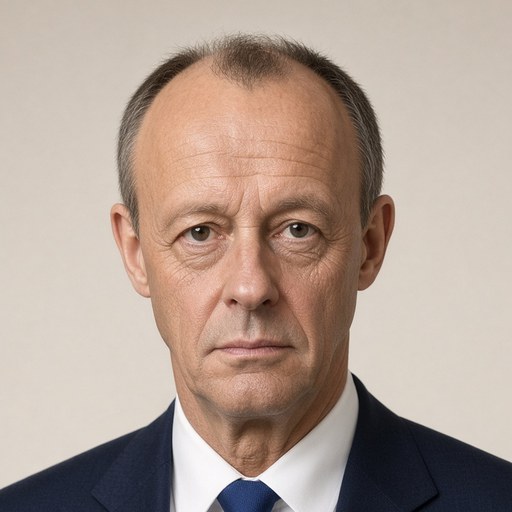
Speech by Chancellor Merz at the celebration event of the German Academy of Engineering Sciences "Securing Sovereignty through Innovation"
 Friedrich Merz · Chancellor of Germany
- Context
- Merz addressed the German Academy of Engineering Sciences at its celebration event on October 14, 2025, speaking on securing sovereignty through innovation.
- Main themes
- Technological sovereignty, innovation and industrial revolution, digital security, geopolitical power shifts, fourth industrial revolution, freedom and democracy, research and engineering, Germany's future competitiveness, hybrid threats, rare earth dependencies, IT security
- Duration
- ~29 min
- Words
- 3,525
- Sentences
- 154
- Readability
- 44
- Grade
- 12.7
- Syntax
- 3.14
- Vocabulary
- 2.07
Translated from German
The broad sphere of national life a sentence belongs to. Every sentence has an Arena, so it is the denominator the other indices are read against.
Other154 sentences in 49 paragraphs
Dear Madam President, dear Ms. Eckert,
dear Mr. President, dear Mr. Weber,
dear colleague Doro Bär,
dear colleagues from the German Bundestag,
my esteemed ladies and gentlemen!
Exactly 196 years ago, on October 14, 1829, the so-called Rainhill Trials were held in Great Britain. I suspect that hardly anyone here knows what that was. It was not a race of people, it was not a sporting event, it was – contrary to what one might assume in Great Britain – not a horse race either, but a race of locomotives in what we would today call an innovation competition.
What was it about? Well, in the early 19th century, in the first years of the railway, there was a problem: the early locomotives were unable to handle inclines. Therefore, all railway tracks were laid flat, and in unavoidable inclines, locomotives had to be pulled by horses. This was not a particularly efficient solution. So a competition was announced. What was sought was a technically advanced steam locomotive that could pull three times its weight and reach a speed of at least 16 kilometers per hour, all while adhering to safety precautions; this was also a criterion of the competition. Five vehicles appeared for the great race on the railway line between Liverpool and Manchester, and on that October 14, 1829, exactly 196 years ago today, the winner was determined. The locomotive was called "Rocket," and it was the only one capable of completing the course in accordance with the rules. The winner received a cash prize and the order to deliver eight locomotives of this type for this line.
Now, ladies and gentlemen, why am I telling this little anecdote? The contemporaries back then may have suspected it, but they could not know how much the steam engine would change the world. They were at the very beginning of the modern world in which we all live today. They were the drivers of the first modern industrial revolution. And today? Today we stand on the threshold of a fourth industrial revolution, of which we can only guess how it will one day change our world. What we do know from experience, also thanks to this race at Rainhill, is how we can achieve technological progress. We can achieve it through competition, and we can attain it through the freedom for research and teaching.
You in the German Academy of Engineering Sciences, you are, if you will, an institution of these success conditions for innovation and progress in our country, and I would like to express my heartfelt thanks at the outset for your extensive work in interdisciplinary, cross-sectoral advice to politics and society! We need you, ladies and gentlemen. We need your accumulated expertise on future issues. We need you more urgently than ever in our country. Because exactly where you all work – in the field of research and development, in the area of technology policy – it will be decided what the future of our country and what the future of Europe will look like, how free we are, how secure we are, and, not least, how prosperous we will live in the future.
Because this so-called fourth industrial revolution is taking place in a global race. The rules and framework conditions of this race are also marked by significant geopolitical power shifts. I often repeat this sentence, and I do so here this evening: We are witnesses today, in this time in which we live, to the greatest global political and economic power shifts of the last century, and these power shifts are at the center of a newly emerging systemic conflict between authoritarian regimes and democratic free orders.
In this context, it is not only a question of securing prosperity, of maintaining or gaining technological leadership. Far more fundamentally, it is also a question of defending our freedom and our security.
Ladies and gentlemen, at this moment, in the time we are living in, we are dependent on hardware and, in particular, on software from the United States. We are dependent on rare earths, on raw materials from all over the world. And we are already experiencing how these dependencies are being exploited by system rivals; we are witnessing it these days. We see that with growing aggression, they are also searching for our vulnerable points. Almost daily, we record hybrid attacks on our infrastructure, our companies, our research institutions. This means, translated for us in forward-looking policy: It will be a key task in the coming years to secure our sovereignty through innovation – especially and precisely our digital sovereignty.
In this context, I would like to explicitly congratulate the German Academy of Engineering Sciences, if I may, on the excellent choice of Professor Eckert as the new president. Professor Eckert, I do this for two reasons: first, because an academy of engineering sciences is placing a woman at the top, and second, because you come from IT security research. Because that is precisely the area that is currently one of the most crucial for the future viability of our country for our science, for research, for development, for our economy. Good luck, and much success in the task you have set for yourself!
You just said in your brief welcome: Let us set the pessimists aside for now. You said something similar in your inaugural speech:
"We cannot solve the great challenges of our time with the same mindset we used when we created them."
I want to tell you all, ladies and gentlemen: That is exactly the conviction of the federal government. We want to carry and transfer this attitude into all areas of policy in our country: into domestic and foreign policy, which can no longer be treated as separate policy fields, but must be understood as interrelated and interdependent fields of action; into economic and research policy, which we also want to view in a connected and integrated manner; and into an institutional expression, which has led us, not least, to the founding of the Federal Ministry for Digitalization and State Modernization.
Ladies and gentlemen, not least in cooperation with the Federal Ministry for Research, Technology and Space, which is led by Dorothee Bär, we have restructured research policy in our country. We want to position ourselves to make innovation promotion truly a priority of our economic and science policy. We want to effectively align Germany with that global race I just mentioned. Because it is true – and you all know this better than we do here: We conduct excellent basic research in Germany. We have a research landscape that sets global standards and can compete on a worldwide scale.
However, there is room for improvement in the transfer of research into application, into product development, and into value creation. Therefore, we as the federal government have set ourselves the ambitious goal that the economy and the state will initially spend at least 3.5 percent of GDP on research and development annually by 2030. Yes, that is ambitious, but it is possible if we remove the obstacles that currently hinder initiative too much in the economy and science.
Immediately after taking office, we took the first steps towards competitiveness, resilience, and innovation – for example, with our immediate investment program to strengthen the economy, which also includes an expansion of the research grant. Many more steps will follow; because – this is our shared conviction – it is precisely technical progress that is crucial for increasing the growth potential of the German economy.
The report presented a few days ago by the advisory committee of the Federal Minister of Economics shows that innovative strength often remains ineffective because new products and technologies cannot be economically implemented at the location. We take this report from the advisory committee of our Federal Minister of Economics seriously. Such obstacles can stem from lengthy approval processes, overly complex regulations, or a lack of willingness to take risks. We are addressing this as well, and we want to improve here.
Many of you may know: On July 30, we adopted a High-Tech Agenda for Germany in the federal cabinet. This represents a paradigm shift in research policy: In the future, we will specifically align our research policy towards technological sovereignty and the competitiveness of our economy, as the global political situation demands of us. Practically, this means: We are focusing on the promotion of key technologies – on artificial intelligence, on quantum technologies, on microelectronics, on biotechnology, on energy generation, and on climate-neutral mobility.
Tomorrow, we will adopt a microelectronics strategy in the federal cabinet, which will set the course for Germany to become an even better location for microelectronics.
Just two weeks ago, we adopted an action plan for nuclear fusion, with the goal of establishing the world's first fusion power plant in Germany. None of us can say exactly when this will happen. But we are now firmly focused on achieving this goal.
Likewise, we are putting everything we can into bringing at least one of the five AI gigafactories to Germany, the establishment of which the European Commission has now announced.
Why all this? The future potential for our economic location lies precisely in the smart combination of what we are already world champions in, namely mechanical engineering, and what we want to become world champions in, namely the development of AI models.
Once again, the keyword is Europe: Ladies and gentlemen, there is also a very large and largely untapped potential for technological progress of the European Union in the European internal market and in the European research landscape. If we want to tap this potential, we must first stop constantly hindering ourselves. That is exactly what I am advocating for, and what we are jointly working on in Brussels.
I will give you an example: The digital omnibus, with which the Commission now wants to initiate simplifications of the digital legal framework, is a first step in the right direction. But it is only a first step. Further steps must follow. We want to push back excessive regulation at the European level. We want to create more freedoms. We want to create more opportunities for technological development.
Therefore, secondly, we must tackle the task of digital sovereignty much more energetically in a European partnership. In this sense, by the way, we will host a German-French summit on digital sovereignty here in Berlin together with our French colleagues and the French President on November 18, which is intended to be a starting point for even more determined cooperation projects, especially between our two countries.
Finally, thirdly: It is equally important that we preserve, defend, and wherever possible enhance the radiance of Europe and our own country as a space of freedom – especially and precisely of academic freedom, ladies and gentlemen. We live in times when this academic freedom is being called into question again and when hostility towards science is increasing, also and unfortunately in the transatlantic world. Let me say this: I view this with the utmost concern.
For our country, for Germany, we want the best minds in the world in our research institutions, in our laboratories, in our universities. In order for this not to remain just pious words, we will also have to make new policy decisions in science. Because the truth is – many of you know this and can report on it: Young scientists are particularly lacking reliable career paths in our country. I know there are already numerous initiatives in the research institutions themselves to forge new paths. The Science Council itself published important recommendations on this in the summer.
I can say for the federal government: We want to and we will tackle this task, among other things, with a reform of the long-disputed Science Time Contracts Act. We will also make it a priority to further improve the conditions for public and private research. An Innovation Freedom Act is in the works. A Research Data Act is also in the works, which will facilitate data use for research.
Perhaps I may add this at this point: The use of data, ladies and gentlemen, is probably one of the central prerequisites for progress and innovation, especially in our medium-sized enterprises. The head of Microsoft told me on the sidelines of the last World Economic Forum in Davos: You Germans do not even realize what a treasure you have, especially in your medium-sized companies. These companies have so much interesting data; you just need to use it together at last. Therefore, I draw the conclusion: We need to talk much more about data security, but please a little less about data protection. We must and want to change these priorities in our country.
Ladies and gentlemen, we have so much to build on in Germany. We have a scientific landscape in Germany that we can all be proud of, that we can rely on – I say this from my own experience. I can assure you that few visits I am allowed to make as Chancellor impress me and leave me with such confidence for our country as visits to our universities, our research institutions, and innovative companies.
Let me give you some examples: In recent weeks, I visited the Helmholtz Center CISPA in Saarbrücken, the Excellence Cluster RESIST at the Medical School of Hanover, and the Fraunhofer Research Factory for Battery Cells in Münster. Just this morning, I was at the Hasso Plattner Institute in Potsdam, which is to be developed into an international top institute in AI and digital sciences in the coming years with the support of the Hasso Plattner Foundation – by the way, a unique cooperation between a private initiative, a foundation, and a public university.
I find it completely incomprehensible how serious political objections can be raised against this. We will support this, and we will promote, ladies and gentlemen, that this cooperation between business, science, and politics is also possible in the future, that it becomes even better than it has been initiated in such an exemplary process as in Potsdam.
Now we will soon hear some promising insights from Rafael Laguna – I am sure of that. With the Federal Agency for Jump Innovations, we have an institution for innovation competitions in Germany that helps innovators bring their ideas not just onto the track but also to the market.
But here we are at the point where we as a country need to improve overall; you will certainly say something about this shortly, dear Mr. Laguna. What we are not good enough at is translating our excellent basic research into business models and applications here in Germany, into products and services that make our lives easier and enable economic prosperity. This is the problem diagnosis that concerns us in the Federal Government, and we are adjusting some levers to solve this problem. This is what the already mentioned High-Tech Agenda with its technology roadmap is for. We are working on enabling real laboratories and specific legal opening and experimentation clauses with our planned Federal Experimentation Law. The Federal Ministry of Economics is currently developing a cross-departmental start-up strategy. We are also strengthening the venture capital market, as recently with our location promotion law and by mobilizing private capital.
An open word on this: We are advocating in Brussels for swift progress on the European Capital Market Union, for consistent reduction of bureaucracy, for effective, business-friendly, and low-bureaucracy implementation of the EU start-up and scale-up strategy. But we can also do a lot better in our own country.
Ladies and gentlemen, we need to make much greater use of the capital market – this capital market that we have – for research, for development, and also for business start-ups, so that a strategic circle of technology and innovation closes. This circle is being built, in collaboration – also with you in acatech. With state interventions alone – I want to say this as well – it will not be enough. We also need a change in mentality at universities and research institutions, more permeability between science and business, and we need even more a change in mentality in business and society, more pioneering spirit, more willingness to take risks, more joy in experimentation.
Our key industries in Germany – pharmaceuticals, automotive, chemicals, steel – were all built exactly 100 years ago with this mentality: with courage to take risks, with a desire to try something new. Only with this will we preserve them; only with this will we anchor future key industries in our country. Let us dare to do this together, ladies and gentlemen!
I say this also from my perspective: Those who are a bit older, ladies and gentlemen, those among you who grew up in the 60s, 70s, and 80s – it seems to me, as I look around the room, that this is the majority here – are probably also familiar with the great science fiction series that were so incredibly successful during that time: Star Trek, Star Wars. Perhaps you remember. In the opening credits of each Star Trek episode, the legendary "mission statement" of the starship Enterprise is proclaimed from the off: "to boldly go where no one has gone before."
Translated into German: kühn und wagemutig ins Unbekannte aufzubrechen, Grenzen zu verschieben. This is a sentence that expresses a joy for innovation, so full of adventure, which is, by the way, paradigmatically exactly what is needed for a general optimism for progress in our time, that it is possible, with technical innovations, to fundamentally improve people's lives, also and especially in our country.
This optimism for progress, ladies and gentlemen, has, if I observe it correctly, somewhat eluded us in recent years; at least in Germany and also in Europe. But the will not to be satisfied with this, but to make things better, connects us, and to set out together again and again, even into the unknown. This is at the core of what Europe, what the normative West, as we once called it, what has characterized us in Germany for so long. Curiosity, a thirst for knowledge, that is what defines us – and also the ability to align this thirst for knowledge and technological progress with goals that serve the common good, that serve a life – yes – in freedom.
Ladies and gentlemen, this is not political prose, but – I want to say it clearly once again – a description of what I see and hear in German research institutions and companies these days and weeks.
A few months ago, I had the honor of giving a laudation here at Gendarmenmarkt in Berlin for Özlem Türeci and Uğur Şahin, the founders of BioNTech, who have saved millions of lives in Germany, Europe, and around the world – in the truest sense of the word – with their COVID-19 vaccine. At this moment, the two are continuing to work on mRNA vaccines that may ultimately mean a victory over cancer.
Last month, I was at the inauguration of the supercomputer JUPITER at the Jülich Research Center. It is the first computer in Europe and one of only four, as far as we know worldwide, to achieve more than one trillion computing operations per second. Some innovations that become possible with these computing capabilities we probably cannot even imagine today.
What is it that I have just described? What is it, if not great success stories that could inspire us in Germany and should inspire us? Let us also talk about that. Let us carry much of this into the socio-political debate of our country. Because many of the problems facing humanity today – not all, but perhaps many – can indeed be solved much better technologically, or at least alleviated and managed better. This is climate change; this is the connection between economy and ecology; this is a number of diseases that we can combat; these are pandemics up to natural disasters.
In each of these six key technologies that I just mentioned, which we are now focusing on in the High-Tech Agenda, there are indeed great potentials: for sustainability, for personalized medicine, for new therapies, for early warning systems, for our security and – last but not least – also for our freedom in Europe. If we all together, ladies and gentlemen, tell a little more about this, if we report a little more about it, also publicly discuss it, then we will also regain some of the optimism for progress in Germany that we need, that we once had, and that we need for the future, especially in these times in which we live. For these are geopolitically extraordinarily difficult times – times of upheaval, times of a new world order, times that are already imposing demands on our country and our society. We must all do more together to preserve our freedom than we may have been used to in recent years and decades. But we continue to live in freedom, and we can really make something great out of it together, not least through research, development, and technology.
Thank you very much for the good cooperation.
The original German. The tags above are read on the English translation's sentences.
Sehr geehrte Frau Präsidentin, liebe Frau Eckert,
sehr geehrter Herr Präsident, lieber Herr Weber,
liebe Kollegin Doro Bär,
liebe Kolleginnen und Kollegen aus dem Deutschen Bundestag,
meine sehr geehrten Damen und Herren!
Auf den Tag genau vor 196 Jahren, am 14. Oktober 1829, wurde in Großbritannien das sogenannte Rennen von
Rainhill
veranstaltet. Ich vermute, kaum jemand von Ihnen wird wissen, was das war. Es war kein Rennen von Menschen, es war kein Sportereignis, es war – anders, als man in Großbritannien vielleicht vermuten könnte – auch kein Pferderennen, sondern es war ein Rennen von Lokomotiven in einem, würde man heute sagen, Innovationswettbewerb.
Worum ging es? Nun, Anfang des 19. Jahrhunderts, in den ersten Jahren der Eisenbahn, sah man sich vor folgendes Problem gestellt: Die frühen Lokomotiven waren nicht in der Lage, Steigungen zu bewältigen. Also wurden die Eisenbahnstrecken alle ebenerdig verlegt, und bei ganz unvermeidbaren Steigungen mussten die Lokomotiven von Pferden gezogen werden. Das war keine besonders effiziente Lösung. Also wurde ein Wettbewerb ausgeschrieben. Gesucht war eine technisch anspruchsvolle Dampflokomotive, die das Dreifache ihres Gewichtes ziehen und die eine Geschwindigkeit von mindestens 16 Stundenkilometern erreichen konnte, alles unter Einhaltung der Sicherheitsvorkehrungen; auch das war ein Kriterium des Wettbewerbs. Es erschienen fünf Fahrzeuge zum großen Rennen auf der Eisenbahnstrecke zwischen
Liverpool
und
Manchester
, und an diesem 14. Oktober 1829, also heute vor 196 Jahren, stand der Sieger fest. Die Lokomotive hieß „
Rocket
“, und sie war die einzige, die in der Lage war, die Strecke regelkonform zu bewältigen. Der Gewinner erhielt ein Preisgeld und den Auftrag, acht Lokomotiven dieser Bauart für diese Strecke zu liefern.
Nun, meine Damen und Herren, warum erzähle ich diese kleine Anekdote? Die Zeitgenossen damals ahnten es vielleicht, aber wissen konnten sie nicht, wie sehr die Dampfmaschine die Welt verändern würde. Sie standen ganz am Anfang der modernen Welt, in der wir heute alle leben. Sie waren die Treiber der modernen ersten industriellen Revolution. Und heute? Heute stehen wir an der Schwelle einer vierten industriellen Revolution, von der wir wiederum nur ahnen können, wie sie unsere Welt eines Tages verändern wird. Was wir aber inzwischen aus der Erfahrung wissen, auch dank diesem Rennen von
Rainhill
, das ist, wie wir technologischen Fortschritt machen können. Wir können ihn machen durch Wettbewerb, und wir können ihn erreichen durch die Freiheit für Forschung und Lehre.
Sie in der Deutschen Akademie der Technikwissenschaften, Sie sind, wenn man so will, eine Institution dieser Erfolgsbedingungen für Innovation und Fortschritt in unserem Land, und ich sage deshalb gleich zu Beginn einen herzlichen Dank für Ihre umfangreiche Arbeit in der interdisziplinären, in der branchenübergreifenden Beratung von Politik und Gesellschaft! Wir brauchen Sie, meine Damen und Herren. Wir brauchen Ihre gesammelte Expertise in Zukunftsfragen. Wir brauchen Sie dringender als je zuvor in unserem Land. Denn genau da, wo Sie alle arbeiten – im Bereich der Forschung und Entwicklung, im Bereich der Technologiepolitik –, wird sich entscheiden, wie die Zukunft unseres Landes und wie die Zukunft Europas aussehen wird, wie frei wir sind, wie sicher wir sind und, nicht zuletzt, wie wohlhabend wir in Zukunft leben werden.
Denn diese sogenannte vierte industrielle Revolution, sie vollzieht sich in einem globalen Wettrennen. Die Regeln und die Rahmenbedingungen dieses Wettrennens stehen zugleich im Zeichen großer geopolitischer Machtverschiebungen. Ich wiederhole diesen Satz sehr häufig und heute Abend auch hier: Wir sind heute Abend, in dieser Zeit, in der wir leben, Zeitzeugen der größten globalen politischen und ökonomischen Machtverschiebungen des letzten Jahrhunderts, und sie, diese Machtverschiebungen, stehen im Zentrum eines neu aufbrechenden Systemkonflikts zwischen autoritären Regimen und demokratischen freiheitlichen Ordnungen.
Vor diesem Hintergrund ist es nicht nur eine Frage der Wohlstandssicherung, Technologieführerschaft zu erhalten oder zu gewinnen. Weit fundamentaler noch ist sie auch eine Frage der Verteidigung unserer Freiheit und unserer Sicherheit.
Meine Damen und Herren, wir sind in diesem Augenblick, in der Zeit, in der wir jetzt leben, abhängig von
Hardware
und insbesondere von
Software
aus den Vereinigten Staaten. Wir sind abhängig von seltenen Erden, von Rohstoffen aus aller Welt. Und wir erleben bereits, wie diese Abhängigkeiten auch von Systemrivalen ausgespielt werden; wir erleben es in diesen Tagen. Wir erleben, dass mit wachsender Aggressivität auch nach unseren verwundbaren Stellen gesucht wird. Nahezu täglich verzeichnen wir hybride Angriffe auf unsere Infrastruktur, unsere Unternehmen, unsere Forschungseinrichtungen. Das heißt, übersetzt für uns in vorausschauende Politik: Es wird eine wesentliche Aufgabe der nächsten Jahre sein, unsere Souveränität durch Innovation zu sichern – auch und gerade unsere digitale Souveränität.
Ich möchte in diesem Zusammenhang der Deutschen Akademie der Technikwissenschaften, wenn ich mir das erlauben darf, sehr ausdrücklich zu der hervorragenden Wahl von Frau Professor Eckert zur neuen Präsidentin gratulieren. Frau Professor Eckert, ich tue das aus zwei Gründen: Erstens, weil eine Akademie der Technikwissenschaften eine Frau an die Spitze stellt, und zweitens, weil Sie aus der
IT
-Sicherheitsforschung kommen. Denn das ist genau der Bereich, der für uns, für unsere Wissenschaft, für die Forschung, für die Entwicklung, für unsere Wirtschaft zurzeit einer der entscheidendsten Bereiche für die Zukunftsfähigkeit unseres Landes ist. Viel Glück, viel Erfolg bei der Aufgabe, die Sie sich vorgenommen haben!
Sie haben hier eben in Ihrer kurzen Begrüßung gesagt: Wir lassen jetzt einmal die Pessimisten an die Seite treten. Etwas Ähnliches haben Sie in Ihrer Antrittsrede bereits gesagt:
„Wir können die großen Herausforderungen unserer Zeit nicht mit dem gleichen Denkansatz lösen, den wir verwendet haben, als wir sie erschufen.“
Ich darf Ihnen allen sagen, meine Damen und Herren: Genau das ist auch die Überzeugung der Bundesregierung. Wir wollen diese Haltung in alle Politikbereiche unseres Landes tragen und übertragen: in die Innen- und Außenpolitik, die sich nicht mehr als getrennte Politikfelder behandeln lassen, sondern die sich als aufeinander verweisende und aufeinander angewiesene Handlungsfelder verstehen müssen; in die Wirtschafts- und in die Forschungspolitik, die wir genauso vernetzt und verbunden in der Zusammenschau in den Blick nehmen; und in einen institutionellen Ausdruck, was uns nicht zuletzt auch zur Gründung des Bundesministeriums für Digitalisierung und Staatsmodernisierung veranlasst hat.
Meine Damen und Herren, nicht zuletzt auch mit dem Zusammenwirken mit dem Bundesministerium für Forschung, Technologie und Raumfahrt, das Dorothee Bär leitet, haben wir die Forschungspolitik in unserem Land neu aufgestellt. Wir wollen uns damit in die Lage versetzen, die Innovationsförderung wirklich zu einer Priorität unserer Wirtschafts- und Wissenschaftspolitik zu machen. Wir wollen Deutschland damit wirksam auf jenes globale Wettrennen ausrichten, von dem ich soeben schon gesprochen habe. Denn es ist ja so – und das wissen Sie alle hier im Raum besser als wir: Wir machen in Deutschland exzellente Grundlagenforschung. Wir haben eine Forschungslandschaft, die weltweit Maßstäbe setzt und im weltweiten Maßstab mithalten kann.
Beim Transfer der Forschung in die Anwendung, in die Produktentwicklung und in die Wertschöpfung gibt es aber Luft nach oben. Wir haben uns als Bundesregierung deshalb das ambitionierte Ziel gesetzt, dass Wirtschaft und Staat zunächst bis 2030 jährlich mindestens 3,5 Prozent des
BIP
für Forschung und Entwicklung aufwenden. Ja, das ist ambitioniert, aber es ist möglich, wenn wir Wirtschaft und Wissenschaft die Steine aus dem Wege räumen, die Eigeninitiative im Augenblick zu stark behindern.
Wir haben unmittelbar nach dem Regierungsantritt erste Schritte in Richtung Wettbewerbsfähigkeit, Richtung Resilienz, Richtung Innovation unternommen – zum Beispiel mit unserem Investitionssofortprogramm für die Stärkung der Wirtschaft, das auch eine Ausweitung der Forschungszulage umfasst. Viele weitere Schritte werden folgen; denn – das ist unsere gemeinsame Überzeugung – gerade technischer Fortschritt ist entscheidend für die Steigerung des Wachstumspotenzials der deutschen Wirtschaft.
Der Bericht, den das Beratungsgremium der Bundeswirtschaftsministerin vor einigen Tagen vorgelegt hat, zeigt, dass Innovationskraft oft wirkungslos bleibt, weil neue Produkte und Technologien am Standort wirtschaftlich nicht umgesetzt werden können. Wir nehmen diesen Bericht des Beratungsgremiums unserer Bundeswirtschaftsministerin ernst. Solche Hindernisse können an langwierigen Genehmigungsverfahren, an überkomplexer Regulierung oder an mangelnder Risikobereitschaft liegen. Auch hier setzen wir an, auch hier wollen wir besser werden.
Vielleicht wissen es viele von Ihnen: Am 30. Juli haben wir im Bundeskabinett eine
Hightech
-Agenda für Deutschland verabschiedet. Dahinter steht ein Paradigmenwechsel in der Forschungspolitik: Wir werden unsere Forschungspolitik in Zukunft gezielt auf technologische Souveränität und Wettbewerbsfähigkeit unserer Volkswirtschaft ausrichten, so wie es die weltpolitische Lage von uns geradezu verlangt. Ganz praktisch heißt das: Wir fokussieren uns auf die Förderung von zentralen Schlüsseltechnologien – auf Künstliche Intelligenz, auf Quantentechnologien, auf Mikroelektronik, auf Biotechnologie, auf Energieerzeugung und auf klimaneutrale Mobilität.
Wir werden morgen im Bundeskabinett eine Mikroelektronik-Strategie beschließen, mit der wir die Weichen dafür stellen, dass Deutschland ein noch besserer Standort für die Mikroelektronik wird.
Schon vor zwei Wochen haben wir einen Aktionsplan zur Kernfusion verabschiedet, mit dem Ziel, das erste Fusionskraftwerk der Welt in Deutschland zu errichten. Niemand von uns kann heute genau sagen, wann dies der Fall sein wird. Aber das Ziel, dies zu erreichen, nehmen wir jetzt fest in den Blick.
Genauso werfen wir alles, was uns möglich ist, in die Waagschale, um mindestens eine der fünf
AI
-
Gigafactories
nach Deutschland zu holen, deren Aufbau die Europäische Kommission jetzt angekündigt hat.
Warum das alles? Zukunftspotenzial für unseren Wirtschaftsstandort liegt gerade in der klugen Verbindung dessen, worin wir schon Weltmeister sind, nämlich dem Maschinenbau, und dem, wo wir Weltmeister werden wollen, nämlich der Entwicklung von
KI
-Modellen.
Noch einmal das Stichwort Europa: Meine Damen und Herren, auch im europäischen Binnenmarkt und in der europäischen Forschungslandschaft liegt ein sehr großes und zu weiten Teilen noch ungehobenes Potenzial für den technologischen Fortschritt der Europäischen Union. Wenn wir dieses Potenzial heben wollen, dann müssen wir erstens aufhören, uns selbst ständig zu behindern. Genau dafür setze ich mich, setzen wir uns in Brüssel gemeinsam ein.
Ich nenne ein Beispiel: Der digitale Omnibus, mit dem die Kommission jetzt Vereinfachungen des digitalen Rechtsrahmens auf den Weg bringen will, ist ein erster Schritt in die richtige Richtung. Aber es ist nur ein erster Schritt. Dem müssen weitere folgen. Die zu starke Regulierung auf europäischer Ebene wollen wir zurückdrängen. Wir wollen mehr Freiheiten schaffen. Wir wollen mehr Möglichkeiten zur technologischen Entwicklung schaffen.
Deswegen müssen wir zweitens viel energischer im europäischen Schulterschluss die Aufgabe der digitalen Souveränität angehen. In diesem Sinne werden wir übrigens Mitte November, genauer gesagt am 18. November, hier in Berlin gemeinsam mit den französischen Kolleginnen und Kollegen und mit dem französischen Staatspräsidenten einen deutsch-französischen Gipfel zur digitalen Souveränität ausrichten, der ein Auftakt für noch entschlossenere Kooperationsprojekte insbesondere zwischen unseren beiden Ländern sein soll.
Schließlich drittens: Genauso wichtig ist es, dass wir die Strahlkraft Europas und unseres eigenen Landes als Raum der Freiheit – auch und gerade der Wissenschaftsfreiheit – bewahren, verteidigen und wo immer möglich mehren, meine Damen und Herren. Wir leben in Zeiten, in denen genau diese Wissenschaftsfreiheit wieder in Frage gestellt wird und in denen die Wissenschaftsfeindlichkeit zunimmt, auch und bedauerlicherweise in der transatlantischen Welt. Lassen Sie mich das sagen: Ich sehe das mit allergrößter Sorge.
Für unser Land, für Deutschland gilt: Wir wollen die besten Köpfe weltweit in unseren Forschungseinrichtungen, in unseren Laboren, in unseren Hochschulen. Damit das nicht nur fromme Worte bleiben, werden wir auch wissenschaftspolitisch Weichen neu stellen müssen. Denn zur Wahrheit gehört – viele von Ihnen wissen das und können davon berichten: Es fehlt gerade jungen Wissenschaftlerinnen und Wissenschaftlern an verlässlichen Karrierewegen in unserem Land. Ich weiß, es gibt bereits zahlreiche Initiativen, in den Wissenschaftseinrichtungen selbst neue Wege zu gehen. Auch der Wissenschaftsrat selbst hat im Sommer wichtige Empfehlungen dazu veröffentlicht.
Ich kann für die Bundesregierung sagen: Wir wollen und wir werden diese Aufgabe angehen, unter anderem auch mit einer Reform des lange umstrittenen Wissenschaftszeitvertragsgesetzes. Genauso werden wir es zur Priorität machen, die Bedingungen für öffentliche und private Forschung weiter zu verbessern. Ein Innovationsfreiheitsgesetz ist in Arbeit. Ebenfalls in Arbeit ist ein Forschungsdatengesetz, mit dem wir die Datennutzung für die Forschung erleichtern.
Vielleicht darf ich an dieser Stelle auch dies hinzufügen: Die Datennutzung, meine Damen und Herren, ist wahrscheinlich eine der zentralen Voraussetzungen für Fortschritt und Innovation, gerade auch in unseren mittelständischen Unternehmen. Der Chef von
Microsoft
hat mir am Rande der letzten Weltwirtschaftstagung in Davos gesagt: Ihr Deutschen wisst gar nicht, welchen Schatz ihr habt, insbesondere in euren mittelständischen Unternehmen. Diese Unternehmen verfügen über so viele interessante Daten; Ihr müsst sie nur endlich gemeinsam nutzen. Deswegen schließe ich daraus die Schlussfolgerung: Wir müssen miteinander sehr viel mehr über Datensicherheit reden, aber bitte etwas weniger über Datenschutz. Diese Prioritäten müssen und wollen wir auch in unserem Land ändern.
Meine Damen und Herren, damit haben wir so viel, worauf wir in Deutschland bauen können. Wir haben in Deutschland eine Wissenschaftslandschaft, auf die wir alle zusammen stolz sein können, auf die wir setzen können – ich sage das auch aus eigener Anschauung. Ich darf Ihnen versichern, dass mich wenige Besuche, die ich als Bundeskanzler machen darf, so beeindrucken und mit einer solchen Zuversicht für unser Land zurücklassen wie Besuche an unseren Hochschulen, an unseren Forschungseinrichtungen und bei forschenden Unternehmen.
Ich will Ihnen einige Beispiele nennen: In den vergangenen Wochen war ich beim Helmholtz-Zentrum
CISPA
in Saarbrücken, beim Exzellenz
cluster
RESIST
an der Medizinischen Hochschule Hannover, bei der Fraunhofer-Forschungsfabrik Batteriezelle in Münster. Gerade heute Morgen war ich beim Hasso-Plattner-Institut in Potsdam, das in den kommenden Jahren mit Förderung der Hasso-Plattner-Stiftung zu einem internationalen Spitzeninstitut in
KI
und Digitalwissenschaften ausgebaut werden soll–‑ übrigens eine einzigartige Kooperation von einer privatwirtschaftlichen Initiative, einer Stiftung und einer öffentlichen Hochschule.
Es ist mir völlig unverständlich, wie man dagegen ernsthafte politische Einwendungen erheben kann. Wir werden das unterstützen, und wir werden fördern, meine Damen und Herren, dass diese Kooperation zwischen Wirtschaft, Wissenschaft und Politik auch in Zukunft möglich ist, dass sie noch besser wird, als sie zum Beispiel in einem solchen beispielhaften Vorgang wie in Potsdam auf den Weg gebracht worden ist.
Nun werden wir gleich von Rafael Laguna – ich bin mir sicher – noch einiges Vielversprechendes hören und berichtet bekommen. Mit der Bundesagentur für Sprunginnovationen haben wir sozusagen eine Institution für Innovationswettbewerbe in Deutschland, die Innovatorinnen und Innovatoren dabei hilft, ihre Ideen vielleicht nicht mehr nur auf die Schiene, sondern auch auf den Markt zu bringen.
Aber hier sind wir an dem Punkt, an dem wir als Land insgesamt besser werden müssen; auch dazu werden Sie sicherlich gleich etwas sagen, lieber Herr Laguna. Worin wir nicht gut genug sind, das ist eben die Übersetzung unserer exzellenten Grundlagenforschung in Geschäftsmodelle und Anwendungen hier in Deutschland, in Produkte und Dienstleistungen, die unser Leben erleichtern und wirtschaftlichen Wohlstand erst möglich machen. Das ist die Problemdiagnose, die uns in der Bundesregierung umtreibt, und wir drehen an einigen Stellschrauben, um dieses Problem zu lösen. Dazu dient die eben schon genannte
Hightech
-Agenda mit ihrer Technologie-
Roadmap
. Dazu arbeiten wir mit unserem geplanten Bundesexperimentiergesetz an der Ermöglichung von Reallaboren und konkreten fachgesetzlichen Öffnungs- und Experimentierklauseln. Das Bundeswirtschaftsministerium erarbeitet in diesem Augenblick eine ressortübergreifende
Start-up
-Strategie. Dazu stärken wir den Wagniskapitalmarkt wie zuletzt mit unserem Standortfördergesetz und durch die Mobilisierung privaten Kapitals.
Auch dazu ein offenes Wort: Wir setzen uns in Brüssel ein für zügige Fortschritte bei der Europäischen Kapitalmarktunion, für konsequenten Bürokratierückbau, für eine effektive, unternehmensfreundliche und bürokratiearme Umsetzung der
EU
-
Start-up
- und
Scale-up
-Strategie. Aber wir können auch im eigenen Land einiges besser machen.
Meine Damen und Herren, wir müssen den Kapitalmarkt – diesen Kapitalmarkt, den wir haben – sehr viel stärker für Forschung, für Entwicklung, auch für Unternehmensgründungen, in Anspruch nehmen, damit sozusagen ein Strategiekreis aus Technologie und Innovation schließt. Dieser Kreis ist im Aufbau, in Zusammenarbeit – auch mit Ihnen in der
acatech
. Mit staatlichen Weichenstellungen allein – das will ich auch sagen – wird es nicht getan sein. Wir brauchen genauso einen Mentalitätswechsel an den Universitäten und Forschungseinrichtungen, mehr Durchlässigkeit von Wissenschaft und Wirtschaft, und wir brauchen noch mehr einen Mentalitätswechsel in Wirtschaft und Gesellschaft, mehr Pioniergeist, mehr Risikobereitschaft, mehr Freude am Experiment.
Unsere deutschen Schlüsselindustrien – Pharma, Automobil, Chemie, Stahl – sind alle vor 100 Jahren genau damit, mit dieser Mentalität, aufgebaut worden: mit Mut am Wagnis, mit Lust darauf, etwas Neues auszuprobieren. Nur damit werden wir sie erhalten; nur damit werden wir auch zukünftige Schlüsselindustrien bei uns verankern. Trauen wir uns das doch bitte gemeinsam zu, meine Damen und Herren!
Ich sage es auch aus meiner Sicht: Diejenigen, die etwas älter sind, meine Damen und Herren, diejenigen unter Ihnen, die in den 60er, 70er, 80er Jahren aufgewachsen sind – mir scheint, wenn ich in den Saal schaue, das ist die Mehrzahl hier –, sind mit einiger Wahrscheinlichkeit auch mit den großen
Science-Fiction
-Serien aufgewachsen, die in dieser Zeit so ungeheuer erfolgreich waren:
Star Trek
,
Star Wars
. Vielleicht erinnern Sie sich. Im Vorspann jeder einzelnen
Star-Trek
-Folge wird aus dem
Off
das legendäre „
mission statement
“ des Raumschiffs
Enterprise
verkündet:
„[...]
to boldly go where no one has gone before
.“
Übersetzt ins Deutsche: kühn und wagemutig ins Unbekannte aufzubrechen, Grenzen zu verschieben. Das ist ein Satz, der Innovationsfreude zum Ausdruck bringt, so voller Abenteuerlust, der damit übrigens paradigmatisch genau das ist, was für einen allgemeinen Fortschrittsoptimismus unserer Zeit benötigt wird, dass es möglich ist, mit technischen Innovationen das Leben der Menschen grundsätzlich besser zu machen, auch und gerade in unserem Land.
Dieser Fortschrittsoptimismus, meine Damen und Herren, ist uns, wenn ich es richtig beobachte, in den letzten Jahren ein bisschen abhandengekommen; jedenfalls bei uns in Deutschland und auch in Europa. Aber der Wille, sich damit nicht zufriedenzugeben, sondern die Dinge besser zu machen, der verbindet uns, und dafür gemeinsam immer wieder aufzubrechen, auch ins Unbekannte. Das steht übrigens im Kern dessen, was Europa, was den normativen Westen, wie wir es früher einmal genannt haben, was auch uns in Deutschland so lange ausgemacht hat. Neugier, Wissensdrang, das macht uns aus – und genauso die Fähigkeit, diesen Wissensdrang und den technischen Fortschritt an Zielen auszurichten, die dem Gemeinwohl dienen, die einem Leben – ja – in Freiheit dienen.
Meine Damen und Herren, das ist keine politische Prosa, sondern – ich möchte es so deutlich noch einmal sagen – eine Beschreibung dessen, was ich in den deutschen Forschungseinrichtungen und Unternehmen in diesen Tagen und Wochen sehe und höre.
Ich habe vor einigen Monaten genau hier am Gendarmenmarkt in Berlin eine Laudatio halten dürfen auf
Özlem Türeci
und
Uğur Şahin
, die Gründer von
BioNTech
, die mit ihrem COVID-19-Impfstoff Millionen Menschen in Deutschland, in Europa und auf der Welt – im wahrsten Sinne des Wortes – das Leben gerettet haben. In diesem Augenblick arbeiten die beiden weiter an
mRNA
-Impfstoffen, die ultimativ vielleicht einen Sieg über den Krebs bedeuten können.
Ich war im vergangenen Monat bei der Einweihung des Supercomputers JUPITER am Forschungszentrum Jülich. Er schafft als erster Computer in Europa und als einer von nur vier, soweit wir das weltweit wissen, mehr als eine Trillion Recheneinheiten pro Sekunde. Manche Innovationen, die mit diesen Rechnerfähigkeiten möglich werden, können wir uns wahrscheinlich heute noch gar nicht vorstellen.
Was ist das, was ich gerade beschrieben habe? Was ist das, wenn nicht großartige Erfolgsgeschichten, die uns in Deutschland beflügeln könnten und auch beflügeln sollten? Lassen Sie uns auch davon sprechen. Lassen Sie uns davon auch viel in die gesellschaftspolitische Debatte unseres Landes tragen. Denn viele Menschheitsprobleme, vor denen wir heute stehen – nicht alle, aber vielleicht doch viele –, lassen sich eben technologisch sehr viel besser lösen, aber zumindest lindern und besser bewältigen. Das ist der Klimawandel; das ist die Verbindung von Ökonomie und Ökologie; das ist eine Reihe von Krankheiten, die wir bekämpfen können; das sind Pandemien bis hin zu Naturkatastrophen.
In jeder einzelnen dieser von mir eben genannten sechs Schlüsseltechnologien, auf die wir uns jetzt in der
Hightech
-Agenda konzentrieren, stecken genau da große Potenziale: für Nachhaltigkeit, für personalisierte Medizin, für neue Therapien, für Frühwarnsysteme, für unsere Sicherheit und –
last but not least
– auch für unsere Freiheit in Europa. Wenn wir alle zusammen, meine Damen und Herren, davon ein bisschen mehr erzählen, wenn wir etwas mehr darüber berichten, auch öffentlich diskutieren, dann werden wir in Deutschland auch wieder etwas von dem Fortschrittsoptimismus zurückgewinnen, der uns ansteht, den wir einmal hatten und den wir für die Zukunft brauchen, gerade in diesen Zeiten, in denen wir leben. Denn es sind geopolitisch außergewöhnlich schwierige Zeiten – Zeiten des Umbruchs, Zeiten einer Weltneuordnung, Zeiten, die jetzt schon Zumutungen für unser Land und unsere Gesellschaft auslösen. Wir müssen alle gemeinsam mehr tun für die Bewahrung unserer Freiheit, als wir es vielleicht in den letzten Jahren und Jahrzehnten gewohnt waren. Aber wir leben weiterhin in Freiheit, und wir können daraus gemeinsam wirklich etwas Großartiges machen, nicht zuletzt durch Forschung, Entwicklung und Technologie.
Herzlichen Dank für die gute Zusammenarbeit.