




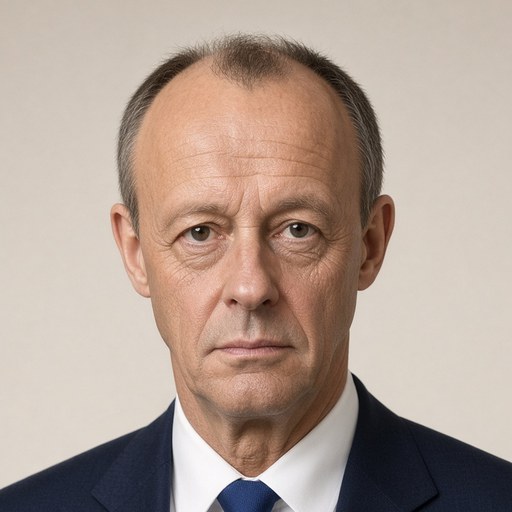
Speech by Chancellor Merz at the awards ceremony of the startsocial competition Chancellor honors outstanding volunteer work
 Friedrich Merz · Chancellor of Germany
- Context
- Merz addressed the startsocial awards ceremony in Berlin in September 2025, honoring outstanding volunteer initiatives and presenting the Chancellor's Special Prize.
- Main themes
- Voluntary engagement, civic society and subsidiarity, startsocial competition awards, STEM education initiative, Future Pact for Volunteering, recognition of volunteers, state and civil society roles, community solidarity
- Duration
- ~9 min
- Words
- 1,049
- Sentences
- 51
- Readability
- 49
- Grade
- 11.3
- Syntax
- 3.05
- Vocabulary
- 2.06
Translated from German
The broad sphere of national life a sentence belongs to. Every sentence has an Arena, so it is the denominator the other indices are read against.
Other51 sentences in 18 paragraphs
Dear Mr. Düsedau,
dear scholarship holders, supporters, and guests,
ladies and gentlemen,
thank you once again for the warm welcome extended to me here among you. I am very pleased that we are meeting in this good atmosphere. Mr. Düsedau, I would like to assure you: I will gladly continue to do this for many years to come.
I have, of course, taken this on, and I have adopted some – not everything, but some – of what is a good tradition in this house. Among these traditions is the recognition of voluntary engagement on various occasions – but especially on this one; because yesterday marked the end of the week of civic engagement. Therefore, I would like to mention a number that is impressive: With many actions and events, thanks were given to the nearly 30 million people who roll up their sleeves and pitch in voluntarily every day in the Federal Republic of Germany. They are the ones who voluntarily dedicate themselves to the service of our country – often with great passion for the common good – or simply help their neighbors.
In the past weeks and months, alongside what occupies me in my daily life – sometimes burdens me – I have also had the opportunity to personally exchange ideas with some of the volunteers. I am explicitly referring to my home, my constituency, where I come from, where I was born.
But I will also mention a completely different example: I had the opportunity to meet volunteers in the church sector, whom I took with me to Rome for the inauguration of Pope Leo XIV.
Two weeks ago – again something completely different – the DRF Luftrettung, together with the mountain rescue service of the German Red Cross, trained and assessed the full-time and volunteer helpers at my home in the beautiful city of Winterberg, with what they need to be able to do, namely, for example, to rescue critically ill and injured people in the most difficult terrain.
It is simply impressive to learn about such a wide range of activities, and I also feel it as a privilege of my office to have the opportunity to meet so many people, see their work, and honor them on such an occasion. Because all of you together, ladies and gentlemen, and each and every one of you individually, make Germany what it is. I want to say it from my perspective: We live in a lovable and livable country. Many around the world envy us for that. Perhaps in such a moment, we should also be a little grateful for what we have, and not just complain about what we do not or do not yet have.
I am pleased that Christiane Schenderlein is here and that we now have, as I mentioned at the beginning, our own State Minister for Sports and Volunteering in this house for the first time. We have also begun to make the Future Pact for Volunteering very concrete.
We have initiated some important projects – Christiane Schenderlein just mentioned them. Most of them cost no money. On the contrary, they are commitments that unleash energy and ensure that we gain at least as much, if not more, volunteering for our society in this country – energy for solidarity is exactly what is needed in our society, people who take responsibility in volunteering.
I want to make this very clear: Promoting this voluntary engagement does not mean that the state wants to withdraw from its responsibilities. Ladies and gentlemen, it means that we recognize that this exists and also that we do not organize all of this through the state. We are an open, free, liberal civil society. Civil society means that, first and foremost, people take matters into their own hands, organize things themselves, and do not assign it to the state. Because the state is all of us. There is no one else but us who make up this state. We call this the principle of subsidiarity, that is, the principle that a smaller unit in our society can achieve more than some large unit that is still far removed from what really interests the people.
Ladies and gentlemen – above all: dear volunteers – six awards have already been presented today. I now have the honor of presenting the seventh and final award, the special prize.
You all were selected for one of the 100 consulting scholarships by business professionals. You have all developed your initiatives with the advice of professionals over several months, so successfully that you are among the best 25 who are now sitting here today. You can all rightfully be proud of yourselves and what you have achieved. From my side, first of all, a heartfelt congratulations to all of you! Thank you for being here!
The initiative that I am now honoring with the Chancellor's Special Prize describes itself as a – quote – "MINT enthusiasm initiative." It introduces young people in Saxon schools, particularly in and around the city of Leipzig, to IT professions through exciting projects. The students, for example, build underwater worlds with LEGO robots or program weather stations with microcomputers. They are supervised by trained volunteers from partner companies.
Now, I know from conversations with many representatives of our economy how important IT professionals are for our country: programmers, AI developers, game designers, and IT system electronics technicians.
Why do I keep mentioning the female form? I do this not just for the sake of political correctness – that too – but above all because young women are urgently needed in the MINT fields to take up technical professions. I would like to encourage all of you in this regard. This is not just a man's world; it must also and even more so become a world of young women. It is wonderful that many are involved in supporting and accompanying this initiative.
And now to the award presentation: Dear Ms. Fedorov, dear Mr. Kretschmer from the TechTeens initiative, you are working on the future of Germany by introducing young people to a future industry and connecting companies with the professionals of tomorrow. For your innovative project, your great commitment, and your remarkable development, I am awarding you today the startsocial Special Prize of the Chancellor! Congratulations!
The original German. The tags above are read on the English translation's sentences.
sehr geehrter Herr Düsedau,
sehr geehrte Stipendiatinnen und Stipendiaten, Förderer und Gäste,
meine Damen und Herren,
herzlichen Dank noch einmal für das freundliche Willkommen auch meiner Person hier bei Ihnen. Ich freue mich sehr darüber, dass wir uns in dieser guten Atmosphäre treffen. Herr Düsedau, ich will Ihnen gerne zusagen: Ich mache das noch viele Jahre gern.
Ich habe das selbstverständlich übernommen, und ich habe einiges – nicht alles, aber einiges – übernommen, was hier in diesem Haus gute Tradition ist. Zu diesen Traditionen gehört, dass man ehrenamtliches Engagement bei verschiedenen Gelegenheiten würdigt – aber ganz besonders bei dieser; denn gestern ist die Woche des bürgerschaftlichen Engagements zu Ende gegangen. Ich will deshalb einmal eine Zahl nennen, die beeindruckend ist: Mit vielen Aktionen und Veranstaltungen wurde den fast 30 Millionen Menschen gedankt, die in der Bundesrepublik Deutschland täglich ehrenamtlich die Ärmel hochkrempeln und mit anpacken. Sie sind es, die sich freiwillig in den Dienst unseres Landes stellen – oft mit viel Herzblut für die Allgemeinheit – oder sich auch ganz einfach nur für den Nächsten oder die Nächste in der Nachbarschaft einsetzen.
Ich hatte in den letzten Wochen und Monaten neben dem, was mich im Alltag beschäftigt – manchmal beschwert –, auch die Gelegenheit, mich mit einigen der Ehrenamtlichen persönlich auszutauschen. Ich beziehe mich dabei ganz ausdrücklich auch auf meine Heimat, meinen Wahlkreis, da, wo ich herkomme, da, wo ich geboren bin.
Aber ich nenne auch einmal ein ganz anderes Beispiel: Ich hatte die Gelegenheit, im kirchlichen Bereich Ehrenamtliche kennenzulernen, die ich zur Amtseinführung von Papst Leo XIV. nach Rom mitgenommen habe.
Vor zwei Wochen – wieder etwas ganz anderes – hat bei mir zu Hause in der schönen Stadt Winterberg die DRF Luftrettung zusammen mit der Bergwacht im Deutschen Roten Kreuz die hauptamtlichen und die ehrenamtlichen Helfer geschult und geprüft mit dem, was sie können müssen, nämlich zum Beispiel in schwierigstem Gelände Schwerstkranke und Verletzte retten.
Es ist einfach eindrucksvoll, was man in einer solchen Bandbreite kennenlernt, und ich empfinde es auch als ein Privileg meines Amtes, dass man die Gelegenheit hat, so viele Menschen zu treffen, ihre Arbeit zu sehen und auch bei einer solchen Gelegenheit zu ehren. Denn Sie alle gemeinsam, meine Damen und Herren, und jeder und jede für sich allein machen Deutschland zu dem, was es ist. Ich will es aus meiner Sicht einfach einmal sagen: Wir leben in einem liebenswerten und lebenswerten Land. Darum beneiden uns auf der Welt viele. Vielleicht sind wir gerade in einem solchen Augenblick auch einmal ein bisschen dankbar für das, was wir haben, und klagen nicht nur darüber, was wir nicht oder noch nicht haben.
Ich freue mich, dass Christiane Schenderlein dabei ist und dass wir mit ihr – ich habe es schon zu Beginn gesagt – nun erstmals eine eigene Staatsministerin für Sport und Ehrenamt in diesem Hause haben. Wir haben auch den Beginn gemacht, das mit dem Zukunftspakt Ehrenamt sehr konkret werden zu lassen.
Wir haben einige wichtige Projekte auf den Weg gebracht – Christiane Schenderlein hat es eben schon gesagt. Die meisten davon kosten kein Geld. Im Gegenteil, es sind Engagements, die Energie freisetzen und die dafür sorgen, dass wir in diesem Land mindestens genauso viel und wenn möglich mehr Ehrenamt für unsere Gesellschaft gewinnen – Energie für Solidarität ist nämlich genau das, was in unserer Gesellschaft gebraucht wird, Menschen, die Verantwortung im Ehrenamt übernehmen.
Ich will das auch sehr deutlich sagen: Dass wir dieses ehrenamtliche Engagement fördern, das heißt nicht, dass sich der Staat von Aufgaben zurückziehen will. Meine Damen und Herren, das heißt, dass wir anerkennen, dass es das gibt und auch, dass wir dies nicht alles staatlich organisieren. Wir sind eine offene, freiheitliche, liberale Bürgergesellschaft. Bürgergesellschaft heißt, dass zunächst einmal auch Menschen selbst etwas in die Hand nehmen, selbst etwas organisieren und es nicht dem Staat zuordnen. Denn der Staat sind wir alle. Es gibt keinen anderen außer uns, die wir diesen Staat ausmachen. Wir nennen das Subsidiaritätsprinzip, also das Prinzip, dass eine kleinere Einheit in unserer Gesellschaft mehr leisten kann als manche große Einheit, die dann doch wieder weit weg von dem ist, was die Menschen wirklich interessiert.
Meine Damen und Herren – vor allen Dingen: sehr geehrte ehrenamtlich Engagierte –, sechs Preise sind heute schon vergeben worden. Ich habe nun die Ehre, den siebten und letzten Preis, den Sonderpreis, zu verleihen.
Sie alle wurden für eines der 100 Beratungsstipendien durch Wirtschaftsfachleute ausgewählt. Sie alle haben über Monate hinweg Ihre Initiativen mit dem Rat der Profis weiterentwickelt, und zwar so erfolgreich, dass Sie zu den besten 25 zählen, die nun heute hier sitzen. Sie alle können mit Fug und Recht stolz auf sich sein und auf das, was Sie erreicht haben. Von mir aus zunächst einmal einen herzlichen Glückwunsch an Sie alle! Vielen Dank, dass Sie da sind!
Die Initiative, die ich nun heute mit dem Sonderpreis des Bundeskanzlers auszeichne, sagt von sich selbst, sie sei eine – Zitat – „
MINT
-Begeisterungsinitiative“. Sie führt nämlich Jugendliche an sächsischen Schulen, insbesondere in und um die Stadt Leipzig, über spannende Projekte an
IT
-Berufe heran. Die Schülerinnen und Schüler bauen zum Beispiel Unterwasserwelten mit LEGO-Robotern oder programmieren mit Mikro
computer
n Wetterstationen. Betreut werden sie von geschulten Freiwilligen aus Partnerunternehmen.
Nun weiß ich aus Gesprächen mit vielen Vertretern unserer Wirtschaft, wie wichtig
IT
-Fachkräfte für unser Land sind: Programmiererinnen,
KI
-Entwickler, Spieledesignerinnen und
IT
-System-Elektroniker.
Warum nenne ich auch immer wieder die weibliche Form? Das tue ich nicht, um der politischen Korrektheit willen – das auch –, sondern vor allen Dingen, weil in den
MINT
-Fächern dringend junge Frauen gebraucht werden, die technische Berufe ergreifen. Dazu möchte ich Sie alle ein Stück weit ermuntern. Das ist nicht nur eine Männerwelt, das muss auch und noch mehr eine Welt von jungen Frauen werden. Schön, dass viele dabei sind, die diese Initiative begleiten und auch unterstützen.
Und nun zur Preisverleihung: Liebe Frau Fedorov, lieber Herr Kretschmer von der Initiative
TechTeens
, Sie arbeiten mit an der Zukunft Deutschlands, indem Sie Jugendliche an eine Zukunftsbranche heranführen und indem Sie die Unternehmen mit den Fachkräften von morgen in Kontakt bringen. Für Ihr innovatives Projekt, für Ihr großes Engagement und Ihre beachtliche Entwicklung zeichne ich Sie heute mit dem
startsocial
-Sonderpreis des Bundeskanzlers aus! Herzlichen Glückwunsch!