




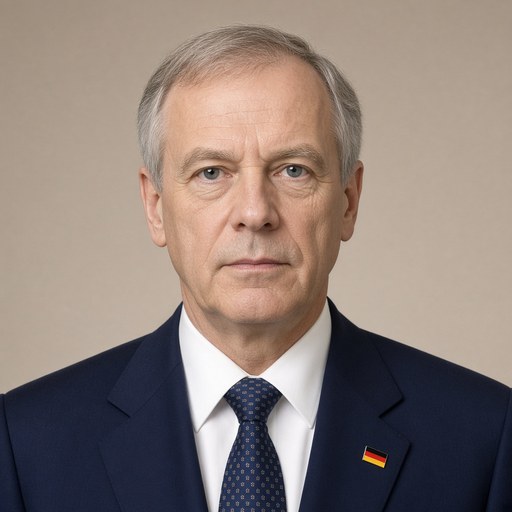
Greeting by Federal President Horst Köhler at the festive event "125 Years of DSGV – 200 Years of Savings Banks" on June 16, 2009, in Berlin:
 Horst Köhler · President of Germany
- Context
- Köhler addressed a festive event in Berlin on June 16, 2009, celebrating the 125th anniversary of the DSGV and 200 years of German savings banks.
- Main themes
- Savings bank history and tradition, financial stability and responsibility, globalization and regional anchoring, wealth creation for broad populations, savings mentality and financial security, public mandate of savings banks, small and medium-sized enterprises, financial crisis and debt risk, trust and community values, decentralized problem-solving, DSGV 125th anniversary
- Duration
- ~19 min
- Words
- 2,288
- Sentences
- 141
- Readability
- 48
- Grade
- 10.6
- Syntax
- 2.78
- Vocabulary
- 2.06
Translated from German
The broad sphere of national life a sentence belongs to. Every sentence has an Arena, so it is the denominator the other indices are read against.
Other141 sentences in 33 paragraphs
"An Anchor in Globalization"
Congratulations! Around 200 years of savings banks and 125 years of the German Savings Banks and Giro Association – this is a history that you all, who bear responsibility and work within the organization, can be proud of. It is the story of a great idea. It is: Everyone should have the chance to build something for themselves. This idea has advanced countless people and our country as a whole.
The first "savings class" was founded by citizens of Hamburg at the end of the 18th century, so that even poor people could build savings in a reliable place and their diligence and frugality could earn interest. This helped them to prepare for illness and old age, and it was also an expression of trust in the performance and economic reason of the so-called "common people."
Helping broad segments of the population to build financial security and thus encouraging them to set goals, plan their own lives, and think about tomorrow and the day after – all of this was already understood at the beginning of the 19th century as a public task. Thus, the savings banks were established under municipal sponsorship. Even today, the savings banks have the important public mandate to promote saving as a fundamental prerequisite for investment, prosperity, and innovation. They even carry this mandate in their name. Even today, it is part of the self-understanding of the savings banks that they are there for everyone. Everyone should have an account – this principle was advanced by the savings banks before all German banks committed to it. In short, ladies and gentlemen, the savings banks stand for an invaluable tradition: They stand for values, values that are as relevant today as they were 200 years ago.
However, one must work for these values every day – and as the situation today shows us again, if necessary, also fight for them. This conviction made me a "savings banker" myself in 1993, as it is called in Southern Germany. Of course, many asked me back then why I, as a State Secretary in the Federal Ministry of Finance, switched to the DSGV. The answer is simple: because I was convinced of the savings bank idea. And I still am today. Why? Because there are lasting good reasons for it:
First:
Promoting the savings mentality and wealth creation among broad segments of the population is a particularly important future task in this crisis, which, in the next phase – if we are not careful – could also become a debt crisis. Saving enables stability and sustainability. The savings banks make a very significant contribution here. And what children learn, for example, on World Savings Day, hopefully accompanies them for a lifetime. That is also education, future education.
Second:
Savings banks are, by their very idea, also an anchor in globalization. I went to the savings bank organization back then because I realized as a State Secretary, who had to travel around the world, that globalization needs a counterweight, that it needs anchoring. In the region, in the homeland. And savings banks are indeed a very important anchor in globalization. Because they are always close to the citizen, whether he is a private customer or a small to medium-sized enterprise. Savings banks support decentralized problem-solving competence. The regional principle of the savings bank organization is not outdated. In the future, it will rather be more important to strengthen precisely the small circles of life – families, municipalities, citizen initiatives. And the savings banks can help significantly with that.
Third:
Unfortunately, some actors in the international financial world have forgotten that freedom must be bound by responsibility if its full power is to unfold for good. Unrestrained freedom is also destructive. And everyone must now pay the consequences of this forgetfulness. The business model for savings banks requires a focus on results. But without losing sight of the social environment.
That is why I want to explicitly state once again: The savings bank idea is modern. And the savings banks have proven themselves – together with the cooperative banks – to be a stabilizing factor in the current crisis, as the Council of Economic Experts for the Assessment of Overall Economic Development has once again established. For this reason, the credit crunch for small and medium-sized enterprises in Germany is still limited.
You all know better than I do: The proximity to their customers is the secret of success of the savings banks: The employees of the savings banks know the people and projects on the ground. They know who is good, diligent, and reliable, and who can be trusted. Their risk assessment is therefore usually well balanced. Someone who is routinely rejected elsewhere – often due to a schematic review process – receives credit here at the savings banks because the employees know: He has potential and not just fanciful ideas. That is knowledge on the ground. And conversely, the customers know their advisors, and the advisors know: The customer to whom I sell something today, I must also be able to look in the eye tomorrow at the weekly market, on Saturday at the sports field, or on Sunday at church. Such things create trust. And all of this has made the savings banks the partners of our famous "hidden champions," that is, our medium-sized world market leaders.
Savings banks are also a stabilizing factor for our society. They contribute to social cohesion with their commitment to culture and sports in the regions and with their social engagement. This is part of their self-understanding. It is the expression of the knowledge that economic profit – especially when defined only in the short term – is not everything and that the economy thrives best in the long term where it contributes to an intact social environment. The economy does not take place in a vacuum. It is part of society.
Those who promote social cohesion also promote quality of life for people and support our free economic and social order. I am convinced: The future viability of Western democracies will largely depend on whether and how they are able to continually bring individualism and community bonding into the right balance. And now it is once again about recalling the importance of community bonding.
Germany, with its economic and social system based on subsidiarity, also has a good starting point to successfully bridge the necessary gap between openness to the world and attachment to home. Our federal state structure, municipal self-administration, and the medium-sized economy with its strong regional ties create comprehensibility, create identity, and thus offer concrete points of contact for everyone to participate and shape. We need that.
In these structures, the strength and capability of the social market economy to solve problems can unfold in countless ways. And savings banks play a very productive role in this process. This has been empirically proven. However, all of this does not provide grounds for self-righteousness in the savings bank sector. This is not only contradicted by the difficult situation of the state banks.
My impression is: The spirit of the times has not spared the savings banks either. Some savings bank boards have also lost touch with reality, there have been too many entanglements of interests between savings banks and politics, and in the everyday business of savings banks, it has increasingly been about sales rather than reasonable customer care and customer loyalty. The situation of the state banks is therefore not the only problem that must cause the savings banks concern.
The truth is, moreover: What we are experiencing now is a crisis of the entire banking system, but also of banking policy and banking supervision. Therefore, neither a sense of entitlement nor schadenfreude will help now. I appreciate, Mr. Haasis, that you have made it clear: There is no malice at play here. So neither a sense of entitlement nor schadenfreude nor the slogan "Every man for himself!" is the right approach now. Instead, self-examination is called for everywhere. Supervision of the institutions and the markets must now be tackled decisively and thoroughly. This necessarily includes the reorganization of the state banks. It is the last chance for that.
This means: The savings banks should rigorously return to their actual strengths and virtues. Focus primarily on your customers and their reasonable interests. Seek dialogue with those who felt poorly advised in the past, as there are indeed some among the savings bank customers. Have the courage to admit mistakes where they have occurred. And please learn from these mistakes. This will help you regain trust, because trust is precisely your asset that you can leverage.
And finally: Help the companies to the best of your ability to get through the current dry spell. Translate your customer proximity into a reasonable risk assessment, and act accordingly. By the way, I expect that the supervisory authorities will also cooperate in this. Do not punish those who have earned your trust today for your own risky business from yesterday. I am confident: You will work along these lines.
Ladies and gentlemen, I do not actually want to lecture you or speak like a preacher. You can tell from my remarks that I still feel very connected to the savings banks because I truly know deep down that what you represent is good, and what you still have to accomplish for the future of our country is also good. Reconnect with your ideals and represent them offensively – both internally and externally. Ensure that the principles that have made the savings banks strong throughout their history come to the forefront again today.
In Germany, we have a social market economy that we can be proud of and that we can also offer as an export product. Without arrogance, but with the self-confidence of proven achievements. Everywhere in the world, serious discussions are now taking place about new reasonable rules for the world economy and international financial markets. It is important that the 20 major economic nations, the G20, achieve good results at their meeting in September. And good results, for me, are not a lot of text, not a lot of paper. Too much paper is already being produced. Good results are now good politics.
Above all,
two
criteria can and must, in my opinion, guide good results of a new banking and financial supervision:
First,
the decisions of the G20 must target the central causes of the crisis, which are: the over-complexity of financial products and the fragmentation of supervision. No one understands the products, not even the financial supervision. And the supervisory authorities are fragmented. By the way: There is hardly a more fragmented supervision than that in the United States of America. Therefore, I consider a central financial supervision and an independent state rating agency for the large, cross-border institutions in the European Union to be cornerstones of a sustainable solution. I hope that is what is being fought for.
Second,
the G20 should work towards ensuring that the financial sector also draws sustainable lessons from the crisis. The market economy, like a free state, lives from virtues and a sense of responsibility that it cannot guarantee itself. The financial sector therefore needs a culture that always connects freedom with responsibility for the community. If these two criteria, reducing over-complexity and ending the fragmentation of supervision, are observed, and if there is a new culture in the financial sector that connects freedom with responsibility towards the community, then on the one hand, no one needs to fear overregulation – although some want to dilute new, effective rules with warnings about overregulation. And then, on the other hand, no one can secretly hope that today’s reorganization of the financial markets will ultimately fizzle out and everything will continue as before. That would lead to an even greater crisis in a few years. The market needs simple, effective, and robust rules, the compliance with which can then be clearly and reliably supervised and enforced. States must ensure this, both domestically and globally. Only then – that is my assessment – do they secure freedom, fair competition, and not least the necessary consumer protection. The social market economy is about bringing out the strengths of each individual, recognizing useful work, and thereby making society as a whole strong. Because only an economically strong society can reliably provide social security.
This, as you know, is also the foundation of the savings bank idea: Everyone should have the chance to build something for themselves. Everyone should be encouraged to take their fate into their own hands. It is about being economically successful together. It is about profit and community. It is about sustainable prosperity, that is the new future. Sustainable prosperity for all.
The writer Burkhard Spinnen recently reported in the weekly newspaper DIE ZEIT: Being a customer of a savings bank is, for him, one of the certainties of his life. He received a savings book with five marks at birth and then, as a child, year after year, carried his piggy bank to the savings bank branch on World Savings Day and proudly deposited its contents. In recent years, he has sometimes felt "ashamed," he says, to still bring his money to the savings bank in times of globalization, but he simply has not managed to switch. He did not really choose the savings bank; it was simply inherent to him.
I am sure: Many people in our country feel the same way. For such a level of customer loyalty and trust, others would give a lot. They can do a lot of good from this for the benefit of all of us: Especially now! I repeat the old saying: Savings banks are good for Germany.
The original German. The tags above are read on the English translation's sentences.
"Ein Anker in der Globalisierung"
Herzlichen Glückwunsch! Rund 200 Jahre Sparkassen und 125 Jahre Deutscher Sparkassen- und Giroverband – das ist eine Geschichte, auf die Sie alle, die Sie in der Organisation Verantwortung und Arbeit tragen, stolz sein dürfen. Es ist die Geschichte einer großen Idee. Sie lautet: Jeder und jede soll die Chance bekommen, sich etwas aufzubauen. Diese Idee hat ungezählte Menschen und unser Land als ganzes vorangebracht.
Die erste "Ersparungsclasse" haben Bürger von Hamburg gegründet, am Ende des 18. Jahrhunderts, damit eben auch arme Leute – an einem verlässlichen Ort – Ersparnisse bilden und ihr Fleiß und ihre Sparsamkeit Zinsen tragen konnten. Das half ihnen, für Krankheit und Alter vorzusorgen, und es war zugleich Ausdruck des Vertrauens in die Leistungskraft und in die wirtschaftliche Vernunft der so genannten "einfachen Stände".
Breiten Bevölkerungsschichten beim Aufbau einer finanziellen Vorsorge zu helfen und sie so zu ermutigen, sich Ziele zu setzen, das eigene Leben zu planen, an morgen und übermorgen zu denken – all das verstand man schon zu Beginn des 19. Jahrhunderts auch als eine öffentliche Aufgabe. So entstanden die Sparkassen in kommunaler Trägerschaft. Noch heute haben die Sparkassen den wichtigen öffentlichen Auftrag, das Sparen zu fördern als Grundvoraussetzung für Investitionen, für Wohlstand und Innovation. Sie tragen das ja sogar als Auftrag in ihrem Namen. Noch heute gehört es zum Selbstverständnis der Sparkassen, dass sie für jeden da sind. Jeder soll ein Konto haben – diesen Grundsatz haben die Sparkassen vorangetrieben, bevor sich alle deutschen Banken dazu verpflichtet haben. Kurz, meine Damen und Herren, die Sparkassen stehen für eine unschätzbare Tradition: Sie stehen für Werte, Werte, die heute so aktuell sind wie vor 200 Jahren.
Für diese Werte muss man aber jeden Tag arbeiten – und wie uns die Situation heute wieder zeigt, notfalls auch kämpfen. Diese Überzeugung hat mich übrigens 1993 selbst zum "Sparkässler" gemacht, wie es im Süddeutschen heißt. Natürlich haben mich damals viele gefragt, warum ich als Staatssekretär im Bundesfinanzministerium ausgerechnet zum DSGV wechselte. Die Antwort ist einfach: weil ich von der Sparkassenidee überzeugt war. Und das bin ich bis heute. Warum? Weil es dafür bleibend gute Gründe gibt:
Erstens:
Den Sparsinn und die Vermögensbildung breiter Bevölkerungskreise zu fördern, das ist in dieser Krise, die in der nächsten Phase – wenn wir nicht aufpassen – auch noch eine Schuldenkrise werden kann, zugleich eine ganz besondere Zukunftsaufgabe. Sparen ermöglicht eben Stabilität und Nachhaltigkeit. Die Sparkassen leisten hier einen ganz wesentlichen Beitrag. Und was die Kinder zum Beispiel am Weltspartag lernen, begleitet sie hoffentlich ein Leben lang. Auch das ist Bildung, Zukunftsbildung.
Zweitens:
Sparkassen sind ihrer Idee nach auch ein Anker in der Globalisierung. Ich bin damals auch zur Sparkassenorganisation gegangen, weil mir klar geworden war als Staatssekretär, der in der ganzen Welt herumreisen musste, dass die Globalisierung ein Gegenlager braucht, dass sie Verankerung braucht. In der Region, in der Heimat. Und Sparkassen sind ihrer Idee nach eben ein ganz wichtiger Anker in der Globalisierung. Denn sie sind überall nah am Bürger, sei er nun Privatkunde oder Mittelständler. Sparkassen unterstützen dezentrale Problemlösungskompetenz. Das Regionalprinzip der Sparkassenorganisation ist eben nicht überholt. In der Zukunft wird es eher mehr darauf ankommen, wieder gerade die kleinen Lebenskreise – Familien, Kommunen, Bürgerinitiativen – zu stärken. Und da können die Sparkassen kräftig helfen.
Drittens:
Leider haben manche Akteure in der internationalen Finanzwelt vergessen, dass Freiheit sich in Verantwortung binden muss, wenn sich ihre volle Kraft im Guten entfalten soll. Schrankenlose Freiheit ist auch zerstörerisch. Und die Konsequenzen dieses Vergessens müssen jetzt alle ausbaden. Das Geschäftsmodell für Sparkassen verlangt Ergebnisorientierung. Aber eben ohne den Blick für das gesellschaftliche Umfeld zu verlieren.
Deshalb will ich noch einmal ausdrücklich feststellen: Die Sparkassenidee ist modern. Und die Sparkassen haben sich – zusammen mit den Volks- und Raiffeisenbanken – in der aktuellen Krise ja insgesamt auch als stabilisierender Faktor erwiesen, wie der Sachverständigenrat zur Begutachtung der gesamtwirtschaftlichen Entwicklung einmal mehr festgestellt hat. Auch deshalb hält sich die Kreditklemme für den Mittelstand in Deutschland noch in Grenzen.
Sie alle wissen besser als ich: Die Nähe zu ihren Kunden ist das Erfolgsgeheimnis der Sparkassen: Die Mitarbeiter der Sparkassen kennen die Leute und Projekte vor Ort. Sie wissen, wer gut ist und fleißig und zuverlässig, und wem man etwas zutrauen kann. Ihre Risikoabwägung ist deshalb zumeist gut ausbalanciert. Manch einer, der anderswo routiniert – häufig aufgrund eines schematischen Prüfungsverfahrens – abgewiesen wird, bekommt hier bei den Sparkassen Kredit, weil die Mitarbeiter in den Sparkassen wissen: Der hat Potenzial und nicht nur Rosinen im Kopf. Das ist Wissen vor Ort. Und umgekehrt kennen die Kunden ihre Berater, und die Berater wissen: Dem Kunden, dem ich heute etwas verkaufe, muss ich auch morgen auf dem Wochenmarkt, am Samstag auf dem Sportplatz oder am Sonntag beim Kirchgang in die Augen schauen können. So etwas schafft Vertrauen. Und das alles hat die Sparkassen dann eben auch zu den Partnern unserer berühmten "hidden champions", also unserer mittelständischen Weltmarktführer, gemacht.
Sparkassen sind aber auch für unsere Gesellschaft ein stabilisierender Faktor. Sie tragen mit ihrem Einsatz für Kultur und Sport in den Regionen und mit ihrem sozialen Engagement auch zum gesellschaftlichen Zusammenhalt bei. Das ist Teil ihres Selbstverständnisses. Es ist der Ausdruck des Wissens, dass wirtschaftlicher Gewinn – zumal wenn er nur kurzfristig definiert wird – nicht alles ist und dass die Wirtschaft langfristig dort am besten gedeiht, wo sie einen Beitrag für ein intaktes soziales Umfeld leistet. Wirtschaft findet nun einmal nicht im luftleeren Raum statt. Sie ist Teil der Gesellschaft.
Wer gesellschaftlichen Zusammenhalt fördert, fördert auch Lebensqualität für Menschen und stützt unsere freiheitliche Wirtschafts- und Gesellschaftsordnung. Ich bin überzeugt: Die Zukunftsfähigkeit der westlichen Demokratien wird sich wesentlich an der Frage entscheiden, ob sie und wie sie in der Lage sind, Individualismus und Gemeinschaftsbindung immer wieder in die richtige Balance zu bringen. Und jetzt geht es einmal mehr darum, die Gemeinschaftsbindung wieder in Erinnerung zu holen.
Deutschland hat mit seinem auf Subsidiarität gegründeten Wirtschafts- und Gesellschaftssystem auch eine gute Ausgangslage, den notwendigen Brückenschlag zwischen Weltoffenheit und Heimatverbundenheit erfolgreich zu schaffen. Unser föderaler Staatsaufbau, die kommunale Selbstverwaltung und die mittelständisch geprägte Wirtschaft mit ihrem starken regionalen Bezug schaffen eben Überschaubarkeit, schaffen Identität und sie bieten damit ganz konkrete Ansatzpunkte für jeden zum Mitmachen und Mitgestalten. Das brauchen wir.
In diesen Strukturen können sich die Kraft und die Fähigkeit der Sozialen Marktwirtschaft zur Problemlösung auf ungezählten Wegen entfalten. Und Sparkassen spielen eine sehr produktive Rolle in diesem Prozess. Das ist empirisch nachgewiesen. Anlass für Selbstgerechtigkeit im Sparkassenlager bietet all das aber nicht. Dagegen spricht nicht nur die schwierige Lage der Landesbanken.
Mein Eindruck ist: Der Zeitgeist hat auch vor den Sparkassen nicht halt gemacht. Auch manche Sparkassenvorstände haben Bodenhaftung verloren, auch zwischen Sparkassen und Politik hat es zu viele Interessenverflechtungen gegeben, und auch im Alltagsgeschäft von Sparkassen ging es zunehmend um Vertrieb statt um vernünftige Kundenbetreuung und Kundenbindung. Die Lage der Landesbanken ist also nicht das einzige Problem, das den Sparkassen Kopfzerbrechen bereiten muss.
Die Wahrheit ist darüber hinaus: Was wir jetzt erleben, ist eine Krise des gesamten Bankenwesens, aber auch der Bankenpolitik und der Bankenaufsicht. Darum helfen nun weder Besitzstandsdenken noch Schadenfreude. Ich finde das gut, Herr Haasis, dass Sie deutlich gemacht haben: Hier ist keine Häme im Spiel. Also weder Besitzstandsdenken noch Schadenfreude noch die Parole "Rette sich, wer kann!" ist jetzt das Richtige. Stattdessen ist überall auch Selbstprüfung angesagt. Bei der Aufsicht über die Institute und die Märkte muss jetzt entschlossen und gründlich angepackt werden. Dazu gehört zwingend auch die Neuordnung der Landesbanken. Es ist die letzte Chance dafür.
Das heißt also: Die Sparkassen sollten sich rigoros auf ihre eigentlichen Stärken und Tugenden zurückbesinnen. Konzentrieren Sie sich vor allem auf Ihre Kunden und deren vernünftige Interessen. Suchen Sie das Gespräch mit denen, die sich in der Vergangenheit schlecht beraten fühlten, die gibt es nämlich auch unter den Sparkassenkunden. Haben Sie die Größe, Fehler zuzugeben, wo es sie gegeben hat. Und lernen Sie aus diesen Fehlern bitte. Damit schaffen Sie wieder Vertrauen, denn das Vertrauen, das ist doch gerade Ihr Pfund, mit dem Sie wuchern können.
Und schließlich: Helfen Sie nun nach Kräften den Unternehmen, die gegenwärtige Durststrecke gut zu bestehen. Münzen Sie Ihre Kundennähe aus in eine vernünftige Risikoprognose, und handeln Sie danach. Ich erwarte übrigens, dass dabei auch die Aufsicht mitzieht. Bestrafen Sie nicht für Ihre eigenen riskanten Geschäfte von gestern ausgerechnet diejenigen, die heute Ihr Vertrauen verdient haben. Ich bin zuversichtlich: Auf dieser Linie arbeiten Sie.
Meine Damen und Herren, ich will Sie hier eigentlich gar nicht belehren oder wie ein Prediger reden. Sie merken an meinen Äußerungen, dass ich mich tatsächlich immer noch mit den Sparkassen sehr verbunden fühle, weil ich wirklich tief in meinem Inneren weiß, es ist gut, was Sie repräsentieren und es ist gut, was Sie auch noch für die Zukunft unseres Landes an Aufgaben zu erledigen haben. Besinnen Sie sich auf Ihre Ideale und vertreten Sie sie offensiv – nach innen und nach außen. Sorgen Sie dafür, dass die Grundsätze, die die Sparkassen im Lauf ihrer Geschichte stark gemacht haben, auch heute wieder in den Vordergrund treten.
Wir haben in Deutschland mit der Sozialen Marktwirtschaft eine Wirtschaftsordnung, auf die wir stolz sein können und die wir auch durchaus als Exportprodukt anbieten können. Ohne Überheblichkeit, aber mit dem Selbstbewusstsein der erwiesenen Leistungen. Überall auf der Welt wird jetzt ernsthaft über neue vernünftige Regeln für die Weltwirtschaft und die internationalen Finanzmärkte diskutiert. Es ist wichtig, dass die 20 großen Wirtschaftsnationen, die G20, hier bei ihrem Treffen im September zu guten Ergebnissen kommen. Und gute Ergebnisse sind für mich nicht viel Text, nicht viel Papier. Es wird schon viel zu viel Papier produziert. Gute Ergebnisse sind jetzt gute Politik.
Vor allem
zwei
Maßstäbe können und müssen meines Erachtens für gute Ergebnisse einer neuen Bank- und Finanzaufsicht Orientierung geben:
Erstens
müssen die Beschlüsse der G20 auf die zentralen Ursachen der Krise zielen, und die lauten: Überkomplexität der Finanzprodukte und Zersplitterung der Aufsicht. Die Produkte versteht niemand, auch nicht die Finanzaufsicht. Und die Aufsichtsbehörden sind zersplittert. Übrigens: Es gibt fast keine größere zersplitterte Aufsicht als die in den Vereinigten Staaten von Amerika. Darum halte ich für die großen, grenzüberschreitend tätigen Institutionen in der Europäischen Union eine zentrale Finanzaufsicht und eine eigenständige staatliche Rating-Agentur für Ecksteine einer nachhaltigen Lösung. Ich hoffe, darum kämpft man.
Zweitens
sollten die G20 darauf hinwirken, dass die Finanzbranche auch ihrerseits nachhaltige Lehren aus der Krise zieht. Die Marktwirtschaft lebt, wie ein freiheitlicher Staat, von Tugenden und Verantwortungsbereitschaft, die sie nicht selber garantieren kann. Die Finanzbranche braucht also eine Kultur, die Freiheit immer auch mit Verantwortung verbindet für die Gemeinschaft. Wenn diese beiden Maßstäbe, Überkomplexität reduzieren und die Zersplitterung der Aufsicht beenden, beachtet werden und wenn es eine neue Kultur in der Finanzbranche gibt, Freiheit mit Verantwortung gegenüber der Gemeinschaft zu verbinden, dann muss sich einerseits niemand vor Überregulierung fürchten - wobei manche mit der Warnung vor Überregulierung bloß neue, wirksame Regeln verwässern wollen. Und dann kann andererseits niemand klammheimlich darauf hoffen, die heutige Neuordnung der Finanzmärkte verlaufe am Ende doch im Sande und dann gehe alles weiter wie bisher. Das wäre der Eintritt zu einer noch größeren Krise in einigen Jahren. Der Markt braucht einfache, wirksame und robuste Regeln, deren Einhaltung dann auch klar und zuverlässig beaufsichtigt und durchgesetzt werden kann. Dafür müssen die Staaten sorgen, innerstaatlich und weltweit. Nur dann – das ist meine Einschätzung – sichern sie Freiheit, fairen Wettbewerb und nicht zuletzt auch den notwendigen Verbraucherschutz. Es geht in der Sozialen Marktwirtschaft darum, die Kräfte jedes Einzelnen zur Entfaltung zu bringen, nützliche Arbeit anzuerkennen und damit die Gesellschaft insgesamt leistungsstark zu machen. Denn nur eine wirtschaftlich starke Gesellschaft ist auch in der Lage, soziale Sicherheit verlässlich zu gewähren.
Das liegt, wie Sie wissen, ja auch der Sparkassenidee zugrunde: Jeder und jede soll die Chance bekommen, sich etwas aufzubauen. Jeder soll ermutigt sein Schicksal selbst in die Hand nehmen. Es geht darum, zusammen wirtschaftlich erfolgreich zu sein. Es geht um Gewinn und Gemeinschaft. Es geht um nachhaltigen Wohlstand, das ist die neue Zukunft. Nachhaltigen Wohlstand für alle.
Der Schriftsteller Burkhard Spinnen hat neulich in der Wochenzeitung DIE ZEIT berichtet: Sparkassen-Kunde zu sein, das sei für ihn eine der Selbstverständlichkeiten seines Lebens. Zur Geburt schon habe er ein Sparbuch mit fünf Mark bekommen und dann als Kind Jahr für Jahr am Weltspartag seine Spardose zur Sparkassenfiliale getragen und den Inhalt stolz eingezahlt. In den vergangenen Jahren habe er sich mitunter "geschämt", sagt er, in Zeiten der Globalisierung sein Geld immer noch zur Sparkasse zu bringen, aber einen Wechsel habe er einfach nicht geschafft. Er habe sich gar nicht wirklich für die Sparkasse entschieden, sie sei ihm einfach angeboren.
Ich bin sicher: Ganz vielen Menschen in unserem Land geht es so. Für ein solches Maß an Kundenbindung und Vertrauen würden andere sehr viel geben. Sie können daraus zum Nutzen für uns alle viel Gutes machen: Gerade jetzt! Ich wiederhole den alten Satz: Sparkassen sind gut für Deutschland.