




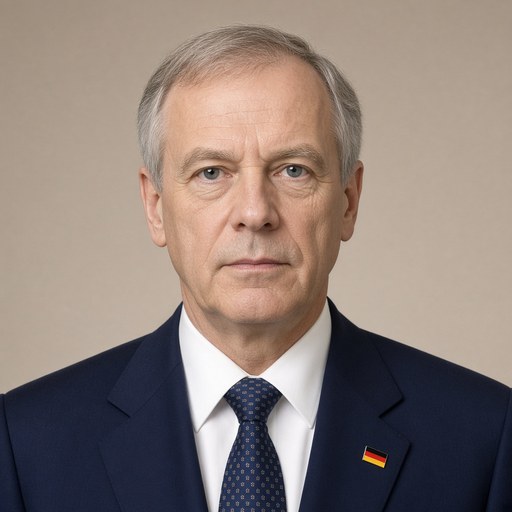
Speech by Federal President Horst Köhler at the IX. Munich Economic Summit on April 29 in Munich:
 Horst Köhler · President of Germany
- Context
- Köhler addressed the IX Munich Economic Summit on April 29, 2010, urging financial market reform and democratic oversight in the wake of the global financial crisis.
- Main themes
- Financial crisis reform, regulation of financial markets, democratic oversight of capitalism, savings capitalism vs financial capitalism, G20 reforms, public debt and taxpayer liability, financial sector bonuses and speculation, economy in service of society, social responsibility of business, sustainable prosperity
- Duration
- ~29 min
- Words
- 3,522
- Sentences
- 212
- Readability
- 47
- Grade
- 10.9
- Syntax
- 2.81
- Vocabulary
- 2.04
Translated from German
The broad sphere of national life a sentence belongs to. Every sentence has an Arena, so it is the denominator the other indices are read against.
Other212 sentences in 61 paragraphs
"Do not waste the crisis!"
Imagine that power producers had installed a new supply system that brings them magnificent profits and then causes power outages for everyone else for four weeks. Imagine that farmers would become rich with new cultivation methods and then trigger a crop failure every seven years. Imagine that waterworks made their tap water more palatable than ever with innovations, and then, due to those innovations, suddenly no drinking water would come from the taps.
Imagine that in all three cases this would have been quite foreseeable and also predicted.
Then you would inevitably ask: Is it not the duty of the democratic state to protect its citizens? And should the state not do everything in its power to ensure that no business sector increases its growth and profits at the risk of many others suffering existentially? The answer can only be Yes!
The ninth Munich Economic Summit is dedicated to the topic "The financial crisis: The way forward." We will only find this way forward if we think far beyond the financial crisis. We must not waste the crisis, but must learn from it. It has raised very fundamental questions.
I believe at least three answers to the crisis are necessary:
We need
first
financial markets under the primacy of democratic politics and in the service of the overall economy.
We need
second
an economy in the service of society as a whole.
And we need third a social coexistence to which everyone contributes.
These are three tasks of design that no one can take from us. They require the courage of politics, the insight of citizens, and the willingness for democratic self-determination.
The international "financial industry" has driven its own profits to dizzying heights with so-called financial innovations and has not asked about the risks. In doing so, it has triggered a crisis that would have led to a collapse of the global financial system without state rescue measures. The governments, parliaments, and central banks of Western democracies had no choice but to respond with an unprecedented financial stimulus and far-reaching guarantees for financial institutions. They had to accept an explosion of public debt and the associated liability of today's and future taxpayers.
Such a rescue operation cannot be repeated – neither financially nor politically. Must not the democratic states of the world therefore do everything to avoid a repetition of such a crisis? The answer can once again only be Yes! Citizens want to be safe from irresponsible behavior in the financial markets. The next severe crisis of the financial system would, I am sure, not only call into question the functionality of our economic and social model but also its credibility. Countering this must be an imperative task for democracies as communities of values and protection and for their officials.
The summit conference of the heads of state and government of the G20 in Pittsburgh has laid the right and important foundations for this. But what will come of it? The international "financial industry" and its lobbyists are obviously leaving no stone unturned to dilute the agreed measures. At the same time, betting continues, new financial bubbles are already forming again, and while states and citizens are still struggling with the consequences of the crisis, parts of the financial sector are already awarding themselves gigantic bonuses again. Have those involved even understood what is at stake?
The practice of today's prevailing financial capitalism can certainly not be a model for us. It is self-sufficient. It operates primarily with bets and debts. It increases its own returns without regard to whether this benefits the well-being of nations. The current crisis shows a pattern that is unacceptable – the profits have been made by a few, while the losses must be borne by the general public.
There is a better model. Ralf Dahrendorf pointed this out 25 years ago. He distinguished between "pump capitalism" and "savings capitalism." Savings capitalism means creating lasting values instead of making bets, financing real goods and services instead of building virtual financial pyramids. In savings capitalism, short-term thinking and speculation do not dominate, but rather real economic investment and ownership that binds itself in responsibility. There, one is interested in a stable monetary value and shows respect to all who save money and thus prepare for the future. An economy based on this model improves the living conditions of all. It aims for sustainable prosperity for all.
An economy with this model must also serve the financial markets. They should act as trustworthy intermediaries between savers and investors, rather than putting everything at risk. This serving role is the true justification for the existence of financial markets, and defining them as such must be the central goal of the reorganization of financial markets.
Politics must regain its primacy over financial markets. It has left too much room for the interests of financial market players without rules. This was one reason why the financial crisis could arise at all. And it has led to the state being extortable during the financial crisis – and it still is today. Such a thing must not happen again.
This demands simple and hard rules for the "financial industry." It must be given limits so that freedom does not destroy itself.
Four
consequences from the crisis I consider to be paramount:
First:
The central market economic principle of liability must be reinstated throughout, especially through sufficiently high equity for all types of financial transactions, regardless of the definition of a bank, meaning including, for example, hedge funds and private equity firms.
Second
– and this is also very much about liability: No bank and no financial player should be too big to fail. This urgently requires a special insolvency regime for internationally operating financial institutions, including the possibility of temporarily placing an institution under state administration.
Third:
We need maximum transparency in the area of so-called derivatives and an end to shadow banking. An international approval procedure, a kind of international TÜV, should be established for financial innovations, and derivatives should only be traded on public exchanges.
Fourth:
The heads of state and government of the G20 should insist that the "financial industry," as stated in Pittsburgh, makes a "fair and substantial contribution" to addressing the costs of the crisis. Personally, I still believe that a levy on international financial transactions is the best way to achieve this.
The federal government is taking the right steps, as shown by the key points it has adopted for a new financial market regulation. It is also encouraging to see the close coordination with our French partners. I would even wish that the German-French tandem would show even more leadership. Because as necessary as a global new financial order would be, we are still far from it politically. Should we just continue to wait for it?
President Obama has given a strong new impetus to the American debate last week with his speech on financial reform, and I wish him success – also in the interest of all of us. He rightly says: "(…) a free market was never meant to be a license to take everything you can get – no matter how."
But even if reform progresses in the USA, Europe should not just wait. I believe that the Eurogroup would do well to present its own powerful proposals for a new regulatory framework. It should not shy away from simply banning certain types of business and also asset classes, such as uncovered "naked shorts" or over-the-counter transactions with huge leverage. We also need disarmament for such "weapons of mass destruction." And Europe needs efficient central supervision over cross-border institutions and a European rating agency. Strict rules for the financial markets would also correspond to the logic of our commitment to a stable euro.
Regarding the situation of the euro and Greece, I want to say only the following today: The euro has served Europe well so far. If we do not make serious mistakes, it will continue to do so in the future and remain an anchor of stability in the world currency system. It is distracting to re-fight the battles of the past now. Greece must now take responsibility. However, it understandably expects help for self-help. The involvement of the International Monetary Fund in the assistance is to be welcomed, as it can also utilize the entire experience of this institution in dealing with debt crises. Germany should also contribute to stabilization out of its own interest. And all members of the Eurogroup and the European Commission must learn from the crisis. The European Economic and Monetary Union needs better coordination of national economic and financial policies and an effective mechanism to counteract imbalances in member states in a timely and sustainable manner. The federal government is rightly advocating this.
Even if the international community and the European Union were to provide the financial markets with the missing good order, that alone would still not be sufficient. In a variation of a well-known saying by Ernst-Wolfgang Böckenförde: The market economy also lives from conditions that the state cannot guarantee. It relies on economic citizens who do not only pay attention to the letter of the law but also to its spirit, and who orient their actions according to values and attitudes that the state cannot enforce. In the area of the economy, for example, these are the values and attitudes of the honorable merchant. The more business leaders embrace this model, the freer the market can remain.
When freedom, good rules, creative diligence, and decency come together, sustainable economic success and social cohesion will also emerge. This is our experience from sixty years of social market economy.
That is why, as a second question on the way out of the crisis, it is important: How do we maintain the strength of the market economy? I believe that every nation must first balance its assets and liabilities. So let us talk about public debt. In order not to plunge the entire world economy into the abyss, industrialized countries have massively increased their public debt – by 20 to 30 percent of their economic output within three years. The OECD expects that the debt of industrialized countries will exceed their economic strength – that is, the mark of 100 percent of gross domestic product – for the first time next year.
This has consequences. New research shows: Public debt even significantly below this magnitude is a mortgage for the prosperous development of the economy and society. Historically, financial crises have primarily been debt crises. This also applies to the current crisis. The bitter truth is: Most Western societies have lived chronically beyond their means long before the current crisis management.
And Germany is not exempt from this. Our explicit public debt currently stands at almost 1.8 trillion euros or about 74 percent of our overall economic output. If we also consider implicit debts, that is, all financial promises the state has made for the future, such as financing pensions, the total debt burden is even significantly higher.
To this day, we rely on the fact that primarily economic growth will help us deal with the debt problem. Some even recommend incurring even more debt for this purpose. I believe that this is bad advice that we should by no means follow. It would lead us into a hopeless debt trap, as the limits of growth can no longer be overlooked for developed economies.
Potential growth in Germany – as in most other industrialized countries – has continuously declined over the past decades. It currently stands at about one percent. A slightly higher growth path is still possible and also desirable in Germany for some time. Achieving it depends on our ability to implement structural reforms. But I equally emphatically add: With growth and growth policy alone, we will no longer be able to solve the debt problem. We must also take into account the rapid decline in the population. Germany will likely have over ten million fewer inhabitants by 2050. Fewer and fewer people will have to service a growing mountain of debt if we leave things as they are.
This is not a good future perspective for Germany. And I can only warn against thought experiments about a "solution" to the debt problem through "controlled inflation." On the contrary: there must be no doubt that the central banks are determined to reduce the excess monetary liquidity in the markets – even one of the central causes of the crisis.
My advice for Germany is this: to ensure lasting stability and to give new strength to our social market economy, we must make the consolidation of public finances the decisive, the guiding state task of the next ten years. This is not only a constitutional obligation but also a moral duty! Consolidation can only succeed convincingly if state expenditures and subsidies are scaled back.
I advocate for linking the recovery of public finances with sustainable reforms in our tax and transfer systems. These additively grown systems are rife with inconsistencies and, due to their over-complexities, hardly allow for reliable judgments about whether they even achieve their political goals. I believe that even simplifications and the elimination of contradictions could achieve a lot of good. Furthermore, I advocate for a savings policy that also knows and states where savings cannot be made.
Savings cannot be made in the area of education, research, and development in our country. We must invest more, not less, in our education system, in our universities and research institutions, and in a societal climate where education and the pursuit of education are respected and valued. A great collective effort for these goals is the most important contribution to the future viability of our country.
Good education for all is the prerequisite for social integration and for high-quality jobs. It is also the most important answer to the question of social justice. Children from families with a migration background, children from low-income and educationally disadvantaged families still have significantly worse educational opportunities than their peers. This is an outrageous injustice, and it harms our economy and our coexistence to the core. Our vocational education, our higher education system, and our research institutions are also in urgent need of more investment.
With the agreement between the federal government and the states to gradually increase spending on education and research to ten percent of gross domestic product by 2015, the right course has been set. I want to emphasize this explicitly in recognition. However, this intention must also be implemented in reality. Achieving this goal is worth a tax increase if necessary.
A world-class education system and research institutions are also necessary for the transformation to an ecological social market economy. This transformation is without alternative. In the year 1800, one billion people lived on Earth; by the year 2000, there were more than six billion, and in forty years, there will be over nine billion people. But resources and the biosphere do not grow accordingly. Therefore, the world needs a third revolution after the steam engine and the microchip, a revolution of environmental compatibility, a revolution of resource-efficient use, and the progressive development of renewable energies. This revolution has already begun, and Germany is currently at the forefront of nations. But we must not rest on our laurels.
I advocate for systematically and comprehensively setting goals for a forward-looking transformation policy. Yes, we must prepare for far-reaching adjustments in the economy and in lifestyle. But it will be a self-directed change, not one that is suffered. And it will be worth it: Experts tell me, for example, that we could already reduce resource consumption in Germany by 30 to 40 percent today if we truly operated efficiently. I am convinced: The "green revolution" will not only secure the jobs and incomes of the future – the green revolution will also improve our quality of life.
I would like to urge economists to think even more about how the market-based price mechanism can be used for a forward-looking ecological transformation policy. For example, I believe that the eco-tax certainly deserves more self-confident political advocates – many studies show this.
Achieving more with scarce resources also applies to our social state as a whole. We should think about it even more from the goal perspective: from the individual person. We must invest in their abilities, promote and demand their capacity for self-determination and self-provision. I call this the "investive" social state; you, Professor Sinn, speak of the "activating" social state. We are probably talking about the same thing, and I believe we have a very similar view of humanity – we believe in the maturity of the citizen. The Agenda 2010 was a step forward. We are not at the goal yet.
To make our social state weatherproof for the 21st century, we must continue to consistently check whether it invests in the maturity and independence of citizens. Only then can it achieve what is necessary without constantly expanding – and this social state must become more efficient, especially in light of the dramatic demographic changes in our country. We spend a lot of money on social benefits in Germany – around 750 billion euros annually, nearly a third of our economic output. But we often achieve significantly less than other countries. In part, we do not even know what we are achieving. One example: We spend almost 190 billion euros on the promotion of marriages and families. However, what actually contributes to encouraging people to start a family, what gives children a good future, no one can really say so far. At least the question is now being thoroughly investigated.
The best social security is help for self-help, the best social movement is advancement through performance, and the best-tasting bread is the bread earned by oneself. Therefore, we should demand from our social state: Everyone who wants to work must be able to work and then have enough to live on. This maxim can be realized, especially since we are also facing a paradigm shift in employment policy in Germany. In just a few years, demographic developments will lead to a shortage of well-qualified workers. Companies are already responding to this by trying to retain skilled workers even in difficult order situations. This is to be welcomed, but we can do even more.
We should also further develop the labor market for personal services, especially since the demand for them continues to grow. People are getting older, and that also means: More and more people will need support and care. And: More and more households will depend on or wish for both partners to work. This means that the demand for childcare and household-related services will increase.
This also shows: We are not running out of work in Germany, and this offers the opportunity for everyone seeking work to feel needed and valued. Both the Institute for the Study of Labor and the Institute for Employment Research of the Federal Employment Agency have made noteworthy proposals for a future-oriented labor market policy. I share their view that full employment is possible in Germany. Why don’t we finally take this goal seriously? An investive social state and an economy in the service of the entire society – they are achievable!
What is now the third step forward, out of the financial crisis? Which society should the economy benefit? I can only briefly address this question here. It is important that we always keep it in mind. I advocate for the guiding principle of a free, fair, and solidarity-based civil society. It excludes no one, it helps everyone to develop their own talents and to lead as self-determined a life as possible, it brings people together.
It is important to recognize that even such a society of subsidiarity depends on good political design of the state framework. The small circles of life should not perform tasks for the state for which it runs out of resources. Rather: The self-responsibility of the small circles must be valued as a value in itself, but also used for the common good.
This requires a new relationship between engaged citizens and the state. Wherever people solve social tasks through their own initiative and civic engagement, the state should not take their place but support them, give them freedom, and recognize and promote their strength and ideas. I have encountered so many people in our country who take action themselves, in self-help groups, in sports clubs, in parent councils, in church communities, in citizens' initiatives. These people are already searching for solutions to new questions; they create cohesion, solidarity, belonging, and trust. In the economy, there is often talk of capital. What is created here is social capital. This is at least as valuable as financial capital.
The financial crisis – the way forward: If politics tames the financial markets, if we in Germany ecologically transform our social market economy, if we design our social state investively and strengthen social cohesion – then we have not wasted the financial crisis but used it for a new beginning. That is worth the sweat of the noble.
The original German. The tags above are read on the English translation's sentences.
"Die Krise nicht verschwenden!"
Stellen Sie sich vor, die Stromerzeuger hätten ein neues Versorgungssystem installiert, das ihnen prächtige Gewinne beschert und dann allen anderen vier Wochen Stromausfall. Stellen Sie sich vor, die Bauern würden mit neuen Anbaumethoden erst reich werden und dann alle sieben Jahre eine Missernte auslösen. Stellen Sie sich vor, die Wasserwerke machten uns mit Innovationen ihr Leitungswasser schmackhaft wie nie und dann würde innovationsbedingt plötzlich kein Trinkwasser mehr aus den Hähnen kommen.
Stellen Sie sich vor, das wäre in allen drei Fällen durchaus vorhersehbar gewesen und auch vorausgesagt worden.
Dann würden Sie doch zwangsläufig fragen: Ist es denn nicht Aufgabe des demokratischen Staates, seine Bürger zu schützen? Und müsste der Staat dann nicht alles in seiner Macht Stehende tun, damit nie wieder ein Geschäftszweig sein Wachstum und seine Gewinne mit dem Risiko steigert, dass viele andere darunter existenziell zu leiden haben? Die Antwort kann nur Ja! lauten.
Der neunte Munich Economic Summit ist dem Thema gewidmet "The financial crisis: The way forward". Diesen Weg vorwärts werden wir nur finden, wenn wir weit über die Finanzkrise hinaus denken. Wir dürfen die Krise nicht verschwenden, sondern müssen aus ihr lernen. Sie hat sehr grundsätzliche Fragen aufgeworfen.
Ich halte mindestens
drei
Antworten auf die Krise für geboten:
Wir brauchen
erstens
Finanzmärkte unter dem Primat demokratischer Politik und im Dienst der Gesamtwirtschaft.
Wir brauchen
zweitens
eine Wirtschaft im Dienste der gesamten Gesellschaft.
Und wir brauchen
drittens
ein gesellschaftliches Miteinander, zu dem alle beitragen.
Das sind drei Gestaltungsaufgaben, die uns niemand abnimmt. Sie verlangen den Mut der Politik, die Einsicht der Bürger und die Bereitschaft zur demokratischen Selbstbestimmung.
Die internationale "Finanzindustrie" hat mit so genannten Finanzinnovationen ihre eigenen Gewinne in schwindelnde Höhen getrieben und nicht nach den Risiken gefragt. Sie hat damit eine Krise ausgelöst, die ohne staatliche Rettungsmaßnahmen zu einem Zusammenbruch des globalen Finanzsystems geführt hätte. Die Regierungen, Parlamente und Zentralbanken der westlichen Demokratien hatten keine andere Wahl, als dem einen nie dagewesenen finanziellen Stimulus und weitreichende Garantien für Finanzinstitute entgegenzusetzen. Sie mussten eine Explosion der Staatsverschuldung und die damit verbundene Haftung der heutigen und künftiger Steuerzahler in Kauf nehmen.
Solch eine Rettungsaktion lässt sich nicht wiederholen – weder finanziell noch politisch. Müssen nicht auch deshalb die demokratischen Staaten der Welt alles tun, um die Wiederholung einer solchen Krise zu vermeiden? Die Antwort kann abermals nur Ja! lauten. Die Bürgerinnen und Bürger wollen vor unverantwortlichem Treiben auf den Finanzmärkten sicher sein. Die nächste schwere Krise des Finanzsystems würde, da bin ich mir sicher, nicht allein die Funktionstüchtigkeit unseres Wirtschafts- und Gesellschaftsmodells in Frage stellen, sondern auch seine Glaubwürdigkeit. Dem entgegenzutreten, muss für Demokratien als Werte- und Schutzgemeinschaften und für ihre Amtsträger ein zwingender Auftrag sein.
Die Gipfelkonferenz der Staats- und Regierungschefs der G20 in Pittsburgh hat dazu richtige und wichtige Grundlagen gelegt. Doch was wird daraus? Die internationale "Finanzindustrie" und ihre Lobbyisten lassen offensichtlich nichts unversucht, die verabredeten Maßnahmen zu verwässern. Zugleich geht das Wetten weiter, es bauen sich schon wieder neue Finanzblasen auf, und während die Staaten und die Bürger noch immer mit den Folgen der Krise kämpfen, genehmigen sich Teile der Finanzbranche schon wieder gigantische Boni. Haben die Betreffenden überhaupt verstanden, was auf dem Spiel steht?
Die Praxis des heute vorherrschenden Finanzkapitalismus kann jedenfalls für uns kein Leitbild sein. Er ist sich selbst genug. Er operiert vor allem mit Wetten und Schulden. Er steigert seine eigenen Renditen ohne Rücksicht darauf, ob das dem Wohlergehen der Nationen nutzt. Die aktuelle Krise zeigt ein Muster, das nicht akzeptabel ist - die Gewinne haben wenige gemacht, die Verluste muss die Allgemeinheit tragen.
Es gibt ein besseres Leitbild. Ralf Dahrendorf hat darauf schon vor 25 Jahren hingewiesen. Er hat zwischen "Pumpkapitalismus" und "Sparkapitalismus" unterschieden. Sparkapitalismus heißt dauerhafte Werte schaffen, statt Wetten einzugehen, heißt reale Güter und Dienstleistungen finanzieren, statt virtuelle Finanzpyramiden aufzubauen. Im Sparkapitalismus dominieren nicht das Kurzfristdenken und die Spekulation, sondern die realwirtschaftliche Investition und ein Eigentum, das sich in Verantwortung bindet. Da ist man an einem stabilen Geldwert interessiert und bringt allen Respekt entgegen, die Geld zurücklegen und damit für die Zukunft vorsorgen. Eine Wirtschaft nach diesem Leitbild verbessert die Lebensbedingungen Aller. Sie zielt auf nachhaltigen Wohlstand für alle.
Einer Wirtschaft mit diesem Leitbild haben auch die Finanzmärkte zu dienen. Sie sollen als vertrauenswürdiger Mittler zwischen Sparer und Investoren treten, statt alles in Gefahr zu bringen. Diese dienende Rolle ist die eigentliche Existenzberechtigung der Finanzmärkte, und sie darauf festzulegen, muss das zentrale Ziel der Neuordnung der Finanzmärkte sein.
Die Politik muss ihr Primat über die Finanzmärkte zurückgewinnen. Sie hat den Interessen der Finanzmarktakteure zu viel Raum ohne Regeln überlassen. Das war ein Grund dafür, dass die Finanzkrise überhaupt entstehen konnte. Und es hat dazu geführt, dass der Staat in der Finanzkrise erpressbar war – und es bis heute ist. So etwas darf sich nicht wiederholen.
Das gebietet einfache und harte Regeln für die "Finanzindustrie". Sie muss Grenzen gesetzt bekommen, damit Freiheit sich nicht selbst zerstört.
Vier
Konsequenzen aus der Krise halte ich für vorrangig:
Erstens:
Dem zentralen marktwirtschaftlichen Prinzip der Haftung muss wieder durchgängig Geltung verschafft werden, vor allem durch ausreichend hohes Eigenkapital für alle Arten von Finanzgeschäften, unabhängig vom Bankbegriff, das heißt unter Einbeziehung zum Beispiel auch von Hedgefonds und Private Equity-Firmen.
Zweitens
– und das hat auch viel mit Haftung zu tun: Keine Bank und kein Finanzakteur darf mehr zu groß zum Scheitern sein. Das verlangt dringend eine besondere Insolvenzordnung für international operierende Finanzinstitute, einschließlich der Möglichkeit, ein Institut vorübergehend in staatliche Zwangsverwaltung zu nehmen.
Drittens:
Wir brauchen größtmögliche Transparenz im Bereich der so genannten Derivate und ein Ende des Schattenbankenwesens. Es sollte für Finanzinnovationen ein internationales Zulassungsverfahren, eine Art internationaler TÜV, geschaffen werden, und Derivate sollten nur noch an öffentlichen Börsen gehandelt werden.
Viertens:
Die Staats- und Regierungschefs der G20 sollten darauf bestehen, dass die "Finanzindustrie", wie in Pittsburgh gesagt, einen "fairen und substanziellen Beitrag" zur Bewältigung der Kosten der Krise leistet. Mir persönlich scheint eine Abgabe auf internationale Finanztransaktionen hierfür immer noch der beste Weg.
Die Bundesregierung plant richtige Schritte, das zeigen die von ihr beschlossenen Eckpunkte für eine neue Finanzmarktregulierung. Erfreulich ist dabei auch die enge Abstimmung mit den französischen Partnern. Ich wünschte mir sogar, dass das deutsch-französische Tandem noch mehr Führung zeigt. Denn so nötig eine weltumspannende neue Finanzordnung auch wäre, so weit sind wir politisch noch von ihr entfernt. Wollen wir trotzdem bloß weiter auf sie warten?
Präsident Obama hat der amerikanischen Debatte vergangene Woche mit seiner Rede zur Finanzreform einen starken neuen Impuls gegeben, und ich wünsche ihm – auch im Interesse von uns allen – Erfolg. Er sagt mit Recht: "(…) mit einem freien Markt war niemals gemeint, dass man damit eine Lizenz besitzt, sich alles zu nehmen, was man kriegen kann – egal wie."
Doch selbst wenn die Reform in den USA vorankommt, sollte Europa nicht nur abwarten. Ich glaube, dass die Euro-Gruppe gut daran täte, eigene, kraftvolle Vorschläge für ein neues Regelwerk vorzulegen. Sie sollte dabei nicht davor zurückschrecken, einige Geschäftsarten und auch Assetklassen schlicht zu verbieten, zum Beispiel ungedeckte "Leergeschäfte" oder over the counter-Transaktionen mit riesiger Hebelwirkung. Auch für solche "weapons of mass destruction" brauchen wir Abrüstung. Und Europa braucht eine effiziente zentrale Aufsicht über grenzüberschreitend tätige Institute und eine europäische Rating-Agentur. Harte Regeln für die Finanzmärkte würden zugleich der Logik unseres Einsatzes für einen wertbeständigen Euro entsprechen.
Zur Lage des Euro und Griechenlands will ich heute nur das Folgende sagen: Der Euro hat Europa bisher gute Dienste geleistet. Wenn wir keine schweren Fehler machen, wird er das auch in Zukunft tun und im Weltwährungssystem ein Anker der Stabilität bleiben. Es lenkt nur ab, jetzt die Schlachten der Vergangenheit erneut zu schlagen. Griechenland muss jetzt seine Verantwortung annehmen. Doch es erwartet verständlicherweise Hilfe zur Selbsthilfe. Die Beteiligung des Internationalen Währungsfonds an der Hilfe ist zu begrüßen, weil damit auch die ganze Erfahrung dieser Institution mit der Bewältigung von Schuldenkrisen genutzt werden kann. Deutschland sollte auch aus eigenem Interesse seinen Beitrag zur Stabilisierung leisten. Und alle Mitglieder der Euro-Gruppe und die Europäische Kommission müssen aus der Krise lernen. Die Europäische Wirtschafts- und Währungsunion braucht eine bessere Koordinierung der nationalen Wirtschafts- und Finanzpolitiken und einen wirksamen Mechanismus, Fehlentwicklungen in Mitgliedstaaten rechtzeitig und nachhaltig entgegenzuwirken. Die Bundesregierung setzt sich mit Recht dafür ein.
Selbst wenn die Staatengemeinschaft und die Europäische Union den Finanzmärkten die fehlende gute Ordnung geben würden, dann wäre das allein noch nicht ausreichend. In Abwandlung eines bekannten Wortes von Ernst-Wolfgang Böckenförde: Auch die Marktwirtschaft lebt von Voraussetzungen, die der Staat nicht garantieren kann. Sie ist auf Wirtschaftsbürger angewiesen, die nicht allein den Buchstaben des Gesetzes achten, sondern auch seinen Geist, und die ihr Handeln an Werten und Haltungen orientieren, die der Staat nicht erzwingen kann. Im Bereich der Wirtschaft zum Beispiel sind das die Werte und die Haltung des Ehrbaren Kaufmanns. Je mehr Unternehmensführer dieses Leitbild beherzigen, desto freiheitlicher kann das Marktgeschehen bleiben.
Wenn Freiheit, gute Regeln, ideenreicher Fleiß und Anstand zusammenkommen, dann stellen sich auch nachhaltiger wirtschaftlicher Erfolg und gesellschaftlicher Zusammenhalt ein. Das ist unsere Erfahrung aus sechzig Jahren Sozialer Marktwirtschaft.
Darum ist beim Weg aus der Krise als Z
weites
die Frage wichtig: Wie erhalten wir die Kraft der Marktwirtschaft? Ich glaube, dass jede Nation dafür als erstes Soll und Haben überschlagen muss. Reden wir also über Staatsverschuldung. Um nicht die gesamte Weltwirtschaft in den Abgrund stürzen zu lassen, haben die Industrieländer ihre Staatsverschuldung massiv in die Höhe gefahren – binnen dreier Jahre um 20 bis 30 Prozent ihrer Wirtschaftsleistung. Die OECD erwartet, dass die Verschuldung der Industriestaaten im nächsten Jahr erstmals ihre Wirtschaftskraft – also die Marke von 100 Prozent des Bruttoinlandsprodukts – überschreiten wird.
Das hat Folgen. Neue Forschungsergebnisse zeigen: Eine Staatsverschuldung schon deutlich unterhalb dieser Größenordnung ist eine Hypothek für die gedeihliche Entwicklung von Wirtschaft und Gesellschaft. Historisch sind Finanzkrisen vor allem Schuldenkrisen. Das trifft auch auf die jetzige Krise wieder zu. Die bittere Wahrheit lautet: Die meisten westlichen Gesellschaften haben – lange vor dem aktuellen Krisenmanagement – chronisch über ihre Verhältnisse gelebt.
Und Deutschland ist davon nicht ausgenommen. Unsere explizite Staatsverschuldung liegt derzeit bei fast 1,8 Billionen Euro oder rund 74 Prozent unserer gesamtwirtschaftlichen Leistung. Berücksichtigt man auch die impliziten Schulden, also alle finanziellen Versprechen, die der Staat für die Zukunft eingegangen ist, zum Beispiel zur Finanzierung der Renten und Pensionen, so liegt die gesamte Schuldenlast noch deutlich höher.
Bis zur Stunde verlassen wir uns darauf, dass vor allem Wirtschaftswachstum helfen wird, mit dem Schuldenproblem fertig zu werden. Manche empfehlen sogar, dafür zunächst noch mehr Schulden zu machen. Ich glaube, das ist ein schlechter Rat, dem wir auf keinen Fall folgen sollten. Er würde uns in eine aussichtslose Schuldenfalle führen, weil sich für die entwickelten Volkswirtschaften Grenzen des Wachstums nicht mehr übersehen lassen.
Das Potentialwachstum ist in Deutschland – wie übrigens in den meisten anderen Industriestaaten auch – in den vergangenen Jahrzehnten kontinuierlich gesunken. Es liegt derzeit etwa bei einem Prozent. Ein etwas höherer Wachstumspfad ist in Deutschland noch für einige Zeit möglich und auch wünschenswert. Ihn zu erreichen hängt von unserer Kraft zu Strukturreformen ab. Ich füge aber genauso überzeugt hinzu: Mit Wachstum und Wachstumspolitik allein werden wir das Schuldenproblem nicht mehr lösen können. Wir müssen zudem noch die rapide Abnahme der Bevölkerungszahl in den Blick nehmen. Deutschland wird 2050 wahrscheinlich über zehn Millionen Einwohner weniger haben. Immer weniger Menschen müssen also einen wachsenden Schuldenberg bedienen, wenn wir die Dinge so lassen, wie sie sind.
Das ist keine gute Zukunftsperspektive für Deutschland. Und vor Gedankenspielen über eine "Lösung" des Schuldenproblems durch "kontrollierte Inflation" kann ich nur warnen. Im Gegenteil: Es darf kein Zweifel daran aufkommen, dass die Notenbanken entschlossen sind, das Übermaß an monetärer Liquidität in den Märkten – selbst eine der zentralen Krisenursachen – wieder zurückzuführen.
Mein Rat für Deutschland lautet: Um dauerhaft Stabilität zu sichern und unserer Sozialen Marktwirtschaft neue Kraft zu geben, müssen wir die Konsolidierung der öffentlichen Haushalte zur maßgeblichen, zur Maß gebenden Staatsaufgabe der nächsten zehn Jahre machen. Das ist nicht nur eine verfassungsrechtliche, sondern auch eine moralische Pflicht! Überzeugend gelingen kann die Konsolidierung nur, wenn Staatsausgaben und Subventionen zurückgeschraubt werden.
Ich plädiere dafür, die Gesundung der öffentlichen Haushalte mit nachhaltigen Reformen in unseren Steuer- und Transfersystemen zu verbinden. Diese additiv aufgewachsenen Systeme strotzen vor Ungereimtheiten und lassen wegen ihrer Überkomplexitäten kaum noch sichere Urteile darüber zu, ob sie überhaupt ihre politischen Ziele erreichen. Ich glaube, schon mit Vereinfachungen und der Beseitigung von Widersprüchen ließe sich viel Gutes erreichen. Ich plädiere im Übrigen für eine Sparpolitik, die auch weiß und vorgibt, wo nicht gespart werden darf.
Nicht gespart werden darf im Bereich Bildung, Forschung und Entwicklung in unserem Land. In unser Bildungswesen, in unsere Hochschulen und Forschungseinrichtungen und in ein gesellschaftliches Klima, in dem Bildung und das Bemühen um Bildung geachtet und geschätzt werden, müssen wir mehr investieren, nicht weniger. Eine große gemeinsame Anstrengung für diese Ziele ist der wichtigste Beitrag zur Zukunftsfähigkeit unseres Landes.
Gute Bildung für alle ist die Voraussetzung für gesellschaftliche Integration und für hochwertige Arbeitsplätze. Sie ist zugleich die wichtigste Antwort auf die Frage nach der sozialen Gerechtigkeit. Immer noch haben Kinder aus Familien mit Migrationsgeschichte, Kinder aus einkommensschwachen und bildungsfernen Familien deutlich schlechtere Bildungschancen als ihre Altersgenossen. Das ist eine empörende Ungerechtigkeit, und es schädigt unsere Wirtschaft und unser Zusammenleben bis ins Mark. Und auch unsere berufliche Bildung, unser Hochschulwesen und unsere Forschungseinrichtungen sind dringend auf mehr Investitionen angewiesen.
Mit der Vereinbarung von Bund und Ländern, die Ausgaben für Bildung und Forschung bis 2015 schrittweise auf zehn Prozent des Bruttoinlandsprodukts anzuheben, ist die richtige Weichenstellung erfolgt. Ich will das ausdrücklich anerkennend betonen. Diese Absicht muss aber auch realiter umgesetzt werden. Dieses Ziel zu erreichen, ist nötigenfalls auch eine Steuererhöhung wert.
Ein Bildungswesen und Forschungseinrichtungen von Weltrang sind auch für den Umbau zu einer ökologischen Sozialen Marktwirtschaft nötig. Dieser Umbau ist ohne Alternative. Im Jahr 1800 lebte eine Milliarde Menschen auf der Erde, im Jahr 2000 sind es mehr als sechs Milliarden gewesen, in vierzig Jahren werden es über neun Milliarden Menschen sein. Aber die Rohstoffe und die Biosphäre wachsen nicht mit. Also braucht die Welt nach Dampfmaschine und Mikrochip eine dritte Revolution, eine Revolution der Umweltverträglichkeit, eine Revolution der sparsamen Nutzung von Ressourcen und der progressiven Entwicklung erneuerbarer Energien. Diese Revolution hat schon begonnen, und Deutschland liegt bisher mit an der Spitze der Nationen. Doch darauf dürfen wir uns nicht ausruhen.
Ich plädiere dafür, dass wir uns systematisch und umfassend Ziele für eine vorausschauende Transformationspolitik setzen. Ja, wir müssen uns damit auf weitreichende Umstellungen in der Wirtschaft und im Lebensstil einstellen. Aber es wird ein selbstgestalteter Wandel sein, kein erlittener. Und er wird sich lohnen: Experten sagen mir zum Beispiel, dass wir schon heute den Ressourcenverbrauch in Deutschland um 30 bis 40 Prozent senken könnten, wenn wir wirklich effizient wirtschaften würden. Ich bin überzeugt davon: Die "grüne Revolution" wird uns nicht nur die Arbeitsplätze und Einkommen der Zukunft sichern – die grüne Revolution wird auch unsere Lebensqualität verbessern.
Die Ökonomen möchte ich auffordern, noch stärker darüber nachzudenken, wie der marktwirtschaftliche Preismechanismus für eine vorausschauende ökologische Transformationspolitik genutzt werden kann. Ich bin zum Beispiel der Ansicht, dass die Ökosteuer durchaus mehr selbstbewusste politische Verfechter verdient hat – das zeigen viele Untersuchungen.
Mit knappen Ressourcen mehr erreichen – das gilt aber auch für unseren Sozialstaat insgesamt. Wir sollten ihn noch stärker vom Ziel her denken: vom einzelnen Menschen her. In seine Fähigkeiten gilt es zu investieren, seine Kraft zur Selbstbestimmung und zur Eigenvorsorge gilt es zu fördern und zu fordern. Ich nenne das den "investiven" Sozialstaat; Sie, Herr Professor Sinn, sprechen vom "aktivierenden" Sozialstaat. Es geht uns wohl um dasselbe, und wir haben dabei, glaube ich, ein sehr ähnliches Menschenbild – wir glauben an die Mündigkeit des Bürgers. Die Agenda 2010 war ein Schritt vorwärts. Am Ziel sind wir nicht.
Um unseren Sozialstaat für das 21. Jahrhundert wetterfest zu machen, müssen wir ihn weiter konsequent darauf überprüfen, ob er in die Mündigkeit und Eigenständigkeit der Bürger investiert. Nur dann kann er das Nötige erreichen, ohne immer weiter zu expandieren – und effizienter werden muss dieser Sozialstaat allemal schon angesichts der dramatischen demographischen Veränderung unseres Landes. Wir wenden in Deutschland sehr viel Geld für Sozialleistungen auf – rund 750 Milliarden Euro jährlich, knapp ein Drittel unserer volkswirtschaftlichen Leistung. Aber wir erreichen damit oft deutlich weniger als andere Staaten. Zum Teil wissen wir nicht einmal, was wir erreichen. Ein Beispiel: Fast 190 Milliarden Euro geben wir für die Förderung von Ehen und Familien aus. Was aber davon tatsächlich dazu beiträgt, Menschen Mut zu machen, eine Familie zu gründen, was aber davon Kindern eine gute Zukunft gibt, das kann bislang niemand so recht sagen. Immerhin wird die Frage inzwischen gründlich untersucht.
Die beste soziale Sicherheit ist Hilfe zur Selbsthilfe, die beste gesellschaftliche Bewegung ist Aufstieg durch Leistung, und am besten schmeckt selbstverdientes Brot. Darum sollten wir von unserem Sozialstaat fordern: Jeder, der arbeiten will, muss arbeiten können und dann genug zum Leben haben. Diese Maxime lässt sich verwirklichen, zumal wir in Deutschland auch in der Beschäftigungspolitik vor einem Paradigmenwechsel stehen. Schon in wenigen Jahren beschert uns die demographische Entwicklung eher einen Mangel an gut qualifizierten Arbeitskräften. Die Unternehmen reagieren darauf ja auch schon mit dem Bemühen, Fachkräfte selbst bei schwieriger Auftragslage zu halten. Das ist zu begrüßen, doch wir können noch mehr tun.
Wir sollten zusätzlich vor allem den Arbeitsmarkt der personenbezogenen Dienstleistungen weiter entwickeln, zumal die Nachfrage nach ihnen weiter wächst. Die Menschen werden älter, und das heißt auch: Immer mehr Menschen brauchen Unterstützung und Pflege. Und: Immer mehr Haushalte werden darauf angewiesen sein oder sich wünschen, dass beide Partner arbeiten. Das bedeutet, dass die Nachfrage nach Kinderbetreuung und haushaltsnahen Dienstleistungen steigen wird.
Das zeigt zugleich: Uns geht in Deutschland die Arbeit nicht aus, und das bietet die Chance, dass alle, die Arbeit suchen, sich gebraucht und geschätzt fühlen können. Sowohl das Institut für die Zukunft der Arbeit als auch das Institut für Arbeitsmarkt- und Berufsforschung der Bundesagentur für Arbeit haben beachtenswerte Vorschläge für eine zukunftsorientierte Arbeitsmarktpolitik unterbreitet. Ich teile ihre Auffassung, dass Vollbeschäftigung möglich ist in Deutschland. Warum nehmen wir uns dieses Ziel nicht endlich wirklich vor? Ein investiver Sozialstaat und eine Wirtschaft im Dienste der gesamten Gesellschaft – sie sind erreichbar!
Was ist nun der
dritte
Schritt vorwärts, hinaus aus der Finanzkrise? Welcher Gesellschaft soll die Wirtschaft förderlich sein? Ich kann auf diese Frage hier nur kurz eingehen. Wichtig ist aber, dass wir sie immer mit bedenken. Ich plädiere für das Leitbild einer freien, fairen und solidarischen Bürgergesellschaft. Sie schließt niemanden aus, sie hilft jeder und jedem, die eigenen Talente zu entfalten und ein möglichst selbstbestimmtes Leben zu führen, sie bringt die Menschen zusammen.
Es ist wichtig zu erkennen, dass auch eine solche Gesellschaft der Subsidiarität von einer guten politischen Gestaltung der staatlichen Rahmenordnung abhängt. Die kleinen Lebenskreise sollen nicht Aufgaben für den Staat erledigen, für die diesem die Mittel ausgehen. Sondern: Die Selbstverantwortung der kleinen Kreise muss als eigener Wert geschätzt, aber auch für das Gemeinwohl genutzt werden.
Das setzt ein neues Verhältnis zwischen engagierten Bürgern und Staat voraus. Überall da, wo Menschen gesellschaftliche Aufgaben in Eigeninitiative und bürgerlichem Engagement lösen, soll der Staat sich nicht an ihre Stelle setzen, sondern sie unterstützen, soll er ihnen Freiheit geben und ihre Kraft und ihre Ideen anerkennen und fördern. Ich bin so vielen Menschen in unserem Land begegnet, die selbst anpacken, in Selbsthilfegruppen, im Sportverein, im Elternbeirat, in der Kirchengemeinde, in der Bürgerinitiative. Diese Menschen sind längst auf der Suche nach Lösungen auf die neuen Fragen, sie stiften Zusammenhalt, Solidarität, Zugehörigkeit, Vertrauen. In der Wirtschaft spricht man ja so gerne von Kapital. Das, was hier geschaffen wird, ist soziales Kapital. Das ist mindestens so wertvoll wie Finanzkapital.
The financial crisis – the way forward: Wenn die Politik die Finanzmärkte bändigt, wenn wir in Deutschland unsere Soziale Marktwirtschaft ökologisch transformieren, wenn wir unseren Sozialstaat investiv gestalten und das gesellschaftliche Miteinander stärken – dann haben wir die Finanzkrise nicht verschwendet, sondern zu einem neuen Aufbruch genutzt. Das ist des Schweißes der Edlen wert.