




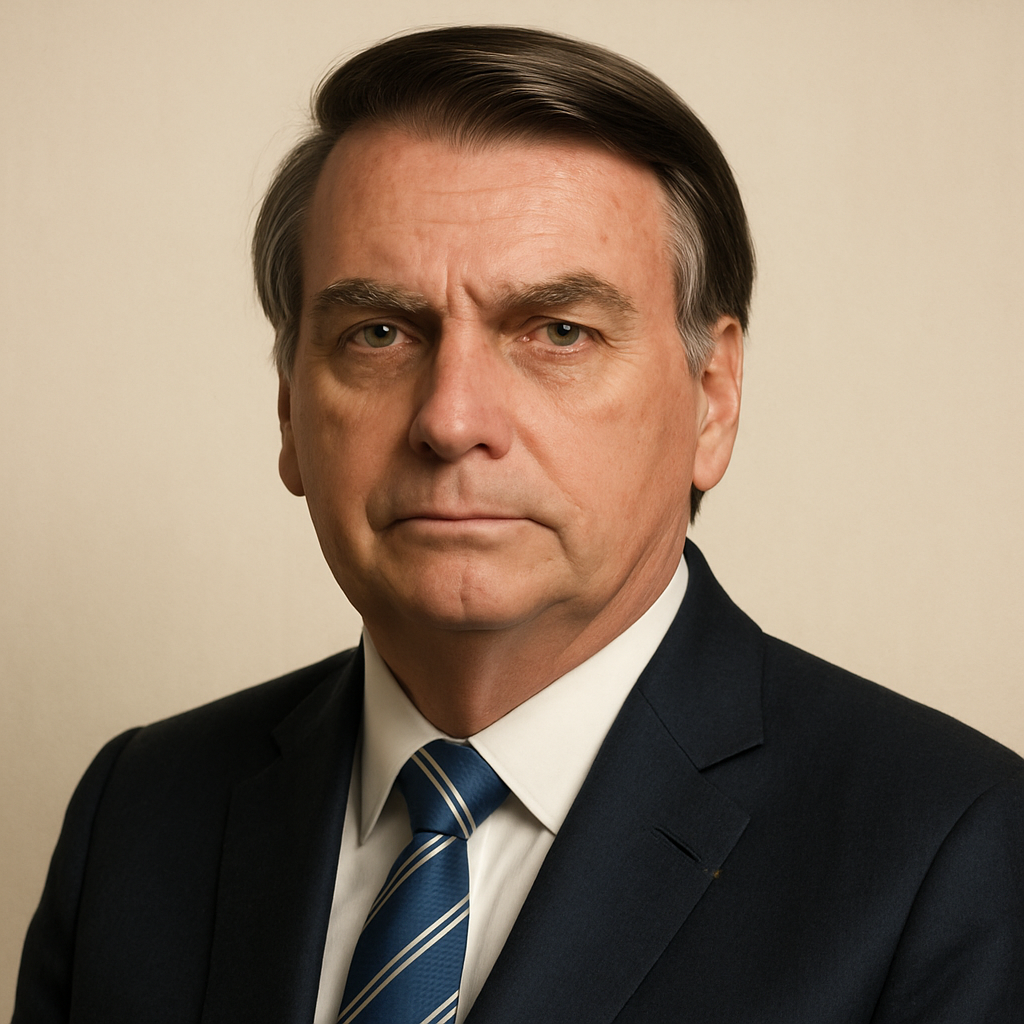
Speech by the President of the Republic, Jair Bolsonaro, at the Ceremony for the signing of the Provisional Measure on the Fuel Market - Palácio do Planalto
 Jair Bolsonaro · Former President of Brazil
- Context
- Bolsonaro addressed a ceremony at Palácio do Planalto on August 11, 2021, to sign a Provisional Measure aimed at reforming Brazil's fuel market and reducing consumer fuel prices.
- Main themes
- Fuel market reform, ethanol direct sales, ICMS taxation on fuel, provisional measure signing, fuel price reduction, sugarcane decree in Amazonas, PIS/COFINS federal taxes, governors' tax revenues, Petrobras refinery pricing, lobbying and political resistance, consumer cost of fuel
- Duration
- ~12 min
- Words
- 1,461
- Sentences
- 111
- Readability
- 72
- Grade
- 6.4
- Syntax
- 2.55
- Vocabulary
- 2.22
Translated from Portuguese
The broad sphere of national life a sentence belongs to. Every sentence has an Arena, so it is the denominator the other indices are read against.
Other111 sentences in 20 paragraphs
Good morning everyone.
Look how difficult it is for us to move Brazil forward. I even spoke with Tereza Cristina, to see if I could touch on the subject, and she gave me the green light.
Who here is from Amazonas might know that there was a Presidential Decree that prohibited the planting of sugarcane in the state of Amazonas. Do you understand, Ciro? In the Amazon biome, that's fine. Well, obviously, there was a great concern about the repercussions if I revoked that decree. Ah, the President wants to turn the Amazon Rainforest into a sugarcane field. The same old narratives.
I signed the decree; I have to make decisions. We won't always please everyone. Well, we signed the decree, we revoked it, but the revocation decree was judicialized. That's fine. Is it with the Supreme Court, by chance? Is it in the Supreme Court? That's fine.
The issue of this measure today, Girão is here, a federal deputy from Rio Grande do Norte, we started on this subject back in the pre-campaign, during one of our visits there, talking to the mill owners, they spoke about direct sales. And they gave a clear example of a mill that produced ethanol; no vehicle traveled 200, 300 km, a distributor, and sometimes the alcohol didn't even leave the barrel, right, from the water truck and went back to a gas station 1 km from the mill. So, it traveled 400, 500, 600 km, to return to the same place.
Obviously, the cost of this freight, at the end of the line, is the consumer, and this fight started a long time ago. And the vast majority of mill owners have always been in favor of direct sales. So, we took this case to Minister Bento, but it's not easy to resolve things. You have to break down resistances; there are lobbies, there are very important people working against it, just as there are people working in favor as well.
Until we reached an agreement with the government, Ciro is here, Flávia is here, Arthur Lira is here, Pacheco is here, we are talking. Because it's not just about signing a Provisional Measure and sending it to Parliament; we have to have a high risk of success. And the interest is of the population. So, there is the Provisional Measure signed; God willing, it will proceed without setbacks, and I obviously commend Minister Bento of Mines and Energy for leading this. But he also said something very important. That this alone is not a guarantee, with all due respect, that the price of ethanol will drop in 1, 2, 3, 4 months. We have the issue of ICMS.
Look, gentlemen. We have a Constitutional Amendment from 2001, which states that the value of ICMS must be national. A nominal value for each type of fuel. So, we submitted a complementary law project, and it obviously had problems in Parliament, there in the Chamber. Then the lobby of the governors comes in.
Our proposal does not aim to take money from the governors via ICMS, and we conceded then. So that each state, and no longer Brazil, sets the nominal value of its ICMS. If the alcohol ICMS in Rio is 1 real, if São Paulo is 1.20, Espírito Santo 80 cents, they can sort it out there. But each governor must bear their responsibility, which is natural. Of how much they will charge for ICMS on that fuel in their state.
Because nowadays, what happens? There is double taxation. The ICMS, which is X percent of the fuel, does not apply to the refinery price. It's a little above; it's actually 1.95, the price of gasoline at the refinery, 1.95. Let's round it to 2.00 reais. So, if the state charges 30%, it's not 60 cents, maybe 80, 90, up to 1 real, why? Because the base for the governor to charge ICMS is not the price at the refinery. It's the final price at the pump.
So, he also charges ICMS on the banks' profit margin, charges ICMS on transportation, charges on PIS/COFINS, and also charges on the ICMS itself. And sometimes I say, right, in my innocence. Look, isn't it worth it for us to find a way to lower the price of fuel at the refinery? That when it was low, 5 cents, at the end of the line, it continues to be the same price. It interests the governors to maintain what they charge on that fuel, from ICMS. They don't want to lose revenue. But when it goes up 1 cent because the dollar increased or the price of oil abroad went up, immediately, automatically, that incorporates.
So, this measure is very good, but it needs a complement. It goes through the Brazilian Parliament. Then yes, by fixing the value of ICMS, which is provided for in the Constitutional Amendment, it's not even my will. That has been unregulated for 20 years, we will be able to say that the price of fuel will start to drop. What has been discussed with Paulo Guedes? The price of gas. It's averaging 130 reais for a gas cylinder. At the refinery, where it is bottled, it costs on average 45 reais. The federal tax that had PIS/COFINS, what did I agree with Paulo Guedes? That I give my observations to Paulo Guedes. These are not my decisions. I take to him what I hear at the end of the line.
When I walk through the communities in Brasília, once Flávia went with me here. We enter the homes of the poorest, we ask where is the shoe pinching? They talk about cooking gas. I went to Paulo Guedes, I went to Tostes from the revenue, how much is charged in federal tax PIS/COFINS on cooking gas? So much. Are we going to find a way to reduce it? Zero it? Because it's not enough to just use a pen. You have to present something compensatory for that. This is what the LRF says. So we zeroed in March, April the price, not the price, the federal tax on cooking gas.
So, those who complain at the end of the line, rightly so, are paying 130 for the 13 kg gas cylinder. We are cooking with firewood. The opposition uses it, look, Bolsonaro is cooking at home with firewood, and it's true. Now, we have to know, if it's 45 at the source, right, it's right there, sometimes it's 1 km, 2, 10 km, does it justify reaching 130? If it reached 60, 65, isn't that enough? Who is making money off this, off whom? The poorest.
This is not a demagogic speech; it's realistic. The people need to know who is responsible for that price being so high. And in this case, the direct sale of ethanol will obviously go to close this account to zero, to our Brazilian Parliament. I am sure they will decide this because we are not doing anything against the governors. The governors will only say what the ICMS of their fuel is.
Look at one thing, we are facing a hydrological crisis, I think the biggest crisis in the last 90 years, the greatest lack of rain we are experiencing in Brazil. It obviously affects energy generation. There are hydroelectric plants that are on the verge of starting to operate with running water. We are forced to create, to put the red flag, which charges a little more for the price of electricity at the end of the line. It's not malice on our part; it's not to punish the consumer; it's to be able to pay for another source of energy, in this case, thermoelectric, which is much more expensive than the one that comes from water. What happens with the ICMS of electricity? Governors charge ICMS on top of the flag. Who pays the bill for this? I do.
The truth is that it frees our people. Perhaps Bento, study with Ciro here, who is our great articulator, along with Flávia, a proposal in this sense. That exempts, that it is not allowed to charge ICMS on top of the flag. In the case of electricity. And I say more, charge part of what we spend on thermoelectric.
So this, a country, helps it move towards prosperity, with cheaper energy, and we have abundant energy in Brazil. Like here, the one that comes from the field. A large part here, who administers all this, is our dear Tereza Cristina.
So, congratulations to Minister Bento, to our political articulation. Ladies and gentlemen of Parliament. The security personnel were just with me; I am sure you will help us work on this because all of us Brazilians benefit.
Thank you very much, everyone.
The original Portuguese. The tags above are read on the English translation's sentences.
Bom dia a todos.
Olhe como é difícil a gente botar um Brasil para frente. Até conversei com a Tereza Cristina, se eu podia tocar no assunto e ela me deu sinal verde.
Quem é do Amazonas aqui, talvez saiba, que tinha um Decreto Presidencial que era proibido plantar cana-de-açúcar no estado do Amazonas. Entendeu, Ciro? No bioma amazônico, tudo bem. Bem, obviamente, havia uma preocupação muito grande se eu revogasse aquele decreto, a repercussão que ia dar. Ah, o Presidente quer transformar a Floresta Amazônica em um canavial. Aquelas narrativas de sempre.
Assinei o decreto, eu tenho que tomar decisões. Nem sempre a gente vai agradar todo mundo. Bem, assinamos o decreto, revogamos, mas o decreto revogatório foi judicializado. Tudo bem. Tá com o Supremo por acaso, é isso? Tá no Supremo? Tudo bem.
A questão dessa medida de hoje, tá aqui o Girão, deputado federal do Rio Grande do Norte, nós começamos nesse assunto, lá na pré-campanha, numa das idas por lá, conversando com os usineiros, eles falavam da venda direta. E davam um exemplo claro, de usina que produzia o etanol, nenhum veículo andava 200, 300 km, uma distribuidora, e lá às vezes o álcool nem saía do tonel, né, do carro pipa e voltava para um posto de gasolina a 1 km da usina. Então, andava 400, 500, 600 km, para voltar para o mesmo lugar.
Obviamente, que o valor desse frete, na ponta da linha, é o consumidor e começou essa briga lá atrás. E a grande maioria dos usineiros, sempre foram favoráveis à venda direta. Então, levamos esse caso ao ministro Bento, mas não é fácil resolver as coisas. Você tem que quebrar resistências, têm lobbys, tem gente importantíssima trabalhando contra, como tem trabalhando a favor também.
Até que acertando com o governo, tá aqui o Ciro, tá a Flávia, tá o Arthur Lira, tá o Pacheco, a gente vai conversando. Porque não é só assinar uma MP e mandar para o Parlamento, nós temos que ter o risco de sucesso alto. E o interesse é da população. Então, tá aí a Medida Provisória assinada, se Deus quiser ela tramitará sem percalços e eu cumprimento aqui, obviamente o ministro Bento, das Minas e Energia, por ter capitaneado isso aí. Mas ele falou uma coisa muito importante também. Que não basta isso daqui, isso não é uma garantia, com todo respeito, que vai baixar o preço do etanol daqui a 1, 2, 3, 4 meses não. Temos a questão do ICMS.
Olha só, senhores. Temos uma Emenda Constitucional de 2001, que diz que o valor do ICMS, tem que ser nacional. Um valor nominal para cada tipo de combustível. Então, entramos com um projeto de lei complementar e ele obviamente, teve problemas no Parlamento, lá na Câmara. Aí entra o lobby dos governadores.
A nossa proposta não visa tirar dinheiro dos governadores, via ICMS e cedemos então. Para que cada estado então e não mais o Brasil, fixe o valor nominal do seu ICMS. Se o álcool, o ICMS do álcool no Rio tá 1 real, se São Paulo tá 1,20, o Espírito Santo 80 centavos, eles que se acertem por lá. Mas cada governador, arque então, com a sua responsabilidade, que é natural. De quanto vai cobrar de ICMS naquele combustível, no seu estado.
Porque hoje em dia, o que acontece? Há bitributação. O ICMS, que é X por cento do combustível, não incide no preço da refinaria. Tá um pouco acima, tá 1,95 na verdade, o preço da gasolina na refinaria, 1,95. Vamos arredondar para 2,00 reais. Então, se o estado cobra 30%, não são 60 centavos, talvez 80, 90, até 1 real, por que? Porque a base para cobrar ICMS do governador, não é o preço na refinaria. É o preço final na bomba.
Então, ele cobra ICMS também na margem de lucro dos bancos, cobra ICMS no transporte, cobra no PIS/COFINS e cobra também no próprio ICMS. E às vezes eu falo, né, na minha inocência. Olha, não compensa a gente buscar uma maneira, diminuir o preço do combustível na refinaria. Que quando tinha baixa, 5 centavos, na ponta da linha continua sendo o mesmo preço. Interessa para os governadores manter aquilo que ele cobra daquele combustível, de ICMS. Ele não quer perder a receita. Mas quando se aumenta 1 centavo, porque o dólar aumentou ou aumentou o preço do barril do petróleo lá fora, imediatamente, automaticamente, isso incorpora.
Então, essa medida é muito boa, mas carece de um complemento. Passa pelo Parlamento Brasileiro. Aí sim, nós fixando o valor do ICMS, que tá previsto na Emenda Constitucional, não é nem vontade minha. Que está 20 anos sem ser regulamentada, a gente vai poder falar que o preço combustível vai começar a baixar. O que que tem conversado com o Paulo Guedes? O preço do gás. Tá na média 130 reais um bujão de gás. Na refinaria, onde ele é engarrafado, custa em média 45 reais. O imposto federal que tinha PIS/COFINS, o que que acertei com Paulo Guedes? Que dou as minhas, passo as minhas observações para o Paulo Guedes. Não são decisões minhas. Eu levo para ele o que eu ouço na ponta da linha.
Quando ando pelas comunidades em Brasília, uma vez a Flávia foi comigo aqui. A gente entra na casa dos mais pobres, a gente pergunta onde está apertando o sapato? Falam do gás de cozinha. Fui para o Paulo Guedes, fui o Tostes da receita, quanto é cobrado de imposto federal PIS/COFINS, no gás de cozinha? Tanto. Vamos arranjar maneira de diminuir? Zerar? Porque não basta usar caneta. Você tem que apresentar algo compensatório para aquilo. Isso diz a LRF. Então nós zeramos março, abril o preço, o preço não, o imposto federal do gás de cozinha.
Então, quem reclama na ponta da linha, com razão, está 130 o bujão de gás de 13 Kg. Estamos cozinhando à lenha. A oposição usa, olha o Bolsonaro tá cozinhando em casa com lenha e é verdade. Agora, tem que saber, se tá 45 lá na origem, né, tá do lado ali, tá do ladinho, às vezes tá 1 km, 2, 10 km, justifica chegar a 130? Se chegasse a 60, 65, não é o suficiente? Quem tá ganhando dinheiro em cima disso, em cima de quem? Dos mais pobres.
Isso não é um discurso demagógico, é realista. O povo tem que saber quem é o responsável para aquele preço tá lá em cima. E nesse caso, a venda direta do etanol, vai passar obviamente, para fechar a zero essa conta, para o nosso Parlamento Brasileiro. Que tenho certeza que vai decidir isso, porque nós não estamos fazendo nada contra os governadores. Os governadores apenas vão dizer quanto é o ICMS do seu combustível.
Olha uma coisa, nós estamos com uma crise hidrológica, eu acho que nos últimos 90 anos, a maior crise, a maior falta de chuva que estamos tendo no Brasil. Afeta obviamente, a geração da energia. Tem hidrelétrica que está na iminência de começar a funcionar a fio d'água. A gente é obrigado a criar, botar a bandeira vermelha, que cobra um pouco mais do preço da energia elétrica na ponta da linha. Não é maldade da nossa parte, não é para castigar o consumidor, é para gente poder pagar uma outra fonte de energia, no caso, a termelétrica, que é muito mais caro que a que vem de água. O que acontece no ICMS da energia elétrica? Os governadores cobram ICMS em cima da bandeira. Quem paga a conta disso? Eu.
A verdade é que liberta o nosso povo. Talvez Bento, estudar com o Ciro aqui, que é o nosso grande articulador, juntamente com a Flávia, uma proposta nesse sentido. Que desobrigue, que não seja permitido cobrar ICMS, em cima de bandeira. No caso de energia elétrica. E digo mais, cobre parte do que nós gastamos com termoelétrica.
Então isso, um país e ele ajuda a ele partir para prosperidade, com energia mais barata e nós temos energia em abundância no Brasil. Como aqui, a que vem do campo. Grande parte aqui, quem ministra isso tudo, é a nossa querida Tereza Cristina.
Então, parabéns aí ao ministro Bento, a nossa articulação política. Senhores parlamentares. O pessoal da segurança esteve agora pouco comigo, com toda certeza os senhores vão nos ajudar a trabalhar isso, porque todos nós brasileiros ganhamos.
Muito obrigado a todos.