




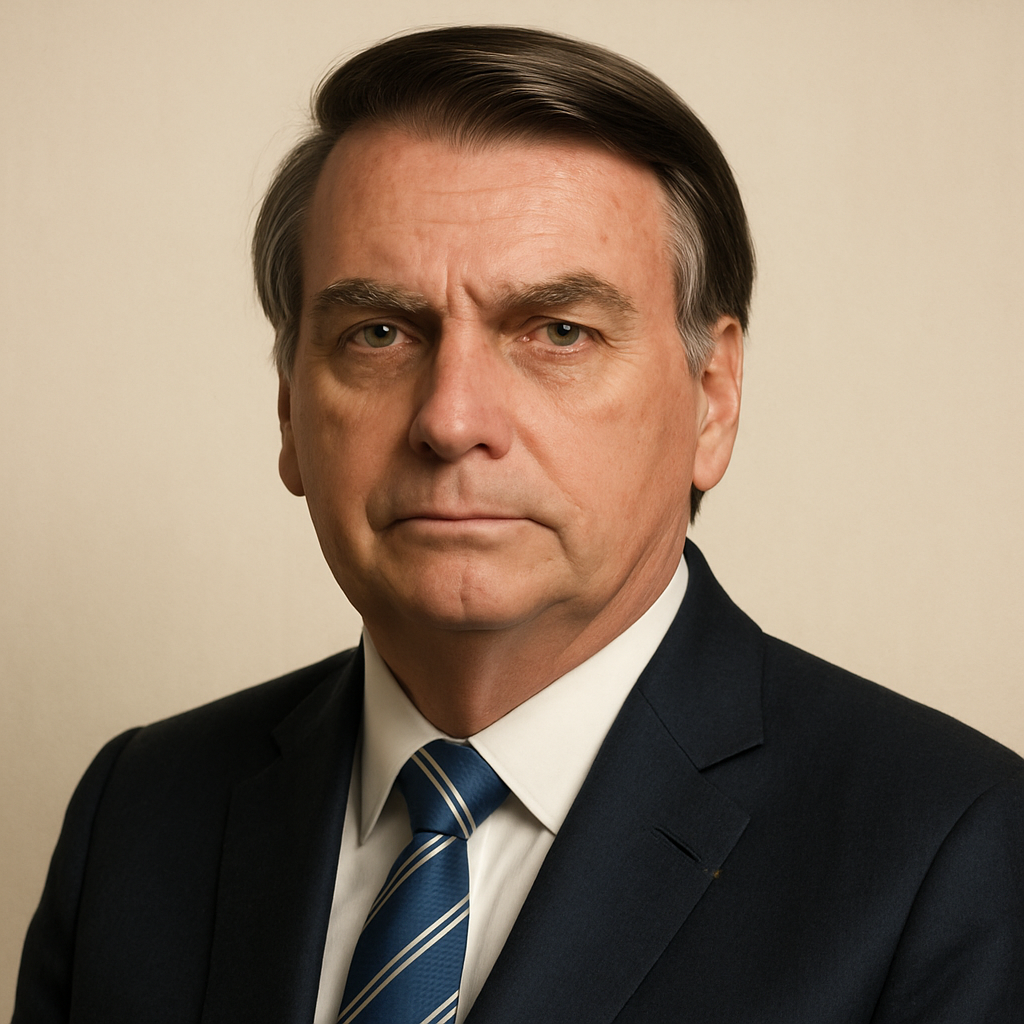
Speech by the President of the Republic, Jair Bolsonaro, during a meeting with business leaders and the Ceremony for the Delivery of the "Order of Industrial Merit São Paulo - São Paulo/SP.
 Jair Bolsonaro · Former President of Brazil
- Context
- Bolsonaro addressed São Paulo business leaders at the Order of Industrial Merit ceremony in São Paulo on June 11, 2019, reflecting on his presidency and economic vision.
- Main themes
- Free market economics, Brazilian political reform, entrepreneurship and private sector, presidential campaign narrative, industrial merit recognition, personal political journey, democracy and freedom, Petrobras pricing policy, military background, business leadership
- Duration
- ~26 min
- Words
- 3,134
- Sentences
- 222
- Readability
- 68
- Grade
- 7.3
- Syntax
- 2.70
- Vocabulary
- 2.01
Translated from Portuguese
The broad sphere of national life a sentence belongs to. Every sentence has an Arena, so it is the denominator the other indices are read against.
Other222 sentences in 43 paragraphs
I confess that I am a bit embarrassed. I am not very fond of giving speeches; speaking is not part of my training, but I am very honored to be here with you.
Dear Paulo Skaf, thank you for the invitation, for the honor, for the remembrance of the episode in which I did nothing more than fulfill my duty as a citizen and rectify the injustice at that moment, without knowing you personally.
Dear Paulo Guedes, I affectionately call you “my Posto Ipiranga.” I wish each of us had a “Posto Ipiranga” like yours by our side. In fact, today the president of Petrobras will soon announce a 3% reduction in the price of gasoline. There has never been and will never be any influence from the Executive on Petrobras's pricing policy. We are for the free market.
Dear Fernando Azevedo, Army General, my contemporary from the Military Academy of Agulhas Negras, our Minister of Defense.
Dear Ozires Silva, a reference for all of us for your entrepreneurship and your trust in our homeland.
Brigadier Juniti Saito. My salute to you, Brigadier, for how many times you have welcomed me in your command and we exchanged information and, of course, I received many pieces of advice. I am from the Vale do Ribeira, I was raised there, near Registro, where there is a large Japanese community, and I spent part of my life alongside our Eastern brothers.
State Deputy Gil Diniz, I have known you for a long time. Good luck and congratulations on your work in the Legislative Assembly.
Ladies and gentlemen representatives of the private sector, good afternoon.
Is there anything more important or, rather, dear General Ramos, military commander of the Southeast, my friend since 1973 when we entered together the Army Cadet Preparatory School here in Campinas?
Gentlemen, ladies,
Is there anything more important than our life? It is our freedom. A man without freedom has no life. Since I arrived in the Chamber in 1991, coming from the Brazilian Army as a captain, I encountered a considerable group of parliamentarians who had no respect or consideration for democracy or freedom. I faced a very tough battle over 28 years where they always distorted the truth. But I understood, at that moment, that I was part of their context in the struggle for power.
Thus, after the 2014 elections, I was the most voted in Rio de Janeiro, having spent practically nothing, I decided that I had to try to change the fate of Brazil. I had to step out of my comfort zone, which is the mandate of a parliamentarian, and it is indeed a comfort zone, and we have full autonomy; we do our work and each one writes their story in the way they see fit in that House of laws.
And so, starting in 2015, I began to travel around Brazil feeling the problems of each one. And I’ll say more: I walked alone, feeling the problems of each region. Many thought a lot of things about me, even that I was a bit crazy. I had no money, I did not yet have a defined party. And if a party appeared, as one did, I would not have television time. A part of the media was constantly attacking us. But we began to feel the yearnings, the concerns, the needs, and also to see the potential of this immense territory known as Brazil.
And we did something that was not part of the political milieu; we had, all the time, the truth by our side. And many said that the truth could cost the possibility of an election. And I always said: “Either I come in independently, and then I can put into practice what I have been saying all over Brazil, or I am out.”
We won the elections. Along the way, there was almost a tragedy. But that moment strengthened me. It was a clear sign that I was on the right path. And among that group of 13 candidates, at that moment, I was practically the only different one.
We reached the Presidency. Upon taking office, we began to put into practice what I had promised during the campaign, which is not rare, but unique in Brazilian politics. We then decided to name our ministers, some of whom are present here, like Paulo Guedes. At first, I apologize, Paulo Guedes, that we had, in the meeting in January, I even asked him: “What did you see in me? Why me?” This was back then, before the campaign. Paulo Guedes met me almost a year before the campaign. And I also knew Paulo Guedes, his potential, his desire to serve the homeland, because he did not need this ministry. He is a man already financially secure. And I was positively surprised by who this man was. And immediately, obviously, a kind of passion was born between us. With all due respect.
I confess that I had some ideas different from his. He does not have a power of persuasion. He has a power to really make people think according to logic. And I converted to Paulo Guedes's economics. So much so that today he is part of a ministry that encompasses economics, planning, labor, industry, and commerce. He is not a super minister; he is a minister who can act.
And most importantly, as I did with all the other 21 ministers: a blank check, 100% authority to compose his ministry. And so he brought many people in. Some, I remember here, known here, Salim Mattar, Paulo Uebel, among many others. And this morning, Paulo Guedes, we were together at the Brazilian Navy, there in Brasília, at the Naval Battle of Riachuelo. A battle from June 11, 1865, which defined the War of the Triple Alliance, something decisive.
And today, Paulo Guedes, there was Admiral Barroso. And today we have a battle that is happening: the battle of the New Pension System. And I am sure of victory because I have by my side not just an economist, but the “admiral” Paulo Guedes. And, back then, the admiral would say: “Sustain the fire, for victory is ours.” Who will sustain this fire is all of you. We believe in you. And back then, the admiral also said: “Brazil expects each one to fulfill their duty.” We will all fulfill our duty here. Why? If Brazil is well, we will all be well.
In the choice of ministers, here in front is our Army General Fernando Azevedo at the head of Defense. Just as I put an economist in Economics, I had to put a general, admiral, or brigadier in Defense. Just as Skaf spoke and praised our Minister of Infrastructure, Tarcísio. Tarcísio is an Army captain, who after the Aman went to IME, and after IME took the exam for the Chamber of Deputies, there was only one vacancy for what he wanted, and he was approved. He integrated, for two years, the Transportation Commission of the Chamber, and today he is our Minister of Infrastructure. Because he has used, General Fernando, in a good way, our Brazilian Army to fill the lack of resources we have to invest in this area. He started the paving of BR-163, there in Pará, which will allow the production from the Midwest to have its exit further North, without problems, as we have been doing this year.
So, the choice of ministers, based on technical criteria, without political criteria, makes us a different government, where we seek, with this, to restore your trust in us. And, furthermore, a government, or rather, you can survive without a government, but a government will succumb without you.
What do I mean by this? Without wanting to paraphrase Margaret Thatcher. Those who should lead the destiny of the nation are you, the people. You are the ones who must give us direction. What do we have the obligation to do? Not to hinder you, which was common until recently. It was very common in governments: creating difficulties to sell ease. Forgive my sincerity here. Few would resist the pressures I have faced sitting in that presidential chair. But the greater the pressures, the more I want to continue, the more strength I have to continue...
Forgive me for telling a little story here. Recently, as is common, some ruralist companions went to see if they could put a minister, put their minister in such an area. I said: “I agree, but in return, I will remove Ricardo Salles from the Environment and put Zequinha Sarney there.” That ended - forgive me here - that ended the enthusiasm of those two.
Ricardo Salles is a man who is in the right place. He has been from PSDB, he has been from Novo, I am not interested in his party. He is a man who is managing to marry the environment with production. Rural producers are increasingly less afraid of Ibama. I gave him a mission: “Go after everyone. I don’t want extremists occupying these positions.” Are there good people there? Yes. But the man from the field cannot be scared anymore by the inspection. And the inspection is, for a first moment, to warn; if the error persists, then it’s fine.
Well, it goes without saying that in the first two months of this year we had the lowest percentage of fines in the field. And they will continue to decrease. We will end this industry of fines in the field. Just as I spoke about you and the government, it is the same: they can survive without the city, but we cannot survive without the field.
Here, there are men from the field here, as I was informed by Paulo Skaf. If it’s time, let me know, Paulo. Agribusiness, for the most part, is the locomotive of our economy. We cannot have an environmental policy like we had not long ago, the industry of demarcating indigenous lands, the industry of quilombolas, the industry of ecological stations.
Look here, the mouth of the Ribeira River here, where the people from São Paulo - I am one too - liked to enjoy parties, catch the robalo in (...). They demarcated an ecological station; nothing can be done there anymore. Angra Bay. If Cancun earns 12 billion dollars a year from tourism, how much does Angra Bay earn? Do the math. It earns from selling coconuts on the road, cuscuz, and fried cocoroca. That is the revenue of Angra Bay, where I only have a memory of a fine, at the same time and day that I pressed the voting button in Brasília.
We want to change that. So, how do you revoke a decree? I think everyone said that to revoke a decree, you need another decree. No. For the environment, it has to be a law. Look at the difficulty starting to appear. This apparatus of laws has been around for some time, it hinders Brazil.
The environmental issue, then, we are addressing this, we are talking, seeking to get closer to the Brazilian Parliament. I thank Rodrigo Maia for all the support, I thank Davi Alcolumbre for all the support, and we will keep moving forward. Over 28 years in the Chamber, I saw a lot of wrong things. Here is a country where everyone here, all peoples, live very well.
And I remember a trip I took to Israel. What do they have there? Sand, they have no oil, they have almost nothing. How can they be what they are? We come to our side, here, look at what we have. No one has what we have. Why are we almost nothing? It is within Parliament, it is within politics, within the Executive, and partly also within the Judiciary. And how can we start to change that? I have done what I can in this regard.
They talk about “swallowing frogs,” right, Skaf? From time to time, I swallow frogs through the tear duct, right? But I am keeping the boat moving. I have lost all my freedom, did you know that? I cannot go to a shopping mall, I cannot go anywhere anymore, security issues. But it is worth it. If I leave Brazil better for my eight-year-old daughter, I will be very happy.
Paulo Skaf spoke a little while ago about education. We have a project here, together with the Minister of Defense, our General Ramos, military commander of the Southeast, also with the support of João Dória, our mayor, to create here, at Campo de Marte, the largest military school in Brazil. I liked the applause from Paulo Guedes, a military school student, as there must be many here. I think there are more than CPOR.
But what happens? We need these schools to start changing the educational issue in Brazil. A place where hierarchy, discipline, love for the homeland, respect, dedication, and camaraderie are learned. I am not criticizing other schools in a generic way; there are good schools out there. But as a rule, nowadays, that is not what the Pisa test points out.
I remember, during the campaign - if my time is running out, let me know. I remember, during the campaign, I met with… there were about 25 businessmen. Then, in a conversation, at a round table, at one point one said the following: “Look, now it’s time for people to reach into their pockets for Bolsonaro’s campaign.” Well, I said: “Well, I will sell my Rolex and I will find resources for the campaign. I don’t want anything from you. I want your money, if possible, after the elections.” Then the guys didn’t understand anything. “Why after the elections?” “I would like to have your support, since our Army is a bit poor - isn’t that right, Fernando? - to have resources to build this military school here, at Campo de Marte.
After all, gentlemen, when I spoke of freedom and life, back then, the dream of a former mayor who passed through here, who left no nostalgia, was to build a large popular housing complex in this region, almost in the heart of São Paulo. I believe that location will serve, and greatly, for the children of all, rich and poor, to attend and have access to this quality education. In this way, we will be able to find a turning point so that in 20, 30 years - it won’t be before that - Brazil will really start to get on the right track. And, through education, seek the prominent place it deserves.
In my campaigns, or pre-campaign, to avoid committing an electoral crime here, I was in Miracatu, right next door. Me, being this pale, it’s hard not to be recognized because I am different. But I went there to see the mountains of graphite. I congratulate, at this moment, Mackenzie, which works in this area, researching in the area of graphene, via graphite. And we cannot fail to support, as much as possible, this type of research.
So, our Minister Marcos Pontes, our astronaut, an exceptional person, has already made contact with Mackenzie, is making contact with other institutions, so that we can really integrate, together with Mackenzie, the select group of countries that research and truly seek new inventions of the wonders of graphene.
The same goes for niobium. If only we have it, we have to set the price, we have to add value to it, and not export it as if it were simply a different quality iron ore. Who in the world has what we have? No one. What are we missing? It’s unity. And for you to tell us where we should go. Not to be at the mercy of politicians. Unfortunately, the political class - I include myself in it, so no one says I am criticizing the Legislative - our political class has improved over the last few years, contrary to Ulysses Guimarães, who always said that “the next one was worse than the previous one.” I believe in Parliament, okay?
And we have the ability to change Brazil's destiny. There is a young state deputy here, Gil Diniz, who was a mailman, we are going to privatize the Post Office, is that okay, Gil? Less State. These incompetent people, I apologize here, it’s not in all state-owned companies, but as a rule, they take state-owned companies for themselves, they become theirs. We will increasingly seek to make Brazil closer to what the United States is.
I have a proposal, I had the support of Paulo Guedes, I always consult, right? We were in Argentina not long ago, we should be concerned about Argentina, yes, whatever each one can do for Argentina, do it, otherwise we will have a future Venezuela here in the Southern Cone. So, whatever we can do together for Brazil's destiny, we must do. We cannot keep waiting. We have to have pioneering actions for the destiny of our Brazil. You will never have a government as open to you as this one. Never! There will never be, within my office, any conversation that is not about the future of our Brazil. I am very happy with what I have and with what I earn.
What I want is to have the satisfaction at the end of 2022, the satisfaction of a duty fulfilled, of having really done for our Brazil. And this now passes, in the coming weeks, through the issue of the New Pension System. We have no other alternative. This is the alternative. And, with it, Paulo Guedes will return to the field later, deregulating, reducing taxes. Paulo, reducing in quantity and percentage as well, I will make it very clear. Paulo and I are completely integrated, right? You noticed that every time he goes to the Chamber he becomes more political. And every time I come here to talk about the economy, I get a little better at the economy. We cannot know everything, but humility in leadership, the recognition of your deficiencies - who doesn’t have them? - I think it elevates us all. Ladies and gentlemen. I said I didn’t like to speak, imagine if I did.
Paulo Guedes also spoke here about cheap energy. Everything will come after this reform of ours. After all, it is a signal we are sending both inside and outside Brazil that we are doing our homework. No one will invest in something that is really not working. Our Brazil, after these reforms, will give more than sufficient signals that we are really doing well. If I am here it is because I believe in you. You are here because you believe in Brazil. And the vast majority, also, because they believe in God.
Thank you very much to all of you.
The original Portuguese. The tags above are read on the English translation's sentences.
Confesso que estou um pouco constrangido. Não sou muito chegado a discursar, falar, não é da minha formação, mas estou muito honrado com esse momento junto aos senhores.
Prezado Paulo Skaf, obrigado pelo convite, pela comenda, pela recordação do episódio que eu nada mais fiz do que fazer a minha obrigação de cidadão e reparar a injustiça naquele momento, sem conhecê-lo pessoalmente.
Prezado Paulo Guedes, eu costumo chamar carinhosamente de “meu Posto Ipiranga”. Quisera cada um de nós ter um “Posto Ipiranga” desses do seu lado. Inclusive hoje o presidente da Petrobras logo mais anuncia uma redução de 3% no preço da gasolina. Nunca teve e nunca terá qualquer influência do Executivo na política de preços da Petrobras. Somos pelo livre mercado.
Prezado Fernando Azevedo, general de Exército, meu contemporâneo de Academia Militar das Agulhas Negras, nosso ministro da Defesa.
Prezado Ozires Silva, uma referência para todos nós pelo seu empreendedorismo e pela sua confiança em nossa pátria.
Brigadeiro Juniti Saito. Minha continência, senhor Brigadeiro, por quantas vezes o senhor bem me recebeu em seu comando e trocamos informações e, obviamente, ouvi muitos conselhos. Sou aqui do Vale do Ribeira, fui criado ali, perto de Registro, há uma colônia japonesa muito grande em Registro e convivi parte da minha vida ao lado desses nossos irmãos orientais.
Deputado estadual Gil Diniz, eu o conheço há muito tempo. Boa sorte e parabéns pelo trabalho na Assembleia Legislativa.
Senhoras e senhores representantes do setor privado, meu boa tarde.
Existe algo mais importante ou, melhor, prezado general Ramos, comandante militar do Sudeste, meu amigo desde 1973 quando adentramos juntos na Escola Preparatória de Cadetes do Exército, aqui em Campinas.
Meus senhores, minhas senhoras,
Existe algo mais importante que a nossa vida, é a nossa liberdade. Um homem sem liberdade não tem vida. Desde quando eu cheguei na Câmara, em 1991, egresso do Exército Brasileiro como capitão, eu me deparei com um grupo considerável de parlamentares que não tinham qualquer respeito ou consideração com democracia ou liberdade. Enfrentei uma batalha duríssima ao longo de 28 anos onde eles sempre deturparam a verdade. Mas eu entendia, naquele momento, que fazia parte do contexto deles pela luta do poder.
Assim sendo, após as eleições de 2014 eu fui o mais votado do Rio de Janeiro, sem gastar praticamente nada, eu decidi que tinha que tentar mudar o destino do Brasil. Eu tinha que sair da zona de conforto, que é o mandato de parlamentar, e é sim uma zona de conforto, e temos plena autonomia, nós fazemos o nosso expediente e cada um escreve a sua história da maneira que lhe convém ou acha melhor naquela Casa de leis.
E comecei, então, a partir de 2015, a andar pelo Brasil sentindo os problemas de cada um. E digo mais: andava sozinho, e sentindo os problemas de cada região. Pensavam muita coisa a meu respeito, até que eu estava meio maluco. Não tinha dinheiro, não tinha um partido definido ainda. E se aparecesse um partido, como apareceu, não teria tempo de televisão. Já tinha uma parte da mídia o tempo todo nos fustigando. Mas começamos a sentir os anseios, as preocupações, as necessidades e também ver o potencial desse imenso território conhecido como Brasil.
E fizemos uma coisa que não fazia parte do meio político, tivemos ao nosso lado, o tempo todo, a verdade. E muitos diziam que a verdade podia custar a possibilidade de uma eleição. E eu falava sempre: “Ou eu chego de forma independente, e posso então botar em prática aquilo que venho falando por todos os cantos do Brasil, ou estou fora”.
Conseguimos as eleições. No meio do caminho quase uma tragédia. Mas esse momento me fortaleceu. Era um sinal claro de que estava no caminho certo. E naquele rol de 13 candidatos, naquele momento, eu era praticamente o único diferente.
Chegamos à Presidência. Ao chegar à Presidência, começamos a colocar em prática aquilo que havia prometido durante a campanha, coisa não rara, mas única na política brasileira. Resolvemos, então, a dar nome aos nossos ministros, alguns aqui presentes, como o Paulo Guedes. Num primeiro momento, desculpa, Paulo Guedes, que nós tivemos, no encontro, em janeiro, eu até perguntei para ele: “O que você viu em mim? Por que eu?” Isso lá atrás, antes da campanha. O Paulo Guedes me conheceu quase um ano antes da campanha. E eu também conhecia conhecia o Paulo Guedes, o seu potencial, a sua vontade de querer servir à pátria, porque não precisava ele desse ministério. Ele é um homem já decidido financeiramente. E me surpreendi positivamente com quem era esse homem. E de imediato, obviamente, nasceu quase uma paixão entre nós. Com todo respeito.
Confesso que tinha algumas ideias diferentes da dele. Ele não tem um poder de convencimento. Ele tem um poder de realmente fazer com que as pessoas pensem de acordo com a lógica. E eu me converti à economia de Paulo Guedes. Tanto é que ele hoje faz parte de um ministério que agregou economia, planejamento, trabalho, indústria e comércio. Ele não é um super ministro, é um ministro que pode fazer.
E o mais importante, como fiz com todos os outros 21 ministros: carta branca, 100% de autoridade para compor o seu ministério. E assim ele botou muita gente para dentro. Alguns, eu lembro aqui, conhecido aqui, o Salim Mattar, o Paulo Uebel, entre tantos outros. E hoje de manhã, Paulo Guedes, estivemos juntos na Marinha do Brasil, lá em Brasília, Batalha Naval de Riachuelo. Uma batalha de 11 de junho de 1865, que definiu a Guerra da Tríplice Aliança, algo decisivo.
E hoje, Paulo Guedes, lá o Almirante Barroso. E hoje temos uma batalha que está acontecer: a batalha da Nova Previdência. E eu tenho certeza da vitória porque tenho ao meu lado não um economista, mas o “almirante” Paulo Guedes. E, lá atrás, o almirante dizia: “Sustentar o fogo, que a vitória é nossa”. Quem vai sustentar esse fogo são todos vocês. Nós acreditamos em vocês. E lá atrás também dizia o almirante: “O Brasil espera que cada um cumpra o seu dever”. Todos nós aqui cumpriremos o nosso dever. Por quê? O Brasil estando bem, todos nós estaremos bem.
Na escolha dos ministros, está aqui à frente, o nosso general de Exército Fernando Azevedo à frente da Defesa. Assim como botei um economista na Economia, eu tinha que botar um general, almirante ou brigadeiro na Defesa. Assim como o Skaf falou e elogiou aqui o nosso ministro da Infraestrutura, o Tarcísio. Tarcísio é um capitão do Exército, que depois da Aman fez o IME, e depois do IME prestou concurso para a Câmara dos Deputados, só tinha uma vaga para aquilo que ele queria e foi aprovado. Integrou, por dois anos, a Comissão de Transporte da Câmara, e hoje é o nosso ministro da Infraestrutura. Porque tem usado, general Fernando, no bom sentido, o nosso Exército Brasileiro para suprir a falta de recursos que temos para investir nessa área. Começou o asfaltamento da BR-163, lá no Pará, que vamos permitir que o produzido no Centro-Oeste tenha a sua saída mais ao Norte, sem problemas, como estivemos fazendo no corrente ano.
Então, a escolha dos ministros, pelo critério técnico, sem o critério político, nos faz um governo diferente, onde nós buscamos, com isso, restabelecer a confiança dos senhores na gente. E, mais ainda, um governo, ou melhor, os senhores podem até sobreviver sem governo, mas um governo sucumbirá sem os senhores.
O que eu quero dizer com isso? Sem querer parafrasear Margaret Thatcher. Quem deve conduzir o destino da nação são os senhores, são o povo. Vocês que têm que dar o norte para nós. O que nós temos a obrigação de fazer? Não atrapalhá-los, coisa comum até há pouco tempo. Coisa muito comum em governos: criar dificuldade para vender facilidade. Me desculpem aqui a sinceridade. Poucos resistiriam às pressões que tenho sentado naquela cadeira presidencial. Mas quanto maiores forem as pressões, mais vontade eu tenho de continuar, mais força eu continuo...
Me desculpem contar uma historinha para os senhores aqui. Há pouco, o que é comum, foram lá alguns companheiros ruralistas, ver se podia botar um ministro, botar o ministro deles para tal área. Eu falei: “Eu topo mas, em contrapartida vou tirar o Ricardo Salles do Meio Ambiente e botar o Zequinha Sarney lá”. Acabou - me desculpe aqui - acabou a tesão daqueles dois.
O Ricardo Salles é um homem que está no lugar certo. Já foi do PSDB, já foi do Novo, não me interessa o partido dele. É um homem que está conseguindo fazer o casamento do meio ambiente com a produção. Os produtores rurais, cada vez mais, têm menos medo do Ibama. Eu paguei uma missão para ele: “Mete a foice em todo mundo. Não quero xiita ocupando esses cargos”. Tem gente boa lá? Tem. Mas o homem do campo não pode se apavorar mais com a fiscalização. E a fiscalização é, para um primeiro momento, advertir; caso persista no erro, aí tudo bem.
Bem, não precisa dizer que no primeiro bimestre desse ano tivemos um menor percentual de multas no campo. E vão continuar diminuindo. Vamos acabar com essa indústria da multa no campo. Assim como falei dos senhores e o governo, é a mesma coisa: eles podem sobreviver sem a cidade, mas nós não podemos sobreviver sem o campo.
Aqui, tem homens do campo aqui, pelo que fui informado pelo Paulo Skaf. Se estiver na hora avisa aí, Paulo. O agronegócio, em grande parte, é a locomotiva da nossa economia. Nós não podemos ter uma política ambiental como tínhamos há pouco tempo, da indústria da demarcação de terras indígenas, da indústria de quilombolas, da indústria de estações ecológicas.
Olha aqui, a boca do Rio Ribeira aqui, onde a paulistada - também sou - gostava de curtir festa, pegar o robalo no (...). Demarcaram estação ecológica, mais nada pode se fazer ali. Baía de Angra. Se Cancun fatura 12 bilhões de dólares por ano com o turismo, quanto fatura a Baía de Angra? Façam as contas aí. Fatura com venda de coco na estrada, cuscuz e cocoroca frita. Esse é o faturamento da Baía de Angra, onde eu tenho uma recordação apenas de uma multa, no mesmo horário e dia que eu tinha apertado o dedo de votação em Brasília.
Nós queremos mudar aquilo. Daí, como é que se faz para revogar um decreto? Acho todo mundo dizia que quem revoga um decreto é outro decreto. Não. Para o meio ambiente tem que ser uma lei. Olha a dificuldade começando a aparecer. Esse aparelhamento das leis vem de algum tempo, trava o Brasil.
A questão ambiental, então, estamos tratando disso, estamos conversando, buscando se aproximar do Parlamento brasileiro. Agradeço o Rodrigo Maia todo o apoio, agradeço o Davi Alcolumbre todo o apoio, e vamos tocar o barco. Ao longo de 28 anos dentro da Câmara eu vi muita coisa errada. Aqui é um país onde todos aqui, todos os povos, vivem muito bem.
E eu lembro de uma viagem minha a Israel. O que eles têm lá? Areia, não têm petróleo, quase não têm nada. Como é que eles podem ser o que são? A gente vem para o nosso lado, aqui, olha o que nós temos. Ninguém tem o que nós temos. Por que nós não somos quase nada? É dentro do Parlamento, é dentro da política, dentro do Executivo, em parte, também, dentro do Poder Judiciário. E como podemos começar a mudar isso aí? Tenho feito o possível nesse sentido.
Fala-se em “engolir sapo”, não é, Skaf? De vez em quando eu engulo sapo pela fosseta lacrimal, não é? Mas estou tocando o barco. Perdi toda a minha liberdade, sabia disso? Não posso ir num shopping, não posso ir a lugar nenhum mais, problema de segurança. Mas vale a pena. Se eu deixar o Brasil melhor para a minha filha de oito anos fico muito feliz.
O Paulo Skaf falou há pouco de educação. Estamos com um projeto aqui, juntamente com o ministro da Defesa, o nosso general Ramos, comandante militar do Sudeste, também com o apoio do João Dória, do nosso prefeito também, em fazermos aqui, no Campo de Marte, o maior colégio militar do Brasil. Eu gostei das palmas do Paulo Guedes, aluno de colégio militar, como devem ter muitos aqui. Acho que tem mais de CPOR.
Mas o que acontece? Nós precisamos desses colégios para começar a mudar a questão educacional no Brasil. Um local onde se aprende hierarquia, disciplina, amor à pátria, respeito, dedicação, companheirismo. Não estou criticando as demais escolas de forma genérica, tem boas escolas por aí. Mas como regra, hoje em dia, não é isso que a prova do Pisa aponta.
Eu lembro, durante a campanha - se estiver acabando meu tempo, me avisa aí. Eu lembro, durante a campanha, me reuni com… tinha uns 25 empresários. Daí uma conversa, numa mesa redonda, tranquila, num dado momento um falou o seguinte: “Olha, agora está na hora de o pessoal meter a mão no bolso para a campanha do Bolsonaro”. Bem, eu falei assim: “Bom, eu vou vender o meu rolex e eu arranjo recurso para a campanha. Eu não quero dos senhores. Eu quero o dinheiro dos senhores, se for possível, depois das eleições”. Aí os caras não entenderam nada. “Por que depois das eleições?”. “Eu gostaria de ter o apoio dos senhores, já que o nosso Exército é um pouco pobre - não é, Fernando? -, para termos recurso para construir esse colégio militar aqui, no Campo de Marte.
Até porque, meus senhores, quando eu falei em liberdade e vida, lá atrás, o sonho de um ex-prefeito que passou por aqui, que não deixou saudade, era, nessa região, construir um grande conjunto habitacional popular, quase que no coração de São Paulo. Acredito que aquele local servirá, e muito, para que os filhos de todos, ricos e pobres, compareçam e tenham acesso a esse ensino de qualidade. Dessa forma, nós conseguiremos encontrar um ponto de inflexão para daqui a 20, 30 anos - não vai ser antes disso -, o Brasil comece, realmente, a entrar no rumo. E, através da educação, buscar o local de destaque que ele merece.
Nas minhas campanhas, ou pré-campanha, para não cometer um crime eleitoral aqui, estive em Miracatu, aqui do lado. Eu, branquelo dessa maneira, fica difícil não ser reconhecido, porque eu sou diferente. Mas fui lá, ver as montanhas de grafite. Parabenizo, nesse momento, a Mackenzie, que trabalha nessa área, pesquisa nessa área do grafeno, via grafite. E nós não podemos deixar de apoiar, no que for possível, esse tipo de pesquisa.
Então, o nosso ministro Marcos Pontes, o nosso astronauta, uma pessoa excepcional, já fez contato com a Mackenzie, está fazendo contato com outras instituições, para que nós venhamos a realmente integrar, juntamente com a Mackenzie, o seleto grupo de países que pesquisam e buscam realmente novos inventos das maravilhas do grafeno.
A mesma coisa o nióbio. Se só nós temos, nós temos que dar o preço, nós temos que agregar valor a isso, e não exportar como se fosse simplesmente um minério de ferro de qualidade diferente. Quem no mundo tem o que nós temos? Ninguém. O que nos falta? É a união. E os senhores dizerem para onde nós devemos ir. Não ficar ao sabor de políticos. Lamentavelmente, a classe política - eu me incluo nela, para ninguém falar que estou criticando o Legislativo -, a nossa classe política tem melhorado, ao longo dos últimos anos, contrariando Ulysses Guimarães, que sempre dizia que “o de depois era pior que o anterior”. Eu acredito no Parlamento, tá?
E nós temos como mudar o destino do Brasil. Tem aqui um jovem deputado estadual, aí, o Gil Diniz, era carteiro, vamos privatizar os Correios, está ok, Gil? Menos Estado. Essas pessoas incompetentes, me desculpa aqui, não é em todas as estatais, mas como regra tomam as estatais para si, passam a ser deles. Vamos, cada vez mais, buscar fazer um Brasil próximo do que são os Estados Unidos.
Tenho uma proposta, tive o apoio do Paulo Guedes, eu consulto sempre, não é? Estivemos na Argentina há pouco tempo, nós devemos nos preocupar com a Argentina, sim, o que cada um puder fazer pela Argentina, faça, senão teremos uma futura Venezuela aqui no Cone Sul. Então, o que nós juntos pudermos fazer pelo destino do Brasil, temos que fazer. Não podemos ficar esperando. Nós temos que ter as ações de vanguarda para o destino do nosso Brasil. Nunca os senhores terão um governo tão aberto para os senhores. Nunca! Nunca haverá, dentro do meu gabinete, qualquer conversa que não seja o futuro do nosso Brasil. Estou felicíssimo com o que tenho e com o que ganho.
Eu quero é ter a satisfação no final de 2022, a satisfação do dever cumprido, de ter realmente feito pelo nosso Brasil. E isso passa agora, pelas próximas semanas, na questão da Nova Previdência. Não temos outra alternativa. É essa a alternativa. E, com ela, o Paulo Guedes volta em campo depois, desburocratizando, diminuindo impostos. Paulo, diminuindo em quantidade e percentual também, vou deixar bem claro. Eu e o Paulo nos integramos completamente, não é? Vocês repararam que cada vez que ele vai na Câmara ele fica mais político. E cada vez que eu venho para cá, para falar de economia, eu fico um pouquinho melhor na economia. Não podemos saber de tudo, mas a humildade estando à frente, o reconhecimento das suas deficiências - quem não tem? - eu acho que nos engrandece a todos. Meus senhores e minhas senhoras. Eu falei que não gostava de falar, imagina se gostasse.
Paulo Guedes também falou aqui da energia barata. Tudo virá após essa nossa reforma. Até porque é um sinal que estamos dando para dentro e para fora do Brasil que estamos fazendo o dever de casa. Ninguém vai investir em cima de algo que realmente não está dando certo. O nosso Brasil, após essas reformas, dará sinais mais do que suficientes que estamos realmente dando certo. Se estou aqui é porque acredito nos senhores. Os senhores estão aqui porque acreditam no Brasil. E a grande maioria, também, porque acredita em Deus.
Meu muito obrigado a todos vocês.