




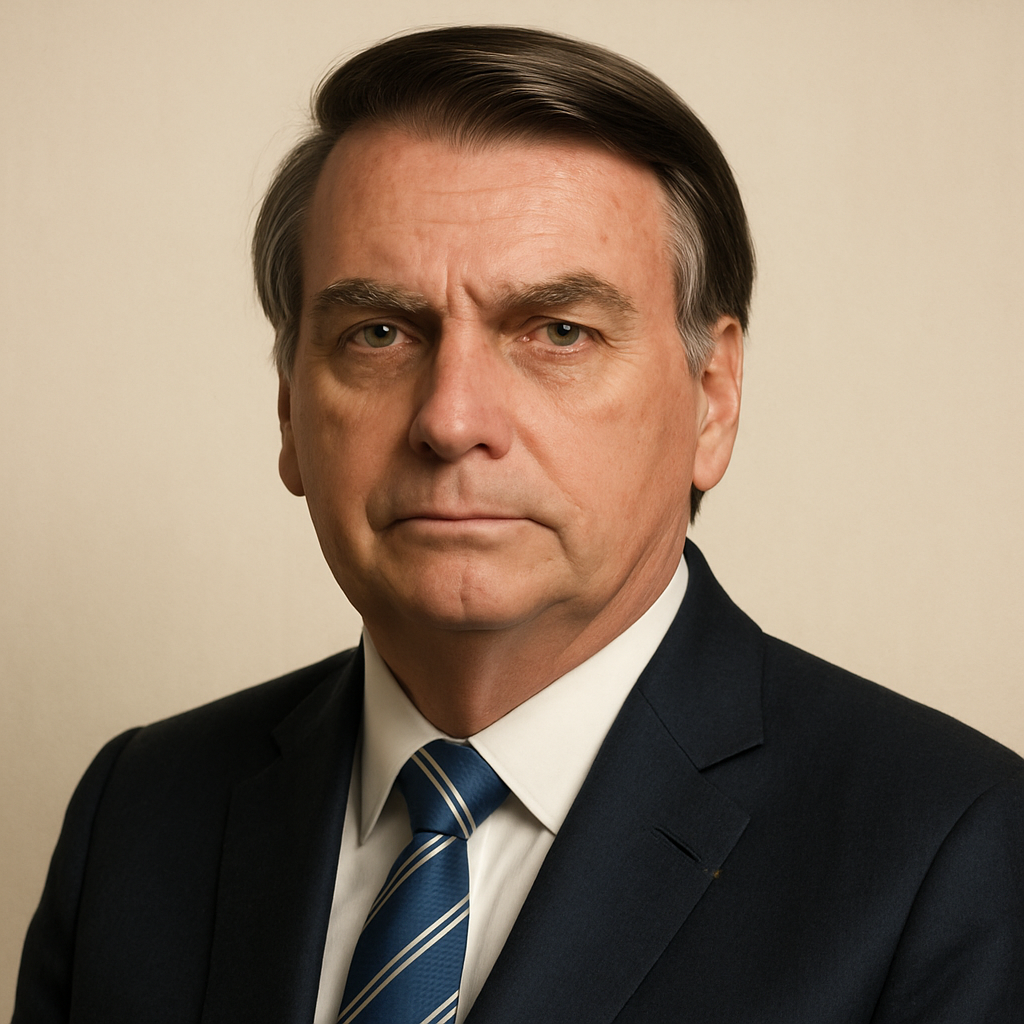
Speech by the President of the Republic, Jair Bolsonaro, during the Inauguration of the Civic-Military School - Rio de Janeiro/RJ
 Jair Bolsonaro · Former President of Brazil
- Context
- Bolsonaro spoke at the inauguration of a Civic-Military School in Rio de Janeiro on August 14, 2020, alongside Mayor Marcelo Crivella.
- Main themes
- Civic-military schools, education reform, hierarchy and discipline in schools, military values, poverty alleviation through education, Brazil's education rankings, investment in youth, Christian faith and national identity, local governance in Rio de Janeiro
- Duration
- ~7 min
- Words
- 833
- Sentences
- 36
- Readability
- 52
- Grade
- 11.8
- Syntax
- 3.31
- Vocabulary
- 2.10
Translated from Portuguese
The broad sphere of national life a sentence belongs to. Every sentence has an Arena, so it is the denominator the other indices are read against.
Other36 sentences in 15 paragraphs
Authorities designated, gentlemen, ladies, friends.
It is a pleasure to return to my state, Rio de Janeiro, the place where my five children were born and where I practically concluded my last years of activity in the military, in the Paratrooper Brigade, and then entered politics. I confess that I am feeling like a city councilor at this moment.
Some coincidences link me to Mayor Marcelo Crivella; we are both officer candidates from the same year, 1977. It is also a coincidence that our Milton, the Minister of Education, is also a candidate from 1977.
I was very happy with the artillery song here; it makes us remember the good times in the barracks, and then it is that song that belongs to all of us, the song of the Infantry.
Crivella is also one of ours from the Armed Forces, some debt with Your Excellency from the time you were a senator. Fate wanted you to have the initiative not only to collect signatures but also to present a constitutional amendment proposal, allowing these military personnel to also combine their profession with that of doctors and nurses. Obviously, today they are working, often performing a dual role, and they are saving lives, especially at a time like this that Brazil is experiencing.
As he recalled here, our superintendent Vasques from the Federal Highway Police, I remember more or less what happened because I traveled around Brazil four years before the 2018 elections, and I really spoke, among other things, during those travels, in a pre-campaign about education, saying that social projects are welcome, but what liberates a man, a woman is knowledge, and we must invest in that.
And Brazil was going against the tide of education; we can prove this with the Pisa tests, which take place every three years. Today we are always in the third to last, second to last, or last place among these seventy countries. This does not change overnight, but where does it need to start changing? In schools, since we have good teachers, we need shortcuts, means, and authority to exercise their work.
It is almost like a barracks; if there is no hierarchy and discipline, it does not fulfill its mission. Here, what we want in education is that, at the end of the line, dear Minister Milton, this young person at the age of twenty, twenty-one, twenty-two, twenty-five, is trained as a good professional, will be a good employee, a good employer, a good liberal, and not just as is partly the case in Brazil still, merely a political activist.
Investment starts at the base, like in this school, which makes me very proud to be here inaugurating, and with the name of a colleague of mine, João Abreu, from the Paratrooper Infantry Brigade, and meeting his brother here at this moment.
Examples like these, Crivella, exist in other states, especially in the state of Goiás, of our Special Forces deputy, Victor Hugo. In the state of Amazonas, where I visited schools in those areas. There are schools, where there are together, more than a hundred, in these two states, where all the students in the last year are approved for universities or colleges in their region. When all, without exception, and generally those who enter the schools are children of the poorest. And a way for us to show, we really want to rescue the poor, which is not through social projects, which largely do not rescue, but by providing the necessary knowledge.
So, this school is a milestone. It is the first school here in Rio de Janeiro. As I was at the first one in the state of Rio Grande do Sul, in Bagé, two weeks ago, an exceptional school. I met some students, like this boy who is sitting in my chair here. I hope that in the future he occupies this chair and can really show that it is possible to get there.
I arrived with practically no television, 8 seconds, without party funding, because I did not accept it. I spent two million on the campaign, but we had something very important on our side, the people and, above all, God. Without Him, without Him, I as a Christian recognize, and so are 90% of Brazilians who are Christians, we would not get anywhere.
So, this school will be the milestone; I am sure there must be a rush of parents wanting to enroll their children here. Because they know that here it starts, here it really solidifies something for their future. That through knowledge, no one will take it away.
So to all municipal servants, employees of this school here in particular, our dear band from the Municipal Guard, the press, I am sure that what we will plant, what we are planting today here, we will reap later, fruits that will serve all of us, for the good of our municipality, state of Brazil.
Congratulations Crivella, congratulations to everyone. Until the next opportunity, God willing.
The original Portuguese. The tags above are read on the English translation's sentences.
Autoridades denominadas, senhores, senhoras, amigos.
É uma satisfação voltar ao meu estado, Rio de Janeiro, local onde meus cinco filhos nasceram e aqui também eu, praticamente, concluí meus últimos anos de atividades na vida militar, na Brigada Paraquedista e depois ingressei na política. Confesso que estou me sentindo um vereador nesse momento.
Algumas coincidências me ligam ao prefeito Marcelo Crivella somos aspirantes oficiais do mesmo ano, 1977. Coincidência também o nosso Milton, ministro da Educação, também é aspirante de 1977.
Fiquei muito feliz com a canção da artilharia aqui, isso faz a gente rememorar os bons tempos de quartel e depois é aquela canção que é de todos nós, a canção da Infantaria.
Crivella também é nosso das Forças Armadas, alguma dívida com vossa excelência no tempo de senador. Quis o destino que o senhor tivesse a iniciativa de não só colher assinatura, bem como apresentar uma proposta de emenda à constituição, permitindo que esses militares pudessem acumular também com a profissão de médicos e enfermeiros. Obviamente hoje estão trabalhando, exercendo uma dupla função muitas vezes, e estão salvando vidas, em especial num momento como esse que o Brasil vive.
Como ele relembrou aqui, o nosso superintendente Vasques da PRF, eu lembro mais ou menos do ocorrido porque eu rodei o Brasil quatro anos antes das eleições de 2018, e realmente eu falava entre outras coisas, nessas andanças, numa pré-campanha sobre educação, falava que os projetos sociais são bem-vindos, mas o que liberta um homem, uma mulher é o conhecimento e nós devemos investir nisso.
E o Brasil estava na contramão da educação, isso a gente comprova com as provas do Pisa, que acontecem de três em três anos. Hoje nós somos sempre antepenúltimo, penúltimo ou último lugar entre esses setenta países. Isso não se muda de uma hora para a outra, mas onde é que tem que começar a mudar? Na escola, já que temos bons professores, precisamos de atalhos, meios e autoridade para exercer o seu trabalho.
É quase como um quartel, se não tiver hierarquia e disciplina ele não cumpre a sua missão. Aqui, o que nós queremos na educação é que, no final da linha, prezado ministro Milton, é que esse jovem nos seus vinte, vinte e um, vinte e dois, vinte e cinco anos de idade, ele seja formado em um bom profissional, vai ser um bom empregado, um bom patrão, um bom liberal e não apenas como acontece em parte no Brasil ainda, apenas um militante político.
O investimento começa na base como nessa escola, o que muito me orgulha agora de estar aqui, inaugurando, e com o nome de um colega meu, João Abreu, da Brigada de Infantaria Paraquedista e conhecendo aqui o seu irmão também neste momento.
Exemplos como esses, Crivella, existem em outros estados, em especial no estado de Goiás, do nosso deputado de Forças Especiais, Victor Hugo. Estado do Amazonas, onde visitei escolas nesses locais. Tem escola, que lá estão juntos, mais de cem, desses dois estados, onde todos do último ano são aprovados para universidades ou faculdades da sua região. Quando todos sem exceção, e geralmente quem entram nas escolas são filhos dos mais pobres. E uma maneira de nós mostrarmos, queremos realmente resgatar o pobre, que não é através de projeto social, que em grande parte não resgata, é dando o devido conhecimento.
Então, essa escola é um marco. É a primeira escola aqui no no Rio de Janeiro. Como estive na primeira do estado Rio Grande do Sul, em Bagé, há duas semanas, uma escola excepcional. Conheci alguns alunos, como esse garoto que está sentado na minha cadeira qui. Espero que no futuro ele ocupe essa cadeira e possa realmente mostrar que dá para chegar lá.
Eu cheguei sem televisão praticamente, 8 segundos, sem fundo partidário, porque não aceitei. Gastei dois milhões na campanha, mas tínhamos uma coisa muito importante do nosso lado, o povo e, acima de tudo, Deus. Sem Ele, sem Ele, eu como cristão reconheço, e assim são 90% dos brasileiros que são cristãos, não chegaríamos a lugar nenhum.
Então, essa escola vai ser o marco, eu tenho certeza que deve estar havendo uma corrida de pais querendo matricular seus filhos aqui. Porque sabem que aqui começa, aqui ele realmente solidifica algo para o seu futuro. Que através do conhecimento, ninguém o tirará.
Então a todos servidores do município, funcionários dessa escola aqui em especial, a nossa querida banda, aqui da Guarda Municipal, imprensa, tenho certeza que o que se plantará, o que estamos plantando hoje aqui, colheremos lá na frente, frutos que servirão para todos nós, para o bem do nosso município, estado do Brasil.
Parabéns Crivella, parabéns a todos. Até uma próxima oportunidade se Deus quiser.