




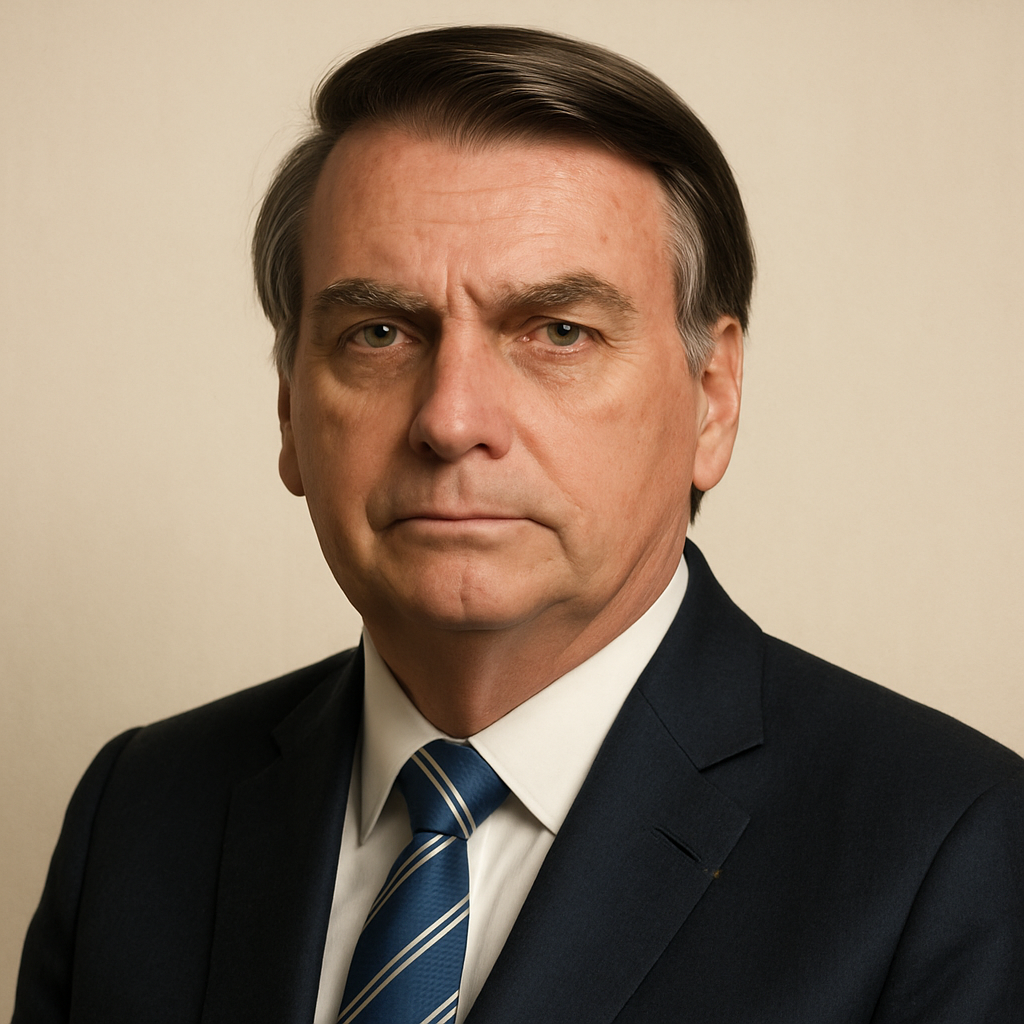
Speech by the President of the Republic, Jair Bolsonaro, during the Ceremony for the Review and Modernization of the Regulatory Standards for Health and Safety at Work - Palácio do Planalto
 Jair Bolsonaro · Former President of Brazil
- Context
- Bolsonaro spoke at a ceremony at Palácio do Planalto on July 30, 2019, marking the review and modernization of health and safety workplace regulatory standards in Brazil.
- Main themes
- Deregulation of labor and safety standards, bureaucratic excess, economic freedom, entrepreneurship, rural worker hardships, labor inspections and fines, slave labor legislation, Paulo Guedes economic reforms, ministry consolidation, media criticism, property rights
- Duration
- ~10 min
- Words
- 1,220
- Sentences
- 66
- Readability
- 62
- Grade
- 9.1
- Syntax
- 2.88
- Vocabulary
- 2.20
Translated from Portuguese
The broad sphere of national life a sentence belongs to. Every sentence has an Arena, so it is the denominator the other indices are read against.
Other66 sentences in 14 paragraphs
Listening, just a little while ago, to Rogério Marinho saying that there are 42 items to fine someone because of a bathroom, I remembered yesterday - I won’t mention the name of the newspaper, because they will say that I am targeting the newspaper, I don’t target anyone - where a journalist harshly questioned the spokesperson, General Rêgo Barros, asking, right: “Did the president cut his hair during working hours?” As if it were the greatest crime of my life. Thank goodness I don’t have a stomach ache during working hours, because if it were in the bathroom now, that newspaper would shoot me down. But these are things that happen in everyday life and you bring them inside yourself.
Breaking protocol, I want to greet our vice president, the ministers, Paulo Skaf, a great ally of ours in the construction of the Military School of São Paulo, along with the authorities, union leaders, deputies, senators, greeting everyone here. And Brazil is ours. God willing, we will achieve our goals.
I remember, Paulo Guedes, last year, before the campaign started, I was in São Paulo and was also harshly questioned by someone who was interrogating me and talking, largely, about truths from my past life regarding the economy: “Oh, you have voted against this, against that, you are a military unionist, it is this, it is this, it is this, this,” leaving me practically without an answer. And it gave me an insight at that moment. When it was time to respond, I said: “Look, man evolves. I have evolved.” Paulo Guedes is hard to evolve in the economy, in my understanding he is already at the top. I still have a lot to evolve.
And what made me, before the campaign and after the campaign, obviously have Paulo Guedes as head not only of a ministry, as at that time existed, which was the Ministry of Finance, but to have at the head of a large ministry, which combined Finance, Planning, Industry and Commerce, and Labor, he told me: “Look, if I have to negotiate with three more ministers to deal with the same issue, I will be skating.” So, we decided to merge these four ministries and, more than anything, I believe 100% in Paulo Guedes. And it is working.
And what Paulo Guedes is doing now, along with Rogério Marinho? They believe, they start to believe too, and I think we should believe, 100% in the entrepreneur. How? By removing these norms. This excess of regulation leads to the paralysis of the economy. And we were, yes, increasingly shackled and paralyzed. And we had to change that.
Another thing reminded me - two things to conclude - Rogério Marinho. At the end of last year, I met a person in the interior of Ceará and this person, right, contacted me saying that he lived by cutting carnauba leaves and was there in the deep interior, average 45 degrees Celsius temperature, and was surprised by inspectors from the Labor Public Ministry and was fined several times. One of the fines, (incomprehensible), was because there was no chemical toilet. In other words, at 45 degrees, a huge heat, the guy climbs up the coconut tree, cuts the carnauba leaves, then goes looking for a place to pee, he has to have a chemical toilet. He can’t pee at the foot of the tree. A tremendous fine on him.
And then, among other fines he also had, considering other inadequacies there, he said: “I will have to spend the next five years cutting carnauba to pay the fines, nothing will be left for home. I will abandon this business and run away, because since I won’t pay, I will end up being arrested.”
We have to unlock, deregulate, and debureaucratize problems. I want to remind the parliamentarians here of the last case here: it happened in 2014, that frenzy about slave labor, dear Hélio Lopes, slave labor, my brother for 20 years or more. Then, what does Constitutional Amendment 81 say? That whoever practices slave labor, the penalty is expropriation of the property. No one is in favor of slave labor but, dear Ives Gandra, some of your colleagues understand that labor analogous to slavery is also slavery and “punish him.”
Sometimes a family is there, the couple is 90 years old, children, grandchildren, great-grandchildren, almost great-great-grandchildren. What if they practice labor analogous to slavery that can be classified by the ILO as, for example, the thickness of the mattress, the room with inadequate ventilation, torn bedding, chipped cup, among other almost 200 specifications. This citizen will lose the farm, he, grandchildren, children, great-grandchildren, will be on the street, if not in jail. Who has the courage to invest in a country like this? No one.
When I started to walk in the countryside, four years ago when my campaign began, pre-campaign in the countryside - if I say campaign I can be prosecuted. So, the pre-campaign in the countryside. And I started to see how the rural producer was doing. If, as has already happened, the inspector arrives at the farm, there is a diesel oil stain on the ground, which spilled there the equivalent of 1/10 of a liter of diesel oil, fine on him. Fire very close to the house, right, or rather, a little away from the house, but very close, fine on him.
I decided here, with the Ministry of the Environment: are we going to fine? Yes, we are. But not in the way it is happening. Otherwise, we will increasingly discourage the man in the field. And it is an economy that is working in our Brazil. And we must encourage the element to produce more, more and more. And these deregulations, these revocations of NR, who knows, parliamentarians, a clear definition, even in the Constitution itself, of what slave labor is, put it there in the Constitution, or remove it, take it to complementary law, if necessary. Because the State we were building until recently was a totalitarian state, a socialist state. By the laws, we were increasingly approaching socialism and communism, where the State commanded everything and everyone. Dear Mourão, it commanded more than the general in the barracks. Imagine how the situation was for those who produce in this Brazil.
So, these norms, or the revocation of these norms, improvements, are very welcome. And this, yes, can unlock our economy and lead us on the path to prosperity. So, my total confidence in my 22 ministers, in the presidents of banks as well, among others, is that we can, yes, in this way, believe in the work of those who know how to make being an employer something healthy in Brazil. And also reduce the distance between employer and employee. Because class struggle is not just white and black, homo and hetero, father and son, Northeasterners and Southerners, it is also, preached by the left for a long time, employer against worker.
So, thank God with a wonderful team that I have the pleasure of counting on by our side, these people are increasingly giving hope to our Brazil. And increasingly distancing us from the possibility of leaving this wonderful country called Brazil.
Thank you very much to you. And thank you very much to the gentlemen and ladies there.
The original Portuguese. The tags above are read on the English translation's sentences.
Ouvindo, agora há pouco, o Rogério Marinho dizendo que existem 42 itens para se multar alguém por causa de um banheiro, eu lembrei-me do dia de ontem - eu não vou falar o nome do jornal, porque vão falar que eu estou perseguindo o jornal, eu não persigo ninguém -, onde um jornalista questionou, de forma bastante dura, o porta-voz, o general Rêgo Barros, e perguntando, né: “O presidente durante o expediente cortou cabelo?”. Como se fosse o maior crime da minha vida. Ainda bem que eu não tenho dor de barriga durante o expediente, porque se fosse no banheiro agora, esse jornal ia me fuzilar. Mas isso aí são coisas que acontecem no dia a dia e você vai trazendo para dentro de si.
Quebrando o protocolo, quero saudar aqui o nosso vice-presidente, os ministros, o Paulo Skaf, um grande aliado nosso na construção do Colégio Militar de São Paulo, juntamente com as autoridades, líderes sindicais, deputados,senadores, cumprimentar a todos aqui. E o Brasil é nosso. Se Deus quiser, nós vamos atingir os nossos objetivos.
Eu lembro, Paulo Guedes, no ano passado, antes de começar a campanha, eu estive em São Paulo e fui também duramente questionado por alguém que estava me sabatinando e falando, em grande parte, verdades da minha vida pregressa no tocante à economia: “Ah, você já votou contra isso, contra aquilo, você é sindicalista militar, é isso, é isso, é isso, isso”, me deixando praticamente sem resposta. E me deu um insight no momento. Na hora de responder, eu falei: “Olha, o homem evolui. Eu evoluí”. O Paulo Guedes é difícil evoluir na economia, no meu entender já está no topo. Eu tenho muito a evoluir ainda.
E o que me fez, antes da campanha e depois da campanha, obviamente, ter o Paulo Guedes como chefe não só de um ministério, como até aquela época existia, que era o da Fazenda, ter à frente de um grande ministério, que juntou Fazenda, Planejamento, Indústria e Comércio e Trabalho, ele falava para mim: “Olha, se eu tiver que negociar com mais três ministros para tratar do mesmo assunto, eu vou ficar patinando”. Então, resolvemos fundir esses quatro ministérios e, mais do que tudo, eu acreditar 100% no Paulo Guedes. E está dando certo.
E o que o Paulo Guedes faz agora, juntamente com o Rogério Marinho? Acreditam, passam a acreditar também, e acho que nós devemos acreditar, 100% no empreendedor. Como? Retirando essas normas fora. Esse excesso de regulamentação leva à paralisação da economia. E nós estávamos, sim, cada vez mais engessados e paralisados. E tínhamos que mudar isso daí.
Outra coisa me lembrou - duas coisas para encerrar-, Rogério Marinho. No final do ano passado, eu conheci uma pessoa lá no interior do Ceará e essa pessoa, né, fez contato comigo dizendo que ele vivia de cortar folhas de carnaúba e estava lá no interiorzão, média 45 graus celsius a temperatura, e foi surpreendido por fiscais do MP do Trabalho e aplicou-lhe várias multas. Uma das multas, (incompreensível), era porque não tinha banheiro químico. Ou seja, a 45 graus, um calorão enorme, o cara sobe lá no coqueiro, Tcorta as folhas de carnaúba, daí vai procurar um lugar para fazer pipi, tem que ter um banheiro químico. Não pode fazer pipi no pé da árvore. Uma tremenda multa em cima dele.
E daí, entre outras multas que ele teve também, tendo em vistas as inadequações outras ali, ele falou: “vou ter que passar os próximos cinco anos cortando carnaúba para pagar as multas, não vai sobrar nada para casa. Eu vou abandonar esse negócio e fugir, porque como eu não vou pagar, eu vou acabar sendo preso”.
Problemas nós temos que destravar, desregulamentar, desburocratizar. Eu quero lembrar aos parlamentares aqui o último caso aqui: aconteceu em 2014, aquela sanha do trabalho escravo, prezado Hélio Lopes, trabalho escravo, meu irmão de 20 anos ou mais. Aí, o que que diz a Emenda Constitucional 81? Que aquele que trabalha… que pratica o trabalho escravo, a pena é expropriação do imóvel. Ninguém é favorável ao trabalho escravo mas, prezado Ives Gandra, alguns colegas de Vossa Excelência entendem que o trabalho análogo à escravidão também é escravo e “pau nele”.
Às vezes uma família está lá, está com 90 anos de idade o casal, filhos, netos, bisnetos, quase tataranetos. Vai que ser pratica o trabalho análogo à escravidão que pode ser enquadrado pela OIT como, por exemplo, a espessura do colchão, o recinto com ventilação inadequada, roupa de cama rasgada, copo desbeiçado, entre outras quase 200 especificações. Esse cidadão vai perder a fazenda, vai ele, neto, filhos, bisnetos, para a rua, se não for para a cadeia. Quem tem coragem de investir num país como esse daqui? Ninguém.
Quando eu comecei a andar pelo campo, há quatro anos que começou minha campanha, pré-campanha no campo - se falar campanha pode ser processado. Então, a pré-campanha no campo. E eu comecei a ver como é que estava o produtor rural. Se, como já aconteceu, o fiscal chega na fazenda, tem uma mancha de óleo diesel no chão, que derramou ali o equivalente a 1/10 do litro de óleo diesel, multa em cima dele. Queimada muito próxima da casa, né, ou melhor, um pouco afastado da casa, mas muito próximo, multa em cima dele.
Eu decidi aqui, com o Ministério do Meio Ambiente: vamos multar? Vamos. Mas não dessa forma como está acontecendo. Senão, cada vez mais, estaremos desestimulando o homem do campo. E é uma economia que está dando certo em nosso Brasil. E nós devemos estimular para o elemento produzir mais, mais e mais. E essas desregulamentações, essas revogações de NR, quem sabe, parlamentares, uma definição clara, até na própria Constituição, o que é trabalho escravo, botar lá na Constituição, ou retirar, levar para lei complementar, se faça necessário. Porque o Estado que nós estávamos construindo até há pouco tempo é um Estado totalitário, um Estado socialista. Pelas leis, nós estávamos cada vez mais nos aproximando do socialismo e do comunismo, onde o Estado mandava em tudo e em todos. Prezado Mourão, mandava mais que o general no quartel. Imagine como é que estava a situação de quem produz nesse Brasil.
Então, essas normas, ou a revogação dessas normas, aperfeiçoamento, são muito bem-vindas. E isso, sim, pode destravar a nossa economia e nos levarmos no caminho da prosperidade. Então, a minha confiança total nos meus 22 ministros, nos presidentes de bancos também, entre outros, é que nós podemos, sim, dessa forma, acreditar no trabalho de quem sabe fazer com que ser patrão se torne algo saudável no Brasil. E também diminuirmos a distância do patrão - empregado. Porque a luta de classe não é apenas branco e negro, homo e hétero, pai e filho, nordestinos e sulistas, também é, pregado pela esquerda há muito, patrão contra trabalhador.
Então, graças a Deus com uma equipe maravilhosa que eu tenho o prazer de contar ao nosso lado, essas pessoas estão cada vez mais dando esperança ao nosso Brasil. E cada vez mais nos afastando da possibilidade de sairmos desse País maravilhoso chamado Brasil.
Muito obrigado a vocês. E muito obrigado aos senhores e senhoras aí.