




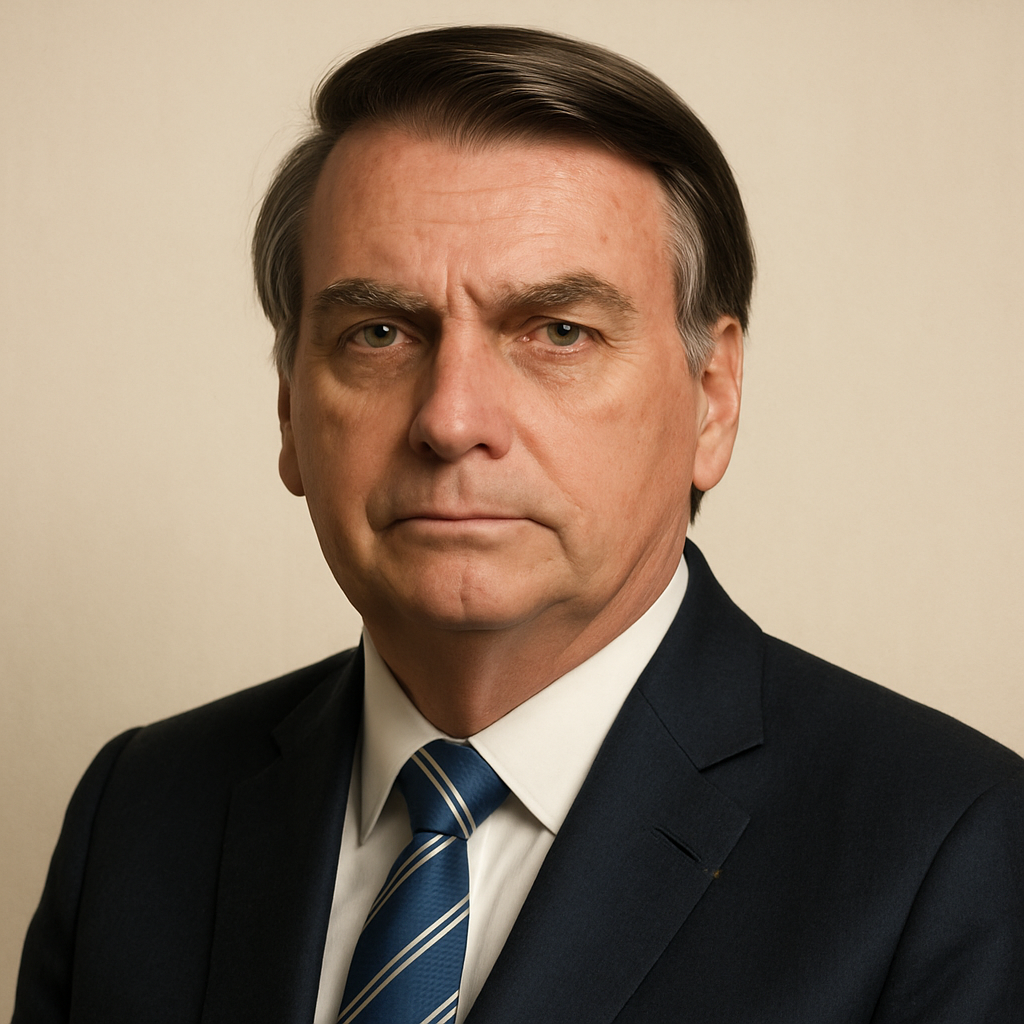
Speech by the President of the Republic, Jair Bolsonaro, during the opening of the 32nd National Congress of Abrasel - Brasília/DF
 Jair Bolsonaro · Former President of Brazil
- Context
- Bolsonaro addressed the 32nd National Congress of Abrasel, Brazil's bar and restaurant association, in Brasília on August 25, 2020, discussing pandemic economic impacts.
- Main themes
- COVID-19 pandemic response, economy and employment, hydroxychloroquine advocacy, hospitality and food service sector support, lockdown criticism, government emergency measures, informal workers, mental health and suicide, federalism and state governors, WHO criticism
- Duration
- ~16 min
- Words
- 1,870
- Sentences
- 104
- Readability
- 61
- Grade
- 9.1
- Syntax
- 2.94
- Vocabulary
- 2.04
Translated from Portuguese
The broad sphere of national life a sentence belongs to. Every sentence has an Arena, so it is the denominator the other indices are read against.
Other104 sentences in 34 paragraphs
I will pass the word to him, there’s no problem with the protocol. If he wants to speak later, he can.
Dear Paulo Solmucci,
Paulo Nonaka,
Mrs. Rosana Oliveira,
My colleague from the Senate, Eduardo Gomes,
Ministers Marcelo Álvaro, Rogério Marinho,
And Mr. Paco Britto, the vice-governor,
Thank you for the invitation, I feel very honored to be here. I am doing what is my duty. I have always told my ministers that we must anticipate problems and not wait for them to happen to then take action.
Paulo, here, was introduced to me by Rogério Marinho, and he gave good references, believe me. And in a quick conversation, we went to talk with Paulo Guedes. And I have always learned, since early on, before making a decision, to praise or criticize, to put myself in that person's shoes. So, I put myself in your place and felt sincerity in what you were saying, and we had to seek a solution. After all, we are all in the same boat. And if the economy is doing poorly, you can be sure that all of Brazil is doing poorly.
Last year, we were practically flying in the economy, starting to take off in the economy, until this so-called virus appeared, which was amplified by much of the media, and it caused panic among the population. I confess: I saw governors being pressured by the population, as the neighboring state had closed everything and he had not closed anything yet.
So, with all this panic from the population, I believe that some governors went beyond what was necessary for that moment, because the goal of flattening the curve is not to prevent me, or Paulo, or any of you from catching the virus. It was to prevent everyone from catching the virus almost simultaneously. We would all catch it. And where I said: there’s no point in running, we have to face it, come on.
I don’t know what generation we are, right? Not ours, because I am 65, this younger generation that is there, that does not face problems. It’s like in a war: if you stay inside your hole, you will die; you will have to shoot. And we had to face the virus.
Well, the Supreme Court's decision came where, for me, as Chief of the Executive, it was basically up to provide resources and means for states and municipalities to face this pandemic.
I started studying the issue of the pandemic, talked to Americans, along with the American FDA, which was there using chloroquine, I started to study. Why? Because in China, almost no one died, right? Although we know that the numbers there often do not reflect reality. But if we take into account the size of China, with 1.4 billion inhabitants, even hiding some numbers, something would appear, because it would have to be a death toll of several million people, quickly. I went to see in Africa: Why is it that in Africa, almost no one dies there? We have no news.
And I bet on hydroxychloroquine. I bet, but obviously, with doctors by my side, with people who were not worried about their biography, the concern was to save lives. And, logically, I started to preach this in Brazil, to set an example, and I started to walk among the people. Look, I am a general, come on, I have to be among the troops. I cannot stay in a glass dome, watching the people behind, facing a problem, and I am not feeling that problem alongside them.
I was heavily criticized for that. I spoke constantly, since March, as now the WHO also recognizes, through its director-general, saying that life and economy cannot be dissociated. Congratulations. Five months after a person who is military, has nothing to do with medicine, had already said it. I also watched, not long ago, him say that even with the vaccine coming, we will have to learn to live with COVID-19. It’s obvious. These things, when they come, you cannot eradicate, it seems, definitively, with all the means that medicine presents to us.
But one thing is certain, and you know this: the lack of employment leads to depression and leads to death. And the side effect of these “close everything” measures, almost irrationally, by some heads of Executive, has led to this.
Not long ago, I was in a city in Minas Gerais - I think you weren’t with me, were you? - and I went to a Federal Highway Police station. And there, the superintendent told me that the number of deaths on the road, from suicides, had tripled. Logically, she could not tell me the cause of the suicide, but simply that it had tripled. Without a doubt, depression. A head of a family, when he loses his job, has children, has a wife, or the wife has a husband, has a job and lost it, and sees that he cannot even go collect cans on the street because the informal workers were the first to be hit, around 40 million informal workers, according to the ILO, lost 80% of their purchasing power in South America.
And let’s go. So, we had, seeing all this, with Paulo’s presence, to seek his namesake, Paulo Guedes, and look for alternatives for this. It was then that that first Provisional Measure appeared to assist everyone in society, including here the people from bars and restaurants.
And let me say one thing to you: my first job, without a formal contract, obviously, was at the age of 10. It was at Mr. Ricardo’s bar, in Sete Barras, Vale do Ribeira. I studied in the morning and in the afternoon, around two in the afternoon, I would go until about 6 or 7 in the evening, there were few people in the bar, the crowd that likes a drink comes a little later, and I worked there with him, that my father put me there. And good times, when minors could work. Today he can do everything except work. Including sniffing a crack rock, with no problem at all.
Well, let me tell you, then: the government did its part, inspired here by Paulo, by Rogério, something quite useful. I believe that we have avoided the loss of many jobs. The Emergency Aid was presented for three months, and we have already extended it for two more. It ends this month, and we intend to extend it, we intend to until the end of the year, not with this amount that is there, which may even be little for those who receive it, but is a lot for those who pay. Those who pay are all of us, and it’s not money that the government has; it comes from indebtedness.
So, we are negotiating. Today there was another meeting with the economic team. I think Carlos da Costa wasn’t there, was he? There was another colleague of yours there. And we took another step regarding this. Because we believe, we believe that we will have more indebtedness, not in the order of 50 billion per month, as is this Emergency Aid, at the moment of 600 reais, but it will decrease a little this amount, to see if the economy picks up. We have to pick up; the economy has to pick up.
And here I praise the determination, the effort, and dedication of you all in seeking ways so that your sector does not close definitively. A segment that, in the order of 30%, has lost, and it is really hard to close commercial establishments, right? And we will continue to do everything possible, everything within our reach, with this wonderful economic team that we have here. Carlos was there, Valderi, your colleague was in that meeting. As well as Bianco. Is Bianco there? Speak up, Bianco, how are you?
Other things were discussed, and, logically, we haven’t nailed it down yet. We hope that by Friday everything will be almost defined, so we can give more help, which is our obligation. It’s not a favor; it’s our obligation to help Brazil get out of the crisis that we still have.
And let’s then return to normality. In July, now, Caged said that between dismissals and admissions, we had a balance of 130,000, which is very good, partly driven by the Emergency Aid, we know that, but on the other hand, too much money in the market, too much paper, all the paper we had was put in the market, that’s why the 200 reais note was created, which some keep talking about things, it has nothing to do with it, the two hundred reais is because we don’t have more paper, but too much paper in the market leads to inflation, that is the worst evil that can exist.
And we are investing, yes, more in job creation, as this job is the best social project we can have. Although we also recognize that our workforce, in part, does not have a good education and the difficulty of employment is very great. But we must pursue this goal, counting on you, we know that your situation is not easy, right? But counting on you so that we can achieve, as quickly as possible, normality, because this interests all of us, and we are all patriots, we are Brazilians. Today we remember Caxias, right? He also said a nice phrase: “Those who are Brazilian, follow me.” And we will succeed in getting out of this situation.
And I believe, from what I have heard, that among the whole world, we may not be the first, but we are one of the first countries that best faced this crisis that we are now seeing, despite the 115,000 dead, we see many videos, we see on the internet, that come from serious people, saying that: “Look, my father, my grandfather, did not die of COVID, it was another issue, but they put COVID there.” I don’t know what the intention is to do this or I could even know, but I don’t want to comment here to avoid controversy.
We lament the 115,000 deaths as well as other thousands of deaths from other causes that exist in Brazil.
But my gentlemen, my ladies, thank you very much for the opportunity, thank you for the invitation.
It was God who placed me here for two moments, for my life in Juiz de Fora in September of the year before last and also for the election, where it seemed that we had nothing to gain and it ended up happening.
I usually say one thing, I can, I am sure of one thing, among the other candidates with a chance, I was different for better or for worse, I was different and I ended up arriving.
Now imagine if the other who ran with me in the second round had arrived? If he had arrived, had a behavior similar to the governors of his party, how would Brazil be today?
So I thank God for the moment and for this mission of being at the forefront of the Republic conducting the destinies of our dear Brazil.
Thank you very much to everyone.
The original Portuguese. The tags above are read on the English translation's sentences.
Passa a palavra para ele, não tem problema o protocolo não. Ele, se quiser falar depois, ele fala.
Prezados Paulo Solmucci,
Paulo Nonaka,
Senhora Rosana Oliveira,
Meu companheiro do Senado, Eduardo Gomes,
Ministros Marcelo Álvaro, Rogério Marinho,
E senhor Paco Britto, vice-governador,
Obrigado pelo convite, me sinto muito honrado em estar aqui. Estou fazendo aquilo que é a minha obrigação. Sempre tenho falado para os meus ministros que nós temos que nos antecipar a problemas e não esperar acontecer para, depois, tomar uma providência.
O Paulo, aqui, quem o apresentou para mim foi o Rogério Marinho, e deu boas referências, acredite. E, numa conversa rápida, ali, fomos conversar com o Paulo Guedes. E eu sempre aprendi, desde cedo, antes de tomar uma decisão, elogiar ou criticar, se colocar no lugar daquela pessoa. Então, me coloquei no seu lugar e senti sinceridade no que você falava e tínhamos que buscar solução. Afinal de contas, todos nós estamos no mesmo barco. E, se a economia vai mal, pode ter certeza que o Brasil todo vai mal.
No ano passado, estávamos praticamente voando na economia, começando a decolar na economia, até que apareceu esse tal desse vírus aí, que foi potencializado pela grande parte da mídia, e ela levou um pânico junto à população. Eu confesso: eu vi governador sendo pressionado pela população, que o estado vizinho havia fechado tudo e ele não havia fechado nada ainda.
Então, com esse pânico todo da população, acredito que alguns governadores foram além do necessário para aquele momento, porque o objetivo de achatar a curva não é evitar que eu, ou o Paulo, ou algum dos senhores, pegasse o vírus. Era evitar que pegasse o vírus quase que de forma simultânea. Todos nós pegaríamos. E onde eu falei: não adianta correr, nós temos que enfrentar, pôxa.
Eu não sei que geração é a nossa, não é? Não a nossa, porque eu estou com 65, essa mais jovem que está aí, que não enfrenta os problemas. É igual numa guerra: se você ficar dentro da toca, tu vai morrer, você vai ter que atirar. E nós tínhamos que enfrentar o vírus.
Bem, veio a decisão do Supremo onde, para mim, Chefe do Executivo, cabia basicamente recursos e meios para estados e municípios enfrentarem a tal da pandemia.
Comecei a estudar a questão da pandemia, conversei com norte-americanos, junto com o FDA americano, que estava lá usando a cloroquina, comecei a estudar. Por quê? Por que na China quase ninguém morreu, não é? Se bem que nós sabemos que os números de lá, muitas vezes, não refletem a realidade. Mas se levasse em conta o tamanho da China, com 1 bilhão e 400 milhões de habitantes, mesmo escondendo alguns números, alguma coisa apareceria, porque teria que ser uma morte de alguns milhões de pessoas, rapidamente. Fui ver na África: Por que na África basicamente quase ninguém morre lá? Não temos notícia.
E eu apostei na hidroxicloroquina. Apostei mas, obviamente, com médicos do meu lado, com pessoas que não estavam preocupadas com a sua biografia, a preocupação era em salvar vidas. E, logicamente, eu comecei a pregar isso no Brasil, a dar exemplo, e comecei a andar no meio do povo. Olha eu sou general, pô, eu tenho que estar no meio da tropa. Eu não posso ficar numa redoma de vidro, vendo o povo lá atrás, enfrentando um problema, e eu não sentindo esse problema do lado deles.
Fui muito criticado por isso. Falava constantemente, desde março, como agora a OMS também reconhece, através do seu diretor-geral, dizendo que vida e economia não podem ser dissociados. Parabéns. Cinco meses depois de uma pessoa que é militar, não tem nada a ver com a medicina, já havia falado. Também assisti, há pouco, ele falar que mesmo vindo a vacina, nós teremos que aprender a conviver com a covid-19. É óbvio. Essas coisas, quando vem, você não tem como erradicar, pelo que parece, de forma definitiva, com todos os meios que a medicina se apresenta para nós.
Mas, uma coisa é certa, e o senhor sabe disso: a falta de emprego leva à depressão e leva a morte. E o efeito colateral dessas medidas de “fechem tudo”, de forma quase que irracional, por parte de alguns chefes de Executivo, tem levado a isso.
Há pouco, estive numa cidade mineira - você eu acho que não estava comigo, não - e fui num posto da Polícia Rodoviária Federal. E lá, a superintendente me disse que o número de mortes na pista, de suicídios, havia sido multiplicado por três. Logicamente que não podia me dizer a causa do suicídio, mas, simplesmente, que multiplicou-se por três. Com toda a certeza, a depressão. Um chefe de família, quando perde o seu emprego, tem filhos, tem esposa, ou a esposa tem marido, tem emprego e perdeu, e vê que não tem nem como ir catar latinha na rua porque os informais foram os primeiros a serem atingidos, em torno de 40 mil, milhões de informais, segundo a OIT, perderam, na América do Sul, 80% do seu poder aquisitivo.
E vamos lá. Então, nós tínhamos, vendo tudo isso, com a presença do Paulo, buscar o xará dele, o Paulo Guedes, e buscar alternativa para o isso. Foi quando apareceu, então, aquela primeira Medida Provisória para atender aí a todos da sociedade, entre eles aqui o pessoal de bares e restaurantes.
E dizer uma coisa para os senhores: o meu primeiro emprego, sem carteira assinada, obviamente, tinha 10 anos de idade. Foi no bar do seu Ricardo, em Sete Barras, Vale do Ribeira. Eu estudava de manhã e à tarde, lá para as duas da tarde, ia até umas 6, 7 da noite, tinha pouca gente no bar, a galera que gosta de uma birita, chega um pouquinho mais tarde e eu trabalhava ali com ele, que meu pai me botou lá. E bons tempos, onde o menor podia trabalhar. Hoje ele pode fazer tudo menos trabalhar. Inclusive cheirar um paralelepipedo de crack, sem problema nenhum.
Bem, dizer aos senhores, então: o governo fez sua parte, inspirado aqui pelo Paulo, pelo Rogério, algo bastante útil. Acredito que nós tenhamos evitado aí a perda de muitos empregos. Apresentou-se o Auxílio Emergencial por três meses, já prorrogamos por mais dois. Acaba esse mês e nós pretendemos prorrogar, pretendemos até final do ano, não com esse valor que está aí, que pode até ser pouco para quem recebe, mas é muito para quem paga. Quem paga somos todos nós e não é dinheiro que o governo tem, isso vem de endividamento.
Então, nós estamos negociando. Hoje teve mais uma reunião com a equipe econômica. Eu acho que o Carlos da Costa não estava lá, estava não, tinha outro colega teu lá. E demos mais um passo no tocante a isso daí. Porque acreditamos, nós acreditamos que teremos mais um endividamento, não na ordem de 50 bilhões por mês, como é esse Auxílio Emergencial, no momento de 600 reais, mas vai diminuir um pouco esse valor, para ver se a economia pega. Nós temos que pegar, a economia tem que pegar.
E aqui eu louvo aí a determinação, o empenho e dedicação, dos senhores em buscar meios para que não se feche, de forma definitiva, o setor de vocês. Segmento que, na ordem de 30% perdeu e é duro realmente fechar estabelecimentos comerciais, está certo? E nós vamos continuar fazendo o possível, tudo que estiver ao nosso alcance, com essa maravilhosa equipe econômica que temos aqui. Estava lá, Carlos, o Valderi, teu colega lá nessa reunião. Bem como, o Bianco. Está aí o Bianco? Fala Bianco, tudo bem?
Outras coisas foram discutidas e, logicamente, não batemos o martelo ainda. A gente espera que até sexta feira já esteja quase tudo já definido, para nós darmos mais uma ajuda, que é obrigação nossa. Não é favor não, é obrigação nossa ajudar o Brasil a sair da crise que ainda temos.
E venhamos, então, a voltar à normalidade. O mês de julho, agora, o Caged disse que entre demitidos e admitidos tivemos um saldo de 130 mil, isso é muito bom, em parte impulsionado pelo Auxílio Emergencial, sabemos disso, mas, por outro lado, dinheiro demais no mercado, papel demais, todo papel que nós tínhamos foi colocado no mercado, por isso que criou-se a nota de 200 reais, que alguns ficam falando aí coisas, não tem nada a ver, os duzentos reais é porque não temos mais papel, mas papel demais no mercado leva à inflação, isso aí é o pior mal que pode existir.
E nós estamos investindo, sim, mais em criação de empregos, que esse emprego é o melhor projeto social que podemos ter. Se bem que reconhecemos, também, que a nossa mão de obra em parte não tem uma boa formação e a dificuldade de emprego é muito grande. Mas nós devemos perseguir esse objetivo, contando com vocês, sabemos que não é fácil a situação de vocês, es tá certo? Mas contando com vocês para que nós venhamos, então, a conseguir, o mais rápido possível, a normalidade, porque isso interessa a todos nós e todos nós somos patriotas, somos brasileiros. Hoje aí lembramos Caxias, está certo? Ele também disse uma frase bacana: “Os que forem brasileiros, sigam-me”. E vamos conseguir sair dessa situação.
E acredito, pelo que eu tenho ouvido, que entre o mundo todo, nós podemos até não ser o primeiro, mas somos um dos primeiros países que melhor enfrentou essa crise que agora estamos vendo, apesar dos 115 mil mortos, a gente vê muito vídeo, a gente vê na internet, que chega de pessoas sérias, dizendo que: “Olha, meu pai, meu avô, não morreu de covid foi outro assunto, mas botaram o covid lá”. eu não sei qual a intenção de se fazer isso ou poderia até saber, mas não quero comentar aqui para evitar polêmica.
Nós lamentamos as 115 mil mortes bem como outras, milhares de mortes por outras causas que existem no Brasil.
Mas meus senhores, minhas senhoras, muito obrigado pela oportunidade, obrigado pelo convite.
Foi Deus que me colocou aqui por dois momentos, pela minha vida em Juiz de Fora em setembro do ano retrasado e bem como a eleição, onde parece que não tínhamos nada para ganhar e acabou acontecendo.
Eu costumo dizer uma coisa, eu posso, eu tenho certeza de uma coisa, entre os demais candidatos com chance eu era diferente para o bem ou para o mal, era diferente e acabei chegando.
Agora imaginem se o outro que concorreu comigo no segundo turno caso tivesse chegado? Caso então ele chegando, tivesse um comportamento semelhante aos governadores do seu partido como é que o Brasil não estaria hoje em dia?
Então eu agradeço a Deus pelo momento e por essa missão de estar a frente aí da República conduzindo os destinos do nosso querido Brasil.
Muito obrigado a todos.