




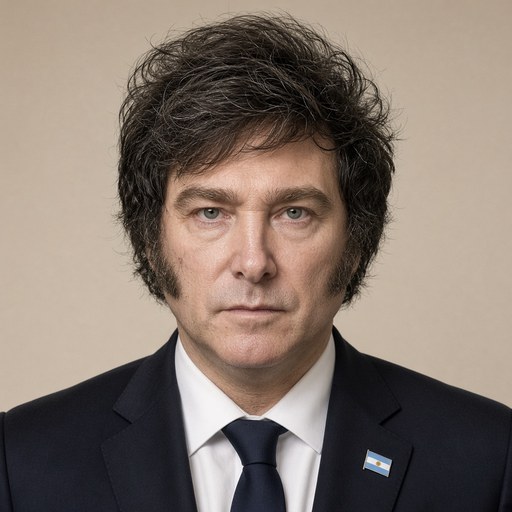
Words of the President, Javier Milei, at the Conservative Political Action Conference (CPAC), Camboriú, Brazil.
 Javier Milei · President of Argentina
- Context
- Milei addressed the Conservative Political Action Conference (CPAC) in Camboriú, Brazil on July 7, 2024, arguing against socialism in Latin America.
- Main themes
- Failure of socialism in Latin America, fiscal deficit and monetary emission, economic mismanagement, poverty and inequality, libertarian economics, political power and populism, Argentine economic crisis, cultural battle against socialism, free market advocacy, 21st-century socialism, Puebla Group criticism
- Duration
- ~30 min
- Words
- 3,570
- Sentences
- 151
- Readability
- 49
- Grade
- 12.3
- Syntax
- 3.06
- Vocabulary
- 2.08
Translated from Spanish
The broad sphere of national life a sentence belongs to. Every sentence has an Arena, so it is the denominator the other indices are read against.
Other151 sentences in 23 paragraphs
Hello everyone. The elite and the socialists are afraid. Good afternoon to all. I want to thank the authorities of CPAC for the invitation and President Jair Bolsonaro and Eduardo Bolsonaro for the warm welcome I have received. They truly make me feel at home, and it is always a pleasure to be among friends.
Today I want to talk to you about the economic and cultural recipe of socialism in Latin America, about how they are wrong and we are right. And how the battle for the destiny of Argentina has been waged since we assumed the presidency. If we analyze the various cases of socialist or leftist governments in Latin America over the last 20 years, you will surely find a series of common denominators that appear together and constitute a true recipe for disaster, both economically, socially, politically, and culturally, because there is a causal relationship between all these elements and it is not a mere coincidence.
First of all, it is remarkable that socialists begin with a period of economic boom in a context of orderly public accounts and high international commodity prices. In this first moment, the economy grows, society gains purchasing power, the State collects revenue, and the Central Bank accumulates reserves. But socialist governments fall in love with the popularity generated by the boom they inherited, they are scared that it will not be eternal, and they indiscriminately increase public spending to sustain it. How do they do it? By subsidizing tariffs and public services, increasing public employment, and distributing various handouts, which they label as social inclusion. When the money runs out, they start raising taxes to collect more, but the cost is to contract economic activity and destroy investment. As time goes on, they consume the stocks to sustain a fictitious boom that only mortgages the future. The stock runs out until, at some point, they must resort to borrowing. They never resolve the underlying problem, which is the vicious circle of expanding public spending and the consequent fiscal deficit; they simply seek different ways to continue financing it. When they can no longer resort to taxes or borrowing, they turn to the worst of all evils, which is monetary emission, thus destroying the value of their currencies and condemning the entire population to poverty. Along the way, they impose regulation upon regulation for every problem that arises in order not to solve the underlying issue. In each of those patches, they invent a business for some friend, generating a caste of privileged entrepreneurs protected by political power who compete artificially, fishing in a fishbowl. The cost of all this, sooner or later, is paid by the people, the same people that socialist governments claim to protect, but who they really want to enslave to obtain a captive support base that allows them to remain in power. Because we cannot deceive ourselves, the only thing that interests socialists is power for the sake of power itself. The consequence is that people end up paying for rampant inflation, what they are given in subsidies, and they end up paying in more expensive and lower quality goods for the industrial and manufacturing protection policies that governments promote to benefit their friends. We have seen this movie dozens of times throughout the region and in the rest of the world as well. It is nothing more and nothing less than the story of 21st-century socialism, which we have heard so much about from our Latin American brothers and which is defended by all the populists that make up the Puebla Group, which was previously called the São Paulo Forum.
There is no need for me to detail how the application of this recipe for disaster has worked in Argentina over the last 100 years and, in particular, in the last 20. It is enough to remember that we have had a fiscal deficit in 113 of the last 123 years, that our politicians irresponsibly multiplied our monetary base 25,000 trillion times in the last 70 years, and this is not a report, it is hard data. It is enough to remember that since 1975, the percentage of Argentines below the poverty line has multiplied by 10, that we have the same GDP per capita as in 2007, and that the formal economy has not generated genuine employment for more than 10 years. It is enough to see, with great anger, that while we were sinking, the rest of the countries that had more liberal economies progressed.
But even so, within the trajectory of case studies of Latin American socialism, the Argentine catastrophe can be taken as an intermediate case. The question is why. Because, no matter how hard they tried, they never managed to carry the socialist program to its ultimate consequences. Because they could never fully subjugate society, as they found a limit in a rebellious people that watches over its own freedom, that fiercely protects its property from the confiscating claws of politicians, and that resists being dominated.
Here lies the explanation of why Argentina is so chosen by those who have switched from socialism in the region. Despite prospering in Argentina over the last 15 years without having privileges, it has been impossible. Because one can easily understand that there are 500,000 Venezuelans in Chile, which is historically a country with a free economy. Even though in recent years the model that generated so much well-being for ordinary Chileans is being questioned, but in Argentina, with how difficult it is… That is why it is always pleasant to talk with our dear Venezuelan residents and to see that there are no greater anti-communists and anti-Kirchnerists than they are. In the long run, socialism is unsustainable and necessarily fails, and governments that persist on that path either end up being rejected by society or end up violating freedom and playing with the lives of their citizens to preserve themselves in power. Time and again, history shows that those who fill their mouths talking about democracy, pluralism, and oppression are the ones who are willing to twist the rules and even interrupt constitutional order to entrench themselves in the Palace when the people demand change. Look at what happened in Venezuela, where there is not a single sensible government left in the world that does not recognize it as a bloody dictatorship. Look at what happened in Bolivia in 2019, when Evo Morales insisted on a third unconstitutional term. Look at the judicial persecution that our friend Jair Bolsonaro suffers in Brazil, and look at what is happening in Bolivia right now: they are willing to stage a false coup d'état just to gain a few more points in an election.
That is why, when I say that Argentina is an intermediate case, it is only in relative terms, because it is a point of comparison with the humanitarian horror that other murderous dictatorships in the region have been, such as Cuba, Nicaragua, Venezuela, from which 7 million people fled in the last decade to avoid sharing hunger with those who stayed. And not to mention the socialist experiences of the 20th century in Europe and Asia, which took the lives of more than 100 million human beings. That is why I say that, since socialism is an ideology that goes directly against human nature, it necessarily leads to slavery or death. There is no other possible destiny for socialism.
But obviously, the descent into socialism does not happen overnight, nor does it come out of nowhere. None of this is possible without a constant cultural effort to undermine those of us who defend the free market, capitalism, and the values that have made Western civilization the spearhead of the history of human progress. It is an effort that, unfortunately, many people in power and influence in the free world have taken for granted. Just look at the ideas defended by many supranational organizations, NGOs, educational institutions, the entertainment industry, and the media. One wonders why they do it. In some cases, they do it from a well-intentioned place, in the desire to be good or supportive. In many cases, also, because they are hypocritical partners and live off the funding that socialism allows them. In most cases, they do not realize that they are playing with fire and are buying a closed package that has tragic consequences that we already know. They do not realize how destructive it can be to implement the ideas of socialism because they feel it is too far away. But it must be understood that the combination of good intentions and dirigisme leads to the worst of places. The do-gooders think that good intentions and empathy lead to good results, and they have the audacity to think that by directing the behavior of each member of society, a more efficient collective behavior can be coordinated. They even boast that they can do it optimally. They see a problem and assume that the solution is to throw the state on top of it, and they call that justice. But Hayek taught us that here lies the fatal arrogance of human beings, and every time the state intervenes, it will have a worse result than if it had not interfered.
Let us take, for example, freedom of expression, a fundamental value of democracy, which, however, is being questioned in the major powers of the world, under the pretext of not hurting anyone's sensitivities or respecting supposed rights of some noisy minorities that want to impose their minority vision on the rest of the population.
The history of the world bears witness that this type of behavior ends in censorship and oppression. And yet, it is increasingly common to hear how in countries where one believed that the basic principles of democracy were respected, aberrations in terms of freedom of expression and censorship are committed. These are things that seem distant or abstract, but everyone looks at what is unfortunately starting to happen today in Brazil and thinks twice. Moreover, as Thomas Sowell says, the censorship and regulation of speech promoted by socialism is nothing more than a confession of its intellectual bankruptcy and a tacit declaration of defeat in the cultural battle. Because as they do not dare to confront us in the marketplace of ideas, because they know they cannot defeat us, they intervene and prohibit the circulation of ideas they do not like, and subsidize the ideas they do like.
It is time for us to reclaim the concept of justice that they believe they own, but which they have truly tarnished. Because justice for them is of fatal arrogance, and in the name of social justice, they have committed the most unjust atrocities. In the name of justice, they have expropriated wealth that took generations to build. In the name of justice, they have invented captive markets for friendly entrepreneurs. In the name of justice, they have repeatedly violated the fundamental rights of individuals. In the name of justice, they have taken from some to give to others, who just happen to be their children or their friends.
If you have any doubt, go see how the families of these champions of 21st-century socialism live. Look at how Maduro's family lives, look at how the children of some from their own country live, they are all multimillionaires living as if they had founded Google. That is why they have lost the right to speak of justice, and not only because of the atrocities they have committed or endorsed, but also because they fundamentally have a misunderstanding of what justice is. Because you know what? The more regulations and restrictions a society has, the less just it is. The more it confiscates the fruits of their labor through taxes from those who produce, the less just it is.
The more bureaucrats a state has dedicated to scrutinizing what citizens do and looking for ways to ruin their lives, the less just that society is. In fact, the more laws a country has, the less just it is, especially if they are laws that call into question the pillars of our society and our constitutional rights, which are the defense of life, liberty, and property, or our version here: God, homeland, and family.
Because justice is not that we are all equal. Justice is that those who strive and, if they apply themselves, can appropriate the fruits of their effort and that one does not have to progress in life if they do nothing but have a friend in power. How many cases have we known, we Latin American brothers, of people who have become millionaires overnight just for being friends with those in power? That is the story of 21st-century socialism: justice is that each person can translate that effort into savings and can have that savings for a better life for themselves and their family. Justice is a better life and that this plan is realized and that it is possible. Ultimately, justice is that each one is the owner of their life or, as we say, that each one can once again be the architect of their own destiny. That is true justice.
That is why it is false that the left is the ideology of the poor and the oppressed. Every day it becomes clearer in Latin America that the left is the ideology of the rich, the powerful who control and have prominent positions in cultural dissemination, all intertwined with power, obviously. And every day it becomes clearer that poverty is an instrument for those who preach socialism, because the operational praxis of socialism consists of having the poor as clients of their system. Because the day the poor becomes independent, progresses in life, and escapes poverty, socialism loses a client.
But, obviously, you want me to tell you something about Argentina. It is impossible to ignore that today in Argentina, winds of change are blowing. You know very well the history of Argentina. Did you ever imagine that you would see someone like me sitting in the Rivadavia chair? Did you ever imagine that you would hear an Argentine president defending the ideas that I defend, with the conviction of radical change that I have? Or did you ever imagine a libertarian liberal as president of a country?
Argentina is going through an exceptional moment in its history, where society, for the first time in decades, rejects the statist model, the model applied in many of our brother countries over the last 20 years, which has exhausted itself after accumulating mountains of misery. Society rejects that model and demands a profound change. It is saying enough to 21st-century socialism.
But even after all the damage that socialists have done, after leaving a country with a consolidated deficit of 15 points, suffocated in debt and without credit credibility, and after having to rescue it from imminent hyperinflation, after all that, they continue to do the impossible to sabotage the only way out of the disaster they themselves generated. At this point in the game, seven months after taking command of the nation, we are the government that has received the most obstacles in history, and it is clear that they will not hesitate to oppose everything we attempt, no matter how much good Argentines need and demand those changes. That is why they have done the impossible to sabotage the deregulation of the labor market that we are promoting, despite the fact that Argentina needs more and better jobs, not less. Despite the fact that it is clear that the only way to have more and better jobs is with more and better companies, and for there to be more and better companies, hiring must be a viable option, not an act of charity. And still, they oppose it. They are willing to harm millions of Argentine workers just to see the government fail. That is why they have also done the impossible to sabotage the promotion of investments, investments that were not coming due to the legal insecurity they themselves generated. It is necessary to remember an obvious fact: without private investment, there is no genuine economic activity, and there is no private investment if it is not profitable for a company to invest. Period. So either they do not understand a basic premise of economics, which makes them incapable of governing the country, as they have already demonstrated, or they are actively trying to sabotage the government and ensure that there is a failure.
But all this should not be a surprise to us, because deep down they not only prefer that we fail, it is not only electorally convenient for them that we fail, but they need it on a vital level. Because if we succeed, we will have dismantled the corrupt system through which they suck the blood from the 47 million Argentines and from everywhere socialism is in force. That is why they cannot allow Argentina to do well, because they know that if Argentina does well, they do poorly. That is why the level of obstruction they present will be proportional to the depth of the change we want to make. And we have already seen what they are prepared to do to prevent us from moving forward. We have seen it throughout the region, we have seen it in Chile, we have seen it in Brazil, and we are seeing it in Argentina. They are willing to take the path of violence and extortion to obstruct the changes that society demands. That is why they staged the fastest general strike in history, just a few weeks after we took office, in response to our stabilization plan and our economic deregulation project. And that is why, a few days ago, they sent a small army to sow chaos at the doors of Congress, setting cars on fire and vandalizing the city, in an attempt to extort legislators into rejecting our reforms. But you know what? We have succeeded: we passed the most important labor and economic state reform in Argentine history. We have approved a reform five times larger than Menem's, which had been the largest reform in Argentina. And if you also add the emergency decree from when we took office, today the reforms are eight times larger than the largest reform in Argentine history. In other words, we are not only fighting against inflation, but we are fundamentally transforming the Argentine economy.
And I want to tell you something: we are going to get out of misery, whether socialists like it or not, with their support or without their support. Because the vast majority of Argentines chose the deep regime change that we promised during the campaign, and they chose it with the widest electoral result in decades. We have the unwavering commitment to fulfill the will of the majority, even though the beneficiaries of this corrupt, parasitic, and impoverishing system move heaven and earth to sabotage us. They will not succeed, they will not achieve it. We are going to move the country forward.
In this sense, I want to thank everyone who is here today, who have come to listen to me and to all of us who defend the ideas of freedom. I want to tell you that winds of change are blowing in the world, that the ideas of impoverishing socialism have failed, and people know it. People know that socialism is always and everywhere a impoverishing and violently murderous phenomenon. That is why they are becoming extinct, and we are going to kick them out of everywhere they are. Because they have failed economically, they have failed politically, they have failed culturally, and they have failed socially. And as if that were not enough, they have murdered more than 150 million human beings. It is time for the world to wake up and say never again to socialism. Because socialism is the ideology of resentment, envy, and hatred. But in addition to all that, socialism is the idea of failure. No one knows this better than us, the Latin American brothers. But that wind of change that started in Argentina and is now sweeping the world will reach every corner where freedom is repressed. Because the history of humanity is the history of freedom, and there is nothing and no one that can stop it.
Finally, for those less optimistic who believe that the battle is lost, that we cannot confront power structures that have taken over our countries, I want to tell you that the one speaking to you has reached where he is without any structure, without money, without a political party, and without support from traditional media, but with fists full of truths and with the unalterable conviction that life without freedom is not worth living. Believe me, it is possible.
So today I want to tell you, trust in yourselves, take ownership of your destiny, fight in every corner where it is necessary, and have faith that if you do it with conviction, you will achieve the objective. Because as the book of the Maccabees says: “victory in battle does not depend on the number of soldiers, but on the forces that come from heaven.” And this is just the beginning. Long live freedom, damn it! Long live freedom, damn it! Long live freedom, damn it! Thank you very much, thank you very much to all.
The original Spanish. The tags above are read on the English translation's sentences.
Hola a todos. La casta y los socialistas tienen miedo. Buenas tardes a todos. Quiero agradecer a las autoridades de CPAC por la invitación y al presidente Jair Bolsonaro y a Eduardo Bolsonaro por la cálida bienvenida que he recibido. Realmente me hacen sentir como en casa y es siempre un placer estar entre amigos.
Hoy quiero hablarles de la receta económica y cultural del socialismo en América Latina, sobre que ellos están equivocados y nosotros tenemos razón. Y cómo se está librando la batalla por el destino de la Argentina desde que asumimos la presidencia. Si analizamos los distintos casos de gobiernos socialistas o de izquierda en América Latina, en los últimos 20 años, encontrarán seguramente una serie de denominadores comunes que aparecen en conjunto y que constituyen una verdadera receta del desastre, tanto en lo económico, en lo social, en lo político y en lo cultural, porque hay una relación de causalidad entre todos estos elementos y no es una mera coincidencia.En primer lugar, es notable que los socialistas comiencen con un periodo de bonanza económica en un contexto de cuentas públicas ordenadas y precios internacionales de commodities altos. En este primer momento la economía crece, la sociedad gana en poder adquisitivo, el Estado recauda y el Banco Central acumula reservas. Pero los gobiernos socialistas se enamoran de la popularidad generada por la bonanza que heredaron, se asustan que no vaya a ser eterna y aumentan indiscriminadamente el gasto público para sostenerla. ¿Cómo lo hacen? Subsidiando tarifas y servicios públicos, aumentando el empleo público, y repartiendo dádivas de distinto tipo, lo cual etiquetan como inclusión social. Cuando la plata se acaba, empiezan a aumentar los impuestos para recaudar más, pero el costo es contraer la actividad económica y destruir la inversión. A medida que avanza el tiempo, van consumiendo los stocks para solventar una bonanza ficticia que lo único que hace es hipotecar el futuro. El stock se va acabando hasta que, en un punto, deben recurrir al endeudamiento. Nunca resuelven el problema de fondo, que es el círculo vicioso de expansión del gasto público y el consecuente déficit fiscal; simplemente buscan distintas maneras de seguir financiándolo. Cuando ya no pueden recurrir a los impuestos o al endeudamiento, recurren al peor de todos los males, que es la emisión monetaria, destruyendo así el valor de sus monedas y condenando a toda la población a la pobreza. En el camino, ponen regulación sobre regulación ante cada problema que aparece con tal de no solucionar el problema de fondo. En cada uno de esos parches le inventan un negocio a algún amigo, generando una casta de empresarios prebendarios protegidos por el poder político que compiten artificialmente, pescando en una pecera. El costo de todo esto, tarde o temprano, lo paga la gente, la misma gente que los gobiernos socialistas dicen proteger, pero que realmente quieren esclavizar para conseguir una base de apoyo cautiva que les permita permanecer en el poder. Porque no podemos engañarnos, lo único que les interesa a los socialistas es el poder por el poder mismo. La consecuencia es que la gente termina pagando la inflación desenfrenada, lo que les regalan en subsidios, y terminan pagando en bienes más caros y de peor calidad la política de protección industrial y manufacturera que los gobiernos promueven para beneficiar a sus amigos. Esta película ya la vimos decenas de veces en toda la región y en el resto del mundo también. No es ni más ni menos que la historia del socialismo del siglo XXI, del que tanto hemos escuchado hablar los hermanos latinoamericanos y que defienden todos los populistas que integran el Grupo Puebla, y que antes se llamaba Foro de San Pablo.
No hace falta que les cuente en detalle cómo la aplicación de esta receta del desastre funcionó en la Argentina en los últimos 100 años y, en particular, en los últimos 20. Alcanza con recordar que tuvimos déficit fiscal en 113 de los últimos 123 años, que nuestros políticos irresponsablemente multiplicaron nuestra base monetaria 25.000 trillones de veces en los últimos 70 años, y esto no es un informe, es un dato duro. Alcanza con recordar que desde 1975 para acá, el porcentaje de argentinos por debajo de la línea de pobreza se multiplicó por 10, que tenemos el mismo PBI per cápita que en 2007 y que la economía formal no genera empleo genuino desde hace más de 10 años. Basta con ver, con mucha bronca, que mientras nosotros nos hundíamos, el resto de los países que tuvieron economías más liberales progresaron.
Pero aun así, dentro de lo que es el derrotero de casos de estudio del socialismo latinoamericano, la catástrofe argentina puede ser tomada como un caso intermedio. La pregunta es por qué. Porque, por más que lo intentaron, nunca lograron llevar el programa socialista a sus últimas consecuencias. Porque nunca pudieron terminar de subyugar a la sociedad, ya que encontraron un límite en un pueblo rebelde que vela por su propia libertad, que protege con uñas y dientes su propiedad de las garras confiscadoras de los políticos y que se resiste a ser dominado.
Aquí está la explicación de que la Argentina sea tan elegida por quienes se cambiaron del socialismo en la región. A pesar de que prosperan en la Argentina en los últimos 15 años sin tener privilegios, ha sido imposible. Porque uno puede entender fácilmente que haya 500.000 venezolanos en Chile, que es históricamente un país con una economía libre. Por más que en los últimos años el modelo que tanto bienestar generó para el común de los chilenos esté siendo cuestionado, pero en la Argentina, con lo difícil que es… Por eso siempre es grato conversar con nuestros queridos residentes venezolanos y constatar que no hay más anticomunistas y anti-kirchneristas que ellos. A la larga, el socialismo es insostenible y necesariamente fracasa, y los gobiernos que resisten en esa senda o terminan siendo rechazados por la sociedad, o terminan violando la libertad y jugando con la vida de sus ciudadanos para preservarse en el poder. Una y otra vez, la historia demuestra que los mismos que se llenan la boca hablando de la democracia, del pluralismo y de la opresión, son los que están dispuestos a torcer las reglas e incluso interrumpir el orden constitucional para atrincherarse en el Palacio cuando el pueblo reclama un cambio. Miren lo que pasó en Venezuela, que ya no queda un solo gobierno sensato del mundo que no reconozca que es una dictadura sanguinaria. Miren lo que pasó en Bolivia en 2019, cuando Evo Morales se obstinó con un tercer mandato inconstitucional. Miren la persecución judicial que sufre nuestro amigo Jair Bolsonaro, en Brasil, y miren lo que está pasando en Bolivia ahora mismo: están dispuestos a montar un falso golpe de estado con tal de sumar algún puntito que otro más en una elección.
Por eso, cuando digo que la Argentina es un caso intermedio, lo es únicamente en términos relativos, porque es un punto de comparación es el horror humanitario que han sido otras dictaduras asesinas de la región, como Cuba, Nicaragua, Venezuela, de donde se escaparon 7 millones de personas en la última década para no compartir el hambre con los que se quedaron. Y ni hablar de las experiencias socialistas del siglo XX en Europa y Asia, que se cargaron con la vida de más de 100 millones de seres humanos. Por eso digo que, como el socialismo es una ideología que va directamente en contra de la naturaleza humana, necesariamente derivan en esclavitud o muerte. No hay otro destino posible para el socialismo.
Pero obviamente, el descenso al socialismo no ocurre de la noche a la mañana, ni sale de un repollo. Nada de esto es posible sin un esfuerzo cultural constante por esmerilar a quienes defendemos el libre mercado, el capitalismo y los valores que hicieron de la civilización occidental la punta de lanza de la historia del progreso humano. Es un esfuerzo que lamentablemente muchas personas, de poder e influencia en el mundo libre, han dado por hecho. Solo fíjense en las ideas que defienden muchos organismos supranacionales, las ONG, las instituciones educativas, la industria del entretenimiento y los medios de comunicación. Uno se pregunta por qué lo hacen. En algunos casos, lo hacen desde un lugar bien intencionado, en el afán de ser buenos o solidarios. En muchos casos, también, porque son socios hipócritas y viven del financiamiento que el socialismo les permite. En la mayoría de los casos, no perciben que están jugando con fuego y están comprando un paquete cerrado que tiene como destino las trágicas consecuencias que nosotros ya conocemos. No se dan cuenta de lo destructivo que puede llegar a ser implementar las ideas del socialismo, porque lo sienten demasiado lejos. Pero hay que comprender que la combinación entre buenismo y dirigismo conduce al peor de los lugares. Los buenistas se piensan que de las buenas intenciones y la empatía se derivan los buenos resultados, y tienen el atrevimiento de pensar que dirigiendo el comportamiento de cada integrante de la sociedad se puede coordinar un comportamiento conjunto más eficiente. Hasta se jactan de que lo pueden hacer de manera óptima. Ven un problema y asumen que la solución es tirarle el estado encima, y a eso le llaman justicia. Pero Hayek nos enseñó que aquí radica la fatal arrogancia del ser humano, y cada vez que el estado interviene, tendrá un resultado peor al que no se hubiera intrometido. Tomemos, por ejemplo, la libertad de expresión, valor fundamental de la democracia, que sin embargo se encuentra cuestionado en las principales potencias del mundo, con la excusa de no herir las sensibilidades de nadie o respetar supuestos derechos de algunas minorías ruidosas que quieren imponer su visión minoritaria al resto de la población.
La historia del mundo es testigo de que este tipo de comportamiento termina en censura y opresión. Y sin embargo, cada vez es más frecuente escuchar cómo en países donde uno creía que se respetaban los principios básicos de la democracia, se cometen aberraciones en materia de libertad de expresión y censura. Son cosas que parecen lejanas o abstractas, pero cada uno mira lo que lamentablemente empieza a ocurrir hoy en Brasil y lo piensa dos veces. Además, como dice Tomas Sowell, la censura y la regulación de la palabra que promueve el socialismo, no es otra cosa que una confesión de su bancarrota intelectual y una declaración tácita de derrota en la batalla cultural. Porque como no se animan a enfrentarnos en el mercado de las ideas, porque saben que no pueden derrotarnos, lo intervienen y prohíben la circulación de las ideas que no les gustan, y subsidian las ideas que sí les gustan.
Es momento de que recuperemos el concepto de justicia del que ellos se creen los dueños, pero que realmente han manchado. Porque la justicia para ellos es de fatal arrogancia, y en nombre de la justicia social han cometido las atrocidades más injustas. En nombre de la justicia, han expropiado riqueza que costó generaciones construir. En nombre de la justicia, han inventado mercados cautivos para empresarios amigos. En nombre de la justicia, han violado una y otra vez los derechos fundamentales de la persona. En nombre de la justicia, les han quitado a unos para darles a otros, que casualmente son sus hijos o sus amigos.
Si tienen alguna duda, vayan a ver cómo viven las familias de estos adalides del socialismo del Siglo XXI. Vean cómo vive la familia de Maduro, vean cómo viven los hijos de algunos de su propio país, son todos multimillonarios que viven como si hubieran fundado Google. Por eso, ellos perdieron el derecho a hablar de justicia, y no solo por las atrocidades que cometieron o avalaron, sino también porque tienen fundamentalmente una comprensión equivocada de qué es la justicia. Porque ¿saben qué? Cuantas más regulaciones y restricciones tiene una sociedad, menos justa es. Cuanto más le confisca el fruto de su trabajo a través de impuestos a quienes producen, menos justa es.
Cuantos más burócratas tiene un estado abocado a la tarea de mirar con lupa lo que hacen los ciudadanos y buscar maneras de arruinarles la vida, menos justa es esa sociedad. Incluso, cuanto más leyes tiene un país, menos justo es, sobre todo si se trata de leyes que ponen en cuestionamiento los pilares de nuestra sociedad y de nuestro derecho constitucional, que son la defensa de la vida, la libertad y la propiedad, o nuestra versión aquí: Dios, patria y familia.
Porque justicia no es que todos seamos iguales. Justicia es quién se esfuerza y si aplica, pueda apropiarse de los frutos de su esfuerzo y que no tenga que ver progresar en la vida al que no hace nada, pero tiene un amigo en el poder. ¿Cuántos casos hemos conocido nosotros, los hermanos latinoamericanos, de gente que se ha hecho millonaria de la noche a la mañana solamente por ser amigos del poder? Esa es la historia del socialismo del siglo XXI: justicia es que cada persona pueda traducir ese esfuerzo en ahorro y pueda tener ese ahorro para una mejor vida para sí y para su familia. Justicia es una vida mejor y que realice ese plan y que sea posible. En definitiva, la justicia es que cada uno sea dueño de su vida o, como decimos nosotros, que cada uno pueda volver a ser el arquitecto de su propio destino. Eso sí es justicia.
Por eso, es falso que la izquierda sea la ideología de los pobres y los oprimidos. Cada día queda más claro en América Latina que la izquierda es la ideología de los ricos, los poderosos que controlan y tienen posiciones prominentes en la difusión cultural, todos entongados con el poder, obviamente. Y cada día queda más claro que la pobreza es un instrumento para quienes predican el socialismo, porque la praxis operativa del socialismo consiste en tener al pobre como cliente de su sistema. Porque el día que el pobre se independiza, progresa en la vida y sale de la pobreza, el socialismo pierde un cliente.
Pero, obviamente, quieren que les cuente algo de Argentina. Es imposible desconocer que hoy en la Argentina soplan vientos de cambio. Ustedes conocen muy bien la historia Argentina muy bien. ¿Se imaginaron alguna vez que iban a ver a alguien como yo sentado en el sillón de Rivadavia? ¿Se imaginaron que iban a escuchar a un presidente argentino defender las ideas que defiendo yo, con la convicción de cambio radical que tengo? ¿O se imaginaron alguna vez a un liberal libertario como presidente de un país?
La Argentina atraviesa un momento excepcional en su historia, donde la sociedad, por primera vez en décadas, rechaza el modelo estatista, el modelo aplicado en muchos de nuestros países hermanos, en los últimos 20 años, que se agotó después de acumular montañas de miseria. La sociedad rechaza ese modelo y reclama un cambio profundo. Le está diciendo basta al socialismo del siglo XXI.
Pero incluso después de todo el daño que han hecho los socialistas, después de dejar a un país con 15 puntos de déficit consolidado, ahogado en deuda y sin credibilidad crediticia, y de haber tenido que rescatarlo de una inminente hiperinflación, después de todo eso, siguen haciendo lo imposible para boicotear la única salida al desastre que ellos mismos generaron. A esta altura del partido, a 7 meses de haber asumido el comando de la nación, somos el gobierno que más palos en la rueda ha recibido de la historia, y queda claro que no van a titubear en oponerse a todo lo que intentemos, sin importar cuánto los argentinos de bien necesiten y demanden esos cambios. Por eso han hecho lo imposible para boicotear la desregulación del mercado laboral que impulsamos, a pesar de que la Argentina necesita más trabajo y de mejor calidad, no menos. A pesar de que está claro que la única forma de que haya más y mejor trabajo es con más y mejores empresas, y para que haya más y mejores empresas, contratar tiene que ser una opción viable, no un acto de caridad. Y aún así se oponen. Están dispuestos a perjudicar a los millones de trabajadores argentinos con tal de ver fracasar al gobierno. Por eso también han hecho lo imposible para boicotear la promoción de inversiones, inversiones que no venían por la inseguridad jurídica que ellos mismos generaron. Hay que recordar una obviedad: sin inversión del privado no hay actividad económica genuina, y no hay inversión privada si no es rentable para una empresa invertir. Punto. De modo que o no comprenden una premisa básica de la economía, lo cual los vuelve incapaces de gobernar el país, como ya lo demostraron, o están activamente tratando de boicotear al gobierno y asegurarse de que haya un fracaso.
Pero todo esto no debe ser una sorpresa para nosotros, porque en el fondo ellos no solo prefieren que nosotros fracasemos, no solo les conviene electoralmente que fracasemos, sino que lo necesitan en un nivel vital. Porque si tenemos éxito, habremos desmantelado el sistema corrupto a través del cual le chupan la sangre a los 47 millones de argentinos y a todo lugar donde está vigente el socialismo. Por eso no pueden permitir que a la Argentina le vaya bien, porque ellos saben que si a la Argentina le va bien, a ellos les va mal. Por eso, el nivel de obstrucción que ellos presentan será proporcional a la profundidad del cambio que nosotros queremos realizar. Y ya venimos viendo lo que están preparados para hacer para evitar que salgamos adelante. Lo hemos visto en toda la región, lo hemos visto en Chile, lo hemos visto en Brasil, y lo estamos viendo en Argentina. Están dispuestos a tomar el camino de la violencia y la extorsión para obstruir los cambios que reclama la sociedad. Por eso nos hicieron el paro general más rápido de la historia, a pocas semanas después de haber asumido, como respuesta a nuestro plan de estabilización y nuestro proyecto de desregulación económica. Y por eso, hace algunos días, enviaron un pequeño ejército a sembrar el caos en las puertas del Congreso, incendiando autos y vandalizando la ciudad, en busca de extorsionar a los legisladores para que rechazaran nuestras reformas. Pero ¿saben qué? Lo hemos logrado: aprobar la reforma del Estado laboral y económica más importante de la historia Argentina. Hemos aprobado una reforma cinco veces más grande que la de Menem, que había sido la reforma más grande de la Argentina. Y si además le suman el decreto de necesidad y urgencia de cuando asumimos, hoy las reformas son ocho veces más grandes que la reforma más grande de la historia Argentina. Es decir, estamos llevando a cabo no solo la lucha contra la inflación, sino que estamos transformando de cuajo a la economía Argentina.
Y quiero decirles algo: vamos a salir de la miseria, les guste o no les guste a los socialistas, con su apoyo o sin su apoyo. Porque la gran mayoría de los argentinos eligió el cambio de régimen profundo que nosotros prometimos en campaña, y lo eligió con el resultado electoral más holgado en décadas. Nosotros tenemos el compromiso indeclinable de cumplir con la voluntad de la mayoría, aunque los beneficiarios de este sistema corrupto, parasitario y empobrecedor muevan cielo y tierra para boicotearnos. No pasarán, no lo lograrán. Vamos a sacar el país adelante.
En este sentido, quiero agradecer a todos los que están aquí hoy, que han venido a escucharme y a escuchar a todos los que defendemos las ideas de la libertad. Quiero decirles que soplan vientos de cambio en el mundo, que las ideas del socialismo empobrecedor han fracasado y la gente lo sabe. La gente sabe que el socialismo es siempre y en todo lugar un fenómeno empobrecedor y violentamente asesino. Por eso se están extinguiendo y los vamos a sacar a patadas de todos lados donde estén. Porque han fracasado en lo económico, han fracasado en lo político, han fracasado en lo cultural y han fracasado en lo social. Y como si esto fuera poco, han asesinado a más de 150 millones de seres humanos. Es hora de que el mundo despierte y le diga nunca más al socialismo. Porque el socialismo es la ideología del resentimiento, la envidia y el odio. Pero además de todo eso, el socialismo es la idea del fracaso. Nadie sabe más de esto que nosotros, los hermanos latinoamericanos. Pero ese viento de cambio que empezó en la Argentina y hoy recorre el mundo llegará a cada rincón donde la libertad esté reprimida. Porque la historia del ser humano es la historia de la libertad y no hay nada ni nadie que pueda detenerla.
Finalmente, para aquellos menos optimistas que creen que la batalla está perdida, que no podemos hacerle frente a estructuras de poder que se han adueñado de nuestros países, quiero decirles que quien les habla ha llegado donde llegó sin ninguna estructura, sin dinero, sin partido político y sin apoyo de los medios tradicionales, pero con los puños llenos de verdades y con la convicción inalterable de que la vida sin libertad no merece ser vivida. Créanme, que se puede.
Así que hoy quiero decirles, confíen en ustedes mismos, háganse dueños de su destino, den la pelea en cada rincón donde sea necesario y tengan fe que si lo hacen con convicción, lograrán el objetivo. Porque como dice el libro de Los Macabeos: “la victoria en la batalla no depende de la cantidad de soldados, sino de las fuerzas que vienen del cielo”. Y esto recién comienza. ¡Viva la libertad, carajo! ¡Viva la libertad, carajo! ¡Viva la libertad, carajo! Muchas gracias, muchas gracias a todos.