




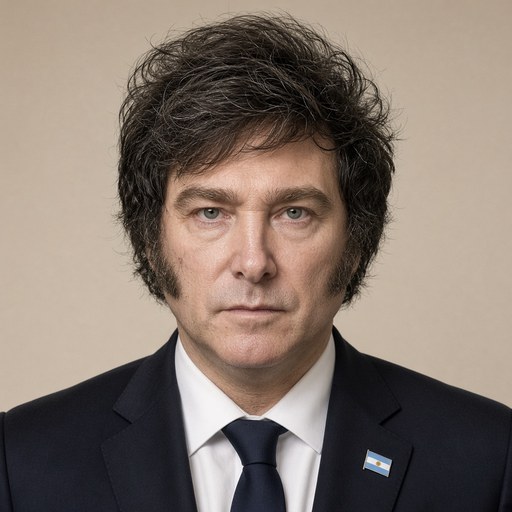
Words of the President, Javier Milei, at the signing of the Pact of May.
 Javier Milei · President of Argentina
- Context
- Milei addressed political leaders, governors, and former presidents in Tucumán on July 9, 2024, at the signing of the Pact of May, a landmark national unity agreement.
- Main themes
- Pact of May signing, national unity, Argentina's decline and renewal, liberal economic principles, constitutional founding of 1853, political consensus, historical turning points, Juan Bautista Alberdi, leadership courage, common national project
- Duration
- ~49 min
- Words
- 5,827
- Sentences
- 248
- Readability
- 46
- Grade
- 12.6
- Syntax
- 3.05
- Vocabulary
- 2.16
Translated from Spanish
This is an interview, press conference or exchange with other speakers. It is split into sentences and counted in the corpus, but its sentences are not tagged on the twelve indices.
248 sentences in 34 paragraphs
Good evening everyone. Argentina is at a turning point. The breaking points in the history of a nation are not moments of peace and tranquility; they are moments of difficulty and conflict where everything seems uphill. They are moments when the abyss becomes so clear that change becomes an obligation and an urgency, and the conquest of that difficulty occurs because those in leadership positions have the courage to be greater than themselves, to set aside selfishness, and to make sacrifices to embark together on a common path. This is how the great history of countries is written.
It is not the first time that, after years of internal wars, representatives from different corners of the political map come together to lay down their arms and meet around a new order. This happened to us in May 1853, when 24 delegates representing the United Provinces gathered to sanction our first Constitution and thus give us a common law for the entire national territory. We had been at war for more than 40 years, first for independence, but then we fell into three endless decades of civil war, where we killed each other with sabers. We were on the brink of the abyss, on the verge of disappearing as a nation. But thanks to the vision and courage of those leaders, and the conviction of the thousands of free men who followed them, we managed to adopt a common charter, establish the foundations on which we would build the new order, and constitute ourselves as a nation. And we did this taking as our guiding light the liberal ideas of our greatest national thinker, Juan Bautista Alberdi, who was born in this very city and whose remains lie just a few blocks from here.
That original parchment of our first Constitution, with the signatures of those 24 delegates, is now displayed in the Hall of the Oath, watching over the act that will be signed by those present here. It was that patriotic gesture of those who laid down their arms to agree on a national project that marked the starting point of an astonishing process: the eruption of Argentina like a volcano, from the depths of the abyss to the heights of the skies. That Constitution gave us half a century of growth and economic development, and as a consequence of that economic development, it brought us advances in all spheres of human activity. It was, without a doubt, the golden age of our country, which placed us at the top, shoulder to shoulder with the great nations of the world. And at the base of that long process, we always had, unshakeable, a set of principles, ideas, and common objectives.
Today that great Argentina, which we once were, seems a distant dream after a century of gradual decline into misery; we have practically forgotten, as a society, our prosperous past and the ideas that made it possible. Just as distant and even impossible has it seemed in recent years that leaders from different forces could come together to agree on a common direction, just as our founding fathers did. Despite being a historical demand of the Argentine political leadership and, why not, also of society, the possibility of sitting at a table and establishing common guidelines across all political forces has always seemed a chimera in recent decades.
That is why I want to thank all those present for gathering here, in the Historical House of our independence. After decades of swinging between antagonistic projects that have made us increasingly poorer, today we come together to renew our patriotic vows and sign what we have called the Pact of May. Therefore, I want to thank the members of the National Government, the 18 governors who accompany us today, the leaders, deputies, and senators from different parties, blocs, and districts, the former presidents, the representatives of the various sectors of the economy, the heads of the Armed Forces, and all the others who are here. Despite having been opposed in the past or having defended ideas different from those we subscribe to in this pact today, they have the generosity to respond to this call, which constitutes an act of greatness and, without a doubt, of love for the homeland.
Because they are responding to the call made by the Argentine people, who listen to us from their homes and who last year demanded a profound change in direction from the political leadership. That this is possible today in Argentina, after so much division, is undoubtedly a symbol of a change of era. We do not look back, we do not hold grudges. We believe that the only thing politics should do is discuss ideas and bring those ideas to reality. Not to challenge the opponent for personal reasons, to persecute them for thinking differently, or to live in a permanent Inquisition. And we believe, above all, that the challenge facing Argentina today is too great and the promise of a better future too valuable to allow pettiness or squabbles from the past to cloud this path.
However, there are many political, social, and union leaders who are not here today among those present for this fundamental act. In some cases, because their ideological blinders prevent them from recognizing the root of Argentina's failure; in others, out of fear or shame for having persisted in error for so long. And unfortunately, in many cases, due to obstinacy in not wanting to cede the privileges that the old order provided them. It is no coincidence that among these last ones are those who have tried and continue to try to sabotage this government and conspire for it to fail. They are addicted to the system because their personal interests are diametrically opposed to those of the common people, and they know, although they do not admit it, that they progress at the expense of the fact that the rest of the Argentines fare worse and worse.
Nevertheless, we are convinced that even those who today ignore the demands of society, for whatever reason, can return to the Argentine path in the future and find redemption. They will find us here defending the same ideas that we reaffirm today, and we will welcome them with open arms. Every man is capable of redemption, and we will not reject anyone who wants to contribute to the construction of the change that the country so desperately needs. No one, regardless of which party they come from, with whom they have been, where they have campaigned, or what they have done, as long as they have acted within the law. What matters is that they embrace and want to contribute, as we all do here today, to the fundamental pillars on which we will build the New Argentina.
On July 9, 1816, the signing of the act of the Declaration of Independence marked the end of the Revolution and the beginning of the new order, the order of the United Provinces of the Río de la Plata now independent from the Spanish metropolis and with the vocation to give ourselves a government. On July 9, 2024, with the signing of this Act of May, with representatives from all sectors of politics and society, we also announce the starting point of a new order for our country. Building the prosperous and dynamic country we want will take time and titanic efforts from all those present and from the common society, but if we have a clear vision of the direction and come together around a set of non-negotiable principles and objectives, we will reach our destination sooner rather than later.
That is why we are here today, to establish among ourselves and with society a gentlemen's pact around these pillars, and to say before all the good Argentines who demanded a change in direction with their vote that a different Argentina is impossible by doing the same things as always. That is why we sign this pact, whose first point indicates the inviolability of private property. That is why we, the undersigned, sign an act of 10 uncompromising concepts, of which the first is a commitment to the inviolability of private property. Private property is the first and most basic institution of our society. The very freedom of each person depends on the inviolability of the first property of all, which is the property one has over their own body and will. Each person knows how much it cost to obtain what they have, how much effort, how much sweat, how much sacrifice, and above all, how much Freedom they invested to achieve it. Every choice one makes involves thousands of renunciations. That is why when a politician confiscates through taxes the fruit of an individual's labor, they are confiscating their time, confiscating their sacrifice, and confiscating their freedom.
Moreover, the defense of property is not only a Right but also the formula for economic growth. Julio Argentino Roca once said that commerce knows better than government what is good for it. True politics, therefore, consists of granting the broadest freedom. That is, Argentines know better what to do with their own than the government. They do not need a bureaucrat to tell them what to produce, with whom to trade, how much they can earn, with whom to work, or whom to hire. And in the free disposition of that property by each individual, everyone ends up faring better. The freer a people are, the richer they become. It is as simple as that. That is why, in line with this mandate, we will pursue an aggressive deregulation agenda in all areas of economic activity. Respecting the inviolability of private property is reaffirming to Argentines that they are the owners of their own lives and their own destinies. Ultimately, that they are adults and that in exercising their capacity, they can and must choose for themselves and take on the responsibility that entails.
If the State decides on all aspects of the individual's life and has a claim over property, the individual does not recognize themselves as the owner of their own life and consequently does not take responsibility for their own actions. Second: fiscal balance is non-negotiable. We also sign here a non-negotiable commitment to fiscal responsibility. We need to agree that chronic fiscal deficit is the serpent's egg of Argentina's decline, as it is the ultimate source of all the problems our economy has faced in the last 100 years. Debt, suffocating tax pressure, monetary issuance, and inflation are nothing but symptoms, consequences of compulsive public spending without backing or financing.
Thus, what we are assuming is nothing less than a non-negotiable commitment to common sense. One cannot spend more than what comes in, and one cannot impose on those who will pay taxes in the future the burden of financing the present's waste. Debt or issuance to cover deficit public accounts will sooner or later be paid with inflationary taxes, which is the worst of all, because it affects those who have the least, in addition to having, for me, a moral burden. These are basic unalterable laws of economics; it is undeniable mathematics. When we obey these principles as a Nation, we did so well in such a short time that we soon became the envy of the entire world. But when, in a vicious pattern of fatal arrogance, the political class believed it could reinvent the wheel and ignore these basic laws of economics, it plunged us into misery for a century, and we ended up in the deep abyss in which we find ourselves today.
Well, we are not gods; we are just men. We do not write the rules; we can only follow them. That is why from now on, economic shamanism is over. We must do what has been proven to work worldwide and abandon the recipes that have failed. Now, if we fulfill this commitment, that does not mean we will never have economic setbacks. No one can predict or promise that. Countries that function well also have problems. But what I can promise you is that we will live in a country without inflation for the rest of our days. And I want to take a moment to help you understand what this means, because we have lived under an inflationary regime for so many years that we have become accustomed to it. Those under 25 probably do not even remember what it is like to live without inflation.
Living suffocated by inflation is living in the prison of the eternal present, where it becomes impossible to look ahead, calculate our expenses, and plan our future. It nullifies the possibility of both a personal project and a family project or an economic project. That is why recovering fiscal balance and making it a mandate that survives this government and endures for many more is for us a matter that plays into the very dignity of humanity.
Third: public spending around 25% of GDP. We also commit with this signature to reduce public spending to historical levels around 25% of Gross Domestic Product. Our country has natural resources and a hyper-talented and hardworking human capital, but it does not thrive because the private sector, businesses, workers, and entrepreneurs bear the burden of more than 40% of GDP in state spending, which we are painstakingly reducing. This means that for every $10 that an Argentine generates with the sweat of their brow, more than four are consumed by national, provincial, and municipal states. And since magic does not exist, this excessive spending can only be financed with taxes that suffocate our economy, with inflation that pulverizes wages and makes economic calculation impossible, or with debt, which are taxes on future generations.
Every additional point of GDP that politicians add to state spending is a burden on the private sector. It is a direct extraction of wealth and opportunities for every company that wants to invest, progress, and create jobs. It is a direct cut to the income of Argentine families. Whether in the form of taxes on the goods they consume or through higher inflation, it suffocates our agricultural sector with taxes that do not exist anywhere else in the world. It blocks the full development of our productive interior. It prevents entrepreneurs from scaling their projects and becoming large business owners. Excessive public spending is the root of all our ills. As we have been insisting for years, we are facing problems of biblical proportions. Problems that require the effort of all sectors. Drastically reducing the weight of the State in our economy is our most important and most difficult mission. That is why we call for this pact, so that all of us who have responsibility in this matter do our part to ensure the prosperity of our country. 44% of the state spending in our country corresponds to the provinces and municipalities. For every employee of the National State, there are five provincial employees. Achieving a reasonable weight of the State of 25 points of GDP requires that all levels of the State do their part.
This will result in benefits for all, because the prosperity and well-being of the country, of each of its provinces and municipalities, is inversely proportional to the size of the State. From the National State, we have already demonstrated our commitment, having made in just 8 months the largest reduction in public spending in the history of the National State. The signatories here committed to doing their part in their respective districts.
A State that serves society and not politicians must have, in addition to a reasonable weight, clear functions. We insist on reducing the weight of the State by 15 points, not only because this was the size it had in our time of greatest prosperity, but because with a consolidated spending of 25 points, the only functions that the State must fulfill can be met: enforcing the law and respecting private property; repressing and punishing crime in all its forms, ensuring the integrity of the national territory with respected and equipped Armed Forces; ensuring access to education and health for Argentines. A small State but with limited and clear functions is worth more than a giant State that squanders the resources of Argentines on tasks that do not belong to it, benefits a few, and blocks the prosperity of our country.
Fourth: Education. We also sign here the commitment to a useful and modern primary and secondary education, with full literacy and no school dropouts, because we understand that Argentina has been going through an undeniable educational crisis for a long time, and we identify today that the heart of the crisis lies in the failure we have had as a country in properly educating our students. Today, half of primary school students do not reach the appropriate level of reading comprehension for their age. For sixth graders, that figure rises to 70%, meaning that today 7 out of 10 Argentine children do not understand the texts they read. And all this happened under the noses of political leaders, while mayors and parliamentary blocs pulled in different directions to define which municipality would keep the funds to build a new university. We have focused solely on higher education for decades, and while we looked the other way, illiteracy crept in through the cracks of the early educational levels. It must be understood that proper literacy and the guarantee of basic competencies for primary students is the necessary condition that makes any type of subsequent learning possible.
If we cannot guarantee that, all subsequent efforts in the educational trajectory of the student are conditioned from the outset. We cannot be surprised then by the record levels of dropout we have today. That is why this commitment is above all one that we must assume together, the National Government and the provincial governments, to face the problem head-on and raise the bar; and to recover the spirit of demand with teachers, which is so necessary. Know that you will have the support of the National State and the resources and support of the literacy plan we presented this week to pursue this goal together. But the problem in education does not end with literacy, with perfecting basic education. We have an educational system that is disconnected from the economic needs of our society, because we have university programs that are too long, because we have prioritized increasing the university offer over the tertiary offer, because we graduate an inflated number of lawyers and accountants, who are only in demand because in Argentina there are too many lawsuits, too many procedures, and too many taxes; and because we have a large number of careers for which the only possible employer is the State, either directly or indirectly, performing functions it should not perform.
And the most complicated of all, because the status quo in teacher training institutions and colleges is to challenge the basic precepts of the social cooperation system in which we live, which is capitalism and liberal democracy. This last point is simply collective suicide. How can it be the norm in the secondary schools and universities of the country to instill that capitalism is bad? The primary purpose of the educational system must be to integrate students into society according to its norms. With illiteracy, we have been playing dumb for decades, and here we are today in a situation incompatible with the educational tradition of our country, which was the first to eradicate illiteracy in the world. We cannot afford to ignore the other problems of the educational system. We must address them before it is too late. That is why I speak to you today about shifting to a useful and modern education. Useful for young people, so that they have the tools to integrate and develop in the labor market and in society in general. And that is why I urge political leaders and civil society to focus on rebuilding the foundation of the educational building and the human formation of Argentines, which is the school. Because no building can endure if its foundations are crumbling.
Fifth: tax reform. We also sign here the commitment to carry out a tax reform that reduces the tax burden, simplifies the lives of Argentines, and promotes trade. Our tax system is suffocating, labyrinthine, and unstable. Argentina must stop being a fiscal hell for those who work, strive, and invest. Our country has an explicit tax burden that exceeds 30% of GDP. In the last 15 years, it has grown steadily and, not coincidentally, during this same period we have been the country that has grown the least in Latin America. To reverse this, the reduction of the weight of the State in the economy must be accompanied by a significant reduction in the tax burden. The problem of this system does not end here. In addition to its weight, there is its complexity, as today Argentines are subjected to more than 150 taxes, including national, provincial, and municipal. This is a hidden cost that companies and individuals absorb. In addition to reducing the tax burden, we must simplify it. For this, the commitment of provincial and municipal governments is necessary. Argentines deserve to be free; they deserve to dedicate their time and resources to unleash all their creativity and talent to create wealth, not to fill out forms and pay dozens of incomprehensible taxes.
Finally, it is central to achieve a stable tax system. A capitalist economy is based on the ability to make economic calculations, for economic agents to infer what their future income and expenses will be. In Argentina, this has become impossible, not only because of inflation but also because of the fiscal voracity of politics, which has constantly created taxes to cover unnecessary expenses. Many of these, such as the check tax or Personal Property Tax, were supposed to be temporary, but they have been draining the pockets of those who pay them for more than two decades. We need the commitment of all parties to achieve a tax system that does not suffocate private activity, that is simple, and that endures over time.
Sixth: re-discussion of federal tax sharing. We also sign here the commitment to re-discuss federal tax sharing, to put an end once and for all to the extortion model that provinces suffer. Our federalism is fraudulent; it punishes those who are fiscally responsible and productive, and only serves for politicians in Buenos Aires to extort provinces in exchange for political favors. On one hand, we have a federal tax sharing system that perverts all incentives to progress. Under a supposed solidarity principle, it brings to provinces that do their homework with orderly public accounts and productive economies, to subsidize those who live off others. We must incentivize those who bet on the development of the private sector instead of punishing it. On the other hand, it has become customary in recent decades for politics in Buenos Aires to distribute resources discretionarily to benefit their political allies. We have cut this practice off at the root, reducing these transfers to zero, but we need the commitment of all to ensure that these practices do not return.
Each of our provinces has everything to progress and be self-sufficient in a free market and prosperous economy. They do not need a fraudulent federalism that only serves the politics of Buenos Aires. Discussing tax sharing may seem like a Herculean task at first, but there has never been a National Government in history more willing to return to the provinces what is theirs than ours. We must be able to find a path of agreement in this matter.
Seventh: natural resources. The other commitment we sign here today, and for which we will need the will of the provinces, is the commitment to exploit the natural resources that God has given us. God has blessed our land with enormous wealth in natural resources. He has given us the possibility for Argentines to create wealth and develop their lives with dignity in every corner of the homeland. But politicians have listened more to the demands of noisy minorities and environmental organizations funded by wealthy foreigners than to the needs of Argentines to prosper. We come to change that, to leave behind the benevolent demagoguery that condemns millions of Argentines to misery to gain the approval of a few privileged. Nature must serve humanity and its well-being; not the other way around. Environmental problems must center on the individual, which is why the main environmental problem we have is extreme poverty. And this can only be solved if we take advantage of our resources. We have reached the ridiculous point of sharing a mountain range with Chile and not producing copper, while they export more than 50 billion dollars a year of this mineral; more than double what we export in soybeans. We have also reached the ridiculous point of hindering the exploitation of our maritime resources, one of our most abundant riches, resulting only in these being appropriated by foreign powers. Having the commitment to exploit our natural resources is to have a commitment to the real needs of our country, to end poverty, and to create growth opportunities for all Argentines in every corner of the country.
Labor reform. Of course, none of this will be possible without advancing a modern labor reform that promotes formal work. On this issue, there can be no doubt; the labor regime that has prevailed in Argentina for the last 50 years is obsolete and harmful. For the labor world we have today, there is no room to cling to this model, when the world has changed and especially when Argentina has changed, and in the wrong direction; dragged to the bottom of the sea by the anchor that is the current labor system. It is a regime with outdated regulations that makes it almost impossible to hire someone formally. That is why two out of ten people of working age have a formal job, and this figure has hardly changed in the last 10 years. In parallel, the only thing that has grown in Argentina in the last 10 years has been public employment, which has increased by 35% in provincial governments since 2011. For decades we have been regressing, and political and union leadership has wanted to cover the sun with their hands. They have preferred to let the economy sink and the formal labor market disappear rather than enable the conversation to modify it. It must be understood that current labor legislation was designed for a country that had eliminated poverty and had no unemployment. That country no longer exists. We are a poor country, with the majority of the population working in precarious conditions. We need to generate work. Quality formal work. And for that, it is essential to generate wealth.
It is time to recognize that sweeping the problem under the rug does not make it disappear; it only makes it worse. It is time to accept that what is best for a worker is an employer, and that in order to have more workers and better quality jobs, there must be more companies. It is time to accept that it must be profitable for companies to hire, not an act of solidarity. And it is time to accept that it must be possible for companies to dismiss employees without facing a hellish lawsuit, because with the labor legislation we have, we are harming companies, but even more so, we are harming workers.
Ninth: pension reform. We cannot advance in labor reform without a profound reform of the pension system that provides sustainability to the system and guarantees respect for those who contributed. The Argentine pension and retirement system is broken and has an incentive design that makes it unsustainable and immoral. In addition to demographic factors such as an aging population, or the fact that life expectancy has increased from 64 to 76 years in five decades, there is an absolutely perverse retirement system. For every retiree, there are only 1.8 active workers, when in reality four are needed. This is not a coincidence. It is due to having labor legislation that incentivizes informality and a pension system that robs those who contributed to give to those who did not. This removes any incentive to contribute to the system. We need a pension system that respects the contributions and savings of a lifetime. It perverts the morality of a country to value equally those who have strived, worked, and contributed their whole lives, and those who have not. This applies to pensions as well as to education, taxation, and federal matters. In Argentina, the incentives are upside down: those who do nothing are rewarded, and those who do are punished; those who do not comply benefit, while those who do comply are harmed. This perverse logic, which is transversal to all issues of social life, must come to an end.
Tenth: openness and global trade. Finally, and lastly, we also sign here the commitment to openness to international trade, so that Argentina can be a protagonist in the global market. Our economy is the third most closed in the world, surpassed only by Sudan and Ethiopia. This is a hindrance to the progress and well-being of all Argentines. Politics has tried to convince us, in a demagogic way, that closing the economy was protecting Argentines. Nothing has ever been said that is as false as this. A closed economy only serves to protect a few friends of power so they can sell more expensive and lower quality products to the 47 million Argentines. A closed economy makes it impossible for thousands of Argentine companies, entrepreneurs, and professionals to sell their goods and services abroad. This blocks the possibility of thousands of well-paid jobs in our country. Unlike those who have governed before, we trust in the Argentine potential to be a protagonist in the world market. We believe that our compatriots have the ability and creativity to offer high-quality goods that can compete and conquer the best markets in the world. Free trade, so vilified in Argentina in recent decades, is the engine of global progress. There is no possibility of growth if we do not open up to trade. Argentina must stop turning its back on the world. We must be protagonists of global trade in the coming decades. We have everything to do it.
Finally, these 10 ideas that we have briefly developed are the 10 pillars on which we will rebuild the edifice of our nation. But these 10 ideas cannot remain merely declarative. We did not come here to construct a narrative; we came here to build a nation. For that reason, we have decided to create the Council of May, which will have the task of translating each of these points into effective legislation that we will send to Congress. We hope that, with the support of all economic actors in Argentina, we can materialize the principles outlined here into legislative reforms. A few months ago, during the celebration of May 25, I spoke about how the great Argentine story is marked by the passage of generations of patriots. They are the generations we all learned about in textbooks when we were children: the May generation, which rebelled against the yoke of a corrupt and immoral regime that parasitized the lives of Argentines to pay tribute to the crown; the generation of 1837, of Alberdi and Sarmiento, which first thought about the country and wrote the ideas and principles according to which it would develop; the generation of 1880, which translated those ideas into a political project of prosperity and made Argentina a power admired by the entire world. We have all heard about those men who make up the great pantheon of heroes of our homeland. We remember them as superior beings, divine, made of a clay different from that of other mortals, but deep down they were men of flesh and blood. They had, as the sacred scriptures say and as King Solomon asked the Creator, the wisdom to distinguish good from evil, the courage to choose it, and also the temperance to stay on the path even when circumstances seemed too adverse at that moment.
And in these qualities, seen through the lens of the present, they seem divine because they are scarce, but they are human, they are possible, and they can be embodied by each of us. Today, after having tried 100 consecutive years of every experiment there was and after having touched the depths of the abyss as a country, the vast majority of Argentines are aware that losing our way has cost us dearly. And when society demands a profound change and the drums of history once again begin to beat, it is once again up to men, not divine beings, but mere men and women to rise to the occasion that history demands. That is why we not only have a historic opportunity but also the obligation to heed that call, the obligation to follow the moral and civic example of those illustrious Argentines, the obligation to pick up that glove together and to once again be a generation of patriots, to dare to do what history demands, even if the cost of doing so were to renounce our reputation or personal interests, and to once again embrace, for the first time in 100 years, the ideas that our homeland's heroes embraced, the ideas that transformed a country of barbarians into a world power in a matter of decades, which are also the ideas that made the West the most impressive civilizational achievement in the history of humanity and which I like to call the ideas of freedom.
I know that for some it seems an impossible task. I know that many Argentines are tired and feel that we have expended too many efforts in the service of nothing in recent years, and that trying to get ahead in Argentina sometimes feels like carrying the stone of Sisyphus. But I tell you, we know that a different Argentina is impossible by doing the same things as always, and we will not stop until we change the ills that afflict our country at their roots. We are confident that if we do it together, we will succeed, because we have done it in the past and we can do it again, because we are not just any people; we are Argentina. And because victory on the battlefield does not depend on the number of soldiers, but on the forces that come from heaven. Long live the homeland and long live freedom, damn it! Long live freedom, damn it! Long live freedom, damn it! Thank you very much to all, thank you for so much greatness, thank you for this patriotic gesture. Thank you very much!
The original Spanish. The tags above are read on the English translation's sentences.
Buenas noches a todos. La Argentina se encuentra ante un punto de inflexión. Los puntos de quiebre en la historia de una nación no son momentos de paz y tranquilidad, son momentos de dificultad y conflicto donde todo parece cuesta arriba. Son momentos en donde el abismo se hace tan claro que el cambio se convierte en una obligación y en una urgencia, y la conquista de esa dificultad ocurre porque quienes ocupan lugares de liderazgo tienen la valentía de ser más grandes que ellos mismos, hacer a un lado los egoísmos y realizar sacrificios para emprender juntos un rumbo común. Así es como se escribe la historia grande de los países.
No es la primera vez que, después de años de guerra intestinas, representantes de los distintos confines del mapa político se reúnen para deponer las armas y encontrarse en torno a un nuevo orden. Esto ya nos pasó en mayo de 1853, cuando 24 convencionales en representación de las Provincias Unidas se reunieron para sancionar nuestra primera Constitución y darnos así una ley común para todo el territorio nacional. Llevábamos más de 40 años de guerra, primero por la independencia, pero después habíamos caído en tres décadas interminables de guerra civil, donde nos habíamos matado a sablazos unos a otros. Estábamos al borde del abismo, al borde de desaparecer como nación. Pero gracias a la visión y el coraje de aquellos líderes, y la convicción de los miles de hombres libres que los siguieron, logramos adoptar una carta magna común, establecer las bases sobre las que construiríamos el nuevo orden, y constituirnos como nación. Y lo hicimos tomando como faro las ideas liberales de nuestro máximo pensador nacional, Juan Bautista Alberdi, que nació en esta misma ciudad y cuyos restos yacen a pocas cuadras de aquí.
Ese pergamino original de nuestra primera Constitución, con la firma de aquellos 24 convencionales, hoy está dispuesto en el Salón de la Jura velando sobre el acta que firmarán los aquí presentes. Fue ese gesto patriótico de quienes depusieron las armas para convenir un proyecto de nación, el puntapié inicial de un proceso asombroso: la erupción de la Argentina como un volcán, desde las profundidades del abismo hasta la altura de los cielos. Esa Constitución nos dio medio siglo de crecimiento y desarrollo económico, y como consecuencia de ese desarrollo económico, nos trajo avances en todas las esferas de la actividad humana. Fue, sin lugar a dudas, la época dorada de nuestro país, que nos puso en la cima, codo a codo con las grandes naciones del mundo. Y en la base de ese largo proceso, tuvimos siempre, inconmovibles, un conjunto de principios, ideas y objetivos comunes.
Hoy esa Argentina grande, que alguna vez fuimos, parece un sueño lejano después de un siglo de paulatina caída en la miseria nos hemos prácticamente olvidado, como sociedad, de nuestro pasado próspero y de las ideas que lo hicieron posible. Igual de lejano e incluso imposible pareció en los últimos años que dirigentes de distintas fuerzas pudieran reunirse para convenir un rumbo común, tal como lo hicieron nuestros padres fundadores. A pesar de haber sido una demanda histórica de la dirigencia política argentina y, por qué no también de la sociedad, la posibilidad de sentarnos en una mesa y establecer pautas comunes transversales a todas las fuerzas políticas siempre pareció una quimera en las últimas décadas.
Por eso quiero agradecerles a todos los presentes por haberse congregado aquí, en la Casa Histórica de nuestra independencia. Después de décadas de pendular entre proyectos antagónicos que nos han hecho cada vez más pobres, hoy nos reunimos para renovar nuestros votos patrióticos y firmar lo que hemos llamado el Pacto de Mayo. Por eso quiero agradecerle a los integrantes del Gobierno Nacional, a los 18 gobernadores que hoy nos acompañan, a los dirigentes, diputados y senadores de distintos partidos, bloques y distritos, a los expresidentes, a los representantes de los distintos sectores de la economía, a los jefes de las Fuerzas Armadas y a todos los demás que están aquí. A pesar de haber estado enfrentados en el pasado o haber defendido ideas distintas a las que hoy suscribimos en este pacto, tienen la generosidad de acudir a esta convocatoria, lo cual constituye un acto de grandeza y, sin dudas, de amor a la patria.
Porque están acudiendo al llamado que les hace el pueblo argentino, que nos escucha desde su casa y que el año pasado exigió a la dirigencia política un cambio profundo de dirección. Que esto sea posible hoy en Argentina, después de tanta división, es sin duda el símbolo de un cambio de época. No miramos para atrás, no mantenemos rencores. Creemos que lo único que tiene que hacer la política es discutir ideas y llevar esas ideas a la realidad. No impugnar al adversario por cuestiones personales, perseguirlo por pensar distinto, ni vivir en una Inquisición permanente. Y creemos, sobre todo, que el desafío que enfrenta la Argentina hoy es demasiado grande y la promesa de un futuro mejor demasiado valiosa como para permitir que mezquindades o trifulcas del pasado nublen este camino
No obstante, hay muchos dirigentes políticos sociales y sindicales que no están aquí hoy entre los presentes para este acta fundamental. En algunos casos porque sus anteojeras ideológicas los hacen desconocer la raíz del fracaso argentino, en otros por miedo o vergüenza de haber persistido en el error durante tanto tiempo. Y lamentablemente, en muchos casos, por obstinación en no querer ceder los privilegios que el viejo orden les brindaba. No es casualidad que entre estos últimos se encuentren quienes han intentado e intentan cotidianamente boicotear a este gobierno y conspiran para que fracase. Ellos son adictos al sistema porque sus intereses personales son diametralmente opuestos al del común de la gente y saben, aunque no lo admitan, que ellos progresan a costa de que el conjunto de los argentinos le vaya cada vez peor.
Sin embargo, nosotros estamos convencidos que inclusive aquellos que hoy desoyen el reclamo en la sociedad, sea por la razón que sea, en el futuro pueden volver a la senda argentina y encontrar la redención. Nos encontrarán aquí defendiendo las mismas ideas que ratificamos hoy y les daremos la bienvenida con brazos abiertos. Todo hombre es capaz de redimirse y no rechazaremos a nadie que quiera aportar a la construcción del cambio que el país tan desesperadamente necesita. A nadie, no importa de qué partido provenga, con quién haya estado, donde haya militado, ni qué haya hecho, siempre y cuando haya obrado dentro de la ley. Lo único que importa es que abrace y quiera contribuir, como lo hacemos todos los aquí presentes hoy, a los pilares fundamentales sobre los cuales vamos a erigir la Nueva Argentina.
El 9 de julio de 1816, la firma del acta de la Declaración de la Independencia marcó el fin de la Revolución y el comienzo del nuevo orden, el orden de las Provincias Unidas del Río de la Plata ahora independientes de la metrópoli española y con la vocación de darnos a nosotros mismos un gobierno. El 9 de julio de 2024, con la firma de este Acta de Mayo, con representantes de todos los sectores de la política y la sociedad, anunciamos también el puntapié inicial de un nuevo orden para nuestro país. Construir el país próspero y pujante que queremos llevará tiempo y esfuerzos titánicos de parte de todos los presentes y del común de la sociedad, pero si tenemos una visión clara del rumbo y nos mancomunamos en torno a un conjunto de principios y objetivos no negociables llegaremos a puerto más pronto que tarde.
Para eso estamos aquí hoy, para establecer entre nosotros y junto a la sociedad un pacto de caballeros en torno a estos pilares, y para decir ante todos los argentinos de bien que reclamaron un cambio de rumbo con su voto que una Argentina distinta es imposible haciendo lo mismo de siempre. Es por eso que firmamos este pacto, cuyo primer punto indica la inviolabilidad de la propiedad privada. Por eso firmamos aquí los presentes un acta de 10 conceptos inclaudicables, de los cuales el primero es un compromiso con la inviolabilidad de la propiedad privada. La propiedad privada es la primera y más básica institución de nuestra sociedad. La libertad misma de cada uno depende de la inviolabilidad de la primera propiedad de todas, que es la propiedad que uno tiene sobre su propio cuerpo y voluntad. Cada cual sabe cuánto costó conseguir lo que uno tiene, cuánto esfuerzo, cuánto sudor, cuánto sacrificio y sobre todo cuánta Libertad invirtió para lograrlo. Cada elección que uno toma implica miles de renuncias. Por eso cuando el político confisca a través de impuestos el fruto del trabajo el individuo, está confiscando su tiempo, le está confiscando su sacrificio y le está confiscando su libertad.
Además, la defensa de la propiedad no solo se trata de un Derecho, sino de la fórmula para el crecimiento económico. Julio Argentino Roca dijo alguna vez que el comercio sabe mejor que el gobierno lo que a él le conviene. La verdadera política consiste pues en dejarle la más amplia libertad. Esto es, los argentinos saben mejor qué hacer con lo suyo que el gobierno. No necesitan que un burócrata les diga qué producir, con quién comerciar, cuánto pueden ganar, con quién trabajar o a quién contratar. Y en la libre disposición de esa propiedad de parte de cada uno le termina yendo mejor a todos. Cuanto más libre es un pueblo, más rico se vuelve. Es tan simple como eso. Por eso, en consonancia con este mandato, desde el gobierno perseguiremos una agresiva agenda de desregulación en todos los órdenes de la actividad económica. Respetar la inviolabilidad de la propiedad privada es ratificarle a los argentinos que ellos son los dueños de sus propias vidas y de sus propios destinos. En definitiva, que son adultos y que en el ejercicio de su capacidad pueden y deben elegir por sí mismos y hacerse cargo la responsabilidad que eso conlleva.
Si el Estado decide sobre todos los aspectos de la vida del individuo, y tiene derecho de reclamo sobre la propiedad, el individuo no se reconoce propietario de su propia vida y en consecuencia no se hace responsable de sus propias acciones. Dos: el equilibrio fiscal es innegociable. También firmamos aquí un compromiso innegociable con el compromiso fiscal. Necesitamos estar de acuerdo en que el déficit fiscal crónico es el huevo de la serpiente de la decadencia argentina, porque es el origen último de todos los problemas que ha tenido nuestra economía en los últimos 100 años. La deuda, la presión fiscal asfixiante, la emisión monetaria y la inflación no son otra cosa que síntomas, consecuencia del gasto público compulsivo sin respaldo ni financiamiento.
Con lo cual, lo que estamos asumiendo no es otra cosa que un compromiso innegociable con el sentido común. No se puede gastar más de lo que entra y no se le puede imponer a quienes pagarán impuestos en el futuro solventar el despilfarro del presente. La deuda o la emisión para solventar cuentas públicas deficitarias tarde o temprano se termina pagando con impuesto inflacionario, que es el peor de todos, porque afecta más a los que menos tienen, además de tener para mí una carga moral. Estas son leyes básicas inalterables de la economía, es matemática inobjetable. Cuando obedecimos a estos principios como Nación nos fue tan bien en tan poco tiempo que pronto fuimos la envidia del mundo entero. Pero cuando, en un patrón vicioso de fatal arrogancia, la clase política creyó que podía inventar la rueda y desoír estas leyes básicas de la economía, nos hundió en la miseria por un siglo y terminamos en el abismo profundo en el que estamos hoy.
Bueno, no somos dioses, somos solo hombres. No escribimos las reglas, solo podemos seguirlas. Por eso de acá en adelante se terminó el chamanismo económico. Debemos hacer lo que ha funcionado de forma probada en todo el mundo y abandonar las recetas que fracasaron. Ahora, si cumplimos este compromiso, eso no quiere decir que nunca vamos a tener contratiempos económicos. Eso nadie es capaz de predecirlo ni de prometerlo. Los países que funcionan bien también tienen problemas. Pero lo que sí les prometo es que vamos a vivir en un país sin inflación por el resto de nuestros días. Y quiero detenerme un segundo en hacerles comprender qué significa esto, porque vivimos bajo un régimen inflacionario hace tantos años que nos hemos acostumbrado. Los menores 25 años ni siquiera recuerdan probablemente lo que es vivir sin inflación.
Vivir atosigados por la inflación es vivir en la cárcel del eterno presente, donde se vuelve imposible mirar para adelante, calcular nuestros gastos y planificar nuestro futuro. Anula la posibilidad tanto de un proyecto personal, como de un proyecto de familia o un proyecto económico. Por eso, recuperar el equilibrio fiscal y convertirlo en un mandamiento que sobreviva a este gobierno y perdure por muchos más es para nosotros una cuestión en la que se juega la misma dignidad humana.
Tercero: gasto público en torno a 25 puntos del PBI. También nos comprometemos con esta firma a bajar el gasto público a los niveles históricos en torno al 25% del Producto Bruto Interno. Nuestro país tiene recursos naturales y un capital humano hiper talentoso y trabajador, pero que no prospera porque el sector privado, las empresas, los trabajadores y los emprendedores cargan en sus espaldas con más de 40 puntos del PBI de gasto estatal que, con mucho esfuerzo, estamos reduciendo. Esto es que cada $10 que el argentino genera con el sudor de su frente, más de cuatro son consumidos por los Estados nacionales, provinciales y municipales. Y como la magia no existe, este exagerado gasto solo se puede financiar con impuestos que asfixian a nuestra economía, con inflación que pulveriza salarios e imposibilita el cálculo económico, o con deuda, que son impuestos a las generaciones futuras.
Cada punto adicional del PBI que los políticos le suman al gasto estatal es una carga para el sector privado. Es una extracción directa de riqueza y oportunidades para cada empresa que quiere invertir, progresar y dar trabajo. Es una quita directa a los ingresos de las familias argentinas. Sea en forma de impuesto a los bienes que consumen o con mayor inflación, es asfixiar a nuestro campo con impuestos que no existen en ninguna parte del mundo. Es bloquear el desarrollo pleno de nuestro interior productivo. Es impedir que los emprendedores puedan escalar sus proyectos y convertirse en grandes empresarios. El gasto público desmedido es el centro de todos nuestros males. Como venimos insistiendo hace años, nos enfrentamos a problemas de magnitudes bíblicas. Problemas que requieren del esfuerzo de todos los sectores. Bajar drásticamente el peso del Estado en nuestra economía es nuestra misión más importante y más difícil. Por eso convocamos a este pacto, para que todos los que tenemos responsabilidad sobre esta materia hagamos nuestra parte para asegurar la prosperidad de nuestro país. El 44% del gasto del Estado de nuestro país corresponde a las provincias y los municipios. Por cada empleado del Estado Nacional hay cinco empleados provinciales. Llegar a un peso del Estado razonable de 25 puntos del PBI requiere que todos los niveles del Estado hagan su parte.
Esto redundará en beneficios para todos, porque la bonanza y la prosperidad del país, de cada una de sus provincias y municipios es inversamente proporcional al tamaño del Estado. Desde el Estado Nacional ya hemos demostrado nuestro compromiso, habiendo hecho en tan solo 8 meses la reducción de gasto público más grande de la historia del Estado Nacional. Los aquí firmantes se comprometieron a hacer su parte en sus respectivos distritos.
Un Estado que le sirve a la sociedad y no a los políticos tiene que tener, además de un peso razonable, funciones claras. Insistimos con reducir en 15 puntos el peso del Estado, no solo porque este fue el tamaño que tuvo en nuestra época de mayor prosperidad, sino porque con un gasto consolidado de 25 puntos se pueden cumplir las únicas funciones que tiene que cumplir el Estado: hacer cumplir la ley y el respeto de la propiedad privada; reprimir y castigar el delito en todas sus formas, asegurar la integridad del territorio nacional con Fuerzas Armadas respetadas y equipadas; asegurar el acceso a la educación y a la salud de los argentinos. Un Estado chico pero con funciones limitadas y claras vale más que un Estado gigante que dilapida los recursos de los argentinos en tareas que no le corresponden, beneficia a unos pocos y bloquea la prosperidad de nuestro país.
Cuarto: Educación. Firmamos aquí el compromiso también con una educación inicial primaria y secundaria útil y moderna, con alfabetización plena y sin abandono escolar, porque comprendemos que la Argentina atraviesa una innegable crisis educativa desde hace mucho tiempo, e identificamos hoy que el corazón de la crisis está en el fracaso que hemos tenido como país en alfabetizar correctamente a nuestros estudiantes. Hoy la mitad de los alumnos del primario no alcanzan el nivel de lecto-comprensión adecuado para su edad. Para los de sexto grado, ese valor llega al 70%, es decir que hoy 7 de cada 10 chicos argentinos no comprenden los textos que leen. Y todo esto ocurrió bajo las narices de la dirigencia política, mientras intendentes y bloques parlamentarios se tironeaban para definir qué municipio se quedaba con los fondos para construir una universidad nueva. Hemos puesto el foco únicamente en la educación superior por décadas y mientras mirábamos para otro lado, el analfabetismo se coló por la grieta de los primeros niveles educativos. Hay que entender que la correcta alfabetización y garantía de competencias básicas del estudiante del primario es la condición necesaria que hace posible cualquier tipo de aprendizaje posterior.
Si no podemos garantizar eso, todos los esfuerzos posteriores en la trayectoria educativa del estudiante están condicionados desde el vamos. No pueden extrañarnos entonces los niveles récord de deserción que tenemos hoy. Por eso este compromiso es sobre todo uno que debemos asumir juntos el Gobierno Nacional y los gobiernos provinciales, para mirar de frente el problema y elevar la vara; y para recuperar el espíritu de exigencia con los docentes, que es tan necesario. Sepan que contarán con el Estado Nacional y los recursos y soporte del plan de alfabetización que presentamos esta semana para perseguir en conjunto este objetivo. Pero el problema en la educación no termina en la alfabetización, en perfeccionar la educación básica. Tenemos un sistema educativo que está desconectado de las necesidades económicas de nuestra sociedad, porque tenemos carreras universitarias demasiado largas, porque hemos priorizado aumentar la oferta universitaria por sobre la oferta terciaria, porque egresamos una cantidad hipertrofiada de abogados y contadores, que son solo demandados porque en Argentina hay demasiados juicios, demasiados trámites y demasiados impuestos; y porque tenemos harta cantidad de carreras para las cuales el único empleador posible es el Estado, de forma directa o indirecta, ejerciendo funciones que no debería ejercer.
Y lo más complicado de todo, porque el status quo en las instituciones de formación docente y profesorados es impugnar los preceptos básicos del sistema de cooperación social en el que vivimos, que es el capitalismo y la democracia liberal. Esto último es simplemente un suicidio colectivo. Cómo va a ser la norma de los secundarios y universidades del país inculcar que el capitalismo es malo. El fin primero del sistema educativo tiene que ser integrar a los estudiantes a la sociedad conforme a sus normas. Con el analfabetismo nos hicimos los despistados durante décadas y aquí estamos hoy en una situación incompatible con la tradición educativa de nuestro país, que fue el primero en terminar con el analfabetismo en el mundo. Con los demás problemas del sistema educativo no nos podemos hacer los despistados. Los tenemos que abordar antes de que sea demasiado tarde. Por eso les hablo hoy aquí de virar a una educación útil y moderna. Útil para los jóvenes, para que cuenten con las herramientas para insertarse y desarrollarse en el mercado laboral y en la sociedad en general. Y por eso insisto a la dirigencia política y a la sociedad civil a concentrarnos en reconstruir la base del edificio educativo y de la formación humana de los argentinos, que es la escuela. Porque no hay edificio que perdure si sus cimientos están vencidos.
Quinto: reforma tributaria. Firmamos aquí también el compromiso de llevar adelante una reforma tributaria que reduzca la presión impositiva, simplifique la vida de los argentinos y promueva el comercio. Nuestro sistema impositivo es asfixiante, laberíntico e inestable. Argentina tiene que dejar de ser un infierno fiscal para quienes trabajan, se esfuerzan e invierten. Nuestro país tiene una carga impositiva explícita que supera el 30% del PBI. En los últimos 15 años, creció de manera sostenida y, no por mera coincidencia, en este mismo periodo fuimos el país que menos creció en Latinoamérica. Para revertir esto, la reducción del peso del Estado en la economía tiene que venir acompañada de una merma significativa de la carga impositiva. El problema de este de este sistema no termina acá. Además de su peso, está su complejidad de que hoy los argentinos están sometidos a más de 150 tributos, entre nacionales, provinciales y municipales. Este es un costo escondido que absorben las empresas e individuos. Además de reducir la carga impositiva, tenemos que simplificarla. Para esto es necesario el compromiso de los gobiernos provinciales y municipales. Los argentinos merecen ser libres, merecen dedicar su tiempo y recursos a desplegar toda su creatividad y talento a crear riqueza; no a llenar formularios y pagar decenas de impuestos incomprensibles.
Por último, es central lograr un sistema impositivo estable. Una economía capitalista se basa en la posibilidad de poder hacer cálculo económico, que los agentes económicos puedan inferir cuáles van a ser sus ingresos y gastos en el futuro. En Argentina esto se ha vuelto imposible, no solo por la inflación, sino que por la voracidad fiscal de la política constantemente se han creado impuestos para cubrir gastos innecesarios. Muchos de estos, como el impuesto al cheque o Bienes Personales eran transitorios, pero ya llevan más de dos décadas esquilmando el bolsillo de quienes lo pagan. Necesitamos el compromiso de todas las partes para lograr un sistema impositivo que no asfixie la actividad privada, que sea simple y que perdure en el tiempo.
Sexto: rediscusión de la coparticipación federal. También firmamos aquí el compromiso de rediscutir la coparticipación federal de impuestos, para terminar para siempre con el modelo extorsivo que padecen las provincias. Nuestro federalismo es fraudulento, castiga a quienes son fiscalmente responsables y productivos; y solo sirve para que desde Buenos Aires los políticos extorsionen a las provincias a cambio de favores políticos. Por un lado tenemos una coparticipación federal de impuestos que pervierte todos los incentivos a progresar. Bajo un supuesto principio solidario, les trae a las provincias que hacen los deberes con cuentas públicas ordenadas y economías productivas, para subsidiar a quienes viven de lo ajeno. Tenemos que incentivar a quienes apuestan por el desarrollo del sector privado en vez de castigarlo. Por el otro, se volvió una costumbre en las últimas décadas que desde Buenos Aires la política distribuya recursos discrecionalmente para beneficiar a sus aliados políticos. Nosotros cortamos de cuajo esta práctica, reduciendo estas transferencias a cero, pero necesitamos el compromiso de todos para que estas prácticas no vuelvan más.
Cada una de nuestras provincias tiene todo para progresar y valerse por sí misma en una economía libre de mercado y próspera. No necesitan de un federalismo fraudulento que solo le sirve a la política de Buenos Aires. Discutir la coparticipación parece a priori una tarea ciclópea, pero nunca hubo en la historia un Gobierno Nacional con mayor predisposición a devolverle a las provincias lo que es suyo que el nuestro. Tenemos que poder encontrar un camino de acuerdo en esta materia.
Séptimo: recursos naturales. El otro compromiso que firmamos hoy aquí, y para el cual vamos a necesitar la voluntad de las provincias, es el compromiso de explotar los recursos naturales que Dios nos ha dado. Dios bendijo a nuestra tierra con una riqueza enorme en recursos naturales. Nos dio la posibilidad de que en cada rincón de la patria los argentinos puedan crear riqueza y desarrollar sus vidas de manera digna. Pero los políticos han escuchado más la demanda de minorías ruidosas y organizaciones ambientalistas financiadas por millonarios extranjeros, que las necesidades de prosperar que tienen los argentinos. Nosotros venimos a cambiar eso, a dejar atrás la demagogia buenista que condena a la miseria a millones de argentinos para tener el beneplácito de unos pocos acomodados. La naturaleza debe servir al ser humano y a su bienestar; no a la inversa. Los problemas ambientales tienen que poner en el centro al individuo, por eso el principal problema ambiental que tenemos es la pobreza extrema. Y esto solo se soluciona si aprovechamos nuestros recursos. Llegamos al ridículo de compartir cordillera con Chile y no producir cobre, mientras ellos exportan más de 50,000 millones de dólares al año de este mineral; más del doble de lo que nosotros exportamos en soja. Llegamos también al ridículo de trabar la explotación de nuestros recursos marítimos, una de nuestras riquezas más abundantes, logrando únicamente que estos sean apropiados por potencias extranjeras. Tener el compromiso de explotar nuestros recursos naturales es tener un compromiso con la necesidad real de nuestro país, con terminar con la pobreza y con que haya oportunidades de crecimiento para todos los argentinos en cada rincón del país.
Reforma laboral. Por supuesto que nada de todo esto será posible sin avanzar en una reforma laboral moderna, que promueva el trabajo formal. Sobre este tema no puede haber dudas, el régimen laboral que impera en la Argentina desde hace 50 años es obsoleto y dañino. Para el mundo laboral que tenemos hoy, no hay lugar para seguir aferrándose a este modelo, cuando el mundo cambió y sobre todo cuando la Argentina cambió, y en la dirección equivocada; arrastrada hasta el fondo del mar por el ancla que es el sistema laboral vigente. Es un régimen con normativas vetustas, que hace casi imposible contratar a alguien formalmente. Por eso dos de cada diez personas en edad de trabajar tienen un empleo formal y hace 10 años que esta cifra prácticamente no se mueve. En paralelo, lo único que sí creció en la Argentina en los últimos 10 años fue el empleo público, que en los gobiernos provinciales creció un 35% del 2011 hasta acá. Hace décadas que venimos retrocediendo y la dirigencia política y sindical ha querido tapar el sol con las manos. Ha preferido dejar que se hunda la economía y que el mercado laboral formal desaparezca antes que habilitar la conversación para modificarlo. Debe entenderse que la legislación laboral actual se pensó para un país que había eliminado la pobreza y no tenía desempleo. Este país no existe más. Somos un país pobre, con la mayoría de la población trabajando en condiciones precarias. Necesitamos generar trabajo. Trabajo formal de calidad. Y para eso es indispensable generar riqueza.
Es hora de reconocer que meter el problema bajo la alfombra no lo hace desaparecer, solo lo empeora. Es hora de aceptar que lo mejor para un trabajador es un empresario y que para que haya más trabajadores y empleo de mejor calidad tiene que haber más empresas. Es hora de aceptar que tiene que ser rentable para las empresas contratar, no un acto solidario. Y es hora de aceptar que tiene que ser posible para las empresas despedir sin enfrentar un litigio infernal, porque con la legislación laboral que tenemos estamos perjudicando a las empresas, pero mucho más todavía a los trabajadores.
Noveno: reforma previsional. No podemos avanzar en una reforma laboral sin una profunda reforma del sistema previsional, que le dé sostenibilidad al sistema y garantice el respeto a quienes aportaron. El sistema previsional y de jubilaciones argentinos está quebrado y tiene un diseño de incentivos que lo hace insostenible e inmoral. A los factores demográficos como el envejecimiento poblacional, o que la esperanza de vida haya pasado de 64 a 76 años en cinco décadas, se le suma un sistema de jubilaciones absolutamente perverso. Por cada jubilado solo hay 1,8 trabajadores activos, cuando en realidad se necesitarían cuatro. Esto no es casualidad. Se debe a que tenemos una legislación laboral que incentiva la informalidad y un sistema previsional que le roba a quien aportó para dárselo a quien no. Esto quita cualquier incentivo a aportar al sistema. Necesitamos un sistema previsional que respete el aporte y ahorro de toda una vida. Pervierte la moral de un país que se valore de la misma manera a quien se esforzó, trabajó y aportó toda una vida, que a quién no lo hizo. Esto aplica tanto a lo previsional como a lo educativo, lo impositivo y lo federal. En Argentina los incentivos están dados vuelta: se premia al que no hace y se castiga el que hace; se beneficia el que no cumple, mientras se perjudica el que cumple. Esta lógica perversa que es transversal a todos los temas de la vida social debe terminarse.
Décimo: apertura y comercio global. Finalmente, y por último, firmamos aquí también el compromiso con la apertura al comercio internacional, de manera que la Argentina sea protagonista del mercado global. Nuestra economía es la tercera más cerrada del planeta, solamente superada por la de Sudán y Etiopía. Esto es un coto al progreso y al bienestar de todos los argentinos. La política nos ha querido convencer, de manera demagógica, que cerrar la economía era proteger a los argentinos. Nunca se ha dicho algo tan falso como esto. Una economía cerrada solo sirve para proteger a unos pocos amigos del poder para que puedan vender productos más caros y de peor calidad a los 47 millones de argentinos. Una economía cerrada imposibilita que miles de empresas, emprendedores y profesionales argentinos puedan vender sus bienes y servicios al exterior. Esto bloquea la posibilidad de miles de puestos de trabajo bien pagos en nuestro país. A diferencia de los que han gobernado antes, nosotros confiamos en el potencial argentino para ser protagonista en el mercado mundial. Confiamos en que nuestros compatriotas tienen la capacidad y la creatividad para ofrecer bienes de gran calidad que pueden competir y conquistar los mejores mercados del mundo. El libre comercio, tan vilipendiado en Argentina las últimas décadas, es el motor del progreso del mundo. No hay ninguna posibilidad de crecimiento si no nos abrimos al comercio. La Argentina debe dejar de darle la espalda al mundo. Debemos ser protagonistas del comercio mundial en las próximas décadas. Tenemos todo para hacerlo.
Finalmente, estas 10 ideas que hemos desarrollado brevemente son los 10 pilares sobre los que vamos a reconstruir el edificio de nuestra nación. Pero estas 10 ideas no pueden quedarse en lo declamativo. No vinimos acá a construir relato, vinimos acá a construir una nación. Por ese motivo, hemos decidido crear el Consejo de Mayo, que tendrá la tarea de traducir cada uno de estos incisos a legislación efectiva que enviaremos al Congreso. Esperamos que, contando con el aval de todos los actores económicos de la Argentina, podamos materializar en reformas legislativas los principios aquí esbozados. Hace pocos meses, en la celebración del 25 de mayo, hablé de que la gran historia argentina está marcada por el paso de generaciones de patriotas. Son las generaciones de los que todos aprendimos en los libros de texto cuando éramos chicos: la generación de Mayo, que se rebeló contra el yugo de un régimen corrupto e inmoral que parasitaba la vida de los argentinos para tributar a la corona; la generación del 37, de Alberdi y Sarmiento, que pensó por primera vez el país y escribió las ideas y principios según los cuales se iba a desarrollar; la generación del 80, que tradujo esas ideas a un proyecto político de prosperidad e hizo de la Argentina una potencia admirada por el mundo entero. Todos hemos escuchado acerca de aquellos hombres que conforman el gran panteón de héroes de nuestra patria. Los recordamos como seres superiores, divinos, hechos de una arcilla distinta al resto de los mortales, pero en el fondo eran hombres de carne y hueso. Ellos tenían, como dicen las sagradas escrituras y como pidió el rey Salomón al Creador, sabiduría para distinguir el bien del mal, coraje para elegirlo y también la templanza para mantenerse en el camino aunque las circunstancias parecieran demasiado adversas en ese momento.
Y en estas cualidades vistas desde el lente del presente, parecen divinas porque son escasas, pero son humanas, son posibles y pueden ser encarnadas por cada uno de nosotros. Hoy, después de haber probado 100 años seguidos cuanto experimento hubo y después de haber tocado la profundidad del abismo como país, la gran mayoría de los argentinos tiene conciencia de que extraviarnos nos ha costado muy caro. Y cuando la sociedad reclama un cambio profundo y los tambores de la historia vuelven una vez más a redoblar, le toca nuevamente a hombres, no a seres divinos, sino a meros hombres y mujeres estar a la altura de lo que la historia demanda. Por eso, no solo tenemos la oportunidad histórica, sino también la obligación de acudir a ese llamado, la obligación de seguir el ejemplo moral y cívico de aquellos argentinos ilustres, la obligación de recoger juntos ese guante y de volver a ser una generación de patriotas, de animarnos a hacer lo que la historia demanda, inclusive si el costo de hacerlo fuera renunciar a nuestra reputación o intereses personales, y de volver a abrazar, por primera vez en 100 años, las ideas que abrazaron nuestros héroes de la patria, las ideas que transformaron un país de bárbaros en una potencia mundial en cuestión de pocas décadas, que son también las ideas que hicieron de Occidente la hazaña civilizatoria más imponente de la historia de la humanidad y que a mí me gusta llamar las ideas de la libertad.
Sé que para algunos parece una tarea imposible. Sé que muchos argentinos están cansados y sienten que hemos expendido demasiados esfuerzos al servicio de la nada en los últimos años, y que tratar de salir adelante en Argentina a veces se siente como cargar con la piedra de Sísifo. Pero les digo, sabemos que una Argentina distinta es imposible haciendo lo mismo de siempre, y no vamos a parar hasta cambiar de raíz los males que aquejan a nuestro país. Estamos seguros de que si lo hacemos juntos, tendremos éxito, porque ya lo hemos hecho en el pasado y lo podemos volver a hacer, porque no somos cualquier pueblo, somos la Argentina. Y porque la victoria en el campo de batalla no depende de la cantidad de soldados, sino de las fuerzas que vienen del cielo. ¡Viva la patria y viva la libertad, carajo! ¡Viva la libertad, carajo! ¡Viva la libertad, carajo! Muchas gracias a todos, gracias por tanta grandeza, gracias por este gesto patriótico. ¡Muchas gracias!