




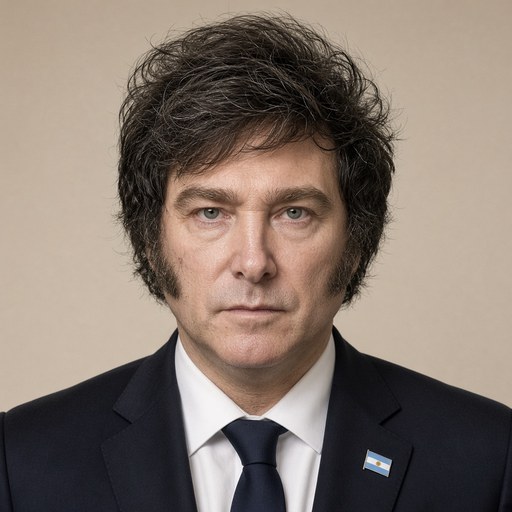
Words of President Javier Milei at the International Conference on Security and Counterterrorism.
 Javier Milei · President of Argentina
- Context
- Milei addressed the International Conference on Security and Counterterrorism on the eve of the 30th anniversary of the 1994 AMIA bombing, hosted by Argentine and regional Jewish organizations.
- Main themes
- AMIA bombing 30th anniversary, Iranian terrorism and impunity, justice for victims, counterterrorism policy, Argentine political complicity, crimes against humanity, trial in absentia legislation, Hezbollah accountability, free will and moral choice, Israel and Jewish community solidarity
- Duration
- ~12 min
- Words
- 1,435
- Sentences
- 55
- Readability
- 48
- Grade
- 13.1
- Syntax
- 3.29
- Vocabulary
- 2.20
Translated from Spanish
The broad sphere of national life a sentence belongs to. Every sentence has an Arena, so it is the denominator the other indices are read against.
Other55 sentences in 12 paragraphs
Good afternoon, I want to greet everyone present here, the authorities of the Latin American Jewish Congress, the representatives of the various Jewish communities in the region, the authorities of AMIA and DAIA, and the leaders of our brother countries who are with us today.
Tomorrow marks 30 years since the cowardly attack on AMIA, through which Iranian terrorism took the lives of 85 Argentines. To be clear about what happened: that attack took place on the 10th of Av, when we all know that starting from the 9th of Av, the destruction of the temple is commemorated, and it is a day of fasting, and it goes from the 9th to the 10th. In other words, it was not a coincidence when they did it; they knew very well what they were doing and the date on which they were doing it.
Tomorrow will also mark three decades of impunity, three decades of smoke screens and gross maneuvers by dark figures to cover up one of the worst atrocities in our history. Three decades of an eternal case, of mountains of written pages, of hundreds of thousands of hours invested in investigations and judicial processes.
But in many cases, not in service of clarifying what happened, but in service of manipulating reality, obscuring the truth, and sending the case into oblivion. Three decades in which politics and justice were either complicit and cover-up agents of the crime, or impotent actors who turned their backs on the tragedy while those responsible went unpunished. Where ineptitude and negligence were so gross and transversal that the Inter-American Court condemned the Argentine state itself for not properly investigating the case. And above all, three decades of pain for those 85 families, the particular pain of those wounds that time cannot saturate, because the absence of justice persists in leaving them open.
It is hard to imagine something more abhorrent than being complicit in an attack against one's own people. To think that there were Argentines who collaborated with those who killed their compatriots to protect the perpetrators and to obscure the search for justice. It is something that those of us who participate in Argentine political life cannot tolerate. But we must also condemn and reject the omission of those who, being able to intervene, chose not to do so, because it is the silence of the good that allows the triumph of the bad. The Torah teaches us that God gave us free will: I have set before you life and death, blessing and curse; therefore choose life, that you and your descendants may live. Life itself is a struggle between life and death, between good and evil, between truth and lies, where in the middle we are men, who, as free beings, are also free to sin, free to choose both vice and virtue. This choice is exercised every day of our lives in different ways and in different situations. Every day we must choose. That is why silence and inaction are not a mere passive attitude; they are an active choice, even if sometimes we do not want to accept it or prefer to close our eyes.
Today we choose the word, not silence. We choose to raise our voices, not to lower our arms. Ultimately, we choose life, because we know that anything else is playing into the hands of death.
That is why, in this matter as in all others, we do not come to be more of the same. We come to propose a break with what the different governments have done regarding the AMIA case in the last 30 years. We are promoting a law to extend the trial in absentia to crimes of extreme gravity, among which is the financing of terrorism, which will allow us to judge the leaders of the Iranian regime involved in the attack. Although they may never serve a sentence, they will not be able to escape the eternal condemnation of a free court that demonstrates their guilt before the whole world. I have also instructed the Secretary of Justice to strengthen the special investigative unit for the AMIA case, to provide the plaintiffs with more and better information. And we are having a fluid dialogue with DAIA, AMIA, and Memoria Activa on this matter. And as a corollary of what we are doing from the government, we celebrate the ruling issued by Chamber Two of the Federal Criminal Cassation Court on April 11, in which the attack was classified as a crime against humanity, which is of utmost importance and fundamental because it makes it an imprescriptible crime. And where the Islamic Republic of Iran and Hezbollah were also finally held responsible for the attack.
While it is a huge advance that for the first time a case of AMIA is condemned in Cassation, there is still a long way to go. We cannot fail to maintain that the situation warrants penalties commensurate with the gravity of the crimes committed, in accordance with the cover-up of the role played by the terrorist state of Iran, in accordance with the seriousness of bribing witnesses to cover up crimes against humanity. But today we must also draw attention to the events of the present, because unfortunately, the scourge of extreme terrorism on Jewish-Argentine lives transcends the tragedy of AMIA and the Israeli embassy and has recently added a sad new chapter. On October 7, the terrorist group Hamas, in an act of brutal cowardice, killed 1,200 civilians and kidnapped 250 more, among whom were women, the elderly, and children. Among the atrocities committed on that fateful date, the executions carried out in captivity, the terrorist organization Hamas took the lives of 25 of our compatriots. And they still have more than 100 hostages, including eight Argentines. We demand the immediate and unconditional release of all hostages.
There is no reasonable person who doubts that sectors of the fanatical Iranian government are behind these atrocities, just as they have been behind so many other crimes against humanity. It is the same black hand that Argentine justice recently confirmed as responsible for the attacks in our land. To be clear and to leave no doubt: the terrorism of that tragic October 7 is exactly the same terrorism that attacked us 30 years ago. It is not different; it is the same: sectors linked to the Iranian government, Hezbollah, and Hamas. That is why there can be no doubt that Iranian terrorism is a matter of national interest that directly affects the lives of Argentines, even if its most recent manifestations do not occur on our soil. It is not just a matter that affects Israel; it has been a latent threat to the lives of Argentines for 30 years, which in just the last year claimed 25 more Argentine lives. In a global context of the resurgence of anti-Semitism, we must be firm and unwavering against terrorism: there are no possible nuances, there is only good and evil.
That is why we have declared Hamas a terrorist organization, something that no government has dared to do for diplomatic speculation, despite the fact that it has always been an obvious truth for all those who knew something about the case, obviously. And that is why we are also strengthening the quality of intelligence at the service of our national security: complex threats require complex tools. To confront this, we have resolved to completely reform our national intelligence system, creating three agencies at the service of the protection of Argentines, because only with professional, updated intelligence services, free from particular political interests, can we prevent tragedies like these from happening again.
In closing, I want to thank again the authorities of the Latin American Jewish Congress for inviting me to speak here today. And I want to recall another concept from the Holy Scriptures from the book of Kings. King Solomon asks God for wisdom to distinguish between good and evil, courage to choose it, and the constancy to stay on the path. All of us present here, not only those of us who hold political responsibilities but also ordinary citizens, both from Argentina and from around the world, must heed this teaching. Because it is not enough to know the good; it is necessary to do the good, because when one turns their back on the good, whether by omission, cowardice, or convenience, one is choosing evil.
Terrorism hates freedom and adores death; we love life and freedom. Thank you very much, may God bless the Argentines, and may the forces of heaven accompany us. Thank you very much.
The original Spanish. The tags above are read on the English translation's sentences.
Buenas tardes, quiero saludar a todos los aquí presentes, a las autoridades del Congreso Judío Latinoamericano, a los representantes de las distintas comunidades judías de la región, las autoridades de AMIA y DAIA y a los primeros mandatorios de nuestros países hermanos que hoy nos acompañan.
Mañana se cumplirán 30 años del atentado cobarde a la AMIA, a través del cual el terrorismo iraní se cobró la vida de 85 argentinos. Para tener claro lo que pasó: ese Atentado se llevó a cabo el día 10 de Av, cuando todos sabemos que a partir del 9 de Av se recuerda la destrucción del templo y es un día de ayuno y además que va del día 9 al 10. Es decir, no fue casualidad cuando lo hicieron, sabían bien lo que estaban haciendo y la fecha que lo estaban haciendo.
Mañana se cumplirán también tres décadas de impunidad, tres décadas de cortina de humo y maniobras groseras de parte de personajes oscuros para cubrir una de las peores atrocidades de nuestra historia. Tres décadas de una causa eterna, de montañas de hojas escritas de cientos de miles de horas invertidas en investigación y en procesos judiciales.
Pero en muchos casos no al servicio de esclarecer lo que ocurrió, sino al servicio de manipular la realidad, de oscurecer la verdad y de enviar la causa al olvido. Se cumplirán tres décadas en la que la política y la justicia fueron, o bien cómplices y encubridores del crimen, o bien actores impotentes que le dieron la espalda a la tragedia mientras las responsables salían indemnes. Donde la ineptitud y la negligencia fue tan grosera y transversal que la Corte Interamericana condenó al propio estado argentino por no investigar correctamente la causa. Y se cumplirán sobre todo tres décadas de dolor para aquellas 85 familias, el dolor particular de aquellas heridas que el tiempo no puede saturar, porque la ausencia de justicia persiste en dejar abiertas.
Es difícil imaginar algo más aberrante que ser cómplice de un atentado contra el propio pueblo de uno. Pensar que hubo argentinos que colaboraron con quienes dieron muerte a sus compatriotas para proteger a los responsables y para oscurecer la búsqueda de Justicia. Es algo que quienes participamos de la vida política Argentina no podemos tolerar. Pero también tenemos que condenar y rechazar la omisión de quienes pudiendo intervenir eligieron no hacerlo, porque es el silencio de los buenos lo que permite el triunfo de los malos. La Torá nos enseña que Dios nos dio el libre albedrío: he puesto ante ti la vida y la muerte, la bendición y la maldición, escoge pues la vida para que vivas tú y tu descendencia. La vida entera es una puja entre la vida y la muerte, entre el bien y el mal, entre la verdad y la mentira, donde en el medio estamos los hombres, que, en tanto libres, somos también libres de pecar, libres de elegir tanto el vicio como la virtud. Esta elección se ejerce todos los días de nuestras vidas en distintas maneras y ante distintas situaciones. Cada día debemos elegir. Por eso el silencio y la inacción no son una mera actitud pasiva, son una elección activa, aunque a veces no lo queramos aceptar o prefiramos cerrar los ojos.
Nosotros hoy elegimos la palabra, no el silencio. Elegimos levantar la voz, no bajar los brazos. En definitiva, elegimos la vida, porque sabemos que cualquier otra cosa es hacerle el juego a la muerte.
Por eso, en esta materia como en todas las otras no venimos a ser más de lo mismo. Venimos a plantear un quiebre con lo que hicieron los distintos gobiernos respecto a la causa AMIA en los últimos 30 años. Estamos impulsando una ley para extender el juicio en ausencia a delitos de extrema gravedad, entre los que se encuentra el financiamiento del terrorismo, lo cual permitirá juzgar a los dirigentes del régimen iraní involucrados en el atentado. Aunque quizás nunca puedan cumplir una sentencia, no podrán escapar a la condena eterna de una corte libre demuestre su culpabilidad ante el mundo entero. También he instruido el Secretario de Justicia para que fortalezca la unidad especial de investigación para la causa AMIA, para abastecer a la querella de más y mejor información. Y estamos teniendo un diálogo fluido con DAIA, AMIA y Memoria Activa en esta materia. Y como correlato de lo que estamos haciendo desde el gobierno celebramos la sentencia dictada por la sala dos de la Cámara Federal de Casación Penal el 11 de abril, en la que se calificó el atentado como crimen de lesa humanidad, lo que es de suma importancia y fundamental porque lo vuelve un delito imprescriptible. Y donde también se responsabilizó finalmente a la República islámica de Irán y a Hezbollah por el atentado.
Si bien es un avance enorme que por primera vez se condene en Casación una causa de AMIA, aún falta muchísimo por recorrer. No podemos dejar de sostener que la situación amerita penas acordes a la gravedad de los delitos cometidos, acorde al encubrimiento del papel que jugó el estado terrorista de Irán, acorde a la gravedad de sobornar testigos para encubrir delitos de lesa humanidad. Pero hoy tenemos que llamar la atención también sobre el acontecimiento del presente, porque lamentablemente el flagelo del terrorismo extremo sobre vidas judeo-argentinas trasciende la tragedia de la AMIA y la embajada de Israel y sumó recientemente un triste nuevo capítulo. El 7 de octubre el grupo terrorista Hamás, en un acto de brutal cobardía, asesinó a 1200 civiles y secuestró a 250 más, entre los que había mujeres, ancianos y niños. Entre las atrocidades cometidas en aquella fecha funesta, las ejecuciones realizadas en cautiverio, la organización terrorista Hamás le arrebató la vida a 25 de nuestros compatriotas. Y todavía tienen más de 100 secuestrados, entre ellos ocho argentinos. Exigimos la libertad inmediata y sin condiciones de todos los secuestrados.
No hay nadie razonable que dude que sectores del gobierno fanático de Irán están detrás de estas atrocidades, así como han estado detrás de tantas otras atrocidades de lesa humanidad. Es la misma mano negra que hace poco la justicia argentina terminó de ratificar como responsable de los atentados en nuestra tierra. Para ser claros y que no haya dudas: el terrorismo de ese trágico 7 de octubre es exactamente el mismo terrorismo que nos atacó a nosotros hace 30 años. No es otro, es el mismo: sectores vinculados al gobierno de Irán, Hezbolá y Hamás. Por eso no pueden quedar dudas de que el terrorismo iraní es un asunto de interés nacional que afecta de forma directa a la vida de los argentinos, incluso sus manifestaciones más recientes, no ocurran en nuestro suelo. No es solo una cuestión que afecte a Israel, es desde hace 30 años una amenaza latente para la vida de los argentinos, que tan solo en el último año se cobró 25 vidas argentinas más. En un contexto global de resurgimiento del antisemitismo tenemos que ser firmes e intrascendentes con el terrorismo: no hay matices posibles, solo existe el bien y el mal.
Por eso hemos declarado a Hamás como organización terrorista, algo que ningún gobierno se animó a hacer por especulación diplomática, a pesar de que siempre fue una obviedad para todos aquellos que sabían algo del caso obviamente. Y por eso también estamos fortificando la calidad de la inteligencia al servicio de nuestra seguridad nacional: amenazas complejas requieren herramientas complejas. Para hacer frente hemos resuelto reformar por completo nuestro sistema de inteligencia nacional, creando tres agencias al servicio de la protección de los argentinos, porque solo con servicios de inteligencia profesionales, actualizados y despojados de intereses políticos particulares, podemos evitar que tragedias como estas vuelvan a repetirse.
Para cerrar, quiero agradecer nuevamente a las autoridades del Congreso judío latinoamericano por haberme convocado a hablar aquí hoy. Y quiero recordar otro concepto de las Sagradas Escrituras del libro de Reyes. El rey Salomón le pide a Dios sabiduría para distinguir el bien del mal, coraje para elegirlo y la constancia para mantenerse en el camino. Todos los aquí presentes, no solo quienes detentamos responsabilidades políticas, sino también los ciudadanos de a pie, tanto de la Argentina como del mundo tenemos que atender esta enseñanza. Porque no alcanza con conocer el bien, hace falta hacer el bien, porque cuando se le da la espalda al bien, ya sea por omisión, por cobardía o por conveniencia se está eligiendo el mal.
El terrorismo odia la libertad y adora a la muerte, nosotros amamos la vida y la libertad. Muchas gracias, que Dios bendiga a los argentinos y que las fuerzas del cielo nos acompañen. Muchas gracias.