




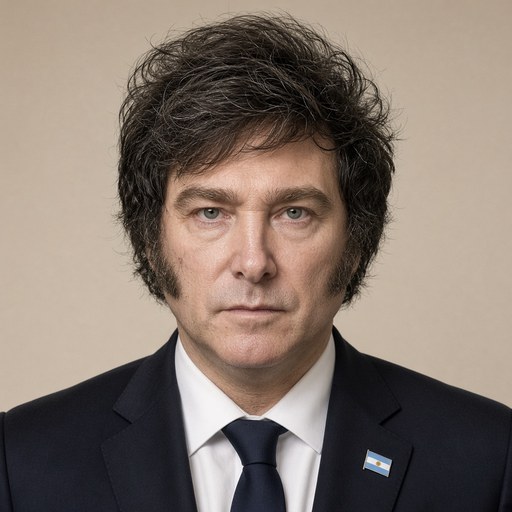
Words of the President of the Nation, Javier Milei, at the event of the World Economic Forum, Buenos Aires.
 Javier Milei · President of Argentina
- Context
- Milei addressed World Economic Forum representatives in Buenos Aires in October 2024, presenting Argentina's economic reforms and inviting foreign investment.
- Main themes
- Fiscal surplus and macroeconomic stabilization, free market and liberal economic reforms, foreign direct investment, deregulation and reducing state intervention, rule of law and institutional recovery, Argentina's economic transformation, inflation reduction, libertarian governance, poverty reduction, country risk and bond market improvement, caste system critique, long-term goal of maximum economic freedom
- Duration
- ~27 min
- Words
- 3,188
- Sentences
- 120
- Readability
- 47
- Grade
- 13.2
- Syntax
- 3.21
- Vocabulary
- 2.13
Translated from Spanish
The broad sphere of national life a sentence belongs to. Every sentence has an Arena, so it is the denominator the other indices are read against.
Other120 sentences in 24 paragraphs
Good morning everyone, and to Thor. First of all, I want to express my gratitude to the well-known entrepreneurs and authorities of the World Economic Forum, who have come to Buenos Aires for this meeting. I know that some have come from very far away to hear and see, firsthand, everything that Argentina has to offer them. Allow me to tell you that you will not return home disappointed, whether it be due to policies against the private sector or the disinterest in encouraging foreign investments that previous administrations had. It is not very common for our country to host this type of event, where direct foreign investment is formed and fostered.
Know that from the beginning to the end of our administration, we will advocate for this type of gathering to continue. Just as we will work tirelessly for a country with a free economy open to investments. I take this opportunity to mention that, while my first speech in Davos has gained some global notoriety, I am not here today to talk about the direction the world has taken, but rather to tell you about the direction Argentina has taken since we assumed office. Ten months ago, almost 15 million Argentines decided to leave behind the recipes that impoverished our country for more than 100 years, to start applying the ideas of freedom, which are the only ones that guarantee growth and progress.
I do not want to delve into something that we have all heard many times, but the impoverishing model of a present State, which was implemented in Argentina for so many years, left us with a country in ruins, where more than half of Argentines are poor and with a per capita GDP that has not grown for almost 15 years. You are right, Thor, in saying that we should not offend dogs by calling the previous ones dogs. When we took office, the regime of permanent deficit, unsustainable debt, and rampant issuance that all our predecessors had maintained was exhausted, and we were heading towards hyperinflation. Furthermore, in the social dimension, a caste system had been established that divided politicians and their friends from the rest of society, where a few privileged individuals profited at the expense of all Argentines. Imagine how bad things had to be for society to elect the first liberal-libertarian president in history; something that, under normal conditions of pressure and temperature, does not happen, without a political party, governors, or mayors. That is something that could not have happened if it were not for the absolute economic, material, and moral failure of the caste model.
But today, I am not here to talk about what others did, but about what we are doing and will continue to do. We took over the government and decided to return to the basics; we are correcting the macroeconomic order, at any cost, so that Argentines can live without inflation for the first time in decades, and we are returning to the State its primary function, which is the defense of life, liberty, and property of individuals so that the private sector can generate wealth by itself; in other words, we are implementing the same ideas that have lifted 90% of the world’s population out of poverty in the last 300 years. It will not be easy, as we face the challenge of rebuilding the political, legal, institutional, productive, and commercial reputation of a country that has been punished by unscrupulous and incompetent politicians for too long. That is why, precisely because we start from the underworld, we must aspire to the highest. And that is why the compass of this regime change points to a very clear long-term goal: to be the freest country in the world.
In this line, we are building a new Argentina, based on three fundamental pillars: an orderly macroeconomy, anchored in fiscal balance; a titanic effort to deregulate the entire Argentine economy that we have called “The great war against the Argentine cost,” where we have our colossal minister and global example, Federico Sturzenegger; and in third place, the recovery of the rule of law and compliance with the law, where the wonderful Minister Bullrich takes care of security issues every day.
During the campaign, we already warned about the importance of fiscal balance in our management. Upon taking office on December 10, we reaffirmed our commitment knowing that fiscal balance is the foundation of economic stability and that a stable, predictable economy is attractive to investors and consumers. In these 10 months of government, we achieved the first sustained fiscal surplus, free of default, in the last 123 years in Argentina, in an unprecedented turnaround across the globe. The economists who told us it was impossible and that we had no economic plan spent the last 10 months agitating for the return of the deficit to destabilize us, and we did not give them the satisfaction; as a result of that effort by all Argentines, the value of our bonds doubled, and we reduced the Country Risk from 3000 points to less than 1100, and we will continue to lower it, and we will achieve—sooner or later—to be an emerging country in credit rating, and I am strongly committed to reaching investment grade at some point during our administration.
Argentina is once again valuable because it has a government that, for the first time in decades, is doing what no one wanted to do and prefers to tell uncomfortable truths rather than comfortable lies. It is no coincidence that we have new investment announcements every day, and that the announcements of the RIGI—which is a special investment regime that we have enacted—are already around 50 billion dollars. While the rest of the leadership dedicated itself to imposing restrictions on individual freedoms with disastrous results, we come to impose a restriction. Yes, a restriction. A restriction on the State once and for all. That is to say, a restriction on the State. We are going to impose the restriction on the State.
And it is precisely the drastic reduction of public spending that we are carrying out that will allow us to return to the private sector, in the form of lower taxes, the product that the State stole from it. Not far from here, this Monday we dissolved the Federal Administration of Public Revenues, a bloated state agency that was used to persecute the private sector, and we created a new tax entity by cutting 34% of its structure, that is, we reduced spending by cutting those who collect.
Returning to the idea of imposing a restriction on the State, that is why we are fighting day by day our own battle, at Thermopylae, with 6 senators, 39 deputies, and the voice of millions of Argentines who support us in the streets and on social media against the great apparatus of the State party. Nobility obliges: I would also like to thank the sector of political leadership that does not seek to scavenge votes but seeks real change for the country of their children and supports us by upholding our vetoes and our reforms to guarantee fiscal balance and economic growth.
There is another sector of political leadership, a sector that only wants nothing to change. A sector that wants to continue protecting its privileges at the expense of all Argentines. That scavenger opposition said we would leave in January; they said we would leave at Easter; they said we would leave in June, and now they do not know where to hide because the chainsaw is running more than ever.
Secondly, we are carrying out the most ambitious structural reform plan in history to take the boot of the State off the necks of those who produce, trade, and work to reduce the cost of economic activity in all its dimensions. We have called this initiative “The war against the Argentine cost.” Every day our Ministry of Deregulation eliminates some obstacle or deactivates a scam as if it were working in a bomb squad. To give a quick recap, we have already eliminated bureaucratic obstacles for the import and production of steel, aluminum, construction materials, plastic, and synthetic insulators. In addition, we simplified export procedures, among which stands out the reduction of the apostille processing time—from 30 days to 1; we eliminated all discretionary controls for imports, including the nefarious SIRA system, which only existed as a mechanism for defrauding the State, and we still have hundreds of thousands of obstacles left to dismantle.
We are also reducing labor costs, allowing more people to enter the system and thus projecting personal growth—for the first time—in their lives. At the same time, we are lowering the tariff costs on which the nefarious import substitution system was built, which, at the expense of benefiting a handful of privileged individuals, punished society as a whole with lower quality goods and services at a higher price. The last of the three points I mentioned—and not for that reason less important—is the restoration of the rule of law in Argentina. I say restoration because, despite what the fetishists of democratic rituals say, the rule of law has not existed in Argentina for decades. The rule of law is a concept based on the fundamental idea that all citizens have inalienable natural rights, among which are the rights to life, liberty, and property. Under that premise, the function of the rule of law throughout history has been to restrict the power of the monarch so that it cannot violate the natural rights of men.
I believe it is unnecessary to say that Argentina—and you know it better than many—has systematically violated those natural rights in countless ways for around 100 years. Under the guise of democracy, the worst atrocities have been committed in our country because, far from defending the rule of law, what has prevailed in Argentina is the reason of the State. That is to say, the needs of the State have been above the natural rights of citizens. From the ruling of the Supreme Court of Justice that endorsed asymmetric pesification in 2004 to the abusive tax collections and withholdings made by the provinces, examples of violations of fundamental rights have been commonplace throughout our history. The right to life, liberty, and property has been systematically violated, both for Argentines and for foreigners who have decided to come and invest here.
In summary: if the political caste needed to violate rights for the system to remain, Justice has endorsed it under the doctrine that nothing is more important than the survival of the State and that all citizens' rights are subject to that. While they advocate for the famous welfare State, they did nothing but fight for the welfare of the State. We are the first government in decades to put the rights of citizens above the needs of the State, and we are the first government—in decades as well—that is withdrawing the State from the private sphere of citizens to return to living in a full rule of law. That is defending institutions; that is defending the Republic; that is defending citizens.
Returning to our management, our hypothesis has been proven and continues to be verified day by day. In less than a year, we have already reached the lowest inflation in the last four years, with prices—in various sectors—that have not moved for months. In other words, we have carried out the largest adjustment in the history of humanity and have not lost an ounce of social support. The retraction of the fiscal authority during these months has already returned 15 points of GDP to the private sector in the form of savings. Continuing on this path of adjustment is what allows us to finance private investment, which generates genuine growth because the private sector is based on voluntary relationships to grow, and no one voluntarily accesses what is not beneficial to them. On top of all this—this adjustment—we are carrying out without touching social spending. Moreover, we have doubled in real terms direct benefits such as the Universal Child Allowance and the Food Card, and we have taken power away from the enslaving picketers because we understand that it is that human capital that will make this Nation great again.
This, together with the excellent actions of Dr. Patricia Bullrich, at the head of our Nation's security, is allowing us to recover public order at great speed, ending the scourge of blockades in a few months. We have even pacified Rosario, a city besieged by drug trafficking in record time; the effects of the birthday… are noticeable, sorry, but life is like that. The cut of the State that we promised was not only in terms of spending but also in terms of power over individuals; hand in hand with the Bases Law and DNU 70/23, we have carried out the largest structural reform in history, which was 8 times larger than the Menem reform. This allowed us to jump nearly 90 places in the economic freedom ranking, and we will not stop until we are the freest country in the world; that is why we still have 3200 reforms in the pipeline. We are doing our homework at the pace that reality allows us. We know that regaining trust is not something that happens overnight. It is no coincidence that the saying goes that trust goes up the stairs and comes down in the elevator.
Argentina has spent 100 years failing to keep its word, and the world has spent 100 years getting burned by milk. It is no coincidence that the Argentine population has chosen as president a guy who, three years ago, was in the private sector. It is because he knows that in the private sector, if your word is not worth anything, you don't get anywhere. While in politics, the less word one has, the higher one rises in the hierarchy.
As I was saying, with the macroeconomic stability achieved—after decades and the deregulation and economic opening efforts carried out through the Base Law and other instruments—we are creating a perfect storm for any investment. Let me focus on some specific sectors: Argentina has blessed land with abundant and varied natural resources. Let's look at the energy sector: Vaca Muerta is an extraordinary resource, the second-largest shale oil reserve in the world, which can at least meet Argentina's demand for the next 150 years. Its development has managed to reverse our historical energy deficit of almost 7 billion dollars, ten years ago, to a surplus of 4 billion dollars in the first half of this year. The energy deficit is practically a thing of the past. And we still have a lot of room to grow. Thanks to the Base Law, we managed to modify the old hydrocarbon and gas laws so that, among other things, exporting becomes easier and faster.
Let's look at mining: it is estimated that the Andes Mountain Range has 40% of the world's copper reserves. Not to mention, Chile exports 50 billion dollars a year in copper. Do you really believe that God only blessed that side of the mountain range and that on this side—magically—there is nothing? So we have enormous mining potential in copper, still to be exploited. We also have the third-largest lithium reserve in the world, with a dozen projects either already producing or in the exploration stage, as well as silver and gold mining. In addition, we must add the development of the primary sectors, in which Argentina is already at the forefront, but whose potential has been crushed for decades by the extractive regime, which used them as a source of foreign currency to finance crony capitalism. I am referring, of course, to the agricultural and agro-industrial sector. Our fields produce food for 500 million people. But agriculture is not just cattle, soybeans, corn, and wheat; it is also their derived products, it is also the productive technology—both in genetics and machinery—in which Argentina is at the forefront, and it is also other sectors in which we are already key players, such as peanuts in Córdoba or lemons in Tucumán; and others that are still a potential. Do you know how much Chile exports in cherries? 50 times more than Argentina, not 5; 50 times more. Do you know how much Chile exports in salmon per year? 6 billion dollars. Us? Well, thank you. Imagine all the potential that exists.
And finally, the innovation and technology sector. The Argentine people are privileged in human capital because almost 100 years of collectivism taught us something: that Argentines have the ability to squeeze water from stones and to undertake even in the worst conditions. Or do you think it is a coincidence that, despite being the country in the region with the least foreign investment over the last 15 years, we are at the same time the one with the most unicorns per capita?
Imagine what the technology sector can achieve, especially under stable macroeconomic conditions and without the boot of the State on its neck. As I have said on another occasion, there is no force of nature greater than an Argentine wanting to get ahead. That is why we want to make Argentina a Hub for Artificial Intelligence. Because we have cheap energy in cold places with large expanses of land to develop and supply data centers. And because we have something that will be precious in the coming decades: faith and optimism in technological development, faith in entrepreneurs, and the regulatory freedom that corresponds to that faith, in a world where every day they are tightening the screws on the private sector and, above all, on the technology sector.
To conclude, before winning the elections, we knew that Argentina is a country where everything is yet to be done, and since we took office on December 10 of last year, we began to transform this decadent present that was left to us into a future of prosperity for each individual who inhabits this land. The model of freedom that we are applying is not exclusive to Argentines; it is also an example for the rest of the countries in the region, which, to a greater or lesser extent, have also been punished by the same miserable policies of 21st-century socialism. Opening ourselves to the world, generating investment opportunities, and allowing those who must generate wealth—that is, you, the private sector—to do so without being suffocated by the voice of the State. That is the example we want to set. Your cooperation is essential in this new chapter that we are writing. We invite you to reclaim the protagonism that the State unjustly stole from you for so long.
Once again, I thank you for the trust and interest in making our country a strategic partner for you. Our commitment is to make Argentina the freest country in the world, for us, for our children, and for all the men of the world who choose to inhabit Argentine soil. Argentina will be free. Argentina will be great again.
Thank you very much. Long live freedom, damn it!
The original Spanish. The tags above are read on the English translation's sentences.
Buenos días a todos,y a Thor. En primer lugar, quiero expresar mi agradecimiento para conocidos empresarios y autoridades del World Economic Forum, que han venido - a Buenos Aires - para la realización de este encuentro. Sé que algunos han venido muy lejos para escuchar y ver, de primera mano, todo lo que Argentina tiene para ofrecerles. Permítame decirles que no volverán a casa decepcionados ya sea por las políticas contra el sector privado; el desinterés en alentar las inversiones extranjeras que tuvieron, administraciones anteriores. No es muy común que, nuestro país, albergue este tipo de eventos, donde se forma y fomenta la inversión directa extranjera.
Sepan que - desde el inicio hasta el fin de nuestra gestión, - abogaremos para que este tipo de jornadas continúen. Así como trabajaremos incansablemente por un país con una economía libre y abierta a las inversiones. Aprovecho para contar que, si bien mi primer discurso, en Davos, ha tomado cierta notoriedad global, no vengo – hoy - aquí a hablar del rumbo que ha adoptado el mundo, sino más bien, vengo a contarles el rumbo que ha adoptado, la Argentina, desde que asumimos. Hace 10 meses, casi 15 millones de argentinos decidimos dejar atrás las recetas que empobrecieron, a nuestro país, por más de 100 años, para empezar a aplicar las ideas de la libertad, que son las únicas que garantizan crecimiento y progreso.
No quiero ahondar en algo, que todos hemos escuchado ya muchas veces, pero el modelo empobrecedor del Estado presente, que se implementó - en la Argentina -durante tantos años, nos dejó un país en ruina, donde más de la mitad de los argentinos son pobres y con un PBI per cápita que no crece hace casi 15 años. Tenés razón Thor, está diciendo que no ofendan a los perros diciendo que eran unos perros los anteriores. Cuando asumimos, el régimen de déficit permanente; deuda insostenible y emisión desenfrenada, que habían mantenido todos nuestros predecesores, se había agotado e íbamos camino a una hiperinflación. Además, en la dimensión social se había establecido un sistema de casta que dividía a los políticos y sus amigos del resto de la sociedad, donde unos pocos privilegiados ganaban a costa de todos los argentinos. Imagínense lo mal que tenían que estar las cosas para que la sociedad eligiera al primer presidente liberal-libertario de la historia; algo que - en condiciones normales de presión y temperatura - no ocurre, sin partido político ni Gobernadores, ni Intendentes. Eso es algo, que no podría haber ocurrido, si no fuera por el absoluto fracaso económico, material y moral del modelo de la casta.
Pero, hoy, no vengo aquí a hablar qué hicieron los demás, sino de qué estamos haciendo y continuaremos haciendo nosotros. Asumimos el gobierno y decidimos volver a las bases; estamos corrigiendo el orden macroeconómico, cueste lo que cueste, para que los argentinos puedan vivir sin inflación, por primera vez, después de décadas y le estamos devolviendo al Estado su función primordial, que es la defensa de la vida, la libertad y la propiedad de los individuos para que el sector privado pueda generar riqueza por sí mismo, o sea, estamos implementando las mismas ideas, que sacaron al 90% de la población mundial de la pobreza, en los últimos 300 años. No será fácil, pues tenemos el desafío de reconstruir la reputación política, jurídica, institucional, productiva y comercial de un país, que ha sido castigado por políticos inescrupulosos y brutos, durante demasiado tiempo. Por eso, - precisamente - porque partimos del inframundo, es que tenemos que aspirar a lo más alto. Y es por eso, que la brújula de este cambio de régimen, apunta a un objetivo a largo plazo muy claro: ser el país más libre del mundo.
En esa línea, estamos construyendo, una nueva Argentina, sobre tres pilares fundamentales: una macroeconomía ordenada, anclada en el equilibrio fiscal; un esfuerzo titánico para desregular toda la economía argentina que hemos llamado “La gran guerra contra el costo argentino”, que tenemos, acá, a nuestro ministro coloso y ejemplo mundial, que es Federico Sturzenegger; y en el tercer lugar la recuperación del Estado de derecho y el cumplimiento de la ley, donde la maravillosa ministra Bullrich - todos los días - se encarga de poner los temas de seguridad en orden.
En campaña, ya alertábamos sobre la importancia del equilibrio fiscal en nuestra gestión. Al asumir - el 10 de diciembre - reafirmamos nuestro compromiso sabiendo que el equilibrio fiscal es la base de la estabilidad económica y que una economía estable, predecible es atractiva para inversiones y consumidores. En estos 10 meses de Gobierno logramos el primer superávit fiscal sostenido, libre de default, de los últimos 123 años, en Argentina, en un giro de timón sin precedentes, a lo largo y a lo ancho del planeta. Los economistas, que nos decían que era imposible que no teníamos plan económico se pasaron - los últimos 10 meses - agitando la vuelta del déficit para desestabilizarnos, y no les dimos el gusto; producto de ese esfuerzo - de todos los argentinos - es que se duplicó el valor de nuestros bonos y bajamos el Riesgo País, de 3000 puntos a menos de 1100, y vamos a seguir bajándolo y vamos a lograr - tarde o temprano - volver a ser un país emergente en la calificación crediticia y estoy fuertemente comprometido porque - en algún momento de la gestión - podamos llegar a ser investment grade.
Argentina vuelve a valer porque tiene un gobierno que, por primera vez en décadas, está haciendo lo que nadie quería hacer y que prefiere decir verdades incómodas a mentiras confortables. No es casualidad que tengamos nuevos anuncios de inversiones, todos los días, y que los anuncios del RIGI - que es un régimen especial de inversiones que hemos sancionado - ya ronda los 50.000 millones de dólares. Mientras el resto de la dirigencia se dedicó a ponerle cepos a las libertades individuales con resultados nefastos; nosotros venimos a ponerle un cepo. Sí, un cepo. Un cepo al Estado de una vez y para siempre. Es decir, un cepo al Estado. El cepo se lo vamos a poner al Estado.
Y es precisamente la reducción drástica del gasto público, que estamos llevando adelante, lo que nos va a permitir devolverle - en bajas impositivas - al sector privado el producto, que el Estado le robó. Sin ir más lejos, este lunes disolvimos la Administración Federal de Ingresos Públicos, un organismo estatal superpoblado, que fue utilizado para perseguir al sector privado y creamos un nuevo ente impositivo recortando un 34% de su estructura, o sea, bajamos el gasto recortando a quien recauda.
Retomando la idea de ponerle un cepo al Estado es por ello que, estamos peleando día a día nuestra propia batalla, de las Termópilas con 6 senadores, 39 diputados y la voz de millones de argentinos que nos apoyan en la calle y en las redes contra el gran aparato del partido del Estado. Nobleza obliga: me gustaría agradecer también al sector de la dirigencia política, que no busca caranchear votos, sino que busca un verdadero cambio para el país de sus hijos y nos apoya sosteniendo nuestros vetos y nuestras reformas para garantizar el equilibrio fiscal y el crecimiento económico.
Hay otro sector de la dirigencia política, un sector que lo único que quiere es que nada cambie. Un sector que quiere seguir protegiendo sus privilegios, a costa de todos los argentinos. Esa oposición carancho dijo que nos íbamos en enero; dijo que nos íbamos en Semana Santa; dijo que nos íbamos en junio y – ahora - no saben dónde meterse, porque la motosierra sigue más prendida que nunca.
En segundo lugar, estamos llevando el plan de reformas estructurales más ambicioso de la historia para sacarle la bota del Estado del cuello a quienes producen, a quienes comercian y a quienes trabajan para reducir el costo de la actividad económica, en todas sus dimensiones. Hemos llamado a esta iniciativa ‘La guerra contra el costo argentino’. Todos los días nuestro Ministerio de Desregulación elimina alguna traba o desactiva un curro como si trabajara en un escuadrón antibombas. Haciendo un recuento rápido, ya eliminamos trabas burocráticas para la importación y producción de acero, aluminio, materiales de construcción, plástico, aislados sintéticos. Además, simplificamos los trámites de exportación, entre los que se destaca haber reducido la demora de trámites de apostillado - de 30 días a 1-; eliminamos todos los controles discrecionales para importar, entre los que se encontraba el nefasto sistema SIRA, que solo existía como mecanismo de desfalco al Estado, y aún nos quedan cientos de miles de trabas por desarmar.
También estamos reduciendo el costo laboral, logrando que más gente pueda ingresar al sistema y, así, proyectar un crecimiento personal - por primera vez - en su vida. A su vez, estamos bajando el costo arancelario sobre el que se montó el nefasto sistema de sustitución de importaciones que - a costa de beneficiar a un puñado de privilegiados - castigó al conjunto de la sociedad con bienes y servicios de peor calidad, a un mayor precio. El último de los tres puntos que mencioné - y no por eso menos importante - es el de la restauración del Estado de derecho, en Argentina. Digo restauración porque - a pesar de lo que digan los fetichistas de los rituales democráticos - el Estado de derecho no existió en la Argentina, en décadas. El Estado de derecho es una concepción, que se basa en la idea fundamental de que todos los ciudadanos tenemos derechos naturales inalienables, entre los que se encuentra el derecho a la vida, la libertad y a la propiedad. Bajo esa premisa, la función del Estado de derecho - a lo largo de la historia - ha sido restringir el poder del monarca para que no pueda avasallar los derechos naturales de los hombres.
Creo que no hace falta decir que la Argentina - y ustedes lo saben mejor que muchos -, durante alrededor de 100 años, el Estado ha violado esos derechos naturales de manera sistemática, de innumerables maneras. Bajo la pátina de la democracia se han cometido las peores atrocidades, en nuestro país, porque lejos de defender el Estado de derecho lo que ha primado en Argentina es la razón del Estado. Es decir, que las necesidades del Estado estuvieron por encima de los derechos naturales de los ciudadanos. Desde el fallo, de la Corte Suprema de Justicia, que avaló la pesificación asimétrica - en el año 2004 - hasta los abusos impositivos de las recaudaciones bancarias y retenciones que hacen las provincias, los ejemplos de violaciones a los derechos fundamentales han sido moneda corriente, a lo largo de nuestra historia. Sistemáticamente se ha violado el derecho a la vida, la libertad y a la propiedad, tanto de los argentinos como de los extranjeros, que han decidido venir a invertir acá.
Resumiendo: si la casta política necesitó violentar derechos para que el sistema se mantenga, la Justicia lo ha avalado, bajo la doctrina de que no hay nada más importante que la supervivencia del Estado y que todos los derechos de los ciudadanos están sujetos a eso. Mientras abogan por el famoso Estado de bienestar, no hacían otra cosa más que luchar por el bienestar del Estado. Somos el primer Gobierno, en décadas, en poner los derechos de los ciudadanos por encima de las necesidades del Estado, y somos el primer Gobierno - en décadas también - que está retirando al Estado de la esfera privada, de los ciudadanos, para volver a vivir en un Estado de derecho pleno. Eso es defender las instituciones; eso es defender la República; eso es defender a los ciudadanos.
Volviendo a nuestra gestión, nuestra hipótesis quedó demostrada y se sigue comprobando día a día. En menos de un año ya alcanzamos la inflación más baja, de los últimos cuatro años, con precios - en distintos sectores - que no se mueven hace meses. O sea, hemos llevado adelante el ajuste más grande de la historia de la humanidad y no hemos perdido un ápice de apoyo social. La retracción del fisco, durante estos meses, ya le devolvió 15 puntos del PBI al sector privado, en forma de ahorro. Continuar en este camino de ajuste es lo que permite financiar la inversión privada, que es la que genera crecimiento genuino porque el sector privado se basa en las relaciones voluntarias para crecer y nadie accede de forma voluntaria a lo que no le conviene. Encima de todo - este ajuste - lo llevamos a cabo sin tocar el gasto social. Es más, duplicamos en términos reales las prestaciones directas como la Asignación Universal por Hijo y la Tarjeta Alimentar, y le quitamos el poder a los piqueteros esclavistas porque entendemos que ese es el capital humano el que hará grande nuevamente de esta Nación.
Esto, en conjunto con un excelente accionar de la doctora Patricia Bullrich, al frente de la seguridad de nuestra Nación, nos está permitiendo recuperar el orden público a gran velocidad, terminando con el flagelo de los piquetes en pocos meses. Incluso hemos pacificado Rosario, una ciudad asediada por el narcotráfico en tiempo récord; los efectos del cumpleaños… se notan, perdón, pero la vida es así. El recorte del Estado, que prometemos no era sólo en términos de gasto, sino también en términos de poder sobre los individuos, de la mano de la Ley Bases y el DNU 70/23 hemos realizado la reforma estructural más grande de la historia, que fue 8 veces más grande que la reforma Menem. Esto nos permitió tener un salto de casi 90 puestos, en el ranking de libertad económica, y no vamos a parar hasta ser el país más libre del mundo, por eso tenemos todavía 3200 reformas en el tintero. Estamos haciendo los deberes al ritmo que la realidad nos permite. Sabemos que recuperar la confianza no es algo que se hace de la noche a la mañana. No por nada el refrán dice que la confianza sube en escalera y baja en ascensor.
Argentina lleva 100 años de faltar a su palabra y el mundo lleva 100 años de quemarse con leche. No es casualidad que la población argentina haya elegido como presidente a un tipo que - hace 3 años - estaba en el sector privado. Es porque sabe que en el sector privado si tu palabra no vale, no llegas a ningún lado. Mientras que la política, cuanta menos palabra uno tiene, más alto llega en el escalafón.
Como les decía, con la estabilidad macro lograda - después de décadas y los esfuerzos desregulatorios y de apertura económica - llevados adelante a través de la Ley Bases y otros instrumentos, estamos generando una tormenta perfecta en condiciones para cualquier inversión. Déjenme detenerme en algunos sectores en especial: la Argentina tiene un suelo bendecido con abundantes y variados recursos naturales. Miremos al sector energético: Vaca Muerta es una fuente de recursos extraordinaria, la segunda reserva de shale oil del mundo, como mínimo puede abastecer la demanda argentina, por los próximos 150 años. Su desarrollo ha logrado revertir nuestro histórico déficit energético, de casi 7.000 millones de dólares, hace 10 años; a un superávit de 4.000 millones de dólares el primer semestre de este año. El déficit energético ya es, prácticamente, cosa del pasado. Y todavía nos queda muchísimo por crecer. Gracias a la Ley Base conseguimos modificar las antiguas leyes de hidrocarburo y gas para que, entre otras cosas, exportar se vuelva más fácil y rápido.
Miremos la minería: se estima que - la Cordillera de Los Andes - tiene el 40% de las reservas de cobre mundial. Sin ir más lejos, Chile exporta 50.000 millones de dólares por año en cobre. ¿Ustedes se creen que Dios solo bendijo a aquel lado de la Cordillera y que de este lado - mágicamente - no hay nada? De modo que tenemos un potencial minero enorme en cobre, aún por ser aprovechado. También contamos con la tercera reserva de litio más grande del mundo, con una decena de proyectos o bien ya produciendo o bien en etapa de exploración, como también explotaciones de plata y oro. A eso hay que sumarle el desarrollo de los sectores primarios, en los que Argentina ya es punta de lanza, pero cuyo potencial estuvo aplastado por décadas por el régimen extractivo, que los usaba como fuente de divisas para financiar el capitalismo de amigos. Me refiero - por supuesto - al sector agropecuario y agroindustrial. Nuestro campo produce alimentos para 500 millones de personas. pero el agro no es solo la hacienda, el grano de soja, el maíz y el trigo, es también sus productos derivados, es también la tecnología productiva - tanto en genética como en maquinaria - en la cual Argentina es vanguardia, y es también otros sectores en los cuales ya somos protagonistas, como el maní en Córdoba o como el limón en Tucumán; y otros que aún son una potencialidad. ¿Saben cuánto exporta, Chile, en cerezas? 50 veces más que la Argentina, no 5; 50 veces más. ¿Saben cuánto exporta Chile, en salmón, por año? 6000 millones de dólares. ¿Nosotros? Bien, gracias. Imagínense todo el potencial que hay.
Y, por último, el sector de innovación y tecnología. El pueblo argentino es privilegiado en capital humano, porque casi 100 años de colectivismo nos enseñaron algo: que los argentinos tenemos la capacidad de sacar agua de las piedras y emprender aún en las peores condiciones. ¿O les parece casualidad que, a pesar de ser el país de la región con menor inversión extranjera, de los últimos 15 años, seamos al mismo tiempo el que más unicornios per cápita tiene?
Imagínense lo que puede lograr el sector tecnológico, en especial, en condiciones macroeconómicas estables y sin la bota del Estado en el cuello. Como ya he dicho en alguna otra ocasión, no hay fuerza de la naturaleza más grande que un argentino queriendo salir adelante. Por eso, nosotros queremos hacer en la Argentina un Hub de Inteligencia Artificial. Porque nosotros tenemos energía barata en lugares fríos y con altas extensiones de tierras para desarrollar y abastecer los centros de cómputos. Y porque tenemos algo que las próximas décadas va a ser preciado: fe y optimismo en el desarrollo tecnológico, fe en los empresarios y la libertad regulatoria que le corresponde esa fe, en un mundo en que cada día encorsetan más al sector privado y, sobre todo, al sector tecnológico.
Para cerrar, antes de ganar las elecciones sabíamos que Argentina es un país donde todo está por hacerse, y desde que asumimos el 10 de diciembre del año pasado, comenzamos a transformar este presente decadente que nos dejaron en un futuro de prosperidad para cada uno de los individuos que habitan este suelo. El modelo de la libertad que estamos aplicando no es exclusivo de los argentinos, también es un ejemplo para el resto de los países de la región, los cuales, en mayor o menor medida, también han sido castigados por las mismas políticas miserables del socialismo del siglo XXI. Abrirnos al mundo, generar oportunidad de inversión y permitirles a los que deben generar riqueza, o sea, ustedes, el sector privado, que lo hagan sin ser asfixiado por la voz del Estado. Ese es el ejemplo que queremos dar. Su cooperación es fundamental en este nuevo capítulo que estamos escribiendo. Los invitamos a retomar el protagonismo que el Estado les robó injustamente, durante tanto tiempo.
Nuevamente, les agradezco por la confianza y el interés en que nuestro país sea un socio estratégico de ustedes. Nuestro compromiso está en hacer de la Argentina el país más libre del mundo, para nosotros, para nuestros hijos y para todos los hombres del mundo que decidan habitar el suelo argentino. La Argentina será libre. La Argentina será grande nuevamente.
Muchísimas gracias. ¡Viva la libertad, carajo!