




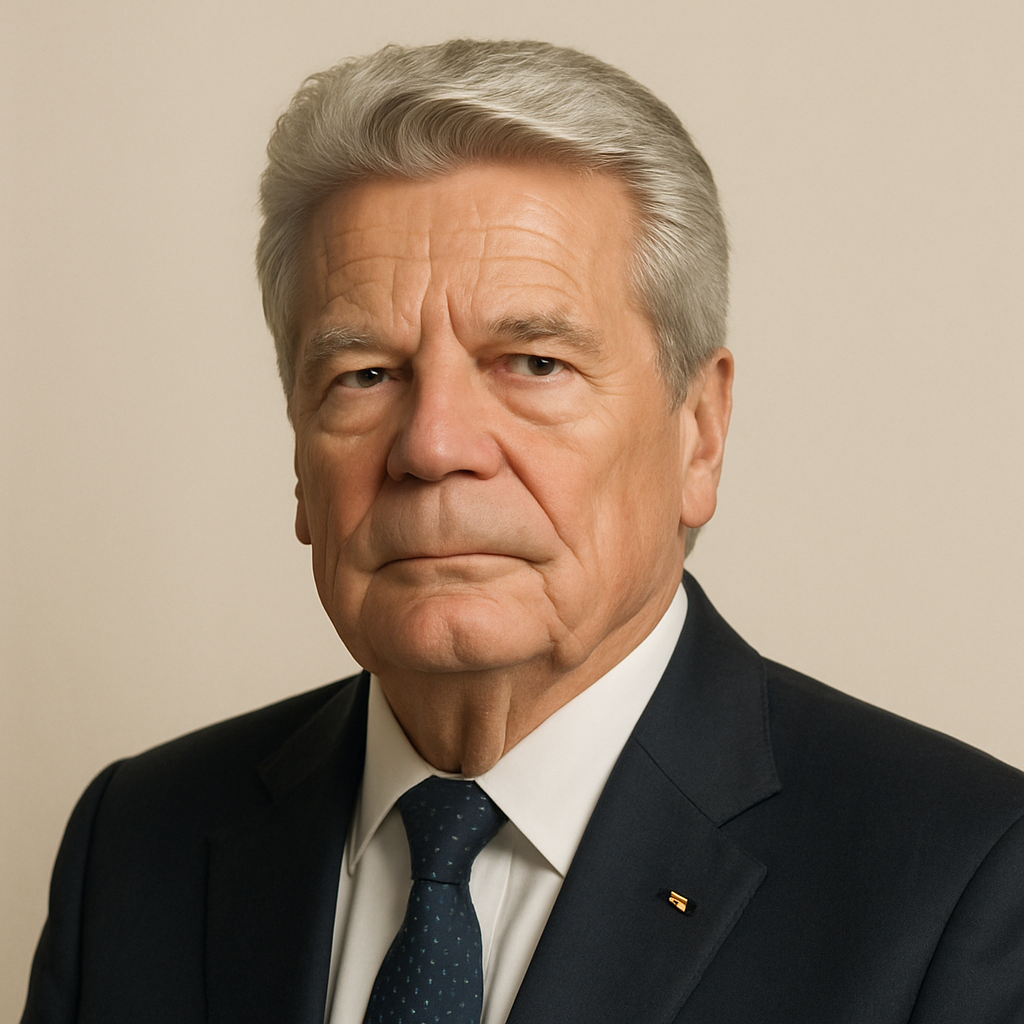
Speech by Federal President Dr. h. c. Joachim Gauck at the festive event for the 300th anniversary of external financial control on November 18, 2014, in Bonn:
 Joachim Gauck · Former Federal President of Germany
- Context
- Gauck addressed a festive event in Bonn on November 18, 2014, marking the 300th anniversary of external financial control in Germany.
- Main themes
- External financial control, good governance and transparency, democratic accountability, history of German state institutions, Prussian origins of audit institutions, Federal Court of Auditors anniversary, rule of law, public trust in government, fiscal responsibility, Nazi era abuse of bureaucracy, GDR contrast with democratic institutions
- Duration
- ~24 min
- Words
- 2,904
- Sentences
- 144
- Readability
- 50
- Grade
- 11.3
- Syntax
- 3.05
- Vocabulary
- 2.17
Translated from German
The broad sphere of national life a sentence belongs to. Every sentence has an Arena, so it is the denominator the other indices are read against.
Other144 sentences in 33 paragraphs
What a beautiful place you have chosen for your anniversary:
This hall, where the German Bundestag convened, with its special transparency, is indeed fitting. It is also said of this building that it embodies a "dignity of modesty," which is also appropriate. Of course, we overlook at this moment that the construction became significantly more expensive than originally planned. Of course, you noticed that at the time and made the necessary comments about it. So we are inspired by this building in which we meet, and thus we are already right in the middle of the topic.
For we are currently reminded of the claim of our state, namely to act transparently and in the interest of the citizens and to use tax funds economically. And above all, we remember the birth of an institution that helps to verify whether this claim is actually fulfilled: external financial control.
It is a birthday that somehow does not belong to the classic commemorative days: 300 years. We look at the Federal Republic and what came before it and what existed alongside it, in the form of the GDR. And we see: It is a history of breaks that you elevate here to the dignity of an anniversary. But that tells us a lot about our country. And it also tells us that with a long-term perspective, it is possible not only to focus on the negative elements of German national history but also to recognize an early achievement in monarchical times. Just as the recognition of the rule of law principle by some monarchies, the introduction of an external control body is a good cultural and political legacy of old Europe. And I find it very inspiring that you have come up with the idea of drawing such a line of tradition in public. We are, after all, partly what has come upon us. We are not only in the negative but also in the positive; one can certainly clarify this at such a celebration.
There are worlds between the "Prussian General Audit Office," whose founding in 1714 is the reason for our anniversary, and its successors up to the present day, the audit offices at the federal and state levels. This should prompt us to ask: What exactly are we honoring?
We honor an important moment in the history of our country, a step from an absolutist society towards a citizen state. For with external financial control, a tool of modern state governance was introduced at that time, a tool of limitation, indeed even of self-limitation of state, then monarchical power. This instrument has served different purposes throughout its history – of course, the power of a single ruler as well as the strengthening of an elected representation of the people. As we know it today, it is an indispensable tool to ensure transparency and control of public affairs.
So today we are talking about an element of good governance – in modern terms: about "good governance." About an important prerequisite for citizens to be able to trust their state. And thus about an essential element of our democracy.
The birth of the then General Audit Office is fundamentally due to Prussian extravagance! Friedrich Wilhelm I had to witness how his father led an excessive lifestyle – and how Prussia declined outside the capital. He experienced nepotism, corruption, inefficiency at court – and outside in the country, devastation from wars, famines, and poverty. When he came to power, he literally sold the family silver: He radically cut the salaries of the remaining court and state officials, had all expenditures checked from then on – and invested parts of the money he saved in troops.
Anyone who visits the exhibition of the Federal Court of Auditors on three centuries of external financial control or takes the catalog in hand will learn many such stories about the long journey of external financial control from its birth in Prussia to its anchoring in the Basic Law of the Federal Republic of Germany. From an instrument of the king, who could determine the fate of his country according to his whims, to an instrument that helps elected parliamentarians to actually exercise their royal right, their sovereignty over the budget.
The history of external auditing is also a story of the constantly growing state tasks and thus state expenditures. It has curious aspects – for example, at the end of the 19th century, the Imperial Court of Auditors was tasked with auditing the budgets of Cameroon, Togo, and German South West Africa. It has frightening chapters that once again show how closely modern, efficient bureaucracy was linked to the mass crimes of the Nazi regime. It is important that the Federal Court of Auditors wants to research this chapter of history more closely. It shows: Every instrument of the state can be used for different purposes, but it can also be abused. In the GDR, there was no place for an independent audit office in the service of the citizens. Why would there be? A country that does not need a constitutional court and no administrative courts obviously did not need this instrument either. Financial auditing in the GDR was an instrument of political leadership to control the officials.
So today we celebrate that our current audit offices are independent bodies. We celebrate that we, the citizens, can assume that our tax money is mostly used effectively and economically – and this trust in turn enables public institutions to actually fulfill their diverse tasks for the community.
The power over money is a fundamental prerequisite for a capable and shaping state. As a rule of law, it sets norms. As a tax and social state, it collects almost half of the economically produced wealth and invests it in public goods, in services, and channels it as transfer payments to private households and businesses – thereby creating public welfare in the best sense. 1.250 billion euros flowed through the coffers of public budgets and social insurances last year.
A brief look at the topic list of the Federal Court of Auditors gives an idea of how complex the tasks are. No public expenditure goes unchecked: from the computer equipment of schools to the locks of our country. From party financing to deficits in social funds to the costs of the energy transition. From counter-terrorism centers to foreign intelligence of German secret services. From the standard rifle of the Bundeswehr to the "Federal Reserve Grain."
At times, one might think that auditors are rather pedantic. Theodor Heuss, when he inaugurated the new service building of the Federal Court of Auditors in Frankfurt am Main in 1953, told a few fitting anecdotes. But he immediately intercepted the laughter: It is not "nitpicking," he made clear, but "state attentiveness" that is at work here. What a beautiful word!
Such state attentiveness – it is anything but self-evident. In how many countries in the world do we find corruption, elites enriching themselves at the expense of the state, unreliable authorities, mismanagement, and financial arbitrariness – ultimately to the detriment of all! How valuable it is, therefore, that external financial control has significantly shaped the self-understanding and understanding of the state in our country; how good it is that the claim to legality and accountability is so firmly anchored in the consciousness of the citizens; how important it is that we have this institution that sets standards for the actions of the public sector!
Some see our current audit offices as toothless institutions – this is sometimes referred to – or as "knights without swords." But those who deal seriously with them know very well: They are not, for even without their own directive and implementation power, they are taken seriously, indeed even a little and often a little more feared. You probably all know the famous words of the town captain to his officials in Nikolai Gogol's comedy: "I have called you here to make a most unpleasant announcement: An inspector is on his way to us!" In this case, the inspector turns out to be merely a supposed inspector. But the story teaches us: Just the announcement of a control leads the recipients to hold up a mirror to themselves. And even more, the permanent possibility that at some point, perhaps tomorrow, an audit could come has a disciplining effect.
Even Friedrich Wilhelm I demanded of his auditors not to spare anyone, "let him be who he will." And Johannes Rau provided amusement at the 50th anniversary celebration of the Federal Court of Auditors when he denied that he had traveled to Bonn solely to prevent the Court of Auditors from coming to Berlin and the Federal President's Office.
It goes without saying that the relationship between auditors and those audited is not always free of friction. That is a good thing. In the audited offices, people are usually glad when the auditors are gone. It would be concerning if it were otherwise – and it should not trouble you, dear auditors, in any case. I would like to take this opportunity to thank all of you for your attitude and for your service, for the seriousness with which you carry out your task, all of you who contribute to this important task, all of you who are in the hall and all of you who are working outside in your authorities, "thank you." I say this from the heart because I know that this cannot be an easy task. I can imagine that it is often a frustrating thing. You work meticulously and audit and audit – and if it is a good, indeed the best case, then you find: nothing! At least nothing that would be objectionable. You then make suggestions on how processes could be optimized, how money could be used better – but whether the affected offices draw the consequences that you consider right, you do not have in your hands.
What might now appear as a weakness is in truth rather a strength, for it protects the audit offices from being politically co-opted. The classic definition of auditing is clear: They should not assess whether a politically defined goal is sensible or nonsensical, but primarily check objectively whether an expenditure fulfills its purpose. There is a joke that illustrates this nicely. In the pub, they sit, we all know them, the pessimist and the optimist. An auditor now joins them. They all sit in front of a glass that is half full. "Half full," we know, says the optimist. "Half empty," says the pessimist. And what does the auditor say? He says: "The glass is, measured against its purpose, 100 percent too large."
The task of the audit offices is therefore primarily to uncover disorder – that is, all that does not correspond to the politically desired order. However, as the President has just hinted, the tasks of the Federal Court of Auditors have indeed expanded in recent years: away from mere hindsight, that is, "re-vision," to looking forward, with visions. Away from pure economy audits to auditing entire processes, from criticism to targeted advice to politics.
This is sometimes certainly a balancing act, for purely mathematically, much may seem plausible or implausible. And yet a reform, a budget cut, an alternative procedural proposal may not be politically feasible or not so easily implemented. Democracy has its own rationality, its own procedures, and also its own limits. Even if it may be glaringly obvious to an auditor – the actual political responsibility for where our state could save or act more sensibly lies with the elected representatives of the people. And that, we all know, is a good thing.
Nevertheless, the audit offices are a very essential element of our democratic order. They are part of the learning system of democracy. Their uniqueness is not that they are perfect and complete, but that they are capable of correcting mistakes, transforming, and finding new ways in societal discourse. For the public debate about how our community should be organized to remain future-proof, the expertise of our auditors is indispensable.
There are a number of important questions that we need to discuss, keyword: federal-state financial relations, tax justice, or debt. Where, for example, do state debts limit the necessary scope of action for future generations? Where do we restrict their scope of action by spending money in the wrong places and thereby failing to make sensible investments?
Other questions touch on the foundation of our state structure: How can the financial relationships in the federal state be redesigned so that the federal government, states, and municipalities can fulfill their tasks in the long term? How can it remain clear to the individual citizen who is responsible for what? The internal financial network is complex, to put it mildly, and it will remain complex, perhaps even become more complex. It has emerged from arduous compromises. However, we must keep in mind the price of opacity in the end. A dangerous gap opens up when those who pay, namely the citizens as taxpayers, can no longer recognize who is responsible for what. At the very least, this must remain verifiable – in the interplay between the Federal Court of Auditors and the State Courts of Auditors.
Finally, when we talk about good governance and an efficient public sector, we will not only talk about expenditures but also about revenues. Only a financial policy with moderation allows our state, at all levels, to fulfill the many tasks of public welfare. Moderation means: avoiding extremes. An excessively high tax burden meets with resistance when it can hardly be justified with counter-performance. It is then perceived as a restriction of action, impairs the willingness to perform, and leads to justified discontent. Conversely, a state that demands too low taxes or fails to collect demanded taxes will, sooner or later, find itself in a predicament and will not be able to secure the trust of its citizens either. Here, too, the Courts of Auditors have their task: It is part of their mandate to control revenue collection.
There is a need for action where the tax administration does not check or is unable to check whether tax returns are correct, where interest income remains untaxed because money has been taken abroad. There is a need for action where a company's taxes do not depend on its profitability but rather on whether clever lawyers have distributed the corporate parts to the right countries to exploit inconsistencies in international tax law. Because when citizens get the impression that tax law is only poorly applied or that loopholes exist for those who possess wealth, it can lead to the fatal view that the honest person is the fool.
Certainly, it is not easy to ensure uniform taxation. Capital and taxpayers move from country to country, economic relations are increasingly intertwined, we all know that. What is needed is actually clear: common, international principles for corporate taxation, a consistent international exchange of information between the tax authorities of different states. And it seems to me that a different wind is now blowing. The fact that a large number of states have recently agreed to cooperate is a welcome development. But it remains a task to also bring on board those countries that are, so to speak, providers of tax-saving models worldwide and benefit from them.
It is good that in recent decades, the Courts of Auditors have also been increasingly cooperating internationally. Some colleagues from comparable foreign institutions are our guests here today – and I am pleased that they are here!
We will continue to have to discuss openly in our country what the responsibilities of the public sector should be – and what they should not be. We will talk about what constitutes an efficient community and also about the gap between the desirable and the feasible.
We hope that the "remarks," as the Federal Court of Auditors elegantly calls them, will not only serve as a bothersome distraction for the respective government and a welcome argument for the respective opposition, but as what they are: an expression of a state's self-commitment, a good state, to act in the interest of its citizens.
Thus, we can say: Today we honor a pillar of our statehood. It is a pillar that is sometimes overlooked, certainly. It is not as powerful as the parliaments, not as present as the governments, and not as prominent as the constitutional courts. But for the stability of our republic, our state, it is indispensable.
If you look closely at the Federal Eagle here in the former plenary chamber of the German Bundestag, you will notice something peculiar: it has a slightly asymmetrical plumage. It is said that the artist wanted to convey something to us. Perhaps he wanted to say: We will never achieve perfection. Not even in such a high house, I might add. We are, after all, among humans, among fallible beings.
So let us not expect that the "remarks" will one day no longer be necessary because everything everywhere is treated and handled properly and economically down to the last detail. We will not expect that. But the pursuit of it, we should at least not give up! And for you, the responsible ones, the employees at the Federal Court of Auditors and the State Courts of Auditors, this means: We will continue to need you. We are glad that you exist!
The original German. The tags above are read on the English translation's sentences.
Was für ein wunderschöner Ort, den Sie sich ausgesucht haben für Ihr Jubiläum:
Dieser Saal, in dem der Deutsche Bundestag tagte, mit seiner besonderen Transparenz, das passt doch. Auch spricht man in Bezug auf dieses Gebäude von einer „Würde der Bescheidenheit“, auch das ist passend. Natürlich sehen wir in diesem Moment darüber hinweg, dass der Bau um einiges teurer wurde als ursprünglich geplant. Natürlich haben Sie das seinerzeit bemerkt und die nötigen Anmerkungen dazu gemacht. Wir sind also angeregt von diesem Gebäude, in dem wir uns treffen, und damit schon mitten im Thema.
Denn wir erinnern uns gerade an den Anspruch unseres Staates, nämlich transparent und im Sinne der Bürgerinnen und Bürger zu handeln und die Steuermittel wirtschaftlich zu verwenden. Und vor allem erinnern wir uns an die Geburtsstunde einer Institution, die zu überprüfen hilft, ob dieser Anspruch auch tatsächlich eingelöst wird: die externe Finanzkontrolle.
Es ist ein Geburtstag, der irgendwie nicht in die Reihe der klassischen Gedenktage gehört: 300 Jahre. Wir schauen uns die Bundesrepublik an und was davor war und was es daneben gab, in Gestalt der DDR. Und wir sehen: Es ist eine Geschichte der Brüche, die Sie hier in die Würde eines Jubiläums heben. Aber das erzählt uns eine Menge über unser Land. Und es erzählt auch, dass es bei einer Langzeitperspektive gelingen kann, nicht nur die negativen Elemente der deutschen Nationalgeschichte in den Blick zu nehmen, sondern auch eine frühe Errungenschaft in monarchischer Zeit. Ähnlich wie die Anerkennung des Rechtsstaatsprinzips durch einige Monarchien, so ist auch die Einführung eines externen Kontrollgremiums eine gute kulturelle und politische Erbschaft des alten Europa. Und ich finde es sehr inspirierend, dass Sie auf den Gedanken gekommen sind, eine solche Traditionslinie in aller Öffentlichkeit zu ziehen. Wir sind eben zum Teil auch das, was auf uns gekommen ist. Wir sind es nicht nur im Bösen, sondern auch im Guten, das kann man sich bei einer solchen Feier durchaus einmal klarmachen.
Welten liegen zwischen der „Preußischen General-Rechenkammer“, deren Gründung im Jahre 1714 Anlass für unser Jubiläum ist, und den Nachfolgern bis zum heutigen Tag, den Rechnungshöfen in Bund und in den Ländern. Das soll uns Anlass geben zu fragen: Was genau würdigen wir denn?
Wir würdigen einen wichtigen Moment in der Geschichte unseres Landes, einen Schritt von der absolutistischen Gesellschaft hin zu einem Bürgerstaat. Denn mit der externen Finanzkontrolle wurde damals ein Instrument moderner Staatsführung eingeführt, ein Instrument der Beschränkung, ja sogar der Selbstbeschränkung staatlicher, damals eben monarchischer Macht. Dieses Instrument hat in seiner Geschichte unterschiedlichen Zielen gedient – natürlich der Macht eines einzelnen Herrschers ebenso wie der Stärkung einer gewählten Volksvertretung. So, wie wir es heute kennen, ist es ein unverzichtbares Instrument, um Transparenz und Kontrolle der öffentlichen Hand zu gewährleisten.
Wir sprechen also heute über ein Element guter Regierungsführung – neudeutsch: über „good governance“. Über eine wichtige Voraussetzung dafür, dass Bürgerinnen und Bürger ihrem Staat vertrauen können. Und damit über ein wesentliches Element unserer Demokratie.
Die Geburt der damaligen Generalrechenkammer verdanken wir im Grunde preußischer Verschwendungssucht! Friedrich Wilhelm I. hatte nämlich mit ansehen müssen, wie sein Vater einen maßlosen Lebensstil pflegte – und wie Preußen außerhalb der Hauptstadt verfiel. Er erlebte Vetternwirtschaft, Korruption, Ineffizienz bei Hofe – und draußen im Land Verwüstungen durch Kriege, durch Hungersnöte und Armut. Als er an die Macht kam, verkaufte er im wahren Sinne des Wortes das Tafelsilber: Er strich den verbleibenden Hof- und Staatsbeamten radikal die Bezüge, ließ fortan alle Ausgaben überprüfen – und investierte Teile des Geldes, das er gespart hatte, in Truppen.
Wer die Ausstellung des Bundesrechnungshofs zu drei Jahrhunderten externer Finanzkontrolle besucht oder den Katalog zur Hand nimmt, erfährt viele solcher Geschichten über den langen Weg der externen Finanzkontrolle von ihrer Geburtsstunde in Preußen bis zu ihrer Verankerung im Grundgesetz der Bundesrepublik Deutschland. Von einem Instrument des Königs, der die Geschicke seines Landes nach seinen Launen bestimmen konnte, bis hin zu einem Instrument, das den gewählten Parlamentariern hilft, ihr Königsrecht, ihre Hoheit über das Budget, tatsächlich auszuüben.
Die Geschichte der externen Rechnungsprüfung ist auch eine Geschichte der ständig wachsenden Staatsaufgaben und damit Staatsausgaben. Sie hat kuriose Seiten – so wurde dem Reichsrechnungshof Ende des 19. Jahrhunderts etwa die Prüfung der Haushalte von Kamerun, Togo und Deutsch-Südwestafrika übertragen. Sie hat erschreckende Kapitel, die einmal mehr zeigen, wie eng die moderne, effiziente Bürokratie verknüpft war mit den Massenverbrechen des NS-Regimes. Es ist wichtig, dass der Bundesrechnungshof dieses Kapitel der Geschichte genauer erforschen will. Es zeigt: Jedes Instrument des Staates kann zu unterschiedlichen Zwecken gebraucht, aber eben auch missbraucht werden. In der DDR war für einen unabhängigen Rechnungshof im Dienst der Bürger kein Platz. Warum auch? Ein Land, das kein Verfassungsgericht braucht und keine Verwaltungsgerichte, brauchte dieses Instrument offenkundig auch nicht. Die Finanzrevision war in der DDR ein Instrument der politischen Führung zur Kontrolle der Funktionäre.
So feiern wir an diesem Tag, dass unsere heutigen Rechnungshöfe unabhängige Instanzen sind. Wir feiern, dass wir, die Bürgerinnen und Bürger, annehmen können, dass unsere Steuergelder meistens wirksam und sparsam eingesetzt werden – und dieses Vertrauen wiederum die öffentlichen Institutionen in die Lage versetzt, ihre vielfältigen Aufgaben für das Gemeinwesen tatsächlich zu erfüllen.
Die Verfügungsgewalt über Geld ist eine ganz wesentliche Voraussetzung für einen handlungsfähigen und gestaltenden Staat. Als Rechtsstaat setzt er Normen. Als Steuer- und Sozialstaat schöpft er fast die Hälfte des volkswirtschaftlich Erarbeiteten ab und investiert es in öffentliche Güter, in Dienstleistungen und leitet es als Transferzahlungen an private Haushalte und Unternehmen – und schafft damit im besten Sinne öffentliche Wohlfahrt. 1.250 Milliarden Euro sind im vergangenen Jahr durch die Kassen der öffentlichen Haushalte und der Sozialversicherungen geflossen.
Wie komplex die Aufgaben sind, lässt schon ein kurzer Blick auf die Themenliste des Bundesrechnungshofs erahnen. Keine öffentliche Ausgabe, die nicht kontrolliert würde: von der Computerausstattung von Schulen bis hin zu den Schleusen unseres Landes. Von der Parteienfinanzierung über Rückstände in den Sozialkassen bis hin zu den Kosten der Energiewende. Von Terrorabwehrzentren bis hin zu Auslandsaufklärung deutscher Geheimdienste. Vom Standardgewehr der Bundeswehr bis zur „Bundesreserve Getreide“.
Bisweilen mag es einem vorkommen, als seien Rechnungsprüfer arg pedantisch. Schon Theodor Heuss hat, als er 1953 das neue Dienstgebäude des Bundesrechnungshofs in Frankfurt am Main einweihte, ein paar passende Anekdoten erzählt. Aber er hat dann die Lacher sofort abgefangen: Nicht „Kleinigkeitskrämerei“, so ließ er wissen, sondern „Staatsachtsamkeit“ sei es, was hier wirke. Was für ein schönes Wort!
Solche Staatsachtsamkeit – sie ist eben alles andere als selbstverständlich. In wie vielen Ländern der Welt findet man Korruption, findet man Eliten, die sich selbst über den Staat bereichern, findet man unzuverlässige Behörden, Misswirtschaft und Finanzwillkür – letztlich zum Schaden aller! Wie wertvoll ist es darum, dass die externe Finanzkontrolle das Selbstverständnis und das Staatsverständnis unseres Landes so maßgeblich mitgeprägt hat; wie gut, dass der Anspruch auf Rechtstreue und Rechenschaftspflicht im Bewusstsein der Bürger so fest verankert ist; wie wichtig, dass wir diese Institution haben, die Maßstäbe setzt für das Handeln der öffentlichen Hand!
Manche sehen unsere heutigen Rechnungshöfe als zahnlose Institutionen – so wird das gelegentlich bezeichnet – oder als „Ritter ohne Schwert“. Doch wer ernsthaft mit ihnen zu tun hat, der weiß sehr wohl: Das sind sie nicht, denn auch ohne eigene Weisungs- und Umsetzungsmacht werden sie ernst genommen, ja sogar ein wenig und häufig auch ein wenig mehr gefürchtet. Vermutlich kennen Sie alle die berühmten Worte des Stadthauptmanns an seine Beamten in Nikolaj Gogols Komödie: „Ich habe Sie hergebeten, um Ihnen eine höchst unerfreuliche Mitteilung zu machen: Ein Revisor ist zu uns unterwegs!“ In diesem Fall entpuppt sich der Revisor nur als vermeintlicher Revisor. Aber die Geschichte lehrt uns: Schon die Ankündigung einer Kontrolle führt bei den Adressaten dazu, sich den Spiegel vorzuhalten. Und mehr noch wirkt die permanente Möglichkeit disziplinierend, dass einmal irgendwann, vielleicht morgen, eine Prüfung kommen könnte.
Schon Friedrich Wilhelm I. hatte von seinen Revisoren gefordert, keinen zu schonen, „er mack sein, wer er will.“ Und Johannes Rau sorgte bei der 50-Jahr-Feier des Bundesrechnungshofs für Heiterkeit, als er dementierte, allein deshalb nach Bonn gereist zu sein, um zu verhindern, dass der Rechnungshof seinerseits nach Berlin und ins Bundespräsidialamt komme.
Es versteht sich, dass das Verhältnis der Prüfer zu den Geprüften nicht immer frei ist von Reibungen. Das ist gut so. In den geprüften Stellen ist man meist froh, wenn die Kontrolleure wieder weg sind. Bedenklich wäre es, wenn es anders wäre – und es sollte Sie, liebe Rechnungsprüfer, jedenfalls nicht bekümmern. Ich möchte heute die Gelegenheit benutzen, Ihnen allen für Ihre Haltung und für Ihren Dienst, für den Ernst, mit dem Sie Ihre Aufgabe vollziehen, Ihnen allen, die Sie an dieser wichtigen Aufgabe mitwirken, Ihnen allen, die Sie im Saal sind und allen, die draußen mitwirken, in ihren Behörden, „danke“ zu sagen. Ich sage dies von Herzen, weil ich genau weiß, dass das keine leichte Aufgabe sein kann. Ich kann mir vorstellen, dass es oft eine frustrierende Sache ist. Sie arbeiten sich akribisch ein und prüfen und prüfen – und wenn es ein guter, der wohl beste Fall ist, dann finden Sie: nichts! Jedenfalls nichts, was zu beanstanden wäre. Sie machen dann Vorschläge, wie Prozesse zu optimieren wären, wie Geld besser verwendet werden könnte – aber ob die betroffenen Stellen die Konsequenzen ziehen, die Sie für richtig halten, das haben Sie nicht in der Hand.
Was nun als Schwäche erscheinen könnte, ist in Wahrheit eher eine Stärke, denn es schützt die Rechnungshöfe davor, politisch vereinnahmt zu werden. Die klassische Definition von Rechnungsprüfung ist eindeutig: Sie sollen nicht bewerten, ob ein politisch definiertes Ziel sinnvoll oder unsinnig ist, sondern in erster Linie sachlich prüfen, ob eine Ausgabe ihren Zweck erfüllt. Es gibt einen Witz, der das schön illustriert. In der Kneipe sitzen sie, wir kennen sie alle, den Pessimisten und den Optimisten. Ein Rechnungsprüfer kommt nun dazu. Sie sitzen alle vor einem Glas, das zur Hälfte gefüllt ist. „Halb voll“, wissen wir ja, sagt der Optimist. „Halb leer“ sagt der Pessimist. Und was sagt nun der Rechnungsprüfer? Er sagt: „Das Glas ist, gemessen an seinem Zweck, 100 Prozent zu groß.“
Aufgabe der Rechnungshöfe ist es also zuallererst, Unordnung aufzudecken – also all das, was der politischen gewollten Ordnung nicht entspricht. Allerdings, der Herr Präsident hat das eben schon angedeutet, haben sich die Aufgaben des Bundesrechnungshofs in den vergangenen Jahren durchaus erweitert: weg vom bloßen Rückwärtsschauen, also der „Re-Vision“, zum Blick nach vorn, mit Visionen. Weg von der reinen Sparsamkeitsprüfung zur Prüfung ganzer Prozesse, von der Kritik zu einer gezielten Beratung von Politik.
Das ist manchmal sicherlich eine Gratwanderung, denn rein rechnerisch mag vieles plausibel oder unplausibel sein. Und doch kann eine Reform, eine Ausgabenkürzung, ein alternativer Verfahrensvorschlag politisch nicht oder nicht so leicht durchzusetzen sein. Demokratie hat eben ihre eigene Rationalität, ihre eigenen Verfahren und auch ihre eigenen Grenzen. Auch wenn es einem Rechnungsprüfer noch so sehr ins Auge stechen mag – die eigentliche politische Verantwortung dafür, wo unser Staat sparen oder sinnvoller handeln könnte, tragen eben die gewählten Volksvertreter. Und auch das, wir wissen es alle, ist gut so.
Dennoch sind die Rechnungshöfe ein ganz wesentliches Element unserer demokratischen Ordnung. Sie sind Teil des lernfähigen Systems Demokratie. Ihre Besonderheit ist nicht, dass sie perfekt und vollkommen wären, sondern dass sie in der Lage sind, Fehler zu korrigieren, sich zu wandeln und im gesellschaftlichen Gespräch neue Wege zu finden. Für die öffentliche Debatte darüber, wie sich unser Gemeinwesen organisieren sollte, damit es zukunftsfähig bleibt, ist die Expertise unserer Rechnungsprüfer unverzichtbar.
Es gibt eine ganze Reihe von wichtigen Fragen, die wir zu diskutieren haben, Stichwort: Bund-Länder-Finanzbeziehungen, Steuergerechtigkeit oder Schulden. Wo etwa begrenzen die Staatsschulden die notwendigen Handlungsspielräume kommender Generationen? Wo schränken wir deren Handlungsspielräume dadurch ein, dass wir Geld an der falschen Stelle ausgeben und dafür sinnvolle Investitionen nicht tätigen?
Andere Fragen berühren das Fundament unseres Staatsaufbaus: Wie können die Finanzbeziehungen im Bundesstaat so neu gestaltet werden, dass Bund, Länder und Gemeinden ihren Aufgaben langfristig gerecht werden können? Wie kann für den einzelnen Bürger zurechenbar bleiben, wer was verantwortet? Das innerstaatliche Finanzgeflecht ist komplex, um es vorsichtig zu sagen, und es wird auch komplex bleiben, vielleicht sogar noch komplexer werden. Es ist aus mühsamen Kompromissen erwachsen. Wir müssen aber im Blick behalten, welchen Preis Undurchsichtigkeit am Ende hat. Denn es tut sich eine gefährliche Kluft auf, wenn diejenigen, die bezahlen, also letztlich die Bürger als Steuerzahler, nicht mehr erkennen können, wer was verantwortet. Mindestens das also muss – im Zusammenspiel von Bundesrechnungshof und Landesrechnungshöfen – überprüfbar bleiben.
Schließlich werden wir, wenn wir über gute Regierungsführung und eine leistungsfähige öffentliche Hand sprechen, nicht nur über Ausgaben, sondern auch über Einnahmen sprechen. Nur eine Finanzpolitik mit Augenmaß erlaubt es unserem Staat, auf all seinen Ebenen die vielen Aufgaben der Daseinsvorsorge zu erfüllen. Augenmaß bedeutet: Extreme vermeiden. Eine zu hohe Steuerlast stößt auf Widerwillen, wenn sie sich kaum mehr mit Gegenleistungen rechtfertigen lässt. Sie wird dann als Beschränkung der Handlungsfähigkeit empfunden, beeinträchtigt den Leistungswillen und führt zu berechtigtem Unmut. Umgekehrt gerät ein Staat, der zu niedrige Steuern verlangt oder verlangte Steuern gar nicht eintreibt, über kurz oder lang in Handlungsnöte und kann sich das Vertrauen der Bürgerinnen und Bürger ebenso wenig sichern. Auch hier haben die Rechnungshöfe ihre Aufgabe: Es ist Teil ihres Auftrags, die Einnahmenerhebung zu kontrollieren.
Handlungsbedarf besteht, wo die Finanzverwaltung nicht prüft oder nicht in der Lage ist zu prüfen, ob Steuererklärungen stimmen, wo Zinseinkünfte unversteuert bleiben, weil Geld ins Ausland gebracht wurde. Er besteht dort, wo sich die Steuern eines Unternehmens nicht nach seiner Ertragskraft richten, sondern danach, ob findige Juristen die Konzernteile auf die richtigen Länder verteilt haben, um Ungereimtheiten im internationalen Steuerrecht auszunutzen. Denn wenn Bürgerinnen und Bürger den Eindruck bekommen, dass Steuerrecht nur mangelhaft angewendet wird oder Schlupflöcher für die bestehen, die Vermögen besitzen, dann kann das zu der fatalen Ansicht führen, der Ehrliche sei der Dumme.
Gewiss ist es nicht leicht, eine gleichmäßige Besteuerung zu gewährleisten. Kapital und Steuerzahler bewegen sich von Land zu Land, Wirtschaftsbeziehungen sind zunehmend enger verflochten, wir wissen es alle. Was gebraucht wird, ist eigentlich klar: gemeinsame, internationale Grundsätze für die Unternehmensbesteuerung, ein konsequenter internationaler Informationsaustausch zwischen den Steuerbehörden der verschiedener Staaten. Und mir scheint, es weht inzwischen auch ein anderer Wind. Dass sich kürzlich eine große Anzahl von Staaten zur Kooperation bereit erklärt hat, ist eine erfreuliche Entwicklung. Aber es bleibt eine Aufgabe, auch bei der Unternehmensbesteuerung diejenigen Länder ins Boot zu holen, die gewissermaßen Anbieter von Steuersparmodellen weltweit sind und die davon profitieren.
Gut, dass in den vergangenen Jahrzehnten auch die Rechnungshöfe zunehmend enger international zusammenarbeiten. Einige Kolleginnen und Kollegen von vergleichbaren ausländischen Institutionen sind heute hier zu Gast – und ich freue mich, dass sie da sind!
Wir werden in unserem Land weiter offen darüber zu diskutieren haben, was Aufgabe der öffentlichen Hand sein sollte – und was eben nicht. Wir werden darüber sprechen, was ein leistungsfähiges Gemeinwesen ausmacht und auch über die Kluft zwischen dem Wünschenswerten und dem Machbaren.
Es ist uns zu wünschen, dass die „Bemerkungen“, wie der Bundesrechnungshof es vornehm nennt, dabei nicht nur als lästiges Störfeuer für die jeweilige Regierung und willkommene Argumentationshilfe für die jeweilige Opposition sein werden, sondern als das, was sie auch sind: Ausdruck der Selbstverpflichtung eines Staates, eines guten Staates, im Sinne der Bürgerinnen und Bürger zu handeln.
So können wir sagen: Wir würdigen heute einen Pfeiler unseres Staatswesens. Es ist ein Pfeiler, der manchmal übersehen wird, gewiss. Er ist nicht so mächtig wie die Parlamente, nicht so präsent wie die Regierungen und nicht so prominent wie die Verfassungsgerichte. Aber für die Statik unserer Republik, unseres Staates ist er unverzichtbar.
Wenn Sie hier im ehemaligen Plenarsaal des Deutschen Bundestages den Bundesadler genau anschauen, dann werden Sie etwas Eigentümliches bemerken: Er hat ein leicht asymmetrisches Gefieder. Es heißt, der Künstler wollte uns damit etwas sagen. Vielleicht wollte er sagen: Perfektion werden wir nie erreichen. Nicht einmal in einem so hohen Hause, füge ich hinzu. Wir sind nämlich unter Menschen, unter fehlbaren Wesen.
Erwarten wir also nicht, dass die „Bemerkungen“ eines Tages nicht mehr erforderlich sein würden, weil überall bis ins Letzte hinein alles ordnungsgemäß und wirtschaftlich behandelt und gehandelt würde. Das werden wir nicht erwarten. Aber das Streben danach, das sollten wir doch wenigstens nicht aufgeben! Und für Sie, die Verantwortlichen, die Mitarbeiterinnen und Mitarbeiter beim Bundesrechnungshof und bei den Landesrechnungshöfen, heißt das: Wir werden Sie weiterhin brauchen. Wir sind froh, dass es Sie gibt!