




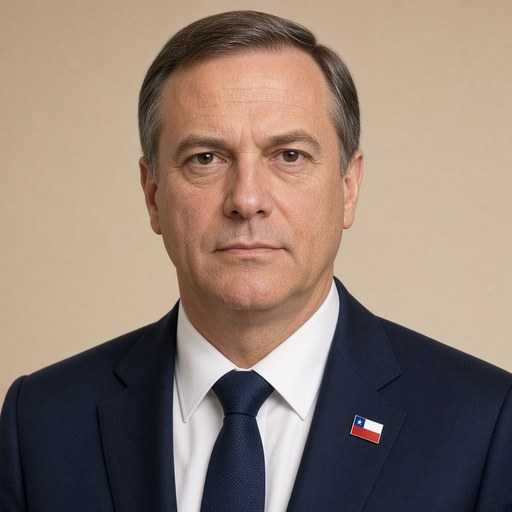
H.E. the President of the Republic, José Antonio Kast, inaugurates the renovation of the Calbuco Polytechnic High School.
 José Antonio Kast · Leader of the Republican Party (Chile)
- Context
- Kast addressed students, teachers, and local officials at the inauguration of the renovated Calbuco Polytechnic High School in Calbuco, Chile, on May 6, 2026.
- Main themes
- Technical-vocational education, school renovation and infrastructure, community collaboration and continuity, youth opportunity and hope, local economic development, civic pride, salmon industry and maritime economy, intergenerational progress, government cooperation across administrations
- Duration
- ~21 min
- Words
- 2,548
- Sentences
- 152
- Readability
- 66
- Grade
- 8.2
- Syntax
- 2.92
- Vocabulary
- 1.86
Translated from Spanish
The broad sphere of national life a sentence belongs to. Every sentence has an Arena, so it is the denominator the other indices are read against.
Other152 sentences in 34 paragraphs
Governor, thank you, esteemed councilors, thank you very much for being there supporting this long-awaited project. As you said, you were here in September and it was like the scissors. It was the first celebration one has when one is aware that years of work are coming to an end. March 4 is already the start of the school year.
From there, we move to May 4, which the mayor told us is the anniversary of the commune. And that new stage begins. That new stage involves teachers, educational assistants, families, and young people, who are the most important thing we have.
Thank you, Mr. Mayor, also for persevering. Perhaps how many doors, just like the governor, you had to knock on along with your councilors. Because these are works, and as they mentioned, that are not from one mayoral term, they are not from one governorship, they are not from one government. It is the continuity of the work of many. That is why the recognition of those who served as mayor, of those who previously served as councilors, is very well deserved. Those recognitions must always be there because we build the country together. The country does not start with one administration, nor does it end with another. It continues. The important thing is that we all collaborate.
Mr. Director, you have a great challenge ahead. There is a whole history that you have to collect, that you have to capture. That spirit, you have taken the baton to move forward.
I also want to greet the regional delegate who accompanies me, Cristian Palma, who represents the presidential authority in the area, because, democratically, the host is the governor elected by the citizens.
I want to mention what the president of the previous student council said. We are here with the president of the student council as well, whom I greet. It is a great responsibility to be the first president of the student council in this establishment. But your predecessor, Krishna Jara, said in her speech: “it was what we had been waiting for years.” Even several generations. They told us that the high school started in 1970. Many of those who studied in the old high school now have their children here. What pride to say: I return to the school where I studied to educate my children. And so it will continue.
I have suggested to the ministers that each one return to the school where they studied so that the children in those schools can say: “how incredible! From this school came a minister, a minister, a regional secretary, a delegate.” Each one should return to their roots and raise hope in the young people. That hope that the mayor, the director spoke of, which at times seems distant. Because the anguish, the day-to-day, often makes us question what sense what we are doing has.
And it makes perfect sense. When I was able to tour the workshops of the three specialties, and you said: “well, the sea is not the horizon, it is the future” and I saw the young people there in mechanics, and there was a car, but there were also outboard motors. And I told them: “that outboard motor, working, is the support of a family.” You are not just fixing a motor; when you are repairing a motor, you are helping an entire family to get ahead. When you collaborate with a production line in a salmon farm, you are making all of Chile stand up. Because an investment is maintained.
And so in the different specialties. You have to see there a huge projection towards the future of what you are doing. In several of the workshops, I said: “oh, it brings back many memories. Those tables –I told them– look at that table over there, already made of polycarbonate, before it was made of wood.” They gave me the good news that now wooden tables could not be used for cutting with knives. When I saw how they were joining the ropes in agriculture, I said: “look, what is this?” “We are joining ropes.”
Well, here we are joining ropes. We are uniting a community. To the families of Calbuco, to the teachers, to you, to the municipality, to the governorship. We all unite in the joy that these new generations have these facilities.
A duty is born for you there. In Chile, one in three students studies in the technical-professional area. Some say: “well, here I finish.” No, it begins there, because education is a continuous process. For parents, stages are closing. When one goes to their children's graduation in eighth grade, they say: “how incredible, we made it to eighth grade” and they pass through an arch. When they graduate from high school, with a diploma in hand, well, the pride is enormous. Because they say: “they have achieved something that I did not have. How many parents did not have the opportunity that you have to leave their early years of study with technical knowledge?
And from there, there are no limits. Because, of course, some will first enter an internship, then they will start working in one of the industries, hopefully a local industry, that needs local human capital. It is also often said: “no, it is just people from outside coming.” Because locally we do not always have the knowledge for these modern industries.
You are making a change in the way the country's growth is carried out, which is with local people, who know very well all the islands, the channels, the territory, but also have the sufficient knowledge so that that industry, which today is very modern, which is very technological, can work and can have the collaboration of people who were born and raised in the area. But this opens a new stage.
What we must do is take care of education. We must take care of public education. Many times there is a lot of talk about public education, but little is done. And the first ones called to take care of public education are you. The first ones called to take care of this infrastructure are you. The first to respect the teachers are you.
If not, the destiny is clear. We have had great public education establishments in Chile that today are no longer a place where young people aspire to go. And there are others that silently advance, advance, advance and everyone wants to go to that place because they see that there is a future. Today, unfortunately, there are many young people who do not want to go to a so-called emblematic high school, from where many presidents of the Republic, outstanding people internationally, came; they no longer want to go to those emblematic high schools.
And they start going to others, to Peralillo, to the Víctor Jara High School, where students from other communes go, to the San Nicolás High School, which is in Ñuble, where students from other communes go, to the Augusto D’Halmar High School, in Ñuñoa, where students from other communes go, because they see that there is respect. There, the teachers do not have to be marking students, they do not have to be correcting all day, because there is a culture where that study environment is respected. Take care of that, because it can be lost very quickly.
You have to be positive leaders, leaders who say: “I want to study, I want to learn.” I can have many motivations to express myself, but all those motivations to express oneself must think of a better Chile. And violence does not solve problems; it aggravates and deepens them.
I had the opportunity in some establishment in the Metropolitan Region, where a young person told me: “you have to help us repair the infrastructure.” And I said: “very well, but do not destroy it again, because it has been repaired three times and three times it has been destroyed.” And the only ones who are harmed are you. Because, of course, in a moment of tension, one can break a window, because they say: “my expression of anger, of annoyance, I will express by destroying a window.” Well, who are the ones ultimately harmed? The same people who did that, and that applies in any area of life.
That is why my constant call is to dialogue. We want to collaborate so that things work better, so that the directors can be those educational pedagogical leaders, as the minister said. That you see the director permanently in the courtyards, in the cafeteria, having lunch with the same food that the students have. That is something I also try to do, even though I am in the Palacio de La Moneda, to go to the cafeteria and have the same food that is served there every day.
But you have to see it. If they are constantly filling out forms, reports, and spreadsheets, well, that which characterizes him, which has to be a pedagogical leader, will not be appreciated. The same goes for the teachers. You have to collaborate from your side, and we have to make life easier for the educational project.
Parents and guardians are fundamental; come to the establishment, even if they are already grown. As one has many children, when they were small, the child was happy that one accompanied them, and when they were older, they would say: “no, look, let me, at the corner, turn around here so that I don’t pass, if one had a car, so that the car doesn’t pass in front of the school and say goodbye to dad or mom affectionately. No. Accompany them. Take care of them. Help in the educational work. The family remains that central place for the education of young people.
You young people, let yourselves be pampered. There is an age when one becomes a bit shy and does not want their parents to be close, but we need the guardians present, the guardians who care about what their children are studying. Many times one learns much more with the child when they open a notebook, they would say: “oh, they surpassed me.” How much has education advanced in technological issues? Well, we, the parents, can also learn a lot from our children, but we need that encounter.
That encounter can also be here. Yes, this facility, well managed, like in other municipalities, can be a meeting place for families as well. A gym like this, well, is a public infrastructure that can serve not only the students but also the community, as long as there are clear rules to take care of the infrastructure. If that is achieved, well, in many establishments there are leagues, it can be basketball, volleyball, handball, soccer. Now there is an institution, Fútbol Más, that rewards those who have fair play. Well, an interaction can be generated, always complying with the rules.
We, as I tell you, want to support the directors, we want to support the teachers. And it is most likely that there are many teachers, so let’s give a round of applause to the teachers who are here. Each teacher marks the life of entire generations. Yes, we can have differences, which is legitimate, but I believe we have no difference in recognizing the work of teachers.
Those teachers who are on an island, educating ten children, that rural school teacher, that normalist who are very few left and who are still around, who were teachers of all areas and with tremendous vocation. Well, let’s take care of the vocation of our teachers, let’s help them to get ahead, let’s respect them, starting with the respect that each one deserves so that those acts of violence that have shaken our homeland, that have shaken our homeland, do not happen again.
That we never again have to give urgent priority to a bill that safeguards the safety of schools. Today we are advancing in a project called “Protected Schools.” Why did we have to come to create a bill called “Protected Schools”? Yes, by essence, the school should be a protected place. Well, the laws that are currently being processed with urgent priority point to that, but there will come a time when that law will no longer need to be used, because in times of crisis one has to make certain decisions, but we have to overcome the crisis.
The law itself does not guarantee good treatment; it provides tools for an educational project to work and recover a good school environment. Later on, many educational projects will not need it, because one can transform their reality when everyone commits.
I also want to tell you that public-private interaction is fundamental. Here we thank the regional government, the councilors, the mayor, the councilors, the former local governments, but public-private collaboration is fundamental, because you will find work in the private sector, and the private sector will collaborate more and more if it sees that the high school has good professionals, good technicians. Here the mayor spoke about containers, motors, boats, and professional internships that you can do.
So, we have to seek that joint work between the public and the private. The region has made a leap in employability, in investment, which was somewhat paralyzed in recent years, but thanks to aquaculture, the salmon industry, and fishing.
Feel proud of your high school and let the people of Calbuco feel proud of you, because every time you go out, the work is well done. And it is said: “no, look, guarantee seal.” The technical professional from Calbuco speaks for itself, for its history. Wherever a young person who certifies that they studied here goes, they will have the doors open, because those who graduated, and you in the future, will take care of the tradition of this establishment.
Fulfill the promised word. Many times it is difficult. But do not say: “yes, I have it ready for you tomorrow.” And when tomorrow you have your venture, the person comes back, “no, look, it’s just that the parts guy didn’t arrive, this, this, the other, but tomorrow for sure.” And tomorrow they come back: “no, look, you’re going to want me to say that the power went out yesterday and I couldn’t advance.” And it will reach you until the 15th, but people get tired. So, the work well done, the promised word, that fulfilled trade.
You are the ambassadors of Calbuco for the years to come. Wherever there is a graduate of this institution, all of Calbuco should feel proud because it has the best of its own anywhere in Chile or the world. Here there are no limits, there is no limit. The limit is not the channel, as the director said, it is not the bridge, no. There are no limits for those who study, do their job well, keep their word, and continue studying and training. Education is a continuous process. I keep learning. I told the young people in the workshop: “look, I just learned something new in each of the workshops.”
So, feel proud. Thank you very much to all who participated, to those who did not give up, and may God bless our nation.
Thank you very much.
The original Spanish. The tags above are read on the English translation's sentences.
Señor gobernador, gracias, señores cores, muchas gracias por haber estado ahí respaldando este proyecto tan anhelado. Como dice usted, estuvieron aquí en septiembre y eran como los tijerales. Era la primera celebración que uno hace cuando ya tiene conciencia de que el trabajo de años se acerca a su fin. El 4 de marzo ya es el inicio del año escolar.
De ahí pasan al 4 de mayo, que nos decía el alcalde, que es el aniversario de la comuna. Y ya comienza esa nueva etapa. Esa nueva etapa que involucra a los docentes, a los asistentes de la educación, a las familias y a los jóvenes, que son lo más importante que tenemos.
Gracias, señor alcalde, también por perseverar. Quizás cuántas puertas, igual que el gobernador, tuvo que golpear junto con sus concejales. Porque estas son obras, y lo mencionaban, que no son de un periodo alcaldicio, no son de un periodo de gobernación, no son de un gobierno. Es la continuidad del trabajo de muchos. Por eso, está muy bien el reconocimiento a quienes ejerció la labor de alcalde, a quienes ejercieron anteriormente la labor de concejales. Esos reconocimientos siempre tienen que estar porque el país lo construimos entre todos. El país no parte con una gestión, ni termina con otra gestión. Continúa. Lo importante es que todos colaboremos.
Señor director, gran desafío tiene. Hay toda una historia que usted tiene que recoger, que tiene que plasmar. Ese espíritu, a usted le tocó la posta de seguir adelante.
Quiero saludar también al delegado regional que me acompaña, Cristian Palma, quien es el que representa la autoridad presidencial en la zona, porque, democráticamente, el dueño de casa es el gobernador electo por la ciudadanía.
Quiero mencionar lo que dijo la presidenta del centro de alumnos anterior. Estamos aquí con el presidente del centro de alumnos también,
a quien saludo. Gran responsabilidad ser el primer presidente del centro de alumnos en este establecimiento. Pero su antecesora, Krishna Jara, decía en su discurso: “era lo que llevábamos esperando por años”. Incluso varias generaciones. Nos decían que el liceo partió en el año 1970. Muchos de los que estudiaron en el liceo antiguo hoy tienen a sus hijos acá. Qué orgullo decir: Vuelvo al colegio donde estudié a educar a mis hijos. Y así seguirá.
Yo les he planteado a los ministros que cada uno vuelva al colegio donde estudió para que los niños que están en esos colegios digan: “¡qué increíble! De este colegio llegó a ser ministro, ministra, seremi, delegado”. Cada uno vuelva a sus raíces y levanten la esperanza en los jóvenes. Esa esperanza de la cual nos hablaba el alcalde, el director, que en ocasiones se ve lejana. Porque la angustia, el día a día, muchas veces nos hacen preguntarnos qué sentido tiene lo que estamos haciendo.
Y tiene todo el sentido. Cuando pude recorrer ahora los talleres de las tres especialidades, y usted decía: “bueno, el mar no es el horizonte, es el futuro” y veía a los jóvenes ahí de mecánica, y había un auto, pero también había motores fuera de borda. Y yo les decía: “ese motor fuera de borda, funcionando, es el sostén de una familia”. Ustedes no solamente están arreglando un motor, cuando están reparando un motor, están ayudándole a una familia entera a que salga adelante. Cuando colaboran con una línea de producción en una salmonera, están haciendo que Chile entero se ponga de pie. Porque se mantiene una inversión.
Y así en las distintas especialidades. Ustedes tienen que ver ahí una proyección enorme que hay hacia el futuro de lo que ustedes están haciendo. En varios de los talleres, yo decía: “oh me trae muchos recuerdos. Estos mesones –yo les decía– mire ese mesón que está ahí, ya de policarbonato, antes era de madera”. Me dieron la buena noticia de que ahora no se podían usar mesones de madera para usar los cuchillos en el corte. Cuando veía cómo unían los cabos en el tema de la agricultura, decía: “mira, ¿qué es esto?”. “Estamos uniendo cabos”.
Bueno, aquí estamos uniendo cabos. Estamos uniendo una comunidad. A las familias de Calbuco, a los profesores, a ustedes, al municipio, a la gobernación. Todos nos unimos en la alegría de que estas nuevas generaciones cuenten con estas instalaciones.
Ahí nace un deber para ustedes. En Chile, uno de cada tres estudiantes estudia en el área técnico-profesional. Algunos dicen: “bueno, aquí termino”. No, ahí comienza, porque la educación es un proceso continuo. Para los padres, se van cerrando etapas. Cuando uno va a la graduación de sus hijos en octavo, dice: “qué increíble, llegamos a octavo” y pasan por un arco. Cuando ya egresan de cuarto medio, con un título en la mano, bueno, el orgullo es enorme. Porque dicen: “ha logrado algo que yo no tuve. ¿Cuántos padres no tuvieron la posibilidad que ustedes tienen de salir de sus primeros años de estudio con un conocimiento técnico?
Y de ahí no hay límites. Porque, claro, algunos entrarán primero en una práctica, después entrarán a trabajar en alguna de las industrias, ojalá sea una industria local, que necesita capital humano local. También muchas veces se dice: “no, es que viene pura gente de fuera”. Porque localmente no siempre tenemos los conocimientos para estas industrias modernas.
Ustedes están haciendo un cambio en el estilo de cómo se lleva adelante el crecimiento del país, que es con personas de la localidad, que conocen muy bien todo lo que son las islas, los canales, el territorio, pero además tienen los conocimientos suficientes para que esa industria, que hoy día es muy moderna, que es muy tecnológica, pueda trabajar y pueda tener la colaboración de personas que nacieron y se criaron en la zona. Pero esto abre una etapa.
Lo que sí, hay que cuidar la educación. Tenemos que cuidar la educación pública. Muchas veces se habla mucho de la educación pública, pero se hace poco. Y los primeros llamados a cuidar la educación pública son ustedes. Los primeros llamados a cuidar esta infraestructura son ustedes. Los primeros a respetar a los profesores son ustedes.
Si no, el destino está claro. Hemos tenido grandes establecimientos de la educación pública en Chile que hoy día ya no son un lugar donde aspiran a llegar los jóvenes. Y hay otros que en silencio avanzan, avanzan, avanzan y todos quieren llegar a ese lugar porque ven que ahí hay futuro. Hoy día, lamentablemente, hay muchos jóvenes que no quieren ir a un liceo de los denominados emblemáticos, de donde salieron muchos presidentes de la República, personas destacadas a nivel internacional, ya no quieren ir a esos liceos emblemáticos.
Y empiezan a ir a otros, a Peralillo, al Liceo Víctor Jara, donde van de otras comunas, al Liceo San Nicolás, que está en Ñuble, donde van de otras comunas, al Liceo Augusto D’Halmar, en Ñuñoa, donde van de otras comunas, porque ven que ahí hay respeto. Ahí los profesores no tienen que estar anotando alumnos, no tienen que estar todo el día corrigiendo, porque hay una cultura donde se respeta ese ambiente de estudio. Eso cuídenlo, porque se puede perder muy rápido.
Ustedes tienen que ser líderes positivos, líderes que digan: “yo quiero estudiar, quiero aprender”. Puedo tener muchas motivaciones para manifestarme, pero todas esas motivaciones para manifestarse tienen que pensar en un Chile mejor. Y la violencia no arregla los problemas, los agrava, los profundiza.
Me tocó en algún establecimiento en la Región Metropolitana, donde un joven me decía: “tiene que ayudarnos a reparar la infraestructura”. Y yo le decía: “muy bien, pero no la vuelvan a destruir, porque se ha reparado tres veces y tres veces se ha destruido”. Y los únicos que salen perjudicados son ustedes mismos. Porque claro, uno en un momento de tensión puede romper un vidrio, porque dice: “mi manifestación de rabia, de enojo, la voy a expresar destruyendo un vidrio”. Bueno, ¿quiénes son los perjudicados finalmente? Las mismas personas que hicieron eso, y eso en cualquier ámbito de la vida.
Por eso mi llamado permanente es al diálogo. Nosotros queremos ir colaborando para que las cosas funcionen mejor, que los directores puedan ser esos líderes educacionales pedagógicos, que decía la ministra. Que ustedes vean permanentemente al director en los patios, en el casino, almorzando lo mismo que almuerzan los alumnos. Que es algo que yo trato de hacer también, aunque esté en el Palacio de La Moneda, ir al casino y todos los días tener la misma comida que hay en el casino.
Pero tienen que verlo. Si permanentemente tiene que estar llenando formularios, informes, y llenando planillas, bueno, eso que es lo que lo caracteriza a él, que tiene que ser un líder pedagógico, no lo van a poder apreciar. Lo mismo con los profesores. Ustedes tienen que colaborar desde su parte y nosotros tenemos que facilitarle la vida al proyecto educativo.
Los padres y apoderados son fundamentales, vengan al establecimiento, aunque ya estén grandes. Como uno tiene hartos hijos, cuando eran pequeños, el hijo era feliz de que uno lo acompañara y cuando ya eran más grandes, decía: “no, mira, déjame que, en la esquina, date la vuelta por aquí para que no pase, si uno tenía auto, para que no pase el auto delante del colegio y se despida del papá o la mamá cariñosamente. No. Acompáñenlos. Cuídelos. Ayuden en la labor educativa. La familia sigue siendo ese lugar central para la educación de los jóvenes.
Ustedes jóvenes, déjense regalonear. Hay una edad donde uno se pone medio tímido y no quiere que los papás estén cerca, pero necesitamos a los apoderados presentes, a los apoderados que se preocupen de lo que están estudiando sus hijos. Muchas veces uno aprende mucho más con el hijo cuando abre un cuaderno, diría: “oh, me superó”. ¿Cuánto ha avanzado la educación en temas tecnológicos? Bueno, nosotros, los padres, también podemos aprender mucho de nuestros hijos, pero necesitamos ese encuentro.
Ese encuentro también puede ser acá. Sí este recinto, bien llevado, como en otros municipios, puede ser un lugar de encuentro también para las familias. Un gimnasio como este, bueno, es una infraestructura pública que no solamente le puede servir a los alumnos, sino que, a la comunidad, en la medida que haya reglas claras, para cuidar la infraestructura. Si eso se logra, bueno, en muchos establecimientos hay ligas, puede ser de básquetbol, de voleibol, de hándbol, de fútbol. Ahora está una institución, el Fútbol Más que premia a los que tienen fair play. Bueno, se puede generar una interacción, siempre cumpliendo las normas.
Nosotros, como les digo, queremos respaldar a los directores, queremos respaldar a los profesores. Y lo más probable es que haya hartos profesores, así que brindémosles un aplauso a los profesores que están aquí. Cada profesor marca la vida de generaciones enteras. Sí, podemos tener diferencias, que es legítimo, pero yo creo que no tenemos ninguna diferencia en el reconocimiento a la labor de los maestros.
Esos maestros que están en una isla, ahí educando a diez niños, ese maestro de la escuela rural, ese normalista que ya quedan muy poquititos y que quedan algunos por ahí, que eran profesores de todas las áreas y con una vocación tremenda. Bueno, cuidemos la vocación de nuestros profesores, ayudémosles a salir adelante, respetémoslos, partiendo por el respeto que se merece cada uno para que esos hechos de violencia que conmovieron a nuestra patria, que han conmovido a nuestra patria, no se vuelvan a repetir nunca más.
Que nunca más tengamos que ponerle suma urgencia a un proyecto de ley que resguarde la seguridad de las escuelas. Hoy día estamos avanzando en un proyecto “Escuelas Protegidas”. ¿Por qué tuvimos que llegar a hacer un proyecto de ley denominado “Escuelas Protegidas”? Sí por esencia la escuela debiera ser un lugar protegido. Bueno, las leyes que se están tramitando ahora con suma urgencia apuntan a eso, pero llegará un momento que esa ley ya no sea necesaria usarla, porque en momentos de crisis uno tiene que tomar ciertas decisiones, pero tenemos que superar la crisis.
La ley de por sí no garantiza el buen trato, da herramientas para que un proyecto educativo pueda trabajar y recuperar el buen ambiente escolar. Más adelante muchos proyectos educativos no lo van a necesitar, porque uno puede transformar su realidad cuando todos se comprometen.
Quiero también decirles que la interacción pública-privada es fundamental. Aquí les damos las gracias al gobierno regional, a los cores, al alcalde, a los concejales, a los ex gobiernos locales, pero lo público-privado es fundamental, porque ustedes van a encontrar trabajo en el mundo privado, y el mundo privado va a colaborar cada vez más si ve que el liceo tiene buenos profesionales, buenos técnicos. Aquí el alcalde hablaba de temas de contenedores, temas de motores, de lanchas, de prácticas profesionales que ustedes pueden hacer.
Entonces, tenemos que buscar ese trabajo mancomunado entre lo público y lo privado. La región ha tenido un salto en temas de empleabilidad, en temas de inversión, que quedó un poco paralizado en los últimos años, pero gracias al tema acuícola, al tema salmonero, al tema de la pesca.
Siéntanse orgullosos de su liceo y que los habitantes de Calbuco se sientan orgullosos de ustedes, porque cada vez que salgan, el trabajo quede bien hecho. Y se diga: “no, mira, sello garantía”. El técnico profesional de Calbuco habla por sí, por su historia. Donde vaya un joven que acredite que estudió acá, va a tener las puertas abiertas, porque los que salieron, y ustedes al futuro, van a cuidar la tradición de este establecimiento.
Cumplan la palabra empeñada. Muchas veces cuesta. Pero no digan: “sí, se lo tengo listo mañana”. Y cuando mañana ustedes tengan su emprendimiento, la persona vuelva, “no, mire, es que no llegó el señor del repuesto, esto, esto, lo otro, pero mañana sin falta”. Y mañana vuelve: “no, mire, me va a querer que se cortó la luz ayer y no pude avanzar”. Y les va a llegar como hasta el día 15, pero la gente se cansa. Entonces, el trabajo bien hecho, la palabra empeñada, ese oficio cumplido.
Ustedes son los embajadores de Calbuco hacia los años que vienen. Donde haya un egresado de esta institución, todo Calbuco tiene que sentirse orgulloso porque tiene al mejor de los suyos en cualquier parte de Chile o del mundo. Aquí no hay límites, no hay límite. El límite no es el canal, como decía el director, no es el puente, no. No hay límites para aquel que estudia, hace bien la pega, cumple la palabra empeñada y sigue estudiando y formándose. La educación es un proceso continuo. Yo sigo aprendiendo. Les decía a los jóvenes del taller: “miren, acabo de aprender algo nuevo en cada uno de los talleres”.
Así que, siéntanse orgullosos. Muchas gracias a todos los que participaron, a los que no bajaron los brazos y que Dios bendiga a nuestra nación.
Muchas gracias.