




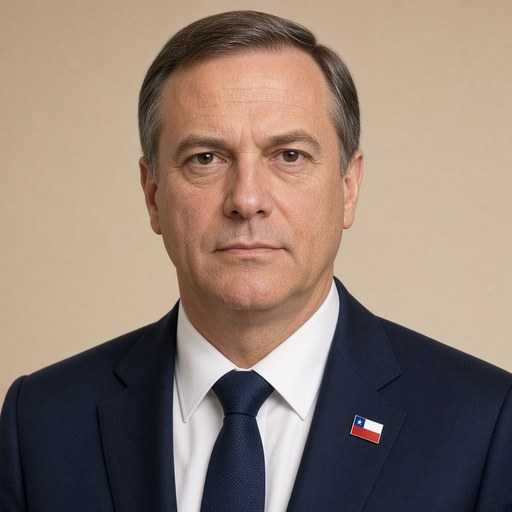
His Excellency the President of the Republic, José Antonio Kast, leads a meeting with more than 130 mayors at La Moneda.
 José Antonio Kast · Leader of the Republican Party (Chile)
- Context
- President Kast addressed over 130 Chilean mayors at La Moneda Palace on May 6, 2026, to discuss municipal governance, public services, and intergovernmental coordination.
- Main themes
- Municipal governance, intergovernmental cooperation, public administration reform, local government challenges, institutionalism, security and public services, fiscal management, community accountability, education, citizen engagement, medical licenses reform, Cenabast procurement reform
- Duration
- ~16 min
- Words
- 1,866
- Sentences
- 116
- Readability
- 67
- Grade
- 7.9
- Syntax
- 2.78
- Vocabulary
- 2.04
Translated from Spanish
The broad sphere of national life a sentence belongs to. Every sentence has an Arena, so it is the denominator the other indices are read against.
Other116 sentences in 25 paragraphs
Thank you very much.
I see mayors here with whom I was last night in the citizen dialogue, there is Emilio, I see some others. And I want to say that we are very grateful for the work that all the mayors do. Collipulli is present. I see faces and I see stories, I see journeys.
But I want to thank you, because you are always the first door that a citizen knocks on. It may be that they first knock on the councilor's door, but the councilor always reaches various points of the council, that is, they come back to you. I see that some of you come from very distant places, who are constantly building the nation, and the municipal spirit always arises in me, having been a councilor. But that also allows me to know some realities more closely. To share, on one hand, your pains, your concerns, your anxieties. Then, I had to deal with parliamentary matters. Being on the other side, defending every time there was a law and saying: "The resources are not allocated." Now being in the Executive with a tremendous team. You can see 15 ministries present, ministers or undersecretaries.
I don't know if you have had a meeting like this before. But it is a new way of managing the Government's administration, where there is a team and we play as a team. A mayor once told me: "Hey, your provincial delegate mentioned President Kast four times." And I said: "Fantastic, because it means we are all working in the same line." Yes, the important thing is that things get done.
I am just passing through, it is 4 years without re-election. What interests us is that institutionalism is recovered in Chile. All mayors, beyond political colors, and now that we also have a period of 2 years without elections, need to solve the day-to-day problems of the people. Lighting, security, health, has no political color. In some I see there, some faces, when someone took over a municipality and destroyed all the assets. Well, they destroyed the assets of everyone.
Today in Calbuco, the mayor of Calbuco was here, holding a public event not to inaugurate the high school, not to start the school year, but to recognize the work that had been done by the government, the mayor's office, those who started the reconstruction process ten years ago. And some said: "They are coming to re-inaugurate the high school for the second time." No, we were in the area, the mayor said: "Look, we did like the tijerales, we received the rough work, last year the rough work was received, the governor came, the councilor came, the cores and everything, but the school year has already started and we didn't do something special."
Well, the fact of going, of recognizing the transversal work, even the previous mayor, Rubén Cárdenas, saying: "Hey, this started here, let's recognize it." We are valuing a work for the children of Calbuco. It has no political color from one sector or another. And the message to the children was to take care of this, so that what happens in emblematic high schools in Santiago does not happen, where the same young people destroy everything, inviting parents to look into their children's education.
That is the message we are transmitting, to return to common sense, to respect institutions, to recover again, as I say, the institutionalism of the State. The comptroller has given us an example of how with the same resources, with the same laws, something that also affected you, the issue of medical licenses, is improving. How many mayors had to reimburse or had to pay, right? And then the medical license was rejected and no one returned the resources to them.
Well, there is also progress for you and you can recover something that was paid, but that should not have been paid at that moment. And there are large accounts pending there.
Some mayors who have to make certified notices, those who have TAC, all know how much they have to spend on certified letters to notify the offender. It is many millions of pesos. Why does it have to be a certified letter? If that person has a virtual address, has an email, has some place where we can send them a notification. Does it make a difference whether the certified letter arrives or whether an email arrives, which they have to verify? Well, in some municipalities it can be 100 million a year sometimes or more and what they recover from collections is very little.
On the issue of Cenabast. There is the minister who yesterday gave us tremendous news or the day before yesterday, who said: "Well, why should we charge a commission to the mayors?" I mean, we studied how, we do... that’s what you told me, minister, right? On Monday? Well, but it will be starting in April. I mean, saying: "Here’s some news, but I was sure I had read it and that we had discussed it in the bilateral."
Well, but there is good news. These are resources that did not need to be charged to the municipalities, because we had them. The management. I assure you, for example, we were talking the other day with the mayor of Temuco, the market in Temuco burned down a long time ago. But here they gave him the RS that had never been given quickly. We talked with Subdere and said: "Well, how are we going to replace the markets that have burned down over time?" And I could say that mayors who have a burned municipal market should raise their hands. There is one, Talca, there is Calbuco, that has been burned since 2016, I believe; there is the one in Concepción, there is the one in Huara. Well, how many are there? Minister Poduje, how many of you have been with and is accelerating the processes?
And so in every service. Here the minister has had a complex issue with INJUV. Well, they tell us: "Hey, this is the best service to take care of young people." And they tell us: "The percentage that goes directly to youth programs is 0.7%." There are many institutions that are being created and, of course, the office director arrives, the office administrator arrives, three people arrive and there is no program. Well, can we make improvements there? Obviously, we are going to make improvements.
And I know that today there is nervousness, there is nervousness about the issue of the Municipal Common Fund, we will give the floor right away. We have the undersecretary of Finance there. There is concern about the modifications to the General Urbanism and Construction Ordinance. We have Minister Poduje here. There is concern because many were promised Cesfam and we would need like four national budgets to fulfill all the promises made to them. Budgets? 36 years of health budgets to fulfill all the promises.
So, in some part we could advance with a SAPU, with a SAR, we will see if one of the hospitals that are being built or that need to be built and that have a huge delay, because, of course, the one in Puerto Varas is delayed, but the one in El Salvador was delayed, the one in Puerto Varas was delayed, the one in Río Bueno was delayed and the one in La Unión was paralyzed. And they were all in sequence.
Well, if the Hospital of Puerto Varas starts to function quickly, does it relieve the situation we have in Puerto Montt? Yes. If we improve health care in Calbuco or in Aysén or in Castro, I was with the governor and he told me that they were going to replace part of the equipment of one of the hospitals there. Because governors also have resources that they can allocate, whether for health infrastructure, education infrastructure.
Well, how do we talk? How do we harmonize the national government, the regional government, the municipal government? Is there a financial tightness? Yes, and it is evident. All the ministers here have had to undergo a very thorough study and review process. The normal thing would have been: "Don't worry, let's go into debt and let the next government fix the problem."
Yes. On the issue of gasoline, how many opinions were there regarding whether it was better to go into debt and pass the debt to the one who came after? I am not going to do that. And was there any doubt, did I have any doubt that popular support would decrease? None. The doubt is whether it would drop 15 or 20 points. From 60 to 40. And it had to be done, because we have to be honest, we have to start talking to people with the truth.
You yourselves, how many services were transferred to you, obligations were transferred to you at your expense and they never provided you with the resources? Well, let's talk again with the truth.
The whole issue of Junaeb appeared. And there was a lot of nervousness and of course, it penetrates the citizenry because so much is repeated that is not true, that people start to say: "Hey, but how are they going to take food away from the children?" We are not going to take food away from any child, but if we manage resources better, it is likely that we will serve more children.
I ask you, who has not been to a school, to a high school where some children who have been assigned the possibility of having lunch, at some point do not have lunch? And they take a good sandwich, hold on, and then get home and are served a different snack than what was at school. Because of course, when I was little I sometimes didn't eat everything either. Well, that can happen, it is happening. What happens to that food? Do I open the trash can and throw it away?
We saw until last year that Junaeb was the talk of the town due to delays, due to services that did not arrive on time or did not arrive at all. Everyone criticized. And we say: "Hey, let's review the issue." And all those who previously said nothing are now finally concerned about Junaeb.
I tell you: How good that you are concerned about Junaeb. How good that you understand why we use the silver bullet in Junaeb. Because we need to organize. When one starts to organize, resources start to appear.
All of you, I don't know if all, but many of you experienced that over time you requested resources from the regional government, then from Subdere, accumulating the necessary amount to be able to bid for a project, to call for a project competition and those resources remain there, in the current account.
But how can we not talk to Finance, to the Comptroller to find a very secure method so that we do not lose interest and readjustment? It’s just a matter of seeing what the safest system is, of course, there may be concern about what they will do with the interests.
The original Spanish. The tags above are read on the English translation's sentences.
Muchas gracias.
Veo ahí alcaldes con los que estuve anoche en el diálogo ciudadano, está Emilio ahí, veo algunos. Y decirles que estamos muy agradecidos de la labor que realizan todos los alcaldes. Collipulli presente. Veo cara y veo historias, veo recorridos.
Pero darles las gracias, porque ustedes son la primera puerta que golpea siempre un ciudadano. Puede ser que golpeé primero la del concejal, pero el concejal siempre llega a puntos varios del concejo, o sea, les llega a ustedes de nuevo. Veo que vienen de lugares muy alejados algunos, que hacen patria permanentemente, y a mí siempre me aflora el espíritu municipalista, por haber sido concejal. Pero eso también me permite conocer algunas realidades de más cerca. Compartir por un lado sus dolores, sus preocupaciones sus angustias. Después, me tocó el tema parlamentario. Estar en el otro lado, defender cada vez que había una ley y decirle: "No están los recursos asignados". Ahora estar en el Ejecutivo con un tremendo equipo. Ustedes pueden ver 15 ministerios presentes, ministros o subsecretarios.
No sé si les había tocado una reunión así antes. Pero es una nueva manera de dirigir la administración del Gobierno, donde hay un equipo y jugamos en equipo. Algún alcalde una vez me dijo: "Oiga, es que su delegado provincial nos mencionó al señor Presidente Kast cuatro veces". Y yo le dije: “fantástico, porque quiere decir que estamos trabajando todos en la misma línea”. Sí lo importante es que las cosas se hagan.
Yo estoy de paso, son 4 años sin relección. A nosotros lo que nos interesa es que se recupere la institucionalidad en Chile. Todos los alcaldes más allá de los colores políticos y ahora que tenemos además un periodo de 2 años sin elecciones, necesitan solucionarles los problemas del día a día a las personas. La luminaria, la seguridad, la salud, no tiene color político. En algunos estoy viendo ahí, algunas caras, cuando le tomaban un municipio a alguien y le destruían todos los bienes. Bueno, les destruían los bienes a todos.
Hoy día en Calbuco, estaba por aquí el alcalde de Calbuco, haciendo un acto público no para inaugurar el liceo, no para iniciar el año escolar, sino para reconocer el trabajo que había realizado la gobernación, la alcaldía, aquellos que iniciaron el proceso de la reconstrucción hace 10 años atrás. Y algunos decían: "Vienen a reinaugurar por segunda vez el liceo". No, estábamos en la zona, el alcalde dijo: "Mire, nosotros hicimos como los tijerales, recibimos la obra gruesa, el año pasado se recibió la obra gruesa, vino el gobernador, vino el concejal, los cores y todo, pero ya inició el año escolar y no hicimos algo especial".
Bueno, el hecho de ir, de reconocer el trabajo transversal, incluso el alcalde anterior, Rubén Cárdenas, decir: "Oiga, aquí esto partió, lo reconozcamos". Estamos valorando una obra para los niños de Calbuco. No tiene color político de uno o de otro sector. Y el mensaje a los niños fue cuiden esto, que no pase lo que pasa en liceos emblemáticos en Santiago, donde los mismos jóvenes destruyen todo, invitar a los padres a averiguarse la educación de sus hijos.
Ese es el mensaje que estamos transmitiendo, de volver al sentido común, de respetar las instituciones, de recuperar de nuevo, como les digo, la institucionalidad del Estado. La contralora nos ha dado un ejemplo de cómo con los mismos recursos, con las mismas leyes, va mejorando algo que a ustedes también les afectaba, el tema de las licencias médicas. ¿Cuántos alcaldes tenían que reembolsar o tenían que pagar, ¿no es cierto? Y después se rechazaba la licencia médica y nadie les devolvía los recursos.
Bueno, ahí hay un avance también para ustedes y pueden ir recuperando algo que fue pagado, pero que no correspondía en ese momento que hubiese sido pagado. Y hay cuentas grandes ahí pendientes.
Algunos alcaldes que tienen que hacer avisos certificados, los que tienen TAC, todos saben cuánto tienen que gastar en carta certificada para notificar al infractor. Son muchos millones de pesos. ¿Por qué tiene que ser carta certificada? Sí ese señor tiene un domicilio virtual, tiene un mail, tiene algún lugar donde nosotros podamos mandarle una notificación. ¿Hace la diferencia que le llegue la carta certificada o que le llegue un mail, que él tiene que acreditar? Bueno, en algunos municipios pueden ser 100 millones al año de repente o más y lo que recuperan por cobro es muy poco.
En el tema de la Cenabast. Ahí está la ministra que ayer nos dio una tremenda noticia o antes ayer, que decía: "Bueno, ¿por qué vamos a ser nosotros y le vamos a cobrar una comisión a los alcaldes?" O sea, estudiamos cómo, nosotros hacemos… eso me dijo usted, ministra, ¿no es cierto? ¿El lunes? Bueno, pero va a ser a partir de abril. O sea, diciendo: "Adelante una noticia, pero yo estaba seguro que lo había leído y que lo habíamos conversado en la bilateral".
Bueno, pero ahí hay una buena noticia. Que son recursos que no era necesario cobrarles a las alcaldías, porque nosotros lo teníamos. La gestión. Les aseguro, por ejemplo, estábamos hablando el otro día con el alcalde de Temuco, el mercado de Temuco se quemó hace mucho tiempo. Pero aquí le dieron el RS que no le habían dado nunca rápidamente. Hablamos con el Subdere y dijimos: "Bueno, ¿cómo vamos a reponer en el tiempo los mercados que se han quemado?". Y podría decir que levanten la mano los alcaldes que tienen el mercado municipal quemado. Ahí hay uno, Talca, ahí está Calbuco, ese lleva desde el 2016, yo creo, quemado; está el de Concepción, está el de Huara. Bueno, ¿cuántos hay? El ministro Poduje con cuántos de ustedes ha estado y va acelerando los procesos.
Y así en cada servicio. aquí a la ministra le ha tocado complejo el tema por el INJUV. Bueno, nos dicen: "Oye, este es el mejor servicio para preocuparse de los jóvenes". Y nos dice: "El porcentaje que llega directamente a programas de jóvenes es el 0,7%". Hay muchas instituciones que se van creando y, claro, llega el director de la oficina, llega el administrativo de la oficina, llegan tres personas y no hay ningún programa. Bueno, ¿ahí podemos hacer mejoras? Obviamente que vamos a hacer mejoras.
Y sé que hoy día hay nerviosismo, hay nerviosismo por el tema del Fondo Común Municipal, vamos a entregar la palabra al tiro. Tenemos al subsecretario de Hacienda ahí. Hay preocupación por el tema de las modificaciones a la Ordenanza General de Urbanismo y Construcción. Tenemos aquí al ministro Poduje. Hay preocupación porque a muchos les prometieron Cesfam y habría que tener como cuatro presupuestos de la nación para cumplir con todas las promesas que les hicieron. ¿Presupuestos? 36 años de presupuesto de Salud para poder cumplir todas las promesas.
Entonces, en alguna parte podríamos avanzar con un SAPU, con un SAR, podremos ver si un hospital de los que se están construyendo o de los que se tienen que construir y que llevan un retraso gigantesco, porque, claro, está atrasado el de Puerto Varas, pero estaba atrasado el de El Salvador, atrasó el de Puerto Varas, atrasó el de Río Bueno y quedó paralizado el de La Unión. Y eran todos en secuencia.
Bueno, si empieza a funcionar rápidamente el Hospital de Puerto Varas, ¿descongestiona la situación que tenemos en Puerto Montt? Sí. Si mejoramos la atención de salud en Calbuco o en Aysén o en Castro, estuve con el gobernador y me decía que iban a reponer parte del equipamiento de uno de los hospitales de allá. Porque los gobernadores también tienen recursos que disponen, ya sea para temas de infraestructura en salud, de infraestructura en educación.
Bueno, ¿cómo vamos conversando? ¿Cómo armonizamos el gobierno nacional, el gobierno regional, el gobierno comunal? ¿hay una estrechez financiera? Sí, y es evidente. Todos los ministros aquí han tenido que hacer un proceso de estudio, de revisión muy acucioso. Lo normal habría sido: “no se preocupen, endeudémonos y que el próximo gobierno arregle el problema”.
Sí. En el tema de la bencina, ¿cuántas opiniones había respecto de que era mejor endeudarse y traspasarle la deuda al que venía después? Eso yo no lo voy a hacer. ¿Y había alguna duda, tenía alguna duda de que iba a bajar la adhesión popular? Ninguna. La duda es si bajaba 15 o 20 puntos. De 60 hasta a 40. Y había que hacerlo, porque hay que sincerar, hay que volver a hablarles a las personas con la verdad.
Ustedes mismos, ¿cuántos servicios les fueron traspasando, obligaciones les fueron traspasando con cargo a ustedes y nunca le entregaron los recursos? Bueno, hablemos de nuevo con la verdad.
Apareció todo el tema de la Junaeb. Y había mucho nerviosismo y claro, va penetrando en la ciudadanía porque tanto que se repite algo que no es cierto, que la gente empieza a decir: "Oye, pero cómo le van a quitar el alimento a los niños". No le vamos a quitar el alimento a ningún niño, pero si administramos mejor los recursos, es probable que vamos a atender más niños.
Yo les pregunto a ustedes, ¿quién no ha ido a una escuela, a un liceo donde algunos niños que tienen asignada la posibilidad de almorzar, en algún momento no almuerzan? Y se lleva un buen sándwich, aguanta y después llega a la casa y le sirven una colación distinta a la que había en el colegio. Porque claro, yo cuando era pequeño también a veces no me comía todo. Bueno, eso se puede dar, eventualmente se está dando. ¿Qué pasa con esos alimentos? ¿Abro el tarro de la basura y lo boto?
Hemos visto hasta el año pasado veíamos que la Junaeb estaba en boga de todos por el tema de los atrasos, por el tema de prestaciones que no llegaban a tiempo o no llegaban. Todo el mundo criticaba. Y nosotros decimos: "Oye, revisemos el tema". Y todos los que antes no decían nada, ahora están preocupados por fin de la Junaeb.
Yo les digo: Qué bueno que se preocupen de la Junaeb. Qué bueno que entiendan por qué usamos la bala de plata en Junaeb. Porque hay que ordenar. Cuando uno empieza a ordenar, empiezan a aparecer recursos.
Todos ustedes, no sé si todos, pero a muchos les pasó en el tiempo que solicitaban recursos en el gobierno regional, después en la Subdere, iban acumulando el monto necesario para poder licitar un proyecto, llamar a concurso un proyecto y esos recursos quedan ahí, en la cuenta corriente.
Pero cómo no vamos a poder conversar con Hacienda, con la Contraloría para buscar algún método muy seguro de que no perdamos interés y reajuste. Si es cosa de ver cuál es el sistema más seguro, claro, puede haber preocupación de qué van a hacer con los intereses.