




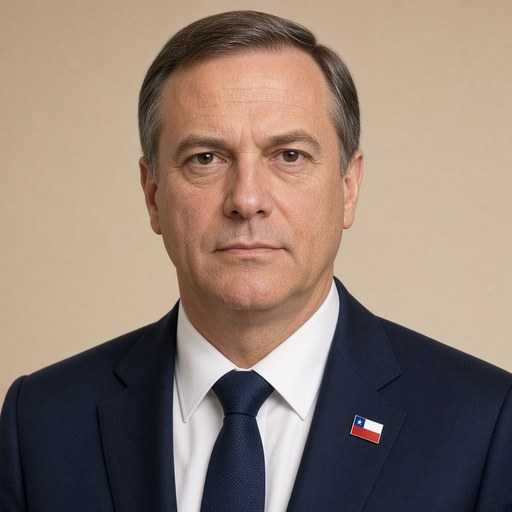
His Excellency the President of the Republic, José Antonio Kast, participates in the Salmon Summit 2026.
 José Antonio Kast · Leader of the Republican Party (Chile)
- Context
- Kast addressed the Salmon Summit 2026, recognizing salmon workers, announcing Salmon Workers' Day, and promoting industry growth and regional development in Chile.
- Main themes
- Salmon industry development, Salmon Workers' Day recognition, regional development and investment, vocational education and human capital, environmental sustainability, bureaucratic reform, local community integration, small and medium enterprises, aquaculture policy
- Duration
- ~23 min
- Words
- 2,763
- Sentences
- 172
- Readability
- 67
- Grade
- 7.8
- Syntax
- 2.82
- Vocabulary
- 1.97
Translated from Spanish
The broad sphere of national life a sentence belongs to. Every sentence has an Arena, so it is the denominator the other indices are read against.
Other172 sentences in 37 paragraphs
Good afternoon, very, very good afternoon.
Thank you for the invitation. There is Mr. Patricio, whom I have known for many years and I know his love for Chile and also his interest in advancing this industry. The whole issue of fishing was indeed part of his passion, always focused on securing the future of Chile from the perspective of the sea.
Thank you to those who organize the Salmon Summit. A recognition also to our friend Clément, who started the Dialogues of the Future. In 2024, if I am not mistaken, the first Dialogues of the Future began, the first Salmon Summit that was organized here, where former President Frei was present, who is a great defender of Chile's progress through salmon farming. To him too, from afar, I send a greeting, because he has been a faithful defender of this industry at the international level, he is a tremendous ambassador for the industry.
Thank you to the governors who are here, there are three governors representing the six regions that President Melero mentioned, who are committed to more work, to more investment in each of their regions. Last week we were able to meet with the governor of Aysén, Marcelo Santana, also seeing how there has been a significant change in the area since salmon farming arrived. But also looking at what we need to do to ensure greater interaction between the local community and the new industry.
Governor Giacaman from Biobío, who, along with La Araucanía, are those who often produce the feed so that the fish have all that nutrition for healthy feeding. Also there is the president of the governors at the national level, Alejandro Santana. Thank you for the work you are doing and how you also help to unblock that often senseless bureaucracy.
To the committed mayors, today was a great day because in the morning we were able to see the complement between the local community and the regional government, in the launch of a vocational high school in Calbuco, which is working on that necessary human capital so that the people of the region can be at the necessary level of their knowledge for this increasingly modern industry.
That constant complaint that people from other regions are hired and brought here or go north, well, it ends when there is dedication to the issue of education, when those young people see a future close to their home. There in Calbuco, in all the islands, in the channels, there is a tremendous future for those young people who will become great professionals.
I invite you to think that we should hold the next national meeting in Aysén, so that we can also see this work that you do in Magallanes, in Los Lagos. We are complementing each other. For the young people, this is a vision of the future, the future is there, it is within their reach as we complement the actions of the industry, the governments, and education.
Thanks to the mayors, also in the morning a certification of habilitation and environmental sustainability was delivered to the mayor of Calbuco, who was around here somewhere, at least we saw each other at the entrance. And the Minister of the Environment certifies that sustainable development is possible when authorities do not base themselves on ideology. Here we must base ourselves on the person, on progress, on the development of people.
I want to ask for a special round of applause for the salmon workers, for those people who day by day, with their effort, advance this industry. They, at a time when no one wanted to, went out to demonstrate, they went out to demonstrate to defend their jobs, because legislation was to be enacted without knowing the reality of those 85,000 or more families who live around the world of the salmon industry. And they would have risked the jobs of perhaps another 86,000 families, or even more, more than 4,000 small and medium-sized enterprises. They went out to demonstrate because they saw their jobs in danger, when Chile has been stagnant for a decade, in decline, with rising unemployment. They, on May 26, 2023, went out to safeguard their jobs.
As requested by the parliamentarians, Senator Espinoza, Senator Kuschel, Senator Moreira, the various deputies, the governors, and the mayors, we want to recognize that day, May 26, as Salmon Workers' Day. Because you, the salmon workers, largely saved this industry. So that day, May 26, will officially be Salmon Workers' Day in Chile. I assure you it will be a law with high approval in Parliament.
A year ago, you remembered here, they told me: "you were here a year ago" and I said: "how could I forget?" There was a bit more tension in the air, there were three of all the candidates who were there, each bringing some more well-known figures, there was the applause meter. I had a great time and I told you a story that you know better than anyone. And I told you that the salmon is stubborn, because the salmon dares to swim against the current. It is not because it likes to fight, it is not a fight for the sake of fighting, but because it knows it has a purpose and knows where it wants to go. Today I tell you again that the salmon has arrived. It has arrived at the place it wanted to reach.
And the purpose is that, from there, from the palace called La Moneda, we want to change Chile for the better. That is the purpose, to change Chile for the better. There will be noise in the air, there will be political discussions, but we have one north, which is to move Chile forward.
Will there be difficulties? Yes. The president mentioned the issue of an unexpected war. Well, let's speak the truth, because our responsibility cannot be put to the test by political or popularity issues. It was evident what was going to happen when we clarified the issue. But were we going to lose 1,000, 1,500 million just to maintain political popularity? We are not going to do that. Not at that moment, nor at any difficult moment we may have. We will speak the truth. To adults, to people who are tired of political slogans. What Chile needs is to grow, to have more jobs.
We want to reach what you expect, which is the modernization of the State. That State that, as Patricio Melero said, got lost. It got lost along the way and ended up with that public-private alliance that is so necessary. The State is not capable of generating that million jobs that are currently lacking. The State alone cannot absorb the more than two million Chileans who are today in informality. That is done by working together. The State cannot be an obstacle for the entrepreneur, for more decent work. The State should not be seen as an adversary of entrepreneurship. The State must be part of the solution, not the problem.
Some things that Patricio also mentioned, what are our commitments? Our commitments are efficient, clear, balanced regulations that are demanding but do not suffocate the industry. There the issue that was also mentioned, the issue of universities, science, and research is fundamental.
How does the State rise to the occasion? Are we going to have the cameras to see the bottom? Are we going to have the transport for State officials to see what is happening? Yes, our commitment is to be efficient, to have good management, to be demanding, but to seek solutions.
I spoke of certainties. Clearly, the State must provide certainties to small entrepreneurs, to suppliers, to the industry, and also to the workers. The discussion of the minimum wage is just beginning, which is relevant, it is important, but I assure you that, in general, the industries that are already established and have people collaborating, most of the industries that are there, the SMEs can have a different situation and that is why we want to inject resources into SMEs, which provide incomes significantly higher than the minimum wage.
That is what we aim for, to have more formal jobs with decent wages. Here you can ask how much a person earns who does a very difficult, complex, risky job, in the diving sector. How much does a person who works in processing plants receive? I assure you that in large companies, most people earn well above the minimum wage. But what we need is for those who do not have jobs to have jobs. Those who work in informality should also be able to save, like all of us, for their old age, to contribute to health issues. That is part of what we want to advance. A government that fulfills certainties, that says that things are done correctly.
Our commitment also goes, in what I mentioned and what we said last year, in territorial planning. The Lafkenche Law, when enacted, was enacted with good intentions. And, in fact, I believe that Patricio at least voted the same way I did, because there was a good intention. I at least voted in favor. But it lent itself to unimaginable abuses, where there are people who request maritime concessions of 50,000 hectares. And they spoke to us here about a very small piece of concessions, where a large amount of salmon is produced. Those people who request more than 50,000 hectares, do they have two or three boats at least? There are some who do not have any, but have a good lawyer who discovered that the saying becomes reality: Once the law is made, the trap is set. Because it was not a law to stop investment, it was a law to protect the artisanal fishing of a people like the Lafkenche. That was it.
But today they have blocked investment throughout Chile. And that cannot be. Because they have blocked the development of people. The person must be placed in the first place. We will advance strongly on that issue.
The first signal comes in this bill that is currently in parliamentary debate, the Law of Reconstruction and Economic and Social Development. It is a reconstruction law for the homes burned in Biobío, in Ñuble, to be able to, at some point, after two years, end the human drama of the people in the Valparaíso Region. Well, we need fresh resources. There it is. But we also need to lay the foundations for Chile to grow again. And it is also there.
And we need to boost SMEs. It is said: "no, this is the law for the 1% that has more resources." No, this is the law to advance SMEs that with so much effort have to face the bureaucracy of the State and do not receive any help from the State.
If of those 235,000 SMEs, half hired one person, well, that is already a gigantic development engine. There are 1 million 300 thousand SMEs. What happens is that those who today could access this subsidy via tax credit are more than 200,000. But those SMEs that today cannot access can also accumulate for when they have one more collaborator, two more collaborators.
I insist that being here today is largely due to what you did in the Dialogues for the Future of Salmon Farming. Because at that table, different actors sat down. Social actors, productive actors, the State, and they were able to reach certain agreements. And it has allowed several of these summits to be developed. They did that together, workers and employers, in a constructive dialogue, not confrontation.
Which is the same thing I proposed on Workers' Day, where the president of the CUT was present. I told him: "let's sit down to talk, we don't need to have those big demonstrations, with grandiloquent speeches, where over there are the good ones and here are the bad ones." It is not like that. Chile is built with everyone. Chile needs us all. And from the differences, we can achieve very good results.
From those differences arises the Salmon Plan 2050. I remember very well when different mayors came to visit all the presidential candidates. I think Carlos was also in that meeting, who has a lot of experience in agricultural and fishing matters. But Mayor Rodrigo Wainraihgt arrived, who is the best promoter of Puerto Montt. One sees and says: "I want to go live in Puerto Montt." It is truly impressive, the waterfront, Monte Verde, the eye, the park. It is, really, impressive. Very well complemented with the governor. They are in an impressive projection work for the area.
But they arrived there with the trade associations, with industrialists, with workers, with representatives from the political world. Each of us was given a document that was also later delivered here to the candidates. I want to tell you that this will not be left in a drawer. Here the future is tremendous. So we are going for you, there in Norway. We are going to move from second to first place, because the ambassador of Norway is here. With affection. There is space for everyone.
I come from a family of entrepreneurs and my father succeeded because other people explained to him how to do what he wanted to produce. And the space is infinite. I mean, even if you doubled production and we tripled it, we would meet the world's needs. So, what you do well, we can do well. And there are people who require healthy food, so that more countries can enter even. So, let's do things right. Let's talk. You have many things advanced.
To every worker in the salmon industry, feel proud. Because when a piece of salmon leaves here directly by plane or has a long journey, well, that piece of salmon is not just a piece of fish. It is part of the work that each one of you did to get it to Tokyo, to get it to Paris, to get it to New York. Each piece is a little piece of Chile that represents us abroad. And every time the flag has to be there, and when asked, “What flag is this?” “It is the flag of Chile.”
And we do things so well that we manage to reach the whole world from the farthest country in the southernmost part, and we feel proud of the work we do. We feel proud of the effort of thousands of families who are behind something that is seen there, but is much more than just a piece of fish. It is part of the effort, it is part of the work of many people.
We have a vocation as a country, a vocation to grow, to do things well, to come together. We have already gone through that tremendous moment of division. Let us never go through that hard ordeal again that was that explosion. You can call it whatever you want, but the destruction it brought, the disorder it brought, the damage it did to notable institutions of Chile, for example, those that safeguard our security, was enormous. We have not yet recovered.
Everyone says: “We need more police officers.” Who wants to be a police officer if they are being insulted all day in the street? If they wear shirts to insult them? We have to recognize the work of our police forces, of the PDI, of Gendarmería, of Carabineros de Chile. Today we need more vocations in those areas.
I conclude by saying that we have everything; we are a wonderful country. We have the human capital, we have science, we have academia, we have young people who only want to get ahead. It only depends on us doing our job well.
And that is what we want to do from the Government, not so much political discussion, a lot of management, a lot of solutions to problems that have dragged on for years. It is surprising the number of unresolved, unsigned documents. The Minister of the Environment has had one ordinary session and three extraordinary sessions to release issues that needed a response. Yes or no, but we are providing clear answers so that everyone knows for sure whether they can move forward or not.
So, I thank the tremendous cabinet team with ministers, undersecretaries, and many who have accompanied us, who have been on the ground, and just say long live the south of Chile and long live Chile!
Thank you very much.
The original Spanish. The tags above are read on the English translation's sentences.
Muy, muy buenas tardes.
Gracias por la invitación. Ahí está don Patricio, a quien conozco de muchos años y sé su amor por Chile y, también, su interés por sacar adelante esta industria. Como todo el tema de la pesca, sí era parte de su pasión, siempre ocupado de sacar adelante el futuro de Chile desde la mirada del mar.
Gracias a quienes organizan el Salmon Summit. Un reconocimiento también a nuestro amigo Clément, que partió con los Diálogos del Futuro. El año 2024, si no me equivoco, partieron los primeros Diálogos del Futuro, el primer Salmon Summit que se organizó acá, donde estuvo el expresidente Frei, que es un gran defensor del progreso de Chile desde la salmonicultura. A él también, de aquí a la distancia, le mando un saludo, porque ha sido un fiel defensor de esta industria a nivel internacional, es un tremendo embajador de la industria.
Gracias a los gobernadores que están acá, hay tres gobernadores en representación de las seis regiones que mencionaba el presidente Melero, que están jugados por mayor trabajo, por mayor inversión en cada una de sus regiones. La semana pasada pudimos estar con el gobernador de Aysén, Marcelo Santana, viendo también cómo en la zona hay un cambio importante desde que llegó la salmonicultura. Pero también viendo qué cosas tenemos que hacer para que haya una mayor interacción entre la ciudadanía local y la nueva industria.
El gobernador Giacaman del Biobío que, junto con La Araucanía, son aquellos que producen muchas veces la alimentación para que los peces tengan toda esa nutrición para esa alimentación saludable. También allí el presidente de los gobernadores a nivel nacional, Alejandro Santana. Gracias por el trabajo que están realizando y cómo también ayudan a destrabar esa burocracia muchas veces sin sentido.
A los alcaldes comprometidos, hoy día fue un gran día porque en la mañana pudimos ver lo que hace el complemento entre la comunidad local y el gobierno regional, en la puesta en marcha de un liceo profesional en Calbuco, que va trabajando en ese capital humano necesario para que la gente de la región pueda estar al nivel necesario de sus conocimientos para esta industria, que cada vez es más moderna.
Ese reclamo permanente de que se contrata gente de otras regiones y las traen para acá o se van al norte, bueno, termina cuando hay dedicación al tema de la educación, cuando esos jóvenes ven un futuro cerca de su hogar. Ahí en Calbuco, en todas las islas, en los canales, ahí hay un futuro tremendo para esos jóvenes que van a ser grandes profesionales.
Los invito a pensar en que el próximo encuentro nacional lo hagamos en Aysén, para que ahí también se vea este trabajo que ustedes hacen en Magallanes, en Los Lagos. Vamos complementando. Para los jóvenes esta es una mirada de futuro, el futuro está ahí, está al alcance de sus manos en la medida en que complementamos la acción de la industria, de los gobiernos y de la educación.
Gracias a los alcaldes, también en la mañana se le hizo una entrega de una certificación de habilitación y sustentabilidad ambiental al alcalde de Calbuco, que estaba por aquí en alguna parte, en la entrada al menos nos vimos. Y la ministra del Medio Ambiente ahí certifica que es posible el desarrollo sustentable, cuando las autoridades no se basan en la ideología. Aquí nosotros tenemos que basarnos en la persona, en el progreso, en el desarrollo de las personas.
Quiero pedir un aplauso especial para los trabajadores del salmón, para aquellas personas que día a día, con su esfuerzo, sacan adelante esta industria. Ellos, en un momento que nadie quiere, salieron a manifestarse, salieron a manifestarse para defender sus fuentes laborales, porque se quería dictar una legislación sin conocer la realidad de esas 85 mil o más familias que viven en torno al mundo de la industria del salmón. Y habrían arriesgado el trabajo a lo mejor de otras 86 mil familias más, o más inclusive, más de 4 mil pymes. Ellos salieron a manifestarse porque vieron en peligro sus fuentes laborales, cuando Chile lleva 10 décadas de estancamiento, de decrecimiento, de aumento del desempleo. Ellos, ese 26 de mayo del año 2023, salieron a resguardar sus fuentes laborales.
Como lo han solicitado los parlamentarios, el senador Espinoza, el senador Kuschel, el senador Moreira, los distintos diputados, los gobernadores y los alcaldes, nosotros queremos reconocer ese día 26 como el día del trabajador del salmón. Porque ustedes, los trabajadores del salmón, salvaron en gran parte esta industria. Así que ese día, 26 de mayo, va a ser oficialmente en Chile el Día del Trabajador del Salmón. Les aseguro que va a ser una ley con alta aprobación en el Parlamento.
Hace un año, recordaban aquí, me decían: “estuvo hace un año acá” y yo decía: “¿cómo olvidarlo?” Había un poco más de tensión en el ambiente, estábamos tres de todos los candidatos que estábamos ahí, cada uno traía a algunos más conocidos, estaba el aplausómetro. Yo lo pasé muy bien y ahí les conté una historia que ustedes conocen mejor que nadie. Y les dije que el salmón era terco, porque el salmón se atreve a nadar contra la corriente. No es porque le guste pelear, no es una pelea por pelear, sino porque sabe que tiene un propósito y sabe dónde quiere llegar. Hoy vuelvo a contarles que el salmón llegó. Llegó al lugar que quería llegar.
Y el propósito es que, desde ahí, desde el palacio llamado La Moneda, queremos cambiar Chile para bien. Ese es el propósito, cambiar Chile para bien. Habrá ruido en el ambiente, habrá discusiones políticas, pero tenemos un solo norte, que es sacar a Chile adelante.
¿Va a haber dificultades? Sí. El presidente mencionaba el tema de una guerra inesperada. Bueno, vamos a hablar con la verdad, porque la responsabilidad nuestra no puede ser puesta a prueba por temas políticos, de popularidad. Era evidente lo que iba a pasar cuando sinceráramos el tema. Pero ¿íbamos a perder 1.000, 1.500 millones, solo para mantener la popularidad política? No lo vamos a hacer. Ni en ese momento, ni en cualquier momento difícil que tengamos. Vamos a hablar con la verdad. A personas que son adultas, a personas que se han cansado de eslóganes políticos. Lo que Chile necesita es crecer, tener más empleo.
Queremos llegar a lo que ustedes esperan, que es la modernización del Estado. Ese Estado que, como decía Patricio Melero, se extravió. Se extravió en el camino y terminó con esa alianza pública-privada que es tan necesaria. El Estado no es capaz de generar por sí mismo ese millón de empleos que hoy día faltan. El Estado solo no es capaz de absorber esos más de dos millones de chilenos que están hoy día en la informalidad. Eso se hace trabajando en conjunto. El Estado no puede ser un obstáculo para el emprendedor, para el mayor trabajo digno. No tiene que ser visto el Estado como un adversario del emprendimiento. El Estado tiene que ser parte de la solución, no del problema.
Algunas cosas que también mencionó Patricio, ¿cuáles son nuestros compromisos? Nuestros compromisos son regulaciones eficientes, claras, equilibradas, que sean exigentes, pero que no ahoguen a la industria. Ahí el tema que también mencionaba, el tema de las universidades, de la ciencia, de la investigación, es fundamental.
¿Cómo el Estado se pone a la altura? ¿Vamos a tener las cámaras para ver el fondo? ¿Vamos a tener el transporte para que los funcionarios del Estado lleguen a ver lo que está ocurriendo? Sí, nuestro compromiso es ser eficientes, tener buena gestión, ser exigentes, pero buscar soluciones.
Hablaba de las certezas. Claramente el Estado tiene que darles certezas a los pequeños emprendedores, a los proveedores, a la industria y también a los trabajadores. Está recién la discusión del sueldo mínimo, que es relevante, es importante, pero les aseguro que, en general, las industrias que ya están instaladas y que tienen personas que colaboran, la mayoría de las industrias que están, las pymes pueden tener una situación distinta y por eso queremos inyectarles recursos a las pymes, dan ingresos bastante superiores al sueldo mínimo.
A eso apuntamos, a que haya más trabajos formales con sueldo digno. Aquí ustedes pueden preguntar cuánto gana una persona que hace un trabajo muy difícil, complejo, arriesgado, en el tema del buceo. Cuánto recibe una persona que trabaja en las plantas faenadoras. Les aseguro que en las empresas grandes la mayoría de las personas está bastante por sobre el sueldo mínimo. Pero lo que necesitamos es que aquellos que no tienen trabajo tengan trabajo. Aquellos que trabajan en la informalidad puedan también ahorrar, como todos nosotros, para su vejez, que nos colaboren para el tema de la salud. Eso es parte de lo que queremos avanzar. Un Gobierno que cumpla con las certezas, que diga que las cosas se hacen de una manera correcta.
Nuestro compromiso también va, en lo que señalaba y lo que dijimos el año pasado, en el ordenamiento territorial. La Ley Lafkenche, cuando se dicta, se dicta con una buena intención. Y, de hecho, yo creo que Patricio al menos habrá votado igual que yo, porque había una buena intención. Yo al menos la voté a favor. Pero se prestó para abusos inimaginables, donde hay personas que piden unas concesiones marítimas de 50.000 hectáreas. Y nos hablaban aquí de un trozo muy pequeñito de concesiones, donde se produce una gran cantidad de toneladas de salmón. Esas personas que piden más de 50.000 hectáreas, ¿tendrán dos, tres botes siquiera? Hay algunos que no tienen ninguno, pero tienen un buen abogado que descubrió que el dicho se hace realidad: Hecha la ley, hecha la trampa. Porque no era una ley para frenar la inversión, era una ley para proteger la pesca artesanal de un pueblo como era el Lafkenche. Eso era.
Pero hoy día tienen trabada la inversión a lo largo de todo Chile. Y eso no puede ser. Porque tienen trabado el desarrollo de las personas. La persona tiene que estar puesta en el primer lugar. Vamos a avanzar fuerte en ese tema.
La primera señal viene en este proyecto de ley que hoy día está en el debate parlamentario, la Ley de Reconstrucción y Desarrollo Económico y Social. Es una ley de reconstrucción para las viviendas quemadas en Biobío, en Ñuble, para poder en algún momento, después de dos años, terminar con el drama humano de las personas en la Región de Valparaíso. Bueno, necesitamos recursos frescos. Ahí está. Pero también necesitamos sentar las bases para que Chile vuelva a crecer. Y también está ahí.
Y necesitamos potenciar las pymes. Se habla: “no, esta es la ley para el 1% que tiene más recursos”. No, esta es la ley para sacar adelante a las pymes que con tanto esfuerzo tienen que enfrentar la burocracia del Estado y no reciben ninguna ayuda del Estado.
Si de esas 235 mil pymes, la mitad contratara a una persona, bueno, eso ya es un motor de desarrollo gigantesco. Son 1 millón 300 mil pymes. Lo que pasa es que las que hoy día podrían acceder a este subsidio vía crédito tributario son más de 200 mil. Pero esas pymes que hoy día no pueden acceder, pueden ir acumulando también para cuando tengan un colaborador más, dos colaboradores más.
Vuelvo a insistir que estemos hoy día acá es en gran parte a lo que ustedes hicieron de los Diálogos por la Salmonicultura del Futuro. Porque en esa mesa se sentaron distintos actores. Actores sociales, actores productivos, el Estado y pudieron llegar a ciertos acuerdos. Y ha permitido que ya se desarrollen varios de estos summits. Eso lo hicieron en conjunto, trabajadores y empresarios, en una forma de diálogo constructivo, no de confrontación.
Que es lo mismo que planteé el Día del Trabajador, donde estaba el presidente de la CUT. Le dije: “sentémonos a conversar, si no tenemos para qué hacer esas grandes manifestaciones, con grandes discursos grandilocuentes, donde allá están los buenos y acá están los malos”. No es así. Chile se construye con todos. Chile nos necesita a todos. Y de las diferencias podemos llegar a muy buenos resultados.
De esas diferencias nace el Plan Salmón 2050. Recuerdo muy bien cuando llegaron distintos alcaldes a visitar a todos los candidatos presidenciales. Creo que estaba también Carlos en esa reunión, que tiene mucha experiencia también en el tema agrícola y de pesca. Pero llegó el alcalde Rodrigo Wainraihgt, que es el mejor promotor de Puerto Montt. Uno ve y dice: “yo me quiero ir a vivir a Puerto Montt”. Es una cosa impresionante, que la costanera, que el Monte Verde, que el ojo, que el parque. Es, de verdad, impresionante. Muy bien complementado con el gobernador. Están en un trabajo de proyección de la zona impresionante.
Pero allá llegaron con la asociación gremiales, con industriales, con trabajadores, con representantes del mundo político. A cada uno nos entregaron un documento que también se entregó después aquí a los candidatos. Les quiero decir que eso no va a quedar guardado en un cajón. Aquí el futuro es tremendo. Así que vamos por ustedes, ahí en Noruega. Vamos a pasar del segundo al primer lugar, porque está el embajador de Noruega aquí. Con cariño. Hay espacio para todos.
Vengo de una familia de emprendedores y mi padre salió adelante porque otras personas le explicaban cómo hacer lo que él quería producir. Y el espacio es infinito. O sea, aunque ustedes duplicaran la producción y nosotros la triplicáramos, daríamos abasto para lo que el mundo necesita. Entonces, lo que ustedes hagan bien, nosotros lo podemos hacer bien. Y hay personas que requieren alimentos saludables, para que entren más países incluso. Entonces, hagamos las cosas bien. Dialoguemos. Ustedes tienen muchas cosas avanzadas.
A cada trabajador del mundo del salmón siéntase orgulloso. Porque cuando un trozo de salmón sale de aquí directo en avión o tiene un viaje largo, bueno, ese trozo de salmón no es un trozo de pescado. Es parte del trabajo que cada uno hizo para que llegara a Tokio, para que llegara a París, para que llegara a Nueva York. Cada trozo es un pedacito de Chile que nos representa afuera. Y cada vez tiene que ir la bandera ahí y al decir: “¿esta bandera?” “Es la bandera de Chile”.
Y hacemos las cosas tan bien que logramos llegar a todo el mundo desde el país más lejano en el extremo sur llegamos y nos sentimos orgullosos del trabajo que realizamos. Nos sentimos orgullosos del esfuerzo de miles de familias que están detrás de algo que se ve ahí, pero que es mucho más allá que un trozo de pescado. Es parte del esfuerzo, es parte del trabajo de muchas personas.
Tenemos una vocación de país, una vocación de crecer, de hacer las cosas bien, de encuentro. Ya pasamos por ese momento de división tremendo. No volvamos nunca más a pasar por ese trance tan duro que fue ese estallido. Pueden ponerle el apellido que quieran, pero la destrucción que trajo, el desorden que trajo, el daño que le hizo a instituciones notables de Chile, por ejemplo, aquellos que resguardan nuestra seguridad, fue enorme. Aún no nos recuperamos.
Todo el mundo dice: “necesitamos más carabineros”. ¿Quién quiere ser carabinero si lo andan denostando todo el día en la calle? ¿Si usan poleras para insultarlos? Nosotros tenemos que reconocer el trabajo de nuestras fuerzas policiales, de la PDI, de Gendarmería, de Carabineros de Chile. Hoy día necesitamos más vocaciones en esas áreas.
Cierro y digo que tenemos todo, somos un país maravilloso. Tenemos el capital humano, tenemos la ciencia, la academia, tenemos jóvenes que lo único que quieren es salir adelante. Solo depende de que nosotros hagamos bien nuestro trabajo.
Y eso es lo que queremos hacer desde el Gobierno, no tanta discusión política, mucha gestión, mucha solución a los problemas que se arrastran por años. Es sorprendente la cantidad de documentos sin resolver, sin firmar. La ministra del Medio Ambiente ha tenido una sesión ordinaria y tres sesiones extraordinarias para liberar temas que necesitaban una respuesta. Sí o no, pero estamos dando respuesta clara para que cada uno sepa certeramente si puede avanzar o no.
Así que, le agradezco al tremendo equipo de gabinete con ministros, subsecretarios, varios que nos han acompañado, que han estado en terreno y solo decir ¡qué viva el sur de Chile y qué viva Chile!
Muchas gracias.