




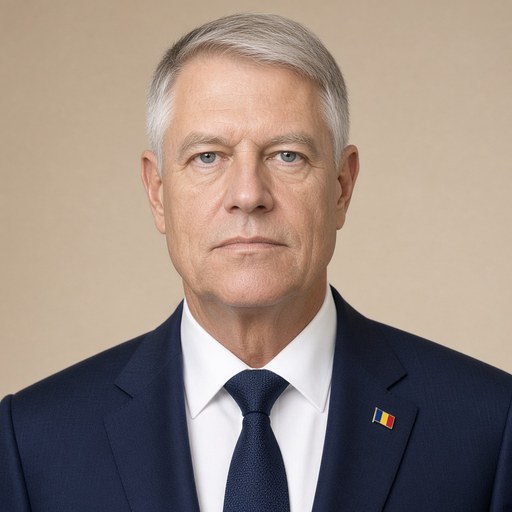
The message of the President of Romania, Mr. Klaus Iohannis, addressed to the Parliament of Romania.
 Klaus Iohannis · President of Romania
- Context
- Iohannis addressed the Romanian Parliament in September 2015, urging legislative reform, greater stability in lawmaking, and improved public trust in state institutions.
- Main themes
- Legislative quality and stability, parliamentary reform, rule of law, legislative-executive relations, public trust in institutions, regulatory coherence, education and health legislation, fiscal code instability, citizen representation, legislative predictability, democratic accountability
- Duration
- ~16 min
- Words
- 1,909
- Sentences
- 74
- Readability
- 40
- Grade
- 14.0
- Syntax
- 3.32
- Vocabulary
- 2.08
Translated from Romanian
The broad sphere of national life a sentence belongs to. Every sentence has an Arena, so it is the denominator the other indices are read against.
Other74 sentences in 17 paragraphs
I wish for a strong Parliament that enjoys the trust of the citizens. I cannot conceive of a strong Romania without its most broadly representative institution being up to the task. I believe there are two essential aspects that should define a strong Parliament today: quality legislation and functional relations with the other powers of the state, all of this, of course, for the benefit of the citizen.
In the constitutional system of separation and balance of powers, the President of Romania has the authority to promulgate laws after their adoption in Parliament. The entire functioning of state institutions, the economy, and society depends, in one way or another, on the relationship with the law - on how laws are conceived, initiated, applied, and respected. That is why I have paid special attention to the laws that have come for promulgation. As you well know, I have sent some of them back for reexamination, following a thorough analysis and based on a few principles that I have stated on various occasions. However, beyond the specific requests for reexamination, I have also noted some aspects that raise the issue of the quality and coherence of legislation.
Thus, in the year 2015 alone, the old Fiscal Code was legislatively intervened upon 13 times. The Education Law, the law regarding health reform, the Local Public Administration Law, and the Labor Code were modified at intervals of 2-3 months or even 2-3 times in the same month. I have also noted that through two distinct laws, sent for promulgation almost simultaneously, the same normative act was modified. I recently saw a study in which 80% of Romanians expressed dissatisfaction that the laws in Romania are cumbersome. The fact that people want clearer, simpler legal norms that do not change overnight is not a surprise to anyone. However, this reality must receive a response.
Ladies and gentlemen, Currently, there are almost 14,000 laws, ordinances, and Government decisions in force in Romania. In 2015, more than 50% of the laws adopted by Parliament were acts of approval or rejection of simple or emergency ordinances. This proportion is a good indicator of the state of the relationship between the legislative and executive powers. On the other hand, since coming into force and until now, laws concerning fundamental areas for the functioning of the Romanian economy and society have been modified countless times: the old Fiscal Code, 135 times, the Education Law, 26 times, the law regarding health reform, 114 times, the Local Public Administration Law, 38 times, the Labor Code, 28 times, and legislation regarding public procurement, 35 times. These are just a few examples.
However, these are not mere statistics. Behind the numbers are people. They are our fellow citizens, who have chosen us to represent them, with their problems, concerns, and lives. Behind these figures are students who do not know which textbook they will learn from next year and what exams they will take, there are patients and doctors, there are employees and employers, there are entrepreneurs who want to invest but do not know exactly what taxes they will pay and how many. Behind these figures are schools and hospitals or large promised infrastructure projects that have not been realized.
The major public systems, education and health, have probably suffered the most from uncertainty, from frequent and specific changes, often generated by political calculations or circumstances. I believe that the way laws are made, but especially how they are changed in Romania, is one of the deep sources of the inefficiency of these systems. The immediate consequence of this state of affairs has been not only the erosion of trust in Parliament but, more seriously, trust in the law in general.
Ladies and gentlemen, Seeking to assign blame for this situation would not be of any use today. Many legislatures and many governments have succeeded one another, and these practices have perpetuated over time. What we can do today, however, is to be responsible and act accordingly, each within our own responsibilities, competencies, and with our own legitimacy. We can no longer afford to talk about legislative stability and predictability while, in essence, things remain exactly the same. I would not like to meet again next year or in two years and present the same assessment of legislative changes in key areas. Approaches such as passing a law today and modifying it tomorrow by ordinance must disappear, not as a constraint on the executive, but as a demonstration of responsibility in exercising competencies.
Let us say enough and start anew. This can be a zero moment, from which the re-credibility of the law as a legal act of Parliament and as a foundation of social relations can begin. Flexible legislation, developed in direct connection with the needs and expectations of society, freed from populism and sustainable over time represents the foundation of any rule of law and must become a priority for the entire political class. Parliament can and should place itself at the center of a process of cleansing, simplifying, and systematizing legislation in Romania, making it more coherent, more stable, and more predictable.
What will this mean directly for all of us? It will mean that the patient knows clearly what rights they have, how much they pay, and what services they receive, that an investor will be able to develop a business plan for 10 years without fear that the rules will change overnight, that a person who wants to pay their taxes does not have to wander for hours from one counter to another and that it will not take 20 years to build a highway. It will mean that the student entering the first grade and their parents will know what they will study, what educational options they have, what exams they must take, and they will be able to outline their future for 10, 12, or 15 years.
Against this backdrop, I wish to bring back into discussion, from the podium of Parliament, the topic of education. I expressed a few days ago, in the context of the beginning of a new school year, my determination to initiate a broad public consultation about the future of education in Romania, about how we want the education system to look and function. The experiments so far have shown us that neither legislative changes, largely circumstantial, nor agreements on paper between political actors, not followed by actions, nor measures taken with an eye on the next electoral campaign can lead to a profound transformation of education in Romania. This cannot come exclusively from outside the system, just as it cannot be generated solely from within the system. It cannot disregard social realities and the challenges of the 21st century, nor can it ignore the experience and needs of teachers, or the expectations of students or parents. But it cannot be accomplished either in the absence of political will, nor without the decisions of institutional actors, nor without the involvement of local authorities.
In other words, a systemic transformation involves us all. All the changes, as they have been made, have not solved the fundamental problems, but, on the contrary, have often created new problems. If we truly want quality education that encourages performance and respects value, we will have to proceed differently than in the past and work together.
Therefore, by virtue of my constitutional responsibilities as a mediator between the state and society, I have taken on the theme of education and I am launching this broad consultation, which will involve teachers, universities, unions, associations of students, parents, specialists, public authorities and institutions, and political parties. Within approximately two years, following this endeavor, a common denominator can be found, a coherent vision can result, and a framework legislation in accordance with it can be established, which will remain the same beyond political changes and within which policy decisions or specific measures can be taken, regardless of who is in power. I ask you, as members of the Romanian Parliament, to be my partners in this project, which is not a personal one, nor for the present, but one for future generations.
Ladies and gentlemen, Last but not least, for me a strong Parliament also means a correct positioning towards justice. Respect for the law cannot be dissociated from the relationship with justice. Every time I have considered that there have been deviations in this regard, I have communicated with you, not because I wish to intervene in the activity of Parliament, but precisely because the way this institution responds to the demands of justice can affect its credibility. I have said that by the end of my term, I wish for corruption not to be at the top of the public opinion agenda. A strong Romania is not only a Romania without corruption, but a Romania in which respect for the law has been regained.
Ladies and gentlemen, I take this opportunity to also refer to a separate but very current and sensitive topic in the current context, that of the refugee crisis. As I have stated, we are for solidarity within the European Union, we are in solidarity with the member states affected by this crisis, we act in the spirit of respecting human rights and I believe that, especially now, we must reject radical manifestations and demonstrate balance and wisdom. That is why I do not believe that this crisis can be resolved through a bureaucratic or mathematical approach, but only through open dialogue, through consultation with member states, through a consensual decision, taking into account, of course, principles and values, context, and realities. We are not talking about accommodation places, but about people, about their integration into society, about their access to education, health services, and long-term jobs. I do not believe that among partners things are resolved through imposition, through threats of sanctions, but by mutual agreement. I believe that each member state has the right to act according to the specific situation it has, according to the capacities and possibilities it possesses. This is the point of view I have supported and will continue to support in discussions I will have with European leaders. Tomorrow, during the CSAT meeting, we will agree on the steps that Romania must take in this process, and whenever the evolution of the situation requires it, I will communicate both with you, with Parliament, and with representatives of other state institutions.
Ladies and gentlemen, We are approaching the moment when we will mark the fulfillment, in 2018, of 100 years of modern Romanian state and then the taking over of the Presidency of the Council of the European Union in the second half of 2019. We must clearly assume, even now, where these two events will find us, how Romania will present itself to the world and how our institutions will present themselves to their own citizens. I will have serious discussions with the Government and I will come before Parliament with a series of proposals so that Romania is prepared for both the Centenary celebration and the Presidency.
These are the major themes we have on the agenda. We have great challenges, but also great opportunities. And above all, we do not have time to lose. We do not have time to lose with sterile discussions or for the sake of image. We have a responsibility, and those who will come after us will judge and evaluate us based on the decisions we make today.
Thank you!
The original Romanian. The tags above are read on the English translation's sentences.
îmi doresc un Parlament puternic și care să se bucure de încrederea cetățenilor. Nu pot concepe o Românie puternică fără ca instituția sa cea mai larg reprezentativă să fie pe măsură. Cred că sunt două aspecte esențiale care ar trebui să definească astăzi un Parlament puternic: o legislație de calitate și raporturi funcționale cu celelalte puteri din stat, toate acestea, desigur, în beneficiul cetățeanului. În sistemul constituțional al separației și echilibrului puterilor, Președintele României are atributul promulgării legilor, după adoptarea lor în Parlament. Întreaga funcționare a instituțiilor statului, a economiei și societății depinde, într-un fel sau altul, de relația cu legea - de modul în care sunt concepute, inițiate, aplicate și respectate legile. De aceea, am acordat o atenție deosebită legilor venite la promulgare. După cum bine știți, pe unele dintre ele le-am trimis spre reexaminare, în urma unei temeinice analize și pornind de la câteva principii, pe care le-am afirmat cu diverse ocazii. Dincolo însă de solicitările punctuale de reexaminare, am constatat cu această ocazie și unele aspecte care pun problema calității și coerenței legislației. Astfel, doar în anul 2015, asupra vechiului Cod Fiscal s-a intervenit legislativ de 13 ori. Legea educației, cea privind reforma în domeniul sănătății, Legea administrației publice locale și Codul Muncii au fost modificate la interval de 2-3 luni sau chiar de 2-3 ori în aceeași lună. Am constatat, de asemenea, că prin două legi distincte, trimise aproape concomitent la promulgare, s-a modificat același act normativ. Am văzut recent un studiu în care 80% dintre români se arătau nemulțumiți că legile din România sunt greoaie. Faptul că oamenii își doresc norme juridice mai clare, mai simple, care nu se schimbă peste noapte, nu cred că este o surpriză pentru nimeni. Însă această realitate trebuie să capete un răspuns. Doamnelor și domnilor, În prezent, în România sunt în vigoare aproape 14.000 de legi, ordonanțe și hotărâri ale Guvernului. În 2015, dintre legile adoptate de Parlament, peste 50% sunt acte de aprobare ori respingere a unor ordonanțe simple sau de urgență. Această proporție este un bun indicator al modului în care arată relația dintre puterea legislativă și cea executivă. Pe de altă parte, de la intrarea în vigoare și până în prezent, legi care privesc domenii fundamentale pentru funcționarea economiei și societății românești au fost modificate în nenumărate rânduri: vechiul Cod fiscal, de 135 de ori, Legea educației, de 26 de ori, Legea privind reforma în domeniul sănătății, de 114 ori, Legea administrației publice locale, de 38 de ori, Codul Muncii, de 28 de ori, legislația privind achizițiile publice, de 35 de ori. Sunt doar câteva exemple. Acestea însă nu sunt simple statistici. În spatele cifrelor sunt oameni. Sunt concetățenii noștri, care ne-au ales să-i reprezentăm, cu problemele, preocupările și viețile lor. În spatele acestor cifre sunt elevii care nu știu după ce manual vor învăța în anul următor și ce examene vor da, sunt pacienții și medicii, sunt angajații și angajatorii, sunt antreprenorii care vor să investească dar nu știu exact ce taxe vor plăti și câte. În spatele acestor cifre sunt școli și spitale sau mari proiecte de infrastructură promise, dar nerealizate. Marile sisteme publice, educația și sănătatea, au suferit probabil cel mai mult de pe urma incertitudinii, a schimbărilor frecvente și punctuale, deseori generate de calcule politice sau conjuncturi. Cred că felul în care se fac, dar mai ales în care se schimbă legile în România, este una din sursele profunde ale ineficienței acestor sisteme. Consecința imediată a acestei stări de fapt a fost nu doar erodarea încrederii în Parlament, ci, mai grav, a încrederii în lege, în general. Doamnelor și domnilor, A căuta vinovați pentru această situație nu ar folosi astăzi la nimic. S-au succedat multe legislaturi, multe guverne, aceste practici s-au perpetuat în timp. Ce putem face astăzi însă este să fim responsabili și să acționăm în consecință, fiecare în cadrul atribuțiilor, competențelor și cu legitimitatea proprie. Nu ne mai putem permite să vorbim despre stabilitate și predictibilitate legislativă, în timp ce pe fond lucrurile rămân exact la fel. Nu aș dori să ne întâlnim din nou anul viitor sau peste doi ani și să fac același bilanț al modificărilor legislative în domenii cheie. Abordări de tipul dăm azi o lege și mâine o modificăm prin ordonanță trebuie să dispară, nu ca o constrângere la adresa executivului, ci ca o dovadă de responsabilitate în exercitarea competențelor. Să spunem punct și de la capăt. Acesta poate să fie un moment zero, de la care să pornească recredibilizarea legii ca act juridic al Parlamentului și ca fundament al relațiilor sociale. O legislație flexibilă, elaborată în directă legătură cu nevoile și așteptările societății, eliberată de populism și durabilă în timp reprezintă fundamentul oricărui stat de drept și trebuie să devină o prioritate a întregii clase politice. Parlamentul poate și ar trebui să se plaseze în centrul unui demers de asanare, simplificare și sistematizare a legislației din România, care s-o facă mai coerentă, mai stabilă și mai predictibilă. Ce va însemna acest lucru în mod direct pentru noi toți? Va însemna că pacientul știe clar ce drepturi are, cât plătește și ce servicii primește, că un investitor își va putea dezvolta un plan de afaceri pe 10 ani fără teama că regulile se vor schimba peste noapte, că un om care vrea să își plătească taxele nu trebuie să se plimbe ore în șir de la un ghișeu la altul și că nu va dura 20 de ani ca să construim o autostradă. Va însemna că elevul care intră în clasa I şi părinţii acestuia vor ști ce studiază, ce opțiuni de educație are, ce examene trebuie să dea și își va putea contura viitorul pentru 10, 12, 15 ani. Pe acest fond, doresc să readuc în discuție, de la tribuna Parlamentului, tema educației. Am exprimat zilele trecute, în contextul începerii unui nou an școlar, hotărârea de a iniția o largă consultare publică despre viitorul educației în România, despre cum vrem să arate și să funcționeze sistemul de învățământ. Experimentele de până acum ne-au arătat că nici modificările de legislație, în mare parte conjuncturale, nici înțelegerile pe hârtie între actorii politici, neurmate de acțiuni, nici măsurile luate cu gândul la următoarea campanie electorală nu pot conduce la transformarea profundă a educației în România. Aceasta nu poate să vină exclusiv din afara sistemului, așa cum nu poate să fie generată doar din interiorul sistemului. Nu poate desconsidera realitățile sociale și provocările secolului XXI, nu poate ignora experiența și nevoile profesorilor, nici așteptările elevilor sau ale părinților. Dar nu se poate înfăptui nici în absența voinței politice, nici fără deciziile actorilor instituționali, nici fără implicarea autorităților locale. Cu alte cuvinte, o transformare de sistem ne implică pe toți. Toate schimbările, așa cum au fost făcute, nu au rezolvat problemele de fond, ci, dimpotrivă, nu o dată au creat noi probleme. Dacă vrem cu adevărat o educație de calitate, care încurajează performanța și respectă valoarea, va trebui să procedăm altfel decât în trecut și să lucrăm împreună. De aceea, în virtutea atribuțiilor mele constituționale, de mediator între stat și societate, am asumat tema educației și demarez această largă consultare, care să implice cadre didactice, universități, sindicate, asociații ale elevilor, studenților și părinților, specialiști, autorități și instituții publice, partidele politice. Într-un termen de aproximativ doi ani, în urma acestui demers, se poate găsi un numitor comun, poate rezulta o viziune coerentă și o legislație cadru în acord cu aceasta, care să rămână aceeași dincolo de schimbările politice și în interiorul căreia să fie luate decizii de politici sau măsuri punctuale, indiferent cine se află la putere. Vă cer deopotrivă, ca membri ai Parlamentului României, să îmi fiți parteneri în acest proiect, care nu este unul personal, nici pentru prezent, ci unul pentru generațiile viitoare. Doamnelor și domnilor, Nu în ultimul rând, pentru mine un Parlament puternic înseamnă și o poziționare corectă faţă de justiție. Respectul față de lege nu poate fi disociat de relația cu justiția. De fiecare dată când am considerat că s-au produs derapaje în această privință v-am comunicat, nu pentru că doresc să intervin în activitatea Parlamentului, ci tocmai pentru că modul în care această instituție răspunde la cererile justiției îi poate afecta credibilitatea. Am spus că la finele mandatului meu îmi doresc ca pe agenda preocupărilor opiniei publice corupția să nu mai figureze prima. România puternică este nu doar o Românie fără corupție, ci o Românie în care s-a recâștigat respectul pentru lege. Doamnelor și domnilor, Folosesc acest prilej pentru a mă referi și la o temă separată, dar cât se poate de actuală şi sensibilă în contextul actual, cea privind criza refugiaţilor. Așa cum am afirmat, suntem pentru solidaritate în interiorul Uniunii Europene, suntem solidari cu statele membre afectate de această criză, acţionăm în spiritul respectării drepturilor omului și consider că, mai ales acum, trebuie să respingem manifestările radicale și să dovedim echilibru și înțelepciune. Tocmai de aceea, nu cred că această criză poate fi rezolvată printr-o abordare birocratică sau contabilă, matematică, ci doar prin dialog deschis, prin consultarea cu statele membre, printr-o decizie consensuală, ținând cont, sigur, de principii și valori, de context și de realități. Nu vorbim despre locuri de cazare, ci despre oameni, despre integrarea lor în societate, despre accesul lor la educație, servicii de sănătate și locuri de muncă pe termen lung. Nu cred că între parteneri lucrurile se rezolvă prin impunere, prin ameninţarea cu sancţiuni, ci de comun acord. Cred că fiecare stat membru are dreptul să acţioneze în funcţie de situaţia specifică pe care o are, conform capacităţilor şi posibilităţilor pe care le are. Acesta este punctul de vedere pe care l-am susținut și îl voi susține în continuare în discuțiile pe care le voi avea cu liderii europeni. În cursul zilei de mâine, în cadrul CSAT, vom conveni asupra paşilor pe care România trebuie să-i facă în acest proces, iar de câte ori evoluția situației o va impune voi comunica atât cu dumneavoastră, cu Parlamentul, cât și cu reprezentanții celorlalte instituții ale statului. Doamnelor și domnilor, Ne apropiem de momentul în care vom marca împlinirea, în 2018, a 100 de ani de stat român modern și apoi de preluarea Președinției Consiliului Uniunii Europene în a doua jumătate a anului 2019. Trebuie să ne asumăm clar, încă de acum, unde ne vor găsi aceste două evenimente, cum se va prezenta România în fața lumii și cum se vor prezenta instituțiile noastre în fața propriilor cetățeni. Voi discuta serios cu Guvernul și voi veni în fața Parlamentului cu o serie de propuneri pentru ca România să fie pregătită atât pentru sărbătorirea Centenarului, cât și pentru Președinției. Acestea sunt temele majore pe care le avem pe agendă. Avem provocări mari, dar și oportunități mari. Și mai ales, nu avem timp de pierdut. Nu avem timp de pierdut cu discuții sterile sau de dragul imaginii. Avem o responsabilitate, iar cei care vor veni după noi ne vor judeca și evalua după deciziile pe care le luăm astăzi. Vă mulțumesc!”