




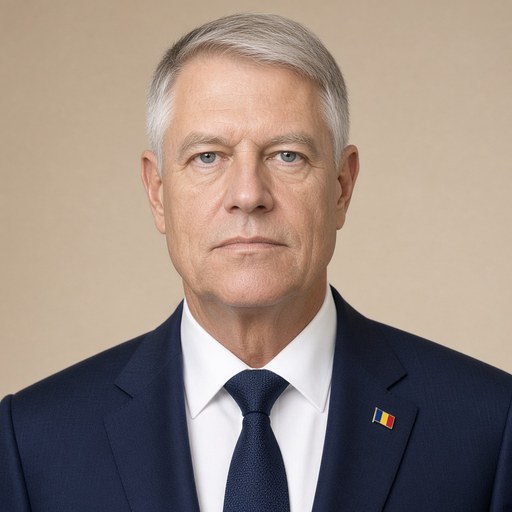
The message of the President of Romania, Mr. Klaus Iohannis, addressed to the Parliament of Romania.
 Klaus Iohannis · President of Romania
- Context
- Iohannis addressed the Romanian Parliament in February 2016 to outline priorities for the final year of the legislative mandate and an upcoming electoral year.
- Main themes
- Electoral year responsibility, public trust in politics, democratic institutions, legislative stability, integrity and professionalism, anti-populism, long-term public policy, NATO and EU membership, strategic partnerships, institutional coordination, political renewal, public systems reform
- Duration
- ~20 min
- Words
- 2,413
- Sentences
- 87
- Readability
- 33
- Grade
- 15.4
- Syntax
- 3.37
- Vocabulary
- 2.16
Translated from Romanian
The broad sphere of national life a sentence belongs to. Every sentence has an Arena, so it is the denominator the other indices are read against.
Other87 sentences in 9 paragraphs
We continue to transmit the text of the message:
“Mr. President of the Senate, Mr. President of the Chamber of Deputies, Mr. Prime Minister, Ladies and gentlemen ministers, Ladies and gentlemen senators and deputies, Your Excellencies, ladies and gentlemen ambassadors and representatives of the Diplomatic Corps, Esteemed guests, Ladies and gentlemen,
We are at the beginning of the last year of mandate for the current Parliament, an electoral year. Beyond the democratic political competition, beyond the inherent emotion of the election period, electoral years have unfortunately had other characteristics in Romania and have brought a certain type of practices. The approach of campaigns has often attracted measures that favor one party or another, policies adopted following electoral calculations, allocations of funds based on political color, populist or unsustainable promises, and even laws that were never applied. The 50% increase in teachers' salaries, decided in 2008 and never applied, or Government Emergency Ordinance no. 55/2014, which legalized the migration of local elected officials, unfortunately applied, will probably remain in an unfortunate history of legislative measures with electoral flavor. In 2016, you have the great opportunity to do things differently. No one contests the legitimate desire of parties to win votes and to use the political and institutional means at their disposal to respond to expectations. What I propose to you, however, is a different kind of electoral year, one that is neither populist nor a lost year for major public interest themes, nor one of hasty measures. I propose a 2016 in which the competition for votes does not exclude concern for long-term construction, in which the fever of campaigns does not stop the settled debate, and where the spectacular daily topics do not eliminate from the public agenda major issues of interest to citizens and their lives. We are in a context where, unlike the past, the approach of the end of the mandate can mean more attention, more responsibility, and more concern to authentically listen to what our fellow citizens want.
Ladies and gentlemen, Based on these premises, I invite you to jointly assume a few major stakes for the year 2016: • the first concerns the beginning of regaining trust in politics; • the second relates to the functioning of institutions in a democratic state; • the third regards the continuation of efforts in areas where Romania has made progress and gained the respect of external partners; • and finally, but not least, in the area of major public systems, I propose that we lay some foundations on which to build in 2017, regardless of who will be in power. All of these do not depend on the will of a single person, but on collective action. As long as we do not place Romania's agenda above our own agenda, no one will benefit in the long term. I said at the end of last year that I want 2016 to be the year in which the political class sends a clear signal that it has understood the aspirations and expectations of society and takes a step towards renewal in terms of attitudes, ideas, and people. Elections are undoubtedly the first opportunity. And the parties - those with tradition and experience on the political scene, or the newly emerged ones - are the main actors in this chapter. When we talk about restoring trust in politics, probably most people rightly think of lists and candidate selection, of minimal requirements for integrity and professionalism, of a certain type of attitude expected from those who seek the voters' support. The change I am talking about mainly concerns practices and mentalities, criteria of integrity, a smarter and more creative way of developing public policies, a certain type of honesty towards the electorate, and the abandonment of ad hoc legislative constructions, solely for momentary political interests. Legislative instability generally affects not only the functioning of the economy, society, and major public systems such as education and health, but it also becomes a vulnerability of the democratic system. I believe that no one desires such a thing.
Ladies and gentlemen, I am concerned about how the entirety of this state functions, its institutions, with careful separation of powers. But I also want to convey a very clear message: this state cannot give the impression of chaotic, disorderly functioning, in other words, a state in which everyone does what they want and each institution has its own agenda. There is a national agenda, related to Romania's strategic partnerships, especially with the United States, to NATO and European Union membership, but also to a policy of development, modernization, and national affirmation in areas of interest to our citizens. I believe that communication, coordination, and collaboration at the institutional level are needed to pursue national objectives. I say these things by virtue of the constitutional role of the President as a mediator between the powers of the state, as well as between the state and society. The powers of the state are not in competition with one another, and an effective functioning of the state in the service of citizens requires the functioning of each of them and the trust of citizens in all. A government cannot be truly effective without a strong Parliament, and justice cannot be truly efficient without a legislative power to match. To think of the powers separately and to evaluate them in isolation is a mistake. Romania must move forward as a whole.
Ladies and gentlemen, In this context, I must say that we are behind in providing essential answers regarding major concerns on the citizens' agenda, including in view of the year 2018, when we will celebrate the Centenary of the Great Union. What do we do with the major public systems – education, health, pensions? What solutions do we find for the hundreds of thousands of young people without a high school diploma who find it difficult or impossible to integrate into the labor market? What happens if we find in the not-too-distant future that the pension system is no longer sustainable? What do we do with the salaries of public employees? How do we manage the demographic issue and how do we avoid a probable future in which Romania becomes unattractive both as a labor force and as a market and will be weakened within the European Union due to demographic decline? This year marks the end of a parliamentary mandate, but the political course continues, and the major themes of Romanian society remain the same. In light of the concern for such themes, I recently launched a broad national debate in the field of education and research within the project I named “Educated Romania.” I want 2016 to clearly define the national objectives and the direction in which we want our education system to go. Even if they may be less spectacular in an electoral year, such debates are essential and awaited by people. Beyond the fact that you will elect mayors, that you will win or lose County Councils, that you will compile lists for parliamentary elections, I believe that these subjects must be on our agenda, all of us. I tell you once again, just as I have always done when I have been at the podium of Parliament: you have in me a partner for dialogue. On these subjects, we have the duty to build for Romania and to generate agreement, beyond left or right, beyond technocratic expertise or parties.
Ladies and gentlemen, I firmly believe that a consensual and courageous approach is necessary, especially since we are in a complicated geopolitical context. On several important chapters, 2016 must be a natural continuation of what we built or consolidated in the previous year. But at the same time, we have major challenges to manage. The migration crisis, the increasing terrorist threat, security risks from the East, and the very questioning of the European project make 2016 crucial for stability in the region and for the future of Europe. For Romania, in terms of foreign policy and security, the major priorities and objectives remain the same. 2016 has all the premises to mean a qualitative increase in the Strategic Partnership with the United States of America, particularly in the economic field, alongside strengthening the political-military component. In this regard, I particularly appreciated the United States' initiative to significantly increase, fourfold, the budget allocated to the European Reassurance Initiative for 2017. In the current complicated context, Romania is and will remain an anchor of democracy, predictability, and stability of strategic importance at NATO's and the European Union's eastern border. In this capacity, we have the responsibility to strengthen our national defense, but also to contribute to ensuring collective defense within NATO. Increasing the defense budget to 2% of GDP remains essential in this regard. After the steps taken in 2015 and 2016, I am convinced that this commitment will be reflected in the preparation of the budget for 2017. The fact that the six new NATO command units in Eastern Europe - the NATO Force Integration Units, as they are called - are set to become fully operational in the first part of this year is a clear signal of the relevance of this region. One of Romania's objectives at the NATO Summit in Warsaw, which will take place this summer, is for NATO to confirm its strong interest in Central and Eastern Europe and especially in the Black Sea region, as a critically important area in the overall Euro-Atlantic security. At the same time, Romania is determined to actively participate not only in identifying solutions to the crises currently facing the European Union but also in reinforcing commitment and trust in the European project. Romania remains faithful to this project and committed to maintaining European unity. I emphasized this during the recently concluded European Council, after which an agreement was reached regarding the relationship between the United Kingdom and the European Union. It is in our strategic interest for Romania to be a member of a strong, integrated European Union, based on respect for its founding principles and values. From this perspective, I supported the maintenance of the concept of an ever closer Union in the original text. During the negotiations, I took a firm position regarding the respect for the rights of Romanian citizens in the European Union and did not accept their discrimination compared to other Union citizens. Thus, Romanians currently working in the United Kingdom will not be affected by the safeguard mechanism. This mechanism is to apply only to a limited category of non-contributory social benefits, specific only to the United Kingdom and only for a limited period of time, of 7 years. Regarding the indexing of allowances for children left at home by workers from other member states of the Union, the decision also has a non-discriminatory character. For Romanians working in the United Kingdom who already receive allowances for children left at home, indexing will apply only starting in 2020. I would like the agreement we reached to lead to a positive outcome in the referendum, thus allowing the United Kingdom to maintain its status as a member of the European Union.
Ladies and gentlemen, In terms of our internal policy, regarding the strengthening of the rule of law, the independence of justice, and the fight against corruption, my commitment as President remains unchanged and as firm as possible. The determination to strengthen the rule of law comes from the belief that strengthening progress in these areas is in the interest of our citizens. I am unpleasantly surprised that, in certain cases, it is still not understood that parliamentary immunity must not be used to block requests from justice. Thus, in terms of responding to requests from justice, after a few steps forward, recognized by everyone and awaited by citizens, there follows one step back, which again raises questions about the credibility of Parliament and the willingness for proper relations with justice. Romania is on an irreversible path. Strengthening the rule of law and the independence of justice are firm commitments at the societal level and must also be reflected in the relations between Parliament, as the supreme representative body, and justice. This year is not just a competition for the political environment, but also an important inflection point for the judicial system. A new Prosecutor General will need to be appointed, the mandates of the leadership of the National Anticorruption Directorate, the High Court of Cassation and Justice will expire, and elections will also be held for the Superior Council of Magistracy. In this context, I want to emphasize a few aspects. I hope that we will have serious competition and a settled debate in this area, where value, performance, and honesty prevail. I believe it is important for the solidity of Romanian democracy and the rule of law that the elections for the CSM be far from the political sphere and be strictly maintained within the professional representation of magistrates in their own governing body and disciplinary organ. As for me, as President, I will not be a mere spectator in this process and will not limit myself to a formal role. I will act, by virtue of the powers that belong to me, to ensure that the path Romania has embarked on regarding the strengthening of the rule of law, the independence of justice, and the fight against corruption is firmly continued and that the requirements of professionalism and integrity are respected.
Ladies and gentlemen, It depends on each of us, those who express ourselves in the public space, regardless of our role, how our political and social climate looks, how we understand to relate to one another and at what level of conduct, language, and attitude we carry out political debate. I wish for an electoral year in which communication maintains its decency regardless of how fierce or close the political competition may be. I am not speaking here of a personal option, but I am convinced that in this way we all have more to gain. When I first addressed this assembly as President, I said that I wish for us to rediscover two things – trust and patience. It is no coincidence that I want to reiterate them today. We have the chance in 2016 to rediscover them: trust between citizens and democratic institutions, trust in the ability of politics to serve the public interest, trust in ourselves as a nation, and the patience not to destroy before we begin and to build solidly. Thank you!
The original Romanian. The tags above are read on the English translation's sentences.
Vă transmitem în continuare textul mesajului:
„Domnule Președinte al Senatului, Domnule Președinte al Camerei Deputaților, Domnule Prim-ministru, Doamnelor și domnilor miniștri, Doamnelor și domnilor senatori și deputați, Excelențele Voastre doamnelor și domnilor ambasadori și reprezentanți ai Corpului Diplomatic, Stimați invitați, Doamnelor și domnilor,
Ne aflăm la debutul ultimului an de mandat pentru actualul Parlament, un an electoral. În afara competiției politice democratice, în afara emoției inerente perioadei alegerilor, anii electorali au avut în România, din păcate, și alte caracteristici și au adus un anumit tip de practici. Apropierea campaniilor a atras adesea măsuri care să avantajeze o formațiune sau alta, politici adoptate în urma unor calcule electorale, alocări de fonduri după culoarea politică, promisiuni populiste sau nesustenabile și chiar legi niciodată aplicate. Mărirea cu 50% a salariilor profesorilor, decisă în 2008 și niciodată aplicată, sau Ordonanța de urgență a Guvernului nr. 55/2014, care a legalizat migrația aleșilor locali, din păcate aplicată, vor rămâne probabil într-o nefericită istorie a măsurilor legislative cu iz electoral. În 2016 avem și, mai ales, aveți marea șansă de a face lucrurile altfel. Nimeni nu contestă dorința legitimă a partidelor de a câștiga voturi și folosirea mijloacelor politice și instituționale de care dispun pentru a răspunde la așteptări. Ceea ce vă propun însă este un altfel de an electoral, care să nu fie nici populist, nici un an pierdut pentru marile teme de interes public, dar nici unul al măsurilor hazardate. Vă propun un an 2016 în care competiția pentru voturi să nu excludă preocuparea pentru construcția pe termen lung, în care febra campaniilor să nu oprească dezbaterea așezată, iar subiectele spectaculoase de zi cu zi să nu elimine de pe agenda publică teme majore de interes pentru cetățeni și viața lor. Ne aflăm într-un context în care, spre deosebire de trecut, apropierea finalului de mandat poate să însemne mai multă atenție, mai multă responsabilitate și mai multă preocupare de a asculta în mod autentic ce-și doresc concetățenii noștri.
Doamnelor și domnilor, Pornind de la aceste premise, vă invit să asumăm împreună câteva mize majore pentru anul 2016: • prima vizează începutul recâștigării încrederii în politică; • a doua ține de funcționarea instituțiilor într-un stat democratic; • a treia privește continuarea eforturilor în domenii în care România a făcut progrese și a câștigat respectul partenerilor externi; • și, în fine, dar nu în ultimul rând, în zona marilor sisteme publice, vă propun să punem câteva pietre de temelie pe care să se poată construi în 2017, indiferent cine va fi la putere. Toate acestea nu țin de voința unui singur om, ci de acțiunea comună. Atât timp cât nu punem agenda României mai presus de agenda proprie, nimeni nu va avea de câștigat pe termen lung. Am spus la finele anului trecut că îmi doresc ca anul 2016 să fie anul în care clasa politică dă un semnal clar că a înțeles aspirațiile și așteptările societății și face un pas către înnoire în materie de atitudini, idei și oameni. Alegerile sunt, fără îndoială, prima oportunitate. Iar partidele - cele cu tradiție și experiență pe scena politică, sau cele nou apărute - sunt actorii principali la acest capitol. Atunci când vorbim de refacerea încrederii în politică, probabil cei mai mulți se gândesc, pe bună dreptate, la liste și la selecția candidaților, la niște cerințe minimale de integritate și profesionalism, la un anumit tip de atitudine așteptată din partea celor care doresc votul alegătorilor. Schimbarea despre care vorbesc vizează mai cu seamă practici şi mentalităţi, criterii de integritate, un mod mai inteligent şi mai creativ de elaborare a politicilor publice, un anumit tip de onestitate în raport cu electoratul și renunţarea la construcţii legislative ad hoc, doar pentru interese politice de moment. Instabilitatea legislativă în general afectează nu doar funcționarea economiei, a societății, a marilor sisteme publice precum educația și sănătatea, ci ajunge să fie o vulnerabilitate a sistemului democratic. Cred că nimeni nu-și dorește așa ceva.
Doamnelor şi domnilor, Sunt preocupat de modul în care funcţionează ansamblul acestui stat, instituţiile lui, cu atenta separare a puterilor. Dar vreau în acelaşi timp să transmit un mesaj foarte limpede: acest stat nu poate da impresia unei funcţionări haotice, dezordonate, cu alte cuvinte a unui stat în care fiecare face ce vrea şi fiecare instituţie are agenda proprie. Există o agendă naţională, legată de parteneriatele strategice ale României, în special cel cu Statele Unite, de apartenenţa la NATO şi la Uniunea Europeană, dar şi de o politică de dezvoltare, de modernizare şi afirmare naţională în domenii de interes pentru cetăţenii noştri. Cred că este nevoie de comunicare, coordonare şi colaborare la nivel instituţional pentru a urmări obiectivele naţionale. Spun aceste lucruri în virtutea rolului constituţional al Preşedintelui de mediator între puterile statului, precum şi între stat şi societate. Puterile statului nu sunt în competiţie una cu alta, iar o funcţionare eficientă a statului în serviciul cetăţenilor presupune funcţionarea fiecăreia dintre ele şi încrederea cetăţenilor în toate. O guvernare nu poate fi cu adevărat performantă fără un Parlament puternic, iar justiţia nu poate fi cu adevărat eficientă fără o putere legislativă pe măsură. A gândi puterile separat şi a le evalua izolat este o greşeală. România trebuie să se mişte înainte în ansamblul ei.
Doamnelor şi domnilor, În acest context trebuie să spun că suntem în întârziere în a da răspunsuri esenţiale cu privire la preocupări majore de pe agenda cetăţenilor, inclusiv în perspectiva anului 2018, când vom sărbători Centenarul Marii Uniri. Ce facem cu marile sisteme publice – educaţie, sănătate, pensii? Ce soluţii găsim pentru sutele de mii de tineri fără diplomă de Bacalaureat care se integrează greu sau deloc pe piaţa muncii? Ce se întâmplă dacă vom constata într-un viitor nu foarte îndepărtat că sistemul de pensii nu mai este sustenabil? Ce facem cu salarizarea bugetarilor? Cum gestionăm problema demografică şi cum evităm un viitor probabil în care România ar deveni lipsită de atractivitate şi ca forţă de muncă, şi ca piaţă de desfacere şi va fi slăbită în cadrul Uniunii Europene din cauza scăderii demografice? Anul acesta se încheie un mandat parlamentar, însă parcursul politic continuă, iar marile teme ale societății românești rămân aceleaşi. În lumina preocupării pentru astfel de teme, am lansat zilele trecute o amplă dezbatere naţională în domeniul educaţiei şi cercetării în cadrul proiectului pe care l-am numit „România educată”. Îmi doresc ca în 2016 să definim clar obiectivele naţionale şi direcţia în care ne dorim să meargă sistemul nostru de educaţie. Chiar dacă sunt poate mai puţin spectaculoase într-un an electoral, asemenea dezbateri sunt esenţiale și aşteptate de oameni. Dincolo de faptul că veţi alege primari, că veţi câştiga sau nu Consilii Judeţene, că veţi alcătui liste pentru alegerile parlamentare, cred că aceste subiecte trebuie să fie pe agenda noastră, a tuturor. Vă spun încă o dată, la fel cum am făcut mereu când m-am aflat la tribuna Parlamentului: aveţi în mine un partener de dialog. Pe aceste subiecte avem datoria să construim pentru România şi să generăm acord, dincolo de stânga sau dreapta, de expertiza tehnocrată sau partide.
Doamnelor şi domnilor, Cred cu tărie că o abordare consensuală şi curajoasă este necesară, cu atât mai mult cu cât ne aflăm într-un context geopolitic complicat. La câteva capitole importante, 2016 trebuie să fie o continuare firească a ceea ce am construit sau consolidat în anul precedent. Dar, în acelaşi timp, avem de gestionat provocări majore. Criza migraţiei, creşterea ameninţării teroriste, riscurile de securitate dinspre Est şi însăşi punerea sub semnul întrebării a proiectului european fac din anul 2016 unul crucial pentru stabilitatea din regiune şi pentru viitorul Europei. Pentru România, în materie de politică externă şi securitate, priorităţile şi obiectivele majore rămân aceleaşi. 2016 întruneşte toate premisele pentru a însemna o creştere calitativă a Parteneriatului Strategic cu Statele Unite ale Americii, cu precădere în domeniul economic, în paralel cu întărirea componentei politico-militare. În acest sens, am apreciat în mod deosebit demersul Statelor Unite de a creşte semnificativ, de patru ori, bugetul destinat Iniţiativei pentru Reasigurare Europeană pentru 2017. În actualul context complicat, România este şi va rămâne o ancoră de democrație, predictibilitate și stabilitate de importanţă strategică la frontiera estică a NATO şi a Uniunii Europene. În această calitate, avem responsabilitatea de a ne întări apărarea naţională, dar și de a contribui la asigurarea apărării colective în cadrul NATO. Creşterea bugetului destinat apărării până la un procent de 2% din PIB rămâne, deci, esenţială în acest sens. După pașii făcuți în 2015 și 2016, am convingerea că acest angajament se va reflecta în pregătirea bugetului pentru 2017. Faptul că cele şase noi comandamente ale Alianţei Nord-Atlantice în Europa de Est - Unităţile de Integrare a Forţei NATO, cum se numesc - urmează să devină deplin operaţionale în prima parte a acestui an constituie un semnal evident al relevanţei acestei regiuni. Unul dintre obiectivele României în cadrul Summitului NATO de la Varşovia care va avea loc în vara acestui an este ca, la finalul reuniunii, NATO să confirme interesul puternic pentru Europa Centrală şi de Est şi în special pentru regiunea Mării Negre, ca zonă de importanţă critică în ansamblul de securitate euro-atlantic. În acelaşi timp, România este decisă să participe activ nu doar la identificarea soluţiilor la crizele cu care se confruntă în prezent Uniunea Europeană, ci și la reîntărirea angajamentului și încrederii în proiectul european. România rămâne fidelă acestui proiect şi angajată pentru păstrarea unităţii europene. Am subliniat acest lucru şi cu ocazia recent încheiatului Consiliu European, în urma căruia s-a ajuns la un acord în privinţa relaţiei dintre Marea Britanie şi Uniunea Europeană. Este interesul nostru strategic ca România să fie membră a unei Uniuni Europene puternice, integrate, bazată pe respectul principiilor şi valorilor sale fondatoare. Din acest punct de vedere, am susținut menţinerea conceptului de Uniune tot mai integrată - ever closer Union, în textul original. În cursul negocierilor am avut o poziţie fermă în ceea ce priveşte respectarea drepturilor cetăţenilor români în Uniunea Europeană şi nu am acceptat discriminarea lor în raport cu alți cetăţeni ai Uniunii. Astfel, românii care lucrează în prezent în Marea Britanie nu vor fi afectaţi de mecanismul de salvgardare. Acest mecanism ar urma să se aplice numai pentru o categorie restrânsă de prestaţii sociale necontributive, specifice doar pentru Marea Britanie şi numai pentru o perioadă limitată de timp, de 7 ani. Cu privire la indexarea alocațiilor pentru copiii rămași acasă ai lucrătorilor din alte state membre ale Uniunii, decizia are, de asemenea, un caracter nediscriminatoriu. Pentru românii care lucrează în Marea Britanie și care primesc deja alocații pentru copiii rămași acasă, indexarea se va aplica doar începând cu anul 2020. Aș dori ca acordul la care am ajuns să conducă la un rezultat pozitiv la referendum, permiţând astfel Marii Britanii să-și păstreze statutul de membru al Uniunii Europene.
Doamnelor şi domnilor, În planul politicii noastre interne, în ceea ce priveşte consolidarea statului de drept, independenţa justiţiei şi lupta anticorupţie, angajamentul meu ca Preşedinte rămâne neschimbat şi cât se poate de ferm. Determinarea pentru întărirea statului de drept vine din convingerea că o consolidare a progreselor în aceste domenii este în beneficiul cetăţenilor noştri. Sunt neplăcut surprins de faptul că, în anumite speţe, încă nu s-a înţeles că imunitatea parlamentară nu are voie să fie folosită pentru blocarea cererilor justiţiei. Aşa se face că în materie de răspuns la solicitările justiţiei, după câţiva paşi înainte, recunoscuţi de toată lumea şi aşteptaţi de cetăţeni, urmează unul înapoi, care pune din nou în discuţie credibilitatea Parlamentului şi voinţa unor raporturi corecte cu justiţia. România se află pe un drum ireversibil. Consolidarea statului de drept și independența justiției sunt angajamente ferme la nivelul societăţii şi trebuie să fie reflectate şi în raporturile dintre Parlament, ca for reprezentativ suprem, şi justiţie. Anul acesta nu este unul de competiţie doar pentru mediul politic, ci şi un moment de inflexiune important pentru sistemul judiciar. Va trebui numit un nou Procuror General, expiră mandatele conducerilor Direcţiei Naţionale Anticorupţie, Înaltei Curţi de Casaţie şi Justiţie şi, de asemenea, se vor desfăşura alegeri pentru Consiliul Superior al Magistraturii. În acest context, ţin să subliniez câteva aspecte. Sper că vom avea şi în această zonă o competiţie serioasă şi o dezbatere aşezată, în care să primeze valoarea, performanţa şi onestitatea. Cred că este important pentru soliditatea democraţiei româneşti şi a statului de drept ca alegerile pentru CSM să fie departe de zona politicului şi să fie păstrate strict în sfera reprezentării profesionale a magistraţilor în propriul for de conducere şi organ disciplinar. În ceea ce mă priveşte, ca Preşedinte, nu voi fi un simplu spectator în acest proces şi nu mă voi limita la un rol formal. Voi acţiona, în virtutea atribuţiilor care îmi revin, pentru a mă asigura că parcursul pe care România a pornit în ceea ce priveşte întărirea statului de drept, independenţa justiţiei şi lupta anticorupţie este ferm continuat şi că sunt respectate cerinţele de profesionalism şi integritate.
Doamnelor și domnilor, Depinde de fiecare dintre noi, cei care ne manifestăm în spațiul public, indiferent de rol, felul în care arată climatul nostru politic și social, cum înțelegem să ne raportăm unii la alții și la ce nivel de conduită, limbaj și atitudine ducem dezbaterea politică. Îmi doresc un an electoral în care comunicarea să își păstreze decența indiferent de cât de acerbă sau strânsă ar fi competiția politică. Nu vorbesc aici de o opțiune personală, ci sunt convins că în acest fel avem cu toții mai mult de câștigat. Atunci când m-am adresat pentru prima dată acestui for în calitate de Președinte am spus că îmi doresc să regăsim două lucruri – încrederea și răbdarea. Nu întâmplător vreau să le reiterez astăzi. Avem șansa ca în 2016 să le redescoperim: încrederea între cetățeni și instituțiile democratice, încrederea în capacitatea politicii de a servi interesul public, încrederea în noi înșine ca națiune și răbdarea de a nu distruge înainte de a începe și de a construi temeinic. Vă mulțumesc!”