




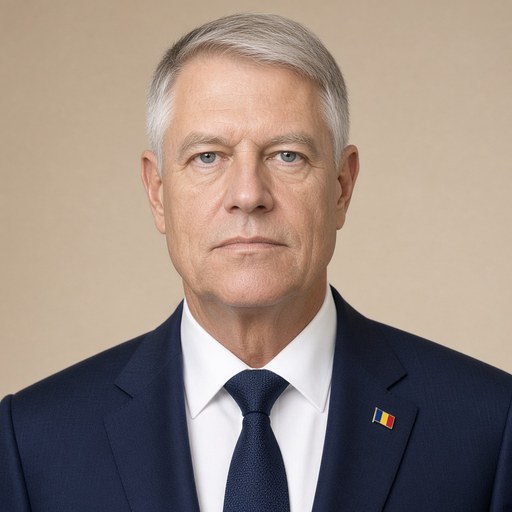
The speech of the President of Romania, Mr. Klaus Iohannis, delivered during the panel on the theme "Between Reassurance and Recommitment? The Future of NATO" - Munich Security Conference.
 Klaus Iohannis · President of Romania
- Context
- Iohannis addressed the Munich Security Conference panel on NATO's future on February 13, 2016, discussing Euro-Atlantic security challenges.
- Main themes
- NATO collective defense and reassurance, Euro-Atlantic security, Black Sea strategic importance, transatlantic link, deterrence and adaptation, terrorism threat, migrant crisis and European cohesion, Romania's defense commitments, NATO-EU cooperation, Wales Summit implementation, erosion of international law and norms, trust within societies
- Duration
- ~7 min
- Words
- 892
- Sentences
- 40
- Readability
- 29
- Grade
- 14.7
- Syntax
- 2.98
- Vocabulary
- 2.30
Munich Security Conference Translated from Romanian
The broad sphere of national life a sentence belongs to. Every sentence has an Arena, so it is the denominator the other indices are read against.
Other40 sentences in 17 paragraphs
"Thank you for the introduction, Professor Burns! Allow me to begin by expressing my appreciation to His Excellency, Ambassador Ischinger, for the invitation to participate in this unique high-level forum on international security issues. Each year, this event provides a platform for advancing new ideas, developing mutual understanding, intensifying dialogue, and shaping the future.
I believe that the shaping of our security has always been closely linked to the aspirations of our peoples. The commitment made to security and a better life is now being challenged across the Euro-Atlantic area by multiple interrelated factors, giving rise to a complex security environment and new risks to it.
From the outside, we are simultaneously facing multidimensional challenges from both the east and the south. Although different in nature, these are crucial for Euro-Atlantic security. The erosion of values and norms, as well as the violation of fundamental principles of international law, have brought us to the point we find ourselves in today. The current situation is also the result of a lack of political will and determination exhibited by certain states and other actors to respect the principles, norms, and instruments that have been built over decades.
At the same time, a growing threat of terrorism, as well as an unprecedented flow of migrants, is putting additional pressure on Europe. The migrant crisis, in particular, has demonstrated to us the potential fragility of the European construction and the limited effectiveness of our institutions. Not long ago, the main theme on the agenda was enlargement. Now, we must find solutions to maintain the solidity and unity of the European Union, with the European project itself being called into question. All these challenges we face now not only call into question security; they destroy trust within our societies, between people, countries, and international political actors.
We now find ourselves in a situation that demands more than just reaction and adaptation to circumstances and ongoing developments in the international environment. We must redefine our future, starting from these realities.
In light of these aspects, allow me to draw your attention to a few issues.
First, given the current context, we must strengthen NATO as the guarantor of Euro-Atlantic security and focus on collective defense, investing heavily in the political and strategic sectors. We must value the strong transatlantic link, complemented by an increasing European contribution, in accordance with the Wales Summit Declaration.
I do not believe we need to choose between reassurance and re-engagement. They are not mutually exclusive. I would rather say that we need to find the right balance so that we send a message: we are strong and united, we support each other, just as we support our values and principles, ready to defend them if necessary, and at the same time, we want to rebuild trust, as we desire a safer and better world.
I welcome the U.S. decision to quadruple the budget allocated to the European Reassurance Initiative. I see it as an expression of commitment to security in Europe and to our common goals as an organization.
The implementation of the decisions made at the Wales Summit, the bold stimulation of NATO's long-term adaptation, and, in particular, the strengthening of the deterrence dimension will produce the desired impact in Warsaw.
Another theme I wish to address concerns the Black Sea and its strategic importance. In light of recent events and considering the geopolitical context, the Black Sea area proves to be crucial for both regional security and the overall Euro-Atlantic security. We cannot afford to think narrowly from a strategic perspective, and our competence and expertise can substantially contribute to addressing the issues that make up the arc of instability in the Black Sea region.
As a reliable and predictable partner within NATO, Romania remains a pillar of democracy and stability in this region. We will continue to be a source of security at NATO's and the EU's eastern border.
This year, we have increased the defense budget, and we have an agreement, signed by all political parties in Romania, that we aim to reach a level of at least 2% of GDP for public spending in the field of national defense by 2017.
Romania is fully engaged in strengthening NATO. This includes regional initiatives as well as constructive engagement with partners and other relevant actors. To this end, on November 4, 2015, in Bucharest, I co-chaired, together with the President of Poland, Andrzej Duda, the high-level meeting of leaders from NATO's eastern flank. The Declaration on Allied Solidarity and Common Responsibility adopted on that occasion reflects our commitment to strengthening Euro-Atlantic security through NATO's unity, solidarity, and cohesion.
Finally, but by no means least, NATO-EU cooperation and coordination represent the guarantee of security and prosperity. We need a strengthened and genuine commitment, manifested reciprocally, from each organization.
Both the process of drafting the EU Global Strategy and the preparations for the NATO Summit in Poland must ensure an important role for both the eastern and southern flanks, a commitment to strengthening the resilience of our societies, a comprehensive vision, and actions that ensure the continuity of efforts already undertaken in the Black Sea area, which are also very relevant from the perspective of energy security.
Thank you! I look forward to your views and the continuation of the debate on important issues for the future of NATO and our countries."
The original Romanian. The tags above are read on the English translation's sentences.
„Vă mulțumesc pentru introducerea făcută, domnule profesor Burns! Permiteți-mi să încep prin a-mi exprima aprecierea față de Excelența Sa, ambasadorul Ischinger, pentru invitația adresată de a participa la acest unic forum la nivel înalt privind problematica securității internaționale. În fiecare an, acest eveniment oferă o platformă pentru avansarea de noi idei, pentru dezvoltarea capacității de înțelegere reciprocă, intensificarea dialogului și creionarea viitorului.
Consider că modelarea securității noastre a fost întotdeauna strâns legată de aspirațiile popoarelor noastre. Angajamentul luat pentru securitate și o viață mai bună este acum supus provocării în întreaga zonă euroatlantică de factori multipli care se potențează reciproc, dând naștere unui mediu complex de securitate și unor noi riscuri la adresa acesteia.
Din exterior, ne confruntăm simultan cu provocări multidimensionale, atât din est, cât și din sud. Deși de natură diferită, acestea sunt cruciale pentru securitatea euroatlantică. Eroziunea valorilor și a normelor, precum și încălcarea principiilor fundamentale ale dreptului internațional ne-au adus în punctul în care ne aflăm în prezent. Situația actuală este, de asemenea, efectul unei lipse de voință politică și hotărâre manifestată de anumite state și de alți actori de a respecta principiile, normele și instrumentele care au fost construite de-a lungul deceniilor.
În același timp, o amenințare crescândă a terorismului, precum și un flux de migranți fără precedent exercită o presiune suplimentară asupra Europei. Criza migranților, în mod special, ne-a demonstrat potențiala fragilitate a construcției europene și eficiența limitată a instituțiilor noastre. Nu cu mult timp în urmă, principala temă de pe agendă era extinderea. Acum, trebuie să găsim soluții pentru a menține soliditatea și unitatea Uniunii Europene, proiectul european însuși fiind sub semnul întrebării. Toate aceste provocări cu care ne confruntăm acum nu doar pun la îndoială securitatea; ele distrug încrederea, în sânul societăților noastre, între oameni, țări și actori politici internaționali.
Ne regăsim acum într-o situație care reclamă mai mult decât reacție și adaptare la circumstanțe și la evoluții continue ale mediului internațional. Trebuie să ne redefinim viitorul, plecând de la aceste realități.
Având în vedere aceste aspecte, permiteți-mi să vă supun atenției câteva chestiuni.
În primul rând, ținând cont de contextul actual, trebuie să consolidăm NATO în calitate de garant al securității euroatlantice și să ne concentrăm asupra apărării colective, investind masiv în sectorul politic și în cel strategic. Trebuie să prețuim puternica legătură transatlantică, completată de o contribuție europeană crescândă, în conformitate cu Declaraţia Summitului din Ţara Galilor.
Nu cred că trebuie să alegem între reasigurare și reangajare. Ele nu se exclud reciproc. Aș spune, mai degrabă, că trebuie să găsim echilibrul corect, astfel încât să transmitem un mesaj: suntem puternici și uniți, ne susținem reciproc, la fel cum ne susținem valorile și principiile, gata de a le apăra dacă este nevoie și, în același timp, dorim să reconstruim încrederea, deoarece ne dorim o lume mai sigură și mai bună.
Salut decizia SUA de a spori de patru ori bugetul destinat Inițiativei de Reasigurare Europeană. O consider o expresie a angajamentului privind securitatea în Europa și față de obiectivele noastre comune ca organizație.
Implementarea deciziilor luate la Summitul din Țara Galilor, stimularea curajoasă a dezvoltării adaptării pe termen lung a NATO și, în special, consolidarea dimensiunii de descurajare vor produce impactul dorit la Varșovia.
O altă temă pe care doresc s-o abordez se referă la Marea Neagră și la importanța sa strategică. În lumina recentelor evenimente și având în vedere contextul geopolitic, zona Mării Negre se dovedește a fi crucială atât pentru securitatea regională, cât și pentru întreaga securitate euroatlantică. Nu ne putem permite să gândim limitat din punct de vedere strategic, iar competența și expertiza noastră pot contribui substanţial la soluţionarea problemelor care alcătuiesc arcul de instabilitate din zona Mării Negre.
În calitate de partener previzibil și de încredere în cadrul NATO, România rămâne un pilon al democrației și al stabilității în această regiune. Vom continua să fim o sursă de securitate la frontiera de est a NATO și a UE.
În acest an, am crescut bugetul destinat apărării și avem un acord, semnat de către toate partidele politice din România, conform căruia urmărim să atingem un nivel de cel puțin 2% din PIB pentru cheltuieli publice în domeniul apărării naționale, până în 2017.
România participă integral la consolidarea NATO. Aceasta include inițiative regionale, precum și angajarea constructivă a partenerilor și a altor actori relevanți. În acest scop, pe 4 noiembrie 2015, la București, am prezidat, împreună cu președintele Poloniei, Andrzej Duda, reuniunea la nivel înalt a liderilor statelor de pe flancul estic al NATO. Declarația privind Solidaritatea Aliată și Responsabilitatea Comună adoptată cu acea ocazie reflectă angajamentul nostru de a consolida securitatea euroatlantică prin intermediul unității, al solidarității și al coeziunii NATO.
În sfârșit, dar nu în ultimul rând, cooperarea și coordonarea NATO-UE reprezintă garanția securității și a prosperității. Avem nevoie de angajamentul consolidat și autentic, manifestat reciproc, de fiecare organizație.
Atât procesul de redactare a Strategiei Globale a UE , cât și pregătirea în vederea Summit-ului NATO din Polonia trebuie să asigure un rol important atât pentru flancul estic cât și pentru cel sudic, angajamentul de a consolida capacitatea de rezistență a societăților noastre, o viziune cuprinzătoare și acțiuni care să asigure continuitatea eforturilor deja întreprinse în zona Mării Negre, de asemenea foarte relevante din perspectiva securității energetice.
Vă mulțumesc! Aștept cu interes opiniile dumneavoastră şi continuarea dezbaterii cu privire la chestiuni importante pentru viitorul NATO și al țărilor noastre.”