




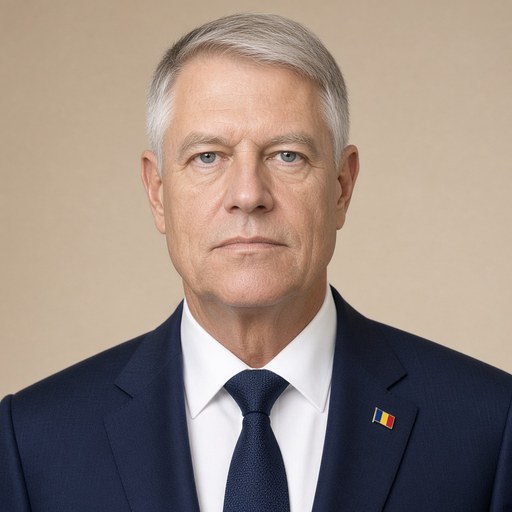
Address made by the President of Romania, Mr. Klaus Iohannis, during the ”Between Reassurance and Reengagement? The Future of NATO” panel discussion, at the 52nd Munich Security Conference
 Klaus Iohannis · President of Romania
- Context
- Iohannis addressed the 52nd Munich Security Conference in February 2016 during a panel on NATO's future, outlining Romania's security priorities and alliance commitments.
- Main themes
- NATO collective defense and adaptation, reassurance vs. reengagement debate, Black Sea strategic importance, Euro-Atlantic security challenges, Russia and Eastern flank security, terrorism and migration crisis, transatlantic link and US commitment, Romania's defense commitments, NATO-EU cooperation, Wales Defense Pledge implementation, Warsaw Summit preparations, erosion of international norms
- Duration
- ~7 min
- Words
- 799
- Sentences
- 35
- Readability
- 31
- Grade
- 14.7
- Syntax
- 3.02
- Vocabulary
- 2.22
Munich Security Conference Translated from Romanian
The broad sphere of national life a sentence belongs to. Every sentence has an Arena, so it is the denominator the other indices are read against.
Other35 sentences in 18 paragraphs
Ladies and Gentlemen,
I believe that shaping our security has always been closely linked to the aspirations of our people. The pledge for security and for a better life is now challenged across the Euro-Atlantic area by multiple factors that reinforce one another, leading to a particularly complex security environment and to new security risks.
From the outside, we are simultaneously confronted with multidimensional challenges both from the East and South. Although different in nature, they are crucial for Euro-Atlantic security.
The erosion of values and norms, the breach of fundamental principles of international law led us to where we are now. The current situation is also a result of the lack of political will and determination of some States and other actors to hold on to the principles, norms, and instruments that were built over decades.
At the same time, an increased threat of terrorism and an unprecedented flow of migrants put further pressure on Europe. Especially the migration crisis showed us the potential fragility of the European construction and the limited efficiency of our institutions. Not long ago, the main issue on the agenda was enlargement, while now we have to find solutions to maintain the solidity and unity of the European Union, and the European project itself is sometimes questioned. All these challenges we are facing now not only question security but destroy trust within our societies, between people, between countries, between international actors.
We find ourselves now in a situation that demands more than just reacting and adapting to circumstances and continuous developments in the international environment. We need to redefine our future, starting from these realities.
Considering these, allow me to bring to your attention several issues.
First, given the existing context, we need to consolidate NATO as a guarantor of Euro-Atlantic security and to focus on collective defense, with major investments in the political and strategic realms. We should value the strong transatlantic link, complemented by an increased European contribution, in line with the Wales Defense Pledge.
I don’t think we need to choose between reassurance and reengagement. They don’t go against each other. I would rather say we need to find the proper balance, in a way that sends a message: we are strong and united, we stand for each other, for our values and principles, ready to defend them if necessary, and at the same time we want to rebuild trust, because we want a safer and better world.
I strongly welcome the US decision to increase by four times the European Reinsurance Initiative budget. I see it as an expression of commitment to security in Europe and to our collective goals as an organization.
Delivering on the Wales decisions, boldly fostering NATO long-term adaptation, and especially consolidating deterrence will make the difference in Warsaw.
Another issue I want to address is regarding the Black Sea and its strategic importance. Due to recent events and the geopolitical context, the Black Sea area proves to be crucial not only for regional security but for Euro-Atlantic security as a whole. We cannot afford to be strategically short-sighted and our expertise can help advance constructively on tackling the arch of instability around the Black Sea.
Romania, as a predictable and trustworthy partner inside NATO, remains a pillar of democracy and stability in this region. We are committed to being a source of security at the Eastern border of NATO and the EU.
This year we have increased our defense budget and we have an agreement, signed by all the political parties in Romania, to reach a level of at least 2% of GDP for defense spending by 2017.
Romania fully participates in strengthening NATO, including regionally owned initiatives, as well as through a constructive engagement of partners and other relevant actors. To this end, I hosted in Bucharest, together with the Polish president, Andrzej Duda, the meeting of the Heads of states of the NATO Eastern flank last year on November 4th. The declaration on Allied Solidarity and Shared Responsibility adopted on that occasion reflects our commitment to consolidate Euro-Atlantic security through NATO unity, solidarity, and cohesion.
Last, but not least, NATO-EU cooperation and coordination is the guarantee of security and prosperity. We need an enhanced and genuine commitment of each organization towards the other.
Both the process of drafting the EU’s Global Strategy and the preparations towards the NATO Summit in Poland must ensure a prominent role for both Eastern and Southern flanks, the commitment to increase the resilience of our societies, a comprehensive vision, and follow-up actions in the Black Sea region, also very relevant from the perspective of energy security.
Thank you and I am looking forward to hearing your opinions and further debate on issues that are of interest and importance to the future of NATO and of our countries.
The original Romanian. The tags above are read on the English translation's sentences.
Ladies and Gentlemen,
I believe that shaping of our security has always been closely linked to the aspirations of our people. The pledge for security and for a better life is now challenged across the Euro-Atlantic area by multiple factors that reinforce one another, leading to a particularly complex security environment and to new security risks.
From the outside, we are simultaneously confronted with multidimensional challenges both from the East and South. Although different in nature, they are crucial for the Euro-Atlantic security.
The erosion of values and norms, the breach of fundamental principles of international law led us to where we are now. The current situation is also a result of lack of political will and determination of some States and other actors to hold on to the principles, norms and instruments that were built over decades.
At the same time, an increased threat of terrorism and an unprecedented flow of migrants put further pressure on Europe. Especially the migration crisis showed us the potential fragility of the European construction and the limited efficiency of our institutions. Not a long time ago the main issue on the agenda was enlargement, while now we have to find solutions to maintain the solidity and unity of the European Union, and the European project itself is sometimes questioned. All these challenges we are facing now not only question security, but destroy trust within our societies, between people, between countries, between international actors.
We find ourselves now in a situation that demands more than just reacting and adapting to circumstances and continuous developments in the international environment. We need to redefine our future, starting from these realities.
Considering these, allow me to bring to your attention several issues.
First, given the existing context, we need to consolidate NATO as a guarantor of Euro-Atlantic security and to focus on collective defense, with major investments in the political and strategic realms. We should value the strong transatlantic link, complemented by an increased European contribution, in line with the Wales Defense Pledge.
I don’t think we need to choose between reassurance and reengagement. They don’t go against each other. I would rather say we need to find the proper balance, in a way that sends a message: we are strong and united, we stand for each other, for our values and principles, ready to defend them if necessary, and at the same time we want to rebuild trust, because we want a safer and better world.
I strongly welcome the US decision to increase by four times the European Reinsurance Initiative budget. I see it as an expression of commitment to security in Europe and to our collective goals as an organization.
Delivering on the Wales decisions, boldly fostering the NATO long-term adaptation and especially consolidating deterrence will make the difference in Warsaw.
Another issue I want to address is regarding the Black Sea and its strategic importance. Due to recent events and the geopolitical context, the Black Sea area proves to be crucial not only for the regional security, but for the Euro-Atlantic security as a whole. We cannot afford to be strategically short-sighted and our expertise can help advance constructively on tackling the arch of instability around the Black Sea.
Romania, as a predictable and trustworthy partner inside NATO, remains a pillar of democracy and stability in this region. We are committed to be a source of security at the Eastern border of NATO and the EU.
This year we have increased our defense budget and we have an agreement, signed by all the political parties in Romania, to reach a level of at least 2% of GDP for defense spending by 2017.
Romania fully participates in strengthening NATO, including regionally owned initiatives, as well as through a constructive engagement of partners and other relevant actors. To this end, I hosted in Bucharest, together with the Polish president, Andrzej Duda, the meeting of the Heads of states of the NATO Eastern flank last year on November 4 th . The declaration on Allied Solidarity and Shared Responsibility adopted on that occasion reflects our commitment to consolidate Euro-Atlantic security through NATO unity, solidarity and cohesion.
Last, but not least, NATO-EU cooperation and coordination is the guarantee of security and prosperity. We need an enhanced and genuine commitment of each organization towards the other.
Both the process of drafting the EU’s Global Strategy and the preparations towards the NATO Summit in Poland must ensure a prominent role for both Eastern and Southern flank, the commitment to increase the resilience of our societies, a comprehensive vision and follow-up actions in the Black Sea region, also very relevant from the perspective of energy security.
Thank you and I am looking forward to hearing your opinions and further debate on issues that are of interest and importance to the future of NATO and of our countries.”