




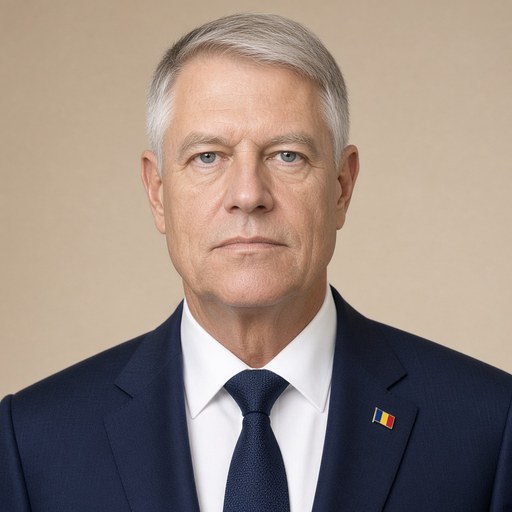
The speech of the President of Romania, Mr. Klaus Iohannis, delivered during the commemorative session dedicated to the 50th anniversary of higher education in Sibiu.
 Klaus Iohannis · President of Romania
- Context
- Iohannis addressed a commemorative session at Lucian Blaga University of Sibiu on October 4, 2019, marking the institution's 50th anniversary.
- Main themes
- Higher education in Romania, Lucian Blaga University of Sibiu anniversary, university's role in regional development, academic excellence, Romania's economic competitiveness, demographic and social challenges, early school leaving, international cooperation, history of Sibiu as cultural center, transition to knowledge-based economy
- Duration
- ~11 min
- Words
- 1,369
- Sentences
- 55
- Readability
- 30
- Grade
- 14.6
- Syntax
- 3.03
- Vocabulary
- 2.25
Translated from Romanian
The broad sphere of national life a sentence belongs to. Every sentence has an Arena, so it is the denominator the other indices are read against.
Other55 sentences in 32 paragraphs
Thank you, Mr. Rector! Your Magnificence, Mr. Rector! And I congratulate you on the fulfillment of the first youth of the "Lucian Blaga" University of Sibiu!
You know, usually when you stay in a position for a while, you realize that the more you go, the more people you know. This happens to me as well, but here in Sibiu, believe me, I know very many people; I would like to greet them all by name, but I think it would take a bit too long, so please allow me to greet just a few.
Madam General Mayor Astrid Fodor, who is successfully fighting to keep Sibiu at a very high level,
I am very pleased that with us is Mr. Deputy Prime Minister and Minister of Internal Affairs Andrei Năstase from Moldova, Moldova beyond the Prut, which concerns us and to which, I believe I can say, we are worthy friends,
Your Excellency, with whom I have worked successfully,
Madam President of the County Council,
However, I want to specifically greet today the ladies and gentlemen professors and the Sibiu students who are celebrating a great holiday today, and I believe that this time I do not need to convince you very much if I tell you that for me it is a special day, 50 years of "Lucian Blaga" University, and I am very happy that we can celebrate together this important day for the "Lucian Blaga" University of Sibiu, just as, in fact, Mr. Rector has said very well, I have participated, I truly believe I can say that I have participated in the life of the "Lucian Blaga" University, and I wish for it to become increasingly high-performing and for us to celebrate many more beautiful days of the University.
The transformation of Sibiu into a university center is a real source of pride for the people of Sibiu. And it was not easy at all. The desire of the people of Sibiu to have a university is not new; it is an old desire, easily understandable. Every city wishes to have a university center, but many have strived in Sibiu, and in the end, they succeeded. Important for this success were certainly the many cultural institutions and the many achievements of Sibiu, of which I would mention just a few. I think it is good to remember that Sibiu hosted ASTRA, the original ASTRA, and the ASTRA Museum, the Romanian Telegraph, the Orthodox Metropolitanate of Transylvania, and the Leading Council. Many Saxon institutions were established in the city of Sibiu, and even though, among Transylvanians, there is a competition that today leads to a statement that keeps repeating, "Cluj is the capital of Transylvania," from time to time I like to remind that Sibiu was, for a good while, at least the real administrative capital of Transylvania.
The intellectuality of Sibiu has fought for decades for the possibility of access to higher education to exist here. And, after the foundations were laid back in the 19th century, Sibiu had a university center for a short time, but still, it was during World War II when the University of Cluj took refuge in Sibiu. However, after the war ended, obviously, the Cluj university returned to where it belongs, and it developed excellently afterward.
Looking back, of course, the question arises: "Was it good or not to establish a university in Sibiu?" My opinion, that of the people of Sibiu and many others is that it was very good, fully justified. Over 15,000 students study here, and, due to a strong, solid relationship with the community, the academic environment has become a catalyst for the development of the city, for the development of the city not only as an industrial hub but also as a research center in multiple fields.
Today, as we learned from Mr. Rector, the "Lucian Blaga" University offers a complete education for young people from all over Romania and beyond its borders. It is a university open to international cooperation, dedicated to excellence, and perfectly integrated into the socio-economic landscape of the region.
Romania needs more than ever universities like "Lucian Blaga." After a good part of the transition, we went through an economy whose competitiveness was largely generated by the low cost of labor; now we are in another stage where, to build a developed Romania, a prosperous Romania, a paradigm shift is needed.
We must generate added value, we must build networks of international collaboration, and we need a sufficient number of specialists to stimulate sustainable economic growth.
Many of these objectives can only be achieved by simultaneously increasing the quality and participation in higher education.
So far, the demographic and social problems with long-term effects on us have largely been ignored, as they lie beyond the reduced political memory, usually limited to the duration of a mandate, that is, four years, which is the electoral cycle. But, in order not to jeopardize the fate of Romania as a developed and prosperous European state, we must confront head-on the issue of early school leaving, the small number of university graduates, and – often – the insufficient quality of the educational process.
However, Romania's problems cannot be solved exclusively through political decision-making. Relying solely on such an approach would be completely wrong, because in a market economy, private initiative plays a very important role.
Here, in Sibiu, a functional ecosystem has been built around the university, which includes actors from the economic environment, civil society, and administration. It is a fortunate case, where politics faces a seemingly simple challenge, that of not disturbing this balance.
Extrapolating, political decision-makers at the center have not really managed to meet the challenge of refraining from enacting laws that do more harm than good.
When we started consultations for the "Educated Romania" project, it became evident that one of the fundamental problems of our education system is the production of incoherent laws on a conveyor belt.
The effects of this harmful way of legislating are particularly visible in higher education, where autonomy is a central pillar in increasing quality both in education and in research. For example, universities cannot, in many cases, spend the money they obtain, as a result of including the funds they should have in the calculation procedure of the national deficit. Very strange!
Without unleashing the managerial and creative potential of Romanian universities, we have no real chance of becoming competitive in a knowledge-based economy.
However, I would like to conclude on an optimistic note because today is a celebration here at "Lucian Blaga."
For enterprising universities like the one we are in, there are numerous very good news. Almost two years ago, I supported in the European Council a series of new measures to modernize education.
In the next funding cycle from the European Union budget, there will be more funds for mobility, but also for research.
Support for organizing European university networks will most likely be expanded, and even some administrative processes will be streamlined, and the partnerships of the "Lucian Blaga" University show me that your institution, Mr. Rector, will be among the winners of this meritocratic race for visibility and attracting talent.
I take advantage of your large presence to encourage you to contribute to the effort to bring Romania to the place that I believe it deserves - at the center of European political and economic construction.
Education and research are indispensable in a knowledge-based economy, the only viable option that can allow us to reduce the gaps we still have compared to other countries in the European Union.
I am convinced that the "Lucian Blaga" University has already largely assumed this role, actively participating in the development and growth of the international openness of the Sibiu community.
I wish you, Mr. Rector, honored professors, success in the next 50 years of activity and to the University many more times 50 years!
Happy anniversary, Mr. Rector! Happy anniversary, dear students! Happy anniversary, dear professors!
And because tomorrow is International Teachers' Day and World Education Day, I would like to wish a happy anniversary to all those who value and honor Romanian education with their work!
Allow me to conclude with the traditional wish "Vivat, crescat, floreat!"
The original Romanian. The tags above are read on the English translation's sentences.
Mulțumesc, domnule Rector! Magnificență, domnule Rector! Și vă felicit pentru împlinirea primei tinereți a Universității „Lucian Blaga” din Sibiu!
Știți, de obicei când stai un timp într-o poziție îți dai seama că acolo unde mergi cunoști din ce în ce mai mulți oameni. Așa mi se întâmplă și mie, dar, aici, în Sibiu, credeți-mă, cunosc foarte mulți, mi-aș dori să îi salut pe toți cu numele, dar cred că ar dura un pic prea mult, așa că îmi permiteți să îi salut doar pe câțiva.
Doamnă Primar general Astrid Fodor, care se luptă cu succes să țină Sibiul la un nivel foarte sus,
Sunt foarte bucuros că împreună cu noi este domnul vice-premier și ministru de Interne Andrei Năstase din Moldova, Moldova de dincolo de Prut, care ne preocupă și căreia, cred că pot să spun așa, îi suntem prieteni destoinici,
Înaltpreasinfiția Voastră, cu care am lucrat împreună cu succes,
Doamna Președintă a Consiliului Județean,
În mod expres, însă, vreau să salut astăzi doamnele și domnii profesori și pe studenții sibieni care sunt în zi de mare sărbătoare astăzi și cred că, de data aceasta, nu trebuie să vă conving foarte mult dacă vă spun că pentru mine este o zi specială, 50 de ani de Universitate „Lucian Blaga” și sunt foarte bucuros că putem să serbăm împreună această zi importantă pentru Universitatea „Lucian Blaga” Sibiu așa cum, de fapt a spus-o foarte bine domnul Rector, am participat, chiar cred că pot să spun că am participat la viața Universității „Lucian Blaga” și îmi doresc să devină din ce în ce mai performantă și să sărbătorim încă multe zile frumoase ale Universității.
Transformarea Sibiului într-un centru universitar este pentru sibieni un real motiv de mândrie. Și nu a fost simplu deloc. Dorința sibienilor de a avea o universitate nu este nouă, este o dorință veche, ușor de înțeles. Fiecare oraș își dorește să aibă și un centru universitar, dar mulți s-au străduit în Sibiu și în final au reușit. Importante pentru această reușită cu siguranță au fost și multele instituții culturale și multele reușite ale Sibiului din care aș menționa doar câteva. Cred că este bine să ne amintim că Sibiul a găzduit ASTRA, ASTRA originală, și Muzeul ASTRA, Telegraful român, Mitropolia Ortodoxă a Transilvaniei și Consiliul Dirigent. Multe instituții săsești au fost așezate în orașul Sibiu și chiar dacă, așa între ardeleni, există o competiție care în ziua de astăzi duce la o afirmație care tot se repetă „Clujul este capitala Ardealului”, din când în când îmi face plăcere să reamintesc că Sibiul a fost o vreme bună cel puțin capitala administrativă reală a Transilvaniei.
Intelectualitatea sibiană a luptat decenii întregi pentru ca aici să existe și posibilitatea accesului la educație superioară. Și, după ce bazele au fost puse încă din secolul XIX, Sibiul a avut un centru universitar pentru scurt timp, dar totuși, a fost în timpul de-al Doilea Război Mondial, când Universitatea din Cluj s-a refugiat la Sibiu. Însă, după ce războiul s-a terminat, evident, Universitatea clujeană s-a reîntors acolo unde îi este locul, și ea s-a dezvoltat excelent pe urmă.
Privind în urmă, sigur, se pune întrebarea: „A fost bine sau nu a fost bine să se înființeze o universitate la Sibiu?” Părerea mea, a sibienilor și a multor altora este că a fost foarte bine așa, pe deplin justificată. Peste 15.000 de studenți învață aici, iar, datorită unei relații puternice, solide cu comunitatea, mediul academic a devenit un catalizator al dezvoltării orașului, a dezvoltării orașului nu doar ca pol industrial, dar și ca centru de cercetare în multiple domenii.
Astăzi, după cum am aflat și de la domnul Rector, Universitatea „Lucian Blaga” oferă o educație completă pentru tinerii din întreaga Românie și de peste granițe. Este o universitate deschisă cooperării internaționale, dedicată excelenței și integrată perfect în peisajul socio-economic al regiunii.
România are nevoie mai mult ca oricând de universități precum „Lucian Blaga”. După ce o bună parte a tranziției am parcurs-o cu o economie a cărei competitivitate era în bună parte generată de costul scăzut al forței de muncă, acum suntem într-o altă etapă în care, pentru a construi o Românie dezvoltată, o Românie prosperă, este nevoie de o schimbare de paradigmă.
Trebuie să generăm valoare adăugată, trebuie să construim rețele de colaborare internațională și să avem un număr suficient de specialiști pentru a stimula o creștere economică sustenabilă.
Multe dintre aceste obiective pot fi atinse doar prin creșterea simultană a calității și a participării la învățământul superior.
Până acum, problemele demografice și sociale cu efect pe termen lung la noi au fost, în bună măsură, ignorate, acestea situându-se dincolo de memoria politică redusă, de regulă, la durata unui mandat, adică patru ani, cât este ciclul electoral. Dar, pentru a nu periclita destinul României ca stat european dezvoltat și prosper, trebuie să atacăm frontal problema părăsirii timpurii a școlii, a numărului mic de absolvenți de studii universitare și – adesea – a calității insuficiente a procesului educațional.
Problemele României, însă, nu se pot rezolva exclusiv prin decizie politică. A ne baza doar pe o astfel de abordare ar fi complet greșit, pentru că într-o economie de piață inițiativa privată joacă un rol foarte important.
Aici, în Sibiu, s-a construit în jurul universității un ecosistem funcțional, din care fac parte actori din mediul economic, din societatea civilă și din administrație. Este un caz fericit, unde politicul are parte de o provocare aparent simplă, aceea de a nu strica acest echilibru.
Extrapolând, decidenții politici de la centru nu prea au reușit să facă față provocării de a se abține în a da legi care mai mult strică decât ajută.
Când am demarat consultările pentru proiectul „România Educată”, a devenit evident că una dintre problemele fundamentale ale sistemului nostru de învățământ este producția de legi incoerente pe bandă rulantă.
Efectele acestui mod păgubos de a legifera se văd în special în învățământul superior, acolo unde autonomia este un pilon central în creșterea calității atât în educație, cât și în cercetare. De exemplu, universitățile nu pot, în multe cazuri, să cheltuie banii pe care îi obțin, ca urmare a includerii fondurilor de care ar trebui să dispună în procedura de calcul a deficitului național. Foarte ciudat!
Fără a descătușa potențialul managerial și creativ al universităților românești nu avem șanse reale de a deveni competitivi într-o economie bazată pe cunoaștere.
Aș dori totuși să închei pe un ton optimist fiindcă astăzi este sărbătoare, aici, la „Lucian Blaga”.
Pentru universitățile întreprinzătoare precum cea în care ne aflăm, există numeroase vești foarte bune. În urmă cu aproape doi ani, eu am sprijinit în Consiliul European o serie de măsuri noi de modernizare a educației.
În următorul ciclul de finanțare din bugetul Uniunii Europene, vor exista mai multe fonduri pentru mobilitate, dar și pentru cercetare.
Se va extinde, cel mai probabil, și sprijinul pentru organizarea de rețele universitare europene și se vor eficientiza chiar unele procese administrative, iar parteneriatele universității „Lucian Blaga” îmi arată că instituția dumneavoastră, domnule Rector, va fi printre câștigătorii acestei curse meritocratice pentru vizibilitate și atragerea de talente.
Profit de prezența dumneavoastră în număr mare pentru a vă încuraja să contribuiți la efortul de a duce România în locul care eu cred că i se cuvine - în centrul construcției politice și economice europene.
Educația și cercetarea sunt indispensabile în economia bazată pe cunoaștere, singura variantă viabilă care ne poate permite să reducem din decalajele pe care încă le avem în raport cu alte țări din Uniunea Europeană.
Sunt convins că Universitatea „Lucian Blaga” și-a asumat deja, în bună parte, acest rol, participând activ la dezvoltarea și creșterea deschiderii internaționale a comunității sibiene.
Vă urez, domnule Rector, onorați profesori, succes și în următorii 50 de ani de activitate și Universității încă de multe ori 50 de ani!
La mulți ani, domnule Rector! La mulți ani, dragi studenți! La mulți ani, dragi profesori!
Și pentru că mâine este Ziua Internațională a Profesorului și Ziua Mondială a Educației, aș dori să le urez la mulți ani tuturor celor care prețuiesc și onorează cu activitatea lor școala românească!
Dați-mi voie să închei cu urarea tradițională „Vivat, crescat, floreat!”