




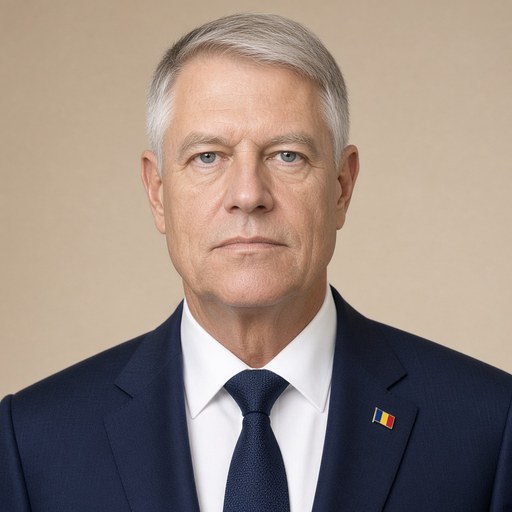
The speech of the President of Romania, Mr. Klaus Iohannis, delivered during the public ceremony for the promulgation of the law regarding the establishment of the National Museum of Jewish History and the Holocaust in Romania.
 Klaus Iohannis · President of Romania
- Context
- Iohannis delivered a speech at the public promulgation ceremony of the law establishing the National Museum of Jewish History and the Holocaust in Romania on October 8, 2019.
- Main themes
- National Museum of Jewish History and the Holocaust, Holocaust remembrance, Jewish heritage in Romania, historical memory, anti-Semitism, education and tolerance, Romanian Jewish contributions, civic responsibility, democracy, promulgation ceremony
- Duration
- ~9 min
- Words
- 1,073
- Sentences
- 47
- Readability
- 40
- Grade
- 13.3
- Syntax
- 3.26
- Vocabulary
- 2.32
Translated from Romanian
The broad sphere of national life a sentence belongs to. Every sentence has an Arena, so it is the denominator the other indices are read against.
Other47 sentences in 30 paragraphs
Mr. President of the Federation of Jewish Communities,
Mr. Deputy – representative of the Jewish community,
Ladies and gentlemen senators and deputies,
I have promulgated this law with thoughts of history, of the present, but especially of the future.
Thirty years ago, Romanians won their freedom at the ultimate sacrifice. Among the dreams and aspirations of those who sacrificed themselves on the barricades raised with bare hands against a criminal regime was the desire to no longer live in lies, that is, to be able to write their own history. A sincere, true history that encompasses both the acts of bravery and what was wrong and dishonorable in our past.
Such a legacy, both wonderful and tragic, has been hidden from us and our parents for decades.
It is about the history of Romanian Jews and their invaluable contribution to the development of our country, but also their tragedy during World War II.
Whether they contributed to the creation of the first modern institutions, or gave their lives on the battlefields of Mărășești or Oituz, whether they honored Romanian culture through their achievements, or boosted economic development or made decisive contributions in the field of science, the Jewish legacy has enriched our identity.
The Jewish heritage is representative of the national culture, and the future National Museum of Jewish History and the Holocaust in Romania will have the mission of highlighting it.
Scientists, doctors, lawyers, actors, painters, writers, philosophers, journalists of Jewish origin are inscribed in the Pantheon of great personalities of Romania. Dadaism owes its emergence to the Romanian poet of Jewish origin Tristan Tzara, and the development of literary aesthetics and Romanian stylistics is linked to the name of Tudor Vianu.
How many of us know that the first photojournalist in the Romanian press, Iosif Berman, was the son of a naturalized Jew? These are just a few examples from the rich history of Romanian Jews.
Here with us are some of the last survivors of the Holocaust. The witnesses of the most terrible episode in our recent history carry deep wounds in their souls. They and their peers were persecuted for who they are, what they believe, and whom they love.
Younger generations will never cease to wonder how the Holocaust was possible. Many of us have also tried to understand what cannot be understood.
And thus, naturally, this museum will perhaps not be an answer, but, as someone said, a question mark. What was it and how was it possible to kill the elderly, women, and children, locked in the death trains from Iași, assassinated in Bessarabia and Bukovina, or thrown into the wilderness beyond the Dniester?
Elie Wiesel said: "For the dead and for the living, we must bear witness."
This is, I believe, also the fundamental mission of the future museum, to ensure that the memory of all those who, with their dignity trampled upon, fell prey to cold, hunger, and disease, were tortured and ultimately killed, will be protected and respected.
Since the beginning of my term, I have supported this museum project because I believe that this project is one that unites, not one that divides. The unification of our memories is a common good. Therefore, my hope is that this museum will bring us together.
You probably know that before being a politician, I was a teacher. And a teacher can only guide others to learn. And today I feel much optimism because together we are building an institution that aims to teach people. We will learn together many lessons from our history, lessons of bravery, of courage, but also lessons about barbarism and tyranny. However, the most important lesson that this museum will convey, from generation to generation, is to not forget.
There are still dictatorships in the world, countless abuses, people who die for their faith and for who they are. The future must not belong to violence, despotic power, hatred, and lies, but to tolerance and respect for one another, regardless of their faith, ethnicity, and culture.
Fortunately, our Romania has changed a lot since the moment 30 years ago. The Romanian state demonstrates consistency in fulfilling the objectives aimed at recovering the memory of the Holocaust, strengthening education about the Holocaust, and combating anti-Semitism.
By establishing this museum, Romania strongly defends the history, heritage, and culture of those who contributed to the becoming of our nation.
You will all agree that the museum must be an institution of the future, an ally of education against ignorance, a fortress of solidarity and civic patriotism in the face of intolerance, anti-Semitism, and discrimination.
Anyone who crosses its threshold will be enriched, for they will understand a few things that will remain in their heart and soul: that indifference can kill, that the responsibility of a citizen means defending the disadvantaged, that diversity is not toxic, but necessary, that the weakening of democracy is an attack on social peace, that tolerance and good understanding begin with learning.
Ultimately, the sacred mission of this institution will be to affirm the right of all people to live in dignity.
The museum will also open a new chapter of assuming and recognizing the historical past as a founding element for understanding, progress, and for honoring all those who have labored for the values of today’s Romania.
It has taken a long road and many efforts for the idea of establishing the museum to reach this stage. I am deeply grateful to all those who have contributed to this large-scale endeavor, initiated by Mr. Deputy Silviu Vexler and supported by all political parties in our Parliament.
I trust that the "Elie Wiesel" Institute has the power and expertise to organize the new institution to the highest standards.
In its daring work to cultivate the need for memory and remembrance, the museum will be guided by an Honorary Council, whose first meeting I will be happy to host, if accepted, at the Cotroceni Palace.
I urge you to continue to support, with the same determination as before, the future museum and let us all be assured that today, Romania has taken another decisive step on the path of democracy and the values of humanity!
And because in just a short time the members of the Jewish community in Romania will mark the holiday of Yom Kippur, I take this opportunity to wish them "Gmar Hatima Tova" – may you be inscribed for good in the Book of Life!
The original Romanian. The tags above are read on the English translation's sentences.
Domnule Președinte al Federației Comunităților Evreiești,
Domnule deputat – reprezentant al comunității evreiești,
Doamnelor și domnilor senatori și deputați,
Am promulgat această lege cu gândul la istorie, la prezent, dar mai ales la viitor.
Acum 30 de ani, românii și-au câștigat libertatea cu sacrificiul suprem. Printre visurile și aspirațiile celor care s-au jertfit pe baricadele ridicate cu brațele goale împotriva unui regim criminal a fost și dorința de a nu mai trăi în minciună, adică și de a putea scrie propria istorie. O istorie sinceră, adevărată, care să cuprindă atât faptele de vitejie, cât și ce a fost greșit și dezonorant în trecutul nostru.
O asemenea moștenire, minunată și tragică deopotrivă, a fost ascunsă nouă și părinților noștri vreme de decenii întregi.
Este vorba despre istoria evreilor români și contribuția lor inestimabilă la dezvoltarea țării noastre, dar și tragedia lor din al Doilea Război Mondial.
Fie că au pus umărul la crearea primelor instituții moderne, ori și-au dat viața pe câmpurile de luptă de la Mărășești sau Oituz, fie că au onorat cultura română prin realizările lor, ori au impulsionat dezvoltarea economică sau au contribuit hotărâtor pe tărâmul științei, moștenirea evreiască a îmbogățit identitatea noastră.
Patrimoniul evreiesc este reprezentativ pentru cultura națională, iar viitorul Muzeu Național de Istorie a Evreilor și al Holocaustului din România va avea misiunea de a-l pune în valoare.
Oameni de știință, medici, avocați, actori, pictori, scriitori, filosofi, gazetari de origine evreiască se înscriu în Panteonul marilor personalități ale României. Dadaismul îi datorează apariția poetului român de origine evreiască Tristan Tzara, iar dezvoltarea esteticii literare și a stilisticii românești se leagă de numele lui Tudor Vianu.
Câți dintre noi știu oare că primul fotoreporter din presa românească, Iosif Berman, era fiul unui evreu naturalizat? Acestea sunt doar câteva exemple din istoria bogată a evreilor români.
Avem aici, alături de noi, pe unii dintre ultimii supraviețuitori ai Holocaustului. Mărturisitorii celui mai cumplit episod din istoria noastră recentă poartă în suflet răni adânci. Ei și semenii lor au fost persecutați pentru cine sunt, ce cred și pe cine iubesc.
Generațiile tinere nu vor înceta niciodată să se întrebe cum a fost posibil Holocaustul. De asemenea, mulți dintre noi am încercat să înțelegem ceea ce nu poate fi înțeles.
Și astfel, în mod natural, acest muzeu va fi poate nu un răspuns, ci, cum a spus cineva, un semn de întrebare. Ce a fost și cum a fost posibilă uciderea de bătrâni, femei și copii, închiși în trenurile morții de la Iași, asasinați în Basarabia și Bucovina ori aruncați în pustietatea de peste Nistru?
Elie Wiesel spunea: „Pentru cei morți și pentru cei vii, trebuie să depunem mărturie”.
Aceasta este, cred, și misiunea fundamentală a viitorului muzeu, aceea de a ne asigura că va fi protejată și respectată memoria tuturor celor care, cu demnitatea călcată în picioare, căzuți pradă frigului, foametei și bolilor, au fost torturați și, în final, uciși.
Încă de la debutul mandatului meu, am sprijinit acest proiect al muzeului, pentru că eu cred că acest proiect este unul care unește, nu unul care dezbină. Unirea memoriilor noastre este un bun comun. De aceea, speranța mea este că acest muzeu ne va aduce împreună.
Probabil știți că, înainte de a fi politician, am fost dascăl. Și un dascăl nu poate decât să îi îndrume pe ceilalți să învețe. Iar astăzi simt mult optimism deoarece, împreună, clădim o instituție care își propune să îi învețe pe oameni. Vom învăța împreună multe lecții din istoria noastră, lecții de vitejie, de curaj, dar și lecții despre barbarie și tiranie. Însă cea mai importantă lecție pe care acest muzeu o va transmite, din generație în generație, este aceea de a nu uita.
Există încă în lume dictaturi, abuzuri nenumărate, oameni care mor pentru credința lor și pentru ceea ce sunt. Viitorul nu trebuie să aparțină însă violenței, puterii despotice, urii și minciunii, ci toleranței și respectului față de semeni, indiferent de credința, etnia și cultura lor.
Din fericire, România noastră s-a schimbat mult față de momentul de acum 30 de ani. Statul român demonstrează consecvență în îndeplinirea obiectivelor care vizează recuperarea memoriei Holocaustului, consolidarea educației despre Holocaust și combaterea antisemitismului.
Prin realizarea acestui muzeu, România apără cu tărie istoria, moștenirea și cultura celor care au contribuit la devenirea națiunii noastre.
Veți fi cu toții de acord că muzeul trebuie să fie o instituție a viitorului, un aliat al educației împotriva ignoranței, o fortăreață a solidarității și patriotismului civic în fața intoleranței, antisemitismului și discriminării.
Cine îi va trece pragul va fi mai câștigat, pentru că va înțelege câteva lucruri care vor rămâne în inima și în sufletul său: că indiferența poate ucide, că responsabilitatea de cetățean înseamnă a-l apăra pe cel defavorizat, că diversitatea nu e toxică, ci necesară, că fragilizarea democrației înseamnă atentat la pacea socială, că toleranța și buna înțelegere încep cu învățătura.
În definitiv, misiunea sacră a acestei instituții va fi să afirme dreptul tuturor oamenilor de a trăi în demnitate.
Muzeul va deschide, totodată, un nou capitol al asumării și recunoașterii trecutului istoric ca element fondator pentru înțelegere, progres și pentru omagierea tuturor celor care au trudit pentru valorile României de astăzi.
A fost nevoie de un drum lung și de multe străduințe pentru ca ideea înființării muzeului să ajungă în această etapă. Sunt profund recunoscător tuturor celor care au contribuit la acest demers de anvergură, inițiat de domnul deputat Silviu Vexler și sprijinit de toate partidele politice din Parlamentul nostru.
Am încredere că Institutul „Elie Wiesel” are puterea și priceperea de a organiza noua instituție la cele mai înalte standarde.
În opera sa temerară de a cultiva nevoia de memorie și de amintire, muzeul va fi ghidat de un Consiliu de Onoare, a cărui primă întrunire voi fi bucuros să o găzduiesc, dacă se acceptă, la Palatul Cotroceni.
Vă îndemn să sprijiniți în continuare, cu aceeași hotărâre ca și până acum, viitorul muzeu și să fim încredințați cu toții că, astăzi, România a mai făcut un pas decisiv pe calea democrației și a valorilor umanității!
Iar pentru că doar peste puțin timp membrii comunității evreiești din România vor marca sărbătoarea de Yom Kippur, profit de ocazie pentru a le ura „Gmar Hatima Tova” – să fiți înscriși cu bine în Cartea Vieții!