




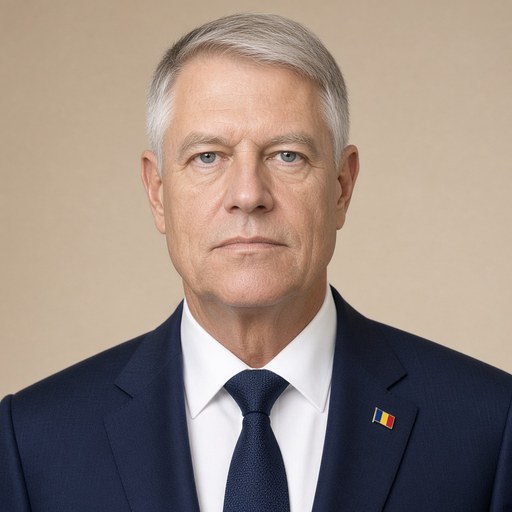
The speech of the President of Romania, Mr. Klaus Iohannis, delivered during the meeting with representatives of young Romanian professionals working in the Bratislava region.
 Klaus Iohannis · President of Romania
- Context
- Iohannis addressed young Romanian professionals in Bratislava during his first official visit to Slovakia on November 18, 2015.
- Main themes
- Romanian diaspora in Slovakia, voting rights for Romanians abroad, voting by mail legislation, brain drain and economic development, Colectiv Club tragedy and political change, democratic participation, independent government formation
- Duration
- ~9 min
- Words
- 1,074
- Sentences
- 42
- Readability
- 53
- Grade
- 12.3
- Syntax
- 3.20
- Vocabulary
- 1.82
Translated from Romanian
The broad sphere of national life a sentence belongs to. Every sentence has an Arena, so it is the denominator the other indices are read against.
Other42 sentences in 9 paragraphs
"Honored audience, Ladies and gentlemen, I am very pleased to be with you today, this evening, here in Bratislava. This is my first official visit to Slovakia; in fact, it is my first visit to Slovakia, and I can say that I am very happy to be here. The people are welcoming; we felt very good from the very beginning, very well received, and then I understand better and more easily why a significant number of young Romanians have decided to come here to seek work.
You, from a group, as the chargé d'affaires said, of young people in quite interesting and managerial positions, and in business, this group that has gathered, probably by chance, you have had opportunities to apply for various positions, and you did. Honestly, I would have liked you to have these positions back home, in Romania, because you are very well-prepared people, highly valued in the labor market, obviously, and with a lot of energy; without energy, you cannot go to a foreign country to work there. Here is one of the serious problems of Romania, which I hope that in the coming years we can, I don’t know if we can solve it, but certainly improve it, by finding ways of economic development, so that these positions become attractive also in Romania. There are sectors where already, today, it happens, where well-prepared people can find quite interesting and well-paid positions in Romania, still relatively few. I wish for such a Romania, where the economy functions very well and where young people find jobs that match their training and expectations when they want to earn.
Besides this issue, I had a more interesting discussion with the chargé d'affaires regarding voting. I understood that, normally, here in Bratislava, about 200-300 Romanians voted, and last time, in November, there were over 1500. It seems that some of them voted for me, which certainly makes me happy; I know the data, and it honors me.
Regarding this vote, I want to say something, something very relevant. Since the beginning of my term, I have made it very clear that I do not want to have a situation where Romanians in the Diaspora cannot vote for bureaucratic reasons ever again; it is unacceptable. Of course, everyone has the right to vote, but for it to be a right, there must also be a practical possibility to exercise that right, and this possibility did not exist everywhere. You know well that there were real riots in the areas of embassies, consulates, with incredible incidents that should not have occurred in those areas.
Since then, I have said that I want different legislation; I want a law that allows for alternative forms of voting, which is generically called "voting by mail." The parties understood this; work began on a law for voting by mail, initially more declarative, but then they really got to work, and in the autumn session, Parliament worked very seriously and finalized a law. A law that is certainly a first step towards voting by mail. The law provides that it will be used now, in the parliamentary elections, but certainly, if the result is good and if it is seen that the procedure is feasible, the law will be changed so that voting can take place in all national elections, not local ones, as that would not make much sense.
This law quickly found its challengers, also parliamentarians, which is absolutely democratic. It is their constitutional right, if they are not satisfied with a vote given by a majority, to request an opinion from the Constitutional Court. This has been done; indeed, two groups of such challengers were found, one group in the Senate, one in the Chamber of Deputies. All in all, today the Constitutional Court analyzed these challenges and found them unfounded. So, the law is ready for promulgation. It will return to me, and if the bureaucratic procedure can be done quickly, I can tell you that tomorrow afternoon, when I return to Bucharest, I will promulgate this law, which opens up a new voting possibility for Romanians in the Diaspora. It seems to me a notable progress, something I have wanted; I have repeatedly addressed the parties, the Parliament, to ask them to make progress on this issue. Here it is happening!
And finally, I cannot conclude my speech without mentioning the situation that Romania is currently in from a socio-political point of view, if I can express it that way—because it is much beyond politics and is not just social. We had our tragedy; then the French had their tragedy, but immediately after the tragedy at the Colectiv Club, people took to the streets, and only at first did they take to the streets because they strongly manifested against the Government; shortly after, these manifestations were against politicians, which gave many food for thought, and I do not want to go into details regarding the establishment of the independent government, which was finalized last night; you know these things. I just want to say that this fact, people who took to the streets to express their concerns, this fact is democratic, it is legitimate, and this voice, this time, was heard and was acknowledged.
I hope we have a very good understanding of the phenomenon among the parties, that we have substantial reforms within the parties, that they welcome new people, that they promote new people. Politics changes only if the people who make it change as well. We cannot send everyone home and take who? Politics without parties does not work. But here I see a possibility for people from your generation to enter politics if they want to change something. Now, I do not believe that anyone from Bratislava is going to Bucharest to join a party, but maybe you talk to friends, with colleagues back home, maybe they ask you what you think, and perhaps you advise them to try; that would be an important thing. If we want a different kind of politics, we also need new people. This does not mean that we send home the older ones, like me, I hope. There are capable people and capable politicians in all parties and at all ages, but renewal also happens with young people.
In this sense, thank you; I am glad we met here! I wish you continued success in your careers, and if you want, come back home! Thank you!"
The original Romanian. The tags above are read on the English translation's sentences.
„Onorată asistență, Doamnelor și domnilor, Îmi face mare plăcere să fiu cu dumneavoastră astăzi, în această seară, aici, în Bratislava. Este prima mea vizită oficială în Slovacia, de fapt, este prima mea vizită în Slovacia și pot să spun că sunt foarte bucuros că am venit. Sunt oameni primitori, ne-am simțit de la început foarte bine, foarte bine primiți și, atunci, înțeleg mai bine și mai ușor de ce un număr destul de important de tineri români au hotărât să vină aici să își caute de lucru. Dumneavoastră, cei dintr-un, cum a spus doamna însărcinat cu afaceri, grup de tineri în poziții destul de interesante și de management, și în afaceri, acest grup care s-a adunat, probabil, la întâmplare, ați avut oportunități de a aplica pentru diferite poziții și ați făcut-o. Sincer, mi-ar fi plăcut să aveți aceste poziții acasă, la noi, în România, fiindcă sunteți oameni foarte bine pregătiți, foarte bine cotați pe piața muncii, evident, și cu multă energie, fără energie nu mergi într-o țară străină, să lucrezi acolo. Iată una din problemele grave ale României, pe care sper ca în anii următori să o putem, nu știu dacă o putem rezolva, dar, cu siguranță, ameliora, găsind căi de dezvoltare economică, în așa fel încât aceste poziții să devină atractive și în România. Există sectoare unde deja, în ziua de astăzi, se întâmplă, unde oameni bine pregătiți pot găsi o poziție destul de interesant remunerată și în România, încă relativ puține. Eu îmi doresc o astfel de Românie, în care economia funcționează foarte bine și în care tinerii își găsesc locuri de muncă pe măsura pregătirii și pe măsura așteptării, atunci când vor să câștige. În afară de această chestiune, am avut o discuție mai interesantă cu doamna însărcinat cu afaceri referitor la vot. Am înțeles că, în mod normal, aici, la Bratislava, votau cam 200-300 de români și data trecută, în noiembrie, au fost cam peste 1500. Se pare că unii dintre ei au votat și cu mine, lucru care, cu siguranță, mă bucură, cunosc datele și mă onorează. În legătură cu acest vot vreau să spun ceva, ceva de foarte mare actualitate. Încă de la începutul mandatului meu, am spus foarte clar că o astfel de situație, în care românii din Diaspora nu pot vota din motive birocratice, nu vreau să mai avem niciodată, este inadmisibil. Sigur, toată lumea are dreptul la vot, dar, ca să fie un drept, trebuie să existe și posibilitatea practică de a-și exercita acest drept, ori această posibilitate nu a existat peste tot. Știți bine că au fost atunci adevărate revolte în zonele ambasadelor, consulatelor, cu incidente incredibile, care nu ar fi avut ce să caute în aceste zone. De atunci, am spus că vreau altă legislație, îmi doresc o lege care să permită și forme alternative de vot, este ceea ce se numește generic „votul prin corespondență”. Partidele au înţeles acest lucru, s-a început lucrul la o lege a votului prin corespondenţă, la început mai mult declarativ, dar pe urmă chiar s-au apucat de treabă şi în sesiunea de toamnă Parlamentul a lucrat foarte serios şi a finalizat o lege. O lege care, sigur, este un prim pas spre votul prin corespondenţă. Legea prevede că se foloseşte acum, la alegerile parlamentare, dar, cu siguranţă, dacă rezultatul e bun şi dacă se vede că procedura e fezabilă, se va schimba legea, în acest fel să se poată vota la toate alegerile naţionale, nu locale că acolo nu ar avea mult rost. Această lege şi-a găsit repede contestatarii, tot parlamentari, lucru absolut democratic. Este dreptul lor constituţional, dacă nu sunt mulţumiţi de un vot dat de o majoritate să solicite o opinie Curţii Constituţionale. Acest lucru a fost făcut, chiar două grupuri s-au găsit de astfel de contestatari, un grup în Senat, unul în Camera Deputaţilor. Una peste alta, astăzi Curtea Constituţională a analizat aceste contestaţii şi le-a găsit neîntemeiate. Deci, Legea este promulgabilă. Se va întoarce la mine şi dacă procedura birocratică se poate face repede pot să vă spun că mâine după-amiază, când mă întorc la Bucureşti, voi promulga această lege, care deschide, iată, o nouă posibilitate de vot pentru românii din Diaspora. Mi se pare un progres notabil, un lucru pe care mi l-am dorit, m-am adresat în repetate rânduri partidelor, Parlamentului, pentru a-i ruga să progreseze în această chestiune. Iată că se face! Şi în fine, nu pot să îmi închei intervenția fără să menționez situaţia în care se află acum România din punct de vedere, dacă pot să mă exprim aşa, socio-politic - fiindcă este mult dincolo de politic şi nu este doar social. Am avut tragedia noastră, după aceea au avut francezii tragedia lor, dar imediat după tragedia de la Clubul Colectiv lumea a ieşit în stradă şi doar la început au ieşit în stradă fiindcă s-au manifestat împotriva Guvernului foarte puternic, după scurt timp aceste manifestări au fost împotriva politicienilor, lucru care a dat multora de gândit și nu vreau să intru în detalii legate de constituirea guvernului independent, care s-a finalizat aseară, cunoașteți aceste lucruri. Vreau doar să spun că faptul acesta, oameni care au ieșit în stradă să-și spună păsul, acest fapt este democratic, este legitim, și această voce, de data ceasta, s-a făcut auzită și a fost auzită. Sper să avem o înțelegere foarte bună a fenomenului în rândul partidelor, să avem reforme de substanță în interiorul partidelor, să primească oameni noi, să promoveze oameni noi. Politica se schimbă doar dacă se schimbă și oamenii care o fac. Nu putem să-i trimitem pe toți acasă și să luăm pe cine? Politică fără partide nu merge. Dar, aici văd o posibilitate și pentru oameni din generația voastră să intre în politică, dacă vor să schimbe ceva. Acum, nu cred că cineva din Bratislava merge la București să intre într-un partid, dar poate vorbiți cu prieteni, cu colegi de acasă, poate vă întreabă ce părere aveți și poate îi sfătuiți să încerce, ar fi un lucru important. Dacă vrem altfel de politică, trebuie să avem și oameni noi. Asta nu înseamnă că îi trimitem acasă pe cei bătrâni, ca mine, sper. Există oameni de toată isprava și politicieni de toată isprava, în toate partidele și la toate vârstele, dar reînnoirea se face și cu oameni tineri. În acest sens, vă mulțumesc, îmi pare bine că ne-am întâlnit aici! Vă doresc în continuare succes în carieră și, dacă vreți, reveniți acasă! Mulțumesc!”