




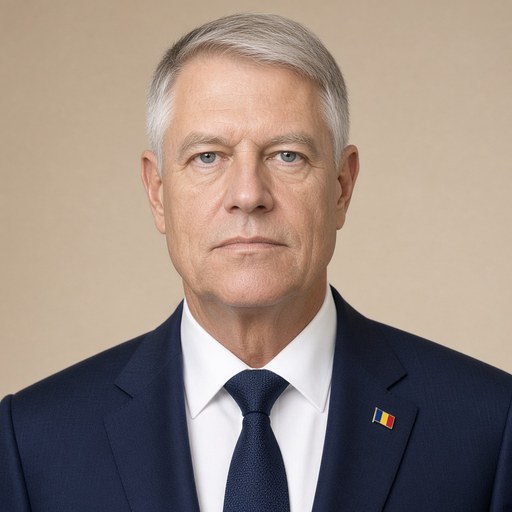
The speech of the President of Romania, Mr. Klaus Iohannis, on the occasion of the decoration ceremony for some survivors of the Auschwitz-Birkenau concentration camps.
 Klaus Iohannis · President of Romania
- Context
- Iohannis addressed a decoration ceremony in Romania on January 27, 2015, honoring Holocaust survivors on the 70th anniversary of the liberation of Auschwitz-Birkenau.
- Main themes
- Holocaust remembrance, decoration of Auschwitz-Birkenau survivors, Romanian responsibility for the Holocaust, anti-Semitism and discrimination, memory and historical truth, Antonescu regime deportations, education and memorialization, resistance and solidarity, combating intolerance and xenophobia
- Duration
- ~4 min
- Words
- 478
- Sentences
- 28
- Readability
- 50
- Grade
- 10.5
- Syntax
- 2.90
- Vocabulary
- 2.31
Translated from Romanian
The broad sphere of national life a sentence belongs to. Every sentence has an Arena, so it is the denominator the other indices are read against.
Other28 sentences in 8 paragraphs
“Ladies and gentlemen, Honored guests, I thank you, ladies, Holocaust survivors, for being here today. Please accept this modest recognition of the suffering you endured alongside your families.
This decoration ceremony takes place exactly 70 years after the liberation of the concentration camps at Auschwitz-Birkenau. Through it, we pay a solemn tribute to all the victims of the Holocaust during World War II. The day of the liberation of this terrible extermination complex is dedicated to the memory of suffering, the voices of resistance, and the concern for remembrance.
However, today’s moment also means one thing. It means that we, as a nation, oppose the deliberate ignorance of the past. It means that we do not shy away from discussing guilt and responsibility openly. Silence in the face of horrors, ignorance in the face of discrimination, acceptance in the face of crimes, indifference in the face of hatred have also made genocide possible.
Deported to Transnistria by the Antonescu regime or to Auschwitz by the Horthy authorities, the Jews from these places were victims of racial, anti-Semitic, discriminatory, and criminal policies. Convoys of men, women, children, and the elderly left villages and cities to be deported. Thousands of innocent souls disappeared. And with them, the civic spirit and moral duty also vanished.
Through all it has done in the last decade regarding the commemoration and knowledge of the Holocaust, the Romanian state has internalized the lesson of the past. It has fully understood the need to act against forgetting and any forms of intolerance, discrimination, racism, anti-Semitism, and xenophobia.
Ladies and gentlemen, Through all my efforts in this direction, I will seek, as President of Romania, to pursue a sacred mission: to defend the memory of the Holocaust victims and to honor historical truth. A nation cannot have a future without respecting and knowing its past. The Romanian state, through its institutions, will continue concrete efforts to preserve the memory of the Holocaust. Educational measures in the field can be considered, as well as symbolic ones, such as the arrangement or maintenance of memorial spaces.
In conclusion, I would like to add that, in those troubled times of confusion and despair, there were Romanians, and not a few, known or unknown today, who showed human solidarity. They risked their freedom and lives to save Jewish or Roma fellow beings from death. Let us also turn our thoughts to them. Their courageous gestures represent an example for us. I would very much like that, in the coming years, alongside the commemoration of the victims, we try to learn about as many of the brave Romanian citizens who made such gestures during the war.
Finally, I ask you all to pray in silence for those who have disappeared! I ask you to observe a moment of reflection! May the memory of the victims remain eternal in our hearts! Thank you!”
The original Romanian. The tags above are read on the English translation's sentences.
„Doamnelor și domnilor, Onorată asistență, Vă mulțumesc dumneavoastră, doamnelor, supraviețuitoare ale Holocaustului, că sunteți, astăzi, aici. Vă rog să acceptați această modestă recunoaștere a suferințelor pe care le-ați îndurat alături de familiile dumneavoastră. Această ceremonie de decorare are loc la exact 70 de ani de la eliberarea lagărelor de concentrare de la Auschwitz-Birkenau. Prin intermediul ei aducem un pios omagiu tuturor victimelor Holocaustului din cel de-Al Doilea Război Mondial. Ziua eliberării acestui teribil complex de exterminare este dedicată memoriei suferinței, vocilor rezistenței și preocupării pentru aducere-aminte. Momentul de astăzi mai înseamnă, însă, un lucru. Înseamnă că noi, ca națiune, ne opunem ignorării deliberate a trecutului. Înseamnă că nu ne ferim să discutăm deschis despre culpabilitate și responsabilitate. Tăcerea în fața ororilor, igoranța în fața discriminării, acceptarea în fața crimelor, nepăsarea în fața urii au făcut și ele posibil genocidul. Deportați în Transnistria de către regimul antonescian ori la Auschwitz de către autoritățile horthyste, evreii de pe aceste locuri au fost victime ale politicilor rasiale, antisemite, discriminatorii și criminale. Convoaie de bărbați, femei, copii și bătrâni au părăsit satele și orașele pentru a fi deportați. Mii de suflete nevinovate au dispărut. Și odată cu ele și spiritul civic ori datoria morală. Prin tot ce a făcut în ultimul deceniu în privința comemorării și cunoașterii Holocaustului, statul român și-a însușit lecția trecutului. A înțeles pe deplin să acționeze împotriva uitării și a oricăror forme ale intoleranței, discriminării, rasismului, antisemitismului și xenofobiei. Doamnelor și domnilor, Prin toate demersurile mele în această direcție voi căuta, în calitate de Președinte al României, să urmăresc o misiune sacră: să apăr memoria victimelor Holocaustului și să onorez adevărul istoric. O națiune nu poate avea viitor fără a-și respecta și cunoaște trecutul. Statul român, prin instituțiile sale, va continua eforturile concrete pentru prezervarea memoriei Holocaustului. Se pot gândi măsuri educative în domeniu, dar și simbolice, precum amenajarea ori întreținerea spațiilor memoriale. În încheiere, aș vrea să adaug că, în acele vremuri tulburi de derută și disperare, au existat români, și nu puțini, cunoscuți sau nu astăzi, care au dat dovadă de solidaritate umană. Ei și-au riscat libertatea și viața, pentru a salva de la moarte semeni evrei sau romi. Să ne îndreptăm gândul și către ei. Gesturile lor curajoase reprezintă pentru noi un exemplu. Mi-aș dori mult ca, în anii ce vin, în paralel cu comemorarea victimelor, să încercăm să cunoaștem cât mai mulți dintre bravii cetățeni români care au făcut astfel de gesturi în timpul războiului. În final, vă cer tuturor să ne rugăm în tăcere pentru cei dispăruți! Vă rog să păstrăm un moment de reculegere! Fie ca amintirea victimelor să rămână veșnică în inimile noastre! Vă mulțumesc!”