




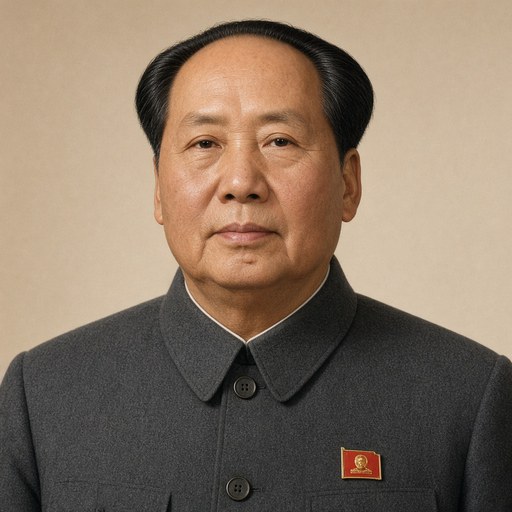

- Context
- Mao addressed a Party meeting on August 12, 1953, concluding discussion of Bo Yibo's new tax system, criticising bourgeois ideology and decentralism within the Party and urging collective leadership, modesty, learning and tenacity.
- Main themes
- Criticism of Bo Yibo's new tax system, bourgeois ideology within the Party, Right opportunism, general line for the transition period, state-owned economy as leading sector, cooperativisation of agriculture, alliance of workers and peasants, collective leadership and opposition to decentralism, subjectivism, restriction of the capitalist economy, modesty and learning, rules against personality cult
- Duration
- ~28 min
- Words
- 3,343
- Sentences
- 163
- Readability
- 42
- Grade
- 12.5
- Syntax
- 2.87
- Vocabulary
- 2.37
Translated from Chinese Source: GitHub qinglee/maoxuan (毛泽东选集) ↗
The broad sphere of national life a sentence belongs to. Every sentence has an Arena, so it is the denominator the other indices are read against.
Other163 sentences in 25 paragraphs
This meeting has gone very well, and Premier Zhou's concluding remarks were also well made.
We can now see that, since the "Three-Anti" and "Five-Anti" campaigns, there have been two kinds of errors in the Party. One kind is errors of a general nature, such as the "five excesses", which everyone may commit and which may be committed at any time. The error of the "five excesses" can also turn into the error of the "five deficiencies". The other kind is errors of principle, such as the capitalist tendency. This is the reflection of bourgeois ideology within the Party, a question of standpoint that runs counter to Marxism-Leninism.
The "Three-Anti" and "Five-Anti" campaigns dealt a heavy blow to bourgeois ideology within the Party. But at that time, the basic blow was dealt only to bourgeois ideology in the form of corruption and waste, while the bourgeois ideology reflected in questions of line was not resolved. This bourgeois ideology exists not only in financial and economic work, but also in political and legal work, cultural and educational work, and other work; it exists among comrades at the centre and among comrades in the localities alike.
As for the errors in financial and economic work, from last December, when Comrade Bo Yibo put forward the new tax system of "equality between public and private", right up to this meeting, they have been subjected to serious criticism. Had the new tax system been carried further, it would inevitably have departed from Marxism-Leninism, departed from the Party's general line for the transition period, and developed towards capitalism.
In the transition period, are we to develop towards socialism or towards capitalism? According to the Party's general line, we are to make the transition to socialism. This will require a fairly long period of struggle. The error of the new tax system is different from the case of Zhang Zishan; it is an ideological question, a question of departing from the Party's general line. We must launch a struggle within the Party against bourgeois ideology. As far as the state of thinking is concerned, there are three kinds of people in the Party: some comrades are firm and have not wavered, and their thinking is Marxist-Leninist; some comrades are basically Marxist-Leninist but have some non-Marxist-Leninist ideas mixed in; and a minority are no good, their thinking is non-Marxist-Leninist. In the criticism of Bo Yibo's erroneous thinking, some have said that Bo Yibo's error is petty-bourgeois individualism. This is not appropriate. What should mainly be criticised is his bourgeois ideology, which favours capitalism and is unfavourable to socialism. Only such criticism is correct. We have said that the "Left" opportunist errors were the reflection within the Party of petty-bourgeois fanaticism, and that they occurred in periods when we had broken with the bourgeoisie. In the three periods of cooperation with the bourgeoisie, that is, the period of the first Kuomintang-Communist cooperation, the period of the War of Resistance Against Japan, and the present period, bourgeois ideology influenced a section of people in the Party, and they wavered. It was in these circumstances that Bo Yibo committed his error.
Bo Yibo's error is not an isolated one. It exists not only at the centre but also at the levels of the greater regions and of the provinces and municipalities. Each greater region and each province and municipality should hold a meeting to examine its own work in accordance with the resolution of the Second Plenary Session of the Seventh Central Committee and the conclusions of this meeting, and thereby educate the cadres.
Recently I made a trip to Wuhan and Nanjing and learned a great deal about the situation; it was very beneficial. In Beijing I hear practically nothing, and I shall go out on trips again in the future. The leading organs of the centre are a factory that manufactures ideological products. If they do not understand the situation below, and have neither raw materials nor semi-finished goods, how can they manufacture products? Some things have already been made into finished products in the localities, and the leading organs of the centre can then popularise them throughout the country. For example, both the old "Three-Anti" and the new "Three-Anti" were first undertaken in the localities. The ministries of the centre issue directives at random. What the central ministries send out ought to be top-quality goods, but now they are substandard goods, and a large quantity of the products have no use value at all and are scrapped in large batches. The leading organs of the greater regions and of the provinces and municipalities are local factories manufacturing ideological products, and they too must turn out top-quality goods.
Bo Yibo's error is a reflection of bourgeois ideology. It favours capitalism and is unfavourable to socialism and semi-socialism, and it violates the resolution of the Second Plenary Session of the Seventh Central Committee.
On whom do we rely? On the working class or on the bourgeoisie? The resolution of the Second Plenary Session of the Seventh Central Committee made this clear long ago: "We must rely wholeheartedly on the working class." The resolution also said that on the question of restoring and developing production, it must be established that state-owned industrial production comes first, private industrial production second, and handicraft production third. The focus is industry, and the focus within industry is heavy industry, which is state-owned. Of the five economic sectors in our country at present, the state-owned economy is the leading sector. Capitalist industry and commerce must gradually be guided towards state capitalism.
The resolution of the Second Plenary Session says that the lives of the workers and the labouring people are to be improved on the basis of developing production. People with bourgeois ideology pay no attention to this, and Bo Yibo is their representative. Our focus must be placed on developing production, but both developing production and improving the people's lives must be taken into account. Welfare must not go unpursued, nor be pursued too much; not pursuing it will not do. At present there are still quite a few cadres who give no thought to the people's livelihood, who care nothing whether the people live or die. In Guizhou a regiment once seized large amounts of the peasants' farmland; this was a serious infringement of the people's interests. It is wrong to disregard the people's livelihood, but the focus must still be placed on production and construction.
On the question of utilising, restricting and transforming the capitalist economy, the Second Plenary Session also spoke very clearly. The resolution says that the private capitalist economy must be restricted in terms of its scope of activity, tax policy, market prices, labour conditions and so on, and must not be allowed to run rampant. The relationship between the socialist economy and the capitalist economy is one of leader and led. Restriction and resistance to restriction are the main form of class struggle within the new-democratic state. Now the new tax system speaks of "equality between public and private", and this violates the line that the state-owned economy is the leading sector.
On the question of cooperativising the individual agricultural and handicraft economies, the resolution of the Second Plenary Session states plainly: "These cooperatives are collective economic organisations of the labouring masses, based on private ownership and under the direction of the state power led by the proletariat. The cultural backwardness of the Chinese people and their lack of a tradition of cooperatives make the spread and development of our cooperative movement very difficult; but cooperatives can be organised, they must be organised, they must be spread and developed. With a state-owned economy alone and no cooperative economy, it would be impossible for us to lead the individual economy of the labouring people step by step towards collectivisation, impossible to develop from a new-democratic state into a future socialist state, and impossible to consolidate the leadership of the proletariat in the state power." This is a resolution of March 1949, yet quite a number of comrades pay no attention to it and treat it as news, when in fact it is old news. Bo Yibo wrote an article entitled "Strengthen the Party's Political Work in the Countryside", in which he said that the road of individual peasants advancing through mutual aid and cooperation to collectivisation "is a complete fantasy, because the present mutual-aid teams are based on the individual economy, and on such a basis they cannot gradually develop into collective farms, still less can agriculture be collectivised on an overall scale by way of such a road." This runs counter to the Party's resolution.
There are now two united fronts, two alliances. One is the alliance of the working class and the peasantry, which is the foundation. The other is the alliance of the working class and the national bourgeoisie. The peasants are labourers, not exploiters, and the alliance of the working class and the peasantry is a long-term one. But there are contradictions between the working class and the peasantry. We must, in accordance with the principle of voluntariness, guide the peasants step by step from individual ownership to collective ownership. In the future there will also be contradictions between state ownership and collective ownership. These are all non-antagonistic contradictions. The contradiction between the working class and the bourgeoisie is an antagonistic contradiction.
The bourgeoisie will certainly try to corrupt people and attack them with sugar-coated bullets. The bourgeoisie's sugar-coated bullets are both material and spiritual. A spiritual sugar-coated bullet has hit one target, and that is Bo Yibo. His error was the result of being influenced by bourgeois ideology. When the editorial promoting the new tax system came out, the bourgeoisie clapped their hands and Bo Yibo was delighted. Concerning the new tax system, he consulted the bourgeoisie in advance and concluded a gentlemen's agreement with them, yet did not report to the Central Committee. At the time the Ministry of Commerce and the All-China Federation of Supply and Marketing Cooperatives did not approve of it, and the Ministry of Light Industry was also dissatisfied. Of the 1,100,000 cadres and staff and workers in the finance, economy and trade system, the overwhelming majority are good and a small number are not good. These bad people can in turn be divided into two parts: one part are counter-revolutionaries, who should be purged; the other part are revolutionaries who have made mistakes, including Party members and non-Party personnel, who should be remoulded through criticism and education.
To ensure the success of the socialist cause, we must, throughout the Party, and first of all in the Party, government, army and mass-organisation leading organs at the three levels of the centre, the greater regions and the provinces and municipalities, oppose the erroneous tendency of Right opportunism, that is, oppose bourgeois ideology within the Party. Each greater region and each province and municipality should, at an appropriate time, convene meetings attended by prefectural Party committee secretaries and commissioners, carry out criticism and discussion, and explain clearly the question of the socialist road and the capitalist road.
To ensure the success of the socialist cause, we must practise collective leadership, oppose decentralism and oppose subjectivism.
We must now oppose subjectivism, both the subjectivism of blind rash advance and conservative subjectivism. In the past, in the period of the new-democratic revolution, we committed errors of subjectivism, some Right and some "Left". Chen Duxiu and Zhang Guotao were Right; Wang Ming was first "Left" and then Right. During the Yan'an Rectification, we concentrated on opposing dogmatism and opposed empiricism in passing; both are subjectivism. If theory is not integrated with practice, the revolution cannot be victorious. The Rectification solved this problem. The policy we adopted of "learning from past mistakes to avoid future ones, and curing the sickness to save the patient" was correct. The resolute and thoroughgoing criticism of Bo Yibo on this occasion is for the purpose of enabling those who have made mistakes to correct them, and of ensuring the victorious progress of socialism. Now is the period of the socialist revolution, and there is subjectivism too. Impetuous rash advance and conservatism both mean not acting in accordance with actual conditions; both are subjectivism. Unless subjectivism is eliminated, revolution and construction will not succeed. In the period of the democratic revolution, the errors of subjectivism were resolved by the method of rectification, which united the comrades in the whole Party who carried out the correct line with the comrades who had made mistakes; everyone set out from Yan'an for the various battlefields, the whole Party pulled together, and we won nationwide victory. Now the cadres are more mature and their level has risen. It is to be hoped that it will not take a very long time to basically eliminate subjectivism in leadership work, and that we will strive to bring the subjective into line with the objective.
The key to solving all these problems is to consolidate collective leadership and oppose decentralism. We have always opposed decentralism. On 2 February 1941, the Central Committee issued a directive to all Central Bureaus and all commanders, stipulating that all circular telegrams, declarations and internal directives of national significance must first be submitted to the Central Committee for approval. In May, the Central Committee issued a directive on unifying the external propaganda of the base areas. On 1 July of the same year, on the occasion of commemorating the twentieth anniversary of the founding of the Party, the Central Committee issued the decision on strengthening Party spirit, with emphasis on opposing decentralism. In 1948, the Central Committee issued even more directives against decentralism. On 7 January, the Central Committee issued the directive on establishing a system of reports; in March, it issued a supplementary directive. In September of the same year, a meeting of the Political Bureau adopted a resolution on the system of requesting instructions from and reporting to the Central Committee. On 20 September, the Central Committee made the decision on improving the Party committee system. On 10 March 1953, in order to avert the danger of government departments breaking away from the leadership of the Party Central Committee, the Central Committee made the decision on strengthening leadership over government work.
Centralisation and decentralisation are constantly in contradiction. Since we entered the cities, decentralism has grown. To resolve this contradiction, all major and important questions must first be discussed and decided by the Party committee and then carried out by the government. For example, big questions such as erecting the Monument to the People's Heroes at Tiananmen and demolishing the city walls of Beijing were decided by the Central Committee and carried out by the government. Secondary questions can be handled by the leading Party groups of the government departments; it will not do for the Central Committee to take everything on itself. Opposing decentralism is what wins people's hearts most, because the majority of comrades in the Party are concerned about collective leadership. With regard to their attitude towards collective leadership, there are three kinds of people in the Party. The first kind are concerned about collective leadership. The second kind are not very concerned; they think it best that the Party committee should not supervise them, though it is acceptable if it does. "Best not to supervise" shows a lack of Party spirit; "acceptable if it does" shows there is still some Party spirit. We must seize on their "acceptable if it does", and their lack of Party spirit must be dealt with through persuasion and education. Otherwise each ministry will go its own way, the Central Committee will be unable to control the ministries, ministers will be unable to control bureau directors, division chiefs will be unable to control section chiefs, nobody will be able to control anybody, and then there will be ever so many kingdoms, eight hundred feudal lords. The third kind are a tiny minority, who resolutely oppose collective leadership. They think it best never to be supervised at all. The decision on strengthening Party spirit emphasised that the discipline of democratic centralism must be strictly enforced: the minority is subordinate to the majority, the individual is subordinate to the organisation, the lower level is subordinate to the higher level, and the entire Party is subordinate to the Central Committee (this is the majority being subordinate to a minority, but this minority represents the majority). If you have opinions, please raise them; undermining the unity of the Party is the most shameless thing. Only by relying on collective political experience and collective wisdom can we ensure the correct leadership of the Party and the state and ensure the unshakeable unity of the Party's ranks.
At this meeting, Liu Shaoqi said he had made some small errors, and Comrade Xiaoping also said he had made some small errors. Whoever it may be, anyone who makes mistakes must make a self-criticism, must be subject to the supervision of the Party and to the leadership of the Party committees at every level; this is the main condition for fulfilling the Party's tasks. There are many people across the country who live off a state of anarchy. Bo Yibo is one such person. He has become somewhat degenerate politically and ideologically, and criticising him is absolutely necessary.
A final point: we must promote the spirit of modesty, of learning and of tenacity.
We must be tenacious. Take the War to Resist US Aggression and Aid Korea: we hit US imperialism hard and made it quite afraid. This is favourable to our construction; it is an important condition for our construction. Most important of all, our army has been tempered: the soldiers are brave and the cadres are wise. Of course, we lost people, spent money and paid a price. But we are simply not afraid of sacrifice: either we do not do a thing, or once we do it we carry it through to the end. When Hu Zongnan attacked the Shaanxi-Gansu-Ningxia Border Region, we were left with only one county town, but we did not withdraw from the Border Region. If we had to eat tree leaves, we ate tree leaves. We must have that fierce determination.
We must learn, not be arrogant, and not look down on others. A goose egg looking down on a hen's egg, ferrous metals looking down on rare metals: this attitude of looking down on others is unscientific. China is a big country and the Party is a big party, but there is no reason to look down on small countries and small parties. We must always maintain an attitude of learning towards the peoples of fraternal countries, and have a genuinely internationalist spirit. In foreign trade, some people are arrogant and conceited; this is wrong. Education must be carried out throughout the Party, especially among personnel going abroad. We must study hard and work hard, and within fifteen years or a longer period basically complete socialist industrialisation and socialist transformation. By then our country will be strong, but we must still be modest and always maintain an attitude of learning.
The Second Plenary Session of the Seventh Central Committee made several rules that were not written into the resolution. First: no birthday celebrations. Celebrating birthdays will not make people live longer. The main thing is to do the work well. Second: no giving of gifts. At least not within the Party. Third: less proposing of toasts. On certain occasions it is all right. Fourth: less applause. It should not be prohibited, and when it comes from the enthusiasm of the masses, cold water should not be poured on it either. Fifth: no naming of places after people. Sixth: do not place Chinese comrades on a par with Marx, Engels, Lenin and Stalin. Ours is a relationship of pupil to teacher, and so it should be. Observing these rules is an attitude of modesty.
In short, we must persist in the spirit of modesty, learning and tenacity, persist in the system of collective leadership, complete the socialist transformation, and achieve the victory of socialism.
The original Chinese. The tags above are read on the English translation's sentences.
这次会议开得很好,周总理的结论也作得好。
现在我们可以看出,在“三反”“五反”运动之后,党内有两种性质的错误。一种是一般性的错误,如“五多”,大家都可能犯,什么时候都可能犯。“五多”的错误也可以变成“五少”的错误。另一种是原则性的错误,如资本主义倾向。这是资产阶级思想在党内的反映,是违背马克思列宁主义的立场问题。
“三反”“五反”运动,是对党内资产阶级思想的很大打击。但是,当时仅仅给了贪污浪费这方面的资产阶级思想以基本打击,而对在路线问题上反映出来的资产阶级思想并没有解决。这种资产阶级思想,不仅财经工作中有,而且政法、文教和其它工作中也有,中央同志中和地方同志中都有。
对于财经工作中的错误,从去年十二月薄一波同志提出“公私一律平等”的新税制开始,到这次会议,都给了严肃的批评。新税制发展下去,势必离开马克思列宁主义,离开党在过渡时期的总路线,向资本主义发展。
过渡时期,是向社会主义发展,还是向资本主义发展?按照党的总路线,是要过渡到社会主义。这是要经过相当长期的斗争的。新税制的错误跟张子善的问题不同,是思想问题,是离开了党的总路线的问题。要在党内开展反对资产阶级思想的斗争。就思想状况来说,党内有三种人:有的同志是坚定的,没有动摇的,是马克思列宁主义思想;有一部分同志,基本上是马克思列宁主义,但夹杂着一些非马克思列宁主义的思想;少数人是不好的,是非马克思列宁主义思想。在对薄一波错误思想的批判中,有人说,薄一波的错误是小资产阶级个人主义,这是不妥当的。主要应当批判他有利于资本主义,不利于社会主义的资产阶级思想。这样的批判才是对的。我们说过,“左”倾机会主义错误,是小资产阶级狂热性在党内的反映,那是在和资产阶级决裂时期发生的。在和资产阶级合作的三个时期,就是第一次国共合作时期、抗日战争时期和目前这个时期,都是资产阶级思想影响了党内一部分人,他们动摇了。薄一波的错误,就是在这种情况下犯的。
薄一波的错误,并不是孤立的,不仅在中央有,在大区和省市两级也有。各大区和省市要开一次会,根据七届二中全会的决议和这次会议的结论,检查自己的工作,借以教育干部。
最近,我去武汉、南京走了一趟,知道了很多情况,很有益处。我在北京,差不多听不到什么,以后还要出外走走。中央领导机关是一个制造思想产品的工厂,如果不了解下情,没有原料,也没有半成品,怎么能够制造出产品?有的东西,地方上已经制成成品,中央领导机关就可以在全国加以推广。比如老“三反”和新“三反”,都是地方上先搞的。中央各部乱发指示。本来中央各部发出的东西,应当是上品,现在是次品,并且有大量产品根本没有使用价值,大批报废。大区和省市的领导机关,是制造思想产品的地方工厂,也要出上品。
薄一波的错误,是资产阶级思想的反映。它有利于资本主义,不利于社会主义和半社会主义,违背了七届二中全会的决议。
我们依靠谁?是依靠工人阶级,还是依靠资产阶级?七届二中全会的决议早已讲清楚了:“必须全心全意地依靠工人阶级”。决议还说,在恢复和发展生产的问题上,必须确定:国营工业生产第一,私营工业生产第二,手工业生产第三。重点是工业,工业中的重点是重工业,这是国营的。在我国目前的五种经济成份中,国营经济是领导成份。资本主义工商业要逐渐引向国家资本主义。
二中全会决议讲,在发展生产的基础上,改善工人和劳动人民的生活。有资产阶级思想的人,不注意这一点,薄一波就是代表。我们的重点必须放在发展生产上,但发展生产和改善人民生活二者必须兼顾。福利不可不谋,不可多谋,不谋不行。现在,不顾人民生活,不顾人民死活的干部还不少。贵州有一个团曾经占了农民的大量田地,这是严重侵犯人民利益的行为。不顾人民生活是不对的,但是重点还是要放在生产建设上。
关于利用、限制和改造资本主义经济的问题,二中全会也讲得很清楚。决议上说,对私人资本主义经济,要从活动范围、税收政策、市场价格、劳动条件等方面加以限制,不能任其泛滥。社会主义经济和资本主义经济是领导和被领导的关系。限制和反限制,是新民主主义国家内部阶级斗争的主要形式。现在,新税制讲“公私一律平等”,这就违背了国营经济是领导成份的路线。
关于个体的农业经济和手工业经济实行合作化的问题,二中全会决议分明说:“这种合作社是以私有制为基础的在无产阶级领导的国家政权管理之下的劳动人民群众的集体经济组织。中国人民的文化落后和没有合作社传统,使得我们的合作社运动的推广和发展大感困难;但是可以组织,必须组织,必须推广和发展。单有国营经济而没有合作社经济,我们就不可能领导劳动人民的个体经济逐步地走上集体化,就不可能由新民主主义国家发展到将来的社会主义国家,就不可能巩固无产阶级在国家政权中的领导权。”这是一九四九年三月的决议,但是相当多的同志不注意,当作新闻,其实是旧闻。薄一波写了《加强党在农村中的政治工作》的文章,他说:个体农民经过互助合作到集体化的道路,“是一种完全的空想,因为目前的互助组是以个体经济为基础的,它不能在这样的基础上逐渐发展到集体农场,更不能经由这样的道路在全体规模上使农业集体化。”这是违反党的决议的。
现在有两种统一战线,两种联盟。一种是工人阶级和农民的联盟,这是基础。一种是工人阶级和民族资产阶级的联盟。农民是劳动者,不是剥削者,工人阶级和农民的联盟是长期的。但是,工人阶级和农民是有矛盾的。我们应当按照自愿的原则,把农民由个体所有制逐步引导到集体所有制。将来国有制和集体所有制也是有矛盾的。这都是非对抗性的矛盾。工人阶级和资产阶级的矛盾,是对抗性的矛盾。
资产阶级一定要腐蚀人,用糖衣炮弹打人。资产阶级的糖衣炮弹,有物质的,也有精神的。精神的糖衣炮弹打中了一个靶子,就是薄一波。他的错误,是受了资产阶级思想的影响。宣传新税制的社论,资产阶级拍掌,薄一波高兴了。关于新税制,他事先征求了资产阶级的意见,和资产阶级订了君子协定,却没有向中央报告。当时商业部、供销合作总社不赞成,轻工业部也不满意。财经贸易系统的一百一十万干部和职工,绝大多数是好的,有少数人是不好的。这些不好的人又可以分为两部分:一部分是反革命分子,应当清除;一部分是犯错误的革命者,包括党员和非党工作人员,应当用批评教育的方法来改造他们。
为了保证社会主义事业的成功,必须在全党,首先在中央、大区和省市这三级党政军民领导机关中,反对右倾机会主义的错误倾向,即反对党内的资产阶级思想。各大区和省市要在适当时机召集有地委书记、专员参加的会议,展开批评讨论,讲清楚社会主义道路和资本主义道路的问题。
为了保证社会主义事业的成功,必须实行集体领导,反对分散主义,反对主观主义。
我们现在要反对主观主义,既反对盲目冒进的主观主义,也反对保守的主观主义。过去,在新民主主义革命时期,犯过主观主义的错误,有右的也有“左”的。陈独秀、张国焘是右的,王明是先“左”后右。延安整风的时候,集中反了教条主义,附带反了经验主义,二者都是主观主义。理论与实际不结合,革命就不能胜利。整风解决了这个问题。我们采取惩前毖后、治病救人的方针,是正确的。这次对薄一波实行坚决的彻底的批评,是为了使犯错误的人改正错误,为了保证社会主义的胜利进行。现在是社会主义革命时期,也有主观主义。急躁冒进或保守,都是不按实际情况办事,都是主观主义。不反掉主观主义,革命和建设就不会成功。民主革命时期,对主观主义的错误,用整风的办法解决了,团结了全党执行正确路线的同志和犯过错误的同志,大家从延安出发,奔赴各个战场,全党一个劲,取得了全国胜利。现在,干部比较成熟了,水平提高了,希望不要用很长的时期,基本上把领导工作中的主观主义反掉,努力使主观与客观相适合。
所有这些问题的解决,关键是巩固集体领导,反对分散主义。我们历来是反对分散主义的。一九四一年二月二日,中央给各中央局、各将领发出指示,规定凡有全国意义的通电、宣言和对内指示,必须事先请示中央。五月间,中央发布了关于统一各根据地对外宣传的指示。同年七月一日,在纪念党成立二十周年的时候,中央发布了关于增强党性的决定,着重反对分散主义。一九四八年,中央发的反对分散主义的指示更多了。一月七日,中央发出了关于建立报告制度的指示;三月,又发了补充指示。同年九月,政治局会议作了关于向中央请示报告制度的决议。九月二十日,中央作了关于健全党委制的决定。一九五三年三月十日,为了避免政府各部门脱离党中央领导的危险,中央作了关于加强对政府工作领导的决定。
集中与分散是经常矛盾的。进城以来,分散主义有发展。为了解决这个矛盾,一切主要的和重要的问题,都要先由党委讨论决定,再由政府执行。比如,在天安门建立人民英雄纪念碑,拆除北京城墙这些大问题,就是经中央决定,由政府执行的。次要的问题,可以由政府部门的党组去办,一切问题都由中央包下来就不行。反对分散主义,是最得人心的,因为党内大多数同志是关心集体领导的。对待集体领导的态度,党内有三种人:第一种人关心集体领导。第二种人不甚关心,认为党委对他最好不管,管也可以。“最好不管”是缺乏党性,“管也可以”是还有党性。我们要抓他“管也可以”,对缺乏党性要说服教育。不然,各部都各搞各的,中央管不了各部,部长管不了司局长,处长管不了科长,谁也管不了谁,于是王国甚多,八百诸侯。第三种人是极少数,他们坚决反对集体领导。认为最好永远不管。在关于增强党性的决定中,强调要严格实行民主集中制的纪律,少数服从多数,个人服从组织,下级服从上级,全党服从中央(这是多数服从少数,这个少数是代表多数的)。有意见请提,破坏党的团结是最没有脸的。只有靠集体的政治经验和集体的智慧,才能保证党和国家的正确领导,保证党的队伍的不可动摇的团结一致。
在这次会议上,刘少奇说有那么一点错误,小平同志也说有那么一点错误。无论任何人,犯了错误都要检讨,都要受党的监督,受各级党委的领导,这是完成党的任务的主要条件。全国有很多人,是靠无政府状态吃饭。薄一波就是这样的人。他在政治上思想上有些腐化,批评他是完全必要的。
最后一点,要提倡谦虚、学习和坚忍的精神。
要坚忍。如抗美援朝,我们打痛了美帝国主义,打得它相当怕。这对我们建设有利,是我们建设的重要条件。最重要的是,我们的军队受到了锻炼,兵勇、干智。当然,我们牺牲了人,用了钱,付出了代价。但是我们就是不怕牺牲,不干则已,一干就干到底。胡宗南进攻陕甘宁边区,我们的县城只剩下一个,但我们并没有退出边区,吃树叶就吃树叶,就是要有一股狠劲。
要学习,不要骄傲,不能看不起人。鹅蛋看不起鸡蛋,黑色金属看不起稀有金属,这种看不起人的态度是不科学的。中国是大国,党是大党,也没有理由看不起小国小党。对兄弟国家人民要永远保持学习的态度,要有真正的国际主义精神。在对外贸易方面,有些人骄傲,妄自尊大,这是不对的。要在全党特别要在出国人员中进行教育。要苦学苦干,在十五年或者更长的时间内,基本上完成社会主义工业化和社会主义改造。那时,我国强大了,也要谦虚,永远保持学习的态度。
七届二中全会有几条规定没有写在决议里面。一曰不作寿。作寿不会使人长寿。主要是要把工作做好。二曰不送礼。至少党内不要送。三曰少敬酒。一定场合可以。四曰少拍掌。不要禁止,出于群众热情,也不泼冷水。五曰不以人名作地名。六曰不要把中国同志和马、恩、列、斯平列。这是学生和先生的关系,应当如此。遵守这些规定,就是谦虚态度。
总之,要坚持谦虚、学习和坚忍的精神,坚持集体领导的制度,完成社会主义的改造,达到社会主义的胜利。