




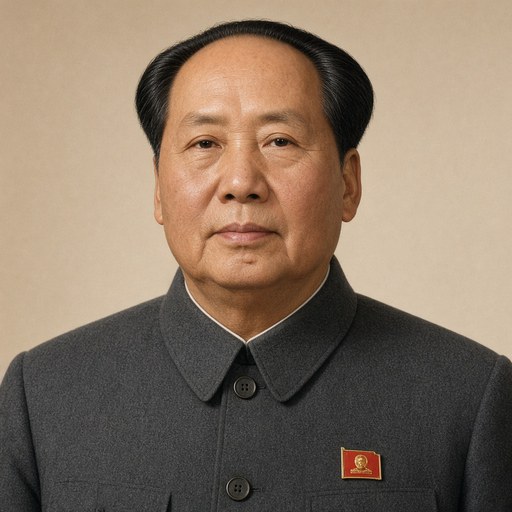
Speech at the Enlarged Twelfth Plenary Session of the Eighth Central Committee of the Chinese Communist Party
 Mao Zedong · Chairman of the Central Committee of the Chinese Communist Party
- Context
- Mao addressed the enlarged Twelfth Plenary Session of the Eighth Central Committee of the Chinese Communist Party, speaking at the opening on October 13, 1968 and the closing on October 31, 1968, on the Cultural Revolution and the treatment of purged cadres.
- Main themes
- Assessment of two years of the Cultural Revolution, fate of purged senior cadres, Deng Xiaoping's errors and possible indoor work, February Adverse Current, mass criticism and cleansing the class ranks, policy of steady, accurate and ruthless, ban on beating people and the jet plane, role and re-education of intellectuals, closure of universities for two years, military academies and sending the army and workers in, cutting provincial staff and sending cadres to the countryside, Ninth Congress delegates
- Duration
- ~25 min
- Words
- 2,999
- Sentences
- 221
- Readability
- 69
- Grade
- 6.9
- Syntax
- 2.68
- Vocabulary
- 2.11
Translated from Chinese Source: GitHub qinglee/maoxuan (毛泽东选集) ↗
The broad sphere of national life a sentence belongs to. Every sentence has an Arena, so it is the denominator the other indices are read against.
Other221 sentences in 35 paragraphs
Speech at the Opening Session, 13 October 1968
(I)
The meeting will probably run seven to ten days. Let's think about what questions need to be raised. The question of the situation: one domestic, one international. Domestically, we need to sum up the work of the two-plus years since the last plenary session. On two years of the Cultural Revolution there are, after all, only two views: one, that it has been good, basically correct; two, that some people say, not necessarily. At the Eleventh Plenum I already said, and at the October work conference I also gave notice: don't assume that everything the meeting passes can be carried out; raising your hand at a meeting is one thing, really having disagreements is another. Later it turned out that people still did not understand, and some people ran into trouble.
There is a comrade called Zhang Dingcheng; no problem of being a traitor, a spy or a counter-revolutionary has been found with him either. Why didn't he come to the meeting? What is the reason? Old Deng, you know him very well. (Zhou Enlai: He took part in the Dalian meeting. Gao Gang, Rao Shushi, Xu Haidong, the four of them. Xu Haidong and Gao Gang wept in each other's arms, saying the Centre had treated him unfairly, that without his victories in northern Shaanxi the Centre would not have been able to keep its footing. This was exactly when Gao Gang's appointment as vice-chairman was announced. He formed an alliance and had dealings with Gao Gang; it deserves investigation.)
Tan Qilong of Shandong joined the Red Army as a boy. He has no other problem, only errors in his work. Shandong does not forgive him, and the problem still cannot be resolved now. Shandong wants to drag him back to struggle against him; we won't allow it. (Zhou Enlai: He has been dragged back; he is in Jinan now.) The comrades from Shandong should do persuasion work.
Zhang Tixue of Hubei is a good comrade who made mistakes. He went back to Hubei and made a good self-criticism, and the masses forgave him. The masses all welcome him. He still wanted to make more self-criticism, and the masses said there's no need for any more. Wang Renzhong is a hidden traitor, a Kuomintang man. Tao Zhu also has problems in his history.
Wang Yanchun of Hunan, this man is finished. Deng Xiaoping—no problem has yet been found in his history, only that business of him deserting from the Seventh Army. (Zhang Yunyi: When he was political commissar of the Red Seventh Army, when the situation became tense, he used the pretext of going to the Centre to report on work and deserted at Chongyi. Comrade Ye Jizhuang also exposed this before he died.)
The main problem is still that after coming to Beijing he set up an independent kingdom. He wasn't convinced; he says he didn't grab power, but in fact he was the one fanning the goose-feather fan, the strategist, in Liu Shaoqi's headquarters. But sometimes I still sought him out for a few words. In the War of Resistance against Japan and the War of Liberation, he fought the enemy. And no problems of the kind of going over to the enemy, betrayal or surrender have been found in his history. With this man, for one thing, his errors are not small; for another, he has written an autobiography with a self-criticism, which can be shown to everyone. He asks not to be expelled from the Party, and would preferably like to be given some work. As soon as work is mentioned, many comrades shake their heads. A very big job would be hard for him now. I'd say giving him some indoor work like sorting materials should be all right!
The comrades have a great deal of experience. We can consider: should the Great Proletarian Cultural Revolution be carried out after all, or not? Are the achievements primary, or are the shortcomings primary? Can the Cultural Revolution really be carried through to the end? Let everyone discuss it. Take for example the Zhejiang question: the "Red Storm" has still not been properly resolved to this day; that too is a question of work.
The Fujian problem is very big. Han Xianchu, isn't there great disorder under heaven where you are? (Han Xianchu: The situation now is very good.) I've seen it. Your report is very good. Once the work is done, isn't it resolved? Problems can be resolved; how could they not be resolved?
We must sum up experience. In the past we fought north and south; the War of Liberation was easy to fight. Like the autumn wind sweeping away fallen leaves, one sweep and in three and a half years it was all swept away. At that time the enemy was relatively clear. Now, in carrying out the Cultural Revolution, there are many difficulties; this war is not easy to fight. Still, the Cultural Revolution is somewhat faster than before. In the past we fought for twenty-two years, from 1927 to 1949; the Cultural Revolution has been fought for only two and a half years.
The problem is that ideological errors are mixed up with contradictions between ourselves and the enemy, and they can't be sorted out at one go. We can only resolve things one province at a time. Liaoning Province, for example, had three big factions; they fought for eight months, great disorder under heaven. Wasn't it resolved? It can still be made clear.
We ourselves should take on more responsibility, so that it is lighter for those below. It is mainly a matter of ideological problems, contradictions among the people. Within there are also some enemies mixed in, a minority; it is a question of doing the work well.
Xiao Ke did fight in wars. On National Day he went up on Tiananmen, this time he didn't come. What is his problem? I'm not clear either. (Zhou Enlai: There is a period of his history that is not clear. He fought a battle in a village in Chao'an County, handed over his rifles to the enemy, and even set up a party. This time the rebels dug it up.)
Which one is Li Desheng? You handled the Anhui incidents quite well. You straightened out Wuhu quite well!
(Li Desheng: It was the "July 3rd" notice approved by the Chairman that did the job; public opinion was created well.)
That's exactly it, you have to create public opinion. As if it were some invention—we've been at this for decades and didn't understand creating public opinion. We've been at this for decades, and that's just creating public opinion. Otherwise how could we have built the Eighth Route Army and the New Fourth Army? Without the masses, how could there be a dictatorship of the proletariat? Without the masses, without the army, who would accept this party of yours?
At the Eleventh Plenum we said we want struggle by reasoning, not struggle by force, and as a result they wanted struggle by force, not struggle by reasoning. In a school, two factions fight, each with weapons; in a factory, two factions fight, two centres; in a ministry too, two factions fight.
The basic masses are still the workers, peasants and soldiers, and the soldiers are workers and peasants too. Only after them come the intellectuals. The majority of intellectuals should be won over, united with and educated. The shortcoming of intellectuals is that they waver easily, mainly because they have not integrated with the workers, peasants and soldiers.
We can't call them stinking intellectuals at every turn, but a little stinking is all right too. We can't do without intellectuals, nor can we let them stick their tails up to the sky.
The universities will not run for two years. Let them all graduate and go down to mix with the workers, peasants and soldiers. If they don't run for two years, the sky won't fall. Afterwards we'll start again, selecting middle-school students who have worked well in the countryside and factories to go to university.
Military academies—who knew a hundred and ten of them had been set up, "yao-yao-yao", one-one-zero. Among them there really are "yao", demons. We can only blame ourselves; what was the point of setting up so many? And nobody was in charge. Ye Jianying, weren't you in charge? Carrying out the Four Cleanups won't work; better to send workers into all of them, send the Liberation Army into them.
Can this Great Proletarian Cultural Revolution really be carried through to the end? We say we will carry it through to the end, but to what end? That is a question. I estimate three years or so; by next summer it should be about done. Carrying it to the end includes mass criticism, cleansing the class ranks, Party rectification, streamlining the administration and cutting staff, and reforming unreasonable rules and regulations.
If the factories aren't rectified—look, without carrying out the Cultural Revolution, what would become of things? For example, there is a timber mill in Beijing with a thousand or so people, formed by two capitalists merging. Some factories have veterans of three regimes, some of four. And there's the Xinhua Printing Works: in the Beiyang warlord period it printed banknotes for them; when Japan came it printed newspapers and leaflets for the Japanese. The Kuomintang took it over, and when the Communist Party came it did well too; it does well under everyone. There are some cadres who do well under three or four regimes, and among them some are hidden counter-revolutionaries. Our own people are not effective either; their ideological state and morale are not good. If the hidden counter-revolutionaries aren't cleared out, whose factories are they, after all?
By rights the countryside should be better, but it has problems too. Communes and brigades that haven't been done well should be properly taken in hand. Rely on the People's Liberation Army and on the provincial, prefectural and county revolutionary committees. One province organised propaganda teams of a million people, with only a few tens of thousands from the Liberation Army and ninety per cent poor and lower-middle peasants; that's Guangdong. Jiangxi is not bad either. Jiangxi is a medium-sized province, twenty-two million people. In some places there are too many people: the provincial organs alone have seven thousand people; at least six thousand must be cut. Where will they be cut to? Still within China's borders, aren't they? A factory, a village—mainly sending them down to the countryside; the factories can't take in that many people.
Speech at the Closing Session, 31 October 1968
(II)
I think this meeting has gone all right, it has gone very well. Perhaps some comrades did not understand the matter of the "February Adverse Current"; after eighteen days they understand it better than before. In the past senior cadres weren't clear about it either; we didn't let anything leak. In the past, when the provinces came to resolve their problems, there was no time to talk about these things either. At this meeting the comrades who made mistakes explained matters, the comrades questioned them and they answered. Question, then answer again, and it became fairly clear. If you say this matter is small, it isn't really small; if you say it's big, in my view it isn't anything tremendous either; it's a natural phenomenon. They had opinions, so they were bound to voice them. A few people together, all Politburo members, vice-premiers, vice-chairmen of the Military Commission—it's permissible for them to talk things over. It is also permissible as part of Party life, and they spoke openly. The two big rows were spoken out openly. Some of the details I wasn't very clear about before either. Details such as how many times people met, what dealings they had—don't pay too much attention to these; don't steer inner-Party life into trivial minutiae. Not paying attention to the big questions would be bad. This isn't a small matter, but would you say the sky will fall?! The earth will stop turning?! It turns as usual; how could it not turn?! I really admire Old Deng; he held out all along. If it were me, I'd have ignored it, but in the end you still produced a self-criticism. He made self-criticism long ago; for example, at the time of the Beidaihe meeting he already made a self-criticism. As for some of the old comrades, could they be given work in the future? Tan Qilong and Jiang Weiqing, who were overthrown—after a few years, once everyone's anger has subsided, they can also do some work. Not principal work, but there are also some others who are strong and healthy; in future they must be given something to do! Has Deng Hua come? (Deng stands up.) Long time no see. In Sichuan for several years nobody said he was bad; who knows how the Red Guards locked him up again. You made mistakes along with Peng Dehuai; once you correct your mistakes, that's fine. In Beijing there are Huang Kecheng and Tan Zheng. People who have made mistakes should be allowed to correct them; they must be given time, even many years. Because the masses still want to see how they behave.
Right now mass criticism and cleansing the class ranks are underway. In this matter, first, we must grasp it tightly; second, we must pay attention to policy. Don't we say "steady, accurate, ruthless"? With "steady", there are rightist tendencies, and then steadiness isn't steady. "Ruthless" can easily become very "left", and go too far. The key is the word "accurate". Otherwise, if it isn't accurate, you can't be steady and you can't be ruthless either. We must investigate and study, pay attention to evidence. Don't hang black placards, don't do the "jet plane", don't beat people. In 1927 I wrote an article on Hunan, about the local tyrants and evil gentry: making them wear dunce caps and parading them through the villages. In fact that hasn't been done for decades. The Red Guards followed that method and escalated it step by step: hanging black placards, doing the "jet plane", and all sorts of other things. With spies, traitors and unrepentant capitalist-roaders, we must investigate and study, pay attention to evidence, not rely heavily on confessions, and not go in for that business of beating people, dunce caps and the "jet plane". The results of that are not good. In Beijing we have Du Yuming and Wang Yaowu. In the past we didn't do this kind of thing even to enemy prisoners.
There are some people who refuse to repent no matter what; you can work them over and they still won't repent. Feng Youlan—if you tell him not to do his idealism, I think that's hard too. Then there's Jian Bozan, a professor at Peking University, a historian, a bourgeois historical authority. Telling him not to do emperors, kings, generals and ministers is hard too. With these people, don't use methods that disrespect their human dignity. For example, giving them a salary of only twenty-four yuan a month, at most forty yuan—don't deduct so much that they have it too hard. These people aren't of much use any more. Then there's Wu Han, who may still be of some use. If you want to ask about idealism, about emperors, kings, generals and ministers, you still have to ask them. Old Fan, sitting here, also does emperors, kings, generals and ministers, and Old Guo counts as one too. In those days there were no other books to read; it was all the Twenty-Four Histories and the like. To oppose emperors, kings, generals and ministers, you still need to know what emperors, kings, generals and ministers are. Otherwise when people ask you, you won't be able to answer. Mind you, I'm not urging those of you sitting here to go and do emperors, kings, generals and ministers. You should do as the Premier said, follow those few documents. Nor do I approve of young students going in for it. A small number of people should do it. For example, Old Fan, if you don't do it, won't emperors, kings, generals and ministers die out? It's not that we want emperors, kings, generals and ministers to appear again, but history needs people to study it.
In cleansing the class ranks, you must pay attention with these people; there are three kinds: good, middle, and extreme right. What I'm talking about is the right: how they should be treated. In the world there is always left, centre and right. Without a right, where would your left come from? It's not that absolute. Everyone being leftists—I don't agree with that. How could that be? Being that pure isn't necessarily good either. Our Party, through this Cultural Revolution, I think, has become fairly pure. It has never been done like this before. But being too pure isn't so good either. Take the Ninth Congress delegates, for example: if the comrades of the February Adverse Current don't take part, that's a shortcoming. So we still recommend that the various localities elect them as delegates. Comrade Chen Yi says he isn't qualified. I think you are qualified, to represent the right of left, centre and right. You don't quite meet the second of the three conditions for Ninth Congress delegates, but that can be worked out through consultation. Having a few such people take part is beneficial.
The situation now is different from two years ago at the Eleventh Plenum, very greatly different. The movement isn't over yet; even after the Ninth Congress has been held, the movement won't necessarily end right away. Because it involves every factory, every school, every institution.
Quoted from the Communiqué of the Enlarged Twelfth Plenary Session of the Eighth Central Committee
(III)
This Great Proletarian Cultural Revolution is absolutely necessary and most timely for consolidating the dictatorship of the proletariat, preventing capitalist restoration, and building socialism.
The original Chinese. The tags above are read on the English translation's sentences.
一九六八年十月一十三日开幕式上的讲话
(一)
会议大概开七天到十天,想一想有些什么问题要提出来。形势问题:一个国内,一个国际。国内要总结上次全会到现在两年多的工作。两年文化大革命,无非是两种意见,一是不错,基本上是正确的;二是也有人说,不见得。十一中全会时我就说过,我在十月工作会议上,也打过招呼:不要认为会议通过了都能执行,在会上举手是一回事,真正闹意见是另外一回事。后来证明还是不理解,有的人出了问题。
有一位同志叫张鼎丞也没有发现有叛徒、特务、反革命问题,为什么没有来开会?是什么原因?邓老你是很熟悉的。(周恩来:大连会议他参加了。高岗、饶漱石、徐海东他们四个人,徐海东同高岗抱头痛哭,说中央亏待了他,没有他在陕北打胜仗,中央就站不住脚,这正是公布高岗当副主席的时候,他同高岗联盟有勾搭,值得审查。)
山东谭启龙,从小当红军,没有别的问题,就是工作错误。山东不谅解他,现在还不能解决问题。山东要揪他回去斗,我们不让。(周恩来:揪回去了,现在在济南。)山东的同志要作说服工作。
湖北张体学,是好同志犯了错误。回湖北检讨得好,群众就谅解了。群众都欢迎他。他还要检讨,群众说不要再检讨了。王任重是内奸,国民党。陶铸也是历史上有问题。
湖南王延春,这个人不行了。邓小平还没有发现他历史上有什么问题,就是发现他在七军开小差那回事。(张云逸:他在红七军当政委时,情况紧张了,他藉口到中央去汇报工作,在崇义地方开了小差,叶季壮同志死前也揭发过此事。)
主要问题还是到北京后搞独立王国,他不服气,他说他不揽权,实际上他是刘少奇那个司令部里摇鹅毛扇子的。但是有时我还找他说几句话的,他在抗日战争、解放战争,他是打敌人的。又没有查出来他历史上投敌叛变自首这一类问题。这个人一个是错误不小,一个是自己写了个自传检讨,可以给大家看看。他要求不要开除党籍,最好还是找点工作。一说工作,许多同志摇头。很大的工作也很难作了,我说给点室内整理材料之类的工作还可以吧!
同志们经验很多。可以设想,无产阶级文化大革命究竟要搞,还是不要搞?成绩是主要的,还是缺点是主要的?文化大革命究竟能不能搞到底?大家议议。比如浙江问题,“红暴”到现在还没有解决好,也是一个工作问题。
福建问题很大。韩先楚你那里不是天下大乱吗?(韩先楚:现在形势很好。)看到了。你们的报告很好。工作一做,还不是解决了嘛!问题是可以解决的,怎么不能解决呢?
要总结经验。过去南征北战,解放战争好打。秋风扫落叶,一扫三年半扫完了。那时候敌人是比较清楚的。现在搞文化大革命,困难多,仗不好打。文化革命总比过去快一点。过去打了二十二年,从一九二七年到一九四九年,文化革命只打了两年半。
问题就是有思想错误同敌我矛盾混合在一起,一下搞不清楚。只好一个省、一个省的解决。比如辽宁省三大派,打了八个月,天下大乱。不是解决了吗?还是能够清楚的。
自己要多负担些责任,使下面轻一点。主要是思想问题,人民内部矛盾。内部也夹一些敌人,是少数,是做好工作的问题。
肖克还是打过仗的,国庆节上了天安门,这次没有去,他是什么问题?我也不清楚(周恩来:他有段历史不清楚。他在潮安县一个村庄打了一仗,向敌人交了枪,还成立了一个党。这次被造反派查出来了。)
哪个是李德生?你们安徽的事件办得不错,你们整芜湖整的不错嘛!
(李德生:是主席批的“七·三”布告起了作用,是舆论造得好。)
就是要造舆论。好像一个发明,搞了几十年,不懂得造舆论。搞了几十年,就是造舆论嘛。不然哪里能搞起八路军、新四军?没有群众,哪有无产阶级专政?没有群众,没有军队,谁收你这个党?
十一中全会讲,我们要文斗,不要武斗,结果他们就要武斗,不要文斗。一个学校两派斗,各有武器,一个工厂两派斗,两个中心,一个部也是两派斗。
基本群众还是工农兵,兵也是工农。然后才是知识分子。对知识分子的大多数要争取、团结、教育。知识分子的缺点是容易动摇,主要是没有和工农兵结合。
不能一讲就是臭知识分子,但是臭一点也可以。知识分子不可不要,也不可把尾巴翘到天上去了。
大学两年不办。叫他们统统毕业,下去同工农兵去混。两年不办,天塌不下来。以后重新搞,从农村、工厂中工作好的中学生选来上学。
军事院校,谁知道办了一百一十个,“幺幺幺”。其中确实有“妖”。只怪我们自己,办那么多干什么呀?又没人管,叶剑英你不是管吗?搞四清不行,还是统统开进工人,开进解放军去。
这场无产阶级文化大革命究竟能不能搞到底?我们讲要搞到底,什么到底呢?这是一个问题。估计三年差不多,到明年夏季差不多了。到底就是包括大批判、清理阶级队伍、整党、精兵简政、改革不合理的规章制度。
工厂不整你们看,不搞文化大革命怎么得了?比如北京一个木材厂,有那么千把人,是两个资本家合起来的。有的厂三朝元老,有的四朝元老。还有新华印刷厂,北洋军阀时期它给印票子,日本来了给日本人印报纸传单。国民党接管的,共产党来了也吃得开,它都吃得开,有一部分三开、四开干部,其中有的是隐藏的反革命。我们的人也不得力,思想状态、精神状况也不好。隐藏的反革命不清理一下,工厂究竟是谁的呀?
按说农村要好一些,也有问题。没有搞好的公社、大队,要好好抓一下。靠人民解放军、省地县革命委员会。有一个省组织了一百万人的宣传队,解放军只有几万,百分之九十是贫下中农,就是广东。江西也不错。江西是个中等省,两千二百万人,有的地方人太多,省级机关就七千人,至少要减六千人,减到哪里去?还不是中国境内?一个工厂,一个农村,还是下放农村为主,工厂不能容纳好些人。
一九六八年十月三十一日闭幕式上的讲话
(二)
这次会议我看开得可以,开得很好嘛。是否有些同志对“二月逆流”这件事不了解,经过十八天比以前了解了。过去高级干部也不清楚,我们没有透风。过去各省来解决问题,也没有工夫来讲这些事情。在这次会上有犯错误的同志说明问题,同志们质问他答复。质问再答复,比较清楚了。这件事要说小嘛也不算小,要说大嘛,依我看也不是十分了不起,是一种自然现象。他们有意见嘛,总是要讲嘛。几个人在一起,都是政治局委员、副总理、军委副主席,讲一讲也是允许的。党的生活也是允许的,是公开讲的。两个大闹就是公开讲的嘛。有些细节,过去我也不太清楚。细节如来往多少次,有过什么交往,不要过分注意这些,不要把党内生活引到细微末节。不注意大问题就不好了。这不是一件小事,你说天就塌下来?!地球就不转了?!照样转,还能不转吗?!我倒是佩服邓老,一直顶住。要是我,就不理,结果你还是搞出一篇自我批评。他早就有自我批评了,比如北戴河会议的时候就有自我批评了,有些老同志将来是否可以要工作,打倒的谭启龙、江渭清,过几年以后,大家气消了,也可以做点工作嘛。不作主要工作,还有其他一些人,身强力壮,将来总得给点事做吧!邓华来了吧?(邓站起来)好久不见了。在四川几年没有人说他不好,不晓得红卫兵又把他关起来了,你这个人跟彭德怀犯了错误,改正错误就好了。在北京的有黄克诚、谭政。犯错误的人,允许人家改正错误,要给他时间,直至多少年。因为群众还要看他的表现嘛。
现在正搞大批判,清理阶级队伍。这件事一是要抓紧,二是要注意政策。不是要稳、准、狠嘛?稳,有右的,稳就不稳了。狠就可以搞得很“左”,就搞过了火。重点就是“准”字。否则,不准,稳也稳不了,狠也狠不起来。要调查研究,要注重证据,不要搞挂黑牌子、喷气式,不要打人。我在一九二七年写了湖南一篇文章,对土豪劣绅,戴高帽子,游乡,其实几十年都不搞了。红卫兵就按那个办法逐步升级,挂黑牌子,搞喷气式,还有各种各样的。对特务、汉奸、死不悔改的走资派,要调查研究,注重证据,不要重口供,不要打人、戴高帽子、搞喷气式那一套。这样结果并不好。在北京有杜聿明、王耀武嘛。过去对敌人俘虏也不搞这一套。
有些死不悔改的人,你整他,他也不悔改。冯友兰你不叫他搞唯心主义一套,我看也难。还有一个翦伯赞,北大教授,历史学家,资产阶级历史权威嘛。你不要他搞帝王将相也难。对这些人不要搞不尊重他人格的办法。如薪水每月只给二十四元,最多的给四十元,不要扣得太苦了。这些人用处不多了。还有吴晗,可能还有某些用处。要问唯心主义,要问帝王将相,还得问一问他们。在坐的范老,也是搞帝王将相,郭老也算一个吧。那时没有别的书看嘛,都是二十四史之类的。要反帝王将相,还要知道什么是帝王将相。不然人家问你答不出来。我可不是劝你们在坐的人去搞帝王将相。你们还是按总理讲的,按那几个文件去搞。我也不赞成青年学生去搞。少数人去搞。比如范老,你不搞,帝王将相不就绝种了?不是要再出帝王将相,而是历史要人去研究。
清理阶级队伍,对这些人你们要注意,有好的,中间的,极右的三种。我说的对右的,应当如何对待他们。世界上总有左中右。没有右,你左从哪里来呀?没有那么绝。统统是左派,我不赞成。哪有的事?那样纯也不见得。我们的党通过这场文化大革命,我看比较纯了。从来没有这样搞过。但太纯了也不太好。比如九大代表,二月逆流的同志不参加就是缺点。所以我们还是推荐各地把他们选作代表。陈毅同志说他没有资格,我看你有资格,代表左中右的那个右派嘛。你对九大代表三个条件中的第二条不那么符合,可以协商嘛。有少数人参加有好处。
现在情况同两年前十一中全会时不同了,很大的不同了。运动还没有完,就是九大开过了,运动也不见得马上就完。因为这涉及到每个工厂、每个学校、机关。
引自八届扩大的十二中全会公报
(三)
这次无产阶级文化大革命,对于巩固无产阶级专政,防止资本主义复辟,建设社会主义,是完全必要的,是非常及时的。